
Distribution Talk
211 episodes — Page 5 of 5
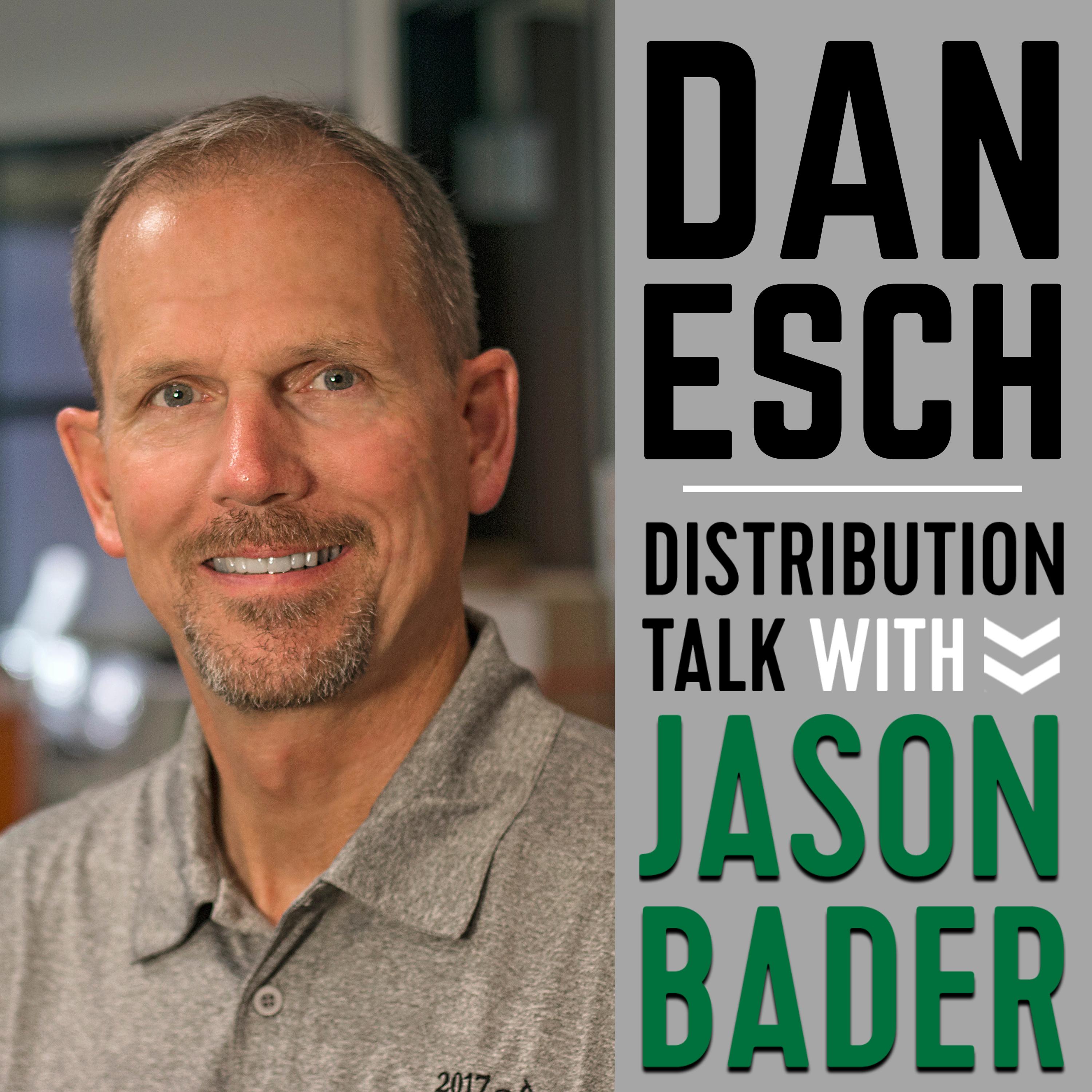
Ep 10Dan Esch on business expansion, service, and successful recruitment
Want to know the secrets to a successful expansion? For Dan Esch of Esch Construction Supply based in St. Paul, Minnesota, a company's mission is just as important as the advanced field work and the financial analysis. "This business is all about service." That's a sentiment you'll hear Dan repeat throughout our conversation. He's positioned Esch within the concrete cutting niche as a key collaborator, the customer's go-to source for products, service, and information. "We go out and solve problems and ask contractors how we can help them. That deep knowledge of that niche is where you can really add value and that's really where the fun of this business is." Service may be one of Dan's guiding principles but he'd never intended to make his mark in distribution. Listen in to find out how low unemployment is affecting Dan's future recruitment plans and why the company's successful rapid fulfillment service is a bit of a dual-edged sword. Get the full show notes at http://www.distributiontalk.com Thank you to our sponsor INxSQL, software built for distribution. "That deep knowledge of that niche is where you can really add value and that's really where the fun of this business is." ~Dan Esch *** Distribution Talk is produced by The Distribution Team, a consulting services firm dedicated to helping wholesale distribution clients remove barriers to profitability, generate wealth and achieve personal goals. Edited & mixed by The Creative Impostor Studios. Connect with Jason on LinkedIn. Connect with Dan on LinkedIn.

Ep 9Ankit Sharma on company culture, scaling, and recruiting scorecards
Ankit Sharma, CEO of Kitply Industries LTD. in Vancouver, British Columbia, didn't just take a leap of faith when he started his distribution business a decade ago; he set fire to all of his bridges for good measure. I caught up with Ankit to find out what motivates this award-winning entrepreneur and why he's on a mission to make wood sexy. His strategy to attract the same employees that typically head into consumer marketing and high-end tech companies is to operate more like those businesses - inside and out. His blog, makewoodsexy.com,is a modern hub for woodworkers and way to connect with young people in colleges and high schools, to reach them in a style that they can relate to. Ankit's working on scaling his business, seeking out areas for expansion and opportunities where he might purchase existing distribution companies, all while adhering to the core values that got him here. "Everyday's a journey of gratefulness." Want to know why he's an advocate for professional organization membership? How recruiting scorecards can help your hiring process? What punching above your (business) weight class can do for your business? Listen in! Thank you to our sponsor INxSQL, software built for distribution. *** Distribution Talk is produced by The Distribution Team, a consulting services firm dedicated to helping wholesale distribution clients remove barriers to profitability, generate wealth and achieve personal goals. Edited & mixed by The Creative Impostor Studios. Connect with Jason on LinkedIn. Connect with Ankit on LinkedIn.

Ep 8Paul Reilly on value added selling, pricing pressures, and having better customer conversations
What are you selling? Beyond the parts and pieces, what differentiates you from your competitors? Don't answer, at least not until you've listened to my conversation with Paul Reilly, president of Tom Reilly Training. His company has been on a 40 year mission to show sales teams that value-driven conversations can help them sell more profitably. The message has never been more relevant than in today's market. "My father Tom started the company back in the early 80s. What really got us started was that value-added selling message and, in distribution, it's all about finding unique ways to add value, create value for your customers." Technology has changed many of the physical elements required to make a sale since Tom Reilly wrote the first edition of Value-Added Selling. But tech hasn't gone so far as to disrupt the general principles outlined in the book and taught at Reilly Training seminars. "People try to convince you that things have changed," Paul says. "They're stirring the pot a little, saying that everything's changed in sales and you can't go to market the same way." He doesn't buy it. Distributorships have faced pricing pressures since the beginning and the companies that have survived make relationships their goal, not price. Paul put that value-driven principle into practice before joining the family business. He worked at Hilti for six years, selling products priced 20 to 30 percent higher than the competition's. "You have to learn how to communicate that message of value and translate not only the product and services and what they do, but you have to translate that into meaningful impact to the customer." The fourth edition of Value-Added Selling blends Paul's fresh experiences with new insights and ideas developed through Reilly training seminars. As with previous editions, however, the company aims to move sales teams past price. How? "I would say the first tip is to just have better conversations with your customers." he says. For instance, make a point of showing your clients how you can help them reduce their total costs, be they logistical, labor, time, etc. "Cost is a much better conversation to have than price." Paul shares a few more tips in the episode including strategies for shifting a customer's short-term gain mentality to one where the long-term solution benefits both you and your client. "Asking these questions gets the customer thinking bigger, thinking long-term and all the while they're taking the focus off price." Ready to experience the bottom-line benefits of value-added sales for yourself? Then you've got to listen in! We talk about the number one attribute customers look for in their sales people as ranked by Reilly's internal research, what Aristotle had to say about Millennials (yes, Aristotle), and add two authors to your summer reading list: Mike Weinberg and Daniel Pink. Thank you to our sponsor INxSQL, software built for distribution. *** Distribution Talk is produced by The Distribution Team, a consulting services firm dedicated to helping wholesale distribution clients remove barriers to profitability, generate wealth and achieve personal goals. Edited & mixed by The Creative Impostor Studios. Connect with Jason on LinkedIn. Connect with Paul on LinkedIn.

Ep 7Eric Wessinger on building your sales force, client customization and website overhauls
What does your sales force look like in five years? In ten? If you don't have an answer yet, my chat with Eric Wessinger, president of Richards Supply, will definitely spark some ideas. Officially, he's lead the company for a little over six years. Unofficially, Eric's been in and around the distribution business since childhood. As a second generation leader, he's drawing on his decade of outside work experience as well as his lifetime of insider knowledge to tackle the company's million-dollar sales question. "We've talked about it a ton with both the leadership and the management team," Eric says regarding the future of sales and service. Challenges inherent to smaller businesses can thwart creative problem solving, especially when overshadowed by the seemingly limitless reach of the national brands. In search of guidance, Eric looked to Richards Supply's core values. "We've been around for eighty-five years so we're doing something right already. So how do we take that foundation and move it forward?" Communication has always been key for the company. "I think outside sales, and face-to-face relationships, is still a differentiator for us." To that end, Eric and his sales force check in with its customers and refine the partnership by asking clients how they want to interact with the company. "I talk to customers all the time," he says. "If you looked at the top fifty, top one hundred customers, we do business with each one of them very differently. I think that's been a strength for us...being able to ask the right questions and listen to the answer and try to adjust accordingly." Although customization looks vastly different today from when the company began, the principle has stayed the same: meet the customer where they are. "If you ask a customer how they want to be served, you better be ready to say 'yes' to whatever the answer to that question is." For Richards Supply, that means an omni-channel approach to service options: outside sales, counter service, and a newly revamped website with a robust presence all its own. "You have to consider your website as an extension of your business, basically as a branch," Eric says. "You would never open a branch without inventory in mind or a sales methodology or a plan." The company's relationship driven, tech minded culture is a modern, practical approach to figuring out the future of sales. "It's a massive challenge and exciting. And it's fun but it's definitely something that's not snap of the fingers kind of thing." It's clear, however, that Eric and his staff have given Richards Supply a good head start. Dive deeper into the company's massive website overhaul and find out how Eric's years as a recruiter have helped him bolster the company's hiring process. Listen in! Thank you to our sponsor INxSQL, software built for distribution. *** Distribution Talk is produced by The Distribution Team, a consulting services firm dedicated to helping wholesale distribution clients remove barriers to profitability, generate wealth and achieve personal goals. Edited & mixed by The Creative Impostor Studios. Connect with Jason on LinkedIn. Connect with Eric on LinkedIn.

Ep 6Bill Morse on solid banking relationships, finding the right employees, and successful corporate buyouts
Yes! It's possible to remain laid back and move your business forward. Bill Morse, former owner of Constar Supply out of Clovis, California, is proof. Bill sat down to discuss the philosophies that have lead him to create solid banking relationships, honor employee freedoms over management scrutiny, and find the right corporate fit for his company's next chapter. There's a lot to learn from a guy who's been around since the dinosaur years, when deals were made over coffee and a handshake and banks came calling with capital to lend. "We moved banks two or three times in the early years," Bill says, "because banks were wooing us back then...and we wanted to keep the pace of growth going." It became apparent that building relationships with the people who greenlighted loans was crucial to avoiding the curse of a successful failure. Like many of us, Bill found that capitalizing on those relationships wasn't one of his strengths. "If you don't know it or if you're not comfortable with it or you just don't want to do it," he says, "find somebody who does...because that's essential!" Regardless of how friendly you are with your banker, Bill admits that the Great Recession has changed the banker-business relationship. Still, some aspects of applying for funds have stayed the same. "In every business, whether you're a doctor, a professional, or just a contractor, you really are in some part salesman and you have to sell your whole idea." To that end, Bill says that the work put into creating a forecast and outlining your vision comes down to selling yourself, otherwise, "they're not going to buy into it. And banks these days are especially tough. You really have to give them a real argument." Personnel is another challenge that's been a near constant since the beginning. When he started out, Bill says, "I had connections so I was able to pull some people away that had been in the industry for a long time." But there's a difference between finding an employee and finding the right employee. Once found, Bill gives his outside sales team their independence. "I don't put our salesmen on call reports. I don't track them. I don't give them too many barriers to making the sale." The payoff for Constar has been staff loyalty and a healthy bottom line - as well as a successful corporate buyout. If you've been in the industry for decades or are just starting out, give this episode a listen. It's a quick half hour of amazing insight on what it takes to stick around and stay successful. There's even a barista analogy. Thank you to our sponsor INxSQL, software built for distribution. *** Distribution Talk is produced by The Distribution Team, a consulting services firm dedicated to helping wholesale distribution clients remove barriers to profitability, generate wealth and achieve personal goals. Edited & mixed by The Creative Impostor Studios. Connect with Jason on LinkedIn. Connect with Bill on LinkedIn.

Ep 5Michelle St. John on private labeling, trade associations, and getting out of the comfort zone
If the prospect of business growth makes you uneasy, you'll find a lot to relate to in this episode. Jason chats with Michelle St. John, owner and president of IBS Incorporated, a self-proclaimed risk-averse leader whose company continues to find creative solutions to industry challenges in spite of, or perhaps because of, her conservative mindset. Maintenance, repair, and operational supply has proven to be an almost recession-proof market for IBS. "When there's a recession, people are maintaining their own equipment and we get business. When times are booming and people are building their breaking bolts and tearing up roads, we're making sales in that environment." But Michelle is acutely aware that when challenges arise, they may require solutions that exist beyond her comfort zone. "What we're experiencing right now is some growth to a degree that has caused us to sort of expand at a rate that is a little bit uncomfortable." It's a space that IBS wants to be in, however. So Michelle, who shares leadership duties at IBS with her brother Derek, relies on the lessons learned while watching her parents who started the company in the family's basement. "Derek and I both watched our parents really closely and we took a lot of lessons away from my dad." One of the most important was the 72-hour rule, the idea that if you haven't implemented an idea within 72 hours of learning it, the tendency for it to produce any change at all become zero the longer time goes on. "So, by the end of the 72-hours," she says, "chances are good It's not going to influence your culture your environment." The rule is a core value that IBS impresses upon its sales management team. "It's really important that they're in the field with our reps as soon as possible to reinforce that training." To that end, IBS has committed to putting people in leadership positions who'll challenge the status quo and help the company reach the next milestone. Michelle says, "We're challenged with making sure that we're surrounded by people that can continually stretch us and expand us." Michelle recently wrapped up one of the greatest experiences of her life, a year-long tenure as president of STAFDA, Specialty Tool & Fasteners Distributors Association, proving that not all growth has to leave you feeling anxious. Trade associate participation has played a key role in her family's professional development from the beginning. "We devoured the education. We took advantage of all the consultative access." That access and exposure are just two of the reasons why she's enthusiastic about association membership. "I know for me, times are evolving so quickly and keeping pace is really important," she says. "We need ideas from people who are in the trenches and figuring it out every day." Michelle has so much insight to share that you'll definitely want to tune in! Find out how IBS private label products created customer loyalty, learn which assessments her team relies on to gage candidate potential, and how her experience in the corporate world enhanced her leadership abilities. Thank you to our sponsor INxSQL, software built for distribution. *** Distribution Talk is produced by The Distribution Team, a consulting services firm dedicated to helping wholesale distribution clients remove barriers to profitability, generate wealth and achieve personal goals. Edited & mixed by The Creative Impostor Studios. Connect with Jason on LinkedIn. Connect with Michelle on LinkedIn.

Ep 4Cameron Overacker on transitioning leadership and working with outside advisors
"If you live by that example, those around you will do the same and the more people live that philosophy, the stronger your team becomes. And the stronger the team is, the stronger your business becomes." ~Cameron Overacker When it comes to the family business, there's the clan you're born into and the people that you surround yourself with. Jason talks with Cameron Overacker, president of Canadian flooring distributor Primco, to learn how DiSC assessment has helped his company get the very best from both. It's not easy to step into a family business. But, as Cam points out, many of the challenges that second or third generation leaders face come from self-doubt rather than external forces. "You always felt like you were being measured...because you were in the family business. Everybody expected you to be perfect." In truth, however, Cam says that he was probably harder on himself than anyone within the company. "That's not the way most people were thinking [about you]. And those that were probably didn't have good intentions for the relationship they had with you anyway." Still, he didn't take the easy road back into his father's company. He credits manual labor work for the oil and gas pipelines as well as the year he spent back-packing around the South Pacific for providing invaluable life lessons. The years he spent outside of Primco helped him develop his leadership style. "Different people mature at different ages," he says. And life experience has a lot to do with what someone brings to their role. "I don't have a post-secondary degree. My father quit school at grade eleven yet he was very successful in setting up this company." Cam built upon his father's success by facing challenges with honesty and humility. "The biggest thing is to surround yourself with good people and ensure that those people have your back and you have their backs." But it can be tricky blending old-guard employees, those that have the experience in years, with fresh hires. An executive coach has helped him better utilize the unique talents of each group by asking him to evaluate his own behaviors first. DiSC assessment helped Cam recognize his strengths and weaknesses and the effect they had on Primco's culture. The exercise had such a profound effect on him that now everyone in the organization, not just the sales team, takes the assessment. The DiSC profile doesn't just highlight weaknesses. The questionnaire also helps participants understand how their skill set fits within the team dynamic and to appreciate the unique contributions of their fellow employees. "Always be humble and willing to learn from anybody and everybody, at any level of an organization," Cam says. It's a strategy that's worked well for Primco. Thank you to our sponsor INxSQL, software built for distribution. *** Distribution Talk is produced by The Distribution Team, a consulting services firm dedicated to helping wholesale distribution clients remove barriers to profitability, generate wealth and achieve personal goals. Edited & mixed by The Creative Impostor Studios. Connect with Jason on LinkedIn. Connect with Cameron on LinkedIn.

Ep 3Tully Brewer on the profit first approach and planning for a healthy succession
"Most business owners try to grow our way out of our problems. But the result is simply a bigger monster. You can't grow out in your profit problem. You need to fix the profit first, then you grow." -Tully Brewer In this episode, Jason and Tully Brewer, president of Littlejohn, Inc., chat about the profit first approach and planning for a healthy succession. Littlejohn, Inc. began selling tank trailers in the 1930s but it wasn't until the family firm opened its parts business in the late 80s that things really took off. Eventually, opportunities gave way to challenges and Tully admits to having had a myopic view when it came to finding solutions for his middling bottom-line. "We try to grow our way out of problems, hinging salvation on the next big sale customer or investor." He credits Profit First: Transform Your Business from a Cash-Eating Monster to a Money-Making Machine by Mike Michalowicz for helping him refocus and post record profits. "You need to fix the profit first," Tully says, "Then you grow." To sustain that growth, Tully has cultivated a mindful, hands-off approach for developing the company's next generation of leaders, which includes his son Zach, 31, and son-in-law Thomas, 29. He offers them guidance, support, and works through management books like Ego Is The Enemy by Ryan Holiday with them. For the most part, however, "they make decisions and move on," he says. "It allows them to grow and develop and think strategically without me having to be there to tell them what to do." What would Tully do differently if he could go back to his early years at Little John, Inc? Listen in to find out. Thank you to our sponsor INxSQL, software built for distribution. *** Distribution Talk is produced by The Distribution Team, a consulting services firm dedicated to helping wholesale distribution clients remove barriers to profitability, generate wealth and achieve personal goals. Edited & mixed by The Creative Impostor Studios. Connect with Jason on LinkedIn. Connect with Tully on LinkedIn.

Ep 2Gabriel Curry on data, client retention, and business expansion
"There are three things that we ask when we make a call: what should we start doing? What should we stop doing? What should we continue doing? What should we stop doing is usually some of the best feedback." ~Gabriel Curry Jason sits down with Gabriel Curry, president of G&S Nursery and Impact Media, to discuss client retention, business expansion, and the myriad ways data informs decisions. Gabriel credits The Ultimate Sales Machine by Chet Holmes with helping uncover his customer's needs and focus on his niche market. Once identified, CRM technology like SalesForce and Microsoft Dynamics provides the data that allows him to take his business to the next level - so long as it's used on a consistent basis. As he sees it, if a conversation isn't logged into the CRM that you've invested time and money into, "It didn't happen." Other advantages to using a CRM includes the ability to reconnect your sales team to clients who've gone dormant for one reason or another. "There's no way greater to grow your business," he says, "than reaching out to customers that have already worked with you." Gabriel also shares with Jason the role feedback has played in his success, whether from fellow professionals in the Young Presidents Organization or from clients. "These differences of opinion have really stretched my mind." Want to know which question has provided Gabriel with some of the best feedback? You might be surprised by his answer. Thank you to our sponsor INxSQL, software built for distribution. *** Distribution Talk is produced by The Distribution Team, a consulting services firm dedicated to helping wholesale distribution clients remove barriers to profitability, generate wealth and achieve personal goals. Edited & mixed by The Creative Impostor Studios. Connect with Jason on LinkedIn. Connect with Gabriel on LinkedIn.

Ep 1Marshall Jones on taking over the family business, training and employee testing
"I think salespeople do a fantastic job accomplishing the task that they've been given. That said, none of what they produce out there can really come to fruition without the support of a wide network of folks within the organization." --Marshall Jones Jason catches up with Marshall Jones, former owner of Marco Supply Company. They cover a lot of ground from life in and out of the family business to the merits of various talent assessment methods. And, if you've got kids of your own in the family business, you'll want to hear Marshall's views on sending them to gain experience elsewhere. "I feel like I got a lot more out of the experience than they did," Marshall says of his post-graduation gig with Omaha-based Carlson Systems (now SouthernCarlson Inc.). At a time when internships were few, even for graduates of the esteemed industrial distribution program at Texas A&M, Marshall credits Carlson for giving him a tremendous amount of flexibility to make mistakes and prove himself. "I had my work cut out for me and it was a great year of knocking on a lot of doors and learning a lot of lessons." Admittedly, not all of the ideas he brought back home worked. Still, Marshall says his time away prepared him to face the challenges. "It was incredibly valuable… to see some of the struggles that you're going to encounter going back into the family business." One such struggle was learning how to overcome internal biases. No one wants to spend time or money setting up a good employee for failure in another department. "Not every individual...is cut out to be successful in every role," says Marshall. Finding the right assessment method was key. "We learned lessons and they were painful lessons but we got better and better as we went along," he says. So which method produced better results: instinct or standardized testing? And how does Marshall make sure each department gets recognized for the value they add to the organization? Tune in to find out. Thank you to our sponsor INxSQL, software built for distribution. *** Distribution Talk is produced by The Distribution Team, a consulting services firm dedicated to helping wholesale distribution clients remove barriers to profitability, generate wealth and achieve personal goals. Edited & mixed by The Creative Impostor Studios. Connect with Jason on LinkedIn. Connect with Marshall on LinkedIn.

Jason Bader on the origin of Distribution Talk
trailerMeet Jason Bader, executive coach, speaker, and owner of The Distribution Team, and find out the origin story of the Distribution Talk podcast (the idea for which came like a 2x4 to the back of the head.) Get ready to hear stories, struggles and solutions from business owners and thought leaders in the wholesale distribution industry. Thanks to Michael and Greg at Get a Grip on Lighting for helping to inspire this show, and to podcast coach/editor Andrea Klunder at The Creative Impostor Studios for her expert advice. And thank you to our sponsor PeersOnDemand.com *** Distribution Talk is produced by The Distribution Team, a consulting services firm dedicated to helping wholesale distribution clients remove barriers to profitability, generate wealth and achieve personal goals. Edited & mixed by The Creative Impostor Studios. Connect with Jason on LinkedIn.