Discovery
855 episodes — Page 10 of 18
Killing Insects for Conservation
Prof Adam Hart stirred a hornet’s nest of controversy by asking the public to kill wasps for science. He explores why scientists kill insects to save them from extinction.The work of the entomologist often involves the killing of insects in large numbers. This happens in the search for new species in the exploration of the planet’s biodiversity and in ecological research to monitor the health of wild insect populations and the impact that we are having on the environment. But the methods of insects scientists have come under criticism. Last year presenter and entomologist Adam Hart was involved in a citizen science project aimed at surveying the abundance of various species of British wasp around the country. The survey entailed members of the public setting up lethal wasp traps in their gardens and sending the dead insects to the lab running the survey. Many people took part but the study also generated negative newspaper coverage and stinging criticism on social media. How can you save insects by killing them? Next week, do insects experience pain and suffering?Picture: Broad-Bellied Chaser, Credit: BBCProducer: Andrew Luck-Baker
What’s the Tiniest Dinosaur?
Two small creatures are at the heart of today’s questions, sent in to [email protected] Tiniest Dinosaur "What is the tiniest dinosaur?" asks young listener Ellie Cook, aged 11.Our hunt takes us from the discovery of dinosaurs right up to the present day, which is being hailed as a 'golden age' for palaeontology. Currently, one new species of dinosaur is unearthed on average every single week. But what's the smallest dino? And what can size reveal about the life of extinct animals? Hannah Fry goes underground at the Natural History Museum in London to look through their vaults in search of the tiniest dinosaur with palaeontologist Susie Maidment. Meanwhile Adam Rutherford chats to dinosaur expert Steve Brusatte from Edinburgh University about why size really does matter, especially when it comes to fossils.The Baffled Bat "Why don't thousands of bats in a cave get confused? How do they differentiate their own location echoes from those of other bats?" This puzzling problem was sent in by Tim Beard from Hamburg in Germany. Since eco-location was first discovered, this question has perplexed biologists. Hannah turns bat detective to try and track down these elusive creatures at The Queen Elizabeth Olympic Park in East London. This is where zoologist Kate Jones from University College London is using a network of smart sensors to find, identify and track wild bats. Bat researcher and impressionist John Ratcliffe from Toronto University explains how bats use sonar to find their way around, and the clever tricks they’ve developed along the way. It's an unlikely tale involving gruesome early experiments, cunning electric fish and some surprising bat maths.(Image: Dinosaurs and a meteor falling from the sky in back background. Credit: ugurhan/Getty Images)Producer: Michelle Martin
Can Anything Travel Faster Than Light?
Two astronomical questions today sent in to [email protected] for Drs Hannah Fry and Adam Rutherford to answer.The Cosmic Speed Limit "We often read that the fastest thing in the Universe is the speed of light. Why do we have this limitation and can anything possibly be faster?" asks Ali Alshareef from Qatif from Saudia Arabia. The team grapples with Einstein's Special Theory of Relativity, with help from cosmologist Andrew Pontzen and a British train, travelling somewhat slower than the speed of light. Plus physicist and presenter Jim Al-Khalili describes how he nearly lost his boxer shorts in a daring bet concerning the speed of subatomic particles.The Cosmic Egg "How do we measure the age of the Universe?" asks Simon Whitehead. A hundred years ago this wouldn't even have been considered a valid question, because we didn't think the Universe had a beginning at all. Even Einstein thought that space was eternal and unchanging. This is the tale of how we discovered that the Universe had a beginning, and why calculating its age has been one of the greatest challenges in modern astronomy. We also uncover the mysterious dark energy that pervades the cosmos and discover why it's been putting a scientific spanner in the works. Helping to unravel today's question are physicists Andrew Pontzen, Jo Dunkley and Jim Al-Khalili.Picture: Star sun supernova galaxy gold, Credit: Eastern Lightcraft/Getty ImagesProducer: Michelle Martin
Why Do We Dream?
Adventures in Dreamland "Why do we dream and why do we repeat dreams?" asks Mila O'Dea, aged 9, from Panama.Hannah Fry and Adam Rutherford delve into the science of sleep. From a pioneering experiment on rapid eye movement sleep, to a brand new 'dream signature' found in the brain, they discover how scientists are investigating our hidden dreamworld. Featuring sociologist Bill Domhoff from the University of California Santa Cruz, sleep psychologist Mark Blagrove from the University of Swansea, and neurologist Francesca Siclari from the University of Lausanne.The Curious Face-Off "Are machines better than humans at identifying faces?" asks the excellently named Carl Vandal.Today’s Face Off leads our intrepid detectives to investigate why we see Jesus on toast, Hitler in houses and Kate Middleton on a jelly bean. Face perception psychologist Rob Jenkins from the University of York explains why we're so good at spotting familiar faces, like celebrities. Plus, Franziska Knolle from the University of Cambridge discusses her face recognition study involving Barack Obama and a group of highly-trained sheep. But are we outwitted by artificial intelligence when it comes to face ID? BBC technology correspondent Rory Cellan-Jones gives us the low-down on the pros and cons of current technology.Picture: Child sleeping, Credit: Quintanilla/Getty ImagesProducer: Michelle Martin
Can We Use Chemistry to Bake the Perfect Cake?
Domestic science is on the agenda today, with two culinary questions sent in by listeners to [email protected] Curious Cake-Off Can chemistry help us bake the perfect cake? Listener Helena McGinty aged 69 from Malaga in Spain asks, "'I have always used my mother's sponge cake recipe. But is there a noticeable difference in the outcome if you vary some of the ingredients, or the method?"Hannah and Adam go head to head in a competition to create the perfect cake using the power of science. They are aided by materials scientist Mark Miodownik, from University College London, with tips on how to combine the ideal ingredients and trusted techniques to construct a structurally sound sponge. Food critic Jay Rayner is on hand to judge the results. But who will emerge victorious in this messy baking battle?The Atomic Blade "What makes things sharp? Why are thinner knives sharper? What happens on the molecular level when you cut something?" All these questions came from Joshua Schwartz in New York City.The ability to create sharp tools allowed us to fashion clothing, make shelters and hunt for food, all essential for the development of human civilisation. And, more importantly today they allow us to prepare dinner. So what makes kitchen knives sharp? We hear from IBM scientist Chris Lutz, who has used one of the sharpest blades in the world to slice up individual atoms. Plus palaeoarchaeologist Becky Wragg Sykes reveals the sharpest natural object in the world, a volcanic glass used by the Aztecs called ‘obsidian’.Picture: Colourful Cupcakes, Credit: RuthBlack/Getty ImagesProducer: Michelle Martin
Why Do Some Songs Get Stuck in Your Head?
Two very annoying cases today sent in by listeners to [email protected] to our scientific sleuths, mathematician Dr Hannah Fry and geneticist Dr Adam Rutherford.The Sticky Song Why do songs get stuck in our heads? And what makes some tunes stickier than others? Drs Rutherford and Fry investigate 'earworms', those musical refrains that infect our brains for days. Every morning BBC 6Music DJ Shaun Keaveny asks his listeners for their earworms, and Hannah finds out which tunes keep coming back. Adam asks Dr Lauren Stewart, from Goldsmiths University, to reveal the musical features that make some songs catchier than others. And they find out why, in times of crisis, an earworm may just save your life.The Shocking Surprise Jose Chavez Mendez from Guatemala asks, "Some years ago, in the dry season, I used to be very susceptible to static electricity. I want to know - why do static shocks happen?"The team uncover some slightly unethical science experiments on static electricity from the 1700s. Hannah Fry uses a Leyden Jar to demonstrate how static electricity works with help from her glamorous assistant, Adam Rutherford. Spoiler Alert: it doesn't end well for Adam. They discover what makes some people more susceptible to static shocks, and how bees and spiders have harnessed the awesome power of electricity.Featuring electromagnetism scientist Rhys Phillips and physicist Helen Czerski, author of 'Storm in a Teacup: The Physics of Everyday Life'.Picture: Human Ear, Credit: Techin24/Getty ImagesProducer: Michelle Martin
Behaving Better Online
Humans have become the most successful species on earth because of our ability to cooperate. Often we help strangers when there is no obvious benefit to us as individuals. But today in the age when social media and the internet could be seen as a way of bringing people together more than ever, the opposite is happening. In this two-part series for Discovery science writer Gaia Vince meets the psychologists, evolutionary biologists and neuroscientists who are studying our built in human behaviour in groups and asks how their discoveries can guide projects to increase cooperation.(Photo: Support button on keyboard, Credit: Abdoudz/Getty Images)
The Cooperative Species
People are incredibly rude to each other on social media. Much ruder than they would ever be face to face. The great potential of the internet to bring humanity together in a glorious collaborating network seems naïve – instead of embracing a massive extension of our social circles, we seem to revert to tribalism and conflict online. And while we generally conduct our real-life interactions with strangers with politeness and respect, online, we can be horrible. But it was our human ability to communicate ideas across networks of people that enabled us to so successfully solve life’s challenges and to build the modern world. Gaia Vince travels to Yale University to meet the researchers who are studying how we cooperate today and why it can go wrong when we communicate online. Part of the Crossing Divides season. (Photo: Row of children hugging Credit: Kieferpix/Getty Images)
Bringing Schrodinger's Cat to Life
Schrodinger's cat is the one that's famously alive and dead. At the same time. Impossible! Roland Pease meets the quantum scientists hoping to bring one to life in the laboratory. Not a real cat, to be fair. But large biomolecules, viruses, even bacteria, that can exhibit the quantum duality parodied in the paradox first described by one of the fathers of quantum physics. Because if they succeed, they may learn something about the interface between the quantum world, and the human world we live in.Presenter/Producer: Roland PeaseCredit: Harald Ritsch/Science Photo Library
Barbara McLintock
Barbara McClintock’s work on the genetics of corn won her a Nobel prize in 1983. Her research on jumping genes challenged the over-simplified picture of chromosomes and DNA that Watson and Crick’s discovery has all too often been used to support. During the half century that she worked at the Cold Spring Harbor Laboratory she became something of a living legend, a pioneer in a time when women weren’t expected to take much interest in science. In that story, she made a profound discovery that her male colleagues dismissed for years, leaving her out in the cold until they finally realized that it was true and granted her a belated Nobel Prize. Philip Ball tells the story of Barbara McLintock's life and work, from her early preference for sports, for solitude, and for intellectual life, that disturbed her parents, to her meticulous research on corn. In conversation with her recent biographer, Dr Nathaniel Comfort of Johns Hopkins University, he explores the facts and the fictions that grew up around her. Philip Ball talks about the legacy of her discovery of jumping genes with Professor Greg Hannon of the Cancer Research UK Institute at Cambridge University, who spent 25 years working in the McLintock Laboratory at Cold Spring Harbor.Picture Corn Cobs, Credit: Philippe Huguen/AFP/GettyImages)
D'Arcy Thompson
One hundred years ago D'Arcy Wentworth Thompson published On Growth and Form, a book with a mission to put maths into biology. He showed how the shapes, forms and growth processes we see in the living world aren’t some arbitrary result of evolution’s blind searching, but are dictated by mathematical rules. A flower, a honeycomb, a dragonfly’s wing: it’s not sheer chance that these look the way they do. But can these processes be explained by physics? D'Arcy Thompson loved nature’s shapes and influenced a whole new field of systems biology, architects, designers and artists, including Henry Moore and Barbara Hepworth. Presented by Phillip Ball.Picture: Corn shell, Getty Images
The Far Future
How do we prepare for the distant future? Helen Keen meets the people who try to.If our tech society continues then we can leave data for future generations in huge, mundane quantities, detailing our every tweet and Facebook 'like'. But how long could this information be stored? And if society as we know it ends, will our achievements vanish with it? How do we plan for and protect those who will be our distant descendants and yet may have hopes, fears, languages, beliefs, even religions that we simply cannot predict? What if anything can we, should we, pass on?Picture: Filing cabinets, Credit: fotofrog
Why We Cut Men
Male circumcision is one of the oldest and most common surgical procedures in human history. Around the world, 1 in 3 men are cut. It’s performed as a religious rite in Islam and Judaism; in other cultures it’s part of initiation, a social norm or marker of identity. Some individuals think it’s cleaner, sexier or safer. In this documentary, anthropologist Mary-Ann Ochota explores the reasons we cut men. She meets people who passionately promote the practice – and others who protest against it.Across sub-Saharan Africa, medical circumcision is endorsed in the fight against HIV – research shows it reduces the risk of a man getting infected if he has sex with an HIV-positive woman. More than 10 million men and boys have been circumcised so far; officials plan to reach another 25 million by 2020. In rural Uganda, Mary-Ann visits a mobile clinic to watch 21-year-old Wajuli undergo the operation. She meets another young man in Kampala who reveals his regret about getting cut.The United States is the only western country where most boys are circumcised for non-religious reasons – $270 million a year is spent on infant circumcision. In downtown New York, Mary-Ann meets ‘Intact-ivists’ who believe male circumcision is genital mutilation. She speaks to members of the public confronted with the protest, and interviews a leading US paediatrician who reflects on the reasons US doctors keep cutting.With contributions from Uganda’s national VMMC coordinator Dr Barbara Nanteza, Dr Marc Cendron (Boston Children’s Hospital) and Georganne Chapin, Intact America.Picture: Intactivist van in Union Square, New York, Credit: Nick Minter
Iodine
The phrase 'essential 'element' is often incorrectly used to describe the nutrients we need, but can aptly be applied to iodine - without it we would suffer severe developmental problems. Iodine is a key component of thyroid hormones, responsible for the regulation of our metabolism. And yet most of us have no idea how much we need, nor where it comes from. In her research, Margaret Rayman, Professor of Nutritional Medicine at Surrey University, has found pregnant women in particular are at risk of iodine deficiency - and there's a lack of iodine in what many consider healthy diets.As well as looking at contemporary issues with iodine, Margaret explores the legacy of past iodine deficiency - the word cretin, was coined to describe someone living in the Alps with such a condition. We learn why you might find iodine in British milk - but not necessarily elsewhere in the world, and we discuss the consequences of exposure to radioactive iodine isotopes - both good and bad.Picture: Pregnant woman with milk, Credit: Arief-Juwono/Getty Images
Phosphorus
What links trade unions with urine, Syria with semiconductors, and bones and bombs? The answer is phosphorus, UCL Inorganic Chemistry Professor Andrea Sella, who is himself engaged in researching new phosphorus based materials, looks at this often rather frightening element. We hear how the health impact of phosphorus on a group of Irish girls changed politics, how the element has been used as a weapon of war and we peer into the future, as chemists break new ground on what might be possible with phosphorus and nanotechnology.Photo: BBC Copyright
Lead
From the plumbing of ancient Rome, to lead acid batteries, paint, petrol and a dangerous legacy, the metal lead has seen a myriad of uses and abuses over thousands of years. In bullets, and poisons it has killed us both quickly and slowly, and yet its malleability, low melting point and resistance to corrosion make it a fantastic material for all kinds of containers and water proofing. And it is key to one of the most commonly used, and ignored, devices on the planet, the car battery.However it's only recently that the serious impact of lead poisoning on the development of children's brains has come to light. Uta Frith, Emeritus Professor of Cognitive Development at University College London, who studied the impact of lead poisoning in the 1970s and 80s, journeys with lead from the iron age to the present day delving into the history and scandal associated with this often overlooked element.Photo: BBC Copyright
The Power of Sloth
Zoologist and founder of the Sloth Appreciation Society, Lucy Cooke, unleashes her inner sloth to discover why being lazy could actually be the ultimate evolutionary strategy.The explorers of the New World described sloths as ‘the lowest form of existence’, but sloths are actually some of the most enduring of all tropical mammals. They make up one third of the mammalian biomass in rainforests and have survived some 64 million years - outliving far flashier animals like sabre tooth tigers. The secret to the sloth’s success is their slothful nature and their suite of energy-saving adaptations. In fact slothfulness is such a successful strategy, that there are examples all over the animal kingdom, including, surprisingly, worker ants. Recent studies in humans have shown the many health benefits of adopting a slower pace of life. Sleep itself is universal amongst the animal kingdom. All animals do it, but why remains a mystery. What is clear though, is that unleashing your inner couch potato is no bad thing, be you sloth or human. Lucy discovers the genius behind the sloths laid back attitude and fights the corner for laziness.Producer: Alexandra FeachemPicture: A young two-toed sloth sits in a bucket, September 2017. Credit: Klaus-Dietmar Gabbert / AFP / Getty Images
Pain of Torture
Does knowing that someone is inflicting pain on you deliberately make the pain worse? Professor Irene Tracey meets survivors of torture and examines the dark side of pain.Producer: Geraldine Fitzgerald(Photo: A woman mourns during the funeral procession of Abdulrassul Hujairi. Credit: Joseph Eid/AFP)
Controlling Pain
What if your brain could naturally control pain? Professor Irene Tracey and her colleagues are trying to unlock the natural mechanisms in the brain that limit the amount of pain we feel.We hear about how children learning judo are taught special techniques and from ex-marine Chris Shirley who ran a marathon carrying a 45kg rucksack and could ignore the pain of the blisters and torn shoulder muscles. One study found that religious people feel less pain than agnostics by looking at a picture of the Virgin Mary. Neuroscientists and psychologists are beginning to understand how this is possible, how the brain can block out pain in the right circumstances, so is this something we could all benefit from? Picture: The statue of the Virgin Mary, Credit: Francisco Leong/AFP/Getty ImagesProducer Geraldine Fitzgerald
Knowing Pain
Scientists reveal why we feel pain and the consequences of life without pain. One way to understand the experience of pain is to look at unusual situations which give clues to our everyday agony.Phantom limb pain was described in ancient times but only after WWI did it gain acceptance in modern medicine. For those living with it, it can be a painful reminder of a lost limb. New studies are now unravelling why the brain generates this often unpleasant experience and how the messages can be used positively.Its only since the 1980s that doctors agreed that babies are able to feel pain but we still don’t know how the developing brain processes information and how premature babies can be protected from the many invasive tests they have to go through. New research aims to provide appropriate pain relief that could have long term consequences.Picture: Nerve cells, computer artwork, Credit: Science Photo Library
Seeing Pain
Mystery still surrounds the experience of pain. It is highly subjective but why do some people feel more pain than others and why does the brain appear to switch off under anaesthesia so we are unaware of the surgeon’s scalpel? Professor Irene Tracey uses brain scanners to ask if we can actually see pain in the brain. On air we hear for the first time the results of the latest research into diabetes and nerve pain. Promising new techniques means scientists are able to see regions in the brain which effectively turn up the pain in some people and not others.Anaesthetics prevent pain during surgery but how the brain disengages is only just beginning to be understood, which could in the future lead to personalised doses of anaesthetics leading to faster recovery times.Picture: Graphic of neurons firing in the of the neural network within the Brain, Credit: Science Photo Library
Humphry Davy
In Bristol in 1799, a young man started to experiment with newly discovered gases, looking for a cure for tuberculosis. Humphry Davy, aged 20, nearly killed himself inhaling carbon monoxide. Nitrous oxide was next. It was highly pleasurable, ‘particularly in the chest and extremities’ and he began to dance around his laboratory ‘like a madman’, before passing out. By day, he gave the gas to patients, carefully noting their reactions. In the evenings, he invited his friends over to have a laugh (with assistants on standby to revive them with oxygen, as needed). The Romantic poets, Robert Southey and Samuel Taylor Coleridge could barely contain their excitement. During one session, Davy noted that the gas numbed his toothache and suggested that it could perhaps be used during surgical operations. But it was another fifty years before nitrous oxide was used by doctors. Throughout the 20th century, it was widely used during dentistry and to numb the pain of childbirth. (Nitrous oxide is the gas in ‘gas and air’: the ‘air’ is oxygen) .And it still is today, but less so. (It’s a potent greenhouse gas that damages the ozone layer, it’s difficult to store and there are side-effects). But, just as medical use is diminishing, recreational use is on the rise. A new generation of pleasure seekers have started experimenting, just as Davy did, despite the associated risks of injuries caused by fainting and death by suffocation. Naomi Alderman tells how a gas that created ‘ecstatic lunatics’ came to be used as an anaesthetic, with help from biographer, Richard Holmes and anaesthetist, Kevin Fong.Picture: Humphry Davy and Anaesthesia, Credit: Science Photo Library
Lise Meitner
Philip Ball reveals the dramatic tale of Lise Meitner, the humanitarian physicist of Jewish descent, who unlocked the science of the atom bomb after a terrifying escape from Hitler's Germany. One of the most brilliant nuclear scientists working in Germany her flight from terror cost Hitler’s regime dearly.In the early 20th Century it was barely possible for women to work in science at all and yet Einstein once called Meitner Germany’s own Marie Curie. It was Meitner’s insight that began the nuclear age and her story remains ever relevant, as the threat of nuclear conflict lies once again over the world.Philip Ball talks to historian Dr Patricia Fara about Lise Meitner and her research and to Patricia Lewis of the International Campaign to Abolish Nuclear Weapons or ICAN, based in Geneva, which this year was awarded the Nobel Peace prize for its work in trying to reverse nuclear proliferation, about Meitner’s legacy today.Picture: Lise Meitner, Credit: Central Press/Getty Images
The Day the Earth Moved
Roland Pease tells the story of how fifty years ago geologists finally became convinced that the earth’s crust is made up of shifting plates. The idea of mobile continents, continental drift, had been talked about, for example because it looked like Africa and South America had once been joined, and were now separated by the Atlantic. But given the solidity of rocks and the vastness of continents, that idea made no sense. Until plate tectonics, as it became known, gave it a scientific basis and rebuilt it into a mechanism that explained earthquakes, mountain belts, chains of volcanic islands and many other geological phenomena. Roland Pease talks to many of the key researchers in the story, now in their 70s and 80s, and finds out how their work transformed our understanding of the earth. Picture: Tectonic plates of planet earth - map with names of major and minor plates, Credit: PeterHermesFurianPresenter: Roland Pease
Maria Merian
Maria Merian was born in 1647. At the time of her birth, Shakespeare had been dead for 30 years; Galileo had only just stood trial for arguing that the Earth moved around the Sun. And yet, here in Germany, was a child who would become an important but oft-forgotten figure of science.Aged 13, she mapped out metamorphosis, catching caterpillars from her garden and painting them in exquisite detail. At that point, most believed that caterpillars spontaneously generated from cabbages and maggots materialised from rotten meat. She later voyaged to Suriname in South America to pursue pupae further, discovering not just new species but also the conditions needed for their survival. Some call her the first field ecologist; others admire her for her eloquent brushwork. However, her studies will help today’s biologists plot which insects lived where. These data are invaluable because this could help scientists predict what species will survive climate change. Naomi Alderman discusses the life and legacy of Maria Merian with biologist and historian Kay Etheridge from Gettysburg College, Pennsylvania and biologist Kathy Willis from Kew Gardens.Picture: Belly-ache bush (Jatropha gossypifolia) with metamorphosis of a giant sphinx moth (Cocytius antaeus), created by Maria Sibylla Merian and Joseph Mulder, Credit: GRI Digital Collections Producer: Graihagh Jackson
Alcuin of York
The Dark Ages are often painted as an era of scholarly decline. The Western Roman Empire was on its way out, books were few and far between, and, if you believe the stereotype, mud-splattered peasants ran around in rags.However, it was far more intellectually vibrant than you might imagine. Out of this era emerged a set of ‘problems to sharpen the young,’ including the famous river crossing puzzle that’s still taught in maths today. The presumed author of these riddles is Alcuin of York – ‘the most learned man in the world.’ And it was this monk and his puzzles that laid the foundations for a branch of mathematics called combinatorics – the thinking behind today’s computer coding and cryptography. Philip Ball speaks to historian Mary Garrison from the University of York to learn of Alcuin's character and how he encouraged his students to learn for the sake of learning, as opposed to salvation. And University College London mathematician Hannah Fry shows Philip just how much of a role combinatorics plays in today’s world.Picture: White horned goat chewing a cabbage leaf, Credit: Oxana MedvedevaProducer: Graihagh Jackson
Cheating the Atmosphere
All countries are supposed to measure and report their greenhouse gas emissions but BBC environment correspondent, Matt McGrath, reveals there are gaping holes in national inventories. He uncovers serious failings in countries’ accounts of warming gases with many not reporting at all. There are disturbing signs that some banned warming chemicals, which are supposed to have been phased out completely, are once again on the rise. And evidence that worthless carbon credits are still being traded. Meanwhile scientists are growing increasingly frustrated by the refusal of countries to gather and share accurate data in the face of this planetary emergency(Photo: The Jungfraujoch Air Monitoring Station in Switzerland. Credit: Jungfraujoch)
Better Brains
Every three seconds someone is diagnosed with dementia, and two thirds of the cases are Alzheimer’s Disease. As the global population ages, this is becoming an epidemic, and with no cures currently available for the collection of neurodegenerative conditions that include Alzheimer’s, Parkinson’s and Motor Neurone Disease the public and personal cost is escalating. Sue Broom reports on new efforts to find ways to stop the progress of these diseases for the first time, and to bring treatment for neurodegenerative conditions in line with those of cancer and heart disease.Picture: Human head, Credit: Science Photo LibraryPresenter: Sue Broom
What would happen if you fell into a black hole?
Two deadly cases today sent in by listeners to [email protected] Dark Star "What's inside a black hole and could we fly a spaceship inside?" asks Jorge Luis Alvarez from Mexico City.Astrophysicist Sheila Rowan explains how we know invisible black holes actually exist. Plus cosmologist Andrew Pontzen is on hand to help cook one up.But which of our intrepid doctors will volunteer to fly into the heart of a black hole?Kate Bush’s Sonic Weapon "It started while listening to the excellent Experiment IV by Kate Bush. The premise of the song is of a band who secretly work for the military to create a 'sound that could kill someone'. Is it scientifically possible to do this?" asks Paul Goodfield.Hannah consults acoustic engineer Trevor Cox to ask if sonic weapons could kill. And Adam delves into subsonic frequencies with parapsychologist Chris French to investigate their spooky effects.Plus the team investigates the Curious Case of the Embassy in Cuba – could a sonic weapon really be responsible for the wide-ranging symptoms reported by American diplomats in Havana?You can send your scientific mysteries for the team to investigate to: [email protected]: A computer-generated image of a rich star field with a Black Hole in front of it which distorts starlight into a brilliant ring around itself, Credit: BBC Producer: Michelle Martin
What will happen when the Earth’s poles swap?
The Polar Opposite No one knows why the Earth's magnetic North and South poles swap. But polar reversals have happened hundreds of times over the history of the Earth. John Turk emailed [email protected] to ask, “when is the next pole swap due and what will happen to us?” Featuring Prof Lucie Green from Mullard Space Science Laboratory and Dr Phil Livermore from the University of Leeds. Plus, astronaut Terry Virts, author of The View from Above, describes his experiences of a strange magnetic glitch in the earth's magnetic field, known as The Bermuda Triangle of Space.The World That Turns "Why does the Earth spin?" asks Joe Wills from Accra in Ghana. Hannah quizzes cosmologist Andrew Pontzen about the birth of the Solar System. BBC weatherman John Hammond describes the curious things that would happen if the Earth spun the opposite way. Send your questions to: [email protected]: The Earth reflecting light from the sun whilst aboard the International Space Station, Credit: Alexander Gerst / ESA via Getty ImagesProducer: Michelle Martin
Why can’t we remember being a baby?
The Astronomical Balloon "How far up can a helium balloon go? Could it go out to space?" asks Juliet Gok, aged 9. This calls for an experiment! Dr Keri Nicholl helps Adam launch a party balloon and track its ascent. But their test doesn't quite go to plan. Meanwhile, Hannah discovers where space begins by asking Public Astronomer Dr Marek Kukula, from the Royal Observatory Greenwich. Send your Curious Cases to the team: [email protected] Forgetful Child "Why don't we remember the first few years of our lives?" asks David Foulger from Cheltenham. The team investigate the phenomenon of 'infant amnesia' with Catherine Loveday from the University of Westminster. 40% of us claim to remember being under two years old and 18% recall being babies. But can we really trust these early memories? Martin Conway from City University thinks not.Picture: Baby Foot, Credit H. Armstrong Roberts/Retrofile/Hulton Archive/Getty ImagesProducer: Michelle Martin.
Why can’t we remember being a baby?
The Astronomical Balloon "How far up can a helium balloon go? Could it go out to space?" asks Juliet Gok, aged 9. This calls for an experiment! Dr Keri Nicholl helps Adam launch a party balloon and track its ascent. But their test doesn't quite go to plan. Meanwhile, Hannah discovers where space begins by asking Public Astronomer Dr Marek Kukula, from the Royal Observatory Greenwich. Send your Curious Cases to the team: [email protected] Forgetful Child "Why don't we remember the first few years of our lives?" asks David Foulger from Cheltenham. The team investigate the phenomenon of 'infant amnesia' with Catherine Loveday from the University of Westminster. 40% of us claim to remember being under two years old and 18% recall being babies. But can we really trust these early memories? Martin Conway from City University thinks not.Picture: A baby contemplates the sole of its foot, circa 1950, Credit: H. Armstrong Roberts/Retrofile/Hulton Archive/Getty ImagesProducer: Michelle Martin.
How do cats find their way home?
“How on earth do cats find their way back to their previous home when they move house?" asks Vicky Cole from Nairobi in Kenya. Our enduring love for our feline friends began when Egyptian pharaohs began to welcome domesticated moggies into their homes. Pictured reclining in baskets at the feet of royalty, pet cats soon became fashionable throughout society in Egypt. Today they are the most popular pet in the world, and home is definitely where their hearts lie. "Whereas dogs are bonded to people, cats are bonded to place," explains zoologist Dr John Bradshaw. "It's very typical for them to try and find their way back to their old house when you move." But how do they do it? And if their navigational skills are so good, why do they get lost? Prof Matthew Cobb reveals the super-senses that cats possess, and how to spot when your pet is deploying them.Itchy and Scratchy "What is an itch and how does scratching stop it? Why does scratching some itches feel so good?!" asks Xander Tarver from West Sussex in England.Our doctors set off to probe the mysteries of itch, and discover that this overlooked area of medicine is revealing surprising results about the human brain. From why itching is contagious to why scratching is pleasurable, we get under the skin of this medical mystery. The programme features interviews with neuroscientist Prof Francis McGlone from Liverpool John Moores University and dermatologist Dr Brian Kim from the Center for the Study of Itch at Washington University. Yes, that is a real place.If you have any Curious Cases for the team to solve please email [email protected]: Adam Rutherford, Hannah Fry Producer: Michelle Martin(Photo: Cat, Credit: Chris J Ratcliffe/Getty Images)
How much of my body is bacteria?
Science sleuths Drs Rutherford & Fry take on everyday mysteries and solve them with the power of science. Two cases in this episode concerning the inner workings of our bodies, and not for the faint hearted! The Broken Stool "Science tells us that our body houses microbial organisms. Then how much our weight is really our weight? If I am overweight, is it because of my own body cells or excess microflora?" asks Ajay Mathur from Mumbai in India.Adam bravely sends off a personal sample to the 'Map My Gut' project at St Thomas' Hospital to have his microbes mapped. Prof Tim Spector reveals the shocking results - a diet of fried breakfasts and fizzy drinks has left his guts in disarray. But help is at hand to makeover his bacterial lodgers.Science writer Ed Yong, author of 'I Contain Multitudes', reveals how much our microbes weigh. We're just beginning to discover the vast array of vital functions they perform, from controlling our weight, immune system and perhaps even influencing our mood and behaviour. A Code in Blood "Why do we have different blood types?" asks Doug from Norfolk in the UK.The average adult human has around 30 trillion red blood cells, they make up a quarter of the total number of cells in the body. We have dozens of different blood groups, but normally we're tested for just two - ABO and Rhesus factor. Adam and Hannah delve into the gory world of blood and the early history of blood transfusions, to discover why we have blood groups and how they differ around the world.Featuring interviews with Dr Jo Mountford, from the Scottish National Blood Transfusion Service and immunologist Dr Sheena Cruikshank from the University of Manchester.If you have any Curious Cases for the team to solve please email [email protected]: Adam Rutherford, Hannah Fry Producer: Michelle MartinImage: Illustration of red blood cells in a blood vessel. Copyright: Science Photo Library
Sydney Brenner: A Revolutionary Biologist
Sydney Brenner was one of the 20th Century’s greatest biologists. Born 90 years ago in South Africa to impoverished immigrant parents, Dr Brenner became a leading figure in the biological revolution that followed the discovery of the structure of DNA by Crick and Watson, using data from Rosalind Franklin, in the 1950s. Brenner’s insights and inventive experiments laid foundation stones for new science of molecular biology and the genetic age in which we live today, from the Human Genome Project to gene editing. Sydney Brenner talks to biologist and historian Matthew Cobb of the University of Manchester about this thrilling period in biological science, and Dr Brenner’s 20 year-long collaboration with DNA pioneer Francis Crick: a friendship which generated some of their most creative research. Producer: Andrew Luck-BakerPicture: Sydney Brenner, Credit: Cold Spring Harbor Lab Archive
SOS Snail
This is a big story about a little snail. Biologist Helen Scales relates an epic tale that spans the globe and involves calamity, tragedy, extinction and we hope, salvation. It stars the tiny tree-dwelling mollusc from French Polynesia, Partula, a snail that has captivated scientists for centuries. Like Charles Darwin studied finches on the Galapagos, Partula became an icon of evolution because, in the living laboratories of the Pacific islands, it had evolved into multiple species. But a calamity drove Partula to extinction, when a botched biological control, the predatory Rosy Wolf Snail, was introduced. It was supposed to eat another problem mollusc, but in a cruel twist, devoured tiny Partula instead. An international rescue mission was scrambled to save a species and from just one or two rescued individuals, populations of this snail species have been built up over thirty years in captive breeding programmes in zoos around the world. And now, in the nailbiting sequel, we track Partula’s journey home.Picture: Reintroduced Partula dispersing on Moorea in French Polynesia, Credit: ZSLPresenter: Helen Scales Producer: Fiona Hill
Indian Science – The Colonial Legacy
For more than 200 years Britain ruled India, bringing many aspects of British culture to India - including European science developed during the enlightenment. However centuries earlier India had already pioneered work in astronomy, mathematics and engineering. How was India’s scientific progress affected by colonialism? Did British rule hold the country back, or did it drive it forward? Presented by Angela Saini.Picture: The Indian Space Research Organisation (ISRO) communication satellite GSAT-19, carried onboard the Geosynchronous Satellite Launch Vehicle (GSLV-mark III ), launches at Sriharikota on June 5, 2017, Credit: ARUN SANKAR/AFP/Getty Images
India's Ancient Science
We go behind the scenes of a new exhibition on India at London’s Science Museum. What can historical objects tell us about India’s rich, and often hidden scientific past? We look at the influential mathematics, metallurgy and civil engineering of ancient India.The exhibition also contain artefacts from India’s time under the British Empire. We ask how the many years of colonial rule shaped the more recent scientific development of India. Science journalist Angela Saini presents.Image: Bakhshali manuscript, Credit: Bodleian Library
Africa’s Great Green Wall
Can Africa’s Great Green Wall beat back the Sahara desert and reverse the degrading landscape? The ambitious 9 miles wide and 5000 miles long line of vegetation will stretch all the way from Dakar in the west to Djibouti in the east. Thomas Fessy is in Senegal where the wall has already begun to evolve into a series of forests and garden communities. He meets the planners, planters, ecologists and local villagers to hear how its early progress is reversing years of poor land use, turning nomads back to farmers, empowering women and creating healthy ecosystems for rain fed agriculture. But can it meet its ambition to stabilize an unstable region, reverse the growing trend of migration, fight the effects of climate change and ensure this big African dream doesn’t die in the sand?Picture: The Great Green Wall, credit: BBC Producer Adrian Washbourne
Internet of Things
Can we Control the Dark Side of the Internet?The Internet is the world's most widely used communications tool. It’s a fast and efficient way of delivering information. However it is also quite dumb, neutral, treating equally all the data it passes around the world. From data that forms scientific research papers, the wealth of social media to keep us all connected with friends and relatives, entertainment or material we would rather not see- from political propaganda to horrific violence, the Internet makes no distinction. Is it time to change that? And can we? In this programme Aleks Krotoski looks at whether it’s possible to use technological fixes to regulate the internet or whether a more political approach is needed to governance of this vital but flawed communications medium.Picture: Human Hand Using Application on Mobile Phone, Credit: Onfokus
Dark Side of the World Wide Web
With the coming of the World Wide Web in the 1990s internet access opened up to everybody, it was no longer the preserve of academics and computer hobbyists. Already prior to the Web, the burgeoning internet user groups and chat rooms had tested what was acceptable behaviour online, but access was still limited. Aleks Krotoski asks whether the Web through enabling much wider use of the internet is the villain of the piece in facilitating not just entertainment and commerce, but all aspects of the darker side, from malicious computer hacking attacks, worms and viruses, to new channels for criminality, online extortion and identity theft.(Photo: Internet sign. Credit: code6d)
The Origin of the Internet
Just how did the Internet become the most powerful communications medium on the planet, and why does it seem to be an uncontrollable medium for good and bad? With no cross border regulation the internet can act as an incredible force for connecting people and supporting human rights and yet at the same time convey the most offensive material imaginable. It has become the most useful research tool on earth but also the most effective way of delivering threats to the security of governments, the health service and on a personal level our own identities.In this series Aleks Krotoski unravels the complexity of the internet, meeting the people who really invented it, looking behind the myths and cultural constructs to explain what it actually is and how it came to exist outside of conventional regulation. We’ll ask whether the nature of the net itself really is cause for concern - and if so what can be done to reign in the negatives of the internet without restricting the positives? In this first episode we go back to the days before the internet to look at the cultural and technological landscape from which it grew, and unravel some of the key moments - now lost in time and obscured by technology folklore, which mark when the internet lost its innocence.Picture: Mechanical computer keyboard blurred, credit: OSchaumann/Getty
Silicon - The World's Building Block
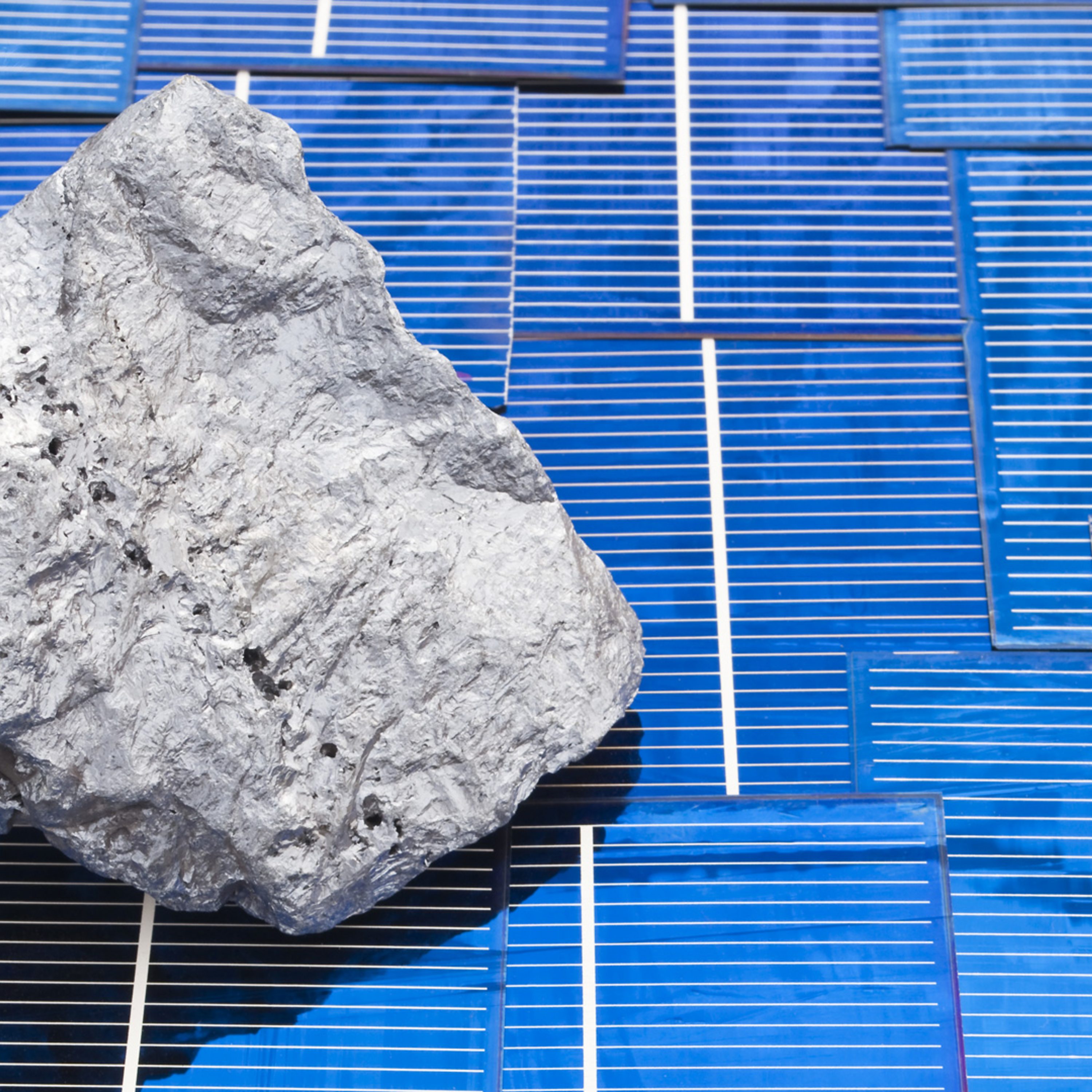
Silicon is literally everywhere in both the natural and built environment, from the dominance of silicate rocks in the earth crust, to ubiquitous sand in building materials and as the basis for glass. We've also harnessed silicon's properties as a semiconductor to build the modern electronics industry - without silicon personal computers and smartphones would simply not exist.Silicon is also found widely across the universe. It is formed in stars, particularly when they explode. And the similarities between how silicon and carbon form chemical bonds has led many to wonder whether there could be silicon based life elsewhere - perhaps in some far flung part of the galaxy where carbon is not as abundant as here on earth. As well as discussing the potential for silicon based life on other planets, Birkbeck University astrobiologist Dr Louisa Preston considers the varied uses of silicon here on earth, from its dominance in our built environment to its driving role in artificial intelligence and its ability to harness the sun's energy.Image: Lump of silicon on solar panels Credit: wloven/Getty Images
The Day the Sun Went Dark
For the first time in almost 100 years the USA is experiencing a full solar eclipse from coast to coast on August 21st 2017.Main image: Totality during the solar eclipse at Palm Cove on November 14, 2012 in Palm Cove, Australia. Credit: Ian Hitchcock / Getty Images
Carbon - the backbone of life
Carbon is widely considered to be the key element in forming life. It's at the centre of DNA, and the molecules upon which all living things rely.Monica Grady, Professor of Planetary Science at the Open University, explores the nature of carbon, from its formation in distant stars to its uses and abuses here on earth. She looks at why it forms the scaffold upon which living organisms are built, and how the mechanisms involved have helped inform the development of new carbon based technology, and products - from telephones to tennis rackets.One form of carbon is graphene which offers great promise in improving solar cells and batteries, and introducing a whole new range of cheaper more flexible electronics.Carbon is also the key component of greenhouse gases, carbon dioxide and methane. To counter some of the effects of man-made climate change, Scientists are now developing novel ways to speed up this mechanism - using waste materials created from mining and industry.Monica Grady also looks to space, and the significance of carbon in the far reaches of the universe. There is lots of carbon in space, some in forms we might recognise as the precursors to molecules. As elemental carbon seems to be everywhere what are the chances of carbon based life elsewhere?Image: Steam and exhaust rise from the chemical company Oxea (front) and the coking plant January 6, 2017 in Oberhausen, Germany. Photo by Lukas Schulze Getty Images
And then there was Li
From the origins of the universe, though batteries, glass and grease to influencing the working of our brains, neuroscientist Sophie Scott tracks the incredible power of lithium.It's 200 years ago this year that lithium was first isolated and named, but this, the lightest of all metals, had been used as a drug for centuries before. From the industrial revolution it proves its worth as a key ingredient in glass and grease, and as the major component in lithium ion batteries it powers every smartphone on the planet. In mental health lithium has proved one of the most effective treatments. And its use to treat physical ailments is now making a comeback.We explore how the chemistry of lithium links all these apparently unrelated uses together.Main Image: Lights from mobile phones in Bucharest on February, 2017. Credit: ANDREI PUNGOVSCHI / AFP / Getty Images )
Oxygen: The breath of Life
Oxygen appeared on Earth over two billion years ago and life took off. Now it makes up just over a fifth of the air. Trevor Cox, professor of acoustic engineering at the University of Salford, England, tells the story of oxygen on Earth and in space. Without oxygen, there would be no life on Earth, yet it was not discovered until late in the 18th Century. During the Great Oxidation Event, three billion years ago, cyanobacteria, thought to be the earliest forms of life on our planet, started to photosynthesise and these tiny creatures were responsible for putting the oxygen into our atmosphere, so we can breathe today. But it is not just for breathing. Ozone is three atoms of oxygen, and when it is in the stratosphere it stops harmful UVB rays from the sun reaching us. And if we are ever to leave our home planet, we will need to find a way to generate enough oxygen to keep us alive. Trevor visits the Science Museum in London, to discover how astronauts on the space station get their oxygen. Trevor Cox is not only an acoustic engineer, he also plays the saxophone. When he finds out the role that oxygen, in the air, has on the sound of his playing he gets a surprise.(Photo: Hovering clouds near Nagqu, approx 4,500 meters above sea level, north of Lhasa on the Tibetan plateau. Credit: Frederic J Brown/ AFP/Getty Images)
Mercury - Chemistry's Jekyll and Hyde
The most beautiful and shimmering of the elements, the weirdest, and yet the most reviled.Chemist Andrea Sella tell the story of Mercury, explaining the significance of this element not just for chemistry, but also the development of modern civilisation. It's been a a source of wonder for thousands of years - why is this metal a liquid? and what is its contribution to art, from the Stone Age to the Renaissance? We look at how Mercury is integral to hundreds of years of scientific discoveries, from weather forecasting to steam engines and the detection of atomic particles it has a key role.However Mercury is highly toxic in certain forms and ironically the industrial processes it helped create have led to global pollution which now threatens fish, wildlife and ourselves. We ask is it time to say goodbye to Mercury?Picture: Hg, mercury metal drops, credit: AlexeyVS/Getty Images
Eating Well in Lyon: Healthy Diets to prevent Bowel Cancer
Anu Anand is in Lyon, looking at what we eat and drink and the risk of bowel cancer
Catching Prostate Cancer Early in Trinidad
Anu Anand on detecting and treating prostate cancer in Trinidad and Tobago.