Diplomacy and Discourse Podcast
49 episodes
#49 - Rights at Risk: Understanding Human Rights in a Changing Global Landscape
#48 - Why Americans Are Turning Against Israel: The Truth About Our Tax Dollars
#47 - AIPAC's Stranglehold: How One Lobby Commands Congress
#46 - Who Controls the Story Controls the World: Media and Geopolitics
#45 - Finding Hope: When Good Triumphs Over Evil
#44 - U.S. Public Opinion on the Israeli-Palestinian Conflict
#43 - Cyber Geopolitics: AI, Cyber Warfare, and the New World Order
#42 - The Afghanistan Withdrawal: A Reckoning with Consequences
#41 - Inside the U.S. Political System: How American Democracy Functions
#40 - Trump's 80th Birthday at the G7: When Wishes Become Strategy
#39 - FIFA World Cup 2026: The Ultimate Soft Power Play
#38 - $333 Trillion: The Global Wealth Report You Need to See
#37 - Drawing the Lines: Redistricting and Gerrymandering Explained
#36 - America is on the Move: Understanding Domestic Migration Patterns
#35 - Everything is Connected: Why Systems Thinking is Needed
#34 - From Tensions to Truce: How Peacekeeping Actually Works
#33 - Resolving the Unresolvable: Diverse Paths to Peace
#32 - Charting to a Sustainable Future: Exploring the Sustainable Development Goals
#31 - Feedback Loops and Unintended Outcomes in Policy-Making
#30 - How Do Countries Control Your Mind Without You Knowing? | Soft Power Explained
#29 - We The People: A Premonition - Book Analysis
#28 - Child Marriage in Afghanistan | Taliban Restrictions on Women | Education Bans | Economic Crisis | Mental Health Crisis
#27 - Global Education Disparities - Technology Solutions & Gender Equality
S1 Ep 26#26 - Gaza Humanitarian Crisis, Radicalization, Media Bias, U.S. Policy, and Regional Diplomacy
In this episode of Diplomacy and Discourse, we take a deep, unapologetically honest look at the Gaza war and the broader Israeli–Palestinian conflict. We explore how occupation, blockade, and collective trauma fuel radicalization; how Western media frames the story; what role the U.S. and regional powers are really playing; and whether the events of October 7, 2023 advanced or damaged the Palestinian cause.We unpack the difference between radicalism and extremism, examine the psychological toll of life in Gaza, and discuss Israel’s internal fractures between secular and religious communities. We also look at the Abraham Accords, Saudi–Israel normalization, the “imperial boomerang” effect on Israeli society, and how this war may leave Israel diplomatically and economically weaker while pushing the Palestinian issue back to the center of global politics.Throughout, the episode grounds itself in a clear moral position: condemning all violence against civilians, all forms of antisemitism and Islamophobia, and all systems of oppression.
S1 Ep 25#25 Pt. 3 - Islam, Law, and the West
What this episode asks: Can Islam, as lived and organized in Western democracies, align with one secular legal order, strong free-speech protections (including for blasphemy), and full gender/LGBTQ equality?Migration facts vs. fears: EU registered ~14M first-time residence permits (2015–2024). Muslim share remains single-digit and rising gradually; local concentration drives perceptions. Expect Pew’s next Europe update around 2026; arc remains incremental, not explosive.Sharia and secular law: Europe’s courts remain secular; most “Sharia councils” offer non-binding advice. Outcomes track integration quality—language, work access, civics, and consistent enforcement—more than slogans.Crime and gender violence: Young men in deprived urban pockets (native and foreign) drive a disproportionate share. Adjusting for age and place shrinks—though doesn’t erase—over-representation. Best results pair targeted policing with youth employment pipelines.Fertility and EU‑27: EU‑27 TFR ~1.53 (2024) vs. ~2.1 among Europe’s Muslim residents; differences narrow across generations. Younger age structure among migrants cushions aging but doesn’t upend majorities.Canada’s stress test: 500k immigrants/year through 2027 aids an aging society but strains housing. Success hinges on sequencing—schools, housing, transit, and francophone targets—so contributions materialize sooner.Christians under pressure abroad: Violence and emigration are hollowing ancient communities in parts of the Middle East and Africa—context for broader migration flows.The compatibility frame: Friction points—legal supremacy, free speech/blasphemy, gender/LGBTQ equality, and security. Reconciliation is possible where religious bodies commit clearly to secular primacy and equal civil rights; where hedged, conflict persists.Policy throughlines: Smart borders + deep integration + “boring but reliable” family policy. Publish local absorption capacity, align targets to delivery, and communicate the data plainly.Resources referencedEurostat migration, aging, and dependency dataPew Research projections (2017 baselines; next comprehensive Europe update expected around 2026)National criminology briefs (e.g., Sweden 2024; Germany/BKA 2025)IFOP and YouGov polling on perceptions of Sharia and integrationUNICEF, Open Doors, and NGO reporting on minority persecution and child marriage patterns
S1 Ep 24#24 Pt. 2 - Eurasia, Africa, and Latin America: How Power Really Moves in 2025
In this three-part special, host A.R. explores whether today’s tensions reflect a clash of civilizations—or a more complex shift toward a world of regions and emerging “super civilizations.” We connect identity, power politics, and the real engines of influence: infrastructure, technology, finance, and media.What’s inside:Eurasia’s integration web: BRI, EAEU, SCO—geoeconomics over ideologyAfrica’s leverage: AU/ECOWAS, coups, critical minerals, and Ubuntu as a cooperative ethosSouth America’s calculus: MERCOSUR/UNASUR and hedging between China, the U.S., and the EUMiddle East dynamics: Gaza’s fallout, Saudi–Iran détente, Syria’s partial normalizationU.S.–China rivalry: trade, chips, standards, and the supply chains behind powerMedia polarization: how to stay informed without getting playedKey takeaways:Regionalism is rising—fewer clean blocs, more hedging and overlapping ties.“Clash” narratives explain little without economics, geography, and tech.Infrastructure corridors and standards quietly shape the balance of power.Media literacy is strategic: diversify sources, verify claims, avoid rage-bait.
S1 Ep 23#23 Pt. 1 - Islam, China, and the West: Clash, Convergence, or Coexistence?
In Part 1 of this two to three-part series, host A.R. unpacks Samuel P. Huntington’s Clash of Civilizations and tests it against the world we actually live in.What we cover:The theory: Huntington’s civilizational blocs and “fault lines”The critique: simplifications, identity flattening, and “us vs. them”Real-world flashpoints: U.S.–China rivalry, Russia’s war in Ukraine, Gaza (2023–25), Taliban rule in Afghanistan, EU migration politicsParadoxes of power: U.S.–Saudi alignment, China brokering a Saudi–Iran détente, BRICS expansionGlobalization’s countercurrent: interdependence, soft power, and transnational networksAlternative lenses:Francis Fukuyama: liberal convergence (End of History)Edward Said: critique of civilizational framing (Orientalism)Amartya Sen: overlapping identities (Identity and Violence)John Mearsheimer: realism and power over cultureJoseph Nye: soft power, networks, and attraction2025 outlook: slower U.S. growth, multipolar competition, and where civilizational narratives help—or misleadKey takeaways:Identity matters, but power politics, resources, and institutions matter too.“Clash” narratives can become political tools.The future looks less like a single civilizational conflict and more like a messy, multipolar contest with moments of cooperation.
S1 Ep 22#22 - America’s Broken Safety Net
In this episode of Diplomacy and Discourse, we confront the heartbreaking case of Iryna Zarutska, a 23-year-old Ukrainian refugee murdered on a Charlotte light-rail train in August 2025.Iryna came to America fleeing war, seeking safety and a better life. But her death—at the hands of a mentally ill repeat offender with a history of violent crime—has ignited debate far beyond North Carolina.We break down the layers of failure:The courts allowing violent offenders back into communities with minimal oversight.The mental health system leaving the treatment gap wide open for those most in need.Transit safety, where promises of reform often arrive too late for victims.And we also explore how her tragedy has been politicized—by leaders, parties, and the media—each eager to prove a point rather than pursue reform.This episode is not about sensationalism. It’s about asking the difficult questions: What does true safety look like in America? Can compassion and accountability coexist in our justice system? And most importantly, how do we prevent more lives from being lost to the void between rhetoric and action?Join us as we examine Iryna’s story—not just as a tragedy, but as a mirror reflecting the urgent need for discourse, reform, and accountability.🎧 Subscribe to stay updated on future episodes, where we cut through the noise and bring nuance back to public discussion.BlackySpeakz — The System Failed Her: The Iryna Zarutska Story (YouTube): https://www.youtube.com/watch?v=2GICkeScWA4CNN — Video shows fatal stabbing of Ukrainian refugee on Charlotte light rail: https://www.cnn.com/2025/09/08/us/iryna-zarutska-murder-ukraine-refugeeAssociated Press — Man faces federal charge in killing of Ukrainian woman on Charlotte train: https://apnews.com/article/charlotte-stabbing-ukrainian-refugee-iryna-zarutska-cc9ec826660468830b3f18a71e1a9aafABC News — Charlotte light rail stabbing: Trump demands death penalty for suspect: https://abcnews.go.com/US/charlotte-light-rail-stabbing-trump-demands-death-penalty/story?id=125436079
S1 Ep 21#21 - Talk Before You Tear: Choosing Dialogue Over Division
In this episode, we take a hard look at the culture of contempt that frames political opposition as an existential threat. We discuss how the American two-party structure compresses complex identities into simplistic camps and how geography, religion, and identity markers are exploited as wedges instead of bridges. We trace how social-media outrage cycles, economic insecurity, and the erosion of community fuel anxiety and loneliness — and how politics rushes in to fill the void, often making us more brittle.From there, we unpack the civic skills we’ve forgotten: diplomacy as the art of coexisting with those we disagree with, and discourse as the discipline of staying in conversation even when agreement seems impossible. We explain why societies need voices across the spectrum to find balance, why celebrating anyone’s death for their views corrodes democracy, and how we can practice “micro-diplomacy” in daily life to rebuild trust.
S1 Ep 20#20 - Beyond Apartheid: Gaza, Genocide, and the Future of Diplomacy
In this episode of Diplomacy and Discourse, host A.R. examines Israel’s deepening expansion into Gaza City amid accusations of genocide. Moving beyond the headlines, this episode unpacks the frameworks of colonialism, apartheid, and genocide—and asks what they mean for diplomacy today.Drawing insights from international law, historical comparison with South Africa, and contemporary scholarship, the conversation highlights:Why words and frameworks matter when describing Gaza.How Israel’s system reflects an “apartheid of a special type.”The legal and political case for genocide under international conventions.What states, civil society, and ordinary citizens can do right now to support Palestinian rights.This is more than analysis. It’s a call for responsibility, solidarity, and action.📚 Sources and ReferencesMSN News Video: Israel advancing with Gaza City expansion as genocide accusations emerge https://www.msn.com/en-us/news/world/israel-advancing-with-gaza-city-expansion-as-genocide-accusations-emerge/vi-AA1LS9XvRan Greenstein, Beyond Apartheid and Colonialism in Israel/Palestine (2025)United Nations General Assembly & ICJ Genocide Convention (1948)Rome Statute of the International Criminal Court (2002), Article 7 (Crimes Against Humanity – Apartheid)Amnesty International, Israel’s Apartheid Against Palestinians: Cruel System of Domination and Crime Against Humanity (2022)Human Rights Watch, A Threshold Crossed: Israeli Authorities and the Crimes of Apartheid and Persecution (2021)
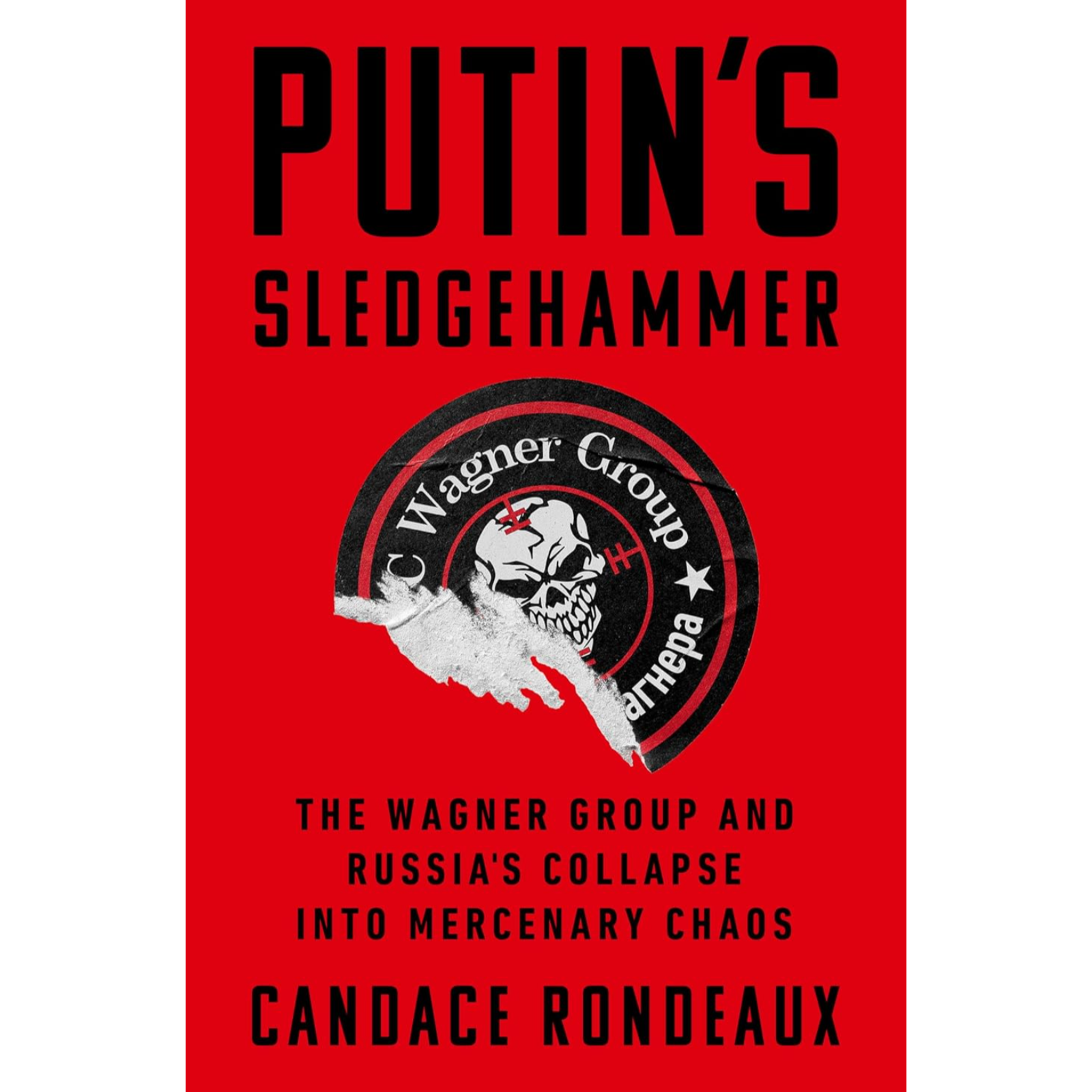
S1 Ep 19#19 - Candace Rondeaux - Putin, Wagner Group, Prigozhin, and Mercenary Warfare
In this episode of Diplomacy and Discourse, A.R. talks with security expert and author Candace Rondeaux. Her new book, Putin’s Sledgehammer, explores the rise of the Wagner Group—a private army turned geopolitical power player—and its implications for global security.Candace reveals how:Yevgeny Prigozhin transformed from caterer to commanderWagner shaped modern hybrid warfare, from Ukraine to AfricaPrivate armies weaken state sovereignty and rewrite the rules of conflictThought-provoking and timely—this conversation is essential for anyone following power, warfare, and the future of peace.Rondeaux, Candace. Putin’s Sledgehammer: The Wagner Group and Russia’s Collapse into Mercenary Chaos.Putin’s Sledgehammer by Candace Rondeaux | Hachette Book GroupPutin's Sledgehammer: The Wagner Group and Russia’s Collapse into Mercenary Chaos: Rondeaux, Candace: 9781541703063: Amazon.com: Books
S1 Ep 18#18 - When Peace Talks Break Down: The Cost of Escalation in the Middle East
In this episode of the Diplomacy and Discourse Podcast, host A.R. takes listeners deep into the escalating crisis across Gaza, Lebanon, Israel, and beyond. As peace talks falter and ceasefires crumble, we examine how broken diplomacy has unleashed a wider humanitarian and geopolitical catastrophe — and why this conflict is no longer confined to borders.We unpack the roles of the United States, Iran, and other regional powers, comparing the sharply different foreign policies of the Biden and Trump administrations. We explore how economic leverage, technological warfare, energy diplomacy, and cyber capabilities are now replacing boots on the ground — and what that means for future global conflict.Finally, we explore the lessons from John Sitilides’ analysis of great power competition, tracing the emergence of a world order governed less by bombs and more by blockades, sanctions, and silicon chips. Is this the new face of war?Join us for a hard-hitting analysis of where diplomacy has failed — and where the world might be headed next.🎧 Don’t forget to like, follow, and subscribe to the Diplomacy and Discourse Podcast. Share your thoughts with us at [email protected], John. “The New Geopolitics of Trade, Technology, and Energy.” The Economist Events. July 1, 2025.July 1 Economist remarks: Trump & the World: The New Geopolitics of Trade Technology Energy War - YouTubeUN OCHA Humanitarian Situation Reports (Gaza, 2025)U.S. Presidential Statements and White House Press Briefings (Biden and Trump, 2024–2025)Reports from Human Rights Watch, Doctors Without Borders, and Al-Mezan Center for Human Rights (2025)
S1 Ep 17#17 - Can Diplomacy Survive the Middle East?
Welcome back to the Diplomacy and Discourse Podcast! In this episode, we will unpack the latest developments in the most volatile region on Earth — the Middle East.June 2025 marked a chilling escalation as Israel launched Operation Rising Lion, a surprise strike on Iran’s nuclear infrastructure. What followed was a storm of retaliation, missile fire, and regional mobilization, turning what began in Gaza into a full-blown multi-front conflict. From Hezbollah rockets in Lebanon to Houthi drones in the Red Sea, the region is now entangled in a kinetic and symbolic war reshaping power dynamics across the Middle East.But this isn’t just a military story — it’s a diplomatic, digital, and psychological one. We explore how social media shaped public sentiment, how misinformation muddied the truth, and how the world’s powers scrambled to keep the peace.We will dive deep into the role of economic incentives in diplomacy, the impact of non-state actors, and how domestic politics (especially in Israel and the U.S.) continue to derail peace efforts. From failed negotiations and shifting alliances to climate stress and tech solutions, this episode covers the full spectrum of crisis and opportunity in today’s geopolitical landscape.
S1 Ep 16#16 - The Broken Cycle of Middle Eastern Peacebuilding
In this powerful and timely episode, we will unpack the complex, devastating reality of peacebuilding failures across the Middle East—from Gaza and Syria to Yemen and Libya. As the region reels from decades of war, foreign intervention, and internal divisions, reconstruction efforts often fall flat. Why? Because peace built on silence, exclusion, or political erasure cannot last.We explore:Why massive humanitarian aid is falling short despite urgent needsHow political fragmentation is crippling meaningful recoveryThe pitfalls of foreign-led normalization deals that sideline PalestiniansHistorical lessons from the Marshall Plan—and why the Middle East has no equivalent todayProxy wars, fractured authority, and the future of governance in Syria and YemenIran, Israel, and the Gulf powers: competing visions of peace or recycled strategies of dominance?What real reconciliation must look like—and why infrastructure without justice is doomed to collapseA.R. takes us beyond the headlines to interrogate the deeper political structures driving these conflicts—and what it will really take to break the cycle. It’s not just about rebuilding cities; it’s about rebuilding trust, institutions, and dignity.
S1 Ep 15#15 - Can the World Still Say No to War?
In this powerful and thought-provoking episode of Diplomacy and Discourse, host A.R. explores one of the most urgent questions of our time: Can the world still say no to war? From the ashes of World War II to today’s battlefield technologies, proxy conflicts, and global power rivalries, this episode uncovers how war has evolved — and how our capacity to resist it has weakened.We unpack the rise and decline of liberal internationalism, the effectiveness (and failure) of institutions like the United Nations, and the paradox of humanitarian intervention. We ask why war, once seen as a last resort, has become politically and economically normalized — even incentivized — in modern international relations.Along the way, we revisit landmark ideas from key thinkers and diplomats and explore competing narratives about peace, power, and what it means to defend humanity without perpetuating endless violence. Whether you're an international relations student, a policymaker, or someone simply trying to understand why we live in such volatile times, this episode will leave you asking: Are we truly committed to peace, or just afraid of losing war?
S1 Ep 14#14 - Is International Relations Broken? Let's Re-Think Power.
In this episode of the Diplomacy and Discourse Podcast, host A.R. takes a deep dive into the intellectual foundations of international relations — and why many of those foundations no longer hold up.From Realism and Liberalism to Constructivism, Critical Theory, and Postcolonialism, we explore how these theories shaped our understanding of world politics — and why they may be out of sync with the complexities of today's geopolitical realities.As global crises multiply and institutions struggle to adapt, is it time to rethink what we teach, how we theorize, and what we expect from world politics?We discuss how:Modern leaders use traditional theories selectively — and sometimes manipulatively.Globalization, corporate power, and cyberwarfare are rewriting the rules.Constructivism and postmodern IR offer alternatives rooted in people power and cultural transformation.IR education must evolve to meet the challenges of a world shaped by both power and principle.A.R. also walks you through the key critiques of NATO, UN cooperation breakdowns, and the real-world gaps between theory and practice — all while asking a crucial question: what should the next generation of IR scholars, policymakers, and citizens be learning instead?🎧 Tune in, think critically, and join the conversation about what the future of international relations should look like.📬 Questions or feedback? Email us at: [email protected], Amitav. Towards a Global International Relations? International Relations Theory, 2017Dietzel, Alix. Global Justice and Climate Governance, Edinburgh University Press, 2019Holst, J.J. ‘Keeping a Fractured Peace’ in Subduing Sovereignty, Pinter Publishers, 1994Machiavelli, Niccolò. The Prince, Reader’s Library Classics, 2021McGlinchey, Stephen; Walters, Rosie, & Gold, Dana. International Relations Theory, E-International Relations, 2017NATO, nato.intOnuf, Nicholas. World of Our Making, Routledge, 2012Katzenstein, Keohane, Krasner. International Organization and the Study of World Politics, 1999Roberts, A. NATO’s ‘Humanitarian War’ over Kosovo, Survival, 41 (1999)Stoltenberg, Jens, Munich Security Conference, 18 Feb 2022: linkStoltenberg, Jens, Spain’s NATO Anniversary, 30 May 2022: linkUnited Nations, un.orgAn Assessment of Modern International Relations Theory, Anglisticum Journal, 2024
S1 Ep 13#13 Pt. 5 - Pressure Points - Ukraine, the Indo-Pacific, and the Future of Contested Power
Welcome back to Diplomacy and Discourse, and thank you for joining us for the final installment of our five-part series on power politics. In this episode, we zoom in on today’s global flashpoints—Ukraine, Taiwan, the South China Sea—and unpack how these battlegrounds are reshaping the balance of power.From Russia’s costly war in Ukraine to China’s tightening grip over the Indo-Pacific, we examine how military aggression, spheres of influence, economic leverage, and strategic ambiguity are rewriting the rules of international engagement. This isn’t just about war—it’s about control, prestige, survival, and the future of a fragmented world order.We tackle the rise (and potential fall) of multipolarity, the contradictions in America’s foreign policy, and why spheres of influence—once thought obsolete—are roaring back. By connecting the dots across regions and history, this episode sheds light on how today’s great-power tensions echo past rivalries while forging new global fault lines.🎧 Tune in as we bring this series to a close with a clear-eyed look at what’s happening now, and where we might be headed next.📬 Have questions or thoughts? Reach out at [email protected]
S1 Ep 12#12 Pt. 4 - Endgames and Echoes – Lessons and the Future of Power Politics
In Episode 12, Part 4 of Diplomacy and Discourse, we turn the page from the great power games of the past to the quiet calculations shaping the future. A.R. explores the subtle and often overlooked endgames of U.S. foreign policy — from Biden’s cautious yet coordinated response to the Ukraine war, to Trump’s unapologetically transactional worldview. This episode unpacks how restraint, ambiguity, and misread history are actively reshaping the norms of global conflict and cooperation.We ask big questions: What does “victory” even mean in today’s multipolar world? How do great powers avoid war without sacrificing influence? And what are the long-term consequences when diplomacy becomes just another tool of leverage?From NATO’s shifting posture to Trump’s freeze on aid and Biden’s high-stakes balancing act — this is a deep dive into the final chapters of 21st-century power politics, and the echoes they leave behind.📩 Got thoughts? Send them to: [email protected] 🔔 Don’t forget to like, subscribe, comment, and follow for more critical international analysis every week.
S1 Ep 11#11 Pt. 3 - Flashpoints and Frontlines - Power Politics in Today's Global Hotspots
In Episode 11, Part 3 of Diplomacy and Discourse, we dive into today’s most dangerous flashpoints—Ukraine, the South China Sea, and the Middle East—to reveal how power politics is alive, brutal, and evolving. From Russia’s Arctic ambitions to China’s Indo-Pacific expansionism, and from Iranian proxies to Israeli deterrence, this episode maps the high-stakes battlegrounds shaping our world. We also explore U.S. foreign policy, Trump vs. Biden strategies, and the rise of multi-alignment in a rapidly fragmenting global order.Power politics didn’t die with the Cold War—it simply changed form. Tune in for a real-world look at the chessboard of 21st-century geopolitics.💬 Like the episode? Drop your thoughts in the comments and share with fellow global affairs nerds!📧 Email us: [email protected] 📌 Subscribe and follow for future episodes.
S1 Ep 10#10 Pt. 2 - Hard Liners and Soft Power - Power Politics After The Cold War
Hey everyone, welcome back to Diplomacy and Discourse. First off, I want to apologize for the two-week delay in getting this episode out. Life got a little hectic — I’ve been busy packing, planning, and traveling. I’m now officially recording this episode internationally from Israel/Palestine, where I’ll be based for the foreseeable future. I appreciate your patience, and I’ll do my best to keep the episodes coming, even while I’m on the move.Now, onto the episode. This is Part 2 of our three-part series on global power dynamics, and we’re diving deep into the post–Cold War world. From the so-called “unipolar moment” of American dominance to the rise of new players like Ursula von der Leyen and Annalena Baerbock, this episode explores how the global chessboard has shifted—where soft power and diplomacy are now as crucial as tanks and tariffs.We’re unpacking the second-term boldness of Donald Trump, contrasting it with the multilateral legacy of Joe Biden, and looking at how the Kremlin, NATO, and the EU have all recalibrated. Cyber warfare, climate diplomacy, and strategic backchanneling—this isn’t just statecraft, it’s the new battlefield.Whether you’re tracking the front lines in Ukraine or the ideological shifts in Berlin and Washington, this episode breaks it all down.💬 Have thoughts or questions? Hit me up at [email protected] 📌 Don’t forget to like, subscribe, leave a comment, and follow for more on the power politics shaping our world.
S1 Ep 9#9 Pt. 1 - Empire, Influence, and Iron: A History of Power Politics
In Part 1 of this special multi-part series, we will take you all on an epic journey through the history of power politics — from the brutal campaigns of the Assyrians and the legal-religious statecraft of Babylon to the empire-building of Rome, Persia, and the competing city-states of Greece. We trace how monarchs used religion, diplomacy, and warfare to consolidate control, and how the 20th century transformed power into an industrial and ideological showdown.This episode connects ancient conquests with Cold War standoffs, revealing how force, fear, and strategy have always shaped global order. If you’ve ever wondered why today’s world feels like a chessboard of alliances, rivalries, and influence — this is your starting point.🎙️ Don’t forget to subscribe, leave a rating, and email your thoughts to [email protected].

S1 Ep 8#8 - The Complex Path to a Sustainable Energy Future
We all hear that the future is renewable — but the road to clean energy is anything but smooth. In this episode, A.R. breaks down why the global transition to renewable energy isn’t just about going green — it’s a high-stakes power shift that's already reshaping global alliances, disrupting economies, and challenging long-standing geopolitical norms.From skyrocketing energy prices and resource competition to the new geopolitical risks around critical minerals and supply chains, we look at how the pursuit of sustainability is opening new fault lines in international relations. This episode explores what governments, businesses, and citizens must grapple with as we head into a future defined not just by solar panels and wind farms — but by uncertainty, competition, and global restructuring.🎧 Like what you hear? Subscribe, leave a rating, and email your thoughts to [email protected]
S1 Ep 7#7 Pt. 2 - Population, Resources, and Power: Geopolitics in the Middle East and North Africa
In this extended episode, we explore the forces transforming the modern Middle East — and why they matter to the entire world. From exploding populations and water scarcity to migration waves, energy competition, and new power dynamics, host A.R. breaks down the geopolitical pressures shaping the region’s future. You’ll hear how cities, corporations, and rising powers are redrawing the map — and how climate, economics, and technology are driving a seismic shift across borders. If you want to understand where global politics is headed, this episode is your roadmap.🎧 Like what you hear? Don’t forget to subscribe, rate, and drop your thoughts at [email protected].
S1 Ep 6#6 Pt.1 - Strategies for a Shifting World: Geopolitics and the Rise of Smart Power
In this powerful opening to a two-part series, we will unpack how geography, economics, and diplomacy shape the modern global chessboard. From America's strategic advantages to China's growing challenges, and from the evolution of BRICS to the pivotal roles of Iran and Saudi Arabia, this episode dives deep into how "smart power" is redefining influence in a multipolar world. Learn how history, geography, and shifting alliances are creating new realities — and why mastering smart power is no longer optional for global players.🎙️ Subscribe, comment, and send us your thoughts at [email protected].
S1 Ep 5#5 Pt. 2 - From Systems to Solutions: Tackling the World’s Wicked Problems
In Part 2 of our exploration of complex global challenges, we shift from diagnosing the world’s most wicked problems to unpacking innovative and practical strategies for resolving them. From persistent Middle East instability to global climate inertia, this episode dissects the limitations of past interventions and looks at how systems thinking, collaboration, and forward-looking policies might offer a better path forward. Join A.R. as we break down geopolitics, education, and policy reform — and explore how countries, communities, and individuals can turn complexity into opportunity.🎧 Don’t forget to subscribe, leave a review, and send us your thoughts at [email protected] is Design Thinking? — updated 2025 | IxDFWhat Was the Battle of Gallipoli? - WorldAtlasUnintended consequences? Foreign intervention, polarization, and conflict in MENATrump opens window for a deal with Iran but issues warning if things don't work out | AP NewsDiscussion Paper - Preventing Violent Extremism by Promoting Inclusive Development.pdfDisarming Youth Combatants: Mitigating Youth Radicalization and V.pdfStrategic Reengagement in the Middle East - Center for American ProgressClash of Civilizations - WikipediaA brief history of the evolution and growth of IT
S1 Ep 4#4 Pt. 1 - Systems Thinking Unraveled: Navigating Wicked Problems in Science and Politics
In this episode of Diplomacy and Discourse, we will unpack one of the most complex challenges of our time: wicked problems. From climate change and global poverty to war, health crises, and radicalization — we explore why these problems are so difficult to solve and how systems thinking helps us make sense of the chaos. This is part one of a two-part journey into the tangled web of science, politics, and policy. If you’ve ever wondered why progress feels so slow on global issues, this episode lays the foundation for understanding the deep-rooted, interconnected nature of our world’s biggest challenges.💡 Tune in, think critically, and get ready for part two — where we take the next step from systems to real solutions. 📩 Email us at: [email protected] 👍 Don’t forget to like, subscribe, and follow for more!The Systems Thinker – Systems Thinking: What, Why, When, Where, and How? - The Systems ThinkerGoal 13: Climate action - The Global GoalsKey aspects of the Paris Agreement | UNFCCCGlobal action plan for the prevention and control of noncommunicable diseases 2013-2020Reviving diplomacy: A new strategy for the Yemen conflict? - Atlantic CouncilThe crisis in Yemen, explained: 5 things to know in 2024 | Concern WorldwideADA585846.pdfWhat are Wicked Problems? | IxDF

S1 Ep 3#3 - Navigating Sustainability: Balancing Priorities for a Resilient Future
In this episode, we will explore the global quest for sustainability — not just as a buzzword, but as a real framework for building a resilient, equitable, and livable future. We take a deep dive into the competing demands of economic growth, environmental protection, and social equity. From climate action and global governance to the everyday decisions that shape our collective future, this conversation untangles the complexity of sustainable development in a world full of trade-offs.🌱 What does it really mean to be “sustainable” in today’s interconnected world? 🌀 How can systems thinking help us design smarter, more inclusive policies?Tune in as we unpack the big questions, the contradictions, and the hope embedded in the sustainability conversation.👉 Don’t forget to like, subscribe, and follow! Share your thoughts with us at [email protected] Report 1987: Our Common FutureQualitative vs Quantitative Research: What's the Difference?Brown, Becky & Hanson, Mark & Liverman, Diana & Merideth, Robert. (1987). Global Sustainability: Toward Definition. Environmental Management. 11. 713-719. 10.1007/BF01867238.The Paris Agreement | UNFCCCWhat's a Wicked Problem? | Wicked ProblemEcuadorians reject oil drilling in the Amazon, ending operations in a protected area | AP News

S1 Ep 2#2 - Harmony Through Education: Cultivating Peace, Understanding, and Unity
In this episode of Diplomacy and Discourse, we will explore the powerful role education plays in shaping a more peaceful, empathetic, and inclusive world. From historical lessons like Mandela's leadership to real-world challenges in conflict zones like the West Bank and Rwanda, we examine how education fosters tolerance, dialogue, and unity across borders. Tune in to discover how knowledge can become a transformative force in healing divided societies and building sustainable peace.📩 Share your thoughts with us at [email protected] Like, subscribe, and follow to stay updated!Galtung, J. (1996). Peace by peaceful means: Peace and conflict, development and civilization. SAGE Publications Ltd, https://doi.org/10.4135/9781446221631Ambassador L. Paul Bremer III on Iraq: Twenty Years After the Fall of Saddam Hussein - Middle East ForumHill, K. (2011). Possibilities for Social Cohesion in Education: Bosnia-Herzegovina. Peabody Journal of Education, 86(2), 155–170. http://www.jstor.org/stable/23048769Rocha, O., Kamphambale, D., MacMahon, C., Coetzer, J. H., & Morales, L. (2023). The Power of Education in a Globalised World: Challenging Geoeconomic Inequalities. Peace Review, 35(4), 708–723. https://doi.org/10.1080/10402659.2023.2270501How Nelson Mandela created the conditions for successFrom_Apartheid_To_Democracy.pdfSustainable Development Goal 4 (SDG4) | #LeadingSDG4 | Education2030
S1 Ep 1#1 - Collaborating For a Better World - Transdisciplinary in Action
In this premiere episode of Diplomacy and Discourse, we invite you listeners, to peel back the layers of academia, politics, and human identity through a powerful, transdisciplinary lens. From global governance to culture, psychology, and sustainability, this episode explores how breaking down disciplinary silos can help us confront today’s most complex challenges. More than a lecture—it’s a call to embrace vulnerability, accountability, and collective growth in an increasingly fractured world. Tune in and begin the journey toward deeper understanding and meaningful change.Asikainen, Sari, Brites, Claudia, Plebańczyk, Katarzyna, Rogač Mijatović, Ljiljana & Soini, Katriina (2017). Culture In Sustainability Towards a Transdisciplinary Approach ENCHANTING SUSTAINABILITY From enlightened modernity towards embodiment and planetary consciousness (Pg. 10-21) / Forthcoming. ISBN 978-951-39-7267-7 ISSN 1238-8025Bibri, Simon Elias. “A Foundational Framework for Smart Sustainable City Development: Theoretical, Disciplinary, and Discursive Dimensions and Their Synergies.” Sustainable Cities and Society, vol. 38, 2018, pp. 758–794, https://doi.org/10.1016/j.scs.2017.12.032.Gibbs, Paul, and Alison Beavis. Contemporary Thinking on Transdisciplinary Knowledge: What Those Who Know, Know. Springer Nature, 2020.Gibbs, Paul, editor. Transdisciplinary Higher Education: A Theoretical Basis Revealed in Practice. SPRINGER, 2017.Kilgo, Ed.D, Jennifer L. and Aldridge, Jerry and Vogtle, Laura and Ronilo, William and Bruton, A., Teaming, Collaboration, and Case-Based Learning: A Transdisciplinary Approach to Early Intervention/Education (June 2017). Case Studies Journal ISSN (2305-509X) – Volume 6, Issue 6 June-2017, Available at SSRN: https://ssrn.com/abstract=3419365