
Digital Innovations in Oil and Gas with Geoffrey Cann
113 episodes — Page 1 of 3
Stick-on Digital Eyes, Ears, and Brain: No Fuss Physical AI for the Field
Can AI Actually Help Us Think? Using Structured AI For High-Stakes Decisions
Defuse These Digital Oil and Gas Time Bombs: There's Still Time
Can Canada Become An Energy Superpower? Yes, But It Will Take More Than Slogans
Selling Your Digital Start Up: How To Add A Zero To The Price
Agentic AI Is All The Rage: Reducing The Cognitive Burden On The Workforce
Digital Lessons From The US War on Iran: Drones, Remote Sensing, Speed and More
The $50B Junk Drawer: Turning Oilpatch Surplus Into Serious Cash
EHS Compliance and AI: How Better Data Turns Safety Into Advantage
Digital Twin Technology Meets AI: Real-Time Optimization in Oil & Gas
Fuel Supply Chain Crisis: Why Companies Can't Act Fast Enough
Reinventing Turnarounds with AI: Link Planning Directly to Execution
Tokenizing the Barrel: Rewiring Oil Markets from Molecule to Money

How to Reduce Waste in Capital Projects: Using Execution Intelligence To Fix Broken Coordination
Large-scale capital projects sit at the heart of the oil and gas industry, and across all infrastructure sectors (power, petrochemicals, rail, water, telecoms). These projects require tight coordination of people, equipment, and timelines, often under pressure to deliver quickly and safely. Despite heavy investment in planning tools and scheduling systems, the day-to-day reality remains fragmented, with teams working across disconnected systems and making decisions in isolation. The issue is not a shortage of data, but a lack of connected context. Teams make decisions that work locally, but cannot see the ripple effects across the broader project. When disruptions occur, such as missing materials or shifting priorities, organizations fall back on manual replanning, pulling experts together to work through scenarios. The result is familiar: delays, rework, misalignment, and a persistent focus on reacting to problems rather than anticipating them. A new approach is emerging that focuses on execution intelligence, not just planning. These systems sit across existing tools, capture real-time context, and use AI to recommend next steps while keeping humans in control. Instead of replacing systems like P6, they enhance them, helping teams understand what matters most today and how decisions impact the wider system. This allows experienced staff to apply judgment more effectively, while also enabling less experienced team members to make better decisions faster. In this episode, I am speaking with Cali Collins, Chief Product Officer at Optimality, about how fragmented decision-making slows down capital projects and why execution—not planning—is where projects succeed or fail. We explore how AI can surface hidden dependencies, improve decision quality, and help teams navigate complex trade-offs in real time. 👤 About The Guest Cali Collins is the Co-Founder and Chief Product Officer of Optimality, an AI-native decision infrastructure platform redefining how organizations structure, optimize, and scale decision-making in an era of overwhelming data and competing priorities. She is an experienced product leader with a background spanning AI infrastructure, knowledge systems, estimating, enterprise transformation, and large-scale capital project execution. Cali specializes in translating complex operational challenges into scalable product strategies, bridging business, technical architecture, and real-world execution across both startups and Fortune 50 environments. ⚒️ Additional Tools & Resources 🌐 Website: https://optimalitypro.com 💼 LinkedIN: https://www.linkedin.com/company/optimalitypro/ 📧 Email Cali: [email protected] 🎬 Go Backstage https://geoffreycann.com/mystudio/ 🎓 Take My one day course https://www.udemy.com/course/digital-oil-and-gas/?referralCode=0161D4D49AB75735A185 🔗 Connect with Me 🖥️ Blog series: https://digitaloilgas.substack.com/ 🎧 Podcast: https://geoffreycann.com/broadcast/ 💼 LinkedIn: https://www.linkedin.com/in/advocate-digital-innovation-for-energy/ 🤬 X (formerly Twitter): https://x.com/geoffreycann 🎤 Contact Me I speak regularly on these and other topics. Contact me to book a brief call about your upcoming event needs: https://geoffreycann.com/contact/ ⚠️ Disclaimer The views expressed in this podcast are my own and do not constitute professional advice.

The Carbon Credibility Crisis: We Need Trustworthy Carbon Data
One thing I've learned from producing lots of videos is that you can't really trust with your own eyes what you see presented to you anymore. Green screens, video editing, and AI are so good now, and so inexpensive, that anyone can create compellingvideo content of scenes that didn't happen in real life. As a result, I'm now very skeptical of claims that companies make that they don't offer to back up. Consider the 'organic' chicken at the butcher shop. How do you really know that the chicken has led an exemplary life free from chemicals, pesticides, and growth hormones? Carbon emissions fall into this category. Carbon dioxide, the invisible by-product of engine output and cement making, has become the poster child for energy transition. Today, producers and (some) consumers are expected to not only reduce carbon emissions but account for them with surgical precision. Yet we need to face an uncomfortable fact: carbon data lacks credibility. It's assembled from fragmented systems, manually reported and manipulated, or derived from engineering models. It's no wonder that financial markets are skeptically treating carbon credits with such low valuations. Carbon accounting is a hot mess. ⚒️ Additional Tools & Resources 🎬 Go backstage and check out my studio: https://geoffreycann.com/mystudio/ 🎓Take my one-day digital strategy training course for oil and gas: https://www.udemy.com/course/digital-oil-and-gas/?referralCode=0161D4D49AB75735A185 🔗 Connect with Me 📘Blog series: https://digitaloilgas.substack.com/ 🎧 Podcast: https://geoffreycann.com/broadcast/ 💼 LinkedIn: https://www.linkedin.com/in/advocate-digital-innovation-for-energy/ 🐦 X: https://x.com/geoffreycann 🎤 Contact for Lectures and Keynotes I speak regularly on these and related topics. Contact me to book a brief call about your upcoming event needs. 👉 https://geoffreycann.com/contact/ ⚠️ Disclaimer The views expressed in this podcast are my own and do not constitute professional advice.

How to Spot Cyber Attacks on Physical Assets
Industrial operations have spent decades optimizing for safety, reliability, and uptime. Control systems, sensors, and field equipment were designed to be stable and predictable, often isolated from the outside world. Cybersecurity, by contrast, evolved largely in IT environments, on a separate track, with different tools, assumptions, and incentives. That separation is no longer holding. Operational technology is becoming more connected, more digital, and more automated. Sensors stream data to the cloud, vendors require remote access, and AI-driven tools increasingly influence operational decisions. At the same time, cyber threats are moving faster, targeting physical systems with the potential for real-world safety and production impacts. One response is data meshing: combining traditional cyber telemetry with operational data such as vibration, maintenance history, and asset performance to create a richer, more reliable picture of what is really happening inside industrial environments. When these signals are viewed together, anomalies surface faster, false positives drop, and attacks become harder to hide. In this episode, I'm speaking with Ian Bramson, VP of Global Industrial Cybersecurity at Black & Veatch, and Keon McEwen, Head of Solutions Development for Industrial Cybersecurity. We discuss why the old idea of the air gap is fading, how safety and cybersecurity are converging, what data meshing really means in practice, and why points of operational change are the right moment to rethink cyber risk. 👥 About the Guests Ian Bramson is Vice President of Global Industrial Cybersecurity at Black & Veatch. He has spent more than two decades working at the intersection of digital transformation, cybersecurity, and critical infrastructure, with prior roles spanning consulting, energy, and operational technology environments. Ian focuses on helping industrial organizations manage cyber risk as systems become more connected and automated. Keon McEwen is Head of Solutions Development for Industrial Cybersecurity at Black & Veatch. With a background in programming PLCs and operational systems, Keon bridges OT and cyber disciplines, designing practical security solutions that account for how industrial assets actually operate in the field. 🌐 Black and Veatch 🛠️ Additional Tools & Resources 🎬Go backstage and check out my studio https://geoffreycann.com/mystudio/ 🎓 Take my one-day digital strategy course for oil and gas https://www.udemy.com/course/digital-oil-and-gas/?referralCode=0161D4D49AB75735A185 🔗 Connect with Me 📘 Blog: https://digitaloilgas.substack.com/ 🎧 Podcast: https://geoffreycann.com/broadcast/ 💼 LinkedIn: https://www.linkedin.com/in/advocate-digital-innovation-for-energy/ 🐦 X: https://x.com/geoffreycann 🎤 Contact for Lectures and Keynotes I speak regularly on digital innovation, cybersecurity, and energy systems. Book a brief call about your upcoming event here: 👉 https://geoffreycann.com/contact/ ⚠️ Disclaimer The views expressed in this podcast are my own and do not constitute professional advice.

Data Quality Is Your Bottleneck: Fix The Foundation Before Scaling AI
Oil and gas companies generate enormous volumes of operational, geological, and production data. Despite this abundance, much of that data remains fragmented, inconsistent, and difficult to trust. Teams often spend a significant portion of their time preparing datasets rather than analyzing them. The result is delayed decision-making, inflated costs, and reduced operational agility. The core complication lies in data quality, data governance, and data readiness. Duplicate records, null values, drift, and structural inconsistencies make it difficult to move quickly from raw data to actionable insight. Asset teams frequently work semi-independently, each rebuilding transformation processes from scratch. Without reliable data foundations, scaling analytics, automation, or advanced modelling becomes difficult and costly. In this episode, I'm in conversation with Shravan Gunda, CEO of Kaarvi, to discuss how a structured approach to data ingestion, anomaly detection, ETL transformation, and data lineage can reduce time-to-insight from weeks to hours. He outlines how upstream teams can standardize workflows, support governance requirements such as SOC 2, and deploy platforms either on-premises or via SaaS. Clean, trusted data is a prerequisite for accelerating analytics and enabling more advanced digital capabilities. 👤 About the Guest Shravan Gunda is the CEO of Kaarvi, an enterprise data platform focused on data quality, governance, transformation, and observability. He previously worked in senior technology roles supporting national oil companies and has extensive experience managing large-scale industrial datasets across upstream environments. 🌐 Website: Kaarvi.ai 💼 Shravan Gunda on LinkedIn 📊 Download the white paper: Operationalizing Agentic AI Across The Entire Data Life Cycle ⚒️ Additional Tools & Resources 🎬 Go backstage and check out my studio: https://geoffreycann.com/mystudio/ 🎓Take my one-day digital strategy training course for oil and gas: https://www.udemy.com/course/digital-oil-and-gas/?referralCode=0161D4D49AB75735A185 🔗 Connect with Me 📘Blog series: https://digitaloilgas.substack.com/ 🎧 Podcast: https://geoffreycann.com/broadcast/ 💼 LinkedIn: https://www.linkedin.com/in/advocate-digital-innovation-for-energy/ 🐦 X: https://x.com/geoffreycann 🎤 Contact for Lectures and Keynotes I speak regularly on these and related topics. Contact me to book a brief call about your upcoming event needs. 👉 https://geoffreycann.com/contact/ ⚠️ Disclaimer The views expressed in this podcast are my own and do not constitute professional advice.

Stranded Gas Has A Job Now: Why Pad Electrification With Gas Wins
Diesel generators have long been the default answer for powering upstream and midstream oil and gas sites. They are familiar, mobile, and deeply embedded in operating practice. Even in regions with abundant natural gas, operators often rely on fleets of diesel gens to run pumps, wireline units, and auxiliary equipment, treating gas as either waste or something to move to market while importing fuel to keep operations running. That status quo is becoming harder to defend. Diesel is expensive, noisy, logistically complex, and increasingly misaligned with emissions rules, carbon pricing, and community expectations. Operators face growing pressure to cut operating costs, reduce flaring, and lower emissions, while still maintaining reliability in the field. Yet infrastructure change moves slowly, driven more by habit and organizational friction than by technical limits. In this episode I'm speaking with Michael Lawson, Vice President of Business Development at Enterprise Group, about using stranded or low-value natural gas to electrify well pads and industrial sites. We discuss replacing dozens of diesel generators with a single gas-turbine microgrid, the economics of site electrification, what kinds of gas streams can be used, and why mindset, not technology, is often the real barrier. It's a practical conversation about cost, reliability, emissions, and why electricity is quietly becoming the enabler of digital innovation in the field. 👤 About the Guest Michael Lawson is Vice President of Business Development at Enterprise Group. Based in Calgary, he has more than two decades of experience across upstream and midstream oil and gas. His current work focuses on site electrification, deploying natural-gas turbines and microgrids to displace diesel power at industrial and energy work sites. 📧 Contact Michael: [email protected] 🌐 https://enterprisegrp.ca #michaelcjlawson ⚒️ Additional Tools & Resources 🎬 Go backstage and check out my studio: https://geoffreycann.com/mystudio/ 🎓Take my one-day digital strategy training course for oil and gas: https://www.udemy.com/course/digital-oil-and-gas/?referralCode=0161D4D49AB75735A185 🔗 Connect with Me 📘Blog series: https://digitaloilgas.substack.com/ 🎧 Podcast: https://geoffreycann.com/broadcast/ 💼 LinkedIn: https://www.linkedin.com/in/advocate-digital-innovation-for-energy/ 🐦 X: https://x.com/geoffreycann 🎤 Contact for Lectures and Keynotes I speak regularly on these and related topics. Contact me to book a brief call about your upcoming event needs. 👉 https://geoffreycann.com/contact/ ⚠️ Disclaimer The views expressed in this podcast are my own and do not constitute professional advice.

Why Data Centers Need One View Across Power, Facilities, and IT
Data centers have shifted from supporting enterprise IT to running large parts of the digital economy. They now host AI model training, AI inference, and many critical digital services. As this shift accelerates, data centers are placing greater demands on power systems and operations teams. Managing energy use, uptime, and physical infrastructure has become central to how these facilities operate. The challenge is that data center growth is moving faster than the tools used to manage it. Many operators still depend on legacy monitoring systems and spreadsheets to understand complex environments. These approaches struggle with rising power density, sustainability targets, and security requirements. At the same time, data sovereignty and grid access are influencing where new infrastructure can be built. In this episode, I speak with Jad Jebara, CEO and co-founder of Hyperview, about how data center operations are changing. We discuss why cloud-native platforms are replacing legacy tools for managing power, facilities, IT, and OT systems. Jad explains how improved operational visibility supports security, efficiency, and scalability. We also explore what these shifts mean for energy companies and oil and gas producers supplying power to this growing infrastructure. 👤 About the Guest Jad Jebara is the CEO and co-founder of Hyperview, a cloud-native platform designed to manage and optimize critical digital infrastructure. He is a CPA and CMA with a master's degree in professional accounting from the University of Texas at Austin. Jad previously helped scale a global hosting company from $35 million to over $600 million in revenue, overseeing large-scale infrastructure operations across multiple regions. 🌐 https://www.hyperviewhq.com 💼 https://www.linkedin.com/in/jadjebara/ ⚒ Additional Tools & Resources 🎬 Go backstage and check out my studio: https://geoffreycann.com/mystudio/ 🎓 Take my one day digital strategy training course for oil and gas: https://www.udemy.com/course/digital-oil-and-gas/?referralCode=0161D4D49AB75735A185 🔗 Connect with Me 🖥 Blog series: https://digitaloilgas.substack.com/ 🎧 Podcast: https://geoffreycann.com/broadcast/ 💼 LinkedIn: https://www.linkedin.com/in/advocate-digital-innovation-for-energy/ 🤬 X (formerly Twitter): https://x.com/geoffreycann 🎤 Contact for Lectures and Keynotes I speak regularly on these and related topics. Contact me to book a brief call about your upcoming event needs: https://geoffreycann.com/contact/ ⚠️ Disclaimer The views expressed in this podcast are my own and do not constitute professional advice.
Money Under the Mattress
Oil and gas operators have always known that surplus equipment is part of doing business. Projects get cancelled. Long-lead items are over-ordered. Assets are parked in yards, warehouses, and sea cans "just in case." Over time, those decisions quietly turn into idle capital sitting on balance sheets, often forgotten until space runs out or write-downs loom. What's changed is the cost of ignoring it. Tight capital markets, tariffs, long lead times, and supply chain friction make surplus harder to justify. At the same time, operators face pressure to improve capital efficiency, demonstrate sustainability, and recover value from assets that still have useful life. Leaving equipment to rust is no longer neutral. It is a choice with a price tag. There is, however, a better way. With the right data, photos, documentation, and market reach, surplus assets can be exposed to real demand, often well beyond the local buyer network. Digital marketplaces create price discovery, expand the buyer pool across industries and geographies, and turn forgotten inventory into cash, faster than expected. In this episode, I'm joined by Xochi Schumann, an account executive in the Energy Division at Liquidity Services. We talk about why surplus builds up, why data really is money, how digital marketplaces like AllSurplus change recovery outcomes, and why many operators are discovering real value hiding in plain sight. #Surplus #InvestmentRecovery #AssetRecovery #CircularEconomy #OilAndGas #FleetManagement #AssetDisposition 🗣️ About the Guest Xochi Schumann is an account executive with Liquidity Services, working in the Energy Division. She brings more than 30 years of oil and gas experience, including a decade in operations at a turnkey drilling company, where inventory management was a core responsibility. That background gives her a practical, operator-level view of how surplus builds up and how it can be monetized. Today, she helps energy companies convert surplus equipment into liquidity through AllSurplus' global digital marketplace. 🔗 Connect with Xochi Schumann LinkedIn: https://www.linkedin.com/in/xochis email: [email protected] website: https://liquidityservices.com/energy-surplus-asset-sales Liquidity Services: https://www.linkedin.com/company/liquidity-services-inc AllSurplus: https://www.linkedin.com/company/allsurplus ⚒️ Additional Tools & Resources: 🎬 Go backstage and check out my studio: 👉 https://geoffreycann.com/mystudio/ 🎓 Take my one day digital strategy training course for oil and gas: 👉 https://www.udemy.com/course/digital-oil-and-gas/?referralCode=0161D4D49AB75735A185 🔗 Connect with Me: 🖥️ Blog series: https://digitaloilgas.substack.com/ 🎧 Podcast: https://geoffreycann.com/broadcast/ 📇 Linkedin: https://www.linkedin.com/in/advocate-digital-innovation-for-energy/ 🤬 X: https://x.com/geoffreycann 🎤 Contact for Lectures and Keynotes: I speak regularly on these and other topics. Contact me to book a brief call about your upcoming event needs. Click here 👉 https://geoffreycann.com/contact/ ⚠️ Disclaimer: The views expressed in this podcast are my own and do not constitute professional advice.
AI Agents Are Starting To Reshape Upstream Operations
Upstream oil and gas companies continue to be very reliant on spreadsheets, legacy systems, and manual workflows to manage thousands of wells, compliance filings, and capital decisions. It's labor-intensive, error-prone, and slow. In light of global energy transition moves, operators are now facing ongoing margin pressure, a supply glut, tighter emissions regulations, and a shrinking pool of skilled labor. Digital solutions to soften the impacts of these pressures too often end up in "pilot hell", with limited results, stalled momentum, and no path to scale. Core systems like SCADA and ERP can't be easily adapted, and the early stage AI tools are often dismissed as too risky, inaccurate, or incompatible with real-world operations. Capital markets frown on any moves that sacrifice short term ROI for the possibility of better results later. New agentic AI tools look perfectly placed to address these constraints, but getting started is daunting. In this episode, I speak with AI strategy advisor Jeff McKee who outlines how a handful of upstream operators are now using agentic AI (modular software agents), that augment field teams and automate critical tasks across production, compliance, and finance. Already live across 1,500 wells, these tools have delivered a 3–10% uplift in production, 5–15% profit lift, and >90% reduction in compliance workload. Jeff explains how companies can start small, define just a few key KPIs, and stand up agents in under two months, all without touching core systems. From Sarbanes-Oxley readiness to workover economics, it's a roadmap for scaling AI one agent at a time. 👤 About the Guest Jeff McKee is the founder of Jeff McKee Consulting and an AI strategy advisor to $100M–$1B+ companies. A former Microsoft leader, he created the PIVOT AI™ framework to help executive teams identify high-impact AI use cases and deliver results fast. In oil and gas, he partners with Mango Bites (Pixie AI) to enable production optimization, profitability, and compliance across upstream field operations. 🌐 Website: jeffmckeeconsulting.com 💼 LinkedIn: linkedin.com/in/jeff-mckee 📧 Email: [email protected] ⚒️ Additional Tools & Resources: 🎬 Go backstage and check out my studio: 👉 https://geoffreycann.com/mystudio/ 🎓 Take my one day digital strategy training course for oil and gas: 👉 https://www.udemy.com/course/digital-oil-and-gas/?referralCode=0161D4D49AB75735A185 🔗 Connect with Me: 🖥️ Blog series: https://digitaloilgas.substack.com/ 🎧 Podcast: https://geoffreycann.com/broadcast/ 📇 Linkedin: https://www.linkedin.com/in/advocate-digital-innovation-for-energy/ 🤬 X: https://x.com/geoffreycann 🎤 Contact for Lectures and Keynotes: I speak regularly on these and other topics. Contact me to book a brief call about your upcoming event needs. Click here 👉 https://geoffreycann.com/contact/ ⚠️ Disclaimer: The views expressed in this podcast are my own and do not constitute professional advice.

Why Bad Data Undermines AI, And How Good Governance Fixes It
The energy industry is rapidly adopting artificial intelligence. Its promises of improved productivity, safety, and operational insight are too good to ignore. But these tools are only as good as the data that feeds them. And therein lies the problem: data across the sector is often incomplete, inconsistent, and scattered. This historic lack of discipline around data now has consequences. Poor data quality when used in AI undermines any project leveraging AI, exposing companies to greater audit risk, slowing down decision-making, and derailing expensive digital programs. Worse, AI tools amplify these flaws, making unreliable data more visible than ever. In one instance, a company's emissions breach turned out to be a data error that triggered fines, audits, and reputational damage. Companies struggle to respond, given the scale of the challenge. Getting control of enterprise data often feels like boiling the ocean, compounded by organizational practices that empower every business unit to do things their own way. In this week's podcast, I speak with Waseem Sinjakli, who knows this challenge well. As the founder and Managing Director of EPM, a Calgary-based consultancy, he's led enterprise-wide transformation programs that put data governance at the center of AI readiness. In this episode, Waseem shares what good governance really looks like, the cultural barriers companies must overcome, and how to turn data from a liability into a high-value asset. 👤 About the Guest Waseem Sinjakli is the Founder and Managing Director of EPM, a Calgary-based professional services firm focused on complex digital transformations in the energy sector. Building on his lengthy career with leading organizations in professional services, Waseem brings deep expertise in project delivery, change management, and digital enablement. EPM specializes in transformation programs tied to regulatory compliance, operational efficiency, cost optimization, and AI-driven insights. 🔗 LinkedIn: Waseem Sinjakli 🌐 Website: EPM ⚒️ Additional Tools & Resources: 🎬 Go backstage and check out my studio: 👉 https://geoffreycann.com/mystudio/ 🎓 Take my one day digital strategy training course for oil and gas: 👉 https://www.udemy.com/course/digital-oil-and-gas/?referralCode=0161D4D49AB75735A185 🔗 Connect with Me: 🖥️ Blog series: https://digitaloilgas.substack.com/ 🎧 Podcast: https://geoffreycann.com/broadcast/ 📇 Linkedin: https://www.linkedin.com/in/advocate-digital-innovation-for-energy/ 🤬 X: https://x.com/geoffreycann 🎤 Contact for Lectures and Keynotes: I speak regularly on these and other topics. Contact me to book a brief call about your upcoming event needs. Click here 👉 https://geoffreycann.com/contact/ ⚠️ Disclaimer: The views expressed in this podcast are my own and do not constitute professional advice.

Why Digital Sovereignty Matters
Have you ever given thought to the possibility that the suppliers of your core business technology, brands like Microsoft, Oracle, and SAP, might simply turn you off with no warning? It sounds fanciful, absurd, a black swan event so far beyond any reasonable risk matrix as to be unworthy of consideration. Yet it happened this year, 2025, to a major oil company in the world's most populous country. What was once unimaginable is now here, and with it, lessons for every oil and gas organization, indeed every company, about the new risks in the digital landscape. ⚒️ Additional Tools & Resources: 🎬 Go backstage and check out my studio: 👉 https://geoffreycann.com/mystudio/ 🎓 Take my one day digital strategy training course for oil and gas: 👉 https://www.udemy.com/course/digital-oil-and-gas/?referralCode=0161D4D49AB75735A185 🔗 Connect with Me: 🖥️ Blog series: https://digitaloilgas.substack.com/ 🎧 Podcast: https://geoffreycann.com/broadcast/ 📇 Linkedin: https://www.linkedin.com/in/advocate-digital-innovation-for-energy/ 🤬 X: https://x.com/geoffreycann 🎤 Contact for Lectures and Keynotes: I speak regularly on these and other topics. Contact me to book a brief call about your upcoming event needs. Click here 👉 https://geoffreycann.com/contact/ ⚠️ Disclaimer: The views expressed in this podcast are my own and do not constitute professional advice.

From Brownfield to Greenfield to Bluefield
Most large enterprises rely on a handful of expansive technology platform solutions to run their business, and the most prominent and widely deployed in oil and gas is SAP. As I've outlined in my books, enterprise solutions such as SAP are also migrating to digital technologies, which triggers a major question: what is the optimal upgrade path for an SAP customer, or any enterprise technology, to adopt? Broadly speaking, there are two strategies to this vexxing question: a brownfield migration or "lift and shift" and a greenfield re-implementation or "start afresh". The problem is that brownfield upgrades rarely deliver any ROI while greenfield is seen as too risky, costly, or complex to execut, especially at the global scale one encounters among the oil and gas majors. Is there a third path, where organizations can preserve their historical data, stay compliant, and still deliver tangible business outcomes? In this episode I speak with Don Mahoney, Global Head of Products and Innovation at SNP Group about a new approach, coined 'bluefield'. Bluefield lets companies dial in just the right amount of transformation, one that preserves key data, avoids excessive risk, and achieves a positive ROI. I'm very interested in how Bluefield works, how it supports AI training strategies, when to use it, and why it's becoming an attractive model for SAP S/4HANA transitions, and indeed all major platform solution transformations. 👤 About the Guest Don Mahoney is the Global Head of Products and Innovation at SNP Group, where he leads strategy for the company's transformative deployment technologies, including its flagship Bluefield methodology. Don brings over 30 years of experience across process industries, enterprise software, and solution management. He previously held senior roles at SAP, overseeing strategic accounts like ExxonMobil and leading SAP's global chemical industry business unit. 🔗 LinkedIn: Don Mahoney 🌐 Website: SNP Group ⚒️ Additional Tools & Resources: 🎬 Go backstage and check out my studio: 👉 https://geoffreycann.com/mystudio/ 🎓 Take my one day digital strategy training course for oil and gas: 👉 https://www.udemy.com/course/digital-oil-and-gas/?referralCode=0161D4D49AB75735A185 🔗 Connect with Me: 🖥️ Blog series: https://digitaloilgas.substack.com/ 🎧 Podcast: https://geoffreycann.com/broadcast/ 📇 Linkedin: https://www.linkedin.com/in/advocate-digital-innovation-for-energy/ 🤬 X: https://x.com/geoffreycann 🎤 Contact for Lectures and Keynotes: I speak regularly on these and other topics. Contact me to book a brief call about your upcoming event needs. Click here 👉 https://geoffreycann.com/contact/ ⚠️ Disclaimer: The views expressed in this podcast are my own and do not constitute professional advice.
Can You Test A Plant Before It's Built?
Motors are the quiet workhorses of industry. They drive pumps, fans, compressors, and heaters, and they consume more than sixty percent of the power in most industrial operations. When operators need to control motor speed, they historically relied on mechanical adjustments or trial-and-error testing to keep processes stable and safe. As motors get larger and drive trains more complex, traditional testing approaches no longer work. Bringing every component together for a full string test adds months of delay and millions of dollars in logistics. The industry is conservative and reference driven, which makes it hard for operators to trust new configurations without seeing them proven first. This is where simulations shine. In this episode, I speak with Anand Jha, Vice President of Global Sales for ABB System Drive – Process Industries, about simulation twins that let operators model the entire system before it's built. These "virtual plants" replicate the grid, the drives, the motors, and the compressor. With software-in-loop and hardware-in-loop tools, operators can validate performance, tune configurations, and eliminate expensive string tests. The result is faster execution, lower cost, deeper system insight, better training, and continuous improvement across the plant lifecycle. 👤 About the Guest Anand Jha is the Vice President of Global Sales for ABB System Drive – Process Industries. With over 20 years of experience in the Oil & Gas and other Process industries, Anand has held various roles from commissioning engineer to sales leader. He is also an accomplished author, having written two books. Anand holds an MBA from the University of Alberta in Canada and a B.Tech in Electronics and Instrumentation. 🌐 ABB Drives | ABB 🔗 Anand Jha on LinkedIn 📧 [email protected] 🧰 Additional Tools and Resources Go backstage and check out my studio: https://geoffreycann.com/mystudio/ Take my one day digital strategy training course for oil and gas: https://www.udemy.com/course/digital-oil-and-gas/?referralCode=0161D4D49AB75735A185 🔗 Connect with Me Blog series: https://digitaloilgas.substack.com/ Podcast: https://geoffreycann.com/broadcast/ LinkedIn: https://www.linkedin.com/in/advocate-digital-innovation-for-energy/ X: https://x.com/geoffreycann 🎤 Contact for Lectures and Keynotes I speak regularly on these and other topics. Contact me to book a brief call about your upcoming event needs: https://geoffreycann.com/contact/ ⚠️ Disclaimer The views expressed in this podcast are my own and do not constitute professional advice.
Breaking the Paper Habit
Canada's energy sector has long struggled with low productivity on the front line, as indeed the entire Canadian economy. Despite heroic efforts by tradespeople, their effectiveness is hamstrung by badly dated processes, old disconnected systems, and paper-based workflows. The problem isn't the workers. It's that they're too often sent out with the wrong drawings, the wrong tools, the wrong permits, or even to the wrong location. Multiply that by a hundreds of thousands of jobs, and you've got a national productivity drag. One company, MSCP Heat Management Solutions, set out to build a completely paperless, digitally connected operation, starting at the job site. By linking trades, materials, safety workflows, and quality processes into a seamless digital flow, MSCP has achieved something few believe is possible: cutting required manpower by 40% to 45% on major jobs. In this episode, I speak with Chris Maki, MSCP's founder and CEO, on lessons he took from Fort McMurray's distant job sites and turned them into a blueprint for frontline innovation, cross-trade productivity, and system-level change. We talk technology, training, and trust, and why it's not about buying a platform, but building a mindset. 👤 About the Guest Chris Maki is the President and CEO of MSCP Heat Management Solutions, based in Sherwood Park, Alberta. A former frontline tradesman with deep experience in Fort McMurray turnarounds and major projects, Chris launched MSCP in 2011 with a simple belief: there has to be a better way. Today, MSCP operates as a fully digital contractor, combining electrical, insulation, rope access, material handling, and fabrication into a unified and highly productive system of work. Chris is a vocal advocate for trades-focused innovation, continuous improvement, and the future of work in energy. 🔗 Website: http://www.mscpltd.ca/ 🛠 Additional Tools & Resources 🎥 Go backstage and check out my studio: https://geoffreycann.com/mystudio/ 📚 Take my one-day digital strategy training course: https://www.udemy.com/course/digital-oil-and-gas/?referralCode=0161D4D49AB75735A185 🌐 Connect with Me 📝 Blog series: Digital Oil and Gas 🎙 Podcast 🔗 LinkedIn 🐦 X (Twitter) 🎤 Contact for Lectures and Keynotes I speak regularly on these and other topics. Book a call for your upcoming event: ⚠️ Disclaimer The views expressed in this podcast are my own and do not constitute professional advice.

Taming the Owner Communications Chaos
Oil and gas companies are finally confronting the huge communications and stakeholder challenge they face with their asset owners and stakeholders. Production assets such as oil and gas wells almost always have many part owners (land owners, JV partners, interest-holders, trusts, first nations tribes). Managing these hundreds or thousands of parties across tens of thousands of wells is really demanding. These relationships are complex, sensitive and often layered with legacy ownership structures, royalty flows, regulatory demands and reputational risk. This is much more than an operational hassle. It's a brand and trust issue. When owners ask: "Where's my check?" or "What's this charge on my statement?", slow responses can damage goodwill, complicate legal compliance and create unnecessary risk. Companies try to manage but have often saddled themselves with dueling systems in the land department, operations, legal, and corporate communications. I was delighted to learn about Firm App, a clever digital solution to this chaos, that was co-founded by two brothers, Deren Boyd and Dagen Boyd, and partner Josh Wright. Firm App was initially aimed at the legal profession, who also have many parties to manage, but the stakeholder problem in oil and gas turned out to be far more pressing. Their purpose‑built platform delivers better and more responsive owner communications, stakeholder transparency and operational risk reduction. It uses AI to answer many routine enquiries freeing up scarce staff to focus on more important tickets. Owners see their relationship through a portal, and companies even save on paper and postage. 👤 About the Guests Deren Boyd is co‑founder of Firm App, an AI-based owner relations software headquartered in Norman, OK. Before Firm App, Deren served as Senior Vice President of New Markets at KPA, leading growth strategy and expansion into new industries following KPA's acquisition of iScout, an EHS management software he co-founded in 2020. Earlier in his career, Deren was Vice President of Safety and Compliance for Crescent Companies, an oilfield services firm based in Oklahoma City. A proud graduate of the University of Oklahoma, Deren holds a Bachelor's in Health & Sports Science and a Master's in Adult and Higher Education. Before entering the safety and software industries, he spent seven years in intercollegiate athletics at OU as Assistant Athletics Director of Development and Director of Basketball Operations. Deren lives in Norman OK with his wife, Monica, and their four children. Dagen Boyd is a co‑founder of Firm App, an AI-based owner relations software headquartered in Norman, OK. Prior to Firm App, he served as Director of Corporate Development for Crescent Services, LLC, an oilfield services company based in Oklahoma City. Applying his knowledge of oilfield operations, Dagen co-founded iScout, an EHS management software that offers safety reporting, training, asset management, and more. iScout was acquired by KPA Services in 2020. Dagen is a proud graduate of the University of Oklahoma and lives in Edmond, OK with his wife and their three children.. 🔗 Deren Boyd on LinkedIn 🔗 Dagen Boyd on LinkedIn 🔗 Josh Wright on LinkedIn 🌐 Firm App on the web 🛠️ Additional Tools & Resources 🎙 Go backstage and check out my studio 📚 Take my digital strategy training course 🔗 Connect with Me 🧠 Resources 📖 Blog series 🎧 Podcast library 💼 LinkedIn 📢 X (formerly Twitter) 🎤 Contact for Lectures and Keynotes I speak regularly on these and other topics—if you're looking for a speaker at your next event, contact me here to book a call for your needs. ⚠️ Disclaimer The views expressed in this podcast are my own and do not constitute professional advice. Download the Transcript The transcript for this episode is available upon request. -->
Unlocking Capital for Latin America's Energy Transformation
Latin America is entering a period of rapid economic growth, urbanization, and industrial expansion. Unlike North America and Europe, where primary energy demand has been flat for more than a decade, the region's energy consumption is rising sharply. A young, increasingly urban population is pushing electricity and fuel demand higher, placing new pressure on infrastructure and supply. This demand surge is colliding with a second global shift: the explosive rise of AI and hyperscaler data centers. These digital megaprojects require enormous volumes of power, often sourced from natural gas, renewables, or hybrid portfolios. Latin America, with its prolific basins, high solar irradiation, hydropower potential, and significant natural gas reserves, is strategically positioned to supply this emerging demand. Yet the region remains capital constrained, and traditional financing channels have not kept up. New financial tools, such as tokenized assets, sustainable linked bonds, and AI-enabled verification, offer a path forward. These instruments can reduce sovereign risk premiums, improve transparency, and unlock large-scale investment in energy infrastructure, LNG, renewables, and data center development. My guest in this episode is Eduardo Rodriguez, founder and CEO of PoseidonX, who last joined the podcast in 2020 to discuss tokenization and information asymmetry in private markets. In this conversation, we explore how the landscape has shifted, why Latin America is becoming a focal point for global capital, and how digital finance can accelerate development across energy, infrastructure, and digital economies. 👤 About the Guest Eduardo Rodriguez is the Founder and CEO of PoseidonX, an AI-powered platform for tokenizing real-world assets and structuring digital financial instruments for global investors. A former investment advisor with TD and RBC, Eduardo has deep experience in capital markets, natural resources, and emerging market finance. He has advised governments, national oil companies, and private firms on energy reform, capital formation, and sustainable finance. 🌐 Website 📊 Presentation on Tokenized Sustainable Linked Bonds 🔗 Eduardo on LinkedIn 🎤 Previous appearance on this podcast (2020) 🛠️ Additional Tools & Resources 🎓 Digital Strategy Course for Oil & Gas (Udemy) 📝 Blog on Substack 🎧 Podcast Archive 🔗 Connect with Me 🌐 Website 💼 LinkedIn ✖️ X (Twitter) 🎤 Contact for Lectures and Keynotes I speak regularly on these and related topics. 📞 Book a discovery call ⚠️ Disclaimer The views expressed in this podcast are my own and do not constitute professional advice.
Power Without Surprises
Electricity powers nearly everything in oil and gas, from pumps and motors, to compressors and digital systems. But while production engineers obsess over volumes and temperatures, the quality of the electricity driving their systems is often overlooked. Most teams only discover power issues after equipment fails, leading to unplanned downtime and costly repairs. Unfortunately, traditional power quality meters and relay monitors don't catch the early warning signs. They lack resolution, require manual data pulls, and don't provide actionable insights. Worse still, the frontline technicians tasked with using these tools rarely have time to analyze the data. As the industry electrifies, and hyperscalers start co-locating AI data centers with natural gas fields, the demand for clean, reliable power is rising fast, and the risks of ignoring it are getting more expensive by the day. In this episode, I speak with Denis Kouroussis why "ghost electrical problems" aren't ghosts at all, but just data you haven't seen yet, and how his background in chip design and solid-state power is shaping the future of uptime. His company, Volta Insite, offers a different path forward. This plug-and-play system captures continuous waveform-level data and sends it to the cloud, where intelligent analytics flag problems before assets fail. It's already saving operators time, money, and headaches by pinpointing power sags, identifying failing contactors, and reducing arc flash risks. 👤 About the Guest With a background in electrical engineering Denis Kouroussis founded Volta Energy in 2009. His passion for technology and cars has led him down a path of working in semiconductors, power electronics and software development with his spare time devoted to rebuilding cars. Denis is focused on leveraging his technical know-how to solve problems and build businesses around those solutions with a firm belief that businesses exist to serve customers and that people within organizations need to be empowered to execute without obstacles in order for an organization to reach its full potential. #InsiteAI #PredictiveMaintenance #PowerQuality 🔗 LinkedIn – Denis Kouroussis 📧 [email protected] 🌐 Volta Insite 🛠️ Additional Tools & Resources 🎓 Digital Strategy Course for Oil & Gas (Udemy) 📝 Blog on Substack 🎧 Podcast Archive 🔗 Connect with Me 🌐 Website 💼 LinkedIn ✖️ X (Twitter) 🎤 Contact for Lectures and Keynotes I speak regularly on these and related topics. 📞 Book a discovery call ⚠️ Disclaimer The views expressed in this podcast are my own and do not constitute professional advice.

Navigating The Maze of Global Energy Regulation
In all my years of experience in energy, I rarely worked in pure regulatory areas, but regulations loomed large over everything I touched. The energy sector is very highly regulated, and for very good reasons. From environmental standards to carbon pricing, energy companies are held to a high standard and must demonstrate that compliance to operate locally, regionally, and globally. The regulatory landscape is highly dynamic and under constant change. New regulatory frameworks emerging from Europe and the United States will reshape how energy companies, particularly in North America, do business domestically, and abroad. Three new frameworks—the European Union's Deforestation Regulation (EUDR) and Carbon Border Adjustment Mechanism (CBAM), as well as the U.S. Inflation Reduction Act (IRA)—will impact North American energy companies that export to Europe. If you're an energy executive working in exportable energy, such as LNG, oil, methanol, hydrogen, or refined petroleum, you might find this post of interest. These regulations will affect operations, compliance strategy, and ultimately, financial results. Fortunately, there are digital solutions at the ready that meet both today's regulatory demands while future-proofing your business for tomorrow's more stringent requirements. ⚒️ Additional Tools & Resources: 🎬 Go backstage and check out my studio: 👉 https://geoffreycann.com/mystudio/ 🎓 Take my one day digital strategy training course for oil and gas: 👉 https://www.udemy.com/course/digital-oil-and-gas/?referralCode=0161D4D49AB75735A185 🔗 Connect with Me: 🖥️ Blog series: https://digitaloilgas.substack.com/ 🎧 Podcast: https://geoffreycann.com/broadcast/ 📇 Linkedin: https://www.linkedin.com/in/advocate-digital-innovation-for-energy/ 🤬 X: https://x.com/geoffreycann 🎤 Contact for Lectures and Keynotes: I speak regularly on these and other topics. Contact me to book a brief call about your upcoming event needs. Click here 👉 https://geoffreycann.com/contact/ ⚠️ Disclaimer: The views expressed in this podcast are my own and do not constitute professional advice. 🗣️ Download the Transcript! Want the actual script that this podcast is based on? You can download the transcript for this podcast here: 👉 https://digitaloilgas.substack.com/p/navigating-the-maze-of-global-energy

The Safety Copilot
In the UK oil and gas sector, the record on major accidents looks encouraging. Serious incidents are very rare, and the industry appears to be operating safely. Beneath the surface, the data tell a different story. One-third of safety inspections fall below the legal standard, and more than half of process-safety professionals are expected to retire within the next decade. At the same time, ageing assets, shrinking budgets, and weaker regulatory oversight are straining existing safety systems. Operators must sustain high safety performance when experience is walking out the door, equipment is ageing, and new technologies are flooding the scene faster than they can be tested. In this episode I speak with David Jamieson of Salus Technical, on making process safety straightforward. We explore why process safety remains an invisible threat, how AI can capture the wisdom of the best engineers, and what it takes to keep legacy assets safe as they wind down. 👤 About the Guest David Jamieson is the Founder and Managing Director of Salus Technical, an Aberdeen-based company combining engineering expertise and software innovation to improve process-safety performance in high-hazard industries. After beginning his career in aerodynamics with the Red Bull Racing Formula One team, David moved into fire and explosion modelling, then spent a decade in the UK offshore sector before launching Salus Technical in 2019. 🔗 Website: https://salus-technical.com 🔗 LinkedIn: David Jamieson 🔗 LinkedIn: Salus Technical 🧰 Additional Tools & Resources 🎥 Go backstage and check out my studio: https://geoffreycann.com/mystudio/ 🎓 Take my one-day Digital Strategy for Oil and Gas course: https://www.udemy.com/course/digital-oil-and-gas/?referralCode=0161D4D49AB75735A185 🌐 Connect with Me 📚 Blog Series: https://digitaloilgas.substack.com/ 🎧 Podcast: https://geoffreycann.com/broadcast/ 💼 LinkedIn: https://www.linkedin.com/in/advocate-digital-innovation-for-energy/ 🐦 X (Twitter): https://x.com/geoffreycann 🎤 Contact for Lectures and Keynotes I speak regularly on these and other topics. Book a brief call about your upcoming event needs: 👉 https://geoffreycann.com/contact/ ⚠️ Disclaimer The views expressed in this podcast are my own and do not constitute professional advice.
How To Misspend $100 Billion Using Excel
Unconventional oil and gas is massive. Every year, over $100 billion is poured into steel, sand, and water just in Canada and the US. Yet, most of the planning behind these extraordinary investments still runs on Excel spreadsheets. Spreadsheets were fine in the 90s, but today they struggle to handle the complex interdependencies and real-world constraints of modern tight plays. The hidden cost to the industry is huge. Expensive inefficiencies, wasted capital, and missed opportunities to improve well design and execution. Other industries abandoned spreadsheets long ago when margins got thin, but oil and gas clings to them, and keeps burning the billions. My guest in this episode is Sean Hervo, a former Shell upstream engineer, who saw firsthand how spreadsheets literally strangle unconventional well planning. He co-founded PrePad, an innovative digital solution, that replaces bulkly and clunky spreadsheets with digital simulation and optimization tools, giving operators the ability to make faster, smarter, more profitable decisions. Sean explains how the industry can finally ditch the spreadsheets and run well delivery like the modern manufacturing system it has become. 👤 About the Guest Sean Hervo is the CEO and co-founder of PrePad, a Calgary-based technology company that helps oil and gas operators optimize well planning and completions. Before starting PrePad, Sean spent more than a decade at Shell in drilling, completions, capital planning, and supply chain leadership, giving him deep insight into the challenges of unconventional resource development. Connect with Sean on LinkedIn: Sean Hervo Learn more about PrePad: https://www.prepad.io 🔗 Additional Tools & Resources Go backstage and check out my studio Take my one-day digital strategy training course 🤝 Connect with Me Resources Blog Podcast LinkedIn X 🎤 Contact for Lectures and Keynotes I speak regularly on these and other topics. Contact me to book a brief call about your upcoming event needs. ⚠️ Disclaimer The views expressed in this podcast are my own and do not constitute professional advice.
Smart Metal In Oil and Gas
Oil and gas operations rely on heavy machinery and equipment that perform critical tasks, yet most of this equipment remains disconnected from the digital landscape of cloud computing, analytics, and autonomy. This lack of connectivity leaves operators with higher costs, inefficient maintenance, and limited visibility into how their assets are really performing. The traditional approach to equipment design is no longer enough. Operators face pressure to improve efficiency, reduce emissions, and cut costs, but without better data and smarter tools, these goals remain out of reach. The industry cannot afford to keep treating its infrastructure as "dumb metal." You might think that only big equipment suppliers can make smart metal, but IJACK, a Canadian equipment manufacturer, is proving otherwise. By embedding remote monitoring, cloud connectivity, and AI-driven analytics into its products, the company enables operators to troubleshoot issues without rolling a truck, optimize performance across entire fleets, and gain valuable insight from real-time data. In this episode, I speak with Dan McCarthy, President of IJACK, about how his team transformed compressors and pumps into intelligent assets, why the industry needs to embrace innovation, and how a small-town company from Saskatchewan is now serving customers around the world. 👤 About the Guest Dan McCarthy is the President of IJACK Technologies, an oil field equipment company based in Saskatchewan, Canada. With a background in mechanical engineering and a passion for designing practical solutions, Dan has led IJACK in creating scalable, digitally enabled equipment that helps oil and gas operators improve production and reduce costs. IJACK's innovations, including its RCOM remote monitoring platform, are now deployed globally in markets such as Argentina, Kazakhstan, Bahrain, and the United States. Learn more about IJACK: 🌐 IJACKWebsite 🔗 Dan McCarthy on LinkedIn ⚒️ Additional Tools & Resources 🎧 Go backstage and check out my studio: https://geoffreycann.com/mystudio/ 📘 Take my one-day digital strategy training course for oil and gas: Udemy Course 🔗 Connect with Me 📚 Blog series: https://digitaloilgas.substack.com/ 🎙 Podcast: https://geoffreycann.com/broadcast/ 💼 LinkedIn: https://www.linkedin.com/in/advocate-digital-innovation-for-energy/ 🐦 X: https://x.com/geoffreycann 🎤 Contact for Lectures and Keynotes I speak regularly on these and other topics. Contact me to book a brief call about your upcoming event needs: https://geoffreycann.com/contact/ ⚠️ Disclaimer The views expressed in this podcast are my own and do not constitute professional advice.
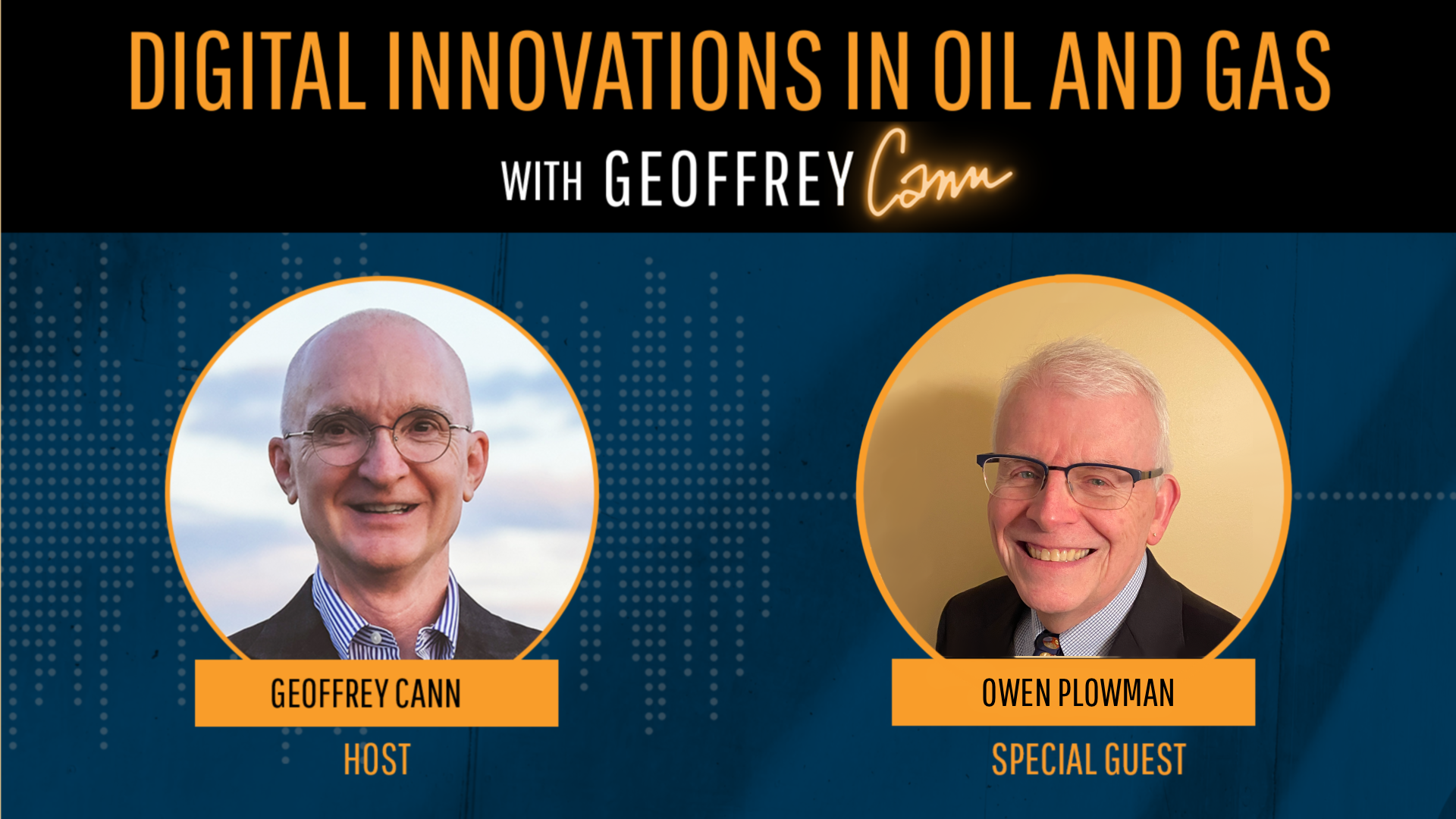
Smarter Scheduling in Oil and Gas
Scheduling in oil and gas has long been a weak link. Wells, rigs, frack crews, contractors, and regulators must all line up in precise sequence, but too often the "system" is stitched together with Excel spreadsheets, siloed tools, and a lot of human memory. The result is inefficiencies, costly delays, and endless arguments in daily meetings. That model is no longer good enough. The complexity of modern operations, coupled with volatile markets and new constraints (from labor shortages to tariffs to water management) is making traditional scheduling tools obsolete. Operators that rely on outdated approaches risk losing millions in wasted time and missed opportunities. Spying this problem years ago, Actenum, an AI-enabled scheduling platform that treats scheduling not as a collection of dates, but as a living model of operations, set out to correct this problem. The tool captures constraints, integrates with systems of record, forecasts production, and enables scenario planning, in real time. Companies report faster well delivery, reduced conflicts, smarter forecasting, and millions in direct savings. In this episode, I speak with Owen Plowman, Vice President of Business Development at Actenum, about how smarter scheduling is reshaping oil and gas. We cover real-world client stories, cultural shifts inside organizations, and how AI is opening new optimization opportuntities in planning, turnarounds, and offshore logistics. 👤 About the Guest Owen Plowman is Vice President of Business Development at Actenum, a software company specializing in AI-enabled scheduling solutions for the energy sector. With a background in computer science, Owen began his career in the defense sector, later joining Oracle during its rapid global expansion. Since 2006, he has focused on applying advanced scheduling technology to oil and gas, helping clients worldwide optimize drilling programs, turnarounds, and offshore operations. 👉 Connect with Owen and Actenum Request a Demo Watch Actenum DSO in Action Download a Brochure ⚒️ Additional Tools & Resources 🎙 Go backstage and check out my studio: geoffreycann.com/mystudio 📘 Take my one day digital strategy training course for oil and gas: Udemy Course 🔗 Connect with Me Resources: geoffreycann.com/resources Blog series: digitaloilgas.substack.com Podcast: geoffreycann.com/broadcast LinkedIn: linkedin.com/in/advocate-digital-innovation-for-energy X: x.com/geoffreycann 🎤 Contact for Lectures and Keynotes I speak regularly on these and other topics. Contact me to book a brief call about your upcoming event needs. Click here: geoffreycann.com/contact ⚠️ Disclaimer The views expressed in this podcast are my own and do not constitute professional advice.

Harnessing Energy's Data Deluge
The oil and gas industry generates extraordinary amounts of data from millions of sensors, yet only a tiny fraction, at most 8%, is actually used to inform decisions on complex and valuable assets. Decades of building analytics and machine learning solutions have helped, but they've also left companies with a patchwork of siloed systems and "industrial gridlock." The arrival of foundation models in late 2022 introduced the possibility of moving beyond one-off solutions. But generic internet-trained models are not suitable for high-risk industrial environments, where accuracy, context, and explainability are essential. The sector needs something different. Applied Computing is tackling this challenge head-on by creating a foundation model designed specifically for energy. Built to handle time-series data, diagrams, operator logs, and unstructured engineering information, their model emphasizes contextual understanding, explainability, and zero hallucinations. My guest this week, Dan Jeavons, is President of Applied Computing and former VP of Computational Science and Digital Innovation at Shell. Dan shares his career journey, why foundation models represent a turning point for the industry, and how energy can finally begin to unlock the 92% of data it currently leaves on the table. 👤 About the Guest Dan Jeavons is President of Applied Computing, a technology company developing foundation models tailored for the energy sector. At Shell, he led global AI initiatives and oversaw advanced research into digital technologies. With over 20 years of experience in consulting and energy, Dan has been at the forefront of applying data and AI to improve business processes, optimize operations, and explore new business models. LinkedIn: Dan Jeavons Applied Computing ⚒️ Additional Tools & Resources 🎙️ Go backstage and check out my studio: https://geoffreycann.com/mystudio/ 🛠️ Take my one-day digital strategy training course for oil and gas: Udemy Course 🔗 Connect with Me Resources Digital Oil and Gas Blog Podcast LinkedIn X / Twitter 📢 Contact for Lectures and Keynotes I speak regularly on these and other topics. Contact me to book a brief call about your upcoming event needs. ⚠️ Disclaimer The views expressed in this podcast are my own and do not constitute professional advice.

When Water Bites Back: How Oil and Gas Learned to Respect Its Most Overlooked Resource
Water is the unsung workhorse of the oil and gas industry. It's instrumental for generating steam, driving b, lubricating drill bits, flooding reservoirs, and separating oil from oil sands. Historically it's been cheap, plentiful, and overlooked. As climate pressures mount and scarcity becomes real, water is now emerging as one of the industry's most critical resources. Water isn't just another utility, like power. It's a highly interconnected system. A quick fix in one unit can cause downstream failures, regulatory breaches, or environmental harm. Unlike power, water can be reused. Companies are now wise to the fact that traditional, siloed approaches to water management no longer work. One solution lies in building holistic, site-wide digital twins of water systems. These models bring together flows, chemistry, capacity, compliance, and infrastructure data into one view, enabling operators to troubleshoot more effectively, run "what if" scenarios, and align operations with ESG commitments. In this episode, I speak with Gil Maron, a project engineer with FTD Solutions, about his journey from refinery process engineer to water management specialist, why water is local and unique to every site, and how digital twins are helping oil and gas companies cut costs, meet sustainability goals, and avoid costly mistakes. 👤 About the Guest Gil Maron is a Project Engineer at FTD Solutions, where he focuses on industrial water management, treatment, and analytics. With a background in refinery operations and pharmaceuticals, Gil brings deep expertise in troubleshooting complex process systems. At FTD, he works with oil and gas, semiconductors, and other industries to help clients adopt holistic, data-driven approaches to water use and sustainability. 🔗 Connect with Gil on LinkedIn 🔗 Learn more at FTD Solutions ⚒️ Additional Tools & Resources 🎙 Go backstage and check out my podcast studio 📘 Take my one day digital strategy training course 📰 Read my weekly Digital Oil and Gas blog 🔗 Connect with Me 🌐 Website 🎧 Podcast 💼 LinkedIn 🐦 X (Twitter) 🎤 Contact for Lectures and Keynotes I speak regularly on topics like digital innovation, sustainability, and the energy transition. Book a call to discuss your upcoming event. ⚠️ Disclaimer The views expressed in this podcast are my own and do not constitute professional advice.
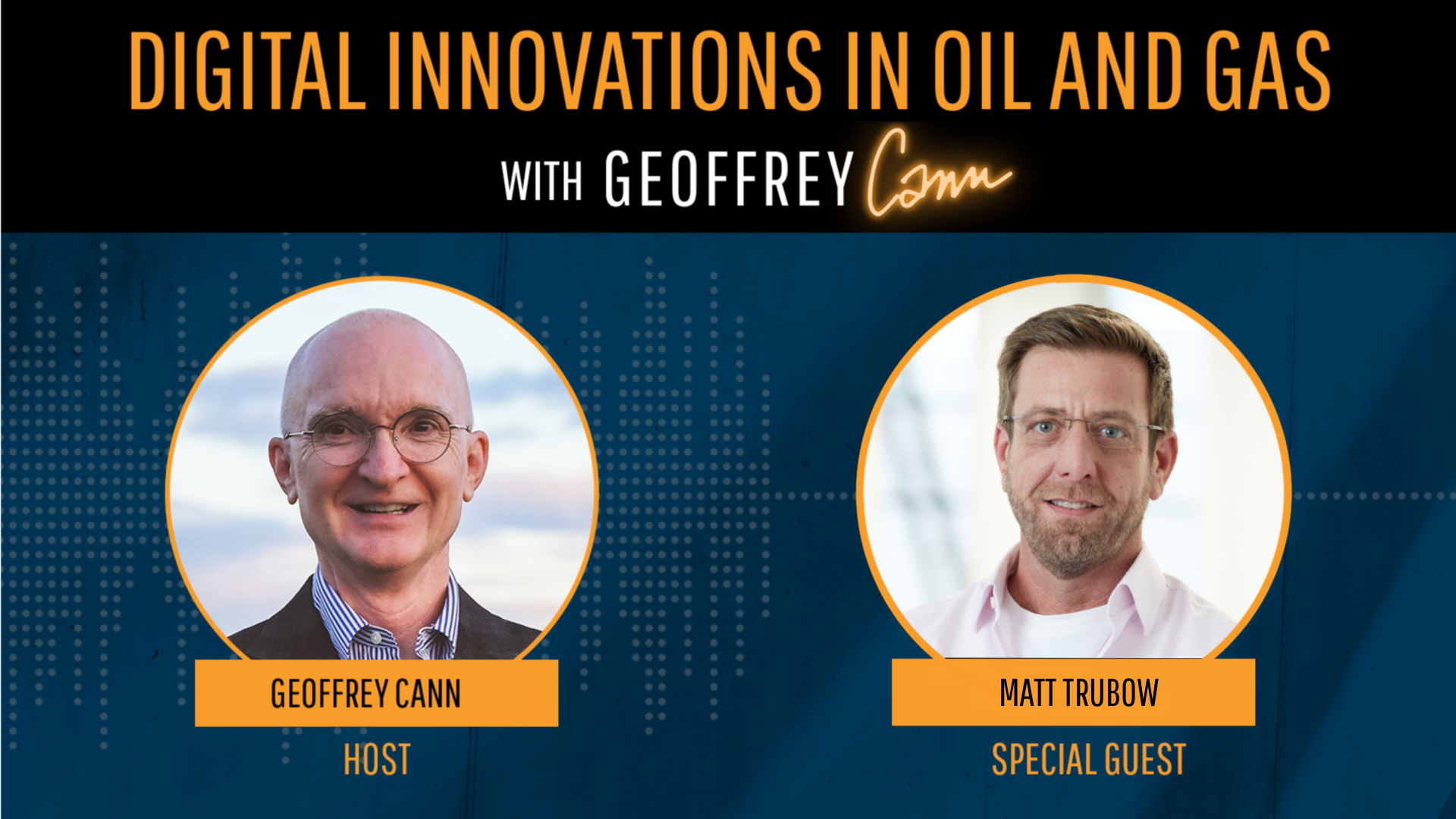
How VR is Revolutionizing Industrial Training
The industrial sector faces a growing challenge: how to train a rapidly evolving, inexperienced workforce to safely and effectively operate aging and complex infrastructure. Traditional training tools like PowerPoint presentations and passive classroom learning no longer cut it, especially in high-risk environments like oil refineries and offshore rigs. Enter immersive training platforms—tools that provide guided, interactive learning experiences in virtual environments. These platforms bridge the comprehension gap by enabling engineers to interact with equipment and scenarios in a simulated setting before ever stepping on site. The benefits are substantial: improved cognition, faster onboarding, safer operations, and better cross-functional awareness. In this episode, I speak with Matt Trubow, Commercial Director of Hidden Creative, where we discuss how their browser-based immersive platform "Simmerse" is transforming how engineering-heavy industries onboard and train personnel. From AI-driven hazard detection to gamified safety walkthroughs, Matt illustrates why immersive tech is not just a nice-to-have but a must-have for the future of industrial training. 👤 About the Guest Matt Trubow is the Commercial Director and co-owner of Hidden Creative, a UK-based company specializing in immersive training technologies for the engineering sector. With a background in military systems, computer engineering, and complex simulations, Matt brings a practical and deeply technical perspective to digital transformation in industry. Learn more at www.hiddenltd.com or connect with Matt on LinkedIn. ⚒️ Additional Tools & Resources 🎙 Go backstage and check out my studio: https://geoffreycann.com/mystudio/ 📘 Take my one-day digital strategy training course: https://www.udemy.com/course/digital-oil-and-gas/?referralCode=0161D4D49AB75735A185 🤝 Connect with Me 📚 Blog Series: https://digitaloilgas.substack.com/ 🎧 Podcast: https://geoffreycann.com/broadcast/ 💼 LinkedIn: https://www.linkedin.com/in/advocate-digital-innovation-for-energy/ 🐦 X: https://x.com/geoffreycann 🎤 Contact for Lectures and Keynotes I speak regularly on these and related topics. Click here to book a briefing call. ⚠️ Disclaimer The views expressed in this podcast are my own and do not constitute professional advice.

Beyond RAG
In energy and manufacturing, vast volumes of unstructured data (think OEM manuals, maintenance logs, shift notes, correspondence, procedures), sit largely untapped. For decades, experienced technicians have compensated by carrying critical knowledge in their heads. But with retirements accelerating and fewer seasoned workers on the front line, this model is breaking down. New large language learning models that underpin technologies such as Grok and ChatGPT are being trained on this unstructured content to create context-relevant, queryable databases for industry. This technology, referred to as retrieval-augmented generation (RAG), could help unlock hidden knowledge across sprawling document sets. Early attempts at RAG have certainly improved search, a task that consumes hours of scarce engineering time. However, companies quickly learned that speed and accuracy fall apart at scale, context matters, and lack of trust in the output leaves users frustrated and skeptical. The real opportunity lies in pairing RAG with agent-based AI systems designed for complex, asset-intensive environments. By reducing mean time to repair (MTTR), cutting rework, and extending the interval between failures, these solutions directly recover lost production capacity, which is an eight or nine-figure problem in many enterprises. For younger, less experienced workforces, AI tools are a critical equalizer, levelling the field against looming labor shortages. In this episode, I speak with Mark Fosdike, CEO and co-founder of Datch, about how his company is pioneering AI-driven diagnostic agents for manufacturing and industrial clients. We explore the realities of implementing RAG in high-stakes industries, the economic drivers behind adoption, and why obsessing about customers' problems is the key to success. 👤 About the Guest Mark Fosdike is the CEO and co-founder of Datch, an AI company building agent-based diagnostic solutions for asset-intensive industries. With a background in aerospace engineering, shipbuilding, and manufacturing systems, Mark has spent his career navigating the complexities of the industrial value chain. His vision for Datch was born from frustration with traditional maintenance practices and a desire to put AI to work solving real-world challenges on the plant floor. LinkedIn Profile Company Website ⚒️ Additional Tools & Resources 🎙️ Go backstage and check out my studio: geoffreycann.com/mystudio 📘 Take my one-day digital strategy training course for oil and gas: Digital Strategy Training 🔗 Connect with Me 📚 Blog series: digitaloilgas.substack.com 🎧 Podcast: geoffreycann.com/broadcast 💼 LinkedIn: Geoffrey Cann 🐦 X: @geoffreycann 🎤 Contact for Lectures and Keynotes I speak regularly on these and other topics. Contact me to book a brief call about your upcoming event needs. Get in touch here. ⚠️ Disclaimer The views expressed in this podcast are my own and do not constitute professional advice.
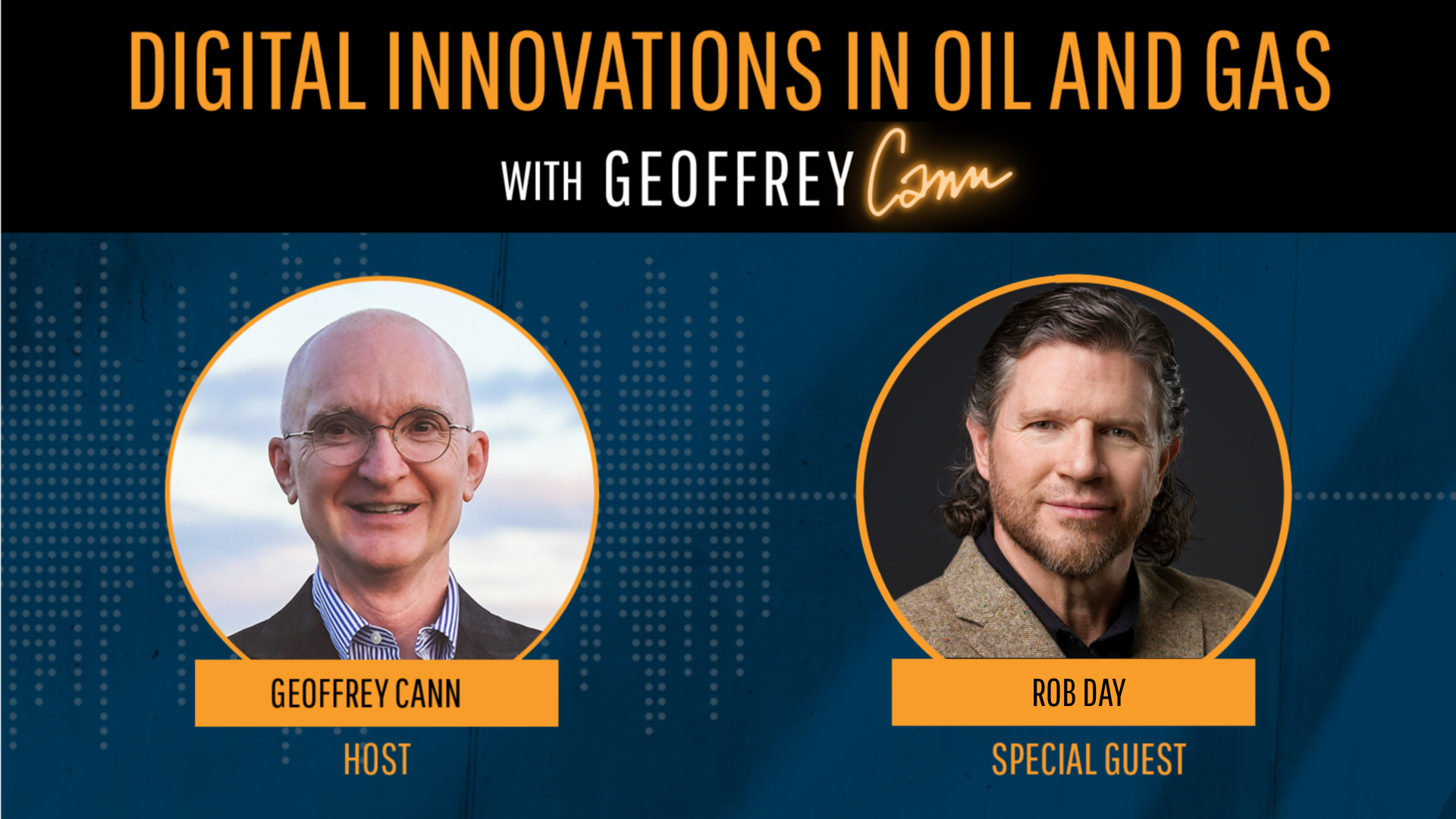
Training the Dog
Why is a pug named Phoebe likely more qualified than your frontline crew? In the oil and gas industry, online training and certification have become the norm. Let's agree it's convenient, cost-effective, and scalable. But what if the people taking that training are subverting the training using AI, or aren't people at all? Digital tools, especially generative AI, are now being misused to automate training completion, which undermines the entire compliance system. The same platforms designed to protect workers, assure reliability, comply with regulations, and safeguard the environment may be certifying untrained staff, putting lives at risk and exposing companies to severe legal and financial consequences. In this episode, Rob Day joins me on the podcast to discuss this hidden crisis. Rob is Managing Director at Cognisense, and a dedicated expert in risk mitigation. From court cases involving industrial explosions to training a pug to complete OSHA 10, Rob shares shocking and true stories from the frontlines of digital risk. He also outlines what companies can do right now to reclaim control over their training systems, ensure legal compliance, and reduce exposure. All managers and supervisors on the front line of industrial work need to be aware of the risks they face. #RiskWashing #OHS #SafetyTraining #TrainingthatMatters #AI #WorkplaceSafety #RiskManagement #OilAndGas 👤 About the Guest Rob Day is Managing Director of Cognisense, a firm focused on risk mitigation and training validation for industrial operations. His background spans military firefighting, hazardous materials response, legal consulting, and refinery operations. Rob has advised on major incident investigations and regulatory risk across the energy sector. He's now leading efforts to counter AI-enabled "risk washing" and bring integrity back to digital training systems. 🔗 Connect with Rob on LinkedIn 🌐 Connect with Cognisense 🧰 Additional Tools & Resources 📄 All about risk-washing by Rob Day 🎥 Go backstage and check out my studio: https://geoffreycann.com/mystudio/ 📘 Take my one-day digital strategy course for oil and gas: https://www.udemy.com/course/digital-oil-and-gas/?referralCode=0161D4D49AB75735A185 🔗 Connect with Me ✍ Blog: https://digitaloilgas.substack.com/ 🎙 Podcast: https://geoffreycann.com/broadcast/ 💼 LinkedIn: https://www.linkedin.com/in/advocate-digital-innovation-for-energy/ 🐦 X (Twitter): https://x.com/geoffreycann 🎤 Contact for Lectures and Keynotes I speak regularly on these and other topics. Contact me to book a brief call about your upcoming event needs. ⚠️ Disclaimer The views expressed in this podcast are my own and do not constitute professional advice.

The Five Lessons of Digital and AI Deployment
The oil and gas industry has invested heavily in new digital technologies, but too many efforts fall short in value delivery. However compelling digital initiatives may seem, they will assuredly flounder if workers are unable or unwilling to adopt them. The challenge lies in the way asset centric organizations tend to approach change. Leaders often seek rapid results that will contribute to current earnings, while frontline teams struggle with clunky processes and data silos ill-suited for AI, analytics, robotics, connected workers, and many other innovations. Rolling out new tools at scale without winning hearts and minds often leads to resistance, "pilot project hell," and failed implementations. So how can energy companies unlock real value from digital transformation? What are the overlooked success factors that determine whether AI and digital deployments thrive or falter? In this episode, I'm joined by David Moore, a digital advisor and AI delivery lead, who reflects on the five critical lessons he wishes he had known earlier in his career. From the power of storytelling, to focusing on people before technology, to the need to start small and scale, to leveraging vendors as partners, and finally the hard truth that data is the real currency, David shares practical insights drawn from frontline experience. ⸻ 👤 About the Guest David Moore is a well engineer by background with a PhD in mechanical engineering and now a digital advisor and AI leader. Over the past nine years, he has worked on digital transformation across upstream oil and gas, leading projects from Microsoft Teams deployments to AI-driven planning and real-time operations. David brings a unique perspective from seeing the industry's challenges from both the operator and service company side, with deep experience in building adoption, scaling pilots and designing data foundations all on a global scale. 🌐 Website: www.davidjmoore.com 🛠️ Additional Tools & Resources 🎙️ Go backstage and check out my studio: https://geoffreycann.com/mystudio/ 📘 Take my one-day digital strategy training course for oil and gas: https://www.udemy.com/course/digital-oil-and-gas/?referralCode=0161D4D49AB75735A185 🔗 Connect with Me 📚 Blog series: https://digitaloilgas.substack.com/ 🎧 Podcast: https://geoffreycann.com/broadcast/ 💼 LinkedIn: https://www.linkedin.com/in/advocate-digital-innovation-for-energy/ 🐦 X: https://x.com/geoffreycann 🎤 Contact for Lectures and Keynotes I speak regularly on these and other topics. Contact me to book a brief call about your upcoming event needs: 👉 https://geoffreycann.com/contact/ ⚠️ Disclaimer The views expressed in this podcast are my own and do not constitute professional advice.
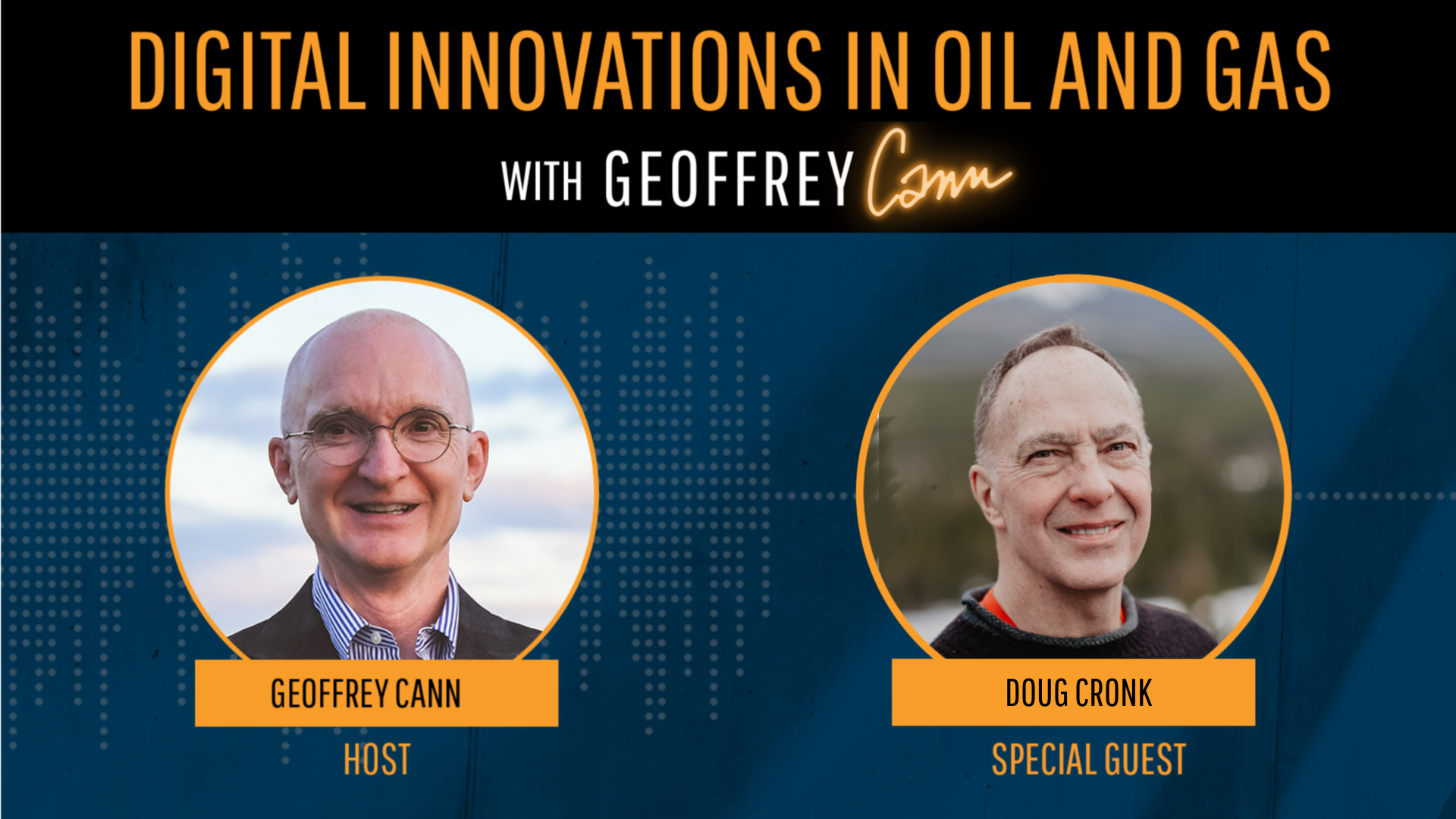
The Looming Energy Talent Gap
The energy industry is having a moment. As assets become digitized, operations increasingly automated, molecules displaced for electrons, and capital more discerning, the biggest challenge is now people, instead of engineering. Specifically, where will the next generation of digitally fluent energy professionals come from? At the same time, academic institutions, whose mission is to deliver qualified talent, are under grave financial pressure. International student revenue is collapsing, and many programs are out of step with the real-world digital needs of industry. Meanwhile, the workforce is retiring, and young professionals are turning away from careers in oil and gas. In this episode, Doug Cronk, an investment committee advisor, and former Academic Chair of Financial Services and Fintech at SAIT, sets out how the energy sector can seize this moment. By repackaging existing academic offerings, combining them with data analytics, AI, and energy domain knowledge, and co-creating programs that reflect the needs of a digital energy economy, the energy sector can secure its future talent needs. Doug argues that industry must lead, by articulating exactly what skills are needed, and why energy companies should present themselves as data-driven innovation platforms, not just extractive enterprises. This episode offers a clear-eyed assessment of the education-industry disconnect, the talent crisis looming over the sector, and the strategic opportunity to build the next generation of digital energy leaders. 👤 About the Guest Doug Cronk is an experienced board member, investment committee advisor, and former Academic Chair of Financial Services and Fintech at SAIT. His career spans banking, pension fund management, and education, with a specialty in helping institutions adapt to technological and demographic disruption. Today, he sits on multiple boards where he evaluates long-term investment strategies and talent risk in capital-intensive sectors, including energy. 🔗 Doug Cronk on LinkedIn 🛠️ Additional Tools & Resources 🎙️ Go backstage and check out my studio: https://geoffreycann.com/mystudio/ 📘 Take my one-day digital strategy training course for oil and gas: https://www.udemy.com/course/digital-oil-and-gas/?referralCode=0161D4D49AB75735A185 🔗 Connect with Me 📚 Blog series: https://digitaloilgas.substack.com/ 🎧 Podcast: https://geoffreycann.com/broadcast/ 💼 LinkedIn: https://www.linkedin.com/in/advocate-digital-innovation-for-energy/ 🐦 X: https://x.com/geoffreycann 🎤 Contact for Lectures and Keynotes I speak regularly on these and other topics. Contact me to book a brief call about your upcoming event needs: 👉 https://geoffreycann.com/contact/ ⚠️ Disclaimer The views expressed in this podcast are my own and do not constitute professional advice.
From Paper to Pocket
Heavy industry runs on complex systems and distributed assets, but frontline workers are often still armed with paper manuals and radios. It works, but yields an unacceptably high level of inconsistencies, safety incidents, and productivity bottlenecks. And as experienced workers retire, critical knowledge about systems, assets, and good practice disappears. The shift to digital work execution is now both viable and urgent. Smartphones are everywhere. AI is mainstream. And yet many organizations still struggle to digitize even basic workflows. In this episode, Liam Scanlan, co-founder and managing director of HINDSITE, reveals how his technology is addressing this challenge head-on. HINDSITE equips frontline workers with just-in-time digital instructions, visual training, and live process documentation. Companies that leverage this technology report fewer errors, faster onboarding, improved safety, and lower costs. Whether it's inline inspections, sensor maintenance, or tire bay procedures, HINDSITE brings consistency and governance to the last mile of industrial work. 👤 About the Guest: Liam Scanlan is the co-founder and managing director of HINDSITE, a field operations platform built to support complex, safety-critical tasks in heavy industry. Liam has worked in digital transformation projects around the world with BHP. He has worked across the Energy sector in work management solutions for over a decade and set out to solve the particular challenges of Industry around Work Management and Service Delivery. He has degrees in Mining Engineering, Law, Finance and Economics. ✉️ [email protected] 🌐 www.hindsiteind.com ⚒️ Additional Tools & Resources: 🎥 Go backstage at my studio 📘 Digital Strategy Training 🔗 Connect with Me: Resources Blog Podcast LinkedIn X (Twitter) ☎️ Contact for Lectures and Keynotes: Book a Call ⚠️ Disclaimer: The views expressed in this podcast are my own and do not constitute professional advice.
The Helium Signal
The traditional model of hydrocarbon exploration has transitioned in much of North America, replaced by exploitation of known shale and tight resources. For shale players, exploration is seen as more risky, expensive, and slow than pursuing resource play. Classic geochemical methods, reliant on sample collection and lab analysis, can't keep up with the need for real-time decision-making. Helium—a light, inert, and upwardly mobile gas—offers potential as an indicator of subsurface resources, but its volatile nature makes it difficult to measure accurately and reliably using conventional approaches. Helium, when measured digitally and interpreted with AI, can provide a new high quality and reliable signal for the presence of valuable subsurface resources, reducing costs, time, and risk. In this episode, Denis Krysanov, founder of Heologic, explains how helium-based digital exploration can help identify oil, gas, lithium, geothermal energy, and even natural hydrogen deposits. By capturing helium anomalies in real-time, and layering them with AI and geoscience data, Heologic creates a digital twin of subsurface conditions. With field-proven success from Argentina to Malaysia, this technique has already delivered remarkable predictive power, improving hit rates and opening new plays. 👤 About the Guest Denis Krysanov is the founder and CEO of Heologic, a geoscience innovation company pioneering helium-based exploration. With over two decades of experience at the intersection of automation, robotics, and energy systems, Denis combines technical depth with entrepreneurial leadership. His career began in offshore oil and gas technology in Finland, and has since expanded globally with breakthrough applications in digital geochemistry, particularly in helium sensing and AI integration. Heologic now operates across multiple continents and energy sectors, working with companies such as Petronas and YPF. 🧰 Additional Tools & Resources 🛠 Visit My Studio 🎓 One-Day Digital Strategy Course for Oil and Gas 🔗 Connect with Me 📚 Resources 📰 Substack Newsletter 🎧 Podcast Archive 💼 LinkedIn 🐦 X / Twitter 🎤 Contact for Lectures and Keynotes I speak regularly on these and related topics. Contact me to book a call about your next event. ⚠️ Disclaimer The views expressed in this podcast are my own and do not constitute professional advice.
Honey I Shrunk The Device
In the world of oil and gas operations, edge devices are mission-critical. These compact, intelligent sensors operate in the most extreme of environments, such as remote drill sites, deep wells, and hostile landscapes, where they continuously collect operational data. Best in class operators don't just throw digital at the field. They prioritize efficiency, reliability, and integrity at the edge, where human oversight is limited, infrequent, and mostly absent. But the drive to digitize oilfield infrastructure raises major challenges: reliable power, cyber threats, temperature extremes, and real-time decision-making without cloud access. David Smith, VP of Innovation at Black Pearl Technology, shares how his team builds micro-powered, field-tough sensors that handle pre-processing on-site, sip power in microamps, and run mission-critical code on the edge to avoid failures. MEMS (Micro-Electro-Mechanical Systems) is enabling a new era of industrial sensing, complete with cyber-safe hardware that controls every component. Innovation must always serve a real-world problem—not just be a shiny gadget. From strain gauges to AI-at-the-edge, David offers an inside look into the future of smarter, safer, and smaller industrial tech. 👤 About the Guest: David Smith is Vice President of Innovation and co-founder at Black Pearl Technology, where he leads the development of ruggedized, ultra-efficient sensing devices for industrial and energy sectors. With a background spanning biomedical, aerospace, and energy tech, David brings decades of experience in building purpose-driven edge innovations that survive the toughest conditions on earth. 💼 Linkedin: https://www.linkedin.com/in/techpirate/ 🔗 Black Pearl Technology Website 🛠️ Additional Tools & Resources: 🎛️ Go backstage and check out my studio: https://geoffreycann.com/mystudio 🧠 Take my one day digital strategy training course for oil and gas: https://www.udemy.com/course/digital-oil-and-gas 🤝 Connect with Me: 🧾 Resources: https://geoffreycann.com/resources 📚 Blog: https://digitaloilgas.substack.com 🎧 Podcast: https://geoffreycann.com/broadcast 💼 LinkedIn: https://www.linkedin.com/in/advocate-digital-innovation-for-energy 🐦 X: https://x.com/geoffreycann 🎤 Contact for Lectures and Keynotes: I speak regularly on these and other topics. Contact me to book a call for your upcoming event: 👉 https://geoffreycann.com/contact ⚠️ Disclaimer: The views expressed in this podcast are my own and do not constitute professional advice.
Unlocking Capital Innovation in Oil and Gas
The global upstream oil and gas sector is confronting a mounting crisis—access to capital. For over a decade, international producers, especially small- and mid-cap firms, have faced shrinking pools of funding as banks exit the space and public equity markets falter. Traditional sources of capital have dwindled, leaving many promising ventures stranded without the financial fuel they need to grow. As capital constraints tighten, the sector's self-depleting business model—where every produced barrel reduces tomorrow's inventory—becomes unsustainable. The result? A looming risk of supply shortfalls, price shocks, and widening energy inequity, especially in underdeveloped economies. With traditional financing off the table, how can energy producers bridge this capital chasm? In this episode, I sit down with Richard Naden, a seasoned executive and co-founder of Atlas Energy, to explore a breakthrough model inspired by royalty and streaming structures from mining and North American energy. Richard shares how Atlas provides not only innovative capital but also operational and technical expertise to its partners, creating an aligned and scalable funding approach. With a lean asset-light model, heavy on analytics and trust in data, Atlas aims to build a multi-billion dollar portfolio that could reshape how energy projects are financed around the world. 👤 About the Guest Richard Naden is a senior executive with Atlas Energy Corp., bringing nearly four decades of experience in engineering, operations, acquisitions, and executive leadership roles in the global energy industry. Raised on the gas fields of Alberta and trained as a mechanical engineer, Richard's international career has spanned the Americas, Europe, North Africa, the Middle East, and Asia. His latest venture, Atlas Energy, combines his depth of industry knowledge with a passion for innovation and sustainable energy finance. atlas-corp.ca [email protected] 🧰 Additional Tools & Resources 🔗 Visit My Studio 📘 Digital Strategy Course for Oil and Gas 🔗 Connect with Me Resources Digital Oil and Gas Blog Podcast Archive LinkedIn X / Twitter 🎤 Contact for Lectures and Keynotes I speak regularly on these topics. Book a call to discuss your event. ⚠️ Disclaimer The views expressed in this podcast are my own and do not constitute professional advice.
From Clipboards to Cloud
In the upstream oil and gas sector, frontline operations have long depended on manual methods for information management, such as clipboards, spreadsheets, and disconnected tools. These outdated processes persist despite mounting pressure to improve efficiency and cut costs. But with today's margin compression, regulatory scrutiny, and demographic changes, that operational model is no longer sustainable. Field operators are expected to do more with less, but lack integrated, user-friendly tools that align with their daily work activities. In this episode, I chat with Philip Richard, CEO of Porosity, about how his company is tackling these very challenges. Leveraging his personal background in production engineering and startup leadership, Philip explains how Porosity is building software designed for the field, not just the back office. Key moves such as streamlining leak detection, maintenance, and safety workflows through a single, mobile-first platform really help the field directly address its challenges. This episode is all about how oilfield digitization actually happens. 👤About the Guest: Philip Richard is the CEO of Porosity, a software company focused on improving field operations in oil and gas. With a background in petroleum engineering and leadership roles in methane detection and SaaS startups, Philip brings a rare blend of field experience and entrepreneurial drive. Connect with Philip on LinkedIn. Additional Tools & Resources: 🎙 Podcast: https://geoffreycann.com/broadcast/ 📚 Blog Series: https://digitaloilgas.substack.com/ 🎓 Digital Strategy Course: Udemy – Digital Oil and Gas 📷 Backstage Tour: https://geoffreycann.com/mystudio/ Connect with Me: 🔗 LinkedIn ✖ X (Twitter) 💬 Contact Contact for Lectures and Keynotes: "I speak regularly on these and other topics. Contact me to book a brief call about your upcoming event needs." 👉 Click here to schedule Disclaimer: The views expressed in this podcast are my own and do not constitute professional advice.

Digital Gets Real in the Mid-Market
Mid-sized oil and gas companies are now at a digital crossroads. While supermajors have pushed forward with large-scale transformation programs, many mid-market firms are only beginning to explore how digital innovation can improve performance. Their operational processes—budgeting, forecasting, asset planning—tend to mirror those of larger firms but constrained by fewer resources and less internal capability. Unfortunately, mid-sized companies cannot simply copy the big-company playbook. They lack dedicated data teams, struggle with legacy systems, and must handle all the integration hassles with bespoke coding. At the same time, they are under the same pressure to lower costs, improve transparency, and make faster, better decisions. Is a pragmatic and impactful digital transformation even possible in this context? Absolutely. In this episode, I speak with Lewis Gillhespy, Executive Advisor at Rockflow, on practical solutions that work with mid-sized firms. By focusing on core business processes—particularly budgeting and production forecasting—smaller firms can drive efficiency through better data quality, increased transparency, and dashboard-driven decision-making. A bonus outcome is that improved data transparency leads to a self-reinforcing data stewardship culture, and why starting with business needs (not technology hype) is the key to lasting change. 👤 About the Guest Lewis Gillhespy is an Executive Advisor at Rockflow, a UK-based consultancy focused on oil and gas strategy, technical excellence, and expert witness services. A former transformation leader at Suncor, Lewis now advises global mid-sized energy companies across Europe, the Middle East, and Asia. He brings deep operational experience and a keen understanding of how to turn digital ambition into practical execution. Connect with Lewis Gillhespy 🔗 Rockflow 🔗 LinkedIn - Lewis Gillhespy Additional Tools & Resources 🎙 Go backstage: My Podcast Studio 🎓 Take the course: Digital Strategy for Oil and Gas Connect with Me 🌐 Resources 📝 Substack 🔗 LinkedIn ✖️ X (Twitter) Contact for Lectures and Keynotes I speak regularly on these and other topics. Book a brief call about your event. Disclaimer The views expressed in this podcast are my own and do not constitute professional advice.
Methane Matters
The oil and gas industry is sitting on a ticking environmental and financial liability. Around the world, millions of wells have been drilled to date, many more will be drilled, and all will eventually need to be plugged and abandoned. Today, the US alone has thousands of orphaned and marginal wells, many leaking methane, a greenhouse gas many times more potent than carbon dioxide. With underfunded asset retirement obligations and inconsistent plugging practices of the past, the sector faces mounting pressure to act—but struggles to finance solutions at scale. There is a potential solution: the voluntary carbon credit market. In this episode, I interview David Stewart, President of Engineering and Environment at Sendero Services, who explains how new carbon methodologies are turning methane leaks into monetizable credits. By quantifying emissions avoided through proper plugging, validating permanence with reserves analysis, and using blockchain for traceability, these credits offer a science-based, verifiable way to fund environmental remediation. Methane credits tied to oil and gas wells are not only more reliable than many nature-based offsets, but also ripe for scale. Dave and I discuss the economics, digital technologies, and policy barriers shaping a new frontier in decarbonization finance. 👤 About the Guest David Stewart is President of Engineering and Environment at Sendero Services. He holds a Master's degree in Environmental Policy and Management and brings over 30 years of experience in the oil and gas industry. His career spans emissions measurement in California to executive roles at Encana, Bonanza Creek, and Crestone, where he led environmental compliance, strategic partnerships, and M&A. At Sendero, David leads efforts to transform the challenge of orphaned wells into an opportunity through the application of voluntary carbon credits. Connect with Dave Stewart: 🔗 Sendero Services Website 🔗 LinkedIn - Dave Stewart 🛠 Additional Tools & Resources 🎧 Go backstage and check out my studio: My Studio 📘 Take my one-day digital strategy training for oil and gas: Digital Strategy Course 🔗 Connect with Me 🌐 Resources 📘 Substack Blog 🎙 Podcast Archive 💼 LinkedIn 🐦 X (formerly Twitter) 🎤 Contact for Lectures and Keynotes I speak regularly on these and related topics. Contact me here to book a discovery call for your next event. ⚠ Disclaimer The views expressed in this podcast are my own and do not constitute professional advice.

700 Ways to Boost Cash Flow in Oil and Gas
The oil market is once again bracing for change, with OPEC signaling their interest in unlocking supply that has been withheld. For producers, this looming oversupply translates into a fresh imperative: cut costs. The oil and gas sector, long accustomed to volatility, must now sharpen its cost control strategies in the face of intensifying pressure on margins. Matthew Hatami, a professional engineer, entrepreneur, and author, joins me on this episode to discuss the tools and tactics operators can use to improve free cash flow. With experience spanning Halliburton, Hess, Chesapeake, and private equity ventures, Matthew shares how data and digital technologies can identify, prevent, and mitigate costly inefficiencies—without big budgets or sweeping tech overhauls. Drawing from his new book, Shale Oil and Gas Operations: Maximize Cashflow with Cost Reduction, Matthew shares three practical, high-impact digital strategies: build operational algorithms to flag issues before they arise, embed probability-based decision-making into drilling management, and implement daily visual reporting using nothing more than a smartphone. Each tactic is aimed at boosting productivity, engaging teams, and staying competitive in an increasingly lean industry. 👤 About the Guest Matthew Hatami is an accomplished oil and gas professional with over two decades of experience across engineering, operations, and executive roles. A former Halliburton and Hess engineer, he's also the author of Oilfield Survival Guide and Shale Oil and Gas Operations: Maximize Cashflow with Cost Reduction. He advocates for data-driven, digital-first thinking to solve industry problems at scale. ⚒️ Additional Tools & Resources: 🎙 Go backstage and check out my studio 🎓 Take my digital strategy training for oil and gas 🔗 Connect with Me: 📚 Digital Oil and Gas Blog 🎧 Podcast Archive 🔗 LinkedIn 🐦 X (formerly Twitter) 🗣️ Contact for Lectures and Keynotes: I speak regularly on digital transformation and innovation in oil and gas. Contact me to book a session for your team or event. ⚠️ Disclaimer: The views expressed in this podcast are my own and do not constitute professional advice.

Fracking Reinvented
For decades, hydraulic fracturing—or fracking—has relied heavily on water and sand to crack underground rock and release oil and gas. Fracking is safe, proven, and reliable, and in collaboration with horizontal drilling, has resulted in the huge growth in hydro carbon production in the US and Canada. But fresh water is a scarce resource particularly in arid settings, and in many places under stress because of climate change. Disposal of used water is a technical challenge and costly. The sand resource, or proppant, is both costly to mine and heavy to ship. The mechanical process of forcing water and sand under pressure down the wells and into the rock generates a substantial carbon footprint. Enter RocketFrac, a Calgary-based innovator using solid rocket fuel to crack the status quo. Unlike conventional fracking, RocketFrac's technology eliminates the need for water and sand, which dramatically lowers carbon emissions and site disturbance. This self-propping, solid-fuel-based technique also opens up economically stranded assets, including abandoned or underperforming wells, with potential applications in water-stressed regions like California and the Middle East. It's an innovation that could redefine the economics and environmental impact of oil extraction. In this episode I speak with Pavan Elapavuluri, Chief Technology Officer at RocketFrac, to hear firsthand about the origin of RocketFrac's solution, the physics behind the technology, its regulatory journey, and the digital tools they're using to model outcomes and rank well candidates. From carbon offsets to offshore potential, this episode is an explosive look at what could be the next big leap in oilfield operations. And yes, those puns are all intended! ⸻ 👤 About the Guest Pavan Elapavuluri is the Chief Technology Officer at RocketFrac Services Ltd. With a Ph.D. in Geophysics from the University of Calgary and prior experience at Schlumberger in both Houston and the UK, Pavan brings deep domain expertise to the development of cutting-edge oilfield technology. He leads RocketFrac's mission to reduce fracking's environmental footprint using propellant-based fracturing. Originally from India, Pavan is passionate about digital transformation in energy and commercializing sustainable innovations. Connect with Pavan: 🔗 RocketFrac's website 🔗 LinkedIn - Pavan Elapavuluri Additional Tools & Resources 🎙 Go backstage: My Podcast Studio 🎓 Take the course: Digital Strategy for Oil and Gas Connect with Me 🌐 Resources 📝 Substack 🔗 LinkedIn ✖️ X (Twitter) Contact for Lectures and Keynotes I speak regularly on these and other topics. Book a brief call about your event. Disclaimer The views expressed in this podcast are my own and do not constitute professional advice.