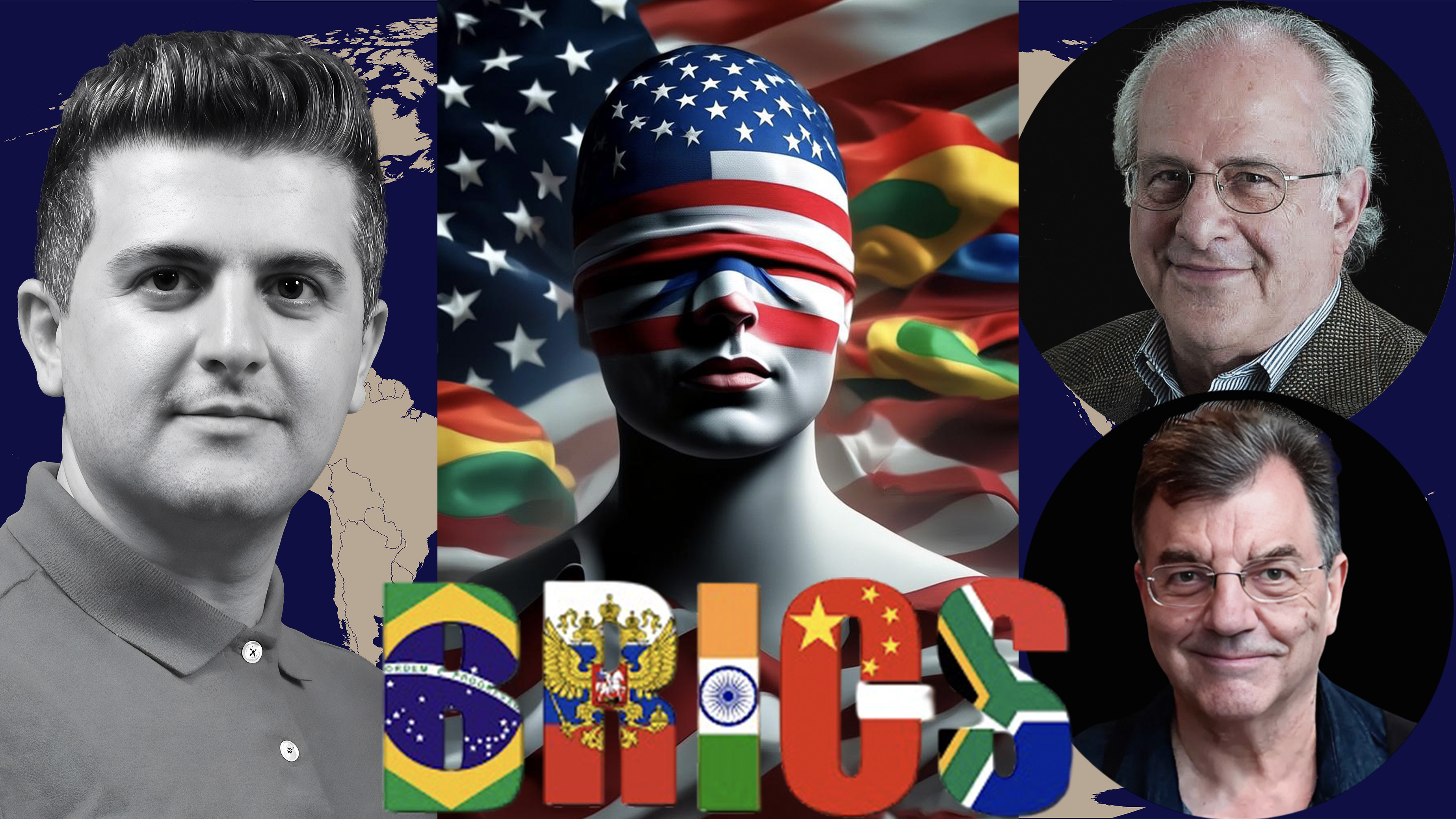
Richard Wolff & Michael Hudson: The US is BLIND to BRICS, And It's Crushing America's Future!
Dialogue Works · Nima Rostami Alkhorshid
July 11, 20251h 4m
Audio is streamed directly from the publisher (sphinx.acast.com) as published in their RSS feed. Play Podcasts does not host this file. Rights-holders can request removal through the copyright & takedown page.
Show Notes
Nima Rostami Alkhorshid:
- What is the significance of the BRICS summit in Brazil, particularly regarding global economic dynamics?
- How do tariffs imposed by the U.S., such as those on Brazil, affect international trade and relations?
- Why are the BRICS countries struggling to create a unified alternative to the Western economic system?
- What role does the U.S. play in dividing and weakening the BRICS alliance through economic policies?
- How does the concept of "grabization" explain the current economic behavior of the U.S. and its allies?
Michael Hudson:
- The BRICS summit highlights the shift from U.S.-dominated globalization to a multipolar world where countries seek independence from Western financial systems.
- Tariffs like those imposed on Brazil aim to bully nations into submission, but they also push BRICS countries to strengthen internal trade and reduce reliance on the U.S.
- BRICS lacks a clear blueprint for breaking away from neoliberalism, with members more reactive than proactive in forming new economic institutions.
- The U.S. exploits divisions within BRICS—especially using India and Brazil—to prevent a united front against American economic dominance.
- “Grabization” refers to elites stripping resources for short-term gain, mirroring the Soviet Union’s collapse and currently seen in U.S. policies.
Richard Wolff:
- The BRICS’ achievements, like $1 trillion in internal trade, show progress despite differences, partly driven by Trump’s tariffs pushing them together.
- Tariffs primarily hurt American consumers, not foreign exporters, creating inflationary pressures that could undermine U.S. competitiveness.
- BRICS remains divided due to geopolitical maneuvering, similar to how European distrust hampers unity among nations.
- Lula’s stance on globalization emphasizes that the issue isn’t globalization itself, but U.S. imperialism using it for domination.
- BRICS must redefine economic development beyond capitalism, embracing cooperative models that prioritize community over profit-driven monopolies.
Hosted on Acast. See acast.com/privacy for more information.