The Plastic Paradox: Are We Demonizing Our Greatest Tool?
Diabesity Decodified - Is Food the root cause of Type 2 Diabetes Mellitus pandemic? · Pandiyan Natarajan
Audio is streamed directly from the publisher (content.rss.com) as published in their RSS feed. Play Podcasts does not host this file. Rights-holders can request removal through the copyright & takedown page.
Show Notes
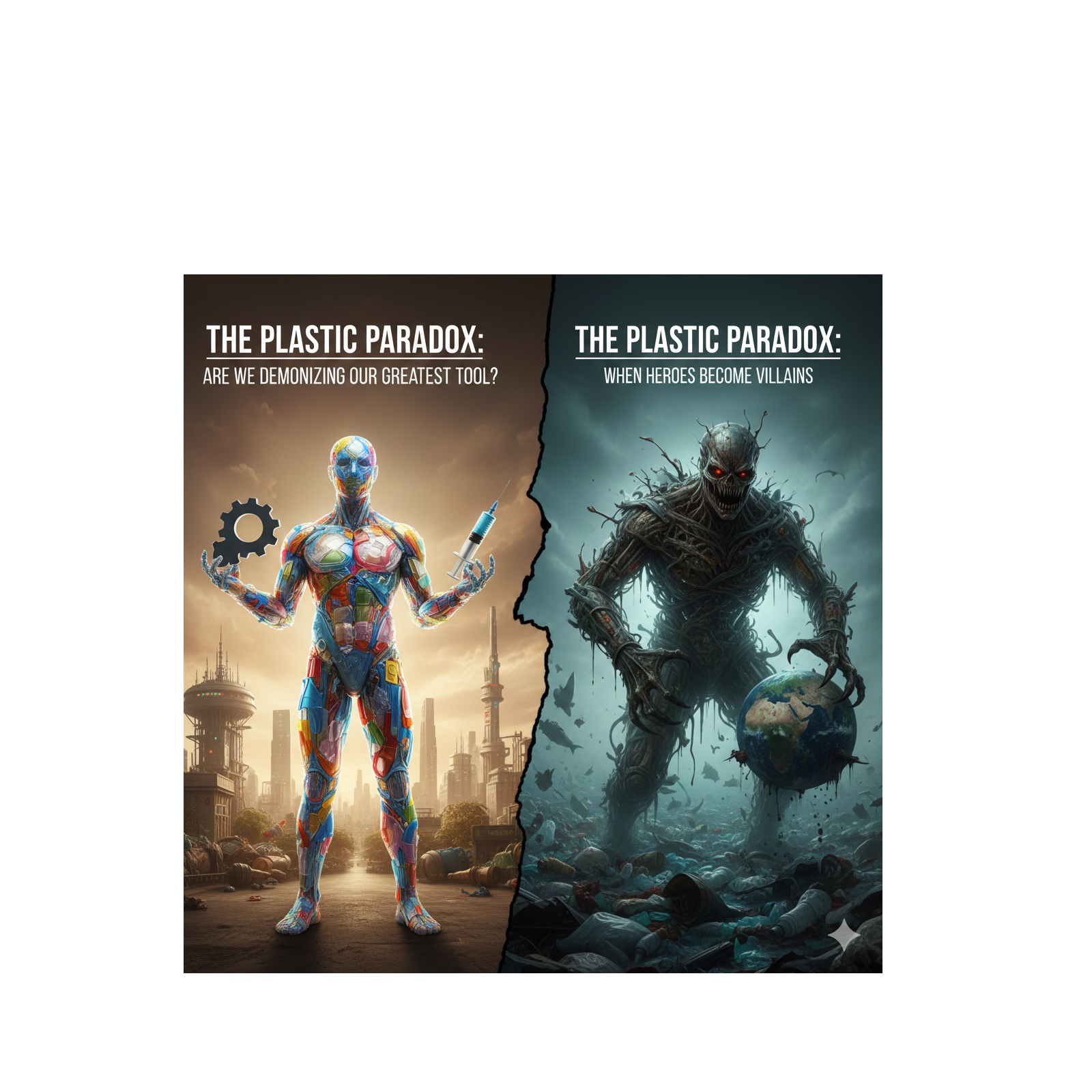
The Plastic Paradox: Are We Demonizing Our Greatest Tool?
Plastic is today's societal villain, but this view oversimplifies a complex relationship. Consider the paradox: millions of lives begin in medical-grade plastic petri dishes via IVF, yet we fear plastic bottles. This highlights our inconsistent thinking.
The question isn't "Is plastic toxic?" but "Which plastics, under what conditions?" Not all plastics are equal. Issues often arise from additives and degradation, not the core polymer. We ignore that all materials, like glass or metal, leach substances.
We call plastics "forever," but nature is adapting—bacteria and fungi are evolving to digest them. Health data also complicates the narrative: life expectancy and food safety have improved alongside plastic use, thanks to sterile medical equipment, preservation packaging, and clean water pipes.
The real benefits are immense: life-saving medical devices, reduced food waste, lightweight fuel-efficient vehicles, and democratized access to goods. The problem is not the material but our misuse of it: overproduction of single-use items, poor waste management, and littering.
Microplastics in our bodies are a legitimate concern requiring more study, but presence does not automatically mean harm. We risk a Y2K-style panic, distracting from systemic solutions.
The path forward is intelligent use: Reduce unnecessary single-use plastic, Reuse durable products, Recycle with proper infrastructure, and Regulate problematic additives. We must innovate with better materials and systems.
Ultimately, plastic is a tool—amoral and incredibly versatile. The villain isn't the plastic; it's our irresponsible production, consumption, and disposal. The challenge is to embrace nuance, improve our systems, and wield this powerful tool with stewardship, not hysteria.