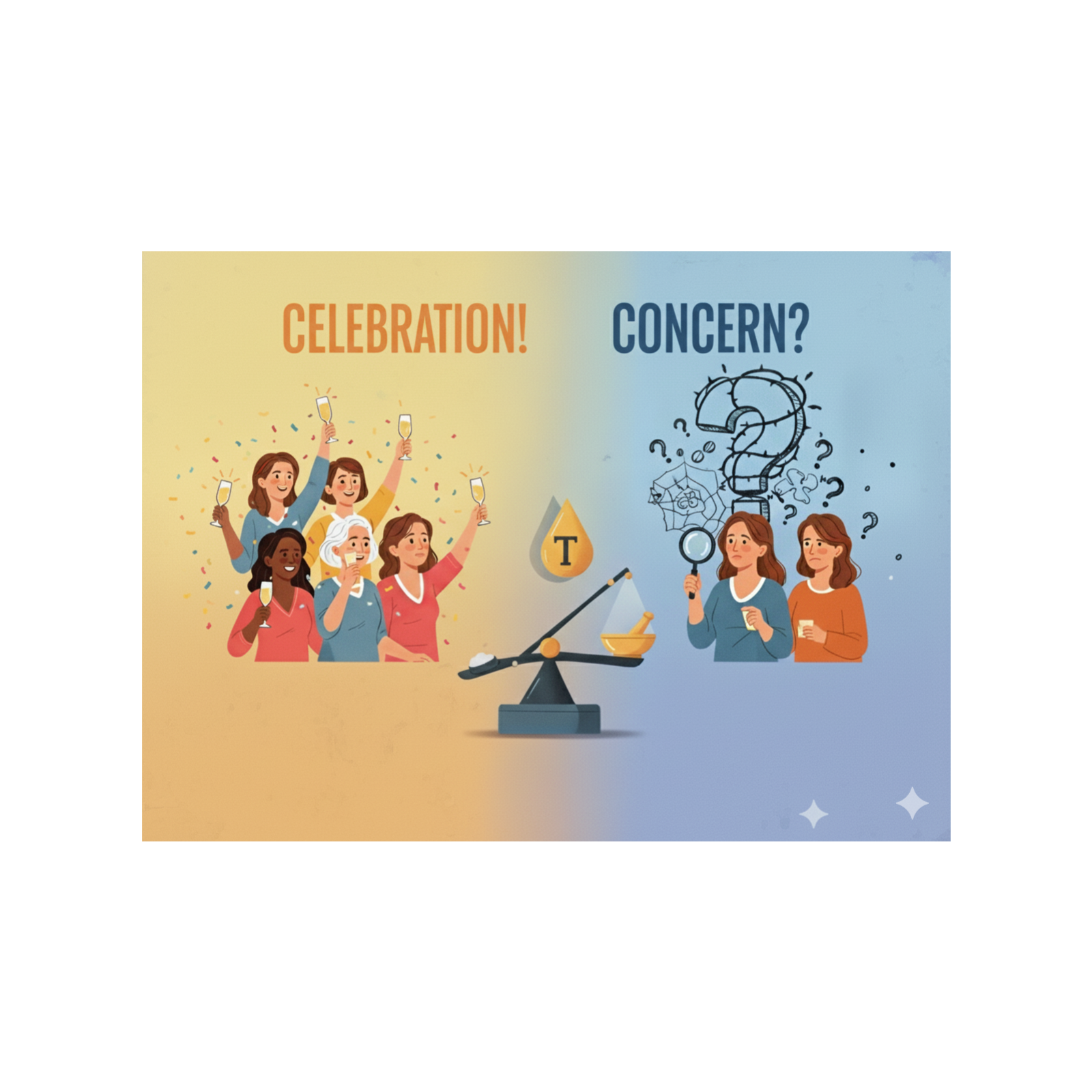
Testosterone therapy for peri menopausal women — Is it a cause for celebration or a cause for concern?
Diabesity Decodified - Is Food the root cause of Type 2 Diabetes Mellitus pandemic? · Pandiyan Natarajan
Audio is streamed directly from the publisher (content.rss.com) as published in their RSS feed. Play Podcasts does not host this file. Rights-holders can request removal through the copyright & takedown page.
Show Notes
Testosterone therapy for peri menopausal women — Is it a cause for celebration or a cause for concern?
Subheading — Testosterone for Women: A Medical Miracle or a Slippery Slope?
Disclaimer: The information provided in this podcast is for educational and informational purposes only and is not intended as a substitute for professional medical advice, diagnosis, or treatment. Always seek the advice of your physician or another qualified health provider with any questions you may have regarding a medical condition or before starting any new treatment. The views expressed herein are the author’s own and are based on a synthesis of available research and expert opinions. Never disregard professional medical advice or delay in seeking it because of something you have read in this article.
Introduction
For too long, we have lived with a simple hormonal binary: estrogen is the “female” hormone and testosterone is the “male” one. But biology is far more nuanced. The truth is, both men and women produce both these crucial hormones. In women, the ovaries and adrenal glands produce testosterone, and it plays a vital role in maintaining energy, muscle strength, bone density, and, most famously, the libido.
At menopause, it is not just estrogen that declines. Testosterone levels also take a significant dip. This dual decline is often behind the constellation of symptoms many women face: not just hot flashes, but also a crushing fatigue, mental fog, a loss of muscle tone, and a dwindling interest in sex. In the quest for solutions, Testosterone Therapy (TT) has emerged from the shadows, promising to rekindle the fire. But is this a cause for celebration, or a cause for concern?
The Alluring Promise: The “Pros” of Testosterone Therapy (TT)
There is a reason TT is gaining traction. For some women, the benefits can feel life-changing:
· Revitalized Libido: This is the most cited and researched benefit. Testosterone can significantly boost sexual desire, arousal, and satisfaction, helping women reconnect with a part of themselves they thought was lost.
· Enhanced Energy and Well-being: Many users report a welcome return of their get-up-and-go, combating the profound fatigue that can accompany menopause.
· Sharper Mind: Some studies suggest a positive effect on cognitive function, helping to clear the notorious “brain fog.”
· Stronger Body: Testosterone helps build and maintain muscle mass and bone density, offering protection against osteoporosis and frailty.
For women suffering from genuine clinical deficiency, these benefits can be profound. However, this “medical miracle” comes with a significant & often under-discussed list of caveats.
The Sobering Reality: The “Cons” and The Irreversible
Like any powerful hormone treatment, testosterone is not a free pass. The side effects can be troubling,& some are permanent.
Common side effects include:
· Acne & oily skin
· Facial hair growth (hirsutism)
· Scalp hair thinning
· Mood swings or increased aggression
. Weight gain
But the most concerning, irreversible, side effect is the deepening of the voice. Acne can be treated & hair can be removed, a fundamental change in one’s voice — a core part of our identity & communication — is permanent. This is not temporary hoarseness; it is a structural change to the vocal cords that does not revert, even after stopping the therapy. It is a risk that demands serious thought and is often minimized in promotional materials.
Less common side effects include:
. Cardiovascular, issues
. Liver toxicity
. Blood clots
. Lipid profile changes
Please listen