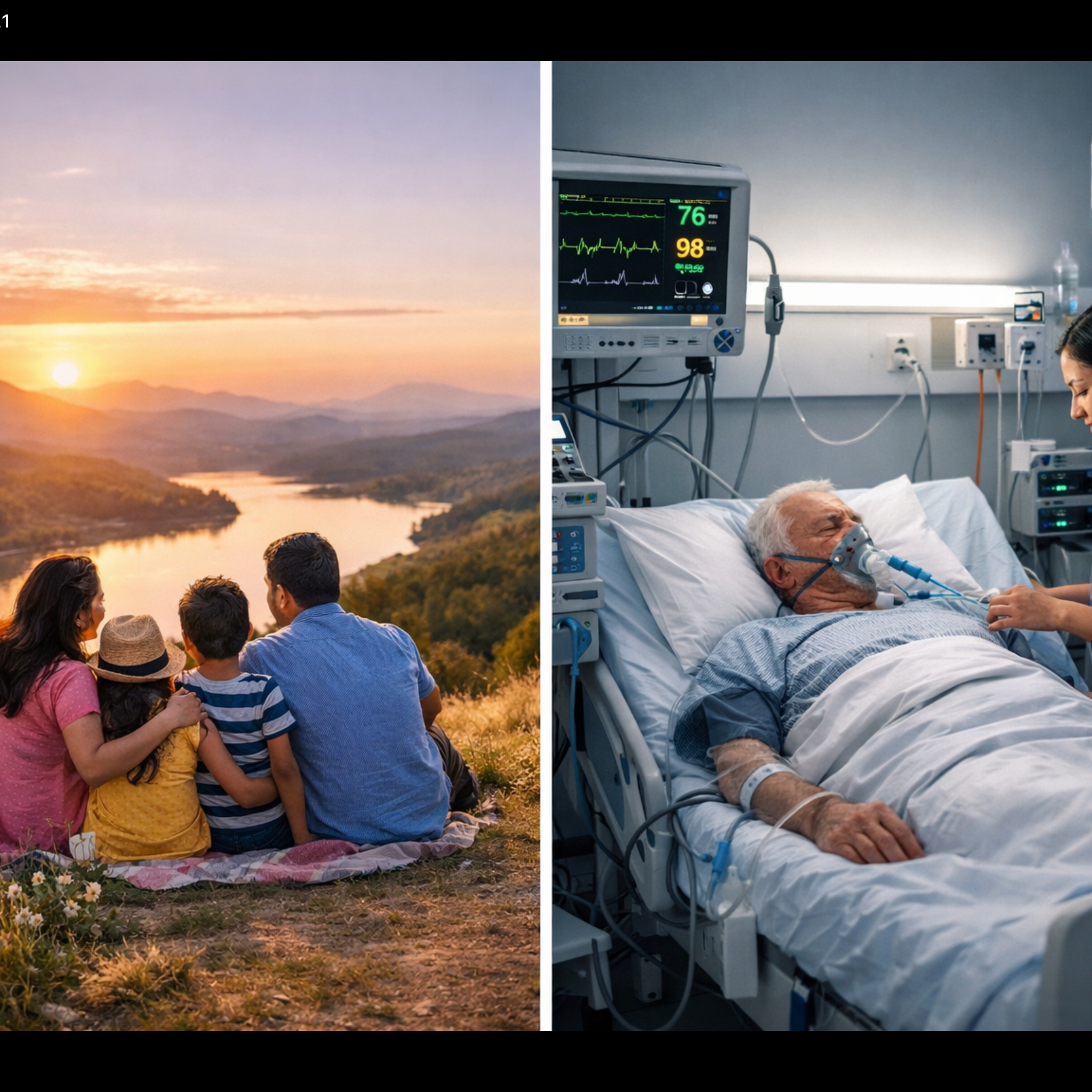
Health for All — Will It Ever Become a Reality? A Senior’s lament
Diabesity Decodified - Is Food the root cause of Type 2 Diabetes Mellitus pandemic? · Pandiyan Natarajan
Audio is streamed directly from the publisher (content.rss.com) as published in their RSS feed. Play Podcasts does not host this file. Rights-holders can request removal through the copyright & takedown page.
Show Notes
Health for All — Will It Ever Become a Reality? A Senior’s lament
In 1978, the WHO made the Alma-Ata Declaration and made a bold promise: Health for All by the year 2000.
It was a. Great vision — rooted in equity, justice, & the belief that basic healthcare is a fundamental human right.
The year 2000 came & went. We were nowhere near our goal.
The goalpost was shifted — to 2020. Yet it remains a pipe dream.
Today, amid ongoing conflicts, widening inequalities, and fragmented priorities, the question lingers:
Will “Health for All” ever become a reality?
Health: Our Most Tangible Possession
Of all that we strive for — wealth, success, power, status — health is still the most tangible and indispensable possession.
Without it, everything else becomes fragile.
And yet, we continue to treat health as an afterthought rather than a foundation.
An Uncomfortable Truth
Basic health for all is not a distant, unattainable dream.
It is the simplest goals we have set ourselves. It is achievable if we put our collective efforts to reach it.
It does not require:
- Sophisticated equipment
- High-technology medicine
- Expensive infrastructure
- Towering hospitals
What it requires is far more fundamental — and far more difficult.
The Simplicity We Overlook
Basic health rests on principles we have always known:
- Nutritious food
- In appropriate quantities
- At appropriate times
- Adequate sleep
- Regular physical activity
- A life with less stress
- Freedom from dependence on alcohol, tobacco, and other harmful substances
They are matters of understanding, discipline, and choice.
From Policy to Personal Responsibility
“Health for All” is our responsibility, not just governments and systems.
But health is not delivered only through policies.
It is lived — daily — through personal decisions.
Health is both:
- A private responsibility, and
- A public commitment
Everyone, each family, and each community has a role that cannot be outsourced.
Each family, society, city and nation must take care of its own members.
Health and Wealth: A Two-Way Street
Wealth undoubtedly enables better access to healthcare.
But the reverse is equally true — and often underestimated.
A healthy population is the greatest asset any nation can possess. It drives productivity, creativity, and sustainable economic growth.
Health creates wealth.
And wealth sustains health.
They are not competing priorities — they are complementary forces.
A Practitioner’s Reflection
We have become exceptionally good at treating disease.
But far less effective at creating health.
We invest heavily in curing illness, yet comparatively little in preventing it.
The irony is striking — we are surrounded by advanced medicine, yet basic health continues to elude large sections of humanity.
Where Do We Go from Here?
Perhaps the real question is not whether “Health for All” is achievable.
It is.
Until health becomes a felt need — not just in times of illness, but as a way of life — the vision will remain unfulfilled.
A Hope That Persists
And yet, there is reason for hope.
The path to “Health for All” lies in alignment — between knowledge and action, between policy and practice, between society and self.
Closing Thought
The journey to “Health for All” begins when each of us chooses to make health our priority. It is not a distant dream — it is a daily choice.