Designer Babies: Is It for Real — or Just Clever Hype? Why modern genetics can prevent serious disease — but cannot design intelligence, talent, or perfection.
Diabesity Decodified - Is Food the root cause of Type 2 Diabetes Mellitus pandemic? · Pandiyan Natarajan
Audio is streamed directly from the publisher (content.rss.com) as published in their RSS feed. Play Podcasts does not host this file. Rights-holders can request removal through the copyright & takedown page.
Show Notes
The Unjustified Hype Around “Designer Babies”
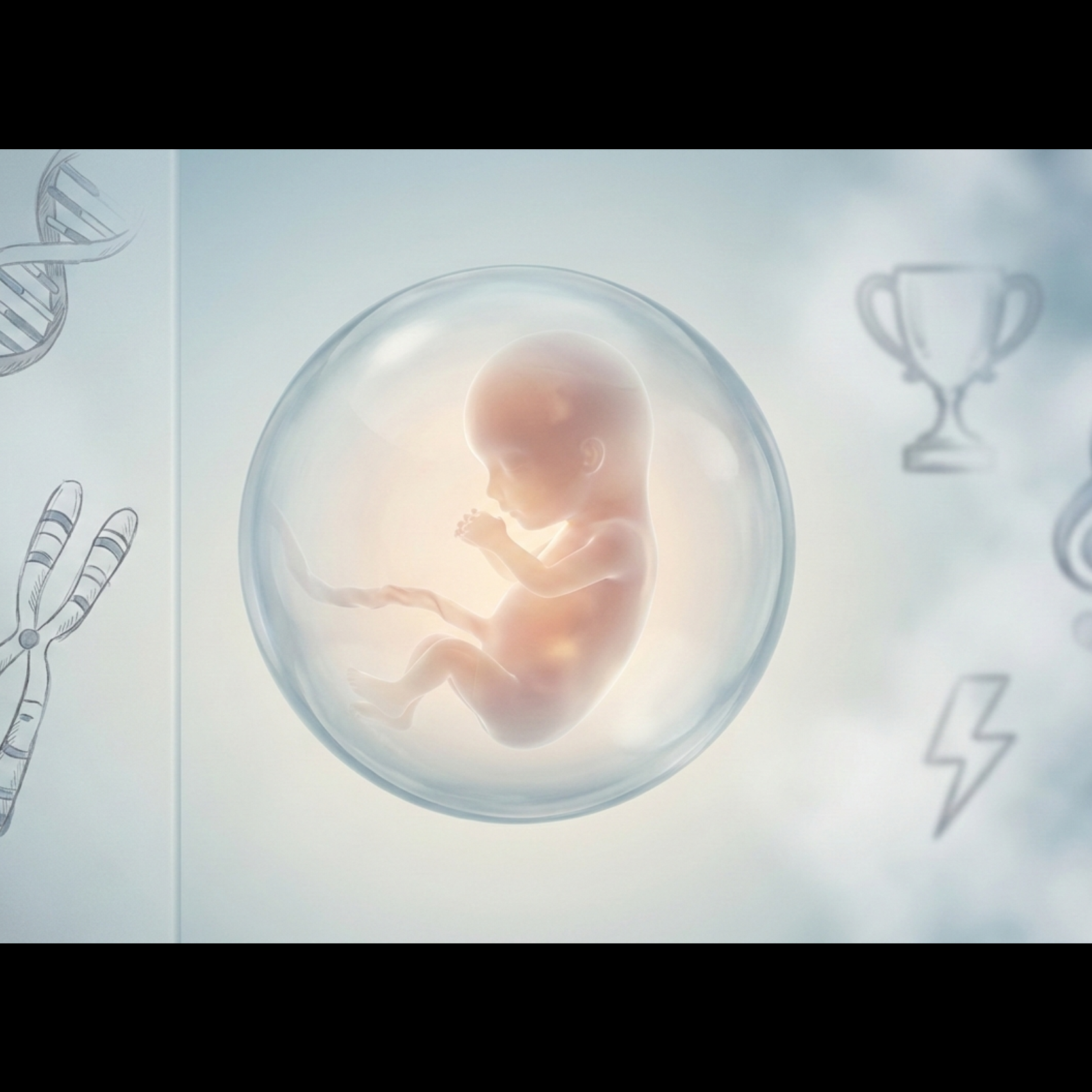
The phrase designer baby evokes powerful images — parents selecting intelligence, beauty, athletic prowess, or musical genius as if choosing from a catalogue. Popular media, science fiction, and sensational headlines have fueled this belief.
The reality is far less dramatic — and far more grounded. Despite the hype, designer babies, in the true sense of deliberate human enhancement, do not exist today. What exists is careful, ethical medical practice aimed at preventing serious genetic disease, not creating custom-made humans. The gap between public perception and scientific reality has never been wider.
What Science Can Actually Do Today: Preventing Serious Genetic Disease
Modern reproductive genetics has made one remarkable and humane advance: preventing the transmission of devastating inherited disorders. Through IVF combined with Preimplantation Genetic Testing for Monogenic disorders (PGT-M), embryos can be screened for known lethal or severe conditions before implantation.
Conditions such as Fanconi anaemia, β-thalassemia major, spinal muscular atrophy, and certain metabolic disorders can now be avoided, sparing families immense suffering. In rare cases, this has enabled the birth of a “savior sibling,” whose cord blood or bone marrow can treat an affected sibling. Even here, no genes are engineered — nature creates the embryos; medicine selects the healthy one. This is disease avoidance, not human design.
What Science Cannot Do: Intelligence, Talent, and Athleticism
A persistent myth is that we are close to producing children with superior intelligence or talent through genetics. Reality check: intelligence, creativity, and athletic performance are shaped far more by environment, education, nutrition, mentoring, and effort than by genes alone. No embryo test can predict curiosity, resilience, discipline, or passion. A genetically “ideal” child raised in deprivation will not outperform an average child nurtured with care and opportunity.
Why Genes Are Rarely Destiny
Most desirable human traits are polygenic, involving hundreds or thousands of genes. One gene may influence multiple traits, behave differently in different environments, or be modified by epigenetic factors across a lifetime. Genes set possibilities, not guarantees. They define a range, not a destiny.
When “Design” Goes Wrong: An Ethical Landmine
Even if deeper genetic intervention becomes possible, a troubling question remains: what happens when design goes wrong? Genetic errors are irreversible and heritable. Who is responsible for unforeseen harm? Can a child consent to permanent alteration? These concerns explain why most scientific and ethical bodies firmly oppose germline enhancement.
The Bottom Line
We are not designing babies.
We are preventing suffering.
Medicine has wisely drawn a line between avoiding serious disease and engineering perfection. Human potential still depends far more on love, learning, effort, and environment than on laboratory manipulation. Designer babies remain a compelling idea — but for now, and perhaps wisely, they remain a myth.