
Demystifying Media at the University of Oregon
71 episodes — Page 1 of 2
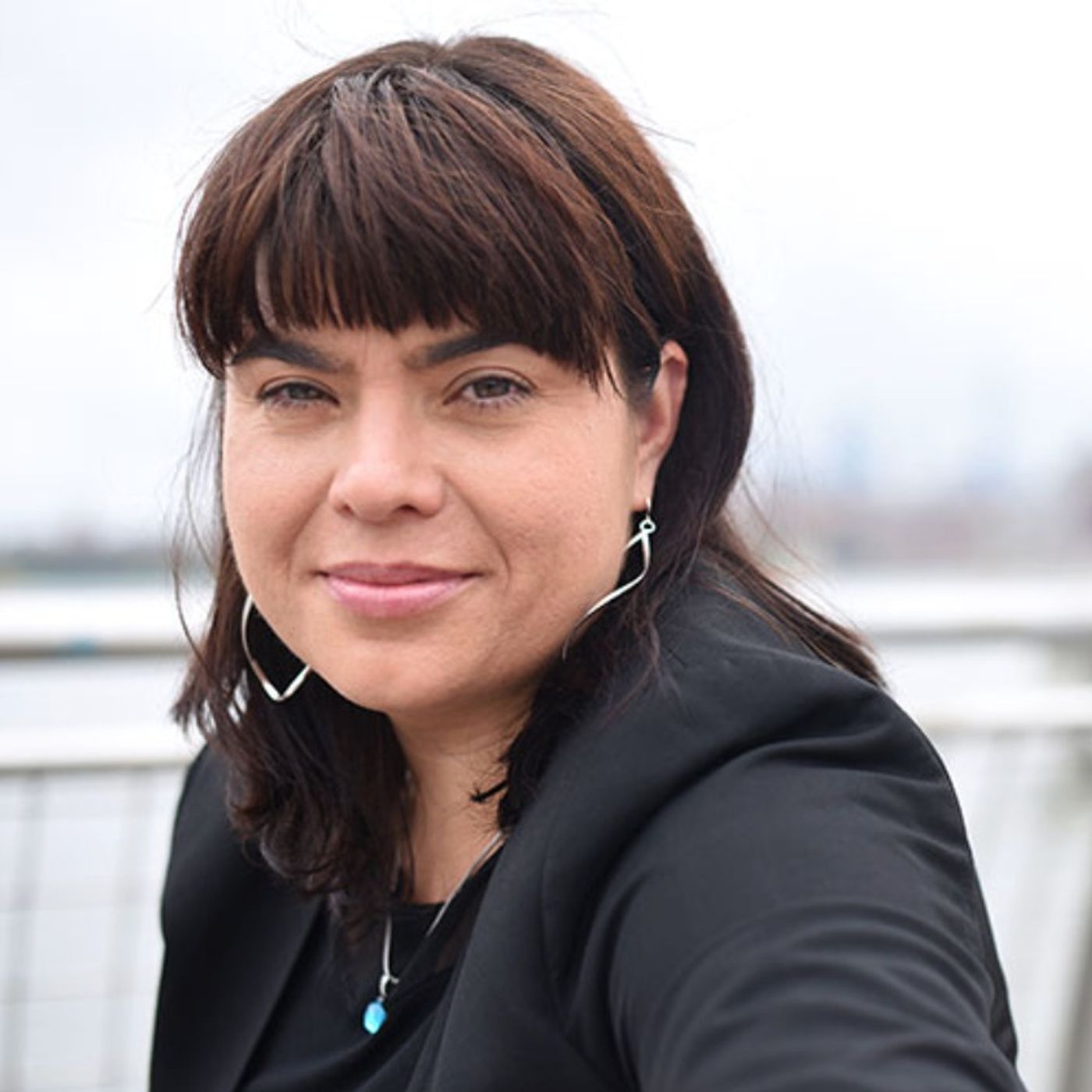
Ep 71#71 Demystifying AI with Hilke Schellmann
About Our GuestHilke Schelmann is an Emmy-Award winning journalist, freelance reporter and journalism professor at NYU. She covers artificial intelligence and the future of work for the Wall Street Journal, the Guardian and MIT Technology Review amongst others. She was a showrunner and reporter for the Wall Street Journal's video series Moving Upstream and her work has been featured in The New York Times, MIT Technology Review, TIME, The Atlantic and many others. She won an Emmy for her direction and filming of the documentary "Outlawed in Pakistan" which was also dubbed “among the standouts” at the Sundance Film Festival and she was a finalist for the Peabody Awards in 2017 for her investigation into student debt for VICE's flagship news magazine VICE on HBO. Find Hilke Schellman online:LinkedInProfessional WebsiteXNYU Arts & SciencesInstagramShow Notes1:07: What inspired you to start writing about AI5:02: How companies use AI in job hiring processes9:38: Drawbacks of using AI in job hiring processes12:34: Improvements to job hiring processes15:18: Advice for job seekers to succeed21:06: What should journalists do to hold AI accountable23:14: The need to improve AI literacy26:41: Takes from lecture at University of Oregon28:30: Optimism for the future of Journalism and AIRead the transcript for this episodeThis podcast was produced by Isaac Dubey; check out their portfolio to find out more about them:Isaac DubeyWant to listen to this episode a different way? Find us wherever you get your podcasts:Apple PodcastsSpotifyYouTubeAmazon Music/AudiblePandoraiHeartRadioPodBeanTuneInPodchaser
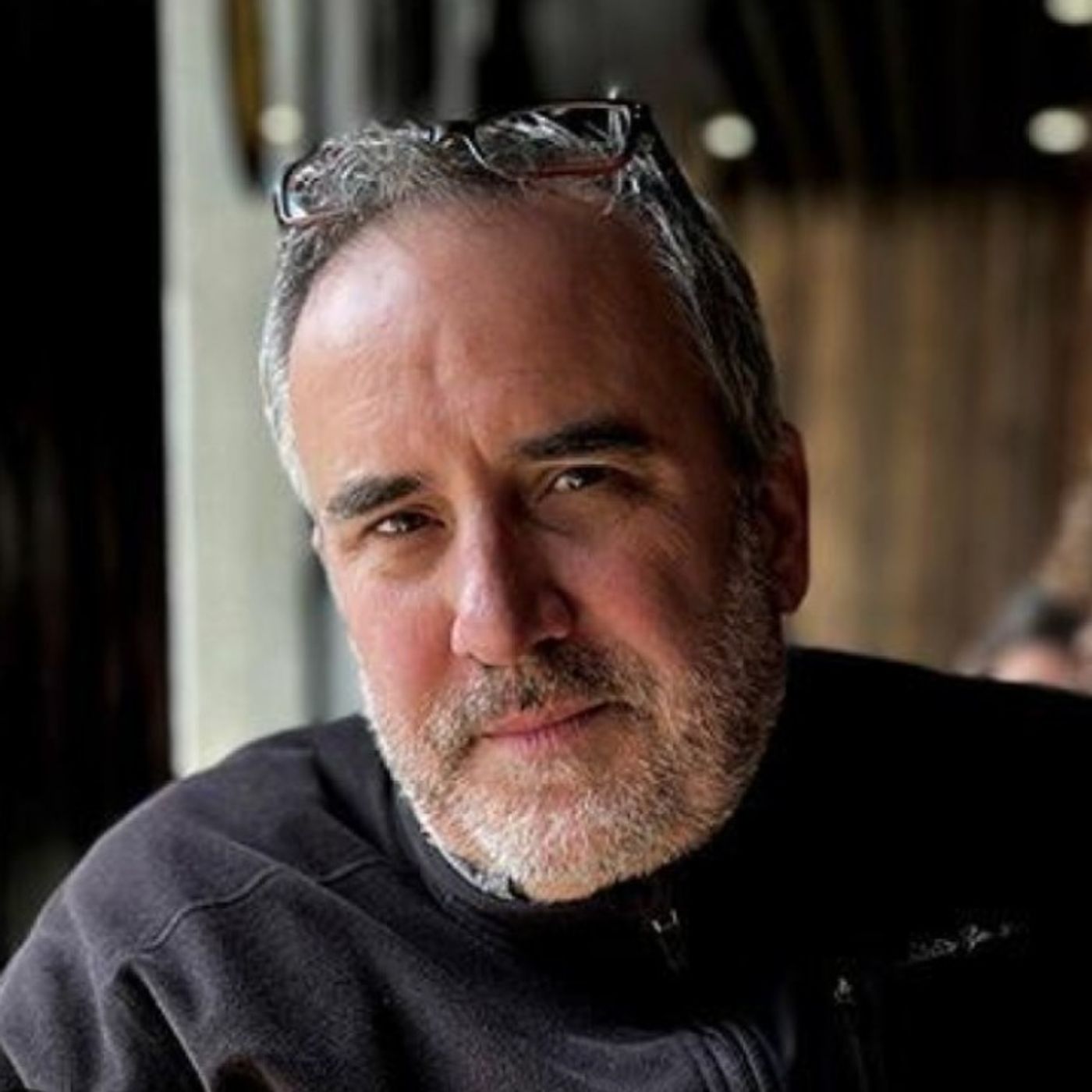
Ep 70#70 Demystifying Documentary Photography with Journalist Greg Constantine
About Our GuestGreg Constantine is a documentary photographer, author, visual journalist whose work primarily focuses on human rights, injustice, and equality. Constantine has been featured in The New York Times, International Herald Tribune, Newsweek, The New Republic, The Atlantic, The Economist, Wall Street Journal, Mother Jones, CNN, and Al-Jazeera. Constantine spent over 11 years documenting stateless communities in 18 countries, has worked with several international human rights organizations, and exhibitions of his work have been shown in over 50 cities around the world. He has also received several awards for his work including the Distinguished Visiting Fellowship at Queen Mary University of London. Find Greg Constantine Online: WebsiteInstagramLinkedInX/TwitterShow Notes01:09: Inspiration to get started in photography04:11: Advantages of doing long-form journalism06:24: Starting in this field later in life 08:19: How unexpected career journeys can be09:33: Seven doors on immigration project16:09: Creative initiatives23:29: Separating advocacy and journalism in his work 29:50: How long-form journalism changes the approach 35:15: Experience giving a lecture at UO39:59: Future ProjectsRead the transcript for this episode This podcast was produced by Isaac Dubey; check out their portfolio to find out more about them:Sports Journalism Portfolio Want to listen to this episode a different way? Find us wherever you get your podcasts:Apple PodcastsSpotifyYouTubeAmazon Music/AudiblePandoraiHeartRadioPodBeanTuneInPodchaser
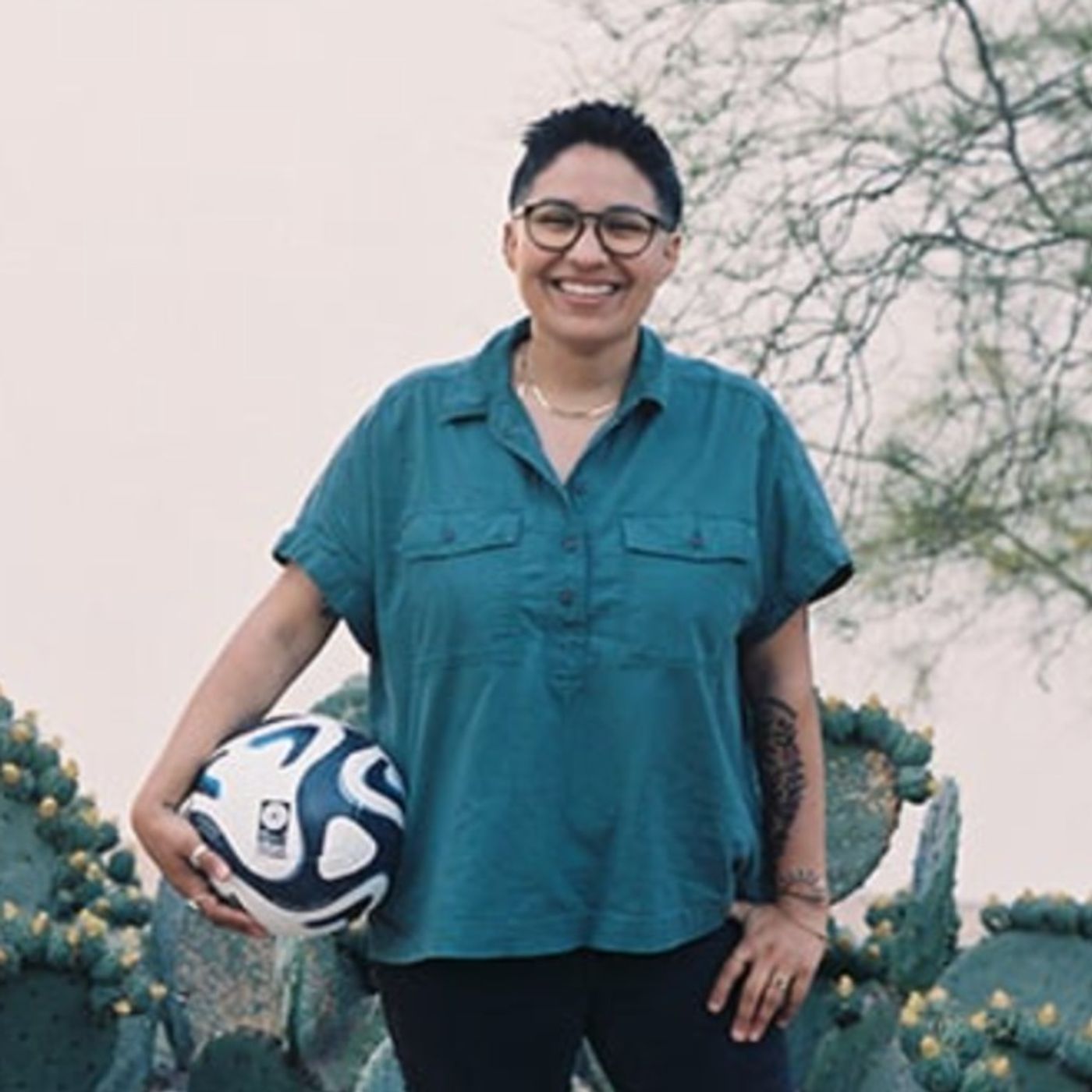
Ep 69#69 Demystifying Sports Journalism with Women's Soccer Journalist Jackie Gutierrez
About Our GuestJackie Gutierrez is the founder and owner of Women Kick Balls, an independent media company providing free articles for soccer fans at all levels. Jackie has over nine years of experience covering the National Women's Soccer League and the US Women's National Team. In 2025, Jackie created Women Kick Balls Coffee Company, brewing fresh coffee which she sells online and operates as a mobile coffee cart to connect with families at youth soccer games. She also provides media and public relations services to soccer organizations, athletes, and content creators and is a contributing writer at Forbes.com.Find Jackie Gutierrez OnlineFacebookInstagramX/TwitterTikTokYouTubeShow Notes00:03: Guest introduction01:24: Inspiration for Women Kick Balls07:29: Women Kick Balls's audience09:43: Managing time as an entrepreneur and journalist14:16: Biggest lesson learned in business24:00: Most surprising aspect of Women Kick Balls26:50: Challenges of being an independent journalst 31:10: Proudest accomplishment39:11: Coming to UO as an alumRead the transcript for this episode Hear More From Jackie Gutierrez:Lecture Audio This podcast was produced by Isaac Dubey; check out their portfolio to find out more about them:Sports Journalism Portfolio Want to listen to this episode a different way? Find us wherever you get your podcasts:Apple PodcastsSpotifyYouTubeAmazon Music/AudiblePandoraiHeartRadioPodBeanTuneInPodchaser
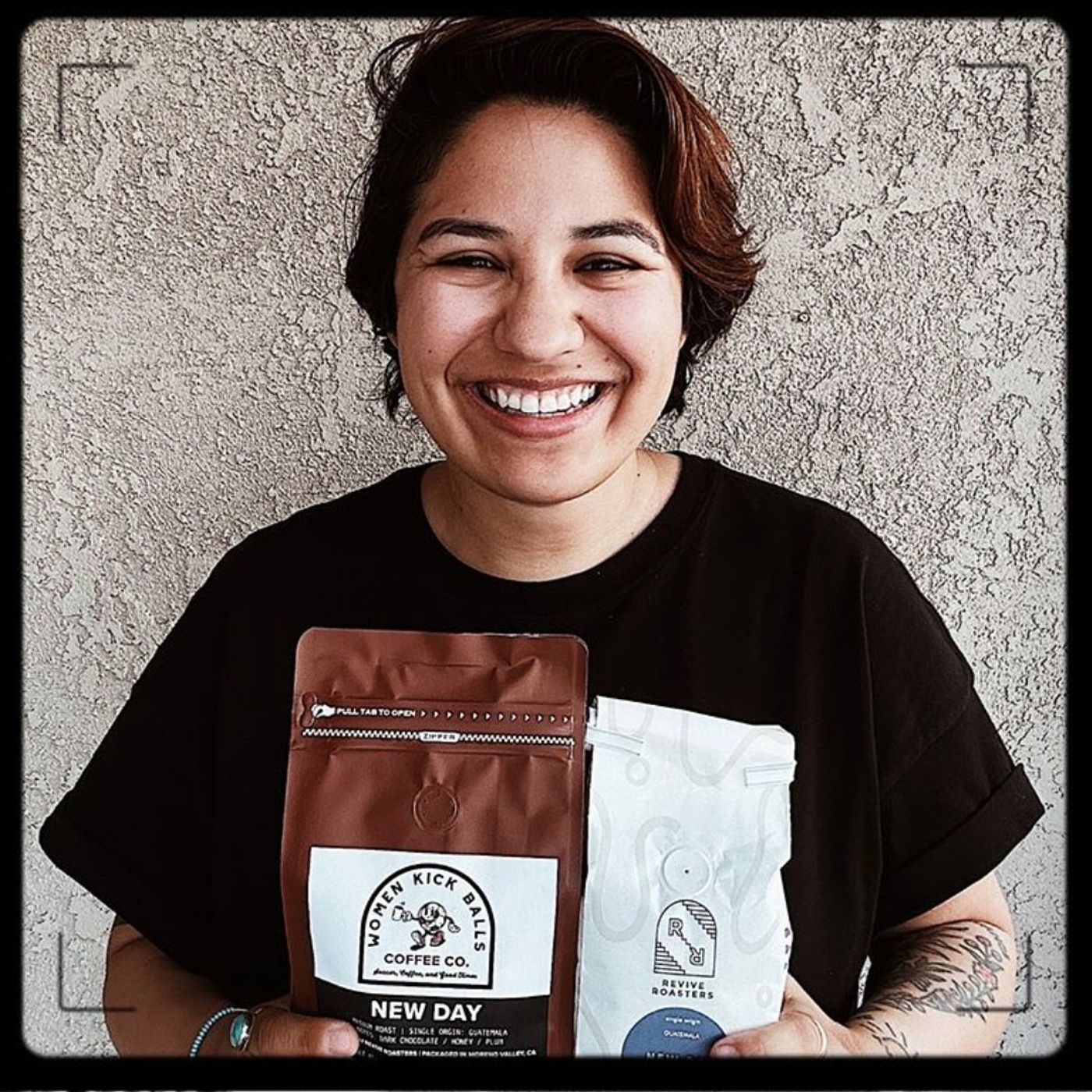
Ep 68#68 Demystifying Media Guest Lecture: Kicking Through Limits – Jackie Gutierrez’s Journey Navigating Mental Health and Sports Media
About Our Guest:Jackie Gutierrez is the founder and owner of Women Kick Balls, an independent media company providing free articles for soccer fans at all levels. Jackie has over nine years of experience covering the National Women's Soccer League and the US Women's National Team. In 2025, Jackie created Women Kick Balls Coffee Company, brewing fresh coffee which she sells online and operates as a mobile coffee cart to connect with families at youth soccer games. She also provides media and public relations services to soccer organizations, athletes, and content creators and is a contributing writer at Forbes.com. Find Jackie Gutierrez Online:FacebookInstagramX/TwitterTikTokYouTube Want to listen to this episode a different way? Find us wherever you get your podcasts:Apple PodcastsSpotifyYouTubeAmazon Music/AudiblePandoraiHeartRadioPodBeanTuneInPodchaser

Ep 65#67 Demystifying Media Guest Lecture: Life Behind the Lens - Roberto Valenzuela's Photography Secrets
About Our Guest:Roberto Valenzuela is a wedding, portrait, commercial and fashion photographer partnered with Canon USA. As a Canon Explorer of Light, Valenzuela is recognized for his innovative use of light in photography and outstanding influence in the photography field. His wedding photography has been featured in Cosmopolitan Bride, Rangefinder and Professional Photographers of America. He is the top-selling wedding photography author on Amazon with his Picture Perfect and Wedding Storytelling series'. Find Roberto Valenzuela Online:PortfolioInstagramAmazon Author PageYouTubeWant to listen to this episode a different way? Find us wherever you get your podcasts:Apple PodcastsSpotifyYouTubeAmazon Music/AudiblePandoraiHeartRadioPodBeanTuneInPodchaser

Ep 66#66 Demystifying Science Communication with podcaster Rose Rimler
About Our Guest:Rose Rimler is a senior producer for the Spotify/Gimlet Media podcast Science Vs. An alumni from the University of Oregon, Rose graduated with a masters in marine biology and conducted studies on oysters in the Pacific Northwest. She was a AAA Mass Media fellow with the American Association for the Advancement of Science and has written for the Raleigh News and Observer, Healthline, and Sleep Review Magazine. Science Vs. researches claims made on social media and examines whether the ideas are based in fact or not. Science Vs. takes material from political discourse and controversial opinion, with topics ranging from universal healthcare to fad diets. Rose's work for Science Vs. has been praised in the New York Times, the LA Times, the Atlantic, and more. Find Rose Rimler Online-Linkedin-Twitter-GimletShow Notes00:03: Guest Introduction01:20: Rose's marine biology background 04:25: Moving from science to news writing 07:51: Internship culture and changes with COVID-1909:46: The multi-media journalism learning curve 12:01: Background on Science Vs. 14:40: Rose's favorite episodes of Science Vs. (Mass Shootings: How do we stop them?, Who Killed Affordable Housing?, Coronavirus: Pregnant in a Pandemic)19:39: Benefits of audio as a medium for storytelling21:43: Transitioning show styles to follow trends 32:54: Rose's recommendations for science news (Ed Yong, Gina Kolata, Decoding the Gurus, Debunk the Funk, Abbey Sharp) 34:45: Advice for aspiring science communicators37:10: Wrap-up Read the transcript for this episodeWant to listen to this episode a different way? Find us wherever you get your podcasts:Apple PodcastsSpotifyYouTubeAmazon Music/AudiblePandoraiHeartRadioPodBeanTuneInPodchaser

Ep 65#65 Ruhl Lecture: Press Freedoms, Hostage Diplomacy and International Policy with Jason Rezaian
About Our Guest:Jason Rezaian is an award-winning journalist and global opinions columnist for The Washington Post, writing primarily on international affairs, press freedom, and human rights issues. He has devoted his life to advocating for freedom of speech, freedom of the press, and rights for journalists abroad and at home.Formerly the Post’s Tehran bureau chief, Rezaian is the host of 544 Days, the acclaimed Spotify Original podcast series based on his 2019 best-selling memoir, Prisoner, about his time as a hostage in Iran and the extraordinary efforts it took to free him. Rezaian was awarded the Thomas Jefferson Medal in Citizen Leadership in 2023 and serves as executive director of the Center for Strategic and International Studies Commission on Hostages and Wrongful Detention.Find Jason Rezaian Online:- Washington Post- Linkedin- Twitter- InstagramRead the transcript for this episodeWant to listen to this episode a different way? Find us wherever you get your podcasts:Apple PodcastsSpotifyYouTubeAmazon Music/AudiblePandoraiHeartRadioPodBeanTuneInPodchaser
Ep 64#64 Demystifying Media Guest Lecture: Making Sense of Chaos, with journalist Erin Aubry Kaplan
About Our Guest:Erin Aubry Kaplan is a journalist with nearly three decades of experience as an opinion columnist. Her career spans various prestigious publications throughout the United States, notably the New York Times, Politico, and the Los Angeles Times, where she made history as the inaugural black opinion columnist. Kaplan's writing delves into an array of topics, with an emphasis on race-related issues, alongside broader discussions on culture, politics, and the arts. Her work has been featured and published in various anthologies. Find Erin Aubry Kaplan Online:- Website- TwitterRead the transcript for this episodeWant to listen to this episode a different way? Find us wherever you get your podcasts:Apple PodcastsSpotifyYouTubeAmazon Music/AudiblePandoraiHeartRadioPodBeanTuneInPodchaser

Ep 63#63 Demystifying Media Guest Lecture: Media Access and Political Engagement with Danny Parker
EAbout Our Guest:Danny Parker, a PhD candidate at the School of Journalism and Mass Communication at the University of Wisconsin Madison is an ethnography researcher focusing on political engagement and media access. Danny's research examines the role communication ecologies play in the reproduction of poverty, and the development of political identity. As an ethnographer, she chronicles the lived experiences of extremely impoverished rural and urban communities by living among them and documenting their everyday lives. Danny has a professional background in international education. She taught English as a second language for seven years before pursuing her PhD. She obtained her bachelor's degree in applied linguistics from Georgia State University and her master's degree in journalism and mass communication from the University of Georgia. Her work has been recognized by awards from the International Communication Association (ICA), and the Association for Education in Journalism and Mass Communication (AEJMC). And she's been published in leading peer reviewed journals such as the Mass Communication and Society. Find Danny Parker Online:LinkedInTwitterUniversity of Wisconsin School of Journalism and Mass Communication ProfileTaylor & Francis Online Research Paper Read the transcript for this episodeListen to Danny Parker's LectureWant to listen to this episode a different way? Find us wherever you get your podcasts:Apple PodcastsSpotifyYouTubeAmazon Music/AudiblePandoraiHeartRadioPodBeanTuneInPodchaser
Ep 62#62 Demystifying Media Access and Political Disengagement with Danny Parker
About Our Guest:Today we're joined by Danny Parker, a PhD candidate at the School of Journalism and Mass Communication at the University of Wisconsin Madison. Danny's research examines the role communication ecologies play in the reproduction of poverty, and the development of political identity. As an ethnographer, she chronicles the lived experiences of extremely impoverished rural and urban communities by living among them and documenting their everyday lives. Danny has a professional background in international education. She taught English as a second language for seven years before pursuing her PhD. She obtained her bachelor's degree in applied linguistics from Georgia State University and her master's degree in journalism and mass communication from the University of Georgia. Her work has been recognized by awards from the International Communication Association (ICA), and the Association for Education in Journalism and Mass Communication (AEJMC). And she's been published in leading peer reviewed journals such as the Mass Communication and Society. Find Danny Parker Online:LinkedInTwitterUniversity of Wisconsin School of Journalism and Mass Communication ProfileTaylor & Francis Online Research Paper Show Notes:00:02: Guest Introduction01:14: Danny's introduction to research03:24: Uncovering a research topic08:43: The relationship of government and media to impoverished communities16:52: Solutions to political disengagement20:33: Advocacy in media25:05: The response to Danny's research27:33: Wrap-upRead the transcript for this episodeListen to Danny Parker's LectureWant to listen to this episode a different way? Find us wherever you get your podcasts:Apple PodcastsSpotifyYouTubeAmazon Music/AudiblePandoraiHeartRadioPodBeanTuneInPodchaser

Ep 61#61 Demystifying Guest Lecture: News and Social Media with Adriana Lacy
About Our Guest:Adriana Lacy, an award winning journalist and consultant based in Boston, Massachusetts. She is the founder and president of Adriana Lacy Consulting: a full service digital consulting firm helping publishers and businesses to grow their digital audiences. She is also an adjunct lecturer in the Journalism Department at Brandeis University, and the 2023 Forbes 30 Under 30 honoree, in recognition of her work as the founder of Journalism Mentors, a website dedicated to advancing early career journalists through mentoring and paid media opportunities. Prior to this, she worked in audience and engagement roles at Axios, the Los Angeles Times, The New York Times and The Nieman foundation.Find Adriana Lacy Online:- Website- Linkedin- Twitter- InstagramRead the transcript for this episodeHear More From Adriana Lacy Interview Want to listen to this episode a different way? Find us wherever you get your podcasts:Apple PodcastsSpotifyYouTubeAmazon Music/AudiblePandoraiHeartRadioPodBeanTuneInPodchaser
Ep 60#60 Demystifying Digital Journalism and Social Media with Adriana Lacy
About Our Guest:Adriana Lacy, an award winning journalist and consultant based in Boston, Massachusetts. She is the founder and president of Adriana Lacy Consulting: a full service digital consulting firm helping publishers and businesses to grow their digital audiences. She is also an adjunct lecturer in the Journalism Department at Brandeis University, and the 2023 Forbes 30 Under 30 honoree, in recognition of her work as the founder of Journalism Mentors, a website dedicated to advancing early career journalists through mentoring and paid media opportunities. Prior to this, she worked in audience and engagement roles at Axios, the Los Angeles Times, The New York Times and The Nieman foundation.Find Adriana Lacy Online:- Website- Linkedin- Twitter- InstagramShow Notes00:03: Guest Introduction01:16: Adriana's journey to becoming a journalist03:00: Importance of student media and journalism 05:19: Discovering digital audience engagement and unique paths in journalism10:42: Trends in digital news and social media 13:21: Founding Journalism Mentors 19:06: How AI will change the landscape of journalism and social media 28:23: Wrap-upRead the transcript for this episodeWant to listen to this episode a different way? Find us wherever you get your podcasts:Apple PodcastsSpotifyYouTubeAmazon Music/AudiblePandoraiHeartRadioPodBeanTuneInPodchaser

Ep 58#59 Demystifying Justice and Power Distribution in Journalism with Gregory Perreault
About Our Guest:Gregory P. Perreault (Ph.D., Missouri) is a scholar of digital journalism, focusing on journalistic epistemology, hostility in journalism and digital labor.He currently serves as Vice Chair of the Standing Committee of Research for the Association for Education in Journalism and Mass Communication (AEJMC) and as Reviews Editor for Journalism & Mass Communication Quarterly. He served as Fulbright-Botstiber Professor of Austrian-American Studies at the University of Vienna Journalism Studies Center (2020-2021). His work appears in New Media & Society, Digital Journalism, Journalism, Journalism Studies, Journalism Practice and Journalism & Mass Communication Quarterly. His book Digital Journalism and the Facilitation of Hate (Routledge) was published in 2023. An avid runner, he most recently ran the 39.3 Asheville Marathon and a Half in Asheville, North Carolina. This episode was recorded while he was an Associate Professor of Digital Journalism at Appalachian State University. From Fall 2023, Perreault is now an Associate Professor of Media Literacy & Analytics at the Zimmerman School for Advertising & Mass Communication at the University of South Florida. Find Gregory Perreault Online:WebsiteResearchGate Author PageOSF Author PageLinkedInTwitterDownload the transcript for this episodeListen to Gregory's lectureWatch Gregory's Q&A Video Want to listen to this episode a different way? Find us wherever you get your podcasts:Apple PodcastsSpotifyYouTubeAmazon Music/AudiblePandoraiHeartRadioPodBeanTuneInPodchaserYou can find more Demystifying Media content, like video interviews and lecture recordings, on YouTube

Ep 57#58 Demystifying Media Guest Lecture: Justice in News Production with Gregory Perreault
About Our Guest:Gregory P. Perreault (Ph.D., Missouri) is a scholar of digital journalism, focusing on journalistic epistemology, hostility in journalism and digital labor.He currently serves as Vice Chair of the Standing Committee of Research for the Association for Education in Journalism and Mass Communication (AEJMC) and as Reviews Editor for Journalism & Mass Communication Quarterly. He served as Fulbright-Botstiber Professor of Austrian-American Studies at the University of Vienna Journalism Studies Center (2020-2021). His work appears in New Media & Society, Digital Journalism, Journalism, Journalism Studies, Journalism Practice and Journalism & Mass Communication Quarterly. His book Digital Journalism and the Facilitation of Hate (Routledge) was published in 2023. An avid runner, he most recently ran the 39.3 Asheville Marathon and a Half in Asheville, North Carolina. This lecture was recorded while he was an Associate Professor of Digital Journalism at Appalachian State University. From Fall 2023, Perreault is now an Associate Professor of Media Literacy & Analytics at the Zimmerman School for Advertising & Mass Communication at the University of South Florida. Find Gregory Perreault Online:WebsiteResearchGate Author PageOSF Author PageLinkedInTwitterDownload the transcript for this episodeListen to our in-depth interview with Gregory - Coming soon!Watch Gregory's Q&A Video Want to listen to this episode a different way? Find us wherever you get your podcasts:Apple PodcastsSpotifyYouTubeAmazon Music/AudiblePandoraiHeartRadioPodBeanTuneInPodchaserYou can find more Demystifying Media content, like video interviews and lecture recordings, on YouTube

Ep 57#57 Demystifying Memoir Writing with Putsata Reang
About Our Guest:Putsata Reang is an author and journalist whose writings have appeared in a variety of national and international publications, including the New York Times, Politico, the Guardian, Ms, The Seattle Times and the San Jose Mercury News. She is the author of a recent memoir Ma and Me, which talks about her leaving Cambodia at 11 months old, and moving to rural Oregon, and how coming out—and marrying a woman in her 40s—broke her relationship with her Mother.Putsata was born in Cambodia, and raised in rural Oregon, surrounded by berry farms where she and her family hustled to earn their middle class existence. Her memoir explores the glades of displacement felt by children of refugees, and the overlay of emotional exile that comes with being gay.Putsata has lived and worked in more than a dozen countries, including Cambodia, Afghanistan and Thailand. She is an alum of Hedgebrook, Mineral School and Kimmel Harding Nelson residencies. She is a 2019 Jack Straw fellow. In 2005, she received an Alicia Patterson Journalism Fellowship that took her back to Cambodia to report on landless farmers.She currently teaches memoir writing at the University of Washington School of Professional & Continuing Education. Her book recently won a PNW book award. Find Putsata Reang Online:WebsiteMacMillan Author PageAmazon Author PageTwitter Find out more about this episode's guest host, Professor Peter Laufer.Suggested Readings:Full Circle: Two journalists return to their native countries to help other journalists express dissentMy Family Fled Cambodia as the Americans Evacuated. Here’s What I Hope for Afghan RefugeesAt Sea, and Seeking a Safe HarborActivism From the Streets to the ScreenPutsata Reang Finds Home with and Away from her Mom in Memoir Ma and MeJournalist Putsata Reang Shares her Immigrant Story in Ma and MeAuthor Putsata Reang Reflect on Ma and Me, Her Accidental Memoir, at Northwest Passages TalkDownload the transcript for this episodeListen to Putsata's lecture (Coming Soon!)Watch Putsata's Q&A Video Want to listen to this episode a different way? Find us wherever you get your podcasts:Apple PodcastsSpotifyYouTubeAmazon Music/AudiblePandoraiHeartRadioPodBeanTuneInPodchaserYou can find more Demystifying Media content, like video interviews and lecture recordings, on YouTube

Ep 56#56 Demystifying Media: Student Q&A with Atiba Jefferson
About Our Guest:Atiba Jefferson is an American photographer based in Los Angeles, California. Best known for his 25 years of skateboarding photography, over the years he has worked for all the major skateboard publications and now works at Thrasher Magazine. Another passion – basketball – landed him a gig as a staff photographer for the L.A. Lakers during the Shaq and Kobe years, and he currently holds the record at SLAM magazine for the most covers taken by a single photographer in the publication’s history. Atiba discovered a love and passion for skateboarding while growing up in Colorado Springs, CO. Moving to California in 1995 only strengthened that love and paired it with an equal passion for photography. Atiba’s list of commercial clients include Supreme, adidas, Nike, Converse, Reebok, ESPN, Gatorade, Mountain Dew, Oakley, Pepsi, Canon, and Netflix.Find Atiba Jefferson Online:WebsiteInstagramTwitterDownload the transcript for this episodeListen to Atiba's talkWatch the Canon Explorer of Light video about Atiba's visit to the SOJCWant to listen to this episode a different way? Find us wherever you get your podcasts:Apple PodcastsSpotifyYouTubeAmazon Music/AudiblePandoraiHeartRadioPodBeanTuneInPodchaserYou can find more Demystifying Media content, like video interviews and lecture recordings, on YouTubePhoto credit: Photo of Atiba Jefferson taken by Wesley Lapointe for Canon USA during Atiba's visit to the University of Oregon.

Ep 55#55 Demystifying Media Guest Lecture: Photographing the Skateboarding Community with Atiba Jefferson
About Our Guest:Atiba Jefferson is an American photographer based in Los Angeles, California. Best known for his 25 years of skateboarding photography, over the years he has worked for all the major skateboard publications and now works at Thrasher Magazine. Another passion – basketball – landed him a gig as a staff photographer for the L.A. Lakers during the Shaq and Kobe years, and he currently holds the record at SLAM magazine for the most covers taken by a single photographer in the publication’s history. Atiba discovered a love and passion for skateboarding while growing up in Colorado Springs, CO. Moving to California in 1995 only strengthened that love and paired it with an equal passion for photography. Atiba’s list of commercial clients include Supreme, adidas, Nike, Converse, Reebok, ESPN, Gatorade, Mountain Dew, Oakley, Pepsi, Canon, and Netflix.Find Atiba Jefferson Online:WebsiteInstagramTwitterDownload the transcript for this episodeListen to the bonus Q&A with AtibaWatch the Canon Explorer of Light video about Atiba's visit to the SOJCWant to listen to this episode a different way? Find us wherever you get your podcasts:Apple PodcastsSpotifyYouTubeAmazon Music/AudiblePandoraiHeartRadioPodBeanTuneInPodchaserYou can find more Demystifying Media content, like video interviews and lecture recordings, on YouTubePhoto credit: Photo of Atiba Jefferson taken by Wesley Lapointe for Canon USA during Atiba's visit to the University of Oregon.

Ep 54#54 Demystifying Media Guest Lecture: Workplace Happiness in the Media Industry with Valérie Bélair-Gagnon
About Our Guest:Dr. Valérie Bélair-Gagnon is an Associate Professor and Cowles Fellow in Media Management at the Hubbard School of Journalism & Mass Communication. She is also a Waldfogel Scholars of the College of Liberal Arts (2023-26) and McKnight Presidential Fellow (2022-2025) at the University of Minnesota. She is also a visiting researcher at the Oslo Metropolitan University Department of Journalism and Media and fellow at the Yale Information Society Project. Her research interests include: journalism, professions, knowledge production, and identity; digital labor and engagement; business and future of journalism; and happiness and well-being in work. She is the author of Happiness in Journalism , The Paradox of Connection: How Digital Media is Changing Journalistic Labor, Journalism Research that Matters, and Social Media at BBC News. She was executive director and research scholar at the Information Society Project at Yale Law School and fellow at Tow Center for Digital Journalism at Columbia University. She also worked in communications in corporate and non-profit environments. Born in Montréal, she earned her PhD in from the University of London in Sociology. Find Valérie Bélair-Gagnon Online:WebsiteGoogle Scholar Author PageTwitterDownload the transcript for this episodeListen to our in depth interview with ValérieWatch Valérie's Q&A VideoWant to listen to this episode a different way? Find us wherever you get your podcasts:Apple PodcastsSpotifyYouTubeAmazon Music/AudiblePandoraiHeartRadioPodBeanTuneInPodchaserYou can find more Demystifying Media content, like video interviews and lecture recordings, on YouTube.

Ep 53#53 Demystifying Workplace Happiness and Wellbeing in the Media Industry with Valérie Bélair-Gagnon
About Our Guest:Dr. Valérie Bélair-Gagnon is an Associate Professor and Cowles Fellow in Media Management at the Hubbard School of Journalism & Mass Communication. She is also a Waldfogel Scholars of the College of Liberal Arts (2023-26) and McKnight Presidential Fellow (2022-2025) at the University of Minnesota. She is also a visiting researcher at the Oslo Metropolitan University Department of Journalism and Media and fellow at the Yale Information Society Project. Her research interests include: journalism, professions, knowledge production, and identity; digital labor and engagement; business and future of journalism; and happiness and well-being in work. She is the author of Happiness in Journalism , The Paradox of Connection: How Digital Media is Changing Journalistic Labor, Journalism Research that Matters, and Social Media at BBC News. She was executive director and research scholar at the Information Society Project at Yale Law School and fellow at Tow Center for Digital Journalism at Columbia University. She also worked in communications in corporate and non-profit environments. Born in Montréal, she earned her PhD in from the University of London in Sociology. Find Valérie Bélair-Gagnon Online:WebsiteGoogle Scholar Author PageTwitterDownload the transcript for this episodeListen to Valérie's lectureWatch Valérie's Q&A VideoWant to listen to this episode a different way? Find us wherever you get your podcasts:Apple PodcastsSpotifyYouTubeAmazon Music/AudiblePandoraiHeartRadioPodBeanTuneInPodchaserYou can find more Demystifying Media content, like video interviews and lecture recordings, on YouTube.

Ep 52#52 Demystifying Media Guest Lecture: From Participation to Dark Participation with Thorsten Quandt
About Our Guest:Thorsten Quandt is a professor of online communication at the University of Münster in Germany. He has authored and co-authored over 150 articles and books on topics including online journalism, participatory and citizen journalism, social media, and online gaming. His work has been cited more than 11,000 times by fellow academics. He is the recipient of numerous awards and grants, including being nominated twice to the list of the top 40 most significant young scientists in Germany. Find Thorsten Quandt Online:WikipediaGoogle ScholarResearchGateUniversity of Munster Bio PageTwitterLinkedInDownload the transcript for this episodeListen to our in-depth interview with ThorstenWatch Thorsten's video Q&AWant to listen to this episode a different way? Find us wherever you get your podcasts:Apple PodcastsSpotifyYouTubeAmazon Music/AudiblePandoraiHeartRadioPodBeanTuneInPodchaserYou can find more Demystifying Media content, like video interviews and lecture recordings, on YouTube.

#51 Demystifying Media Guest Lecture: Bonus Q&A Episode with Hamed Aleaziz
bonusHamed Aleaziz is a staff writer at the Los Angeles Times covering immigration policy. Previously he was at BuzzFeed News, where he wrote about immigration and broke news on Trump and Biden policies and the effects of those policies on families and communities. Before that, he covered immigration, race, and civil rights at the San Francisco Chronicle, was a criminal justice reporter at the Daily Journal, and did a fellowship at Mother Jones magazine. A Livingston Award finalist in 2021, Aleaziz graduated from the University of Oregon with a degree in journalism.Listen to Hamed's lectureFind Hamed Aleaziz Online:Los Angeles Times Author PageBuzzFeed News Author PageMuckRack Author PageMother Jones Author PageTwitterLinkedInListen to our in-depth interview with HamedWatch our video Q&A with HamedWant to listen to this episode a different way? Find us wherever you get your podcasts:Apple PodcastsSpotifyYouTubeAmazon Music/AudiblePandoraiHeartRadioPodBeanTuneInPodchaserYou can find more Demystifying Media content, like video interviews and lecture recordings, on YouTube.

Ep 50#50 Demystifying Media Guest Lecture: Reporting U.S. Immigration Policy with Hamed Aleaziz
About Our Guest Lecturer:Hamed Aleaziz is a staff writer at the Los Angeles Times covering immigration policy. Previously he was at BuzzFeed News, where he wrote about immigration and broke news on Trump and Biden policies and the effects of those policies on families and communities. Before that, he covered immigration, race, and civil rights at the San Francisco Chronicle, was a criminal justice reporter at the Daily Journal, and did a fellowship at Mother Jones magazine. A Livingston Award finalist in 2021, Aleaziz graduated from the University of Oregon with a degree in journalism.Listen to the bonus Q&A episode for this lectureFind Hamed Aleaziz Online:Los Angeles Times Author PageBuzzFeed News Author PageMuckRack Author PageMother Jones Author PageTwitterLinkedInRead the transcript for this episodeListen to our in-depth interview with HamedWatch our video Q&A with HamedWant to listen to this episode a different way? Find us wherever you get your podcasts:Apple PodcastsSpotifyYouTubeAmazon Music/AudiblePandoraiHeartRadioPodBeanTuneInPodchaserYou can find more Demystifying Media content, like video interviews and lecture recordings, on YouTube.

Ep 49#49 Demystifying Immigration Reporting with Hamed Aleaziz
About Our Guest:Hamed Aleaziz is a staff writer at the Los Angeles Times covering immigration policy. Previously he was at BuzzFeed News, where he wrote about immigration and broke news on Trump and Biden policies and the effects of those policies on families and communities. Before that, he covered immigration, race, and civil rights at the San Francisco Chronicle, was a criminal justice reporter at the Daily Journal, and did a fellowship at Mother Jones magazine. A Livingston Award finalist in 2021, Aleaziz graduated from the University of Oregon with a degree in journalism.Find Hamed Aleaziz Online:Los Angeles Times Author PageBuzzFeed News Author PageMuckRack Author PageMother Jones Author PageTwitterLinkedInListen to Hamed's lectureListen to the bonus lecture Q&A podcast episode with HamedWatch our video Q&A with HamedShow Notes0:03: Show and guest introduction1:34: Hamed's first exposure to the power of journalism4:03: How Hamed got into immigration reporting and what he enjoys about it7:37: Building rapport and trust with sources9:37: Fact-checking12:32: Tools Hamed uses on the job to build trust13:48: Advice for student journalists looking to break into the industry15:18: How Hamed carved out his own reporting roles16:47: Maintaining work-life balance as a journalist18:56: Hamed's study-abroad experience in Amman, Jordan22:35: Advice for UofO students24:16: Graduating into the Great Recession and finding a job26:36: Hamed's impressions of campus27:48: Show wrap-upRead the transcript for this episodeListen to Hamed's lectureWant to listen to this episode a different way? Find us wherever you get your podcasts:Apple PodcastsSpotifyYouTubeAmazon Music/AudiblePandoraiHeartRadioPodBeanTuneInPodchaserYou can find more Demystifying Media content, like video interviews and lecture recordings, on YouTube.

Ep 48#48 Demystifying Dark Participation with Thorsten Quandt
About Our Guest:Thorsten Quandt is a professor of online communication at the University of Münster in Germany. He has authored and co-authored over 150 articles and books on topics including online journalism, participatory and citizen journalism, social media, and online gaming. His work has been cited more than 11,000 times by fellow academics. He is the recipient of numerous awards and grants, including being nominated twice to the list of the top 40 most significant young scientists in Germany. Find Thorsten Quandt Online:WikipediaGoogle ScholarResearchGateUniversity of Munster Bio PageTwitterLinkedInListen to Torsten's lecture, "From participation to dark participation: online news between hope and hate."Watch Thorsten's video Q&AShow Notes0:03: Show and guest introduction1:16: Summary of Thorsten's Hearst Demystifying Media lecture2:26: Evolution of Thorsten's research4:19: Participatory journalism then and now6:57: Changing discourse about internet communication and the media9:19: Evaluating dark participation12:25: Is dark participation the crisis we think it is?16:19: Differences between dark participation in Europe and the U.S.22:56: Assessing the real impact of media on public opinion28:27: Advice for media consumers30:45: Wrap-upRead the transcript for this episodeWant to listen to this episode a different way? Find us wherever you get your podcasts:Apple PodcastsSpotifyYouTubeAmazon Music/AudiblePandoraiHeartRadioPodBeanTuneInPodchaserYou can find more Demystifying Media content, like video interviews and lecture recordings, on YouTube.

Ep 47#47 Demystifying Opinion Writing with Erin Aubry Kaplan
About Our Guest: Erin Aubry Kaplan is a Los Angeles native who writes about herself, her community, and the city, often all three simultaneously. A longtime journalist and essayist, she won the PEN Center West award for journalism in 2001 for "Blue Like Me," a personal exploration of the link between depression and racial struggle that she wrote for the LA Weekly. In 2005 she became the first black opinion columnist in the history of the Los Angeles Times, and remains a contributing op-ed writer.Find Erin Aubry Kaplan Online + Selected Works:-Personal Website-NY Times Author Page-KCET Author Page-Salon Author Page-KCRW Author Page-Muck Rack-Antioch University Faculty Page-TwitterSelected Works:-"Blue Like Me"-The Butt Issue 1-I Heart Obama-Black Talk, Blue Thoughts, and Walking the Color Line (New England Library Of Black Literature)-"Cicely Tyson: The Actor Who Redefined Black Characters and Black Beauty"-"The Kyle Rittenhouse Verdict Reinforces a Long American Tradition: White Animus Against Black Grievance"-"Simone Biles and the New Black Power of ‘No’"-Podcast: "Incredible stories are behind bland facades: What this departing LA Times columnist loves about her city"-"Is My Little Library Contributing to the Gentrification of My Black Neighborhood?"Show Notes00:03: Guest Introduction01:24: Erin’s journey to becoming a columnist and writer06:50: Developing her voice as a writer10:28: Dealing with bias and criticism as a journalist and woman of color15:00: Managing vulnerability while writing about personal topics for a public audience21:11: The origins of Erin’s most recent story about gentrification in Inglewood25:10: Diversity in newsrooms, being siloed into news beats based on race or ethnicity, and finding one’s niche33:52: Reflections on the future of journalism35:21: Wrap-upRead the transcript for this episodeWant to listen to this episode a different way? Find us wherever you get your podcasts:Apple PodcastsSpotifyYouTubeAmazon Music/AudiblePandoraiHeartRadioPodBeanTuneInPodchaserYou can find more Demystifying Media content, like video interviews and lecture recordings, on YouTube.

Ep 46#46 Communicating emerging science during a pandemic with Kathleen Hall Jamieson
About Our Guest:Jamison is a Professor of Communication at he University of Pennsylvania Annenberg School for Communication, Director of the Annenberg Public Policy Center, and the co-founder of FactCheck.org, a nonpartisan, nonprofit “consumer advocate” for voters that aims to reduce the level of deception and confusion in U.S. politics. She received the Public Welfare Medal from the National Academy of Sciences in 2020 for her nonpartisan work in public discourse and the development of science communication to promote public understanding of complex issues.Her guest lecture, which we are not unable to publish here, was sponsored by the Center for Science Communication Research and co-sponsored by the Phil and Penny Knight Campus for Accelerating Scientific Impact and the Wayne Morse Center for Law and Politics.Find Kathleen Hall Jamieson online:University of Pennsylvania Faculty PageKathleen Hall Jamieson on Google ScholarShow Notes: 0:01: Introduction of Kathleen Hall Jamieson1:26: Science reporting during a pandemic4:31: The rise of COVID-19 misinformation 6:19: Eroding trust in science and the media7:26: Understanding what makes a credible study8:31: Hydroxychloroquine as a case study for misinterpreted studies11:10: Establishing credibility13:34: How doctors and scientists have changed their interactions with the media16:28: Journalists' responsibility to convey information accurately18:32: The lack of nuance present in issues reporting20:22: Eroding boundaries between experts and non-experts in public opinion23:29: Information fatigue during the pandemic28:05: The need for context in reporting changes in pandemic science2841: Digital capacities and the Zika virus outbreak30:58: Why reporting lessons from the Zika virus failed to transfer to the COVID-19 pandemic32:21: Journalists' being overwhelmed by the COVID-19 pandemic32:59: "Hearing" the public and use of language in reporting34:45: The power of lexicon and appropriate application of language39:11: Communication solutions39:50: Challenges for broadcast versus print journalists46:43: Opinion presented as journalism47:01: The responsibility of social media platforms to present accurate information50:41: Political systems versus scientistsRead the transcript for this episodeWant to listen to this episode a different way? Find us wherever you get your podcasts:Apple PodcastsSpotifyYouTubeAmazon Music/AudiblePandoraiHeartRadioPodBeanTuneInPodchaserYou can find more Demystifying Media content, like video interviews and lecture recordings, on YouTube.

Ep 45#45 Creating compelling documentaries with Jake Swantko
About our guest:Jake Swantko has worked on a number of films, shooting for the Associated Press, ESPN, HBO, National Geographic, PBS Frontline, Time Magazine, Passion Pictures, and Nike. He is a 2011 graduate of the University of Oregon School of Journalism and Communication.As director of photography, he has shown three films at Sundance: Entrapped (2016), Icarus (2017), and The Dissident (2020), which explored the story of slain journalist Jamal Khashoggi.At the 2017 Sundance Film Festival, Icarus received a special jury prize, the first ever "Orwell Award" for revealing "the truth at a time when the truth is no longer a commodity."Find Jake online:WebsiteIMDB pageQ&A with Around the OShow Notes:0:04 - Introductions01:24 - What is The Dissident about?05:14 - The role of hacking in Jamal Khashoggi's murder06:20 - Audience takeaways from The Dissident at Sundance09:22 - What goes into film distribution?11:14 - The ethics of film distribution13:48 - A documentarian's sense of duty to the subject16:38 - The relationship between documentarian and subject19:41 - Choosing a stopping point/conclusion for a documentary26:51 - The importance of screening one's work31:06 - How to please your audience33:51 - How did you launch your career in documentary?35:55 - What have you learned that you didn't know when you started in this field?37:59 - Media recommendations for aspiring documentariansRead the transcript for this episodeHear more from our guest:Video interview with Jake in the studioListen to Jake's lectureWant to listen to this episode a different way? Find us wherever you get your podcasts:Apple PodcastsSpotifyYouTubeAmazon Music/AudiblePandoraiHeartRadioPodBeanTuneInPodchaserYou can find more Demystifying Media content, like video interviews and lecture recordings, on YouTube.

Ep 44#44 Guest Lecture: A Masterclass in Documentary with Jake Swantko
About our guest:Jake Swantko has worked on a number of films, shooting for the Associated Press, ESPN, HBO, National Geographic, PBS Frontline, Time Magazine, Passion Pictures, and Nike. He is a 2011 graduate of the University of Oregon School of Journalism and Communication.His new film, The Dissident, about slain journalist Jamal Khashoggi, premiered at Sundance Film Festival in 2020. In this talk, Swantko delivers a masterclass on documentary storytelling. Audience questions have been cut from the Q&A portion of Jake's lecture, but his responses to those questions are included in this recording.As director of photography, he has shown three films at Sundance: Entrapped (2016), Icarus (2017), and The Dissident (2020), which explored the story of slain journalist Jamal Khashoggi.Hear more from Jake:Watch this lecture on YouTubeVideo interview with Jake in the studioListen to our interview with Jake on the Demystifying Media podcastWant to listen to this episode a different way? Find us wherever you get your podcasts:Apple PodcastsSpotifyYouTubeAmazon Music/AudiblePandoraiHeartRadioPodBeanTuneInPodchaserYou can find more Demystifying Media content, like video interviews and lecture recordings, on YouTube.

Ep 43#43 Guest Lecture: Social Responsibility Reporting with Karen McIntyre
Karen McIntyre is an assistant professor of multimedia journalism in the Richard T. Robertson School of Media and Culture at Virginia Commonwealth University and researcher of constructive journalism.In this lecture, Dr. McIntyre discusses her work and key lessons from her forthcoming book, Perspectives on Social-responsibility Reporting: Theory, Practice, and Effects, which is co-edited with University of Oregon Associate Professor Nicole Dahmen (forthcoming, 2020, Peter Lang).This book will provide an in-depth examination of genres of news reporting that share a common goal — reporting beyond the problem-based narrative, thereby exemplifying a commitment to the social responsibility theory of the press, which asserts that journalists have a duty to consider society’s best interests during the newsmaking process. Such news forms include genres like constructive journalism, solutions journalism, peace journalism, and restorative narrative, among others.Audience questions have been cut from the Q&A portion of Dr. McIntyre's lecture, but her responses to those questions are included in this recording.See the presentation slides from this lecture.About our guest:Karen McIntyre received her PhD in journalism and mass communication from the University of North Carolina, Chapel Hill. She previously served on the AEJMC's Electronic News Division and Newspaper and Online News Division. Prior to joining Virginia Commonwealth University, she worked for publications such as the The National Geographic Channel, News21, The Richmond Confidential, and many others.Her research interests more broadly involve the processes and effects of digital media, especially as they relate to media psychology. She has won several Top Paper awards from the Association for Education in Journalism and Mass Communication and has published in journals such as Newspaper Research Journal and Electronic News.Find Karen McIntyre online:Professional WebsiteTwitterLinkedInShow Notes: Coming soon!Read the transcript from this interview. Hear more from Karen McIntyre:Video interview with Dr. McIntyre in the studioWant to listen to this episode a different way? Find us wherever you get your podcasts:Apple PodcastsSpotifyYouTubeAmazon Music/AudiblePandoraiHeartRadioPodBeanTuneInPodchaserYou can find more Demystifying Media content, like video interviews and lecture recordings, on YouTube.

Ep 42#42 Exploring constructive journalism with Karen McIntyre
About our guest:Karen McIntyre received her PhD in journalism and mass communication from the University of North Carolina, Chapel Hill. She previously served on the AEJMC's Electronic News Division and Newspaper and Online News Division. Prior to joining Virginia Commonwealth University, she worked for publications such as the The National Geographic Channel, News21, The Richmond Confidential, and many others.Her research interests more broadly involve the processes and effects of digital media, especially as they relate to media psychology. She has won several Top Paper awards from the Association for Education in Journalism and Mass Communication and has published in journals such as Newspaper Research Journal and Electronic News.According to Dr. McIntyre, "Constructive journalism is an emerging style of journalism in which positive psychology and other behavioral science techniques are applied to news processes and production with the aim of engaging readers by creating more productive news stories, all while maintaining core journalistic functions like serving as a watchdog and remaining accountable."Find Dr. McIntyre online:WebsiteTwitterLinkedInRead her book: Her forthcoming book, Perspectives on Social-responsibility Reporting: Theory, Practice, and Effects, which is co-edited with University of Oregon Associate Professor Nicole Dahmen, will be available through Peter Lang Publishing.Show Notes:0:06 - Introductions1:02 - What is constructive journalism?2:53 - How did you start researching this topic?4:26 - Perceptions of constructive journalism5:40 - Examples of constructive journalism7:09 - Why is constructive journalism important?9:00 - How do journalists feel about constructive journalism?13:39 - What message do you have for students studying journalism?14:40 - Highlights from Karen's Demystifying Media lecture17:02 - Impact on constructive journalism on audience engagement18:05 - What does the research say about constructive journalism?19:05 - What new research areas are you excited to explore?20:21 - What research informed your upcoming book?21:53 - What lessons can we apply from your book to the western journalistic environment?22:59 - What role can constructive journalism play in science reporting?25:09 - What is your upcoming book about?Hear more from our guest:Video interview with Dr. McIntyre in the studioWant to listen to this episode a different way? Find us wherever you get your podcasts:Apple PodcastsSpotifyYouTubeAmazon Music/AudiblePandoraiHeartRadioPodBeanTuneInPodchaserYou can find more Demystifying Media content, like video interviews and lecture recordings, on YouTube.

Ep 41#41 Guest Panel: Esports Journalism
About our guests:Gaming is the fastest growing form of entertainment in the world, with the esports economy surpassing $1 billion for the first time in 2019. In this panel discussion, esports journalists Mitch Reames and Will Partin discuss the emerging field of esports journalism with moderator and SOJC Assistant Professor of Game Studies Maxwell Foxman.This event was part of a day-long conference titled "The Business of eSports," hosted by the Warsaw Sports Marketing Center at Lundquist College of Business.Find Maxwell, Will, and Mitch online:Twitter:William PartinMitch ReamesMaxwell FoxmanLinkedIn:William PartinMitch ReamesMaxwell FoxmanHear More From our guests:Video InterviewWant to listen to this episode a different way? Find us wherever you get your podcasts:Apple PodcastsSpotifyYouTubeAmazon Music/AudiblePandoraiHeartRadioPodBeanTuneInPodchaserYou can find more Demystifying Media content, like video interviews and lecture recordings, on YouTube.

Ep 40#40 Media and the Esports Industry with Will Partin, Mitch Reames, and Maxwell Foxman
About our guests:Mitch Reames graduated with a degree in journalism from the University of Oregon School of Journalism and Communication in 2017. He has written about emerging technology and the esports industry for publications such as AdWeek, SportTechie, Blazer5 Gaming, and Dexerto, and is the founder of the Esportz Network podcast, which partners with Reuters to report on the biggest stories in esports.Will Partin is a doctoral student and graduate research assistant at the University of North Carolina at Chapel Hill. His work focuses on the platformization of cultural production within the realm of livestreaming, video games, and esports. His writing can be found in such publications as The Atlantic, Variety, and Jacobin. He is also a consultant for Power Play, a boutique consulting firm that helps brands find their place in the growing esports market. Former clients have included Microsoft, AMC Networks, Tribeca Enterprise, Madison Square Garden, and others.At the SOJC, Maxwell Foxman's research centers around how play manifests in non-game contexts, including social media, politics, and journalistic institutions. His work explores the way media makers frame games and play in their activities and professional lives.Esports are on the rise; according to a recent Business Insider Intelligencer report, esports viewership is expected to grow to nearly 650 million by 2023, at a rate of 9 percent per year. In the studio to discuss this emerging industry are esports journalist Mitch Reames, technology researcher and brand consultant Will Partin, and Maxwell Foxman, Assistant Professor of Game Studies at the UO SOJC. Find our guests online:Twitter:Will PartinMitch ReamesMaxwell FoxmanLinkedIn:Will PartinMitch ReamesMaxwell FoxmanWebsite:Will PartinMitch ReamesMaxwell FoxmanShow Notes:0:00 - Introductions0:56 - Why is esports growing so quickly?2:20 - What is the appeal to brands?4:13 - Demographics of esports audience4:46 - Global appeal of esports8:11 - Esports marketing research9:44 - Monetization of esports13:13 - Esports events16:13 - Esports' global moment21:53 - What does the rise of esports mean for different constituents?26:14 - The normalization of esports27:10 - What should journalism students be doing to break into this industry?32:02 - How is the esports sector evolving?35:47 - Wrap-upRead the transcript for this episodeHear More From our guests:Video InterviewWant to listen to this episode a different way? Find us wherever you get your podcasts:Apple PodcastsSpotifyYouTubeAmazon Music/AudiblePandoraiHeartRadioPodBeanTuneInPodchaserYou can find more Demystifying Media content, like video interviews and lecture recordings, on YouTube.

Ep 39#39 Fighting a New Era of Disinformation with Claire Wardle
About Our Guest:Claire Wardle is the co-founder and Executive Chair of First Draft, the world’s foremost nonprofit focused on research and practice to address mis- and disinformation. In 2017 she co-authored a report for the Council of Europe entitled, Information Disorder: Toward an interdisciplinary framework for research and policymaking. Previously, she was a Research Fellow at the Shorenstein Center for Media, Politics and Public Policy, and also the Research Director at the Tow Center for Digital Journalism at Columbia Journalism School.Not only did Dr. Wardle give an incredible talk about the role of disinformation in the 2020 US election during her visit, but she also led a full-day training for students, professional journalists, and communications scholars to give them the tools to respond to this very real threat.Find Dr. Wardle OnlineFirst Draft TwitterLinkedIn ReportShow Notes:0:11 - Introduction of guest and co-host1:11 - Misinformation training2:35 - How to report on disinformation4:54 - Differences between misinformation, disinformation, mal-information6:01 - Does motivation and intent matter?7:12 - The complexity of misinformation8:11 - Modes of disinformation on the horizon9:27 - How has this evolved since the 2016 election?11:03 - What should news platforms be doing?12:51 - Why Dr. Wardle entered this field14:01 - How journalism students can learn to fight disinformation16:26 - How can we teach the public to be critical consumers of news information20:05 - Sydney's takeaways from Dr. Wardle's visit22:02 - What's next in the pipeline for Dr. Wardle25:04 - The role that diversity plays in fighting disinformationHear more from our guests:video interview lecture interview Read the transcript for this episodeWant to listen to this episode a different way? Find us wherever you get your podcasts:Apple PodcastsSpotifyYouTubeAmazon Music/AudiblePandoraiHeartRadioPodBeanTuneInPodchaserYou can find more Demystifying Media content, like video interviews and lecture recordings, on YouTube.

Ep 38#38 Guest Lecture: Community Engagement with Ashley Alvarado
About Our Guest:Among Ashley's efforts to develop strategies and opportunities to engage new and existing audiences across platforms is the engagement-driven, community-centered live storytelling series Unheard LA, leading human-centered design projects, and Feeding the Conversation, an ongoing series of engagement-sourcing gatherings that bring together members of the community with KPCC journalists around specific themes or coverage areas.She also serves as board president of Journalism That Matters, sits on the steering committee of Gather, is a mentor for Membership Puzzle Project’s Join the Beat cohort, and works as a curator for American Press Institute’s BetterNews.org.Find Ashley Alvarado online:TwitterLinkedInSouthern California Public RadioLAistHear more from Ashley Alvarado:Video InterviewWant to listen to this episode a different way? Find us wherever you get your podcasts:Apple PodcastsSpotifyYouTubeAmazon Music/AudiblePandoraiHeartRadioPodBeanTuneInPodchaserYou can find more Demystifying Media content, like video interviews and lecture recordings, on YouTube.

Ep 37#37 The evolution of community engagement with Ashley Alvarado
About Our Guest:Among Ashley's efforts to develop strategies and opportunities to engage new and existing audiences across platforms is the engagement-driven, community-centered live storytelling series Unheard LA, leading human-centered design projects, and Feeding the Conversation, an ongoing series of engagement-sourcing gatherings that bring together members of the community with KPCC journalists around specific themes or coverage areas.She also serves as board president of Journalism That Matters, sits on the steering committee of Gather, is a mentor for Membership Puzzle Project’s Join the Beat cohort, and works as a curator for American Press Institute’s BetterNews.org.Find Ashley Alvarado online:TwitterLinkedInSouthern California Public RadioLAistShow Notes:00:03: Summary of Ashley's work01:12: What is engaged journalism?02:21: More about Unheard LA and Feeding the Conversation05:36: Putting on journalism engagement events and the benefit to KPCC08:34: Developing and maintaining relationships with readers and listeners12:03: The financial benefit of engaged journalism14:27: How Feeding the Conversation builds KPCC's audience16:25: How Ashley entered this line of work21:32: How can journalism students build a career in engagement journalism?23:33: Why Ashley's service commitment to journalism organizations is important to her26:34: What other industries or influences shape Ashley's work29:46: Big projects of the moment33:01: Wrap-upHear more from Ashley Alvarado:Video InterviewRead the transcript from this episode.Want to listen to this episode a different way? Find us wherever you get your podcasts:Apple PodcastsSpotifyYouTubeAmazon Music/AudiblePandoraiHeartRadioPodBeanTuneInPodchaserYou can find more Demystifying Media content, like video interviews and lecture recordings, on YouTube.

Ep 36#36 Guest Lecture: Fireside Chat with Matthew Winkler
About Our Guest:Matthew Winkler, Editor-in-Chief Emeritus and co-founder of Bloomberg News, answers questions from our journalism students in the studio during his visit to the University of Oregon in November.Find Matthew Winkler online:LinkedInTwitterShow Notes:01:12 - The Bloomberg Way08:57 - Getting all sides of a story11:54 - Showing not telling in data journalism16:21 - Using statistical computing software for storytelling18:01 - Robo journalism22:36 - Transitioning to economic reporting26:30 - Integrity in reporting29:41 - Reporting on your customers36:48 - Sharing stories with sources before publishing37:33 - 2020 Presidential rumors43:18 - Learning from 2016 election coverageHear more from Matthew Winkler:Video InterviewRead the full transcript from this episode.Want to listen to this episode a different way? Find us wherever you get your podcasts:Apple PodcastsSpotifyYouTubeAmazon Music/AudiblePandoraiHeartRadioPodBeanTuneInPodchaserYou can find more Demystifying Media content, like video interviews and lecture recordings, on YouTube.

Ep 35#35 The ethics of reporting on your own newsroom with the 2019 Ancil Payne Award Winners
About Our Guest:Each year, the University of Oregon School of Journalism and Communication recognizes the tough, ethical decisions made in the newsroom and in the field—decisions that make a difference in the community but are often invisible to the public. The Ancil Payne Award for Ethics in Journalism presents a $10,000 annual prize to a media organization or journalist who reports with integrity despite personal, political, or economic pressure in honor of Seattle broadcasting legend, Ancil Payne.During their interview, Yuen and Sepic discuss what it was like to report on their newsroom’s coverage of the fall from grace of one of its network’s biggest stars--Garrison Keillor, producer and host of "A Prairie Home Companion"--after he was accused of inappropriate behavior at the height of the #MeToo movement.Find Matt Sepic online:TwitterFind Lauren Yuen online:TwitterShow Notes1:16 - How the investigation came about 6:41 - How Garrison Keillor's retirement impacted the team's reporting on the story13:23 - How the team avoided being scooped by the competition16:12 - Timeline for the reporting and findings from the internal investigation23:18 - How MPR reacted to the story24:40 - Lessons and takeaways for other newsrooms reporting on themselves27:25 - What the Payne Award means to Lauren and MattRead the transcript for this episodeWant to listen to this episode a different way? Find us wherever you get your podcasts:Apple PodcastsSpotifyYouTubeAmazon Music/AudiblePandoraiHeartRadioPodBeanTuneInPodchaserYou can find more Demystifying Media content, like video interviews and lecture recordings, on YouTube

Ep 34#34 Guest Lecture: How climate change can be part of any beat with Rosalind Donald
About Our Guest:Rosalind Donald is a PhD candidate in Communications at Columbia University. She researches community understanding of climate change in Miami, focusing on the way the city’s politics, infrastructure, and environment influence the way climate change is interpreted in policy and popular imagination. Alongside her research, she has also taught media studies methods and production at NYU. Before she moved to the U.S, she was deputy editor of Carbon Brief, a fact‐checking website focused on climate science and policy in the media.She’ll discuss how to integrate climate change into health, business, real estate, arts and science and environmental coverage, regardless of scientific expertise--and why it’s important.Disclaimer: Listeners should note that we experienced some technical problems during the second half of this recording that make some parts of this talk harder to hear. However, given the interest in this topic, we have decided to publish it with this disclaimer.Find Rosalind OnlineTwitterLinkedInHear More From RosalindVideo InterviewWant to listen to this episode a different way? Find us wherever you get your podcasts:Apple PodcastsSpotifyYouTubeAmazon Music/AudiblePandoraiHeartRadioPodBeanTuneInPodchaserYou can find more Demystifying Media content, like video interviews and lecture recordings, on YouTube.

Ep 33#33 Guest Lecture: How news organizations can fight misinformation with Mandy Jenkins
About Our Guest:Before Storyful, Mandy was part of the ground up teams at TBD.com, Digital First Media’s Project Thunderdome, and the Cincinnati Enquirer. She is also President of the Online News Association and sits on the board of directors for the American Society of News Editors.Find Mandy online:TwitterLinkedInWebsiteWant to listen to this episode a different way? Find us wherever you get your podcasts:Apple PodcastsSpotifyYouTubeAmazon Music/AudiblePandoraiHeartRadioPodBeanTuneInPodchaserYou can find more Demystifying Media content, like video interviews and lecture recordings, on YouTube.

Ep 32#32 Guest Lecture: How Power and Privilege Shape Public Discourse with Sue Robinson
About Our Guest:Robinson's 2018 book, Networked News, Racial Divides: How Power & Privilege Shape Progressive Communities, explores how digital platforms enable and constrain citizens – especially those in marginalized communities – who produce and share information in the public sphere about racial achievement disparities in the K-12 education system. The book is meant to be a guide for journalists, politicians, activists and others on how to navigate information networks to improve public deliberation. This lecture summarizes many of the key lessons from her book.Sue is currently at work on two additional book projects — one on Trump and the media with Matt Carlson and Seth Lewis, and one on media trust projects.Find Sue online:TwitterLinkedInAcademia research profile BookHear more from Sue:Video InterviewShow Notes:0:50 - Describe the essence of your book1:30 - Where did the idea for the book come from?2:50 - What key things did you find in your research?6:36 - Discussion about the research process for the book12:22 - What newsrooms can learn from Sue's research methods15:07 - How do journalists own - and not be hindered by - their implicit biases?17:14 - Application of lessons from the book to Sue's teaching18:47 - How this has impacted Sue's home life19:50 - Sue's current + future research projectsRead the transcript for this episodeWant to listen to this episode a different way? Find us wherever you get your podcasts:Apple PodcastsSpotifyYouTubeAmazon Music/AudiblePandoraiHeartRadioPodBeanTuneInPodchaserYou can find more Demystifying Media content, like video interviews and lecture recordings, on YouTube.

Ep 31#31 Guest Lecture: The music business as a petri dish for journalism innovation with Cherie Hu
About Our Guest:Hu writes regular columns for Billboard, Forbes and Music Business Worldwide, with additional bylines in Variety, Pitchfork, Rolling Stone and the Columbia Journalism Review. She has spoken at over 25 conferences to date, including but not limited to SXSW, Midem, Music Biz and the Web Summit, and appears regularly as an expert commentator for the likes of CNBC and CGTN America.In 2017, at age 21, she received the Reeperbahn Festival’s inaugural award for Music Business Journalist of the Year. Previously, she spearheaded a research project on digital music innovation at Harvard Business School, and interned across product marketing, data analysis and artist development functions at music companies including Ticketmaster and Interscope Records.Find Cherie online:TwitterLinkedInHear more from Cherie:Video InterviewWant to listen to this episode a different way? Find us wherever you get your podcasts:Apple PodcastsSpotifyYouTubeAmazon Music/AudiblePandoraiHeartRadioPodBeanTuneInPodchaserYou can find more Demystifying Media content, like video interviews and lecture recordings, on YouTube.

Ep 30#30 Understanding power and privilege with Sue Robinson
About Our Guest:The SOJC welcomes journalism researcher Sue Robinson to this episode of the Demystifying podcast. Sue joined the faculty at UW-Madison’s School of Journalism and Mass Communication in January 2007 and now holds the Helen Firstbrook Franklin Professor of Journalism research chair. As a scholar, she explores how journalists and news organizations adopt new information communication technologies to report on public affairs in new forms and formats as well as how audiences and individuals can use the technologies for civic engagement.Her book, Networked News, Racial Divides: How Power & Privilege Shape Progressive Communities, researches how digital platforms enable and constrain citizens – especially those in marginalized communities – who produce and share information in the public sphere about racial achievement disparities in the K-12 education system. The book is meant to be a guide for journalists, politicians, activists and others on how to navigate information networks to improve public deliberation.Find Sue Online:TwitterLinkedInAcademia research profileBookHear more from Sue:Video InterviewShow Notes:0:50 - Describe the essence of your book1:30 - Where did the idea for the book come from?2:50 - What key things did you find in your research?6:36 - Discussion about the research process for the book12:22 - What newsrooms can learn from Sue's research methods15:07 - How do journalists own - and not be hindered by - their implicit biases?17:14 - Application of lessons from the book to Sue's teaching18:47 - How this has impacted Sue's home life19:50 - Sue's current + future research projectsRead the transcript for this episodeWant to listen to this episode a different way? Find us wherever you get your podcasts:Apple PodcastsSpotifyYouTubeAmazon Music/AudiblePandoraiHeartRadioPodBeanTuneInPodchaserYou can find more Demystifying Media content, like video interviews and lecture recordings, on YouTube.

Ep 29#29 Guest Lecture: Knowing & Checking Your Data with Jennifer LaFleur
About Our Guest:Jennifer LaFleur is a data editor for The Investigative Reporting Workshop and an instructor of data journalism at American University. Previously, she was a senior editor at Reveal from The Center for Investigative Reporting, managing data journalists, investigative reporters and fellows. She also contributed to or edited dozens of major projects while at Reveal, one of which was a 2018 Pulitzer Prize finalist.She is the former director of computer-assisted reporting at ProPublica and has held similar roles at The Dallas Morning News, the San Jose Mercury News and the St. Louis Post-Dispatch. She is a former training director for Investigative Reporters and Editors and currently serves on the IRE Board of Directors.Find Jennifer LaFleur Online:TwitterShow Notes:01:26 - How did you get into the data space?02:22 - What does data journalism bring to the table that other story forms do not?04:54 - Barriers for professionals and students in doing data journalism06:26 – Barrier to data journalism in the classroom08:28 – Overcoming resistance to data storytelling among journalists11:56 – Good examples of data-driven stories / approaches15:36 – Data literacy among audiences17:10 - How newsrooms can improve their data journalism game20:32 – Tips to interrogate data22:48 – Jennifer’s key messages to journalism students23:34 – Why data-driven storytelling is growingRead the transcript for this episodeWant to listen to this episode a different way? Find us wherever you get your podcasts:Apple PodcastsSpotifyYouTubeAmazon Music/AudiblePandoraiHeartRadioPodBeanTuneInPodchaserYou can find more Demystifying Media content, like video interviews and lecture recordings, on YouTube.

Ep 28#28 Fact-checking your data with Jennifer LaFleur
Joining us for this podcast is Jennifer LaFleur, data editor for The Investigative Reporting Workshop and an instructor of data journalism at American University. Previously, LaFleur was a senior editor at Reveal from The Center for Investigative Reporting, managing data journalists, investigative reporters and fellows. She also contributed to or edited dozens of major projects while at Reveal, one of which was a 2018 Pulitzer Prize finalist.You can learn more about Jennifer's visit to the UO here: https://demystifying.uoregon.edu/2019/04/18/demystifying-how-not-to-run-with-scissors-knowing-and-checking-your-data/Also in the room is Brent Walth, an Assistant Professor at the University of Oregon’s School of Journalism and Communication. A Pulitzer finalist in 200 and a winner in 2001, Brent’s experience includes working as staff writer, correspondent, senior investigative report, and managing editor for major publications in Oregon.He is a five-time winner of the Bruce Baer Award, Oregon’s top reporting prize, and the Gerald Loeb Award, the nation’s top honor for business and financial reporting.Read more about Brent here: https://journalism.uoregon.edu/people/directory/bwalthListen to Jennifer's in-depth podcast interview here: https://soundcloud.com/demystifying-media/29-guest-lecture-knowing-checking-your-data-with-jennifer-lafleurFind Jennifer & Bent online:Twitter:@j_la28@BrentWalthShow Notes:01:26 - How did you get into the data space?02:22 - What does data journalism bring to the table that other story forms do not?04:54 - Barriers for professionals and students in doing data journalism06:26 – Barrier to data journalism in the classroom08:28 – Overcoming resistance to data storytelling among journalists11:56 – Good examples of data-driven stories / approaches15:36 – Data literacy among audiences17:10 - How newsrooms can improve their data journalism game20:32 – Tips to interrogate data22:48 – Jennifer’s key messages to journalism students23:34 – Why data-driven storytelling is growingRead the transcript of this episode: https://www.scribd.com/document/463631282/HDM-Podcast-Podcast-28-JenniferLaFleurWant to listen to this episode a different way? Find us wherever you get your podcasts:Apple PodcastsSpotifyYouTubeAmazon Music/AudiblePandoraiHeartRadioPodBeanTuneInPodchaser

Ep 27#27 How news organizations can fight misinformation with Mandy Jenkins
About Our Guest:Before Storyful, her roles include being the managing editor of the Project Thunderdome newsroom for Digital First Media, as well as coordinating the Off the Bus citizen journalism program as a social news editor for politics at The Huffington Post, and working as social media editor for TBD, a Washington, D.C.-area local news startup.Mandy is also President of the Online News Association and sits on the board of directors for the American Society of News Editors.Find Mandy online:TwitterLinkedInWebsiteShow Notes:1:05 - Discussion about Mandy's career strategy/history2:47 - Trying new things in newsrooms: challenges, strategies and tips7:14 - Discussion about Mandy's Stanford Fellowship (what it entails + her "challenge" project)14:09 - Takeaways from Mandy's research on consumers of disinformation18:00 - What has caught your eye about the future of media and journalism?23:12 - Key messages for journalism students24:16 - How can students best equip themselves for the future?25:23 - What does the future hold for you?Read the transcript for this episodeWant to listen to this episode a different way? Find us wherever you get your podcasts:Apple PodcastsSpotifyYouTubeAmazon Music/AudiblePandoraiHeartRadioPodBeanTuneInPodchaserYou can find more Demystifying Media content, like video interviews and lecture recordings, on YouTube.

Ep 26#26 Guest Lecture: An Evening with Tom Bowman
About Our Guest:Tom Bowman is a NPR National Desk reporter covering the Pentagon. In his current role, Bowman has traveled to Iraq and Afghanistan often for month-long visits and embedded with U.S. Marines and soldiers.Before coming to NPR in April 2006, Bowman spent nine years as a Pentagon reporter at The Baltimore Sun. His coverage of racial and gender discrimination at NSA led to a Pentagon investigation in 1994.Bowman is a co-winner of a 2006 National Headliners’ Award for stories on the lack of advanced tourniquets for U.S. troops in Iraq. In 2010, he received an Edward R. Murrow Award for his coverage of a Taliban roadside bomb attack on an Army unit.Find Tom Bowman Online:TwitterNPR StoryWant to listen to this episode a different way? Find us wherever you get your podcasts:Apple PodcastsSpotifyYouTubeAmazon Music/AudiblePandoraiHeartRadioPodBeanTuneInPodchaserYou can find more Demystifying Media content, like video interviews and lecture recordings, on YouTube.

Ep 25#25 How climate change can be part of any beat with Rosalind Donald
About Our Guest:Rosalind's work focuses on the way the city’s politics, infrastructure and environment influence how climate change is interpreted in policy and the popular imagination.Also in the room are Hollie Smith, Assistant Professor of Science and Environmental Communication at the University of Oregon’sMedia Center for Science and Technology, and Destiny J. Alvarez, a graduate student at our School of Journalism and Communication.Find Rosalind OnlineTwitterLinkedInShow Notes:1:01 - Tell us about your research,4:48 - What kind of role do you see science playing in discussion about the impact of climate change?7:05 - What role does journalism play in helping communities make sense of address climate change?9:39 - How do journalists cover climate change in areas where the effects of climate change aren’t obvious?13:40 - What barriers do we need to overcome, as communicators, to understand how to tell these stories differently?16:13 - Wider trends in academia and journalism in communicating about science.23:54 - What do you hope people will do with what you’ve learned?27:29 - What key messages would you want students and faculty to take away from your visit?Read the transcript for this episodeWant to listen to this episode a different way? Find us wherever you get your podcasts:Apple PodcastsSpotifyYouTubeAmazon Music/AudiblePandoraiHeartRadioPodBeanTuneInPodchaserYou can find more Demystifying Media content, like video interviews and lecture recordings, on YouTube.

Ep 24#24 How the music business is a petri dish for journalism innovation with Cherie Hu
About Our Guest:Hu writes regular columns for Billboard, Forbes and Music Business Worldwide, with additional bylines in Variety, Pitchfork, Rolling Stone and the Columbia Journalism Review. She has spoken at over 25 conferences to date, including but not limited to SXSW, Midem, Music Biz and the Web Summit, and appears regularly as an expert commentator for the likes of CNBC and CGTN America.In addition to her conference speaking engagements and regular appearances as an expert commentator on CNBC and CGTN America, Hu's bylines can be seen in publications such as Billboard, Forbes, Variety, the Columbia Journalism Review--and many more.In 2017, at age 21, she received the Reeperbahn Festival’s inaugural award for Music Business Journalist of the Year. Previously, she spearheaded a research project on digital music innovation at Harvard Business School, and interned across product marketing, data analysis and artist development functions at music companies including Ticketmaster and Interscope Records.Find Cherie online:TwitterLinkedInHear more from Cherie:Video InterviewShow notes:02:45 - How did you "fall into" journalism?06:08 - Parallels between the state of journalism today and the music industry over the past decade11:08 - What can the journalism industry learn from the music sector?15:00 - Music artists as industry commentators / sources20:15 - Similarities between independent artists and freelance journalists23:33 - Innovations which may change the music industry in the next few years27:33 - What's next for you?Read the transcript for this episodeWant to listen to this episode a different way? Find us wherever you get your podcasts:Apple PodcastsSpotifyYouTubeAmazon Music/AudiblePandoraiHeartRadioPodBeanTuneInPodchaserYou can find more Demystifying Media content, like video interviews and lecture recordings, on YouTube.

Ep 23#23 The evolution of journalism with Tom Bowman and Brigid Schulte
About Our Guest:Bowman's previous reporting at The Baltimore Sun on racial and gender discrimination at the National Security Administration led to a Pentagon investigation in 1994.Before joining New America, a non-partisan think tank, Schulte was an award-winning staff writer for The Washington Post, where she served for almost two decades. Schulte is also the acclaimed author of the New York Times best-selling book on time-management and time pressure, Overwhelmed: Work, Love & Play when No One has the Time.Find Tom Bowman Online:TwitterShow notes1:15 - Why and how did you both become journalists? (Tom)2:38 - Why and how did you both become journalists? (Brigid)7:39 - The journalism landscape has changed immeasurable during your careers; what have been the biggest and most profound changes you’ve experienced?11:45 - Current state of journalism (general discussion)14:52 - The blurring of lines between journalism and opinion18:02 - How can journalism schools and other stakeholders address theseissues?28:18 - Journalistic adaptability: Tom and Brigid's experience changing businesses and mediums34:29 - Tom and Brigid's personal and working dynamic (they're married!); how do their professional lives intersect and diverge?Read the transcript for this episodeWant to listen to this episode a different way? Find us wherever you get your podcasts:Apple PodcastsSpotifyYouTubeAmazon Music/AudiblePandoraiHeartRadioPodBeanTuneInPodchaserYou can find more Demystifying Media content, like video interviews and lecture recordings, on YouTube.

Ep 22#22 Google and Journalism with Richard Gingras
About Our Guest:In this special edition, we are joined by Richard Gingras, Vice President of News at Google. He and host Damian Radcliffe discuss Google's role in supporting journalism, how the internet has disrupted the business model, and what skills young journalists need to develop.Find Richard online:TwitterLinkedInShow notes:0:45 - Richard explains his current role at Google1:53 - Differences in freedom of expression around the world3:31 - What will you talk about in the Ruhl Lecture?6:10 - How is Google trying to address the big questions facing the communications industries?9:05 - Google's role supporting data journalism and journalism's business model15:02 - How the internet changed the newspaper industry20:48 - How Google is responding to changing dialogue about Silicon Valley24:33 - Change is constant. What tech should we be keeping an eye on?26:45 - What skills do young journalists need to focus on?Read the transcript for this episodeWant to listen to this episode a different way? Find us wherever you get your podcasts:Apple PodcastsSpotifyYouTubeAmazon Music/AudiblePandoraiHeartRadioPodBeanTuneInPodchaserYou can find more Demystifying Media content, like video interviews and lecture recordings, on YouTube.