Deep Transformation
243 episodes — Page 4 of 5

Ep 92Hot Button Issues in Mental Health & Psychotherapy: Trauma, Transgender, Psychedelics & SuperShrinks (Part 2)
Ep. 92 (Part 2 of 2) | Integral psychotherapist Mark Forman, author of the seminal work A Guide to Integral Psychotherapy, doesn’t mince words when it comes to the field he is passionate about: helping people out of their mental pain and dysphoria. Mark’s Integral perspective and longtime work in the trenches—with clients from all income levels, political persuasions, and levels of development—put him in a unique position to illuminate us as to the nuances of the hot button issues new to psychotherapy or ones that have suddenly exploded in numbers: misuse of the term trauma and its diagnostic creep, what the research says about the effectiveness of psychedelics to treat mental health disorders and what that portends for the future, the exponentially growing trend of teenage girls deciding they are transgender and the crying need for more data to help with counseling transgender and trans-curious youth, what is causing the loneliness epidemic, the pressing need to reimagine the male role to balance how feminism has changed the female role, and more. Mark describes the “therapeutic zone” that can happen in therapy when inspiration strikes, and shares the latest research on what makes therapists into “super-shrinks” who have client outcomes ten times better than average. He also relates how living in our psychologized culture affects therapy, and how it can get tricky when therapist and client are at different levels of development. Mark’s vast knowledge and big heart shine through the many topics he delves into and his tales of actual therapeutic encounters are eye opening and moving. This is an impassioned, courageous conversation on the front lines of mental health and psychotherapy. Recorded May 4, 2023.“Reflective listening is the beating heart of all therapy.”(For Apple Podcast users, click here to view the complete show notes on the episode page.)Topics & Time Stamps – Part 2Trauma is less severe where there is a sense of purpose & meaning (00:50)The “gifts” trauma can offer: post traumatic growth, a resiliency generating idea that you can give back, take part, reduce someone else’s suffering (04:19)What makes psychotherapy so effective? Research suggests it’s an individual thing rather than which psychological school the therapist follows (07:07)The matrix problem: it’s almost impossible to define outcome measures (09:38)What does research show makes the biggest difference in outcomes? Super-shrinks make a lot of room for negative feedback (11:34)The therapeutic zone: conceptual curiosity, receptive listening, and dropping into the witness or pure awareness (23:08)The developmental stage of the therapist’s effect on the client: where it gets tricky is if the client is in a later stage of development than the therapist (27:40)Reflective listening is the beating heart of all therapy (36:59)Recent research on psychedelic therapy is showing it is amazingly effective: psilocybin for depression and MDMA for PTSD (38:06)Will the psychedelic therapy bubble burst when the risks become more apparent? (44:46)What about ketamine? (47:57)Trans issues in psychotherapy: the controversy is really over what is the appropriate age to socially transition versus the various steps of medical transition (51:28)Trending upwards exponentially: teenage girls suddenly deciding they are transgender—is this a “social contagion”? What is the right pace of care? (56:39)Are there inherent dangers with surgery? What happens with puberty blockers? (01:00:24)Trans-curious youth, are we treating youth in the most cautious way? And the big need for research and data (01:02:42)Resources & References – Part 2Victor Frankl, Man’s Search for Meaning*Michael Lambert, Benjamin Ogles, Scott Fields, Essentials of Outcome Assessment*Scott Miller, Mark Hubble, Daryl Chow, Better Results: Using Deliberate Practice to Improve Therapeutic Effectiveness*Sri Nisargadatta Maharaj, guru of nondualism, author of I Am That*Carl Rogers, one of the founders of humanistic psychology, master of reflective listeningRoland Griffiths, director, Center for Psychedelic and Consciousness Research at Johns Hopkins University, Johns Hopkins press release on Griffiths’ 2006 psilocybin studyStanislav Grof, LSD: Doorway to the Numinous: The Groundbreaking Psychedelic Research into Realms of the Human Unconscious*Don Lattin, Changing Our Minds: Psychedelic Sacraments and the New Psychotherapy*Transgender health care and gender-affirming careAmerican Psychological Association (APA) Mark Forman, A Guide to Integral Psychotherapy: Complexity, Integration, and Spirituality in Practice*Mark Forman, The Monster’s Journey: From Trauma to Connection*Mark Forman’s website: http://www.drmarkforman.com/* As an Amazon Associate, Deep Transformation earns from qualifying purchases.---Mark Forman, PhD is a licensed...

Ep 91Hot Button Issues in Mental Health & Psychotherapy: Trauma, Transgender, Psychedelics & SuperShrinks
Ep. 91 (Part 1 of 2) | Integral psychotherapist Mark Forman, author of the seminal work A Guide to Integral Psychotherapy, doesn’t mince words when it comes to the field he is passionate about: helping people out of their mental pain and dysphoria. Mark’s Integral perspective and longtime work in the trenches—with clients from all income levels, political persuasions, and levels of development—put him in a unique position to illuminate us as to the nuances of the hot button issues new to psychotherapy or ones that have suddenly exploded in numbers: misuse of the term trauma and its diagnostic creep, what the research says about the effectiveness of psychedelics to treat mental health disorders and what that portends for the future, the exponentially growing trend of teenage girls deciding they are transgender and the crying need for more data to help with counseling transgender and trans-curious youth, what is causing the loneliness epidemic, the pressing need to reimagine the male role to balance how feminism has changed the female role, and more. Mark describes the “therapeutic zone” that can happen in therapy when inspiration strikes, and shares the latest research on what makes therapists into “super-shrinks” who have client outcomes ten times better than average. He also relates how living in our psychologized culture affects therapy, and how it can get tricky when therapist and client are at different levels of development. Mark’s vast knowledge and big heart shine through the many topics he delves into and his tales of actual therapeutic encounters are eye opening and moving. This is an impassioned, courageous conversation on the front lines of mental health and psychotherapy. Recorded May 4, 2023.“The therapist is the priest of our times…imbued with a certain amount of metaphysical responsibility. So when the therapeutic field gets out of balance, it makes a difference.”(For Apple Podcast users, click here to view the complete show notes on the episode page.)Topics & Time Stamps – Part 1Introducing Integral psychotherapist Mark Forman, author of A Guide to Integral Psychotherapy and The Monster’s Journey: From Trauma to Connection (00:52)How we have moved from the animistic to the religious to the scientific worldview, and now look at the world through a predominantly psychological perspective (02:25)42 million people in the U.S. interacted with therapy or counseling, which is up 20 million people from the year 2000 (03:41)The therapist is the priest of our times…imbued with a certain amount of metaphysical responsibility. So when the therapeutic field gets out of balance, it makes a difference (06:41)Has there been a shift in what clients are bringing up? It’s still often about love or work, as Freud said; diagnoses are depression, anxiety, panic disorder, bipolar, eating disorders, substance abuse (09:20)What might be new is people venting their political worries, gender dynamics, and how informed people are about psychology, largely via the internet (10:45)Positive effects of people being more informed about their own condition (13:35)What are the negative effects of the psychologization of our culture? Falsely self-labeling disorders (15:25)The paradoxical nature of labels and the skillful use of labels (20:15)The phenomenon of diagnostic creep in recent decades, especially in regard to trauma (24:53)Kaiser’s study of 17,000 members provided a watershed moment correlating cause and outcome: 65% of adults had a traumatic event in childhood (abandonment, abuse), and the more boxes people checked, the worse their mental & physical outcomes were (27:40)Mark has found the hero’s journey motif doesn’t apply with people who suffered early childhood trauma (31:11)The magic quality of resilience (33:23)The widespread mistake of inflating upsets to trauma status and its effect of negating the research (33:54) The concept of “self as instrument” (40:48)Differentiating between real trauma and upsetting events (43:10)What are the forces making trauma labeling so popular: absolving ourselves of responsibility and playing the victim role (45:24)The role of the therapist is validating people’s pain, while offering a more practical, moderated narrative that is not so fire & brimstone: trauma means there is a lasting imprint on brain, body, nervous system, psyche (49:16)The supershrink literature: what constitutes the most effective therapist? (52:08)Resources & References – Part 1Mark Forman, A Guide to Integral Psychotherapy: Complexity, Integration, and Spirituality in Practice*Mark Forman, The Monster’s Journey: From Trauma to Connection*Mark Forman’s website: http://www.drmarkforman.com/Sigmund Freud: “Love and work are the cornerstones of our humanness.”Diagnostic and Statistical Manual of Mental Disorders (DSM)The World Health Organization’s International Classification of Diseases and Related Health Problems (ICD)The Rumpelstiltskin PrincipleDiagnosis creep, expanding disease definitionsTh

Ep 90Deep Diversity: Integrating Psychological, Scientific & Spiritual Contributions for Healing Injustice and Inequity (Part 2)
EEp. 90 (Part 2 of 2) | Award-winning educator and activist Shakil Choudhury is the author of the outstanding book Deep Diversity: A Compassionate, Scientific Approach to Achieving Racial Justice, and in this potent conversation we learn a lot we perhaps didn’t know about the psychological, emotional, and neurobiological reasons for our ingrained biases, and the systemic bias in the culture at large. How and why do we discriminate? Many of our biases are hidden in the unconscious, which makes it that much harder to bring them into the light so we can begin to understand what’s going on and find ways to move ourselves and society toward justice and equity. Shakil explains that changing societal norms is at the heart of the battle for racial and social justice, as our habitual cultural behaviors tend to be viewed as legitimate, normal, and natural, when actually they may be outdated, off base, offensive, and unjust. Shakil deftly lines us out with specific steps we can take to recognize and change our own behaviors, as well as actions organizational leaders can take to effect change on a broader level.Shakil contends that educating people to become diversity and equity literate is the first essential step, and the 360-hour program he has designed to this end has proven very effective. Once people see the data, they cannot help understanding the drivers of racial and social injustice more clearly, which leads to the place where real transformation can happen. Shakil’s extraordinarily insightful and illuminating approach is fueled by many years of contemplative practice, and he leaves us with a vision of what we are fighting for—not just what we are fighting against—based on Dr. Martin Luther King’s dream of Beloved Community. Small groups of dedicated people have managed to successfully nudge societal norms in the direction of justice in the past, and this conversation and Shakil’s book, Deep Diversity, most certainly contribute a compassionate nudge in the right direction. Bit by bit, recognizing that this is a journey, Shakil conveys both the means and the hope that justice will prevail. Recorded April 26, 2023.“Can we hold the tension between our common humanity and our differences simultaneously?”(For Apple Podcast users, click here to view the complete show notes on the episode page.)Topics & Time Stamps – Part 2How classism and racism come together, and the importance of asking the right questions about the variables that affect equality and diversity in our culture (01:43)Culture wide hypnosis and cultural hegemony (05:03)Where are we now as a species? We have made progress…but this doesn’t mean people are happy about the changes (07:03)System justification theory: we justify the system no matter what because we’re herd people (08:29)Changing the norms of society is the whole battle: small groups on the right side of justice can create a culture change (09:20)People coming together for shared purpose is deeply meaningful; contact activates empathy (11:17)The more we can see this as a literacy project, the more clearly we’re able to see the problems, the behavioral patterns (15:10)The data does not validate the fear that is being expressed about women and people of color getting preferential treatment (19:24)The empathy response to people who are like us and the threat response with people unlike us are biological responses (25:51)Does being on the right side of justice require a postconventional stage of development? (27:14) What can organizational leaders aspire to? Moving from a reactive form of leadership to a pro-active, responsive form of leadership (28:26)Listening, doing the pre-work, building relationships, and asking the right questions (36:21)Racial justice & equity, diversity and inclusion—what are we fighting for? Dr. Martin Luther King’s concept of Beloved Community (39:21)Can we hold the tension between our common humanity and our differences simultaneously? (42:06)Resources & References – Part 2Shakil Choudhury, Deep Diversity: A Compassionate, Scientific Approach to Achieving Racial Justice*References for the research studies mentioned in this podcast can be found in Shakil’s book, Deep Diversity*Ayn Rand, creator of the philosophy Objectivism, and author of the bestselling novel Atlas Shrugged*, The Fountainhead*, et. al.Cultural hegemonyThe Anglican hymn All Things Bright and Beautiful (“The rich man in his castle, the poor man at his gate…” This verse is now often omitted from the song.)System justification theoryDr. Martin Luther King, Jr.’s vision of The Beloved CommunityShakil Choudhury, co-founder & Chief Visionary Officer, Anima Institute: A Compassionate Approach to Racial Justice, offering innovative organizational change and training solutions to nurture inclusive, productive workplaces and communities* As an Amazon Associate, Deep Transformation earns from qualifying purchases.
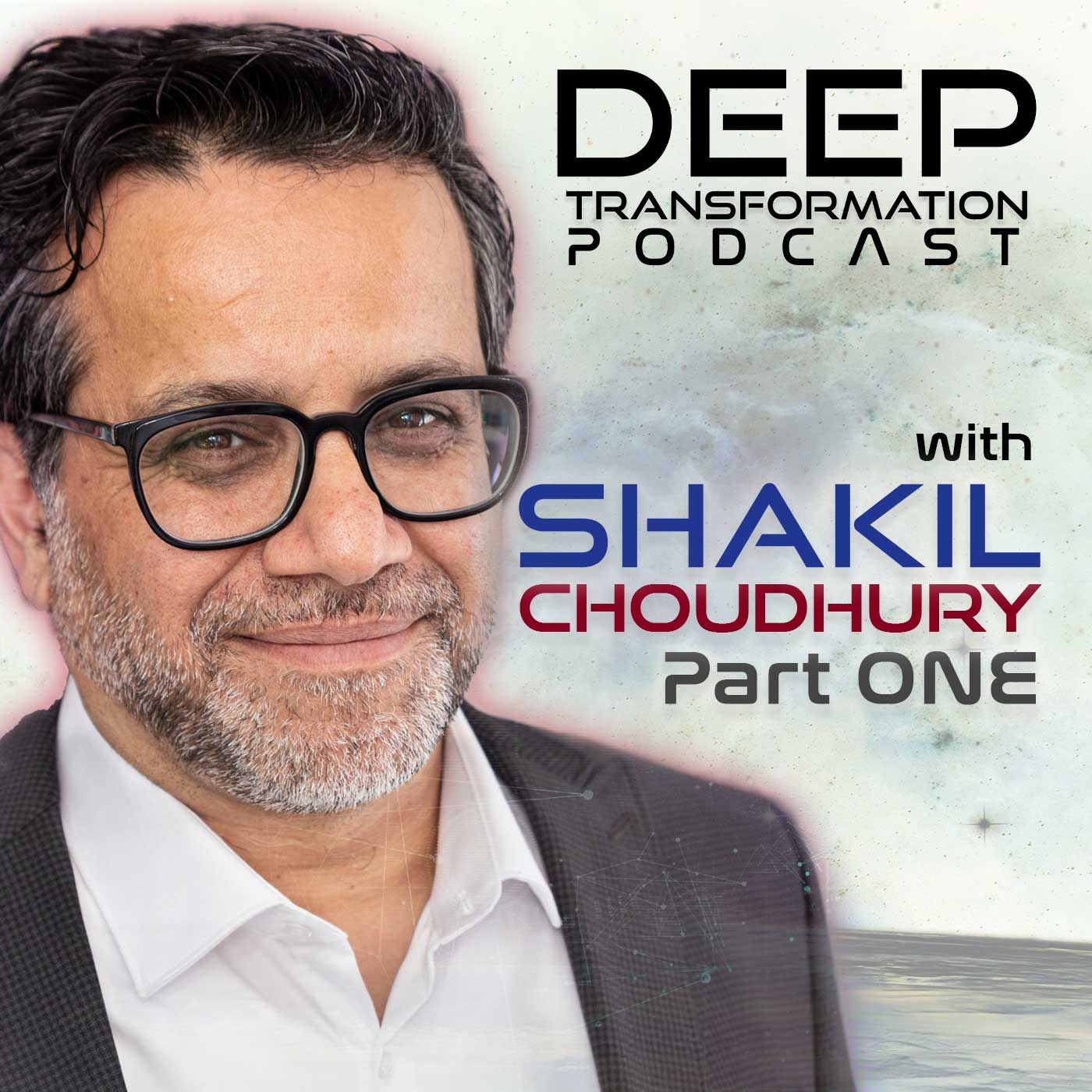
Ep 89Deep Diversity: Integrating Psychological, Scientific & Spiritual Contributions for Healing Injustice and Inequity
Ep. 89 (Part 1 of 2) | Award-winning educator and activist Shakil Choudhury is the author of the outstanding book Deep Diversity: A Compassionate, Scientific Approach to Achieving Racial Justice, and in this potent conversation we learn a lot we perhaps didn’t know about the psychological, emotional, and neurobiological reasons for our ingrained biases, and the systemic bias in the culture at large. How and why do we discriminate? Many of our biases are hidden in the unconscious, which makes it that much harder to bring them into the light so we can begin to understand what’s going on and find ways to move ourselves and society toward justice and equity. Shakil explains that changing societal norms is at the heart of the battle for racial and social justice, as our habitual cultural behaviors tend to be viewed as legitimate, normal, and natural, when actually they may be outdated, off base, offensive, and unjust. Shakil deftly lines us out with specific steps we can take to recognize and change our own behaviors, as well as actions organizational leaders can take to effect change on a broader level.Shakil contends that educating people to become diversity and equity literate is the first essential step, and the 360-hour program he has designed to this end has proven very effective. Once people see the data, they cannot help understanding the drivers of racial and social injustice more clearly, which leads to the place where real transformation can happen. Shakil’s extraordinarily insightful and illuminating approach is fueled by many years of contemplative practice, and he leaves us with a vision of what we are fighting for—not just what we are fighting against—based on Dr. Martin Luther King’s dream of Beloved Community. Small groups of dedicated people have managed to successfully nudge societal norms in the direction of justice in the past, and this conversation and Shakil’s book, Deep Diversity, most certainly contribute a compassionate nudge in the right direction. Bit by bit, recognizing that this is a journey, Shakil conveys both the means and the hope that justice will prevail. Recorded April 26, 2023.“Can we hold the tension between our common humanity and our differences simultaneously?”(For Apple Podcast users, click here to view the complete show notes on the episode page.)Topics & Time Stamps – Part 1Introducing Shakil Choudhury, award-winning educator, racial justice & equity activist, author of Deep Diversity (01:17)How did Shakil come to create this “deep diversity” approach to racial justice and equity work? (02:15)Shakil’s healing journey: finding inner freedom, the world began to look different (03:16)The historical and sociological perspectives help us understand how we got here but it’s the emotional and psychological perspectives that can help us understand why we do what we do (05:38)The unconscious role of emotions, bias, identity, and power (08:11)Cultural diversity, wokeism, ethnocentricity, and how to talk with people at a traditional level of development about racism (10:54)How to get the most people on the side of justice? Let’s make it as easy as possible for people: agnosticizing racial justice and equity work (14:37) Racism is a systemic problem: it’s more than hate crimes, the KKK, and neo-Nazis, more than “spot the bigot” (16:27) We have to help people become systems thinkers: the key is pattern recognition (18:48)Moving racial justice work from an urgency project to a literacy project: changing behavioral patterns is like developing literacy, once you can read, you never stop (19:14) We need to bring forward a framework to make it easier for people to accept that becoming educated about diversity is a journey (22:55)What are effective interventions to begin to change specific behaviors? (26:33)Countering stereotypes: training ourselves to catch our biases when they show up (28:00)Shakil was socialized with a pro-white bias like the rest of society—our biases are not individual problems but a systems problem (31:41)What can we do on an individual level? (33:08)Internalized racism, sexism, and the unconscious nature of our biases (39:31)The ways in which the privileged are unaware of the realities of their own privilege and power: privilege is like a tailwind at your back (41:00)Resources & References – Part 1Shakil Choudhury, Deep Diversity: A Compassionate, Scientific Approach to Achieving Racial Justice* (Research and data references can be accessed in Deep Diversity*)Shakil Choudhury, co-founder & Chief Visionary Officer, Anima Institute: A Compassionate Approach to Racial Justice, offering innovative organizational change and training solutions to nurture inclusive, productive workplaces and communities* As an Amazon Associate, Deep Transformation earns from qualifying purchases.---Shakil Choudhury, M.E.S., B.Ed., B.P.E., co-founder & Chief Visionary Officer of Anima Institute, is an aw
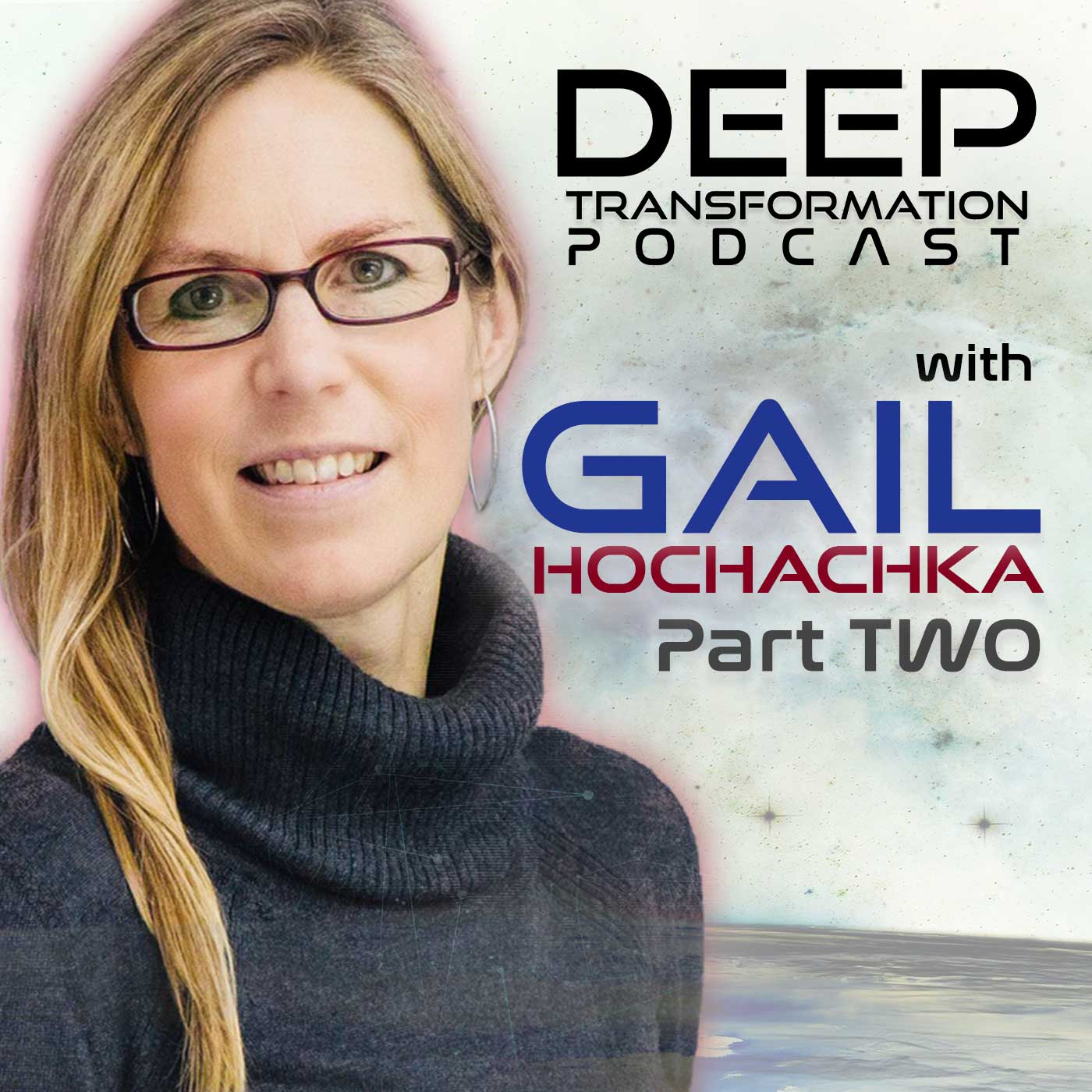
Ep 88The Psychology of Climate Change: Understanding the Causes & Finding Solutions to the Great Challenge of Our Time (Part 2)
Ep. 88 (Part 2 of 2) | Climate change researcher, sustainable development expert, and activist Gail Hochachka works on the front lines of climate change research, asking—and answering—questions like: How does the way we make meaning, at all our different stages of development, relate to the ways we act on climate change? How can we foster more engagement with climate change? Is climate action scalable? And how are we going to show up for the people who are facing the greatest impacts? So far, in searching for solutions, we have largely neglected tapping into the human dimensions of the problem—the ways we understand climate change, the ways we respond, and the ways we can communicate together and make decisions about how to act. Herein lies the potential to come up with more viable solutions than we have so far, and this is the focus of Gail’s current research.Climate change is such a hugely complex and also emotional issue, it is understandably hard for anyone to wrap their head around it, Gail tells us, but the good news is that research is showing that taking action—in whatever way seems most appropriate and meaningful to each individual—is scalable, and that there are ways, which Gail outlines, of creating meaningful communication between people who have very different understandings, to where people can actually come to a place of agreement on how to move forward. Gail’s deep understanding of integral theory and stages of psychological development, combined with her extensive experience in sustainable development, gives her a uniquely insightful perspective on ways of confronting the climate challenge. Gail relates that, surprisingly, a positive way to look at climate change has come to light, which is that climate change is actually presenting us with an opportunity—an opportunity to become more conscious about the way we live, to the great benefit of people and planet. Recorded January 18, 2023.“We know that individuals collectively created the problem of climate change…but when it comes to solutions, we don’t honor that we individuals count.”(For Apple Podcast users, click here to view the complete show notes on the episode page.)Topics & Time Stamps – Part 2Research shows that a sense of the spiritual arises in later stage development (01:40)At later stage development, climate change presents us with an opportunity to be more conscious as to how we live our lives (03:06)Climate change scientists only represent a narrow bandwidth of psychological development (05:43)Research shows, even if we come from different understandings, we can have conversations and find ways to act that we agree upon (07:41)Psychic benefits and how later stage individuals show up in every group (09:26)What brought Gail into this field of study and research? (13:08)Is how women approach climate change different than how men do? (18:30)Social holons and sub holons: the group’s center of gravity will either grow you or limit you (20:53)Mentors and the paradox of success (23:06)How predictable are the outcomes of our changing environment? (25:26)We have the physio sphere, the biosphere & the noosphere—it is the noosphere that would be the first to go (27:28)How are we going to show up for people who are feeling the greatest impacts? (31:55)Double exposure, overlays, looking at communities facing multiple issues: which part of this ball of yarn are we going to pull? (33:12)How to avoid the single issue fallacy, single cause fallacy, and single solution fallacy, in order to maintain civilization (35:27)The extent to which you cross your own value action gap, sustainability does scale—there is an enactment in this moment that has ripple effects (36:36)Resources & References – Part 2The STAGES model of ego developmentTom Murray, Emerge podcast on Wisdom SkillsSee also Deep Transformation podcast with Beena Sharma, Vertical Development’s Many Gifts (on YouTube)Robert Kegan, The Evolving Self*Venn diagramKen Wilber, Sex, Ecology, Spirituality: The Spirit of Evolution*Corey deVos, Holons: The Building Blocks of the Universe (on Integral Life)John O’Neil, The Paradox of Success*David Christian, Maps of Time*Morphogenetic fieldsAndrew Harvey’s Institute for Sacred ActivismGail Hochachka’s website: https://www.gailhochachka.comGail’s recent publications: https://www.gailhochachka.com/publications* As an Amazon Associate, Deep Transformation earns from qualifying purchases.---Finding One’s Own Soul-Centric Climate Action [Live Online Course]with Gail Hochachka & Lisa Gibson, August 16th & 23rd, 12 pm Mountain Time---Gail Hochachka, B.Sc., M.A., Ph.D. works with the human dimensions of climate change using a transdisciplinary, integral approach. Her work focuses on understanding how people make meaning of climate change and how to engage with diverse groups towards a shared sense of the climate challenge. Her research has been published in various
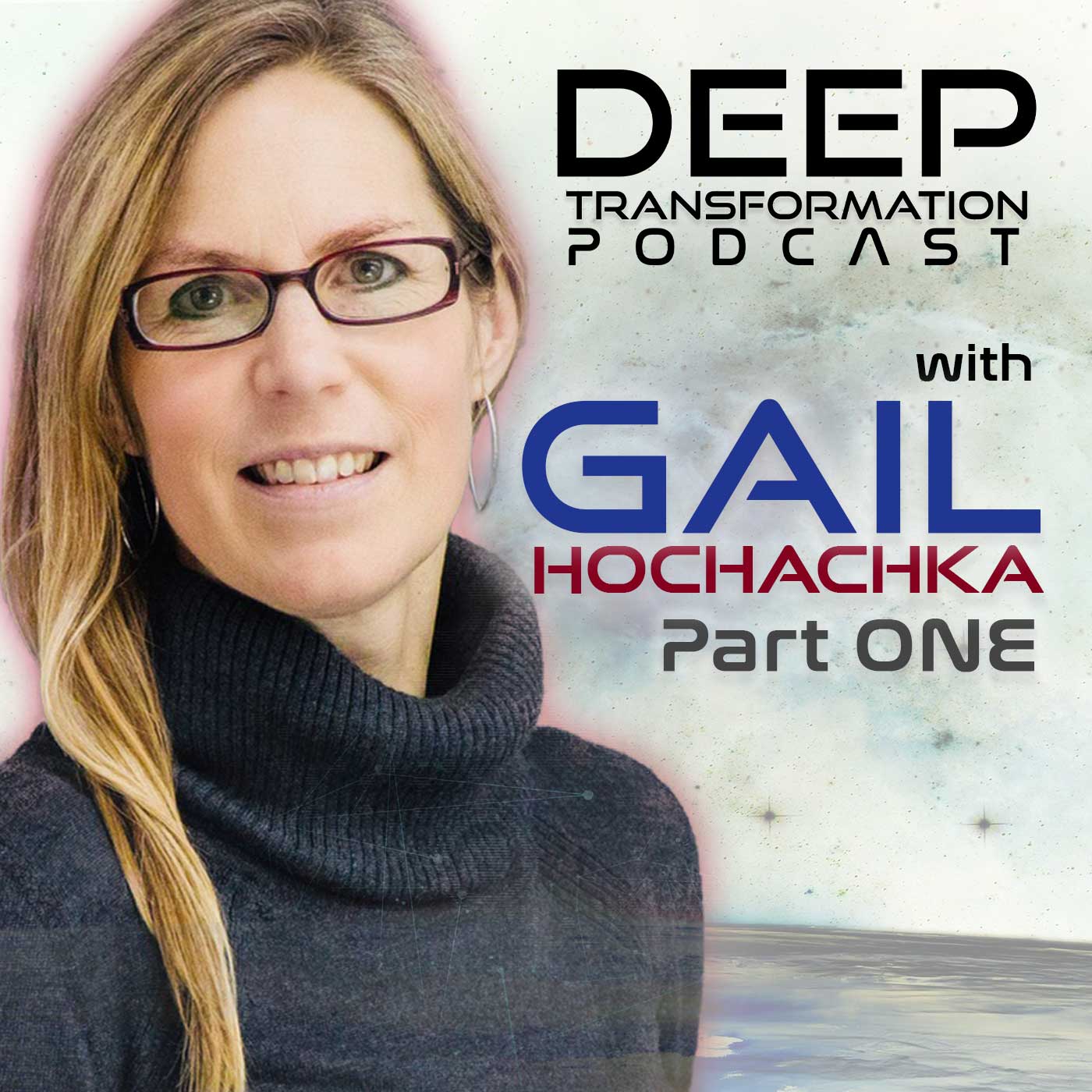
Ep 87The Psychology of Climate Change: Understanding the Causes & Finding Solutions to the Great Challenge of Our Time
Ep. 87 (Part 1 of 2) | Climate change researcher, sustainable development expert, and activist Gail Hochachka works on the front lines of climate change research, asking—and answering—questions like: How does the way we make meaning, at all our different stages of development, relate to the ways we act on climate change? How can we foster more engagement with climate change? Is climate action scalable? And how are we going to show up for the people who are facing the greatest impacts? So far, in searching for solutions, we have largely neglected tapping into the human dimensions of the problem—the ways we understand climate change, the ways we respond, and the ways we can communicate together and make decisions about how to act. Herein lies the potential to come up with more viable solutions than we have so far, and this is the focus of Gail’s current research.Climate change is such a hugely complex and also emotional issue, it is understandably hard for anyone to wrap their head around it, Gail tells us, but the good news is that research is showing that taking action—in whatever way seems most appropriate and meaningful to each individual—is scalable, and that there are ways, which Gail outlines, of creating meaningful communication between people who have very different understandings, to where people can actually come to a place of agreement on how to move forward. Gail’s deep understanding of integral theory and stages of psychological development, combined with her extensive experience in sustainable development, gives her a uniquely insightful perspective on ways of confronting the climate challenge. Gail relates that, surprisingly, a positive way to look at climate change has come to light, which is that climate change is actually presenting us with an opportunity—an opportunity to become more conscious about the way we live, to the great benefit of people and planet. Recorded January 18, 2023.“We know that individuals collectively created the problem of climate change…but when it comes to solutions, we don’t honor that we individuals count.”(For Apple Podcast users, click here to view the complete show notes on the episode page.)Topics & Time Stamps – Part 1Introducing Gail Hochachka, climate change expert & researcher at the University of British Columbia, who brings a profound integral understanding to the way we look at climate change (01:05)What are the most exciting research findings? Global problems are actually global symptoms, and we need to look at what shaped the actual problems to come up with effective solutions (02:24)When we integrate the human dimensions into the global environmental problems, solutions become more apparent (03:47)How much of climate change can we actually make meaning of? We make a whole mental model based on only a fragment of the problem (04:32)The knowledge deficit model: do we do the right thing and respond skillfully if we have all the knowledge we need? No. (06:15)The value action gap in climate change: when it comes to making changes in our lifestyle, we don’t (08:24)The need to foster worldcentric awareness in order to foster climate action (10:08)Gnostic intermediaries: speaking across different cultures, translating concepts across space & time, translating meaning across developmental stages (13:14) How to approach engagement on environmental issues and the 5 why’s of what is most important to people (15:16)How to get people together and discuss climate change (18:54)Considering supply chains and the individuals who add value at each stage of the chain allows people to realize both common ground and that these are problems we all share (23:20)Interdependence reflection: reflecting on Indra’s net ends up as a meditation on boundless gratitude (27:10) We’re all talking from our fragments (29:47)Later stages of development and of meaning making make for more flexibility around your attachment to yourself, greater self-responsibility (30:32)Recommended climate change adaptations and indigenous cosmologies: given sovereignty of their own meaning making, the solutions are better connected to reality—and more likely to be implemented (36:03)Re-owning your sovereignty in relation to the issue is very empowering (38:43)The process of “photovoice:” taking photos in response to the question, what does climate change mean to me? (39:57)How does meaning making change as we mature developmentally? The object of awareness becomes more subtle, the complexity of thought changes, and the future comes more online (41:53)Resources & References – Part 1Gail Hochachka’s website: https://www.gailhochachka.comGail’s recent publications: https://www.gailhochachka.com/publications/Ken Wilber’s Integral Theory, Who Is Ken Wilber? (Integral Life), The Integral Vision*Tomas Björkman podcast, Cultivating Psychological Maturity in Both Individuals and Societies: The Race Between Maturity and Catastrophe, on Deep Tra
Ep 86Nondual Love: Awakening to the Fundamental Benevolence of Reality with A. H. Almaas (Part 2)
Ep. 86 (Part 2 of 2) | Hameed Ali (A. H. Almaas), founder of the contemporary spiritual path the Diamond Approach, beloved teacher, and author of many outstanding spiritual classics, has written a trilogy on the subject of love, and in this conversation the focus is on the recently published second book, Nondual Love. Hameed explains that most wisdom traditions target various ultimates: pure emptiness, pure consciousness, nondual awareness, being, non-being—each of which is sufficient for liberation, but fails to include the qualities of nondual love: goodness, sweetness, abundance, benevolence. Hameed brings these dimensions of love to the table, asking what does divine love feel like, look like, what is it made of? Listening to Hameed is a beautiful, rich experience, due to his extraordinary lucidity, gentle humor, and the profound understanding and assurance that pervade his words from his long experience swimming in the waters of which he speaks. He tells us we all have the potential to experience nondual love, although there are significant obstacles along the path that are inherent to being human. Hameed describes the different stages of opening to nondual love, from the first glimmerings of “unearthly sweetness” to the realization that we ourselves are love. And he outlines the nature of the barriers we face, like the beast of anger and hatred that arises in us when we perceive that reality has abandoned us. Hameed explains that by re-establishing basic trust, and feeling the presence of benevolent love, we can regain the sense that things will be okay and unfold ultimately for the good. Recorded April 12, 2023.“Our true nature has infinite potential of how it can be.”(For Apple Podcast users, click here to view the complete show notes on the episode page.)Topics & Time Stamps – Part 2The personal nature of God is responsive; the closer you are, the happier you are (01:24)The personal is a spiritual quality of presence that comes from pure being or source, as an expression of it (03:59)Practicing surrender and recognizing our true helplessness completely (06:01)The practice of awakening: how do we put practice (doing) together with the importance of non doing? (08:58)In a dualistic way, we have responsibility, free will, intention, and effort and we have to apply these to awaken; in time this shows us we are helpless: when we truly give up doing, then things can open up (11:35)It is inherent to the ego consciousness that we can’t do it—it’s an objective helplessness, not the fault of any one individual (13:31)Obstacles on the way to divine love: settling for substitute gratifications, the separate ego self (14:32) The beast arises when people have suffered and reality has left them hurt and feeling abandoned—then you hate God, you hate good (17:43) Transformation is through understanding; we have to be nonjudgmental about everything that arises in our experience (23:28)Jabba the Hutt, archetypal symbol of attachment, desire, greed, is disconnected from abundance, from divine love—to heal this in yourself, you welcome it (29:56)The main barrier to all nondual experience is believing we are separate entities—we feel the shape of our bodies, and we have to work through this central construct of our ego (33:51)Ego is a stage the soul goes through; to believe this stage is the only and final stage, that is the error (37:24)How does Hameed experience himself? Nobody, nothing here. Basic trust is second nature (38:27)How does Hameed teach others basic trust? By exploring and working through the limitations that came about in people’s lives where basic trust was lost (40:14)The more basic trust, the more people can open up, relax, let things happen—how Hameed discovered the importance of basic trust in teaching his students (42:44)Volume III of Hameed’s trilogy will be The Beloved and a brief blessing (45:19)Resources & References – Part 2Rigpa, the true nature of our mind, pure awareness, a central concept of DzogchenDharmakāya, the “body” or sum of Buddha’s teachingsRamesh Balsekar, one of Sri Nisargadatta’s disciplesThe Ājīvika school of Indian philosophy taught there is nothing you can do to awakenDilgo Khyentse Rinpoche, Vajrayana master, scholar, poet, Dzogchen teacher, and recognized by Buddhists as one of the greatest realized masters; The Collected Works of Dilgo Khyentse, Vol. 1: Journey to Enlightenment; Enlightened Courage; The Heart of Compassion*Padmasambhāva, a central figure in the transmission of Buddhism to Tibet, renowned for taming the spirits and demons of Tibet and turning them into guardians for the Buddha’s DharmaNeti, neti (not this, not that)Freud’s concept of the unconscious: What is the Unconscious? (Freud Museum London)Jabba the Hutt, an expression of desire, greed, insatiability from the Star Wars movieA. H. Almaas, Nondual Love: Awakening to the Loving Nature of Reality*A. H. Almaas, Lo
Ep 85Nondual Love: Awakening to the Fundamental Benevolence of Reality with A. H. Almaas
Ep. 85 (Part 1 of 2) | Hameed Ali (A. H. Almaas), founder of the contemporary spiritual path the Diamond Approach, and author of many outstanding spiritual classics, is writing a trilogy on the subject of love, and in this conversation the focus is on the second book, Nondual Love. Hameed explains that most wisdom traditions target various ultimates: pure emptiness, pure consciousness, nondual awareness, being, non-being—each of which is sufficient for liberation, but fails to include the qualities of nondual love: goodness, sweetness, abundance, benevolence. Hameed brings these dimensions of love to the table, asking what does divine love feel like, look like, what is it made of? Listening to Hameed is a beautiful, rich experience, due to his extraordinary lucidity, gentle humor, and the profound understanding and assurance that pervade his words from his long experience swimming in the waters of which he speaks. He tells us we all have the potential to experience nondual love, although there are significant obstacles along the path that are inherent to being human. Hameed describes the different stages of opening to nondual love, from the first glimmerings of “unearthly sweetness” to the realization that we ourselves are love. And he outlines the nature of the barriers we face, like the beast of anger and hatred that arises in us when we perceive that reality has abandoned us. Hameed explains that re-establishing basic trust, feeling the presence of benevolent love, we can regain the sense that things will be okay and unfold ultimately for the good. Recorded April 12, 2023.“Without love there would be no reason for the universe to exist.”(For Apple Podcast users, click here to view the complete show notes on the episode page.)Topics & Time Stamps – Part 1Introducing Hameed Ali (A. H. Almaas), spiritual master, creator of the Ridhwan School & Diamond Approach, and Hameed’s new book Nondual Love (01:07)What does Hameed mean by nondual love? It’s similar to nondual awareness but it includes the goodness, the sweetness, the heart that is inherent in our spiritual nature (03:00)In Plato, the main idea is the good, which is almost synonymous with love (06:05)What does divine love feel like? Does it have a color, a texture? (07:57)The fundamental benevolence of reality—without love there would be no reason for the universe to exist (09:10)The Sufis say, God created the universe out of love so God would be known—known through the human being (10:59)Rumi writes all the time about how love and God are inseparable: most poetry, most songs, most literature are about love, but we rarely hear about the very beingness of it (12:30)Beyond gratification: for someone who is awakened, the practice of sexual encounter is to bring out more love, the goodness of love (14:24)Stages of opening to divine love: our usual understanding of love is limited, but then comes a fullness in our hearts, a softness, an unearthly sweetness (16:47)The next stage is recognizing your full heart as just one wave of the ocean of love that comes through your individual heart (20:07)The next level is recognizing yourself as the ocean of love: I am love; this is the self-realization of nondual love (20:49)Basic trust: feeling the presence of benevolent love tends to evoke trust, a sense that things will be okay and unfold ultimately for the good (21:19)We are born trusting, but what happens in childhood determines if we will expand or be limited; our basic trust may go underground, but love and basic trust are inherent to people (24:24)Hameed teaches how to regain basic trust by dissolving the history that limits it (26:04)How many ultimates are there? Each teaching talks about a different ultimate—pure emptiness, consciousness, being, non-being—each of which is sufficient for liberation, but love includes also abundance (26:30) Spiritual teachers tend to think their teachings and practices are it, and even though they may experience and radiate love, they don’t speak about love (32:09)5 fundamental dimensions of our true nature: divine love, presence, emptiness, awareness, and change/dynamism; what is the difference between presence and awareness? (34:38)Creative dynamism is the dimension that shows how things change, because saying everything is one doesn’t explain movement and change (38:57)There is a reality that is truly unmanifest (40:25)True nature is a potential and will manifest to whoever is open to it (42:48)The truly unmanifest is unexperienceable: I don’t know what I am, but I am That (47:09)Resources & References – Part 1A. H. Almaas, Nondual Love: Awakening to the Loving Nature of Reality*A. H. Almaas, Love Unveiled: Discovering the Essence of the Awakened Heart*A. H. Almaas, The Beloved, the third book in the trilogy, is in the process of being editedHameed Ali, founder of The Ridhwan School, home to the Diamond ApproachHameed Ali’s book page on the Deep Transformation web

Ep 84Lama Surya Das – The Essence of Awakening: Who Are We Really—and How Can We Find Out? (Part 2)
Ep. 84 (Part 2 of 2) | Lama Surya Das, beloved meditation teacher, scholar, pioneer of bringing Tibetan Buddhism to the West, and author of the bestseller Awakening the Buddha Within among many more, shares bright gems of wisdom from his extensive experience practicing Dzogchen, his long immersion in meditation retreats, and studying in person with the great spiritual teachers of Asia. Lama Surya is dedicated to getting the word out, and to young people especially, that the timeless teachings of the great masters are every bit as important and transformative in today’s modern world as they ever were. One doesn’t need to go on retreat to come to a place of wonder, understanding, and appreciation for life; Lama Surya assures us that daily practice of attentive awareness on the path of “awakefulness” is doable and effective in today’s world. This is the path that leads to self-knowledge, and we just need to explore and investigate to discover for ourselves that realization of the Great Perfection, of oneness, is never far away.Lama Surya embellishes his teachings with humorous tales of his early explorations with psychedelics, his spiritual adventures in India, how he came to undertaking not one but two 3-year silent retreats in the great Tibetan Buddhist tradition of Dzogchen, and coming home afterwards with a mission for transmission. He talks about divine love and how amazing and influential it was to hang out with spiritual teachers who actually practice unconditional love, here and now. Lama Surya Das’ own deep caring and compassion shine through his words, and his well-known “jolly lama” humor often elicits laughter from Roger and John. “There are a lot of lanes on the highway of awakening, you just want to watch you don’t go off into the ditch.” His authentic, endearing humility shines through as well. He is certain that “if I can do it, you can do it, anyone can do it.” Recorded September 7, 2022.“Spiritual elixir is the greatest panacea for our inner world: mind, body, heart & soul.”(For Apple Podcast users, click here to view the complete show notes on the episode page.)Topics & Time Stamps – Part 2Going to India, discovering the practice of of Vipassana and the cave retreat yogi tradition of Tibet (01:31)What timeless teachings did Lama Surya Das discover in his 3-year Dzogchen retreat? Love is not the same thing as light (05:21)Mother Teresa on loneliness and love, and meeting spiritual teachers who really lived the talk (07:44)Living, practicing, surrendering: learning that love is greater than any dichotomy of like or dislike (08:36)Teaching of Pema Wangyal Rinpoche: “Don’t expect the struggle to end.” (10:45)Coming back after the long retreat (11:47)We need an applied dharma that works for the postmodern world today (13:08)Continuing the practice with a second 3-year Dzogchen retreat (14:04)How Lama Surya Das became a Dzogchen teacher and started the Dzogchen centers (16:57)The importance of spending more time with daily practice and integrating it into your life: retreats are not for everyone (18:21)How long does it take to awaken? Awakening is very personal (21:08)Pointing towards awakening: absolute truth and relative truth, the middle way (23:44)What’s next for Lama Surya Das? The 3 H’s: healthy, harmonious & helpful—teaching young people, spiritual activism (26:46)Epistemological or logical debate: clarifying the meaning of how we know what we know (28:30)Cherishing life: cockroaches in the monastery (30:40)The timeless question: How should we live? (33:01)We have to accept the implications of our actions and the law of karma (35:32)Moving towards interdependence, interconnectedness (37:00)What are Lama Surya Das’ practices today? The joy of meditation: catching the updrift (38:51) A poem and a prayer (42:54)Resources & References – Part 2Roshi Philip Kaplan, beloved Zen teacher, founder of the Rochester Zen Center, author of The Three Pillars of Zen*Mirabai Bush, founder, Center for Contemplative Mind in Society, co-founder of the Seva Foundation, co-author with Ram Dass, Walking Each Other Home: Conversations on Loving and Dying*S. N. Goenka, teacher of Vipassana meditation, who started the first Vipassana Center in 1969, Meditation Now: Inner Peace through Inner Wisdom*Milarepa, renowned Tibetan yogi and spiritual poetKalu Rinpoche, Dzogchen master and Mahamudra teacher, Luminous Mind: The Way of the Buddha*, Foundations of Tibetan Buddhism*Andrew Holecek, lucid dreaming expert & author, see also Deep Transformation podcast episode #37, The Remarkable Practice of Dream YogaMother Teresa, founder of the MIssionaries of Charity, canonized as Saint Teresa of Calcutta in 2016Tulku Pema Wangyal Rinpoche on developing heart and love (YouTube video), Awakening Wisdom: Heart Advice on the Fundamental Practices of Vajrayana Buddhism*Padmakara Translation Group, established to preserve and make

Ep 83Lama Surya Das – The Essence of Awakening: Who Are We Really—and How Can We Find Out?
EEp. 83 (Part 1 of 2) | Lama Surya Das, beloved meditation teacher, scholar, pioneer of bringing Tibetan Buddhism to the West, and author of the bestseller Awakening the Buddha Within among many more, shares bright gems of wisdom from his extensive experience practicing Dzogchen, his long immersion in meditation retreats, and studying in person with the great spiritual teachers of Asia. Lama Surya is dedicated to getting the word out, and to young people especially, that the timeless teachings of the great masters are every bit as important and transformative in today’s modern world as they ever were. One doesn’t need to go on retreat to come to a place of wonder, understanding, and appreciation for life; Lama Surya assures us that daily practice of attentive awareness on the path of “awakefulness” is doable and effective in today’s world. This is the path that leads to self-knowledge, and we just need to explore and investigate to discover for ourselves that realization of the Great Perfection, of oneness, is never far away.Lama Surya embellishes his teachings with humorous tales of his early explorations with psychedelics, his spiritual adventures in India, how he came to undertaking not one but two 3-year silent retreats in the great Tibetan Buddhist tradition of Dzogchen, and coming home afterwards with a mission for transmission. He talks about divine love and how amazing and influential it was to hang out with spiritual teachers who actually practice unconditional love, here and now. Lama Surya Das’ own deep caring and compassion shine through his words, and his well-known “jolly lama” humor often elicits laughter from Roger and John. “There are a lot of lanes on the highway of awakening, you just want to watch you don’t go off into the ditch.” His authentic, endearing humility shines through as well. He is certain that “if I can do it, you can do it, anyone can do it.” Recorded September 7, 2022.“Timeless wisdom is an endangered natural resource.”(For Apple Podcast users, click here to view the complete show notes on the episode page.)Topics & Time Stamps – Part 1Introducing Lama Surya Das, dedicated practitioner, spiritual teacher, pioneer of bringing the wisdom of Tibetan Buddhism to the West (01:09)How Lama Surya Das got to where he is now: his humor, his education, going to India and meeting his guru (03:57)Spiritual elixir is the greatest panacea for our mind, body, heart & soul (07:32)A core theme of Buddhist teaching: check it out for yourself (09:16)Dzogchen, the Great Perfection, the height of Tibetan Buddhism: awakefulness is the way (10:32) Mahamudra evergreen teachings of nondual awareness: we’re all buddhas by nature (15:52)If everything is perfect as it is, how come we feel like crap? (18:08) Self-knowledge is the way to wisdom: growing up to be a true mensch (18:45)The five wisdoms (gnoses), mirror-like wisdom, discriminating wisdom, and how they apply to now (21:20)Lucid faith, unshakeable realization (22:57)Lama Surya Das’ first vision of God, “beyond oneness or noneness” (24:28)Who are we really? Are we consciousness? What about the unconscious, the subconscious? (32:22)Replicating ego death in meditation, sensing Presence, experiencing beingness (33:33)“If I can do it, you can do it, anyone can do it.” (34:49)The middle way, moderation in moderation: there are a lot of lanes on the highway of awakening (36:50)Questioning and investigation are an important part of the spiritual path (37:57)Timeless wisdom is an endangered natural resource (39:10)A story of Lama Surya Das’ first 3-year Tibetan retreat, as told by Roger (40:06)Resources & References – Part 1Lama Surya Das’ website (which includes his lecture and retreat schedule): https://surya.orgLama Surya Das, Awakening the Buddha Within: Tibetan Wisdom for the Western World*Lama Surya Das, Awakening to the Sacred: Creating a Personal Spiritual Life*Lama Surya Das, Awakening the Buddhist Heart: Integrating Love, Meaning, and Connection into Every Part of Your Life*Lama Surya Das, Buddha Standard Time: Awakening to the Infinite Possibilities of Now*Lama Surya Das and Sounds True, Dzögchen Meditation Training: A Direct Path for Awakening to the Radiant Buddha Within* (audiobook)Lama Surya Das, The Yeti and the Jolly Lama: A Tale of Friendship*Lama Surya Das, The Mind Is Mightier Than the Sword: Enlightening the Mind, Opening the Heart,* contains the Meister Eckhart quote, “The eye through which I see God is the eye through which He sees me.”Kalu Rinpoche, Dzogchen master and Mahamudra teacher, Luminous Mind: The Way of the Buddha*, Foundations of Tibetan Buddhism*The laughing diamond sutra or HevajraSocrates, “To know thyself is the beginning of wisdom.”The five wisdoms (gnoses), mirror-like wisdom, discerning, discriminating wisdom, and moreRabindranath Tagore, Bengali poet, playwright, an
Ep 82Building a Just World: How Our Laws Express Our Collective Values & the Challenge of Uplifting Our Values, Law, and Society (Part 2)
Ep. 82 (Part 2 of 2) | Constitutional law expert and criminal justice professor Mark Fischler has a thirst for justice and a gift for teaching. With cogency and passion, Mark explains that law is not the absolute that we perhaps thought, but an ever changing reflection of the values we hold as a society. Law is a developmental process, and will benefit from our own dedication to inner moral development. Mark shows how the law can (and has) become ever more inclusive, with the potential to serve and uphold the dignity of all peoples, all beings. Because of its abstract clauses, there is room in the Constitution to interpret the law in ways that are attuned with our pluralistic society. Mark calls on us to come together and decide what we value as a people—there is no mandate in democracy that all decision making power must reside in the hands of the Supreme Court, which has only had the sort of unilateral power it enjoys today since the 1950s.This is no dry, legalistic conversation, but a truly illuminating vision of the potential of the law to embody justice, inclusivity, compassion. It is also a solid overview of where we have come from and where we are now, referencing many landmark rulings of the Supreme Court. Finally, this is spiritually inspiring as well—Mark tells the story of the transformational epiphany he had as a young man that led to his career as a public defender, onto the spiritual path, and eventually to become a well-respected, award-winning professor of criminal justice. Mark’s perspective on the law is far ranging, embracing human rights, animal rights, the rights of all beings. It comes from a place of deep care and compassion: “What is the happiness that the Declaration of Independence talks about, what is suffering?” Be inspired by Mark’s wise and knowledgeable teachings and the potential of the law to create a just society for all. Recorded January 4, 2023.“Law is our collective coming together and deciding what we value as a people.”(For Apple Podcast users, click here to view the complete show notes on the episode page.)Topics & Time Stamps – Part 2The 4th branch of government: administrative agencies like the EPA that implement policies are now under very specific guidelines from the legislature (01:40)Abstract language in the Constitution requires interpretation and the challenge of finding balance between restrictively specific guidelines and abstract directives (06:45)The history of the Supreme Court and how the Court is 10–20 years behind the rest of the culture’s center of gravity (09:44)The doctrine of originalism: is the Constitution a fixed document? (12:36)Ronald Dworkin, primary legal philosopher of his generation: “The law is absolutely an act of interpretation.” (15:55)Originalism’s effect on Brown v. Board of Education, the Equal Protection Clause, and Plessis v. Ferguson (16:35)Abraham Lincoln was competing with the courts on slavery—his point of view was far more holistic, respecting the equal dignity of all people (20:47)We all need to be involved in the determination of fundamental human rights and not leave it up to the Supreme Court (24:24)Our Constitution, because of the abstract clauses, allows us ways to start to relate differently to our environment and all beings (26:00)The law is a social institution embodying the ways we agree to relate to each other as a society (28:09)We need to become conscious that law is a developmental process, becoming more and more inclusive over time (29:18)Theories of justice and how to build a just society: integrating Immanuel Kant’s categorical imperative, universalizability, Aristotle’s virtue-based right action, Steve McIntosh’s observable piece, the utilitarian what’s the greatest good for the greatest number, and John Rawls’ justice as fairness (31:59)Using Integral to help us apply inclusivity to the law (35:32)Animal rights and our relationship to property, to the Earth (37:39)Is there a legal way to support people in the pursuit of self-actualization? (43:17)What is the happiness that the Declaration of Independence talks about, what is suffering? (46:15)Law is our collective coming together and deciding what we value as a people and this requires inner moral development (47:40)Peacemaking ethics: care, connection, mindfulness (53:22)The collective trance we live in (55:51)A call to participate in our democratic process: we can influence our laws, our communities, and make this world a better place (58:34)Resources & References – Part 2Obergefell v. Hodges, 2015 decision to guarantee the fundamental right to marry to same-sex couplesThe Federalist Society, a group of conservatives and libertarians dedicated to reforming the current legal orderFrederick Douglass, social reformer, abolitionist, orator, writer, statesmanThe theory of originalism is that all statements in the Constitution be interpreted according to the understanding at the time the statements were adopted Ronald Dworkin, p
Ep 81Building a Just World: How Our Laws Express Our Collective Values, and the Challenge of Uplifting Our Values, Law, and Society
Ep. 81 (Part 1 of 2) | Constitutional law expert and criminal justice professor Mark Fischler has a thirst for justice and a gift for teaching. With cogency and passion, Mark explains that law is not the absolute that we perhaps thought, but an ever changing reflection of the values we hold as a society. Law is a developmental process, and will benefit from our own dedication to inner moral development. Mark shows how the law can (and has) become ever more inclusive, with the potential to serve and uphold the dignity of all peoples, all beings. Because of its abstract clauses, there is room in the Constitution to interpret the law in ways that are attuned with our pluralistic society. Mark calls on us to come together and decide what we value as a people—there is no mandate in democracy that all decision making power must reside in the hands of the Supreme Court, which has only had the sort of unilateral power it enjoys today since the 1950s.This is no dry, legalistic conversation, but a truly illuminating vision of the potential of the law to embody justice, inclusivity, compassion. It is also a solid overview of where we have come from and where we are now, referencing many landmark rulings of the Supreme Court. Finally, this is spiritually inspiring as well—Mark tells the story of the transformational epiphany he had as a young man that led to his career as a public defender, onto the spiritual path, and eventually to become a well-respected, award-winning professor of criminal justice. Mark’s perspective on the law is far ranging, embracing human rights, animal rights, the rights of all beings. It comes from a place of deep care and compassion: “What is the happiness that the Declaration of Independence talks about, what is suffering?” Be inspired by Mark’s wise and knowledgeable teachings and the potential of the law to create a just society for all. Recorded January 4, 2023.“Law is our collective coming together and deciding what we value as a people.”(For Apple Podcast users, click here to view the complete show notes on the episode page.)Topics & Time Stamps – Part 1Introducing professor of criminal justice and constitutional law expert Mark Fischler (01:31)How did Mark get into constitutional law? (03:45)At the foundation of legal theory is the question: natural law or positive law? How Ken Wilber reduced the cognitive dissonance going on around this for Mark (06:44)Law is a lawyer-driven process and the action is in the criminal courts (07:52)Mark’s 1996 transformational epiphany of self-knowledge around the judgmental character of his mind (09:16)How psychotherapy relates to Mark’s practice as a public defender and taking a bodhisattva approach to being there for all beings (13:59)The deepening of Mark’s spiritual practice: Am I supposed to leave everything behind, give it all up? (21:08)“The demon spoke” (Socrates): leaving public defender hood and the beginning of Mark’s spiritual journey (25:03)Miguel Luiz’ Four Agreements: principles upon which to life your life (29:35)Being of service to others is the foundational piece driving Mark to deepen his understanding of the law and in his role as professor (35:08)“We’re in a stage of pluralism, but we sure don’t act that way;”Justice Alito’s decision in the Dobbs case, overturning Roe v. Wade (37:02)Can we start to have a conversation about the law, from a 30,000’ point of view, transcending and including perspectives, even the Integral one? (38:20)Giving the Supreme Court so much power to make legal decisions is only as old as the 1950s (39:46) Was Roe v. Wade the best way to go? We needed to have a more honest conversation from the start (43:37)Human rights and how developmental stages play out in the justice system (46:35)Roger highlights the points Mark has brought up and their antidotes: absolutism, pluralism, the need for honest conversations, integrating different points of view (48:12)Teaching civil liberties to a class of diverse first generation students so that they feel heard and valued (51:47)Understanding Alito’s point of view, emotional contagion, and how Alito and other Supreme Court justices do not feel respected or heard (55:18)Black nationalism: being completely independent of the system (58:40)Resources & References – Part 1What’s the Future (WTF) and What Can We Do About It? Integral Conference, Sedona 2022John Kaiser, professor whose teachings stand at the crossroads between social & political philosophy, human rights, and ethicsPlato, The Republic*Ken Wilber’s Four Quadrants (Integral Life)Melvyn Zarr, professor who represented Dr. Martin Luther King, Jr.Hayden Valley, YosemiteRoshi Philip Kapleau, The Three Pillars of Zen*The Third Patriarch of Zen, “…and the burdensome practice of judging brings annoyance and weariness” Gerry Spence, founder of the Trial Lawyer’s College, who tried and won many nationally known cases, including the Karen Silkwood caseCarl Rogers,
Ep 80Meeting & Healing the Shadow on the Spiritual Path: An Essential Practice for Awakening, Growth & Healing (Part 2)
Ep. 80 (Part 2 of 2) | Connie Zweig, award-winning author, depth psychologist, master shadow guide, and longtime contemplative practitioner asks some good questions—and answers them too, with unusual clarity and deep insight born of long experience and a cutting-edge mind. Why is it that we meet darkness on the spiritual path? What do we banish into the shadow? How do we reclaim what we project onto charismatic leaders? Learning to recognize and resolve the shadow is a powerful practice, and one that is all too often overlooked in a time when psychology is focused on objective approaches, neglecting the fact and force of the unconscious. Cultivating shadow awareness, we can begin to look beyond projections and stereotypes, recognize the risks of black and white thinking, and learn how to reclaim what Carl Jung called the “unlived life.” Connie discusses the psychodynamics between spiritual student and spiritual teacher, and other situations where people have disproportionate power over others, shining a bright light of illumination on the nuances and complexities of these relationships.This is an intimate look into the challenges of the spiritual path, where we need both psychological practice and spiritual practice to advance our awakening, and a very relevant, timely conversation with shadow currently erupting in our culture in epidemic proportions. Connie’s dedication to helping people find their way through the dark nights we inevitably experience on our spiritual journey comes through strong and clear. Her authenticity, caring, and wisdom is palpable, inspiring us as to how the lights really go on when we start to see the dynamics of our inner world and relationships with more nuance, deeper insight, and shadow awareness. Recorded April 5, 2023.“When you meet the shadow, it means something else is required of you.”(For Apple Podcast users, click here to view the complete show notes on the episode page.)Topics & Time Stamps – Part 2Let’s talk about awakening: it’s not just about meeting the shadow (01:25)Connie’s intention is to help people move through and past the inevitable challenges on the path of spiritual growth (03:30)Spiritual shadow work: how do we reclaim our projections & gifts that we tend to give away to charismatic leaders? (04:44) How do we uncover what we banished into the shadow? Bringing forth our “unlived life” (06:11)Connie’s distress about the state of the field of psychology today: medicalization, the cognitive/behavioral/neuroscience approach, and a complete discounting of the role of the unconscious (09:12)Ken Wilber’s work (and the work of A. H. Almaas) provides a bridge for integrating depth psychology and spiritual practice (12:02)Importance of your own inner guidance: what feels right? (13:22)Taking up a practice without taking on the whole enchilada (15:14)What would an integrated spiritual regime look like? Contemplative practice, reflective practices, depth psychotherapy, group practice & relationships, study, and bodywork (17:23)Lifestyle is another crucial element of a well-rounded practice (22:25)Trump’s malignant narcissism is in some ways analogous to how spiritual leaders attract followers: appealing to our pre-rational selves (23:17)How many teachers empower their students to leave the community and go teach? (28:20)Cultural shadows: e.g., independent America’s shadow is dependence (30:32)The concept of salvation in our spiritual sub-cultures (31:38) The #MeToo movement wasn’t extended into the spiritual arena; the complexity of the issue of consent (34:19)Sexual relations with a spiritual leader trigger an identity crisis: Who am I? Victim, consort, special one? (40:50)What is the shadow side of the #MeToo movement? (41:49)Lonely spiritual teachers and systemic causes of abuse (43:07)Roger’s summary of Connie’s new book, Meeting the Shadow on the Spiritual Path (45:39)Resources & References – Part 2Buddha at the Gas Pump podcastKen Wilber’s Lines of Development (Integral Academy website)Carl Jung quote about The Unlived Life, Robert A. Johnson, Living Your Unlived Life: Coping with Unrealized Dreams and Fulfilling Your Purpose in the Second Half of Life*A.H. Almaas (Hameed Ali), creator of The Diamond Approach, see also Deep Transformation episode #43, Nonduality and Beyond: The Exhilarating Adventure of Discovering the Nature of Reality (or watch on YouTube)Arthur Deikman’s test of enlightenment: ask the spouseErich Fromm, Escape from Freedom*Ernest Becker, The Denial of Death*Association for Spiritual IntegrityThe #MeToo movementConnie Zweig, Meeting the Shadow on the Spiritual Path: The Dance of Darkness and Light in Our Search for Awakening*Connie Zweig, The Inner Work of Age: Shifting from Role to Soul*Connie Zweig, The Holy Longing: The Hidden Power of Spiritual Yearning*Connie Zweig, Romancing the Shadow: A Guide to Soul Work for a Vital, Authentic Life
Ep 79Meeting & Healing the Shadow on the Spiritual Path: An Essential Practice for Awakening, Growth & Healing
Ep. 79 (Part 1 of 2) | Connie Zweig, award-winning author, depth psychologist, master shadow guide, and longtime contemplative practitioner asks some good questions—and answers them too, with unusual clarity and deep insight born of long experience and a cutting-edge mind. Why is it that we meet darkness on the spiritual path? What do we banish into the shadow? How do we reclaim what we project onto charismatic leaders? Learning to recognize and resolve the shadow is a powerful practice, and one that is all too often overlooked in a time when psychology is focused on objective approaches, neglecting the fact and force of the unconscious. Cultivating shadow awareness, we can begin to look beyond projections and stereotypes, recognize the risks of black and white thinking, and learn how to reclaim what Carl Jung called the “unlived life.” Connie discusses the psychodynamics between spiritual student and spiritual teacher, and other situations where people have disproportionate power over others, shining a bright light of illumination on the nuances and complexities of these relationships.This is an intimate look into the challenges of the spiritual path, where we need both psychological practice and spiritual practice to advance our awakening, and a very relevant, timely conversation with shadow currently erupting in our culture in epidemic proportions. Connie’s dedication to helping people find their way through the dark nights we inevitably experience on our spiritual journey comes through strong and clear. Her authenticity, caring, and wisdom is palpable, inspiring us as to how the lights really go on when we start to see the dynamics of our inner world and relationships with more nuance, deeper insight, and shadow awareness. Recorded April 5, 2023.“When you meet the shadow, it means something else is required of you.”(For Apple Podcast users, click here to view the complete show notes on the episode page.)Topics & Time Stamps – Part 1Introducing depth psychologist, illuminator of the shadow, and award-winning author Connie Zweig (01:17)What brought Connie to the subject of shadow: exploring the psychology of spiritual yearning (02:10)Why is it that we meet darkness on the spiritual path? (05:18)What Carl Jung meant when he used the term shadow (06:45)The negative traits (and our unlived gifts) that are in the shadow are always in relation to the ego (08:02)Why don’t we recognize the shadow? By definition, the shadow is hidden, unacceptable—locked in both body & mind (10:03)The shadow has erupted in our culture, but it’s not so apparent in the spiritual arena (12:43)Psychodynamics & psychological defense mechanisms: projection, repression & denial are not recognized in the wisdom traditions (16:44)Dreamwork is a way to begin exploring the unconscious (19:19)How does developmental psychology fit in? Self-observation is the beginning, turning inward (20:13)Connie’s book is a call for spiritual awakening, deepening practice, and also shadow awareness (22:45)Shadow awareness includes recognizing our projections—both negative and spiritually bright (24:37)What is it in us that wants to make the human divine? Projection and the psychodynamics of our relationship to spiritual leaders (26:08)Archetypal projection: attributing godlike power to leaders (28:36)How does it feel to have large numbers of people projecting perfection on you? (29:21)Narcissism, secrecy, and spiritual bypassing in spiritual communities (32:03)What leads a spiritual community to become cult-like, where people lose their critical thinking? (37:48)The practice of guru worship, idealization, or visualizing inner gods and goddesses (43:00)Cultivating shadow awareness in spiritual contexts (45:56)Taking the risk of stepping into liminality and uncertainty, trusting life (50:06)Follow the yearning beyond the ego self while also remembering to be aware there will be dark nights on the journey: when you meet the shadow, it means something else is required of you (52:58)Resources & References – Part 1Connie Zweig, Meeting the Shadow on the Spiritual Path: The Dance of Darkness and Light in Our Search for Awakening*Connie Zweig, A Moth to the Flame: The Story of the Great Sufi Poet Rumi*Johann Wolfgang von Goethe’s poem The Holy Longing (translated by Robert Bly)Connie Zweig, The Holy Longing: The Hidden Power of Spiritual Yearning*Connie Zweig, Romancing the Shadow: A Guide to Soul Work for a Vital, Authentic Life*Connie Zweig, The Inner Work of Age: Shifting from Role to Soul*See also Deep Transformation episode #19, Connie Zweig –The World Needs Elders: How Inner Work Transforms Aging into a Developmental Process, a Life Culmination, and a Gift*Connie Zweig & Jeremiah Abrams, editors, Meeting the Shadow: The Hidden Power of the Dark Side of Human Nature*Carl Jung, “The Relationship Between the Ego and Unconscious” in The Archetypes and The Collective Unconscious (Collected W
Ep 78From Race to Culture to Cosmos: Using the Dance of Our Differences to Wise Up, Harmonize & Actualize (Part 2)
EEp. 78 (Part 2 of 2) | Greg Thomas, brilliant cultural analyst, educator, musician, speaker, and co-founder of the Jazz Leadership Project, is passionate about the power of culture to transform us as individuals and collectively. Where race is concerned, Greg presents an illuminating, multiperspectival view of the many layered issues around racism in this country. Early on, Greg developed a systemic perspective on how everything fits together, and realized that the issues that plague us are not just about race or racism, but the overarching systemic racial worldview. Greg offers that the way out of this morass lies in adopting a cultural lens to replace the racial lens. And Greg points out that when we further embrace a cultural worldview in a participatory way, it opens up all the doors and windows: creating room for individuals to shine, for groups to experience group flow, for all of us to enjoy beauty and appreciation—the way soloist, band, and audience come together in a shared musical experience. When Greg talks about the power of culture, sharing illustrative anecdotes about blues masters, blues philosophy, and great moments in jazz history, it becomes clear just how effective culture is at dissolving boundaries and heightening connection, and how music (in this case) allows us to transcend our differences, our daily burdens, and experience unbounded joy. This is a lively, impactful, and poignant dialogue, with wisdom ranging from the deeply spiritual, the psychological/developmental, to the political and universal. Recorded January 25, 2023.“Out of the many…one: this is the challenge, the spiritual challenge, for Americans and for humanity.”(For Apple Podcast users, click here to view the complete show notes on the episode page.)Topics & Time Stamps – Part 2Antagonistic cooperation: competition is part of the American, democratic experience, but there are ways it can be a cooperative competition, e.g. cutting contests in jazz, cypher in hip hop (01:30)Where individuality and the group flow dynamic come together: jazz and the ring shout tradition (04:34)Entropy, consciousness, and culture: the tragic dimension and the comic perspective (05:33)The power of culture: pushing people towards excellence, orienting towards self-actualization, and the Greek notion of arete (06:57)How do we get to arete? The importance of striving for and developing both mastery and wisdom (11:11)The tension between virtues like liberty and equality (15:27)The healing power of music: Art Pepper & Sonny Stitt’s cutting contest (18:00)Stomping the blues and how music merges secular & sacred, reminds us of our range of human feelings, gives resonance to memory, and brings healing and transcendence (21:11)Music affirms the gift of life: moments of utopia allow us to transcend our everyday cares (25:00)The role of creativity, the arts & humanities, is crucial in getting through the meaning crisis and the metacrisis (28:53)Cultural forms and ideas can be picked up at any time and reinvigorated: bringing back the wisdom (29:52)If there are enough of us who can model what it takes to be in flow together, despite our differences, we could tap into higher dimensions of human possibility (32:52)The blues idiom wisdom tradition, great orators Dr. Martin Luther King Jr. & Frederick Douglass, and the embodiment of American democratic ideals (33:36)Striving to achieve the realization of democratic ideals in a multiracial democracy—it’s never been done before (38:34)The fundamental contradiction of being a slave owner in a country based on the principle of liberty (41:30)Ultimately neither slave owner or slave is psychologically and spiritually free in a slave society (42:20)Resources & References – Part 2Joseph Campbell, The Hero’s Journey*Sterling Stuckey, Slave Culture*Albert Murray, blues philosopher, Reading Albert Murray in the Age of Uncertainty (Tune in to Leadership blog)Ring shout, an ecstatic, transcendent religious ritual, first practiced by African slaves Institute for Cultural Evolution, think tank with the mission of advancing the evolution of consciousness & culture in AmericaGreg Thomas’ Omni-American Future ProjectArete, Greek expression for the notion of excellence, ultimately bound up with the notion of the fulfillment of purpose, the act of living up to one’s full potentialRobert Greene, Mastery*John Vervaeke, Awakening from the Meaning Crisis (YouTube video)Duke Ellington, one of the greatest jazz composers of all time, who viewed music as a form of activismSteve McIntosh, Developmental Politics*Jimi Hendrix, master of the blues, master guitar player, singer/songwriterArt Pepper & Sonny Stitt, West Coast Sessions! Volume 1*Charlie Parker, one of the top jazz improvisers in American history, Ko-Ko [1945]Albert Murray, Stomping the Blues*Christopher Small, Musicking: The M

Ep 77From Race to Culture to Cosmos: Using the Dance of Our Differences to Wise Up, Harmonize & Actualize
EEp. 77 (Part 1 of 2) | Greg Thomas, brilliant cultural analyst, educator, musician, speaker, and co-founder of the Jazz Leadership Project, is passionate about the power of culture to transform us as individuals and collectively. Where race is concerned, Greg presents an illuminating, multiperspectival view of the many layered issues around racism in this country. Early on, Greg developed a systemic perspective on how everything fits together, and realized that the issues that plague us are not just about race or racism, but the overarching systemic racial worldview. Greg offers that the way out of this morass lies in adopting a cultural lens to replace the racial lens. And Greg points out that when we further embrace a cultural worldview in a participatory way, it opens up all the doors and windows: creating room for individuals to shine, for groups to experience group flow, for all of us to enjoy beauty and appreciation—the way soloist, band, and audience come together in a shared musical experience. When Greg talks about the power of culture, sharing anecdotes about blues masters, blues philosophy, and great moments in jazz history, it becomes clear just how effective culture is at dissolving boundaries and heightening connection, and how music (in this case) allows us to transcend our differences, our daily burdens, and experience unbounded joy. This is a lively, impactful, and poignant dialogue, with wisdom ranging from the deeply spiritual, the psychological/developmental, to the political and universal. Recorded January 25, 2023.“Out of the many…one: this is the challenge, the spiritual challenge, for Americans and for humanity.”(For Apple Podcast users, click here to view the complete show notes on the episode page.)Topics & Time Stamps – Part 1Introducing Greg Thomas, jazz & blues scholar, musician, educator, and cultural sage (01:02)The blues speaks to everyone: as the Buddha said, life is suffering (03:04)The experience of Black Americans and their relationship with absurdity (05:07)Cultural appropriation is a misunderstanding of the way culture works: the difference between plagiarism and cultural appropriation (06:42)Flourishing happens when different ideas and cultures come together (09:05)Recognizing the fundamental tributary that the Black American experience and culture is to American history and American culture: using a cultural lens instead of a racial one (13:46)Greg Thomas’ spiritual journey: integrating traditionalism, modernism, postmodernism, Integral Theory, a pre-traditional experience, and studying African syncretism, Taoism, Kabbalah, and more (17:38)How Greg developed a systemic perspective on how everything fits together, the blues wisdom tradition, and the 4th zone of the Integral Map (22:21)Dealing with the range and depth of the wicked problems we have today is ultimately going to take wisdom (25:37)How indigenous wisdom was lost during the Age of Enlightenment and the challenge of the Integral movement to provide a framework for integration (26:08)One of our fundamental problems stems from the notion that we are separate from nature, separate from the divine (29:24)Out of the many…one: this is the challenge, the spiritual challenge, for Americans and for humanity (32:22)Is ethnocentricity (and therefore racism) a natural part of the evolutionary ladder? (35:54)The concept of rooted cosmopolitanism (40:15)Ken Wilber’s “dignities and disasters” of modernity (45:20)Beyond ethnocentrism and how each stage has its traps: one trap is the denial of any differences between races, which isn’t right either (47:21)Deracialization and the fundamental concept of our identity: making sense of the complex terms race and identity (50:06)It’s not just about race or racism, but the overarching systemic racial worldview (53:57)Perspectival and participatory knowing are crucial, so we can engage with one another and develop skills of interaction (56:09)The swing era of the 1930s, stomping the blues, and group flow (58:29)Resources & References – Part 1Greg Thomas, CEO of the Jazz Leadership Project, a private company that uses jazz music as a model to enhance leadership success and team excellenceTune in to Leadership blog (powered by the Jazz Leadership Project)The Omni-American Future Project, fighting against bigotry and anti-semitism through cultural, moral, spiritual excellenceRalph Ellison, Invisible Man*, The Collected Essays of Ralph Ellison*Albert Murray, blues philosopher, Murray Talks Music*, The Hero and the Blues*, Stomping the Blues*, The Omni-Americans: Some Alternatives to the Folklore of White Supremacy*Ralph Ellison & Albert Murray, Trading Twelves: The Selected Letters of Ralph Ellison and Albert Murray*The Glenn Show (Glenn Loury), Debating Deracialization with Glenn Loury, Greg Thomas and John McWhorterWhat’s the Future (WTF) and What Can We Do About It? Integral Conferenc
Ep 76The Enneagram as Spiritual Tool: A Map for Deeper Self-Understanding & More Effective Contemplative Practice with Leslie Hershberger (Part 2)
Ep. 76 (Part 2 of 2) | Enneagram expert, teacher, master facilitator, and transformational coach Leslie Hershberger leads us into the world of the Enneagram, not typology point by point—here Leslie paints a broader, deeper picture of the Enneagram and its uses as a psycho-spiritual tool than is commonly understood. Leslie explains how the Enneagram provides the psychological foundation for each individual to navigate their inner world more skillfully. A wealth of knowledge comes with recognizing the center you orient from—head, heart, or body—and your type’s tendencies, freeing up energy within us to move out of negative patterns into virtuous ones. With the insights the Enneagram provides, we can develop practices tailored to our specific personality structure that help with everyday challenges and vicissitudes, with being more present in our relationships, and with opening to spiritual presence.Listening to Leslie, one feels the energy of rising awareness as her anecdotes about various different Enneagram types’ ways of relating to themselves, others, and the world ring decisively true, matching our own experience. Leslie’s passion for guiding people who are ready to make “the inward turn” in using the Enneagram as a map is clearly palpable. And though she is a longtime contemplative, Leslie is all about boots-on-the-ground action: meeting people where they are at, providing support and guidance, and reflecting back to all whom she encounters a truly awe-inspiring, Enneagram-informed, and integral understanding. Recorded January 9, 2023.Please enjoy a 20-minute guided meditation, led by Leslie, at the end of part 2 of this podcast. Leslie originally led this meditation for Roger, John, and the Deep Transformation team right before the podcast was recorded, so they could experience her Enneagram-informed techniques that help us ground, center, and connect with our inner being, somatically and emotionally.“The Enneagram is a vehicle for spiritual presence—for spiritual experience.”(For Apple Podcast users, click here to view the complete show notes on the episode page.)Topics & Time Stamps – Part 2Truth decay: when insights decay into dogma, practices devolve into ritual (01:34)Leslie’s disappointment with the dilution of the value of the Enneagram in popular culture and the common tendency to over identify with one’s type (05:39)Building in practices for making the inward turn when our type gets triggered (07:34)How everyone interprets the Enneagram according to their stage of development: language matters (09:58)How knowledge of the 3 centers (head, heart, body) enables us to understand different perspectives and be more present with others (13:23)Recommended books for people new to the Enneagram: The Complete Enneagram by Dr. Beatrice Chestnut, The Essential Enneagram by Dr. David Daniels, and more (see resources below) (16:39)Is there any research on the Enneagram? (18:06)Looking at the Enneagram from the centers perspective is a good portal of entry, and the differences between heart, head, and body types (19:23)Back to research: more research could refine the value of the Enneagram (25:00)Working with your core vice within a contemplative practice is when things really start to cook (33:48)How does your type change over time with an ongoing contemplative practice? The challenge of embodying a healthy type structure 24/7 (36:02)The reality is we all have limits (38:27)The importance of understanding the centers approach to the Enneagram and understanding that our psychological structure is housed in the body (47:12)What do women want from men? A heart connection and kindness (49:21)20-minute guided meditation led by Leslie to help us ground, center, and connect with our inner being, somatically and emotionally (55:56)Resources & References – Part 2Spotlight, 2015 film following the Boston Globe’s investigation into the pedophilia crisis in the Catholic churchKen Wilber’s Altitudes of Development on the Daily Evolver websiteMuhammad: “Speak to people only according to their level of knowledge…”Beatrice Chestnut, The Complete Enneagram* (Leslie’s recommendation for a good comprehensive overview of the Enneagram, looking at the Enneagram through an archetypal lens)David Daniels, The Essential Enneagram* (Leslie’s recommended book for understanding the structure of the types)Ginger Lapid-Bogda, Bringing Out the Best in Yourself at Work* (Leslie’s recommendation for applying the Enneagram’s wisdom in the workplace) David Daniels, Terry Saracino, Meghan Fraley, Jennifer Christian & Seth Pardo, “Advancing Ego Development in Adulthood through Study of the Enneagram System of Personality”Ginger Lapid-Bogda, PhD, Enneagram author, teacher, keynote speaker, and organization development consultant, trainer, and coachSandra Maitri, The Spiritual Dimension of the Enneagram: Nine Faces of the Soul* (Leslie’s recommendation around the spiritual dimension of the
Ep 75The Enneagram as Spiritual Tool: A Map for Deeper Self-Understanding & More Effective Contemplative Practice with Leslie Hershberger
EEp. 75 (Part 1 of 2) | Enneagram expert, teacher, master facilitator, and transformational coach Leslie Hershberger leads us into the world of the Enneagram, not typology point by point—here Leslie paints a broader, deeper picture of the Enneagram and its uses as a psycho-spiritual tool than is commonly understood. Leslie explains how the Enneagram provides the psychological foundation for each individual to navigate their inner world more skillfully. A wealth of knowledge comes with recognizing the center you orient from—head, heart, or body—and your type’s tendencies, freeing up energy within us to move out of negative patterns into virtuous ones. With the insights the Enneagram provides, we can develop practices tailored to our specific personality structure that help with everyday challenges and vicissitudes, with being more present in our relationships, and with opening to spiritual presence.Listening to Leslie, one feels the energy of rising awareness as her anecdotes about various different Enneagram types’ ways of relating to themselves, others, and the world ring decisively true, matching our own experience. Leslie’s passion for guiding people who are ready to make “the inward turn” in using the Enneagram as a map is clearly palpable. And though she is a longtime contemplative, Leslie is all about boots-on-the-ground action: meeting people where they are at, providing support and guidance, and reflecting back to all whom she encounters a truly awe-inspiring, Enneagram-informed, and integral understanding. Recorded January 9, 2023.Please enjoy a 20-minute guided meditation, led by Leslie, at the end of part 2 of this podcast. Leslie originally led this meditation for Roger, John, and the Deep Transformation team right before the podcast was recorded, so they could experience her Enneagram-informed techniques that help us ground, center, and connect with our inner being, somatically and emotionally.“The Enneagram is a vehicle for spiritual presence—for spiritual experience.”(For Apple Podcast users, click here to view the complete show notes on the episode page.)Topics & Time Stamps – Part 1Introducing gifted Enneagram teacher, contemplative practitioner, and transformational coach Leslie Hershberger (01:10)How 1’s are driven by the inner critic and the desire to perfect themselves and others (04:11)Given our Enneagram type, we tend to contract in a certain sector of reality—this is a literal, physical contraction (05:15)The Enneagram provides a map of the 9 different tendencies of contracting against life force, against spiritual presence (08:56)Each type has a cognitive habit that sits upon the energy of an emotional habit; this energy is there for spiritual conversion (09:59)The skillful response is inherent in the awareness of the contraction (13:12)Each type has a particular defense mechanism which is the glue that holds our structure together (15:13)Anger, fear, and sadness (the 3 afflictions) are in everyone, but each of us is driven by one of these predominantly, according to our type (19:19)Where the Enneagram fits in the larger field of personality typing and how it shows up in early contemplative traditions (24:44)The Enneagram is a useful, practical, psychological typology—but it’s also a spiritual tool (26:38)The Enneagram types you from your blind spots and the places that are hard to see (28:47)The 3 instinctual subtypes: social, sexual, and self-preservation (29:52)On 6’s: doubt, projection, and amplified hazards (30:56)Teaching people their ego structure using panels of types in the narrative tradition (34:33)The importance of meditation and somatic experiencing and how the type structures are housed in the body (36:29)The vice to virtue conversion for each type: each type has a predominant vice and a predominant virtue (37:00)Our fundamental root dysfunctions give birth to wisdom—our vices contain the energy for us to transform (42:14)How Integral Theory’s teachings on higher states of consciousness and the difference between stages and states complement the teachings of the Enneagram (48:29)Illuminating the essential elements of the psychological structure: “Mysticism and spirituality are not enough…Social action and therapeutic caring are not enough…” Jacob Needleman’s teaching is foundational to Leslie’s integral approach (50:02)Finding one’s core piece of suffering, relaxing into it and giving it some space, then tasting the virtue (52:09)How Leslie discovered Buddhist meditation, the contemplative (well-hidden) arm of Catholicism, and Centering Prayer (53:15)What’s a portal for people with a real allergy to religion? The Enneagream provides a bridge for the inward turn (55:42)Resources & References – Part 1Leslie Hershberger.com: Transformational Consulting, Facilitation, CoachingLeslie’s course Foundations of the Enneagram: The Centers Approach, a self-paced course and online space to learn the Enneagram in all 3 centers: head, heart, bodyLeslie’s YouTub
Ep 74Daniel Schmachtenberger – Developing a Deeper Understanding of Life: Opening to the Complexity, Wholeness, and Beauty of Reality (Part 2)
EEp. 74 (Part 2 of 2) | Daniel Schmachtenberger, one of the most brilliant and integrative thinkers of our time, expresses here his deep love and appreciation for reality itself. Daniel’s inquiries have led him to perceive the intrinsic beauty of the wholeness of reality and to the realization that everything is interesting—just like when you love someone, everything about them becomes fascinating. Along with this deep appreciation comes the desire to serve and protect, and Daniel is focused on investigating the drivers of the metacrisis and how best to meet the difficult challenges it presents, a subject interwoven in this conversation with Daniel’s findings and ideas about reality, human psychology, education, and the future of the planet.Daniel is a wonderful testament to the far reaching effects of the right kind of education. He relates how he was homeschooled by parents who set him on the path towards goodness, meaning, and beauty right from the start, and who were dedicated to facilitating his interest wherever it led, to include systems theory and how to create a better world. This is a beautiful, rich conversation filled with gems of knowledge and insight—about our human family (actually, the lack of one), the horrible deficit of fathering in modern culture, how we can orient to the sacred and the meaningful, the fact that we actually didn’t evolve to deal with the crises we face now but to negotiate successfully as members of a tribe of around 150 people, and much more. Recorded January 10, 2023. “I cannot imagine a context in which one’s choices matter more.”(For Apple Podcast users, click here to view the complete show notes on the episode page.)Topics & Time Stamps – Part 2Does Daniel believe in God? (01:48)In Daniel’s “The Dance of the Tao and the 10,000 Things,” he asks, “Do atoms exist? Kind of! (08:23)The traps of reductionism in facing the metacrisis and how Daniel transcends them (10:49)The relation of physical crises to crises of consciousness: co-informing and co-arising facets of an integrative reality (13:11)Omni determinism, omni influence (16:31)Marvin Harris’ framework for understanding civilization: infrastructure, social structure, and superstructure (17:19)What in the interiority of human psyches, experiences & cultures are key drivers of the problems of the world? And how does our changed human genome, microbiome, and neurochemistry fit in? (19:00)We evolved to have attachments to 150 people—our tribe—so everything about bonding, attachment theory, the ideas of co-dependence & interdependence evolved in a tribal setting, in fact, we did not evolve to deal with what is going on now (21:22)The psychological generator function of the metacrisis results from perceiving the world as fragmented or made up of parts: conflict theory & mistake theory (23:34)The Realpolitik assessment of humans: we are dumb and nasty (25:54)It’s all based on a trade-off—we’re either trying to benefit ourselves now at the expense of our future selves, individually or collectively, or we just don’t realize the harm that is caused by what we do (27:26)Can we survive the current unprecedented metacrisis? No chance can we make it through without the catastrophes intensifying (30:08)The human family is not a real thing right now: there is no “we” (34:59)How to live a meaningful life? Deeply appreciate and honor the beauty of life, be in service to the beauty of reality, and deepen the capacity for both (37:33)Dharma inquiry and the vow of the bodhisattva (41:47) Where is the vow of the bodhisattva missing something? (44:09)It’s not just what is my unique calling but also what needs doing that no one else wants to do? (46:19)One beautiful peak experience is worth all the pain (50:00)Resources & References – Part 2Learning theory describes how people receive, process, and retain informationTao Te Ching* (new English version translated by Stephen Mitchell)Daniel Schmachtenberger, The Dance of the Tao and the 10,000 ThingsWerner Heisenberg, theoretical physicist and one of the main pioneers of the theory of quantum mechanicsErwin Schrödinger, Nobel Prize-winning physicist who developed a number of fundamental results in quantum theory, including the Schrödinger equationBuddhist Śūnyatā and Huayan philosophies“Technology is Not Values Neutral: Ending the Reign of Nihilistic Design,” overview of the work of Marvin Harris, Marshall McLuhan (on Consilience Project website) et al.Marvin Harris, anthropologist and writer, highly influential on the subjects of cultural materialism and environmental determinismMarshall McLuhan, philosopher who focused on the relationship between media and culture and developed the concept of technological determinism Nate Hagens’ 5-part podcast with Daniel Schmachtenberger on the environment, energy, and how does one deal with the reality of the metacrisis? (YouTube)David Bohm on Wholeness & Fragmentation&n

Ep 73Daniel Schmachtenberger – Developing a Deeper Understanding of Life: Opening to the Complexity, Wholeness, and Beauty of Reality
EEp. 73 (Part 1 of 2) | Daniel Schmachtenberger, one of the most brilliant and integrative thinkers of our time, expresses here his deep love and appreciation for reality itself. Daniel’s inquiries have led him to perceive the intrinsic beauty of the wholeness of reality and to the realization that everything is interesting—just like when you love someone, everything about them becomes fascinating. Along with this deep appreciation comes the desire to serve and protect, and Daniel is focused on investigating the drivers of the metacrisis and how best to meet the difficult challenges it presents, a subject interwoven in this conversation with Daniel’s findings and ideas about reality, human psychology, education, and the future of the planet.Daniel is a wonderful testament to the far reaching effects of the right kind of education. He relates how he was homeschooled by parents who set him on the path towards goodness, meaning, and beauty right from the start, and who were dedicated to facilitating his interest wherever it led, to include systems theory and how to create a better world. This is a beautiful, rich conversation filled with gems of knowledge and insight—about our human family (actually, the lack of one), the horrible deficit of fathering in modern culture, how we can orient to the sacred and the meaningful, the fact that we actually didn’t evolve to deal with the crises we face now but to negotiate successfully as members of a tribe of around 150 people, and much more. Recorded January 10, 2023. “I cannot imagine a context in which one’s choices matter more.”(For Apple Podcast users, click here to view the complete show notes on the episode page.)Topics & Time Stamps – Part 1Introducing brilliant integrative thinker Daniel Schmachtenberger (01:32)Finding meaning in the sacred dimensions of our world and the integrated wholeness of reality (03:52)Part of love is the desire to know everything about your partner—when loving reality, everything becomes interesting (05:47)The fractal nature of reality, looking at it through different lenses and receiving different insights, and how the more perspectives you take, the more depth and richness you perceive (07:13)Is there something about the nature of the effort to solve world problems that is at fault in their getting worse? (08:36)Daniel’s homeschooling parents set him on the path to following what is good, meaningful, and beautiful right from the start (10:22)If you facilitate children’s interest, they end up deep learning in many subjects (12:24)Daniel’s early education included systems theory and how to make a better world (14:46)How did Daniel come to be such an integrative thinker? Compartmentalized education vs integrated education (16:32)The decline of quality aristocratic tutoring has led to the decline of super geniuses (19:58)Are we all the result of our education? Tutors and mentors (28:11)Integrating across ontology and epistemology, and asking what is the generator function of novel insight? (29:07) Man’s greatest purpose is to serve the family of man: women, nature, children (33:07)The gruesome deficit of fathering in the world and what Daniel learned about being a man from his dad (35:19)On forgiveness, therapy, healing, catalyzing gifts (43:22)How do spiritual depths inform our contemporary crises? Needing to ask why we should protect nature shows a real pathological deficit (49:37)Orientation to the sacred and the meaningfulness of life forms through a deep bandwidth of connection and sensing (52:39)Learning more about the field of conceptuality can both interfere with one’s connection to the Tao and enhance it (55:39)Resources & References – Part 1Daniel Schmachtenberger’s website Explorations on the Future of CivilizationDaniel Schmachtenberger, founding member of The Consilience Project, aimed at improving public sensemaking and dialogue Kahlil Gibran, writer, poet, author of The Prophet*, one of the best-selling books of all timeComplexity theory uses the study of complexity systems in the field of strategic management and organizational studies, drawing from research in the natural sciencesDavid Bohm, one of the most significant theoretical physicists of the 20th centuryJohn Dewey, philosopher, psychologist, and educational reformer with a profound belief in democracyMaria Montessori, physician, educator, founder of the Montessori method of educationRudolf Steiner, philosopher, social reformer, founder of the esoteric spiritual movement anthroposophyBuckminster Fuller, 20th century inventor & visionary, who coined the term design science, author of Synergetics: Explorations in the Geometry of Thinking*Krishnamurti, philosopher, speaker, writer, interested in psychological revolution and radical social changeFritjof Kapra, author of The Tao of Physics* and The Systems View of Life*, applies complexity theory to large-scale social interaction in The Hidden C
Ep 72Grappling with the Metacrisis: Understanding & Responding Effectively to the Great Challenges of Our Time (Part 3)
Ep. 72 (Part 3 of 3) | Nicholas Hedlund & Sean Esbjörn-Hargens are big picture philosophers with extraordinary big hearts as well as big minds, dedicated to understanding how consciousness, culture, and nature relate to each other, and to forging a path for the Earth and civilization to flourish rather than fall apart. In this dialogue, the world of metatheories comes alive with urgent, purposeful meaning, because as Sean and Nick point out, integrative metatheories like Ken Wilber’s integral theory and Roy Bhaskar’s critical realism are the only tools that provide a useful framework for us to talk about and confront the vast web of interrelated and wicked problems we face on every level at this time. Now, we are only just beginning to understand the nature of the metacrisis—how the external crises are driven by interior crises of sensemaking and meaning making—but how do we bring everyone to the table to find solutions? How do we get the wisdom of these approaches to bear upon the crises we face? It turns out that heart connection—love, caring, and being willing to listen and to change—is a crucial, key ingredient for us to move forward in a positive way. Nick and Sean express both heartbreak and wild enthusiasm—heartbreak that our entire planetary community is so threatened and we have only a small window of time (till 2030) to transform our consciousness and culture into taking a cooperative and reverent approach to life, and enthusiasm to be alive at this pivotal time where everything hangs in the balance. Recorded December 7, 2022.“We really need both—we need big Heart to connect and be friends with each other and love each other and we need that in equal measure to big Mind.”(For Apple Podcast users, click here to view the complete show notes on the episode page.)Topics & Time Stamps – Part 3What metatheory is and what it is not: integrative metatheories explore how consciousness, culture, and nature relate to each other (01:35)Big picture models are antidotes to the single focus fallacies, single issue fallacies, single cause fallacies, and single solution fallacies (04:07)Developmentally, the majority of people are at a stage of “advanced linear thinking” and the metacrisis requires “advanced systems thinking” (05:21)People need 3 things to grow under stress instead of regress: context, pointing a way out, and being told what we can do individually (06:46)How do we communicate the urgency without invoking the psychology of fear? (09:08)The crucial window to transform the very foundations of our civilization is between now and 2030 (10:18)What can we do? We’re still working on the context but we need to have a collective conversation to figure out what is the path out, or the possible paths out (11:20)A core developmental practice we can actually do is perspective taking, perspective seeking, and perspective coordinating (14:28)Ego death is all along the path; we need to keep opening up to a bigger version of ourselves (16:15)Taking perspectives is not enough (18:37)Business as usual is not going to happen—how do we create new educational systems to transform the world in the ways that are needed? (21:10)The importance of sounding our note, sitting in prayer in humility, and asking, what can I do? (25:10)Pessimism and optimism are both ego strategies to deal with uncertainty; we need to learn to rest in uncertainty individually and collectively because no one knows what will happen (27:20)How has grappling with the problems of the metacrisis changed Nick and Sean? (31:16)Where is the hope? (36:44)Resources & References – Part 3Hanzi Freinacht, The Listening Society*Bildung links philosophy and education for both personal and cultural maturationJonathan Rowson, “Bildung in the 21st Century: Why Sustainable Prosperity Depends on Reimagining Education”Joanna Macy & Chris Johnstone, Active Hope: How to Face the Mess We’re In Without Going Crazy*A.H. Almaas, creator of The Diamond Approach, see also Diamond Approach YouTube videos with A. H. Almaas, and Deep Transformation episode 43, Nonduality and Beyond: The Exhilarating Adventure of Discovering the Nature of Reality and How Awakenings Can Unfold Endlessly (also available on YouTube)Nicholas Hedlund & Sean Esbjörn-Hargens, Big Picture Perspectives on Planetary Flourishing*Roy Bhaskar, Sean Esbjörn-Hargens, Nicholas Hedlund, Mervyn Hartwig, Metatheory for the Twenty-First Century: Critical Realism and Integral Theory in Dialogue*Sean Esbjörn-Hargens & Michael Zimmerman, Integral Ecology*Nicholas Hedlund’s Academia.edu page with his PhD thesis and a number of articles, book chapters, etc. Sean Esbjörn-Hargens, founder of MetaIntegral, a global transdisciplinary social impact organizationNick Hedlund, founding director of the Eudaimonia Institute, dedicated to human flourishing* As an Amazon Associate, Deep Transformation earns from qualifying
Ep 71Grappling with the Metacrisis: Understanding & Responding Effectively to the Great Challenges of Our Time (Part 2)
Ep. 71 (Part 2 of 3) | Nicholas Hedlund & Sean Esbjörn-Hargens are big picture philosophers with extraordinary big hearts as well as big minds, dedicated to understanding how consciousness, culture, and nature relate to each other, and to forging a path for the Earth and civilization to flourish rather than fall apart. In this dialogue, the world of metatheories comes alive with urgent, purposeful meaning, because as Sean and Nick point out, integrative metatheories like Ken Wilber’s integral theory and Roy Bhaskar’s critical realism are the only tools that provide a useful framework for us to talk about and confront the vast web of interrelated and wicked problems we face on every level at this time. Now, we are only just beginning to understand the nature of the metacrisis—how the external crises are driven by interior crises of sensemaking and meaning making—but how do we bring everyone to the table to find solutions? How do we get the wisdom of these approaches to bear upon the crises we face? It turns out that heart connection—love, caring, and being willing to listen and to change—is a crucial, key ingredient for us to move forward in a positive way. Nick and Sean express both heartbreak and wild enthusiasm—heartbreak that our entire planetary community is so threatened and we have only a small window of time (till 2030) to transform our consciousness and culture into taking a cooperative and reverent approach to life, and enthusiasm to be alive at this pivotal time where everything hangs in the balance. Recorded December 7, 2022.“We really need both—we need big Heart to connect and be friends with each other and love each other and we need that in equal measure to big Mind.”(For Apple Podcast users, click here to view the complete show notes on the episode page.)Topics & Time Stamps – Part 2The difference between dialogue and debate: being willing to have one’s mind changed and opening up the opportunity for real dialogue (01:23)The critical reality principle/truth that we all share one world (03:07)The call to evolve together and mature spiritually (05:14)Reasons to be optimistic and reasons to be concerned about what lies ahead: the metacrisis will be a developmental catalyst for some but not all (07:33)The integral ecology mantra: things are getting better, things are also getting worse, and the eternal nature of perfection (09:33) How can we speak to the fears of the people? The failure of liberal globalism, the rise of conservatism, and the search for higher political ground (12:01)Learning to listen to reality itself and what is being communicated by the profound intelligence of nature (15:03)What steps can we take to contribute to the full system reboot that is needed now? Cultivating the reverent heart sensibility (21:15)Applying big picture maps to addressing aspects of the metacrisis: six qualities pointing to the ways in which we need to be connected in order to make any progress (22:56) How can we all be friends? Cultivating filia, connecting heart to heart, is the secret ingredient to the success of long term collaboration (28:11)How do we scale heart connection among humans? (35:43)We need more expressive capacity as a humanity, which metatheories can help us with (37:47)Resources & References – Part 2Daniel Schmachtenberger, founding member of The Consilience Project, aimed at improving public sensemaking and dialogueCarl Rogers, great American psychologist, Journal of Humanistic Psychology: The Rust Workshop (The Central American Challenge)Robert Kegan’s story about how people with irreconcilable views about abortion discovered their common humanity and came to care about each other, as retold by author, educator & scientist James ConklinCarl Rogers, “When I look at the world I am pessimistic…”John Dupuy, Integral Recovery: A Revolutionary Approach to the Treatment of Alcoholism and Addiction*Nicholas Hedlund & Sean Esbjörn-Hargens, Big Picture Perspectives on Planetary Flourishing*Roy Bhaskar, Sean Esbjörn-Hargens, Nicholas Hedlund, Mervyn Hartwig, Metatheory for the Twenty-First Century: Critical Realism and Integral Theory in Dialogue*Nicholas Hedlund’s Academia.edu page with his PhD thesis and a number of articles, book chapters, etc. Sean Esbjörn-Hargens & Michael Zimmerman, Integral Ecology*Sean Esbjörn-Hargens, founder of MetaIntegral, a global transdisciplinary social impact organizationNick Hedlund, founder director of the Eudaimonia Institute, dedicated to human flourishing* As an Amazon Associate, Deep Transformation earns from qualifying purchases.---Sean Esbjörn-Hargens is a global leader in the application of integrative thinking to leader development, organizational design, and mixed-methods design. In 2011 he founded MetaIntegral, a social impact network that supports change leaders around the world in applying integrative principles. Sean’s passion lies at
Ep 70Grappling with the Metacrisis: Understanding & Responding Effectively to the Great Challenges of Our Time
Ep. 70 (Part 1 of 3) | Nicholas Hedlund & Sean Esbjörn-Hargens are big picture philosophers with extraordinary big hearts as well as big minds, dedicated to understanding how consciousness, culture, and nature relate to each other, and to forging a path for the Earth and civilization to flourish rather than fall apart. In this dialogue, the world of metatheories comes alive with urgent, purposeful meaning, because as Sean and Nick point out, integrative metatheories like Ken Wilber’s integral theory and Roy Bhaskar’s critical realism are the only tools that provide a useful framework for us to talk about and confront the vast web of interrelated and wicked problems we face on every level at this time. Now, we are only just beginning to understand the nature of the metacrisis—how the external crises are driven by interior crises of sensemaking and meaning making—but how do we bring everyone to the table to find solutions? How do we get the wisdom of these approaches to bear upon the crises we face? It turns out that heart connection—love, caring, and being willing to listen and to change—is a crucial, key ingredient for us to move forward in a positive way. Nick and Sean express both heartbreak and wild enthusiasm—heartbreak that our entire planetary community is so threatened and we have only a small window of time (till 2030) to transform our consciousness and culture into taking a cooperative and reverent approach to life, and enthusiasm to be alive at this pivotal time where everything hangs in the balance. Recorded December 7, 2022.“We really need both—we need big Heart to connect and be friends with each other and love each other and we need that in equal measure to big Mind.”(For Apple Podcast users, click here to view the complete show notes on the episode page.)Topics & Time Stamps – Part 1Introducing philosophers Nicholas Hedlund & Sean Esbjörn-Hargens, who coined the term metacrisis (01:30)Nick’s mystical experiences early on and awareness of the crisis the Earth is facing led him to find a way to study the big picture beyond the partial perspectives offered in different university departments (02:57)For Nick, the metacrisis is connected with his own spiritual path and the questions “Who am I?” “Why am I here?” and “What does it mean to be human at this time?” (06:34)Sean started with studying animal consciousness, then added philosophy, psychology, and biology for an interdisciplinary understanding, focusing on ways of relating to the natural world—environmental philosophy (07:10)Ken Wilber’s Integral Theory brought Sean into deeper contact with nature, culture, and consciousness, and opened his heart (10:45)Nick & Sean coined the term “metacrisis” to illuminate more than simply the sum of all the crises, but also how they overlap and intertwine: the holistic complexity (13:01)Wicked problems: if we solve any of the crises, the solution grows more problems (14:45)All the crises share a network of root causes, deeper causal structures that underlie the symptoms we are experiencing—crises of interiority & spirituality, sensemaking & meaning making, are drivers of the rest (15:17)Our global problems are actually global symptoms (16:55)Nick & Sean created a big picture symposium series where scholars/practitioners familiar with Roy Bashkar’s critical realism and Ken Wilber’s Integral Theory (and familiar with the work of Edgar Morin, who uses the term “polycrisis”) came together to dialogue (17:45)The value of integrative metatheory: bringing the metacrisis into view, exploring the relationship between culture, consciousness, and nature, allowing us to actually talk about the situation and coordinate ourselves into action (19:18)Why is having a good theory of ontology (Bashkar’s critical realism) and of consciousness (Wilber’s Integral Theory) necessary? (21:54)Ontology = the study of reality, the study of being, the truth of things beyond our knowledge about them vs. epistemology which is our knowledge—how we know the world and gain knowledge about reality (22:48)Critical realism: there is something real, a deep strata, beyond what we see or observe (24:44)What are some of the great challenges and the core elements of the metacrisis? (26:05)The ecological crisis and sense of urgency because we have crossed many of the planetary boundaries, e.g. with CO2 (28:40)The ecosocial crisis, the ethical crisis, the existential crisis form the (external) polycrisis (30:17)The epistemic crisis of sensemaking is an internal crisis (31:29)Worldview clashes and an Integral forestry story of successfully building communication: taking perspectives, seeking perspectives, and coordinating perspectives (32:50)Resources & References – Part 1Nicholas Hedlund & Sean Esbjörn-Hargens, Big Picture Perspectives on Planetary Flourishing*Roy Bhaskar, Sean Esbjörn-Hargens, Nicholas Hedlund, Mervyn Hartwig, Metatheory for the Twenty-First Century: Critical Realism and
Ep 69Illuminating the Integral Vision: A Metatheory for Understanding Our Self, Life, and the World (Part 3)
Ep. 69 (Part 3 of 3) | Corey deVos is the heart and center of Integral Life, the organization that revolves around the work of Ken Wilber. Corey became passionate about Integral Theory at the age of 19, and in this lively conversation, he is clearly every bit as passionate about the actuality and the promise of Integral today. Here, Corey gives a terrifically lucid explanation of what the term Integral encompasses: a stage of psychological development, a description of Ken Wilber’s life’s work, and a comprehensive map that comes alive for people, guiding their way and making sense out of enormously complex issues. Corey also describes Integral as a gateway between two massive phases in human history—the “adolescent” phase of collective development now starting to fall behind us and an integrated phase quite possibly ahead.Corey infuses the complex topics under discussion—the Integral metatheory, social issues that never seem to get resolved, human evolution itself—with optimism and enthusiasm, clarity and light, a testament to his own embodiment of Integral consciousness. At Integral Life, Corey co-hosts The Ken Show (with Ken Wilber), applies Integral to social issues like racism and justice in his podcast series, and excels at finding creative ways of translating the complexities of Integral Theory into easy-to-understand nuggets of information. This conversation is a brilliant, beautiful illumination of the Integral vision, covering how Integral has evolved and describing what it can do for our future. Recorded on November 10, 2022.“The more we can make room for each other’s perspective…that’s how you go about solving the kind of political tribalization and polarization that is so prominent today.”(For Apple Podcast users, click here to view the complete show notes on the episode page.)Topics & Time Stamps – Part 3The early days of Integral after the end of its “dark ages” (01:50)What was Integral Naked exactly? (03:18)Robb Smith takes over the leadership of Integral Life (06:16)The early days conversations are as relevant today as when they were recorded (08:57)The evolution of Integral Life, what’s going on now: political sensemaking, intra personal development, live community practice groups, and much more (10:08)Corey’s development of trust and confidence doing the work: from instrument to symphony (15:50)Carrying on the flame that was ignited by Ken Wilber (20:30)The curse of Ken Wilber is being born ahead of his time (22:04)What is most exciting to Corey right now? Taking Integral ideas and expressing them artistically with woodwork (24:41)Where is Integral headed? As the framework is applied in the world, it’s going to start generating real impact (28:25)Integralists are growing up, cleaning up, and now is the time for a collective “showing up” (30:51)Resources & References – Part 3Alex Gray, visual artist known for creating spiritual & psychedelic paintingsRobert Kegan, developmental psychologist, author of The Evolving Self*Billy Corgan, the Smashing Pumpkins’ lead singer, primary songwriter, and guitaristStone Gossard, guitarist and songwriter for Pearl JamSaul Williams, rapper, singer/songwriter, poet, actorSerj Tankian, songwriter, political activist, lead singer in System of a DownRobb Smith, founder and CEO of Integral LifeJames Turner, D.C. lawyer and author of The Chemical Feast: Ralph Nader’s Study Group Report on the Food and Drug Administration*Jim Garrison, founder and president of Ubiquity UniversityMark Fischler, co-host of The Integral Justice Warrior series with Corey deVosDr. Keith Witt, clinical psychologist and frequent guest on Integral Life podcastsJeff Salzman, host of The Daily Evolver podcastIntegral Life Practice communityRyan Oelke, meditation, mindfulness, and dharma teacherThe Joe Rogan Experience podcastGail Hochachka, co-founder of Integral Without Borders and author of Developing Sustainability, Developing the Self*Roger Walsh, The State of the Integral Enterprise (article in the Journal of Integral Theory and Practice)Bence Ganti, founder of the IEC global integral conferences: Integral European Conference 2023, Planetary Awakening 2.0Ken Wilber, One Taste* Corey deVos, Executive Producer at IntegralLife.comCorey deVos’ intro to Integral video: Holons: The Building Blocks of the Universe (YouTube)Build Your Integral Life, free Integral Life course for beginnersCorey’s art website, Vision Logix Woodworking* As an Amazon Associate, Deep Transformation earns from qualifying purchases.---Corey deVos is the Executive Producer of Integral Life, an online media platform that focuses on the application of Integral Theory to personal and social transformation. Integral Theory is a comprehensive framework that seeks to integrate multiple perspectives, including the subjective, objective, inter-subjective, and inter-objective dimensions of human exper
Ep 68Illuminating the Integral Vision: A Metatheory for Understanding Our Self, Life, and the World (Part 2)
Ep. 68 (Part 2 of 3) | Corey deVos is the heart and center of Integral Life, the organization that revolves around the work of Ken Wilber. Corey became passionate about Integral Theory at the age of 19, and in this lively conversation, he is clearly every bit as passionate about the actuality and the promise of Integral today. Here, Corey gives a terrifically lucid explanation of what the term Integral encompasses: a stage of psychological development, a description of Ken Wilber’s life’s work, and a comprehensive map that comes alive for people, guiding their way and making sense out of enormously complex issues. Corey also describes Integral as a gateway between two massive phases in human history—the “adolescent” phase of collective development now starting to fall behind us and an integrated phase quite possibly ahead.Corey infuses the complex topics under discussion—the Integral metatheory, social issues that never seem to get resolved, human evolution itself—with optimism and enthusiasm, clarity and light, a testament to his own embodiment of Integral consciousness. At Integral Life, Corey co-hosts The Ken Show (with Ken Wilber), applies Integral to social issues like racism and justice in his podcast series, and excels at finding creative ways of translating the complexities of Integral Theory into easy-to-understand nuggets of information. This conversation is a brilliant, beautiful illumination of the Integral vision, covering how Integral has evolved and describing what it can do for our future. Recorded on November 10, 2022.“The more we can make room for each other’s perspective…that’s how you go about solving the kind of political tribalization and polarization that is so prominent today.”(For Apple Podcast users, click here to view the complete show notes on the episode page.)Topics & Time Stamps – Part 2In appreciation of Ken Wilber’s kindness and generosity (00:48)The Integral vision, the concept of “vision-logic,” and the geometry of consciousness (02:23)Corey’s creativity using mainstream movie clips to communicate the complexity of each Integral stage of development in a nutshell (05:18)How Corey applies Integral to the major social issues of our time (09:21)The Integral Justice Warrior series, co-hosted by Mark Fischler and Corey deVos (10:38)The Ken Show with Ken Wilber and Corey deVos (13:18)The Integral map’s four quadrants explained (14:47)The Integral heart is an empathetic heart (18:14) The 8 zones of racism: can we create a frame in which both a “woke” person and a traditional person can find themselves? (20:28)How can we talk about systemic racism (or any other issue) from different developmental perspectives and find common ground? (23:22)Stumbling our way towards Integral and finding out that the territory is actually real (26:21)The evolution of Integral, symbol of wholeness (32:47)How Corey came to be knocking on Ken’s door and his intention to create a way for people to become transformed by Integral yet not feel alone in this (34:41)Resources & References – Part 2John Dupuy, Integral Recovery: A Revolutionary Approach to the Treatment of Alcoholism and Addiction*Ken Wilber, The Spectrum of Consciousness*Corey’s art website, Vision Logix WoodworkingKen Wilber, The Integral Vision*The Integral Justice Warrior series, co-hosted by Mark Fischler and Corey deVosThe Ken Show: Putting the “Art” in Artificial IntelligenceThe Ken Show: Wicked Problems, Gun ViolenceJeff Salzman, host of The Daily Evolver podcastCorey deVos, Executive Producer at IntegralLife.comCorey deVos’ intro to Integral video: Holons: The Building Blocks of the Universe (YouTube)Build Your Integral Life, free Integral Life course for beginners* As an Amazon Associate, Deep Transformation earns from qualifying purchases.---Corey deVos is the Executive Producer of Integral Life, an online media platform that focuses on the application of Integral Theory to personal and social transformation. Integral Theory is a comprehensive framework that seeks to integrate multiple perspectives, including the subjective, objective, inter-subjective, and inter-objective dimensions of human experience.Corey deVos is also a writer, woodworker, musician, and teacher, who has been involved in the integral community for many years. He is a frequent host and guest on Integral Life’s podcast, where he engages in deep conversations with leading thinkers, artists, and practitioners in the integral world. He is known for his ability to articulate complex ideas in a clear and accessible manner, and for his commitment to fostering a more inclusive and integrated worldview. Corey is a devoted father and husband, and lives with his family in Longmont, Colorado.---Podcast produced by Vanessa Santos and Show Notes by Heidi Mitchell
Ep 67Illuminating the Integral Vision: A Metatheory for Understanding Our Self, Life, and the World
Ep. 67 (Part 1 of 3) | Corey deVos is the heart and center of Integral Life, the organization that revolves around the work of Ken Wilber. Corey became passionate about Integral Theory at the age of 19, and in this lively conversation, he is clearly every bit as passionate about the actuality and the promise of Integral today. Here, Corey gives a terrifically lucid explanation of what the term Integral encompasses: a stage of psychological development, a description of Ken Wilber’s life’s work, and a comprehensive map that comes alive for people, guiding their way and making sense out of enormously complex issues. Corey also describes Integral as a gateway between two massive phases in human history—the “adolescent” phase of collective development now starting to fall behind us and an integrated phase quite possibly ahead.Corey infuses the complex topics under discussion—the Integral metatheory, social issues that never seem to get resolved, human evolution itself—with optimism and enthusiasm, clarity and light, a testament to his own embodiment of Integral consciousness. At Integral Life, Corey co-hosts The Ken Show (with Ken Wilber), applies Integral to social issues like racism and justice in his podcast series, and excels at finding creative ways of translating the complexities of Integral Theory into easy-to-understand nuggets of information. This conversation is a brilliant, beautiful illumination of the Integral vision, covering how Integral has evolved and describing what it can do for our future. Recorded on November 10, 2022.“The more we can make room for each other’s perspective…that’s how you go about solving the kind of political tribalization and polarization that is so prominent today.”(For Apple Podcast users, click here to view the complete show notes on the episode page.)Topics & Time Stamps – Part 1Introducing Corey deVos, Executive Producer of Integral Life, the organization that revolves around Ken Wilber and his work (00:57)The ordinary and the extraordinary about Integral: Corey gives a superb explanation of just what is meant by the term “Integral” (02:41)Global challenges now are so huge, complicated, and urgent, they are forcing developmental movement—a new evolution—and necessitating the kind of comprehensive solutions that Integral offers (07:14)How the spiral of development is now at war with itself—like a global auto-immune disease, we are attacking ourself; Integral can supply the “medicine” (08:27)What distinguishes the Integral stage from all the previous stages and how does Integral fit into history? (11:08)The fragmentation of knowledge and how Integral is able to hold it all in a meaningful framework (14:46)Integral is also a call to transform (18:39)Every new stage coming into being involves a revolution; Integral’s revolution is from the inside out rather than the outside in, and it demands we do our inner work (19:53)The problem with reductionism and how Integral holds our basic polarities: interior/exterior, subjective/objective, individual/collective, offering a way out of our conflicts (22:34)How can people start to get involved with the Integral project? (27:29)Corey’s catastrophic first spiritual experience and love at first read of Ken Wilber’s A Brief History of Everything (30:38) Resources & References – Part 1Corey deVos, Executive Producer at IntegralLife.comCorey deVos’ intro to Integral video: Holons: The Building Blocks of the Universe (YouTube)What’s the Future Integral conference in Sedona, hosted by Transformation Teaching (November 2022)Ken Wilber, Integral Theory, and Ken Wilber’s books*Everybody is right, YouTube video with Ken WilberWhat Are the Stages of Development? (Integral Life)Build Your Integral Life, free Integral Life course for beginnersKen Wilber, Sex, Ecology, and Spirituality: The Spirit of Evolution*The Integral Justice Warrior series, co-hosted by Mark Fischler and Corey deVosAbraham Maslow, American psychologist, creator of Maslow’s hierarchy of needsClare Graves, adult developmental stages psychologist foundational to Spiral DynamicsKen Wilber, A Brief History of Everything*Marcia Walters (Ken’s ex-wife) & musician Stuart DavisCorey’s website, Vision Logix Woodworking* As an Amazon Associate, Deep Transformation earns from qualifying purchases.---Corey deVos is the Executive Producer of Integral Life, an online media platform that focuses on the application of Integral Theory to personal and social transformation. Integral Theory is a comprehensive framework that seeks to integrate multiple perspectives, including the subjective, objective, inter-subjective, and inter-objective dimensions of human experience.Corey deVos is also a writer, woodworker, musician, and teacher, who has been involved in the integral community for many years. He is a frequent host and guest on Integral Life’s podcast, where he engag
Ep 66Ukraine, One Year Later: Finding Meaning, Purpose & Ways to Contribute Amidst the Hell of War
Ep. 66 | Ukrainian psychologist Kateryna Yasko and integral leadership development expert Vytautas Bučiūnas share their first-hand experiences of the war in Kyiv now, one year after the invasion by Russia, as well as their penetrating perspectives on Russian imperialism (“Russia needs to lose this war so they can reinvent themselves”), on why there is comparably less PTSD among Ukrainian soldiers, and the implications for the world if Russia were to win or if it were to disintegrate. They acknowledge the relatively recent “awakening of Europe” to the fact that Putin won’t stop with Ukraine if he wins, and warn that “democracy needs to be fully ready for a possibly long-term battle for its values.”Kateryna and Vytautas have witnessed how having an overriding mission and purpose has changed Ukrainians, and describe perceiving an unmistakable shift in energy upon crossing the border into Ukraine, where the heightened appreciation for life and the strength and solidarity of common purpose are palpable. What does the struggle for democracy, freedom, and dignity actually feel like? Find out on a planned pilgrimage to Ukraine this fall—both a spiritual journey of awakening and an opportunity to embody the experience of being invaded by Russia. This podcast is also a call for help—if you feel inspired to support the efforts in Ukraine, below are links to three trustworthy organizations working hard on Ukraine’s behalf. Recorded February 13, 2023.“Democracies need to have guts. Who knows how many battles between democracy and autocracy lie ahead?”(For Apple Podcast users, click here to view the complete show notes on the episode page.)Topics & Time StampsIntroducing Ukrainian psychologist Dr. Kateryna Yasko and leadership development expert Vytautus Bučiūnas (01:51) Thank you to people who gave via iAwake in support of Ukraine (04:23)Update on what’s happening on the front lines thanks to the support of Western countries and especially the U.S. (06:01)President Zelensky, his speech to the United States Congress, and the qualities that make him a great wartime president (06:58)The metamodern cultural code and using force to protect ethical values (10:06)The awakening of Europe: democracy needs to be ready for a possibly long-term battle for its values (11:42)Ukraine has integrated the extremely important polarities: love and power, and the Battle of Antonov Airport (13:01)This is an existential war; there is no choice for Ukrainians (17:40)Things are getting a lot worse in Russia socially, economically, and among the elite (20:01)Russian imperialism needs to die for the benefit of all, including Russians (21:09)Because the defensive war in Ukraine is a just war, levels of PTSD among soldiers are much less (25:04)There are more than 100 small nations under Russian control who seek autonomy, independence, dignity, and respect (25:55)What will happen if/when Russia disintegrates? (26:34)Every country has its Nazis (30:25)The spirit in Kyiv now: solidarity, purpose, meaning & an extraordinary appreciation of life (32:30)You are invited on a pilgrimage to Ukraine in Oct 2023 to experience the vital spirit of the struggle for democracy firsthand (37:33)Co-host John Dupuy’s riveting song: Ukraine! (45:59)How to get involved and support Ukraine (see links below) (51:39)A call to be with Ukraine in spirit (52:57)In gratitude for the support of the United States and a heads up to Americans: the outcome of this war will affect each and every one of us (54:09)Resources & ReferencesServant of the People, political satire TV series created by Volodymyr Zelenskyy, in which he stars as a teacher unexpectedly elected President of Ukraine (before his real life election as President of Ukraine)Ecclesiastes 3:1-8, There is a time for everythingBattle of Antonov Airport, February 24-25, 20221420, street interviews with Russians & Belarusians by Daniil Orain on YouTubeThe Emerge community is premised on the hypothesis that the future will be either a discrete phrase-shift towards further entropy and collapse, or the emergence of a higher-order system that is more complex and elegant than current global system dynamics. The question is how we get there.John Dupuy’s Ukraine! song on YouTubeThe Moral Imperative to Help Ukraine: Integral Perspectives on the War, Its Global Implications, and the Role of Warrior Consciousness, Deep Transformation podcast with Kateryna Yasko, Vytautas Bučiūnas, and Bence Gánti, recorded April 15, 2022Ukrainian Integral Perspectives on the Ongoing Invasion of Ukraine, Deep Transformation podcast with Kateryna Yasko & Vytautas Bučiūnas recorded March 5, 2022Additional resources recommended by Kateryna Yasko An astute, in-depth profile of Vladimir Putin, with Russian-born American journalist Julia Ioffe: Putin and the Presidents: Julia Ioffe (interview) | FRONTLINETimothy Snyder, expert on the modern history of Central and Eas
Ep 65Reawakening the Heart of Religion: Returning Living Spirit to the Center of Religious Tradition
Ep. 65 | Rev. Dr. Michael Clarke, principal of the Anglican seminary Codrington College in Barbados, beautifully articulates how embodied spirituality can change us and the importance of personal encounters with living Spirit to further us along our evolutionary path. He enlightens us as to the shortcomings of the Church and religion as it is largely practiced in the West in a way many of us may not have heard before, pointing out that the Church fails to take into account that the magnitude of our understanding of divine experience is ever expanding, in parallel with Ken Wilber’s Integral teaching on the ever expanding nature of consciousness, and mentioning that Jesus’ experience as divine man was not intended to be the end all religious experience for all time. As Michael says, “We need to understand the Oneness—we’ve done religion from the duality perspective, from a separatist perspective…missing the whole point!”Michael is passionate about creating opportunities for people to have personal encounters with living Spirit since having his own earth-shattering experience with the divine. He tells us that when spirituality comes into play, it offers a step upward, a higher place to stand to view the world that allows for Oneness, and describes the separation inherent in our world of duality today as a “wonderful avenue towards unification, appreciation, and understanding.” So, “How do you lift up this thing called spirituality and cause it to be a central part of religious response? Can the Church grow with what needs to happen?” Michael imbues this conversation with a bright, shining light of deep spiritual understanding and invites us all to be open to the “call to be more.” Recorded September 6, 2021.“This human experience causes us to fall asleep… thus the journey of awakening.”(For Apple Podcast users, click here to view the complete show notes on the episode page.)Topics & Time StampsHow John met Michael Clarke at an Integral Christianity conference (01:25)Michael’s journey from cradle Anglican to hearing the call to ministry and becoming an ordained priest in 1984 (04:33)Speaking from the perspective of a Black priest rather than an Anglican priest for the first time (05:55)Michael’s spiritual turning point experience and consciousness shift (08:19)Climbing up the Jesus experience as a platform to go higher didn’t end up happening; the Jesus experience was made out to be the highest possible experience (09:16)Michael’s spiritual experience in more detail: finding himself on the floor of the Church and recognizing that there is another dimension of religious experience outside of dogma (10:40)Discovering a path parallel to the theoretical and philosophical with access to divine authority and power—direct experience of the living spirit—has been pushed aside, especially in the West, to focus on the objective (14:51)Our world (and the Church) tends to seek control, but no one can control the direct divine experience of an individual (18:00)How do you lift up this thing called spirituality and cause it to be the core of religious response? (19:38)Looking for a system that would transcend and include Michael’s experience—practices to induce religious response (21:12)Opening to the “more,” the luminous, capturing a sense that everything is expanding (27:13) Understanding that divine experience is an evolutionary process, forever changing; none of us have it all nailed down (29:14)The difficult of talking about this with people who haven’t had a divine experience (31:26)There is a growing sensitivity to the spiritual but the focus remains on the external journey rather than the inner, contemplative journey (34:49)Speaking as a Black priest from the West Indies: it’s no longer about religion but about the experience of coming into this white culture (36:14)The separation inherent In a world of duality provides a wonderful avenue for unification—for us to move higher and experience the oneness (40:31)We need to understand the oneness—we’ve done religion from the duality perspective, from a separatist perspective, missing the whole point (41:28)Re-examining Jesus as a spiritual being having a physical experience, focusing on the the incarnational aspect of Jesus as human and divine, allows us to look through a different lens and see the possibilities for all of us—we all can go higher (44:37)Individuals are open to the spiritual—the Church just needs to pick it up! Bring it back to the center, invite people to do the work and make the shift (51:56)Culturally, the Caribbean perspective is changing now, loosening the connection with established religion that endorsed slavery, and taking ownership for one’s life journey, asking, what does it mean to be me as a person, as an individual? (55:37)Resources & ReferencesRev. Dr. Michael Clarke, principal of Codrington College in Barbados, one of the oldest theological colleges in the Western hemisphereMichael’s radio program, Food
Ep 64The Challenge of Chronic Illness: Existential Questions & Spiritual Perspectives for Patients, Caregivers, Family & Friends (Part 2)
EEp. 64 (Part 2 of 2) | Lynn Fuentes, Ph.D., author of The Koan of Chronic Illness and teacher of a series of courses on managing chronic illness, shines a bright light of understanding on chronic illness with all of its far-reaching ramifications in this very moving and important conversation. Lynn not only illuminates what chronic illness involves physically, emotionally, and relationally, but delves also into the existential questions it engenders: How should we live? How can we love each other? How can we embrace our suffering and allow it to be our path to greater connection with spirit? Lynn speaks from personal experience, having spent many years caring for a family member with a debilitating illness, and explains how she used the Integral Map in her own struggle to help make sense of the huge, all-consuming project that inevitably follows a diagnosis. Now she teaches others what she has learned about coping with the overwhelming logistics, healing the trauma, and also about transforming illness into a spiritual practice.This conversation really pertains to all of us, whether we are very ill or not, as aging towards death is something we all face. Can we learn to prepare ourselves? Can we reflect deeply on what is truly meaningful and important about life itself and live accordingly? Can we open to the wholeness of life, the pain and the bliss, the suffering that our cultural narrative would just as soon ignore? Chronic illness is a heartrending subject, but Lynn’s warm, wise, skillful, Integral approach allows us to see it in an expanded way, more profound, more transformative, than we may have seen it before. Recorded December 15, 2022.“We cannot separate suffering from life, they are intimately interconnected. Illness really shows us that.”(For Apple Podcast users, click here to view the complete show notes on the episode page.)Topics & Time Stamps – Part 2What are the essential things in life? Self-knowledge, the need for community, a spiritual connection, appreciating the small things (01:27)Transforming illness into a spiritual practice and the practice of surrender—in surrendering we can become larger; it’s not giving up, not defeat, it’s acceptance (05:20) Elizabeth Kübler-Ross’ stages of grief end in acceptance (08:22)Respecting people’s journey: people are too ready to make assumptions about what is needed, when we actually need to listen and ask, “What do you need?” (09:00)It’s very scary letting it in: this could happen to anyone at any moment (11:32)I thought life was about doing something! But now I can’t do. (12:53)How to take sick people’s grumpiness and irritability (13:27)How do we navigate the relationship part and allow each party, sick person and caregiver, to have their feelings; where is the place for sacrifice while still taking care of yourself? (14:50)We need to teach people how to be with a person who is suffering (18:13)Do most of us grow wiser as we age? (20:32)The importance of reflection and taking responsibility for one’s life (23:08)How is God here with me—as caregiver, as provider, as patient? (24:19)Philosophy—the love of wisdom—and the importance of spiritual practice in preparation for illness and dying (27:26)We cannot separate suffering from life—they are intimately interconnected (29:46)Opening to the wholeness of life goes against our cultural narrative that we have managed to eradicate suffering (32:43) The dialectic of progress: every social advance cures some problems but also introduces new ones (33:55)The important part is how you hold your suffering, how you relate to your illness or your suffering (37:03)The realization of love and its redemptive power as an answer to the koan (37:59)Resources & References – Part 2Roger Walsh, Essential Spirituality: The 7 Central Practices to Awaken Heart and Mind*Ram Dass, Still Here: Embracing Aging, Changing, and Dying*Elisabeth Kübler-Ross’ stages of griefLady of the Camelias film starring Isabelle Huppert, based on the novel La Dame aux Camélias by Alexandre DumasTerry Patten, A New Republic of the Heart*, Deep Transformation episode 8, Facing Death: A Call to “Get Real”iAwake Technologies, sound tech infused audio tracks to help deepen our spiritual lives, enhance creativity, heal emotional trauma, and become more compassionate (iAwake sponsors the Deep Transformation podcast)Bob Dylan, It’s Alright, Ma (I’m Only Bleeding)Lama Surya Das, one of our foremost Western Tibetan Buddhist teachers and scholarsLynn Fuentes, The Koan of Chronic Illness: An Integral Approach*Lynn Fuentes, It’s Not Too Late: You Can Grow a Bright Future Starting Right Now*Lynn Fuentes, CEO, Transformation Teaching, offering personal and spiritual growth coaching, and courses in adult development, life planning, and chronic illness management, based on the integral theory of Ken WilberTransformation Teaching cou
Ep 63The Challenge of Chronic Illness: Existential Questions & Spiritual Perspectives for Patients, Caregivers, Family & Friends
Ep. 63 (Part 1 of 2) | Lynn Fuentes, Ph.D., author of The Koan of Chronic Illness and teacher of a series of courses on managing chronic illness, shines a bright light of understanding on chronic illness with all of its far-reaching ramifications in this very moving and important conversation. Lynn not only illuminates what chronic illness involves physically, emotionally, and relationally, but delves also into the existential questions it engenders: How should we live? How can we love each other? How can we embrace our suffering and allow it to be our path to greater connection with spirit? Lynn speaks from personal experience, having spent many years caring for a family member with a debilitating illness, and explains how she used the Integral Map in her own struggle to help make sense of the huge, all-consuming project that inevitably follows a diagnosis. Now she teaches others what she has learned about coping with the overwhelming logistics, healing the trauma, and also about transforming illness into a spiritual practice.This conversation really pertains to all of us, whether we are very ill or not, as aging towards death is something we all face. Can we learn to prepare ourselves? Can we reflect deeply on what is truly meaningful and important about life itself and live accordingly? Can we open to the wholeness of life, the pain and the bliss, the suffering that our cultural narrative would just as soon ignore? Chronic illness is a heartrending subject, but Lynn’s warm, wise, skillful, Integral approach allows us to see it in an expanded way, more profound, more transformative, than we may have seen it before. Recorded December 15, 2022.“We cannot separate suffering from life, they are intimately interconnected. Illness really shows us that.”(For Apple Podcast users, click here to view the complete show notes on the episode page.)Topics & Time Stamps – Part 1Introducing Lynn Fuentes, founder of Transformation Teaching and author of The Koan of Chronic Illness: An Integral Approach (01:01)How Lynn came to focus on chronic illness—because of her son (01:52)Why say the “koan” of chronic illness? And the spiritually oriented questions that come up when facing such an illness, like “why me?” “Why my son?” (05:24)How to handle this as a parent and making lemonade from lemons (08:40)Genji-kōans arise out of life itself and the difference between knowledge questions and wisdom questions (11:02)The all-consuming challenge of chronic illness: getting an illness is both a trauma and a HUGE project, like taking several college causes when all you should be doing is resting (15:30)Be kind to yourself: this is not easy (20:22)Using Integral Theory’s four-quadrant model really helps get a handle on this (20:40)You need a village (22:52)The medical system needs to be completely revamped (24:03)Physicians’ burnout and moral injury (26:14)Support groups can be even more effective than the doctors (28:51)Chronic illness is not like acute illness: doctors want to be successful and patients feel guilty seeing their doctors when they’re not getting better (29:50)The heartless attitude that it’s all in your head (30:44) A longstanding UK study’s medical recommendations for exercise and cognitive behavioral therapy were just plain wrong (34:05)Chronic ME/CFS (myalgic encephalomyelitis/chronic fatigue syndrome) and Long Covid are so widespread, they’re forcing more research (34:57)Illness is actually one of the most profound experiences we can have: it’s a path for growth (37:19)Resources & References – Part 1Lynn Fuentes, The Koan of Chronic Illness: An Integral Approach*Lynn Fuentes, It’s Not Too Late: You Can Grow a Bright Future Starting Right Now*Lynn Fuentes, CEO, Transformation Teaching, offering personal and spiritual growth coaching, and courses in adult development, life planning, and chronic illness management, based on the integral theory of Ken WilberTransformation Teaching courses including Koan of Illness coursesThe Life and Work of Francis (Fran) Bennett, chaplainIntegral Life’s Who is Ken Wilber?Integral Life’s What are the Four Quadrants?Terry Patten, A New Republic of the Heart*, Deep Transformation episode 8, Facing Death: A Call to “Get Real”Bill Epperly, Integral, mindfulness-based coach* As an Amazon Associate, Deep Transformation earns from qualifying purchases.---Lynn Fuentes, Ph.D., is CEO of Transformation Teaching, which offers personal and spiritual growth coaching and courses in adult development, life planning, and chronic illness management, based on the integral theory of Ken Wilber. Lynn is also the author of the 2022 book The Koan of Chronic Illness: An Integral Approach and It’s Not Too Late. She has taught in the areas of conflict management, chronic illness, writing, and adult psychology at Prescott College and DePaul University, where she also founded and directed the Chronic Illness I
Ep 62The Future of Education & Civilization: Navigating the Potentials & Perils of New Media, AI, Pervasive Propaganda & the Looming Metacrisis (Part 2)
EEp. 62 (Part 2 of 2) | Educator, author, philosopher, and futurist Zak Stein gives a startling account of the effects the digital age already has on education and where this is headed. Think AI tutors and students talking in 3D with Socrates. Zak sees education in a deeply philosophical sense as fundamental to the sustainability of our civilization, with implications for each component of the metacrisis. Who will be driving the technology stack that actually leads to a viable civilization? Can we maintain our psychological sovereignty in a sea of digital propaganda and know the truth?Zak describes the metacrisis as a gestalt shift that allows us to orient toward the whole in an intuitive way and how this can give us traction in finding solutions. He finds hope for our future in the untapped potential of our collective human family and especially in the untapped potential of our youth, given the opportunity to make their lives meaningful and connected, working together to resolve the pressing challenges of our time. If you have a slightly outdated perception of the present, this impactful, far-reaching conversation may rock it squarely to the edge of present and future. Recorded November 30, 2022.“A crisis at the root of the way we make choices about civilization itself—the metacrisis is a crisis of the mind.”(For Apple Podcast users, click here to view the complete show notes on the episode page.)Topics & Time Stamps – Part 2How we ourselves are weaponized to spread propaganda (01:52)Meditation as an antidote: coming back to our own fundamental present moment experience (02:58)Algorithmic radicalization and how to stop the limbic hijacking that happens via the screen (04:20)The future of education: AI tutoring, virtual reality, and talking with Socrates (07:50)For the first time a generation could be raised by a non-human entity, creating a trans-human generation and fundamentally changing the dynamic of what a human is (12:31)The “return of the human” and the bicycle analogy (16:51)Who will be driving the technology stack that actually leads to a viable democracy in America and a viable civilization altogether? (19:06)Education broadly defined is social autopoiesis—the way the social system identifies, reproduces, evolves (21:06)Self-conscious evolution occurs through human education; our capacity for education makes us unique as a species (23:55)The future of education involves the end of schools and learning to socialize doing collaborative work (26:50)The adolescent mental health crisis: everyone senses schools are irrelevant (28:04)Making the lives of adolescents meaningful and reviving the guild structure (30:30)How do we foster virtue and maturity, and intelligence rather than only intelligence? (32:40)The de-spiritualization of society and the need to reintroduce religious meaning making (35:00)What gives Zachary hope: how much we underestimate human potential, and all the untapped collective intelligence that could come out of a cooperative approach vs a competitive one (39:31)Resources & References – Part 2Consilience Project propaganda series (#1)Consilience Project article, Social media enables undue influenceJonathan Rowson, anthology Dispatches from a Time Between Worlds: Crisis and Emergence in Metamodernity*Marshall McLuhan, Canadian philosopher whose work is among the cornerstones of the study of media theory, The Gutenberg Galaxy*John Dewey, philosopher, psychologist, educational reformerAlfred North Whitehead, developed a comprehensive metaphysical system which radically departed from most of Western philosophy, arguing that reality consists of process (process philosophy) What is a Tech Stack?Santiago theory of cognitionJean Piaget, psychologist whose work led to the study of development becoming a major sub-discipline of psychologyMichael Tomasello, comparative psychology researcher, Becoming Human*, The Evolution of Agency*Civilian Conservation CorpsDavid Graeber, Bullshit Jobs*Zachary Stein, Social Justice and Educational Measurement*Zachary Stein, Education in a Time Between Worlds: Essays on the Future of Schools, Technology & Society*Zak’s website: http://www.zakstein.orgZachary Stein, co-founder, The Consilience Project, aimed at improving public sensemaking and dialogueZachary Stein, co-founder, Center for World Philosophy and ReligionZachary Stein, co-founder, Lectica* As an Amazon Associate, Deep Transformation earns from qualifying purchases.---Dr. Zak Stein is a philosopher of education, trained at Harvard, co-founder of Lectica, Consilience Project, and Center for World Philosophy and Religion (formerly Center for Integral Wisdom). He is the author of dozens of published papers and two books, including Education in a Time Between Worlds.---Podcast produced by Vanessa Santos and Show Notes by Heidi Mitchell
Ep 61The Future of Education & Civilization: Navigating the Potentials & Perils of New Media, AI, Pervasive Propaganda & the Looming Metacrisis
Ep. 61 (Part 1 of 2) | Educator, author, philosopher, and futurist Zak Stein gives a startling account of the effects the digital age already has on education and where this is headed. Think AI tutors and students talking in 3D with Socrates. Zak sees education in a deeply philosophical sense as fundamental to the sustainability of our civilization, with implications for each component of the metacrisis. Who will be driving the technology stack that actually leads to a viable civilization? Can we maintain our psychological sovereignty in a sea of digital propaganda and know the truth?Zak describes the metacrisis as a gestalt shift that allows us to orient toward the whole in an intuitive way and how this can give us traction in finding solutions. He finds hope for our future in the untapped potential of our collective human family and especially in the untapped potential of our youth, given the opportunity to make their lives meaningful and connected, working together to resolve the pressing challenges of our time. If you have a slightly outdated perception of the present, this impactful, far-reaching conversation may rock it squarely to the edge of present and future. Recorded November 30, 2022.“A crisis at the root of the way we make choices about civilization itself—the metacrisis is a crisis of the mind.”(For Apple Podcast users, click here to view the complete show notes on the episode page.)Topics & Time Stamps – Part 1Introducing Dr. Zachary Stein, educator, author, philosopher, futurist (01:12)What exactly is the metacrisis? (03:30) The main risk to the planet is our inability to make the right decisions (06:06)Creating a world philosophy that would be adequate for sustaining civilization, and shifting to an intuitive gestalt of the planetary whole rather than addressing only the parts or individual crises (07:10)The metacrisis is also about existential risk and catastrophic risk: the near-term future is precipitous (09:07)Where is the hope? What can we do as individuals? (10:14)The metacrisis does not imply anything faulty about humans (11:09)It’s as a result of our successes that we need to rebalance the domains that need attentionThe metacrisis hyperspace is so complex, it forces you to look at it intuitively—consulting the analytical and then returning to the whole gestalt (16:05)The sensemaking crisis and the booby trapping of the ecosystem of information (17:54)Public sensemaking, propaganda wars, the issue of trust with the news and politicians, cyber troops, and social media (20:03)The behavior manipulation machine, the thought terminating cliché, and how propaganda targets the intuition (24:05)Propaganda is the evil twin of education (32:28)How do we find our way through? Psychological sovereignty says a human being can know the truth (37:47)Resources & References – Part 1Books by Zachary SteinZak’s website: http://www.zakstein.org2015 Integral Theory ConferenceHans Despain, Roy Pascar, Sean Esbjörn-HargensDaniel Schmachtenberger, founding member of The Consilience Project, aimed at improving public sensemaking and dialogue (Zak Stein, co-founder)Ken Wilber, Sex, Ecology, Spirituality*Zachary Stein, co-founder Center for World Philosophy and Religion with Marc GafniMax Horkheimer & Theodor Adorno, Dialectic of Enlightenment*Habermas’ Critique of the Frankfurt SchoolJean Piaget, psychologist whose work led to the study of development becoming a major sub-discipline of psychologyAshley Rindsberg, The Gray Lady Winked: How the New York Times’s Misreporting, Distortions and Fabrications Radically Alter History*Consilience Project propaganda series (#1)Louis Menand, The Free World: Art and Thought in the Cold War*Fukushima, ongoing nuclear disasterOAN, One America News NetworkZachary Stein, co-founder, Lectica* As an Amazon Associate, Deep Transformation earns from qualifying purchases.---Dr. Zak Stein is a philosopher of education, trained at Harvard, co-founder of Lectica, Consilience Project, and Center for World Philosophy and Religion (formerly Center for Integral Wisdom). He is the author of dozens of published papers and two books, including Education in a Time Between Worlds.---Podcast produced by Vanessa Santos and Show Notes by Heidi Mitchell
Ep 60Michael Murphy - The Human Potential Movement Then & Now: 60 Years at the Leading Edge of Transformative Practice, Research & Action (Part 3)
EEp. 60 (Part 3 of 3) | Michael Murphy, author, co-founder of the world-famous Esalen Institute, and pioneer of the Human Potential Movement starting in the 60s, relates a wealth of intimate experience, knowledge, and wisdom covering his decades of living at the leading edge of transformative practice and the realization of human potential. Mike talks about Esalen’s latest research, our current crisis of belief, and the anchoring question that has guided Esalen (and Mike) all along: how best to serve? Mike has watched the developmental process of transformative practices themselves, such as somatics and psychedelics, now circling around after a period of purgation, and talks about current efforts to add research on the mystical and the ecstatic to meditation and mindfulness research in order to better understand what's going on. This podcast is a wonderful mix of tales from the past—including Mike and his wife Dulce’s achievements and adventures with Soviet-American citizen diplomacy towards the end of the Cold War—the present, and what’s coming up at the Esalen research center now, e.g., asking what is happening on "the other side," and discovering the truth about subtle body phenomena. On a personal note, Mike shares about practicing agnosticism, his respect and admiration for the quality of wonder, and about the magic of reading subtle cues and being increasingly in tune with “the algorithms of his heart.” Friendly, relaxed, and humorous, Mike is one of the world’s leading lights on self-transformation. Recorded on February 16, 2022.“With Esalen, life has given me this marvelous laboratory.”(For Apple Podcast users, click here to view the complete show notes on the episode page.)Topics & Time Stamps – Part 3The magic of reading subtle cues and developing increasing discernment to the subtleties of one’s own internal psychic mechanism (02:26)Paul Ekman’s nonverbal cue study and how aging correlates with greater capacity to discern subtle social cues (06:03)The capacity for childlike wonder is one of the things Mike admires most (08:15)The human potential movement and the complexity of human beings (16:09)Spies, innocence, and transparency (19:08)Mike’s suspicions about developmental maps and schemes, especially in the spiritual world (23:37)There is no such thing as a single virtue: for example, you can’t have courage without prudence (28:38)Integral Transformative Practice: does it really work? Does it help us grow in virtue and character? (30:18)Mike’s calling to continue the inquiry: What’s going on on the other side? What is the truth about the subtle body phenomena? (32:33)Mike’s general advice: enough good habits, meditation, and tailoring your practice to who you are (33:59)The problem of suffering in this world is only going to be answered with an adventurous, experimentative embrace exploring what’s going on here (40:00)Resources & References – Part 3Fritz Perls, well renowned German psychotherapist and psychiatrist known for his notable works on Gestalt therapyHoward Gardner, Multiple Intelligences*Frances Vaughan, one of the great pioneers of transpersonal psychology, psychotherapist, teacher, authorDr. Paul Ekman, Nonverbal Messages: Cracking the Code*Solomon Asch conformity experimentsBill Walsh, 49ers football coachAbraham Maslow, psychologist who created a theory of psychological health predicated on fulfilling innate human needs in priority and culminating in self-actualization (Maslow’s hierarchy of needs)Will Schutz, author and creator of FIRO Theory (Fundamental interpersonal relations orientation)Gordon Wheeler, clinical psychologist who pioneered Gestalt Relational Constellations, integrating Systems Constellations work with Gestalt-based client experimentsTanya Luhrmann, studying people who attend Esalen for unique characteristicsIntegral Transformative Practice: ITP-International, founded by Michael Murphy & George LeonardThomas Merton, monk, writer, theologian, mystic, poet, social activist, and scholar of comparative religionOscar Wilde, Irish poet and playwrightMeister Eckhart, theologian, philosopher, and mystic born circa 1260Fyodor Dostoevsky, The Brothers Karamazov*Esalen Institute, a leading center for exploring and realizing human potential through experience, education, and research, Esalen’s Center for Theory & ResearchJames Redfield, Michael Murphy & Sylvia Timbers, God and the Evolving Universe: The Next Step in Personal Evolution*Michael Murphy, The Future of the Body: Explorations into the Further Evolution of Human Nature*Michael Murphy & George Leonard, The Life We Are Given*Michael Murphy & Steve Donovan, The Physical and Psychological Effects of Meditation*Michael Murphy, Golf in the Kingdom*Michael Murphy & Rhea White, In the Zone: Transcendent Experience in Sports** As an Amazon Associate, Deep Transformation earns from qualifying purchases.--

Ep 59Michael Murphy - The Human Potential Movement Then & Now: 60 Years at the Leading Edge of Transformative Practice, Research & Action (Part 2)
EEp. 59 (Part 2 of 3) | Michael Murphy, author, co-founder of the world-famous Esalen Institute, and pioneer of the Human Potential Movement starting in the 60s, relates a wealth of intimate experience, knowledge, and wisdom covering his decades of living at the leading edge of transformative practice and the realization of human potential. Mike talks about Esalen’s latest research, our current crisis of belief, and the anchoring question that has guided Esalen (and Mike) all along: how best to serve? Mike has watched the developmental process of transformative practices themselves, such as somatics and psychedelics, now circling around after a period of purgation, and talks about current efforts to add research on the mystical and the ecstatic to meditation and mindfulness research in order to better understand what's going on. This podcast is a wonderful mix of tales from the past—including Mike and his wife Dulce’s achievements and adventures with Soviet-American citizen diplomacy towards the end of the Cold War—the present, and what’s coming up at the Esalen research center now, e.g., asking what is happening on "the other side," and discovering the truth about subtle body phenomena. On a personal note, Mike shares about practicing agnosticism, his respect and admiration for the quality of wonder, and about the magic of reading subtle cues and being increasingly in tune with “the algorithms of his heart.” Friendly, relaxed, and humorous, Mike is one of the world’s leading lights on self-transformation. Recorded on February 16, 2022.“With Esalen, life has given me this marvelous laboratory.”(For Apple Podcast users, click here to view the complete show notes on the episode page.)Topics & Time Stamps – Part 2What are the practices that are the most important to Mike? (01:07)Exploring what happens after we die and the richness of the subliminal mind (02:57)The nature of thoughts, their texture, their capacity to take over (06:28)Mike’s crap detector, his favorite skeptics, and his skepticism about reincarnation (09:29)Reincarnation studies at Esalen (15:39)Tacit knowing: Mike reads the “algorithms of his heart” (18:16)Agnosticism is a practice in the face of empiricism (20:38)The nature of the subtle body and building fellowships around this at Esalen (24:40)Central to what goes on on the other side is “degree of agency” (29:59)Merging the gnostic and agnostic at the same time (32:31)We need more language describing particular aspects of mystical to understand what’s going on (33:00)Back to reincarnation: yes—but it can be scary (34:03)The most surprising things that have happened to Mike over the years: people’s need to play the Game of Thrones (40:50)The Russian front, American hypocrisy, and Yeltsin’s conversion in 1989 (45:04)Resources & References – Part 2Esalen Institute, a leading center for exploring and realizing human potential through experience, education, and research, Esalen’s Center for Theory & ResearchM. de Voltaire, French Enlightenment writer and philosopherFrederic Myers’s Service to Psychology by William JamesR2-D2, character in the epic space saga Star WarsErnest Jones, The Life and Work of Sigmund Freud* Timothy Leary & Dick Alpert (Ram Dass), Dying to Know trailer (documentary about Ram Dass & Tim Leary)Willis Harman & Howard Rheingold, Higher Creativity: Liberating the Unconscious for Breakthrough Insights*James Fadiman, The Psychedelic Explorer’s Guide*Edward Kelly & Emily Kelly, Irreducible Mind* Bruce Greyson, Journal of Near-Death Studies, After: A Doctor Explores What Near-Death Experiences Reveal about Life and Beyond*Sri Aurobindo, deeply realized contemplative & mystic, led the most radical wing of the Indian independence movementWilliam James, Radical empiricismMichael Polanyi, Personal Knowledge*Taittiriya UpanishadSimon Cox, The Subtle Body: A Genealogy*Jeffrey Kripal, Chair in Philosophy and Religious Thought at Rice University, Kali’s Child*Charlie Stang, Harvard School of Divinity and Esalen Board Member, author of Our Divine Double*The “undiscovered country” from Act 3, Scene 1 of Shakespeare’s Hamlet*Words of the Mother: Death and Rebirth (Sri Aurobindo Ashram)Rudolf Otto, German philosopher, theologian, and comparative religionistFritz Perls, a well renowned German psychotherapist and psychiatrist known for his notable works on Gestalt therapyPeter Berger & Thomas Luckmann, The Social Construction of Reality*Michael Murphy, Golf in the Kingdom*<a...

Ep 58Michael Murphy - The Human Potential Movement Then & Now: 60 Years at the Leading Edge of Transformative Practice, Research & Action
EEp. 58 (Part 1 of 3) | Michael Murphy, author, co-founder of the world-famous Esalen Institute, and pioneer of the Human Potential Movement starting in the 60s, relates a wealth of intimate experience, knowledge, and wisdom covering his decades of living at the leading edge of transformative practice and the realization of human potential. Mike talks about Esalen’s latest research, our current crisis of belief, and the anchoring question that has guided Esalen (and Mike) all along: how best to serve? Mike has watched the developmental process of transformative practices themselves, such as somatics and psychedelics, now circling around after a period of purgation, and talks about current efforts to add research on the mystical and the ecstatic to meditation and mindfulness research in order to better understand what's going on. This podcast is a wonderful mix of tales from the past—including Mike and his wife Dulce’s achievements and adventures with Soviet-American citizen diplomacy towards the end of the Cold War—the present, and what’s coming up at the Esalen research center now, e.g., asking what is happening on "the other side," and discovering the truth about subtle body phenomena. On a personal note, Mike shares about practicing agnosticism, his respect and admiration for the quality of wonder, and about the magic of reading subtle cues and being increasingly in tune with “the algorithms of his heart.” Friendly, relaxed, and humorous, Mike is one of the world’s leading lights on self-transformation. Recorded on February 16, 2022.“With Esalen, life has given me this marvelous laboratory.”(For Apple Podcast users, click here to view the complete show notes on the episode page.)Topics & Time Stamps – Part 1Introducing Michael Murphy, Human Potential Movement pioneer, author, co-founder and director of Esalen Institute, co-creator of Integral Transformative Practice (01:20)Esalen’s “scouring of the Shire” (05:51)Forging a deeper marriage of the two parts of Esalen: public programming & the Center for Theory & Research (07:19)The realization that atman = Brahman and how Michael came to be a yogi (08:29)The anchoring vision and worldview of Esalen: evolutionary panentheism, embracing the whole in an evolving world (11:33) Our current crisis of belief: living between the death of the old gods and the birth of new gods has prompted more conflict, more divergences than ever before (16:37)How best to serve? Should Esalen continue? Most transformative practices (like somatics and psychedelics) have had to go through a period of purgation and are now coming back into play (21:34)The explosion of psychedelics in the 1960s through the psychedelic renaissance today and owning the immensity of its shadow side (27:47)Tanya Luhrmann, critical of the unwarranted hegemony of modern Buddhist influence on meditation research, researches contemplative, transformative, yogic, shamanic practices, including the evangelical Vineyard Movement (33:14)Tanya is now studying the uniqueness of people who have attended Esalen (37:28)On absorption capacity, its differentiating effects on our evolutionary capacities, and the concept of porosity, an attribute involving both the sensory and the extrasensory domain (38:29) Resources & References – Part 1Esalen Institute, a leading center for exploring and realizing human potential through experience, education, and researchTrack II: An Institute for Citizen Diplomacy, host organization for the Russian-American ProgramJames Redfield, Michael Murphy & Sylvia Timbers, God and the Evolving Universe: The Next Step in Personal Evolution*Michael Murphy & George Leonard, The Life We Are Given*Michael Murphy & Steve Donovan, The Physical and Psychological Effects of Meditation*George Leonard, “taking the hit as a gift,” The Way of Aikido*Dick Price, ran Esalen in Big Sur for many yearsEsalen’s Center for Theory & ResearchFrederic Spiegelberg, professor at Stanford University, developed and theorized a mystical humanismJohn Steinbeck, Grapes of Wrath*Sri Aurobindo, deeply realized contemplative & mystic, led the most radical wing of the Indian independence movementEvolutionary panentheism, guiding vision and worldview for EsalenIntegral Transformative Practice: ITP-International, founded by Michael Murphy & George LeonardMichael Murphy, Golf in the Kingdom*Michael Murphy & Rhea White, In the Zone: Transcendent Experience in Sports*Pierre Teilhard de Chardin, scientist, theologian, philosopherAlfred North Whitehead, developed a comprehensive metaphysical system which radically departed from most of Western philosophyHenri Bergson, Creative Evolution*Martin Heidegger, one of the most influential philosophers of the 20th centuryDon Johnson, Diverse Bodies, Diverse Practices: Toward an Inclusive Somatics*Thomas Hanna, philosopher who gave the field of somatics its nameSo
Ep 57Susanne Cook-Greuter – Nature as Teacher: Finding Beauty, Wisdom, and Self in Everything
Ep. 57 | Adult psychology pioneer and ego development expert Susanne Cook-Greuter introduces us to her favorite wisdom teacher: Nature. Susanne explains how Integral Theory’s 3-2-1 Process can be practiced with elements in nature to gain greater insight into the teachings of nature—evolution, cycles of life and death, the transience of life, the beauty that is everywhere—and to experience oneness with all. She notes that indigenous wisdom is based on deep connection with nature, and speaks of ubuntu, the concept of a shared humanity that reveals an entirely different understanding of self than what we have in the West. Susanne’s is a uniquely valuable perspective, informed and inspired by her many years at the cutting edge of what we know about adult psychological growth and development, and from being an integralist from the beginning of Ken Wilber's Integral Theory project and a beloved elder in the worldwide Integral community today. Susanne explains that people at every stage of development have gifts to give that we need to pay attention to, and that individuals at later stages of development are not necessarily more virtuous because of it. Recorded November 15, 2021."It is not a separation. I am because you are, and you are because I am."(For Apple Podcast users, click here to view the complete show notes on the episode page.)Topics & Time StampsIntroducing adult development pioneer Susanne Cook-Greuter, who integrated her cutting-edge psychological development research with the wisdom of the great traditions and Integral Theory (01:31)Why nature is a better teacher than our human teachers (06:47)The teachings of nature: the transience of life, evolution, cycles of life and death, and how indigenous knowledge is based on a real connection with nature (09:12)Susanne introduces the 3-2-1 Nature Process, an Integral practice to gain wisdom and experience oneness (11:37)The feeling of belonging to nature leads to acting ethically (18:40)The need to re-own our fundamental connection with nature (21:51)Finding beauty in everything (22:38)Zen, developmental theory, humility, and ordinariness (27:29)Paying attention to what people at all levels have to give (29:04)Being at higher levels of development allows you to talk authentically with people at all levels and not get lost in abstraction (32:58)The healing capacity of nature and the acquisition mindset that has brain-washed so many (36:10)The deplorable state of children’s Christmas toys (40:53)The miracle of our body (42:21)What are some practical ways we can cultivate virtues? (43:30)Ubuntu and indigenous wisdom’s completely different understanding of self (49:17)The huge importance of role models to stimulate developmental growth, especially for children (50:55) Later stage people aren’t necessarily more virtuous (53:14)How did we get into this mess? (58:22)Let’s start with re-educating children and foster real play and imagination (01:00:20)Susanne’s mission now: to describe the developmental model for lay people using a fable situated at Walden Pond (01:05:21)Resources & ReferencesSusanne Cook-Greuter, Vertical Development Academy (VeDA)Susanne Cook-Greuter, Postautonomous ego development: A study of its nature and measurement *Susanne Cook-Greuter, “Making the case for a developmental perspective” Sadhguru, spiritual guru, yoga teacher, founder of the Isha Foundation, author of Inner Engineering, A Yogi’s Guide to Joy*, Karma: A Yogi’s Guide to Crafting Your Destiny*, and Death, An Inside Story: A Book for All Those Who Shall Die*Integral Theory’s 3-2-1 Process: Face it, Talk to it, Be it, and The 1-2-3 of GodWallace Black Elk, Black Elk: The Sacred Ways of a Lakota*Wakȟáŋ Tȟáŋka, Lakota term for Great Spirit or the divineThe Ten Ox Herding Pictures from the Zen traditionJane Loevinger, Ego Development: Conceptions and Theories*William Wordsworth’s poem “The World is Too Much With Us” Hanzi Freinacht, Nordic Ideology*Confucius, “Wisdom, compassion, and courage are the three universally recognized moral qualities of men.”Templeton Foundation funds research on character virtue developmentIntegral Africa Conference brings people from all over the world together with the African Integral community to support each other and craft an awakened community motivated by the highest good Ubuntu philosophy, the bond that all of humanity sharesWEIRD (Western, educated, industrialized, rich, democratic)Robert Kegan, In Over Our Heads: The Mental Demands of Modern Life*Maslow’s hierarchy of needsThe Street University, helping young people find exciting new futuresUrban Hub 23 – Integral Africa: Thriveable Cities* by Paddy Pampallis D.Prof, Paul van Schaik, et al., (Susanne Cook-Greuter contributed an essay on WEIRD in this volume)* As an Amazon Associate, Deep Transformation earns from qualifying purchases.---Susanne Cook-Greuter is one of the world’s lea
Ep 56American Democracy Under Threat: A Data-driven Exploration of Our Political Culture & the Underlying Stories That Create It and Shape Our Future (Part 3)
EEp. 56 (Part 3 of 3) | A frank, hard-hitting conversation with TV producer David Riordan about the dangers democracy faces in this country, the fact that we are in a state of transition whether we like it or not, and the power of shifting our narratives to create change and a sustainable future. David has long been fascinated by the power of story, and has set up Vital Signs of Democracy, a platform that tracks and analyzes the narratives told and reported in the U.S. today—narratives that are foundational to our culture, our culture wars, our politics, and our future. Is there hope for American democracy? The good news is that studies show 65-70% of the population actually agree on and support the core principles of democracy—so if we could shift our narrative to reflect the majority view, we might be okay. The other news is that neither democrats or republicans, MAGA conservatives or progressives, have stepped up to represent this majority. David explains that we urgently need an alternative narrative from what we have to move forward—and we all need to ask what kind of country we want America to be. Recorded November 16, 2022 (on the heels of the 2022 midterm elections).“If you don’t like the story that’s driving you, you can change it.”(For Apple Podcast users, click here to view the complete show notes on the episode page.)Topics & Time Stamps – Part 3Mediation: asking both sides, what are you willing to live with? (01:18)Why do democracies fail? (03:15)The frailties of democracies and the susceptibility to demagogues (04:57)Can post post-progressives sort out the conversation? (05:51)Capitalism has blown through its own guardrails: historically when wealth is in the hands of as little as 0.5% of the people, violent change is coming (10:23)The US is transitioning from a white-dominated culture to a multicultural population: can that kind of cultural transition happen peacefully? (13:42)We need an alternative narrative, a stakeholder economy rather than capitalism’s winner-take-all approach that has 99.5% of the wealth consolidated in the hands of the very few (17:02) Creating a more generative approach to the distribution of wealth requires re-thinking the meaning of success (25:49) Rewarding people for putting money back into the system instead of for keeping it all to themselves (27:59)What can one person do? Can the way we talk and the way we listen change things? (31:49)We can vote, support candidates financially, and volunteer for a campaign: is this enough at this point in time? (36:09)Vital Signs of Democracy is designed to answer the question, “Am I crazy to think our democracy is in extreme danger?” (41:56)Do the 2022 midterm election results mean democracy is safe? (43:51)What Vital Signs of Democracy can do for you (46:09)Are you willing to move outside of your comfort zone and address the serious problems democracy faces? (49:54)Resources & References – Part 3Diane Musho Hamilton, award-winning mediator, author, Zen teacher, Everything is Workable: A Zen Approach to Conflict Resolution*, see also Deep Transformation episode #14, The Essence of Zen: One Heart One Mind, Waking Up, Working Through Grief, and What Women Want From MenDiane Musho Hamilton, Gabriel Wilson & Kimberly Loh, Compassionate Conversations: How to Speak and Listen from the Heart*John Montgomery & Mark Van Clieaf, Net Zero Business Models: Winning in the Global Net Zero Economies*Jeff Bezos gives Dolly Parton $100 million to spend on charity (NPR News)Jeff Salzman, The Daily Evolver podcast, “a developmental take on the news,” see also Deep Transformation episode #1, Polarization, Being Woke, the Universal Agenda, Mindfulness Going Bad, and the Integral VisionIntegral Life.com, digital media community that supports the growth, education, and application of Integral Philosophy and integrative metatheory to complex issues in the 21st centuryKen Wilber, visionary thinker and the developer of an Integral “theory of everything”What Are the Four quadrants? (from Integral Life’s Ken Wilber Biography Series)David Riordan’s website: The Evolution of Intelligence: Storycatching the Now and FutureVital Signs of Democracy analyzes our cultural condition, providing biweekly reports on the formative narratives being told in the United States* As an Amazon Associate, Deep Transformation earns from qualifying purchases.---David Riordan is a transmedia producer who has years of experience creating and producing documentary television series, interactive entertainment, and participatory AR/VR experiences. Before founding Story Studio, David was the Vice President of Media for Ken Wilber’s Integral Life, where he was responsible for strategic planning, talent development, and content and conference development. He was also the producer for Random 1, a documentary television series on A&E Networks and the Executive Producer for the award-w
Ep 55American Democracy Under Threat: A Data-driven Exploration of Our Political Culture & the Underlying Stories That Create It and Shape Our Future (Part 2)
EEp. 55 (Part 2 of 3) | A frank, hard-hitting conversation with TV producer David Riordan about the dangers democracy faces in this country, the fact that we are in a state of transition whether we like it or not, and the power of shifting our narratives to create change and a sustainable future. David has long been fascinated by the power of story, and has set up Vital Signs of Democracy, a platform that tracks and analyzes the narratives told and reported in the U.S. today—narratives that are foundational to our culture, our culture wars, our politics, and our future. Is there hope for American democracy? The good news is that studies show 65-70% of the population actually agree on and support the core principles of democracy—so if we could shift our narrative to reflect the majority view, we might be okay. The other news is that neither democrats or republicans, MAGA conservatives or progressives, have stepped up to represent this majority. David explains that we urgently need an alternative narrative from what we have to move forward—and we all need to ask what kind of country we want America to be. Recorded November 16, 2022 (on the heels of the 2022 midterm elections).“If you don’t like the story that’s driving you, you can change it.”(For Apple Podcast users, click here to view the complete show notes on the episode page.)Topics & Time Stamps – Part 2Is our democracy under threat? We seem to be in love with the story that we are heading into dystopia (00:50)Since the Civil War, we’ve believed in our democratic political system (02:45)It used to ebb and flow, back and forth; liberals would be elected, then conservatives, in both Congress and the Supreme Court (05:14)What is happening, different from political turbulence in the past, that is putting our democracy under threat now? (07:05)Are the guardrails of the political system still working? Did the 2022 midterms bring us back on course? (9:30)Beginning to work in a healthy perspective is going to depend on what both parties learn from this last election (10:59)The Overton window, a range of ideas and values that are acceptable to discuss (14:17)What are the two parties going to learn from this midterm election? (15:29)The quality of the candidates matters: what the voters have said is we want more reasonable candidates (16:36)What part of America is Make America Great Again referring to? (18:53)Trump, the white, nationalist, Christian-driven narrative, and the fact that we are now a multicultural society (21:32)David’s adventure through red states with progressive Evangelicals, “We cannot imagine living in your progressive narrative as much as you can’t imagine living in our America.” (23:42)What is it we’re doing as progressives that so frightens people? Could we change the narrative to where people feel included rather than excluded? (27:00)The “unify message”: can we find common ground so each side can talk to each other? (28:27)What can be done to stop the polarization? (31:43)The abortion conversation, Roe vs Wade, and the part it played in the last two elections (32:16)We have to decide, as a country, what America we want to be going forward, and establish a template to work with without getting into the weeds of logistics (37:39)Trump is selling the story that a minority view should dictate what the country will do instead of the majority view that democracy is based on (42:11)Resources & References – Part 2The Overton window, a range of ideas and values that are acceptable to discussVote Common Good, a nonprofit organization whose mission is to mobilize people of faith to make the common good their voting criteriaIndra Idnan, founder of The Alternative Global, a socio-political platform serving systemic transformation, author of The Politics of Waking Up: Power and Possibility in the Fractal Age*, and Deep Transformation podcast guest, Reimagining Power, Politics, and PossibilitiesDavid Riordan’s website: The Evolution of Intelligence: Storycatching the Now and FutureVital Signs of Democracy analyzes our cultural condition, providing biweekly reports on the formative narratives being told in the United States* As an Amazon Associate, Deep Transformation earns from qualifying purchases.---David Riordan is a transmedia producer who has years of experience creating and producing documentary television series, interactive entertainment, and participatory AR/VR experiences. Before founding Story Studio, David was the Vice President of Media for Ken Wilber’s Integral Life, where he was responsible for strategic planning, talent development, and content and conference development. He was also the producer for Random 1, a documentary television series on A&E Networks and the Executive Producer for the award-winning documentary film Lost in Woonsocket.Previously, David was the VP of Production at Time Warner Interactive, Disney Interactive, and Philips Media. He has won numerous awards from major interac
Ep 54American Democracy Under Threat: A Data-driven Exploration of Our Political Culture & the Underlying Stories That Create It and Shape Our Future
EEp. 54 (Part 1 of 3) | A frank, hard-hitting conversation with TV producer David Riordan about the dangers democracy faces in this country, the fact that we are in a state of transition whether we like it or not, and the power of shifting our narratives to create change and a sustainable future. David has long been fascinated by the power of story, and has set up Vital Signs of Democracy, a platform that tracks and analyzes the narratives told and reported in the U.S. today—narratives that are foundational to our culture, our culture wars, our politics, and our future. Is there hope for American democracy? The good news is that studies show 65-70% of the population actually agree on and support the core principles of democracy—so if we could shift our narrative to reflect the majority view, we might be okay. The other news is that neither democrats or republicans, MAGA conservatives or progressives, have stepped up to represent this majority. David explains that we urgently need an alternative narrative from what we have to move forward—and we all need to ask what kind of country we want America to be. Recorded November 16, 2022 (on the heels of the 2022 midterm elections).“If you don’t like the story that’s driving you, you can change it.”(For Apple Podcast users, click here to view the complete show notes on the episode page.)Topics & Time Stamps – Part 1Introducing David Riordan, Integral documentarian & storyteller (01:05)David Riordan, Story Studio, and discovering the power of stories (02:22)Asking, “What are the stories we are telling about the now and the future?” (06:02) The surfacing of the “democracy story” and taking the independent political perspective (07:07)From conventional up to postconventional developmental stages, our stories usually aren’t even examined (09:54)Our stories are what drive us, and we are usually driven by a sense of uncomfortableness (11:34)Taking our power back: if we don’t like the story that’s driving us, we can change it (13:09)How does David identify the stories? (14:10)How the news is reported is a focal point for identifying cultural stories (15:25)Did the news used to honor the truth? (16:20)How Dan Rather was set up to report a false story (18:54)Fox News, MSNBC, and CNN: each tell a different story (20:01) Looking for an ethical higher ground or synthesis of the progressive narrative and the MAGA conservative narrative (23:01)How each developmental stage of the Integral map has a different narrative (25:27)MAGA: Who are we making America great for? (26:18)The old stories are falling away and new stories have yet to stabilize: the very definition of transition (27:45)The polarization story in the polls seems hopeless – where is the hope? 65-70% of Americans are in general agreement about the principles of democracy this country needs to represent (28:31)There is agreement about the principles of democracy in this country but neither party is addressing the majority view (33:03)The 65-70% needs to exercise itself and get our political structures to support and reflect their preferences (36:48)What are the characteristics of healthy, healing stories vs divisive stories? (38:11)David’s AI-driven platform that reads and records news over time, helping to identify what spikes a story (39:13)Roe vs Wade, the unfolding story of a woman’s right to choose, and its effect on the 2022 midterm elections (41:09) Resources & References – Part 1David Riordan’s website: The Evolution of Intelligence: Storycatching the Now and FutureVital Signs of Democracy analyzes our cultural condition, providing biweekly reports on the formative narratives being told in the United StatesKen Wilber, Integral Theory, Ken Wilber’s books* IntegralLife.com supports the growth, education, and application of Integral Philosophy and integrative metatheory to complex issues in the 21st century (a great place to learn the Integral Map and much more)Walter Conkrite, beloved CBS Evening News anchorman from 1962 to 1981Dan Rather, anchorman for CBS Evening News for the 24 years following Walter Cronkite up until the Killian documents controversyElon Musk, business magnate, investor, CEO of SpaceX and Tesla* As an Amazon Associate, Deep Transformation earns from qualifying purchases.---David Riordan is a transmedia producer who has years of experience creating and producing documentary television series, interactive entertainment, and participatory AR/VR experiences. Before founding Story Studio, David was the Vice President of Media for Ken Wilber’s Integral Life, where he was responsible for strategic planning, talent development, and content and conference development. He was also the producer for Random 1, a documentary television series on A&E Networks and the Executive Producer for the award-winning documentary film Lost in Woonsocket.Previously, David was the VP of Production at Time Warner Interactive, Disney Interactive, a
Ep 53Waking Up to Spirit, Waking Down to Life: Navigating the Curious Challenges of Awakening & Post-Awakening (Part 2)
EEp. 53 (Part 2 of 2) | Saniel Bonder and Linda Groves-Bonder live and guide others along the path of embodied awakening, using the tools of transmission, mutuality, self-inquiry, evocation, and more. They have named their process of spiritual embodiment “waking down,” to distinguish working the nuts and bolts of an individual’s unique path of spiritual development from the more general transcendent state described by the term “waking up.” Saniel and Linda not only mentor people on the road to awakening, but also through the challenges and never-ending process of purification that characterize post-awakening stages.How do we speak to our present state of divinity? What really leads to the stabilization of awakening? In this heartfelt, open conversation, Linda and Saniel share practical wisdom about nonduality, self-sense, and radical transcendence; the importance of fostering communion and appreciation; using “HEART” to point to ultimate reality; and also describe their own unique and beautiful ways of sanctifying and ritualizing everyday life. Saniel and Linda's system of opening people up to an awakened life, is very much an individuated one; their 10-year vision is one million hearts illumined. Recorded October 27, 2022.“Practicing one’s identification as the Great Mystery.”(For Apple Podcast users, click here to view the complete show notes on the episode page.)Topics & Time Stamps – Part 2The importance of self-acceptance while also understanding change is possible (00:56)The post-awakening process and Daniel Brown’s map of maps (06:39)The stages of awakening: the unawakened persona, awakened personhood, and personification of the awakening cosmos (12:39)Post-awakening opens us up to new challenges: wake down, shake down (16:18)The inquiry process in post-awakening stages (20:44)Bringing people to confidence in awakened stages (23:57)Contributing not only by what you do but by your very being (25:53)Becoming a HEART activator and managing the other side of the transmission process (28:49)Evocation: how to speak to your present state of divinity (30:15)The need to foster individuation, communion, and appreciation and living in gratitude (31:20)Sanctifying and ritualizing everyday life (34:40)The feminine aspect Linda brings to the teaching: empathetic, motherly, a whole-being welcoming (37:28)What are Linda and Saniel’s daily practices? (40:02)Saniel & Linda’s 10-year vision: 1 million hearts illumined (51:00)Resources & References – Part 2Six Step Recognition Yoga (YouTube video)Samjama, one-pointed absorption in the object of meditationDr. Daniel Brown, meditation teacher who mapped the process of awakening and beyond: a map of mapsSaniel Bonder, Great Relief*Christopher Bache, LSD and the Mind of the Universe*, and the Deep Transformation podcast episode The Evolution of Collective ConsciousnessGospel of John 3:3, “Except a man be born again, he cannot see the kingdom of God”Brother David Steindl-Rast, Gratefulness.orgSufism’s seven stages of awakeningSaniel & Linda’s website: Waking Down and the Human Sun InstituteSaniel Bonder, Waking DownSaniel Bonder, The White-Hot Yoga of the Heart*Saniel Bonder, Great Relief: Nine Sacred Secrets Your Body Wants You to Know About Freedom, Love, Trust, and the Core Wound of Your Life*Waking Down in Mutuality* As an Amazon Associate, Deep Transformation earns from qualifying purchases.---Saniel Bonder is a pioneer of embodied, integrative, non-dual realization. An Honorary National Scholar at Harvard with a B.A. in Social Relations, he devoted himself to a long spiritual quest and, for the last thirty years, to “democratizing awakening.” He and his wife and full partner Linda’s breakthrough, HEART-transmission based work is best known as Waking Down in Mutuality®. Coaching in a spirit of peership, they present their full suite of offerings, the Human Sun HEART Work, through Human Sun Institute. Saniel has authored Waking Down, Healing the Spirit/Matter Split, The White-Hot Yoga of the Heart, Great Relief, and two novels. He plays indigenous flutes and “would like to play more — and better! — golf.” Ken Wilber praises Linda Groves-Bonder as “a brilliant teacher in her own right.” Since the 1990s she has created key expressions of her and Saniel’s teachings and personally assisted many people into awakened living. A multi-talented artist, she holds a B.S. in Art Education from Ball State University. She has sung internationally and recorded two albums, I’m Here, jazz standards and her original songs, and Joy of Being, her non-verbal vocal toning. Among those who know her, Linda is cherished for both her heart of immense love and her discerning, simply stated wisdom. Saniel and Linda are Founding Members of Integral Institute, Charter Members of the Integral Spiritual Center, faculty for The Shift Network, conference speakers, and sought-after podcast guests. They’ve helped hundreds achi
Ep 52Waking Up to Spirit, Waking Down to Life: Navigating the Curious Challenges of Awakening & Post-Awakening
EEp. 52 (Part 1 of 2) | Saniel Bonder and Linda Groves-Bonder live and guide others along the path of embodied awakening, using the tools of transmission, mutuality, self-inquiry, evocation, and more. They have named their process of spiritual embodiment “waking down,” to distinguish working the nuts and bolts of an individual’s unique path of spiritual development from the more general transcendent state described by the term “waking up.” Saniel and Linda not only mentor people on the road to awakening, but also through the challenges and never-ending process of purification that characterize post-awakening stages.How do we speak to our present state of divinity? What really leads to the stabilization of awakening? In this heartfelt, open conversation, Linda and Saniel share practical wisdom about nonduality, self-sense, and radical transcendence; the importance of fostering communion and appreciation; using “HEART” to point to ultimate reality; and also describe their own unique and beautiful ways of sanctifying and ritualizing everyday life. Saniel and Linda's system of opening people up to an awakened life, is very much an individuated one; their 10-year vision is one million hearts illumined. Recorded October 27, 2022.“Practicing one’s identification as the Great Mystery.”(For Apple Podcast users, click here to view the complete show notes on the episode page.)Topics & Time Stamps – Part 1John talks about his early experience with cults, shadow, Integral (01:01)What does it mean to be enlightened/awakened? Saniel’s capacity for transmission and mutuality (06:20)Cult leaders and what really leads to the stabilization of awakening (10:29)What is waking down (versus waking up)? (15:43)“Onlyness” and the down aspect of waking down: embodiment (19:09)Nonduality, the self-sense, and radical transcendence: the simultaneity of being here as a divinely human being (20:04)Sahaj samadhi: living in a transcendental condition while also participating in everyday life (24:30)Using “HEART” to point to ultimate reality (25:28)The nature of human evolution is not human seeking God, but God seeking human (26:11)The unique ways individuals find to open up to the greater reality are often a surprise (31:36)What are the specific elements of Saniel & Linda’s process? (33:20) Tanking up on the transmission aspect: meeting in mutuality together, and exploring the precepts and practices that have emerged for Saniel over the last 3 decades (35:43)Individuating the system (38:42)Self-inquiry and Saniel & Linda’s own working kōans (40:22)12 gateways to realizing yourself as a divine human being, 6-step recognition yoga, and active conscious dreaming (43:08)Ethics, emotional work, shadow, community, and waking down in mutuality are all part of the “down” aspect of the work (45:58)Broken-off zones in relationships can be a chokehold on the transformational process (53:27)Crystalizing a deeper identity as the “all”: recognizing each person’s uniqueness and appreciating the other (55:40)The effectiveness of Six Step Recognition Yoga: see it, feel it, live it, be it, transcend in place, and speak it all along the way (59:10)Resources & References – Part 1Saniel & Linda’s website: Waking Down and the Human Sun InstituteSaniel Bonder, Waking DownSaniel Bonder, The White-Hot Yoga of the Heart*Saniel Bonder, Great Relief: Nine Sacred Secrets Your Body Wants You to Know About Freedom, Love, Trust, and the Core Wound of Your Life*Waking Down in MutualitySix Step Recognition Yoga (YouTube video)Adi Da (aka Da Free John), controversial American spiritual teacherJohn Gebser, Swiss philosopher focused on the structures of human consciousnessSahaj samadhi, deep spiritual bliss arising spontaneouslyCarl Jung, The Answer to Job*Roger Walsh, The Transpersonal Movement: A History and State of the ArtSaniel Bonder, The Conscious Principle (ebook), The Conscious Principle (printout)Pointing-out instructionsMartin Buber, philosopher and prodigious mystic, I and Thou*, Tales of the Hasidim*Thich Nhat Hanh, Interbeing** As an Amazon Associate, Deep Transformation earns from qualifying purchases.---Saniel Bonder is a pioneer of embodied, integrative, non-dual realization. An Honorary National Scholar at Harvard with a B.A. in Social Relations, he devoted himself to a long spiritual quest and, for the last thirty years, to “democratizing awakening.” He and his wife and full partner Linda’s breakthrough, HEART-transmission based work is best known as Waking Down in Mutuality®. Coaching in a spirit of peership, they present their full suite of offerings, the Human Sun HEART Work, through Human Sun Institute. Saniel has authored Waking Down, Healing the Spirit/Matter Split, The White-Hot Yoga of the Heart, Great Relief, and two novels. He plays indigenous flutes and “would like to play more — and better! — golf.” Ken Wilber praises Linda Groves-Bonder as “a
Ep 51Becoming Intimate with All That Is: A Terrifying Psychedelic Experience & the Transformative Power of Opening to Fear, Grief & Vulnerability (Part 2)
EEp. 51 (Part 2 of 2) | Robert Masters, psychospiritual guide, shadow work expert, and author of Spiritual Bypassing and To Be A Man, tells the story of his life-shattering psychedelic experience with DMT, from which it took 9 months to recover. Following this experience, Robert found himself transformed in many ways, heart broken (not just open but broken), embracing ordinariness instead of the limelight, attuned to his own mortality, and intimate with all that is. Here, Robert shares about how to learn from such an experience, how to unseat fear from its place of power, recognize grief’s wisdom, and the always-important need to turn into our pain—under all conditions at all times.Robert Masters also talks about men’s work: the need for men to reclaim their integrity as well as be vulnerable in relationship; include heart in their anger; and sexuality, shame, and how to outgrow porn habits. And our existential metacrisis. Can we become a species reborn in a good way as we confront our current challenges? This conversation blends psychotherapeutic brass tacks with transcendent insights into the nature of reality and opening to the divine mystery. As Robert says, “If there was a time for waking up, this is it.” Recorded August 17, 2022. “My path is becoming intimate with all that I am.”(For Apple Podcast users, click here to view the complete show notes on the episode page.)Topics & Time Stamps - Part 2What are some of the unique challenges facing men at this time? (00:59)On men (and women) reclaiming their integrity of being: it’s all about embodied awakening and the stakes are very high (05:21)We are all on a journey of endless discovery (10:20)How nonduality tends to favor the nondual aspect rather than the unique aspect (11:24)What is the anatomy of choice? Who is doing the choosing? (14:34)More on men reclaiming integrity, becoming more mature, entering deeply into relationship, and embracing vulnerability in relationship (14:58)Promoting intimate relationship as a path of awakening (16:12)Communicating about mortality in intimate relationship (20:56)The problem of denial of our existential crisis (22:36)Unresolved shadow elements run us until we are aware of them (25:06)How to work with nightmares; turning towards the pain (26:10)Out of the existential crisis and mounting challenges, can we become a species that is reborn in a good way? (28:10)Why some people are interested in spiritual and psychological development and others not (31:52)What is Robert’s current transformational practice? (34:58)Resources & References - Part 2A.H. Almaas, founder of the Diamond Approach A. H. Almaas, Runaway Realization*, The Alchemy of Freedom*, A.H. Almaas: Nonduality and Beyond: The Exhilarating Adventure of Discovering the Nature of Reality and How Awakenings Can Unfold Endlessly (Deep Transformation Podcast episode 43)Frances Vaughan, one of the great pioneers of transpersonal psychology, psychotherapist, teacher, author Rajneesh, controversial Indian mystic guruVipassana coursesRobert Masters’ website: https://www.robertmasters.comRobert Masters, Spiritual Bypassing*Robert Masters, To Be a Man, A Guide to True Masculine Power*Robert Masters, Darkness Shining Wild: An Odyssey to the Heart of Hell & Beyond: Meditations on Sanity, Suffering, Spirituality, and Liberation*Robert Masters, Bringing Your Shadow Out of the Dark: Breaking Free from the Hidden Forces That Drive You*Robert Masters, Emotional Intimacy: A Comprehensive Guide for Connecting with the Power of Your Emotions*Robert Masters, Transformation through Intimacy, Revised Edition: The Journey toward Awakened Monogamy*Robert Masters, Knowing Your Shadow: Becoming Intimate with All That You Are* (audiobook)Robert Masters, Shadow Work: Turning Towards Our Pain (Integral Recovery podcast YouTube video)* As an Amazon Associate, Deep Transformation earns from qualifying purchases.---Robert Masters, PhD, is a psychospiritual guide and trainer, with a doctorate in psychology. He’s also the author of many books — including Transformation Through Intimacy, Spiritual Bypassing, Emotional Intimacy, To Be a Man, and Bringing Your Shadow out of the Dark — and the audio program Knowing Your Shadow. His intuitive, uniquely integral work blends the psychological and physical with the emotional and spiritual, with an emphasis on full-blooded awakening, emotional authenticity and literacy, deep shadow work, and the development of relational maturity. At essence, his work is about becoming more intimate with all that we are, in the service of the deepest possible healing, awakening, and integration. His website is robertmasters.com.---Podcast produced by Vanessa Santos and Show Notes by Heidi Mitchell
Ep 50Becoming Intimate with All That Is: A Terrifying Psychedelic Experience & the Transformative Power of Opening to Fear, Grief & Vulnerability
EEp. 50 (Part 1 of 2) | Robert Masters, psychospiritual guide, shadow work expert, and author of Spiritual Bypassing and To Be A Man, tells the story of his life-shattering psychedelic experience with DMT, from which it took 9 months to recover. Following this experience, Robert found himself transformed in many ways, heart broken (not just open but broken), embracing ordinariness instead of the limelight, attuned to his own mortality, and intimate with all that is. Here, Robert shares about how to learn from such an experience, how to unseat fear from its place of power, recognize grief’s wisdom, and the always-important need to turn into our pain—under all conditions at all times.Robert Masters also talks about men’s work: the need for men to reclaim their integrity as well as be vulnerable in relationship; include heart in their anger; and sexuality, shame, and how to outgrow porn habits. And our existential metacrisis. Can we become a species reborn in a good way as we confront our current challenges? This conversation blends psychotherapeutic brass tacks with transcendent insights into the nature of reality and opening to the divine mystery. As Robert says, “If there was a time for waking up, this is it.” Recorded August 17, 2022. “My path is becoming intimate with all that I am.”(For Apple Podcast users, click here to view the complete show notes on the episode page.)Topics & Time Stamps - Part 1Introducing Robert Augustus Masters, author, shadow work expert, psychospiritual guide (01:15)Robert’s terrifying and transformative psychedelic experience with 5-methoxy-N (5-MeO-DMT) (03:19)Working with deep fear states (09:32)Who should use psychedelics (DMT) and who shouldn’t? (10:45)How to learn from the experience: embracing ordinariness, compassion and gratitude (16:55)Fear: loving and protecting the fearful part (21:38)The importance of attuning to mortality: becoming intimate with death (22:51)Turning into the pain under all conditions at all times (27:43)Individual grief, collective grief—grief is a very beautiful emotion. It has its own wisdom (29:07)Working with men: transforming emotional emptiness and including heart in anger (33:34)Sexuality, shame, and how to outgrow porn habits (35:44)Women’s groups are about getting their voice back, establishing firm boundaries (36:21)Internet porn is an epidemic: recognizing loneliness, sadness, frustration (36:50)The clarifying capacity of intimacy and the importance of curiosity (42:42)Awakened innocence, plugging into the divine, opening to the mystery (46:46)Resources & References - Part 1Robert Masters’ website: https://www.robertmasters.comRobert Masters, Spiritual Bypassing*Robert Masters, To Be a Man, A Guide to True Masculine Power*Robert Masters, Darkness Shining Wild: An Odyssey to the Heart of Hell & Beyond: Meditations on Sanity, Suffering, Spirituality, and Liberation*Robert Masters, Bringing Your Shadow Out of the Dark: Breaking Free from the Hidden Forces That Drive You*Robert Masters, Emotional Intimacy: A Comprehensive Guide for Connecting with the Power of Your Emotions*Robert Masters, Transformation through Intimacy, Revised Edition: The Journey toward Awakened Monogamy*Robert Masters, Knowing Your Shadow: Becoming Intimate with All That You Are* (audiobook)Robert Masters, Shadow Work: Turning Towards Our Pain (Integral Recovery podcast YouTube video)5-MeO-DMT, psychedelic DMT Facts: 10 Must Know Facts About DimethyltryptamineStanislov Grof, The Way of the Psychonaut Vol. 1: Encyclopedia for Inner Journeys*Alcoholics Anonymous, Using HALT to prevent relapseRam Dass: Living the Mystery (“Death is the ultimate mystery”)* As an Amazon Associate, Deep Transformation earns from qualifying purchases.---Robert Masters, PhD, is a psychospiritual guide and trainer, with a doctorate in psychology. He’s also the author of many books — including Transformation Through Intimacy, Spiritual Bypassing, Emotional Intimacy, To Be a Man, and Bringing Your Shadow out of the Dark — and the audio program Knowing Your Shadow. His intuitive, uniquely integral work blends the psychological and physical with the emotional and spiritual, with an emphasis on full-blooded awakening, emotional authenticity and literacy, deep shadow work, and the development of relational maturity. At essence, his work is about becoming more intimate with all that we are, in the service of the deepest possible healing, awakening, and integration. His website is robertmasters.com.---Podcast produced by Vanessa Santos and Show Notes by Heidi Mitchell
Ep 49Dawson Church - Healing Psychological Trauma & Catalyzing Emotional Growth with Energy Psychology, Meridian Tapping, Exposure Therapy & Unconditional Self-Love
Ep. 49 | In this fast-paced dialogue, Dr. Dawson Church, best-selling author, scientist, EFT (Emotional Freedom Techniques) coach, and Energy Psychology Journal editor, explains what an incredibly effective treatment meridian tapping is in the healing of veterans and others suffering from PTSD. “Tapping while remembering” creates a cognitive shift to where something intensely traumatic can be transformed into something positive. And EFT is not only for individuals suffering from trauma. Dawson reveals how unconditional self-love is crucial in creating space for personal growth and together with exposure therapy—all part of energy psychology and emotional freedom techniques—is an amazing tool for transforming our lives so we can experience the sheer joy of living to our full potential. “Why do we shut down our laughter, our joy, our creativity, and tell ourselves all these stories about our limitations? They’re lies! Self-perpetuating loops in our head. It’s time to dump them,” says Dawson. Dawson packs the conversation with fascinating research statistics that are very convincing as to the enormous healing and transformative potential of EFT and other body based therapies. His passion for making these new energetic, psychotherapeutic, and contemplative tools known and available to people is palpable, and he is a vibrant example of someone who has indeed transformed his life into one of positive energy, service, and joy. Recorded on August 31, 2022.“Meditate, tap, shift yourself—love yourself enough to apply these techniques in your life.”(For Apple Podcast users, click here to view the complete show notes on the episode page.)Topics & Time StampsIntroducing Dawson Church and Emotional Freedom Techniques (EFT) (01:37)Our quest for answers and the intersection of science, Western psychotherapeutic techniques, and contemplative spirituality (03:51)The old Vedanta theory that we can clean our “dirty cistern” (mind/body/trauma) with infusions of “pure water” and transcend our trauma is not true (06:57)A quarter of the soldiers fighting the war in Iraq developed PTSD – what was different about them? (08:47)Unresolved childhood trauma is the key reason some develop PTSD and others do not (09:39)Why we need EFT and other body-based therapies (10:29) What is EFT exactly? Stimulation of acupressure meridians to shift consciousness, awareness, and PTSD symptoms in 10 individual sessions (11:39)Working in groups, the importance of social support, and “borrowing benefits” (12:14)The surprising emergence of techniques/therapies that can effectively treat PTSD (14:06)Positive emotional contagion, transferred or acquired PTSD, and the amazing effectiveness of group work with veterans and their spouses (15:43)EFT is not a magic wand: the work is done with people “memory by memory” (17:24)EFT removes the emotional tags: in one study, the gene expression of veterans changed over the course of 10 sessions to where microRNA molecules associated with traumatic stress literally popped off the genome (19:49)EFT borrows from exposure therapy: reliving the experience intensely and lighting up and de-conditioning the neuro-bundles in the brain (20:30), andCognitive acceptance, or self-acceptance, learning to love yourself unconditionally—with all of your problems—just the way you are (22:46)With tapping, signals travel through connective tissue and the physical symptoms of stress decrease amazingly quickly—in a couple of minutes, the limbic system quiets right down (24:05)How EFT frees up energy for creativity, productivity, and flow states (29:10)Dawson’s personal practice: meditation, hanging out in nonlocal space (32:15)Why meditation has such radical effects on your creativity: flow states double and problem solving goes up 490% (33:51)Binding—making unexpected mental connections—occurs in the brainwave state of gamma (38:15)Growing up in quiet desperation (42:39)When Dawson’s house burned down, all his practices are put to the test (44:00)Post traumatic growth: two thirds of people end up stable or moving to higher levels of psychological development following a trauma (49:40)What really bugs Dawson: we have this gift of a lifetime but so many people live only a tiny fraction of their potential (51:35)Don’t live anything less than your grandest life: laugh like a baby! (54:23)Resources & ReferencesDawson Church, 21-day Tapping Challenge (free)Dawson’s website EFT Universe.comTapping and Transformational WorkshopsDawson Church, Bliss Brain: The Neuroscience of Remodeling Your Brain for Resilience, Creativity, and Joy*Dawson Church, The Genie in Your Genes*Dawson Church, Mind to Matter*Dawson Church, editor, Energy Psychology Journal: Theory, Research & TreatmentDawson Church, founder, National Institute for Integrative HealthcareDr. Paul Brunton, A Search in Secret India*Ramana Maharshi, Indian sage who introduced the idea of nondualism to the WestAlan Watts, writer and speaker who popularized Buddhist,
Ep 48Awakening Joy: Life Skills for Living, Loving, Enjoying & Serving Life (Part 3)
Ep. 48 (Part 3 of 3) | “Don’t miss it!” says James Baraz, author of Awakening Joy and creator of the very intriguing 5-month Awakening Joy course. “Don't miss it'' refers to the present moment—the gladness, the beauty, the uniqueness. James explains that in order to awaken our joy, we need to savor the wholesome moments and not turn away distracted, slipping back into our habitual mental ruts. James’ teachings take us deeply into states like gratitude and compassionate presence, to where we can focus our attention on how it feels to feel good somatically, thereby creating new neural pathways that strengthen awareness and aliveness. James has witnessed a lot of people learn to love themselves and turn their lives around as a result of this teaching. Why are we the last ones to see the goodness inside ourselves? he wonders. How can we so radically underestimate ourselves? Rest in the landscape of gratitude when James guides a short meditation in part 2, and be inspired that transformational change is indeed possible for all of us—to where we can know the joy of loving ourselves, of connecting with others, the joy of letting go, of service, and the joy of simply being—as we undertake the fundamental experiment of discovering who we really are. Recorded September 14, 2022.“A simple shift of perspective is transformative.”(For Apple Podcast users, click here to view the complete show notes on the episode page.)Topics & Time Stamps - Part 3Joy and awakening take a lot of courage; fear is really saying, “About to grow!” – Jack Kornfield (00:51)Reaching out for support is a reflection of health, not weakness (05:25)We are all transmitters of the energy of life: the ripple effects of joy (08:34)Why doesn’t everyone see the power in seeing the good? (14:00)What are the most life-changing discoveries that people make in the Awakening Joy course? (15:57)What are James’ practices today? Showing up for the world: joy and activism, opening to the pain in the world (19:32)Looking through 3 lenses: gratitude, compassion, and equanimity—to avoid denial, overwhelm, and disengagement (21:02)How can we be agents of healing, agents of consciousness? (25:47)This is the moment we were born for (27:41)We have made the face of the world into a reflection of the state of our minds (30:17)The wealth of giving to life, serving life (32:41)One Earth Sangha, virtual ecodharma center (34:59)Resources & References - Part 3Gerald Jampolsky, Love is Letting Go of Fear*Jack Kornfield, meditation teacher, author, founding teacher of Spirit Rock Meditation Center, A Path with Heart*The Buddha, “Good friends…are the whole of the spiritual life.”Leonard Orr, Rebirthing Breathwork Kuan Yin, the Bodhisattva of great compassionThe 4 brahmavihārās: loving-kindness, compassion, sympathetic joy, equanimityAngeles Arrien, Living in Gratitude*Terry Patten, A Republic of the Heart*Belvie Rooks, co-founder of Growing a Global HeartDuane Elgin, Choosing Earth*The Buddha, “With our thoughts, we make the world.”Shantideva, Miracle of AwakeningOne Earth Sangha, virtual EcoDharma center devoted to Buddhist responses to climate changeJames Baraz’ Awakening Joy 5-month Course: 10 Steps to a Happier LifeJames Baraz & Shoshana Alexander, Awakening Joy: 10 Steps to Happiness*James Baraz & Michele Lilyanna, Awakening Joy for Kids** As an Amazon Associate, Deep Transformation earns from qualifying purchases.---Being Here Now: A 2-Day Online Celebration of Ram Dass, November 5-6, 2022With Jack Kornfield, Joseph Goldstein, Krishna Das, Sharon Salzberg, Trudy Goodman, Mirabai Bush, Jai Uttal, East Forest, Debra Chamberlin-Taylor, James Baraz, and others. For more information and to register, click here:https://spirit-rock.secure.retreat.guru/program/being-here-now-a-celebration-of-ram-dass-dc1b22/?_ga=2.188608556.529866604.1664737501-1907087178.1632963128&lang=en.---Brahma Vihara 4-week Online Course, Tuesdays, November 1-22, 2022 6:30-8:30pm PTFour Buddhist Heart Practices (Brahma Viharas): Loving-kindness, Compassion, Joy, and Equanimity, taught by James Baraz. Formal meditation instructions for developing each of these qualities along with talks on how to apply them in our lives. For more information and to register, click here: https://www.eventbrite.com/e/the-four-buddhist-heart-practices-brahma-viharas-tickets-310766409697.---5-Month Awakening Joy Course, January 31-June 6, 2023For information about the 5-month course and James Baraz’ teaching schedule, click here: www.awakeningjoy.info.---James Baraz has been teaching mindfulness meditation for over 40 years in the U.S. and internationally, and is a founding teacher of the Spirit Rock Meditation Center. James has been leading the online course Awakening Joy since 2003 and is co-author of Awakening Joy: 10 Steps to Happiness and Awakening Joy for Kids. He also serves as a guiding teacher to One Earth Sangha, a Virtual EcoDharma Center devoted to Buddh
Ep 47Awakening Joy: Life Skills for Living, Loving, Enjoying & Serving Life (Part 2)
Ep. 47 (Part 2 of 3) | “Don’t miss it!” says James Baraz, author of Awakening Joy and creator of the very intriguing 5-month Awakening Joy course. “Don't miss it'' refers to the present moment—the gladness, the beauty, the uniqueness. James explains that in order to awaken our joy, we need to savor the wholesome moments and not turn away distracted, slipping back into our habitual mental ruts. James’ teachings take us deeply into states like gratitude and compassionate presence, to where we can focus our attention on how it feels to feel good somatically, thereby creating new neural pathways that strengthen awareness and aliveness. James has witnessed a lot of people learn to love themselves and turn their lives around as a result of this teaching. Why are we the last ones to see the goodness inside ourselves? he wonders. How can we so radically underestimate ourselves? Rest in the landscape of gratitude when James guides a short meditation in part 2, and be inspired that transformational change is indeed possible for all of us—to where we can know the joy of loving ourselves, of connecting with others, the joy of letting go, of service, and the joy of simply being—as we undertake the fundamental experiment of discovering who we really are. Recorded September 14, 2022.“A simple shift of perspective is transformative.”(For Apple Podcast users, click here to view the complete show notes on the episode page.)Topics & Time Stamps - Part 2Train your mind to be on the lookout for the good and notice how it feels to feel good somatically; this will deepen the neural pathways (00:59)James guides a short experiential gratitude practice, where we deepen into feeling how gratitude itself actually feels (05:14)When James lost his joy: how unwholesome states lead to more suffering (11:27)Cultivating wholesome states: maintain and increase wholesome states, but don’t hold onto them (16:06)Awakening Joy’s 10 steps to happiness relate to the 10 states we want to cultivate (18:52) Intention is the beginning; choosing how to process what’s happening (19:49)Mindfulness: presence deepens the healthy states (21:44)Gratitude “opens our satellite dish to all the blessings in life”(23:00)Opening to the hard stuff, all the suffering in life (23:13) Integrity, the foundation of well-being (23:31)The joy of letting go: of stuff, of busyness, of our stories (24:52)The joy of loving ourselves and learning to see who we really are (26:47)The difference between narcissism and loving yourself, and the Judeo-Christian myth of needing redemption (27:41) The joy of connection with others, includes forgiveness (31:07)Compassion, the caring heart that wants to relieve suffering (31:34)The joy of simply being and the underlying nature of reality (32:13)States of contraction vs states of expansion: Sat Chit Ananda (34:39)Resources & References - Part 2C.S. Lewis, Surprised by Joy: The Shape of My Early Life*Rick Hanson, Neurodharma*, see also Deep Transformation episode How We Can Hack Our Brain Using Neuroscience to Become Happier, Healthier, More Transcendent, and Turn Altered States to Enduring TraitsRam Dass, one of James’ main teachers, Be Here Now*Ram Dass, Miracle of Love: Stories About Neem Karoli Baba*His Holiness the Dalai Lama, The Art of Happiness: A Handbook for Living*The 4 Noble Truths of BuddhismMeher Baba, Indian spiritual master, Meyer Baba’s Life & Message (YouTube video)His Holiness the 14th Dalai Lama: Compassion and the Individual (on selfish altruism)The Gospel of Thomas, “The kingdom of heaven is within you!”Satcitananda, the nature of ultimate reality James Baraz’ Awakening Joy 5-month Course: 10 Steps to a Happier LifeJames Baraz & Shoshana Alexander, Awakening Joy: 10 Steps to Happiness*James Baraz & Michele Lilyanna, Awakening Joy for Kids*One Earth Sangha, virtual EcoDharma center devoted to Buddhist responses to climate change* As an Amazon Associate, Deep Transformation earns from qualifying purchases.---Being Here Now: A 2-Day Online Celebration of Ram Dass, November 5-6, 2022With Jack Kornfield, Joseph Goldstein, Krishna Das, Sharon Salzberg, Trudy Goodman, Mirabai Bush, Jai Uttal, East Forest, Debra Chamberlin-Taylor, James Baraz, and others. For more information and to register, click here:https://spirit-rock.secure.retreat.guru/program/being-here-now-a-celebration-of-ram-dass-dc1b22/?_ga=2.188608556.529866604.1664737501-1907087178.1632963128&lang=en.---Brahma Vihara 4-week Online Course, Tuesdays, November 1-22, 2022 6:30-8:30pm PTFour Buddhist Heart Practices (Brahma Viharas): Loving-kindness, Compassion, Joy, and Equanimity, taught by James Baraz. Formal meditation instructions for developing each of these qualities along with talks on how to apply them in our lives. For more information and to register, click here: https://www.eventbrite.com/e/the-four-buddhist-heart-practices-brahma-viharas-tickets-310766409697.---5-Month Awaken
Ep 46Awakening Joy: Life Skills for Living, Loving, Enjoying & Serving Life
Ep. 46 (Part 1 of 3) | “Don’t miss it!” says James Baraz, author of Awakening Joy and creator of the very intriguing 5-month Awakening Joy course. “Don't miss it'' refers to the present moment—the gladness, the beauty, the uniqueness. James explains that in order to awaken our joy, we need to savor the wholesome moments and not turn away distracted, slipping back into our habitual mental ruts. James’ teachings take us deeply into states like gratitude and compassionate presence, to where we can focus our attention on how it feels to feel good somatically, thereby creating new neural pathways that strengthen awareness and aliveness. James has witnessed a lot of people learn to love themselves and turn their lives around as a result of this teaching. Why are we the last ones to see the goodness inside ourselves? he wonders. How can we so radically underestimate ourselves? Rest in the landscape of gratitude when James guides a short meditation in part 2, and be inspired that transformational change is indeed possible for all of us—to where we can know the joy of loving ourselves, of connecting with others, the joy of letting go, of service, and the joy of simply being—as we undertake the fundamental experiment of discovering who we really are. Recorded September 14, 2022.“A simple shift of perspective is transformative.”(For Apple Podcast users, click here to view the complete show notes on the episode page.)Topics & Time Stamps - Part 1Roger introduces James Baraz, creator of the Awakening Joy course and dedicated Vipassana meditation teacher (01:31)What is it like witnessing so many people in the midst of their transformation? To James, all are bodhisattvas in training and there’s nothing quite like seeing people transforming their pain (04:27)We are the last ones to see the goodness inside us, to see who we really are, we need to see ourselves through our friends’ eyes! (09:04)How can we avoid feeling righteous anger towards people we see as ignorant, who seem to be living in a world of alternate facts? (11:20)Anyone can change and learn how much better it is to love than to hate—though the intention to change is key (22:02)Recognizing we are divine expressions of life with an innate inner goodness (24:50)How can we be the one mistake? How can we so radically underestimate ourselves? (29:14)Look in the mirror, look deeply, and see who you really are (30:30)Opening to pain, metabolizing grief: Awakening Joy is not a feel-good program, it’s a feel-everything program (33:52)With the right tools, we can integrate our pain and the pain of the world; we need to practice grief together as a sacred act (36:51) Awareness heals; whatever part of you you’re not willing to embrace will run your life (39:49)Resources & References - Part 1James Baraz’ Awakening Joy 5-month Course: 10 Steps to a Happier LifeJames Baraz & Shoshana Alexander, Awakening Joy: 10 Steps to Happiness*James Baraz & Michele Lilyanna, Awakening Joy for Kids*One Earth Sangha, virtual EcoDharma center devoted to Buddhist responses to climate change where James is a guiding teacherRam Dass, one of James’ main teachers, Be Here Now*The Last Word with Lawrence O’Donnell on MSNBCBob Dylan, “You’ve got a lot of nerve…” (Positively 4th Street) on YouTubeLuke 23:34, “Father, forgive them; for they know not what they do”Alexandr Solzhenitsyn, “If only it were all so simple!” The Gulag Archipelago 1918-1956*Mary Trump, The Biography of Mary Trump*“Boldness has genius, power, and magic in it” (often attributed to Johann Wolfgang von Goethe from a translation of Faust* by John Anster, but exact quote is by William Hutchison Murray)A Course in Miracles*, “Your grandeur is God's answer to the ego, because it is true. Littleness and grandeur cannot coexist, nor is it possible for them to alternate.”Zen Master Dogen, “To study the Way is to study the Self…”SUN article by Tim McKee, The Geography of Sorrow: Francis Weller on Navigating our Losses and Francis Weller, The Wild Edge of Sorrow*Thomas Hardy, “If a way to the Better there be…”Robert Bly, Iron John: A Book About Men** As an Amazon Associate, Deep Transformation earns from qualifying purchases.---Being Here Now: A 2-Day Online Celebration of Ram Dass, November 5-6, 2022With Jack Kornfield, Joseph Goldstein, Krishna Das, Sharon Salzberg, Trudy Goodman, Mirabai Bush, Jai Uttal, East Forest, Debra Chamberlin-Taylor, James Baraz, and others. For more information and to register, click here:https://spirit-rock.secure.retreat.guru/program/being-here-now-a-celebration-of-ram-dass-dc1b22/?_ga=2.188608556.529866604.1664737501-1907087178.1632963128&lang=en.---Brahma Vihara 4-week Online Course, Tuesdays, November 1-22, 2022 6:30-8:30pm PTFour Buddhist Heart Practices (Brahma Viharas): Loving-kindness, Compassion, Joy, and Equanimity, taught by James Baraz. Formal meditation instructions for developing each of these qualities along with talks on how to apply them in ou
Ep 45Opening to Grace: Welcoming the Gifts of Inspiration & Transformation
Ep. 45 | Miranda Macpherson, spiritual teacher, author, and leader of the Living Grace Global Sangha, received a life changing transmission of divine grace while meditating in a cave in India in 2005. Subsequently, she developed the practice of Ego Relaxation to guide others in becoming receptive to subtle forms of grace that bring the clarity we need to live the most noble and healing of lives. In this conversation, Miranda discusses questions such as “What is the cause of our being and all being? How do we recognize that grace is already our primordial ground? What limits our capacity to be here, as we are, in this moment?” And she describes how using inquiry aids us in forming a relationship with grace.Miranda is a spirited, nondual, unabashedly feminine teacher who dares to use the word God. Hers is an inspirational path and teaching leading to the development of profound trust. Miranda describes how her own total trust developed through periods of undoing, sorting out, a period of relinquishment, and finally allowing the dissembling of all that was familiar. Not leading with our intellect is what we need to learn. As Miranda says, “What the world needs is more graceful human beings.” Recorded at the Science and Nonduality Conference, October 2019, with Dr. Roger Walsh, John Dupuy, and Douglas Prater. “Be nothing, do nothing. Get nothing, become nothing. Seek for nothing. Relinquish nothing. Be as you are. Rest in God.”Note: This podcast was recorded live and includes, at times, some extraneous noises in the background. Please excuse them -- we felt the conversation was very valuable and well worth sharing with our audience. We hope you enjoy it as much as we do.(For Apple Podcast users, click here to view the complete show notes on the episode page.)Topics & Time StampsWhat is grace? The agency of our transformation (01:50)The path of “gentle effort” vs ego effort (05:11)Humbling our sense of being the “doer” and recognizing the cause of our being—and all being (06:05)Using inquiry to form a relationship with grace: what is holding you now? (08:50)The ground of being is more than emptiness; it’s full of life, nourishing and healing (10:42)Recognizing the ground of grace is the beginning of ego relaxation (12:28)Miranda’s ego relaxation teaching practices: holistic inquiry and meditation (13:06)The value of human relationship for awakening (16:24)Fear is a force we need to address if we want to deepen—both individual and cultural fear (17:55)In the practice of ego relaxation, do nothing to fix or change yourself, but allow the mystical power of grace to do the transforming; all you need to do is stop concealing yourself (21:52)Simply letting things be is effective because it brings to light that you are not the doer (24:32)How to overcome the deeply ingrained message “life is not meant to be easy” (27:31)Miranda’s transmission of ego relaxation in a cave in India and her following “period of undoing” (28:58)Our egos are driven by an experience of lack—let’s relax into self-forgiveness and compassion (34:03)What happened with Miranda when more ordinary awareness returned? (38:09)The importance of including our animal humanity—the emotional, the frightened, the irrational and non-linear (42:55)The integration stage and the call to service (44:59)How does the practice of ego relaxation contribute to helping our civilization at this time of crisis? (47:19)Becoming open to the most subtle forms of grace (49:15)Resources & ReferencesMiranda Macpherson, The Way of Grace: The Transforming Power of Ego Relaxation* Miranda Macpherson, Boundless Love: Transforming Your Life with Grace and InspirationMiranda Macpherson, Meditations on Boundless Love* (Sounds True audiobook)Miranda Macpherson, Streams of Grace (kirtan/mantra album)Miranda Macpherson, The Heart of Being: Mantras for Awakening (kirtan/mantra album)Miranda’s website: MirandaMacpherson.comThe Living Grace Global SanghaRamana Maharshi, Indian sage and liberated being, 1879-1950Eknath Easwaran, The Bhagavad Gita* (2nd edition)A Course in Miracles*, Helen Schucman and the Foundation for Inner PeaceMalcolm Fraser, prime minister of Australia 1995-1983St. John of the Cross, Spanish Catholic priest, mystic, and Carmelite friarSengTs’an, Third Chinese Patriarch of Zen, “The Mind of Absolute Trust” from The Enlightened Heart: An Anthology of Sacred Poetry* (edited by Stephen Mitchell)* As an Amazon Associate, Deep Transformation earns from qualifying purchases.---Miranda Macpherson is known for her depth of presence and gift for guiding others into direct experience of the Sacred. She shares a holistic approach to spiritual surrender and non-dual realization based on the practice of Ego Relaxation, inspired by Sri Ramana Maharshi, A Course in Miracles, extensive study of the world’s wisdom traditions, and more recently the Diamond Approach. Miranda’s books include The Way of Grace: The Transforming Power of Ego Relaxation, Boundless Love,
Ep 44Nonduality and Beyond: The Exhilarating Adventure of Discovering the Nature of Reality & How Awakenings Can Unfold Endlessly with A. H. Almaas (Part 2)
Ep. 44 (Part 2 of 2) | A.H. Almaas (Hameed Ali), renowned author and co-creator of the Diamond Approach, a complete spiritual path that flows out of his direct personal experience and realization, informed by the great wisdom traditions and practices, describes here his own process of inquiry and some of what he has come to discover in his lifelong pursuit to understand the nature of reality and know the truth. Hameed tells us answers come in the form of experiences rather than words and that there is no end to what we can realize about our true nature and reality itself. He talks about experiencing the authentic presence of being; the dynamics of realization; the paradox of practice; the importance of curiosity; and the joy of discovery. What makes time possible and what makes timelessness possible? What happens when we die? Throughout the conversation, Hameed transmits a quiet exuberance, humor, profound wisdom, and deep peace. This is a remarkable, inspiring, sometimes astonishing dialogue that will illuminate and exhilarate your understanding of the nature of reality and our potential as human beings. Recorded August 10, 2022.“Reality really has much more up its sleeve than any human being can imagine.”(For Apple Podcast users, click here to view the complete show notes on the episode page.)Topics & Time Stamps - Part 2On death: each of us has a particular consciousness that is undying; death is not the end, but how we live our life will influence how we die and afterwards (00:53)Is an initial activation—a “close encounter of the third kind with true nature”—a requirement to enter the Ridhwan School? (07:49)What is “runaway realization''? There’s no end to what you can realize about reality or yourself (09:18)The importance of true curiosity (12:30)The experience of pure, absolute time: what makes time possible and timelessness possible? An example of Hameed’s own inquiry process (13:29) Spiritual discourse and non-standard realization (15:57)Becoming alive to the zen of ordinariness (20:02)Hameed’s practice: continual inquiry and meditation (22:31)Most of Hameed’s awakenings don’t happen in meditation (24:47)The dynamic of realization: practice opens us to grace (25:56)Opening to transmission (31:59)A new kind of presence: non-standard presence is very important to opening to runaway realization (33:12)In the depths of nondual realization something arises (36:51)Resources & References - Part 2The Ten Ox Herding Pictures from the Zen tradition Vajra Body, symbol of highest spiritual powerHameed Ali, creator of The Ridhwan School and The Diamond PathA. H. Almaas, Runaway Realization: Living a Life of Ceaseless Discovery*A. H. Almaas,The Alchemy of Freedom: The Philosophers’ Stone and the Secrets of Existence*A. H. Almaas, Keys to the Enneagram: How to Unlock the Highest Potential of Every Personality Type*A. H. Almaas, Love Unveiled: Discovering the Essence of the Awakened Heart*A. H. Almaas, The Unfolding Now: Realizing Your True Nature through the Practice of Presence*A. H. Almaas books page on Amazon*Diamond Approach YouTube videos with A. H. Almaas* As an Amazon Associate, Deep Transformation earns from qualifying purchases.---A. Hameed Ali (A. H. Almaas) was born in Kuwait in 1944. At the age of eighteen, he moved to the U.S. to study at the University of California in Berkeley. Hameed was working on his Ph.D. in physics when he reached a turning point in his life and destiny that led him to inquire into the psychological and spiritual aspects of human nature rather than the physical nature of the universe. He left the academic world to pursue an in-depth journey of inner discovery, applying his scientific precision and discipline to personal, experiential research. This included study with different teachers in different modalities, extensive reading, and continuous study of his own consciousness in an effort to understand the essential nature of human experience and reality in general. Hameed’s process of exploration led to the creation of the Ridhwan School and, with his colleague Karen Johnson, resulted in the founding and unfoldment of the Diamond Approach.---Podcast produced by Vanessa Santos and Show Notes by Heidi Mitchell
Ep 43Nonduality and Beyond: The Exhilarating Adventure of Discovering the Nature of Reality & How Awakenings Can Unfold Endlessly with A. H. Almaas
Ep. 43 (Part 1 of 2) | A.H. Almaas (Hameed Ali), renowned author and co-creator of the Diamond Approach, a complete spiritual path that flows out of his direct personal experience and realization, informed by the great wisdom traditions and practices, describes here his own process of inquiry and some of what he has come to discover in his lifelong pursuit to understand the nature of reality and know the truth. Hameed tells us answers come in the form of experiences rather than words and that there is no end to what we can realize about our true nature and reality itself. He talks about experiencing the authentic presence of being; the dynamics of realization; the paradox of practice; the importance of curiosity; and the joy of discovery. What makes time possible and what makes timelessness possible? What happens when we die? Throughout the conversation, Hameed transmits a quiet exuberance, humor, profound wisdom, and deep peace. This is a remarkable, inspiring, sometimes astonishing dialogue that will illuminate and exhilarate your understanding of the nature of reality and our potential as human beings. Recorded August 10, 2022.“Reality really has much more up its sleeve than any human being can imagine.”(For Apple Podcast users, click here to view the complete show notes on the episode page.)Topics & Time Stamps - Part 1Roger introduces Hameed Ali (A. H. Almaas) and the Diamond Approach (01:09)The practice of direct inquiry into the fundamental nature of reality: the answers come in experiences rather than words (05:10)Trusting reality to take us to what is good for us; reality is self revealing (08:14)The “paradox of practice”: recognizing our inherent helplessness and hopelessness (10:19) Hameed’s initial opening: recognizing the authentic presence of being (13:06)Each awakening has a particular view: nonduality and beyond (15:09)Holding on to a view becomes a delusion, regardless of the realization (18:51)The “view of totality”: a metaperspective allowing for endless realizations and openings and appreciation of the boundless creativity of the universe (21:37)Many teachings are working towards liberation and freedom from suffering, but Hameed “wanted to understand reality and to know the truth” (25:22)Enlightenment itself evolves, it keeps moving (28:33)The dichotomy between spiritual and material is a construct (35:10)Discovery is part of life, part of realization (37:18)The completion of realization is going out in the world, learning how to live it (39:04)Resources & References - Part 1Hameed Ali (A.H. Almaas), creator of The Ridhwan School and The Diamond ApproachA. H. Almaas, Runaway Realization: Living a Life of Ceaseless Discovery*A. H. Almaas,The Alchemy of Freedom: The Philosophers’ Stone and the Secrets of Existence*A. H. Almaas, Keys to the Enneagram: How to Unlock the Highest Potential of Every Personality Type*A. H. Almaas, Love Unveiled: Discovering the Essence of the Awakened Heart*A. H. Almaas, The Unfolding Now: Realizing Your True Nature through the Practice of Presence*A. H. Almaas books page on Amazon*Diamond Approach YouTube videos with A. H. AlmaasKen Wilber, philosopher, author, creator of Integral Theory, The Integral Vision*Sri Aurobindo, Indian philosopher, poet, yoga guruDzogchen, a tradition of teachings in Tibetan BuddhismVedanta, one of six schools of Hindu philosophyHuayan Buddhism, a school of Buddhism that includes the Round Teaching, an understanding of the other-dependent nature of ultimate reality, a unilocal viewDogen, founder of the Sōtō School of Zen* As an Amazon Associate, Deep Transformation earns from qualifying purchases.---A. Hameed Ali (A. H. Almaas) was born in Kuwait in 1944. At the age of eighteen, he moved to the U.S. to study at the University of California in Berkeley. Hameed was working on his Ph.D. in physics when he reached a turning point in his life and destiny that led him to inquire into the psychological and spiritual aspects of human nature rather than the physical nature of the universe. He left the academic world to pursue an in-depth journey of inner discovery, applying his scientific precision and discipline to personal, experiential research. This included study with different teachers in different modalities, extensive reading, and continuous study of his own consciousness in an effort to understand the essential nature of human experience and reality in general. Hameed’s process of exploration led to the creation of the Ridhwan School and, with his colleague Karen Johnson, resulted in the founding and unfoldment of the Diamond Approach.---Podcast produced by Vanessa Santos and Show Notes by Heidi Mitchell