Deconstructing Comics
120 episodes — Page 3 of 3

Ep 240Critiquing Comics #240: "The Night Brigade" and "Joe Mallard"
Most Americans know little about the Crimean War (1853-1856). Adam McGovern and Bruno Letizia's The Night Brigade may go some way toward filling us in on that conflict, and it does give us several historical figures, including Florence Nightingale - but it also features a werewolf. Tim and Adam critique. Asante Amani's Joe Mallard gives us short detective stories that feel a bit like Matt Kindt's work. Tim and Jason are hoping for more! Brought to you by: The Quick and the Dad Our supporters on Patreon
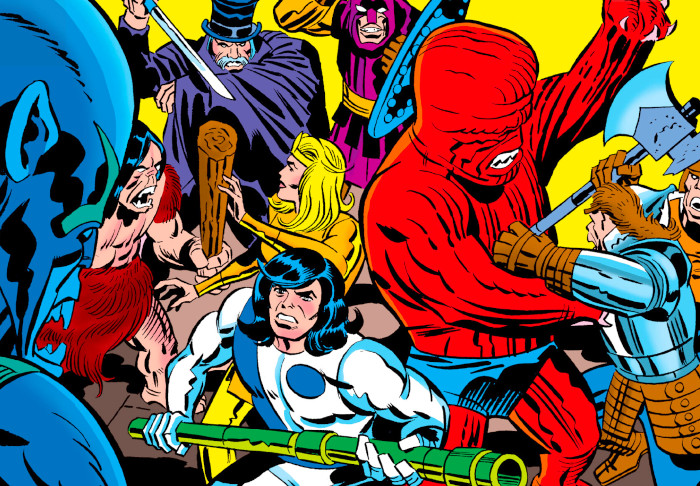
Ep 817#817 Jack Kirby's "Eternals", 1977 Annual + #13: Fun "Eternals" stories with few Eternals
We left the Eternals joined together in the Unimind. The 1977 Annual doesn't clearly fit into continuity, but features only one Eternal, Thena, together with Deviants Karkas and the Reject against a time-traveling threat! Back in the regular series, issue 13 gives us exactly two Eternals, trying to stop a Deviant attack on the Celestials. In spite of the lack of Eternals, these are two of the most fun issues Tim and Emmet have read yet! Brought to you by: Checkered Past podcast Our supporters on Patreon

Ep 816#816 Chester Brown interview: "Paying for It," the movie
EChester Brown's work has come up on this show a number of times over the years. We've discussed Ed the Happy Clown, Louis Riel, and Paying for It. He's actually published 10 graphic novels since 1989, some of which are collections of his comics series. In connection with the recent premiere of the movie version of Paying for It at the Toronto International Film Festival, our own Koom got a chance to interview Brown for this week's show! Check out Koom's novel, Killing Shakespeare Brought to you by: The Quarter-Bin podcast Our supporters on Patreon
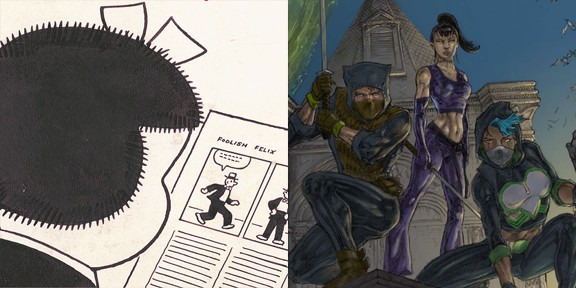
Ep 593#593 "Reading 'Nancy'", plus "Cat and Mouse"!
FLASHBACK! A comic strip gag can be a deceptively simple thing. Once you take it apart -- "deconstruct" it, one might say -- you find that it actually has many moving parts. (Click to enlarge) Paul Karasik and Mark Newgarden's How to Read "Nancy" takes a close look at each of those parts -- as well as arguing persuasively for Bushmiller's underrated artistic chops, and giving us some comic-strip history as well. Tim and Patrick review. PLUS: Roland Mann, Dean Zachary, and Kevin Gallegly join Tim to talk about the return of Cat and Mouse! (Originally published May 21, 2018.) Brought to you by: Worst Collection Ever podcast Our supporters on Patreon

Ep 239Critiquing Comics #239: "Let's Go, Coco" and "Digital Bardos"
What does an 11-year-old do when her "only friend" moves away? In Coco Fox's "sorta" memoir Let's Go, Coco, she joins the basketball team. But when you're a pre-teen, everything's fraught with challenges. Tim and Adam discuss this book - aimed at middle schoolers, but recommended for all ages. As far from that world as possible is the first issue of King Klaus' Digital Bardos (now live on Kickstarter). It introduces us to Darren -- make that "All-Mighty Darren," a digital god. The issue begins to answer the question of how he got that way. Tim and Jason critique. Brought to you by: Our supporters on Patreon -- support us and listen to Batman '66 discussion on the "Bat Bits" podcast!
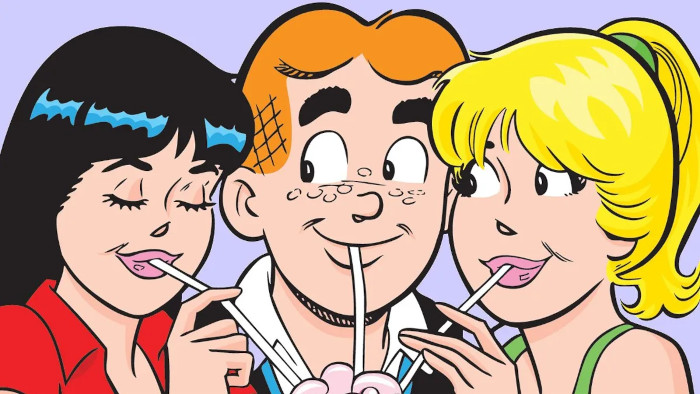
Ep 338#338 Everything's Archie!
FLASHBACK! It's been more than 70 years now since the debut of Archie comics, featuring (though not quite from the beginning) America's favorite love triangle of Archie, Veronica, and Betty. Along with Jughead, Reggie, and the rest of the gang, these characters keep us coming back for more, changing with the times while still presenting an idealized America where drugs, booze, and sex seem not to exist. This week Tim talks with Archie ubercollector (and Coliseum of Comics Back Issue Manager) Jack Copley about what keeps Archie interesting, some of his favorite stories and creators, and "The Archie Room"! (Originally published November 12, 2012.) Brought to you by: BAT 77: The '70s Batman podcast Our supporters on Patreon
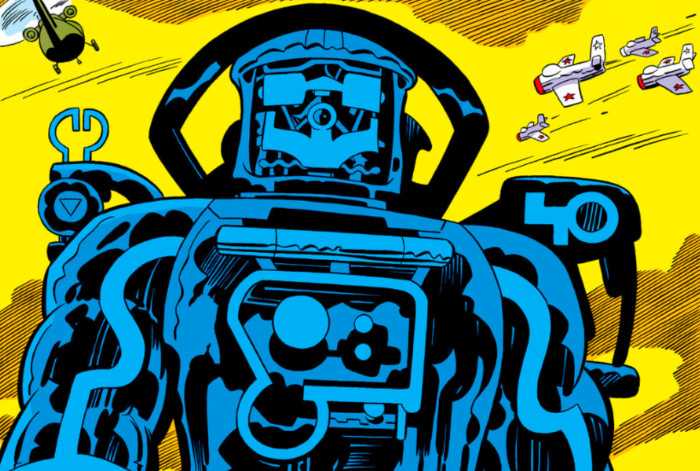
Ep 815#815 Jack Kirby's "Eternals", #9-12: Judging books by their covers
Eternals are only human, I guess! In Eternals issues 9-12, many of the Eternals exhibit a segregationist attitude toward the Deviants, and just about everybody assumes Karkas is going to kick the Reject's butt in a fight based solely on how they look. Meanwhile, are the Celestials kind, or sadistic? Tim and Emmet discuss Jack Kirby's statements on prejudice, as well as a shocking turn of events for a group of Soviet generals, pioneering the concept of dozens of superpowered beings in costumes all hanging out together, and... exclamation points! Brought to you by: Who's Who podcast Our supporters on Patreon
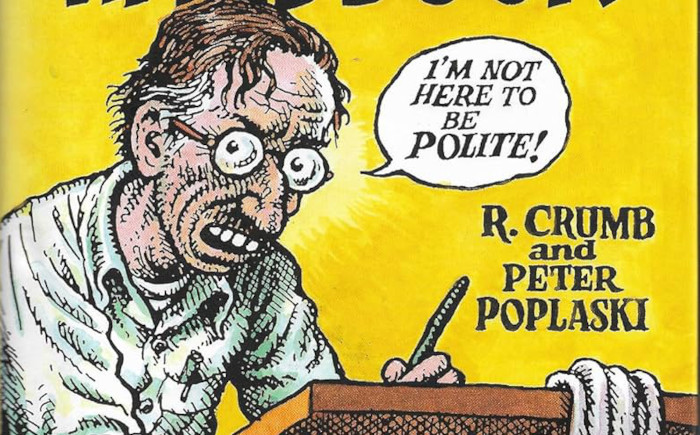
Ep 134#134 "The R. Crumb Handbook"
EFLASHBACK! A then-recent R. Crumb compilation is reviewed by a Crumb connoisseur (Kumar) and a Crumb newbie (Tim). The book features Crumb at his sweetest and his most shocking. But can this (or any book) claim to be the perfect Crumb compilation? (Originally published June 30, 2008.) Brought to you by: To the Batpoles! podcast Our supporters on Patreon
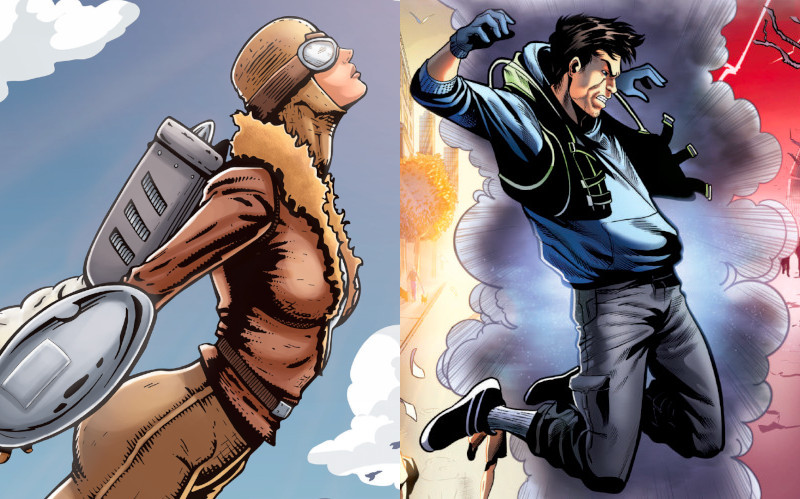
Ep 238Critiquing Comics #238: "Jane Jet" and "The Fog Within"
Once again we take a look at some comics submitted by their creators; we talk about what we liked about them and what could have been better. Jane Jet book 1: Nuclear Shadows, by writer Amal Desai and artist Paul Essenson, recalls Dave Stevens' Rocketeer -- the art, the jet-pack concept, the time period -- but it deals with a woman getting out of an abusive relationship. Tim and Jason critique. The Fog Within, by writer Sean Wood and artist Deivid Deon, is a post-apocalyptic science fiction story, which... might have a few too many story elements. Tim and Adam discuss issues 1 and 2. Brought to you by: The Law of Equivalent Exchange: A Fullmetal Alchemist manga podcast Our supporters on Patreon
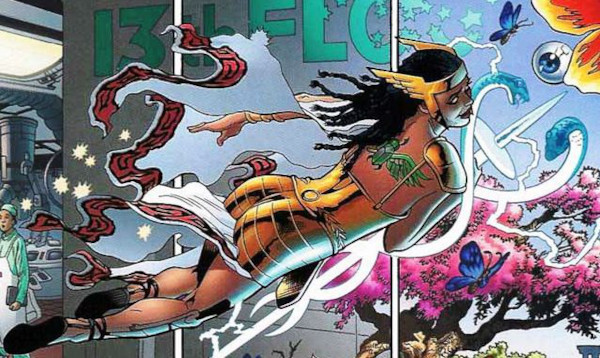
Ep 591#591 "Promethea": A mind-bending, life-changing comic
FLASHBACK! While Alan Moore and J.H. Williams' Promethea, published from 1999 to 2005, is not one of Moore's most remembered works, it's not because the author wasn't at the top of his game. Kumar and Emmet find it to be entrancing, even if you don't buy into the various magical and spiritual elements that Moore built into it. Also, inevitably, the incorporation of Promethea and other Moore creations into the DC Universe comes up; is it really just a business decision, or is the publisher singling out Moore's work out of spite? (Originally published April 30, 2018.) Brought to you by: The Quick and the Dad Our supporters on Patreon
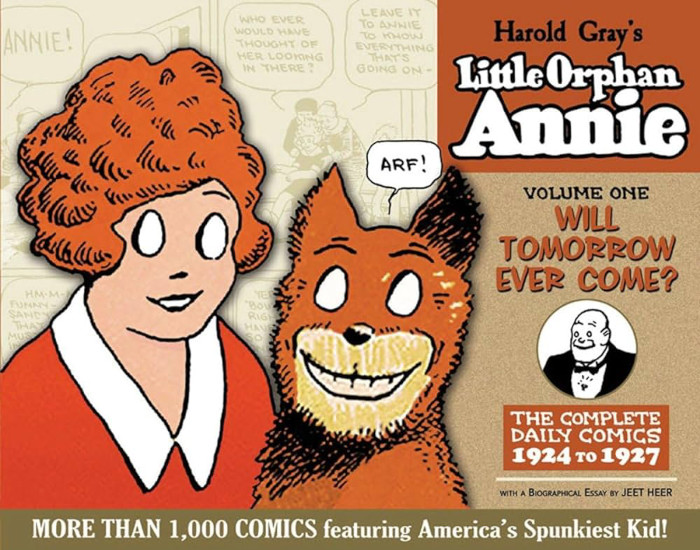
Ep 296#296 "Little Orphan Annie"
FLASHBACK! Harold Gray's Little Orphan Annie debuted in 1924 and was a big success. FDR having not yet turned him against organized labor, Gray shows hardworking Annie going on strike in one of her many jobs. Tim and Kumar discuss the '20s strips, their strengths and idiosyncrasies (one strip=one day?!), and how Gray's outlook changed later. In observance of the strip's 100th anniversary, we re-present this episode! (Originally published September 26, 2011.) Brought to you by: Checkered Past podcast Our supporters on Patreon
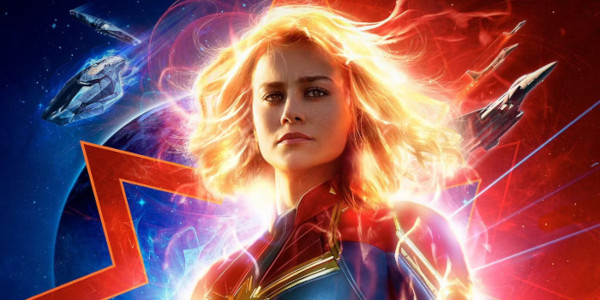
Ep 18"Captain Marvel" (2019)
Back in Critiquing Comics 154, Tim and Mulele discussed 2019's Captain Marvel; Tim enjoyed it, Mulele did not. Now that we've arrived at the time to give it a full review as part of "Tim Catches Up with the MCU," another viewing has helped us both to clarify our positions and see things we didn't realize the first time around. Join us as we take a somewhat more nuanced look at the film. (Originally published on Patreon February 29, 2020) Brought to you by: The Quarter-Bin podcast Our supporters on Patreon
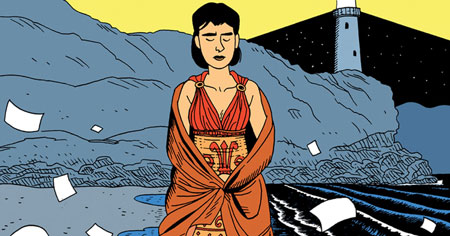
Ep 598#598 Dylan Horrocks looks back at "Hicksville"
FLASHBACK! Twenty years after the first collection of Hicksville was released, creator Dylan Horrocks talks to Emmet about how the comic looks to him now. Some of the work's commentary on the comics industry turned out to presage subsequent developments, and in some cases he ended up not going far enough! Also, his source for a Jack Kirby quote that many experts were unaware of; the public's misinterpretation of the term "graphic novel"; the explosion of female and minority comics creators, especially outside of the Big Two; and more. (This episode was originally published on July 2, 2018.) Brought to you by: Worst Collection Ever podcast Our supporters on Patreon
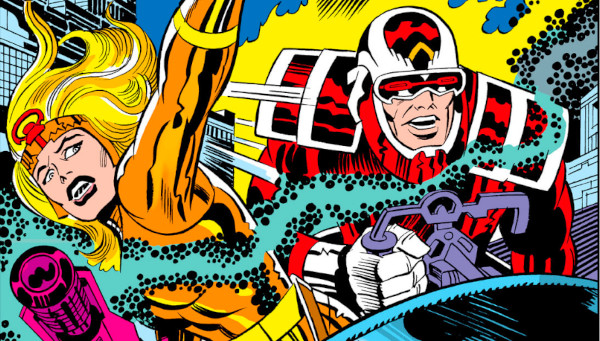
Ep 814#814 Jack Kirby's "Eternals" 5-8: As wacky as they wanna be
Reading the original Jack Kirby iteration of The Eternals shows that the MCU movie based on the title was rather dour, where Kirby's version veers into wackiness! Sersi shows quite the sense of humor. SHIELD agents appear who just can't seem to accept that they can't get the upper hand on giant space gods! People are broken into atoms, and then reconstituted, alive! Tim and Emmet continue their look at Kirby's 1970s work with Eternals 5-8! Brought to you by: BAT 77: The '70s Batman podcast Our supporters on Patreon

Ep 813#813 "Cross Game": Baseball manga that's not about baseball (much)
Mitsuru Adachi's Cross Game is a baseball manga for people who don't care about baseball. A tragedy early in the story helps to shape the narrative, but there's also a good dose of unexpected comedy, and sequences that really make us want to cheer for Ko and his friends as they work toward the goal of reaching the high school baseball championship. Kumar at last succeeds at getting this one on the podcast schedule, and Tim is happy to come along. Brought to you by: Who's Who podcast Our supporters on Patreon
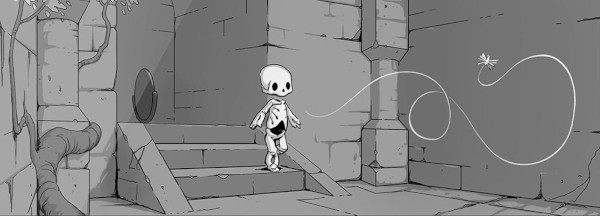
Ep 812#812 Jonah Lobe on character anatomy and "Quiet: Level One"
Jonah Lobe, after many years designing characters for video games, has recently turned his attention to comics. He's the illustrator of Marvel Anatomy: A Scientific Study of the Superhuman, in which we can finally learn just what's going on inside characters like Wolverine, Venom, and Modok. He's also on the verge of his first Kickstarter campaign, for Quiet: Level One, about a skeleton named Quiet who's up against an evil Conan the Barbarian-type called Galahorn. He talks with Tim about his inspiration for Quiet, the difference between making video games and making comics, whether anatomy is important in cartoony drawing styles, and more. Brought to you by: To the Batpoles! podcast Our supporters on Patreon
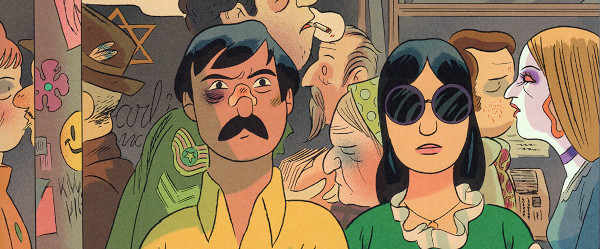
Ep 811#811 "Blood of the Virgin": About much more than filmmaking
EOn the surface, Sammy Harkham's Blood of the Virgin is about an editor of b-movies in 1970s L.A. who has greater artistic aspirations, but it's also rich with unexpected explorations of character and narrative approaches, themes about the creative process, responsibility, and being an immigrant, and Harkham's best art and writing to date. Over a decade in the making, the book was finally released in a collected volume last year, and the work shows. Matt E. and Kumar can't help but heap praise on it. Brought to you by: The Law of Equivalent Exchange: A Fullmetal Alchemist manga podcast Our supporters on Patreon
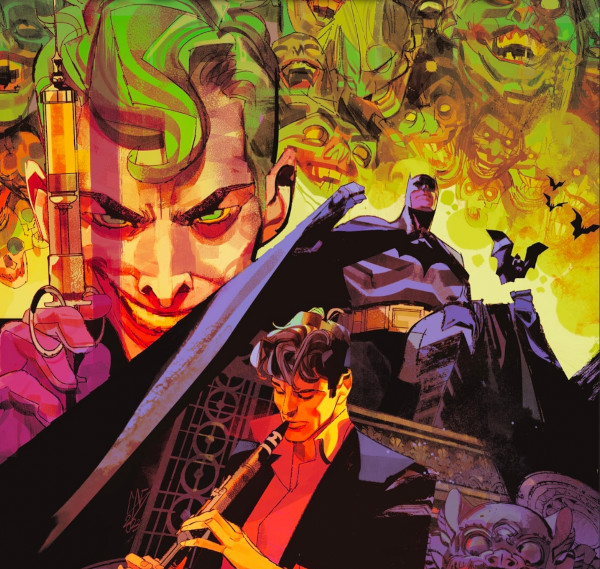
Ep 810#810 "Batman/Dylan Dog": Dark Knight meets Nightmare Investigator
Batman meets Italy's humorous horror icon Dylan Dog in a beautiful three-issue series, originally published in Italian and recently released in English from DC. Tim and Emmet could recommend it on the art alone, but the story gives us a lot to discuss as well, including very rich conversations between characters and an interesting take on the Caped Crusader. Brought to you by: Checkered Past podcast Our supporters on Patreon
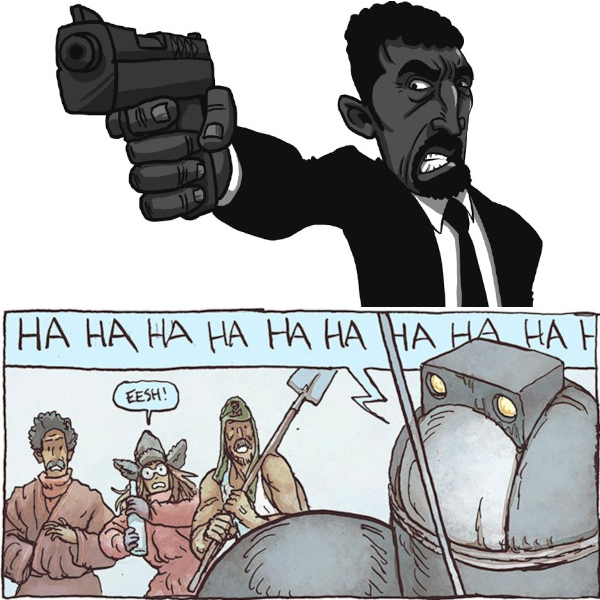
Ep 237Critiquing Comics #237: "Detective Perez: Autotropolis" and "Griz Grobus"
Paul Pate releases his third "Detective Perez" graphic novel, called Autotropolis, a turned-to-eleven detective story that doesn't take itself too seriously. Tim and Jason find a lot to like and not too terribly much to advise on -- though of course almost any work can still be improved! Right? Griz Grobus, the latest from Simon Roy, is about a robot advocate for eating your veggies on a planet where humans have settled just in the past few hundred years. It's also about how the spirit of a war god ends up in the body of... well, that would be telling. Tim and Adam discuss whether, in this case, maybe a work can't possibly be improved! Brought to you by: The Quarter-Bin podcast Our supporters on Patreon

Ep 809#809 Pidge interview: "Fiction is a way to tell the truth"
Sure, comics are great for fantastical stories, but they can tell intimate, personal stories as well -- or sometimes the personal and the fantastical mix well. Artist and writer Pidge is the creator of the series Infinite Wheatpaste, which employs this method. Avery Hill has just published a collection of the series, called Infinite Wheatpaste vol 1: Catalytic Conversions. This week Pidge talks with Emmet about her attraction to the comics medium, but concern that it doesn't cover all the aspects of life that it could: "Having coffee with your friend is worth putting in a comic." Brought to you by: To the Batpoles! podcast Our supporters on Patreon