
Deadhead Cannabis Show
276 episodes — Page 1 of 6

Ep 279Winterland Arena, 51 years ago, second set highlights: Mississippi Half-Step and Beyond
EMusic News: Pink Floyd and Joni MitchellIn this episode of the Deadhead Cannabis Show, Larry Mishkin reflects on the intersection of music and cannabis in the wake of the recent elections. He delves into the Grateful Dead's legacy, highlighting a notable performance from 1973, and explores the lyrical depth of 'To Lay Me Down.' The conversation also touches on music news, including Pink Floyd's 'Dark Side of the Moon' and Joni Mitchell's recent birthday. The episode concludes with a discussion on recent research indicating that cannabis may serve as a substitute for more dangerous substances. This conversation explores the complex relationship between cannabis use and substance consumption among young adults, the implications of Florida's failed marijuana legalization initiative, and the potential of cannabis as a harm reduction tool for opioid use. It also highlights popular cannabis strains and their effects, alongside a cultural reflection on the Grateful Dead's music. Chapters00:00 Post-Election Reflections: Music and Cannabis08:29 The Grateful Dead's Musical Legacy14:48 Exploring the Lyrics: To Lay Me Down21:59 Music News: Pink Floyd and Joni Mitchell37:06 Weather Report Suite: A Musical Journey43:10 Second Set Highlights: Mississippi Half-Step and Beyond49:36 Marijuana Research: Substitution Effects51:24 Cannabis Use Among Young Adults56:13 Florida's Marijuana Legalization Initiative01:05:01 Cannabis as a Tool for Opioid Harm Reduction01:11:10 Strains of the Week and Cannabis Culture Larry's Notes:Grateful DeadNovember 11, 1973 (51 years ago)Winterland ArenaSan Francisco, CAGrateful Dead Live at Winterland Arena on 1973-11-11 : Free Borrow & Streaming : Internet Archive Happy Veteran’s Day A very famous show from a very famous year. Many feel 1973 was the peak of the band’s post psychedelic era. Certainly right up there with 1977 as top years for the band, even by November they were still in full stride during a three night run at Winterland, this being the third and final night of the run. In 2008 the Dead released the box set: “Winterland 1973: The complete recordings” featuring shows from Nov. 9, 10 and 11, 1973. This was the Dead’s second “complete recordings” release featuring all of the nights of a single run. The first was “Fillmore West, 1969, the Complete Recordings” from Feb. 27, 28 and March 1 and 2 (IMHO the best collection of live music ever released by the band). The band later released a follow up, Winterland 1977: The Complete Recordings a three night run June 7, 8 and 9, 1977 that is also an outstanding box set. Today’s show has a 16 song first set, a six song second set and a three song encore, a true rarity for a Dead show of any era (other than NYE shows). The second set consists of ½ Step, Big River, Dark Star with MLBJ, Eyes of the World, China Doll and Sugar Magnolia and is as well played as any set ever played by the band. They were on fire for these three days. A great collection of music and killer three night run for those lucky enough to have snagged a ticket for any or all of the nights. Patrick Carr wrote in the NY Times that: “The Dead had learned how to conceive and perform a music which often induced something closely akin to the psychedelic experience; they were and are experts in the art and science of showing people another world, or a temporary altering (raising) of world consciousness. It sounds pseudomystical pretentious perhaps, but the fact is that it happens and it is intentional.” INTRO: Promised Land (show opener into Bertha/Greatest Story/Sugaree/Black Throated Wind) Track #1 0 – 2:10 "Promised Land" is a song lyric written by Chuck Berry to the melody of "Wabash Cannonball", an American folk song. The song was first recorded in this version by Berry in 1964 for his album St. Louis to Liverpool. Released in December 1964, it was Berry's fourth single issued following his prison term for a Mann Act conviction. The record peaked at #41 in the Billboard charts on January 16, 1965. Berry wrote the song while in prison, and borrowed an atlas from the prison library to plot the itinerary. In the lyrics, the singer (who refers to himself as "the poor boy") tells of his journey from Norfolk, Virginia, to the "Promised Land", Los Angeles, California, mentioning various cities in Southern states that he passes through on his journey. Describing himself as a "poor boy," the protagonist boards a Greyhound bus in Norfolk, Virginia that passes Raleigh, N.C., stops in Charlotte, North Carolina, and bypasses Rock Hill, South Carolina. The bus rolls out of Atlanta but breaks down, leaving him stranded in downtown Birmingham, Alabama. He then takes a train "across Mississippi clean" to New Orleans. From there, he goes to Houston, where "the people there who care a bit about me" buy him a silk suit, luggage and a plane ticket to Los Angeles. Upon landing in Los Angeles, he calls Norfolk, Virginia ("Tidewater four, ten-oh-nine") to tell the folks back home he made it to the "p

Ep 278Remembering Quincy Jones and The Grateful Dead having fun on Stage with the The Jones Gang Incident
EPhil Lesh: A Tribute to a Musical IconIn this episode of the Deadhead Cannabis Show, Larry Mishkin discusses the significance of the Grateful Dead's concert on November 4, 1977, at Colgate University, along with various music news updates, tributes to Phil Lesh, and reflections on Quincy Jones's legacy. The conversation highlights the dynamics of the band during the concert, the impact of newer jam bands like Goose, and the importance of preserving musical legacies through releases like Dave's Picks. In this episode, Larry discusses the latest music news, particularly focusing on the Grateful Dead's legacy and their recent box set releases. He reflects on the band's unique performances and the significance of their music. The conversation then shifts to marijuana legalization efforts, particularly in Florida, where a recent ballot measure was rejected despite public support. Larry expresses disappointment in the political landscape surrounding marijuana and emphasizes the benefits of legalization. The episode concludes with a deep dive into a specific Grateful Dead performance, highlighting the band's improvisational style and the joy their music brings to fans.TakeawaysThis episode was recorded on Election Day, November 5th.The Grateful Dead's show on November 4, 1977, is a highlight.The Jones Gang incident showcased the band's playful dynamics.Goose represents the new generation of jam bands.Phil Lesh's influence on music and improvisation is profound.Quincy Jones's legacy in music is celebrated.Dave's Picks Volume 52 features a remarkable concert.The importance of preserving musical history through recordings.Larry reflects on his personal experiences with the Grateful Dead.The episode blends cannabis culture with music appreciation. Music brings joy and relaxation after a long day.The Grateful Dead's legacy continues to inspire new generations.Unique performances can redefine classic songs.Marijuana legalization faces political challenges despite public support.The benefits of marijuana legalization are well-documented.Music and cannabis culture often intersect in meaningful ways.The improvisational nature of the Grateful Dead's music is a hallmark of their performances.Public sentiment can sometimes clash with political decisions.The Grateful Dead's music remains timeless and relevant.Engaging with music and cannabis responsibly enhances the experience.Sound Bites"This is a special episode being taped on Election Day.""It's just a big love fest with all these guys.""Phil has changed my life.""Quincy was the man I won my first Grammy with.""It's a wonderful, wonderful show.""You just don't know what you're missing out on.""It's just cool to hear it.""This is a pretty amazing second set.""It's a very cool segue from one into the other.""It's a must hear.""It's a wonderful part of the show.""It's a very unfortunate thing that this happened.""People in Florida are gonna smoke marijuana anyway.""It's a great way to end this wonderful show."Chapters00:00Introduction and Context of the Episode03:45Exploring the Grateful Dead's November 4, 1977 Show11:34The Jones Gang Incident and Band Dynamics16:49Music News: Goose and Gen 3 Jam Bands20:51Tributes to Phil Lesh and Reflections on Legacy25:30Remembering Quincy Jones: A Musical Legend30:06Dave's Picks Volume 52: A Review36:30Celebrating Music and New Releases38:53Exploring the Grateful Dead's Legacy44:17Marijuana News and Legalization Efforts01:01:01Deep Dive into Grateful Dead Performances01:09:55Closing Thoughts and Reflections LARRY'S NOTES:Grateful Dead November 11, 1977 (47 years ago)Cotterrell GymnasiumColgate UniversityHamilton, NYGrateful Dead Live at Cotterrell Gym, Colgate U on 1977-11-04 : Free Download, Borrow, and Streaming : Internet Archive Dave’s Picks #12 This show literally “popped up out of nowhere” during the very famous fall tour of the very famous 1977 year of touring. On November 1st they played in Detroit’s legendary Cobo Hall. The next night up in Toronto. They had Nov. 3 set for Utica, NY but the show fell through a few weeks before. They were still set for Rochester on Nov. 5th (which was released as Dick’s Picks #34) and Binghamton on Nov. 7th. So less than 4 weeks before this show, while already hitting the road, negotiations began for this show which were only finalized the night before. Cotterrell gym on the Colgate campus is a small venue. Think large high school gym with pull out bleachers. There were only 3,000 folks at the show. But 2300 of them were held for Colgate students so only 700 were sold to the public or really the Deadheads. A tough ticket as the Heads used to say. But those who made it in had a ball and saw one of the best shows of the year. One of those shows that lots of Deadheads wished they had seen. This version of the show from Archive, is an audience tape and a great contrast to other episodes where we have featured Dead show clips from audience tapes. This one was taped by Jerry Moore who was set up directly

Ep 277Remembering Phil Lesh: A Musical Legacy The Legacy of Phil Lesh
EPhil Lesh: A Legacy of Love and MusicIn this episode of the Deadhead Cannabis Show, Larry Mishkin pays tribute to the late Phil Lesh, the iconic bassist of the Grateful Dead, who passed away at the age of 84. The conversation reflects on Phil's significant contributions to music, his unique style of playing the bass, and the profound impact he had on the Grateful Dead and the music community. Larry shares personal anecdotes, highlights Phil's musical journey, and discusses the recent tribute by Phish, who honored Phil by performing 'Box of Rain' shortly after his passing. The episode culminates in a heartfelt reflection on Phil's legacy and the love he brought to his music and fans. This conversation reflects on the life and legacy of Phil Lesh, a key figure in the Grateful Dead, discussing his musical contributions, memorable performances, and the impact of his passing. The dialogue also touches on the evolving landscape of marijuana legislation, youth usage trends, and the medical benefits of cannabis, alongside a critical look at political maneuvers in Florida regarding cannabis reform. Chapters00:00 Introduction and Tribute to Phil Lesh10:05 Phil Lesh's Musical Journey and Contributions17:07 Phish's Tribute to Phil Lesh25:31 Phil Lesh's Legacy and Impact36:16 Reflections on Phil Lesh's Life and Music47:26 Musical Reflections and Setlists48:51 Remembering Phil Lesh49:39 The Beatles and Their Impact52:32 Unbroken Chain: A Grateful Dead Classic56:16 Marijuana News and Medical Benefits01:01:30 Florida's Political Landscape on Cannabis01:11:19 Youth Marijuana Use Trends01:16:56 Driving Under the Influence of Cannabis01:24:56 Phil Lesh's Return to Music Takeaways:Phil Lesh was a pivotal figure in the Grateful Dead.His return to singing 'Box of Rain' was a significant moment.Phil's bass playing redefined the role of the instrument in rock music.Phish honored Phil Lesh with a performance of 'Box of Rain'.Phil's contributions to music extend beyond the Grateful Dead.He was known for his virtuosic bass playing and musical exploration.Phil Lesh's legacy is celebrated by fans and musicians alike.The Grateful Dead created a unique community among their fans.Phil's influence can be seen in many modern jam bands.His passing marks a significant loss for the music world. Phil Lesh's passing at 84 marks a significant loss for the music community.The Beatles' influence on music is profound, with songs like 'Why Don't We Do It In The Road' showcasing their creativity.'Unbroken Chain' is a complex piece that highlights Phil's musical genius.Cannabinoids have been shown to provide significant relief for chronic pain with minimal side effects.Bipartisan support for cannabis reform is growing, even in states like Florida.Youth marijuana use has decreased significantly in states that have legalized cannabis.Research indicates that THC levels in blood do not directly correlate with driving impairment.Phil Lesh's love for marijuana and its benefits is well-documented in his music and life.The final performance of 'Box of Rain' encapsulates the essence of the Grateful Dead's journey.Enjoying cannabis responsibly is essential for both health and safety. Sound Bites:"Phil Lesh was the beating heart of the band.""Box of Rain marked the return of Phil Lesh.""Phil brought immense joy to everyone around him.""Phil Lesh passed away at the age of 84.""Why Don't We Do It In The Road?""Unbroken Chain is one of the big songs." .Produced by PodConx Deadhead Cannabis Show - https://podconx.com/podcasts/deadhead-cannabis-showLarry Mishkin - https://podconx.com/guests/larry-mishkinRob Hunt - https://podconx.com/guests/rob-huntJay Blakesberg - https://podconx.com/guests/jay-blakesbergSound Designed by Jamie Humiston - https://www.linkedin.com/in/jamie-humiston-91718b1b3/Recorded on Squadcast

Ep 276Three Sets At the Warfield: acoustic and electric RIP Kris Kristofferson; Where are the Betty Boards?
EPink Floyd's Catalog Sale: A New EraIn this episode of the Deadhead Cannabis Show, Larry Michigan explores the rich history of the Grateful Dead's music, focusing on a specific concert from 1980. He discusses the significance of various songs, including 'Iko Iko' and 'Me and Bobby McGee', while also reflecting on the impact of Chris Christopherson's songwriting. The conversation shifts to current events in the music and cannabis industries, including Pink Floyd's catalog sale and the ongoing challenges faced by the hemp industry. Larry emphasizes the importance of medical marijuana legalization and shares insights on how cannabis enhances the music experience. He concludes with personal strain recommendations and highlights record sales in legal marijuana states. TakeawaysThe Grateful Dead's acoustic sets were a significant part of their live performances.Audience tapes capture the energy of live shows better than soundboard recordings.Chris Christopherson's 'Me and Bobby McGee' remains a classic, showcasing the intersection of music and storytelling.Pink Floyd's recent catalog sale reflects the changing dynamics in the music industry.The Betty Boards represent a pivotal moment in Grateful Dead tape trading history.The hemp industry faces legal challenges that could impact small businesses.A majority of chronic pain patients support the legalization of medical marijuana.Cannabis enhances the enjoyment of music, as confirmed by recent studies.Record sales in legal marijuana states are reaching new heights, indicating a thriving market.Personal strain recommendations can enhance the cannabis experience for users. Chapters00:00Introduction and Context of the Grateful Dead's Music04:50Exploring 'Iko Iko' and Audience Tapes10:42The Significance of 'Monkey and the Engineer'15:24Remembering Chris Christopherson and 'Me and Bobby McGee'22:31Pink Floyd's Catalog Sale to Sony Music28:15The Mystery of the Betty Boards54:16Current Issues in the Hemp Industry01:08:10Support for Medical Marijuana Legalization01:15:50The Impact of Marijuana on Music Enjoyment01:21:09Record Sales in Legal Marijuana States01:25:53Strain Recommendations and Personal Experiences Grateful DeadOctober 7, 1980 (44 years ago)Warfield TheaterSan Francisco, CAGrateful Dead Live at Warfield Theater on 1980-10-07 : Free Download, Borrow, and Streaming : Internet Archive Part of 23 show run in late September to the end of October, 1980 split between the Warfield (September 27th – October 14th) and Radio City Music Hall in NYC (October 22 – 31st) Each show opened with an acoustic set followed by two full electric sets. These were the last shows where the Dead played acoustic sets. Songs from all of these concerts were pulled for the two related Dead double album releases, Reckoning (acoustic music, released April 1, 1981- the Band’s sixth live album and 17th overall) and Dead Set (electric music, released August 26, 1981, the Band’s seventh live album and 18th overall). Today’s episode is broken up into three acoustic numbers from this show and then three electric numbers. INTRO: Iko Iko Track #1 0:00 – 1:37 "Iko Iko" (/ˈaɪkoʊˈaɪkoʊ/) is a much-coveredNew Orleans song that tells of a parade collision between two tribes of Mardi Gras Indians and the traditional confrontation. The song, under the original title "Jock-A-Mo", was written and released in 1953 as a single by James "Sugar Boy" Crawford and his Cane Cutters but it failed to make the charts. The song first became popular in 1965 by the girl groupthe Dixie Cups, who scored an international hit with "Iko Iko" released in March, 1965. In 1967, as part of a lawsuit settlement between Crawford and the Dixie Cups, the trio were given part songwriting credit for the song. A permanent part of the Dead’s repertoire since first played in May, 1977 in St. Louis, almost by accident out of and back into a Not Fade Away. The intro, one verse and back to NFA. Overtime, became a tune that was not frequently played, usually once, maybe twice, a tour, but whenever it was played it created a party atmosphere out of whatever the mood had been prior to its playing. Perfect song for Jerry with the call and response chorus that everyone joined in on. The song that “fastened my seatbelt on the bus” when I saw it for the first time at my second show ever in Syracuse in 1982 with good buddy Mikey. Once you hear it live, you are always looking for it at future shows. I love this song as do many Deadheads. But getting to hear it played acoustically is a real treat and a great way to open this “hometown” show. Jerry played it right up until the end. Played: 185 timesFirst: May 15, 1977 at St. Louis Arena, St. Louis, MO, USALast: July 5, 1995 at Riverport Amphitheatre, Maryland Heights, MO, USA SHOW No. 1: Monkey And The Engineer Track #4 0:48 – 2:25 Jesse Fuller tune Jesse Fuller (March 12, 1896 – January 29, 1976) was an American one-man band musician, best known for his song "San Francisco Bay Blues". Starting in the 195

Ep 275The Evolution of Grateful Dead Covers
EExploring the Grateful Dead's LegacyIn this episode of the Deadhead Cannabis Show, Larry Mishkin takes listeners on a nostalgic journey through the Grateful Dead's music, focusing on a concert from September 30, 1993, at the Boston Garden. He discusses various songs, including 'Here Comes Sunshine' and 'Spoonful,' while also touching on the band's history and the contributions of key figures like Vince Wellnick and Candace Brightman. The episode also delves into current music news, including a review of Lake Street Dive's performance and updates on marijuana legislation in Ukraine and the U.S.Chapters00:00 Welcome to the Deadhead Cannabis Show03:39 Here Comes Sunshine: A Grateful Dead Classic09:47 Spoonful: The Blues Influence14:00 Music News: Rich Girl and Lake Street Dive24:09 Candace Brightman: The Unsung Hero of Lighting38:01 Broken Arrow: Phil Lesh's Moment to Shine42:19 Lucy in the Sky with Diamonds: A Beatles Classic48:26 Marijuana News: Ukraine's Medical Cannabis Legislation54:32 Bipartisan Support for Clean Slate Act01:00:11 Pennsylvania's Push for Marijuana Legalization01:04:25 CBD as a Natural Insecticide01:10:26 Wave to the Wind: A Phil Lesh Tune01:13:18 The Other One: A Grateful Dead Epic Boston GardenSeptember 30, 1993 (31 years ago)Grateful Dead Live at Boston Garden on 1993-09-30 : Free Borrow & Streaming : Internet ArchiveINTRO: Here Comes Sunshine Track #1 0:08 – 1:48 Released on Wake of the Flood, October 15, 1973, the first album on the band’s own “Grateful Dead Records” label. The song was first performed by the Grateful Dead in February 1973. It was played about 30 times through to February 1974 and then dropped from the repertoire. The song returned to the repertoire in December 1992, at the instigation of Vince Welnick, and was then played a few times each year until 1995. Played: 66 timesFirst: February 9, 1973 at Maples Pavilion, Stanford University, Stanford, CA, USALast: July 2, 1995 at Deer Creek Music Center, Noblesville, IN, USA But here’s the thing: Played 32 times in 1973 Played 1 time in 1974 Not played again until December 6, 1992 at Compton Terrace in Chandler, AZ - 18 years Then played a “few” more times in 1993, 94 and 95, never more than 11 times in any one year. I finally caught one in 1993 at the Rosemont Horizon in Chicago with good buddies Marc and Alex. My favorite version is Feb. 15, 1973 at the Dane County Coliseum in Madison, WI SHOW No. 1: Spoonful Track #2 :50 – 2:35 "Spoonful" is a blues song written by Willie Dixon and first recorded in 1960 by Howlin' Wolf. Released in June, 1960 by Chess Records in Chicago. Called "a stark and haunting work",[1] it is one of Dixon's best known and most interpreted songs.[2]Etta James and Harvey Fuqua had a pop and R&B record chart hit with their duet cover of "Spoonful" in 1961, and it was popularized in the late 1960s by the British rock group Cream. Dixon's "Spoonful" is loosely based on "A Spoonful Blues", a song recorded in 1929 by Charley Patton.[3] Earlier related songs include "All I Want Is a Spoonful" by Papa Charlie Jackson (1925) and "Cocaine Blues" by Luke Jordan (1927).The lyrics relate men's sometimes violent search to satisfy their cravings, with "a spoonful" used mostly as a metaphor for pleasures, which have been interpreted as sex, love, and drugs. The Rock and Roll Hall of Fame listed Howlin' Wolf's "Spoonful" as one of the "500 Songs that Shaped Rock and Roll".[9] It is ranked number 154 on Rolling Stone magazine's 2021 list of the "500 Greatest Songs of All Time",[10] up from number 221 on its 2004 list. In 2010, the song was inducted into the Blues Foundation Hall of Fame "Classics of Blues Recordings" category.[12] In a statement by the foundation, it was noted that "Otis Rush has stated that Dixon presented 'Spoonful' to him, but the song didn't suit Rush's tastes and so it ended up with Wolf, and soon thereafter with Etta James".[12] James' recording with Harvey Fuqua as "Etta & Harvey" reached number 12 on Billboard magazine's Hot R&B Sides chart and number 78 on its Hot 100 singles chart.[13] However, Wolf’s original "was the one that inspired so many blues and rock bands in the years to come". The British rock group Cream recorded "Spoonful" for their 1966 UK debut album, Fresh Cream. They were part of a trend in the mid-1960s by rock artists to record a Willie Dixon song for their debut albums. Sung by Bob Weir, normally followed Truckin’ in the second set. This version is rare because it is the second song of the show and does not have a lead in. Ended Here Comes Sunshine, stopped, and then went into this. When it follows Truckin’, just flows right into Spoonful. Played: 52 timesFirst: October 15, 1981 at Melkweg, Amsterdam, NetherlandsLast: December 8, 1994 at Oakland-Alameda County Coliseum Arena, Oakland, CA, USA MUSIC NEWS: Lead In Music Rich Girl Lake Street Dive Lake Street Dive: Rich Girl [4K] 2018-05-09 - College Street Music Hall; New Haven, CT (youtube.com) 0:00 – 1:13 "Rich Girl" i

Ep 274The Dead Rock The Pyramids, Goose Covers Seger and Nixon lied (again).
ECandyman and Cultural Contradictions: Grateful Dead’s Egypt AdventureIn this episode of the Deadhead Cannabis Show, host Larry Mishkin highlights two key topics: a favorite Grateful Dead show and his recent experiences at Goose concerts. First, Larry talks about an iconic Grateful Dead concert that took place on September 16, 1978, at the Sun et Lumiere Theater in Giza, Egypt, near the pyramids and the Sphinx. This event is special not just for its unique location but also for featuring collaborations with Egyptian musician Hamza El Din, who joined the Dead for a jam session. The Egypt shows are remembered for their blend of American rock and ancient Egyptian culture, marking a historic moment in music history.Larry also reflects on the song "Candyman" by the Grateful Dead, exploring its themes of melancholy and contradiction within the counterculture of the 1960s. He discusses how the song portrays a sympathetic yet flawed character, and how it resonates with the complex dynamics of that era, blending elements of peace, revolution, and criminality.Switching gears, Larry shares his recent experiences attending two Goose concerts in Chicago. He highlights Goose's cover of Bob Seger's "Hollywood Nights" and talks about the band's growing popularity. Larry attended the concerts with family and friends and praises the outdoor venue in Chicago, noting its impressive atmosphere and the city's skyline as a backdrop. He fondly recalls his connections to Bob Seger's music from his youth and marvels at how younger bands like Goose continue to bring classic rock into their performances. Grateful DeadSeptember 16, 1978 (46 years ago)Son Et Lumiere Theater (aka Sphinx Theatre)Giza, EgyptGrateful Dead Live at Sphinx Theatre on 1978-09-16 : Free Borrow & Streaming : Internet Archive Giza (/ˈɡiːzə/; sometimes spelled Gizah, Gizeh, Geeza, Jiza; Arabic: الجيزة, romanized: al-Jīzah, pronounced [ald͡ʒiːzah], Egyptian Arabic: الجيزةel-Gīza[elˈgiːzæ])[3] is the third-largest city in Egypt by area after Cairo and Alexandria; and fourth-largest city in Africa by population after Kinshasa, Lagos, and Cairo. It is the capital of Giza Governorate with a total population of 4,872,448 in the 2017 census.[4] It is located on the west bank of the Nile opposite central Cairo, and is a part of the Greater Cairo metropolis. Giza lies less than 30 km (18.64 mi) north of Memphis (Men-nefer, today the village of Mit Rahina), which was the capital city of the unified Egyptian state during the reign of pharaoh Narmer, roughly 3100 BC. Giza is most famous as the location of the Giza Plateau, the site of some of the most impressive ancient monuments in the world, including a complex of ancient Egyptian royal mortuary and sacred structures, among which are the Great Sphinx, the Great Pyramid of Giza, and a number of other large pyramids and temples. Giza has always been a focal point in Egypt's history due to its location close to Memphis, the ancient pharaonic capital of the Old Kingdom. Son et lumière (French pronunciation: [sɔ̃n e lymjɛʁ] (French, lit. "sound and light")), or a sound and light show, is a form of nighttime entertainment that is usually presented in an outdoor venue of historic significance.[1] Special lighting effects are projected onto the façade of a building or ruin and synchronized with recorded or live narration and music to dramatize the history of the place.[1] The invention of the concept is credited to Paul Robert-Houdin, who was the curator of the Château de Chambord in France, which hosted the world's first son et lumière in 1952.[1] Another was established in the early 1960s at the site of the Great Pyramid of Giza in Egypt. One of the Seven Wonders of the Ancient World and a star attraction in Egypt, the pyramids of Giza offer a completely different experience at night, when lasers, lights, and visual projections bring their history to life. Here’s how to visit the pyramids after dark. The sound and light show at Giza takes place every night for 55 minutes by the Great Sphinx of king Kephren, it is a laser show with history narration of your own language. Kyle FitzgeraldThe National Standing under a total lunar eclipse at the foot of ancient power by the Great Pyramid, the Grateful Dead were concluding the final show of their three-night run at the Sound and Light Theatre in Giza in 1978.His hair in pigtails, guitarist Jerry Garcia wove the outro of the percussive Nubian composition Olin Arageed into an extended opening of Fire on the Mountain. “There were Bedouins out on the desert dancing … It was amazing, it really was amazing,” Garcia said in a 1979 radio interview. The September 14-16 shows in Giza were the ultimate experiment for the American band – the first to play at the pyramids – known for pushing music beyond the realms of imagination. And just as the Grateful Dead were playing in the centre of ancient Egypt, a landmark peace treaty was being brokered in the US that would reshape geopolitics in the Middle

Ep 273A Cannabis-Infused Weekend: Music and Memories at the Miracle in Mundelein
E"From Steel Pulse to Wu-Tang: A Festival of Musical Diversity"Larry Mishkin discusses a review of various experiences and performances, starting with a cannabis event called "Miracle in Mundelein," which took place over the past weekend. The main focus of the review is a discussion of a Grateful Dead show from September 9, 1987, at the Providence Civic Center in Rhode Island. The show was notable for being the second night of a three-show run, marking the opening of the Grateful Dead's 1987 East Coast fall tour.Key highlights include:"Hey Pocky Way" Performance: This was the first time the Grateful Dead performed the song "Hey Pocky Way," which is originally by the Meters, a New Orleans funk band. The song became a fan favorite, primarily due to the influence of Brent Mydland, the band's keyboardist. However, the song fell out of rotation after Brent's death in 1990."Jack Straw" Performance: Another song featured was "Jack Straw," a Grateful Dead classic written by Bob Weir and Robert Hunter. It was originally performed in 1971 and became a staple in the band's setlists. The song was performed in the second spot of the setlist during the 1987 show, indicating the band's tendency to feature it early in their concerts.Music News Segment: The transcript also includes a segment on music news, which starts with a brief history of the band Cheap Trick, particularly their song "I Want You to Want Me."Review of the Miracle in Mundelein Festival: The review shifts to discussing the recent "Miracle in Mundelein" festival, where several acts performed:Steel Pulse: A roots reggae band from Birmingham, England, who delivered a lively and energetic performance.The Soul Rebels: A New Orleans brass band known for their energetic live shows and collaborations with major artists. Their set featured Raekwon and GZA from the Wu-Tang Clan, adding a strong hip-hop element to the performance.Wiz Khalifa: The headliner of the event, Wiz Khalifa, is praised for his stage presence and connection with the audience. The review notes his strong advocacy for cannabis and how his music resonated well with the crowd.Overall, the review captures the blend of nostalgia with the Grateful Dead's classic performances and the fresh, dynamic energy of the Miracle in Mundelein festival, highlighting both the music and the culture of cannabis.https://www.cheaptrick.com/ Grateful DeadSeptember 9, 1987 (37 years ago)Providence Civic CenterProvidence, Rhode IslandGrateful Dead Live at Providence Civic Center on 1987-09-09 : Free Borrow & Streaming : Internet Archive Second night of a three show run, the opening shows of 1987 East Cost fall tour. INTRO: Hey Pocky Way Track #1 :35 – 2:03 First time ever played Hey Pocky Way was written by George Porter Jr., Leo Nocentelli, Art Neville & Joseph Modeliste, founding members of The Meters, an American funk band formed in 1965 in New Orleans by Modeliste (drums), Porter Jr. (bass), Nocentelli (guitar) and Neville (keyboards). The band performed and recorded their own music from the late 1960s until 1977 and played an influential role as backing musicians for other artists, including Lee Dorsey, Robert Palmer, Dr. John, and Allen Toussaint. Song was released on Rejuvenation the band’s fifth studio album in 1974. In 2003, the album was ranked number 138 on Rolling Stone magazine's list of the 500 greatest albums of all time,[6] and 139 in a 2012 revised list. Beginning with this show, the Dead began to feature Hey Pocky Way, usually as a show opener. Sung by Brent who really got into it with both his keyboard playing and strong singing, it became a fan favorite. But as a Brent influenced tune, it died when he did. Played: 25 timesFirst: September 9, 1987 at Providence Civic Center, Providence, RI, USALast: July 22, 1990 at World Music Theatre, Tinley Park, IL, USA (Brent’s second to last show) SHOW No. 1: Jack Straw Track #2 4:00 – 5:50 "Jack Straw" written by Bob Weir and Robert Hunter. The track first appeared on the album Europe '72. The song was first performed in concert on October 19, 1971, in Minneapolis, Minnesota at new keyboardist Keith Godchaux's first appearance with the band. In the song's earliest performances (c. 1971–72), Weir sang all of the vocals. By the time the 'Europe 72' version was recorded, (at the Olympia Theater in Paris on 5-03-72), Weir and Jerry Garcia were switching up the vocals - as they had on April 26th when 'Hundred Year Hall' was recorded. The song appeared in both the first and second sets until the band's short hiatus in 1974-1975. After re-forming, the song almost exclusively appeared in the first set. After Brent Mydland joined the band in 1979, the song almost exclusively opened the band's first set. The band also often extended the jam after the second verse after Mydland's joining, often extending the song to over six minutes. Dead and Company have also further extended the song, often adding an abstract opening jam prior to the song's first verse.[1] Bob Weir state

Ep 272Labor Day Jams: Revisiting Grateful Dead's 1988 Capitol Center Show
ELabor Day Vibes: Grateful Dead, George Thorogood, and MoreA special Labor Day edition featuring a recap of significant events in the music world, particularly focusing on the Grateful Dead's September 2, 1988, concert at the Capitol Center in Landover, Maryland. Larry Mishkin reminisces about the band's history, including the song "Hell in a Bucket," its significance, and its evolution in the Grateful Dead's lineup. There's a detailed discussion about the song "Dire Wolf," including its origins, inspirations, and its role in the band's performances.The episode also features a tribute to Steve Silverman, a renowned science writer and Grateful Dead enthusiast who recently passed away. Silverman was celebrated for his contributions to the understanding of autism and his deep connection to the Grateful Dead community. The tribute highlights his life, his work, and his impact on both the music and science communities.Larry shares reviews of the recent George Thorogood and Journeyman Tribute the Eric Clapton https://www.georgethorogood.com/https://vilarpac.org/https://journeymantribute.com/ Grateful DeadSeptember 2, 1988 (36 years ago)Capital CenterLandover, MDGrateful Dead Live at Capital Centre on 1988-09-02 : Free Borrow & Streaming : Internet Archive I hope everyone is having a great Labor Day weekend. Night one of a four night run at the Cap Center to kick off 1988 East Coast Fall Tour (played Friday and Saturday, 2 and 3 and Monday and Tuesday 5 and 6). Took a night off for my wedding on Sunday 4th. Saturday night show was my rehearsal dinner and they played second encore, final electric Ripple and final Grateful Dead Ripple. Memorable weekend for all (except for my east coast deadhead buddies at the wedding who were bummed to have missed the Ripple. INTRO: Hell in a Bucket Track #2 0:00 – 1:34 David Dodd: The Bob Weir / John Barlow / Brent Mydland song “Hell in a Bucket” directly references the biker scene, and I’m sure that somehow Barlow just wanted to put that element into the band’s repertoire somehow. After all, there are plenty of outlaw elements sprinkled through the band’s songs. In the case of this song, though, the singer/narrator seems to be wishing a sorry fate on his erstwhile main squeeze, with the argument being that once she has a biker charging up and down her halls on his chopper, she’ll realize that the narrator was really pretty good, at least by contrast. “Hell in a Bucket” appeared on In the Dark, released in July 1987. The song frequently featured as the show opener over the course of the next two-plus decades, although it wasn’t used in that role until about a year after its first performance. Played: 217 timesFirst: May 13, 1983 at William Randolph Hearst Greek Theatre, Berkeley, CA, USALast: June 30, 1995 at Three Rivers Stadium, Pittsburgh, PA SHOW No. 1: Dire Wolf Track #5 2:00 – 3:24 "Dire Wolf" is a ballad by the Grateful Dead, released as the third track on their 1970 album Workingman's Dead. The lyrics were written by Robert Hunter after watching a film adaptation of The Hound of the Baskervilles. The music, containing elements of country and folk music, was composed by Jerry Garcia on the same day. The song tells the story of a man who plays cards with a "dire wolf" on a cold winter's night in "Fennario"; the lyrics have been variously interpreted. The piece became a staple of the Grateful Dead's performances, and was played more than two hundred times between 1969 and 1995. A few months before the release of their album Aoxomoxoa in 1969, Grateful Dead lyricist Robert Hunter and his then-partner Christie Bourne began sharing a house with the band's guitarist Jerry Garcia, his wife, and his step-daughter. Living in close proximity gave an impetus to their collaborative song-writing: Hunter and Garcia wrote every song on Aoxomoxoa.[2] Some time later, Hunter and Carolyn Garcia spent an evening watching a film adaptation of The Hound of the Baskervilles. According to Grateful Dead historian Dennis McNally, Carolyn later remarked that the hound was a "dire wolf".[3] However, according to Hunter himself, as quoted in the Annotated Grateful Dead Lyrics, he and Garcia were speculating about the identity of the hound in the story, and came up with the idea that it may have been a dire wolf.[4] Hunter wrote the lyrics the next morning, based on images that the phrase conjured for him, and Garcia wrote the music to them later that day.[3][4] The location named "Fennario" appears in the folk song "The Bonnie Lass o' Fyvie", including in the Grateful Dead's version of that song. It refers to a fictional location; a friend of the band members commented in an interview that it was the perfect name for a generic place, because it was evocative, and had four syllables.[4] In contrast, music writer Buzz Poole speculated that the name may be derived from Fenrir, a mythical Nordic wolf who was chained up by the gods.[6] The phrase "don't murder me", repeated in the chorus, was a reference by

Ep 271A Journey to the Mondegreen Festival: Phish, Family, and Festivals Past
EA Festival Odyssey: Phish, Mondegreens, and Moments with My SonLarry Mishkin reflects on his recent experience attending the Mondegreen Festival, a Phish festival in Dover, Delaware, with his son and friends. He shares his enthusiasm for the event, highlighting the performances and the significance of certain songs, including "The MoMA Dance" and "NICU," which have deep ties to Phish's history and fan culture. Larry provides a detailed history of Phish festivals, from the Clifford Ball in 1996 to the most recent Mondegreen Festival, noting memorable moments, attendance figures, and unique aspects of each event. The episode also includes a brief discussion on the 60th anniversary of The Beatles' performance at Red Rocks Amphitheatre in Denver, Colorado. Larry expresses his excitement about attending the festival with his son and reminisces about the special bond they shared during the event.MONDEGREENPhishAugust 15 – 18, 2024The WoodlandsDover Delaware Band’s 11th festival, NOT counting Curveball set for 2018 that was canceled at the last minute due to contaminated water supply due to heavy rains and flooding. Nine year gap between MagnaBall in March, 2015 and Mondegreen, biggest gap between festivals in band’s history. INTRO: Moma Dance Night One, August 15, 2024 First Night, First Set, First Song (into Back On The Train) Phish @ The Woodlands, Mondegreen Festival, Dover DE 2024-08-15 : Free Download, Borrow, and Streaming : Internet Archive Track #2 2:31 – 4:05 By: Anastasio/Fishman/Gordon/McConnell/MarshallPlayed:First Played: 6/30/98 in Copenhagen, DenmarkMost recent: August 15, 2024 (Mondegreen)Current Gap: 3 shows The title of “Moma” is another example of Phish Phonetics, cleverly transforming the moment ends lyric into a reference to a display of “The Rhombus” at New York City’s Museum of Modern Art (MoMA).Mondegreen: are they saying, “The Moma Dance” OR “the Moment Ends”?? SHOW No 1: NICU Night One, August 15, 2024 First Set, 6th song (out of Roggae and into A Wave of Hope) Phish @ The Woodlands, Mondegreen Festival, Dover DE 2024-08-15 : Free Download, Borrow, and Streaming : Internet Archive Track #7 3:00 – 4:56 By: Anastasio/MarshallPlayed 156 timesFirst Played: 3.6.92 at The Music Hall in Portsmouth, NHMost Recent: August 15, 2024 (Mondegreen)Gap: 3 shows Has any Phish song had as many names with as many explanations as “NICU”? At its debut in Portsmouth, New Hampshire, Trey introduced the song as “In an Intensive Care Unit.” Shortly thereafter, the name was changed to “NICU,” which some considered a play on a line from the backing vocals in the chorus (“and I see you”) and others noted was the abbreviation for the Neonatal Intensive Care Unit.Shortly thereafter, the “controversy” began, as controversy can only begin among rabid Phish fans. Some called the song “And I See You.” Some stuck with the original “In an Intensive Care Unit.” Other interesting theories developed, including one from the Internet where a fan noted that the elements Nickel (NI) and Copper (Cu) are side-by-side on the Periodic Table and that the title “NICU” may thus be a reference to nickels and pennies or, more likely, small change. Title is a Mondegreen for “And I See You” Music News (from Mondegreen) Matthew’s crew: Matthew, me, Donny, Jake, Dave and Seth Michigan Crew: ??? NYC Crew: Max & Jess, Joey and Darby, Darby’s brother, Brad and Sam, Dan the drummer (and?), Dude from Florida and girlfriend (??), Tesh,WHO ELSE SHOULD I MENTION? CLEVELAND CREW: Kevin, two buddies? Aaron Anyone else? Hot and humid/ AC unitsTents v. RV’s/bathrooms/food/water and ice/maintenanceStorm – cut Sunday short Modern weather technology – good and bad Just like 2022 Sacred Rose Festival Secret Set on Aug. 16th second night Driving 12 hours each way SHOW No. 2: I Am Hydrogen > Weekapaug Groove Night 3, August 17, 2024 – Second set opener traditional Mike’s Groove>Theme From The Bottom November 11, 2012, MSG, NYNY Mike’s>Chalk Dust Torture>I Am Hydrogen>Weekapaug Phish | 12.29.11 | Mike's Song → Chalk Dust Torture → I Am Hydrogen → Weekapaug Groove - YouTube 15:44 – 17.43 I Am HydrogenBy: Daubert/Marshall/AnastasioPlayed: 350 timesFirst: April 6, 1985 at Finbar’s in Burlington, VTMost Recent: August 17, 2024 (Mondegreen Night 3)Gap: 1 show The story of “I Am Hydrogen” is a love story. Conceived by Tom Marshall and Marc Daubert around 1984-85 on piano and acoustic guitar, they brought their creation over to Trey’s house, where it was recorded. Trey added a harmony to it on his electric guitar, and the “Hydrogen” we have come to know was born. Initially intended for Tom, Marc, and Trey’s band Bivouac, “Hydrogen” ended up in the Phish lineup and made its debut, all alone, on 4/6/85. After a few years, it became the connector between Mike’s Song and Weekapaug Groove. Into Weekapaug GrooveBy: Anastasio/Fishman/McConnell/GordonPlayed: 523 timesFirst: 7.23.1988 at Pete's Phabulous Phish Phest in Underhill, VTMost Recent: August 17, 2024 (Mondegreen Nig

Ep 270The Phish tour continues with Ruby Waves and iconic Simple and Tweezer jams
E"Phish's Record-Breaking Jams: A New Era in Live Performance"Larry Mishkin discusses a 1990 performance by the Jerry Garcia Band, highlighting the importance of his album recorded during this period and recommending it for fans of Garcia. He then shift to discussing Phish, describing a lengthy and memorable jam session of the song "Simple" during a recent concert. He shares his personal experience and admiration for Phish's ability to maintain engaging improvisations in their performances.The conversation then transitions to Aerosmith, detailing the band's history, influence, and their recent announcement to retire from touring due to Steven Tyler's vocal issues. Larry reflects on Aerosmith's legacy, comparing them to other iconic rock bands like The Rolling Stones, and notes the personal connection some of their friends have with the band.Along with new positive cannabis studies, Larry briefly touches on the recent end of Dead & Company’s tour and the cancellation of Widespread Panic's remaining 2024 tour dates, expressing disappointment but understanding the circumstances. .Produced by PodConx Deadhead Cannabis Show - https://podconx.com/podcasts/deadhead-cannabis-showLarry Mishkin - https://podconx.com/guests/larry-mishkinRob Hunt - https://podconx.com/guests/rob-huntJay Blakesberg - https://podconx.com/guests/jay-blakesbergSound Designed by Jamie Humiston - https://www.linkedin.com/in/jamie-humiston-91718b1b3/Recorded on Squadcast

Ep 269Phish's three-night run at Alpine Valley
EPhish's three-night run at Alpine ValleyLarry Mishkin features a Grateful Dead concert at a "funky" venue on July 29, 1994, at Buckeye Lake, Ohio. The Grateful Dead opened with "Rain" by the Beatles, reflecting their admiration for the Beatles' music. "Rain," primarily written by John Lennon, was a song exploring themes of reality and illusion and was notable for its use of reverse audio effects. The Grateful Dead incorporated several Beatles songs into their performances, demonstrating their appreciation for the band.The conversation touches on the Grateful Dead's setlist, which included several opening songs like "Feel Like a Stranger" and "Bertha." The speakers recall personal experiences and the excitement of attending these concerts, sharing memories of Buckeye Lake as a vibrant venue despite unpredictable weather. The conversation transitions to "Wang Dang Doodle," a blues standard written by Willie Dixon and performed by artists like Howlin' Wolf and Koko Taylor. The Grateful Dead's affinity for blues music and their ability to blend various musical influences into their performances is highlighted. Larry changes his focus and shifts to a discussion about the band Phish, detailing a recent three-night run at Alpine Valley. He express his excitement and nostalgia for the venue, sharing experiences of attending concerts there over the years. The recap of Phish's performances includes a detailed analysis of the setlists, noting songs like "46 Days," "Moma Dance," "Cities," "Cavern," "Axilla," "Down with Disease," "Bathtub Gin," and a cover of Led Zeppelin's "Good Times Bad Times." Larry's enthusiasm is evident as he recount the energy and musicianship of Phish, highlighting the unique experience of attending their concerts and the connection it fosters among fans. Grateful DeadJuly 29, 1994 (30 years ago)Buckeye Lake OhioGrateful Dead Live at Buckeye Lake Music Center on 1994-07-29 : Free Download, Borrow, and Streaming : Internet Archive INTRO: Rain Track #1 :26 – 2:10 John Lennon wrote most of "Rain." It was his first song to get really deep, exploring themes of reality and illusion - after all, rain or shine is just a state of mind.Written by John “about people moaning about the weather all the time” as he was becoming more in tune with his role as a social leader – as is evidenced by the lines “I can show you” and “Can you hear me”Played 29 timesFirst: December 2, 1992 at McNichols Sports Arena, Denver, CO, USALast: June 30, 1995 at Three Rivers Stadium, Pittsburgh, PA, USA SHOW No. 1: Wang Dang Doodle Track #4 4:03 – 5:43 "Wang Dang Doodle" is a blues song written by Willie Dixon. Music critic Mike Rowe calls it a party song in an urban style with its massive, rolling, exciting beat.[1] It was first recorded by Howlin' Wolf in 1960 and released by Chess Records in 1961. In 1965, Dixon and Leonard Chess persuaded Koko Taylor to record it for Checker Records, a Chess subsidiary. Taylor's rendition quickly became a hit, reaching number thirteen on the Billboard R&B chart and number 58 on the pop chart.[2] "Wang Dang Doodle" became a blues standard[3] and has been recorded by various artists. Taylor's version was added to the United States National Recording Registry in 2023. In 1995, Taylor's rendition was inducted into the Blues Foundation Hall of Fame in the "Classics of Blues Recording – Singles or Album Tracks" category.[17] The Foundation noted that the song was the last blues single produced by Dixon to reach the record charts, and "became Koko Taylor's signature crowdpleaser, inspiring singalongs to the 'all night long' refrain night after night".[17]Taylor's version of "Wang Dang Doodle" was selected by the Library of Congress for preservation in the National Recording Registry in 2023.[18]Chuck Berry, Bruce Hornsby, John Popper, Bob Weir of the Grateful Dead and Willie Dixon's daughter, Shirley Dixon, performed "Wang Dang Doodle" in tribute to Willie Dixon at the 1994 Rock & Roll Hall of Fame induction ceremony.In his autobiography, I Am The Blues, Willie Dixon says;Wang Dang Doodle meant a good time. Especially if a guy came in from the South. A wang dang meant having a ball and a lot of dancing, they called it a rocking style so that's what it meant to wang dang doodle. Wang Dang Doodle was first performed by the Grateful Dead in August 1983. The song was played only a few times each year through the rest of the 1980's. From 1991 onwards it was performed more often averaging about 15 performances a year through to 1995. Played: 95 timesFirst: August 26, 1983 at Portland Memorial Coliseum, Portland, OR, USALast: July 8, 1995 at Soldier Field, Chicago, IL, USA MUSIC NEWS: Phish shows, Friday and Saturday night at Alpine ValleyRIP – John Mayall SHOW No. 2: Althea Track #7 9:40 – end INTO Eternity Track #8 0:00 – 1:39 Co-writing a song with one of your personal heroes—that seems like a dream come true.Willie Dixon (1915-1992) was one of the preeminent blues songwriters and performers of all tim
Ep 268Grateful Dead Gems: Reliving a Classic Ventura Show
EPhish Tour Kicks Off: Anticipation and Reflections from the RoadLarry Mishkin is excited about the ongoing summer tour of the band Phish, particularly looking forward to their upcoming shows at Alpine Valley and St. Louis. He reflects on a Grateful Dead concert from July 22, 1984, at Ventura County Fairgrounds, sharing personal memories of attending shows in 1984, which was a significant year for him. He discusses the song "Loser" by Jerry Garcia, noting its Americana themes and its history with the Grateful Dead. He praises Garcia's performance at the 1984 show and the song's growling vocals and guitar work.Larry also talks about the song "Day Job," highlighting its unique history with the Grateful Dead as a song fans petitioned to be dropped from their setlists. He reflects on why the song wasn't popular among fans, comparing it to another song, "Liberty," which he personally didn't favor. Despite this, he appreciates the version performed at the Ventura show for its energy and Jerry's engagement.In the music world segment, the he provides updates on Phish's summer tour, sharing setlists from recent shows in Mansfield, Massachusetts. He expresses excitement about attending multiple shows and describes how his appreciation for Phish has grown, comparing it to his experience with the Grateful Dead. He anticipates hearing specific songs and is eager to connect with fellow fans.The show also features a segment on Stanley Jordan, a musician known for his unique guitar style. Jordan shares his journey to creating a project called Stanley Plays the Dead, a tribute to the Grateful Dead. He recounts meeting Phil Lesh and performing with him, which inspired his current project. Jordan's distinctive two-hand tapping technique on guitar is highlighted, along with his diverse musical collaborations over the years. Grateful DeadJuly 22, 1084 (40 years ago)Ventura County FairgroundsVentura, CAThe Grateful Dead Live at Ventura County Fairgrounds on 1984-07-22 : Free Borrow & Streaming : Internet Archive _____________________________________________INCOMPLETE BUT IT HAS ALL THE MUSIC CLIPSCAN WE TAPE TOMORROW AT 10 A.M. MY TIME?Let me know. Thank you______________________________________Fake Intro for my nephew, Ben Mishkin’s 11th birthday, I will just introduce it as “my podcast”, play the clip and wish him a happy birthday, then we cut back to our normal intro tune and I do a regular introduction. What do you think? Bennie and the Jets - Elton John - Live in London 1974 HD (youtube.com)0:08 – 1:18 "Bennie and the Jets" (also titled "Benny & the Jets") is a song written by English musician Elton John and songwriter Bernie Taupin, and performed by John.[3] The song first appeared on the Goodbye Yellow Brick Road album in 1973. "Bennie and the Jets" has been one of John's most popular songs and was performed during his appearance at Live Aid.The track was a massive hit in the United States and Canada, released in 1974 as an A-side using the spelling "Bennie". In most territories the track was released as the B-side to "Candle in the Wind", using the spelling "Benny". Album artwork (back-cover track listing and center-panel design) consistently lists the song as "Bennie" while either "Bennie" or "Benny" appears on the vinyl album depending on territory. The track was released as an A-side in the UK in 1976, as "Benny and the Jets".It is ranked number 371 on Rolling Stone's list of The 500 Greatest Songs of All Time.Happy Birthday to my nephew Ben who turns 11 today while at summer camp in the Poconos. Great time to be alive. There with his big sister Lily and lots of good friends while his younger brother Nate has the run of the house! Have a great day big guy. And now, back to our regularly scheduled show: Normal house intro music Great show today from one of the Deadhead’s favorite venues, Ventura County Fairgrounds. Basically on the car racing track and demo derby. View is of the beach and ocean. Shows start in the afternoon, 2 or 3, so no real light show except mother nature and if you are lucky, a beautiful sunset just as the show ends or shortly thereafter. Location of my first show ever and the only time I saw the boys there. This show is two summers later and finds the Boys cranking along in 1984, a big year for me in terms of shows that included a big chunk of Spring tour, Red Rocks, my first summer tour experience, first Alpine, and first New Years shows. Still found time to graduate from Michigan and start law school. INTRO: Loser Track #4 2:40 – 4:20 The song seems covered in the Americana dust of so many songs from this period of Hunter’s and Garcia’s songwriting partnership. Abilene, whether in Texas or Kansas, is a dusty cowtown—at the time in which the song seems to be set, the cattle outnumbered the human inhabitants by a factor of tens. It’s easy to see the scene Hunter so casually sets, of a broken-down gambler in a saloon, with a dirt street outside full of armed cowpokes.Appearing, as it does, on Garcia

Ep 267"From Bertha to Walkin' Blues: An Iconic Grateful Dead Setlist"
E"Cannabis, COVID, and Concerts: A Grateful Dead Fan's Journey"Larry Mishkin is back from a break spent in South Carolina with his granddaughter he shares his experience of contracting a mild case of COVID, attributing his quick recovery to his cannabis use. He references studies suggesting that certain strains of sativa marijuana may mitigate COVID symptoms.The episode features a detailed discussion of a special Grateful Dead concert from July 15, 1989, at Deer Creek Music Theater in Noblesville, Indiana. Larry reminisces about the venue, the band’s setlist, and the memorable experience shared with friends. He highlights key performances from the show, including "Bertha," "Greatest Story Ever Told," "Candyman," "Walkin' Blues," and others.Larry also covers recent music news, mentioning Melissa Etheridge's performance in Colorado and her upcoming summer tour. He shares updates on the String Cheese Incident's New Orleans-themed show at Red Rocks and Phish's recent appearance on The Tonight Show with Jimmy Fallon, where they performed "Evolve" from their new album. Grateful DeadDeer Creek Music Theater CenterNoblesville, INGrateful Dead Live at Deer Creek Music Center on 1989-07-15 : Free Borrow & Streaming : Internet Archive With: Judy, Andy K., Lary V., AWell and others First Dead show ever at Deer Creek which had just opened that year. Became a regular stop on the Dead’s summer tour thereafter and one of the favorite places for the Deadheads given its relatively small size as compared to the stadium venues that soon became the norm for summer tours. Ironically, two days after this one-off Dead played their final 3 shows at Alpine Valley, switched to Tinley Park in 1990 and then starting in 1991 Chicago summer tour shows were confined to Soldier Field with 60,000 attendees. INTRO: Bertha Track #2 1:20 – 3:00 Garcia/Hunter – first appeared on Grateful Dead (live) aka Skull and Roses or Skullfuck (1971)Played: 401First: February 18, 1971 at Capitol Theatre, Port Chester, NY, USALast: June 27, 1995 at the Palace of Auburn Hills, Detroit, MI SHOW No. 1: Walkin Blues Track #5 1:38 – 3:20 "Walkin' Blues" or "Walking Blues" is a blues standard written and recorded by American Delta blues musician Son House in 1930. Although unissued at the time, it was part of House's repertoire and other musicians, including Robert Johnson and Muddy Waters, adapted the song and recorded their own versions. "Walkin' Blues" was not a commercial success when it was issued as a "race record" marketed to black listeners. However, the song was received with great enthusiasm by a small group of white jazz record collectors and critics. Producer John Hammond chose "Walkin' Blues" and "Preachin' Blues" as the records to be played at his 1938 From Spirituals to Swing concert, when Johnson himself could not appear (Johnson had died a few months earlier).[15] The 1961 Johnson compilation album King of the Delta Blues Singers was marketed to white enthusiasts. According to most sources, John Hammond was involved in the production and the selection of tracks. The album included the two House-style songs and a song with House-style guitar figures ("Cross Road Blues" and excluded songs in the commercial style of the late 1930s. Notable exclusions were Johnson's one commercial hit, "Terraplane Blues", and two songs which he passed on to the mainstream of blues recording, "Sweet Home Chicago" and "Dust My Broom". Dead first played it in 1966, once in 1982 and 4 times in 1985. Then, beginning in 1987 it became a standard part of Dead song lists, peaking in 1988 when it was played 23 times. Became one of Bobby’s early first set blues numbers with Minglewood Blues, CC Rider and Little Red Rooster. Played: 141First: October 7, 1966 at Fillmore Auditorium, San Francisco, CA, USALast: July 2, 1995 at Deer Creek Music Center, Noblesville, IN, USA SHOW No. 2: Crazy Fingers Track #12 4:30 – 6:12 Pretty standard second set song, usually pre-drums. Fist played in 1975, a few times in 1976 and then dropped until 1982 at Ventura County Fairgrounds (day after my first show). Played 7 times that year, dropped until 1985 (10 times), then dropped until 1987 and then played regularly until the end. Great tune, Jerry often forgot the lyrics and this version is great because Bobby saves him on the lyrics when Jerry starts to go astray. Good fun considering how many times Bobby would forget the words to his songs. But one of those things you remember if you see it happen Garcia/Hunter, released on Blues For Allah (Sept. 1, 1975)Played: 145 timesFirst: June 17, 1975 at Winterland Arena, San Francisco, CA, USALast: July 5, 1995 at Riverport Amphitheatre in Maryland Heights, MO (St. Louis) SHOW No. 3: Truckin Track #13 7:00 – end Hunter/Garcia/Weir/Lesh/Kreutzman (Pigpen went inside to take a nap) by the side of a pool.Released on American Beauty (November, 1970) final tune on the albumPlayed: 532 timesFirst: August 17, 1970 at Fillmore West, San Francisco, CA, USALast: J
Ep 2661984: Last Night In Ann Arbor Partying With The Dead at Pine Knob, “It’s all over now baby blue”
E"Celebrating July 4th with Grateful Dead Memories and Rolling Stones Reverence"Larry Mishkin highlights a memorable Grateful Dead concert from July 1984 at Pine Knob Music Theater in Clarkston, Michigan, which holds special significance for Larry and his friends who attended the University of Michigan. He reflects on how attending this concert was a fitting farewell for his crew as they wrapped up their college years.The show begins with the Grateful Dead's lively rendition of "Iko Iko," a song with a rich history and a favorite of Larry's. He shares his experiences of following the Dead's tour in 1984, which included several memorable concerts. He discusses the band's performance of "Little Red Rooster," a blues classic by Willie Dixon, and how it sometimes felt like a letdown after high-energy openers but ultimately captivated the audience with its jam session.Larry then shifts to music news, discussing the origins of the song "Cover of the Rolling Stone" by Dr. Hook and the Medicine Show, written by Shel Silverstein. He highlights Silverstein's diverse contributions to music and literature, including his work with Johnny Cash and Dr. Hook.The episode transitions to Larry's recent experience at a Rolling Stones concert at Soldier Field in Chicago. He recounts the thrill of seeing the Stones live, especially with Mick Jagger's energetic performance and the band's enduring musical prowess. The setlist included classics like "Start Me Up," "Wild Horses," "Sympathy for the Devil," "Gimme Shelter," and "Jumpin' Jack Flash." Larry praises the band's longevity and urges listeners to seize any opportunity to see the Rolling Stones live. In more music news, Larry introduces Daniel Donato, a rising star in the Cosmic Country genre, who recently performed at the Chop Shop in Chicago. He expresses his admiration for Donato's music, hinting at a promising future for the young artist. July 1, 1984Pine Knob Music TheaterClarkston, MI (Detroit)Grateful Dead Live at Pine Knob Music Theatre on 1984-07-01 : Free Download, Borrow, and Streaming : Internet Archive The last night in Ann Arbor, what better way to say goodbye after 4 amazing years than go to a “hometown” Dead show. Our whole crew was there, Harold’s birthday, great seats in the pavilion and a memorable show. Always memorable when they start out like this: INTRO: Iko Iko Track #1 0:10 – 1:36 SHOW No. 1: Little Red Rooster Track #2 5:00 – 6:48 MUSIC NEWS: Stones reviewDaniel Donato reviewNeil Young cancels remainder of summer tour dates due to illnessWillie Nelson sitting out Outlaw Music Festivals – our rock idols are getting old (see Stones!) SHOW No. 2: Might As Well Track # 8 1:07 – 2:45 SHOW No. 3: I Need A Miracle Track # 16 1:47 – 3:17MJ NEWS: IRS Advises Marijuana Businesses That They Still Can’t Take Federal Tax Deductions Due To 280E Until Rescheduling Is Finalized2. Maryland Governor Launches Marijuana Workforce Development Program Focused On People Criminalized Over Cannabis3. Marijuana Rescheduling Won’t Affect Drug Testing For Truckers, Transportation Secretary Buttigieg Say4. House committee votes to include intoxicating hemp ban in draft Farm Bill SHOW No. 4: Bertha Track # 17 3:24 – 5:00OUTRO: It’s All Over Now Baby Blue Track #19 5:10 – 6:33 .Produced by PodConx Deadhead Cannabis Show - https://podconx.com/podcasts/deadhead-cannabis-showLarry Mishkin - https://podconx.com/guests/larry-mishkinRob Hunt - https://podconx.com/guests/rob-huntJay Blakesberg - https://podconx.com/guests/jay-blakesbergSound Designed by Jamie Humiston - https://www.linkedin.com/in/jamie-humiston-91718b1b3/Recorded on Squadcast
Ep 265The Dead Rock Madison, 1983. Larry and Harold go on tour.
EFrom Shakedown Street to Hackney Diamonds: Music Memories and NewsLarry Michigan reminisces about a Grateful Dead concert he attended on June 24, 1983, at the Dane County Coliseum in Madison, Wisconsin. Larry describes the memorable experience of seeing the Grateful Dead open with "Shakedown Street" for the first time. He recounts his journey to the concert with friends, highlighting the traffic challenges and the camaraderie of the trip. The concert, his fifth Grateful Dead show, featured a mix of classic songs like "Candyman," "Brown Eyed Women," "Mama Tried," "Mexicali Blues," and a powerful rendition of "Deal."He discusses the significance of the venue and the special atmosphere of the show, emphasizing how it was a formative experience in his journey as a Deadhead. Larry also touches on the setlist, praising the band's performance and the vibrant energy of the concert.Transitioning to music news, Larry talks about the enduring legacy of the Rolling Stones. He mentions their recent album, "Hackney Diamonds," and shares highlights from their concert in Denver. The setlist included iconic songs such as "Start Me Up," "Gimme Shelter," and "Sympathy for the Devil." Larry admires the band's ability to continue performing at a high level and appreciates their collaboration with other music legends like Paul McCartney and Stevie Wonder.Larry also announces upcoming events, including Bob Weir's collaboration with String Cheese Incident at the Suwannee Hulaween festival and the new Jerry Garcia Band live album release, "Garcia Live Volume 21." Grateful DeadJune 24, 1983Dane County ColiseumMadison, WIGrateful Dead Live at Dane County Coliseum on 1983-06-24 : Free Download, Borrow, and Streaming : Internet Archive My first time “on tour”. Went with my good buddy H to this show, then on to St. Paul and then to Chicago for the final two shows of the tour at Poplar Creek Theater (RIP). We were joined by a strong Ann Arbor based collection of friends and fellow Deadheads including Big Steve, not that Big Steve, our Big Steve from Ann Arbor by way of Hyde Park in Chicago and now a Boston guy, Andy Gaudin of blessed memory, Tommy Marks (younger brother of the Weasel) and many other “locals” we knew in each city. This show was a Friday night and many of us were driving to Madison from the Chicago area which meant battling heavy traffic getting out of Chicago, battling heavy traffic driving up to Wisconsin with everyone else from Chicago headed to Wisconsin summer homes for the weekend, battling traffic driving through Milwaukee and making our way through Madison upon arrival without knowing exactly where we were going. And by the way, no Waze to fall back on and no cell phone to call for directions. Luckily, we were riding with Big Steve, perhaps one of the finest long distance drivers I have ever known. When we hit Madison, we had to find our buddy Dr. Z (back then just known as Z because the doctorate thing happened latter ). We arrive at his place to learn that he was in a bike accident, is all banged up, needed some quick med treatment and a bite to eat and then back to his place for whatever reason I do not remember. The clock is ticking closer and closer to showtime and Z is assuring us we have nothing but time. This was to be my fifth show ever and I still was kind of just along for the ride with the more experienced veterans. H was like me, new to the game but always looking for a chance to go on a party themed roadtrip. But even I was starting to get nervous. After what seemed line forever, we made our way to the show, dropped, there was no line to get in, showed our tickets and walked in to a half empty arena with the floor not even half filled. And just as we walked in, the lights go out, the Dead the stage and this happened: INTRO: Shakedown Street Track #1 0:00 – 1:36 SHOW No. 1: Deal Track #10 7:30 – 9:05 SHOW No. 2: Help On The Way Track #12 0:00 – 1:41 SHOW No. 3: Lost Sailor > St. of Circumstance Track #15 7:15 – end INTO Track #16 0:00 – 0:57 SHOW No. 4: Truckin Track #18 6:40 – 8:20 OUTRO: Morning Dew Track #19 10:58 – 13:33 (I know, it’s a very long clip, but it is an amazing Garcia solo supported by Brent. Can’t cut it!) The Around and Around > Johnny B. Goode >Don’t Ease Me In that followed was almost perfunctory. The Dew and that jam was a true closer. Stumbled out, bounced around town, wound up at a different buddy’s house, played soccer out on the street until 3 or 4 a.m., tried to sleep (not happening), Z rousted us out of bed the next morning for breakfast at the legendary Cleveland Diner and then back in the car for the drive to the Twin Cities and a show that night (good friend Andy Greenberg’s first show), followed by a day off to drive back to Chicago, pop up birthday Sunday night for H at his parents’ house, and then have the two night run at Poplar Creek. Four great shows in five nights. Too much fun. .Produced by PodConx Deadhead Cannabis Show - https://podconx.com/podcasts/deadhea

Ep 264Live in 1988: Hell in a Bucket and Beyond, A Summer Tour to Remember
E"Deadhead Adventures: From Minneapolis to Alpine Valley"Larry Mishkin delves into a nostalgic recount of a Grateful Dead concert he attended on June 17, 1988, in Minneapolis, part of their Midwest Summer Tour. He reminisces about attending the show with friends Mikey and JT, detailing their travel adventures and the concert's setlist, which included memorable performances of "Hell in a Bucket" and "Far From Me."Larry also shares personal anecdotes about his experiences following the Grateful Dead, including the challenges of balancing concert trips with his professional life and the thrill of attending multiple shows in a short span. He transitions into discussing the significance of the song "Hell in a Bucket," its debut, and its frequent performance as a show opener. He explains the concept of "Mondegreens," humorous misheard lyrics, using an example from a Grateful Dead song review.The show revisits a story about a Phish fan who was initially banned from all Madison Square Garden Entertainment venues for smoking a bong at the Sphere. MSG later rescinded the ban, citing an internal error. Larry expresses surprise and amusement at the quick reversal and discusses the implications for fans.Finally, Larry discusses the resale of Dead & Company tickets for their Las Vegas Sphere shows, noting that many are being sold at face value or below on cashertrade.org. He expresses mixed feelings about fans having to sell tickets at a loss but appreciates the platform's role in preventing scalping. Grateful DeadJune 17, 2024 (36 years ago)Met CenterMinneapolis, MNGrateful Dead Live at Metropolitan Sports Center on 1988-06-17 : Free Download, Borrow, and Streaming : Internet ArchiveAudience Tape First show of the 1988 Midwest Summer TourWith my good buddies Mikey and JT – weekend in Minny, Friday night show but had to stay until Sunday to fly home because if you stayed over a Saturday night, round trip airfare was much less expensive. Got home on Sunday and headed straight for Alpine Valley for the first of four shows S, M, W, Th. Each night headed home, slept for 4 hours, got up for work, left work at 3 p.m., ride the El to the middle of the Kennedy Expressway at Addison, hop in a car and drive straight up. Fight the crazy post show traffic in that horridlbe parking lot (unless you have one-armed Lary as your driver). Hardcore. My law firm didn’t know what to make of it. I got in four shows at home with no vacation days taken! INTRO: Hell In A Bucket Track #2 0:00 – 1:34 [From David Dowd]: The Bob Weir / John Barlow / Brent Mydland song “Hell in a Bucket” directly references the biker scene, and I’m sure that somehow Barlow just wanted to put that element into the band’s repertoire somehow. After all, there are plenty of outlaw elements sprinkled through the band’s songs. “Bucket” debuted on May 13, 1983, at the Greek Theater in Berkeley. Alice Kahn wrote a review of the show, in which she promulgated one of the best-ever Mondegreens, referring to the song as “Police on a Joy Ride.” The song frequently featured as the show opener over the course of the next two-plus decades, although it wasn’t used in that role until about a year after its first performance. It was performed by the Dead for the final time on June 30, 1995, at Three Rivers Stadium in Pittsburgh, Pennsylvania.“Hell in a Bucket” appeared on In the Dark, released in July 1987 (aka Touch of Grey album).Played: 217 timesFirst: May 13, 1983 at William Randolph Hearst Greek Theatre, Berkeley, CA, USALast: June 30, 1995, at Three Rivers Stadium in Pittsburgh, PennsylvaniaSHOW No. 1: Far From Me Track #6 3:18 – 4:45Brent MydlandGo To Heaven (April 28, 1980)Strong Brent tune. I saw them open the second set with it a my second show ever (also with my buddy Mikey) in the Carrier Dome on September 24, 1982, the night I got on the bus forever.Played: 74 timesFirst: March 30, 1980 at Capitol Theatre, Passaic, NJ, USALast: July 22, 1990 at World Music Theatre, Tinley Park, IL, USA (the night before Brent’s last show). It died with him.MUSIC NEWS:MSG ENERTRAINMENT REDACTS INDEFINITE VENUE RESTRICTION FOLLOWING PHISH FAN BONG/SPHERE CONTROVERSY 2. Dead & Company Sphere Tickets Listed for Face Value or Below on CashorTrade! Dead & Company announced 24 dates at the Las Vegas Sphere, and many fans eagerly bought tickets. Now, some can't attend and are selling their tickets at face value or less on CashorTrade.org. Built by fellow Deadheads in 2009 to protect fans from scalped tickets, 3. Roger Daltrey Shares Thoughts on Sharing Setlists Online and More, Ahead of The Voice of The Who Tour - Touching on his feeling toward revealing the contents of a performance online, Daltrey asserted, “I’m not gonna talk about songs.” Providing reasoning, he added, “Too many people reveal songs. There’s no surprises left with concerts these days, ’cause everybody wants to see the setlist. I’m f–king sick of it. The Internet’s ruined the live shows for me. Who wants to know what’s coming nex

Ep 263The Dead and the Allmans Tear It Up at RFK; share the stage for a famous and awesome set of jam band music at its finest
E"From Morning Dew to Dark Star: The Grateful Dead's Masterpiece Concert in 1973"Larry Mishkin's featured concert is the Grateful Dead's legendary performance at Robert F. Kennedy Stadium on June 10, 1973. This show is celebrated as one of the band's greatest, partly because of its remarkable opening with "Morning Dew," a song that symbolized the special nature of the event. The concert, part of a two-day festival with the Allman Brothers Band, included an extraordinary setlist and performances that have become iconic.The show started with "Morning Dew," a rare and significant opener, setting the tone for the night. The first set included 13 songs, ending with an 18-minute "Playing in the Band." The second set opened with a 22-minute "Eyes of the World," followed by Jerry Garcia singing "Morning Dew," "Stella Blue," and "Warfrat," which was a rare combination for a single show. The set also featured a 12-minute "Bird Song" and an 11-minute "Here Comes Sunshine," showcasing the band's range and intensity.A highlight of the concert was a 26-minute "Dark Star" that led into a sequence of "He's Gone," "Warfrat," "Truckin'," and "Sugar Magnolia," making for an over-hour-long jam to close the second set. The encore was equally impressive, featuring eight songs with guest performances by Dicky Betts and Butch Trucks from the Allman Brothers Band. This show exemplified the Grateful Dead's ability to create a transcendent musical experience.Larry also discusses the song "Wave That Flag," played for the last time at this concert, which evolved into "US Blues." This track, notable for its evolving lyrics and style, was a precursor to a fan-favorite encore tune.In music news, Larry highlights the release of Widespread Panic's new LP, "Snake Oil King," their first in nine years, set to be released on June 14, 2024. The band, known for their jam band status, recorded the album at John Keane Studio in Athens, Georgia, and it features six tracks with high-quality vinyl mastering.The discussion also touches on Dead and Company's recent performances at the Sphere in Las Vegas, noting the innovative visuals and varied setlists. The band continues to break out new tunes and maintain the excitement of live shows.Finally, a humorous note mentions a Phish fan who was banned from all MSG venues for posting a video of himself taking a bong hit inside the Sphere during a concert, highlighting the strict enforcement of venue policies. .Produced by PodConx Deadhead Cannabis Show - https://podconx.com/podcasts/deadhead-cannabis-showLarry Mishkin - https://podconx.com/guests/larry-mishkinRob Hunt - https://podconx.com/guests/rob-huntJay Blakesberg - https://podconx.com/guests/jay-blakesbergSound Designed by Jamie Humiston - https://www.linkedin.com/in/jamie-humiston-91718b1b3/Recorded on Squadcast
Ep 262Live at the Sphere: An Unforgettable Dead & Co. Performance
ERemembering Bill Walton: Basketball Star and Grateful Dead SuperfanIn this episode of the Deadhead Cannabis Show, Larry Mishkin covers various topics, including a historic Grateful Dead show, personal concert experiences, and music news. Larry starts with a deep dive into the Grateful Dead's June 3, 1976, concert at the Paramount Theater in Portland, Oregon. This show marked the band's return after a year-long hiatus, featuring five new songs and a revived tune from a four-year break. He highlights the opening track, written by Jerry Garcia and Robert Hunter, which nostalgically reflects on the band's Festival Express tour, a legendary 1970 train journey across Canada with prominent rock bands.Larry then discusses the song "Lazy Lightning," introduced at the same 1976 concert. Written by Bobby and John Perry Barlow, it became a fan favorite for its melody and message of living in the moment, though it was retired from the Grateful Dead's repertoire by 1984. He transitions into music news by honoring Doug Ingle of Iron Butterfly, who recently passed away. Larry reminisces about the band's iconic 1968 track "In-A-Gadda-Da-Vida" and its influence on the late 60s music scene.The podcast also pays tribute to Bill Walton, the legendary basketball player and devoted Deadhead who passed away at 71. Larry shares stories of Walton's deep connection with the Grateful Dead, including his record of attending 869 concerts, significantly more than his total basketball games played. Larry recounts Walton's influence on fellow athletes and his unique presence at Dead shows.Finally, Larry describes his recent experience at a Dead & Company concert at the Sphere in Las Vegas. He marvels at the venue's immersive visual technology, which enhanced the concert experience, likening it to a planetarium. Despite the advanced visuals sometimes overshadowing the music, Larry enjoyed the performance and the unique atmosphere. He also mentions a mini-exhibition featuring Dave Lemieux's tape collection and the significance of tape trading in Grateful Dead fandom.In summary, this episode covers a blend of Grateful Dead history, personal concert experiences, tributes to influential music figures, and the latest in concert technology, providing a rich narrative for Deadheads and music enthusiasts alike. Grateful DeadJune 3, 1976 (48 Years Ago)Paramount TheaterPortland, ORGrateful Dead Live at Paramount Theatre on 1976-06-03 : Free Borrow & Streaming : Internet Archive First show back after 1975 year offPrior show: Sept. 28, 1975 – last of the four shows in 1975, this show is 9 months later. Long wait for Deadheads. Dead did not disappoint with five new songs and a breakout after a 4 year hiatus. INTRO: Might As Well Track #1 1:15 – 2:50 “Take that ride again” Might as Well” is a song written by Jerry Garcia with lyrics penned by Robert Hunter. Released on Garcia’s 3d solo album, Reflections, in February, 1976. It’s one of the tracks from Garcia’s solo career, showcasing his musical versatility and unique ability to transform personal experiences into joyful music. The song takes a nostalgic look back at the Grateful Dead’s time on the Festival Express Tour, a memorable rail trip that brought together prominent artists of the '60s for a raucous, whisky-fueled journey across America. Festival Express is the 1970 train tour of the same name across Canada taken by some of North America's most popular rock bands, including Grateful Dead, Janis Joplin, The Band, Buddy Guy, Flying Burrito Bros, Ian & Sylvia's Great Speckled Bird, Mountain and Delaney & Bonnie & Friends. Later made into a movie Festival Express was staged in three Canadian cities: Toronto, Winnipeg, and Calgary (Montreal and Vancouver were also originally scheduled but both dropped) during the summer of 1970. Rather than flying into each city, the musicians traveled by chartered Canadian National Railwaystrain, in a total of 14 cars (two engines, one diner, five sleepers, two lounge cars, two flat cars, one baggage car, and one staff car).[5] The train journey between cities ultimately became a combination of non-stop jam sessions and partying fueled by alcohol. One highlight of the documentary is a drunken jam session featuring The Band's Rick Danko, the Grateful Dead's Jerry Garcia and Bob Weir, New Riders of the Purple Sage's John Dawson, as well as Janis Joplin. Here, it is played as the show opener. Ultimately, became more of a first set closer, a popular one along with Deal, another Garcia solo tune. Played 111 times First: June 3, 1976 at Paramount Theatre, Portland, OR, USA THIS SHOW 19 times that year Last: March 23, 1994 at Nassau Veterans Memorial Coliseum, Uniondale, NY, USA – only time played that year, 6 times in ‘91 SHOW No. 1: Lazy Lightning Track #6 0:00 – 1:46 Written by Bobby and John Perry Barlow, paired with Supplication in concert and released with Supplication as the opening tracks on the album, Kingfish, released in March, 1976. Lazy Lightning is often inter

Ep 261Neil Young's Postponed Concert and a Look Back at 1989
E"A Day on the Green: Celebrating 35 Years Since the Legendary Concert"Larry Mishkin highlights a significant Grateful Dead concert from May 27, 1989, at Oakland Alameda County Stadium, part of an AIDS benefit organized by Bill Graham. The event featured artists like Tracy Chapman, John Fogerty, Los Lobos, Joe Satriani, and the Grateful Dead. Larry delves into Fogerty's set, backed by Jerry Garcia and Bob Weir, sharing insights and historical context. He also touches on the canceled Neil Young concert due to illness, expressing disappointment and hope for rescheduling. The episode mixes personal anecdotes, music history, and current events in the music world. Grateful DeadMay 27, 1989Oakland Alameda County StadiumOakland, CAGrateful Dead Live at Oakland-Alameda County Stadium on 1989-05-27 : Free Borrow & Streaming : Internet ArchiveA Day On The Green: Aids Benefit Concert:Tracy Chapman an American singer-songwriter, widely known for her hit singles "Fast Car" from her debut album “Tracy Chapman” (1988) and "Give Me One Reason" from her fourth album which on that day was still a few years awat, “New Beginning” (1995). Fast Car has enjoyed a resurgence thanks to Country star, Luke Combs, who’s cover version went platinum in 2023 and by September that year was a No 1 country hit making Chapman the first black woman with a sole songwriting credit at No. 1 on the Country charts.John Fogerty Of Credence Clearwater Revival fameLos LobosJoe Satriani an American rock guitarist, composer, and songwriter. Early in his career he worked as a guitar instructor, with many of his former students achieving fame, including Steve Vai, Larry LaLonde, Rick Hunolt, Kirk Hammett, Andy Timmons, Charlie Hunter, Kevin Cadogan, and Alex Skolnick. Satriani went on to have a successful solo music career, starting in the mid-1980s. He is a 15-time Grammy Award nominee and has sold over ten million albums, making him the bestselling instrumental rock guitarist of all time.[3]In 1988, Satriani was recruited by Mick Jagger as lead guitarist for his first solo tour.[4] Satriani briefly toured with Deep Purple, joining shortly after another departure of Ritchie Blackmore from the band in November 1993.[5] He has worked with a range of guitarists during the G3 tour, which he founded in 1995.Tower of Power, and, last but not least Dead INTRO: Althea Track #3 4:51 – 6:21 From the Go To Heaven album (April, 1980), Garcia and Hunter masterpiece. Always a Jerry favorite and loved by Deadheads everywhere, this was the third song of the show following the Touch of Grey opener (of course) and Greatest Story. Great guitar work, lovely vocals, this song really launches the show and gets everyone in the groove. Played 273 timesFirst: August 4, 1979 at Oakland Civic Auditorium, Oakland, CA, USALast: July 8, 1995 at Soldier Field, Chicago The weather for the Day On The Green concert was perfect. Bill Graham, apparently, had an exclusive arrangement with some greater power, so that it never, ever rained when he was having a major outdoor show, and his deal remained in place for the May '89 AIDS Benefit. Another oddity about the AIDS Benefit was that there were no less than five opening acts for the Grateful Dead, which I think was some kind of record for a Bay Area Grateful Dead show. To see that whole event would mean at least 12 hours in the sun, just to wipe yourself out for what we all really wanted to see at the very end. It seems shocking today that a Benefit concert for a terrible disease would be seen as a progressive political act, but such was the Reagan 80s. At least in San Francisco, efforts to prevent AIDS and provide care for those suffering from it had finally expanded beyond the gay community into the general culture. Nonetheless it was still significant when major rock bands headlined a large benefit concert in the Bay Area's biggest venue. Concern for AIDS had finally reached parity with Amnesty International and the Rain Forest, which was a welcome thing. The Coliseum benefit was the largest of several events around the Bay Area, all organized by Bill Graham Presents, and meant to raise awareness as well as money. Originally the Oakland show was supposed to have joint headliners, with both the Grateful Dead and Huey Lewis and The News. A few weeks before the show, however, Huey Lewis had to drop out of the show. Rather sheepishly, his management publicly conceded that the stadium show was cutting into ticket sales for Lewis around Northern California, and they couldn't afford to work for what was effectively nothing. The Dead, of course, had no such concerns. At a press conference, Jerry Garcia graciously said that Huey had to listen to his management, it was part of the business. Huey Lewis And The News were the biggest act in the Bay Area at the time with respect to record sales, and yet the Dead outdrew them by several multiples. The Dead were no longer an aging hippie band who hadn't broken up--they were the biggest draw in town. By
Ep 260Jay Blakesberg on the New Grateful Dead Exhibit and His Iconic Photography
EBehind the Lens: Jay Blakesberg’s Las Vegas Grateful Dead ExhibitLarry Michigan is joined by Jay Blakesberg, a well-known photographer and frequent guest. They discuss various topics related to the Grateful Dead, including a specific 1973 performance and Phil Lesh's "Box of Rain." Jay shares details about his involvement in the Dead Forever Experience, a fan exhibit in Las Vegas, which includes a curated photography exhibit called "An American Beauty, Grateful Dead Photography, 1965-1995," and other memorabilia. Jay also mentions his exhibit "Retro Blakesberg" at the Contemporary Jewish Museum in San Francisco, showcasing his photography work from 1978 to 2008, which will move to the Grammy Museum in Los Angeles. Additionally, he talks about collaborating with his daughter Ricky on various photography projects and exhibitions through their business, Retro Photo Archive. The conversation includes anecdotes about Jay's experiences, including rare portraits he took of Owsley Stanley and his approach to shooting photos at concerts, particularly at the new Sphere in Las Vegas.https://www.blakesberg.com/https://deadforeverexperience.com/https://www.retrophotoarchive.com/https://morrisonhotelgallery.com/collections/jay-blakesberg?gad_source=1&gclid=Cj0KCQjwxqayBhDFARIsAANWRnSGIIenoSTtEegq11sDK9fCQIWJ03-pZTsTPvOZN8zDZT8CKEnPep4aAk_uEALw_wcB Grateful DeadMay 20, 1973Harder StadiumUC - Santa BarbaraSanta Barbara, CAGrateful Dead Live at Campus Stadium - University Of California on 1973-05-20 : Free Borrow & Streaming : Internet ArchiveINTRO: Box of Rain Track #3 3:44 – 4:59SHOW No. 1: The Race Is On Track # 7 :46 – 2:19SHOW No. 2: They Love Each Other Track #11 3:30 – 5:03SHOW No. 3: Mexicali Blues Track #15 1:24 – 2:30SHOW No. 4: Nobody’s Fault But Mine jam Track #26 0:00 – 1:17OUTRO: Sugar Magnolia Track #31 5:37 – 7:03 .Produced by PodConx Deadhead Cannabis Show - https://podconx.com/podcasts/deadhead-cannabis-showLarry Mishkin - https://podconx.com/guests/larry-mishkinRob Hunt - https://podconx.com/guests/rob-huntJay Blakesberg - https://podconx.com/guests/jay-blakesbergSound Designed by Jamie Humiston - https://www.linkedin.com/in/jamie-humiston-91718b1b3/Recorded on Squadcast

Ep 259Stepping Into Jerry's Shoes? Impossible!: Mark Karan emphasizes the uniqueness of Jerry Garcia and the impossibility of anyone filling his shoes, while discussing his experience onstage.
EAdapting to the Grateful Dead Culture: Mark Karan discusses the welcoming yet challenging atmosphere stepping into a tight-knit group like the Grateful Dead.Larry Mishkin is joined by special guest, Mark Karan, a musician well known in Grateful Dead circles. They discuss Mark's experience playing with "The Other Ones" after Jerry Garcia's passing, as well as his time with Ratdog and reflections on the dynamics within these groups. They touch on topics such as the challenges of stepping into Jerry Garcia's shoes, the camaraderie among band members, and the influence of substances on musical performance. Additionally, they explore the enduring legacy of Grateful Dead music and fan reactions to different types of songs performed in concerts. Mark expresses his frustration with some Deadheads' reluctance to embrace non-Grateful Dead music, emphasizing the band's eclectic influences and the importance of openness to new sounds.https://markkaran.com/https://www.facebook.com/mark.karan.79/ The Other Ones, Alpine Valley Music Center, East Troy, WIThe Other Ones Live at Alpine Valley Music Center on 1998-07-11 : Free Download, Borrow, and Streaming : Internet ArchiveINTRO: Dark Star Track #2 7:00 - 8:30SHOW No. 1: Sugaree Track #4 0:40 – 2:193SHOW No. 2: Sugaree Mark Karan and Robin Sylvester (RatDog bassist, passed away in 2022) Terrapin Crossroads San Rafael, CA September 1, 2013 Grateful Dead - "Ship Of Fools" - by Mark Karan & Robin Sylvester (youtube.com) 0:30 – 2:00 SHOW No. 3: The Other One Mark Karan and Scott Guberman, et al Cage Brewing St. Petersburg, FL November 16, 2023 Mark Karan, Scott Guberman, Other One~ Cage Brewing St Pete 11/16/23 - YouTube 3:50 – 5:20SHOW No. 4: The Eleven Track #16 (Other One’s Link at the top) 2:30 – 4:06OUTRO: OUTRO: Rodeo Mark Karan 0:00 – 1:29 .Produced by PodConx Deadhead Cannabis Show - https://podconx.com/podcasts/deadhead-cannabis-showLarry Mishkin - https://podconx.com/guests/larry-mishkinRob Hunt - https://podconx.com/guests/rob-huntJay Blakesberg - https://podconx.com/guests/jay-blakesbergSound Designed by Jamie Humiston - https://www.linkedin.com/in/jamie-humiston-91718b1b3/Recorded on Squadcast
Ep 258Rob Bleetstein joins Larry to talk NRPS and their new live album, Hempsteader. The DEA approves rescheduling Marijuana to Schedule III: The good and the bad.
E"Behind the Scenes with Rob Bleetstein: Archiving the Legacy of the NRPS"Larry's guest, Rob Bleetstein, is known for his role as the host of the live concerts on the Sirius XM Grateful Dead station and as the voice of Pearl Jam Radio. In today's episode, he discusses the recently released live album "Hempsteader" by the New Riders Of The Purple Sage (NRPS), where he serves as the archivist and producer.The New Riders of the Purple Sage is an American country rock band that emerged from the psychedelic rock scene in San Francisco in 1969, with original members including some from the Grateful Dead. Their roots trace back to the early 1960s folk and beatnik scene around Stanford University, where Jerry Garcia and David Nelson played gigs together. Influenced by American folk music and rock and roll, the band formed, including Garcia on pedal steel guitar initially.The discussion delves into the background of the NRPS, their albums, and notable tracks like "Panama Red," written by Peter Rowan and popularized by the band. The album "New Riders of the Purple Sage" features Garcia on pedal steel guitar and includes tracks like "Henry," a humorous tale of marijuana smuggling.Throughout the show, various NRPS tracks are highlighted, showcasing the band's eclectic style and songwriting. Additionally, news segments cover topics such as the DEA's agreement to reschedule marijuana and updates from the music industry, including rare concert appearances and tour plans.Overall, the episode provides insights into the NRPS's music, their influence on the country rock genre, and relevant news in the marijuana and music industries. Larry's Notes Rob Bleetstein who many folks know as the host of the three live concerts played every day on the Sirius XM Grateful Dead station. Also the voice of Pearl Jam Radio. And, most importantly for today’s episode, the archivist for the New Riders Of The Purple Sage and the producer of the Hempsteader album. Today, featuring recently released NRPS live album, “Hempsteader” from the band’s performance at the Calderone Concert Hall in Hempstead, NY on June 25, 1976, just shy of 48 years ago.New Riders of the Purple Sage is an American country rock band. The group emerged from the psychedelic rock scene in San Francisco in 1969 and its original lineup included several members of the Grateful Dead.[2] The band is sometimes referred to as the New Riders or as NRPS.The roots of the New Riders can be traced back to the early 1960s Peninsulafolk/beatnikscene centered on Stanford University's now-defunct Perry Lane housing complex in Menlo Park, California where future Grateful Dead guitarist Jerry Garcia often played gigs with like-minded guitarist David Nelson. The young John Dawson (also known as "Marmaduke") also played some concerts with Garcia, Nelson, and their compatriots while visiting relatives on summer vacation. Enamored of the sounds of Bakersfield-style country music, Dawson would turn his older friends on to the work of Merle Haggard and Buck Owens and provided a vital link between Timothy Leary's International Federation for Internal Freedom in Millbrook, New York (Dawson having boarded at the Millbrook School) and the Menlo Park bohemian coterie nurtured by Ken Kesey.Inspired by American folk music, rock and roll, and blues, Garcia formed the Grateful Dead (initially known as The Warlocks) with blues singer Ron "Pigpen" McKernan, while Nelson joined the similarly inclined New Delhi River Band (which would eventually come to include bassist Dave Torbert) shortly thereafter. The group came to enjoy a cult following in Santa Clara and Santa Cruz Counties through the Summer of Love until their dissolution in early 1968.In 1969, Nelson contributed to the Dead’s Aoxomoxoa album in 1969. During this period Nelson and Garcia played intermittently in an early iteration of High Country, a traditional bluegrass ensemble formed by the remnants of the Peninsula folk scene.By early 1969, Dawson had returned to Los Altos Hills and also contributed to Aoxomoxoa. After a mescaline experience at Pinnacles National Park with Torbert and Matthew Kelly, he began to compose songs on a regular basis working in a psychedelic country fusion genre not unlike Gram Parsons’ Flying Burrito Brothers.Dawson's vision was prescient, as 1969 marked the emergence of country rock via Bob Dylan, The Band, The Flying Burrito Brothers, Poco, the Dillard & Clark Band, and the Clarence White-era Byrds. Around this time, Garcia was similarly inspired to take up the pedal steel guitar, and an informal line-up including Dawson, Garcia, and Peninsula folk veteran Peter Grant (on banjo) began playing coffeehouse and hofbrau concerts together when the Grateful Dead were not touring. Their repertoire included country standards, traditional bluegrass, Dawson originals, and a few Dylan covers ("Lay Lady Lay", "You Ain't Goin' Nowhere", "Mighty Quinn"). By the summer of 1969 it was decided that a full band would be formed and David

Ep 257Neil Young's 2024 Tour with Crazy Horse: A Legendary Performance
E"Neil Young's 2024 Tour with Crazy Horse: A Legendary Performance"Larry Mishkin discusses the creation of the song "The Music Never Stopped" by Bob Weir and John Perry Barlow. Weir explains his collaborative process with Barlow, where they developed lyrics together over the phone, inspired by Barlow's description of a scene from Wyoming. Weir also reflects on the importance of lyrical and musical cohesion, and the song's debut and history of performances, including at venues like the Great American Music Hall and the Palladium. The discussion transitions to Neil Young's recent tour with Crazy Horse, highlighting the band's performance and Young's energy despite his age. He also mentions upcoming events and concludes with a focus on the Grateful Dead's performance of "St. Stephen" and other songs from 47 years ago. Grateful DeadApril 30, 1977 (47 years ago, tomorrow)PalladiumNYCGrateful Dead Live at The Palladium on 1977-04-30 : Free Download, Borrow, and Streaming : Internet ArchiveAudience Tape This is another good show from 1977, but the recording quality is actually not bad considering this is an audience recording. Since then the show has been commercially released as the first volume of the Grateful Dead Download Series if you want to hear the crisper soundboard recording.Highlights from this show are the first set Mississippi Half Step and even Looks Like Rain is played with a passion that is moving even if the song always is not. In the second set, the Dead start off with a Scarlet Begonias>Fire on the Mountain (pretty good), swing into a fun mid-set Good Lovin (common for that time, but for the last 15 years, it was almost always a set closer as an alternative to Sugar Mag) or an encore tune (send everyone home with a smile), Friend of the Devil , Estimated Prophet. And then they blow the doors off the place with a St. Stephen>Not Fade Away>Stella Blue>St. Stephen sandwich that must be heard in full to be truly appreciated. It’s pretty awesome to hear Stella Blue transition back into the St. Stephen, an unusual pairing to say the least. Close with a Saturday Night and then yet another 1977 Terrapin Stationencore. INTRO: Music Never Stopped Track #2 0:00 – 1:26 Hunter Weir tune, released on Blues For Allah (Sept. 1,1975). Bob: As a lyricist I’m glacially slow. I can generally get the job done, but it takes too damned long. So I like to work with people who have a little more facility with that—you know, John Barlow, Garrett Grant, Robert Hunter.Or I may have a general notion of the color of the rhythm and the harmonic or melodic development, and I’ll sit with a guy and we just fire blank verse at each other until we start to corner that color—and then often the song will fall right out of the sky. Other times, I may have no notion of where the song wants to go, in which case I’ll let whoever I’m working with surprise me. . . .“The Music Never Stopped” is a song that we wrote over the telephone. I had this business going [plays opening guitar riff, Example 13 below]. So I played this over the phone to John, and he just started spitting stuff at me. The first line came out, “There’s mosquitoes on the river / Fish are rising up like birds.” He was living in Wyoming at the time on a ranch, and he started describing a situation that I’d seen with him, where it was late summer on a dry year and things were hot and kind of dull and dead.So where are we going to take this? Well, first I figured the verse is going to have to be twice as long as I originally figured, because if you’re starting with an image that thick, you have to get into some detail about it. “It’s been hot for seven weeks now / Too hot to even speak now / Did you hear what I just heard?” That last line came after some deliberation. It’s a pregnant line, sort of like a leading tone in a harmonic development.The success of the endeavor, if you’re working with a lyricist, depends on how closely the lyric marries the music. With Barlow or Gerrit Graham or whoever, there’s a lot of back and forth. I guess I get to be the decider, because the words are going to have to come from my lips. And so I have to be able to tell the story.I have to be that character, because my job is to get the hell out of the way and let the character tell the story, musically and lyrically. When I’m standing in front of the microphone, I may look like me, but I’m not.If the character arrives with a really defined face and features, then it’s easy for me to do my job.Fun version because almost always a first set closer and here it is opening the show. Love that. 236 times First: August 13, 1975 at Great American Music Hall, San Francisco, CA, USA Last: June 28, 1995 at The Palace of Auburn Hills The Palladium: The Palladium (originally called the Academy of Music) was a movie theatre, concert hall, and finally nightclub in New York City. It was located on the south side of East 14th Street, between Irving Place and Third Avenue.Designed by Thomas W. Lamb, it was built i

Ep 256"Deadhead Diplomacy: Tucker Carlson's Musical Paradox"
EBrent Midland's First Show 45 Years Ago Today RIP: Dickey Betts, A True BrotherLarry Mishkin begins with a discussion about the significance of April 20th (420 Day) and reminisces about a Grateful Dead concert from 45 years ago on April 22nd, 1979, which marked Brent Midland's first show with the band. He delves into Brent Midland's impact on the band and his musical contributions. He also touches on recent concerts by Phish and the Sam Grisman Project.Later, there's a surprising revelation that Tucker Carlson is a Grateful Dead fan, and it reflects on the diverse fanbase of the band. Larry also mourns the passing of Dicky Betts, a founding member of the Allman Brothers Band, highlighting his musical legacy and contributions to Southern Rock. Additionally, he mentions Betts' collaborations with the Grateful Dead and concludes with a tribute to him.Vangst Jobs 2024 Jobs Report - https://www.vangst.com/2024-jobs-report Grateful DeadSpartan StadiumSan Jose CAApril 22, 1979 (45 years ago)Grateful Dead Live at Spartan Stadium, San Jose State U on 1979-04-22 : Free Borrow & Streaming : Internet Archive Brent Mydland’s first show INTRO: Jack Straw Track #1 0:07 – 1:41 Brent in on the harmonizing from the first song SHOW No. 1: Minglewood Blues Track #6 2:14 – 3:57 Brent’s first solo! Music News: PhishSam GrismanDickey Betts SHOW No. 2: Promised Land Grateful Dead w.Dickey Betts and Butch Trucks June 10, 1973 RFK Stadium Track No. 26 2:28 - end Grateful Dead Live at Robert F. Kennedy Stadium on 1973-06-10 : Free Borrow & Streaming : Internet Archive SHOW No. 3: Passenger (Back to April 22, 1979 show) Track #10 Start – 1:34 Brent joining in on the vocals There are several original songs in the Grateful Dead repertoire with a one-time-only lyricist. In the case of “Passenger,” the added quirk is thrown in of someone other than the composer singing the song. So we have a song written by Peter Monk, with music by Phil Lesh, and sung by Bob Weir and Donna Jean Godcheaux on Terrapin Station.Lesh wrote the song, admittedly based on Fleetwood Mac’s riff for their song “Station Man.” Lesh said, in an interview in Dupree’s Diamond News, “What's weird about that song is I sort of did it as a joke. It's a take on a Fleetwood Mac tune called ‘Station Man.’ I just sort of sped it up and put some different chord changes in there..."Monk’s lyrics for the song have been the source of quite a bit of debate. There are quite a few alternate hearings, especially around the line: “Terrible, the only game in town,” which many, including myself, hear as “Parable, the only game in town.”“Passenger” was first performed on May 15, 1977, at the St. Louis Arena in St. Louis (released on the May 1977 box set). It was performed regularly through1981, with its final performance on December 27, 1981, at the Oakland Auditorium.Terrapin Station, which included the studio version of the song, was released on July 27, 1977. “Passenger” was released as a single, with “Terrapin Station” on the B side.Great tune. I’m sorry I never got to hear it live.Bootleg album: Live at Moe’s Place – open with it, used to listen to it at good friends’ Dinie and Janet’s place in Ann Arbor. Really jams. Played 99 times First: May 15, 1977 at St. Louis Arena, St. Louis, MO, USA Last: December 27, 1981 at Oakland Civic Auditorium, Oakland, CA MJ News SHOW No. 4: Shakedown Street Track #24 5:00 – 6:41 Brent with music fills and vocals ENCORE: Blue Sky Eat A Peach Blue Sky (youtube.com) 3:00 – end College acquaintance and fellow Deadhead used to say that whenever she listened to this album, she would play Blue Sky twice and THEN play the album all the way through picking up a third Blue Sky. I tried it and discovered she was right on about that. .Produced by PodConx Deadhead Cannabis Show - https://podconx.com/podcasts/deadhead-cannabis-showLarry Mishkin - https://podconx.com/guests/larry-mishkinRob Hunt - https://podconx.com/guests/rob-huntJay Blakesberg - https://podconx.com/guests/jay-blakesbergSound Designed by Jamie Humiston - https://www.linkedin.com/in/jamie-humiston-91718b1b3/Recorded on Squadcast

Ep 2551999 - Phil Lesh Returns to the Stage for the First Phil & Friends Show Ever Joined By Some Phriends Phrom Phish
EPhil Lesh's Triumphant Return: A Musical Journey 25 Years Ago TodayLarry Mishkin provides a retrospective analysis of a significant musical event from April 15th, 1999, focusing on Phil Lesh's return to the stage after surgery, marking the first Phil and Friends show. He discusses the lineup, including Trey Anastasio and Paige McConnell from Phish, and highlights their performance of various songs, notably "Viola Lee Blues" and "Hello Old Friend." The discussion also touches on recent music news, including the cancellation of the Skull and Roses festival and a tribute event for Jimmy Buffett featuring Paul McCartney and the Eagles. Additionally, it anticipates Fish's upcoming performances at the Las Vegas Sphere venue. Phil Lesh & FriendsApril 15, 1999 (25 years ago)Warfield Theater, S.F.Phil Lesh and Friends Live at Warfield Theater on 1999-04-15 : Free Download, Borrow, and Streaming : Internet Archive Lineup:Phil Lesh - BassSteve Kimock - GuitarsJohn Molo - DrumsTrey Anastasio - GuitarPage McConnell – Keys INTRO: Hello Old Friend Track # 1 0:10 – 1:47 25 years ago, Phil Lesh & Friends featuring guitarist Trey Anastasio and keyboardist Page McConnell of Phish kicked off their landmark three-night run at The Warfield in San Francisco on this date in 1999. Guitarist Steve Kimock and drummer John Molo rounded out the lineup of one of the most memorable collaborations the jam world has seen.This was the first ever performance of Phil & Friends and quite a memorable group of Friends to be playing with at a storied S.F. music venue.The shows also marked Lesh’s return after undergoing liver transplant surgery at the age of 58 due to chronic hepatitis C infection. The April 15 concert kicked off with Phil and his sons Brian (??) And Grahame Lesh (12), backed by guitarist Steve Kimmock, in front of the curtain, performing Eric Clapton’s “Hello Old Friend” as a fitting first song back for Phil. Both boys are strong musicians and Grahame, who graduated from Stanford in 2010 with a music degree, is a regular touring member of Phil and Friends in addition to playing with his own band, Midnight North.Phil Lesh’s surgery took place at the Mayo Clinic in Jacksonville, Florida on December 17, 1998, barely 4 months earlier. Lesh, who was 58 at the time, had been suffering from internal bleeding caused by hepatitis C, which he was diagnosed with in 1992. He received the liver of a young man named Cody and his since started encores of his concerts by preaching the importance of becoming an organ donor."Hello Old Friend" is a country rock song, written and recorded by the British rock musician Eric Clapton. The track was released in October 1976 as the first of two singles from Clapton's 1976 studio album entitled No Reason to Cry. the AllMusic critic William Ruhlmann notes, "Hello Old Friend" is the best pop/rock song on the album. He goes on describe the title as a "identifiable" Clapton piece of music.[2]Rolling Stone journalist Dave Marsh called the song "a whimsical and silly slice of attempted innocence".[3]Billboard said that it has a reggae feel similar to that of "I Shot the Sheriff."[4]Record World called it "a midtempo number constructed around a network of acoustic and slide guitars.” The Grateful Dead never played the song in concert. The five-piece then showed off its firepower with a 34-minute “Viola Lee Blues.” SHOW No. 1: Viola Lee Blues Track # 2 31:30 – 33:01 In a 1999 interview with Jambands.com, Lesh revealed that it was Anastasio’s idea to do “Viola Lee” and talked about how he started listening to Phish and also how the collaboration came about. Read an excerpt below:“[Phish’s music]…was absolutely entrancing, it was just gorgeous…but I couldn’t hear the piano well on the live tapes, so I went back to the CD’s and started listening to Page and what he was doing, and so I said “Well…” and my wife said “Come on, Come on, give them a call.” Somehow I got their phone numbers, and I gave them both a call. We talked about it, and they said we’d love to do it, and so we set a date, and we started calling back and forth, and like I said earlier they brought in a dozen Grateful Dead tunes I never would have thought of doing, but they wanted to [do] them. And we got together at rehearsal and the first thing we did together was “Viola Lee Blues,” and from there on out it was like now let’s do this one, and let’s do this one. It was real rehearsal in the sense that the Grateful Dead rarely was. Grateful Dead rehearsals were kind of comical. We believed in public rehearsals.” A long time favorite of Phil’s, he picked it as one of the live tunes for the GD album, Fallout From The Phil Zone – a collection of some of Phil’s favorite live tracks of various Dead tunes released on June 17, 1997. In the liner notes he said this of the song: “The definitive early Grateful Dead jammin’ tune, the first one we ever really stretched out beyond all recognition, by using what we called then “shifting gears” – which is really noth

Ep 254Dark Star Illuminations: Uncovering Pigpen's Keyboard Magic
E"From Europe 1972 to Las Vegas Residency: The Music World Buzz"On today's show Larry Mishkin discusses various topics related to music, particularly focusing on the Grateful Dead and their Europe 1972 tour. He shares personal anecdotes, insights, and analysis of specific songs from the tour, such as "Bertha" and "Mr. Charlie." Additionally, the he covers upcoming events in the music world, including Fish's residency in Las Vegas and an upcoming album honoring Stanley Mouse, a renowned psychedelic poster artist. He also mentions the charitable aspect of the album's release, aiming to provide preschool scholarships to underprivileged children. Larry concludes with a discussion of a specific performance of "Dark Star" from the Europe 1972 tour, highlighting Pigpen's rare involvement with the keyboard during the song. Grateful DeadApril 8, 1972Wembley Empire PoolLondonGrateful Dead Live at Wembley Empire Pool on 1972-04-08 : Free Borrow & Streaming : Internet Archive Second show of Europe ’72 tour INTRO: Bertha Track # 1 0:00 – 1:22 SHOW No. 1: Mr. Charlie Track # 3 :43 – 2:07 Pig/Hunter "Charlie: white men regarded as oppressors of blacks.--used contemptuously. Also Mr. Charlie, Boss Charlie. An article by John Cowley, "Shack Bullies and Levee Contractors: Bluesmen as Ethnographers," in The Journal of Folklore Research, vol. 28, nos. 2/3, pp. 135-162, recounts the story of the Lowrence family, a set of seven brothers, the oldest named Charley, who were notorious contractors of cheap labor, mostly African American, to build the levees alongside the Mississippi in the 1920's. A number of songs quoted in the article refer to "Mr Charley" specifically in this context, giving rise to speculation on the part of Alan Lomax that he may have "discovered the identity of the elusive "Mr. Charley." Cowley's article goes on, however, to quote a comment by Alan Dundes on Lomax' article that 'Mr. Charley' "would appear to date from antebellum times." But the repeated reference to a "Mr. Charley" by southern bluesmen was undoubtedly in reference to Charley Lowrence. OR this is a song about heroin abuse. After McKernan died, the GD quit performing it. The "drums" apparently refer to a throbbing noise in the ears while in the throes of using heroin. The "shotgun" refers to a loaded syringe. Sad. Eurpoe '72 is, in my opinion, the quintessential GD album and McKernan really carries it. He died at the insanely early age of 23 or so. Does not appear on any Dead studio album. Released on the original Europe ’72 album in 1972 Played 51 times1st: July 31, 1971 at the Yale Bowl in New Haven CTLast: May 26, 1972 at Lyceum Ballroom, London, England SHOW No. 2: Dark Star Track # 19 20:19 – 21:51 I love this clip. A very famous Dark Star, first on the tour, exchanged with The Other One each night as the long spacey and trippy tune in the midst of the mostly Americana Dead. Check out how pig’s organ makes an appearance. By that point, it was mostly Keith on the Grand piano, but this performance, and others on this tour, Pig jumps into the psychedelic mix with Keith. Very cool to hear that. After this tour, Pig was basically done. When it comes to the early years of the Grateful Dead, it cannot be overstated just how important Ronald Charles McKernan - known as Pigpen to his friends and fans - was to the band.In a perfect world, he would’ve been playing with them all the way up through the band’s conclusion after the death of Jerry Garcia, but instead things went a different way, with Pigpen’s unrelenting alcohol abuse resulting in hospitalization in August 1971, at which point doctors told him that he needed to stop touring, which he did...until he started again in December 1971. It didn’t last: Pigpen’s final show with the Grateful Dead took place on June 17, 1972 at the Hollywood Bowl in Los Angeles, after which he’s quoted as having said, “I don’t want you around when I die,” at which point he cut off all ties with his fellow band members. Unfortunately, he got his wish: his landlady was the one who found him dead on March 8, 1973, of a gastrointestinal hemorrhage. SHOW No. 3: Sugar Magnolia Track # 20 1:18 – 2:52 SHOW No. 4: Caution Track #21 15:00 – 16:35 The lyrics, although simple, carry a profound message. The protagonist seeks guidance from a gypsy woman, hoping to find answers to their internal struggles. Asking, “What’s wrong with me?”, they are seeking a solution or a way to alleviate their pain. The gypsy woman tells them that all they need is a “mojo hand,” implying that a physical object has the power to change their fortunes and bring about well-being. In African American folklore, a mojo hand refers to a magical charm or amulet believed to bring luck, protection, or power. By singing about a mojo hand, The Grateful Dead taps into the rich tapestry of blues and folk traditions, adding a touch of mysticism to the song. “Caution (Do Not Stop on Tracks)” is a timeless piece of music that captures the essence of The Grateful Dea

Ep 253April Fool's Prank: The Grateful Dead's Chuck Berry Surprise
E"Exploring the Sweetness of 'Candyman': A Grateful Dead Classic"Larry Mishkin reflects on a Grateful Dead show from 44 years ago on April 1st, 1980, where the band played a prank on April Fool's Day, starting with a Chuck Berry tune and then transitioning to their usual instruments to perform the song again. Larry also talks about the significance of the song "Candyman" and its role in the Grateful Dead's repertoire, as well as Billy Joel's milestone 100th residency concert at Madison Square Garden. Larry also talks about "Friend of the Devil" and its origins, penned by lyricist Robert Hunter in collaboration with Jerry Garcia and John Dawson. Grateful DeadApril 1, 1980 (44 years ago)Capitol TheaterPassaic, NJGrateful Dead Live at Capitol Theater on 1980-04-01 : Free Download, Borrow, and Streaming : Internet Archive April Fool’s DayOpener that’s keeping with the theme INTRO: The Promised Land Track # 2 1:14 – 3:18 Chuck Berry tune with the Boys having a bit of fun to celebrate April Fool’s Day: Jerry and Brent on DrumsBobby on keyboardBilly on bass and background vocalsMickey on rhythm guitar and singing lead vocalsPhil on lead guitar Kind of plodded through the song, but the fans loved the idea and the effortThey then went back to normal instruments, played the tune again and killed it! A fun opener with a good reality check for the dosed fans in the crowd. SHOW No. 1: Candyman Track #4 4:56 – 6:30 Garcia/Hunter masterpieceThe song Candyman is part of the album American Beauty, which found its way into the world in November 1970. American Beauty is an album that is cherished by many, as it brings stories and emotions that feel both personal and universal. Candyman, with its blend of sweetness and shadow, invites listeners to delve into a world that is rich, complex, and thoughtfully spun. The album, with its varied tales and emotions, continues to be a friend to listeners, offering stories that explore the many sides and shades of life’s journey.The thought-provoking words of Candyman were penned by Robert Hunter, and the compelling music was created by Jerry Garcia. These two artists worked together to create many of the Grateful Dead’s memorable songs. Their collaboration in Candyman offers a rich story that allows listeners to explore and imagine a world that is sweet, slightly shadowed, and full of interesting adventures. The images and tales spun by the words and music invite people to think, feel, and maybe even find bits of their own stories within the tale of the Candyman.Played a total of 273 times. Almost always a Jerry first set tune alternated with Loser, West LA, and a few othersFirst played on April 3, 1970 (10 years earlier than today’s show) at Armory Fieldhouse in Cincinnati, OHLast played on June 30, 1995 at Three Rivers Stadium in Pittsburgh. SHOW No. 3: Friend of the Devil Track #8 3:36 – 5:20 Grateful Dead lyricist Robert Hunter told Relix that "Friend of the Devil" was the closest that the Grateful Dead ever came to creating "what may be called a classic song." Many Deadheads may disagree, but it's an interesting perspective from the man who penned the words for the majority of the Dead's most iconic pieces.Whether or not "Friend of the Devil" is the sole "classic" Dead tune, it's hard to argue that the band tapped into the outlaw's zeitgeist to find a timeless song with this one. Dead chronicler extraordinaire David Dodd, for one, agrees. "No other Dead tune gets played quite so often," Dodd writes in Greatest Stories Ever Told.Jerry Garcia and John Dawson of New Riders of the Purple Sage (NRPS) wrote the music for "Friend of the Devil." Hunter wrote the lyrics, but Dawson played a critical part in that area, as well.In his online journal, Robert Hunter recounted writing the lyrics for "Friend of the Devil" in a single afternoon in Madrone Canyon. He actually created the song with the intent of playing it with NRPS, after the band had asked him to be their bassist. This is why he first unveiled the song to David Nelson and John Dawson in their home in Kentfield. At that point, Hunter explains, "The 'Sweet Anne Marie' verse which was later to become a bridge was only one of the verses, not yet a bridge."Where things get really interesting in this story is where Hunter tells us that the chorus originally went:I set out running but I take my timeIt looks like water but it tastes like wineIf I get home before daylightI just might get some sleep tonightNotice how the line "A friend of the devil is a friend of mine" doesn't play into that chorus? This is where Dawson comes in.After showing the guys the song, Hunter explains, the band went down to the kitchen for espresso. "We got to talking about the tune and John said the verses were nifty except for 'it looks like water but it tastes like wine,' which I had to admit fell flat. Suddenly Dawson's eyes lit up and he crowed "How about 'a friend of the devil is a friend of mine.' Bingo, not only the right line but a memorable title as well!W

Ep 252Larry Talks Marijuana Cultivation and Music With Nik Erickson of Full Moon Farms in Humboldt. The Dead play “How Sweet It Is To Be Loved By You” for the one and only time on March 25, 1972
E"From Outlaw to Entrepreneur: The Evolution of Cannabis Farming"Larry Mishkin is joined by Nick Erickson from Full Moon Farms in California. Nick shares his family's long history in California, dating back to the Gold Rush era. He discusses his introduction to cannabis cultivation, growing up around marijuana plants, and his experiences with law enforcement raids during the outlaw era of cannabis farming.He explains the transition from illegal to legal cannabis cultivation in California after the state's legalization in 2016. He highlights the challenges and benefits of operating a legal cannabis farm, including the importance of testing for safety and quality control.The conversation delves into the evolution of cannabis culture, the emergence of scientific understanding around terpenes, and the increasing focus on quality and sustainability in cannabis farming. Erickson emphasizes the significance of terroir, microclimates, and genetic diversity in producing unique cannabis strains with distinct flavors and effects.Overall, the transcript provides insights into the experiences of a legacy cannabis grower navigating the transition to a regulated market while maintaining a commitment to craft cultivation practices.https://fullmoonhumboldt.com/ Grateful Dead of the DayMarch 25, 1972 (52 years ago)New York Academy of MusicGrateful Dead Live at Academy of Music on 1972-03-25 : Free Download, Borrow, and Streaming : Internet Archive Concert in NY immediately before their departure for Europe for the ’72 tour. INTRO: How Sweet It Is Track No. 12 2:30 – 4:00 MID-SHOW: Nobody’s Fault But Mine Jimmy Page and Robert Plant Slate Quarry U.K. 1994 Jimmy Page & Robert Plant - Nobody's Fault But Mine (Slate Quarry UK 1994) (youtube.com) OUTRO: Next Time You See Me Track #15 :30 – 2:06 .Produced by PodConx Deadhead Cannabis Show - https://podconx.com/podcasts/deadhead-cannabis-showLarry Mishkin - https://podconx.com/guests/larry-mishkinRob Hunt - https://podconx.com/guests/rob-huntJay Blakesberg - https://podconx.com/guests/jay-blakesbergSound Designed by Jamie Humiston - https://www.linkedin.com/in/jamie-humiston-91718b1b3/Recorded on Squadcast

Ep 2511977 Winterland: The Dead Bust Out Fire On The Mountain and Take Their One and Only Attempt At Terrapin Flyer
E"Grateful Dead's Notable Tracks from 1977 plus a cure for Female Orgasmic Disorder"Larry Mishkin covers the Grateful Dead show from March 18th, 1977, at the Winterland arena in San Francisco, showcasing notable performances of songs like "Sugaree" and "Peggy-O." He delves into the history and significance of these songs within the Grateful Dead repertoire. Additionally, the discussion extends to the cannabis industry, highlighting the financial strategies of marijuana companies to minimize tax obligations under Section 280E of the IRS Code. He also touches on the opening of Nevada's first legal marijuana consumption lounge, signaling a shift in cannabis regulations in the state. Finally, Larry addresses the proposal to add Female Orgasmic Disorder (FOD) as a qualifying condition for medical marijuana use in Illinois, reflecting evolving perspectives on cannabis as a therapeutic option for various health conditions. Grateful DeadMarch 18, 1977 (47 years ago)Winterland, S.F.Grateful Dead Live at Winterland Arena on 1977-03-18 : Free Borrow & Streaming : Internet Archive TITLE: 1977 Winterland: The Dead Bust Out Fire On The Mountain and Take Their One and Only Attempt At Terrapin Flyer. Just a month after the Swing Auditorium show that we previewed a few weeks ago, Dead went home to Winterland for a string of shows. This one stands out for a few reasons that we will get to as the show goes on. INTRO: Sugaree Track #4 7:25 – 9:05 "Sugaree" is a song with lyrics by long-time Grateful Dead lyricist Robert Hunter and music by guitaristJerry Garcia.[1] It was written for Jerry Garcia's first solo album Garcia, which was released on January 20, 1972. As with the songs on the rest of the album, Garcia plays every instrument himself except drums, played by Bill Kreutzmann, including acoustic guitar, bass guitar, and an electric guitar played through a Leslie speaker. Released as a single from the Garcia album, "Sugaree" peaked at #94 on the Billboard Hot 100 in April 1972 and was Garcia's only single ever on that chart.Elizabeth Cotten, a North Carolinafolksinger, wrote and recorded a song called "Shake Sugaree" in 1966.[3] The chorus of Cotten's song is "Oh lordie me/Didn't I shake sugaree?" Hunter was aware of this song when he wrote "Sugaree."The song was first performed live by the Grateful Dead on July 31, 1971, at the Yale Bowl at Yale University, as was the song "Mr. Charlie". The Dead played it 362 times in concert. Last played on July 8, 1995 at Soldier Field in Chicago. A classic rocking Dead tune, usually a first set number, I’ve seen it as a show opener, first set closer, and encore. In this clip they really rock it but it’s only a small peak at this 15 minute version of the tune. Well worth pulling it down on Archive and checking out the entire number. You won’t be sorry. SHOW No. 1: Peggy-O Track #6 4:20 – 6:00 Traditional, credit for the Grateful Dead version generally go to Jerry but some say Bill had a hand in writing it. This song derives from the earlier Scottish traditional song Bonnie Lass of Fyvie-o. Fyvie is thought to have been a staging post between Aberdeen and Fort George in Scotland. This song does occur with a number of title variations. It is possible that Fennario is a corruption of Fyvie-o.Similar traditional songs also occurred in the UK; Handsome Polly O and Bonny Barbara O, though these are less similar to the modern Peggy-O song.The title Peggy-O is used on Grateful Dead recordings. The version of Peggy-O that is included in the Jerry Garcia box set All Good Things is a previously unreleased studio recordings from Spring 1979 and is given the title Fennario. The Fennario title is also used on concert recordings of The Dead and Phil Lesh & Friends.Although not released on a Dead studio album, the song was included on the remastered recordings of both Terrapin Station and Go To Heaven.The Grateful Dead first performed Peggy-O in December 10, 1973 at the Charlotte Coliseum in N.C.. It was then played in every year through to 1995 usually no more than a dozen times each year though it was played more regularly during the 1977 to 1981 period. Played a total of 265 times. The last performance was on July 5, 1995 at the Riverport Amphitheatre in Maryland Heights, MO (just outside of St. Louis).In this clip, I really enjoy Jerry’s strong voice, the solid jamming and some stealth piano contributions from Keith. SHOW No. 2: Fire On The Mountain Track # 9 1:46 – 3:30 Hunter/Hart (not Jerry!) Released on Shakedown Street on November 8, 1978, last song on first side of album. First time ever played – one of the reasons I chose this show over a number of other great shows on this date – others include a smokin “early” Dead show in 1967 at Winterland and 1971 at the Fox Theater in St. Louis coming fast on the heels of the Dead’s epic six night Capitol Theater run in Port Chester in late February. This is another of those songs with a long and complicated genesis story, perhaps not worth getting in

Ep 250From Help On The Way to So Many Roads: Reliving the Rosemont Horizon Dead Show
E"From Chicago to Egypt: Collecting Dead Memorabilia and Memories with Jay Blakesburg"Larry Mishkin features a nostalgic recounting of a Grateful Dead concert from March 11th, 1993, at the Rosemont Horizon in Rosemont, Illinois. The discussion covers various aspects of the event, including the venue's challenges, the band's performance, and reflections on specific songs played during the show. Larry also touches on recent music events, such as Phil Lesh and Friends' performances and upcoming Phish summer tour dates. It also highlights an exhibition by photographer Jay Blakesburg and his collection of Grateful Dead memorabilia, along with personal anecdotes related to Dead history. Grateful DeadMarch 11, 1993 (31 years ago)Rosemont HorizonRosemont, Illinois (Chicago)Grateful Dead Live at Rosemont Horizon on 1993-03-11 : Free Borrow & Streaming : Internet ArchiveFinal night of 3 show run March 9 – March 11 (Tuesday – Thursday) INTRO: Help On The Way Track #1 :20 – 2:06 Released on Blues For Allah (1975) Played 111 times First time: June 17, 1975 at Winterland, S.F. Last time: June 22, 1995 at Knickerbocker Arena, Albany, NY SHOW No. 1: When I Paint My Masterpiece Track #6 1:36 – 3:12 "When I Paint My Masterpiece" is a 1971 song written by Bob Dylan. It was first released by The Band, who recorded the song for their album Cahoots, released on September 15, 1971. Dylan himself first recorded the song at New York's Blue Rock Studio when he was backed by Leon Russell and session musicians, including Jesse Ed Davis on lead guitar, appeared on Bob Dylan's Greatest Hits Vol. II, released November 17, 1971, with Russell credited as the producer. Dylan and The Band performed the song together live, in the early hours of January 1, 1972, at a New Year's Eve concert by The Band; a recording was released as a bonus track on the 2001 CD reissue of The Band's live album Rock of Ages. Douglas Brinkley, while interviewing Dylan for the New York Times in 2020, noted that "When I Paint My Masterpiece" was a song that had grown on him over the years and asked Dylan why he had brought it "back to the forefront of recent concerts". Dylan replied, "It’s grown on me as well. I think this song has something to do with the classical world, something that’s out of reach. Someplace you’d like to be beyond your experience. Something that is so supreme and first rate that you could never come back down from the mountain. That you’ve achieved the unthinkable. That’s what the song tries to say, and you’d have to put it in that context. In saying that though, even if you do paint your masterpiece, what will you do then? Well, obviously you have to paint another masterpiece". According to his official website, Dylan played the song live 182 times between 1975 and 2019.[4] Five live performances of the song from Dylan's 1975 Rolling Thunder Revue tour were released on the box set The Rolling Thunder Revue: The 1975 Live Recordings in 2019. The live debut occurred at the War Memorial Auditorium in Plymouth, Massachusetts on October 30, 1975 and the most recent performances occurred on the Rough and Rowdy Ways World Wide Tour in 2023. Played 146 timesFirst: June 13, 1987 at Ventura County Fairgrounds, Ventura, CALast: July 9, 1995 at Soldier Field, Chicago My favorite Dylan cover. Would rotate in first set with other Dylan covers including Queen Jane Approximately, Stuck Inside of Mobile With Memphis Blues Again and Desolation Row. SHOW No. 2: So Many Roads Track #7 :39 – 2:21 So Many Roads was first performed by the Grateful Dead on February 22, 1992. It was then played regularly through to the last performance of the song on July 9, 1995. In total the song was played just over 50 times.Jerry Garcia spoke about So Many Roads in an interview with Dave DiMartino in 1992;“It's Hunter writing me from my point of view, you know what I mean? We've been working together for so long that he knows what I know. The song is full of references to things that have to do with me.... “....Hunter is the only guy that could do that. He can write my point of view better than I can think it, you know what I mean? So that's the kind of relationship we have. And he frequently writes tunes from my point of view that are autobiographical. There actually biographical I guess. He's the one writing them, but even so they express my point of view - and more than that they express the emotional content of my soul in a certain way that only a long-term and intimate relationship with a guy as brilliant as Hunter coughs up ... I can sing that song, feel totally comfortable with it.” Robert Hunter's comments on the origins of this song in the notes in Box Of Rain: Lyrics 1965-1993; “One afternoon, Jerry was playing some unstructured changes on the piano. Figuring they might be forgotten otherwise, I clicked on my tape recorder. Ten years later I found the tape and listened to it, liked it, and set these words to it. Listening to the pitifully recorded and time-degraded tape,
Ep 249The Dead Swing the Swing in 1977, debut Terrapin and Estimated Prophet, Everyone Has A Good Time
E"Birthdays, Breakouts, and Psychedelic Jams: The Legendary Grateful Dead Concert of '77"Today’s show comes from February 26, 1977 at the Swing Auditorium. The show not only opens the fabulous ’77 campaign and contains the first live versions of two of the truly great Dead tunes – Terrapin Station and Estimated Prophet – but it throws smoke and spits flames. The concert marked the debut of songs like "Terrapin Station" and "Estimated Prophet." Larry Mishkin delves into the significance of these songs in the Dead's repertoire, their musical and lyrical qualities, and the overall atmosphere of the concert. They also provide insights into the venue's history and its importance in rock and roll culture.Additionally, the conversation touches on other topics, such as the Fish concert series in Cancun, Mexico, and the significance of certain Grateful Dead songs like "The Wheel" and "Slipknot." Larry share personal anecdotes related to the music, including experiences at concerts and the culture surrounding marijuana use, inspired by a Commander Cody song. INTRO: Terrapin Station Track # 1 5:51 – 7:27 Garcia and Hunter Probably that point right where Deadheads think they’ve seen it all. The psychedelic rock, Pig’s blues, Americana, Wake of the Flood, Mars Hotel and Blues For Allah. So if you had tickets for this show, you had no idea what you were in for, where the Dead were about to take you, a completely different direction, as close as the Dead would ever come to a rock-opera number. And there was no waiting, lights went out and . . . . . . . . . . . . . TURTLE MUSIC!! Clocking in just shy of 11 minutes, it’s not quite the masterpiece it would become, but pretty amazing none the less. Nothing else existed at that time quite like it. But from the opening notes you know it is a winner, destined for greatness in the pantheon of great Dead tunes. One that you could hear every show and never grow tired of or bored with it. The title track from the album released on July 27, 1977, five months after this show. First studio album since they had returned to touring. Terrapin Station is the ninth studio album (fourteenth overall) by the Grateful Dead, It was the first Grateful Dead album on Arista Records The cover artwork was produced by Kelley/Mouse Studios, who had created several previous works for the band. Though a terrapin appears in the lyrics only as a place name, dancing terrapins feature prominently in the artwork and afterward became part of the large iconography associated with the Grateful Dead. The front cover image takes the idea of a "terrapin station" literally. The back cover features a stylized, one-eyed skull with a crossed bone, feathers and roses, in keeping with the imagery that had evolved around the Dead. This clip is the famous and beloved transition form Lady With A Fan into Terrapin Station, the first two parts of the seven part suite clocking in at 16:23. The other five parts are: Terrapin; Terrapin Transit; At A Siding; Terrapin Flyer and Refrain.The Grateful Dead only performed the Lady With A Fan and Terrapin Station. Dead and Co. have played the entire suite. Fun to hear, but not the same as if Jerry was playing it. Too bad he never did. Played 303 times First: This version right here that we just played for you Last: July 8, 1995 SHOW No. 1: Estimated Prophet Track #4 1:54 – 3;26 Bob and John Barlow "Estimated Prophet" was written in septuple time. Bobby’s lyrics for the song (finished with writing partner John Barlow) examine a character's delusions of grandeur and California's propensity for false prophets. The song also quotes "Ezekiel Saw the Wheel".[13][14] Drummer Bill Kreutzmann said "It's a great song but when [Weir] brought it to us, something was off. It needed a groove. It was in quick4 but it didn't swing. Yet. For my homework that night, I combined two fast sevens and played half-time over it. The two sevens brought the time around to an even number – the phrasing is in two bars of seven, so technically the time signature is in. But that's getting technical. In layman's terms, 'Estimated Prophet' suddenly grooved." Released on Terrapin Station, this was its debut performance and it was well received. A fan favorite and regular part of the Band’s playlist for the rest of their careers. 390 times total First: This is it right here. Last: June 28, 1995 at the Palace of Auburn Hills outside of Detroit SWING AUDITORIUM Built in 1949, the Swing Auditorium had a maximum capacity of around 10,000, but it probably sold out at only around 6000 for this Dead show. The venue’s ascent into rock and roll fame began in 1962 when a man named Bob Lewis started promoting concerts there. In the ensuing decades, Lewis brought all the legends into the Swing, including Jimi Hendrix, Elvis Presley, Michael Jackson, and, of course, the Grateful Dead. But what really solidified the Swing’s place amongst the hallowed venues was the American debut of the Rolling Stones there in 1964. With a mere ten-so

Ep 248Back to The Capitol Theater in 1971 For More Breakouts; First show without Mickey, Pig Does His Thing, Lots of LSD. More states break records for total annual and monthly marijuana sales.
E"Reflecting on the Grateful Dead's Capitol Theatre Shows and Toby Keith smoking with Willie Nelson"Larry Michigan discusses the Grateful Dead's historic show at the Capitol Theatre on February 19, 1971. Larry reminisces about the atmosphere of the venue and the significance of the performance, highlighting the debut of several iconic Dead songs. The discussion delves into the band's evolving musical style, particularly the transition from psychedelic blues to Americana influences. He explores the historical context surrounding the show, including Mickey Hart's departure from the band and the impact of manager Lenny Hart's embezzlement. He also touches upon the significance of the show's release in the "From the Vault" series and discuss other notable releases in the Dead's catalog. Additionally, Larry provides updates on Bob Weir and Wolf Brothers' postponed performances with the National Symphony Orchestra and share news about upcoming music releases. Grateful DeadFebruary 19, 1971 (53 years ago)Capitol TheatrePort Chester, NYGrateful Dead Live at Capitol Theatre on 1971-02-19 : Free Borrow & Streaming : Internet Archive The second of the legendary six night run at the Capitol Theatre in late February, 1971:Feb. 18, 19, 20, 21, 23, and 24 INTRO: Loser Track #3 2:55 – 4:24 Hunter/Garcia tune that was released on “Garcia”, Jerry’s first solo album, in January, 1972, the last song on side one of the album. It was a standard first set tune, part of a rotating number of Jerry first set ballads including Candyman, It Must Have Been The Roses, High Time, Row Jimmy, To Lay Me Down and others. A very sweet melodic tune that tells a great story by way of a beautiful piece of music. SECOND time playedPlayed a total of 353 timesFirst time: “Last”night 2.18.71Last: June 28, 1995, The Palace of Auburn Hills, outside Detroit THIS SHOW: Last year we covered the Feb. 18th show famous as the debut for Bertha, Greatest Story, Loser, Wharf Rat and Playin In The Band and the Beautiful Jam out of Wharf Rat and back into Dark Star. It was also Mickey’s last show before his almost three year hiatus before he returned for the final 1974 show before the band’s 1975 year off February 19th show is just as historical: The band’s first show without Mickey since he joined the band in 1967. Many people theorize that this was Mickey’s response to his father, Lenny Hart who was the band’s manager stealing almost $155,000 of the band’s assets before disappearing. Although he was eventually located by a private detective hired by the band and arrested in San Diego on July 26, 1971, convicted and spent six months in jail, the money was never returned. The song, “He’s Gone” is based on Lenny Hart’s embezzlement and disappearance. Ashamed by his father’s actions, Mickey left the band after the 2.18.71 Capitol Theater show returning full time in 1975. Lenny died of natural causes on Feb. 2, 1975. According to Dennis McNally, "Mickey went to the funeral home, cleared the room, took out the snakewood sticks that had been his inheritance, played a traditional rudimental drum piece, "The Downfall of Paris" on Lenny's coffin, and split." Starting with this show, the band became a very lean mean fighting machine with just five members (Jerry, Bobby, Phil, Bill and Pig) until Keith jointed the band seven months later in September. On this night, the band played the five songs debuted the night before and debuted Deal and Birdsong. Pig also has a strong showing this night leading the band through four standouts: Hurts Me Too Smokestack Lightning: the third to last time it would be played with Pig in the band Easy Wind: the second to last time it would be played without Pig in the band Good Lovin This really marked the beginning of the band’s hard shift away from psychedelic blues (Primal Dead) to the more Americana style music that began with Workingman’s and American Beauty. Within a year, Pig would be very ill with just enough energy left for the Europe ’72 tour. But this night, he was rocking the house like only he could do. Here is the first of his four featured songs: SHOW No. 1: Hurts Me Too Track # 5 2:08 – 3:42 Great showcase number for Pig featuring his singing and harp playing. We got just a bit of Jerry’s lead but all this great music is too long to fit into one clip – don’t want Dan getting mad at me! "It Hurts Me Too" is a blues standard that is "one of the most interpreted blues [songs]".[1] First recorded in 1940 by Tampa Red in Chicago, the song is a mid-tempo eight-bar blues that features slide guitar. It borrows from earlier blues songs and has been recorded by many artists. Release on May 10th with Tired of Your Reckless Ways on the B-side. In 1949, Tampa Red recorded a variation of "It Hurts Me Too", titled "When Things Go Wrong with You".[9] It was recast in the style of a Chicago blues, with electric guitar and a more up to date backing arrangement. The song was a hit and reached number nine on Billboard'sRhythm & Blues Records cha

Ep 247Dead and the Neville Brothers Do The Crazy Hand Jive Celebrating 1986 Mardi Gras: MJ: can it help treat cancer? MJ users are safer drivers than drinkers. Don’t give up on Oregon’s drug decriminalization program
E"Changing Beats: Goose's Drummer Departure and New Musical Ventures"Larry Mishkin dives into a live performance of the Grateful Dead's Mardi Gras Show from 1986. The discussion highlights the additional set by The Nevels, a brief comparison of songs played, and the significance of the venue, Kaiser Convention Center. The conversation transitions to Goose, a contemporary jam band, announcing a change in drummers and their new album release. Larry also touches on the Grateful Dead's record-breaking achievement of having the most Top 40 albums on the Billboard 200. Lastly, it explores the origins and themes of the Grateful Dead's song "Cassidy," drawing connections to individuals associated with the band and the Beat Generation. Throughout, there's a mix of musical analysis, historical context, and personal anecdotes, offering a comprehensive exploration of the music and culture surrounding these iconic bands plus the latest cannabis news. Grateful DeadFebruary 12, 1986 (38 years ago)Henry J. Kaiser Convention CenterOakland, CAGrateful Dead Live at Henry J. Kaiser Convention Center on 1986-02-12 : Free Download, Borrow, and Streaming : Internet Archive Show Title: Dead and the Neville Brothers Rock Oakland Celebrating Mardi Gras A short Dead show by Nevilles played a set after turning it into a marathon evening of great music INTRO: Sugaree Track #3 Start – 1:35 Jerry comes out smoking on this crowd favorite to get things rocking (second song after Hell in a Bucket). Released on the Jerry’s first solo album, Garcia, in January, 1972. Played 362 times 1st at on July 31, 1971 at the Yale Bowl in New Haven, CN six months before its release Last played on July 8, 1995 at Soldier Field in Chicago Kaiser Convention Center is a historic, publicly owned multi-purpose building located in Oakland, California. The facility includes a 5,492-seat arena, a large theater, and a large ballroom.[2] The building is #27 on the list of Oakland Historic Landmarks.,[3] and was listed on the National Register of Historic Places in 2021.[4]The building is located at 10 10th Street, in the Civic Center district of the city. It is next to the Oakland Museum, Laney College, Lake Merritt, and near the Lake MerrittBARTstation.he Beaux-Arts style landmark was built in 1914; the architect was John J. Donovan.[3] The structural engineer was Maurice Couchot.[5] Originally known as the Oakland Civic Auditorium, it was renamed in honor of Henry J. Kaiser after a 1984 renovation.The city closed the facility in 2006 and its future was uncertain for a decade.[1] In 2006, Oakland voters defeated a ballot proposition advocating a library space in the building.The facility was owned by the City of Oakland until 2011, when it was sold to the local redevelopment agency for $28 million.[6] However, the redevelopment agency was dissolved by the State of California in 2012,[7] so ownership reverted to the city of Oakland.In 2015 the city chose a local developer, Orton Development, Inc. to renovate the facility. The plans are to turn it into a commercial space, with the Calvin Simmons Theater being renovated as a performing arts venue. The building is also supposed to be registered as a national historic landmark.In the 1950s and 1960s the Roller Derby played there hundreds of times. Elvis Presley performed at the convention center on June 3, 1956, and again on October 27, 1957. On December 28, 1962, Martin Luther King Jr. spoke to an audience of 7,000 at the auditorium to mark the 100th anniversary of the Emancipation Proclamation.[13]Ike & Tina Turner performed at the Oakland Auditorium on January 13, 1967.From 1967 through 1989, the Grateful Dead, an American rock band, performed at the convention center 57 times. Their first 23 concerts at the convention center were billed at "Oakland Auditorium", and later, starting in 1985, the venue changed to "Henry J. Kaiser Convention Center". In the 80's the band started performing "runs" of shows over the course of three to seven days.[ SHOW No. 1: Tons of Steel Track # 4 1:07 – 2:40 A “new” Brent song, released on In The Dark in 1987. Love the harmonizing with Phil – “She wasn’t built to travel at the speed a rumor flies, these wheels are bound to jump the tracks, before they burn the ties.” Crowd loves it too – any excuse to hear Phil sing – this is just about a month before the Hampton show where Phil broke out Box of Rain, Deadheads couldn’t get enough of him. David Dodd:Brent wrote the words and music for “Tons of Steel.” It was first performed on December 28, 1984, at the Civic Auditorium in San Francisco (now Bill Graham Civic). The other first in the show was "Day Tripper." I was there! It sounded like a hit to me. But then, I was completely disconnected from whatever it was that passed for hit-making in the 1980s.It was performed fairly regularly throughout 1985 through September 1987, making its last appearance on September 23 at The Spectrum in Philadelphia. That seems odd to me, because it was dropp
Ep 246The Dead Warm Up A Cold Iowa Night in 1978. Dead & Co scheduled to play the Shere. Alcohol v. Cannabis v. Tobacco – You already know the answer to this one!
E"Uni Dome Bliss: Jerry's Guitar Magic Illuminating Iowa Nights"Larry Mishkin discusses a Grateful Dead concert from February 5, 1978, held at the Uni Dome at the University of Northern Iowa in Cedar Falls. He emphasizes the exceptional performance, particularly focusing on the Scarlet Begonias and Fire on the Mountain combo, which he compares favorably to the renowned Barton Hall show from May 1977. Larry praises the guitar work of Jerry Garcia and highlights the unique qualities of this less-discussed but outstanding 1978 show. Additionally, he briefly touches on recent music news, including the Dead and Company's residency at The Sphere in Las Vegas and the upcoming Days Between event at Jazz Fest in New Orleans, featuring Government Mule and other legendary musicians. February 5, 1978 (46 years ago)Uni-DomeUniversity of Northern IowaCedar Falls, IowaGrateful Dead Live at Uni Dome, U of Northern Iowa on 1978-02-05 : Free Borrow & Streaming : Internet Archive Show Title: The Dead Warm Up A Cold Iowa Night in 1978. Dead & Co scheduled to play the Shere. Alcohol v. Cannabis v. Tobacco – You already know the answer to this one! INTRO: Bertha Track #1 3:24 – 5:13 Great Jerry solo SHOW No. 1: Samson & Delilah Track # 12 1:30 – 3:10 Bobby’s mic not working so they have to improvise and keep jamming Played 365 times, often on Sunday – “It being Sunday . . . “ First played June 3, 1976 Paramount Theater in Portland, OR Last played July 9, 1995 at Soldier Field, Chicago SHOW No. 2: Scarlet Begonias Track #14 3:20 – 5:10 One of the best ever, great jamming SHOW No. 3: Fire On The Mountain Track # 15 7:15 – 9:02 Again, one of the best ever (and one of Rob’s favorites!). No lyrics here, just Jerry jamming away SHOW No. 4: The Other One Track # 18 6:10 – 7:40 Loud, solid, Phil!!! OUTRO: Around & Around Track #20 3:58 – 5:35 Not always everyone’s favorite, but this is a ripping version, they change the tempo on a dime and rock it out to end the second set. "Around and Around" is a 1958 rock song written and first recorded by Chuck Berry. It originally appeared under the name "Around & Around" as the B-side to the single "Johnny B. Goode". Covered by: Rolling Stones - The Rolling Stones covered the song on their EP, Five by Five and second U.S. album 12 X 5 in 1964. Besides the band members it featured Ian Stewart on piano. In October 1964, they performed the song as part of their first appearance on The Ed Sullivan Show. They played it on a regular basis on their tours in 1964 and 1965. In 1964 the Stones opened their famed TAMI Show with the song. After more than a decade they performed the song again at the Knebworth Fair on August 21, 1976. It was also included on the 1977 live album Love You Live, from the El Mocambo club gig in Toronto. After that, it has only been performed occasionally, most recently during the band's 2012 U.S. tour at Prudential Center in Newark, New Jersey on December 15 David Bowie - English musician David Bowie recorded the song in 1971, produced by Ken Scott, under the title "Round and Round". Originally slated for inclusion on his 1972 album The Rise and Fall of Ziggy Stardust and the Spiders from Mars, it was ousted by "Starman" at the last minute.[4] Regarding the song, Bowie stated in 1972: "It would have been the kind of number that Ziggy would have done onstage...He jammed it for old times' sake in the studio, and our enthusiasm for it probably waned after we heard it a few times. We replaced it with a thing called 'Starman'. I don't think it's any great loss, really. The Animals Eric Burden Pearl Jam Meat Loaf .38 Special Maureen Tucker (Velvet Underground) The Germs (American punk rock band Guided By Voices And more . . . . . . . Dead played it 418 times, very high up in the overall song rankings. First played: Nov. 8, 1970, Capitol Theater, Port Chester, NY Last played: July 6, 1995, Riverport Amphitheatre, Maryland Heights (St. Louis), MO .Produced by PodConx Deadhead Cannabis Show - https://podconx.com/podcasts/deadhead-cannabis-showLarry Mishkin - https://podconx.com/guests/larry-mishkinRob Hunt - https://podconx.com/guests/rob-huntJay Blakesberg - https://podconx.com/guests/jay-blakesbergSound Designed by Jamie Humiston - https://www.linkedin.com/in/jamie-humiston-91718b1b3/Recorded on Squadcast

Ep 245Jerry Garcia's Comeback and the Passing of Bobby's Dog, Otis
EBob Dylan's Extended Tour and Upcoming Phil Lesh and Friends ConcertLarry Michigan relives a classic Grateful Dead show from exactly 37 years ago on January 29th, 1987, at the San Francisco Civic Center. The performance marked the middle night of a three-night run celebrating the Chinese New Year.Larry delves into the opening song, "Hell in a Bucket," reminiscing about the quirky banter and Bobby's guitar troubles. Larry shares amusing anecdotes, including the infamous "Police on a Joyride" mix-up in a Chicago Tribune article. The podcast crew laughs about past experiences and the unique anticipation of a Grateful Dead show.He also reflects on the significance of the Chinese New Year celebration during the shows and the dragon dance that captivated the audience. The conversation shifts to Jerry Garcia's remarkable comeback after a diabetic coma in 1986, making these shows even more special.As they discuss the performances of "Hell in a Bucket" and "Sugaree," the hosts highlight Jerry's exceptional guitar playing and the overall energy of the band during this period. Larry also shares the latest cannabis news and provides with updates on upcoming music events, including Phil Lesh and Bob Dylan's tours, and a nod to the Live Dead and the Brothers tour. Grateful DeadJanuary 29, 1987 (37 years ago)San Francisco Civic CenterS.F., Ca CHINESE NEW YEARS SHOW with the Dragon Dance during DrumsThis three night run (Jan. 28 – 30) were the last shows played by the band within S. F. city limits, after this, shows at Shoreline, Oakland Auditorium, Oakland Stadium, Greek Theater, maybe Berkeley Community Theater or Henry J. Kaiser.Barely one month since Jerry returned from his diabetic coma on Dec. 15, 1986.Bobby’s dog, Otis, died earlier in the day before the show. Best known from Reckoning, Ripple when in the middle of a verse the dog walks on stage and Jerry says, “that’s Otis”. Good stuff.I was at this show and the next nightWent with my good buddy Tommy who lived in the area Grateful Dead Live at San Francisco Civic Auditorium on 1987-01-29 : Free Borrow & Streaming : Internet Archive INTRO: Hell In a Bucket Track #1 (Don’t be fooled by Finiculi Finicula intro - the song starts after a brief noodle, this is the correct track) 1:55 – 3:33 SHOW No. 1: Sugaree Track #2 1:19 – 3:02 SHOW No. 2: Drums Track # 13 2:30 – 4:00 Features the Chinese Dragon Dance portion of the Drums SHOW No. 3: Scarlet>Fire Track #9: 7:50 – end Track #10: Start 0:41 This is the transition between the two songs just keep taping from the end of Scarlet through the beginning of Fire SHOW No. 4: Stella Blue Track # 14 (On the Archive page for this track it shows I Need A Miracle > Stella Blue, just use the time signatures below to get to the Stella Blue part 7:06 – 8:44 OUTRO: Going Down The Road Feeling Bad Track #15 1:23 – 2:53 .Produced by PodConx Deadhead Cannabis Show - https://podconx.com/podcasts/deadhead-cannabis-showLarry Mishkin - https://podconx.com/guests/larry-mishkinRob Hunt - https://podconx.com/guests/rob-huntJay Blakesberg - https://podconx.com/guests/jay-blakesbergSound Designed by Jamie Humiston - https://www.linkedin.com/in/jamie-humiston-91718b1b3/Recorded on Squadcast
Ep 244"Oregon's Campus Echoes: Deadhead Adventures 46 Years Ago"
E"Bertha, Birthdays, and Cannabis: A Time-Traveling Adventure"Larry Michigan from Michigan Law in Chicago sets the stage for a time-traveling journey back 46 years to the Carter Court on the campus of the University of Oregon. Larry shares his excitement for an upcoming show and invites listeners to join him on a musical adventure.As the episode unfolds, Larry delves into a Grateful Dead classic, "Minglewood Blues," providing historical context and anecdotes about its significance in the band's repertoire. He then shifts gears to reminisce about a memorable performance in Michigan in 1995 and discusses the origins of the song, originally recorded in 1928 by Noah Lewis.The podcast takes an unexpected turn as Larry reflects on the magic of Dead concerts, the unique energy of live performances, and the timeless appeal of traditional songs. He shares personal experiences, including stories from concerts in the '80s and '90s, emphasizing the communal spirit and energy that defined those moments.Larry briefly discusses his encounter with Kelly Clarkson's unexpected cover of Radiohead's "Creep," expressing admiration for her talent and the transformative power of unexpected musical renditions. He also touches upon his anticipation for the upcoming Fish Fest in Delaware, sharing the excitement of attending with his son and friends.The episode closes with a celebration of the iconic Grateful Dead opener, "Bertha." Larry expresses his love for the song, describing it as always happy, uplifting, and a perfect show opener. He shares some historical facts about "Bertha" and reminisces about its unique charm in different concert settings.In essence, this episode captures the essence of the Deadhead Cannabis Show – a blend of nostalgic reflections, musical insights, and the anticipation of upcoming live events. Larry's storytelling style engages listeners, creating a sense of shared experiences within the Deadhead community. Whether discussing classic tunes or unexpected cover songs, the podcast provides a delightful journey for both Deadheads and cannabis enthusiasts alike.Key Themes:Time-traveling to a Grateful Dead concert in 1978.Anecdotes about "Minglewood Blues" and its historical roots.Reflections on the communal spirit of Dead concerts in the '80s and '90s.Kelly Clarkson's surprising cover of Radiohead's "Creep."Anticipation for the upcoming Fish Fest in Delaware.Celebration of the iconic Grateful Dead opener, "Bertha."Episode Highlights:Larry's vivid descriptions of past Dead concerts and the unique energy they held.The unexpected connection between Kelly Clarkson and Radiohead.Larry's excitement for attending Fish Fest with his son and friends.The timeless appeal and crowd-pleasing nature of "Bertha" as a show opener.Closing Note: This episode masterfully weaves together music, personal anecdotes, and anticipation for future events, creating a dynamic and engaging experience for listeners. The blend of nostalgia, humor, and shared enthusiasm for the Grateful Dead and live music showcases the unique charm of the "Deadhead Cannabis Show." LARRY'S NOTESGrateful DeadJanuary 22, 1978 (46 years ago)McArthur CourtUniversity of OregonEugene, OR Grateful Dead Live at McArthur Court, U of Oregon on 1978-01-22 : Free Borrow & Streaming : Internet Archive INTRO: Minglewood Blues Track #1 Start – 1:47 SHOW No. 1: Jack Straw Track #7 2:57 – 4:38 SHOW No. 2: Bertha Track # 10 3:30 – 5:07 SHOW No. 3: Close Encounters Track #17 2:30 – 3:50 SHOW No. 4: St. Stephen Track # 18 6:00 – 7:32 OUTRO: U.S. Blues Track #21 3:18 – 4:49 .Produced by PodConx Deadhead Cannabis Show - https://podconx.com/podcasts/deadhead-cannabis-showLarry Mishkin - https://podconx.com/guests/larry-mishkinRob Hunt - https://podconx.com/guests/rob-huntJay Blakesberg - https://podconx.com/guests/jay-blakesbergSound Designed by Jamie Humiston - https://www.linkedin.com/in/jamie-humiston-91718b1b3/Recorded on Squadcast
Ep 243Gau Blue! The Dead Rock Ann Arbor after Michigan 1989 National Hoops Title. We repeat for football!!
E"Grateful Dead's Night Amidst Ann Arbor's Championship Riot: A 1989 Michigan Celebration"Larry Mishkin reflects on his experience in 2024, discussing the success of the Michigan Wolverines in football and their celebration. He reminisces about the Michigan men's basketball team's 1989 championship and the Grateful Dead's subsequent concerts in Ann Arbor. The podcast features excerpts from the Grateful Dead's performances and shares anecdotes, including a story about Jerry Garcia and Bobby Weir getting stuck in an Ann Arbor celebration after a national championship win, highlighting the connection between the Grateful Dead and Michigan celebrations. The episode also pays tribute to a late friend and celebrates the recent success of the University of Michigan..Produced by PodConx Larry's Notes:Ann Arbor timeline for the first week of April, 1989:April 1, 1989 – Hash BashApril 3, 1989 – Michigan beats Seton Hall in Seattle to win NCAA Men’s Division I Basketball TournamentApril 5, 1989 – Grateful Dead play in Crisler Arena, home of the champion basketball team (first show in Ann Arbor since 1979)April 6, 1989 – Grateful Dead play in Crisler Arena When Michigan won the football national championship last week by beating Washington in Houston, made me think there is a history here – M wins a Natty and we play/go see live the Grateful Dead. Can’t break the chain now. Links:April 5, 1989: Grateful Dead Live at Crisler Arena on 1989-04-05 : Free Borrow & Streaming : Internet Archive For Intro, Show No. 1 and Show No. 2 April 6, 1989: Grateful Dead Live at Crisler Arena on 1989-04-06 : Free Borrow & Streaming : Internet Archive For Show No. 3, Show No. 4 and Outro INTRO: Feel Like A Stranger 4/5/89 Track #1 2:02 – 3:32 Album: Go To Heaven Total: 208 First: March 31, 1980 at Capitol Theatre, Passaic, NJ, USA Last: July 5, 1995, Riverport Amphitheatre, Maryland Heights (St. Louis), MO Love this version, late ‘80’s, when Bobby sings, “Yes and it feels, most like runnin’ a red light”, love that “most like” Also sings, “bout like running a red light”; “just like running a red light”; SHOW No. 1: Franklin’s Tower 4/5/89 Track #2 3:24 – 4:38 Album: Blues For Allah Total: 222 First: June 17, 1975 at Winterland Arena, San Francisco, CA, USA, (next on Aug. 13th, Great American Music Hall, S.F. – One From The Vault) Last: June 22, 1995, Knickerbocker Arena, Albany, NY During the Help/Slip/Frank hiatus (until Oct at Hampton), Stranger>Franklin’s a very common opener) SHOW No. 2: Not Fade Away 4/5/89 Track # 19 5:29 – 6:59 "Not Fade Away" is a song credited to Buddy Holly (originally under his first and middle names, Charles Hardin) and Norman Petty (although Petty's co-writing credit is likely to have been a formality[3]) and first recorded by Holly and his band, the Crickets. Holly and the Crickets recorded the song in Clovis, New Mexico, on May 27, 1957, the same day the song "Everyday" was recorded.[1] The rhythmic pattern of "Not Fade Away" is a variant of the Bo Diddley beat, with the second stress occurring on the second rather than third beat of the first measure, which was an update of the "hambone" rhythm, or patted juba from West Africa. Jerry Allison, the drummer for the Crickets, pounded out the beat on a cardboard box.[3] Allison, Holly's best friend, wrote some of the lyrics, though his name never appeared in the songwriting credits. Joe Mauldin played the double bass on this recording. It is likely that the backing vocalists were Holly, Allison, and Niki Sullivan, but this is not known for certain.[1]"Not Fade Away" was originally released as the B-side of the hit single "Oh, Boy!" and was included on the album The "Chirping" Crickets (1957). The Crickets' recording never charted as a single. In 2004, this song was ranked number 107 on Rolling Stone's list of "The 500 Greatest Songs of All Time"Covered by: Rolling Stones (1964, their first big hit) The Rolling Stones' version of "Not Fade Away" was one of their first hits. Recorded in January 1964 and released by Decca Records on February 21, 1964, with "Little by Little" as the B-side, it was their first Top 10 hit in the United Kingdom, reaching number three.[5]London Records released the song in the US on March 6, 1964, as the band's first single there, with "I Wanna Be Your Man" as the B-side.[6] The single reached number 48 on the U.S. BillboardHot 100 singles chart. Rush Tanya Tucker John Scofield Florence and the Machine Dead No album (on 1971 Grateful Dead (band’s second live album) Total: 560 First: February 19, 1969 at Fillmore West, San Francisco, CA, Last: July 5, 1995 Riverport Amphitheatre, Maryland Heights (St. Louis), MO SHOW No. 3: Althea 4/6/89 Track No. 6 3:47 – 5:20 Album: Go To Heaven Total: 272 First: August 4, 1979 at Oakland Civic Auditorium, Oakland, CA, USA Last: July 8, 1995 at Soldier Field, Chicago SHOW No. 4: Scarlet Begonias 4/6/89 Track No. 10 4:00 – 5:30 Album: From The Mars Hotel (June 27, 1974) Total: 317 First: March 23, 1974 a
Ep 242"Jack Straw, Laryngitis, and Serendipity: A Grateful Dead Journey"
E"Marijuana Dispensaries and Predictive Football: A Quirky Comparison"Larry is excited about Michigan's win over Alabama and in tribute to their upcoming January 8th college football championship game against Washington he features a Grateful Dead concert from January 8th, 1978. He detail the song "Jack Straw" and its history, especially focusing on the singer distribution due to Jerry Garcia's laryngitis during the San Diego show.The conversation veers into the significance of the songs "Lazy Lightning" and "Supplication" within the Grateful Dead's repertoire, reminiscing about experiencing these songs live. It briefly touches on personal events, birthdays, and music preferences.The host humorously correlates the predicted football game winner to the number of Grateful Dead performances and marijuana dispensaries in Michigan and Washington. They discuss cannabis-related legislation and the market dynamics in these states, concluding with light-hearted references to personal travels and cannabis availability across regions.Produced by PodConx Grateful DeadJanuary 8, 1978Golden Hall Community ConcourseSan Diego, CAGrateful Dead Live at Golden Hall, Community Concourse on 1978-01-08 : Free Borrow & Streaming : Internet Archive Jerry has laryngitis so he did not singDonna filled in for him INTRO: Jack Straw Track #2 0:07 – 1:38 Not on any studio album. Featured on Europe ‘72 First time played: October 19, 1971, Minneapolis (Keith Godchaux’s first show) Last played: July 8, 1995, Soldier Field, Chicago Total times played = 476 (No. 11 on list of all time songs played) SHOW No. 1: Lazy Lightning>Supplication Track #8: 3:00 – end and then straight intoTrack #9: 0:00 – 1:15 DAVID DODD: The pair of songs was recorded on the Kingfish album, with Bob Weir as a member of the band. Barlow notes that he wrote the song in Mill Valley in October 1975. The two tracks opened the album, which was released in March 1976. The Grateful Dead first played the pair in concert on June 3, 1976, at the Paramount Theater in Portland, Oregon. That show also included the first performances of “Might As Well,” “Samson and Delilah,” and “The Wheel.” “Lazy Lightning” was always followed in concert by “Supplication,” and the final performance of the two songs took place on Halloween, 1984, at the Berkeley Community Theater. “Supplication” was played by itself, according to DeadBase X, on one occasion subsequently, although it was also played as an instrumental jam more frequently over the years. The final “Supplication” was played 597 shows after the last “Lazy Lightning>Supplication,” on May 22, 1993 at the Shoreline Amphitheatre in Mountain View, California. Interestingly, “Supplication” was played one other time separately from “Lazy Lightning,” on September 24, 1976, when it was sandwiched in the middle of a “Playing in the Band.” a very strong case could be made that “Supplication” is no more a separate song from “Lazy Lightning” than “Sunshine Daydream” is from “Sugar Magnolia.” It’s a coda, carrying forward the same themes—only the form of the verse has changed. Lazy Lightning – 111 total times playedSupplication – 123 total times played SHOW No. 2: Estimated Prophet Track #14 2:35 – 4:15 Weir/BarlowReleased on Terrapin Station released on July 27, 1977 (first studio album released by the band after it returned to live touring after its 1975 hiatus. DAVID DODD: “Estimated Prophet” was first performed by the Grateful Dead on February 26, 1977, at the Swing Auditorium in San Bernardino, California. The Dead also premiered “Terrapin Station” at that show. They played it 390 times in the years that followed, with the longest time between performances being 15 shows—mostly it stayed at the every third or fourth show rank. Its final performance was on June 28, 1995, at The Palace in Auburn Hills, Michigan. It appeared on Terrapin Station, released July 27, 1977. Blair Jackson quotes Weir, discussing the song, in his biography of the band: “According to Weir, he and Barlow wrote the song from the perspective of a crazy, messianic zealot, a type which one invariably encounters in Deadhead crowds now and again. As Weir explains: ‘The basis of it is this guy I see at nearly every backstage door. There’s always some guy who’s taken a lot of dope and he’s really bug-eyed, and he’s having some kind of vision. He’s got a rave he’s got to deliver.’ “ This is one of those songs, and there are quite a number of them in the Dead’s repertoire, in which a not-entirely-sympathetic character is brought to life, and, in the course of being brought to life, is made more sympathetic. I’ve always thought this was a big strong suit of theire songs, whether in “Wharf Rat” or in “Jack Straw”; whether in “Candyman” or “Friend of the Devil.” Not only is it a recurring trope in the lyrics, but I think it is key to understanding the whole body of the songs, and perhaps literature generally. SHOW No. 3: The Other One Track # 16 13:30 – 15:07 The imagery conjured up by
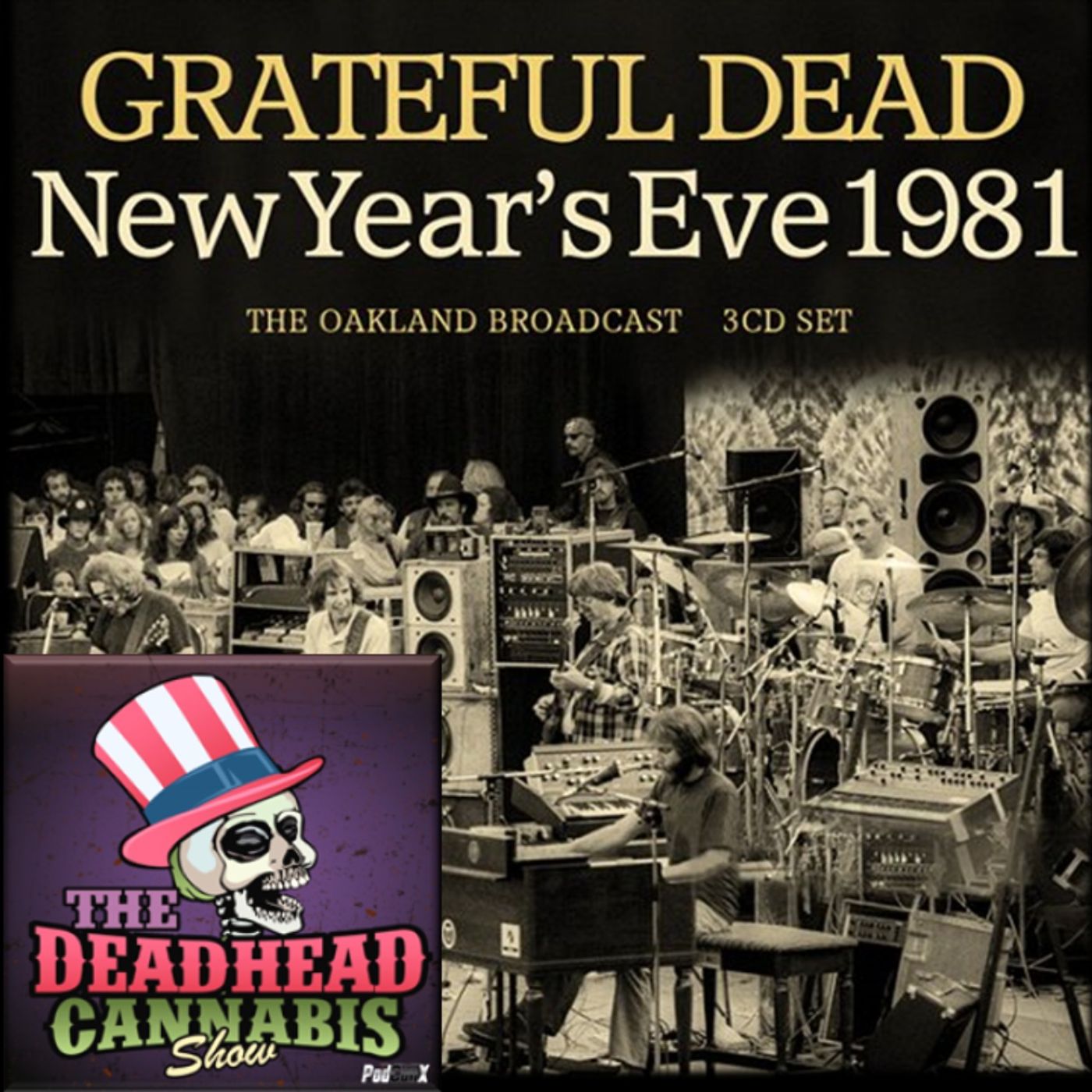
Ep 241Dead NYE ’81: Animal House, NRPS, Joan Baez, Dark Star and Breakfast, South Korean Drug Laws Are Deadly; RIP John Cutler
E"The Tragic Consequences of Strict Drug Policies: Remembering Lee Sun-kyun"Larry Michigan, starts off by wishing everyone a happy new year and reminiscing about the Grateful Dead's legendary New Year's Eve shows. He decides to feature songs from the Grateful Dead's New Year's Eve show in 1981 at the Oakland Coliseum. Larry describes the chaotic countdown and the band's energetic performance at midnight. He also pays tribute to John Cutler, a Grateful Dead sound technician and producer who recently passed away. Larry discusses the strict anti-drug policies in South Korea and the tragic death of Korean actor Lee Sun-kyun, who was subjected to relentless media scrutiny for his alleged marijuana use. He criticizes the punitive approach to drug abuse and emphasizes the need for rehabilitation rather than punishment. Larry also predicts that the University of Michigan's football team will win their game against the University of Alabama in the Rose Bowl based on his "Deadhead Cannabis System." The episode concludes with a discussion of the Grateful Dead's performance of "Dark Star" at the New Year's Eve show and the significance of the song's rarity.Timestamp Chapters:00:00:36 - Introduction and New Year's Eve celebration00:04:22 - Featuring songs from the Grateful Dead's New Year's Eve show of 198100:05:52 - Discussion on the song "Iko Iko" and the energy of a Dead New Year's Eve show00:33:48 - Tragic story of Korean actor Lee Sun-kyun and the strict anti-drug policies in South Korea00:38:00 - Predicting the winner of the Michigan vs. Alabama football game using the Deadhead Cannabis System00:42:00 - The encore set featuring Dark Star and other songsNote: The timestamps are approximate and may vary slightly when listening to the actual podcast episode. Grateful DeadDecember 31, 1981Oakland ColiseumGrateful Dead Live at Oakland Auditorium on 1981-12-31 : Free Borrow & Streaming : Internet Archive *With Joan Baez **With Matt Kelly ***With John Cipollina. Bill Graham flies in on a joint - also: NRPS - only "Banks Of The Ohio" - final "Bobby McGee" - final "Bye Bye Love" - final "Children Of The 80s" - last "Dark Star": 01-20-79 [232] - final "Lucifer's Eyes" INTRO: NYE Countdown Track No. 20 6:35 – 7:35 SHOW No. 1: Iko Iko Track No. 21 :26 – 2:00 SHOW No. 2: The Boxer (with Joan Baez) Track No. 3 0:00 – 1:35 SHOW No. 3: Bye Bye Love (with Joan Baez) Track No. 6 0:00 – 1:14 SHOW No. 4: Dark Star Track No. 31 4:20 – 6:00 OUTRO: It’s All Over Now Baby Blue Track No. 34 1:41 – 3:45 Talk about the dead show/NYE shows in generalKorean Actor who committed suicide because he was being investigated for MJ useDead U. at Stanford with David GansRIP John CutlerAnd more .Produced by PodConx Deadhead Cannabis Show - https://podconx.com/podcasts/deadhead-cannabis-showLarry Mishkin - https://podconx.com/guests/larry-mishkinRob Hunt - https://podconx.com/guests/rob-huntJay Blakesberg - https://podconx.com/guests/jay-blakesbergSound Designed by Jamie Humiston - https://www.linkedin.com/in/jamie-humiston-91718b1b3/Recorded on Squadcast

Ep 240"Rockin' Yuletide Beats: The Deadhead Cannabis Show's Christmas Special"
E"Tunes of the Season: Phish, Grateful Dead, and Merry Jams"Larry Mishkin discusses Christmas-themed songs performed by various artists, including The Who and Grateful Dead. Larry delves into The Who's rock opera "Tommy," particularly focusing on the song "Christmas" and its critical reception. He transitions to discussing Grateful Dead's rendition of Chuck Berry's "Run, Rudolph, Run" performed at the Felt Forum in 1971 and analyzes its significance in the band's repertoire.Larry further explores the potential residency of bands like Dead & Company at the Sphere in Las Vegas, following U2's shows there. He touches on Phish's upcoming performances at the same venue and discusses the difficulty in acquiring tickets for these highly anticipated shows.Later, Larry reminisces about New Year's Eve shows by various bands, specifically mentioning Grateful Dead's memorable performances during the countdown. He also features unconventional Christmas renditions by Phish and Jerry Garcia with David Grisman..Produced by PodConx Theme – Rock n Roll ChristmasIf you were in the Mishkin household earlier this morning, you might have heard this blasting out of the speakers:INTRO: ChristmasThe WhoFebruary 14, 1970University of Leeds, Leeds, England aka “Live At Leeds”The Who - Christmas - Live At Leeds (with Footage) (youtube.com)2:00 – 3:17 "Christmas" is a song written by Pete Townshend and is the seventh song on The Who's rock opera Tommy. On the original LP, it opens the second side of the album. Tommy is the fourth studio album by the English rock band the Who, first released on 19 May 1969.[2] Primarily written by guitarist Pete Townshend, Tommy is a double album and an early rock opera that tells the story of Tommy Walker and his experiences through life. The song tells how on Christmas morning, Tommy's father is worried about Tommy's future, and soul. His future is jeopardized due to being deaf, dumb, and blind.[2] The lyrics contrast religious themes such as Christmas and Jesus Christ with Tommy's ignorance of such matters. The rhetorical question, "How can he be saved from the eternal grave?" is asked about Tommy's condition and adds speculation as to the nature of original sin and eternal salvation. In the middle of the song, "Tommy can you hear me?" is repeated, with Tommy responding, "See me, feel me, touch me, heal me." "Christmas" was praised by critics. Richie Unterberger of AllMusic called it an "excellent song."[5]Rolling Stone's Mac Randall said it was one of several "prime Pete Townshend songs" on the album.[6] A review in Life by Albert Goldman considered it beautiful and highlighted the song's "croaking chorus".[7] James Perone said it was "perhaps one of the best sleeper tracks of the collection." Townshend came up with the concept of Tommy after being introduced to the work of Meher Baba, and he attempted to translate Baba's teachings into music. Recording on the album began in September 1968, but took six months to complete as material needed to be arranged and re-recorded in the studio. Tommy was acclaimed upon its release by critics, who hailed it as the Who's breakthrough. Its critical standing diminished slightly in later years; nonetheless, several writers view it as an important and influential album in the history of rock music. The Who promoted the album's release with an extensive tour, including a live version of Tommy, which lasted throughout 1969 and 1970. Key gigs from the tour included appearances at Woodstock, the 1969 Isle of Wight Festival, the University of Leeds, the Metropolitan Opera House, and the 1970 Isle of Wight Festival. The live performances of Tommy drew critical praise and revitalised the band's career. Live at Leeds is the first live album by English rock band the Who. It was recorded at the University of Leeds Refectory on 14 February 1970, and is their only live album that was released while the group were still actively recording and performing with their best-known line-up of Roger Daltrey, Pete Townshend, John Entwistle and Keith Moon. The album was released on 11 May 1970 by Decca and MCA in the United States,[2] and by Track and Polydor in the United Kingdom. It has been reissued on several occasions and in several different formats. Since its release, Live at Leeds has been ranked by several music critics as the best live rock recording of all time SHOW No. 1: Run Rudolph RunGrateful DeadFelt Forum at MSG, NYCDecember 7, 1971Track No. 10Grateful Dead Live at Felt Forum, Madison Square Garden on 1971-12-07 : Free Borrow & Streaming : Internet Archive0:11 – 1:54 Run Rudolph Run"[2][3][4] is a Christmas song written by Chuck Berry but credited to Johnny Marks and M. Brodie due to Marks' trademark on the character of Rudolph the Red-Nosed Reindeer.[5][note 1] It was published by St. Nicholas Music (ASCAP) and was first recorded by Berry in 1958, released as a single on Chess Records.It has since been covered by numerous other artists, sometimes with the title "Run Run
Ep 239"Decoding JRad's Musical Odyssey: A Riveting Night at the Riviera"
E"Sailing Through Sounds: JRad's Revelations & Dylan Surprises"Larry Mishkin discusses JRad (Joe Russo's Almost Dead) December 1st concert at the Riviera nightclub in Chicago. He talks about the band's unique covers, including Grateful Dead songs, and their ability to recreate the sound of the original artists. He highlight the performance of "Foolish Heart" during a previous show, describing its musical construction and its significance in the Grateful Dead's live repertoire.Delving into the band members' backgrounds, emphasizing their musical talents and contributions to JRad. It provides detailed information about each member's musical history and collaborations, discussing Joe Russo's drumming, Marco Benevento's keyboards, Dave Drywitz's bass, Tom Hamilton's guitar, and Scott Metzger's diverse musical styles.He also reviews JRad's surprise performances, such as their rendition of Bob Dylan's "Tell Me Mama," a song exclusively performed during Dylan's 1966 world tour. Larry expresses surprise at how JRad, despite being younger and not following Dylan in 1966, managed to perform the song so well.Additionally, he briefly touches on the issue of marijuana prohibition on cruise ships, by criticizing the strict enforcement against cannabis use, considering the changing attitudes toward marijuana. The discussion also touches upon ticket availability for concerts by bands like Phish and rumors surrounding potential performances..Produced by PodConx Deadhead Cannabis Show - https://podconx.com/podcasts/deadhead-cannabis-showLarry Mishkin - https://podconx.com/guests/larry-mishkinRob Hunt - https://podconx.com/guests/rob-huntJay Blakesberg - https://podconx.com/guests/jay-blakesbergSound Designed by Jamie Humiston - https://www.linkedin.com/in/jamie-humiston-91718b1b3/Recorded on Squadcast JRADDecember 1, 2023The Riviera NightclubChicagoJoe Russo's Almost Dead Live at The Riviera on 2023-12-01 : Free Download, Borrow, and Streaming : Internet Archive Episode title: JRAD Rocks The Riv in Chicago on 12.1.2023: channel Dylan and Dire Straits Happy Birthday Keith Richards (80!) INTRO: Foolish Heart Track #3 5:45 – 7:17 SHOW No. 1: Tell Me, Momma Track #4 0:57 – 2:33 Tell Me, Momma is a song written by Bob Dylan and performed exclusively during his 1966 World Tour with the Band (then known as the Hawks). It was used to introduce the second half of a concert, when Dylan switched from an acoustic solo performance to an electric performance backed by a band. The song was not recorded on a studio album, nor was it ever performed again by Dylan in concert.Dylan's May 17, 1966 live performance of the song was released in 1998 on The Bootleg Series Vol. 4: Bob Dylan Live 1966, The "Royal Albert Hall" Concert.[1] In 2016, all Dylan's recorded live performances of "Tell Me, Momma" from 1966 were released in the 36-CD boxed set The 1966 Live Recordings, with the May 26, 1966 performance released separately on the album The Real Royal Albert Hall 1966 Concert. The boxed set contains all the live versions of "Tell Me, Momma" ever performed by Dylan and his band. SHOW No. 2: Fire On The Mountain Track #7 0:30 – 2:05 SHOW No. 3: Before They Make Me Run Keith Richards ROLLING STONES: Before They Make Me Run (Promo - 7" Single Version) (youtube.com) 1:54 – 3:21 Today Keith turned 80. Cannot let that milestone go unnoticed. Richards was born in and grew up in Dartford, Kent. He studied at the Dartford Technical School and Sidcup Art College. After graduating, Richards befriended Jagger, Bill Wyman, Charlie Watts, and Brian Jones and joined the Rolling Stones. As a member of the Rolling Stones, Richards also sings lead on some Stones songs. Richards typically sings lead on at least one song a concert, including "Happy", "Before They Make Me Run", and "Connection". Outside of his career with the Rolling Stones, Richards has also played with his own side-project, The X-Pensive Winos. He also appeared in three Pirates of the Caribbean films as Captain Teague, father of Jack Sparrow, whose look and characterisation was inspired by Richards himself.In 1989, Richards was inducted into the Rock and Roll Hall of Fame and in 2004 into the UK Music Hall of Fame with the Rolling Stones. Rolling Stone magazine ranked him fourth on its list of 100 best guitarists in 2011. In 2023, Rolling Stone's ranking was 15th.[1] The magazine lists fourteen songs that Richards wrote with Jagger on its "500 Greatest Songs of All Time" list.My favorite “Keith tune” in the Stone’s songbook. 1978 version. "Before They Make Me Run" is a song by English rock band the Rolling Stones, featured on their 1978 album Some Girls.English musician, songwriter, singer and recording producer who is an original member, guitarist, secondary vocalist, and co-principal songwriter of the Rolling Stones. His songwriting partnership with the band's lead vocalist Mick Jagger is one of the most successful in history. His career spans over six decades, and his guitar playing style has bee

Ep 239"Stephen Stills & the Dead: Legendary Collaborations Unveiled"
E"Stephen Stills & the Dead: Legendary Collaborations Unveiled" Larry Mishkin discusses various aspects related to the Grateful Dead, December 11th, 2023 show including historical performances, the significance of particular songs like "China Cat Sunflower" into "I Know You Rider," insights into the band's music evolution, and notable appearances by Stephen Stills with the Dead during their performances. Larry also pays tribute to Denny Lane, a musician associated with Wings and the Moody Blues, following Lane's recent passing. Additionally, he delves into the musical significance of the song "Black Queen" by Stephen Stills, its themes, and its rare appearances in Dead concerts. Furthermore, he provides updates and insights into ticket sales for upcoming concerts, specifically for Phish. .Produced by PodConx Deadhead Cannabis Show - https://podconx.com/podcasts/deadhead-cannabis-showLarry Mishkin - https://podconx.com/guests/larry-mishkinRob Hunt - https://podconx.com/guests/rob-huntJay Blakesberg - https://podconx.com/guests/jay-blakesbergSound Designed by Jamie Humiston - https://www.linkedin.com/in/jamie-humiston-91718b1b3/Recorded on Squadcast Grateful DeadDecember 12, 1969 (54 years ago, tomorrow)ThelmaWest Hollywood, CAWith Stephen StillsGrateful Dead Live at Thelma Theater on 1969-12-10 : Free Borrow & Streaming : Internet Archive INTRO: I Know You Rider Track #1 2:10 – 3:42 Every Deadhead knows this song, but what makes this version unusual is that it is a show opener AND is not preceded by China Cat. In the Grateful Dead universe, few song pairings stick out with such adoration and favoritism among the band’s legion of fans more than “China Cat Sunflower” > “I Know You Rider”. The Grateful Dead performed the two-song combination over 500 times throughout their 30-year run, making it one of the more dependable mid-set segues capable of launching a show into orbit at any moment thanks to its dance-friendly tempo and lengthy jams transition jams.It makes it that much more special to note that the “China” > “Rider” combination made its first appearance at the legendary Cafe au Go Go in New York City on September 30th, 1969—54 years ago today, and less than a month before the venue closed its doors in October of that year."I Know You Rider" (also "Woman Blues" and "I Know My Rider") is a traditionalblues song that has been adapted by numerous artists. It has appeared in folk, country, and rock guises and is not overly identified with any particular artist. Modern versions can be traced back to Blind Lemon Jefferson's "Deceitful Brownskin Blues", which was released as a single in 1927. It appears in a 1934 book, American Ballads and Folk Songs, by the noted father-and-son musicologists and folklorists John Lomax and Alan Lomax.[2] The book notes that "An eighteen-year old black girl, in prison for murder, sang the song and the first stanza of these blues." The Lomaxes then added a number of verses from other sources and named it "Woman Blue".[2] The music and melody are similar to Lucille Bogan's "B.D. Woman Blues" (c. 1935), although the lyrics are completely different. By the mid-1960s, rock acts had begun to perform or record the song. James Taylor sang it as "Circle Round the Sun" on his 1968 debut album James Taylor).[2]Big Brother and the Holding Company featuring Janis Joplin were performing it in concert; a rendition from 1966 was released in 1984 on the live album Cheaper Thrills.[2] The Grateful Dead's interpretation was a staple of their live shows from the beginning of the band's existence in 1965, where it would soon be performed as a connected song from "China Cat Sunflower" and represented the group's forging a bridge from their psychedelic music to their more traditional country and folk side.[1] This combination was featured on their 1972 triple live album Europe '72.[1] (The Grateful Dead's segue approach was later used by Bruce Hornsby and the Range in the late 1980s, with "I Know You Rider" following their song, "The Red Plains" The combo was first released by the Dead on the original Europe ’72 album. Although Rider can be found on earlier Dead recordings. 1st – Nov. 3, 1965 at Mother’s in S.F. Last – July 8, 1995, Soldier Field Total 563 No. 4 most played, not counting Drums and Space, China Cat is No. 3 on that list at 564 Show is at Thelma, a nightclub on Hollywood Blvd. with a very uncertain history. First, it was a Hungarian restaurant called The Little Gypsy, then it became an upscale restaurant called The Golden Violin. In mid-60’s, the owner turned it into a rock club, Galaxy. Was located in the middle of a block filled with music venues. To the east, was Whisky a Go Go (most famous of them all), to the west Hamburger Hamlet (for late night munchies). Right next door was the London Fog where The Doors, in their formative years, had a residency before Jim Morrison’s behaviour got them kicked out – moved to the Whisky to become the house band. Initially, Galaxy’s house band was
Ep 238"The Fillmore West and the Premonition of Altamont"
E"JRad's Resonance: Reflecting on a Night of Jam Band Marvel"Larry Mishkin, touches upon key events like the 1969 Fillmore West concert, which previewed the infamous Altamont Speedway event by the Rolling Stones. The Altamont concert, marred by violence and tragedy, involving the Hells Angels acting as security, remains a pivotal moment in music history.He also discussed current music events, including Phish's upcoming show at the Spere in Las Vegas Sphere, highlighting the band's incredible light shows. He contrasted the Rolling Stones' high-priced tickets for their concerts with Joe Russo's Almost Dead's more reasonable pricing and exceptional Grateful Dead covers.He recounted attending a recent Joe Russo's Almost Dead concert in Chicago, emphasizing their outstanding performance, including an unexpected cover of Bob Dylan's "Tell Me Mama." The concert featured iconic Grateful Dead tracks, such as "Fire on the Mountain" and "Good Lovin'," offering a nostalgic and impressive experience...Produced by PodConx Deadhead Cannabis Show - https://podconx.com/podcasts/deadhead-cannabis-showLarry Mishkin - https://podconx.com/guests/larry-mishkinRob Hunt - https://podconx.com/guests/rob-huntJay Blakesberg - https://podconx.com/guests/jay-blakesbergSound Designed by Jamie Humiston - https://www.linkedin.com/in/jamie-humiston-91718b1b3/Recorded on Squadcast Grateful DeadDecember 4, 1969Fillmore West, S.F.https://archive.org/details/gd69-12-04.sbd.wizard.23975.sbeok.shnf Intro: Introduction and Altamont announcement Track #1 Start – finish Show No. 1 Black Peter Track #3 1:15 – 2:45 Show No. 2 Dark Star Track #9 13:39 – 15:15 Show No. 3 High Times Track #10 1:18 – 2:36 Show No. 4 Good Morning Little School Girl Track # 12 2:20 – 3:51 Outro: Uncle John’s Band Track#17 Start – 2:12 .Produced by PodConx Deadhead Cannabis Show - https://podconx.com/podcasts/deadhead-cannabis-showLarry Mishkin - https://podconx.com/guests/larry-mishkinRob Hunt - https://podconx.com/guests/rob-huntJay Blakesberg - https://podconx.com/guests/jay-blakesbergSound Designed by Jamie Humiston - https://www.linkedin.com/in/jamie-humiston-91718b1b3/Recorded on Squadcast

Ep 237"Grateful Dead's Transformative Journey: Exploring the Poly Pavilion Show of '71" with Alex Wellins
E"The Sphere in Vegas: U2's Sonic Odyssey and the Future of Concert Venues"Larry Mishkin is joined by great friend of the show, Alex Wellins to catch up and talk about a Grateful Dead concert held at Poly Pavilion on November 20th, 1971. Larry talks about the significance of the show, including the band's transition in music style, notable songs played, and the presence of famous basketball player Bill Walton in the audience. Later, Alex discusses recent concerts they attended, highlighting U2's performance at The Sphere in Las Vegas, known for its immersive audiovisual experience, and another show at the historic Castro Theater in San Francisco featuring the band St. Paul and the Broken Bones. Both Larry and Alex express enthusiasm about these diverse musical experiences..Produced by PodConx Deadhead Cannabis Show - https://podconx.com/podcasts/deadhead-cannabis-showLarry Mishkin - https://podconx.com/guests/larry-mishkinRob Hunt - https://podconx.com/guests/rob-huntJay Blakesberg - https://podconx.com/guests/jay-blakesbergSound Designed by Jamie Humiston - https://www.linkedin.com/in/jamie-humiston-91718b1b3/Recorded on Squadcast Grateful DeadNovember 20, 1971Pauley Pavillion – UCLAL.A.Grateful Dead Live at Pauley Pavilion - University of California on 1971-11-20 : Free Borrow & Streaming : Internet Archive By late 1971 Dead’s transformation from Primal Dead to Americana Dead was well on it’s way. This concert is a great snapshot of that time, this show being more in the Americana camp with the a killer 25 minute jammed out Other One (including its Bill Kreutzman drum solo lead in) really being the only true nod to the Primal era . Also, the band was in transition as Pigpen missed the show as part of his descent into alcohol related illnesses that eventually took him in March 1973. Keith had been playing with the band since February but Mickey began his “leave” in February after night one of the Capitol Theater run. So this night is just five of them up on stage playing their hearts out for the fine students of UCLA and other Deadheads ( then a very brand new “thing” having just been recognized by the band in the liner message inside the Grateful Dead album stating: “DEAD FREAKS UNITE! WHO ARE YOU? WHERE ARE YOU? HOW ARE YOU? Send us your name and address and we’ll keep you informed”) One fact that should be obvious given the venue and the time – an unknown UCLA student and want-a-be college basketball player, Bill Walton was in attendance along with some of his Bruins teammates for this first ever Dead show at Pauley Pavilion, famed home court for the UCLA Bruins, a team that following the amazing successes of Lew Alcindor (Kareem) and Sidney Wicks, now was being led for the first time by Bill and his teammates Jamaal Wilkes and Greg Lee (spoiler alert: Bill has some success at UCLA too). Bill, of course, went on to be an NBA All-Star and a regular attendee of Dead shows and, as Alex can attest, not unusual to see him at a West Coast dead show right up until the end – kind of hard to miss a 7 foot deadhead with his red hair and tie dye apparel. Rumor has it when they knew he was going to be at a show the band would set up a basketball hoop backstage and that Bruce Hornsby was a hooper too. INTRO: Bertha Track No. 1 3:30 – 4:37 Great traditional opener although it was known to pop up in different spots during shows from time to time. At this point, it is still “new” having been debuted earlier that year, on February 18th at the Capitol Theater in Port Chester. Never released on a studio album, but it is the opening tune on the Dead’s live album, “Grateful Dead” a/k/a Skull and Roses (or Phil’s preferred name, “Skull Fuck” which was promptly rejected by their label, Warner Bros) on September 24, 1971. From shows in NYC at the Fillmore East and the Hammerstein Ballroom in the Manhattan Center (plus Johnny B. Goode from Winterland – couldn’t completely ignore the west coast). SHOW #1: Tennessee Jed Track No. 5 0:45 – 1:46 This is one of the “new” ones played in this show. Along with Mexicali Blues, One More Saturday Night, Ramble On Rose and Jack Straw had all just been played for the first ever just two months earlier on October 19, 1971 at the Northrop Auditorium in Minneapolis – also Keith’s first show. A tune that more than most really captures the change in the band’s direction as you have Garcia previously of Dark Star, St. Stephen and Eleven fame twanging away, musically and vocally, on a song with a feel that is a cross between country, western and a dash of rock n roll. Deadheads of Alex’s and my era will note how much quicker the tempo is in this early version and Garcia’s noticeable energy evident from his strong vocal performance. Played 436 times in concert, putting it at No. 15 of the list of the Dead’s most played tunes.1st (again) on Oct. 19, 1971 in MPLSLast on July 8, 1995 at Soldier Field, Chicago A great sing along tune that the Deadheads always enjoyed, normally found in the first set, to

Ep 236What A Wonderful World as only Jerry Garcia knows
E"Sounds of '91: Jerry Garcia Band Live and Marijuana News Unveiled"Larry Mishkin focuses on Jerry Garcia music and breaking stories related to marijuana. He introduces a Jerry Garcia Band performance from November 15, 1991, at Madison Square Garden and delves into the details of the songs performed, particularly highlighting "How Sweet It Is To Be Loved By You" and a cover of Bob Dylan's "Simple Twist of Fate." Amidst the music commentary, Larry also addresses significant marijuana-related news, emphasizing recent studies suggesting a potential connection between marijuana use and heart issues. He, however, points out limitations in the studies and emphasizes the need for a more comprehensive examination of the subject..Produced by PodConx Deadhead Cannabis Show - https://podconx.com/podcasts/deadhead-cannabis-showLarry Mishkin - https://podconx.com/guests/larry-mishkinRob Hunt - https://podconx.com/guests/rob-huntJay Blakesberg - https://podconx.com/guests/jay-blakesbergSound Designed by Jamie Humiston - https://www.linkedin.com/in/jamie-humiston-91718b1b3/Recorded on Squadcast Jerry Garcia BandNovember 15, 1991MSGNY, NYJerry Garcia Band 1991-11-15 FOB Schoeps Brotman Metchick Anon Noel t-flac1648 : Joe Noel : Free Download, Borrow, and Streaming : Internet Archive INTRO: How Sweet It Is To Be Loved By You Track No. 2 0:00 – 1:30 How Sweet It Is (To Be Loved by You)" is a song recorded by American soul singer Marvin Gaye from his fifth studio album of the same name (1965). It was written in 1964 by the Motown songwriting team of Holland–Dozier–Holland, and produced by Brian Holland and Lamont Dozier. The song title was inspired by one of the actor and comedian Jackie Gleason's signature phrases, "How Sweet It Is!" Released on Nov. 4, 1964 with Forever on the B-side. Cash Box described it as "a medium-paced, rollicking chorus-backed ode about a fella who's on top of the world since he met up with Miss Right."[4]AllMusic critic Jason Ankeny described the song as a "radiant pop confection," noting that it was unusual for Gaye in being a "straightforward love song" that doesn't reflect Gaye's usual demons.[5] Ankeny commented on the soulfulness of the song, and particularly noted the piano riff. James Taylor released his version of "How Sweet It Is (To Be Loved by You)" as the lead single from his album Gorilla (1975).[11]Taylor's 1975 single has been the most successful remake of the song to date, hitting number one on the Easy Listening chart and number five on the US Billboard Hot 100 chart. Long a staple of the JGB’s set lists, First played on September 18, 1975 a Sophie’s in Palo AltoLast played on April 23, 1995 at the Warfield Theater in S.F.Total played 373 times, by far the JGB’s most played tune (Midnight Moonlight is 2d at 344) Usually a show opener. There are three Dead shows on Nov. 13 and six JGB shows. Of those six, none are available on Archivd.org. So I am dong a JGB show two days later on Nov. 15, 1991 from MSG. The standard JGB lineup for that time: Jerry Garcia; guitar, vocals- John Kahn; bass- Melvin Seals; keyboards- David Kemper; drums- Jaclyn LaBranch; backing vocals- Gloria Jones; backing vocals Great musicians, great vocals, its 1991, but Jerry is rocking. A fun night with Blues Traveler as the opening act. This show was released as Garcia Live Vol. 16 SHOW #1: Simple Twist of Fate Track No. 5 3:00 – 4:40 In 1975, Bob Dylan released his album Blood on the Tracks, which included the song “Simple Twist of Fate.” The song is a haunting ballad about a failed relationship, and many fans have speculated about who Dylan wrote it about. While Dylan has never confirmed the identity of the song’s subject, many believe that he wrote it about his former girlfriend, Joan Baez. Bob Dylan’s message is one of hope and change. He speaks of a world that is better than the one we currently live in and urges people to work together to make it a reality. He also advocates for peace and love, and has said that these are the only things that can truly change the world. Always a big fan of Dylan, Garcia played this song 217 times, the first on July 4, 1976 at the Great American Music Hall in S.F. and the last on April 23, 1995 at the Warfield in S.F. If you are wondering why that April 23, 1995 dates keeps popping up, that was the last JGB show. SHOW #2: Lay Down Sally Track No. 6 1:40 – 3:15 "Lay Down Sally" is a song performed by Eric Clapton, and written by Clapton, Marcy Levy, and George Terry. It appeared on his November 1977 album Slowhand, and reached No. 3 on the BillboardHot 100 chart. It was released as a single with Cocaine on the B-side, quite the heavy hitting release. It was the song of the summer of 1978 and always one of Slow Hand’s favorite songs. "Lay Down Sally" is a country blues song performed in the style of J. J. Cale. Clapton explained, "It's as close as I can get, being English, but the band being a Tulsa band, they play like that naturally. You couldn't get them to do an English roc

Ep 235Ruby Rides In On A Wave. Georgia court says yes to hemp-derived cannabinoids,
E"Ruby's Groovy Journey: Cannabis, Music, and the Deadhead Show"Larry Mishkin shares his excitement about the birth of his granddaughter, Ruby. He discusses how the song "Ruby Waves" by the band Phish may have inspired her name and how the family is already introducing her to great music. Larry also dives into Grateful Dead, sharing details about a 1979 concert from the Spectrum in Philadelphia and highlighting the song "Jack Straw."Larry then talks about recent Grateful Dead releases and encourages listeners to consider subscribing to annual releases for access to exclusive content. He provides insights into the song "Jack Straw," its lyrics, and the band's performance of it throughout the years. The episode also features the Jerry Garcia Band's song "Rubin and Cherise" and its connection to the love story of Ruby..Produced by PodConx Deadhead Cannabis Show - https://podconx.com/podcasts/deadhead-cannabis-showLarry Mishkin - https://podconx.com/guests/larry-mishkinRob Hunt - https://podconx.com/guests/rob-huntJay Blakesberg - https://podconx.com/guests/jay-blakesbergSound Designed by Jamie Humiston - https://www.linkedin.com/in/jamie-humiston-91718b1b3/Recorded on Squadcast INTRO: Ruby Waves Phish July 14, 2019 Alpine Valley, East Troy, WI Phish - 7/14/2019 - Ruby Waves - YouTube 0:09 – 1:35 Part of today’s show is in honor of my first grandchild, Ruby, born late last month in Georgia. My son Matt is a huge Phish fan and his wife Elena enjoys them too if not quite to the same degree. But they both love this song which may or may not have been the inspiration for their daughter’s name. Regardless, Ruby is wonderful and her father is already playing this clip by her bassinet – she lays there and smiles! Phish first played the song on June 18, 2019 at the Budweiser Stage in Toronto. Of the 164 Phish shows since that debut, the band has only performed it a total of 27 times (less than 2% of the Phish shows played since its debut), most recently October 11, 2023 at the Erwin Nutter Center on the campus of Wright State University in Dayton, OH. So not only was seeing this song a rarity, but this version is particularly well known as it is from a legendary show at Alpine Valley a few years ago. This particular version of Ruby Waves runs an incredible 38 minutes and was only one of the many highlights from that show (which featured a huge Olivia’s Pool breakout among other big moments). Check out the clip, check out the show, and when you hear Ruby Waves think of little Ruby making her appearance into the world. DeadAlso featuring the Dead from The Spectrum in Philly 44 years ago today. A year of big transition, Jim Marty’s first Dead show, and some almost under the radar amazing shows, including this one. An eleven song first set followed up by a four song second set (plus drums and space; who do these guys think they are, Phish?) and strong encore. Here is how it all started SHOW #1: Alabama Getaway Track No. 1 0:10 – 1:35 This is only the second time the Dead played this song in concert, the first being two nights earlier on Nov. 4th at the Providence Civic Center in Rhode Island. Song would first be released six months later (4.28.1980) on Dead’s album, Go To Heaven. Ultimately played by the Dead 143 times, with an almost five year gap from 1990 – 1994, Jerry brought it back to the stage for a handful of performances in 1995, including the last one on June 2, 1995 at Shoreline Amphitheatre in Mountain View, CA. Great cultural references to Alabama’s complicated legacy, Bill Bojangles, the Twenty Third Psalm from the Bible and more. Great up-tempo tune usually played as a show opener, although it was known to move around from time to time. Extended this clip to catch the Brent breakout during the jam. Still new to the group Brent was not shy and made his presence known with authority even in the first year. SHOW #2: Jack Straw Track No. 10 3:16 – 4:47 One of the highlights of this show, fantastic version of this crowd pleaser and great jamming tune. Brent again jumping into the mix with his backing vocals and his strong keyboard work filling in the gaps. Written by Bobby and Robert Hunter, was never released on a studio album but was released on Europe ’72 album. Originally, Bobby sang all the vocals, but at a show in Paris on May 3, 1972, Bobby and Jerry began trading off vocals on different verses and it stayed that way until the end. The song appeared in both the first and second sets until the band's short hiatus in 1974-1975. After re-forming, the song almost exclusively appeared in the first set. After Brent Mydland joined the band in 1979, the song almost exclusively opened the band's first set. The band also often extended the jam after the second verse after Mydland's joining, often extending the song to over six minutes. Dead and Company have also further extended the song, often adding an abstract opening jam prior to the song's first verse. Bob Weir stated in a 2004 interview that the song's lyrics w

Ep 234ENCORE | Rob Bleetstein Gets On The Bus, Literally
EGrateful Dead Live at William and Mary College Hall on 04-15-1978 Rob Bleetstein Sirius XM producer / Host on the Grateful Dead Channel and Program Director/Host/Producer - Pearl Jam Radio joins Larry Mishkin and Rob Hunt to share stories from his career in the music industry. As one of the world's foremost authorities on the Grateful Dead, Rob talks about his favorite concerts including the 1978 show at William and Mary College which he attended while in high school.Produced by PodConxDeadhead Cannabis Show - https://podconx.com/podcasts/deadhead-cannabis-showLarry Mishkin - https://podconx.com/guests/larry-mishkinRob Hunt - https://podconx.com/guests/rob-huntDan Humiston - https://podconx.com/guests/dan-humistonDeadhead Cyclist - https://deadheadcyclist.com/Jay Blakesberg - https://podconx.com/guests/jay-blakesbergRob Bleetstein - https://podconx.com/guests/rob-bleekstein .Produced by PodConx Deadhead Cannabis Show - https://podconx.com/podcasts/deadhead-cannabis-showLarry Mishkin - https://podconx.com/guests/larry-mishkinRob Hunt - https://podconx.com/guests/rob-huntJay Blakesberg - https://podconx.com/guests/jay-blakesbergSound Designed by Jamie Humiston - https://www.linkedin.com/in/jamie-humiston-91718b1b3/Recorded on Squadcast

Ep 233Phish Weekend in Chicago
E"Phish's Chicago Adventure: Unpacking the Three-Night Run"Larry Mishkin talks about his experience at a recent Phish concert in Chicago. He mentions the uniqueness of this Phish show and focuses on their cover songs, specifically mentioning their cover of Talking Heads' "Remain in Light" album and the way Phish adds their signature jamming style to it. Larry also discusses a rare cover of Neil Young's "Albuquerque" and the joy of seeing a band like Phish covering classics. He mentions the fan culture at Phish concerts, including the prevalence of nitrous oxide vendors in the parking lot. He shares his experience over three nights of the concert and highlights the setlist from each night. Larry also talks about Phish covering Little Feat's "Spanish Moon" and its significance, given that it's a rarely played song by Phish..Produced by PodConx Deadhead Cannabis Show - https://podconx.com/podcasts/deadhead-cannabis-showLarry Mishkin - https://podconx.com/guests/larry-mishkinRob Hunt - https://podconx.com/guests/rob-huntJay Blakesberg - https://podconx.com/guests/jay-blakesbergSound Designed by Jamie Humiston - https://www.linkedin.com/in/jamie-humiston-91718b1b3/Recorded on Squadcast Phish Weekend in ChicagoOctober 13 – 15, 2023United Center Today is the Phish covers which were spectacularPlay amazing covers by incredible artists – sometimes they dig deep into the other performer’s catalogue to pull out rarities. Other times they cover the hits. This weekend featured some great examples. INTRO: Cross Eyed and PainlessPhish Cross Eyed and Painless 2023 10 13 Chicago Illinois - YouTube2:00 – 3:40October 13, 2023, Second set, out of Tweezer and into Light. Who doesn’t love a cover of a Talking Heads tune, ANY Talking Heads tune. But this one is special. Second song on Remain In Light, one of the greatest albums of all time. Released on October 8, 1980 by Sire Records, the band’s fourth album. Last Heads album produced by Brian Eno. Phish debuted the tune on October 31, 1996 at the Phish Halloween show at the Omni in Atlanta, GA, covered Remain In Light as their Musical CostumePlayed 62 times overallThey really jam it out in a way the Talking Heads did not. Always well received and this show was no differentLast played on August 4, 2023 at MSG, 7 shows ago SHOW #1 AlbuquerquePHISH : Albuquerque : [NEIL YOUNG] : {4K Ultra HD} : The United Center : Chicago, IL : 10/13/2023 - YouTube:50 – 2:18October 13, 2023, First set, out of a killer Ghost and into Saw It Again. Beautiful Neil Young tune from Tonight’s The Night released in 1975The song sees Young returning to a theme that has filled his music from very early on: the vapidity of fame. It's something he seems to struggle with even more than most other musicians. Or, at least, it's something he's chosen to sing about more often than most. It may in fact be the most common theme of all his music, besides obvious stuff like heartbreak and love.In "Albuquerque," Young is thinking about renting a car and driving from Albuquerque, New Mexico, to Santa Fe, just to be alone and "independent from the scene." He never tells us why he's in Albuquerque to begin with, but he does tell us he wants to roll a joint and rent a car and stop to eat some "fried eggs and country ham."The "country ham" bit is kind of interesting, because country ham is a food popular in the southeast, not so much in the southwest. It's probably just a simple oversight on Young's part, but it may also reveal another common thread in Young's music: the escape into rural simplicity as a cure for the craziness and fakeness of modern day life.Phish first played this song on July 26, 1998 at the Starplex Amphitheatre in Dallas, TX.Played a total of 17 timesLast played on June 11, 2011 at Merriweather Post Pavillion outside of D.C., gap of 457 shows SHOW #2: Spanish MoonPHISH : Spanish Moon : [LITTLE FEAT] : {4K Ultra HD} : The United Center : Chicago, IL : 10/15/2023 - YouTube:50 – 2:05October 15, 2023, Second set out of Pebbles and Marbles and into A Wave of Hope Little Feat cover, one of their most popular tunes.From the album, Feats Don’t Fail Me Now, released in 1974 "Spanish Moon" was written and sung by guitarist Lowell George, who was a creative powerhouse in the early years of Little Feat. The song is about a fictional place called the Spanish Moon - a seedy club with whiskey and bad cocaine, but a girl singer that made it worth it. There are many dangers at the Spanish Moon, but the ones likely to do you in are the women.Lowell George was an excellent storyteller and created the Spanish Moon from his imagination, but he lived through the vices he describes in the song, especially cocaine. Around this time, his addictions were starting to overpower him, his health started failing, and he developed hepatitis. Feats Don't Fail Me Now was the last Little Feat album where he was clearly the leader; his contributions to the band slowly tailed off, and in 1979 he released a solo album. While on tour supporti

Ep 232The Dead play the Melk weg with surprises. MJ users who caught COVID had better outcomes!
E"Middle-Aged and Older Patients Report Improved Health with Medical Marijuana"Larry Mishkin discusses a recent study from the University of Florida which shows that medical marijuana use can lead to lower pain levels and reduced dependency on opioids and psychiatric prescriptions among middle-aged and older chronic pain patients. Participants in the study reported improved physical and mental functioning, better sleep quality, and reduced anxiety. The research adds to the growing body of evidence supporting the therapeutic benefits of medical cannabis for pain management..Produced by PodConx Deadhead Cannabis Show - https://podconx.com/podcasts/deadhead-cannabis-showLarry Mishkin - https://podconx.com/guests/larry-mishkinRob Hunt - https://podconx.com/guests/rob-huntJay Blakesberg - https://podconx.com/guests/jay-blakesbergSound Designed by Jamie Humiston - https://www.linkedin.com/in/jamie-humiston-91718b1b3/Recorded on Squadcast Grateful Dead, October 16, 1989, Melk Weg Club, Amsterdam, the NetherlandsGrateful Dead Live at Club Melk Weg on 1981-10-16 : Free Borrow & Streaming : Internet Archive Second of two night stand at this famous hash bar that only held about 500 people in the room in which the Dead performed. Very cool and famous club in Amsterdam, one of the best known hash bars. Went there one time in 1988 with good buddies Mikey and H. A highlight of our trip. Another good buddy, Freddie Burp, was spending the school year abroad in the fall of 1981 and was one of the lucky ones who were present for this show. He’s a tough guy to get a hold of, but maybe some day I can get him on the show to talk about this concert. INTRO: The Race Is On Track No. 8 1:10 – 2:24 Show had an acoustic first set and an electric second set. Many of the songs in the acoustic set we featured a few weeks ago from the September, 1980 show at the Warfield Theater in San Francisco as part of the recordings for the Dead’s Reckoning album. So I went with this one which has always been one of my favorites ever since my good buddy Mikey (who took me to three of my first four shows) used to play it for me as we drove through the northwoods of Wisconsin on nights out from the summer camp where we were spending the summer in 1981. "The Race Is On" is a song written by Don Rollins[1] (not to be confused with the Don Rollins who co-wrote "It's Five O'Clock Somewhere" for Alan Jackson and Jimmy Buffett) and made a hit on the country music charts by George Jones and on the pop and easy listening charts by the unrelated Jack Jones. George's version was the first single released from his 1965 album of the same name. Released as a single in September 1964, it peaked at number three on the BillboardHot Country Singles chart and at number 96 on the BillboardHot 100 in January 1965. Jack's version topped Billboard'sEasy Listening chart and reached number 15 on the Hot 100 the same year. The two recordings combined to reach number 12 on the Cashbox charts, which combined all covers of the same song in one listing and thus gave George Jones his only top-40 hit. The song uses thoroughbred horse racing as the metaphor for the singer's romantic relationships. Rockabilly artist Dave Edmunds, in collaboration with the Stray Cats, whose debut album Edmunds had recently produced, recorded a version for his 1981 album, Twangin.... Stray Cats drummer Slim Jim Phantom recalled Edmunds' affection for the song when he was courting the band to produce their debut album: "We met with Edmunds at his house. He had a little pub in his basement. He had a finished basement, outside of London. Edmunds had a jukebox, a little jukebox. He had 'The Race is On' and 'Rockabilly Boogie' by Johnny Burnette. He had those records in his jukebox. We all looked at each other and said, 'This is it.'"[3] Phantom also recalled that the song took "one or two takes" in the studio.[4]Thank you. Covered by: Jack Jones Loretta Lynn Alvin and the Chipmunks for their 1965 album, “Chipmunks a Go Go” Waylon Jennings The Georgia Satellites from 1965 debut album, “Keep The Faith” Elvis Costello And others Dead played it 60times in concert First: December 31, 1969 at Boston Tea Party in Boston Last: May 20, 1995 at Sam Boyd Silver Bowl, Las Vegas SHOW #1: Ripple Track No. 9 1:50 – 3:06 We prominently featured this song form the Warfield show and talked about how it was last played ever on Sept. 3, 1988 at the Cap Center. What makes this version we just listened to so special is that this was the last Ripple played by the Dead until the Cap Center show, a seven year gap, and that that was it, no more Ripple. So this is the last accoustic Ripple ever played since the Cap Center was electric. Maybe the most famous Dead tune ever, from American Beauty, Hunter’s lyrics and Jerry’s music mesh together in a way to make this tune not just one of the best Dead tunes ever, but one of the best tunes ever, IMHO! SHOW #2: Hully Gully Track No. 12 0:15 – 1:38 "(Baby) Hully Gully" is a song written by F

Ep 231From Warlocks to Grateful Dead: The Evolution of a Legendary Band
E"Marijuana and Gun Rights: The Legal Debate Unveiled"Larry Mishkin welcomes listeners from Minneapolis, Minnesota, where he attended the Michigan University football game and reunited with friends. The episode focuses on a Grateful Dead show from October 9th, 1989, discussing the significance of the band's name change from "Warlocks" to "Grateful Dead." Larry also touches on the ongoing legal debate surrounding medical marijuana patients' rights to own firearms, emphasizing the need to separate the issues of marijuana legalization and gun ownership..Produced by PodConx Deadhead Cannabis Show - https://podconx.com/podcasts/deadhead-cannabis-showLarry Mishkin - https://podconx.com/guests/larry-mishkinRob Hunt - https://podconx.com/guests/rob-huntJay Blakesberg - https://podconx.com/guests/jay-blakesbergSound Designed by Jamie Humiston - https://www.linkedin.com/in/jamie-humiston-91718b1b3/Recorded on Squadcast Hampton ColiseumOctober 9, 1989An Evening With The WarlocksGrateful Dead Live at Hampton Coliseum on 1989-10-09 : Free Borrow & Streaming : Internet Archive Rob – I know this is one of your favorite Dead shows, if you have time this week! Intro: Feel Like A Stranger Track No. 1 3:12 – 4:40 Show No. 1: We Can Run Track No. 5 4:10 – 5:42 I love that even on a historic night like this there is room for Brent. Show No. 2: Dark Star Track No. 13 1:06 – 2:36 Can’t leave this out, it’s why everybody busted ass to get there! Show No. 3: Death Don’t Have No Mercy Track No. 15 7:11 – 8:45 Can’t have one without the other Show No. 4: Throwing Stones Track No. 7:10 – 8:42 Outro: Attics of my Life Track No. 20 2:10 – 3:47 The third “oldie” and a great way to close out. .Produced by PodConx Deadhead Cannabis Show - https://podconx.com/podcasts/deadhead-cannabis-showLarry Mishkin - https://podconx.com/guests/larry-mishkinRob Hunt - https://podconx.com/guests/rob-huntJay Blakesberg - https://podconx.com/guests/jay-blakesbergSound Designed by Jamie Humiston - https://www.linkedin.com/in/jamie-humiston-91718b1b3/Recorded on Squadcast