Data Skeptic
611 episodes — Page 6 of 13
Flesch Kincaid Readability Tests
Given a document in English, how can you estimate the ease with which someone will find they can read it? Does it require a college-level of reading comprehension or is it something a much younger student could read and understand? While these questions are useful to ask, they don't admit a simple answer. One option is to use one of the (essentially identical) two Flesch Kincaid Readability Tests. These are simple calculations which provide you with a rough estimate of the reading ease. In this episode, Kyle shares his thoughts on this tool and when it could be appropriate to use as part of your feature engineering pipeline towards a machine learning objective. For empirical validation of these metrics, the plot below compares English language Wikipedia pages with "Simple English" Wikipedia pages. The analysis Kyle describes in this episode yields the intuitively pleasing histogram below. It summarizes the distribution of Flesch reading ease scores for 1000 pages examined from both Wikipedias.

Fairness Aware Outlier Detection
Today on the show we have Shubhranshu Shekar, a Ph. D Student at Carnegie Mellon University, who joins us to talk about his work, FAIROD: Fairness-aware Outlier Detection.

Life May be Rare
Today on the show Dr. Anders Sandburg, Senior Research Fellow at the Future of Humanity Institute at Oxford University, comes on to share his work "The Timing of Evolutionary Transitions Suggest Intelligent Life is Rare." Works Mentioned: Paper: "The Timing of Evolutionary Transitions Suggest Intelligent Life is Rare."by Andrew E Snyder-Beattie, Anders Sandberg, K Eric Drexler, Michael B Bonsall Twitter: @anderssandburg

Social Networks
Mayank Kejriwal, Research Professor at the University of Southern California and Researcher at the Information Sciences Institute, joins us today to discuss his work and his new book Knowledge, Graphs, Fundamentals, Techniques and Applications by Mayank Kejriwal, Craig A. Knoblock, and Pedro Szekley. Works Mentioned "Knowledge, Graphs, Fundamentals, Techniques and Applications"by Mayank Kejriwal, Craig A. Knoblock, and Pedro Szekley
The QAnon Conspiracy
QAnon is a conspiracy theory born in the underbelly of the internet. While easy to disprove, these cryptic ideas captured the minds of many people and (in part) paved the way to the 2021 storming of the US Capital. This is a contemporary conspiracy which came into existence and grew in a very digital way. This makes it possible for researchers to study this phenomenon in a way not accessible in previous conspiracy theories of similar popularity. This episode is not so much a debunking of this debunked theory, but rather an exploration of the metadata and origins of this conspiracy. This episode is also the first in our 2021 Pilot Season in which we are going to test out a few formats for Data Skeptic to see what our next season should be. This is the first installment. In a few weeks, we're going to ask everyone to vote for their favorite theme for our next season.

Benchmarking Vision on Edge vs Cloud
Karthick Shankar, Masters Student at Carnegie Mellon University, and Somali Chaterji, Assistant Professor at Purdue University, join us today to discuss the paper "JANUS: Benchmarking Commercial and Open-Source Cloud and Edge Platforms for Object and Anomaly Detection Workloads" Works Mentioned: https://ieeexplore.ieee.org/abstract/document/9284314 "JANUS: Benchmarking Commercial and Open-Source Cloud and Edge Platforms for Object and Anomaly Detection Workloads." by: Karthick Shankar, Pengcheng Wang, Ran Xu, Ashraf Mahgoub, Somali ChaterjiSocial Media Karthick Shankar https://twitter.com/karthick_sh Somali Chaterji https://twitter.com/somalichaterji?lang=en https://schaterji.io/

Goodhart's Law in Reinforcement Learning
Hal Ashton, a PhD student from the University College of London, joins us today to discuss a recent work Causal Campbell-Goodhart's law and Reinforcement Learning. "Only buy honey from a local producer." - Hal Ashton Works Mentioned: "Causal Campbell-Goodhart's law and Reinforcement Learning"by Hal AshtonBook "The Book of Why"by Judea PearlPaper Thanks to our sponsor! When your business is ready to make that next hire, find the right person with LinkedIn Jobs. Just visit LinkedIn.com/DATASKEPTIC to post a job for free! Terms and conditions apply

Video Anomaly Detection
Yuqi Ouyang, in his second year of PhD study at the University of Warwick in England, joins us today to discuss his work "Video Anomaly Detection by Estimating Likelihood of Representations."Works Mentioned: Video Anomaly Detection by Estimating Likelihood of Representations https://arxiv.org/abs/2012.01468 by: Yuqi Ouyang, Victor Sanchez

Fault Tolerant Distributed Gradient Descent
Nirupam Gupta, a Computer Science Post Doctoral Researcher at EDFL University in Switzerland, joins us today to discuss his work "Byzantine Fault-Tolerance in Peer-to-Peer Distributed Gradient-Descent." Works Mentioned: https://arxiv.org/abs/2101.12316 Byzantine Fault-Tolerance in Peer-to-Peer Distributed Gradient-Descent by Nirupam Gupta and Nitin H. Vaidya Conference Details: https://georgetown.zoom.us/meeting/register/tJ0sc-2grDwjEtfnLI0zPnN-GwkDvJdaOxXF

Decentralized Information Gathering
Mikko Lauri, Post Doctoral researcher at the University of Hamburg, Germany, comes on the show today to discuss the work Information Gathering in Decentralized POMDPs by Policy Graph Improvements. Follow Mikko: @mikko_lauri Github https://laurimi.github.io/

Leaderless Consensus
Balaji Arun, a PhD Student in the Systems of Software Research Group at Virginia Tech, joins us today to discuss his research of distributed systems through the paper "Taming the Contention in Consensus-based Distributed Systems." Works Mentioned "Taming the Contention in Consensus-based Distributed Systems" by Balaji Arun, Sebastiano Peluso, Roberto Palmieri, Giuliano Losa, and Binoy Ravindranhttps://www.ssrg.ece.vt.edu/papers/tdsc20-author-version.pdf "Fast Paxos" by Leslie Lamport https://link.springer.com/article/10.1007/s00446-006-0005-x

Automatic Summarization
Maartje ter Hoeve, PhD Student at the University of Amsterdam, joins us today to discuss her research in automated summarization through the paper "What Makes a Good Summary? Reconsidering the Focus of Automatic Summarization." Works Mentioned "What Makes a Good Summary? Reconsidering the Focus of Automatic Summarization." by Maartje der Hoeve, Juilia Kiseleva, and Maarten de Rijke Contact Email: [email protected] Twitter: https://twitter.com/maartjeterhoeve Website: https://maartjeth.github.io/#get-in-touch

Gerrymandering
Brian Brubach, Assistant Professor in the Computer Science Department at Wellesley College, joins us today to discuss his work "Meddling Metrics: the Effects of Measuring and Constraining Partisan Gerrymandering on Voter Incentives". WORKS MENTIONED: Meddling Metrics: the Effects of Measuring and Constraining Partisan Gerrymandering on Voter Incentives by Brian Brubach, Aravind Srinivasan, and Shawn Zhao

Even Cooperative Chess is Hard
Aside from victory questions like "can black force a checkmate on white in 5 moves?" many novel questions can be asked about a game of chess. Some questions are trivial (e.g. "How many pieces does white have?") while more computationally challenging questions can contribute interesting results in computational complexity theory. In this episode, Josh Brunner, Master's student in Theoretical Computer Science at MIT, joins us to discuss his recent paper Complexity of Retrograde and Helpmate Chess Problems: Even Cooperative Chess is Hard. Works Mentioned Complexity of Retrograde and Helpmate Chess Problems: Even Cooperative Chess is Hard by Josh Brunner, Erik D. Demaine, Dylan Hendrickson, and Juilian Wellman 1x1 Rush Hour With Fixed Blocks is PSPACE Complete by Josh Brunner, Lily Chung, Erik D. Demaine, Dylan Hendrickson, Adam Hesterberg, Adam Suhl, Avi Zeff

Consecutive Votes in Paxos
Eil Goldweber, a graduate student at the University of Michigan, comes on today to share his work in applying formal verification to systems and a modification to the Paxos protocol discussed in the paper Significance on Consecutive Ballots in Paxos. Works Mentioned : Previous Episode on Paxos https://dataskeptic.com/blog/episodes/2020/distributed-consensus Paper: On the Significance on Consecutive Ballots in Paxos by: Eli Goldweber, Nuda Zhang, and Manos Kapritsos Thanks to our sponsor: Nord VPN : 68% off a 2-year plan and one month free! With NordVPN, all the data you send and receive online travels through an encrypted tunnel. This way, no one can get their hands on your private information. Nord VPN is quick and easy to use to protect the privacy and security of your data. Check them out at nordvpn.com/dataskeptic
Visual Illusions Deceiving Neural Networks
Today on the show we have Adrian Martin, a Post-doctoral researcher from the University of Pompeu Fabra in Barcelona, Spain. He comes on the show today to discuss his research from the paper "Convolutional Neural Networks can be Deceived by Visual Illusions." Works Mentioned in Paper: "Convolutional Neural Networks can be Decieved by Visual Illusions." by Alexander Gomez-Villa, Adrian Martin, Javier Vazquez-Corral, and Marcelo Bertalmio Examples: Snake Illusions https://www.illusionsindex.org/i/rotating-snakes Twitter: Alex: @alviur Adrian: @adriMartin13 Thanks to our sponsor! Keep your home internet connection safe with Nord VPN! Get 68% off plus a free month at nordvpn.com/dataskeptic (30-day money-back guarantee!)
Earthquake Detection with Crowd-sourced Data
Have you ever wanted to hear what an earthquake sounds like? Today on the show we have Omkar Ranadive, Computer Science Masters student at NorthWestern University, who collaborates with Suzan van der Lee, an Earth and Planetary Sciences professor at Northwestern University, on the crowd-sourcing project Earthquake Detective. Email Links: Suzan: [email protected] Omkar: [email protected] Works Mentioned: Paper: Applying Machine Learning to Crowd-sourced Data from Earthquake Detective https://arxiv.org/abs/2011.04740 by Omkar Ranadive, Suzan van der Lee, Vivan Tang, and Kevin Chao Github: https://github.com/Omkar-Ranadive/Earthquake-Detective Earthquake Detective: https://www.zooniverse.org/projects/vivitang/earthquake-detective Thanks to our sponsors! Brilliant.org Is an awesome platform with interesting courses, like Quantum Computing! There is something for you and surely something for the whole family! Get 20% off Brilliant Premium at http://brilliant.com/dataskeptic

Byzantine Fault Tolerant Consensus
Byzantine fault tolerance (BFT) is a desirable property in a distributed computing environment. BFT means the system can survive the loss of nodes and nodes becoming unreliable. There are many different protocols for achieving BFT, though not all options can scale to large network sizes. Ted Yin joins us to explain BFT, survey the wide variety of protocols, and share details about HotStuff.

Alpha Fold
Kyle shared some initial reactions to the announcement about Alpha Fold 2's celebrated performance in the CASP14 prediction. By many accounts, this exciting result means protein folding is now a solved problem. Thanks to our sponsors! Brilliant is a great last-minute gift idea! Give access to 60 + interactive courses including Quantum Computing and Group Theory. There's something for everyone at Brilliant. They have award-winning courses, taught by teachers, researchers and professionals from MIT, Caltech, Duke, Microsoft, Google and many more. Check them out at brilliant.org/dataskeptic to take advantage of 20% off a Premium memebership. Betterhelp is an online professional counseling platform. Start communicating with a licensed professional in under 24 hours! It's safe, private and convenient. From online messages to phone and video calls, there is something for everyone. Get 10% off your first month at betterhelp.com/dataskeptic

Arrow's Impossibility Theorem
Above all, everyone wants voting to be fair. What does fair mean and how can we measure it? Kenneth Arrow posited a simple set of conditions that one would certainly desire in a voting system. For example, unanimity - if everyone picks candidate A, then A should win! Yet surprisingly, under a few basic assumptions, this theorem demonstrates that no voting system exists which can satisfy all the criteria. This episode is a discussion about the structure of the proof and some of its implications. Works Mentioned A Difficulty in the Concept of Social Welfare by Kenneth J. Arrow Three Brief Proofs of Arrows Impossibility Theorem by John Geanakoplos Thank you to our sponsors! Better Help is much more affordable than traditional offline counseling, and financial aid is available! Get started in less than 24 hours. Data Skeptic listeners get 10% off your first month when you visit: betterhelp.com/dataskeptic Let Springboard School of Data jumpstart your data career! With 100% online and remote schooling, supported by a vast network of professional mentors with a tuition-back guarantee, you can't go wrong. Up to twenty $500 scholarships will be awarded to Data Skeptic listeners. Check them out at springboard.com/dataskeptic and enroll using code: DATASK
Face Mask Sentiment Analysis
As the COVID-19 pandemic continues, the public (or at least those with Twitter accounts) are sharing their personal opinions about mask-wearing via Twitter. What does this data tell us about public opinion? How does it vary by demographic? What, if anything, can make people change their minds? Today we speak to, Neil Yeung and Jonathan Lai, Undergraduate students in the Department of Computer Science at the University of Rochester, and Professor of Computer Science, Jiebo-Luoto to discuss their recent paper. Face Off: Polarized Public Opinions on Personal Face Mask Usage during the COVID-19 Pandemic. Works Mentioned https://arxiv.org/abs/2011.00336 Emails: Neil Yeung [email protected] Jonathan Lia [email protected] Jiebo Luo [email protected] Thanks to our sponsors! Springboard School of Data offers a comprehensive career program encompassing data science, analytics, engineering, and Machine Learning. All courses are online and tailored to fit the lifestyle of working professionals. Up to 20 Data Skeptic listeners will receive $500 scholarships. Apply today at springboard.com/datasketpic Check out Brilliant's group theory course to learn about object-oriented design! Brilliant is great for learning something new or to get an easy-to-look-at review of something you already know. Check them out a Brilliant.org/dataskeptic to get 20% off of a year of Brilliant Premium!

Counting Briberies in Elections
Niclas Boehmer, second year PhD student at Berlin Institute of Technology, comes on today to discuss the computational complexity of bribery in elections through the paper "On the Robustness of Winners: Counting Briberies in Elections." Links Mentioned: https://www.akt.tu-berlin.de/menue/team/boehmer_niclas/ Works Mentioned: "On the Robustness of Winners: Counting Briberies in Elections." by Niclas Boehmer, Robert Bredereck, Piotr Faliszewski. Rolf Niedermier Thanks to our sponsors: Springboard School of Data: Springboard is a comprehensive end-to-end online data career program. Create a portfolio of projects to spring your career into action. Learn more about how you can be one of twenty $500 scholarship recipients at springboard.com/dataskeptic. This opportunity is exclusive to Data Skeptic listeners. (Enroll with code: DATASK) Nord VPN: Protect your home internet connection with unlimited bandwidth. Data Skeptic Listeners-- take advantage of their Black Friday offer: purchase a 2-year plan, get 4 additional months free. nordvpn.com/dataskeptic (Use coupon code DATASKEPTIC)

Sybil Attacks on Federated Learning
Clement Fung, a Societal Computing PhD student at Carnegie Mellon University, discusses his research in security of machine learning systems and a defense against targeted sybil-based poisoning called FoolsGold. Works Mentioned: The Limitations of Federated Learning in Sybil Settings Twitter: @clemfung Website: https://clementfung.github.io/ Thanks to our sponsors: Brilliant - Online learning platform. Check out Geometry Fundamentals! Visit Brilliant.org/dataskeptic for 20% off Brilliant Premium! BetterHelp - Convenient, professional, and affordable online counseling. Take 10% off your first month at betterhelp.com/dataskeptic

Differential Privacy at the US Census
Simson Garfinkel, Senior Computer Scientist for Confidentiality and Data Access at the US Census Bureau, discusses his work modernizing the Census Bureau disclosure avoidance system from private to public disclosure avoidance techniques using differential privacy. Some of the discussion revolves around the topics in the paper Randomness Concerns When Deploying Differential Privacy. WORKS MENTIONED: "Calibrating Noise to Sensitivity in Private Data Analysis" by Cynthia Dwork, Frank McSherry, Kobbi Nissim, Adam Smith "Issues Encountered Deploying Differential Privacy" by Simson L Garfinkel, John M Abowd, and Sarah Powazek "Randomness Concerns When Deploying Differential Privacy" by Simson L. Garfinkel and Philip Leclerc Check out: https://simson.net/page/Differential_privacy Thank you to our sponsor, BetterHelp. Professional and confidential in-app counseling for everyone. Save 10% on your first month of services with www.betterhelp.com/dataskeptic

Distributed Consensus
Computer Science research fellow of Cambridge University, Heidi Howard discusses Paxos, Raft, and distributed consensus in distributed systems alongside with her work "Paxos vs. Raft: Have we reached consensus on distributed consensus?" She goes into detail about the leaders in Paxos and Raft and how The Raft Consensus Algorithm actually inspired her to pursue her PhD. Paxos vs Raft paper: https://arxiv.org/abs/2004.05074 Leslie Lamport paper "part-time Parliament" https://lamport.azurewebsites.net/pubs/lamport-paxos.pdf Leslie Lamport paper "Paxos Made Simple" https://lamport.azurewebsites.net/pubs/paxos-simple.pdf Twitter : @heidiann360 Thank you to our sponsor Monday.com! Their apps challenge is still accepting submissions! find more information at monday.com/dataskeptic

ACID Compliance
Linhda joins Kyle today to talk through A.C.I.D. Compliance (atomicity, consistency, isolation, and durability). The presence of these four components can ensure that a database's transaction is completed in a timely manner. Kyle uses examples such as google sheets, bank transactions, and even the game rummy cube. Thanks to this week's sponsors: Monday.com - Their Apps Challenge is underway and available at monday.com/dataskeptic Brilliant - Check out their Quantum Computing Course, I highly recommend it! Other interesting topics I've seen are Neural Networks and Logic. Check them out at Brilliant.org/dataskeptic

National Popular Vote Interstate Compact
Patrick Rosenstiel joins us to discuss the The National Popular Vote.

Defending the p-value
Yudi Pawitan joins us to discuss his paper Defending the P-value.

Retraction Watch
Ivan Oransky joins us to discuss his work documenting the scientific peer-review process at retractionwatch.com.

Crowdsourced Expertise
Derek Lim joins us to discuss the paper Expertise and Dynamics within Crowdsourced Musical Knowledge Curation: A Case Study of the Genius Platform.

The Spread of Misinformation Online
Neil Johnson joins us to discuss the paper The online competition between pro- and anti-vaccination views.

Consensus Voting
Mashbat Suzuki joins us to discuss the paper How Many Freemasons Are There? The Consensus Voting Mechanism in Metric Spaces. Check out Mashbat's and many other great talks at the 13th Symposium on Algorithmic Game Theory (SAGT 2020)

Voting Mechanisms
Steven Heilman joins us to discuss his paper Designing Stable Elections. For a general interest article, see: https://theconversation.com/the-electoral-college-is-surprisingly-vulnerable-to-popular-vote-changes-141104 Steven Heilman receives funding from the National Science Foundation. Any opinions, findings, and conclusions or recommendations expressed in this material are those of the author and do not necessarily reflect the views of the National Science Foundation.

False Consensus
Sami Yousif joins us to discuss the paper The Illusion of Consensus: A Failure to Distinguish Between True and False Consensus. This work empirically explores how individuals evaluate consensus under different experimental conditions reviewing online news articles. More from Sami at samiyousif.org Link to survey mentioned by Daniel Kerrigan: https://forms.gle/TCdGem3WTUYEP31B8
Fraud Detection in Real Time
In this solo episode, Kyle overviews the field of fraud detection with eCommerce as a use case. He discusses some of the techniques and system architectures used by companies to fight fraud with a focus on why these things need to be approached from a real-time perspective.

Listener Survey Review
In this episode, Kyle and Linhda review the results of our recent survey. Hear all about the demographic details and how we interpret these results.

Human Computer Interaction and Online Privacy
Moses Namara from the HATLab joins us to discuss his research into the interaction between privacy and human-computer interaction.

Authorship Attribution of Lennon McCartney Songs
Mark Glickman joins us to discuss the paper Data in the Life: Authorship Attribution in Lennon-McCartney Songs.

GANs Can Be Interpretable
Erik Härkönen joins us to discuss the paper GANSpace: Discovering Interpretable GAN Controls. During the interview, Kyle makes reference to this amazing interpretable GAN controls video and it's accompanying codebase found here. Erik mentions the GANspace collab notebook which is a rapid way to try these ideas out for yourself.

Sentiment Preserving Fake Reviews
David Ifeoluwa Adelani joins us to discuss Generating Sentiment-Preserving Fake Online Reviews Using Neural Language Models and Their Human- and Machine-based Detection.

Interpretability Practitioners
Sungsoo Ray Hong joins us to discuss the paper Human Factors in Model Interpretability: Industry Practices, Challenges, and Needs.

Facial Recognition Auditing
Deb Raji joins us to discuss her recent publication Saving Face: Investigating the Ethical Concerns of Facial Recognition Auditing.
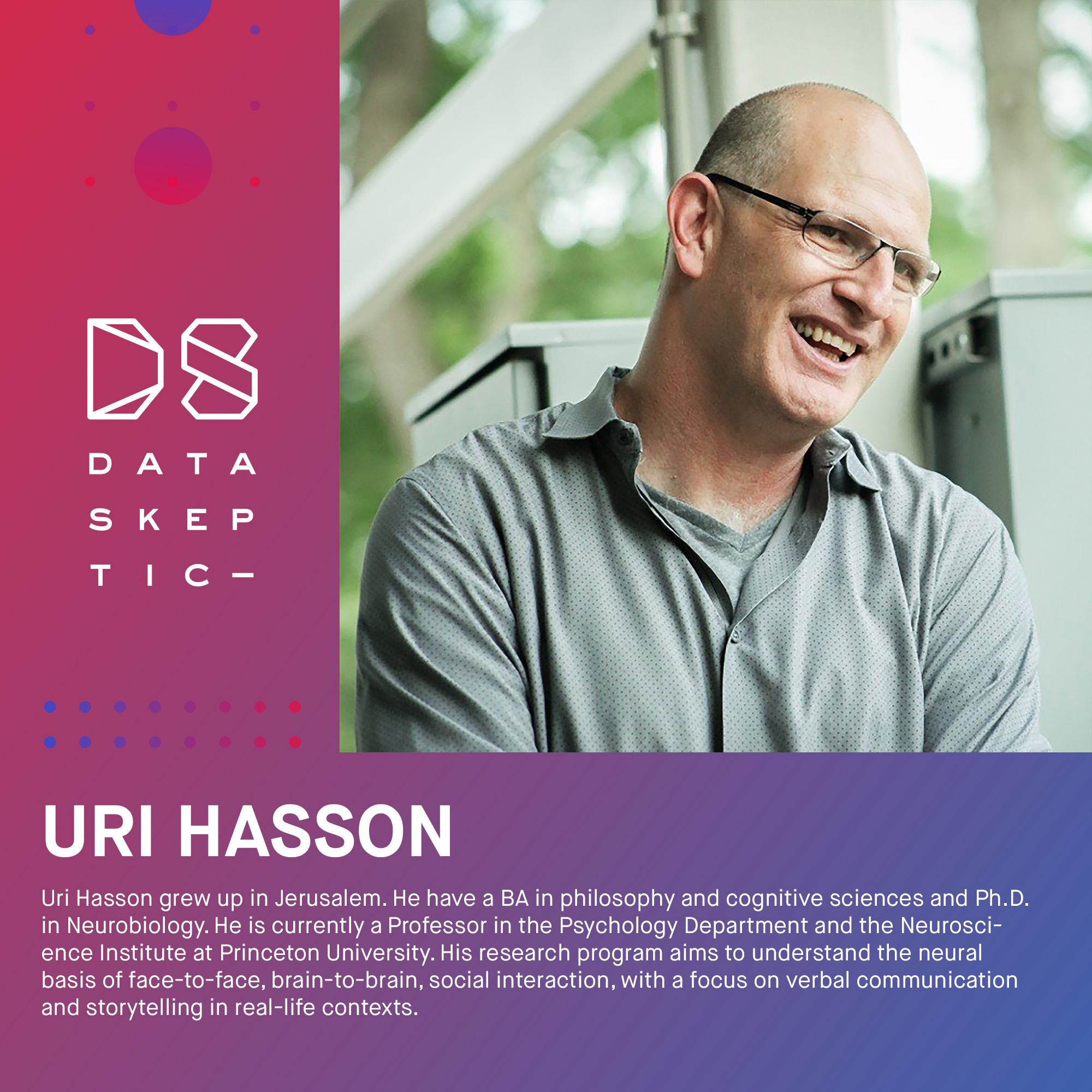
Robust Fit to Nature
Uri Hasson joins us this week to discuss the paper Robust-fit to Nature: An Evolutionary Perspective on Biological (and Artificial) Neural Networks.

Black Boxes Are Not Required
Deep neural networks are undeniably effective. They rely on such a high number of parameters, that they are appropriately described as "black boxes". While black boxes lack desirably properties like interpretability and explainability, in some cases, their accuracy makes them incredibly useful. But does achiving "usefulness" require a black box? Can we be sure an equally valid but simpler solution does not exist? Cynthia Rudin helps us answer that question. We discuss her recent paper with co-author Joanna Radin titled (spoiler warning)… Why Are We Using Black Box Models in AI When We Don't Need To? A Lesson From An Explainable AI Competition

Robustness to Unforeseen Adversarial Attacks
Daniel Kang joins us to discuss the paper Testing Robustness Against Unforeseen Adversaries.

Estimating the Size of Language Acquisition
Frank Mollica joins us to discuss the paper Humans store about 1.5 megabytes of information during language acquisition

Interpretable AI in Healthcare
Jayaraman Thiagarajan joins us to discuss the recent paper Calibrating Healthcare AI: Towards Reliable and Interpretable Deep Predictive Models.

Understanding Neural Networks
What does it mean to understand a neural network? That's the question posted on this arXiv paper. Kyle speaks with Tim Lillicrap about this and several other big questions.

Self-Explaining AI
Dan Elton joins us to discuss self-explaining AI. What could be better than an interpretable model? How about a model wich explains itself in a conversational way, engaging in a back and forth with the user. We discuss the paper Self-explaining AI as an alternative to interpretable AI which presents a framework for self-explainging AI.

Plastic Bag Bans
Becca Taylor joins us to discuss her work studying the impact of plastic bag bans as published in Bag Leakage: The Effect of Disposable Carryout Bag Regulations on Unregulated Bags from the Journal of Environmental Economics and Management. How does one measure the impact of these bans? Are they achieving their intended goals? Join us and find out!