Show overview
Data Skeptic has been publishing since 2014, and across the 12 years since has built a catalogue of 611 episodes. That works out to roughly 320 hours of audio in total. Releases follow a weekly cadence.
Episodes typically run twenty to thirty-five minutes — most land between 24 min and 39 min — though episode length varies meaningfully from one episode to the next. It is catalogued as a EN-language Technology show.
The show is actively publishing — the most recent episode landed 6 days ago, with 18 episodes already out so far this year. Published by Kyle Polich.
From the publisher
The Data Skeptic Podcast features interviews and discussion of topics related to data science, statistics, machine learning, artificial intelligence and the like, all from the perspective of applying critical thinking and the scientific method to evaluate the veracity of claims and efficacy of approaches.
Latest Episodes
View all 611 episodesGestures Around the Ear
Implicit Interactions
The Lived Informatics Model
Recommender Systems Today and Tomorrow
Recommender Systems Optimization Goals
Recommender Systems Origin Story
Social Choice for Fair Recommendations
News Recommendations
Give Users the Wheel
AutoLike
Student Spotlight: Aaron Payne, Data Analyst
The Future is Agentic in Recommender Systems

Book Ratings and Recommendations
Goodreads star ratings can be misleading as measures of "book quality," and research from Hannes Rosenbusch suggests that for many professionally published books, differences between readers often matter more than differences between books. The episode also explores how to model reader preferences, why reviews often reveal more about the reviewer than the text, and how LLMs can aid computational literary research while still falling short of human editors in creative writing.

Disentanglement and Interpretability in Recommender Systems
Ervin Dervishaj, a PhD student at the University of Copenhagen, discusses his research on disentangled representation learning in recommender systems, finding that while disentanglement strongly correlates with interpretability, it doesn't consistently improve recommendation performance. The conversation explores how disentanglement acts as a regularizer that can enhance user trust and interpretability at the potential cost of some accuracy, and touches on the future of large language models in denoising user interaction data.
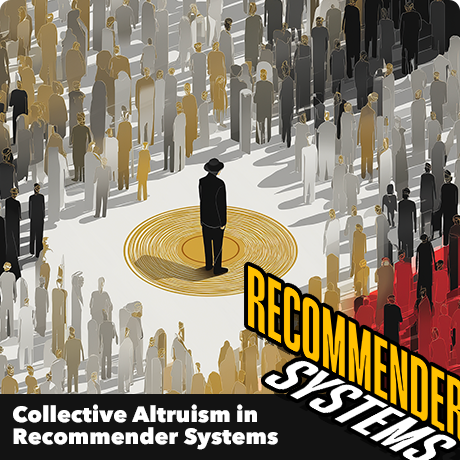
Collective Altruism in Recommender Systems
Ekaterina (Kat) Fedorova from MIT EECS joins us to discuss strategic learning in recommender systems—what happens when users collectively coordinate to game recommendation algorithms. Kat's research reveals surprising findings: algorithmic "protest movements" can paradoxically help platforms by providing clearer preference signals, and the challenge of distinguishing coordinated behavior from bot activity is more complex than it appears. This episode explores the intersection of machine learning and game theory, examining what happens when your training data actively responds to your algorithm.
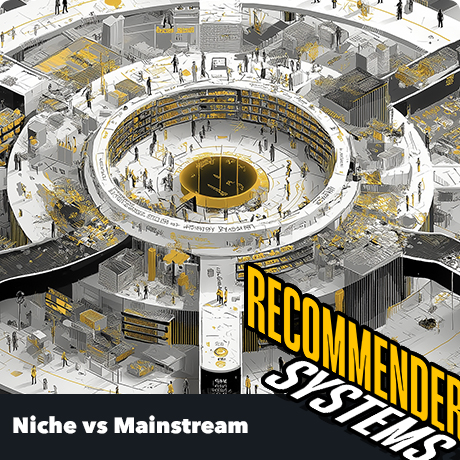
Niche vs Mainstream
Anas Buhayh discusses multi-stakeholder fairness in recommender systems and the S'mores framework—a simulation allowing users to choose between mainstream and niche algorithms. His research shows specialized recommenders improve utility for niche users while raising questions about filter bubbles and data privacy.
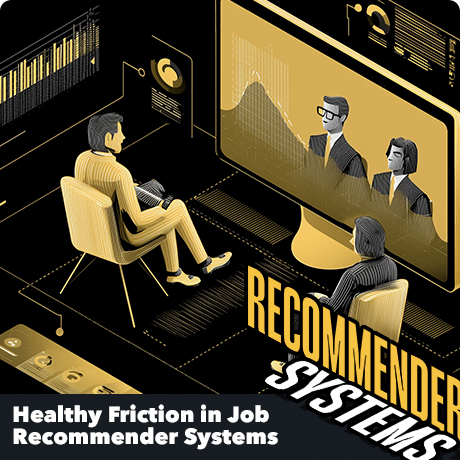
Healthy Friction in Job Recommender Systems
In this episode, host Kyle Polich speaks with Roan Schellingerhout, a fourth-year PhD student at Maastricht University, about explainable multi-stakeholder recommender systems for job recruitment. Roan discusses his research on creating AI-powered job matching systems that balance the needs of multiple stakeholders—job seekers, recruiters, HR professionals, and companies. The conversation explores different types of explanations for job recommendations, including textual, bar chart, and graph-based formats, with findings showing that lay users strongly prefer simple textual explanations over more technical visualizations. Roan shares insights from his "healthy friction" study, which tested whether users could distinguish between real AI-generated explanations and randomly generated ones, revealing that participants often used explanations as information sources rather than decision-making tools. The discussion delves into the technical architecture behind these systems, including the use of knowledge graphs built from tabular data, inference rules, and large language models to generate human-friendly explanations. Roan explains how his research aims to open the black box of recommender systems, making them more transparent and trustworthy for non-technical users. Looking forward, he discusses ongoing work on automated knowledge graph construction from resumes and job listings, research into fairness considerations around gender and location, and plans for real-world testing with actual job seekers. The episode concludes with Roan's vision for the future: AI systems that support rather than replace human recruiters, making the job search process less grueling while maintaining the essential human judgment that recruitment requires.

Fairness in PCA-Based Recommenders
In this episode, we explore the fascinating world of recommender systems and algorithmic fairness with David Liu, Assistant Research Professor at Cornell University's Center for Data Science for Enterprise and Society. David shares insights from his research on how machine learning models can inadvertently create unfairness, particularly for minority and niche user groups, even without any malicious intent. We dive deep into his groundbreaking work on Principal Component Analysis (PCA) and collaborative filtering, examining why these fundamental techniques sometimes fail to serve all users equally. David introduces the concept of "power niche users" - highly active users with specialized interests who generate valuable data that can benefit the entire platform. We discuss his paper "When Collaborative Filtering Is Not Collaborative," which reveals how PCA can over-specialize on popular content while neglecting both niche items and even failing to properly recommend popular artists to new potential fans. David presents solutions through item-weighted PCA and thoughtful data upweighting strategies that can improve both fairness and performance simultaneously, challenging the common assumption that these goals must be in tension. The conversation spans from theoretical insights to practical applications at companies like Meta, offering a comprehensive look at the future of personalized recommendations.
Video Recommendations in Industry
In this episode, Kyle Polich sits down with Cory Zechmann, a content curator working in streaming television with 16 years of experience running the music blog "Silence Nogood." They explore the intersection of human curation and machine learning in content discovery, discussing the concept of "algatorial" curation—where algorithms and editorial expertise work together. Key topics include the cold start problem, why every metric is just a "proxy metric" for what users actually want, the challenge of filter bubbles, and the importance of balancing familiarity with discovery. Cory shares insights on why TikTok's algorithm works so well (clean data and massive interaction volume), the crucial role of homepage curation, and how human curators help by contextualizing content, cleaning data, and identifying positive feedback loops that algorithms might miss. The conversation covers practical challenges like measuring "surprise and delight," the content deluge created by democratized creation tools, and why trust in tech companies is essential for better personalization. Cory emphasizes that discovery is "a good type of friction" and explains how the CODE framework (Capture, Organize, Distill, Express, plus Analysis) guides professional curation work. Looking to the future, they discuss the need for systems thinking that creates narrative connections between content, the potential for conversational AI to help users articulate preferences, and why diverse perspectives beyond engineering are crucial for building effective discovery systems. Resources mentioned include the newsletter "Top Information Retrieval Papers of the Week" and Notebook LM for synthesizing research.
Eye Tracking in Recommender Systems
In this episode, Santiago de Leon takes us deep into the world of eye tracking and its revolutionary applications in recommender systems. As a researcher at the Kempelin Institute and Brno University, Santiago explains the mechanics of eye tracking technology—how it captures gaze data and processes it into fixations and saccades to reveal user browsing patterns. He introduces the groundbreaking RecGaze dataset, the first eye tracking dataset specifically designed for recommender systems research, which opens new possibilities for understanding how users interact with carousel interfaces like Netflix. Through collaboration between psychologists and AI researchers, Santiago's work demonstrates how eye tracking can uncover insights about positional bias and user engagement that traditional click data misses. Beyond the technical aspects, Santiago addresses the ethical considerations surrounding eye tracking data, particularly concerning pupil data and privacy. He emphasizes the importance of questioning assumptions in recommender systems and shares practical advice for improving recommendation algorithms by understanding actual user behavior rather than relying solely on click patterns. Looking forward, Santiago discusses exciting future directions including simulating user behavior using eye tracking data, addressing the cold start problem, and translating these findings to e-commerce applications. This conversation challenges researchers and practitioners to think more deeply about de-biasing clicks and leveraging eye tracking as a powerful tool to enhance user experience in recommendation systems.