
Daily WTF!
310 episodes — Page 7 of 7
S1 Ep 10Snelheidslimieten en Verkeersveiligheid in Florida
Deze podcast belicht de voortdurende discussie over de verkeersveiligheid in Florida, met een specifieke focus op nieuwe wetgeving rondom maximumsnelheden. Terwijl een voorgesteld wetsvoorstel de limiet op snelwegen wil verhogen naar 75 mph om de doorstroming te verbeteren, waarschuwen critici voor een toename van het aantal fatale ongelukken. Tegelijkertijd voert de staat in 2025 de "Super Speeder"-wet in, die extreme snelheidsoverschrijdingen voortaan als een misdrijf in plaats van een civiele overtreding bestraft. Juridische experts benadrukken hierbij het belang van bestuurdersverantwoordelijkheid en de technische methoden die worden gebruikt om veilige limieten vast te stellen. Daarnaast wordt er aandacht besteed aan hoe voertuigkeuze en botsscenario's leiden tot een verhoogd letselrisico voor specifieke groepen, zoals vrouwen. Gezamenlijk bieden de teksten een overzicht van de complexe balans tussen reistijd-efficiëntie, strenge handhaving en de noodzaak om de verkeersveiligheid te waarborgen.
S1 Ep 9AI: Imitation vs. Understanding
This podcast discusses the fundamental question of whether artificial intelligence can truly understand or if it merely simulates human behavior. The first document discusses John Searle's famous Chinese Room argument, in which he argues that manipulating symbols according to rules never leads to true semantics or consciousness. With this, Searle criticizes the Turing test, because a machine can pass this test without grasping the meaning of its own answers. The second document, however, defends the Turing test and argues that this method remains relevant if modernized with more complex interactions. The authors demonstrate that advanced language models fail more often in a more robust test environment than in simple chat scenarios. Together, these texts highlight the ongoing debate between the philosophical limitations of computational systems and the practical challenges of objectively measuring general intelligence.
S1 Ep 8"You're TOAST": From PostgreSQL to Apache Iceberg and DuckDB
This podcast describes the shift to a modern data ecosystem in which traditional databases are replaced by modular, cloud-native architectures. Central to this is the use of open formats such as Apache Iceberg and Parquet, which transform low-cost object storage into powerful 'lakehouses' for analysis and observability. Technologies like DuckDB play a critical role by executing lightning-fast SQL queries directly on these files, often integrated within existing systems like PostgreSQL. Innovations such as JSON tiles optimize the processing of unstructured data by automatically detecting an efficient column structure. The strict separation of storage and computing power allows organizations to manage massive amounts of data with lower costs and less operational complexity. Collectively, these developments mark the end of monolithic data warehouses in favor of decentralized, ephemeral systems.
S1 Ep 7"You're TOAST": Van PostgreSQL naar Apache Iceberg en DuckDB
Deze podcast beschrijft de verschuiving naar een modern data-ecosysteem waarin traditionele databases worden vervangen door modulaire, cloud-native architecturen. Centraal staat het gebruik van open formaten zoals Apache Iceberg en Parquet, die goedkope objectopslag transformeren tot krachtige 'lakehouses' voor analyse en observabiliteit. Technologieën zoals DuckDB spelen een cruciale rol door razendsnelle SQL-query's direct op deze bestanden uit te voeren, vaak geïntegreerd binnen bestaande systemen zoals PostgreSQL. Innovaties zoals JSON tiles optimaliseren hierbij de verwerking van ongestructureerde data door automatisch een efficiënte kolomstructuur te detecteren. Door de strikte scheiding van opslag en rekenkracht kunnen organisaties enorme hoeveelheden data beheren met lagere kosten en minder operationele complexiteit. Gezamenlijk markeren deze ontwikkelingen het einde van monolithische datawarehouses ten gunste van gedecentraliseerde, efemere systemen.
S1 Ep 6Siri Gets Integration with Remote AI Chatbots
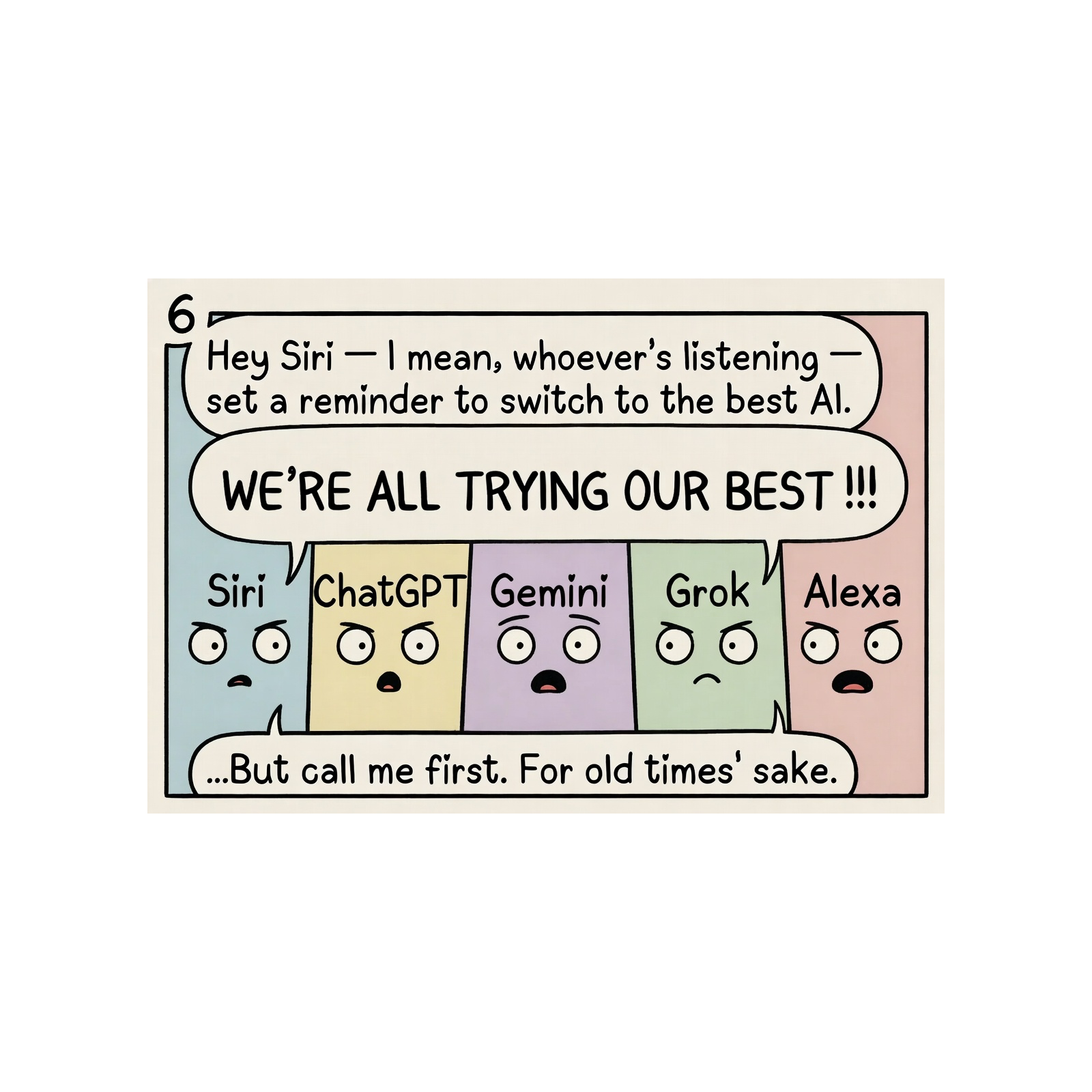
Apple is preparing a major overhaul of Siri with the arrival of iOS 27, transforming the voice assistant into a versatile AI agent. Through the new "Extensions" feature, users will have the freedom to connect Siri to alternative chatbots such as Google Gemini, Claude, or ChatGPT. In addition to these integrations, Siri may be launched as a standalone application that keeps track of text-based conversation histories, similar to the interface of Apple Messages. While these global updates are scheduled for June 2026, local legislation allows iPhone users in Japan to set an alternative assistant as the default sooner. The innovations make Siri more powerful through improved access to personal data and deeper control over other apps. With this, Apple hopes to position the iPhone as the leading platform for artificial intelligence.

S1 Ep 5Verdachte olie handelstransacties van $580 miljoen voor Trump-aankondiging
De bronnen belichten een controversieel incident uit 2026 waarbij verdachte handelstransacties ter waarde van 580 miljoen dollar plaatsvonden vlak voordat president Trump een de-escalatie met Iran aankondigde. Deze transacties in olie- en aandelenfutures wijzen op mogelijke handel met voorkennis, aangezien de posities exact profiteerden van de koersschommelingen na de verklaring. Terwijl de Amerikaanse overheid spreekt van succesvolle gesprekken, ontkent Iran elk direct contact, wat de vermoedens van marktmanipulatieversterkt. Critici en economen, waaronder Nobelprijswinnaar Paul Krugman, bestempelen dit gedrag als een ernstige vorm van corruptie en zelfs verraad. De documenten suggereren dat toezichthouders zoals de SEC en CFTC zijn geneutraliseerd, waardoor de integriteit van de financiële markten in het geding komt. Juridische kaders tonen aan dat dergelijke zaken normaal gesproken leiden tot diepgaande strafrechtelijke onderzoeken naar de betrokken stakeholders.

S1 Ep 4How a Melting Mac Caught LiteLLM Hackers
On March 24, 2026, the popular Python library LiteLLM—which provides a unified interface for various Large Language Models—was the target of a sophisticated supply chain attack. Malicious code was injected into versions 1.82.7 and 1.82.8 of the package on PyPI. The attack is attributed to a threat actor known as TeamPCP, who gained access to LiteLLM’s publishing pipeline by first compromising Trivy, an open-source security scanner used in LiteLLM's CI/CD process.The compromise is particularly significant due to LiteLLM's wide adoption, with roughly 3.4 million daily downloads (nearly 97 million monthly).The Attack Vector and PayloadThe attackers used a poisoned Trivy GitHub Action to exfiltrate a PyPI publishing token, allowing them to upload malicious versions directly to PyPI while bypassing GitHub code reviews. The malware featured a three-stage payload designed for extensive data theft and persistence:Credential Harvesting: The script systematically collected SSH private keys, cloud credentials (AWS, GCP, Azure), Kubernetes service tokens, API keys, and cryptocurrency wallet seed phrases.Encryption and Exfiltration: Stolen data was encrypted via AES-256 and exfiltrated to a lookalike domain, models.litellm.cloud, which was registered just one day before the attack.Persistence and Lateral Movement: The malware installed a persistent backdoor as a systemd service named "System Telemetry Service". In Kubernetes environments, it attempted to deploy privileged pods to every node to mount the host filesystem and spread the infection further.Discovery via "Fork Bomb"The attack was discovered when researcher Callum McMahon noticed his machine became unresponsive due to an unintended "fork bomb". A bug in the malware's .pth file—which triggers on every Python interpreter startup—caused it to recursively spawn new subprocesses until system RAM was exhausted. Experts noted that if the attackers had better programming skills, the compromise might have gone undetected for weeks.Immediate Remediation StepsLiteLLM has since removed the poisoned versions from PyPI and rotated all maintainer credentials. Users are advised to take the following actions:Check Version: Run pip show litellm to ensure you are not on 1.82.7 or 1.82.8. Version 1.82.6 is the last known safe release.Rotate All Secrets: If you installed the affected versions, treat all credentials on that system (SSH keys, AWS/GCP keys, API tokens, database passwords) as compromised and rotate them immediately.Check for Persistence: Inspect your system for malicious files such as ~/.config/sysmon/sysmon.py or Kubernetes pods named node-setup-* in the kube-system namespace.Pin Dependencies: As a long-term defense, developers should pin dependencies to verified versions and audit CI/CD pipelines for unpinned tools

S1 Ep 3Max Verstappen strategische meesterzet op de Nürburgring of ….
Was de diskwalificatie van Verstappen een meesterzet op de NLS2 of een domme telfout
S1 Ep 2Context Engineering: De Toekomst van Betrouwbare AI-systemen
Deze podcast beschrijft de verschuiving van prompt engineering naar de meer geavanceerde discipline van context engineering binnen AI-ontwikkeling. Waar traditionele methoden zich richten op het formuleren van de juiste vraag, draait de nieuwe aanpak om het systematisch ontwerpen van een volledige informatieomgeving voor AI-agenten. De teksten introduceren methoden zoals het selecteren, comprimeren en isoleren van data om de nauwkeurigheid te verhogen en de kosten van grote taalmodellen te beheersen. Door technieken als Retrieval-Augmented Generation (RAG) en dynamisch geheugenbeheer te implementeren, transformeren deze strategieën eenvoudige chatbots naar betrouwbare, autonome systemen voor complexe zakelijke processen. Uiteindelijk betogen de bronnen dat het beheersen van de contextuele architectuur essentieel is voor het realiseren van schaalbare en relevante AI-toepassingen in de nabije toekomst.
S1 Ep 1Wat is nou de zin en onzin van E5 versus E10, en van 95, 98 of 102 octaan benzine?
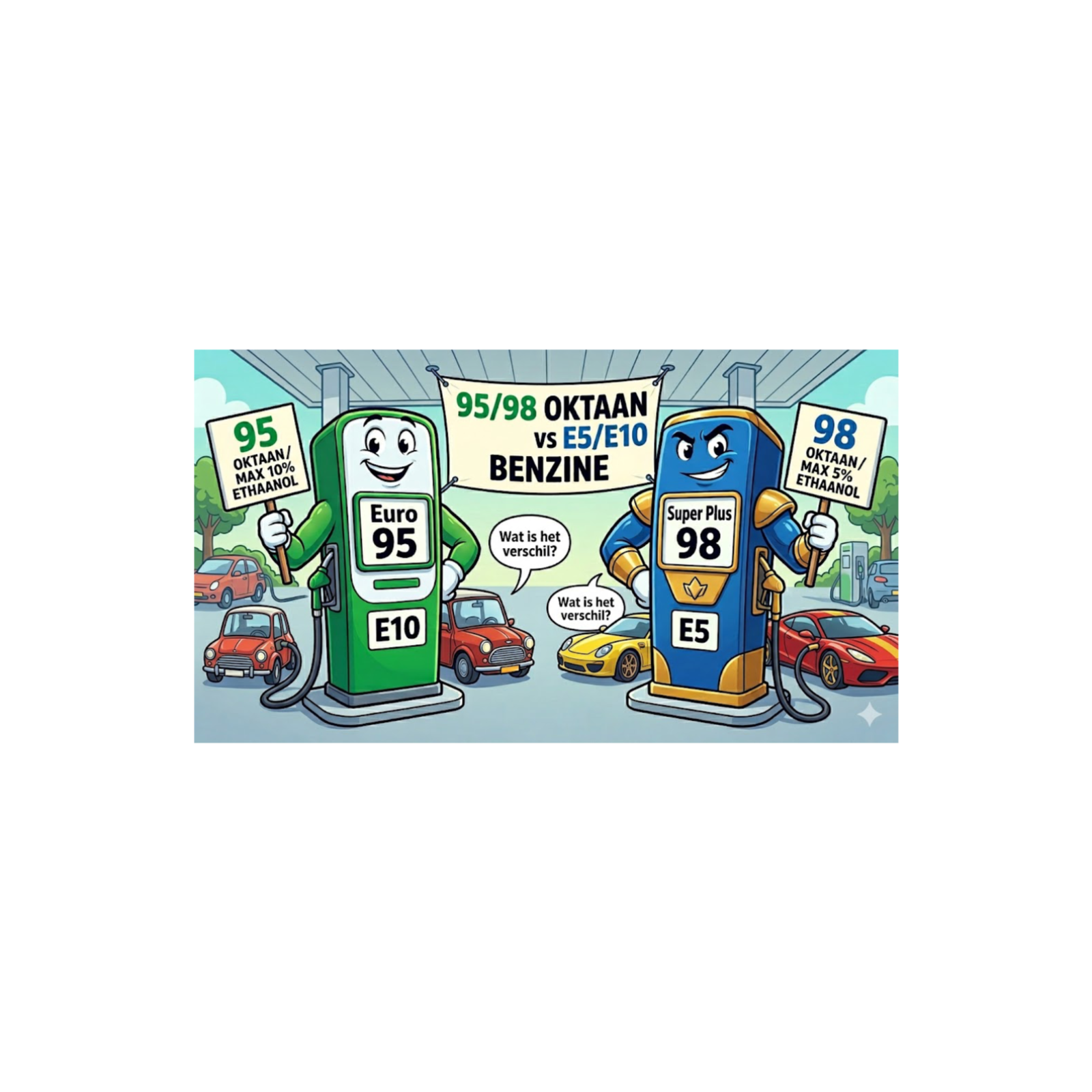
Omdat ik door de jaren heen behoorlijk wat verschillende motoren heb verzameld (van zwaar getunede auto’s tot simpele grasmaaiers en kettingzagen), is er geen eenduidig antwoord te geven. Het hangt er maar net vanaf wat voor verbrandings-motor je hebt en wat je ermee doet (of hoevaak je er wat mee doet).Ik tune mijn eigen motoren in 9 van de 10 gevallen met zowel software als hardware, maar ik heb ook een duidelijke mening over wat goed is voor een standaard grasmaaier of kettingzaag.Nu de benzineprijzen in Nederland torenhoog zijn en de gemiddelde Nederlander toch vooral gedreven wordt door financieel gewin, wordt die vraag vaak eigenlijk anders geïnterpreteerd: “Waar krijg ik de meeste kilometers voor mijn euro?“, zeker als je de auto meer stil laat staan dan anders, kan dit verschil gaan maken.