Disordered Sense-Making: Conflict Narratives in the Digital Era
Dr Samuel Tanner offers a reflective monologue tracing his intellectual journey from doctoral research on war crimes in the Balkans to contemporary work on right-wing extremism, disinformation, and what he calls pop masculinism. Across these projects runs a persistent question: how do people make sense of a world that feels as though it is slipping out of alignment? Drawing on fieldwork, policing research, and analysis of digital platforms, Dr Tanner explores the relationship between violence, information, and social order in an era where public discourse increasingly unfolds within privately governed online spaces.
Cybercrimeology · Samuel Tanner
Audio is streamed directly from the publisher (cdn.simplecast.com) as published in their RSS feed. Play Podcasts does not host this file. Rights-holders can request removal through the copyright & takedown page.
Show Notes
Notes:
- Dr Samuel Tanner began his doctoral research examining war crimes and armed militias involved in mass violence in the Balkans, conducting extensive fieldwork and interviews with participants on multiple sides of the conflict.
- A central puzzle of his PhD research was not denial of violence, but how individuals who acknowledged their participation struggled to explain how they came to commit acts of mass violence.
- This led to an intellectual shift from viewing violence as purely intentional to understanding it as embedded in structures, representations, and processes of sense-making.
- Following a postdoctoral year at MIT working with political scientist Roger Petersen, Dr Tanner deepened his focus on the relationship between political violence, identity narratives, and institutional structures.
- After joining the Université de Montréal, he shifted toward research on policing and later co-led a major project examining right-wing extremism in Canada beginning in 2013.
- The Canadian project revealed that relatively few participants were “true believers.” Many were navigating economic precarity, cultural uncertainty, and political confusion, often influenced by moral or ideological entrepreneurs.
- Fieldwork in this area involved significant challenges, including surveillance, threats, cancelled interviews, and difficulties accessing participants.
- During the COVID-19 pandemic, Dr Tanner and colleagues examined anti-restriction movements and observed how disinformation and fragmented information ecosystems shaped divergent interpretations of shared events.
- He argues that information is not neutral. Information produces order. The ways in which information is produced, amplified, and consumed shape how individuals interpret reality and coordinate socially.
- Social media platforms function as privatized public spaces, structuring discourse through governance mechanisms that are not democratically accountable.
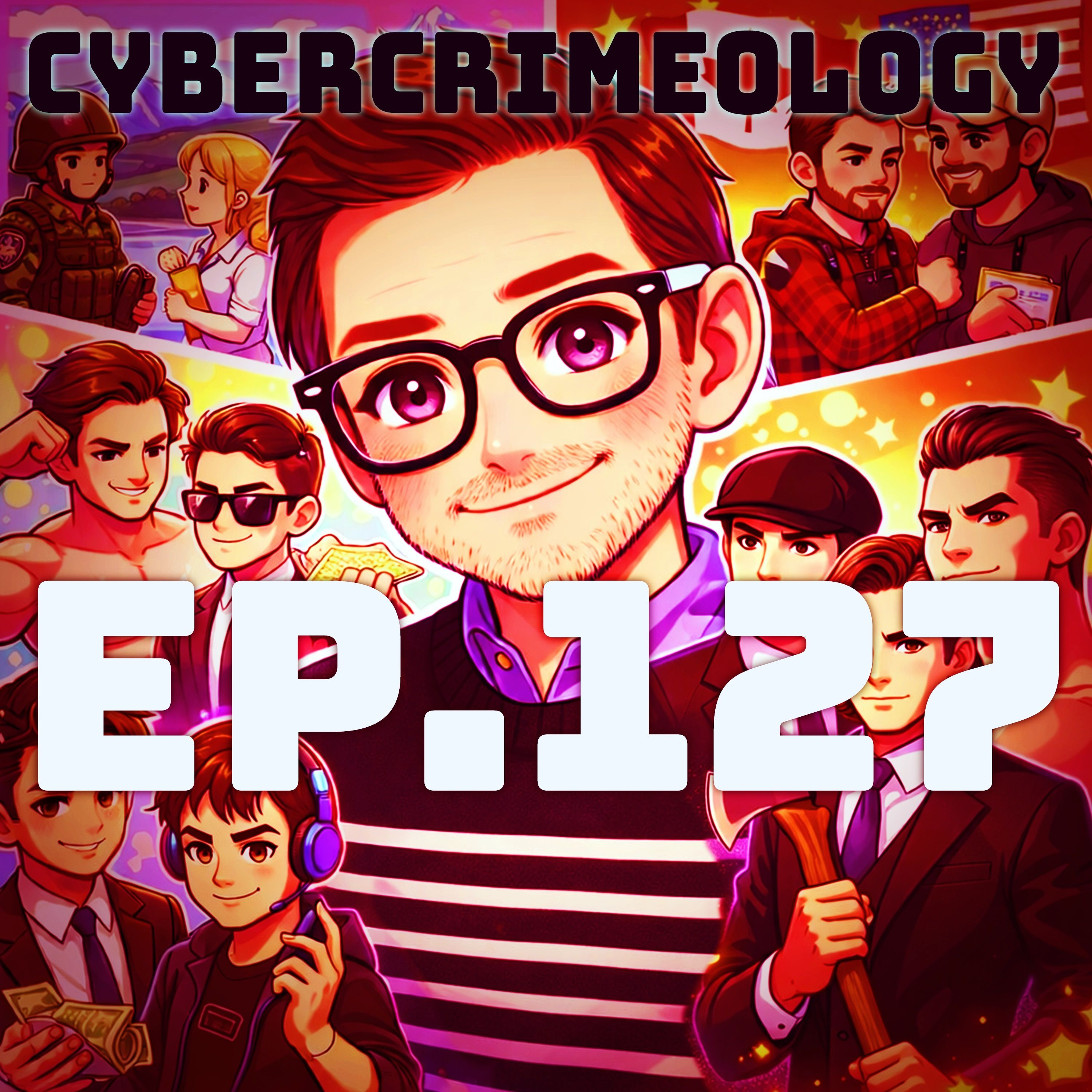
- Dr Tanner’s more recent research focuses on the evolution of extremist discourse, particularly the emergence of “pop masculinism,” where gendered and anti-feminist narratives are embedded within popular culture, fitness culture, gaming aesthetics, and entrepreneurial self-discipline discourse.
- The “sigma” discourse operates as a gateway into broader manosphere ideologies by framing personal discipline and self-improvement in opposition to women, feminism, and equality discourse.
- Interviews with young men and women reveal perceptions of a growing gender gap, including feelings among some young men of status loss and lack of positive role models.
- Dr Tanner raises concern about the erosion of shared institutional facts and the desynchronization of social expectations, suggesting that social trust depends upon shared informational baselines.
- He argues for an expanded criminology attentive to digital environments, disinformation, and the governance of online prejudice, aligning with broader developments in digital criminology.
- Central to his work is the question: how do people make sense of their world when institutional anchors weaken and informational environments fragment?
About our guest:
Dr Samuel Tanner
https://crim.umontreal.ca/repertoire-departement/professeurs/professeur/in/in15014/sg/Samuel Tanner/
Papers or resources mentioned in this episode:
Tanner, Samuel & Gillardin, François (2025).Toxic Communication on TikTok: Sigma Masculinities and Gendered Disinformation.Social Media + Society, 11(1).https://doi.org/10.1177/20563051251313844
Open access PDF:https://doi.org/10.1177/20563051251313844
Leman-Langlois, Stéphane, Campana, Aurélie & Tanner, Samuel (2024).The Great Right North: Inside Far-Right Activism in Canada. McGill-Queen’s University Press. (Book overview: https://www.jstor.org/stable/jj.20829378)
People mentioned in this episode:
Jean-Paul Brodeur — Presses de l’Université de Montréal (institutional collection page)
https://pum.umontreal.ca/collections/jean-paul-brodeur/
Roger D. Petersen — MIT Political Science profile
https://polisci.mit.edu/people/roger-petersen
Aurélie Campana — Université Laval (Faculté des sciences sociales)
https://www.fss.ulaval.ca/notre-faculte/repertoire-du-personnel/aurelie-campana
Stéphane Leman-Langlois — Université Laval (Faculté des sciences sociales)
https://www.fss.ulaval.ca/notre-faculte/repertoire-du-personnel/stephane-leman-langlois
François Gillardin — Centre international de criminologie comparée (CICC), Université de Montréal
https://www.cicc-iccc.org/fr/personnes/etudiants-supervises/gillardin
Francis Dupuis-Déri — UQAM Professor
https://professeurs.uqam.ca/professeur/dupuis-deri.francis
Anastasia Powell — RMIT University
https://www.rmit.edu.au/profiles/p/anastasia-powell
Other:
The term enrobage naïf (or naïf enrobage, as said) refers to a veneer of naivety; in this case, a problematic discourse wrapped in innocent or everyday cultural forms, akin to a wolf in sheep’s clothing.