CSAIL Alliances Podcasts
78 episodes — Page 2 of 2

Becoming a Flexible Programmer with Gerald Jay Sussman
CSAIL Professor Gerald Jay Sussman discusses the importance of a breadth of research, lessons academia and industry can learn from each other, and how to be a flexible programmer. Accessible captions can be found at cap.csail.mit.edu

Implementing AI in Healthcare with John Guttag
CSAIL Professor John Guttag discusses the process of incorporating AI into healthcare. Guttag also talks about the process of bringing an idea out of the lab and into a full-fledged business.

Seeking Deep Understanding in Machine Learning with Una-May O'Reilly
CSAIL Professor Una-May O'Reilly discusses her work at the ALFA Group at MIT CSAIL and gives insights into the differences between Deep Learning and Deep Understanding.

Creating Low-Code Applications and Online Discussion Tools with David Karger
CSAIL Professor David Karger discusses two of his research areas with CSAIL Alliances. He reviews his team's work on no-code and low-code authoring to help people create custom solutions to unique problems. Next, he discusses tools he's created to improve online discussions. A transcript of this podcast can be found here: https://cap.csail.mit.edu/sites/default/files/resource-pdfs/David%20Karger%20Podcast%20Export%201.pdf
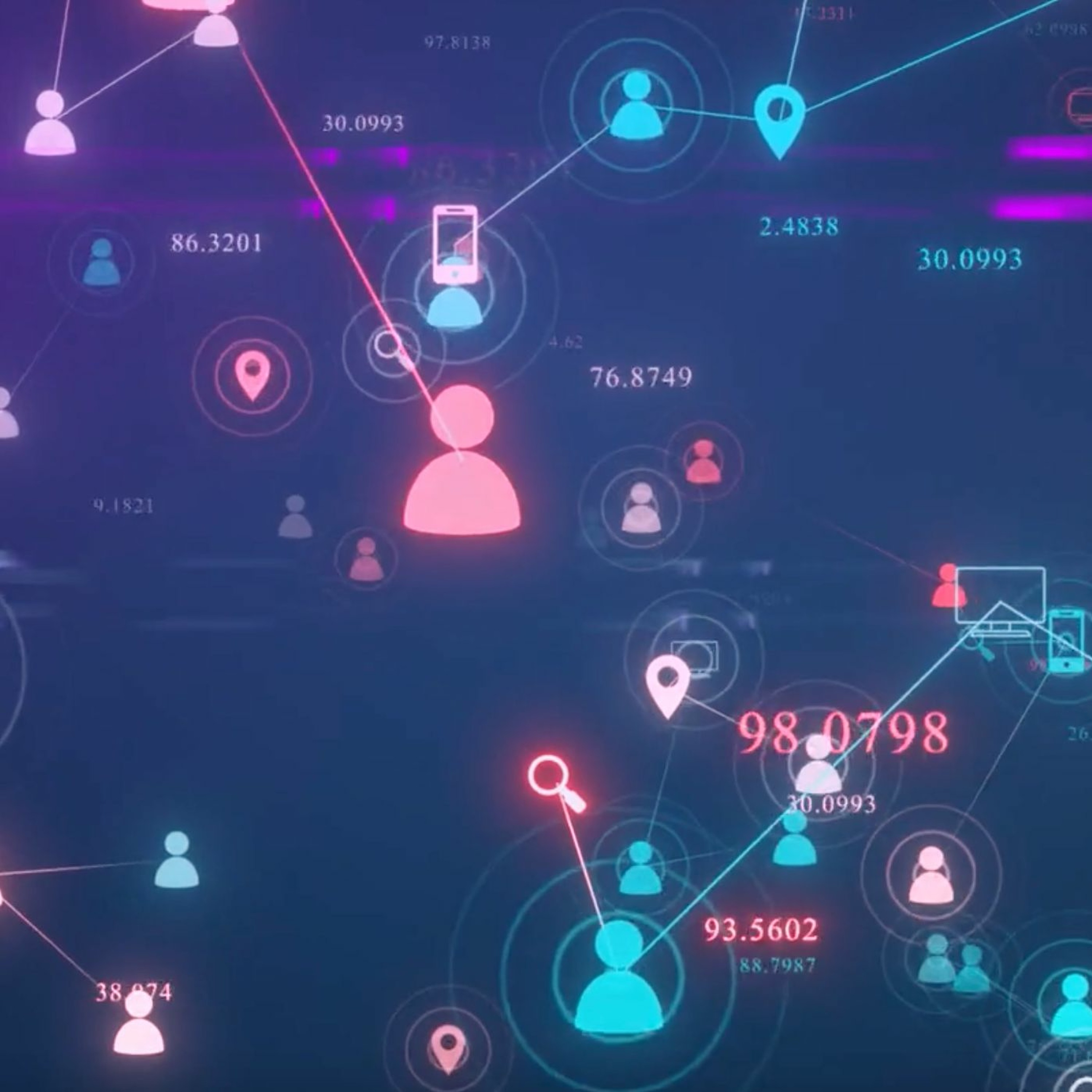
Countering Online Disinformation with David Clark
CSAIL's David Clark discusses the differences between misinformation and disinformation, and why the latter is a more serious threat. He also examines possible solutions to the disinformation problem. You can find a transcript for this podcast here: https://cap.csail.mit.edu/sites/default/files/resource-pdfs/David%20Clark%20Podcast%202022.pdf

Forging the Future of Cryptography with Adam Chlipala
CSAIL Professor Adam Chlipala is working to change some of the fundamental ways we use cryptography. His latest project, Fiat Cryptography, utilizes formal methods to create complex cryptographic code to guarantee correctness. Fiat Cryptography stands to significantly change the efficiency and security of the web. A transcript for this episode can be found here: https://cap.csail.mit.edu/sites/default/files/resource-pdfs/Adam%20Chlipala%20Podcast%20Export%201.pdf

Improving Video Conferencing Through Vision Science with Ruth Rosenholtz
CSAIL Principal Research Scientist Ruth Rosenholtz discusses the rise of video conferencing throughout the pandemic. Rosenholtz shares fascinating insights from her vision science research that could help reshape how video conferencing platforms are used. Please find a link to this podcast's transcript here: https://cap.csail.mit.edu/sites/default/files/resource-pdfs/Ruth%20Rosenholtz%20CSAIL%20Alliances%20Podcast%203.pdf

Exploring the Applications of Geometric Data with Justin Solomon
Professor Justin Solomon discusses the many applications of processing geometric data including medical vision, 3D animation and autonomous vehicles. Please find a transcript for this podcast here: https://cap.csail.mit.edu/sites/default/files/resource-pdfs/Justin%20Solomon%20Podcast%20Export%201%281%29.pdf
Unlocking Insights on Disease through Genomics with Manolis Kellis
Professor Manolis Kellis of MIT CSAIL and the Broad Institute of MIT and Harvard discusses the effects COVID-19 has had on his computational biology research. Kellis believes that by being aware of genetic predispositions we can better prepare to confront each person’s unique challenges. Access the transcript for this podcast at: https://cap.csail.mit.edu/sites/default/files/2021-10/Manolis%20Kellis%20CAP%20Podcast%20Export%203.pdf

Democratizing data science through machine learning with Tim Kraska
CSAIL's Tim Kraska is developing new autoML approaches to make analytics more accessible to a broader range of users and optimize database architecture systems for companies. Access the transcript for the podcast at: http://cap.csail.mit.edu/sites/default/files/2021-08/Tim%20Kraska%20podcast.pdf.

Building the Next Generation of Systems with Sam Madden
MIT Schwarzman College of Computing Professor and Cambridge Mobile Telematics founder Sam Madden discusses how far technology can be pushed into other application domains. His research explores reinforcement learning and repurposing shelf machine learning components to advance systems and solve current challenges. Access the transcript for the podcast at: https://cap.csail.mit.edu/sites/default/files/2021-07/Sam%20Madden%20Podcast_0.pdf.

Rethinking Concepts in Software Design with Daniel Jackson
Professor Daniel Jackson of MIT CSAIL is working on a number of projects to make software more usable, reliable, and secure. By rethinking the fundamentals of software design, he says that developers can ultimately give more flexibility to users in the structure and organization of software, as well as meet more user needs. Learn more about Professor Jackson at: https://bit.ly/3paRcsm Access the transcript for the podcast at: https://cap.csail.mit.edu/sites/default/files/research-pdfs/Daniel%20Jackson%20Podcast.pdf

Closing the machine learning gap with Jacob Andreas
Professor Jacob Andreas of MIT CSAIL is trying to close the gap between current machine learning techniques and human abilities to learn language and learn from language about the rest of the world. Learn more about Prof. Andreas at: https://bit.ly/3vECQ5o. Access the transcript for the podcast at: https://cap.csail.mit.edu/sites/default/files/research-pdfs/Edit%20II%20.pdf.

Keeping Software Free-form with CSAIL's Hal Abelson
As one of the founding directors of the Free Software Foundation, CSAIL's Prof. Hal Abelson believes that free software empowers everyone to maintain the freedom to run, edit, contribute to, and share software, as well as see everything the software is doing. Learn more about Prof. Abelson at: https://bit.ly/3fPIEEq. Access the transcript for the podcast at: https://cap.csail.mit.edu/sites/default/files/research-pdfs/ResearcherSpotlight_HalAbelson_02_24_2021.pdf

Securing Computation with CSAIL's Yael Kalai
Cryptography, the study of finding secure methods of communication, may seem to many of us as, well, cryptic. But in spite of its more theoretical and foundational nature in computing, cryptography is more important now than ever in securing private communication and other types of information that are no longer stored on our own private machines. Professor Yael Kalai of MIT CSAIL and Senior Principal Researcher at Microsoft Research New England is a cryptographer and theoretical computer scientist working on state-of-the-art ways of securing computation. Learn more about Prof. Kalai's at: https://cap.csail.mit.edu/engage/spotlights/yael-kalai?utm_source=souncloud&utm_medium=social%20media&utm_campaign=yael_kalai_spotlight Access the transcript for the podcast at: https://cap.csail.mit.edu/sites/default/files/research-pdfs/Video%20Edit%20II%20.pdf

Designing and Using Virtuality to Better Serve Us
Our new reality is increasingly one of virtuality. D. Fox Harrell, Ph.D., studies the relationship between computing and imagination for emerging forms of digital media, as well as their social and ethical impact. From videogames that better support diverse user groups to a personalized Universal Hip Hop Museum experience, his work falls into both the design and analysis of virtual technologies. Prof. Harrell and his research group in MIT CSAIL build analytical tools using AI identifying trends and biases and developing new design principles we can apply to our work in industry and academia. Learn more about Prof. Harrell's virtuality research at: https://cap.csail.mit.edu/engage/spotlights/d-fox-harrell-0?utm_source=soundcloud&utm_medium=social%20media&utm_campaign=d_fox_harrell_spotlight Access the transcript for the podcast at: https://cap.csail.mit.edu/sites/default/files/research-pdfs/Fox%20Harrell%20Spotlight%20transcript.pdf
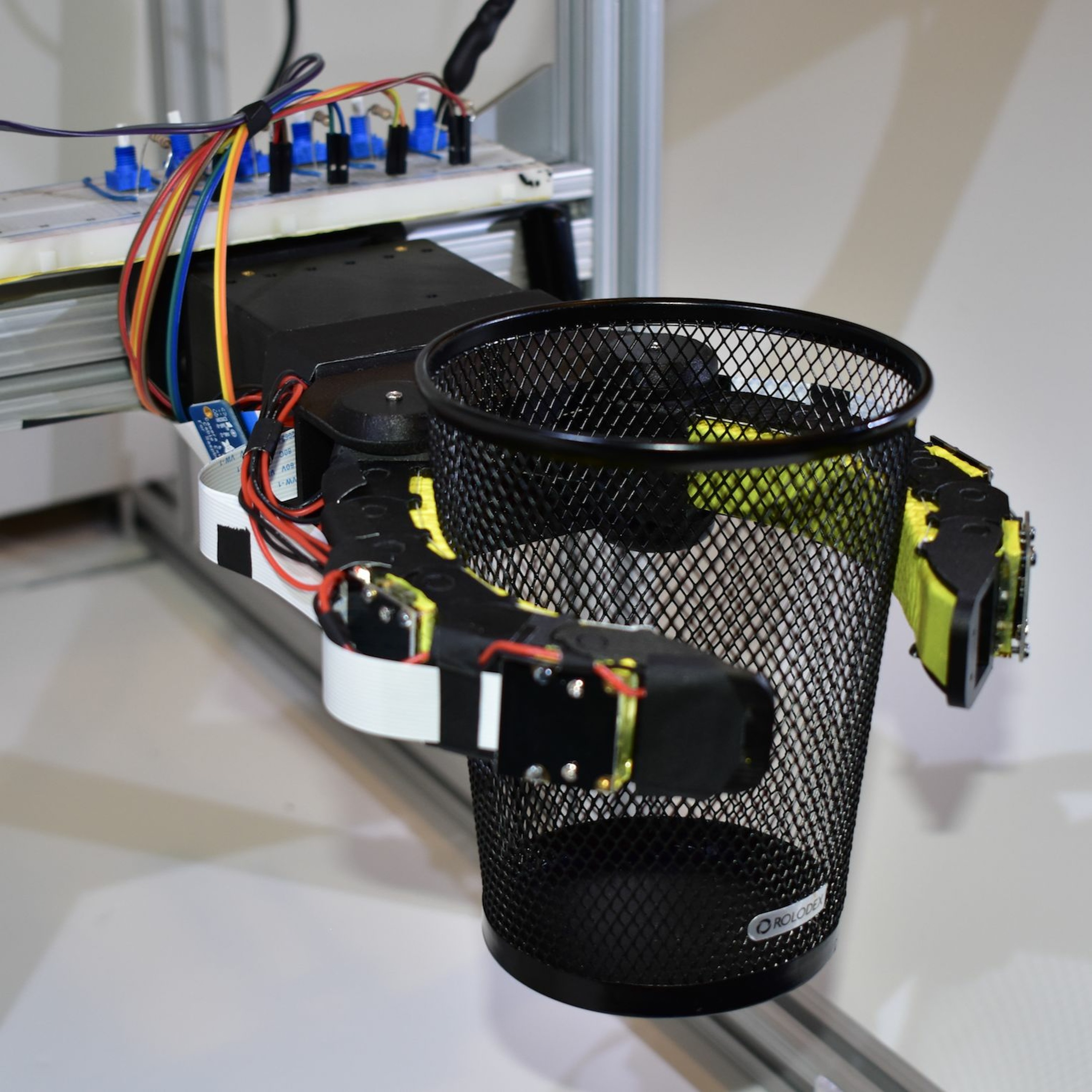
Enabling Robots to Complete Tasks on a Human Level
If we want robots to assist us with everyday tasks, they’ll need to be able to manipulate objects on a human level. To do that, they need good fingers. Professor Ted Adelson of MIT CSAIL is developing robotic fingers that are sensitive and soft like human fingers, enabling robots to use their hands intelligently to accomplish chosen tasks. Read more about Ted Adelson at: https://cap.csail.mit.edu/engage/spotlights/ted-adelson?utm_source=soundcloud&utm_medium=social%20media&utm_campaign=spotlight_ted_adelson Access the transcript for the podcast at: https://cap.csail.mit.edu/sites/default/files/research-pdfs/CSAIL%20Alliances%20Researcher%20Spotlight-%20Ted%20Adleson.pdf

Moore's Law Momentum with CSAIL's Saman Amarasinghe
“If we want to keep the Moore’s Law momentum going in computing, we have to do something different,” says CSAIL Professor Saman Amarasinghe, whose work with compilers is making them faster, more reliable, and more efficient. He discusses using new technologies like machine learning and modern algorithms and solvers to optimize code and get the performance needed to keep up with the rapid changes happening in industry. For more information, visit: https://cap.csail.mit.edu/engage/spotlights/saman-amarasinghe?utm_source=soundcloud&utm_medium=social%20media&utm_campaign=saman_amarasinghe_spotlight Access the transcript for the podcast at: https://cap.csail.mit.edu/sites/default/files/research-pdfs/Moore%27s%20Law%20Momentum%20with%20CSAIL%27s%20Saman%20Amarasinghe%20Transcript%20.pdf

Understanding the Science of Disease Through Human Genome Research with Manolis Kellis
MIT CSAIL Professor Manolis Kellis discusses how the symbiotic relationship between computer science and biology helps us to better understand the complex programming language that is our DNA. Through DNA, we can find the molecular basis of the pathophysiology of a disease and take a more holistic approach to disease treatment, and one day may even predict disease. He explains the impact of human genome and epigenome research on the pharmaceutical industry in developing medicine that is both precise and personalized, dramatically transforming the therapeutic landscape. Manolis Kellis Principal Investigator, MIT CSAIL, Professor of Computer Science, Computational Biology Group leader https://cap.csail.mit.edu/podcasts/understanding-science-disease-through-human-genome-research Download the podcast transcript: https://cap.csail.mit.edu/sites/default/files/research-pdfs/Podcast_ManolisKellis_04_29_2020.mp3_.pdf

Machine Learning and Algorithmic Challenges with Aleksander Madry
Aleksander Madry, Associate Professor at CSAIL, tackles key algorithmic challenges in today’s computing as part of his work in the Theory of Computation Group at CSAIL. His work is described as re-thinking machine learning from the perspective of security and robustness. Madry discusses the evolution of the human and machine interaction and provides insight on adoption of M/L systems over the next few years.

Designing the Internet of the Future with David Clark
Are we even sure what the internet is today? One of the original architects of the internet, David Clark, Senior Research Scientist at CSAIL, talks about shaping the future of the internet, the potential challenges and what it could become.
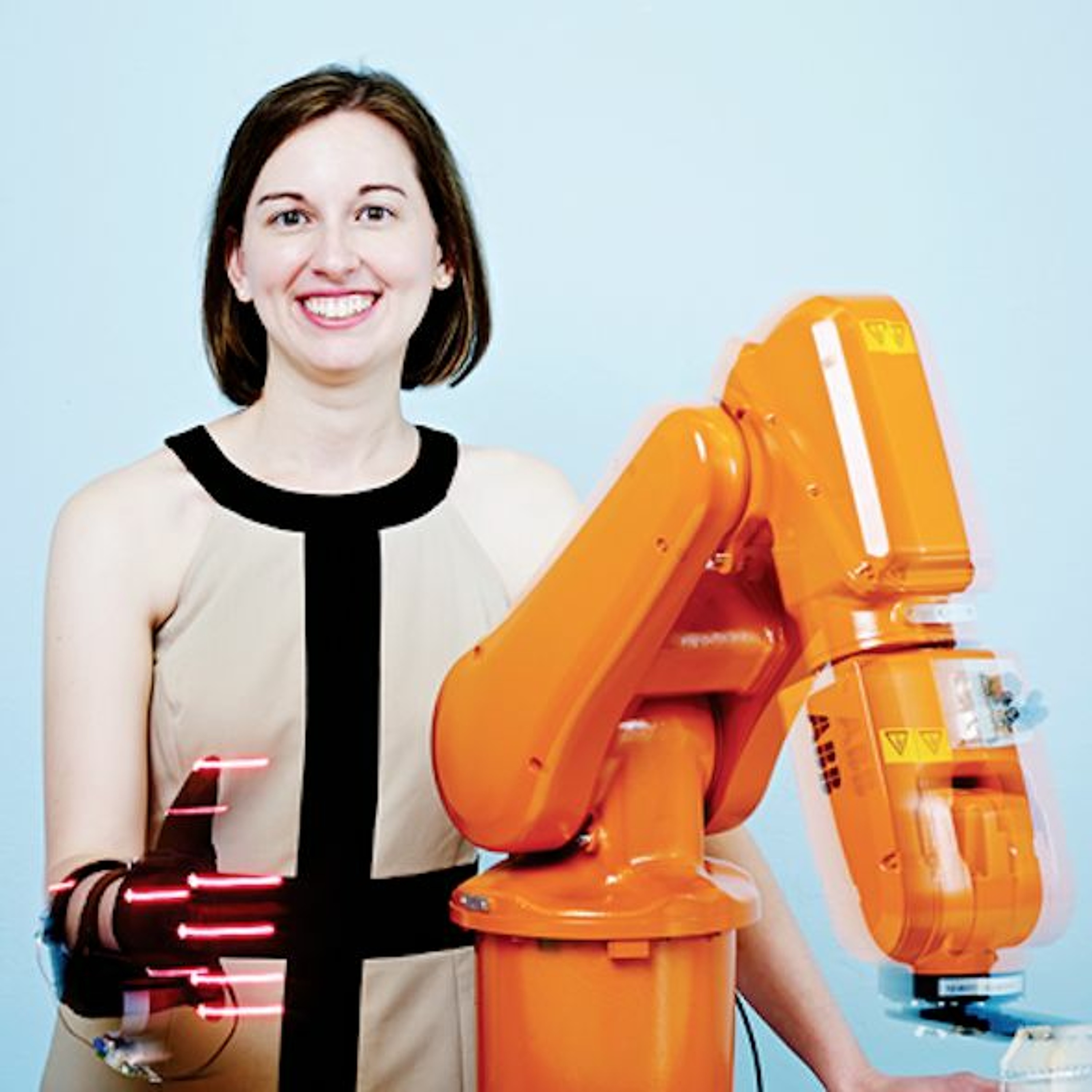
Humans and Intelligent Machine Support through Robotics and Automation with Julie Shah
Julie Shah discusses the challenges and successes of designing and employing intelligent design teammates that aim to enhance human productivity in descion-making and physical tasks through using reverse engineering methods and computational models. She shares how research is exposing robots to building skills that allow them to infer and anticipate their human counterpart's next move and motives within a given situation and the flexibility to adapt and adjust outside of predetermined plans.

The Intersection of Finance, Cryptography and AI with Andrew Lo
Andrew Lo, Charles E. and Susan T. Harris Professor at MIT Sloan School of Management, and Director of MIT Laboratory for Financial Engineering, shares insight into the collaborative research efforts of MIT CSAIL and MIT Sloan School of Management within the three distinct areas of crytopgraphy, machine learning and AI, as well as discusses the progress of blockchain technology and cryptocurrency. He also offers a glimpse into the future of banking and finance and reveals the emerging technology of secured multi-party computation.
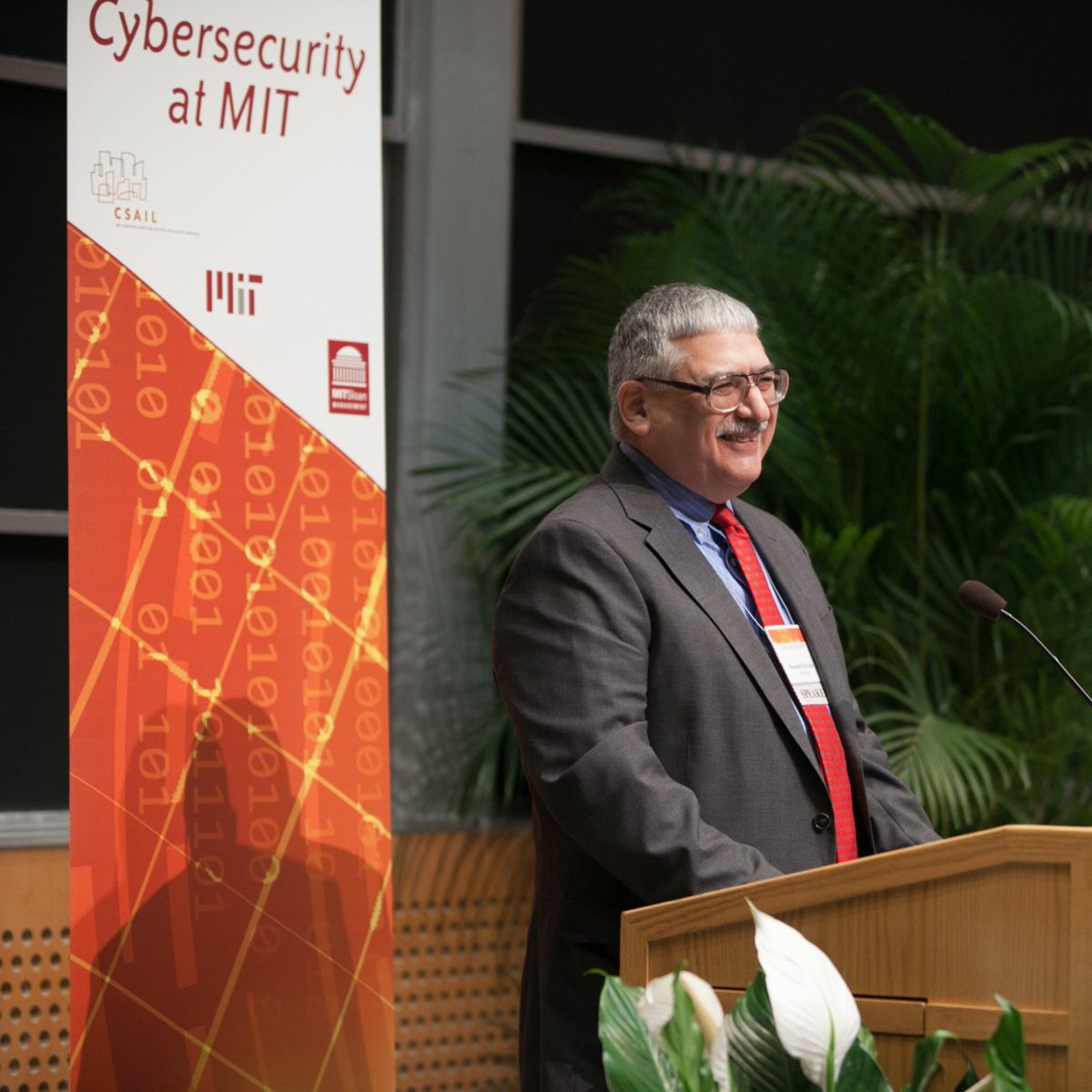
Cybersecurity Challenges and How They Impact IOT
MIT CSAIL's Howard Shrobe, Director of the Cybersecurity@CSAIL initiative, discusses what led him to become involved in the industry of Cybersecurity, his experience with DARPA, and creating the cybersecurity programs of CRASH and MRC. Additionally, he shares insights as to the biggest challenges in cybersecurity today and how these challenges effect the development of the Internet of Things.
Parallel Software and Anonymizing Networks with MIT CSAIL's Srini Devadas
MIT CSAIL professor Srini Devadas describes computer architecture, computer security and their intersection. He gives further insight into the conflict between ease of programming and performance and the communication between these threads through parallel software, such as message passing or shared memory abstraction (e.g. Google Docs).

Internet of Things with MIT CSAIL's John Leonard
While the promise of the Internet of Things (IoT) brings many new business prospects, it also presents significant challenges ranging from technology architectural choices to security concerns. The concept of Internet of Things (IoT), which has roots at MIT, has begun to make an impact in industries ranging from industrial systems to healthcare. MIT researchers continue to conduct ground-breaking research on topics ranging from RFID to cloud technologies, from sensors to the World Wide Web. Learn cutting-edge tools and applications for this new evolution in hardware, software, and data from MIT's Computer Science and Artificial Intelligence Laboratory's IoT experts: http://bit.ly/1S4sIdp

A Discussion with MIT CSAIL's Michael Stonebraker
A researcher at MIT’s Computer Science and Artificial Intelligence Lab, Michael Stonebraker has founded and led nine different big-data spin-offs, including VoltDB, Tamr and Vertica - the latter of which was bought by Hewlett Packard for $340 million. Now he’s bringing his insights to a new online course being offered this month through edX and MIT Professional Education. Co-taught by long-time business partner Andy Palmer, “Startup Success: How to Launch a Technology Company in 6 Steps” covers topics ranging from generating ideas and recruiting top talent to pitching VCs and negotiating deals - all in the span of three weeks.
The Data Science Machine: Kalyan Veeramachaneni
The Data Science Machine is an end-to-end software system that is able to automatically develop predictive models from relational data. The Machine was created by Max Kanter and Kalyan Verramachaneni at the Computer Science and Artificial Intelligence Laboratory (CSAIL) at MIT.