
CrowdScience
512 episodes — Page 4 of 11
Why do we lie?
Lying is something all humans do. We find it in every culture around the world. It’s in the world of work, in our relationships and online. It’s all pervasive and hard to escape. Our question this week is from listener Anthony from Cambodia. He asked us to find out why we lie, and wants to know how conscious we are of the lies that we tell? CrowdScience’s Caroline Steel is in the hot seat, on a journey where she will attempt to untangle the complex story behind lying. It’s a subject scientists and psychologists have been studying for a long time. It’s also something writers, philosophers and theologists have been interpreting for thousands of years. But we’re only now really starting to get to grips with how it works as a human behaviour. There are lies in our folklore, lies in the media and also lies in everyday conversation. It’s something we’ve all had to learn to navigate at some point in our lives. In this episode the CrowdScience team unravels the mysteries surrounding the behaviour and the art of lying. Our journey will take us to meet the world’s ‘second best liar’, an award she picked up at West Virginia’s Liar Contest. We’ll also meet a comedian who’s proud of the down-to-earth plain honesty of Dutch people. An academic who has studied thousands of children’s brains will explain when we first start learning to lie. And we’ll hear about new research using magnetic resonance imaging, commonly known as MRI scans, which is helping to show how the more we actually lie, the less our brain reacts telling us not to. Caroline looks at how lying changes from culture to culture. Do we really all lie? And do we lie in the same way? The surprising and intriguing answer is found in how early it develops in us as a human behaviour. Contributors: Prof Kang Lee, Professor in Applied Psychology and Human Development at Ontario Institute for Studies in Education, University of Toronto Prof Tali Sharot, Professor of Cognitive Neuroscience at University College London Ian Leslie, journalist and author of ‘Born Liars’ Ariana Kincaid, Champion Liar at West Virginia Liars Contest Derek Scott Mitchell, actor and comedian | @letsdoubledutch on Instagram Readings by Kitty O'Sullivan Presenter: Caroline Steel Producer: Robbie Wojciechowski Editor: Richard Collings Production Co-ordinator: Jonathan Harris Studio Managers: Emma Harth, Donald MacDonald, Andrew Garratt(Photo: Young Businessman Interviews for new job. Credit: Andrew Rich/ Getty Images)
What will 1.5° of warming look like?
Our planet is quickly approaching 1.5 degrees Celsius of warming (2.7 degrees Fahrenheit). Scientists say we might cross this milestone in just six years. Listener Julian wants to know what life will look like on the other side of that threshold. With the help of climate scientists, the BBC’s Anand Jagatia dives into the worlds of virtual climate models. From heatwaves to higher humidity indices to extreme precipitation and drought, he gets a picture of what's to come. We also venture to places that are warming both faster and more slowly than the global average. In a remote village in Alaska residents are already dealing with life-changing permafrost thaw and ground that's melting beneath their feet. Permafrost expert Sue Natali tells us what this unexpected thawing ground means for the planet as it releases carbon and methane we weren't necessarily counting on. In Indian cities, temperatures were already high, but they're not rising as quickly as climate scientists had initially predicted. We hear why this is and why it might be a big problem in the not- too-distant future. Anand also speaks to television series writer Dorothy Fortenberry about how science informed plotlines in her new show Extrapolations. This episode is not just about what climate change will bring -- but what it will feel like. Presenter: Anand Jagatia Producer: Sam Baker Reporters: Sunni Bean & Chhavi Sachdev Editor: Richard Collings Production Co-ordinator: Jonathan Harris Studio Manager: Tim Heffer Featuring: Dorothy Fortenberry, Extrapolations, Apple TV Tom Matthews, Department of Geography, King's College London Sue Natali, Woodwell Climate Research Center Morris Alexie, Tribal Liaison, Alaska Native village of Nunapicuaq (Nunapitchuk) Rakesh Kumar, India’s Council of Scientific and Industrial Research (Photo: Two children look out at floating sea ice. Credit: StutterStockX / Getty Images)
How does food affect our mood?
“You are what you eat” is a well-known saying. But is it really true? That’s what we explore in this week’s CrowdScience thanks to a question from listener Claire from Australia. We each have trillions of tiny microbes and bacteria inside our bodies, living in our mouths, skin, ears and even in our eyes. Each community of microbes and bacteria is known as a microbiome. The most populous of these is in our gut, with hundreds of trillions of organisms and bacteria helping digest the food we eat. Our gut microbiome is affected by lots of things but mainly by our diet. With our gut microbiome forming such a massive part of our insides, people have long suspected that what we eat impacts how we feel. Presenter Caroline Steel investigates. She speaks to a professor of Psychiatry, Jane Foster, to find out how interconnected our microbiome and our brain really are. Professor Foster also explains the different ways in which our microbiome and brain communicate. Do we really know what role diet plays in mental health? Consultant psychiatrist Professor David Veale provides more detail. And at a café with a rather interesting menu, Caroline samples some of the food available as occupational therapist Joel Oliver explains how important food can be as part of mental health treatment. This begs the question: if our microbiome really does influence our mental health, can we harness the power of microbes to potentially find new treatments to help our mental health? Dr Najaf Amin tells us about her research identifying the link between specific microbes and depression. Producer: Hannah Fisher Presenter: Caroline Steel Editor: Richard Collings Production Coordinator: Jonathan Harris Studio Manager: Bob Nettles(Photo: Young hipster man eating salad. Credit: Tara Moore / Getty Images)
Green Man Festival: Why are some animals so ugly?
Why are some animals cute, cuddly, adorable – and some are slimy, creepy and downright weird? This edition of Crowdscience, recorded in front of a live audience, comes to you directly from the world-famous Green Man Festival in Bannau Brycheiniog National Park in Cymru (Wales). The programme recording was powered entirely by hydrogen. Our inbox has been bursting at the seams with questions about creepy crawlies, deep sea beasties, cheeky monkeys, endangered species and animals of all shapes and sizes. So, we rounded up a panel of experts to get some answers! Surrounded by 25,000 people trudging merrily through the mud, pelted with torrential rain, underscored by the warm hum of revelry, the BBC’s Marnie Chesterton speaks with Dr David Jones from the Natural History Museum, an expert on creepy crawlies and someone who spends a considerable amount of time thinking about earthworms, ants, and termites. Also joining us is Jess Savage, a researcher from the Institute of Zoology in London who’s an expert on ocean-dwelling animals and the impact of plastic pollution. Finally, we have Simon Watt, a biologist, comedian and founder of the Ugly Animal Preservation Society. Join us for this very special edition of Crowdscience, in partnership with Green Man Festival, where we bring the experts closer to you than ever before. Presenter: Marnie Chesterton Producer: Emily Bird Editor: Richard Collings Technical producer: Mike Cox Studio manager: Jackie Margerum Production co-ordinator: Jonathan Harris(Photo: Marnie and guests. Credit: Jonathan Harris)
Which is healthier, farmed or wild salmon?
Salmon are one of the world’s most popular fish. And - in terms of the size of the industry - they’re also the world’s most valuable. They provide crucial proteins and fatty acids to many people’s diets. But like other species of fish, their production is undergoing a historic change. Plenty of salmon is still caught from the wild, but the majority is now farmed off the coasts of countries like Norway or Chile. With global demand on the rise, listener Jodie from Australia wants to know: which is healthier, farmed salmon or wild? CrowdScience’s Marnie Chesterton is on the case! Her first stop: a remote loch in the west of Scotland, where salmon company Mowi rears thousands of the fish in big, open-water nets. Marnie takes the chance to see for herself what salmon farming actually looks like. She then speaks to aquaculture nutritionist Stefanie Colombo, who researches the nutrient content of different types of salmon. Stefanie breaks down the health positives and negatives of each, as well as what causes some of these differences. Crucially, farmed salmon will vary in nutrition depending on where you are in the world. Jodie, the listener who asked this week’s question, is from Australia so her fish will most likely come from Tasmania. Chemist Christian Narkowicz has been conducting chemical tests on the salmon there - he tells Marnie what he’s found. When we ask which type of salmon is healthier, it’s also important to consider the issue of environmental health. Eilís Lawlor is an economist and the author of a report on externalities and unintended consequences of the global salmon industry. She and Marnie discuss problems of overfishing and environmental pollution. It’s also necessary to understand where wild salmon comes from. Marissa Wilson, director of the Alaska Marine Conservation Council, explains her average day out at sea and talks about some of the consequences of industrial offshore fishing. Finally, we ask if there’s a way to improve farmed salmon by moving it onto land? That’s Yonathan Zohar’s mission. In the basement of the Institute for Marine and Environmental Technology in Baltimore, USA, he keeps several tanks of salmon in artificial seawater, using bacteria to dispose of the waste. Is this where salmon farming is headed? Or is the future more complex? Presenter: Marnie Chesterton Producer: Phil Sansom Production Co-ordinator: Jonathan Harris Editor: Richard Collings (Photo: Atlantic Salmon jumping out of the water. Credit: Kevin Wells / Getty Images)
Why are spices delicious?
CrowdScience listener Kristine from Wisconsin in the USA wants to know why herbs and spices taste so good to so many of us. She’s intrigued to know if there's evidence that herbs and spices can keep us healthy. Anand Jagatia visits the historic naval city of Portsmouth in the UK, where exotic spices from around the world were first brought in from the East Asia more than 600 years ago. He’s on a journey to find out why many of us think spices are delicious. But are there also nutritional benefits to seasoning our food with them? Anand asks what science or studies are there to show that eating herbs and spices can be beneficial for our health? Presenter: Anand Jagatia Producer: Joanna Hall Assistant Producer: Jonathan Harris Editor: Richard Collings Studio Technicians: Bob Nettles & Steve Greenwood Contributors: Prof. Lindell Bromham, evolutionary biologist, Australian National University Dr. Kanchan Koya, Molecular Biologist and founder of the Spice Spice Baby website Dr. Beronda L. Montgomery, plant biologist and Dean at Grinnell College, Iowa, USA Dr. Lorenzo Stafford an olfactory researcher, Department of Psychology, University of Portsmouth, UK (Photo: A couple stand at a spice shop. Credit: Thomas Barwick / Getty Images)
Can humans be part of healthy ecosystems?
Humans have an outsized impact on the planet: we’ve wreaked havoc on countless ecosystems and one study estimates only 3% of land on Earth remains untouched by our influence. CrowdScience listener Teri has witnessed the harmful effects of development on natural habitats near her home, and wonders whether we can ever function as part of a healthy ecosystem. We look for answers in Teri’s home state, California. Humans have lived here for over 10,000 years and its first inhabitants formed a connection to their landscape unlike the exploitative approach of many later settlers. Today, the beliefs and traditions of the Karuk Tribe of northern California still emphasise a symbiotic relationship with nature, seeing plants and animals as their relations. Over the past couple of centuries much of the Karuk’s land has been degraded by mining, the timber industry and the outlawing of traditional burning practices. Tribal members show us how they’re working to try to restore ecological balance.As for the rest of humanity: can we rein in our destructive relationship to nature; or even have a beneficial effect on our local ecosystems?Contributors: Kathy McCovey - Karuk Tribe member and cultural practitioner Dr Steward Pickett - Ecologist, Cary Institute of Ecosystem Studies Bill Tripp - Karuk Tribe member and Director of Natural Resources and Environmental Policy, Karuk Tribe Department of Natural Resources Dr Frank Kanawha Lake - US Forest Service Research Ecologist and Tribal Liaison Will Harling - Co-lead, Western Klamath Restoration Partnership Presenter: Caroline Steel Producer: Cathy Edwards Editor: Richard Collings Production Co-ordinator: Jonathan Harris Studio Manager: Giles Aspen & Steve Greenwood (Image: Huckleberries and tanoak acorns gathered near a burn site. Credit: Stormy Staats)
What is consciousness?
It's pretty obvious to each of us that we are conscious, as we go about our days and feel the experience of just ‘being ourselves'. But how do we know that someone else is conscious? It’s something we lose during dreamless sleep, under anaesthesia or in a coma. But what exactly is consciousness? On the one hand, it’s pretty obvious - it’s what we all feel as we go about our daily lives. It's the experience of 'being you'. On the other hand, it gets pretty tricky when we try to pin down the science of it all. How do we know that someone (or something) else is conscious? CrowdScience listener Sylvester was wondering about this and he got in touch with a few questions on the subject. What is the relationship between our consciousness and reality? Is it all just a hallucination? When does it start and stop? Does consciousness reside in a particular part of the brain? Host Marnie Chesterton sets out to tackle this elusive but utterly fundamental quality of life and sees how researchers are attempting to conceptualise and study it. In the relatively young field of consciousness multiple theories have emerged. A new way of testing them - an adversarial collaboration - is offering a novel approach to not just consciousness research but science more broadly. We visit one lab in Frankfurt that's running experiments for the most recent adversarial collaboration and trying to test two theories of consciousness – Global Neuronal Workspace Theory (GNW) and Integrated Information Theory (IIT) – against each other. Looking at these and other concepts of consciousness like Qualia, Marnie tries to understand this central tenet of our human experience that, in many ways, remains one of the great mysteries of science. Presenter: Marnie Chesterton Producer: Sam Baker Editor: Richard Collings Production Coordinator: Jonathan Harris Studio Manager: Sarah Hockley Featuring: Anil Seth, Sussex Centre for Consciousness Science, University of Sussex in Brighton, England Lucia Melloni, Max Planck for Empirical Aesthetics in Frankfurt, New York University & Project Lead for COGITATE Nao Tsuchiya, Monash Data Futures Institute, Turner Institute for Brain & Mental Health, Monash University (Image: Active Human Brain. Credit: PM Images / Getty Images)

Can we grow a conscious brain?
Philosophers have long pondered the concept of a brain in a jar, hooked up to a simulated world. Though this has largely remained a thought experiment, CrowdScience listener JP wants to know if it might become reality in the not-too-distant future, with advances in stem cell research.In the two decades since stem cell research began, scientists have learned how to use these cells to create the myriad of cell types in our bodies, including those in our brains, offering researchers ways to study neurological injuries and neurodegenerative disorders. Some labs have actually started 3D printing stem cells into sections of brain tissue in order to study specific interactions in the brain. Human brain organoids offer another way to study brain development and diseases from autism to the Zika virus.So, might stem cell research one day lead to a fully-grown human brain, or is that resolutely in the realm of science fiction? If something resembling our brains is on the horizon, is there any chance that it could actually become conscious? And how would we even know if it was?Host Marnie Chesterton takes a peek inside the human brain and speaks with leading scientists in the field, including a philosopher and ethicist who talks about the benefits – and potential pitfalls – of growing human brain models. Along the way, we'll pull apart the science from what still remains (at least for now) fiction.Presenter: Marnie Chesterton Producer: Sam Baker Assistant Producer: Jonathan Blackwell Editor: Richard Collings Production Coordinator: Jonathan Harris Studio Manager: Jackie Margerum(Image: Brain in a jar. Credit: Mike Kemp / Getty Images)
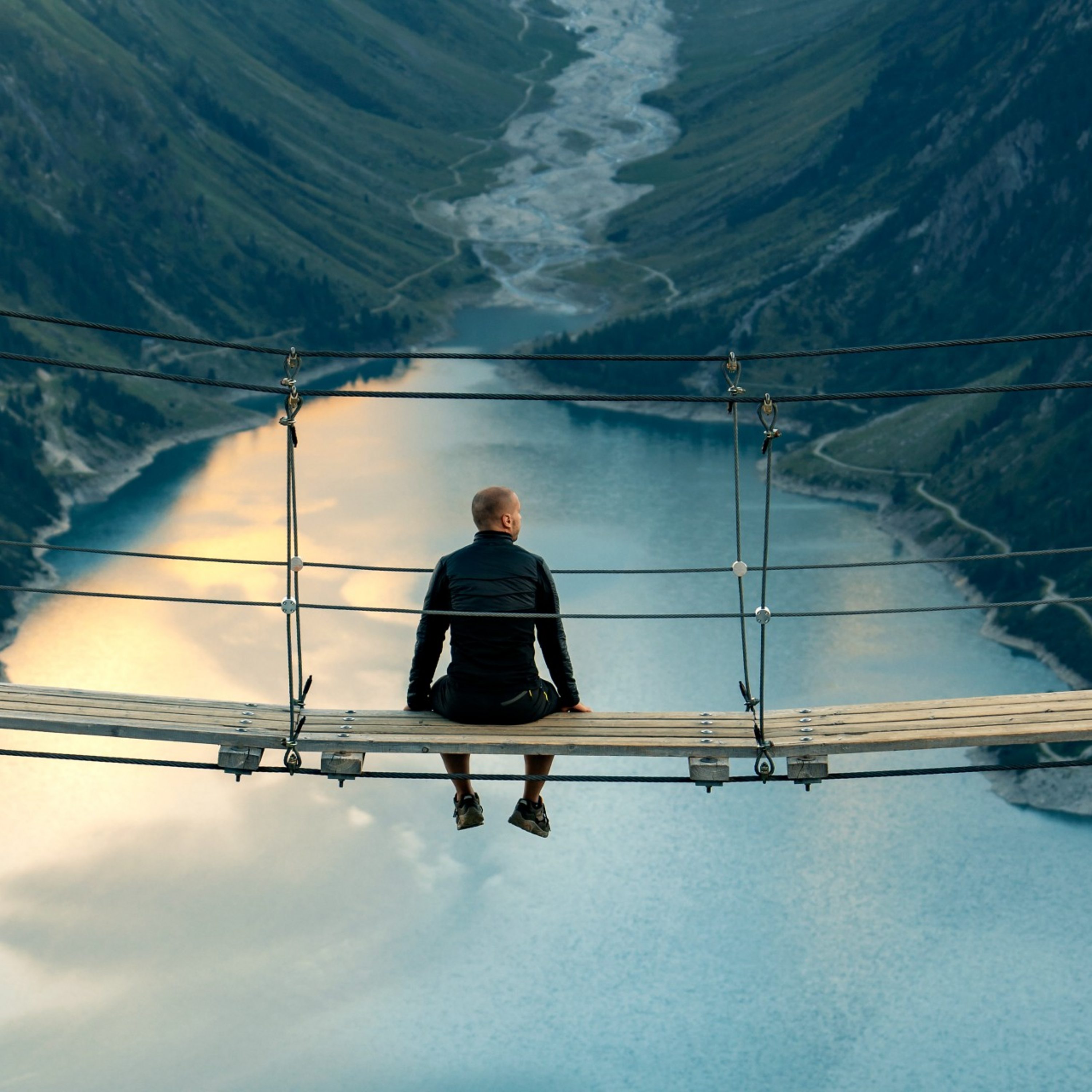
Why am I scared of bridges?
Everyone has fears – but what makes a fear become a phobia? Why are some people scared of spiders (arachnophobia), buttons (koumpounophobia), or the colour yellow (xanthophobia)? Or why are others are scared of situations, like small spaces (claustrophobia), empty rooms (kenophobia) or heights (acrophobia)? This is a question which has been bothering Crowdscience listener Scott, who has a phobia of bridges. He gets anxious and panicky when driving over bridges and is scared he’ll lose control of the car. It’s also a question that struck a chord with presenter Caroline Steel. She is claustrophobic, particularly in lifts, steering clear of them at all costs and even once climbing nine flights of stairs in crutches to avoid using the lift. But where do these phobias come from and why do some people have them and not others? To investigate, Caroline speaks to experts to discover where phobias come from, why we have them and how they develop. And she visits a psychologist to learn about different types of treatment for phobias, and to receive treatment herself in the hope that one day, maybe she’ll be able to take the lift instead of the stairs. Contributors: Professor Paul Salkovskis, Director, Oxford Centre for Psychological Health, UK Professor Ekaterina Likhtik, Associate Professor in Biological Sciences at Hunter College, CUNY, USA Dr Andras Zsido, Senior Research Fellow at the Institute of Psychology, University of Pécs, HungaryPresenter: Caroline Steel Producer: Hannah Fisher Editor: Richard Collings Production Co-ordinator: Jonathan Harris(Image: Person sitting on high up bridge. Credit: ljubaphoto / Getty Images)
Why do my children stress me out?
CrowdScience listener Leo gets stressed when his young children start screaming at the same time in the middle of the night. He wants to know why we haven’t evolved to deal with the stress more effectively. The challenges of bringing up a family are nothing new and we don’t face the same dangers as our ancestors, so why do we still react as if it’s a life-threatening emergency? Caroline Steel finds out what stress is for, what it does to us and whether we have in fact evolved to manage it. Contributors: Tashfia Ahmed, biomedical engineer, post-doctoral researcher, City University, London Anne-Kathrin Gellner, neurologist and psychiatrist, Bonn University James Rilling, anthropologist and neuroscientist, Department of Psychology and Department of Psychiatry and Behavioural Sciences, Emory University Gunter Wagner, evolutionary biologist, Vienna University Presenter: Caroline Steel Producer: Jo Glanville Editor: Richard Collings Production Co-ordinator: Jonathan Harris Studio Manager: Jackie Margerum(Image: Frustrated father holds baby in his arms. Credit: Jamie Grill / Getty Images)
What does a sustainable life look like?
Many of us are worried about the environment, but the aim of living in a truly sustainable way is hard to pin down. Do we all need to stop buying things? Is it down to governments to make the changes for us? Is there somewhere in the world painting a picture of the end goal? It’s a question that has bothered CrowdScience listener Cate for 20 years! She’s worried we’re not doing enough for the environment and just wants a clear scenario of what it might look like to live sustainably, in a way that could work for all eight billion of us on the planet. It’s a big question, so this week presenter Caroline Steel has teamed up with her friend and colleague Graihagh Jackson from The Climate Question podcast to answer it. They head to the remote Danish island of Bornholm in the Baltic Sea, which is aiming to go carbon neutral by 2025 and zero waste by 2032. How are they going about it and could this be replicated elsewhere? We visit a ground-breaking project turning nappies into compost, meet a glassblower making tableware out of wasted insulin vials, and find out how pig waste can power homes. This edition of CrowdScience hones in on Bornholm’s zero waste goal. Will the island make it? Listen to The Climate Question’s look at the island’s quest to go carbon neutral here: BBC World Service - The Climate Question, Going carbon neutral - lessons from Denmark - www.bbc.co.uk/programmes/w3ct5bkg (Available from 3rd September)Presenters: Caroline Steel and Graihagh Jackson Producer: Sophie Eastaugh Editor: Richard Collings Production Coordinator: Jonathan Harris(Image: Dr David Christensen, Project Manager at BOFA, Bornholm’s waste authority with presenter Caroline Steel in front of a giant mound of waste bound for the island’s incinerator. The incinerator will be shut down in 2032 when the island aims to be zero waste. Credit: Sophie Eastaugh)
How do butterflies and moths fly?
For hundreds of millions of years insects controlled the skies. Before birds, bats and pterodactyls, insects were the only creatures that had evolved the ability to fly: a miracle of physics and physiology requiring their bodies to act in coordinated ballet. This week three separate CrowdScience listeners have been asking questions about the flight of butterflies and moths. How do they move so erratically, yet land so precisely? What makes such tiny insects such accurate flyers? Presenter Anand Jagatia -- not the biggest fan of either butterflies or moths -- visits Butterfly Paradise at London Zoo to meet keeper Mark Tansley. Anand tries to get over his aversion by immersing himself in fluttering creatures. He then meets insect flight expert Sanjay Sane to learn the hidden mechanics behind their aeronautical skills: the vortexes of air generated by their wings and the complex muscle architecture inside their torsos. Next, aerospace engineer Amy Lang explains how the scales on their wings reduce air resistance by clever manipulation of the air and how this function trades off against other uses of the scales: for colour, for keeping dry, and much more. All of these abilities are put to the test during the incredible global migrations that some butterflies undertake. Gerard Talavera tells Anand how he turned previous thinking about butterfly migration across Africa on its head. Presenter: Anand Jagatia Producer: Phil Sansom Voiceover: Kitty O’Sullivan Production Coordinator: Jonathan Harris Editor: Richard Collings(Photo: Crowdscience presenter Anand Jagatia crouches next to a butterfly. Credit: Phil Sansom)
What is the weight of the internet?
How do you think about the internet? What does the word conjuror up? Maybe a cloud? Or the flashing router in the corner of your front room? Or this magic power that connects over 5 billion people on all the continents of this planet? Most of us don’t think of it at all, beyond whether we can connect our phones to it. CrowdScience listener Simon has been thinking and wants to know how much it weighs. Which means trying to work out what counts as the internet. If it is purely the electrons that form those tikitok videos and cat memes, then you might be surprised to hear that you could lift of the internet with 1 finger. But presenters Caroline Steel and Marnie Chesterton argue that there might be more, which sends them on a journey. They meet Andrew Blum, the author of the book Tubes – Behind the Scenes at the Internet, about his journey to trace the physical internet. And enlist vital help from cable-loving analyst Lane Burdette at Telegeography, who maps the internet. To find those cables under the oceans, they travel to Porthcurno, once an uninhabited valley in rural Cornwall, now home to the Museum of Global Communications thanks to its status as a hub in the modern map of worldwide communications. With the museum’s Susan Heritage-Tilley, they compare original telegraph cables and modern fibre optics. The team also head to a remote Canadian post office, so correspondent Meral Jamal can intercept folk picking up their satellite internet receivers, and ask to weigh them. A seemingly innocuous question becomes the quest for everything that connects us, and its weight! Producer: Marnie Chesterton Presenter: Marnie Chesterton & Caroline Steel Editor: Richard Collings Production Coordinator: Jonathan Harris(Image: Scales with data worlds and symbols interspersed throughout. Credit: Getty Images)
Are dogs good for us?
Dogs have been our best animal buddy for thousands of years. They’ve helped us out in countless ways from hunting alongside us to guiding us as service dogs. Talk to any pet owner and they’ll tell you how much joy their dog brings them. But you’ll also probably hear about vets bills, muddy footprints, or chewed up slippers. There are plenty of claims about the ways in which dogs might benefit our physical and mental health -- but how strong is the evidence?This week on CrowdScience, listeners Jason and Finn in Guernsey want to know if there’s any real evidence that our furry friends can benefit our health and wellbeing. Join Anand Jagatia as he enlists the help of his own pup, Stella, to explore the evidence. He uncovers the profound effects that service dogs can have on the mental health of military veterans in the US. Anand ponders the strangely unique relationship between humans and dogs and we learn about the surprising ways that about growing up with a pet dog can impact your health.Presenter: Anand Jagatia Producer: Emily Bird Editor: Richard Collings Studio Engineer: Donald MacDonald Production coordinator: Jonathan Harris, Elliott PrinceContributors: Dr Kerri Rodriguez Professor Tove Fall Professor Hal Herzog(Photo: Jack Russell leaping into the air trying to catch a ball. Credit: Brighton Dog Photography/Getty Images)
Is the ‘sunshine cure’ a real thing?
Imagine spending six months of every year living in total shade. That’s what life is like for residents of the Norwegian town of Rjukan, set so low in a valley that they see no direct sunshine at all from October to March. Marnie Chesterton heads there to hear about an ingenious solution: giant mirrors that beam rays down into the town square, where locals gather to feel the reflected heat. The man behind the project was motivated by a need for winter sun – but how much difference does it really make to our health and happiness? That’s the question posed by this week’s CrowdScience listener Michael, who has noticed living in the rainy Australian city of Melbourne is taking its toll. Many pensioners claim sunshine relieves achiness as well as conditions like arthritis but one of the biggest scientific studies found temperature has no real impact on reported pain levels, while factors like air pressure and humidity may play a role. When it comes to our mood, it seems that spending time outside is more important than feeling the heat. The optimum temperature for wellbeing is around a cool 19 degrees centigrade, while excessive warm weather has been linked to an increase in violence and crime. You can watch a visualisation of this episode on YouTube: Is the 'sunshine cure' a real thing? - CrowdScience, BBC World Service podcast - YouTube Producer: Marijke Peters Presenter: Marnie Chesterton Editor: Richard Collings Production co-ordinator: Jonathan Harris Contributors: Dr Anna Beukenhorst, University of Manchester Professor Oscar Ybarra, University of Illinois Professor Solomon Hsiang, University of California, Berkeley Martin Andersen, artist (Photo: Young woman enjoying sunset. Credit: Muriel De Seze/Getty Images)
Is the ‘sunshine cure’ a real thing?
Imagine spending six months of every year living in total shade. That’s what life is like for residents of the Norwegian town of Rjukan, set so low in a valley that they see no direct sunshine at all from October to March. Marnie Chesterton heads there to hear about an ingenious solution: giant mirrors that beam rays down into the town square, where locals gather to feel the reflected heat. The man behind the project was motivated by a need for winter sun – but how much difference does it really make to our health and happiness? That’s the question posed by this week’s CrowdScience listener Michael, who has noticed living in the rainy Australian city of Melbourne is taking its toll. Many pensioners claim sunshine relieves achiness as well as conditions like arthritis but one of the biggest scientific studies found temperature actually has no impact on reported pain levels, while factors like air pressure and humidity may play a role. When it comes to our mood, it seems that spending time outside is more important than feeling the heat and the optimum temperature for wellbeing is around a cool 19 degrees centigrade, while excessive warm weather has been linked to an increase in violence and crime.Contributors: Dr Anna Beukenhorst, University of Manchester Professor Oscar Ybarra, University of Illinois Professor Solomon Hsiang, University of California, Berkeley Martin Andersen, artist(Image: Man with smoke coming out of ears. Credit: Getty Images)
Why does some music make us sad?
CrowdScience investigates the link between music and emotion to try and understand why certain songs can have such a profound impact on our mood.From breakup songs to upbeat holiday hits, many of us have made playlists that reflect how we feel, whether that’s down in the dumps or high as a kite. This week CrowdScience investigates the link between music and emotion to try and understand why certain songs can have such a profound impact on our mood. Presenter Anand Jagatia is surprised to learn that newborn babies are more likely to fall asleep when listening to fast tempo happy tunes than soothing sad lullabies, which may be because they’re attuned to multiple auditory stimuli after months in the womb. But later in life we actually seek out sad songs to make us feel better. The so-called ‘sadness paradox’ has been studied for many centuries. But what is it about melancholy music that might be good for us? Some scientists believe more empathetic people enjoy listening to these types of tune because they elicit a feeling of compassion towards others, which can be rewarding. A film composer tells us how scoring suspense isn’t simply about minor or major chords, or even what instruments you use – it all comes down to keeping the audience guessing about what’s coming next. (Photo: young woman listening to headphones looking sad. Credit: Getty Images)Presenter: Anand Jagatia Producer: Marijke Peters Production co-ordinator: Jonathan Harris Editor: Richard Collings Studio Technician: Phil Lander Contributors: Alex Heffes Professor Stefan Koelsch Dr Emese Nagy Associate Professor Jonna Vuoskoski Dr Scott Bannister
Why do we get bored?
“I’m bored!” We can all relate to the uncomfortable - and at times unbearable - feeling of boredom. But what is it? Why does it happen? And could this frustrating, thumb-twiddling experience actually serve some evolutionary purpose? CrowdScience listener Brian started wondering this over a particularly uninspiring bowl of washing up and it’s ended with presenter Marnie Chesterton going on a blessedly un-boring tour through the science and psychology of tedium. She finds out why some people are more affected than others, why boredom is the key to discovery and innovation and how we can all start improving our lives by embracing those mind-numbing moments. (Photo: Bored kids on a park bench. Credit: Getty Images)Presenter: Marnie Chesterton Producer: Samara Linton Production co-ordinator: Jonathan Harris Editor: Richard Collings Contributors: Professor James Danckert, University of Waterloo, Canada Dr Elizabeth Weybright, Washington State University Dr Christian Chan, Hong Kong University Annie Runkel, University of Dundee
Why aren't we all ambidextrous?
Why are some people left-handed? Why are some people right-footed? Why do some write with their right and throw a ball with their left? What does this all have to do with our brains? Why is it hard for some people to tell left from right? And what about animals? Can they be left-flippered, or finned, or southpawed? That's what a few CrowdScience listeners want to know, and we've got an expert panel on left, right and everything in between to help answer your questions. From genetics to culture, host Caroline Steel works to unpack what's known and what's still unknown about handedness. David Carey from Bangor University helps Caroline better understand her own mixed-handedness through a series of simple tests and shares some insights into what role handedness (and footedness) plays in the world of sports. Neuropsychologist Marietta Papadatou-Pastou from National and Kapodistrian University of Athens helps break down the numbers on left v. right-handedness and its cultural influences. To better understand the genetics and evolution of handedness, we hear from Sebastian Ocklenburg from Medical School Hamburg, who has investigated the phenomenon in other species. Throughout the show, Caroline tries to understand why handedness exists in the first place and why our species is so biased to the right. She tries to answer listener Barb’s question as to why ambidexterity isn’t more ubiquitous, and it leads to some brainy tangents. We also hear questions from listeners Scotia and Roland, and travel to India with BBC reporter Chhavi Sachdev to hear how cultural norms are not in favour of lefties. Presenter: Caroline Steel Producer: Sam Baker Editor: Richard Collings Production co-ordinator: Jonathan Harris Studio engineers: Tim Heffer, Steve GreenwoodFeaturing: Marietta Papadatou-Pastou, Neuropsychologist and Assistant Professor, National and Kapodistrian University of Athens Sebastian Ocklenburg, Professor for Research Methods, Medical School Hamburg David Carey, Reader in Neuropsychology, Bangor University (Image: Close up of group of hands raised. Credit: JGI/Getty Images)
Why do we experience vertigo?
CrowdScience listener Ali wants to know why we experience vertigo. Anand Jagatia finds out that it’s not just the giddy sensation we feel when we’re at the top of a mountain. Vertigo is also a physical illness that can be triggered by a range of disorders. He talks to leading experts on balance to learn what causes the condition, discovers how virtual reality can help people with a phobia of being in high places and volunteers to be turned upside down to experience what it feels like to be treated for vertigo. Contributors: Peter Rea, consultant ENT surgeon, University Hospitals of Leicester, Honorary Professor of Balance Medicine, De Montfort University, Honorary Professor in Life Sciences, University of Leicester, UK Tammy Barker, clinical scientist, Balance Centre, Leicester Royal Infirmary, UK Rupal Rajani, broadcast journalist and member of Life on the Level Tara Donker, clinical psychologist, Freiburg University, Germany Andrew Hugill, composer, musicologist and deputy director, Institute for Digital Culture, University of Leicester, UK Presenter: Anand Jagatia Producer: Jo Glanville Editor: Richard Collings Production co-ordinator: Jonathan Harris Sound design: Julian Wharton Studio manager: Bob Nettles With thanks to Andrew Hugill for permission to include his composition Verdigrade, commissioned by The Space as part of ‘Culture in Quarantine’, BBC.Image: CrowdScience presenter Anand Jagatia tries out a machine for diagnosing and treating vertigo at Leicester Royal Infirmary Credit: Peter Rea
Why do I crave unhealthy foods?
We all enjoy a deep-fried Mars bar with french fries from time to time, but why do we crave these unhealthy foods instead of healthy things like spinach or broccoli? And what is a food craving? The answers lie in a complex blend of our psychology, physiology, and even sociology. BBC CrowdScience presenter Alex Lathbridge savours a mystery-meat crocket with the experts on a quest to discover the hidden sources and sauces of our food cravings.Presenter: Alex Lathbridge Producer: Richard Walker Editor: Richard Collings(Image: Stack of cheeseburgers and French fries. Credit: Dominic Lipinski/PA)
Human v machine
Please note: This is a shorter version than the original podcast. A longer version is available here - https://www.bbc.co.uk/sounds/play/w3ct3j6y.Humans can walk for miles, solve problems and form complex relationships using the energy provided by daily meals. That is a lot of output for a fairly modest input. Listener Charlotte from the UK wants to know: how efficient are humans? How do they compare to cars, other animals and even to each other? Presenter Marnie Chesterton pits her energetic self against everything from cars to rabbits to find out how she shapes up. Marnie also explores whether humans are born equal when it comes to fuel efficiency. Does the energy from one banana get converted into the same amount of movement from person to person? Marnie gets on a treadmill to find out how efficient she really is. With contributors from Herman Pontzer, Duke University, Rhona Pearce, Loughborough University and Christian Gammelgaard Olesen from Wolturnus wheelchair manufacturing company. Presenter: Marnie Chesterton Producer: Caroline Steel Editor: Richard Collings Production co-ordinator: Jonathan Harris (Image: Illustration of an airplane, a red car and a female wheel chair user. Credits: Getty Images)
Why can’t I see images in my head?
CrowdScience listener Eileen cannot see images in her head of her memories. She only discovered by chance that most other people can do this. She wants to know why she can’t see them and if it is something she can learn to do. Anand Jagatia finds out what mental images are for and whether scientists know why some people can’t create them. Three per cent of the world’s population cannot see mental images like Eileen. And it is only recently been given a name – aphantasia. Anand discovers why mental images are useful, why they are sometimes traumatic and how people who are blind or visually impaired can also create images of the world around them. Contributors: Emily Holmes, professor of clinical psychology, Uppsala University, Sweden Adam Zeman, professor of cognitive and behavioural psychology, Exeter University, UK Joel Pearson, professor of cognitive neuroscience, University of New South Wales, Australia Paul Gabias, associate professor, Department of Psychology, University of British Columbia, Canada Marijke Peters, Hannah Fisher and Jo Glanville, CrowdScience producers Presenter: Anand Jagatia Producer: Jo Glanville Editor: Richard Collings Production co-ordinator: Jonathan Harris Sound: Jackie MargerumImage credit: Andriy Onufriyenko | GETTY IMAGES | Creative #1397973635
Can Artificial Intelligence teach itself?
Welcome to the exciting new field of generative artificial intelligence - or generative AI. We’re not talking about robots or spaceships: instead these are image generators and chatbots that are already revolutionising the way people write, research and interact in the virtual world. Their capabilities are extraordinary. But before they can produce results they first need to be trained on vast amounts of data. And that’s what got CrowdScience listener Ian wondering. He says: “Before long, much of the material on the internet will have been written, or at least co-written, by AIs. What will happen when AIs are being trained on texts they have written themselves?” To answer this question Anand Jagatia first meets artist and scientist Michelle Huang. Michelle recently embarked on a therapy project to try and connect with her own “inner child”. She took a decade’s worth of her diaries from her childhood and fed them into an AI to try and simulate a conversation between her and her younger self. Can a machine convincingly recreate the voice of a human being? You can be the judge! Then, data scientist Briana Brownell joins Anand to explain a little about how ‘generative AI’ like this actually works. Together they open up the popular chatbot, ChatGPT, to put it to the test: but can it help Anand solve his personal conundrum? Now that we understand what AI is capable of we also need to know its limits. AI researcher Pablo Villalobos describes the process of training generative AI and where it gets its material from. The amount of data consumed in this way keeps going up and up, Pablo and his colleagues have been calculating exactly when that data is likely to run out. Pablo also discusses recent research exploring a unique effect that occurs if AI is repeatedly trained on its own material. Finally, Briana Brownell returns to cover a range of wider issues related to artificial intelligence and what effects it might have on our future.Presenter: Anand Jagatia Producer: Phil Sansom Editor: Richard Collings
Is there a connection between memory and speech?
CrowdScience listener Nyankami, from Kenya, has a friend with dementia. Despite memory loss and no longer knowing his way around, his friend has no problem communicating. So what’s the connection between memory and language? Caroline Steel discovers how dementia affects our speech. In most cases the illness does have an impact on our ability to speak but it can depend on many factors, including the type of dementia and even how many languages we speak. She meets George Rook, diagnosed with vascular dementia and Alzheimer’s, who’s a passionate campaigner for people with dementia and talks to dementia nurse Helen Green, who explains how the illness can affect our behaviour. She discovers that speaking more than one language can actually protect our brains from decline and finds out about cutting edge research that is helping people with dementia to improve their memory and capacity to speak. Featuring: George Rook, Lived Experience Advisory Panel, Dementia UK Helen Green, Admiral Nurse, specialising in dementia Professor Alex Leff, Professor of Cognitive Neurology, Institute of Neurology, University College London Professor Guillaume Thierry, Professor of Cognitive Neuroscience, Bangor University Professor Yan Jing Wu, Professor of Neurolinguistics, Ningbo University, China Dr Elizabeth Kuhn, Post-Doctoral Fellow, German Centre for Neurodegenerative Disease, Bonn Image Credit: Emma InnocentiPresenter: Caroline Steel Producer: Jo Glanville Editor: Richard Collings Production co-ordinator: Jonathan Harris Sound engineer: Jackie Margerum
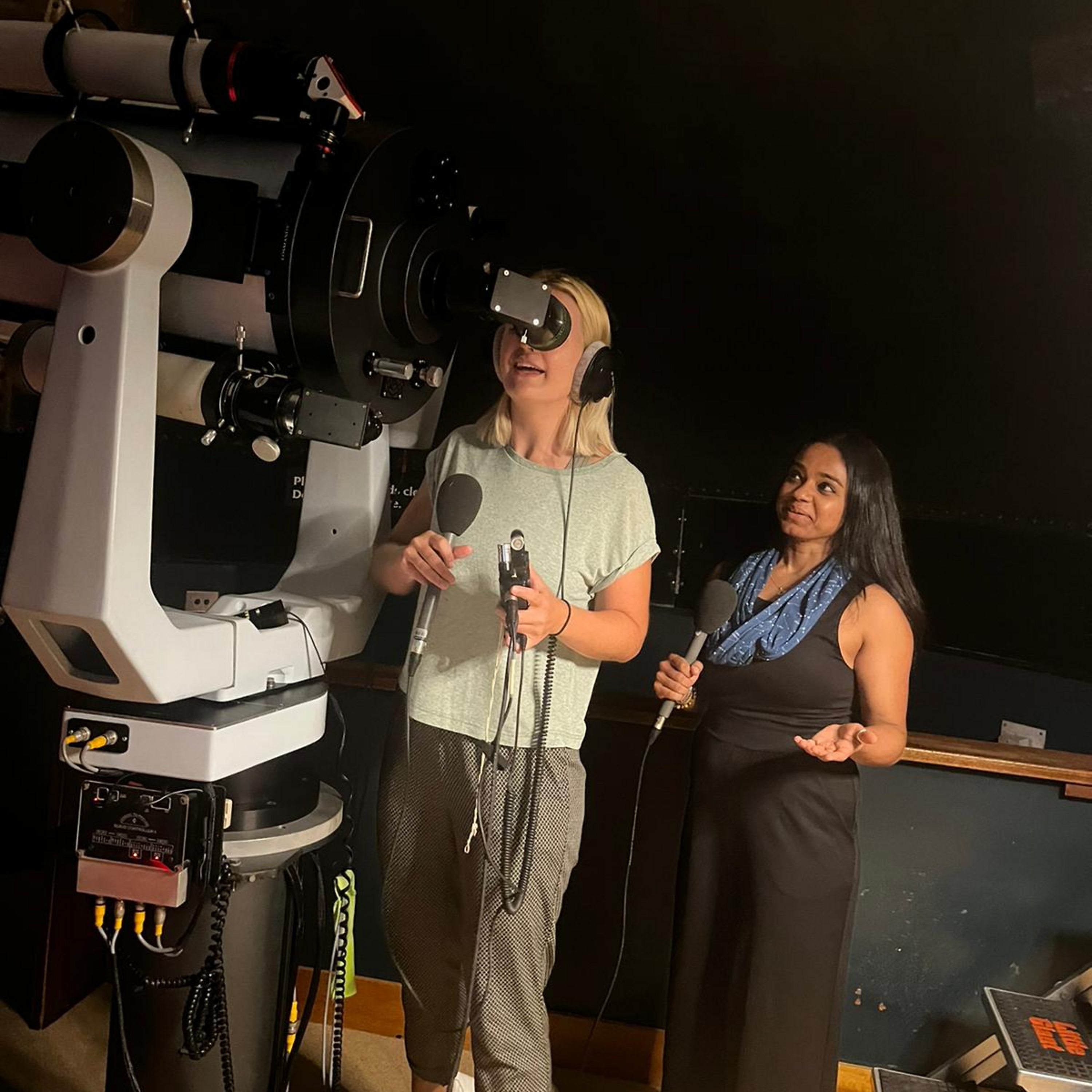
Why is the sun at the centre?
It may seem like a simple question but could you explain why the earth revolves around the sun? That is what listener Josh from New York wants to know. For much of human history we thought everything revolved around us, literally. So how did humans come to the conclusion that we're not the centre of the universe? And how did the scientific process help us uncover the true order of things? Looking through telescopes from the vantage point of Australia, host Caroline Steel speaks with astronomers and physicists about the bumpy scientific journey to arrive at this discovery that we now take for granted. Delving into Indigenous astronomy with researcher Peter Swanton, Caroline questions whether Western scientists were really the first ones to grasp this understanding of our solar system. And at the Sydney Observatory, stellar astrophysicist Devika Kamath and Sydney Observatory host Nada Salama show Caroline some of the clues up in the sky that astronomers in the 1600s used to deduce that there was something wrong with earlier models of our solar system.Rhett Allain from Southeastern Louisiana University helps break down the physics concepts at play when it comes to the motion of our planets and the sun. Through her exploration of a seemingly simple question, Caroline asks some big questions as she looks up to the stars – about life, the universe, and the nature of science itself.Producer: Sam Baker Presenter: Caroline Steel Editor: Richard Collings Production co-ordinator: Jonathan HarrisFeaturing: Devika Kamath, Astrophysicist, Macquarie University Rhett Allain, Associate Professor, Southeastern Louisiana University Peter Swanton, Indigenous Research Associate, Australian National University(Photo: Caroline and Devika, Sydney Observatory)

Can sea-swimming improve my health?
Anyone who has ever enjoyed a beach holiday will know there’s something special about being by the seaside. But does sea swimming actually have tangible health effects? This week’s listener Holly is a self-confessed water baby, and says her regular surf sessions on Sydney’s iconic Bondi beach make her feel happier and look younger. But could we get some of the benefits from the beach without getting our feet wet? At the Plymouth Marine Lab, researchers have shown that the smell of the sea makes most people feel happier. They’re measuring sea spray aerosols containing natural compounds derived from algae, that dial down the inflammatory response in lung cancer cells. Other scientists in the region have investigated the use of virtual reality to simulate being by the coast, which is proven to reduce the experience of dental pain during treatment. Finally, we visit Teats Hill in Plymouth to find out how a waterside amphitheatre and an urban beach are helping residents feel safer and more connected to one another. Producer: Marijke Peters Presenter: Marnie ChestertonEditor: Richard Collings Production Coordinator: Jonathan HarrisContributors:Dr Frances Hopkins, Plymouth Marine Laboratory Dr Mike Moore, Plymouth Marine Laboratory Dr Mathew White, University of Vienna Dr Easkey BrittonImage credit: David Sacks | The Image Bank | Getty Images | 164241179Created for the #BBCWorldService.

Why am I so lazy?
Lazy. Unmotivated. Procrastinating. If those are words you’re used to hearing from your inner critic, you are not alone. Take CrowdScience listener Laurie. On her days off she loves to relax on the sofa, watch TV, put off chores and generally do as little as possible. Meanwhile she sees other family members and colleagues apparently buzzing with energy: going the extra mile at work, taking up hobbies, going to the gym. Why, she asks, is she so lazy? CrowdScience turns to experts to find out whether or not so-called ‘laziness’ is a fundamental part of biology or psychology; why some people have more energy than others; and we offer a few tips for boosting energy and motivation. Or maybe Laurie is just being a bit too hard on herself? With psychologists Professor Fuschia Sirois and Dr Devon Price, anthropologist Professor Herman Pontzer and start-up entrepreneur Akhil Aryan. Presented by Dr Alex Lathbridge Produced by Cathy Edwards for the BBC World Service Editor: Richard Collings Production Co-ordinator: Jonathan Harris Studio Manager: Jackie MargerumImage: Asleep under a book (Credit: RichVintage via Getty Images)
What are Ostriches for?
Meet the ostrich, one of nature’s most unusual creatures: a two-metre-tall, flightless bird that struts about the African savannah. CrowdScience listener Pat found herself entranced by seeing them on a wildlife documentary, where two ostriches were exhibiting some bizarre behaviour. According to her, the female was sitting on her eggs in a ‘nest’ that was barely a dent in the ground, while the male was just flapping his feathers around her. So Pat came to us to ask: what are ostriches for? Anand Jagatia starts by meeting one face-to-face at Woburn Safari Park. Tom Robson, Head of Reserves at the park, gives Anand a tour of ostriches’ unique features. He discusses their status as the largest and fastest birds in the world and explains the unusual mating behaviour Pat observed on the TV programme she was watching. Next, to answer why some of these traits exist, Peter Houde from New Mexico State University dives into the ancient fossils. Peter is one of the palaeontologists who has managed to uncover the secrets of ostrich origins. What did their ancestors look like -- and why did they lose the ability to fly? Ostriches are also a part of human culture. Their eggs, for example, have been objects of value for thousands of years. Archaeologist Tamar Hodos from the University of Bristol explains how decorated ostrich eggs have been uncovered from ancient tombs and how they were probably used as pouring vessels as well as status symbols. Anand receives an ostrich egg in the post and manages to cook it using a very specific and British process. Finally, designer Pascale Theron tells us about the history of the ostrich farming industry. It’s a classic rags-to-riches-to-rags tale, a manic boom at the start of the 20th Century all based around feathers that were worth their weight in gold. Presenter: Anand Jagatia Producer: Phil Sansom Editor: Richard Collings Production Co-ordinator: Jonathan Harris Image credit: Phil Sansom & Anand Jagatia
What's living inside my gut?
Inside our gut lives an entire ecosystem of bacteria and microbes, called the microbiome. In fact, the human body contains trillions of microorganisms, which outnumber our cells by ten to one. This means that technically we are more microbe than human. But not only do these microbes rely on us to survive, we also rely on them for some vital bodily functions. So what impact do these trillions of microbes have on our health? That’s the question that’s been bothering CrowdScience listener Russell, from Canada. Presenter Caroline Steel investigates. She visits the only museum in the world dedicated to microbes to ask exactly what they are, what they do and why we have so many of them inside our bodies. And she visits a microbiology lab filled with model guts to find out what impact the microbiome has on our physical health and if there is anything we can do to help our microbes function better. Caroline finds out what impacts our microbiome, what we can do to improve our inner ecosystem, and how our microbes can take a disturbing turn on us after we die. Produced by Hannah Fisher and presented by Caroline Steel for the BBC World Service. Editor: Richard Collings Production Coordinator: Jonathan Harris Contributors: Professor Glenn Gibson – Professor of Microbiology, University of Reading Jasper Buikx – Microbiologist and Head of ARTIS Micropia David Good – Doctoral Candidate at the University of Guelph Image Credit: Microbiota of the human intestine/CHRISTOPH BURGSTEDT/SCIENCE PHOTO LIBRARY
Do we have a sense of time?
CrowdScience listener Marie, in Sweden, has always had difficulty with her sense of time. She often thinks that events that happened years ago took place recently or that a holiday coming up is happening sooner than it is. So she wants to know if time is a sense, like the sense of taste or touch, and if it’s something she can learn.Anand Jagatia talks to scientists who’ve studied time, memory and how our brains process and store the events in our lives to find an answer to Marie’s question. Along the way he discovers why time speeds up as we get older, how our bodies register time passing and how our brains put everything that happens to us in order.Featuring:Dr Marc Wittmann, Institute for Frontier Areas in Psychology and Mental Health in Freiburg, Germany Dr Maï-Carmen Requena-Komuro, former PhD researcher, Dementia Research Centre, University College London Professor György Buzsáki, Neuroscience Institute, New York University Professor Adrian Bejan, Thomas Lord Department of Mechanical Engineering and Materials Science, Duke UniversityPresenter: Anand Jagatia Producer: Jo GlanvilleSound Design: Julian WhartonProduction Co-ordinator: Jonathan HarrisImage credit: Peter Cade/ Stone/ Getty Images
Is there anyone out there?
What are the actual chances of finding alien life? The idea of meeting an extra-terrestrial has ignited imaginations for hundreds of years, and it has also inspired real science: the Search for Extra-Terrestrial Intelligence - or Seti - is an organisation that brings together researchers across the world in pursuit of distant life forms. This same dream is on the mind of listener Andrew in Yorkshire in the UK, who has been looking into the sheer size of the universe, and wants to know: how many stars are there in existence, how many planets, and how many planets that could harbour life?Presenter Marnie Chesterton sets off on a space odyssey to answer these questions. She starts at Jodrell Bank Observatory in Cheshire, where University of Manchester astrophysicist Eamonn Kerins tells her the number of stars in the universe, and explains the Drake Equation - the mathematical formula that underpins SETI’s work. It is a series of seven numbers that combine to give you the probability of making contact with an alien civilisation. The next step after stars is the number of planets; Michelle Kunimoto of MIT, who works on Nasa’s TESS mission, explains the transit technique for finding distant worlds. Supposedly anyone can learn to use this technique, so Michelle puts Marnie to a test of her planet-hunting prowess.Distant planets are a huge leap forward - but not all of them will be hospitable to life. Eamonn breaks down how scientists define a habitable planet, as well as how to determine habitability using telescope observations. Marnie speaks to Mary Angelie Alagao from the National Astronomical Research Institute of Thailand about a cutting-edge piece of optical kit designed to block out the light from stars so you can take direct images of the planets next to them. Finally, it is time to put everything together and get some actual numbers for listener Andrew - as well ask how long it could take to find proof of alien life.Presenter: Marnie Chesterton Producer: Phil Sansom Production Coordinator: Jonathan Harris(Photo credit: Mark Garlick/Science Photo Library/Getty Images)
What does flying do to my body?
Compared to the entirety of human existence, our history of flying in aeroplanes is very short indeed. So what does this fast form of travel do to bodies that have evolved for land-based living? That's what listener Sofia wants to know after working as a flight attendant for over a decade.What effect does working at 35,000 feet have on one's health? How disruptive to your circadian rhythms is hopping across ten time zones in less than 24 hours? What's happening in our stomachs if a crisp packet blows up to the point of popping as the cabin pressure changes? And why do we feel so darn dehydrated when we get off a plane?Host Caroline Steel not only talks to the experts about everything from swollen ankles to what we should eat and drink on planes, she also records her own journey from London to Australia. She does just about everything wrong along the way, but the experts sort her out with some top tips for her next long-haul flight on how to avoid blood clots and even, how to avoid jet lag all together! While in Australia, Caroline also visits a sleep lab where researchers can simulate jet lag to learn how to improve flight safety and the wellbeing of flight attendants and pilots.Join Caroline on her journey as CrowdScience takes to the skies to find out what frequent flyers need to know when it comes cosmic ionising radiation and what we can all do to make that next flight a little more pleasant. Produced by Sam Baker for the BBC World Service.Featuring: Tony Schiemer, Senior Aviation Medical Officer, Royal Australian Air Force Eileen McNeely, Executive Director, SHINE at Harvard T. H. Chan School of Public Health Tracey Sletten, Senior Lecturer, Turner Inst for Brain & Mental Health, Monash University(Photo: Getty Creative # 1432221653)
How do my ears sense direction?
How do we hear a sound and immediately know where it’s coming from? That’s the question that CrowdScience listener Chiletso asked himself one day as he heard his son bounce a ball and instantly knew its direction. In this ear-opening episode, presenter Anand Jagatia sets out to discover what makes left, right, up and down, sound so different.First, Anand gets blindfolded, so that Alan Archer-Boyd, former auditory scientist and lead engineer at BBC R&D, can put his sound localisation skills to the test. It turns out that having two ears and pinnae, those flappy bits of cartilage on the side of your head, help a lot. Professor Eric Knudsen shares how the barn owl’s asymmetrical ears allow it to hunt mice, even in complete darkness.And Anand uncovers how far he can push his own spatial hearing. Blind activist and researcher Thomas Tajo teaches him how to echolocate like a bat, and Dr Lore Thaler explains what is going on in the brain of experienced echolocators.If you can, listen on headphones!Presented by Anand Jagatia Produced by Florian Bohr for the BBC World ServiceImage: Boy with hands at his ears Credit: Silke Woweries/Getty Images
Why do some people have panic attacks?
Sweating, nausea, chest pain and shortness of breath sound like the physical symptoms of a heart attack. For about 4% of the world’s population, they are also symptoms of an underdiagnosed condition that can leave sufferers curled in a ball and screaming on the floor. A CrowdScience listener wants to know why humans have panic attacks. Host Marnie Chesterton brings on board an expert co-presenter, novelist Tim Clare, to talk us through the hows and whys. Tim suffered from crippling panic attacks for over a decade. He decided enough was enough and has combed through the scientific literature, using himself as a guinea pig, to see what helped. Anxiety can be a useful sensation, helping you to detect and avoid dangers before they happen. But when that morphs into debilitatingly unpleasant symptoms, or an internal monologue saying “that’ll go badly, best to not leave the house”, something has gone wrong. Together, Tim and Marnie explore what’s going on in the brains of those whose threat circuit is faulty. Dr Olivia Remes, a mental health researcher at the University of Cambridge explains how common panic attacks are, and how they often present. Dr Bonnie Furzer at the University of Western Australia explains how exercise can help. Tim takes a dip to demonstrate how cold water, and the cold shock response can help. Dr Rebecca Taugher at the University of Iowa explains how scientists induce a panic attack in the lab, how she has been a guinea pig and why patient SM, without an amygdala, the brain’s so-called ‘fear-centre’, could still be given a panic attack in the lab, just by inhaling extra amounts of carbon dioxide. Professor Alexander Shackman from the University of Maryland points out that the science will come so much further when researchers look at a genuine cross-section of the population, rather than focussing on those in educational establishments (easier to study) who often don’t experience panic attacks. PHOTO CREDIT: Woman hyperventilating into paper bag Credit: Peter Dazeley/Getty Images
Can robots be soft?
When imagining a robot, a hard-edged, boxy, humanoid figure may spring to mind. But that is about to change.CrowdScience presenter Alex Lathbridge is on a mission to meet the robots that bend the rules of conventionality. Inspired by how creatures like us have evolved to move, some roboticists are looking to nature to design the next generation of machines. And that means making them softer. But just how soft can a robot really be?Join Alex as he goes on a wild adventure to answer this question from listener Sarah. He begins his quest at the ‘Hello, Robot’ Exhibition at the Vitra Design Museum in Weil am Rhein, Germany to define what a robot actually is. Amelie Klein, the exhibition curator, states anything can be a robot as long as three specific criteria are met (including a cute cuddly baby seal). With this in mind, Alex meets Professor Andrew Conn from the Bristol Robotics Lab who demonstrates how soft materials like rubber are perfect contenders for machine design as they are tough to break and - importantly for our listener’s question - bendy. Alex is then thrown into a world of robots that completely change his idea of what machines are. He is shown how conventionally ‘hard’ machines are being modified with touches of softness to totally upgrade what they can do, including flexible ‘muscles’ for robot skeletons and silicon-joined human-like hands at the Soft Robotics Lab run by Professor Robert Katzschmann at ETH Zurich. He is then introduced to robots that are completely soft. Based on natural structures like elephant trunks and slithering snakes, these designs give robots completely new functions, such as the ability to delicately pick fruit and assist with search and rescue operations after earthquakes. Finally, Alex is presented with the idea that, in the future, a robot could be made of materials that are so soft, no trace of machine would remain after its use... Presenter: Alex Lathbridge Producer: Julia Ravey(Image: RoBoa in action on a rooftop in Zurich. Credit: Julia Ravey)
Do climbing plants know where they’re going?
CrowdScience listener Eric, in New Zealand, has noticed his wisteria growing towards a neighbouring tree. He thinks that it actually knows where it’s going. But how can a plant have a sense of direction?Plants don’t have the advantage of brains or eyes, but that doesn’t seem to stop them from being clever enough to find out from their environment where to move and how to get there – all while being rooted to the spot.Marnie Chesterton visits the Natural History Museum and Kew Gardens in London, home to the largest collection of living plants in the world, to discover how plants make their manoeuvres, and talks to botanists and plant biologists for the latest findings on the mysterious life of climbing plants.Featuring:Dr Mariane Sousa-Baena, School of Integrative Plant Sciences, Cornell University Dr Ilia Leitch, Senior Research Leader, Kew Gardens Tom Freeth, Head of Plant Records, Kew Gardens Dr Silvia Guerra, Neuroscience of Movement Laboratory, Padua University Professor Christian Fankhauser, Centre for Integrative Genomics, Lausanne University Dr Sandra Knapp, Merit Researcher, Natural History Museum
Where does our fat go when we exercise?
If, like this week’s Crowdscience listener Lili, you’re an avid gymgoer, you may well have wondered where your fat disappears to when you exercise? Well, the short answer is that we convert it to energy that powers a whole range of physical processes, from breathing to walking as well as lying down and doing nothing. But the science behind energy expenditure is a little more complicated than that. Presenter Anand Jagatia pops on an exercise bike to have his metabolism measured, and learns that he may be relying on an entirely different source of fuel as he works up a sweat. But is all that hard work worth the effort it involves? Recent research suggests there's a limit to the number of calories us humans can burn, and that doing physical activity isn’t a sure-fire way to keep trim. Even hunter-gatherers who walk 13,000 steps a day have the same metabolic rate as the average American. So if working out isn't the best way to lose weight, how about harnessing our own fat to tackle the complications of obesity? It used to be thought brown fat was exclusive to babies (and bears) but we now know adults have some of it too, and it seems to play a vital role in combatting a range of chronic diseases including hypertension and diabetes.Presenter: Anand Jagatia Producer: Marijke Peters
Are yoga claims bogus claims?
Yoga benefits our health in many ways, say the yogis, but which claims are backed up by science? Can yoga actually alleviate depression, fix lower-back pain or even reduce cardiovascular disease?Presenter Marnie Chesterton gets into her Lotus (position) and finds out first-hand at a class. Whilst in warrior one, she discusses the potential physical and mental health benefits of this ancient art of stretching, balance and movement with her class teacher. Returning from mat to studio, Marnie puts some of those claims to experts around the globe. She investigates the evidence to find out whether health boosting properties are the key to yoga's enduring popularity.Pannalists: Rajvi Mehta Prof. Holger Cramer Dr Richard DavidsonPresented by Marnie Chesterton Produced by Richard Walker
Who’s afraid of public speaking?
Why does the thought of giving a talk to an audience fill so many of us with sheer terror? Marnie Chesterton investigates for listener Nhial, who has seen his fellow students in Morocco become panic stricken at the prospect and wants to know the reason for our anxiety. According to one study, 77 per cent of us share that fear. Marnie finds out about the relationship between stress, our brains and our voices from research associate Dr Maria Dietrich at the University Hospital, Bonn University. She talks to Nhial’s tutor, Professor Taoufik Jaafari, at Hassan II University of Casablanca about the challenges facing his students. And she visits the National Theatre in London to get some expert training from Jeannette Nelson, head of voice, who works with some of the world’s leading actors.Could there be an evolutionary explanation for the purpose of public speaking? Is it something we actually need to be good at? Marnie asks evolutionary psychologist Professor Robin Dunbar at Oxford University and gets some surprising answers. She meets psychologist Dr Preethi Premkumar at London South Bank University, who has developed virtual reality therapy with colleagues at Nottingham Trent University, and tries out the treatment herself.Presenter: Marnie Chesterton Producer: Jo Glanville
How bad is our noise problem?
We generate a huge amount of noise, whether it’s our rumbling roads, pumping parties, or talkative tourists. And the topic of noise also generates a lot of questions from our listeners. In this episode we explore three of them, with the help of acoustic scientist Kurt Fristrup and neuropsychologist Catherine Loveday.Listener Dominique finds it hard to experience even one minute of a natural soundscape without some intrusion of human-made noise. He wonders how noise pollution is affecting both the natural world and us humans. We discuss just how noisy our modern world is, and visit a National Park in California to hear how they’re encouraging more peace and quiet there.Meanwhile Michelle, having witnessed her husband wince in pain at the sound of squeaking takeaway boxes, asks why certain noises are particularly unpleasant or even painful to some people.And finally, Jennifer has a sonic mystery for us to solve: why does the time of day make such a difference to the distant noises reaching her remote home?With contributions from Professor Catherine Loveday, Dr Kurt Fristrup and Mia Monroe.Additional audio courtesy of the U.S. National Park Service/Patrick Myers, Dominique Laloux, Boise State University/Jesse Barber, and KCSU/Asher KornPresenter: Anand Jagatia Producer: Cathy Edwards Studio Managers: Bob Nettles and Jackie Margerum
Where does the sand in a desert come from?
From Lawrence of Arabia to Star Wars via tales of intrepid adventurers traversing lonely sand-swept landscapes, deserts have always had a powerful pull on the popular imagination. But if a desert is full of sand, where did all that sand come from in the first place? That is what CrowdScience listener Andy wants to know, so presenter Caroline Steel heads off into the dunes to find out.She begins by finding out what a desert is anyway and whether it is always sandy, as well as tracing the flow of material across the huge, ever-shifting sand seas of the Sahara.From deserts fed by sand from mountains thousands of kilometres away, to dunes migrating across the entire continent of Africa, Caroline discovers how sand has just the right properties to be carried along by the wind. She also explores how the sand in every desert has a unique fingerprint, and finds out how fish bones in the Sahara tell the story of its lush, green past.Contributors: Dr Jo Nield, University of Southampton Dr Andreas Baas, Kings College London Dr Andrea Zerboni, University of MilanPresented by Caroline Steel Produced by Ben Motley for the BBC World Service(Photo: The Sahara desert near Timbuktu, Mali Credit: Jeff Overs)
Why do we get jealous?
When falling in love or fancying someone, one emotion can dominate over the rest: jealousy. Some may try to play it cool and act aloof, but seeing - or even thinking - of a romantic partner engaging with others can lead people to act completely out of character. The green-eyed monster can hijack thoughts for days to weeks on end, making us spend precious energy ruminating on situations that may never arise. So why is it that humans feel jealousy? Do people experience this emotion differently? And are there ways to stop it?CrowdScience presenter Caroline Steel sets about answering these questions from listener Odile in France, who has struggled with all-consuming jealousy in some romantic relationships. She hears about a kind of monkey that gets jealous of its own reflection from Professor Karen Bales at University California Davis. A trip to ZSL London Zoo sees more monkeys, but these are more bothered about protecting the vital friendships which aid their survival. Dr Alex Mielke from the University of St Andrews explains how these interactions can give us an insight into why jealousy exists. Some of us get more jealous than others and are more likely to act out of character when the green-eyed monster takes hold. Caroline completes a detailed questionnaire to see how jealous she really is, and gets advice from Julia in South Africa, who is in a polygamous marriage and has had to handle romantic jealousy. The nature-nurture balance of jealousy is untangled by geneticist Dr Laura Wesseldijk from Amsterdam UMC (who reveals some surprising information about the first author on her research paper…) and psychologist Dr Johan Ahlen from the Karolinska Institute rounds off the programme by discussing what the future of jealousy management could look like for those who struggle.Presenter: Caroline Steel Producer: Julia Ravey
What happens to insects in the winter?
When CrowdScience listener Eric spotted a few gnats flying around on a milder day in mid-winter it really surprised him - Eric had assumed they just died out with the colder weather. It got him wondering where the insects had come from, how they had survived the previous cold snap and what the implications of climate change might be for insect over-wintering behaviour? So he asked CrowdScience to do some bug investigation. CrowdScience presenter Marnie Chesterton takes up the challenge and heads out into the British countryside – currently teeming with buzzes and eight legged tiny beasties - to learn about the quite amazing array of tactics these small creatures use to survive the arduous days of cold. She hears how some insects change their chemical structure to enhance their frost resistance whist others hanker down in warmer microclimates or rely on their community and food stocks to keep them warm. But cold isn’t the only climatic change insects have to endure, in the tropics the seasons tend to fluctuate more around wet and dry so what happens then? Marnie talks with a Kenyan aquatic insect expert who describes how mosquitoes utilise the rains and shares his worry climate change could have a big impact on insect populations.Contributors: Dr Erica McAlister – Entomologist and Senior Curator, Natural History Museum, Dr Adam Hart – Entomologist and Professor of Science Communication - University of Gloucestershire Fran Haidon – Beekeeper Laban Njoroge – Entomologist, head of the Invertebrate Zoology – Museum of Kenya Dr Natalia Li – Biochemist Presenter: Marnie Chesterton Producer: Melanie Brown[Image: Butterfly in winter resting on snow covered branch. Credit: Getty Images]
How do you balance on a bicycle?
ow do we stay up when we ride a bicycle? Lots of us can do it without even thinking about it, but probably very few of us can say exactly HOW we do it. Well, CrowdScience listener Arif and his children Maryam and Mohammed from India want to understand what’s going on in our heads when go for a cycle, and how we learn to do it in the first place.Presenter Marnie Chesterton is on the case, tracking down a neuroscientist studying how our brains and bodies work together to keep us balanced whether we’re walking or trying to ride a bicycle. She learns about the quirks of bicycle engineering from researchers in the Netherlands who are part of a lab entirely devoted to answering this question. In the process falling off of some unusual bicycles and uncovering the surprising truth that physics might not yet have a proper answer. And we peer deeper into our brains to find out why some memories last longer than others, whether some people can learn quicker than others and the best way to learn a new skill.Presented by Marnie Chesterton and Produced by Emily Bird for the BBC World Service.Featuring: Kathleen Cullen, Johns Hopkins University, USA Jason Moore, University of Technology Delft, The Netherlands Lara Boyd, University of British Columbia, Canada Rado Dukalski, University of Technology Delft, The Netherlands Josie and Freesia, Pedal Power[Image: Family riding bikes. Credit: Getty Images]
Bullying Parrots and Glacial Cocktails
Over the past 12 months, CrowdScience has travelled the world, from arctic glacierscapes to equatorial deserts, to answer listeners’ science queries. Sometimes, the team come across tales that don’t quite fit with the quest in hand, but still draw a laugh, or a gasp. In this show, Marnie Chesterton revisits those stories, with members of the CrowdScience crew. Alex the Parrot was a smart bird, with an impressive vocabulary and the ability to count and do basic maths. He was also intimidating and mean to a younger parrot, Griffin, who didn’t have the same grasp of the English language. Scientist Irene Pepperberg shares the consequence of this work-place bullying. Take a tour of the disaster room at ICPAC, the IGAD Climate Prediction and Applications Centre (ICPAC) based in Nairobi, Kenya. It’s a new building where scientists keep watch for weird new weather and passes that information to 11 East African countries. Viola Otieno is an Earth Observation (EO) Expert and she explained how they track everything from cyclones to clouds of desert locust. Malcolm MacCallum is curator of the Anatomical Museum at Edinburgh University in Scotland, which holds a collection of death masks and skull casts used by the Edinburgh Phrenological Society. Phrenology was a pseudoscience, popular in the 1820s, where individuals attempted to elucidate peoples’ proclivities and personalities by the shape of their heads. We see what the phrenologists had to say about Sir Isaac Newton and the “worst pirate” John Tardy. While recording on Greenland’s icesheet, the CrowdScience team were told by Professor Jason Box about “party ice.” 40,000 year old glacial ice is a superior garnish for your cocktail than normal freezer ice, apparently. This starts a quest for the perfect Arctic cocktail. Presented by Marnie Chesterton Produced by Marnie Chesterton, featuring producers Florian Bohr, Sam Baker and Ben Motley (Photo:)
Why are my parents so annoying?
Does your mum’s singing make you cringe with embarrassment? Do your dad’s jokes make you want to scream - and not with laughter? Or maybe you are the parent driving your offspring round the bend with rules and curfews? If so, you are not alone. CrowdScience listener Ilixo, age 11, has been wondering why it is that our parents become so annoying as we become teenagers. Is it something that is changing in his brain or are they actually becoming more annoying as they age? Presenter Marnie Chesterton consults our assembled panel of experts to discuss conflict between parents and their offspring. Developmental psychologist Liane Alampay, from the Ateneo de Manila University, Philippines, describes how the teenage experience varies around the world. Child and educational psychologist Laverne Antrobus in London says the teenage quest for independence is a normal - and necessary - developmental stage for becoming an adult. And Jennifer Lansford, a Research Professor at Duke University who studies parenting and child development, offers insights into the role peers play. Do not despair! - the panel offers tips for how to keep the peace - whether you’re an argumentative adolescent or a provoking parent.Producer: Lorna Stewart (Photo: Teenager putting fingers in ear while parent tries to talk to them. Credit: Getty Images)
What is friction?
CrowdScience listener David was playing snooker in Thailand when he started thinking how such a smooth ball was dependent on the rough green baize of the table to bring it to a stop. Would it be possible to play snooker at all in a completely frictionless universe? Sometimes friction produces heat. Could we ever control it completely? We try to reduce friction in some cases by using lubricants, whilst at other times like braking at a traffic junction we depend upon friction entirely. Anand Jagatia heads to Edinburgh in Scotland, UK, to meet some true masters of this mysterious entity: players of the winter sport Curling. What exactly is friction, and does thinking about it tell us something deeper about the universe? Taking part:Jennifer Dodds, Team GB Olympic Gold medallist Dave Lieth, Head of performance services, British Curling Susan Perkin, Professor of Physical Chemistry, University of Oxford Roger Lewis, Professor of Mechanical Engineering, University of SheffieldPresented by Anand Jagatia Produced by Alex MansfieldWith thanks to David for his question.[Image: curling. Credit: Getty Images]
Could my house run out of air?
If your home is drafty, filling in holes and cracks can help tackle rising energy bills, and lower your carbon footprint. But is there a limit to how airtight we should make our homes? That’s what CrowdScience listeners Jeff and Angie wondered when weatherproofing their doors and sealing up cracks for the winter. Once every last gap is blocked, will enough air get in for them to breathe properly? How would they know if they’ve gone too far?With Covid-19 making us more aware than ever of the importance of good ventilation, CrowdScience investigates how to make your home cosy and energy-efficient without sacrificing fresh air in the process. And we find out how, in hotter climates, you can carefully tap into your drafts, to reduce energy-intensive air conditioning.With contributions from Kimble Smith, Professor Nicola Carslaw, Dr Iain Walker, Marion Baeli and Dr Yashkumar Shukla.Presented by Marnie Chesterton Produced by Cathy Edwards for the BBC World Service