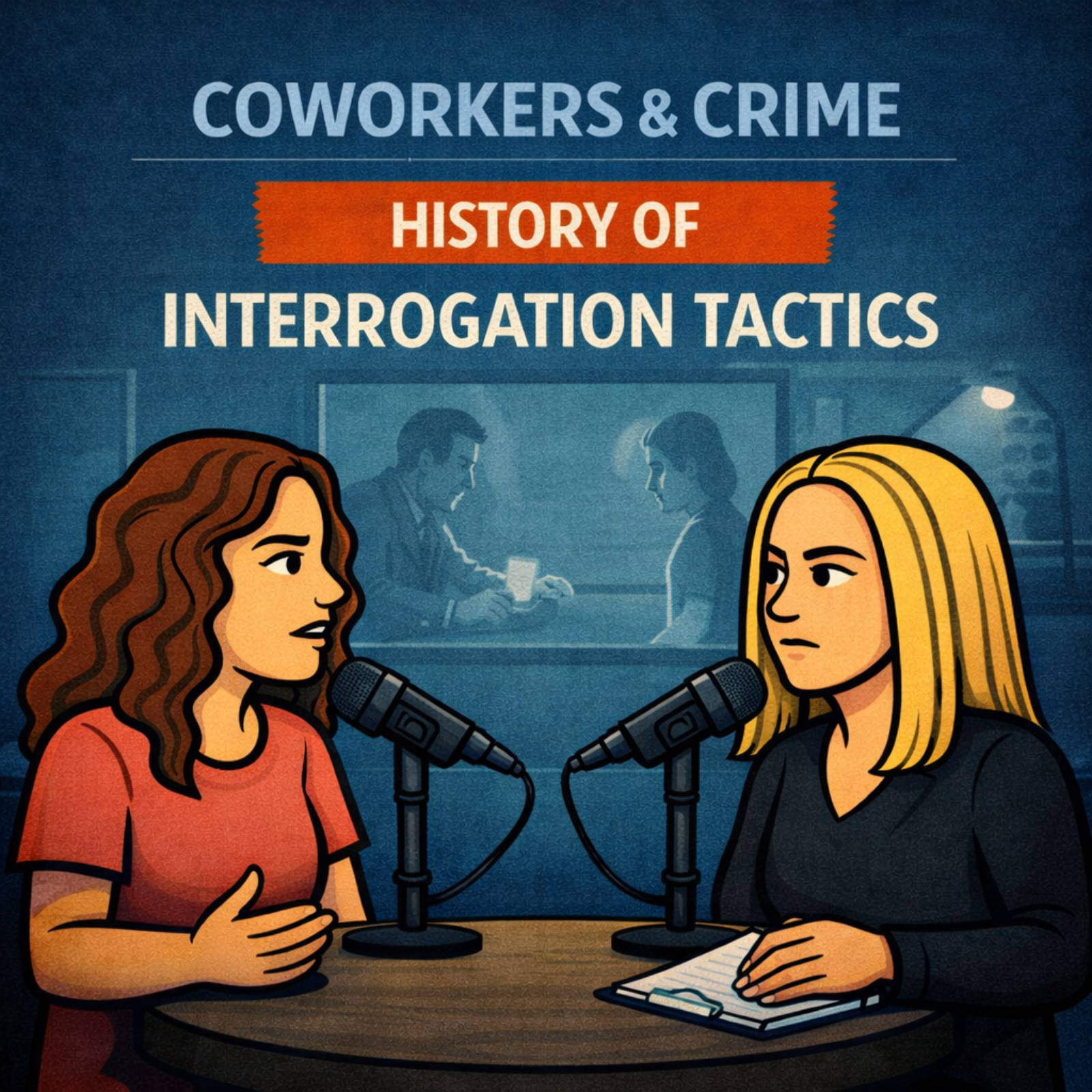
History of: Interrogation Tactics
Coworkers & Crime · Rachel and Krystal
Audio is streamed directly from the publisher (content.rss.com) as published in their RSS feed. Play Podcasts does not host this file. Rights-holders can request removal through the copyright & takedown page.
Show Notes
Coworkers & Crime — History of Interrogation Tactics
Episode Summary In this “History of” episode, Rachel and Krystal unpack how police interrogation evolved from the brutal “third degree” era to modern psychological techniques — and why Miranda warnings didn’t end coercive questioning. They break down the Reid Technique, the rise of “double questioning” (two-step interrogation), and the Supreme Court decisions that shaped what police can (and can’t) do. They also cover Vega v. Tekoh (2022) and why Miranda violations don’t automatically create grounds to sue for damages — leaving suppression at trial as the main remedy.
What We Cover (Quick Hits)
- From the “third degree” to psychological interrogation methods
- The Reid Technique and why it can be risky when misused
- Miranda’s limits + the two-step/double questioning workaround
- Key Supreme Court cases: Brown, Ashcraft, Spano, Elstad, Seibert, Bobby, and Vega
- False confessions, vulnerability factors, and why this still matters today
- Office rule of the day: Never talk alone (get counsel)
Cases & References Mentioned
- Wickersham Commission (1931) — documented abusive interrogation practices
- Brown v. Mississippi (1936) — confessions from torture ruled unconstitutional
- Ashcraft v. Tennessee (1944) — coercive conditions without physical violence
- Spano v. New York (1959) — psychological pressure + vulnerability matters
- Miranda v. Arizona (1966) — required warnings in custodial interrogation
- Oregon v. Elstad (1985) — warned confession may be admissible after unwarned statement
- Missouri v. Seibert (2004) — deliberate two-step can undermine Miranda
- Bobby v. Dixon (2011) — Seibert applies when the two-step is intentional
- Vega v. Tekoh (2022) — no civil damages for Miranda violations via §1983
Key Takeaways
- Coercion isn’t just physical — psychological pressure counts too.
- Miranda warnings don’t guarantee a confession is truly voluntary.
- Two-step interrogation hinges on intent to bypass Miranda.
- After Vega v. Tekoh, suppression is often the only remedy — which raises real concerns when someone is never convicted but still harmed.
Easter Eggs / Community Bits
Listener code words: “Lego Man” vs “Run Club” Upcoming guests teased — starting with your OG true-crime buddy!
Connect With Us
Email: [email protected]
Facebook Group: https://www.facebook.com/share/g/1G4UhP9odP/
YouTube: https://www.youtube.com/@CoworkersCrimePodcast
Instagram: https://www.instagram.com/coworkersandcrime/#
#CoworkersAndCrime #TrueCrimePodcast #Interrogation #MirandaRights #CriminalJustice #FalseConfessions #SupremeCourt #LegalHistory #PoliceInterrogation #TwoStepInterrogation #ReidTechnique