Season 1 · Episode 10
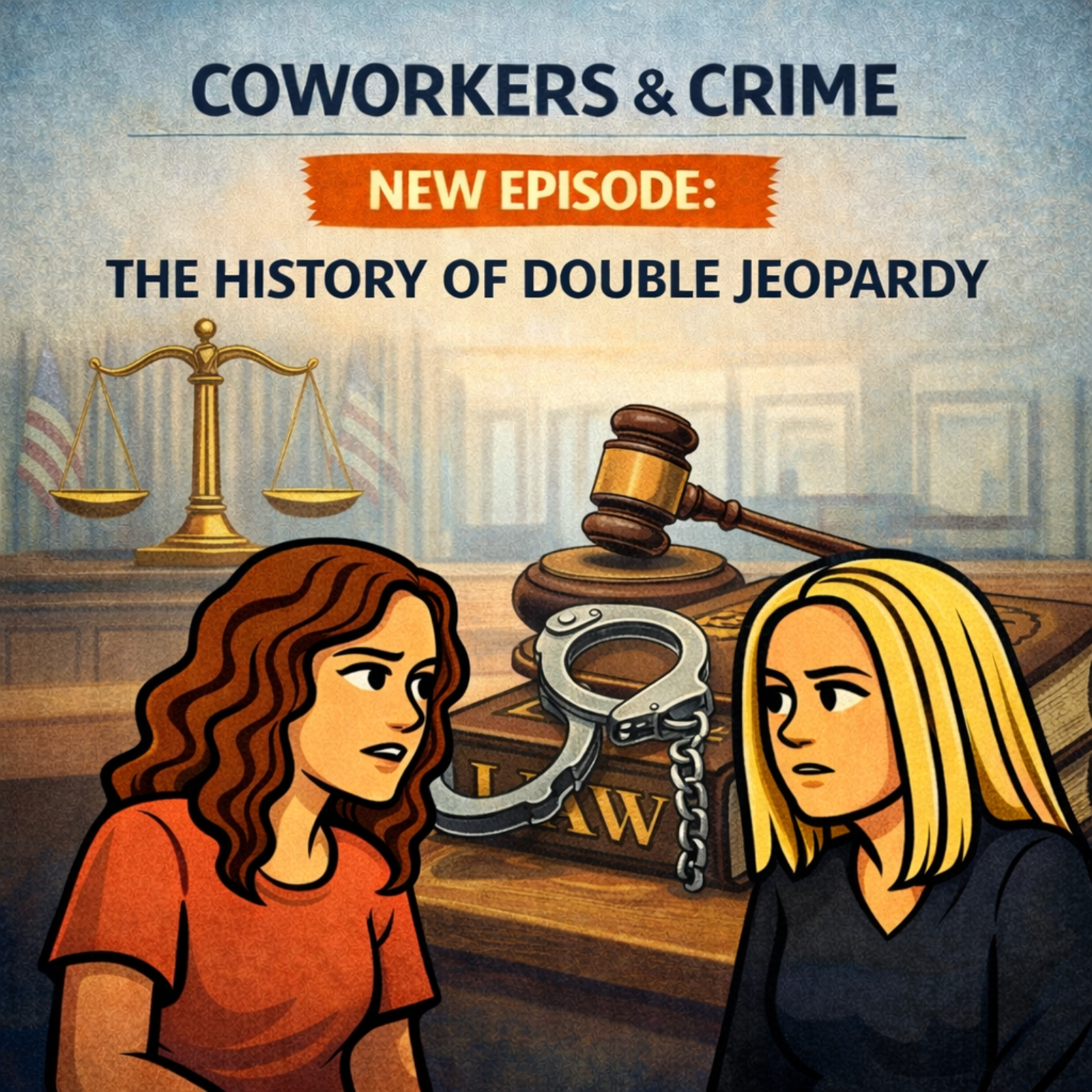
History of: Double Jeopardy
Coworkers & Crime · Rachel and Krystal
March 11, 202617m 47s
Audio is streamed directly from the publisher (content.rss.com) as published in their RSS feed. Play Podcasts does not host this file. Rights-holders can request removal through the copyright & takedown page.
Show Notes
The Fifth Amendment’s Double Jeopardy Clause protects individuals from being tried twice for the same offense. The U.S. Supreme Court has clarified when jeopardy begins, when retrials are allowed, and how prosecutions can occur across jurisdictions.
- Crist v. Bretz — Jeopardy attaches when the jury is sworn in a jury trial.
- Serfass v. United States — In a bench trial, jeopardy attaches when the first witness is sworn.
- Blockburger v. United States — Established the “same-elements” test to determine whether two charges are the same offense.
- Benton v. Maryland — Applied the Double Jeopardy Clause to state courts through the Fourteenth Amendment.
- United States v. Perez — A hung jury allows a mistrial and retrial.
- Fong Foo v. United States — A true acquittal is final, even if the ruling was legally incorrect.
- Heath v. Alabama — Two different states may prosecute the same conduct under the dual sovereignty doctrine.
- Gamble v. United States — State and federal governments may prosecute the same conduct separately.
Sources: U.S. Supreme Court opinions; Cornell Law School Legal Information Institute; Oyez case summaries.