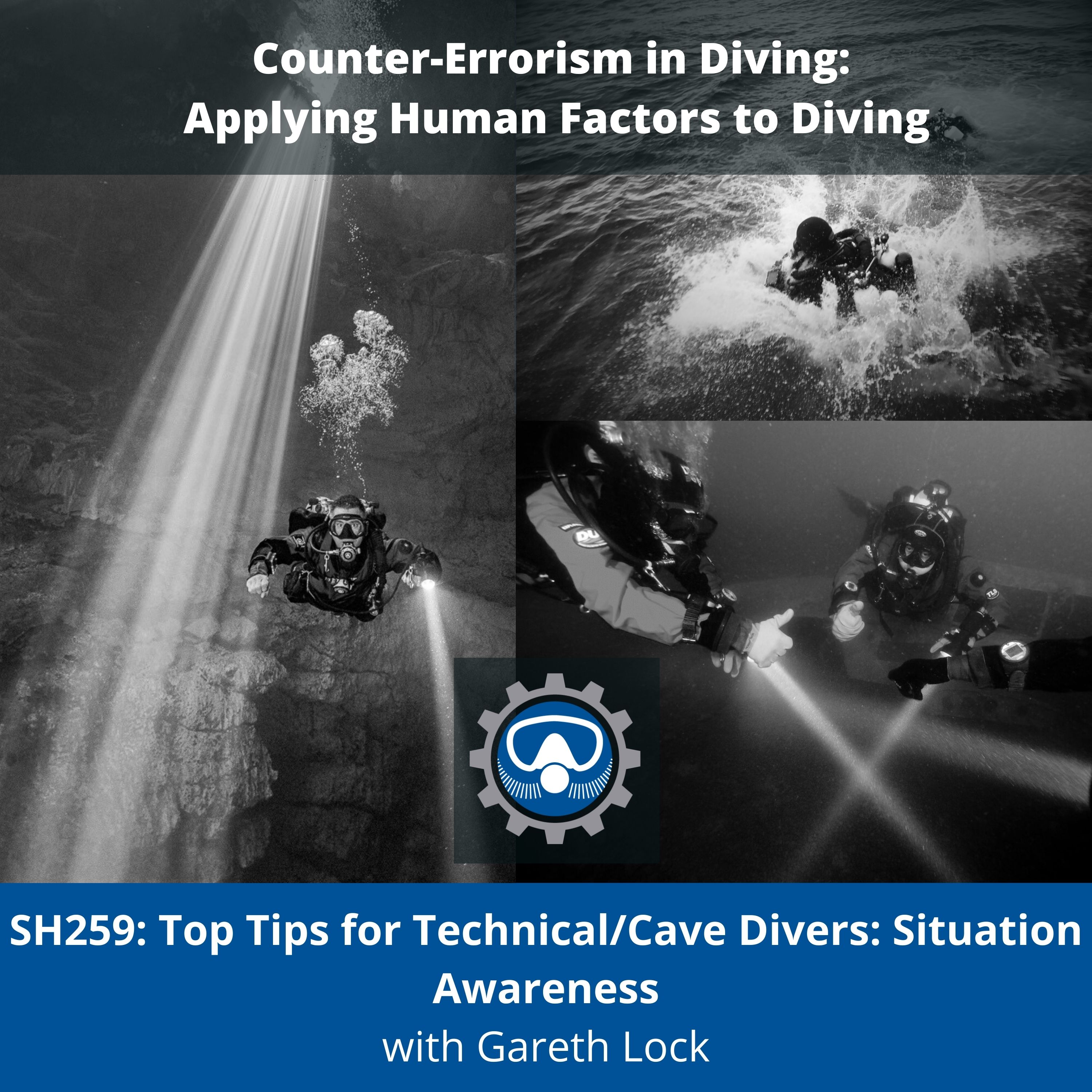
SH259: Top Tips for Technical/Cave Divers: Situation Awareness. Risk Perception is a critical skill - Experience Doesn’t Equal Judgement
Counter-Errorism in Diving: Applying Human Factors to Diving · Gareth Lock at The Human Diver
Audio is streamed directly from the publisher (episodes.captivate.fm) as published in their RSS feed. Play Podcasts does not host this file. Rights-holders can request removal through the copyright & takedown page.
Show Notes
This episode challenges the idea that more experience automatically means safer diving. Using research from aviation and real diving examples, it shows that what really matters is not how many dives you’ve done, but how you see and understand risk. Two people can face the same situation and make very different choices, not because of skill, but because of how dangerous it feels to them. The key message is that experience without reflection can lead to complacency, where risky behaviour starts to feel normal. Safer divers are the ones who think about their decisions, talk openly with their team, learn from near-misses and “no-go” choices, and keep questioning what feels routine. True competence comes from awareness, reflection, and honest communication, not just time underwater or the number of dives in a logbook.
Links: Normalisation of deviance blog: https://www.thehumandiver.com/blog/normalisation-of-deviance-not-about-rule-breaking
Drinkwater, J. L., & Molesworth, B. R. C. (2010). Pilot see, pilot do: Examining the predictors of pilots’ risk management behaviour. Safety Science, 48(10), 1445–1451. https://doi.org/10.1016/j.ssci.2010.07.001
Tags: English| Education & Content Type