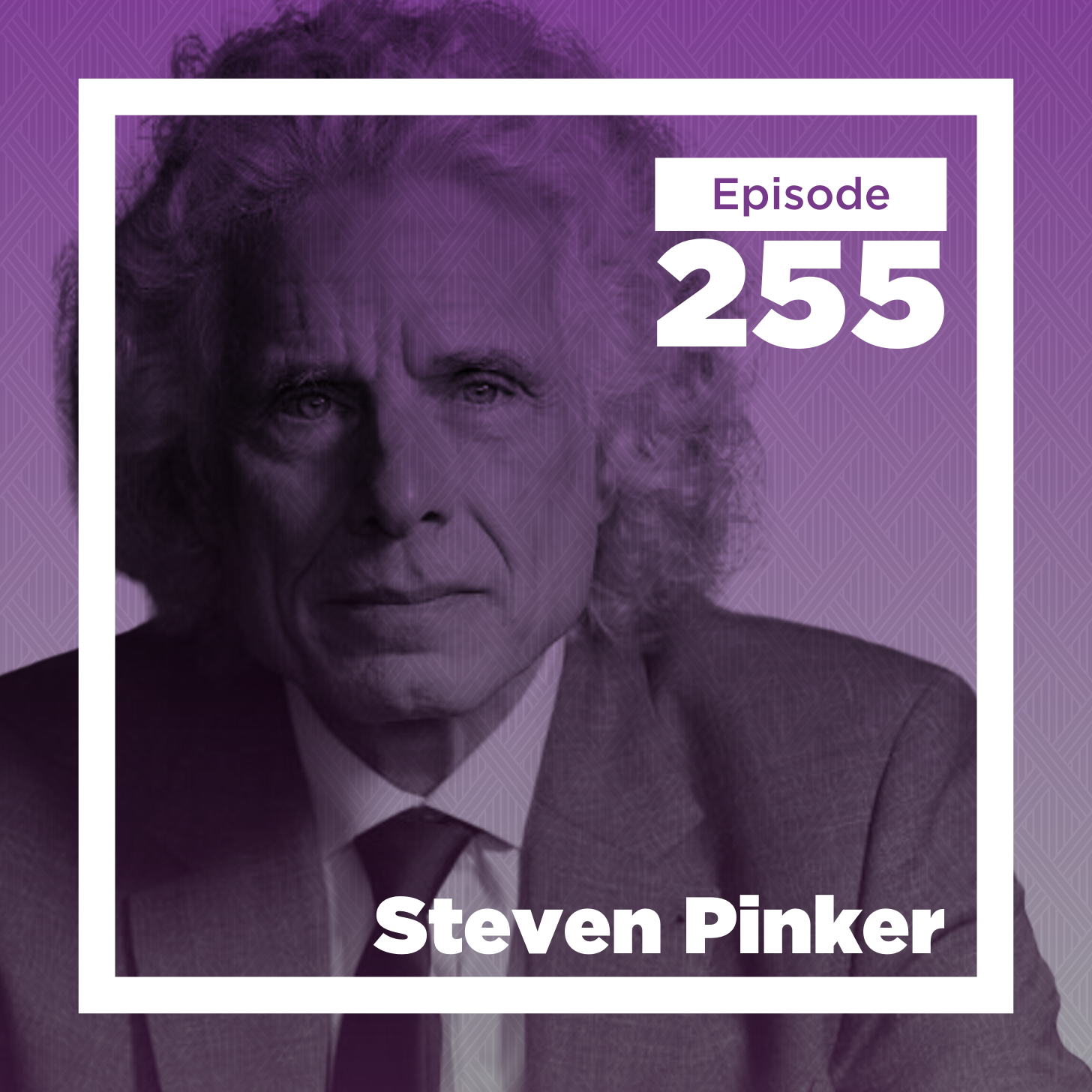
Steven Pinker on Coordination, Common Knowledge, and the Retreat of Liberal Enlightenment
Conversations with Tyler · Mercatus Center at George Mason University
Audio is streamed directly from the publisher (traffic.libsyn.com) as published in their RSS feed. Play Podcasts does not host this file. Rights-holders can request removal through the copyright & takedown page.
Show Notes
Steven Pinker returns to Conversations with Tyler with an argument that common knowledge—those infinite loops of "I know that you know that I know"—is the hidden infrastructure that enables human coordination, from accepting paper money to toppling dictators. But Tyler wonders: if most real-world coordination works fine without recursively looping (a glance at a traffic circle), if these models break down with the slightest change in assumptions, and if anonymous internet posters are making correct but uncomfortable truths common knowledge when society might function better with noble lies, is Pinker's theory really capturing how coordination works—and might we actually need less common knowledge, not more?
Tyler and Steven probe these dimensions of common knowledge—Schelling points, differential knowledge, benign hypocrisies like a whisky bottle in a paper bag—before testing whether rational people can actually agree (spoiler: they can't converge on Hitchcock rankings despite Aumann's theorem), whether liberal enlightenment will reignite and why, what stirring liberal thinkers exist under the age 55, why only a quarter of Harvard students deserve A's, how large language models implicitly use linguistic insights while ignoring linguistic theory, his favorite track on Rubber Soul, what he'll do next, and more.
Read a full transcript enhanced with helpful links, or watch the full video on the new dedicated Conversations with Tyler channel.
Recorded September 12th, 2025.
This episode was made possible through the support of the John Templeton Foundation.
Other ways to connect
- Follow us on X and Instagram
- Follow Tyler on X
- Follow Steven on X
- Sign up for our newsletter
- Join our Discord
- Email us: [email protected]
- Learn more about Conversations with Tyler and other Mercatus Center podcasts here.