
Conversations
2,140 episodes — Page 11 of 43
The unexpected plot twist: how a solo hiker stayed alive after shattering her pelvis in Joshua Tree National Park
Claire Nelson hadn't told anyone where she was going, and her phone lost signal shortly into her hike. As an experienced bushwalker, she never dreamed an adventure would turn out like this. (R) Claire Nelson was hiking alone in Joshua Tree National Park in 2018, when she slipped on a stack of boulders and fell 25 feet to the ground.The impact shattered Claire’s pelvis, and she couldn’t even raise herself on her elbows, let alone stand.She could reach her phone, but in the middle of the Californian desert it was out of range.Looking at the maps she'd downloaded, Claire realised she'd walked way off the trail, so there was no chance of another hiker coming by.Day after day, Claire lay on her back in the scorching sun hoping she could last long enough for someone to realise she was missing.This episode of Conversations touches on mothers, mountains, epic stories, deserts, hiking, solo adventuring, catastrophe, wilderness, big nature, injuries, Joshua Tree National Park, survival, rattlesnakes, coyotes, travel in the USA, travel insurance.
The unexpected plot twist: the story of how suicide survivor Oceane, who became a beloved midwife
At the age of 18, Oceane Campbell tried to take her own life. She survived and fought her way back into life, becoming a midwife and a mother of three (CW: discussion of suicide, please take care when listening). (R)Oceane Campbell has been very close with the raw stuff of life.She's a midwife and a mother, so she's seen and experienced the power of birth many times over.She has also been very close to death. At the age of 18, Oceane tried to take her own life.After she survived, she began a painstaking climb back into living.Oceane also slowly rebuilt her relationship with her mother, Cecile, and a few years ago they wrote a memoir of what had happened together.As an adult, Oceane met and married her wife Sarah and retrained as a midwife.She and Sarah now have three children of their own.Recently Oceane was named as Newcastle's Woman of the Year for her work in midwifery and her advocacy for the LGBTQ+ community.This conversation mentions family dynamics, families, mothers, origin stories, mothering, midwifery, self harm, life and death.Content warning: Please take care when listening as this conversation mentions suicide and sexual assault.Help is always available.If you need to talk, 24/7 crisis support is available from Lifeline by calling 13 11 14.You can also text with them and chat online with counsellors here
The unexpected plot twist: The story of Toni Jordan's lucky life
Toni Jordan grew up working in a T.A.B. with her cyclonic mother, and going to the greyhound races. Then she grew up to become a best-selling novelist. (R)Toni Jordan is a best-selling novelist.But she didn't grow up in a house full of books.Her mum ran a T.A.B. and her dad trained greyhounds for a living.Toni's mum was hardworking and hilarious, but she could also be hard to live with. All her life, Toni felt she had to look out for her mum.But after Marg became a grandmother, Toni began to admire her in new ways.This conversation talks about gambling, money, family dynamics, origin stories, parenting, mental health, writing, film, domestic violence and relationships.Content warning: this episode of Conversations contains discussion about domestic violence and self harm.
The unexpected plot twist: The tech nerd who changed course to help the homeless
Jon Owen's mum enrolled him in a computer science degree at University - expecting him to build a flourishing career; which he did. It just wasn't the one that everyone expected. (R)Jon Owen came to Australia as a small child.He survived playground racism at school, and became a high achiever.His family expected him to excel at school and university and go on to a flourishing career.And that's exactly what he did — in a way that nobody could have predicted.Jon was near the end of his computer science degree when he chose a life of 'intentional downward mobility'.He began working with the homeless, the addicted and the disenfranchised, and living with them too.Today he's the Pastor and CEO at Sydney's Wayside Chapel in Kings' Cross.This story is about family of origin, ancestry, life stories, disadvantage, drug use, children, faith, charity, social work, refugees, asylum seekers, Christianity, Jesus, family stories, family life, homelessness, caring, love, and downward mobility
The unexpected plot twist: From the David Jones food hall to Opera Australia
After a stint being homeless and living in his car, Stephen Smith was working at David Jones Food Hall when one of his colleagues noticed his remarkable singing voice. A few years later, he became a tenor on the operatic world stage (R)
An odyssey across Australia — how 11,000 sheep were walked from Victoria into the outback
In 1882, thousands of sheep set off from a property in Western Victoria. Their destination was a huge station in the Northern Territory, land which a sheep had never set foot on. To get there, these animals and their drover battled drought, flood, famine and doubt.Tom Guthrie is a winemaker and sheep farmer in Western Victoria, and is a descendent in a long line of enterprising farmers.Almost 150 years ago, after surviving shipwrecks, fires and floods, Tom's ambitious great grandfather sent 11,000 sheep by foot to unseen land in the Northern Territory.The journey took 16 months, and the sheep were led almost 3,500km by their drover, through drought, flood and famine.It became the longest sheep drive in Australian history.In recent years, Tom has had to call on his family's grit and resilience to get through the most unimaginable tragedy for a parent -- the loss of a child.This episode of Conversations deals with family history, ancestry, farming, books, death of a child, Australiana, winemaking, colonisation, grief, fatherhood, death and the loss of a child.
Antibiotic resistant superbugs and how to fight them
Professor Ian Henderson has spent his career searching for new treatments in the fight against antibiotic resistance superbugs
A life spent making — ‘Mr Millimetre’s’ memories with master maker Jeffrey Broadfield
Jeffrey Broadfield has made building his life. It has taken him around the world, and given him a place to belong.Jeffrey Broadfield is a master maker who builds houses to his clients’ wishes and quirks, using carpentry to turn recycled Australian hardwood into dream homes.It’s a craft Jeffrey says is dying.He grew up in Griffith, NSW, where he learned to swim in the irrigation channel and entice next door’s chooks over into his house to play.When he left school at 16, Jeffrey became interested in fitting and turning, but on the boring train ride to a factory job interview, a well-worn tie changed the course of his life.This episode of Conversations covers bespoke, custom craftsmanship, an epic life story, families, travel, architecture, marriage, nature, theatre.To binge even more great episodes of the ‘Conversations podcast’ with Richard Fidler and Sarah Kanowski go the ABC listen app (Australia) or wherever you get your podcasts. There you’ll find hundreds of the best thought-provoking interviews with authors, writers, artists, politicians, singers, psychologists, musicians, and celebrities.
Fish sperm sausages, and eyeball icecream: the Josh Niland story
From using fish eyes in ice cream, and not wasting the liver, to creating recipes with fish sperm, chef Josh Niland on his mission to revolutionise how we cook and eat fish. (R)Chef Josh Niland is devoted to changing ideas about how we cook and eat fish in the Western world.He believes that rather than eating just the fillet, we should aim to eat the whole fish, as we do nose-to-tail with animals. At his restaurants, he cooks with fish eyeballs, fish livers, fish heads, and milt (fish sperm).A big part of Josh's philosophy is about making fishing more sustainable. He says fishers risk their lives every, so we're duty-bound to use as much of the catch as we can.Josh's approach is winning him acclaim around the world. At 30, he won an award that is considered the Oscars of food writing, the James Beard Award, for his first book, The Whole Fish Cookbook.His passion has its roots in his childhood and his own origin story. At 8 years old, Josh fell terribly ill, and during a long convalescence, realised exactly what he wanted to do when he grew up.Today, Josh has several restaurants of his own.This conversation discusses family of origin, family, ancestry, parenting, origin stories, personal stories, reflection, memoir, life story, exploration and family dynamics
The architects of ancient Arabia – speaking to the sky
The deserts of Saudi Arabia are still holding on to many ancient secrets, hidden inside burial tombs and mysterious monumental structures called mustatils. Dr Hugh Thomas is on an archaeological mission to solve some of these mysteries.Hugh Thomas is an archaeologist who is fascinated by ancient mortuary practices and the secrets still hidden in the deserts of Saudi Arabia.In the north west of the country, thousands of mysterious rectangular structures, built in the fifth millennium, are still standing.They are monumental structures, up to 600m long, built from walls of rock and best viewed from the sky, where the chambers in which ritualistic killings took place, are clear. But who or what exactly motivated these ancient architects to build such things is not yet clear.And crisscrossing the landscape around them are kilometres of pathways called 'funerary avenues' -- routes carved out by people and herds, punctuated by burial tombs that look like jewellery from the air.This episode of Conversations explores ancient history, deep time, epic discoveries, the Middle East, Saudi Arabia, death and archaeology.
The epic highs and lows of Ji's life on the trampoline
Ji Wallace was at the top of his career as a gymnast and acrobat when a terrible injury and surprising diagnosis brought him back down to earth, temporarily.Ji was an energetic, only child growing up on a bush block in suburban Brisbane when his parents brought home a trampoline to keep him occupied.Ji took to it so quickly, he learnt how to flip by that afternoon, and was a national champion in gymnastics just a couple of years later.He managed to make a career out of bouncing around, representing Australia at the Olympics and then joining Cirque Du Soleil as an acrobat.But a terrible injury, and then the news that he was HIV positive, set Ji on a different course, although he didn't let it keep him grounded. This episode of Conversations explores elite athletes, gymnastics, the Olympics, Brisbane 2032, parenting, coming out, the queer community, LGBT issues, andHIV and AIDS.
Treating dementia — a new way of caring for the elderly
Psychiatrist Duncan McKellar wrote the report that triggered the Royal Commission into Aged Care Quality and Safety. He has seen how care changes when we take someone's life story into account.Duncan McKellar is a psychiatrist specialising in the care of older people with dementia and serious mental health conditions.When Duncan first started working with these patients, he was shocked to find elderly people tied to chairs and left in locked rooms.His advocacy helped trigger the Royal Commission into Aged Care Quality and Safety and he devoted himself to running a very different kind of care facility — one where everyone’s story is understood and respected.This episode of Conversations discusses aged care, elder abuse, older Australians, aging, Alzheimer's, dementia, aging population, family dynamics, grief.Further informationDuncan's book An Everyone Story: Finding our way back to compassion, hope and humanity is published by Wakefield PressRead more about Duncan and his daughter, Erin's musical A Box of Memories here.To binge even more great episodes of the ‘Conversations podcast’ with Richard Fidler and Sarah Kanowski go the ABC listen app (Australia) or wherever you get your podcasts. There you’ll find hundreds of the best thought-provoking interviews with authors, writers, artists, politicians, singers, psychologists, musicians, and celebrities.
The man with the magnificent voice James Earl Jones, and his legacy including Star Wars and the Lion King
The late James Earl Jones grew up with a stutter and hardly said a word for years. After an English teacher intervened, he grew up to become one of the world's finest actors. (R)Actor James Earl Jones died recently, at the age of 93.When he was touring Australia in 2013 with a production of Driving Miss Daisy, Richard had the chance to sit down with him and ask him about his life.Although we knew him for his magnificent voice, James Earl Jones grew up with a stutter.A stutter which was so severe that he hardly said a word for years. But after the intervention of an English professor, he decided to become an actor.He grew up to become one of his generation's finest stage and screen actors, in films like The Hunt for Red October, Patriot Games and of course, in Star Wars.This episode of Conversations explores Hollywood, film, cinema, stuttering, acting, Star Wars, cinema, obit, obituaries.To binge even more great episodes of the ‘Conversations podcast’ with Richard Fidler and Sarah Kanowski go the ABC listen app (Australia) or wherever you get your podcasts. There you’ll find hundreds of the best thought-provoking interviews with authors, writers, artists, politicians, psychologists, musicians, and celebrities.
Epic sharks — the ancient origins of the monsters of the sea
From sharks with wheels of teeth, to gargantuan sharks like the megalodon, palaeontologist John Long has traced the long and storied history of these oceanic hunters.Sharks and humans have a complicated relationship.We have long considered them monsters and super predators that should be eliminated for our own safety.But sharks are much more than scary and fearsome.The history of this incredible animal stretches back hundreds of millions of years.From sharks with wheels of teeth, to the ascent of the super predators like the megalodon, palaeontologist John Long has traced the long and storied history of these hunters, asking how they've managed to survive extinction despite everything that's been thrown at them.This episode of Conversations explores science, origin stories, ancient history, sharks, palaeontology, the ocean, climate change, megalodon, hunting and predators.Further informationThe Secret History of Sharks: The Rise of the Ocean's Most Fearsome Predators is published by HachetteTo binge even more great episodes of the ‘Conversations podcast’ with Richard Fidler and Sarah Kanowski go the ABC listen app (Australia) or wherever you get your podcasts. There you’ll find hundreds of the best thought-provoking interviews with authors, writers, artists, politicians, singers, psychologists, musicians, and celebrities.
Words of love — writing stories of Aboriginal land
Author and professor Anita Heiss on her parents' story of romance, and how she brings true history alive in her work.Anita Heiss is a Wiradjuri woman, an author of many books and Professor of Communications at The University of Queensland.She has described herself as a “concrete Koori with Westfield dreaming.”Many of Anita's books focus on great love stories, and the inspiration for these romances came from the enduring, devoted love she saw between her parents – the very Austrian “Joe-the-carpenter”, and Elsie, a proud Wiradjuri woman.Anita’s latest book goes back to the 1800s, bringing to life the brutal frontier wars in Bathurst, when martial law was declared.This episode of Conversations discusses First Nations Australians, interracial relationships, Indigenous culture, colonisation, colonialism, family, origin stories, love stories, Australian history, ancestry.
My brother's death — writing the story of a family's grief and loss
For decades, Gideon Haigh and his mother were the only two people who really knew what happened on Jaz's last night. This year, it all poured out.Gideon Haigh's brother Jasper was 17 years old when he died in a car crash.Until this year, Gideon and his mother were the only two people who really knew what happened to Jaz on that tragic night.Gideon has spent decades perfecting answers to questions about his brother — answers that never invited further discussion.This year, something peculiar happened, and in 72 hours Gideon poured his pent-up recollections onto the page, to be turned into a book about the story of his brother, Jaz.This episode touches on grief, family stories, loss, mothers, brotherhood, love, life, death, writing, reflection, secrets, storytelling, memoir, life stories, family dynamics and personal stories.
Quitting alcohol – the story of how Seana got sober
After a childhood spent trying to escape her father's booze-fuelled outbursts, Seana developed her own problem relationship with drinking. But by her mid-50s, Seana decided she had had enough.Seana Smith grew up in a beautiful house in rural Scotland, and when things were good at home, they were wonderful.But Seana’s father loved to drink, and his habit took over her family’s life.Despite the fights, abuse and violence, Seana's mother couldn't bring herself to leave her husband, and so Seana found every excuse to get away -- from pony camp at 12 years old, to applying for boarding school without her parents' knowledge, and then to Oxford University.Eventually Seana fell in love and ended up on the opposite side of the world, in Australia, where she started a family of her own.But as she reached her mid 50s, Seana realised that the way she loved to drink meant she hadn’t really left home at all, and so she started her own journey of sobriety.Seana's story deals with themes of alcoholism, substance abuse, problem drinking, dementia, family violence, sobriety, motherhood and getting sober.
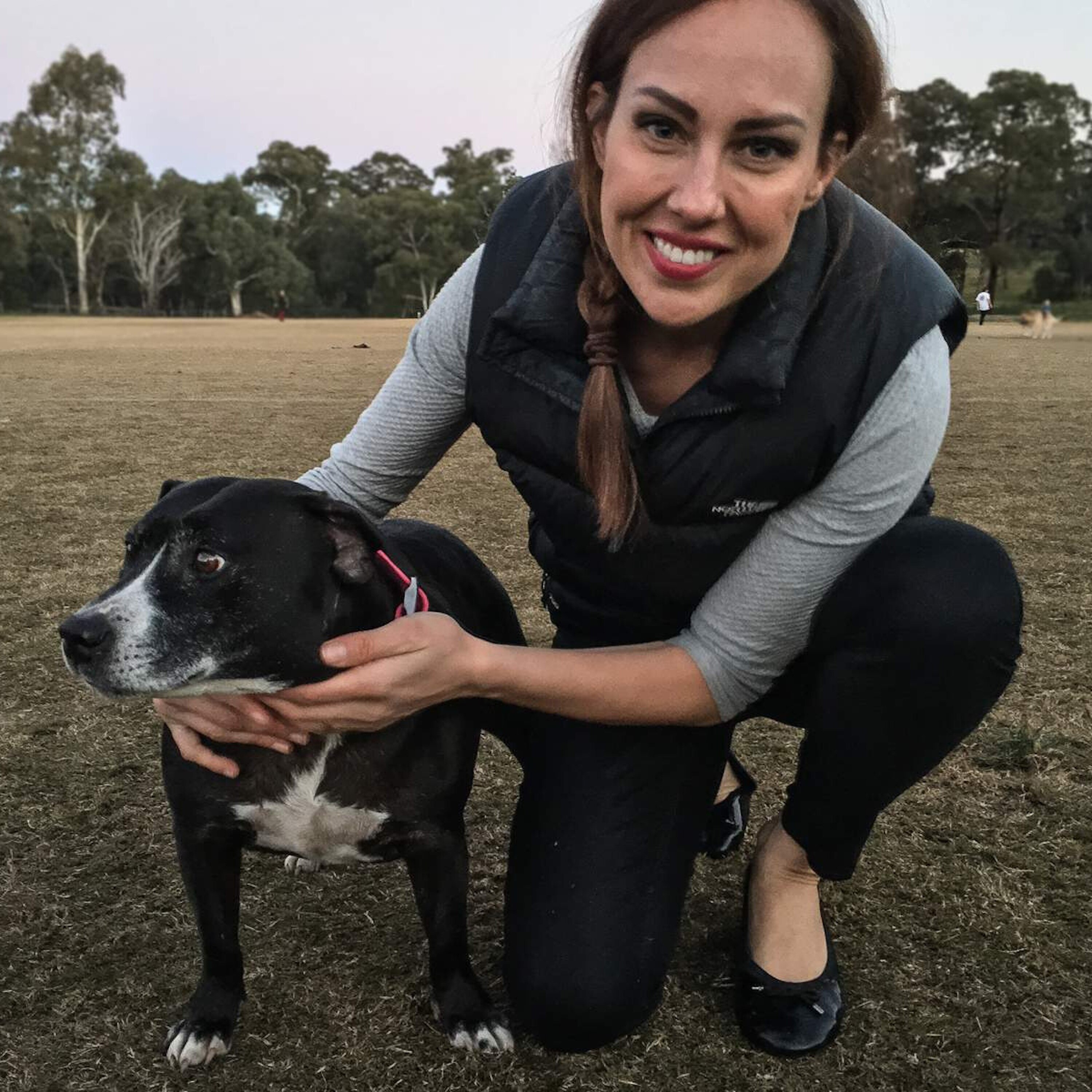
How dogs think — and what they think of us
Dog behaviourist Laura Vissaritis uses science and psychology to better understand what our dogs really are telling us and how our behaviour influences theirs (R).Laura is a dog behaviourist with qualifications in both animal behaviour and human psychology.Dogs were the first animals to become domesticated, and over the centuries they've evolved from their wolfish origins to become more useful, attentive and appealing to us. Laura says that when a dog is displaying 'difficult' behaviours like too much barking, pulling on the lead, or jumping up, the first step in the process is often changing the behaviour of their human. She also believes with the increasing tendency in Australia to view our dogs as quasi-people has led to heavy expectations on many dogs, to which they can't always measure up.This episode of Conversations explores dogs, pets, animal behaviour, animal psychology, fur babies, service dogs, psychology, co-dependence, animal rescue, death, grief and animal welfare.To binge even more great episodes of the ‘Conversations podcast’ with Richard Fidler and Sarah Kanowski go the ABC listen app (Australia) or wherever you get your podcasts. There you’ll find hundreds of the best thought-provoking interviews with authors, writers, artists, politicians, psychologists, musicians, and celebrities.
My Stolen Generations story: how Brenda was taken from her family, twice
As a young child, chunks of Brenda Matthews' early memories were missing until her biological mother told her the truth of what happened. Together they are slowly healingWiradjuri woman Brenda Matthews was stolen from her family, along with her six siblings, when she was two-years-old.She came from a loving, hardworking, religious family.She was fostered by an affectionate white family, and she blended into her new life happily.After six years of living with them, she was told it was time to return “home” to her biological family — who she didn’t remember at all.For most of her life, Brenda suppressed her memories of her white parents and their love and care. Then, as an adult, she worked up the courage to bring both sides of her family together, so they could all slowly heal.This episode touches on family history, the Stolen Generations, memoir, life stories, ancestry, modern history, origin stories, personal stories, epic storytelling, reflection, grief, loss, exploration and memory.
The story of the melancholy spy
When a devastating injury ended Jack Beaumont's career as a jet fighter pilot, he decided to become a spy, in the French Secret Service.Jack Beaumont (not his real name) is a former intelligence operative and the author of several spy thrillers.Jack grew up in a turbulent family in Paris and when he got older he decided to train as a jet fighter pilot with the French Air Force.During a training dogfight at supersonic speed, Jack suffered a devastating injury that meant he could no longer fly jets, but he still wanted a job steeped in adventure and danger.So he began piloting covert spy missions, and eventually became a spy with France's secret intelligence service: the DGSE, maintaining up to five secret identities at a time.While he now lives in a beautiful part of Australia with his wife and family, Jack has struggled to leave behind the extreme hyper vigilance of his early working life.This conversation discusses family dynamics, adventure, history, global politics, spies, military life and spycraft.
The psychedelic revolution — how MDMA mended Rebecca's mind
While struggling with PTSD, social researcher Rebecca Huntley chose an unconventional and underground path to healing — MDMA therapy.Rebecca Huntley is well known to many Australians for her formidable intellect and career as a broadcaster, an author and a social researcher.But despite her impressive public-facing life, in private, Rebecca's trauma from a difficult upbringing refused to leave her.At 50, she walked the Camino in Italy and realised that after 30 years of therapy, she was still living with a great deal of anger about what had happened to her as a child.She decided to take a radical step to deal with her PTSD and her suffering. She had three sessions of MDMA therapy, delivered by an underground healer. The treatment changed Rebecca's life and her view of the world.This conversation discusses therapy, trauma, psychedelics, drugs, parenting, grief, family, mothers, ancestry, fathers, family dynamics, domestic violence, going no contact, exploration and loss.To binge even more great episodes of the ‘Conversation podcast’ with Richard Fidler and Sarah Kanowski go the ABC listen app (Australia) or wherever you get your podcasts. There you’ll find hundreds of the best thought-provoking interviews with authors, writers, artists, politicians, psychologists, musicians, and celebrities.
Smuggled out of Wewak — Carolyn's dramatic escape from Papua New Guinea
When Carolyn Blacklock's passport was confiscated from her in a foreign country she was faced with a scary reality that got wilder at every turnCarolyn Blacklock's passport was taken from from her at the Port Moresby International Airport when she was trying to get on a plane back to Australia. It was at that moment she realised just how much trouble she was in. Carolyn, who had headed up the national power company in Papua New Guinea and worked for the World Back there, had faced charges of corruption after a change in government. When the court cleared her of any and all wrongdoing, she thought she would be able to leave the country, but still she was detained or threatened at every turn.So, Carolyn set about getting herself out of PNG and back to Australia by any means necessary.What ensued was a wild, nine-day journey travelling in a helicopter, in the boot of a four-wheel drive, in a tiny dinghy and on foot. While Carolyn did get herself out of PNG, she desperately misses the country she called home for more than a decade.Carolyn's story explores escape, adventure, family, regional development, the Pacific, banking, diplomacy, corruption, governance, country Australia, Papua New Guinea, close neighbours, emigration, illegal immigration, politics and foreign affairs.
When the pirate got paid on the island of Corfu
Kári Gíslason was 18 when he met a mysterious stranger called 'the Pirate' on the Greek island of Corfu. When he fled the island, he left behind a debt he promised to one day repay.When Kári Gíslason was 18, he came to the island of Corfu as a stony-broke traveller. But he quickly found work in a little town: lime washing walls and working as a builder’s labourer.The man who gave him the work was a mysterious figure known simply as ’the Pirate’.At first, Kári thought it was a nickname given to him as a comic exaggeration of his former life as a ship’s cook.But he received warnings from several people to get away from the Pirate.And when the Pirate said he wanted Kári to sail with him across the Atlantic to deliver unnamed goods to Brazil, Kári began to plot his escape.
The spark that saw Andy become solar-powered
Andy McCarthy found passion for solar power as a high school dropout. He began one of Australia's biggest solar businesses, right in the heart of Victoria's coal country. But then a breakdown changed everything for Andy and his familyAndy McCarthy dropped out of high school in year 10. He was a highly energetic kid but found it difficult to latch onto any one thing for long.Andy was happier out of school, and tried a whole lot of different jobs.Then at 19, he connected his first solar panel and was suddenly fired up with a jolt of enthusiasm.He set up a rooftop solar business right in the middle of coal country – in the LaTrobe Valley in Country Victoria.Setting up a solar panel shop in a place surrounded by some of Australia’s biggest coal-fired power stations was always going to invite scepticism.But Andy’s drive saw the business grow from a garage operation to one of the biggest employers in the area. At the height of his success though, Andy suffered a breakdown that landed him in hospital – and he realised he would have to change, along with the rest of the planet.Andy's story covers themes of neurodivergence, ADHD, ADD, attention-deficit/hyperactivity disorder, climate change, solar power, solar panels, batteries, small business, education, schooling, success, environmental issues, the economy, economic development, regional Australia and industry.
The sprawling history of the human soul — part two
In this two-part series, historian Paul Ham traces how our definition and understanding of the human soul has transformed over thousands of years. Humans have been probing their own invisible inner voice since the Stone Age. But where did the concept of the soul even come from? And is it really what separates the living from the dead?Historian and writer Paul Ham has traced how our definition and understanding of the human soul has changed over thousands of years.Human beings have been probing their own inner voice, what it means and how it makes us feel, since the Stone Age.The human soul has long thought to be an invisible, inner essence that makes each of us distinctively different from the rocks and trees, and which also separates the living from the dead.But where did it come from? Who invented the concept of the soul? And do we still believe in the soul as inextricably linked to the human spirit?In this two-part series, Paul investigated first what the pre-modern world called 'the soul'. In this episode, he explores how the concept of the soul disappeared, and became 'the mind' in the modern era.This episode touches on ancient history, philosophy, neurology, religion, death, epic storytelling, faith, exploration and memory.
The trailblazing papergirl, lawyer and playwright
Suzie Miller's frugal and free range St Kilda childhood taught her to question almost everything. She grew up to become a trailblazing writer and lawyer (R)Suzie Miller grew up in St Kilda, and from early in life she had a number of part-time jobs. She became a trailblazing paper girl in her local area, when the role was usually only offered to boys.As a young woman Suzie trained as a lawyer and began working with homeless teenagers in Sydney’s Kings Cross. She then began to write stories and plays out of the lives she was encountering in court.She thought these were stories the world needed to hear. And the world sat up and listened.Suzie’s award winning play Prima Facie, a one woman show about how the legal system treats victims of sexual assault, has received standing ovations from its Sydney premiere to the West End in London and on Broadway in New York. The play has since inspired a TV show, a movie and a novel.Suzie's story covers themes of grief, family, motherhood, memoir, an exploration of the legal system, grief, and reflections on the changing role of women the modern world.
My aunt was smuggled to Tashkent by Stalin
Helen Vatsikopoulos' family never spoke about what happened to her aunt, Aspasia after the Greek Civil War. She uncovered a story of secret evacuation, exile and unknown family members.Helen Vatsikopoulos was born in a little mountain village on the northern border of Greece.She came to Adelaide as a young girl and grew up to become a TV journalist, covering big international stories for the ABC and SBS.When she was in her 30s, Helen and her husband were visiting her parents when her father started telling stories she had never heard before.He remembered what happened in their village during the Greek Civil War and how Helen’s aunt Aspasia, along with thousands of other Greeks, were smuggled by Stalin to a new life in Tashkent, Uzbekistan.The family didn't know what became of Aspasia, so Helen got to work to find out.This episode touches on family history, communism, memoir, life stories, ancestry, modern history, mountains, origin stories, personal stories, epic storytelling, reflection, grief, loss, exploration and memory.
Heavenly beings: the icon paintings of Michael Galovic
Artist Michael Galovic had been painting mysterious and mystical icons for decades before he truly understood the theology behind what he was doing — expertly and purposefully distorting reality to create a window into a heavenly and otherworldly realm
Dave Gleeson needs a damn good lie down
Dave Gleeson is known for his blistering performances in The Screaming Jets and The Angels, but he grew up singing at Mass in Cardiff, with a mum who opened their home to hundreds of foster children (R)
The sprawling history of the human soul — part one
In this two-part series, historian Paul Ham traces how our definition and understanding of the human soul has transformed over thousands of years. Humans have been probing their own invisible inner voice since the Stone Age. But where did the concept of the soul even come from? And is it really what separates the living from the dead?
The Natural Horseman
People travel from all over the world to learn about horses from Ken Faulkner. But after a life-threatening riding accident on his favourite horse, Smoke, Ken had to learn to walk and ride again, rediscovering himself in the process
Love, death and walking : writer Ailsa Piper
In 2014, Ailsa Piper's husband's unexpected death cast her adrift in a sea of grief. Then bit by bit, life called her back. Ailsa Piper is a writer and a walker.She has used walking throughout her life as a meditative salve and a way to reflect on her life.In 2014 Ailsa's beloved husband Peter died suddenly, while she was interstate for work.His death cast her adrift in a sea of grief, but bit by bit life called her back.A few years ago Ailsa had her own life-threatening health scare, and now she sees herself as a lucky woman.Further informationFor Life is published by Allen & Unwin.Ailsa's first book, the bestselling memoir Sinning Across Spain is published by MUP.To binge even more great episodes of the ‘Conversations podcast’ with Richard Fidler and Sarah Kanowski go the ABC listen app (Australia) or wherever you get your podcasts. There you’ll find hundreds of the best thought-provoking interviews with authors, writers, artists, politicians, singers, psychologists, musicians, and celebrities.
The farm that Carol built
On Carol Perry’s communal farm there’s ‘no loneliness, and no mortgages’. It’s a long way from the life her parents expected her to lead, and she got there after an overseas motorbike tour and teaching in a war zone
Mummy bundles, fossils and DNA
Kim McKay is the Director and CEO of The Australian Museum, responsible for 22 million objects that tell the history of the world (Content warning: this episode discusses human remains held in museums and the repatriation process. Indigenous, Torres Strait Islander and Pacific Islander peoples, please listen with care.)
'More than cheesecake' — humanity's shared musical history
Like tracing the cultural history of breathing or love, it's difficult to pinpoint exactly when, how or why humans started making music. But composer and broadcaster Andrew Ford has uncovered the story of music, from pre-historic times to now
Conversations Gold: The silver medal that changed Laurie Lawrence
As a child, the superstar swim coach lived with a chronic lung condition, and had part of a lung removed. In 1956, a huge event held in his family's backyard changed the course of his life (R)
Conversations Gold: Jana Pittman's turning point
Jana Pittman became one of Australia's most famous athletes as a young woman. Then at age 30, she found herself at a painful crossroads (R)
Conversations Gold: Paralympian Christie Dawes is super/normal
The Tokyo Paralympics were Christie's seventh as a wheelchair racing competitor, but Christie almost gave up marathons after the 2013 Boston Marathon, and the most frightening experience of her life (CW: mention of suicide) (R)
Conversations Gold: The life of Anna Meares
Anna's stellar cycling career saw her smash Australian Olympic records and become the World Champion 11 times. Then to the surprise of many, she walked away from cycling for good, returning to the world stage as Australia's Chef de Mission for Paris 2024 (R)
Conversations Gold: Lisa Curry on winning gold and losing Jaimi
Swimmer and entrepreneur Lisa Curry's life has been full of highs and lows both in and out of the pool. But it was the death of her daughter, Jaimi, that completely changed her. This is how Lisa fought to get her old self back after her unimaginable loss (R)
Conversations Gold: Patrick Johnson's golden run
How a boy who grew up on a fishing trawler became the first man in Australia to run 100 metres in under 10 seconds (R)
Bruce McAvaney — what a legend, what a champion
Bruce McAvaney is the voice of Australian sport, with a commentating style built on his relentless work ethic and genuine passion. But if he hadn't chucked a sickie one day while working as a public servant, the past 50 years of Australian sport might have sounded very different
Louise Kennedy on Belfast, bombs and a disastrous pav
Writer Louise Kennedy grew up at the height of The Troubles, just outside of Belfast, where violence was ever-present. When her family's pub was bombed, they decided to move south, where Louise trained as a chef. But after decades of working in the kitchen, a chance invitation to a writer's group lead to an unexpected new career (R)
It's 'all sweet' for Tony Armstrong
Tony Armstrong felt like a failure when his AFL career ended. But he found his feet again, falling upwards into a different life, calling footy matches, hosting live television, and now writing a children's book. This is why Tony isn't scared of failing anymore
Lele's home under the Morning Star
Forced to flee West Papua, Lele's family wandered for years before coming to Australia. When they eventually received Australian citizenship and passports, the family was finally able to travel to West Papua. But Lele's homecoming journey was bittersweet, after tragedy struck
Tidying up the crematorium
When writer Lily Brett went to visit Auschwitz, the death camp both her parents had survived, she couldn't help but start tidying up the place where so many of her family had been murdered, and touching the ashes of what was left
PRESENTS — I Was Actually There | The Boxing Day tsunami 2004
I Was Actually There is a new ABC podcast featuring gripping stories told by people who witnessed history first-hand. Hear what it was like to be a police sniper tasked with handling the gunman at the Port Arthur massacre; how it felt to be a teenager seeing The Beatles during their record-breaking 1964 Adelaide visit; and how one man survived being trapped 1km underground for 14 days, after the Beaconsfield mine collapse.Follow the I Was Actually There podcast on ABC listen.In this episode, Rebekah Giles and her boyfriend were enjoying a last-minute Christmas holiday in Thailand when the deadliest tsunami in recorded history struck. Rebekah recounts her remarkable survival, from the moment a torrent of water blew apart her beachfront hut on Phi Phi Island.
The many magnificent, mysterious faces of Monte Punshon
Monte Punshon was 103 years old when she was crowned the world's oldest lesbian, but that wasn't how she summed up her extraordinary life. Historian Tessa Morris-Suzuki charts Monte's adventures through underground bars and secret clubsAt 103 years old, Ethel May Punshon, who was variously known as Miss Montague, Mickey and Monte, was crowned the 'world's oldest lesbian'.However, that wasn't how she summed up her extraordinary life.Historian Tessa Morris-Suzuki has researched Monte's long, mysterious and adventurous life.Monte worked in children's theatre at the turn of last century, frequented underground drag parties in the 1930s, and made trailblazing trips to Japan.Throughout her life, Monte was driven by her unrelenting curiosity and a simple motto: don't be afraid.Further informationA Secretive Century: Monte Punshon's Australia is published by MUPTo binge even more great episodes of the ‘Conversations podcast’ with Richard Fidler and Sarah Kanowski go the ABC listen app (Australia) or wherever you get your podcasts. There you’ll find hundreds of the best thought-provoking interviews with authors, writers, artists, politicians, psychologists, musicians, and celebrities.
Writer Winnie Dunn on identity and the meaning of homecoming
Winnie Dunn is the General Manager of Sweatshop Literacy Movement. Here she tells the story of how family and writing brought her home to Tonga, and gave Winnie the power to launch herself into the world on her own terms.Winnie grew up between her father and stepmother's house and the home of her grandmother — a brick home in Mount Druitt called the house of fe'ofa'aki, meaning “to love one another”.For years, Winnie's Tongan identity made her uneasy and instead of being a homecoming, her first trip to Tonga as a teenager was a disaster.Over time her understanding of what it means to be Pacific Islander evolved, and at the age of 28, she became the first Tongan-Australian to have a novel published.Further informationDirt Poor Islanders is published by HachetteTo binge even more great episodes of the ‘Conversations podcast’ with Richard Fidler and Sarah Kanowski go the ABC listen app (Australia) or wherever you get your podcasts. There you’ll find hundreds of the best thought-provoking interviews with authors, writers, artists, politicians, singers, psychologists, musicians, and celebrities.
The power and determination of Nas Campanella
Nas Campanella was six months old when she lost her sight. She fell in love with the radio and audio books as a child, growing up to become one of Australia's most well-known TV and radio journalists (R)