Show overview
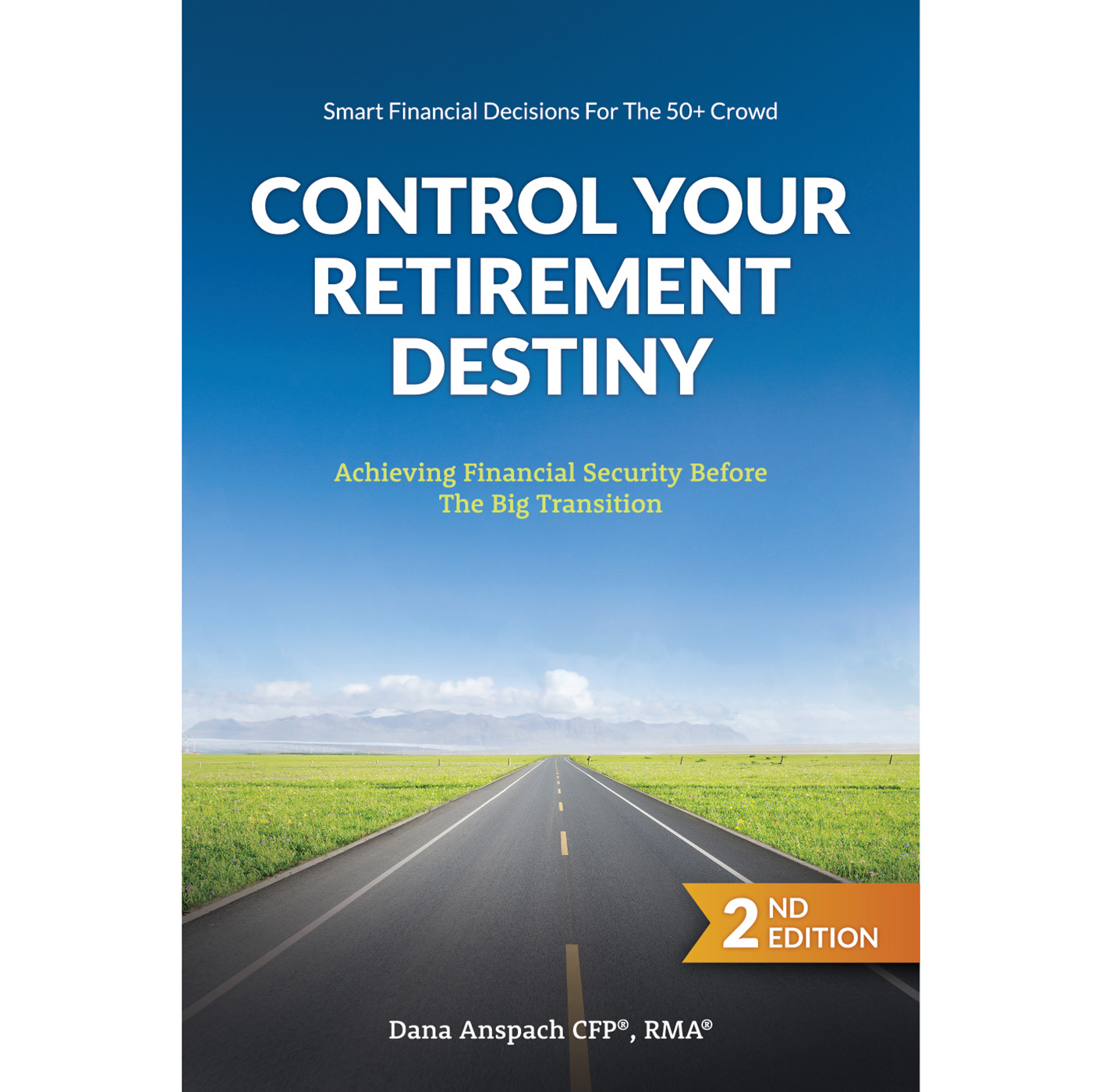
Control Your Retirement Destiny launched in 2018 and has put out 15 episodes in the time since. That works out to roughly 5 hours of audio in total. Releases follow a monthly cadence.
Episodes typically run twenty to thirty-five minutes — most land between 18 min and 22 min — and the run-time is fairly consistent across the catalogue. None of the episodes are flagged explicit by the publisher.
The catalogue appears to be on hiatus or wound down — the most recent episode landed 7.2 years ago, with no new episodes in over a year. Published by Dana Anspach.
From the publisher
A step-by-step guide on how to align finances to support a comfortable retirement lifestyle.
Latest Episodes
Ep 15Chapter 13 – “Estate Planning"
In this episode, podcast host and author of “Control Your Retirement Destiny”, Dana Anspach, covers Chapter 13 of the 2nd edition of the book titled, “Estate Planning.” If you want to learn even more than what there is time to cover in the podcast series, you can find the book “Control Your Retirement Destiny” on Amazon. Or, if you are looking for a customized plan for your retirement, visit us at sensiblemoney.com to see how we can help. Chapter 13 – Podcast Script Hi, this is Dana Anspach. I’m the founder and CEO of Sensible Money, a fee-only financial planning firm. I’m also the author of Control Your Retirement Destiny, a book that shows you how to align your finances for a smooth transition into retirement. In this podcast episode I cover the material in Chapter 13, on “Estate Planning.” If you like what you hear today, go to Amazon and search for Control Your Retirement Destiny. And, if you are looking for a customized plan, visit sensiblemoney.com to see how we can help. ----- Even if you have never been to an attorney or drawn up a will or a trust, you have probably still done some type of estate planning- and not even known that’s what you were doing. How could that be? If you have ever opened a bank account or named a beneficiary on a retirement account or life insurance policy, that’s estate planning. It’s a legal document that specifies where your assets go when you pass. For example, if you open an account titled jointly with a spouse, friend or child, when you pass, that account belongs to them. It doesn’t matter what your will says – the titling of that account overrides any other documentation. The same thing occurs with beneficiary designations on retirement accounts. The financial institution must disburse the funds to the beneficiaries you have listed – it doesn’t matter if you have a trust or will that says something else. Many people don’t know this. And it can get you in trouble. I saw this first-hand with George and Faye. George was referred to me shortly after Faye passed away from pancreatic cancer. This was a second marriage and Faye had two children from a previous marriage. When Faye was diagnosed, they had wisely visited an attorney and had a trust drawn up. Faye wanted 1/3 of her assets to go to each of her two children and 1/3 to George, so that is what the trust said. However, nearly all of Faye’s assets were in her company retirement plan. And Faye never changed the beneficiary designation on this plan to the trust. George was named as the beneficiary. Unfortunately, George and Faye thought the trust document would take care of this. They did not realize the trust has no legal authority over her retirement plan unless she took the next step of filing updated beneficiary paperwork. Now, George was in the awkward position of inheriting the entire account. Luckily, George is a good guy, and continues to honor Faye’s wishes by taking withdrawals and then sending the appropriate after-tax amounts to Faye’s children. However, this has unfortunate tax consequences for George, forcing some of his other income into higher tax rates. Overall though, this case has a happy ending because George is doing the right thing. But not everyone would. The type of estate planning error that happened to George and Faye could have been avoided if the estate planning had been coordinated with the financial planning. Many attorneys don’t ask clients for a detailed net worth statement. I’m not sure why. They should and they should look at the types of accounts that someone has so they can make recommendations that will work. An attorney can draft the best documents in the world, but if they don’t make sure the client follows through on all the other paperwork that is needed, those documents can become pretty ineffective. In this podcast, I’m going to cover a few basic things you need to know about estate planning. However, I am not an attorney. Nothing I say should be considered legal advice. Rules vary by state and you will always want to get advice that is specific to your situation. With that in mind, the four topics I want to cover are titling accounts, setting up beneficiary designations, trusts, and I’ll briefly touch on the topic of estate taxes. First, account titling. You have retirement accounts, and pretty much everything else. When I say retirement accounts, I mean IRAs, Roth IRAs, 401ks, 403bs, SEPS, SIMPLE IRAs and any other type of company sponsored retirement account like a pension or deferred compensation plan. Retirement accounts must be in a single person’s name. We are frequently asked by married couples if they can combine their retirement accounts, or title an IRA in a trust. The answer is no. A retirement account must be owned by one individual. The way you specify where your account goes upon your passing is by the beneficiary designation you put on file. With non-retirement accounts you have more choices. Most people open bank accounts in their name or jointly with a spouse o
Ep 14Chapter 12 (Part 2) - “Interviewing Advisors and Avoiding Fraud"
In this episode, podcast host and author of “Control Your Retirement Destiny”, Dana Anspach, covers part 2 of Chapter 12 of the 2nd edition of the book titled, “Whom To Listen Too.” Part 2 covers "Interviewing Advisors and Avoiding Fraud." If you want to learn even more than what there is time to cover in the podcast series, you can find the book “Control Your Retirement Destiny” on Amazon. Or, if you are looking for a customized plan for your retirement, visit us at sensiblemoney.com to see how we can help. Chapter 12 (Part 2) – Podcast Script Hi, this is Dana Anspach. I’m the founder and CEO of Sensible Money, a fee-only financial planning firm. Fee-only means no commissions. I’m also the author of Control Your Retirement Destiny, a book that shows you how to align your finances for a smooth transition into retirement. This podcast is an extension of the material in Chapter 12, on “Whom To Listen To”. I’ll be covering the topics of avoiding fraud and how to interview potential advisors. If you like what you hear today, go to Amazon and search for Control Your Retirement Destiny. And, if you are looking for a customized plan, visit sensiblemoney.com to see how we can help. ----- We’ve all heard the saying “if it’s too good to be true….” So why do we fall for fraud, over and over? I think I know the answer. To recognize if something is too good to be true, you must know what truth is in the first place. And when it comes to investing, a lot of people have no idea what is realistic and what is a fantasy. By the end of this podcast, you will not be one of those people. I’ve got several real-life stories to tell – stories about fraud and why people fell for it. You are about to learn what to watch out for. And as a side note – for the personal stories I tell I change names and details for privacy reasons. Although details are changed, the substance of each story is true. Let’s start with the biggest financial scam in U.S. history – what is known as the Bernie Madoff scam – a 65 billion-dollar Ponzi scheme. If you haven’t heard of him, Bernie Madoff was the former chairman of the NASDAQ stock market. Naturally when he started his own investment firm, people trusted him. His scheme came unraveled in December 2008 and many families lost their entire life savings. One of the men credited with bringing down Madoff’s scheme is Harry Markopolos. He tells his story with his co-author Frank Casey in their book called No One Would Listen: A True Financial Thriller. How did Harry Markopolos figure out Madoff’s scheme? Markopolos said, “As we know, markets go up and down, and Madoff’s only went up. He had very few down months. Only four percent of the months were down months. And that would be equivalent to a baseball player in the major leagues batting .960 for a year. Clearly impossible. You would suspect cheating immediately.” Maybe Markopolos would suspect cheating immediately, but would you? Harry Markopolos was in the investment business. He knew what is and is not possible. But what about the average person who walked into Bernie Madoff’s office and was told that they could consistently earn 12% returns each year? Any one of us in the investment business would walk out and head to the authorities. But the average investor? They think that sounds great and that someone has the magic formula to make it happen. They don’t know that they should suspect cheating immediately. How can you assess what is realistic and whether someone is lying? First, you must understand that safe investments earn low returns. If a proposed investment pays more than a money market fund or more than a one-year CD, than there is risk. If someone doesn’t explain those risks and tries to assure you that your money is completely safe, they aren’t telling the whole story. You also must know that volatility, or ups and downs, are a normal part of investing. If someone tells you it will be a smooth ride with great returns, watch out. Something is not right. Despite the publicity that the Madoff scandal received, Ponzi schemes continue and people continue to fall for them. Most recently, a New York Times article chronicles “The Fall of America’s Money Answers Man” which is the story of Jordan Goodman, a well-known finance guru who has books and radio shows. As Goodman’s work became more popular, he began touting all sorts of investments and was being paid to promote these investments. That is not illegal, as long as it disclosed. But he wasn’t disclosing all these relationships. And, on one of his radio shows in about 2014, Goodman began talking about one particular investment where you could safely earn 6% returns. He was quoted as saying “There’s a way of getting 6 percent and not having to worry about capital loss. It’s very safe.” This investment he was promoting turned out to be a Ponzi scheme. How could you recognize that this was a scam? After all, maybe 6% doesn’t sound like a return that is too good to be true? Well, it’s all relative. In 2
Ep 13Chapter 12 (Part 1) - "Whom To Listen To"
In this episode, podcast host and author of “Control Your Retirement Destiny”, Dana Anspach, covers part 1 of Chapter 12 of the 2nd edition of the book titled, “Whom To Listen Too.” If you want to learn even more than what there is time to cover in the podcast series, you can find the book “Control Your Retirement Destiny” on Amazon. Or, if you are looking for a customized plan for your retirement, visit us at sensiblemoney.com to see how we can help. Chapter 12 (Part 1) – Podcast Script Hi, this is Dana Anspach. I’m the founder and CEO of Sensible Money, a fee-only financial planning firm. I’m also the author of Control Your Retirement Destiny, a book that covers the numerous decisions you need to make as you plan for a transition into retirement. This podcast covers the material in Chapter 12, on “Whom To Listen To”. Meaning, when you need financial advice, who can you turn to? If you like what you hear today, go to Amazon and search for Control Your Retirement Destiny. And if you are looking for a customized plan, visit sensiblemoney.com to see how we can help. ----- Not everyone needs a financial advisor, but certainly everyone needs reliable financial advice. So where do you find it? That’s what I cover in this episode. There are three main places to find advice – the media, the product manufacturers, and the 250,000 to 350,000 people out there who go by the label “financial advisor.” I’m going to cover all three. First, the media. Early in my career in the mid 90’s, I had an experience that made me realize the impact of the media. A client called up one day, quite excited, and said, “Do you have municipal bonds?” “Yes,” I replied. “Why do you ask?” “Well,” she said, “they told me I need municipal bonds.” I was a bit confused, as I was her financial advisor, so I apprehensively said, “Do you mind telling me who ‘they’ are?” “Oh,” she said, “you know—the people on TV.” Municipal bonds provide interest that in most cases is free from federal taxes, and if the bond is issued by the state you live in, it may be free of state taxes too. That means municipal bonds can be a good choice for investors in high tax brackets who have investment money that is not inside retirement accounts. This client however, was in a low tax bracket and most of her money was inside her IRA. The TV host didn’t provide specifics—only an overview of municipal bonds and the fact that they paid tax-free interest. This woman heard “tax-free” and thought it must be something she should pursue. The media doesn’t know you. I don’t know you either. I get inquiries from strangers on a regular basis asking for advice. Most of the journalists and other media personalities I know experience the same thing. Someone emails us a few pieces of data and wants to know what to do. It’s hard, because we want to help. But we don’t want to guess. To feel comfortable giving financial advice, most of the time I need to do a thorough financial projection. To do it right, I need to know everything about someone’s financial life. Once I see the entire picture, I can answer a question about the particular puzzle piece someone is asking about. Today, the media encompasses both traditional venues, such as TV, radio and magazines, as well as numerous online mediums, like blogs and podcasts. In all forms of media, there are pay-to-play articles, spotlights and links. There is nothing wrong with the pay-to-play model, as long as it is disclosed. As a consumer, you just need to be aware that many things you see, such as certain top advisor lists, are put together because someone paid to be on the list. Many product endorsements in blogs are there because the blogger gets affiliate revenue, or advertising revenue. The other challenge with media advice is that, by nature, it is designed to be mainstream broad content. For eight years, I worked to write articles that fit within a 600-800 word count requirement. For most financial topics, you can’t cover all the rules in 600-800 words. Then I would receive emails from people letting me know which items I missed. For example, I can write about the topic of Roth IRAs and generically say that most people are better off funding after-tax Roth IRAs or 401ks instead of pre-tax IRAs, and as I write that I can instantly think of numerous exceptions. Media advice is not personal. That means you should think of it as education – but not as advice. For it to be good advice, it must be personal. By all means, use the media, books, podcasts, articles and shows as a great resource to learn from. But don’t forget that the person producing that content doesn’t know you. Next, I want to discuss the industry of financial advice. There is a big difference between a product and advice, and as a consumer, you need to be able to identify which is which. In 1995, at age 23, I started my career as a financial advisor. I studied for 60 days and passed an exam. I was granted a Series 6 securities license. I didn’t know much, and I didn’t know
Ep 12Chapter 11 – “Working Before & During Retirement - Your Human Capital”
In this episode, podcast host and author of “Control Your Retirement Destiny”, Dana Anspach, covers Chapter 11 of the 2nd edition of the book titled, “Working Before & During Retirement - Your Human Capital.” If you want to learn even more than what there is time to cover in the podcast series, you can find the book “Control Your Retirement Destiny” on Amazon. Or, if you are looking for a customized plan for your retirement, visit us at sensiblemoney.com to see how we can help. Chapter 11 – Podcast Script Hi, this is Dana Anspach. I’m the founder and CEO of Sensible Money, a fee-only financial planning firm. I’m also the author of Control Your Retirement Destiny, a book that covers the numerous decisions you need to make as you plan for a transition into retirement. This podcast covers the material in Chapter 11, on your human capital - your ability to earn a living. If you like what you hear today, go to Amazon and search for Control Your Retirement Destiny. And, if you are looking for a customized plan, visit sensiblemoney.com to see how we can help. ------------- What is the biggest asset you have? Most of you will likely answer your home, or maybe your IRA or 401k account. If you’re a business owner, perhaps it’s your business that comes to mind. This might be the correct answer, if you are about to retire, but what if you’re still 5 to 10 years away from retirement, or thinking about partial retirement? Your biggest asset could be your ability to earn income. This is what we call your Human Capital. Traditional financial planning often ignores this important and valuable asset. On Twitter, one podcaster who goes by the Twitter handle of “@ferventfinance” wrote that “95% of discussions, books, and articles on the topic of finances concentrate on budgeting, investing, and debt repayment. Yet, the one thing that will probably move the needle the most is increasing income.” People are often surprised when we show them that the value of their future earnings can be in the millions. Even part-time work can be worth a lot. Take the case of Marian, age 59. She works in IT with a stable job and a $140,000 per year salary that goes up with inflation like clockwork. To maintain affordable health care insurance, she plans to work to her 65th birthday. When you factor in the employer contributions to her retirement plan, and the health care benefits for her and her spouse, her remaining 6.5 years of work are worth a million dollars. Their total financial assets are $1.7 million, and their home equity is about $750,000. Her remaining human capital is a big asset. In percentage terms, it’s about 40% of their total net worth. You would not be quick to walk away from a million-dollar account. Yet, some people walk away from a job without realizing the value of that asset. Once you walk away, in many careers, it can be difficult to get back in at the same level. That means you want to give some thought to what retirement really means to you. For example, I have a client who is a CPA, in his mid-50’s, who asked me one day, “Dana, do you have clients who actually retire… and enjoy it?” He loves the business he has built and the challenges that come with growing a business. It’s hard for him to imagine getting up and not going to work each day. I chuckled when he asked this question. Because, yes, I have many clients who retire and enjoy it. And a few who retire and end up back at work within a year because they found it so unenjoyable. Before you retire, you have to give thought to what makes you tick. In this podcast episode, I’ll offer two different views on how you might think about, and use, your human capital. There is the “mercenary approach,” and the “thrive approach”. Then I’ll cover a few stories to help you figure out what retirement means to you. And I’ll wrap up with two tips on what to be aware of if you do work part-time in retirement. I’ll start with the mercenary approach. This is about providing your time to the highest bidder. I took the phrase “mercenary approach” from the book Die Broke, originally written in 1998 by authors Stephen Pollan and Mark Levine. I believe updated versions of the book are available. I read their original book a long time ago, and their concept stuck with me. In the book they suggest you maximize your career potential by going to wherever you can earn the most. Then you save as much as you can. In their book, if you follow their approach you slowly convert your savings into annuities to provide guaranteed income in retirement that replaces your earned income. I think this approach is interesting, and, no doubt, it may work for some. It means potentially choosing work that is not fulfilling, in order to focus your human capital efforts to accomplish a maximum return on time invested. This mercenary-like approach can be combined with an extremely downsized lifestyle to reach retirement far more quickly than you may think. This approach is currently referred to as the “FIRE” move
Ep 11Chapter 10 – “Health Care”
In this episode, podcast host and author of “Control Your Retirement Destiny”, Dana Anspach, covers Chapter 10 of the 2nd edition of the book titled, “Health Care.” If you want to learn even more than what there is time to cover in the podcast series, you can find the book “Control Your Retirement Destiny” on Amazon. Or, if you are looking for a customized plan for your retirement, visit us at sensiblemoney.com to see how we can help. Chapter 10 – Podcast Script Hi, this is Dana Anspach. I’m the founder and CEO of Sensible Money, a fee-only financial planning firm. I’m also the author of Control Your Retirement Destiny, a book that provides a step by step plan on what to do as you transition into retirement. This podcast covers the material in Chapter 10, on managing health care costs in retirement. If you like what you hear today, go to Amazon and search for Control Your Retirement Destiny. And, if you are looking for a customized plan, visit sensiblemoney.com to see how we can help. ————— When it comes to health care costs in retirement, the media scares us with big numbers. One common statistic you see is the lump sum cost for health care for a couple age 65 and older. For example, the Fidelity Retiree Health Care Cost Estimate is frequently quoted by the media. It says an average retired couple, age 65 in 2018, will need approximately $280,000 saved (after taxes) to cover health care expenses in retirement. This sounds scary, but it is almost the same price tag that is quoted as the average cost to raise a child. Most parents don’t have $280,000 sitting in an account when they have a baby, yet they still manage. Health care costs are similar. Let’s look at these expenses annually instead of as a lump sum. $280,000 over 25 years is $11,200 per year, or $5,600 each. When you think of it this way, it becomes a manageable expense that you can plan for. However, this expense does not occur evenly, like a car payment. Instead, the expenses vary depending on what phase you are in. The more you understand what to expect, and how the expenses vary, the better of you’ll be. There are four key areas of planning for health care costs that I’ll cover in this podcast. First, Medicare, which begins at age 65 for most people. Second, the gap years, which occur if you retire prior to age 65 and don’t have any employer provided coverage to bridge the gap until age 65. Third, I’ll talk about one of my favorite savings vehicles, the Health Savings Account. And the last thing I’ll cover will be long term care costs. Let’s start with Medicare. If you’ve worked in the U.S. long enough to qualify (which is 10 years or 40 calendar quarters of covered work), then you become eligible for Medicare at age 65. Medicare has four parts; Parts A, B, C and D. Medicare Part A begins at age 65 and is free. Part A is the foundation of the Medicare program and is often referred to as hospital insurance. Medicare Part B is next, and it is not free. It covers additional services, some medical supplies and some preventative services. You pay a monthly premium for Part B. The amount is announced annually. In 2019, the basic Medicare Part B premium is $135 per month. However, this premium is means tested -so if you have a higher income, you may pay more. Those with the highest incomes pay $460 a month instead of the $135. I’ll cover this means testing in more detail in just a few minutes. Medicare Part D refers to prescription drug coverage that you can add to your basic Medicare Part A and B benefits. As with Medicare Part B, high-income folks pay more. In 2019, the base premium is $33 a month, and the highest income households pay $77 a month. If you add up what is covered in Parts A, B and D, you’ll find there are gaps in coverage. On average, Medicare covers about 50% of your total health care costs. Most people purchase what is called a Medigap or Medicare Supplement plan, which wraps around Original Medicare and helps cover these gaps. A few years ago, a second option became available. This is what is sometimes called Medicare Part C or a Medicare Advantage Plan. It is private insurance that provides coverage in a single plan that includes Parts A and B, and may also include Part D. Some Medicare Advantage plans also include extra services like vision, dental, and hearing. Currently, you must choose between either a Medicare Advantage plan or Original Medicare augmented with a Medicare Supplement policy. You will start receiving information about Medicare six months before your 65th birthday. Most people enroll as soon as they are eligible. But what do you do if you are still working at age 65 and have insurance through your employer? Then, it depends on the size of your employer. In general, if your employer has less than 20 employees, Medicare will become your primary insurance, even if you are still working. You will typically enroll in Parts A & B. If you employer has over 20 employees, Medicare is often the secondary insurance. Usuall
Ep 10Chapter 9 – "Real Estate and Mortgages"
In this episode, podcast host and author of “Control Your Retirement Destiny”, Dana Anspach, covers Chapter 9 of the 2nd edition of the book titled, “Real Estate and Mortgages.” If you want to learn even more than what there is time to cover in the podcast series, you can find the book “Control Your Retirement Destiny” on Amazon. Or, if you are looking for a customized plan for your retirement, visit us at sensiblemoney.com to see how we can help. Chapter 9 – Podcast Script Hi, this is Dana Anspach. I’m the founder and CEO of Sensible Money, a fee-only financial planning firm. I’m also the author of Control Your Retirement Destiny, a book that covers the vast array of decisions you need to make as you plan for a transition into retirement. This podcast covers the material in Chapter 9, on real estate and mortgages. If you like what you hear today, go to Amazon and search for Control Your Retirement Destiny. And, if you are looking for a customized plan, visit sensiblemoney.com to see how we can help. ————— It was about 2010, and I was having a conversation with a woman who I considered to be successful and intelligent. Suddenly she says, “Well, stocks are a much better investment than real estate, right? You’re a financial planner, so isn’t that what you tell your clients?” I was speechless. A good planner plans. Planning encompasses all aspects of one’s financial life, including real estate and mortgages. It would be irresponsible for a financial planner to make a statement such as “stocks are better than real estate.” Many financially independent people that I know accumulated their wealth through real estate. On the flip side, many people I know experienced bankruptcy and foreclosure by stretching their real estate investments TOO FAR. Real estate can be a profitable investment if you know what you are doing, and a disaster if you don’t. When nearing retirement, all aspects of your financial situation need to align toward a common goal: generating a reliable source of cash flow. That means real estate and mortgages need to be evaluated just as carefully as other items on your balance sheet. In this podcast, I’m gonna start by talking about your home and mortgage, and address one of the most common questions, which is, “Should you pay off your mortgage before retirement?” Then we’ll talk about home equity lines of credit and how to use them in retirement. And we’ll move on to discussing investment properties, and the last thing we’ll cover will be reverse mortgages. First, let’s talk about your home. Is it an investment? Meaning is it something you hope to make money on? Or is it a lifestyle choice - something you purchase for comfort and pleasure? Everyone has their own opinion on this. For most people, the answer lies somewhere between these two extremes. I rarely see people buy a personal residence solely because they think they can make money on it. Most of the time other factors like location, the type of neighborhood, and other personal lifestyle preferences have a big impact on a home purchase. Yet, when discussions about retirement start to happen, at that point, people often take a fresh look at their home as an asset. For many of you, a portion of the value of your home will need to become a part of your retirement income plan. If you know this ahead of time, you can put more thought into your next home purchase, how you finance it, and figure out how it fits into your plan. When I talk about fitting a home into your plan, I am not talking only about downsizing. There are other creative ways to think about your home and where you live. For example, you can choose a home that has ample access to public transportation, so you would not need a car on a daily basis. With services like Uber and Lyft, this option can work well today and result in a net savings over the cost of auto ownership. You can make your home as energy-efficient as possible, and make sure it has a garden or other area conducive to growing your own food. Another option is to rent a room in your home, or buy a home that has space that can be converted into a rental. For a large portion of my adult life I had roommates. Financially, it helped cover the mortgage. For me, of even more importance, it provided me with a built-in pet sitter. I’m a dog lover. When I traveled for work or to see family, I never had to kennel my pups. This saved me quite a bit of money over the years. And today, online options like AirBnB or VRBO.com (which stands for “vacation rentals by owner”) allow you to rent out your home, or a room in it, on a temporary basis to travelers. Or maybe you’re thinking about moving once you’re retired. Look for states that are tax-friendly for retirees. A simple Google search on “tax friendly states for retirees” will lead you to a few great articles that show you which states might be best. There are many creative ways your home can contribute to your retirement plan. One of the most common questions about a home is whet
Ep 9Chapter 8 – “Annuities”
In this episode, podcast host and author of “Control Your Retirement Destiny”, Dana Anspach, covers Chapter 8 of the 2nd edition of the book titled, “Annuities.” If you want to learn even more than what there is time to cover in the podcast series, you can find the book “Control Your Retirement Destiny” on Amazon. Or, if you are looking for a customized plan for your retirement, visit us at sensiblemoney.com to see how we can help. Chapter 8 – Podcast Script Hi, this is Dana Anspach. I’m the founder and CEO of Sensible Money, a fee-only financial planning firm. I’m also the author of Control Your Retirement Destiny, a book that covers all the decisions you need to make to align your finances for a transition into retirement. This podcast covers the material in Chapter 8, on annuities. Are annuities a bad investment? Or a good one? You’re about to find out. If you like what you hear today, go to Amazon and search for Control Your Retirement Destiny. And, if you are looking for a customized plan, visit sensiblemoney.com to see how we can help. ————— There is a lot of conflicting information on annuities. Are they a good investment? A bad one? Are they even an investment at all? The answer depends on what article you happen to be reading at the time you are asking the question. If we boil it down to the basics, an annuity is a contract with an insurance company. The insurance company provides you a set of guarantees. You place your money with them in return for those guarantees. That makes the purchase of an annuity quite a bit different than investing in a stock, where there is no contract and certainly no guarantees. The key to understanding annuities is understanding what the guarantees are, and how they work. That may sound easy; however, there are many types of annuities, and they are not all alike. Let’s start by breaking annuities down into four main categories. An annuity can either be immediate or deferred. And it can be fixed or variable. As we cover each of these four categories, we’ll also discuss a few sub categories like equity-index annuities, and variable annuities with guaranteed income riders. We’re going to start with an immediate annuity. Picture a jar of cookies that represents your money, or a portion of it. Now, imagine you hand the insurance company this jar full of cookies. Starting immediately, they hand you back a cookie each year. If the jar becomes empty, they promise to keep handing you cookies anyway, for as many years as you need them. In return, you agree that once you hand them the jar, you can’t reach in anymore. If one year you want three cookies, you’ll have to get them from somewhere else. No matter how long you live, and no matter how much of your other money you spend early in retirement, you’ll still get a cookie each year. Annuities were designed for this purpose – to make sure you don’t run out of money and to make sure you have income over a potentially very long life. This is what annuities are really good at. When people start comparing annuities to other types of investments and discussing rates of return, they are missing the point. You buy an annuity to provide guaranteed income for life. A mutual fund does not provide guaranteed income for life – so comparing those two options side by side doesn’t make any sense. If you want a portion of your income guaranteed for life, look at an annuity. That’s what they are made for. With an immediate annuity, the income begins right away, and the payout is fixed. This type of annuity is good at two things: 1) protecting you from outliving your money, and 2) protecting you from overspending risk, as you can’t dip into the cookie jar. What if you don’t need the income immediately, but you still want to know you will have guaranteed income in retirement? That’s where a deferred annuity comes in. With a deferred annuity, you put a lump sum into an annuity contract, and the insurance company guarantees a specific payout that begins at a set time in the future. There are many types of deferred annuities. One version, offered inside of retirement plans, is called a “QLAC” or Q-L-A-C which stands for Qualified Longevity Annuity Contract. With a QLAC the maximum amount you can buy is $125,000 and the income is typically contracted to begin at age 80 or 85. Why would you want a product that isn’t going to pay out until your 80’s? Some people like the idea that they could spend everything else they have between now and age 80 or 85, with the security of knowing a guaranteed income will begin at that age. A more common type of deferred annuity is one that is purchased in your 50’s, with the income designed to begin at age 65 or 70. For example, if you are age 55 today and your investments have been doing well, one option is to carve off a lump sum to buy a deferred annuity that will guarantee a monthly income ten years down the road. A portion of your savings must be converted into a stream of cash flow that you can use in retirement,
Ep 8Chapter 7.5 – “Pensions”
In this episode, podcast host and author of “Control Your Retirement Destiny” Dana Anspach covers additional content from Chapter 7 of the 2nd edition of the book on “Pensions.” If you want to learn even more than what there is time to cover in the podcast series, you can find the book “Control Your Retirement Destiny” on Amazon. Or, if you are looking for a customized plan for your retirement, visit us at sensiblemoney.com to see how we can help. Chapter 7.5 – Podcast Script Hi, this is Dana Anspach. I’m the founder and CEO of Sensible Money, a fee-only financial planning firm. I’m also the author of Control Your Retirement Destiny, a book that covers all the decisions you need to make as you plan for a transition into retirement. This podcast covers a small part of the material in Chapter 7 on “Pensions.” We realize that, today, not everyone has pensions, but for those of you who do, you have some very important decisions to make. Let’s take a look at some of those decisions, and the errors you really must avoid. ————— If you have a pension, count yourself lucky. This is a powerful benefit plan. There are many decisions that you have to make, and I want to talk about three of them today: Whether to take your plan as a lump sum or annuity. What age you should begin your pension. What survivor option to choose. Let’s look at the biggest mistakes people make in each of these areas. First, should you take your pension as a lump sum? Not all pensions offer this choice. Some require you take it out in the form of life-long monthly payments, which is referred to as taking the annuity option. Many pensions also give you the option of a one-time lump sum payment. Which is best for you? There is no way to know for sure without doing a mathematical analysis. You calculate what the monthly payments are worth based on your life expectancy and you compare that to the lump sum. In the majority of cases I see, and I’ve seen a lot of them, the monthly payment option is best. Why does it work that way? There are a lot of risks you take on when taking the lump sum. What if the portfolio earns less? What if someone cons you out of some of the money? What if you live longer than you expected? The pension plan handles these risks for you and there is a company called the Pension Benefit Guaranty Corporation that insures most pension benefits. When you take the lump sum, these risks are not covered. Many people take the lump sum, make poor investment choices, and run out of money. If they had taken the annuity choice, they would have had income for life. What if you meet an investment person that says they can earn you a much higher rate of return if you take the lump sum? Be skeptical. Be very, very skeptical. If you are tempted to believe them, go back and listen to Chapter 5, the podcast on “Investing”, and specifically, the section on “The Big Investment Lie”. Also consider their motives. Do they have a financial incentive to get you to take the lump sum? Hmmmm. You’ll also need to decide what age to take your pension. If you retire at 55, do you start the pension right away, or wait until age 60 or 65 to take it? This is another scenario that requires analysis. I’ve seen pensions where there was absolutely no benefit to waiting until a later age. And, I’ve seen pensions where it paid off to wait until age 65 to take benefits and in the meantime withdraw funds from other accounts. Another key decision you’ll make is what survivor option to choose. If you’re single, it’s likely you’ll choose the life-only option, which means the pension pays out as long as you are alive. You can often combine this with a ten year term certain option. This means if you were to pass before ten years had gone by, the payments would continue to a beneficiary until the full ten year term was reached. If married, it gets a bit more complicated. You can choose an option that pays 100% of the benefit to your partner when you pass, or 75%, or 50%, or none. The more the pension has to pay out to a survivor, the lower the starting monthly benefit will be. Sadly enough, I’ve seen spouses who are solely focused on getting the most monthly income, so they choose a life-only pension option. They pass a few years later, leaving their partner with little monthly income. If you’re married, talk through your pension options. Think about your joint life expectancy. If you each have a pension of about the same amount, then having each of you choose the life-only option could make a lot of sense. But if only one of you has a pension, most of the time you’ll want to make a choices that continue an income for a long-lived partner. When it comes to pensions, you are making irrevocable decisions. Once the decision is made, you can’t change your mind. In the printed version of Chapter 7 of Control Your Retirement Destiny, I provide several examples of pension decisions, with spreadsheets, and a complete analysis. I’d encourage you to walk through these examples, or co
Ep 7Chapter 7 – “Company Benefits”
In this episode, podcast host and author of “Control Your Retirement Destiny” Dana Anspach covers Chapter 7 of the 2nd edition of the book titled, “Company Benefits.” If you want to learn even more than what there is time to cover in the podcast series, you can find the book “Control Your Retirement Destiny” on Amazon. Or, if you are looking for a customized plan for your retirement, visit us at sensiblemoney.com to see how we can help. Chapter 7 – Podcast Script Hi, this is Dana Anspach. I’m the founder and CEO of Sensible Money, a fee-only financial planning firm. I’m also the author of Control Your Retirement Destiny, a book that covers all the decisions you need to make as you plan for a transition into retirement. This podcast covers the material in Chapter 7, on company benefits. If you like what you hear today, go to Amazon and search for Control Your Retirement Destiny. Or, if you are looking for a customized financial plan, visit sensiblemoney.com to see how we can help. Let’s take a look at company benefits, and how you make the most of them. ————— Company benefits used to be simple. Our grandparents, and in some cases our parents, worked for the same company for 25 or 30 years and retired with a gold watch and a pension. Today, instead of pensions, most people have 401(k) plans. Now, you must decide how to invest your money, and when to take it out. In addition, you may have deferred compensation plans, stock options and various insurance benefits – ALL of which require you to make decisions. Company benefits are far more complex than they used to be. There are too many benefit programs out there to cover them all. Today we’re going to focus on the most common benefit option – the 401(k) plan. The goal is to show you how to use this type of retirement plan in a way that BENEFITS you the most. There are four key things I want to cover: The creditor protection rules that apply to your 401(k). The age-related rules that impact when you can access your money and how it is taxed. How to pick investments in your 401(k). What to consider when you are deciding whether you should leave your funds in your 401(k) plan, or roll them over to an IRA. First, creditor rules. Your 401(k) assets cannot be touched by your creditors, even in the event of bankruptcy. Hopefully, you’ll never need these rules. But, let me share with you a few real-life situations and how these rules apply. Suppose you get a great business idea. You are 100% sure it will work out – but in order to get it going you need a little cash. “Hey,” you think, “I’ll just borrow it out of my 401(k) plan.” Or, maybe cash in the 401(k) account. Bad idea. If your business does not work out, your 401(k) money is gone. Instead of using 401(k) money for a start-up business, use credit cards, or a bank loan. If you use a bank loan, and your business doesn’t work out, the worst case is that you file for bankruptcy—your 401(k) assets would then remain protected and still available for your retirement. Another situation that many people found themselves facing in 2008 and 2009 was a job loss. After losing their job, they, of course, didn’t want to lose their home, so many cashed in their 401(k)s to continue making their mortgage payments. Unfortunately, many used up all their retirement funds and then lost their home anyway. Making objective decisions about one’s home can be difficult, but as difficult as it may be, you need to look at the long-term consequences of any financial decision. In a job loss situation, you may spend a substantial amount of retirement money trying to keep a home that you end up losing. One lady I spoke with said, “The stupidest thing I ever did was cash out my 401(k) plan to try to keep that house.” Your 401(k) money is for retirement. That’s it. Don’t use it for any other purpose—particularly if you are in financial trouble. Using your 401(k) money before retirement voids a valuable form of protection that is available to you. You know why pensions worked out so well for prior generations? Because they COULD NOT use them before retirement. You need to treat your 401(k) plan the same way. ————— Next, let’s talk about some of the odd age-related rules that apply to 401(k) plan withdrawals. While you continue to work for a company, most of the time you can’t withdraw money from that 401(k) plan. Some plans offer hardship withdrawals, some offer loans and sometimes there is something available called an in-service withdrawal if you are age 59 ½ or older – but most of the time while you are still working there – you can’t access the funds. But let’s say you change employers and now have money in a 401(k) plan from some place you previously worked. Then what can you do? Usually you have a few options: You can leave it there. You can roll it over to an IRA and there are no taxes when this is done correctly. You can roll it to a new 401(k) plan and there are no taxes when this is done right either. You can withdraw it and pay taxes and
Ep 6Chapter 6 – “Life and Disability Insurance”
In this episode, podcast host and author of “Control Your Retirement Destiny” Dana Anspach covers Chapter 6 of the 2nd edition of the book titled, “Life and Disability Insurance.” If you want to learn even more than what there is time to cover in the podcast series, you can find the book “Control Your Retirement Destiny” on Amazon. Or, if you are looking for a customized plan for your retirement, visit us at sensiblemoney.com to see how we can help. Chapter 6 – Podcast Script Hi, I’m Dana Anspach. I’m the founder and CEO of Sensible Money, a fee-only financial planning firm. I’m also the author of Control Your Retirement Destiny, a book that covers all the decisions you need to make as you plan for a transition into retirement. The book has incredibly thoughtful 5-stars reviews on Amazon. If you like what you hear today, go to Amazon and search for Control Your Retirement Destiny. Or, if you are looking for a customized plan, visit sensiblemoney.com to see how we can help. This podcast covers the material in Chapter 6, on life and disability insurance. Both types of insurance can protect you and your family against risks that can derail your retirement security. Today, I’ll be teaching you how to assess your insurance needs, and how those needs change over time. Let’s get started. ————— As a financial planner, I think of financial products as tools… perhaps in the same way a carpenter might view his or her own toolbox. You look at the job, you look at the tools, and you figure out which ones will help you most effectively do the job. Insurance is a financial tool. Unfortunately, many of us have an instant adverse reaction when we think about insurance, or even hear the word. I believe this happens because most of the time our experience with insurance is associated with either a salesperson trying to get us to buy more, or a benefit selection page where we feel like we are just guessing as to which options to pick. Overall, we don’t have very many positive experiences with insurance. That means you have to do a bit of a mental shift to begin thinking about it as a tool. For example, what if you begin thinking of insurance like a seat belt? Then, you view it as a safety feature. Hopefully you never need it, but, if you do, you’ll be glad you got in the habit of buckling in. Of course, it’s a bit more complicated than that - because the type of insurance you need changes as you age and as your financial situation evolves. Overall, though, both seat belts and insurance are there to protect you against a risk – a risk that you hope never materializes. Let’s discuss how to think about this type of risk. Any conversation about insurance should start by assessing your exposure to a financial hardship, as insurance is all about shifting risk. When you buy insurance, you choose to pay a known premium so that if a devastating event happens, the insurance company bears the bulk of the financial burden. Not all risks are equal. Take the common example of your home burning down. Although unlikely to happen, if it does burn down, the consequences are severe. Therefore, if you own a home, you carry homeowner’s insurance. You choose to pay a reasonable premium to minimize the financial impact of such an event. Contrast that with death. There is no argument that death is a high-probability event. There is no question of “if” it will happen – it’s only a matter of when. The severity of the financial impact, however, depends on where in your life cycle it occurs, and who is financially dependent on you at the time. If you’re young, and have a spouse and children, your premature death is likely to cause a big financial hardship for your family. But, if you are retired, and either single, or your spouse will have the same income and resources regardless of your death, then the financial impact of your death is minimal. Thus, in your younger years, particularly if you have dependents, death is a low probability but high severity event. In retirement, it changes, and becomes a high probability and low severity situation. When we apply this to your need for life insurance, it means when you are younger and still have many high-earning years ahead of you, you need a pretty large amount of life insurance. You buy it to replace the future income you would have earned. Once retired, you don’t have any more future earned income to replace. If you’ve done a decent job of saving, there is likely not a need for life insurance any more. Now, am I saying that no retiree ever needs life insurance? No. It’s not that easy. There are cases where you do continue to need life insurance, and there are cases where you may already own a policy that you bought when you were younger – and it may not make financial sense to cancel it. To understand where you fit in this framework, let’s look at two things. First, I’ll briefly review the two main types of life insurance. Then we’ll look at cases where you may want to keep life insurance even in retireme
Ep 5Chapter 5 – "Investing"
In this episode, podcast host and author of “Control Your Retirement Destiny” covers Chapter 5 of the 2nd edition of the book titled, “Investing.” If you want to learn even more than what there is time to cover in the podcast series, you can find the book “Control Your Retirement Destiny” on Amazon. Or, if you are looking for a customized plan for your retirement, visit us at sensiblemoney.com to see how we can help. Chapter 5 – Podcast Script Hi, this is Dana Anspach. I’m the founder and CEO of Sensible Money, a fee-only financial planning firm. I’m also the author of "Control Your Retirement Destiny," a book that covers all the decisions you need to make as you plan for a transition into retirement. The book has outstanding 5-stars reviews on Amazon. If you like what you hear today, go to Amazon and search for "Control Your Retirement Destiny." Or, if you are looking for a customized plan, visit sensiblemoney.com to see how we can help. In this podcast, I’ll be covering the material in Chapter 5 on investing. We’ll continue the case study of Wally and Sally, and look at how the plan we created for them in Chapters 2 through 4 becomes the blueprint for how they should invest. Let’s get started. ————— When I meet someone new, almost without fail, the conversation goes something like this. They ask, “What do you do for a living?” “I’m a financial advisor,” I say, or “I own and run a financial planning firm.” From there the typical reply is along the lines of, “Oh, what do you think of the markets right now? What should I be buying? What are your thoughts on Apple stock? What will happen if so and so wins the next election? What should I be investing in?” “You should be investing in a good financial planner,” is what goes through my mind. Investing is like a prescription. It’s what you do after you’ve gone through a thorough exam and diagnosis. This where I think most of the financial services industry gets it wrong. Take a thirty-year-old as an example. They are investing in their 401k. They are nervous about losing money. They either fill out an online risk questionnaire or meet with a financial advisor - and this is supposedly the exam part. They express their concern about losing money if the market goes down. Then the diagnosis part. The computer model or advisor recommends they invest in a balanced fund that maintains an allocation of about 60% stocks and 40% bonds. This is not a terrible recommendation - but to me - it seems like a recommendation made for all the wrong reasons. At age 30, under normal circumstances, the earliest you can withdraw from your 401k is age 59 1/2 - about thirty years in the future. You would think the primary goal would be the investment mix that maximizes the potential for return over a thirty-year time horizon. Yet, almost the entire financial services industry focuses instead on minimizing the downside risk, or volatility, that you might experience in any one year. Why? It makes no sense to me. Why would I structure my investments to reduce short term volatility for an account I’m not going to touch for thirty years? Contrast this with someone who is age 65 and about to retire. One popular rule of thumb says take 100 minus your age and that is what you should have in bonds. I’ve also heard a version of this rule that says take 110 minus your age. Following this type of rule, you come out with a 65 - 75% allocation to stocks and a 25-35% allocation to bonds. In many cases, it is the same recommendation made to the thirty-year-old. Is this recommendation aligned to your goals? It might be. But in many cases it still doesn’t add up. For example, suppose in your plan you are drawing out of a taxable brokerage account first - then your IRA when you reach age 70, then your spouse’s IRA, and he or she is five years younger than you. Suppose you also each have a Roth IRA, but you don’t plan on touching that account at all. Should all of these accounts be invested with the same risk profile, with about 60% in stocks and 40% in bonds? In my mind that makes no sense at all, yet that is the type of investment recommendation most often given. What does make sense to me is to assign each account a job description and invest that account according to the job it needs to do. That means if your spouse is age 60 and won’t be touching their IRA until age 70, which is ten years away, that account can be invested differently than the account you’ll be drawing out of next year. To make better investing choices that are more aligned to your goals, there are a few key things to know. Here are the ones we’ll be covering in this podcast. How to measure risk - And the two most important questions you can ask before making any investment. Something called “The Big Investment Lie” - and why we are so prone to believing it. The importance of tracking results relative to your plan. We’ll start with measuring risk. There are two questions I’d love to hear everyone ask before making an investment. The fi
S1 Ep 4Chapter 4 – ”Taxes”
In this episode, podcast host and author of “Control Your Retirement Destiny” covers Chapter 4 of the 2nd edition of the book titled, “Taxes.” If you want to learn even more than what there is time to cover in the podcast series, you can find the book “Control Your Retirement Destiny” on Amazon. Or, if you are looking for a customized plan for your retirement, visit us at sensiblemoney.com to see how we can help. *In this recording, Ms. Anspach incorrectly stated "At least 12% right? After all, in 2017 that was the lowest tax rate." The 12% tax rate was implemented in 2018, not 2017. The correct sentence would be "At least 15% right? ...at 15% they would pay just over $31,500 in federal taxes. Chapter 4 – Podcast Script Hi, this is Dana Anspach. I’m the founder and CEO of Sensible Money, a fee-only financial planning firm. I’m also the author of Control Your Retirement Destiny which was initially published in 2013. A 2nd edition was published in 2016, and now, I am working on the 3rd edition. Why a 3rd edition? Well, the tax laws changed - and we want to update Chapter 4, which covers taxes. This podcast covers the material in Chapter 4, and I’ll be discussing both the old tax rules and the new tax rules. We’ll continue to follow the case study of Wally and Sally based on the 2nd edition of the book. The book has incredible 5-stars reviews on Amazon. If you like what you hear today, go to Amazon and search for Control Your Retirement Destiny. You won’t be disappointed. And if you are looking for a customized plan, visit sensiblemoney.com to see how we can help. Ok, let’s get started. In this podcast, I’ll be covering the highlights from Chapter 4 on the topic of “Taxes.” ----- There are very few people I know who enjoy doing their taxes. That includes me. I have actually never done my own tax return. To me, it is worth it to pay someone else to handle this task. Yet, I know a tremendous amount about personal tax rules. So why wouldn’t I do my own tax return? Well, a tax return is a historical account of what happened. Once it is time to file your return, there is nothing you can do to change the outcome. I prefer to use my tax knowledge to figure out how to pay less in taxes. And, to help other people pay less. To me, that is one of the most rewarding parts of my work. To pay less in taxes, you have to plan ahead. How far ahead? The more you want to save, the farther ahead you’ll plan. Think of tax planning in three levels. Level 1 is pretty basic. For example, assume you turn your tax documents in to your tax preparer, and he or she let’s you know you could fund an IRA for the previous year, and thus reduce your tax bill. That wasn’t really planning ahead, but you did learn a step you could take to reduce current year taxes. But is this really the right step to take to lower your taxes in the long run? Not for everyone. Some people are better off funding a Roth IRA instead of a Traditional Deductible IRA. With a Roth, you make after-tax contributions and from that point on, the money grows tax-free. The Roth IRA has several unique advantages for retirees when they enter the phase where they are regularly withdrawing money. For example, Roth withdrawals do not count in the formula that determines how much of your Social Security is taxable. And Roth IRAs do not have what are called Required Minimum Distributions, which begin at age 70 ½ and require you to take out specified amount each year. These unique advantages of Roth IRAs are often missed by traditional tax preparers. The reality of Level 1 planning is that many tax preparers are so focused on what you can do to reduce this year’s tax bill, that the advice they are giving, with the best of intentions, may not be advice that is ideal for you. Next, we have Level 2 tax planning. You must tackle Level 2 planning in the fall, and run a tax projection. The bummer part of doing this is that you have to gather estimates for every item that will be on your upcoming tax return. We do this for most of our clients each year – and I’ll admit, it’s a lot of work. What do we learn from all this work? We can determine what actions need to be taken before the year is over so that people can save money. There are three items we routinely look for. 1) The opportunity to convert a portion of an IRA to a Roth IRA, 2) the ability to realize capital gains if they will fall into the zero percent tax rate, and 3) the ability to realize capital losses that can be used to offset ordinary income. If you aren’t sure what these things mean, keep listening. I promise, I’ll explain most of them in more detail. With Level 2 tax planning you mock up your tax return, and then see what it would look like if you were to take action before the year is over. One of the most memorable results I have from a tax projection was when we told a client that could sell a significant amount of Apple stock and realize $60,000 of capital gains and pay no tax. They were shocked. How were they able to
Ep 3Chapter 3 - “Social Security”
In this episode, podcast host and author of “Control Your Retirement Destiny” covers Chapter 3 of the 2nd edition of the book titled, “Social Security.” If you want to learn even more than what there is time to cover in the podcast series, you can find the book “Control Your Retirement Destiny” on Amazon. Or, if you are looking for a customized plan for your retirement, visit us at sensiblemoney.com to see how we can help. Chapter 3 – Podcast Script Hi, this is Dana Anspach, the founder and CEO of Sensible Money, a fee-only financial planning firm. I’m also the author of the books Control Your Retirement Destiny and Social Security Sense. CYRD was initially published in 2013, and the 2nd edition came out in 2016. Why a 2nd edition? Well in Nov. 2015, some of the Social Security laws changed. The 2nd edition incorporates all these changes. The good news is that in this podcast, where we cover Chapter 3 on Social Security, everything we’ll talk about uses current rules. And, even better news, the book has incredible 5-stars reviews on Amazon. If you like what you hear today, go to Amazon and search for Control Your Retirement Destiny. And if you are looking for a customized plan, visit sensiblemoney.com to see how we can help. Ok, let’s get started. In this podcast, I’ll be covering the highlights from Chapter 3 on the topic of “Social Security.” ---- I never set out to be an expert on Social Security. So how did it happen? From 2008 to 2017, I wrote an online advice column called MoneyOver55. My most popular topic was Social Security. I had so much content online on this topic that email questions came pouring in, not only from consumers but also from other financial professionals. To this day, many of my colleagues call or email me with Social Security questions. While I was working on revising this chapter for the 2nd Edition of this book, I received one of those calls. It was from a friend of mine, a financial planner in Colorado. She had a client, whom we’ll call Diane. Diane is a widow. Her husband, Paul, had passed away at 57. Diane is now age 62. She is no longer working - but she had worked for most of her life. Here’s how SS works for Diane. She is eligible for either her own Social Security retirement benefit, or a survivor benefit, which will be based on her deceased husband Paul’s work record. Diane wasn’t exactly sure how it all worked, but she heard that she could collect a survivor benefit as early as age 60. Naturally, at 60 she went to the Social Security office to learn more. They told her she could collect this survivor benefit now, but that she would get more if she waited until age 62. Technically this was true. Just before her 62nd birthday she went back to her local Social Security office. They told her now that she was 62 she could collect her own retirement benefit amount, which would be $1,791 a month. But they also said if she waited until 66 she could collect a widow benefit based on Paul’s Social Security, which would be $2,706 per month. (This higher widow benefit is based on the amount Paul would have received if he had lived and filed at his age 66). Technically this information they provided to her was also true. So, what was the problem with this information given to Diane? If Diane decides not to do anything and to wait and claim a widow benefit at her age 66, she will forfeit up to $200,0000 that she can get over her lifetime. This $200,000 is measured in today’s dollars. $200,000! How can she get so much more? There are claiming strategies that the workers at the local Social Security office were not aware of. It’s not their fault. It takes years to understand all the claiming choices available - and this is not what your Social Security office worker is trained to do. So what can Diane do to get $200,000 more? Well, normally when you file for Social Security benefits you are deemed to be filing for all benefits you are eligible for. Diane is eligible for her own retirement benefit or a survivor benefit. It makes sense that the Social Security office will check and see which one will pay her more if she files right now. But, widows and widowers have a very special option – they can file something that I call a restricted application. This means they can CHOOSE to apply for only one benefit type – either their own or the survivor benefit – and that preserves their option to later switch to the other benefit type. “Whoa,” you might be thinking. This sounds complicated. It is. Let’s put some numbers to it. At age 60, if Diane would have filed for her survivor benefit she would have gotten $1,767 per month. She didn’t because they told her she could get more by waiting until age 62. At 62, she can get $2,025 per month as a survivor benefit. When she files, if she restricts her application to only that benefit type, her own retirement benefit remains untouched. Now, she collects $2,025 per month, her survivor benefit amount, plus inflation adjustments, all the way to age 70. A
Ep 2Chapter 2 - "Starting with the Planning Basics"
In this episode, podcast host and author of “Control Your Retirement Destiny” covers Chapter 2 of the 2nd edition of the book titled, “Starting with the Planning Basics.” If you want to learn even more than what there is time to cover in the podcast series, you can find the book “Control Your Retirement Destiny” on Amazon. Or, if you are looking for a customized plan for your retirement, visit us at sensiblemoney.com to see how we can help. Chapter 2 – Podcast Script Hi, this is Dana Anspach, founder and CEO of Sensible Money, a fee-only financial planning firm that specializes in helping people plan for retirement, and author of Control Your Retirement Destiny. In our previous episode, we discussed highlights from Chapter 1 on the topic of “Why It’s Different Over 50.” In this podcast, I’ll be covering the highlights from Chapter 2 of Control Your Retirement Destiny, titled, “Starting With the Planning Basics.” Before we get into Chapter 2 content, a brief history on the publishing and reception we’ve gotten with the book. Control Your Retirement Destiny was initially published in 2013, out of my passion for helping people navigate their way through retirement and to combat the popular retirement rules of thumb in the media that are hurting people more than helping them. Naturally, I was nervous when it was released. Will people like it? Will it help them? I’m honored at response I’ve received and the feedback on the book – it has incredible 5-stars reviews on Amazon. And it is often the reason clients initially seek us out for assistance. Before we get going, just a reminder that if you like what you hear today, go to Amazon and search for Control Your Retirement Destiny. You won’t be disappointed. And if you are looking for a customized plan that fits your specific retirement needs, visit sensiblemoney.com to see how we can help. Let’s get started. ---- In this Chapter you learn how to use a set of basic schedules to build a financial plan. I’ll be explaining these schedules, but first, a story to illustrate why the basics are so important. I was lucky enough to grow up with a dad who taught me the value of not only smart financial decisions, but also of health and fitness. In my mind, there’s a lot of correlation between the two. As a family, we went to the gym together. To this day, when I visit my parents in Des Moines, Iowa, we still all go to the gym together. This habit of working out has served me well. I don’t have to think about it, it’s just what I do. For me, it’s the same with managing my finances. I’ve made it a habit to track what I spend and to save regularly. I don’t have to think about it, it’s just what I do. Currently I work out at a gym called LA Fitness. They have a slogan that pops up on their TV screens throughout the gym, and a women’s voice exclaims it aloud. This slogan reminds me of how important this chapter is. She says, “What gets measured, gets improved.” I hear this woman’s voice echo in my head all the time… “What gets measured, gets improved.” Whether it be the calories you’re consuming, the number of days a week you work out, or the amount of money you spend, when you measure, things improve. The first time I really experienced how measuring could impact my finances was about a year out of college. I downloaded Quicken, a program that tracks your spending by vendor and category. “Holy cow,” was what I thought, as I realized I was spending $400 a month on what I called the “Walmart and Target” category. Now, that may not seem like much if you are running a household with many family members. But for me, just married, a year out of school, living in a 700 square foot apartment, it was a lot. I started to pay attention to my behavior. Let’s say I needed something basic, like a bottle of Windex. I’d go to WalMart, and come out with $100 worth of items. Most of the time they were decorative knick-knacks that we certainly didn’t need. How was I going to fix this spending leak I wondered? I decided to experiment and only visit these stores once a month. Amazingly enough, I still only spent $100 each time I went. By only going once a month, there was instantly about $300 more a month in the budget – and we still always had what we needed. By measuring, I became aware of what was happening. Then I was able step back and experiment with ways to improve the outcome. Somehow, like so many things that work well in life, what did I do? … I stopped measuring. Several years later, after going through a period of low income and no measuring, I found myself $25,000 in credit card debt and with no savings. I hated opening my credit card statements. It was painful. I would mentally beat myself up. I was working at a CPA firm at the time, and one day one of the managing partners announced he was retiring – at a very young age. “How did he do that?” I wondered. He stopped by my office a few days later, and I was able to find out the answer. He said, “Dana five years ago, I had a negative net
Ep 1Chapter 1 - "Why It's Different Over 50"
In this episode, podcast host and author of “Control Your Retirement Destiny” covers Chapter 1 of the 2nd edition of the book titled, “Why It’s Different Over 50.” If you want to learn even more than what there is time to cover in the podcast series, you can find the book “Control Your Retirement Destiny” on Amazon. Or, if you are looking for a customized plan for your retirement, visit us at sensiblemoney.com to see how we can help. Chapter 1 – Podcast Script Hi, I’m Dana Anspach, the founder and CEO of Sensible Money, a fee-only financial planning firm that specializes in helping people transition into retirement. I’m also the author of the books Control Your Retirement Destiny, and Social Security Sense. My passion for helping people make the best retirement decisions possible is what led me to write Control Your Retirement Destiny and I’m honored by the incredible 5-star reviews it has received. I wrote it because I wanted people to see what a real retirement plan looks like – and the book spells it all out, step by step. Today, I’m thrilled to bring to you this podcast where we will discuss highlights from the book. In this episode, I’ll be covering Chapter 1 of the 2nd edition of the book titled, “Why It’s Different Over 50.” If you want to learn even more than what we have time to cover in this podcast series, I encourage you go to Amazon.com and search for Control Your Retirement Destiny. Or, if you are looking for a customized plan for your retirement, visit us at sensiblemoney.com to see how we can help. Let’s get started. ---- So, why is it different over 50? Sure, your joints ache more, and you can no longer read menus, but, do the financial aspects of life change too? In many ways, yes, they do. Think of it like this… Imagine you’re planning for a road trip. This road trip has two phases. The first phase is the accumulation phase. This occurs during your working years where your focus is on saving for retirement. You have a set point in time you are saving for – a destination you want to reach by a specific age. The second phase is the decumulation phase of the road trip. This will be the point in time where you will “live off your acorns”. You have a lot more flexibility in this phase, but also, a lot more unknowns. Let’s look at each phase more closely. First, the accumulation road trip. Assume for this portion of the road trip, you’re not going too far, only about 300 miles. Your gas tank holds 18 gallons and you didn’t have an electric car, so you only get about 20 miles per gallon. Taking 18 gallons x 20 miles per gallon, you can estimate you’ll get about 360 miles per tank. Since your destination is 300 miles away, it’s pretty easy to figure out you can get to there on one tank. This type of calculation is simple and easy to do. When you’re young and actively saving for retirement, this type of calculating helps you figure out how much to save. For example, if you’re age 40, and you want to save $1.5 million by age 65, how much do you need to put away each year? The answer is about $24,000 a year – that is assuming you earn about 7% a year on your investments. This type of math is relatively easy to do using a spreadsheet or a financial calculator. It’s easy because you plug in specific data, such as 25 years and a 7% return. Now, let’s start the second part of your road trip – the decumulation phase – and see how the math gets harder. As you start the decumulation phase, here are some of the questions you have. How long is your road trip going to be? What terrain will you be driving over? What will the weather be like? Are they any gas stations along the way? What will the price of gas be? These are all unknowns. Let’s break these unknowns into four risk categories. The first category is called “Longevity Risk”. You don’t know how long you’ll live. So you don’t know how many total miles you’ll be driving. Instead of knowing it is 25 years until you reach age 65, now your road trip could be 20 years, thirty or even 40 years. The next risk category is called “sequence risk”. This has to do with the unknown market returns. For example, we all know that city driving takes more fuel than highway driving. But with this road trip, you don’t know what conditions you’ll encounter. This risk impacts you when you are accumulating too. But while you are younger you have time to recoup from mistakes, or from a period of time with below average investment returns. As you get closer to retirement, a bad sequence of returns, or several years in a row with poor returns, can cause a result that you didn’t see coming. This next risk category is “inflation risk”. What will the price of gas be as you travel along? Will prices rise over time, and if so, by how much? The last challenge you have is rationing your supplies. This is a risk retirees face called “overspending risk.” Suppose you pack your favorite snacks, but you go on a binge early on the trip and gobble them all up? Now, you don’t have enough for