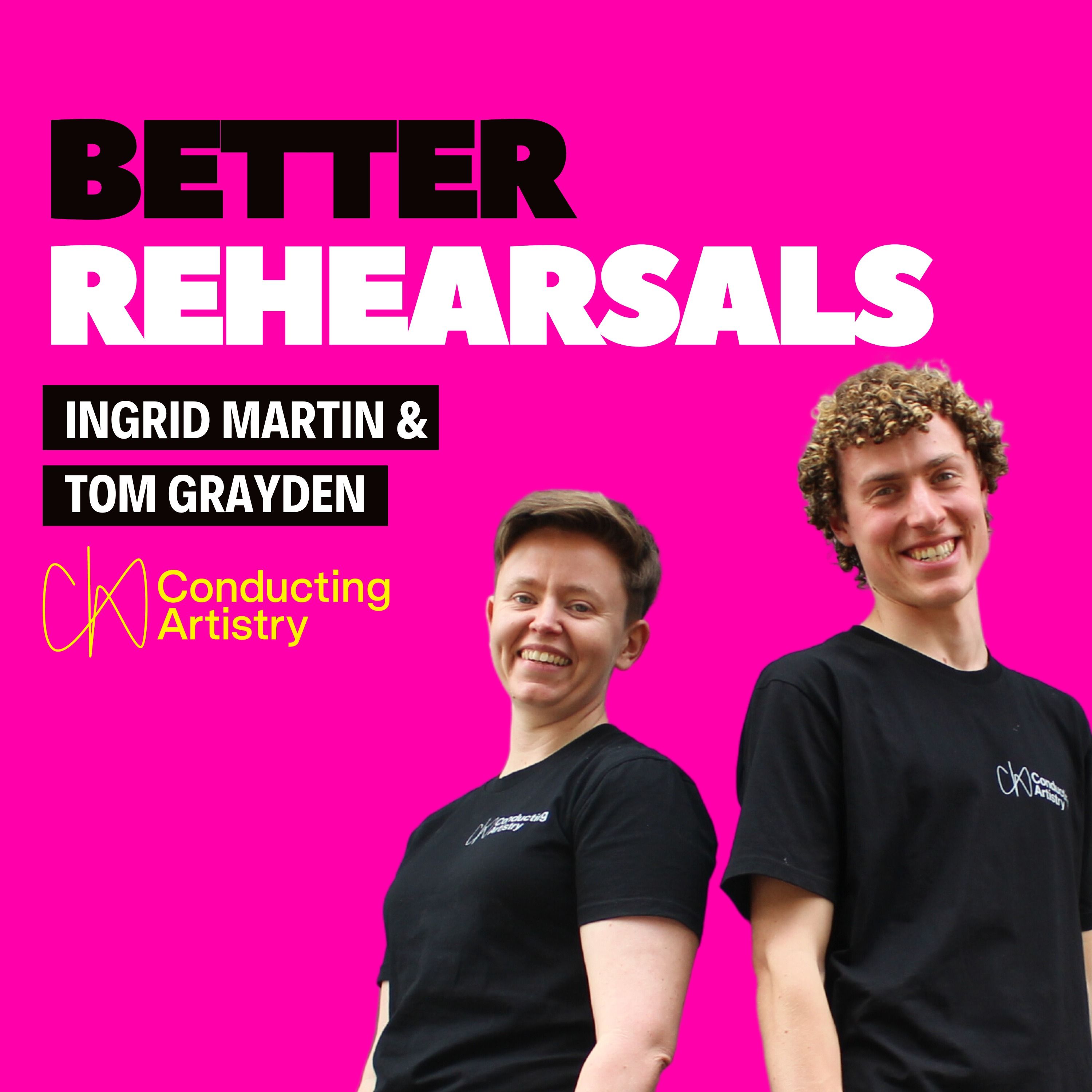
S2E5: Fostering Engagement with Questions, Conviction & Repetition
Join us as we unpack perennial questions like: How do you know when to keep working at a passage or just move on? How do you balance your own interpretation vs. making space for the musicians' ideas? What's the role of non-verbal communication in effective rehearsals? What might we learn from taking more notice of what's going on in the room?
Conducting Artistry · Ingrid Martin, Tom Grayden
Audio is streamed directly from the publisher (cdn.simplecast.com) as published in their RSS feed. Play Podcasts does not host this file. Rights-holders can request removal through the copyright & takedown page.
Show Notes
(00:00) Navigating Interpretation and Engagement in Conducting
In this chapter we discuss how conductors can engage with players and their musical ideas and suggestions, emphasizing the importance of asking questions to help the ensemble think for themselves and understand their role in the music. We also touch on the delicate balance of giving interpretive decision-making to the ensemble while still maintaining cohesion, suggesting the use of a range of questions to guide the ensemble towards a shared understanding of the music.
(17:21) Effective Rehearsal Strategies and Challenges
This chapter explores the dynamics of successful and unsuccessful rehearsals, focusing on the frustrations of changing ideas and spending too much time on one passage. We also discuss the importance of nonverbal communication and being aware of individual needs within a group setting. Additionally, we touch on the skill of knowing when to push and when to let go in a rehearsal, highlighting the conductor's role in leading a group practice session. Overall, this chapter provides valuable insights into the challenges faced by both conductors and players in creating a successful rehearsal environment.
(25:11) Improve Conducting and Empathy in Rehearsals
This chapter focuses on the middle period of rehearsing and how to effectively read the room as a conductor. We discuss the importance of observational skills and listening when working with unfamiliar musicians. The conversation then shifts to how reading the room can also benefit players, allowing them to better understand the conductor's needs and the needs of other sections.
Ready for more? Keep your learning going with:
Online Courses, including Conducting Bootcamp
Books, including Planning Effective Rehearsals
Sign up to the mailing list for quality info like this, delivered straight to your inbox (about once a month)
Email us with your questions & feedback