
Compromising Positions - A Technology Podcast
Compromising Positions
Show overview
Compromising Positions - A Technology Podcast has been publishing since 2023, and across the 3 years since has built a catalogue of 66 episodes, alongside 1 trailer or bonus episode. That works out to roughly 45 hours of audio in total. Releases follow a fortnightly cadence, with the show now in its 5th season.
Episodes typically run thirty-five to sixty minutes — most land between 32 min and 47 min — though episode length varies meaningfully from one episode to the next. None of the episodes are flagged explicit by the publisher. It is catalogued as a EN-language Technology show.
The show is actively publishing — the most recent episode landed 4 weeks ago, with 10 episodes already out so far this year. The busiest year was 2024, with 42 episodes published. Published by Compromising Positions.
From the publisher
The award-winning tech podcast that asks : "Are we the ones breaking the world?" Most tech podcasts are an echo chamber for builders. We step outside. We talk to the observers, the social scientists, and the deep thinkers who study the friction we create and the human systems we disrupt. Lianne Potter and Jeff Watkins strip away the industry fluff and pit academic research against the harsh reality of real organisations and real human incentives. We don’t just talk about AI, security, and automation; we explore the unintended consequences of our own "elegant" solutions. We’re here to look at tech through a different lens and ask the uncomfortable questions that the industry usually avoids. Because if you’ve built a system that has become everyone else's problem, you have to ask: "Am I the compromising position here?"
Latest Episodes
View all 66 episodesThe (Dis)Agreeable World of AI Sycophancy
“F” Is For FAKE
AI Doesn't Need to Hack You. It Just Needs to Convince You
The Great AI-Escape! What self-replicating ai agents mean for cybersecurity
Compromising Positions Presents: Tech Film Noir - Electric Dreams (1984)
EPISODE 59: Chernobyl 40th Anniversary: Are Nuclear Power Plants Safe from A Cyber Attack?
Compromising Positions Presents: Tech Film Noir - The Terminator (1984)

S5 Ep 58EPISODE 58: Self-Driving Cars, Cybersecurity & Trust
What happens when the welfare state designs its technology to side-eye first and ask questions later? In this episode, we take a ride into the world of self-driving cars and ask: What happens to trust when your car gets hacked?Drawing upon a 2025 autonomous car-hacking experiment, we explore how trust is built, broken, and crucially, whether that trust can be repaired once a system puts you in harms way.This isn’t just about cars. It’s about what happens when we hand over control to a system we don’t fully understand.Expect human factors, socio-technical theory, real-world cyber scenarios, and the uncomfortable reality that fixing the system isn’t the same as fixing trust.In This Episode, We Discuss:The Attack Surface is Trust: Why the real vulnerability in autonomous systems isn’t the code, it’s human belief.Hack vs Bug: Why a malicious attack hits differently than a system error (and why that distinction matters).Transparency After a Breach: Does telling people the truth about a cyber attack actually rebuild trust or just make them more nervous?The Social Truth about Trust: Why you’re not just trusting the car, but the company, the regulators and the entire system behind it.LINKSThe Impact of Cybersecurity Attacks on Human Trust in Autonomous Vehicle Operations by Cherin Lim, David Predez, Linda Ng Boyle and Prashanth Rajivan (2025)Foundations for an Empirically Determined Scale of Trust in Automated Systems by Jiun-Yin Jian, Ann Bisantz, Colin Drury, and James Llinas (1998)Test your morals with the Moral Machine game.
S5 Ep 57EPISODE 57: SUSPICION BY DESIGN: INSIDE DWP’S UNIVERSAL CREDIT AI FRAUD SYSTEM
What happens when the welfare state designs its technology to side-eye first and ask questions later? In this episode of Compromising Positions, we get hands-on with Big Brother Watch’s “Suspicion by Design” report, unpacking how the UK Department for Work and Pensions (DWP) uses algorithmic profiling and AI systems to detect Universal Credit fraud and why defaulting to suspicion is a dangerous position for any government to take.This episode is a measured examination of welfare AI, algorithmic decision-making, and what happens to trust, consent, and dignity when systems are built to watch first and explain never.Expect socio-technical theory, legal realities, real-world harms, and the kind of uncomfortable questions policymakers really don’t like being asked.In This Episode, We Discuss:Suspicion Architecture: What happens when suspicion is a design choice. The Algorithmic Gaze meets Dataveillance: What happens when you can’t opt out of AI lead services that are inherently bias against you.Why “Security Through Obscurity” Fails: We show why secrecy doesn’t equal safety.Fraud Detection that Punishes the Many, not the Few: How to design AI systems that protect public funds without criminalising the people who need it most.Show NotesSuspicion by Design: What we know about the DWP’s algorithmic black box, and what it tries to hide by Big Brother Watch (2025)Surveillance as Social Sorting: Privacy, Risk and Digital Discrimination by David Lyon (Ed) (2003)Information Technology and Dataveillance by Roger Clarke (1988; 3015)
S5 Ep 56EPISODE 56: From Dark Triads to Patriotic Hackers: Human Maliciousness in Cybersecurity
Is cybersecurity just a technical problem, or a human one?In this episode, we debut our new format: bridging the gap between deep academic research and boots-on-the-ground security practice. We dive into Zoe M. King et al., 2018 paper, "Characterising and Measuring Maliciousness for Cybersecurity Risk Assessment," to uncover why we need to stop looking at code and start looking at intent.From the "Dark Triad" of personality traits to the rise of the "patriotic hacker" in global geopolitics, we peel back the layers of the human onion to understand what actually drives a person to cause harm.In This Episode, We Discuss:The Maliciousness Assessment Metric (MAM): Why traditional risk assessments fail by ignoring "intent to harm" and how to integrate human factors into your security posture.The Four Layers of Maliciousness: A deep dive into the Individual, Micro, Meso, and Macro levels—from personal psychology to national narratives.Hacking as Patriotism: How cultural contexts in the US, Russia, and China dictate whether a hacker is seen as a criminal or a hero.The "War Games" Effect: How 80s cinema shaped US cybersecurity legislation (CFAA) and continues to influence public perception.Insider Threats & Organizational Hygiene: Why disgruntlement is a security vulnerability and how the "Principle of Least Privilege" is your best defense.Risk as a Moral Construct: Why the risks your company chooses to mitigate reveal your organisation's true values and concept of justice.Show NotesCharacterizing and Measuring Maliciousness for Cybersecurity Risk Assessment by Zoe M. King et al., featured in the journal Frontiers in Psychology (2018)Risk and Blame: Essays in Cultural Theory by Mary DouglasRisk and Culture: An Essay on the Selection of Technological and Environmental Dangers by Mary Douglas and Aaron Wildavsky
S4 Ep 55EPISODE 55: Hack the Movies! The Best and WorsT Hacker Movies Part 2!
Did you know the best way to bring down hackers is to punch them in the face? That if you don’t have a seven screen set up you’re a rogue amateur? Or that the best hackers have fins?This Episode we are joined by Simon Painter a senior software engineer with nearly 20 years of experience in the industry and author of the book Functional Programming with C#.In this episode, Hack The Movies! The Best And Worst Hacker Movies Part 2! Our regular programming has been hijacked to bring you a discussion on the best, and worst, hacker movies! In this episode we cover The Beekeeper (2024), Swordfish (2001), Jonny Mnemonic (1995), Paper Man (1971) and The Italian Job (1969).So boot up that modem, turn off the lights and enter the deepest darkest web of hacker forums, and try not overload your memory bank, as we explore this sometimes brilliant and sometimes bonkers sub-genre!Show NotesA Developer Goes to The Movies! Simon’s fantastic history on how technology features in filmsPaper Man (1971)About SIMON PAINTERWith nearly 20 years of software engineering experience across various industries, Simon is a Senior Software Engineer at Talos360. Simon is also a Microsoft Most Valuable Professional (MVP) since 2023, an O'Reilly technical book author, and a public speaker at IT events worldwide.His core competencies include C#, JavaScript, React.js, and Microsoft Azure, as well as ITIL and computer security.LINKS FOR SIMON PaINTERSimon’s WebsiteSimon’s LinkedinSimon’s Book, Functional Programming with C#
S4 Ep 54EPISODE 54: CFO Secrets: How to Secure Your Cybersecurity Budget
We all know running a cybersecurity function is expensive and many of us have a hard time successfully negotiating the budgets we need to keep our organisation safe.But what if we let you in on the secrets of successfully securing your cybersecurity budget?This week we are joined by Scott Robertson, CFO of CreateFuture and he gives us the insights on what you should ask for when it comes to your next yearly budget, how to ask for it and crucially (because timing is everything when it comes to money!) when to ask for it!Key Takeaways:What Does a CFO do? A CFO is not just about managing financials but also safeguarding assets and ensuring future stability through effective risk management.Time Your Requests Strategically: Discover the optimal timing to approach your CFO for budget increases and how to align your requests with the organisation's financial planning.Quantify the Cost of Risk: Learn how to effectively communicate the potential financial impact of cyberattacks and the value of preventive measures.Build Strong Relationships: Cultivate relationships with key stakeholders, including the CFO and other executives, to foster trust and support.Prioritise and Justify: Identify critical security needs, prioritise investments, and present a compelling business case to secure the necessary budget.
S4 Ep 53EPISODE 53: Whose Responsibility Is It To Protect The Data? The Data Team Or The Cybersecurity Team?
The data landscape is changing faster than ever, and with it, the security threats - so whose responsibility is it to make sure your data is safe? Is it the data team? Or is it the cyber team? We tackle this question and more with Head of Data at AND Digital, Tim Hatton.From leveraging AI to secure data to the importance of real user testing, to how Tim threat models his client’s data capability, you won’t want to skip this ever-important topic!We also talk about ‘data mesh’ and if you’re not familiar with that term - it’s a data management framework that decentralises data ownership and responsibility to the teams that use the data. The idea is to make data more accessible and available to business users by directly connecting data owners, data producers, and data consumers.So you can see why we thought that was an important topic to cover because, with this model, comes a lot of trust in others doing the right thing when it comes to data security!So you won’t want to ‘mesh it up’ if people are following this framework in your organisation.Key Takeaways:Test User Journeys with Real People: Assumptions don't cut it—Tim emphasizes the importance of validating user journeys with real-world testing to ensure effective data usage.AI and the Data Deluge: Friend or Foe? We explore the booming trend of AI in data management, but also ask the tough questions: Can AI be used for good in cybersecurity? Can it even help solve cold cases?Holistic Data Security Assessments: Discover Tim's approach to assessing clients' data capabilities and security, involving both data and cybersecurity teams for comprehensive protection.Maturity Matters: Responsibility for Data Protection. Tim reveals a surprising trend - immature organizations might have stricter controls! Discover how your organization's maturity level defines data security ownership.The Future of Self-Sovereign Data: Explore the concept of self-sovereign data and why it might be the future of personal data management and security.Show NotesBook - Wicked Beyond Belief (The one I mistakenly said was Helter Skelter)An Article on Self-Sovereign DataAbout Tim HattonTim Hatton has been working in digital since before it was called digital. Over the course of his career, he has worked on data and digital transformation projects for some of the biggest companies in the world.He joined AND Digital in 2016 and is currently Head of Data. At AND he has worked on data strategy projects for clients in industries including finance, travel, publishing and retail as well as for several government departments.Tim joined AND from Accenture Digital, and prior to this Tim ran his own digital marketing agency for many years, and co-founded a number of dotcom start-ups during the 1990s, none of which made him a millionaire but all of which taught him a great deal.Tim is a regular speaker on digital topics at AND Digital events, for AND’s clients and in the media.LINKS FOR Tim HattonTim’s LinkedIn
S4 Ep 52EPISODE 52: People Don’t Follow Companies, They Follow People: How To Build Your Personal Brand On LinkedIN
LinkedIn is very divisive! Some people love it, and others hate it and everything it stands for. And if you’ve ever hangout on the subreddit, LinkedIn lunatics, then you can see why.Now for all the braggarts and the ‘what working during my wedding taught me about b2b sales’ posts, there is a lot to like about LinkedIn and many opportunities to be had…if you do it right!We can all learn how to be good LinkedIn citizens, So if you’re LinkedIn has two followers, or 20,000, there is plenty to be getting your ears around in this conversation with John Moore -the question is…have you endorsed me yet?Key Takeaways:Why Humour Makes You Human (and Helps You Get Hired): Ditch the cringe! Learn how humour can break the ice and make your cybersecurity expertise more relatable.Building Your Personal Brand Brick by Brick: Discover John's three-pronged approach to building a lasting LinkedIn legacy (think Time, Effort, and Commitment!).Embrace the Journey: Failure is Fertilizer (But Not Fertilizer for Your Profile): Don't shy away from sharing lessons learned.The Power of Storytelling: Learn how to craft compelling narratives that resonate with your audience and build genuine connections.LinkedIn as Your Digital Shopfront: Make sure your profile shines!Show NotesNegotiate Anything PodcastHumour is Serious Business in Cybersecurity ComplianceAbout John MooreJohn C. Moore brings over two decades of dynamic experience in recruitment and operations management to his role at TekBank. With a keen eye for talent assessment and acquisition, John has mastered the art of full-cycle recruitment, excelling in sourcing, screening, and onboarding top-tier candidates. His expertise extends across diverse areas, including IT recruitment for commercial and government sectors.LINKS FOR John MooreJohn’s LinkedInTekBank

S4 Ep 51EPISODE 51: Cha, Cha, Cha, Changes! How to get excited about organisational change (re-release)
No new episode this week because we’re are both speaking at the AI for the Rest of Us conference this week.So instead we’ve hit up the vaults for the wonderful Paula Cizek, Chief Research Officer at Nobl. She guides leaders and teams through the change management process, from assessing the organization’s readiness for change to implementing initiatives. In this episode, we explore the fascinating topic of Corporate Change and how its lessons can be applied to cybersecurity.Normal service resumes next week but for now keep secure!Show NotesAsana’s guide to running Project Pre-mortemsHow to “Start with the Skateboard” - SpotifyExplaining Fail save vs Safe to Fail changes - NOBLBarriers to Change - NOBLHow long does it take to make organisational change? NOBLComplexity Science Explained - Complexity ExplainedAn introduction to Network theoryBlending Complexity Science and Network TheoryDisentangling Risk and Uncertainty: When Risk-Taking Measures Are Not About RiskNegotiation Tips - Getting Comfortable being UncomfortablePsychological Safety - McKinseyAbout Paula CizekPaula Cizek is the Chief Research Officer of NOBL, where she guides organizations through large-scale transformation. A thought leader in change management and change resistance, she specializes in translating complex concepts into simple, practical tactics that deliver immediate and meaningful change.Before joining NOBL, she was Innovation Manager at the IPG Media Lab, advising brand and media clients on emerging technology. Prior to that, she was Senior Innovation Consultant at Mandalah, where she led consumer behavior and brand strategy research for brands around the world. She's worked with a diverse roster of clients including Warner Bros., Chanel, Capital One, Bayer Pharmaceuticals, Airbnb, Chipotle, Grupo Bimbo, and more, and she's been published or quoted in publications like BrandingMag and Women's Wear Daily. She graduated from Georgetown University, majoring in Marketing and International Business.LINKS FOR Paula CizekPaula’s LinkedInNOBL
S4 Ep 50EPISODE 50: Tips On How To Be A Top-Class Cybersecurity Student And Get Your First Cybersecurity Job!
Dreaming of a career in Cybersecurity? Currently a Student and wondering how to succeed?In this episode, we are joined by Dr. Thalita Vergilio. Thalita is a passionate technologist and cybersecurity expert dedicated to demystifying complex concepts.This episode is for those dreaming of a thrilling career in cybersecurity as Thalita gives her roadmap for success from cybersecurity student to your first job in cyber. She also highlights where cybersecurity professionals can do better now that she’s on the other side, working with developers as a consultant at Create Future. So it’s not just an episode for students! Key Takeaways:From Consultant to Lecturer to Consultant Again!: Thalita shares her unconventional path, including hacking into the university system as part of her job interview!Are Universities REALLY Preparing Students for the Real World of Cyber? Spoiler alert: It's a complex issue, and Dr. Vergilio spills the tea and makes a bee-line for lecturer of the year (in our opinion!)What Qualities Do The Best Cybersecurity Students Have?: Learn about the skills and experiences that make a good cybersecurity student, including passion for the subject, tenacity, and resilience.From Academic to Action: Industry Skills You NEED to Know to Get Your First Job in Cyber: Your education is just the start, so in this competitive market, what are you going to do to stand out?Bridging the Cyber-Engineering Gap: Developers must be aware of the security implications of their code to avoid vulnerabilities, so how do you go about doing that?Show NotesAbout Dr. Thalita VergilioDr. Thalita Vergilio is a passionate technologist and cybersecurity expert dedicated to demystifying complex concepts. Her extensive experience in organisational transformations and streamlining large-scale systems provides a unique perspective on the intersection of engineering and cybersecurity. Having previously worked as a Senior Lecturer, Thalita is keen to share her knowledge and insights, making complex technical concepts accessible to a broad audience.Her doctoral research focused on developing a vendor-agnostic, multi-cloud solution for big data stream processing, showcasing her expertise in innovative and efficient data management strategies. Through this podcast, she aims to explore the fascinating world of cybersecurity, drawing on her PhD research and teaching background to offer valuable perspectives and practical insights.LINKS FOR Dr. Thalita VergilioLinkedIn
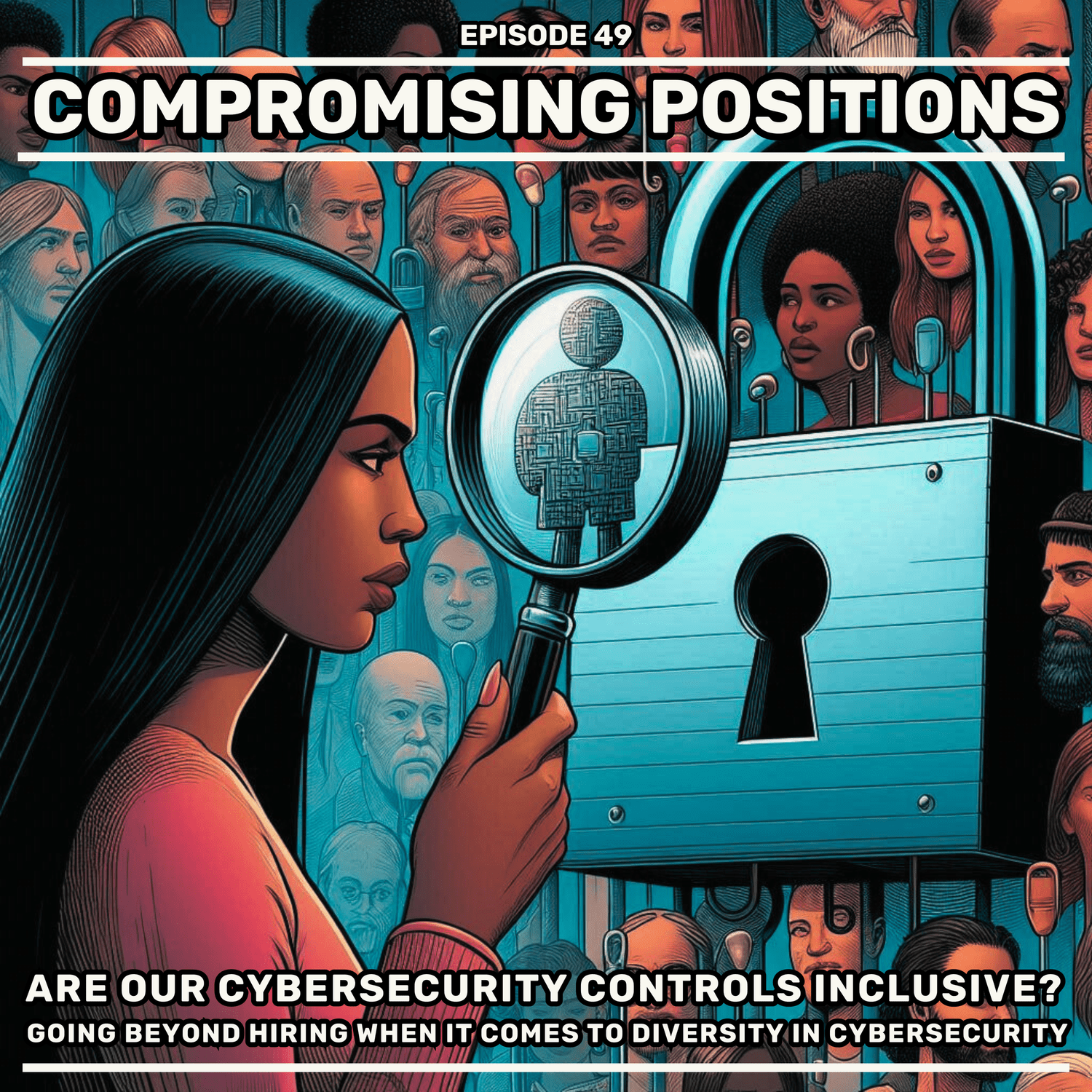
S4 Ep 49EPISODE 49: Are Our Cybersecurity Controls Inclusive? Going Beyond Hiring When It Comes To Diversity In Cybersecurity
This episode we are joined by Marcy Charollois. Marcy is a socialtech writer, content strategist, and the founder of Merci Marcy and The Safe Place. Her mission is to enable teams to embody a culture of genuine inclusion beyond superficial measures.This week we explore the complex, important, and under-discussed topic of diversity, equity and inclusion in cybersecurity.As an industry, we do an alright job talking about hiring diversity in cyber, but that is not where the topic should end. With more and more people from a wide range of backgrounds and abilities interacting with our security controls, we need to think about whether the security measures we put in place are accessible.We explore how can make a more accessible cybersecurity user journey, design inclusive password patterns, how to be an ally in this space and make sure that we always act ethically when we think about security. This episode is a must-listen for anyone interested in creating a more equitable and effective cybersecurity landscape.Key Takeaways:Inclusive Security Controls: Marcy explains why diversity and inclusion should be integral to our security controls. It’s not just about who we hire but how we design our systems to be inclusive for all users.Purposeful Technology: Avoid creating technology for technology’s sake. Always consider the end-users and their diverse needs to ensure the technology serves everyone effectively.Inclusive Passwords: Traditional password systems can be exclusionary. Marcy discusses how we can make password fields more accessible and inclusive, particularly for those with disabilities.The Coded Gaze: Our current coding practices often reflect a narrow societal view, excluding many groups. Marcy urges the adoption of accessible design practices to create better security solutions.Allyship and Continuous Improvement: Being an ally involves continuous learning, listening, and taking concrete actions. Marcy provides a recipe for inclusive UX to help check biases and improve user experiences for marginalised communities.Show NotesMarcy’s Talk at WebDevCon - Racism Fuels User ExperiencesUnmasking AI: My Mission to Protect What is Human in a World of Machines by Joy BuolamwiniAlba Villamil’s LinkedInW3.Org’s Accessibility Standards for AuthenticationAbout Marcy CharolloisMarcy Charoloois is a social tech writer, content strategist, and the founder of Merci Marcy and The Safe Place. She served as the editor-in-chief of WeLoveDevs for two years, where she made history as the first woman, as well as the first racialised and LGBTQIA+ woman, to be hired.Recognising the lack of representation for people like herself in the tech industry, Marcy took a committed stance to promote diversity. She is dedicated to breaking through the pretence of corporate values and advocating for real cohesion within teams. Her mission is to enable teams to embody a culture of genuine inclusion beyond superficial measures.LINKS FOR Marcy CHarolloisLinkedInBlue Sky

S4 Ep 48EPISODE 48: It’s So Hard To Commit A Crime These Days! Surveillance, Dishonesty, Fraud And Other Pink-Collar Flags
In this Episode we are joined by Kelly Paxton. Kelly Paxton has more than 20 years of investigative experience. Kelly is a Certified Fraud Examiner, author, and podcast host-founder of Fraudish.This week’s episode asks why it is so hard to commit a crime these days! But when people do, what is their motivation behind it! We also look at the nature of surveillance, how it can be used to catch criminals but also the implications of being willing to bring in surveillance devices into your home and life - yes I’m looking at you iPhone! How fraud in the workplace happens, what are the signs to spot for and how to prevent it happening and how sometimes it’s not so pretty in pink, as we explore Kelly’s specialism, Pink Collar Crime!Key Takeaways:I Always Feel Like Somebody’s Watching Me: From personal devices to public spaces, surveillance is a constant presence in our lives. While it can deter crime, it also presents opportunities for criminals to exploit our vulnerabilities.The Impact of Dishonesty: Delving into the profound repercussions of workplace dishonesty on trust and employee behaviours.Pink-Collar Crime: Often committed by low to medium-level employees, primarily women, pink-collar crime is more prevalent than you might think. These crimes are usually subtle, with fraudsters blending seamlessly into their environments.The Impact of Tone at the Top: A company's culture and leadership play a crucial role in influencing employee behavior. Ethical leadership and a positive work environment can discourage dishonest actions.Show NotesThe BeeKeeper FilmLinkedIn page for Avi KleinArtist uses CCTV cameras to selfies back to their Instagram page - VICELinkedIn page for Mish AalNumber Go Up: Inside Crypto’s Wild Rise and Staggering Fall by Zeke FauxNobody’s Fool: Why We Get Taken In and What We Can do About It by Daniel Simons and Christopher ChabrisAbout Kelly PaxtonKelly Paxton is a Certified Fraud Examiner, Private Investigator, and Professional Speaker. She also is the founder of the Fraudish (formerly Great Women in Fraud) podcast. She published Embezzlement: How to Prevent, Detect and Investigate Pink-Collar Crime in December, 2020.LINKS FOR Kelly PaxtonLinkedInPink Collar Crime WebsiteKelly’s Podcast Fraudish
S4 Ep 47EPISODE 47: Hacking Our Capacity To Think: The Philosophy Of Trust, Cybersecurity And AI
In this Episode we are joined by Dr. Rebekka Reinhard. Dr Reinhard is a philosopher and the founder and editor-in-chief of Human magazine, which aims to holistically address the impact of AI beyond the technical to include the cultural and the human. In this episode, Hacking Our Capacity to Think - The Philosophy of Trust, Cybersecurity and AI, we explore these topics and more within the lens of philosophy. We discuss the importance of an interdisciplinary dialogue between tech experts and humanities experts. How AI is Impacting democracy and our concept of trust and safety within the context of cybersecurity, and new threats like deepfakes and misinformation. Key Takeaways:The Human Element of AI: AI is not just technology; it's a reflection of human values and biases. Understanding its impact requires an interdisciplinary approach that considers philosophy, ethics, and technology.AI and Democracy: Technology poses a threat to democratic processes. AI's ability to manipulate our thoughts and behaviours poses a significant threat to our autonomy and critical thinking. It's essential to be aware of these dangers and develop strategies to protect ourselves.The Importance of Trust: Trust is a fundamental building block of society, and it's equally crucial in the context of AI. Building trust in AI systems requires transparency, accountability, and ethical considerations.The Dangers of Individualism: In the digital age, individualism can lead to echo chambers and biased information. It's vital to foster a sense of collective responsibility and work together to address global challenges.The Need for Reflection and Accountability: Leaders and creators of AI tools must be held accountable for the potential harms their creations may cause.Show NotesLondon School of Economics - https://www.lse.ac.uk/study-at-lse/online-learning/courses/ethics-of-aiA list of Dr Reinhard’s Books via AmazonBlueDot AI Safety Alignment courseAI Pretends to Pick up a BallChatGPT is BullshitDeepfake Documentary, Another BodyAbout Dr Rebekka ReinhardDr. Rebekka Reinhard is the founder and editor-in-chief of „human“. The magazine, both in print and digital formats (German and English editions // quarterly), it is the first of its kind to holistically address the impact of AI on the economy, politics, society, and culture, while keeping a strong focus on the human aspect.LINKS FOR Dr Rebekka ReinhardLinkedInLinkedIn for Human MagazineInstagramInstagram for Human MagazineWhere to buy the MagazineKeywords: cybersecurity, ai ethics, trust, philosophy, deepfakes, ethics, democracy
S4 Ep 46EPISODE 46: Sometimes, We Are The Villains: Tech Ethics In Software Development
In this Episode we are joined by Sergès Goma, a Paris-based software developer specialising in JavaScript. In this episode, Sometimes, we are the Villains - Tech ethics in software development, we dive deep into the ethical dilemmas we face as workers and creators of technology. Heroes are few and far between in this tech landscape, even if we don’t like to admit it, and that includes us in cybersecurity! So it is important we have these conversations and look inward at our industry and the impact it has on culture and society.We also talk about why developers always seem to top the leader board when it comes to phishing simulation click rates, the complexity of the word ‘privacy’ in different countries, and ask if we are heading towards a more regulated industry and what that might mean for innovation and creativity.Key Takeaways:Uncovering the Dark Truth: Discover why those working in tech may not be the heroes we perceive them to be.The Perils of Overconfidence: Learn how the tech-savviness of developers can lead to risky behaviours and potential security breaches.From Feature-Focused to Security-Savvy: Learn how training and awareness can empower developers to become active participants in building secure software.Regulation vs. Innovation: We examine the challenges and opportunities of ethical frameworks in the tech industry.Global Perspectives on Privacy: Gain insights into how privacy is perceived differently across the world and the impact of cultural nuances on ethical considerations in tech.Links to everything we discussed in this episode can be found in the show notes and if you liked the show, please do leave us a review.Follow us on all good podcasting platforms and via our YouTube channel, and don't forget to share on LinkedIn and in your teams.It really helps us spread the word and get high-quality guests, on future episodes. We hope you enjoyed this episode - See you next time, keep secure, and don’t forget to ask yourself, ‘Am I the compromising position here?’ Show NotesEvil Tech: How Devs Became VillainsBackground on the Nestle Milk ScandalThe Untold Story of the 2018 Olympics Cyberattack, the Most Deceptive Hack in History by WIREDParis Olympics Security Warning—Russian Hackers Threaten 2024 Games by ForbesClean Code: A Handbook of Agile Software Craftsmanship by Robert MartinAbout Sergès GomaSergès Goma is a Paris-based software developer specialized in JavaScript. When she's not fixing codebases, she gives motivational speeches mostly aimed at junior and would-be developers as well as participating in the tech women's empowerment online community Motiv'Her.LINKS FOR Sergès GomaLinkedInX AccountKeywords: cybersecurity, tech ethics, ethics, software development, privacy