
Compassionate Accountability Podcast
65 episodes — Page 2 of 2

Ep 15The Future Of Work with JJ Caffee
2020 was a year of major changes in how we all work, remote work has become a norm, and most people agree that we will never going to go back to the way things were. Certainly this past year we experienced the ups and downs of working from home, that is the reason why Dr. Nathan Regier, your host, is accompanied today by JJ Caffey who is an up and coming entrepreneur specialized in the future of work. She's awarded a business school grad and is the creator of several virtual businesses, including Order In a digital platform for leaders of remote work. Her focus is on community, connectedness and efficiency, her mission is to revolucionarize American work culture. Key Takeaways: [1:59] JJ talks about how she became interested in the topic of working from home. [4:22] JJ shares the main trends that she has seen accelerated in the last 10 months. [6:50] The average workday extends for 3 hours when working at home.. [9:32] JJ explains the silver linings of remote working. [12:12] Remote working is very cost effective for companies. [12:51] JJ talks about productivity during 2020. [14:20] How can we maximize the opportunities and minimize the downsides of remote working? [17:06] The top three things that people benefit from having a job: a paycheck, a sense of pride and purpose, and the relationships people build at their workplaces. [19:33] JJ talks about Order In's mission. [21:59] JJ shares the progress of her company. [24:15] How does Order In works? [29:06] JJ explains where the name "Order In Club" came from. [30:35] Lighting round. [35:41] Dr. Nathan Regier shares the highlights of a great conversation with JJ. Mentioned in this episode: The Compassion Mindset Order In JJ Caffey on Linkedin Order In on Instagram Order In on Twitter Tweetables: "Over half of American workers feel lonely." #oncompassion "People tend to feel more anxious and lonely working from home." #oncompassion "The average work day when you go remote gets 3 hours longer." #oncompassion "We need to prioritize helping people stay connected even during remote working." #oncompassion

Ep 14Leaders Fostering Courageous Cultures with David Dye
Dr. Nathan Regier your host, is known to be into practical solutions that leaders can implement and he is passionate about building cultures of compassion where relationships don't have to be sacrificed for results. You have been listening to conversations with C-level leaders who have transformed their cultures but, in today's episode, Nate is joined by David Dye who will share the lessons learned from working with hundreds of leaders and organizations, all of them trying to build more compassion in their cultures. David Dye, the president of Let's Grow Leaders, works with leaders to achieve transformational results without sacrificing their humanity, as a former executive and an elected official he inspires audiences with practical leader inspiration that can be used right away. He is the award-winning author of Winning Well: A Manager's Guide to Getting Results Without Losing Your Soul, Courageous Cultures: How to Build Teams of Micro-Innovators, Problem Solvers, and Customer Advocates, The Seven Things Your Team Needs to Hear You Say, and Glowstone Peak. David is a sought-after international leadership speaker who believes everyone can master the essentials of influence. Key Takeaways: [3:05] David talks about the blessing of working with his partner. [4:16] David shares the lessons and personal growth he has experienced during COVID times. [9:01] The lessons learned during the pandemic need to remain over time. [10:00] Space learning. [10:33] David and Nate talk about the book's title: Courageous Cultures, [11:52] Safe silence vs courageous cultures. [12:30] Why did David choose the word "courageous" to describe cultures? [14:19] It is the leader the one that makes the first move towards a courageous culture. [15:41] David and Nate talk about three critical roles in organizations: micro innovators, problem solvers, and customer advocates. [20:30] David shares the example of the production of Toy Story. [20:58] Why don't people speak up? [24:06] A leader can't passively wait for great ideas to walk through his door. [24:43] David shares practical tips and principles for leaders. [26:15] A courageous question is specific and vulnerable. [27:56] David explains the acronym UGLY. [30:12] David talks about maintaining momentum in culture transformation. [33:10] Gratitude, information and invitation. [33:55] How is remote work impacting the dynamics in organizations? [34:50] Lighting round. [38:01] Nate shares the top three takeaways of an insightful conversation with David Dye. Mentioned in this episode: The Compassion Mindset Let's Grow Leaders Winning Well: A Manager's Guide to Getting Results Without Losing Your Soul, Karin Hurt and David Dye Courageous Cultures: How to Build Teams of Micro-Innovators, Problem Solvers, and Customer Advocates, Karin Hurt and David Dye The Seven Things Your Team Needs to Hear You Say, David Dye Glowstone Peak, David Dye Tweetables: "Coming out of the pandemic, we don't want to lose the lessons learned." #oncompassion "Culture means: People like us, do things like this." #oncompassion "There is a natural tendency in most human beings to hold on to negative experiences." #oncompassion "The most effective leaders are out there intentionally asking for what they need." #oncompassion

Ep 13Self-Care & Compassion with HBO's Renaissance Man Larry Carlson
Dr. Nathan Regier welcomes Larry Carlson, the former president of HBO satellite services and a cable TV network pioneer. Larry retired when he was 49 and now spends his time creating beauty, philosophizing and supporting the people and causes he loves. Larry lives by his belief that honest communication can lead to trust first, then if you work at it, intimacy and eventually love in both personal and professional relationships will follow. Nate's Key Takeaways 1. Get in the stream. Larry didn't grow up with things being given to him, so he learned to work for what he wanted. But also, he learned that you have to put yourself out there, try things, and take risks in order to find opportunity. That's then you begin to bump into things you like, don't like. That's when things start happening! 2. Before compassion comes self-care. Even though Larry believes that our purpose is to be of benefit to others, we can't do that if we aren't taking care of ourselves. The most generous gift you can give yourself is the gift if self-care. And that's more than just physical. That means psychological, spiritual and mental self-care. 3. "Your employees may be working for you on paper, but you should be working for them in reality." What we've been taught is a very self-oriented culture of personal growth and materialism and entitlement as leaders. The best leaders succeed by helping their people succeed. As leaders, we owe our people the support and inspiration to be their best and benefit others. Mentioned in this episode: The Compassion Mindset Tweetables "Your employees may be working for you on paper, but you should be working for them in reality." - Larry Carlson "Everything comes to teach us something. The question is what will we learn from it." "The key to success in business is to be of benefit to others."
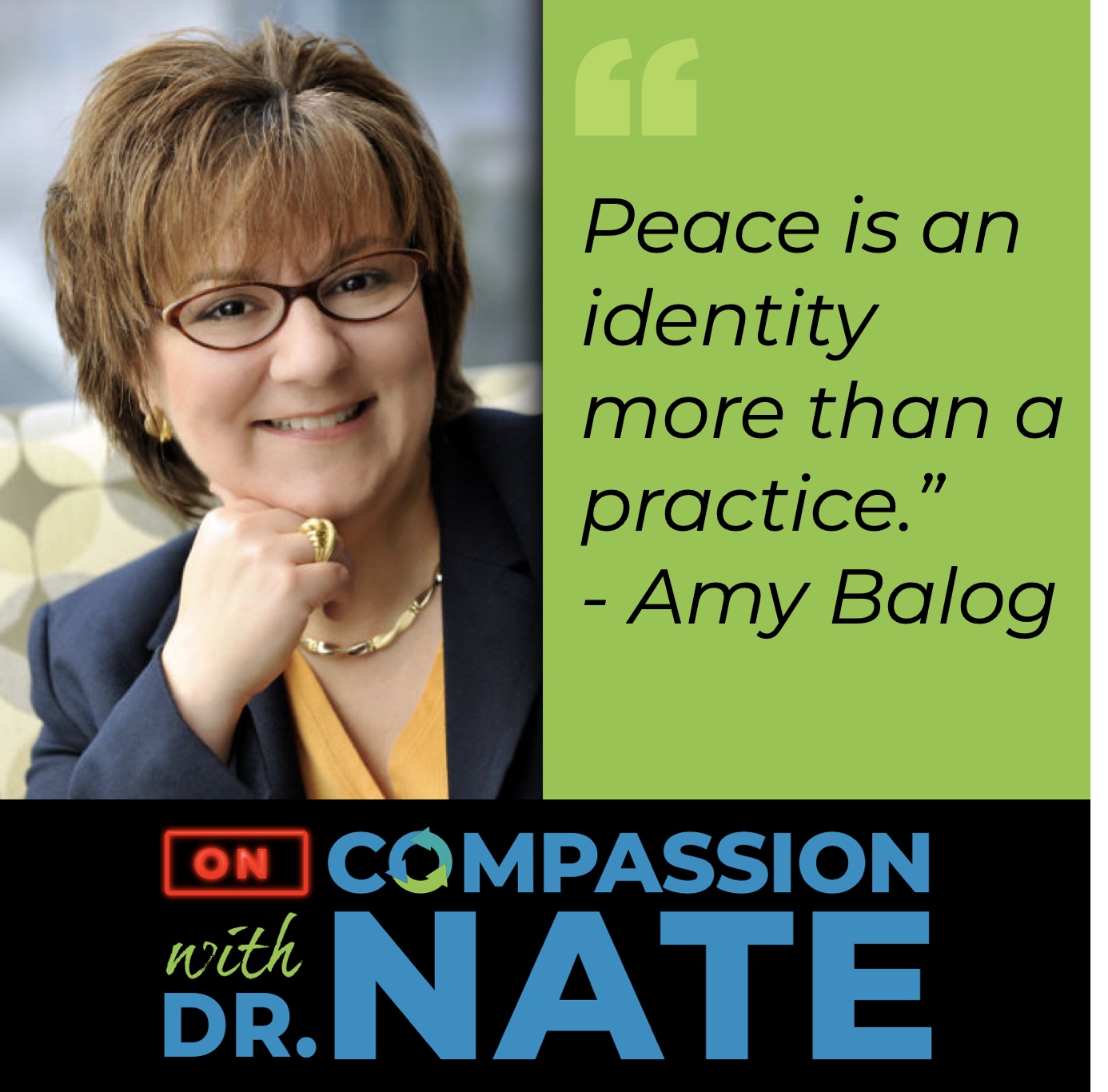
Ep 12Peace Over Performance with Amy Balog
Dr. Nathan Regier welcomes Amy Balog to today's episode, she is a highly experienced and credentialed executive leadership coach and facilitator, whose specialty is in performance. Amy has plenty of first-hand executive leadership experience, but most importantly Amy is now the one behind the scenes working with those leaders to be more human and more connected to themselves and others, and that is the spirit of compassion. Key Takeaways: [2:00] Amy shares how she became an executive coach and facilitator. [5:22] Amy talks about the workplace environment [6:49] The importance of connection at the workplace (to oneself and to others). [7:39] How is disconnection affecting people? [9:07] Leading leaders to reflect on their identity. [10:23] Leaders need to allow themselves to enjoy their lives. [11:54] Where does the idea of peace over performance come from? [14:44] The peace self and the performance self. [15:20] Amy defines peace: radical self-acceptance and self-compassion. [17:35] The existential position: you are ok, I am ok, there is no condition. [18:38] The concept of safeguarded heart. [19:44] It is ok to be learning all the time. [21:34] Amy explains the concept of an unsheltered heart. [24:30] Peace is attractive! [25:38] Practical strategies for leaders to become more connected to themselves. [30:39] Lighting round. [34:27] Nate's top three takeaways of an inspiring conversation with Amy Balog. Mentioned in this episode: The Compassion Mindset Amy Balog on Linkedin Tweetables: "The work of helping leaders become better is helping them reconnect back with themselves" #oncompassion "You are not your job." #oncompassion " Peace is accepting who you are in this beautiful present moment, peace is a radical self-acceptance and self compassion." #oncompassion

Ep 11The Heart of the Entrepreneurial Leader with Joel Peterson
Compassion and leadership should go hand in hand and today's guest is proof of that. Joel Peterson is a person with tremendous credentials, experience, and compassion. He is the chairman of JetBlue Airways and The Hoover Institution as well as the founding partner of Peterson Partners. Since 1992 Peterson has been on the faculty at the Graduate School of Business at Stanford University teaching courses in real estate investment, entrepreneurship, and leadership. He formally served as Chief Executive Officer of Trammel Crow Company then the world's largest private commercial real state development firm. Peterson earned an MBA from Harvard Business School and received his Bachelor's degree from Brigham Young University. Joel has been awarded the 2005 Distinguished Teaching Award and the 2016 Robert K. Jaedicke Silver Apple Award At Standford Graduate School of Business. Key Takeaways: [2:01] Joel shares some of his personal life and journey. [3:21] Joel confesses that teaching is the most meaningful part of his work. [3:50] Why does Joel believe in today's business world and the need for special entrepreneurial leadership? [4:28] Leaders need to be innovators. [5:45] What are the hallmarks of an entrepreneurial leader? [6:43] Joel states the differences between an entrepreneurial leader and a political leader. [7:15] What are the qualities that a leader needs to adopt to promote durable change? [8:39] The case of congress and the challenges to adapt, change, grow, and develop. [10:10] In a two-way exchange, trust grows as well as the ability to get things done between two people actually increases. [10:59] Joel talks about the soft skills that need to be learned outside of business school. [12:45] Trust begins on the inside. [15:08] Is there a personal connection required for trust to happen? [16:15] Joel shares the meaning of integrity for him. [19:01] The importance of balance in entrepreneurs' lives. [21:15] Joel gives his advice for creating a mission statement. [23:44] We hire people for their brains and heart. [24:55] Joel shares his own definition of compassion. [26:33] Being compassionate needs to find a balance with self-care. [27:55] The challenges for leaders who just try to deliver results. [29:31] The difference between an entrepreneurial leader and entrepreneur. [30:40] Joel gives his advice to leaders dealing with uncertainty and crisis. [31:59] Trust, mission, and teamwork are all tested during times of crisis. [32:51] Joel's ultimate vision for his book [33:53] Lightning round. [37:30] Nate shares his top three key takeaways from an amazing conversation with Joel Peterson. Mentioned in this episode: The Compassion Mindset Peterson Partners Entrepreneurial Leadership: The Art of Launching New Ventures, Inspiring Others, and Running Stuff, Joel Peterson Joel Peterson on Twitter Tweetables: "We are now dealing with information workers, volunteers, people who have lots of options and they have to be brought together to work in teams that need to have a common mission, they have to trust one another and be led by someone with integrity." #oncompassion #mission #integrity "Leaders have to be able to lead change and innovation as well as people." #oncompassion #leaders #change #innovation "The entrepreneurial leader can lead to durable change." #oncompassion #entrepreneuralleader #change "Insanity is doing the same thing repeatedly, knowing you will obtain the same result but wishing for something different." #oncompassion #insanity #change "Integrity is reflected when what you say is what you do." #oncompassion #integrity #dowhatyousay "A crisis is really the test for a leader." #oncompassion #crisis #opportunity #growth #leader

Ep 10Compassionate Leaders with Laurel Donnellan
Dr. Nathan Regier proudly welcomes Laurel Donnellan to today's episode. Laurel shares some of her vast experience in the field of compassion, highlighting the importance of boundaries and the vulnerability required to be the recipient of a compassionate act. Laurel explains how compassion is for the giver as much as it is for the receiver, being compassionate is intrinsically enjoyable and rewarding. Listen to Laurel and Nate and get some valuable tips about how to bring more compassion to your workplace, starting with a mindful practice self-compassion. Laurel Donnellan is the founder and CEO of Compassionate Leaders Circle where she leads initiatives and career transformations, leadership mastery, and coaching with compassion. She has created programs designed to create an impact on individuals and organizations, including Cornell University, Toyota, Disney, Viacom, and New York city board of education. Laurel has an undergraduate degree from Cornell University and an MA in Organizational Psychology from Columbia University. In addition to her formal education, she has immersed herself in learning the ancient Native American Vision Quest tradition and is a certified yoga instructor through the Omega Institute. Laurel's approach to change integrates compassion, curriculum, coaching, and contemplative practices. She has designed customized learning from business schools, internal corporate universities, high schools, ashrams, and even in a prison. Laurel is the author of several books including Born to Do: The Practical Guide to Loving Your Work and has been featured on NPR. Laurel had the opportunity to work with executives in North America, Europe, Asia, and Australia. Laurel currently writes about compassionate leadership on Forbes. Key Takeaways: [2:50] Laurel shares the basics of properly brewing tea. [4:37] Laurel shares special anecdotes from her work in an ashram and a prison. [7:44] Laurel offers her definition of compassion: Preventing or alleviating suffering. [9:00] The fine line between alleviating suffering and creating dependent relationships. [12:38] Laurel talks about a moment in her life when she received compassion. [14:40] How does Laurel take care of herself? [16:58] Laurel shares a time when she initiated compassion and ended up being the beneficiary. [20:10] Giving and receiving compassion. [22:10] Laurel shares the story of the Compassionate Leaders Circle. [24:41] Laurel talks about her work at Forbes writing on compassionate leadership. [28:59] Find your personal purpose. [29:45] Laurel delivers some useful tips to bring compassion to their workplace and to become compassionate leaders. [31:35] You should start with self-compassion. [32:33] Laurel talks about her greatest concern about the planet. [35:00] It is not enough to do things locally, we have to think globally. [35:15] Lightning round. [38:59] Nate's top 3 takeaways from this wonderful conversation with Laurel. Mentioned in this episode: The Compassion Mindset Email Laurel at [email protected] Compassionate Leaders Circle Tweetables: "We are all the same, but some have more privileges than others." #oncompassion #weareone #community "To be compassionate sometimes we have to take extra steps, especially when someone is suffering." #oncompassion #compassion #compassionateleaders "When we experience empathy, it fires the pain centers of the brain, but when we practice compassion it fires the reward centers of the brain." #oncompassion #empathy #compassion #reward "Compassion won't take place until someone is vulnerable enough to be able to receive it." #oncompassion #vulnerability #giveandreceive
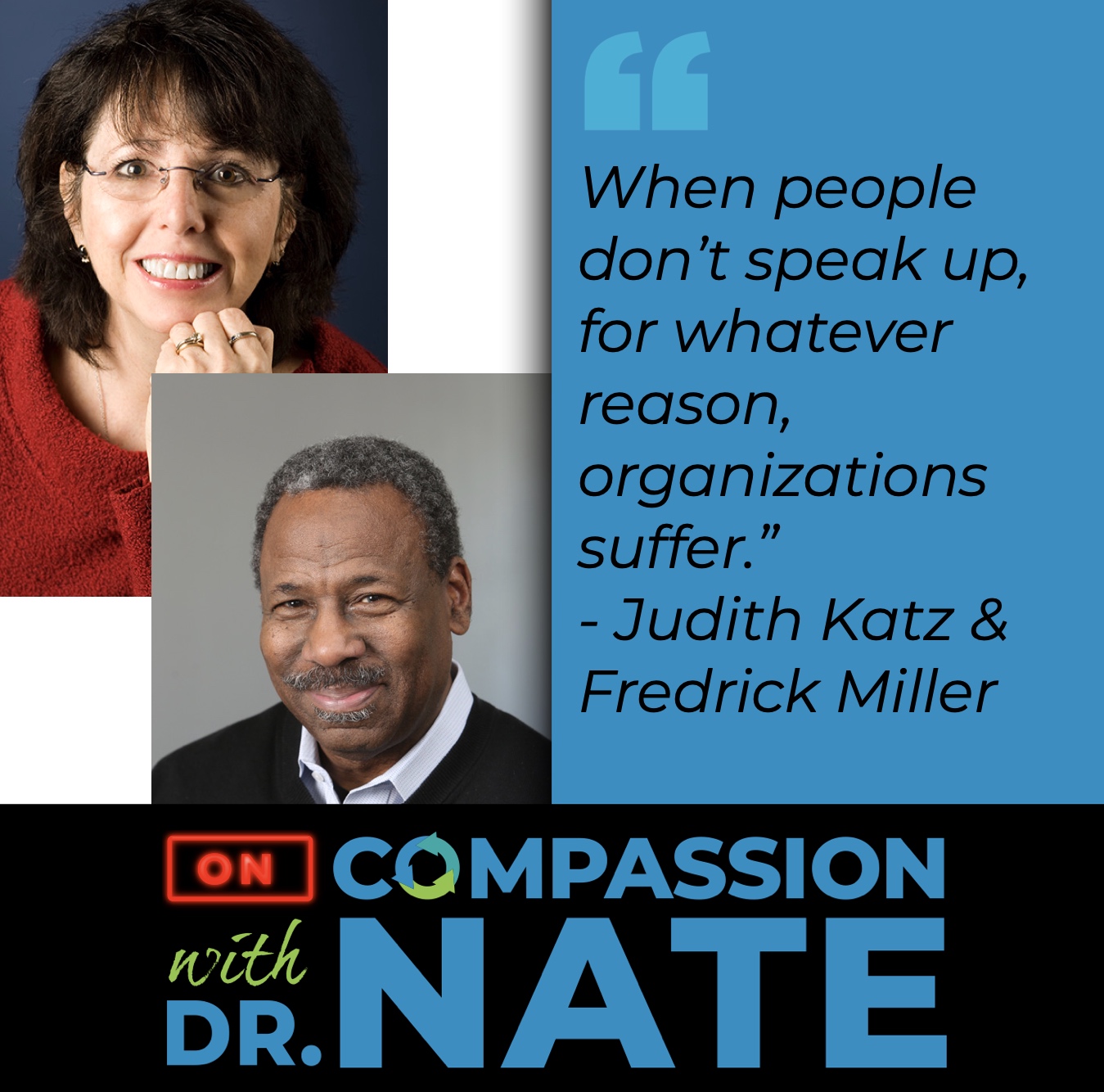
Ep 9Interaction Safety: Risk-Taking in an Inclusive and Collaborative Workplace with Judith Katz and Frederick Miller
What are the costs of ideas not shared, questions not asked, problems not reported, and conflicts that persist and go unresolved? When people don't speak up, organizations suffer. Today's guests, Judith Katz and Frederick Miller argue that organizations can only be as productive as the interactions that take place between their people. Listen to this episode if you want your organization to be a supportive but challenging environment that encourages risk-taking and speaking up, where every individual is motivated to be brave enough for higher goals and more ambitious possibilities. Judith Katz and Frederick Miller are experts in healthy workplaces and foster teamwork and collaboration. They have published many books on the topic, in their latest book Safe Enough to Soar: Accelerating Trust, Inclusion & Collaboration in the Workplace they demonstrate that the power of interaction safety is a catalyst in business success. Key Takeaways: [1:54] Judith and Frederick talk about their background and how they became interested in the are of safety interactions in organizations. [5:48] What is interaction safety? [7:20] Creating a "safe enough" environment. [7:53] How is interaction safety different than psychological safety? [9:44] Moving from judging to joining. [12:50] Fred and Judith talk about the specific behavior that they identified that undermine or support interaction safety. [15:11] Four critical behaviors that enable interaction safety [19:21] We are all together in one team doing our best work to enhance the performance of the workplace. [19:38] Judith shares about the different levels of interaction safety. [24:21] Why an organization should invest in creating a safe environment for interactions? [25:28] The real challenge is to bring life into an organization. [27:55] Which are your thought, feelings, and reaction when you feel judged vs when you feel joined? [28:35] Judith and Fred present a tool they are working on at the moment for assessing interaction safety in organizations. [29:38] Safety might mean different things to different people. [31:55] What do you need to feel safe? [32:17] Lighting round with Judith and Fred. [39:03] Nate shares the top three takeaways from an amazing conversation with Judith and Fred. Mentioned in this episode: The Compassion Mindset Safe Enough to Soar: Accelerating Trust, Inclusion & Collaboration in the Workplace, Frederick Miller and Judith Katz Opening Doors for Teamwork and Collaboration: 4 Keys that Change Everything, Frederick Miller and Judith Katz The Kaleel Jamison Consulting Group Tweetables: "When there is interaction safety, there is an intentional environment for our actions and our behaviors, that acknowledge reasonable risk-taking, and where people can share their ideas and promotes an inclusive-collaborative workplace." #oncompassion #safety #Interaction #risktaking #healthyorganization "None of us has all the answers." #oncompassion #interactionsafety #respect #collaboration #inclusion "An organization has to reinvent itself to be able to be successful." #oncompassion #interactionsafety #success #organization
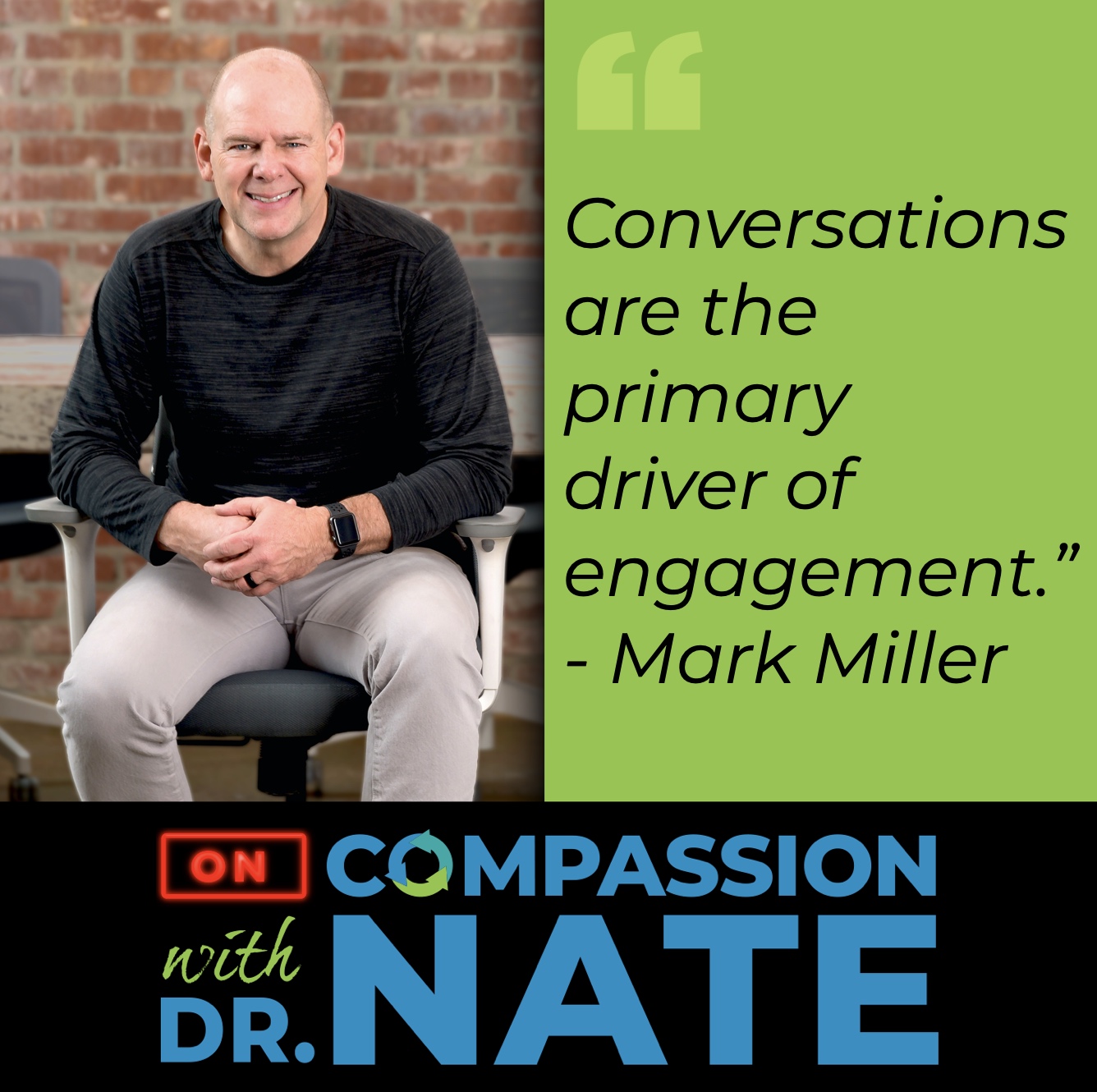
Ep 8Engagement: The Key for High-Performance Organizations with Mark Miller
Dr. Nathan Regier welcomes Mark Miller to today's episode. He is a business leader, storyteller, and best selling author of eight books that have sold over a million copies in 25 languages. He built his career at Chick-fil-A and helped the company grow from 75 restaurants to over 2400 locations with annual sales exceeding 10 billion dollars. In this episode, Mark Miller is talking about engagement. In Mark's newest book Win the Heart: How to Create a Culture of Full Engagement, he reveals the principles any leader in an organization can apply to drive engagement and boost success while making it something consistent across the organization Key Takeaways: [1:48] Mark talks about how his professional journey. [3:21] Mark shares the "big idea" in Win the Heart: How to Create a Culture of Full Engagement [4:25] Engagement is the last hurdle that most organizations have not jumped in order to excel in execution. [4:58] What is engagement and how it relates to a business. [5:37] High-performance organizations only fo four things. [7:30] Engagement is about how much someone cares. [8:58] Simplicity is key for an organization to achieve high performance. [9:25] Engagement is the kind of care that results in personal initiative and discretionary effort [10:20] The power of fables. [10:52] Engagement and its link with compassion. [11:33] The important piece of connection. [11:50] Care produces caring [12:17] For strategies that will increase someone's level of Caring: Connection, Affirmation, Responsibility, Environment that leaders create. [14:37] A manager's field guide. [16:40] Believe in human worth and dignity. [18:44] Does engagement matter more now than it used to? [21:04] Experience is what really keeps people engaged with an organization. [22:58] What is unique about Win the Heart? [24:07] The role of conflict. [26:30] Mark's secret at Chick-fil-A. [27:29] Engaging teenagers in an organization. [29:25] Can a leader turn around an existing culture? [32:01] Leaders need to lead. [34:25] Mark Miller talks about his passion for photography. [35:14] Lighting round [38:53] Nate shares the main topics of an amazing conversation with Mark Miller. Mentioned in this episode: The Compassion Mindset Win the Heart: How to Create a Culture of Full Engagement, Mark Miller Text WintheHeart to 33777 and get your Free Digital Quickstart Guide and the first chapter of Mark Miller's latest book Win the Heart. High-Performance Habits: How Extraordinary People Become That Way, Brendon Burchard Visit Mark Miller's site Tweetables: "Most leaders underestimate and undervalue the importance of engagement in their employees." #oncompassion #leader #employees "Engagement is the last hurdle that most organizations have not jumped in order to excel in execution." #oncompassion #engagement #organization #execution "Engagement is the kind of care that results in personal initiative and discretionary effort." #oncompassion #engagement #care "Care produces caring." #oncompassion #care "If you have an environment without conflict you don't have a healthy environment." #oncompassion #conflict #environment #organizationalhealth "Leaders are the architects of the future." #oncompassion #leaders #future
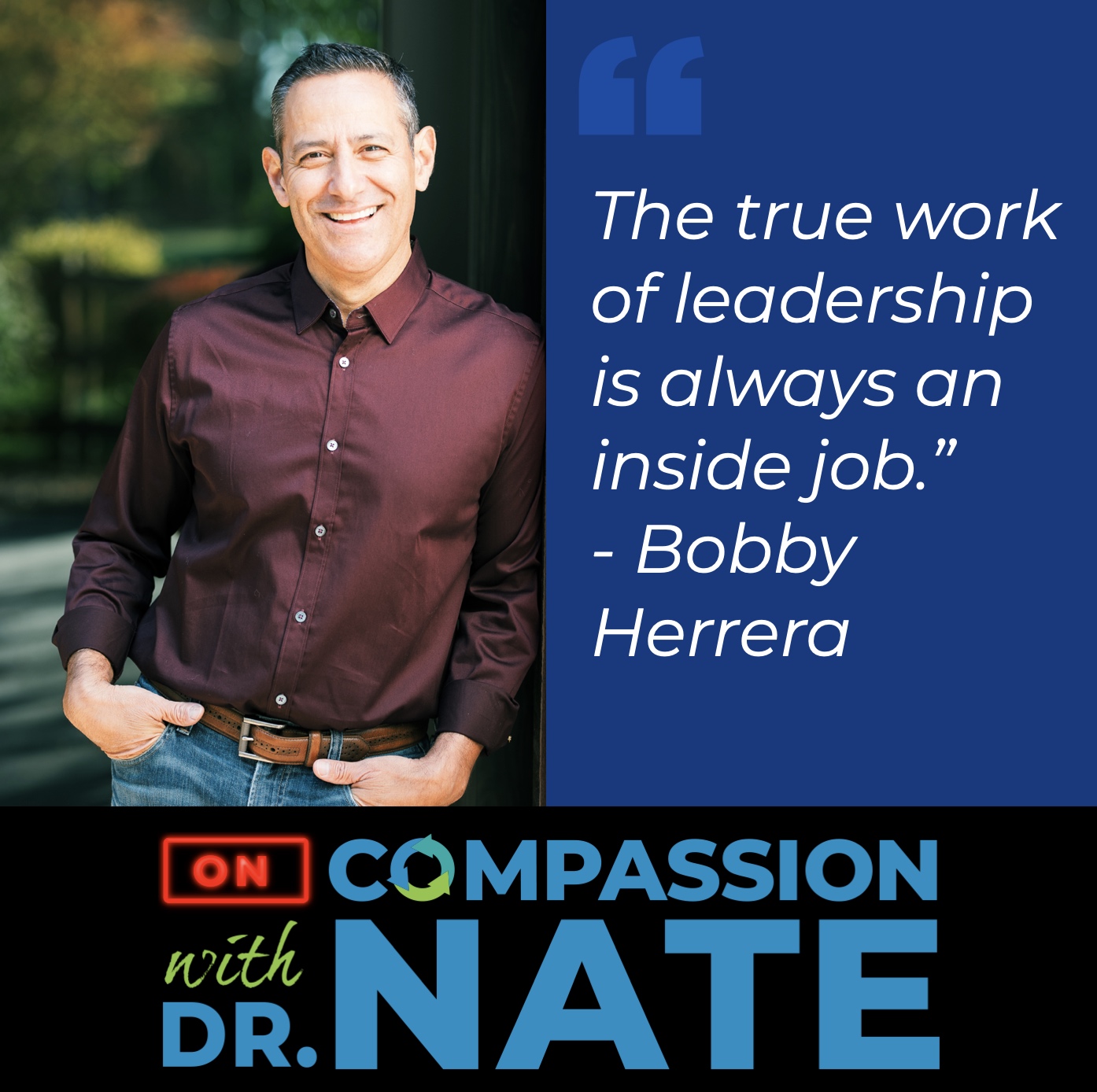
Ep 7Every Struggle Teaches Us Something with Bobby Herrera
Dr. Nathan Regier welcomes Bobby Herrera to this episode. Bobby believes that everyone deserves an opportunity to succeed and is an unwavering champion for the underdog. He is co-founder and CEO of Populus Group one of the fastest-growing HR services companies in the USA, with an annual revenue of $500 million and many fortunate customers. Bobby learned the value of hard work, rising early, and putting in long hours in the fields. After high school, Bootcamp became his ticket of opportunity. Bobby serves on national community organization boards, he is a regular speaker at corporations and service groups, he is a proud Army veteran but Bobby's most pride is his family. In this episode, Bobby shares the motivation behind his book The Gift to Struggle: Life-Changing Lessons About Leading, he narrates personal stories that shaped who he is as a person and as a leader, explaining in simple words the core of leadership and compassion. Key Takeaways: [1:48] Bobby talks about Populus Group [3:13] Bobby exposes the changes in the HR field during the last 20 years. [6:18] What kind of struggles did Bobby go through? [9:10] Bobby talks about what motivated him to write a book. [11:44] Bobby shares a personal story: "I can make a difference someday too". [14:27] There are no accidents, we all follow a thread in our journeys that connect our presents to the past. [17:17] The most important act of leadership is seeing and encouraging potential. [18:30] When did Bobby decide that struggle is a gift? [22:02] We all struggle and every struggle teaches us something, that is the gift, and leadership is sharing that gift with others [22:22] The main three parts of The Gift to Struggle: Life-Changing Lessons About Leading: 1- Who am I?, 2- Give more than you take and 3- Choose your impact. [24:33] Practical ways to apply the concepts contained in The Gift to Struggle. [29:25] The importance of narrating your story. [32:22] Brand is a lagging indicator of the strength of your culture. [34:55] Trust-building behaviors are the ones that create the feelings and emotions that you want your customers to feel. [35:42] Bobby gives examples about The Gift of Struggle in his family. [38:55] Bobby gives humble advice: Look at those moments that changed your life forever. [40:59] What is Bobby's favorite book? [41:20] Bobby's role model. [41:45] What was Bobby's most spectacular failure? [44:31] Dr. Nate gives the main topics of an amazing conversation. Mentioned in this episode: The Compassion Mindset The Gift to Struggle: Life-Changing Lessons About Leading, Bobby Herrera Bobby Herrera Populus Group Tweetables: "Struggle can shape who you are as a person and who you are as a leader." #oncompassion "One act of kindness can give someone purpose and identity" #oncompassion "There are no accidents, we all follow a thread in our journeys that connect our presents to the past." #oncompassion "We see struggle but until we don't take action on it, we are not compassionate." #oncompassion "The most important act of leadership is seeing and encouraging potential." #oncompassion "Trust comes before value, not the other way around" #oncompassion

Compassion in Healthcare with Dr. Stephen Trzeciak
Dr. Nathan Regier is pleased to be joined to this episode by Dr. Stephen Trzeciak to talk about compassion research, interesting, relevant and applicable research about compassion in health care. Stephen Trzeciak, MD, MPH, is a physician-scientist, chief of medicine at Cooper University Health Care, and Professor and Chair of Medicine at Cooper Medical School of Rowan University in Camden, N.J. Dr. Trzeciak is a practicing intensivist (specialist in intensive care medicine), and a National Institute of Health (NIH)-funded clinical researcher with more than 100 publications in scientific literature. In today's episode you will hear about Dr. Trzeciak's research which is focused on a new field called "Compassionomics," in which he studied the scientific effects of clinical compassion on patients, patient care, and those who care for patients. He is the author of the best-selling book: "Compassionomics: The Revolutionary Scientific Evidence that Caring Makes a Difference." Broadly, Trzeciak's mission is to make healthcare more compassionate through science. Key Takeaways: [2:41] Dr. Stephen Trzeciak explains what an "intensivist" is. [3:28] Dr. Trzeciak shares how he became interested in compassion. [7:40] Dr. Trzeciak talks about how his research on compassion became a book. [8:20] Why there is a compassion crisis in healthcare. [9:06] Compassion matters in meaningful and measurable ways. [10:35] What is behind the compassion crisis? [11:06] Differences between compassion and empathy. [16:10] ⅓ of Americans admit that compassion is not one of their core values. [17:25] People are emotionally exhausted and they just can't seem to care. [18:29] Compassionate behaviors can be learned. [22:37] The neuroscience data that supports the distinction between empathy and compassion. [27:58] The best antidote to burnout is more compassion. [31:39] Healthcare providers who show compassionate behaviors build resilience and resistance to burnout. [33:40] The matter of time: It takes less than a minute to make a meaningful impact on a patient. [35:36] The different uses of time and how they are perceived. [37:14] Dr. Stephen Trzeciak talks about the time when he realized he had every symptom of burnout and decided he was going to care more and not less. [41:07] The declaration of interdependence. [42:50] Lighting round. [48:45] Nate's three key takeaways: Empathy and compassion are different. The antidote for burnout has to be at the point of care. Compassion is an evolutionary advantage. Mentioned in this episode: The Compassion Mindset Compassionomics: The Revolutionary Scientific Evidence that Caring Makes a Difference. Dr. Stephen Trzeciak Compassionomics.com Dr. Stephen Trzeciak's TED Talk at the University of Pennsylvania

Ep 5Conscious Capitalism with Tom Henry
Dr. Nathan Regier welcomes Tom Henry who is currently the learning and development coordinator for Whole Foods Market; his background is remarkable and he has vast professional experience in retail, leadership and executive development. The experience of retail has tremendously changed in the past 35 years, including the retail implosion of the 80 ́s and 90 ́s leading to the rise of the digital economy. Tom Henry is an avid believer in conscious capitalism and he's become a respected voice in his community, his services both within Whole Foods and outside in the broader business community is truly inspiring. In today's interview, he will share the principles of conscious capitalism while diving deep in the concepts of collective consciousness, diversity, inclusion, conflict, transformation, values and needs. Key Takeaways: [2:20] Tom Henry shares his experience in Berlin where he was invited to talk about conscious capitalism. [5:06] Tom Henry talks about the origins of his interest in conscious capitalism. [6:45] Conscious capitalism is about a higher purpose and that business is best when is not just about profit. [8:05] The four tenets of conscious capitalism. [09:46] The loss of purpose we experience as a society it is a consequence of the struggle of the world economies. [11:01] It is not about what we do, but about who we are and how we are when we are doing it. [11:10] First principle: Acknowledging your higher purpose. [13:51] Do what you can where you are. [14:50] Second principle: We think we are separate individuals, but we are actually just one collective consciousness. [18:02] When we observe something, we are part of it. [19:26] The ultimate diversity and inclusion is when you are able to see yourself as the other next to you. [21:04] The third principle: Transformation occurs through dialogue. [22:57] Values reflect our needs and motivations. [24:44] Tom Henry shares how the four core principles come alive in Whole Foods Market. [26:54] When there is no conflict in a company it could be a result of people being passive or hiding. [29:19] What do you want to be? Do you want to be right or do you want to be whole? [30:38] Tom Henry shares his perception of compassion. [32:43] Lighting round. [38:37] Nate's three key takeaways from this conversation: We are in this together. Transformation occurs through dialogue. Values unite and beliefs separate. Mentioned in this episode: The Compassion Mindset The Purpose Driven Life: What on Earth Am I Here For?, by Rick Warren Barrett Values Centre, Personal Values Assessment Tom Henry on Linkedin

Ep 4Building Good with Millie Ward
Dr. Nathan Regier welcomes Millie Ward, the president of Stone Ward a full service marketing agency based in Little Rock Arkansas with an office in Chicago as well, Millie embodies Stone Ward's ethos of intelligent thinking, committed services and creative drive. Always on the go, Millie is the former chairman of the advertising marketing international network AMIN, one of the largest networks of independent agencies. She has also been named one of Ad Week's Women to Watch, one of the top 100 women by Arkansas Business and Woman Business Owner of the Year by the National Association of Women Business Owners. She serves her community in many different ways and she is a wonderfully dedicated wife, mother and grandmother. In this episode Millie shares the magic behind Stone Ward, how they chose their motto "building good" based on foundations of respect and trust, recognizing people's potentials, prioritizing excellence and giving back to the community. Key Takeaways: [1:58] Building good as a motto. [3:08] Best relationships have trust and respect at their core. [3:38] Recognizing potential. [4:07] Excellence. [4:35] Giving back. [5:23] The story behind Stone Ward. [6:58] Stone Ward recognized as one of the best places to work. [9:13] Work-life balance. [9:50] Three special features of Stone Ward. [10:43] Everyone who depends on you is welcome to Stone Ward. [11:19] Keeping employees healthy. [12:49] Flexible leave time. [14:03] Millie's definition of compassion. [15:54] Stone Ward's work with US women's soccer. [20:04] Building relationships that last. [21:21] Projects that Millie is proud to be involved in. [23:01] Is there a creative way to say no? [25:26] The ideation process. [26:28] Ideas can come from anywhere. [26:46] Examples of non profit organizations Stone Ward is working with. [28:40] Community work. [30:09] Health, education and mental stability. [31:18] Lighting round. [34:20] Advice for leaders. [37:01] Takeaways from this episode. Mentioned in this episode: The Compassion Mindset RefuSHE Reach to Rwanda
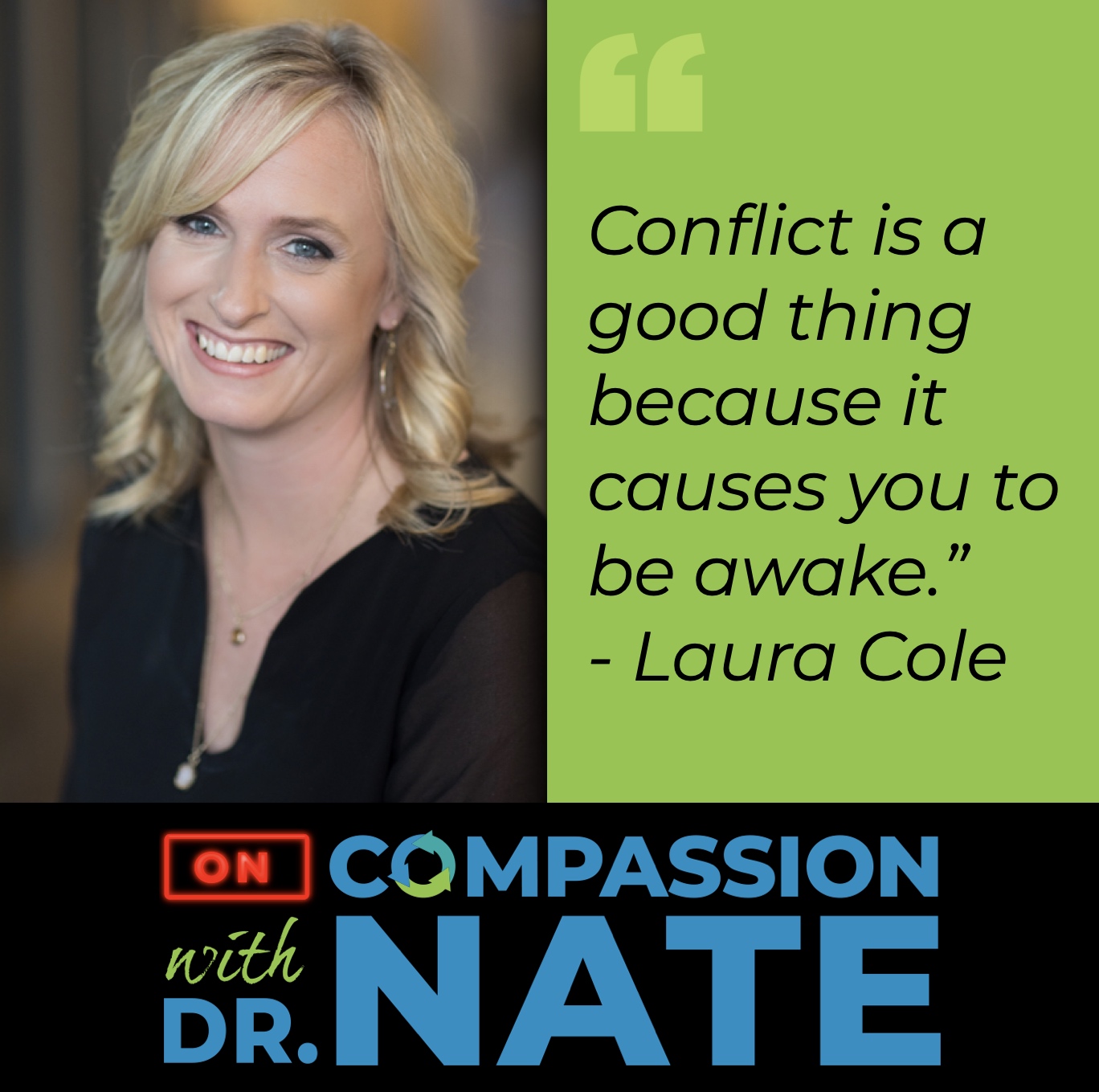
Ep 2Leadership, Conflict and Compassion with Laura Cole.
Dr. Nathan Regier welcomes Laura Cole to this episode, she is the founder of Your Latitude a Canadian Solution-Focused coaching and mediation practice, specializing in organizational culture development and change management. Her clients include a wide range of industries. Laura is an experienced public speaker and founder of the Intentional Human speaking series where she shares stories of transformation as organizations become intentional about their cultures and leadership. Laura's wisdom and perspective is very practical (even a little bit radical), and during this episode she will reveal some of her secret weapons. Key Takeaways: [3:31] Laura talks about her background and how she found her latitude. [5:16] How did Laura come up with "Your Latitude" to name her company? [6:40] A unique approach for each organization. [7:12] A discovery that changed Laura's perspective: clients love to be involved in the design of the process. [9:30] Laura's secret weapon: Using horses to help humans. [11:39] How horses interact and impact humans by reflecting their emotions. [14:31] Dr. Regier talks about his experience participating in EAP. [17:03] We need to think people are capable for them to manifest capability. [18:41] Emphasizing hope. [20:45] What is a "Solution-Focused" work? [22:45] Root cause analysis can lead you farther away from the solution. [24:08] Seeking long term solutions. [27:15] Philosophy changes along Laura's career in her approach to conflict. [29:44] Honoring conflict. [31:27] Compassion requires boundaries. [36:55] About the methodology. [40:10] Lightning round. [45:52] Key learnings from this episode. Mentioned in this episode: The Compassion Mindset "Conflict Without Casualties: A Field Guide for Leading with Compassionate Accountability", Nate Regier Your Latitude Laura Cole on Linkedin Laura Cole on Instagram
Ep 3An Approachable Model for Leadership with Doug Conant
Dr. Nathan Regier welcomes Douglas R. Conant, an internationally renowned business leader, New York Times bestselling author, keynote speaker, and social media influencer with over 40 years of leadership experience at world-class global companies. For the past 20 years of his leadership journey, he has honed his leadership craft at the most senior levels – first as President of the Nabisco Foods Company, then as CEO of Campbell Soup Company, and finally as Chairman of Avon Products. In 2011, he founded ConantLeadership: a mission-driven community of leaders and learners who are championing leadership that works in the 21st century. Doug is the only former fortune 500 CEOs who is a New York Times Best Selling Author, a Top 50 Leadership Innovator, a Top 100 Leadership Speaker and a Top 100 Most Influential Authors in the world. His work is devoted to bringing more compassion in the world and in today's episode he gives golden nuggets for leaders, such as the importance of bringing your whole self to work and show up with vulnerability. Every interaction matters and tomorrow's leaders have to be fluid in the small moments. Doug also dives deep into how leaders must be tough-minded with standards but tender-hearted with people. Enjoy this thoughtful conversation! Key Takeaways: [2:41] Doug talks about how being fired at 32 years old turned out to be what propelled him forward. [5:06] Doug started rethinking his career. [6:25] Leadership is about being there for people. [8:48] The exercise that had a profound impact on Doug. [10:40] Being encouraged to be who he was. [12:17] Being compassionate and tough minded on standards at the same time. [14:18] The Blueprint: 6 Practical Steps to Lift Your Leadership to New Heights. [18:14] How to bring your leadership aspirations to your work. [19:50] An approachable model for leadership [27:35] Openness and vulnerability in leadership. [32:24] Connecting with your purpose. [37:03] Formalizing human experience. [39:21] A simple model for touchpoints. [41:30] The growth mindset: Grow or Die. [44:20] Lighting round. [47:23] Key takeaways from Nate Regier. Mentioned in this episode: The Compassion Mindset The Blueprint: 6 Practical Steps to Lift Your Leadership to New Heights , Douglas Conant Conant Leadership
Ep 1Leadership, Vulnerability and Authenticity with Jody Horner.
Dr. Nathan Regier welcomes Jody Horner to the very first episode of On Compassion. She is the former president of Cargill Meat Solutions and Cargill Case Ready and is now the president of Midland University in Fremont, Nebraska. Jody's journey is an inspiration, as well as her leadership philosophy and how she brings compassion to her work. Jody shares her most significant learning experiences as a leader with the audience, as well as the realization that being vulnerable and keeping a learner's mindset have been the keys to her success as a leader. Jody explains the concept of compassionate accountability and how heart, head and hands are the main components of a well exercised compassion, which is by no means an easy task to perform. Key Takeaways: [2:48] Jody Horner talks about her journey at Cargill Meat Solutions. [3:39] What Jody learned about herself as a leader. [5:31] Learning to appreciate the value of all jobs in an organization. [8:29] Realizing she had to be a learner. [9:58] Bids for connection. [11:32] Becoming vulnerable as a way for welcoming positive connections. [13:05] Being honest as the key to success as a leader. [15:12] Why shift from Cargill to Midland University? [17:55] Jody Horner's advice for younger generations. [20:03] Being a compassionate leader is not about being nice. [21:31] Over time the culture takes the personality of the leader. [21:53] When toxicity affects a culture. [22:44] Jody Horner shares an experience were she encountered the difficult side of being compassionate. [25:11] Bringing compassion into her work as the president of Midland University. [27:16] Compassion and accountability. [27:45] Heart, head and hands are the components of compassion. [28:48] Protecting yourself as a leader from empathy fatigue. [31:45] Jody Horner defines authenticity. [33:13] Lightning round. [34:43] Jody Horner's advice to a leader who wants to transform his or her culture to a more compassionate one. Mentioned in this episode: The Compassion Mindset