
Commons Church Podcast
609 episodes — Page 11 of 13

S3 Ep 39Anxiety: Security
The most common Biblical command is “do not be afraid”. Search your Bible and you will find it repeated dozens of times. It began when God told Abraham, the first man of faith, not to be afraid (Genesis 15:1). And actually, the command could be translated, “stop being afraid!” In other words, Abraham was told to stop fearing as a way of life. And that is the issue, isn’t it. The lingering fears, the constant low-level dread. While momentary fears can come and go, if there is something we are all too familiar with, it’s the anxious life as a way of being. Anxiety is a kind of low-grade fear, the constant gnawing of uncertainty, the constant dread that doesn’t go away. Anxiety can stay with us. Jesus had something to say about this very practical area of our existence, painting a picture about how anxiety happens, and how the un-anxious life is actually possible. In his famous temptations Jesus faces head-on three of our most powerful latent anxieties: security, esteem, and control. Let’s face them as well. ★ Support this podcast ★
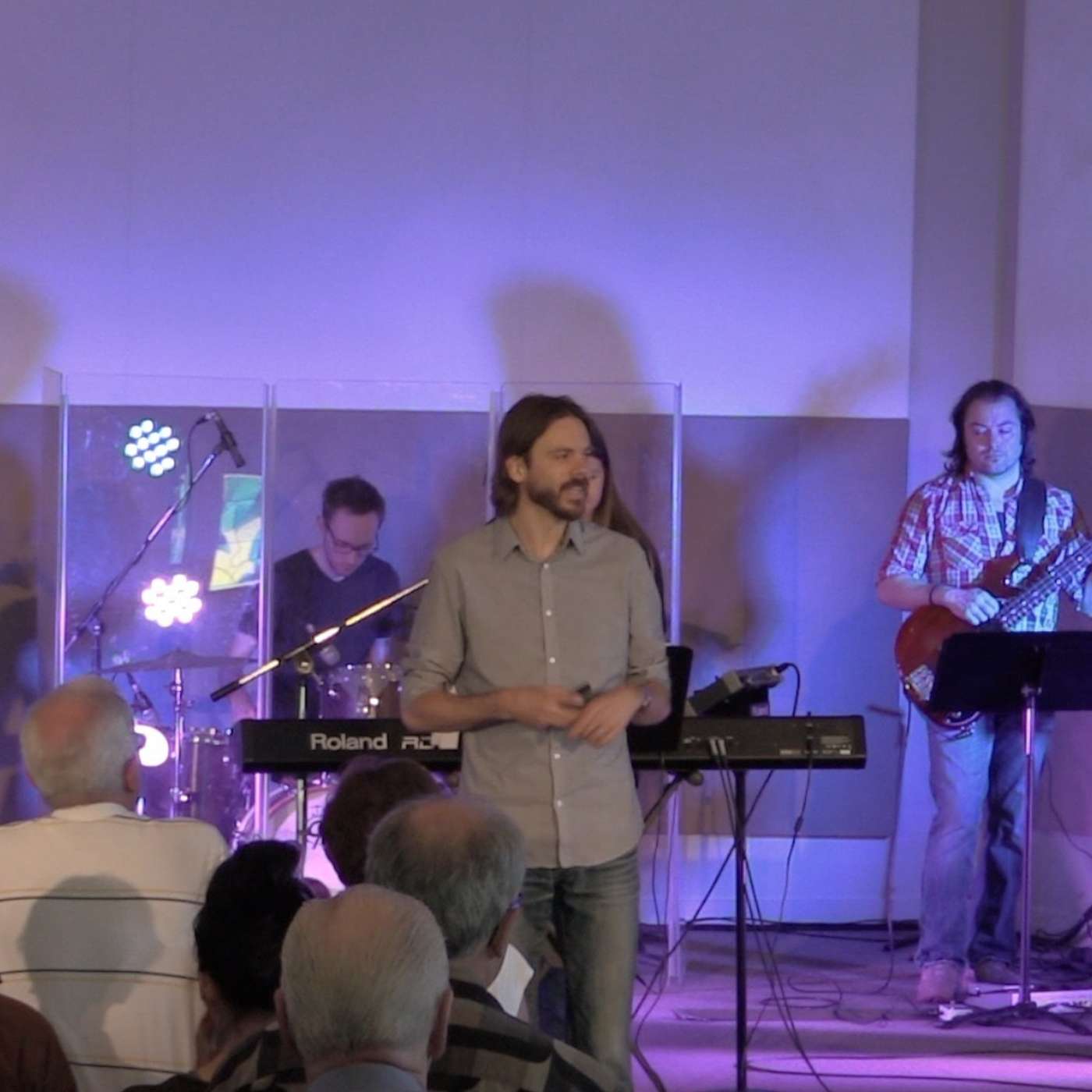
Trinity Sunday - Bonus
bonusexcerpt from the Nicene Creed: I believe in one God, the Father Almighty, Maker of heaven and earth, and of all things visible and invisible. And in one Lord Jesus Christ, the only-begotten Son of God, begotten of the Father before all worlds; God of God, Light of Light, very God of very God; begotten, not made, being of one substance with the Father, by whom all things were made. And I believe in the Holy Ghost, the Lord and Giver of Life; who proceeds from the Father; who with the Father and the Son together is worshipped and glorified; and who spoke by the prophets. Amen. ★ Support this podcast ★
S3 Ep 38Romans (12 of 28): A Case Study
“What is the “good news” of Jesus Christ? Why do people need to hear it? How can they experience it? What will it mean for their future? And what does the good news have to do with everyday life? These large and basic questions form Paul’s agenda in Romans—an agenda dictated by a combination of audiences, circumstances and purposes. Last year we started into the book of Romans and worked our way–verse by verse–through the opening two chapters. This year, we pick up where we left off and keep moving forward. ★ Support this podcast ★
S3 Ep 37Romans (11 of 28): Upholding the Law
“What is the “good news” of Jesus Christ? Why do people need to hear it? How can they experience it? What will it mean for their future? And what does the good news have to do with everyday life? These large and basic questions form Paul’s agenda in Romans—an agenda dictated by a combination of audiences, circumstances and purposes. Last year we started into the book of Romans and worked our way–verse by verse–through the opening two chapters. This year, we pick up where we left off and keep moving forward. ★ Support this podcast ★
S3 Ep 36Romans (10 of 28): How To Talk About Atonement
“What is the “good news” of Jesus Christ? Why do people need to hear it? How can they experience it? What will it mean for their future? And what does the good news have to do with everyday life? These large and basic questions form Paul’s agenda in Romans—an agenda dictated by a combination of audiences, circumstances and purposes. Last year we started into the book of Romans and worked our way–verse by verse–through the opening two chapters. This year, we pick up where we left off and keep moving forward. ★ Support this podcast ★
S3 Ep 35Romans (09 of 28): Where do Rules Get Me?
“What is the “good news” of Jesus Christ? Why do people need to hear it? How can they experience it? What will it mean for their future? And what does the good news have to do with everyday life? These large and basic questions form Paul’s agenda in Romans—an agenda dictated by a combination of audiences, circumstances and purposes. Last year we started into the book of Romans and worked our way–verse by verse–through the opening two chapters. This year, we pick up where we left off and keep moving forward. ★ Support this podcast ★
S3 Ep 34Romans (08 of 28): Who's got the upper hand?
“What is the “good news” of Jesus Christ? Why do people need to hear it? How can they experience it? What will it mean for their future? And what does the good news have to do with everyday life? These large and basic questions form Paul’s agenda in Romans—an agenda dictated by a combination of audiences, circumstances and purposes. Last year we started into the book of Romans and worked our way–verse by verse–through the opening two chapters. This year, we pick up where we left off and keep moving forward. ★ Support this podcast ★
S3 Ep 33Romans (07 of 28): Ch 1+2 recap
“What is the “good news” of Jesus Christ? Why do people need to hear it? How can they experience it? What will it mean for their future? And what does the good news have to do with everyday life? These large and basic questions form Paul’s agenda in Romans—an agenda dictated by a combination of audiences, circumstances and purposes. Last year we started into the book of Romans and worked our way–verse by verse–through the opening two chapters. This year, we pick up where we left off and keep moving forward. As Luther said: [Romans] is worthy not only that every Christian should know it word for word, by heart, but occupy himself with it every day, as the daily bread of the soul. It can never be read or pondered too much, and the more it is dealt with the more precious it becomes, and the better it tastes” ★ Support this podcast ★
S3 Ep 32Vision Sunday
Each year at this time we talk about our common vision. Each year we take time to look a little ahead of ourselves, project where our path might lead us, make adjustments if necessary, and re-orient ourselves to our true north. This is the chance to share what is on our minds and hearts, what it is we can do and be for our friends and families, for our communities and work places, for Calgary and our world. This is a day to find alignment as a community around some of our most exciting possibilities. And there is a lot on the horizon ★ Support this podcast ★

S3 Ep 31Resurrection Sunday
The Christian faith is an Easter faith. That means it is ultimately a joyous and hopeful view of the world. Christ has triumphed over the enemies of life. Death, sin, and despair have been given an expiry date. Love, hope, and mercy have fully guaranteed futures. But this Easter faith we participate in, does not come cheaply or without challenge. There is a pathway to joy that must be taken seriously. Let us endeavour to truly follow the way of Jesus this Easter with grace and peace. ★ Support this podcast ★

Good Friday
bonusEverything about the cross event was bent to the task of pressuring Jesus toward self-preservation. The core essence of God’s character was under siege. The pivotal question of the ages hung before men and angels, Who is the Ruler of the universe? What is He really made of at heart? Will His love prove itself a sham under pressure, or will He plunge to the deepest depths of total self-sacrifice for others? He could have saved Himself and abandoned us to our selfishness and hate. But He simply, profoundly, chose not to. ★ Support this podcast ★

S3 Ep 30Palm Sunday
Every year we realize that we need to tell and hear the story once more. Every year we find ourselves surprised by it, overwhelmed, and yet comforted in a way that’s hard to explain. Every year we are drawn back to humble worship, and the pledge of renewed commitment. We invite you to take time to embrace the story: Holy Week begins on Palm Sunday as we celebrate Jesus’ enterance into Jerusalem. ★ Support this podcast ★

S3 Ep 29On Fish and Nets - Jeremy Duncan
Most of us know the Sermon on the Mount. The foundational sermon Jesus gives as he launches his public career. It’s a masterful invitation into the life of God. Most of us are less familiar with the Sermon by the Sea. An enigmatic sermon Jesus gives later in life as he is preparing to head toward the cross. If the sermon on the mount presents us with the common sense life of God and the practical steps we can take to experience it, the sermon by the sea presents us with the strange and paradoxical imagination of the upside down kingdom. A kingdom where Jesus’ death is his crowning glory, and to give away everything becomes the means to receiving what we have always truly, deeply wanted. As we prepare ourselves for Easter, we explore the sermon of Jesus that perhaps most directly pointed to the surprise of Holy Week. ★ Support this podcast ★
On Sacred Reading - Bonus
bonusI have been loving our current series in the parables but one of the questions I am often asked is how do you read these stories well? How do you notice the subtleties that Jesus embedded in the story? Well, certainly I get the benefit of spending a lot of my week studying and preparing but there are some simple reading practices like lectio divina that can help us become more aware of what is happening in the text as we read. Here's one of the ways I like to approach the Bible when I read. I hope you find it helpful. ★ Support this podcast ★

S3 Ep 28On Treasures and Pearls - Jeremy Duncan
Most of us know the Sermon on the Mount. The foundational sermon Jesus gives as he launches his public career. It’s a masterful invitation into the life of God. Most of us are less familiar with the Sermon by the Sea. An enigmatic sermon Jesus gives later in life as he is preparing to head toward the cross. If the sermon on the mount presents us with the common sense life of God and the practical steps we can take to experience it, the sermon by the sea presents us with the strange and paradoxical imagination of the upside down kingdom. A kingdom where Jesus’ death is his crowning glory, and to give away everything becomes the means to receiving what we have always truly, deeply wanted. As we prepare ourselves for Easter, we explore the sermon of Jesus that perhaps most directly pointed to the surprise of Holy Week. ★ Support this podcast ★

S3 Ep 27On Mustard Seeds and Yeast - Jeremy Duncan
Most of us know the Sermon on the Mount. The foundational sermon Jesus gives as he launches his public career. It’s a masterful invitation into the life of God. Most of us are less familiar with the Sermon by the Sea. An enigmatic sermon Jesus gives later in life as he is preparing to head toward the cross. If the sermon on the mount presents us with the common sense life of God and the practical steps we can take to experience it, the sermon by the sea presents us with the strange and paradoxical imagination of the upside down kingdom. A kingdom where Jesus’ death is his crowning glory, and to give away everything becomes the means to receiving what we have always truly, deeply wanted. As we prepare ourselves for Easter, we explore the sermon of Jesus that perhaps most directly pointed to the surprise of Holy Week. ★ Support this podcast ★

S3 Ep 26On Weeds and Wheat - Jeremy Duncan
Most of us know the Sermon on the Mount. The foundational sermon Jesus gives as he launches his public career. It’s a masterful invitation into the life of God. Most of us are less familiar with the Sermon by the Sea. An enigmatic sermon Jesus gives later in life as he is preparing to head toward the cross. If the sermon on the mount presents us with the common sense life of God and the practical steps we can take to experience it, the sermon by the sea presents us with the strange and paradoxical imagination of the upside down kingdom. A kingdom where Jesus’ death is his crowning glory, and to give away everything becomes the means to receiving what we have always truly, deeply wanted. As we prepare ourselves for Easter, we explore the sermon of Jesus that perhaps most directly pointed to the surprise of Holy Week. ★ Support this podcast ★
On Generosity - Bonus
bonusOn Sunday I threw out a quick statement about our relationship to money while I was talking about Jesus' words in Matthew 13. That seemed to intrigue a lot of people so I pulled together a quick video with some of the thinking behind what I was saying. ★ Support this podcast ★

S3 Ep 25On Seeds and Soil - Jeremy Duncan
Most of us know the Sermon on the Mount. The foundational sermon Jesus gives as he launches his public career. It’s a masterful invitation into the life of God. Most of us are less familiar with the Sermon by the Sea. An enigmatic sermon Jesus gives later in life as he is preparing to head toward the cross. If the sermon on the mount presents us with the common sense life of God and the practical steps we can take to experience it, the sermon by the sea presents us with the strange and paradoxical imagination of the upside down kingdom. A kingdom where Jesus’ death is his crowning glory, and to give away everything becomes the means to receiving what we have always truly, deeply wanted. As we prepare ourselves for Easter, we explore the sermon of Jesus that perhaps most directly pointed to the surprise of Holy Week. ★ Support this podcast ★
S3 Ep 24The New Rules
There are two letters to the city of Thessalonica in our Bibles. Both are traditionally held to be written by the apostle Paul and yet some scholars have questioned that because of the apparent contradictions in the content. One letter seems to encourage its readers to prepare for the imminent return of Christ. The second letter seems to be putting the breaks on and reminding the readers that they will still have to engage in culture, keep their jobs, and pay their bills. But is this really a contradiction? Or perhaps part of an ongoing struggle to find balance in our faith. Let’s explore together how Paul addresses this community, watches as they respond, and pastors them toward a healthy rhythm in life. ★ Support this podcast ★
S3 Ep 23Authenticity
There are two letters to the city of Thessalonica in our Bibles. Both are traditionally held to be written by the apostle Paul and yet some scholars have questioned that because of the apparent contradictions in the content. One letter seems to encourage its readers to prepare for the imminent return of Christ. The second letter seems to be putting the breaks on and reminding the readers that they will still have to engage in culture, keep their jobs, and pay their bills. But is this really a contradiction? Or perhaps part of an ongoing struggle to find balance in our faith. Let’s explore together how Paul addresses this community, watches as they respond, and pastors them toward a healthy rhythm in life. ★ Support this podcast ★
S3 Ep 22Joy and Pain
There are two letters to the city of Thessalonica in our Bibles. Both are traditionally held to be written by the apostle Paul and yet some scholars have questioned that because of the apparent contradictions in the content. One letter seems to encourage its readers to prepare for the imminent return of Christ. The second letter seems to be putting the breaks on and reminding the readers that they will still have to engage in culture, keep their jobs, and pay their bills. But is this really a contradiction? Or perhaps part of an ongoing struggle to find balance in our faith. Let’s explore together how Paul addresses this community, watches as they respond, and pastors them toward a healthy rhythm in life. ★ Support this podcast ★
S3 Ep 21All About Balance
There are two letters to the city of Thessalonica in our Bibles. Both are traditionally held to be written by the apostle Paul and yet some scholars have questioned that because of the apparent contradictions in the content. One letter seems to encourage its readers to prepare for the imminent return of Christ. The second letter seems to be putting the breaks on and reminding the readers that they will still have to engage in culture, keep their jobs, and pay their bills. But is this really a contradiction? Or perhaps part of an ongoing struggle to find balance in our faith. Let’s explore together how Paul addresses this community, watches as they respond, and pastors them toward a healthy rhythm in life. ★ Support this podcast ★

Ashes Supplemental Content - C
bonusIf reconciliation is always the hope of forgiveness how do we start that conversation? Supplemental Content: The response to this series was very encouraging. It was amazing to see people in the community and online interact with the material and share stories of struggle and forgiveness in their lives. Out of those stories a number of questions emerged and so we've decided to put together some additional content to address ideas that weren't touched on fully in the series. ★ Support this podcast ★

Ashes Supplemental Content - B
bonusYou can't forgive an organization so don't try. Let yourself name the person who hurt you and work to forgive that person. Supplemental Content: The response to this series was very encouraging. It was amazing to see people in the community and online interact with the material and share stories of struggle and forgiveness in their lives. Out of those stories a number of questions emerged and so we've decided to put together some additional content to address ideas that weren't touched on fully in the series. ★ Support this podcast ★

Ashes Supplemental Content - A
bonusLike anything other discipline forgiveness is a skill you can practice and get better at. Supplemental Content: The response to this series was very encouraging. It was amazing to see people in the community and online interact with the material and share stories of struggle and forgiveness in their lives. Out of those stories a number of questions emerged and so we've decided to put together some additional content to address ideas that weren't touched on fully in the series. ★ Support this podcast ★

S3 Ep 20Boundaries - Jeremy Duncan
Don't confuse forgiveness with giving someone unfettered access to your life. For a whole host of reasons we sometimes need to create and maintain healthy boundaries even as we forgive those who may have injured us in the past. Series Outline: In the Hebrew Scriptures ashes were used as a sign of grief or mourning. There are many forms of grief that we experience in our lives. Confusion or despair, lament or pain, loss or even death come crashing into our lives. Yet, one of the deepest experiences of grief we can have is the act of forgiveness. It’s not easy to forgive. It’s not light to let go. In fact, it means taking that pain that has been inflicted upon us and holding it so tightly that we refuse to let it lash out at anyone else. In this series we return to the topic of grief, and in particular the experience of forgiveness. How can Jesus lead us to let go of hurt? ★ Support this podcast ★

S3 Ep 19Revenge and Why it Never Works - Jeremy Duncan
Revenge is when we try to take our pain and recreate it inside someone else. This never works and leads to more despair. How can we defuse this instinct in order to work towards wholeness? Series Overview: In the Hebrew Scriptures ashes were used as a sign of grief or mourning. There are many forms of grief that we experience in our lives. Confusion or despair, lament or pain, loss or even death come crashing into our lives. Yet, one of the deepest experiences of grief we can have is the act of forgiveness. It’s not easy to forgive. It’s not light to let go. In fact, it means taking that pain that has been inflicted upon us and holding it so tightly that we refuse to let it lash out at anyone else. In this series we return to the topic of grief, and in particular the experience of forgiveness. How can Jesus lead us to let go of hurt? ★ Support this podcast ★

S3 Ep 18Forgive Yourself - Jeremy Duncan
Sometimes our more abstract. high-minded concepts can make it hard for us to access forgiveness in our lives. The Scriptures actually speak in very concrete images of forgiveness. Perhaps this can help us. Series Overview: In the Hebrew Scriptures ashes were used as a sign of grief or mourning. There are many forms of grief that we experience in our lives. Confusion or despair, lament or pain, loss or even death come crashing into our lives. Yet, one of the deepest experiences of grief we can have is the act of forgiveness. It’s not easy to forgive. It’s not light to let go. In fact, it means taking that pain that has been inflicted upon us and holding it so tightly that we refuse to let it lash out at anyone else. In this series we return to the topic of grief, and in particular the experience of forgiveness. How can Jesus lead us to let go of hurt? ★ Support this podcast ★

S3 Ep 17What Forgiveness Isn't - Jeremy Duncan
Forgiveness is not a moment. Forgiveness is not forgetting. Forgiveness is not for them. In order to understand forgiveness in our lives sometimes we need to start with what it isn't. Series Overview: In the Hebrew Scriptures ashes were used as a sign of grief or mourning. There are many forms of grief that we experience in our lives. Confusion or despair, lament or pain, loss or even death come crashing into our lives. Yet, one of the deepest experiences of grief we can have is the act of forgiveness. It’s not easy to forgive. It’s not light to let go. In fact, it means taking that pain that has been inflicted upon us and holding it so tightly that we refuse to let it lash out at anyone else. In this series we return to the topic of grief, and in particular the experience of forgiveness. How can Jesus lead us to let go of hurt? ★ Support this podcast ★

S3 Ep 16Moving into Epiphany - Bobbi Salkeld
It's New Year's Day! Let's 2017 together, on the right foot, facing Jesus. ★ Support this podcast ★

S3 Ep 15Before Beginning - God-bearer
Every year we rehearse the Christmas story. The baby and manger and sheep and the goats and it’s meaningful every time we do. And yet, as John reminds us in the opening of his gospel, there was a beginning before the beginning. A Jesus whose story runs throughout the entire story of creation. This year as we prepare for Christmas we want to read back Before Beginning to remember the stories of Jesus before the manger.” ★ Support this podcast ★

S3 Ep 14Before Beginning - Scott Wall
Every year we rehearse the Christmas story. The baby and manger and sheep and the goats and it’s meaningful every time we do. And yet, as John reminds us in the opening of his gospel, there was a beginning before the beginning. A Jesus whose story runs throughout the entire story of creation. This year as we prepare for Christmas we want to read back Before Beginning to remember the stories of Jesus before the manger.” ★ Support this podcast ★

S3 Ep 13Before Beginning - The Long Wait - Jeremy Duncan
Every year we rehearse the Christmas story. The baby and manger and sheep and the goats and it’s meaningful every time we do. And yet, as John reminds us in the opening of his gospel, there was a beginning before the beginning. A Jesus whose story runs throughout the entire story of creation. This year as we prepare for Christmas we want to read back Before Beginning to remember the stories of Jesus before the manger.” ★ Support this podcast ★

S3 Ep 12Before Beginning - Bobbi Salkeld
Every year we rehearse the Christmas story. The baby and manger and sheep and the goats and it’s meaningful every time we do. And yet, as John reminds us in the opening of his gospel, there was a beginning before the beginning. A Jesus whose story runs throughout the entire story of creation. This year as we prepare for Christmas we want to read back Before Beginning to remember the stories of Jesus before the manger.” ★ Support this podcast ★
S3 Ep 11Social Justice - Jeremy Duncan
This week we concluded our study of Leviticus. Every week in this series we have pointed/oriented ourselves back toward Jesus because without that the story is incomplete. This week we talk about the Year of Jubilee, a full socio-economic reset in Israel every 50 years. In much the same way that the day of atonement was designed to wipe the slate clean when it came to sin, jubilee was designed to wipe the slate clean economically. In Luke chapter 4, Jesus arrives on the scene and he tells us a expanded imagination of jubilee starts with him. Jesus says he is here to proclaim the year of the Lord’s favour for everyone. Jesus democratizes religion by eliminating the very idea of an outsider. Series Outline: Be honest, when was the last time you looked forward to hearing about Leviticus? In fact, be really honest, when was the last time you cringed when someone quoted this book out of context? It’s true much of this book is anachronistic. At the same time it is part of the foundational scripture (Torah) from which all Judaism and indeed Christianity flows. And as such, we owe it to ourselves to understand what was happening then, so that we might better understand what God is doing now. Let’s make Leviticus interesting. ★ Support this podcast ★
S3 Ep 10Rest
The two perspectives on the origins and meaning behind sabbath hold two complementary views: on one hand sabbath is about stopping and resting in God’s presence that we might know him and be formed by his holy character, and on the other hand sabbath is a reminder that we were not created to be slaves, in rest we remind ourselves of everything that God has done for us. In Jesus, we get reminded that ritual is never really just about ritual, and we are invited into the heart of the ritual by both God in chapter 23 of Leviticus, as well as Jesus in the way he models rhythms of resting in God with caring for those in his world. Series Outline: Be honest, when was the last time you looked forward to hearing about Leviticus? In fact, be really honest, when was the last time you cringed when someone quoted this book out of context? It’s true much of this book is anachronistic. At the same time it is part of the foundational scripture (Torah) from which all Judaism and indeed Christianity flows. And as such, we owe it to ourselves to understand what was happening then, so that we might better understand what God is doing now. Let’s make Leviticus interesting. ★ Support this podcast ★
S3 Ep 9Sexual Ethics - Jeremy Duncan
God is revealed in the totality of scripture; but God is revealed perfectly only as the story comes together and reaches it’s culmination in Jesus. And when Jesus comes and looks back on the law, when God himself interprets the law for us, what he sees is a mission to love the world. You can’t follow God by not sinning. You can only ever follow God by living and loving and allowing him to transform you as you move through the world. Especially those who didn’t seem to be your neighbour at first glance. Series outline: Be honest, when was the last time you looked forward to hearing about Leviticus? In fact, be really honest, when was the last time you cringed when someone quoted this book out of context? It’s true much of this book is anachronistic. At the same time it is part of the foundational scripture (Torah) from which all Judaism and indeed Christianity flows. And as such, we owe it to ourselves to understand what was happening then, so that we might better understand what God is doing now. Let’s make Leviticus interesting. ★ Support this podcast ★
S3 Ep 8Scapegoats - Jeremy Duncan
Part of what we need to explore in the Day of Atonement is how these ancient Levitical rituals informed how the early Christians thought about the death and resurrection of Jesus. We always need in the back of our minds as we read Leviticus the idea that God was seeding the story even in this ancient primitive culture but that the story would only fully blossom in Jesus. Part of the good news of the gospel is that we don’t have to participate in these scapegoat rituals anymore, because in a single, perfect act of love, God has made them obsolete. Series Outline: Be honest, when was the last time you looked forward to hearing about Leviticus? In fact, be really honest, when was the last time you cringed when someone quoted this book out of context? It’s true much of this book is anachronistic. At the same time it is part of the foundational scripture (Torah) from which all Judaism and indeed Christianity flows. And as such, we owe it to ourselves to understand what was happening then, so that we might better understand what God is doing now. Let’s make Leviticus interesting. ★ Support this podcast ★
S3 Ep 7Love and Shellfish - Jeremy Duncan
Distinction and difference, these ideas were very important to the ancient Israelites. The point of the levitical purity code was to signal a people set apart for God. Once upon a time that looked like ritualized religion and rule following. Today what that looks like today is the counter-cultural, boundary-crossing, surprising love of Jesus. A love that shocks the world into noticing just how near God has come to each of us. Series outline: Be honest, when was the last time you looked forward to hearing about Leviticus? In fact, be really honest, when was the last time you cringed when someone quoted this book out of context? It’s true much of this book is anachronistic. At the same time it is part of the foundational scripture (Torah) from which all Judaism and indeed Christianity flows. And as such, we owe it to ourselves to understand what was happening then, so that we might better understand what God is doing now. Let’s make Leviticus interesting. ★ Support this podcast ★
S3 Ep 6Contamination - Jeremy Duncan
In Leviticus there was always a concern that we might bring some contamination, unintentionally or otherwise, into God’s presence. In Jesus we learn that God is Spirit and therefore God is with us, and in us, and through us at all times and in all places. Through that, we come to understand that sin does not contaminate God. In fact, God wants to enter into our brokenness so that he can heal it. But that doesn’t mean we’re off the hook when it comes to sin. In one sense the Jesus story shows us that everything gets easier: no more sacrifices, no more rituals in order to be forgiven, but on the other hand we must now recognize that we are always in the presence of God and we every choice we make is 'before' him. Series outline: Be honest, when was the last time you looked forward to hearing about Leviticus? In fact, be really honest, when was the last time you cringed when someone quoted this book out of context? It’s true much of this book is anachronistic. At the same time it is part of the foundational scripture (Torah) from which all Judaism and indeed Christianity flows. And as such, we owe it to ourselves to understand what was happening then, so that we might better understand what God is doing now. Let’s make Leviticus interesting. ★ Support this podcast ★
S3 Ep 5Thanksgiving - Jeremy Duncan
Taken together in this opening sequence of Leviticus, we have a personal offering that announces our presence before God and our commitment to engage with him, we have a grain offering where we remember God’s promise and we become part of how that memory is unlocked and remembered in others, and we have a peace offering where we pause to be thankful for all that God has gifted to us, lest that realization slip away. Leviticus is not a one note song - there is this surprising symphony of images and ideas that are being brought together and blended in sometimes unpredictable ways. Series Outline: Be honest, when was the last time you looked forward to hearing about Leviticus? In fact, be really honest, when was the last time you cringed when someone quoted this book out of context? It’s true much of this book is anachronistic. At the same time it is part of the foundational scripture (Torah) from which all Judaism and indeed Christianity flows. And as such, we owe it to ourselves to understand what was happening then, so that we might better understand what God is doing now. Let’s make Leviticus interesting. ★ Support this podcast ★
S3 Ep 4Bending the Rules - Jeremy Duncan
We are going to try to explore the major themes and movements in this book, and in that we’ll try to understand what God was teaching this ancient culture about himself. As we do that, sometimes we’re going to see how God was preparing the story of Jesus and the connection is going to make a lot sense to us. Other times we’re going to see how just how completely Jesus upends these ancient assumptions about God, and we’re going to see just how incredibly revolutionary the Christian story was in bringing God’s character closer to his people. However, in the midst of all the rules and the regulations, all the blood and the sacrifice and rituals that seem archaic, there is still present this gracious invitation. The welcoming presence of God that says “bring what you have and it will be enough.“ Series Outline: Be honest, when was the last time you looked forward to hearing about Leviticus? In fact, be really honest, when was the last time you cringed when someone quoted this book out of context? It’s true much of this book is anachronistic. At the same time it is part of the foundational scripture (Torah) from which all Judaism and indeed Christianity flows. And as such, we owe it to ourselves to understand what was happening then, so that we might better understand what God is doing now. Let’s make Leviticus interesting. ★ Support this podcast ★

S3 Ep 3The Pit of Your Stomach
September always feels like a new start. School is back in session, the pause of summer vacations have come to an end, and there is renewed focus on moving forward. It’s no di erent for us at Commons. And so every year we like to start September with a re ection on the central concepts that guide our community. This year we’ll take the letter of 1st John as our guide and walk through those three key values that shape Commons. Intellectually honest. Spiritually passionate. With Jesus at the centre. ★ Support this podcast ★
S3 Ep 2Start with Jesus
September always feels like a new start. School is back in session, the pause of summer vacations have come to an end, and there is renewed focus on moving forward. It’s no di erent for us at Commons. And so every year we like to start September with a re ection on the central concepts that guide our community. This year we’ll take the letter of 1st John as our guide and walk through those three key values that shape Commons. Intellectually honest. Spiritually passionate. With Jesus at the centre. ★ Support this podcast ★
S3 Ep 1You Are Strong
September always feels like a new start. School is back in session, the pause of summer vacations have come to an end, and there is renewed focus on moving forward. It’s no di erent for us at Commons. And so every year we like to start September with a re ection on the central concepts that guide our community. This year we’ll take the letter of 1st John as our guide and walk through those three key values that shape Commons. Intellectually honest. Spiritually passionate. With Jesus at the centre. ★ Support this podcast ★

S2 Ep 51Psalm 139: Bobbi Salkeld
Jesus knew the Psalms. Paul knew the Psalms. In fact, the entire early Christian community was steeped in the same Psalms that have served as the central prayer and hymnbook for the church since its beginning-until now. Reading, studying, and praying the Psalms is God’s means for teaching us what it means to be human: how to express our emotions and yearnings, how to reconcile our anger and our compassion, how to see our story in light of God’s sweeping narrative of salvation. Our intent this summer is to help provide the tools for understanding and incorporating these crucial verses into our own lives by exploring 10 hymns from the books of the Psalms. ★ Support this podcast ★

S2 Ep 50Psalm 66: Jeremy Duncan
Jesus knew the Psalms. Paul knew the Psalms. In fact, the entire early Christian community was steeped in the same Psalms that have served as the central prayer and hymnbook for the church since its beginning-until now. Reading, studying, and praying the Psalms is God’s means for teaching us what it means to be human: how to express our emotions and yearnings, how to reconcile our anger and our compassion, how to see our story in light of God’s sweeping narrative of salvation. Our intent this summer is to help provide the tools for understanding and incorporating these crucial verses into our own lives by exploring 10 hymns from the books of the Psalms. ★ Support this podcast ★

S2 Ep 49Psalm 131: Devon Scott
Jesus knew the Psalms. Paul knew the Psalms. In fact, the entire early Christian community was steeped in the same Psalms that have served as the central prayer and hymnbook for the church since its beginning-until now. Reading, studying, and praying the Psalms is God’s means for teaching us what it means to be human: how to express our emotions and yearnings, how to reconcile our anger and our compassion, how to see our story in light of God’s sweeping narrative of salvation. Our intent this summer is to help provide the tools for understanding and incorporating these crucial verses into our own lives by exploring 10 hymns from the books of the Psalms. ★ Support this podcast ★

S2 Ep 48Psalm 7: Jeremy Duncan
Jesus knew the Psalms. Paul knew the Psalms. In fact, the entire early Christian community was steeped in the same Psalms that have served as the central prayer and hymnbook for the church since its beginning-until now. Reading, studying, and praying the Psalms is God’s means for teaching us what it means to be human: how to express our emotions and yearnings, how to reconcile our anger and our compassion, how to see our story in light of God’s sweeping narrative of salvation. Our intent this summer is to help provide the tools for understanding and incorporating these crucial verses into our own lives by exploring 10 hymns from the books of the Psalms. ★ Support this podcast ★