Classics Read Aloud
55 episodes — Page 2 of 2
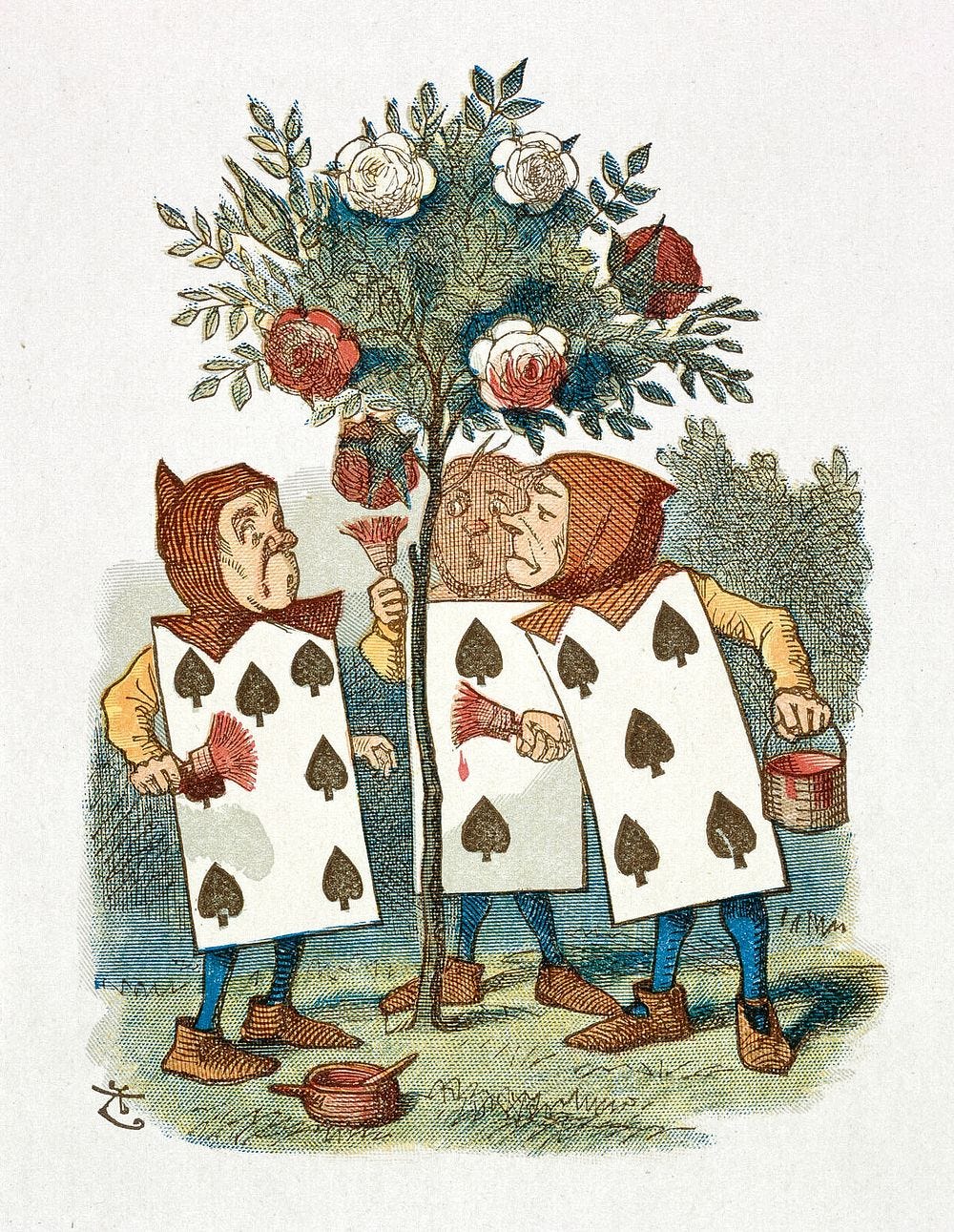
Alice’s Adventures in Wonderland, Chapters 7-12
Subscribe to Classics Read Aloud to receive future readings, including commentary and interesting "et cetera" tangent links, right to your inbox: https://classicsreadaloud.substack.com/subscribeAlice's Adventures in Wonderland, Chapters 7-12, by Lewis CarrollThe second half of Alice’s Adventures in Wonderland is all about wordplay and games. There are misunderstandings, clarifications, and songs galore as we are yanked, just like Alice, from one gaggle of ridiculous characters to the next.It is curious to me that Carroll chose to conclude the story through the eyes of Alice’s older sister, whom he doesn’t name. Having been riled up in Alice’s dreamscape throughout the book’s entirety, perhaps this is a nicety…a sympathetic way that Carroll excuses us from having to experience Alice’s reconciliation of her adventures into her wakeful reality. We can ponder, as her loving sister does, how Alice may one day “remember her own child life, and the happy summer days.”Please enjoy…Before you float off to enjoy the story, please help Classics Read Aloud grow by “♡ Liking” this post and sending it to a friend—word of mouth is more powerful than any algorithm. Thank you! This is a public episode. If you would like to discuss this with other subscribers or get access to bonus episodes, visit classicsreadaloud.substack.com
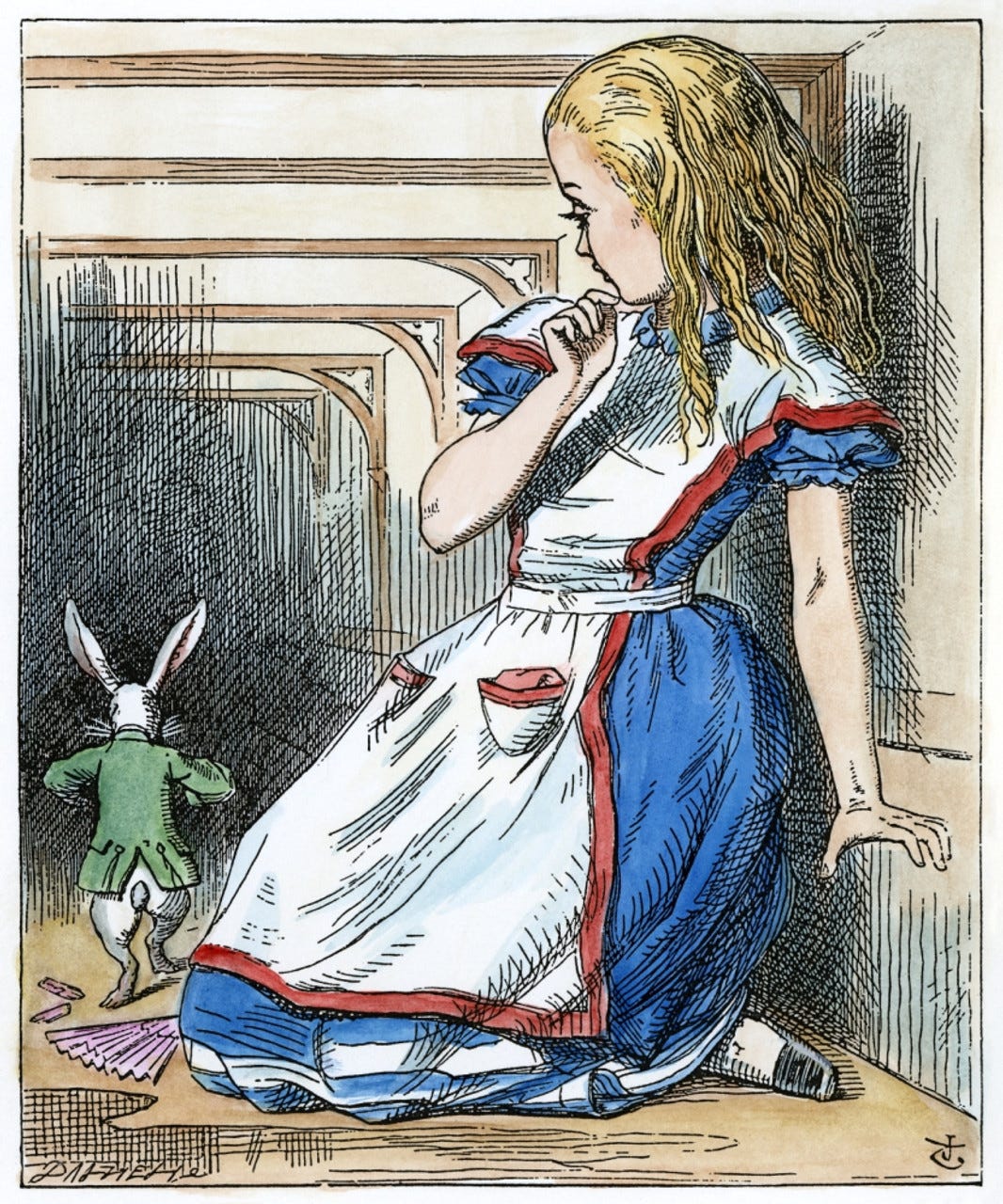
Alice’s Adventures in Wonderland, Chapters 1-6
Subscribe to Classics Read Aloud to receive future readings, including commentary and interesting "et cetera" tangent links, right to your inbox: https://classicsreadaloud.substack.com/subscribeAlice's Adventures in Wonderland, Chapters 1-6, by Lewis CarrollWhen I first conceived of the concept for Classics Read Aloud, I had Alice’s Adventures in Wonderland near the top of my list, but rather dismissed it as resting on ground that was frankly too well-trodden. Hadn’t everyone read this tale to death?And then I read a wonderful exploration of Alice’s Adventures in Dispatches from Biblioll College on Substack and had to laugh at my undeserved hesitation. Well-trodden ground or not, I hadn’t actually read the book in decades and am probably not alone in that. Boze’s exciting retelling of the history behind Lewis Carroll’s odd creation brought me back to my senses.Although branded as such by the effects of time and of Disney, Alice’s Adventures in Wonderland is no mere children’s book. It is bizarre and complex in its entertainment. If it has been a while since you last visited the original, it is worth a listen with fresh ears and an open mind. I’ll publish this in two halves.Please enjoy... This is a public episode. If you would like to discuss this with other subscribers or get access to bonus episodes, visit classicsreadaloud.substack.com
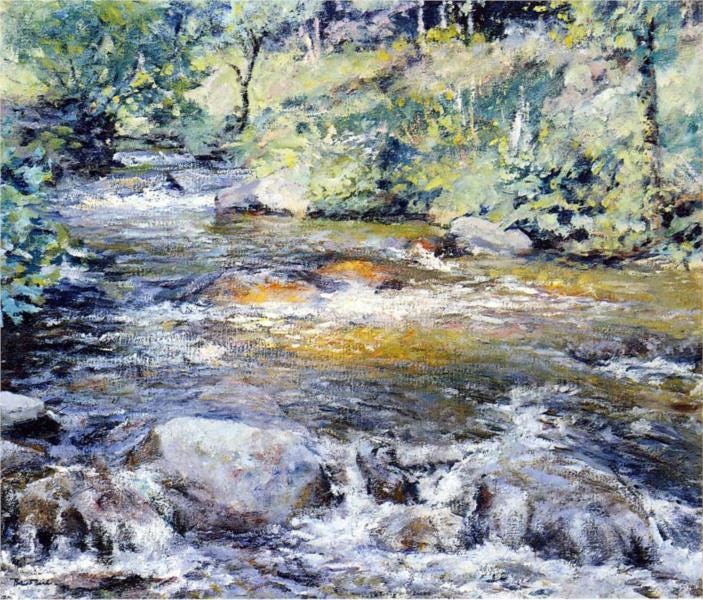
Big Two-Hearted River
Big Two-Hearted River by Ernest HemingwayEvery day, dozens of outdoorsmen head out into nature, armed with video cameras, battery packs, and oh-so-many envelopes of instant oatmeal, to capture their communion with nature. And every day, tens of thousands of would-be outdoorsmen tune into YouTube to watch the newest videos coming from the field.The outdoor genre is booming, with estimates easily topping more than 1 billion views per year.One can’t help but wonder if that concentrated energy isn’t chasing just a small taste of what Hemingway offers us with “Big Two-Hearted River.” His short story, published in May of 1925 in the inaugural issue of This Quarter, presents a semi-autobiographical sojourn to the waters of Upper Peninsula, Michigan, where the main character, Nick Adams, goes trout fishing and reminds the reader what a conversation with Mother Nature really sounds like.If you want an example of true mindfulness, this is it. Hemingway doesn’t allow Nick’s thoughts to wander towards the depths of worry, despair, or even hope that are surely there (as they are with all of us). Rather, he reverently savors the doing of this overnight fishing trip and the peaceful, almost gluttonous solitude it affords.“While he waited for the coffee to boil, he opened a small can of apricots. He liked to open cans. He emptied the can of apricots out into a tin cup. While he watched the coffee on the fire, he drank the juice syrup of the apricots, carefully at first to keep from spilling, then meditatively, sucking the apricots down. They were better than fresh apricots.”“Big Two-Hearted River” became the foundation upon which Hemingway built his first collection of short stories, In Our Time. Please enjoy (and don’t miss the “et cetera” section below where I highlight worthy bits and bobs for a merry, classically inspired life)… This is a public episode. If you would like to discuss this with other subscribers or get access to bonus episodes, visit classicsreadaloud.substack.com
Delightfully Infuriating
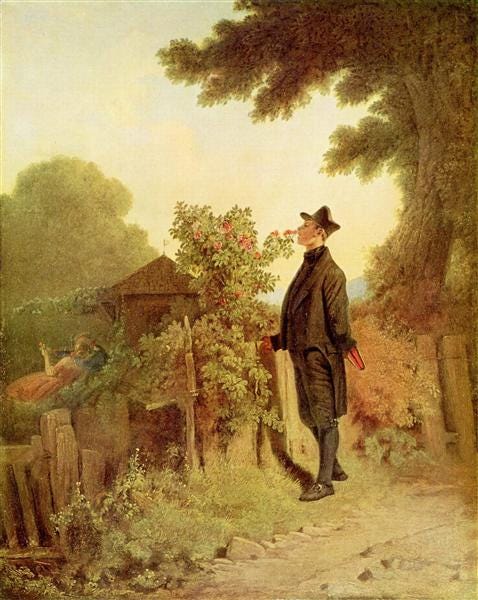
Subscribe to Classics Read Aloud to receive future readings, including commentary and interesting "et cetera" tangent links, right to your inbox: https://classicsreadaloud.substack.com/subscribe"The Devoted Friend" by Oscar Wilde & "The Celebrated Jumping Frog of Calaveras County" by Mark TwainThere are a number of well-known themes in classic literature: love, power and corruption, nature versus machine, and on and on. Today’s stories touch upon a lesser acknowledged theme with universal recognition: sometimes, life just isn’t fair.Oscar Wilde was criticized for creating fairy tales that were too mature for children, perhaps by those forgetting that Grimms’ Fairy Tales were very grim indeed. In “Devoted Friend,” a tragic tale of a one-sided friendship, Wilde takes umbrage with do-gooders who find no exhaustion to their superfluous, destructive virtue. (He manages to take a few swipes at the literary scene and literary critics along the way.) The abuse suffered in this story by the ever-humble Little Hans is sure to remind all of us of the value of skepticism!Speaking of skepticism, Mark Twain delivers a deeply cynical take in his folksy tale about a compulsive competitive bet-maker, Jim Smiley, and his over-educated frog. You won’t really know who to root for in “The Celebrated Jumping Frog of Calaveras County,” except, perhaps, Twain himself, who went on to produce his first book after the popularity of this story.These two brief tales make for an entertaining pair. (This was also my first attempt at a drawl, so be kind! I’ll get better with time.) Please enjoy…Before you float off to enjoy the story, please help Classics Read Aloud grow by “♡ Liking” this post and sending it to a friend—word of mouth is more powerful than any algorithm. Thank you! This is a public episode. If you would like to discuss this with other subscribers or get access to bonus episodes, visit classicsreadaloud.substack.com
Double Birthday
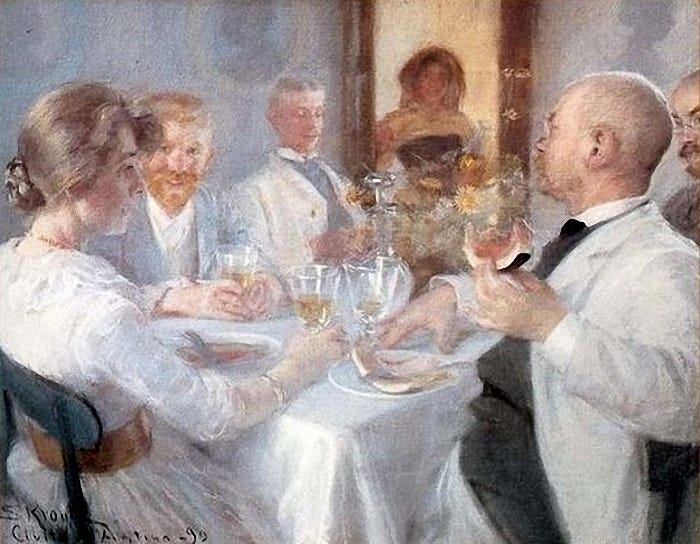
Subscribe to Classics Read Aloud to receive future readings, including commentary and interesting "et cetera" tangent links, right to your inbox: https://classicsreadaloud.substack.com/subscribeDouble Birthday by Willa CatherBy the time the short story “Double Birthday” appeared in the pages of The Forum in February of 1929, Willa Cather was already well-known and widely published. One of Ours had earned the author a Pulitzer in 1923, and her novel Death Comes for the Archbishop was released in serial form in The Forum in 1927.In many respects, Cather was approaching the zenith of her career that year, having been awarded an honorary degree from Yale University and elected to the National Institute of Arts and Letters. In 1931, she appeared on the cover of Time Magazine.Accomplishment can give one a certain level of freedom to move about. It was at this time that Cather departed from the prairie themes found in earlier works (My Ántonia and O Pioneer), preferring to explore the complications of more cosmopolitan settings. She began using her writing to examine culture, nostalgia, memory, and spirituality.It is no wonder, then, that “Double Birthday” found its way to the public via The Forum. For this story, Cather chose not a literary magazine per se, but rather one that was a hub for cultural and political debate.Willa Cather here writes of the years after World War I; a time of necessary transitions as the formalities of life before the war became off-putting, excessive, and flat after so much destruction. Previously cherished traditions (“full of chests of linen like this”) teetered in purgatory, awaiting a new place to land. In this vein, the thrust of Cather’s narrative leans towards an acceptance of time’s arrow. Known as a pragmatist in her personal life, Cather’s tone is congruent with her likely approach to this phase of her life and to society at large.Dour though the topic may be, Cather executes her tableau with terrific pace and scintillating wit. Please enjoy…Before you float off to enjoy the story, please help Classics Read Aloud grow by “♡ Liking” this post and sending it to a friend—word of mouth is more powerful than any algorithm. Thank you! This is a public episode. If you would like to discuss this with other subscribers or get access to bonus episodes, visit classicsreadaloud.substack.com