Classical Education
92 episodes — Page 2 of 2
S3 Ep 4Tending The Heart of Virtue: Introducing The Second Edition with Vigen Guroian
About the AuthorUntil his retirement in 2015, Vigen Guroian was Professor of Religious Studies in Orthodox Christianity at the University of Virginia. He is now a Permanent Senior Fellow of the Russell Kirk Center for Cultural Renewal, Senior Fellow at the Center on Law and Religion at Emory University, Distinguished Fellow of the John Jay Institute, and Senior Fellow at the Trinity Forum. He also is on the faculty of Memoria College online and is the author of ten books including The Orthodox Reality: Culture, Theology, and Ethics in the Modern World. Dr. Guroian is also a frequent speaker at classical education conferences. Show NotesAdrienne and Vigen discuss the new chapters added to the second edition of Tending the Heart of Virtue which include: The Triumph of Beauty in The Nightingale and "The Ugly Duckling"The Goodness of Goodness: The Grimms' "Cinderella" and John Ruskin's The King of The Golden RiverObedience and The Path to Perfection in George MacDonald's The Wise Woman: A Double StoryAn expanded biographical essayIdeas that were discussed include: Discussions for parents and teachers, about the impact from the book Tending the Hearts of Virtue. The depth and meanings of fairy tales such as beauty and transformation, judgment, obedience, and truth. Ways to read, listen, and allow the stories to unfold imagination and real life lessons. Books and Resources Mentioned Books by Vigen GuroianTending the Heart of Virtue: How Classic Stories Awaken a Child's Moral Imagination (the second edition) Inheriting Paradise: Meditation on Gardening Rallying the Really Human Things: Moral Imagination In Politics, Literature, and Everyday LifeOther Stories"The Ugly Duckling" by Hans Christian Andersen"The Nightingale" by Hans Christian Andersen"Cinderella" by The Brothers Grimm"The Juniper Tree" by The Brothers GrimmThe King of the Golden River by John RuskinThe Wise Woman: A Double Story by George MacDonald "The Fantastic Imagination" by George MacDonaldThe Princess and The Goblin by George MacDonaldThe Little Lame Prince byDinah Maria Mulock CraikThe Victorian Fairy Tale Book by Michael HearnPinocchio by Carlo CollodiWhere the Wild Things Are by Maurice SendakOther authors mentioned: Charles Dickens, Homer,C.S. Lewis, G.K. Chesterton and Greek MythsThe Second Edition of Tending the Heart of Virtue can be purchased through all major book sellers. Paperback : 336 pagesISBN-10 : 0195384318ISBN-13 : 978-0195384314_______Hardcover : 330 pagesISBN-10 : 019538430XISBN-13 : 978-0195384307The Book the Vigen wishes he had read earlier in his life: The Abolition of Man by C.S. LewisAdrienne's favorite book by Dr. Guroian is The Melody of Faith: Theology in an Orthodox Key_______________________________________This podcast is produced by Beautiful Teaching, LLC.OUR MISSIONWe exist for the benefit of both parents and teachers. Teaching is an art and teachers need opportunities to cultivate their craft. Parents need to feel confident that their children are receiving the best education possible. Therefore, our goals are to help parents make well-informed decisions about the education of their children, and to help teachers experience true joy in their vocation. We desire to bridge a large gap that currently exists between most classical schools and the parents who send their students to these schools. Immersing both parents and teachers into the beauty of good teaching is paramount to our goals! Our formative sessions are designed to be LIVE so that you can experience classical education through participating and doing. This is what is expected in classical education. In order to mentor you well, we invite you to participate for a full classical experience. Our online sessions assume modeling, imitation, and meaningful conversation as the basis of experiencing good teaching. OUR SERVICESIf you like our podcast, you will love our online sessions! We offer immersion sessions so you can experience classical pedagogy. A complete listing of our courses is at https://beautifulteaching.coursestorm.com/Becoming an effective educator requires participation and doing, not merely listening to the ideals of a theory being talked about. Experiencing the labor of thinking, speaking, and asking questions is non-negotiable for a real classical experience. For this reason our courses are LIVE and not recorded. Participation is paramount to a true classical education.Teachers and Home Educators: Grow in your craft of teaching! Do you want to know how to apply what we discuss on our podcast? Check out our affordable on-line immersion courses with master teachers. https://beautifulteaching.coursestorm.com/Parents: Do you want to understand how to support your student in a classical school? Or, do you simply want to know more about classical education? Consider our affordable book seminars. Explore why a classical education is truly a beautiful way of learning. Our book seminars and immersion sessions can you help you ma
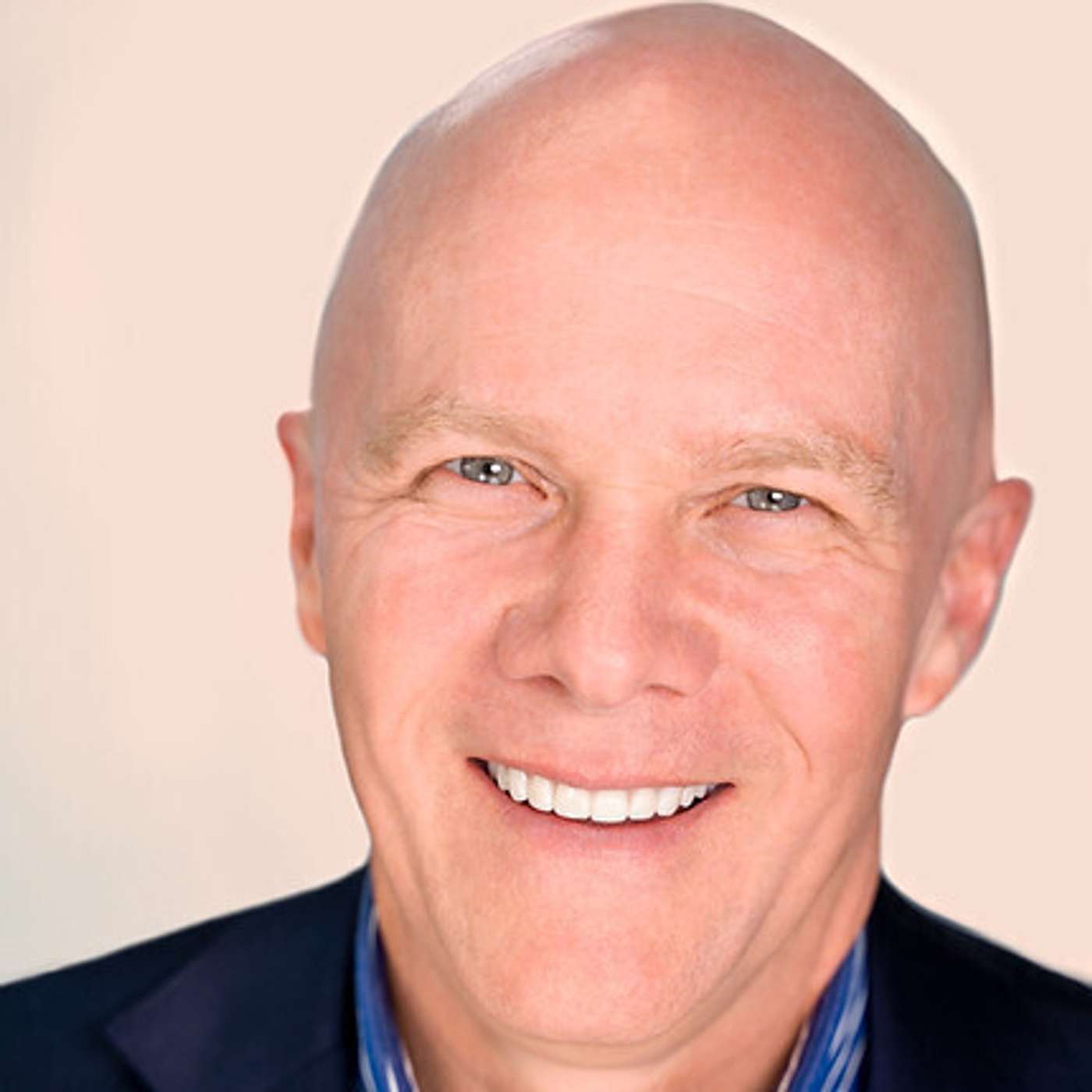
S3 Ep 3Restoring America’s Heritage: John Adams Academy with its Founder, Dr. Dean Forman
About our Guest: Dr. Forman is active in his community having served on the Roseville Joint Union High School District Governing Board from 2000 to 2004. He was the chair of the Placer County Republican party from 2005-06. He served as Board Member and President for CORE Academy, a charter school in Placer County from 2006 to 2009. He currently serves as Founder, and Board Chairman of John Adams Academy, a K-12 charter of 3 schools and 4500+ scholars located in the Sacramento California area. In 2012 the Freedom Foundation recognized Dr. Forman for his efforts in founding John Adams Academy with the George Washington Honor Medal in 2012. In 2013 he was also honored with the Distinguished Service Award from the BYU Alumni Association. He mentors at the academy, is a frequent lecturer and authored many academic and timely articles on the principles of risk management, independence, finance, and freedom in America. Education has the power to change a person, a community, and a country. His blog may be found at https://ldeanforman.blog/. His book on how to start a classical charter school may be found at Leading a Revolution in Education. www.johnadamsacademy.org “Children Should Be Educated in the Principles of Freedom” John AdamsSpecial Performance: John Adams Academy Choir, Vertus. Performing "America The Beautiful," directed by Greg Blankenbehler, Secondary Music Teacher, Director of Choir, Arts Department Chair. Vertus was awarded in 2021-2022: First Place, Gold Rating (90th percentile), Adjudicator’s Award (95thPercentile–scored 98 out of 100), Maestro Award (outstanding soloist) at Heritage Festival (Nashville, TN)Click here to view the many Accolades for VertusShow NotesIn this episode, Adrienne interviews the founder of John Adams Academy, a public charter school in California. Dr Forman’s love for a beautiful education is evident through his passion for this country and his love of the arts. He shares the history of John Adams Academy as well as some important tips for anyone interested in starting a school. Some topics in this episode include:The humble beginnings of John Adams Academy to its great success and recognition today as an exceptional schoolThe beautiful elements of classical education and how these lead students to truthTips on starting a school and hiring good teachersCreating a mission statement and school cultureTeacher formationBooks & Resources In This EpisodeLeading a Revolution in EducationThe Autobiography of Benjamin FranklinAbigail Adams: Witness to a RevolutionSteven Covey on Seven Habits______________This podcast is produced by Beautiful Teaching, LLC.OUR MISSIONWe exist for the benefit of both parents and teachers. Teaching is an art and teachers need opportunities to cultivate their craft. Parents need to feel confident that their children are receiving the best education possible. Therefore, our goals are to help parents make well-informed decisions about the education of their children, and to help teachers experience true joy in their vocation. We desire to bridge a large gap that currently exists between most classical schools and the parents who send their students to these schools. Immersing both parents and teachers into the beauty of good teaching is paramount to our goals! Our formative sessions are designed to be LIVE so that you can experience classical education through participating and doing. This is what is expected in classical education. In order to mentor you well, we invite you to participate for a full classical experience. Our online sessions assume modeling, imitation, and meaningful conversation as the basis of experiencing good teaching. OUR SERVICESIf you like our podcast, you will love our online sessions! We offer immersion sessions so you can experience classical pedagogy. A complete listing of our courses is at https://beautifulteaching.coursestorm.com/Becoming an effective educator requires participation and doing, not merely listening to the ideals of a theory being talked about. Experiencing the labor of thinking, speaking, and asking questions is non-negotiable for a real classical experience. For this reason our courses are LIVE and not recorded. Participation is paramount to a true classical education.Teachers and Home Educators: Grow in your craft of teaching! Do you want to know how to apply what we discuss on our podcast? Check out our affordable on-line immersion courses with master teachers. https://beautifulteaching.coursestorm.com/Parents: Do you want to understand how to support your student in a classical school? Or, do you simply want to know more about classical education? Consider our affordable book seminars. Explore why a classical education is truly a beautiful way of learning. Our book seminars and immersion sessions can you help you make an informed choice as well as help you understand how to support your children who may attend a classical school. https://beautifulteaching.coursestorm.com/Schools: We offer professiona
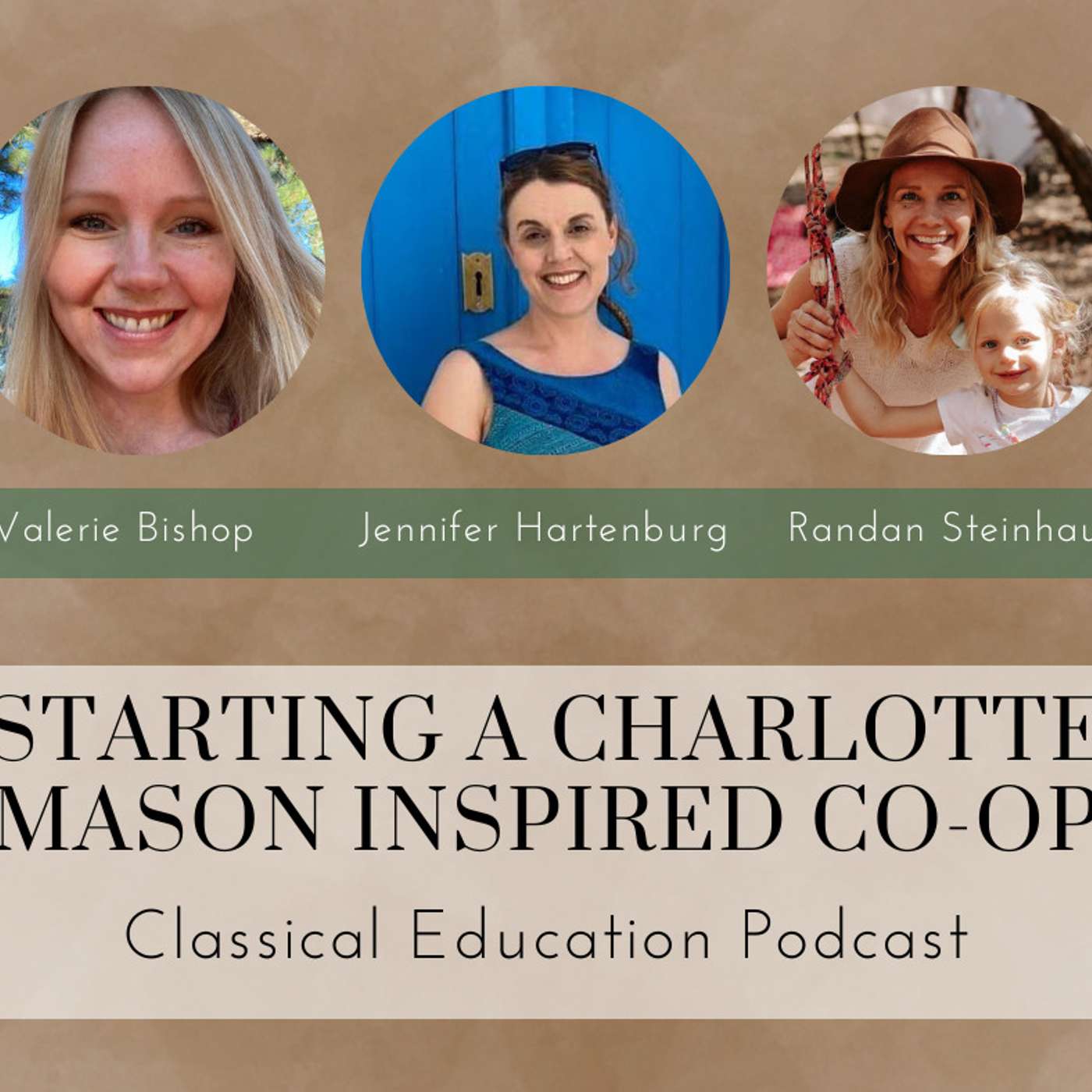
S3 Ep 2Three Inspired Homeschool Co-ops and How They Grew
About our GuestsRandan Steinhauser with Sweetwater Scholé in greater Austin: Randan Steinhauser is a mother of four who recently launched a Charlotte Mason-inspired homeschool co-op, Sweetwater Scholé. In addition to their home education, her children attend a University-Model Classical Christian collaborative school in Austin, Texas. Randan is the founding partner of Steinhauser Strategies where she works with clients on education-related efforts including school choice and homeschool freedom. Prior to moving home to Austin, Randan was in Washington, DC where she worked for former Secretary of Education Betsy DeVos. Randan has worked in more than 40 states on educational freedom initiatives. A native of South Carolina, Randan holds a B.A. in English Literature from the University of South Carolina and an M.A. in Communications from John’s Hopkins University. Valerie Bishop with Living Education co-op in Flower Mound, TX: Valerie is the founder and Director of Living Education Co-op in Flower Mound, Texas, a Charlotte Mason-inspired Fine Arts co-op, where she teaches high school and middle school classes History & Humanities and Shakespeare. Valerie also creates Charlotte Mason-inspired curriculum for her high school classes and greatly enjoys seeing her students rise to the challenge of delightful, rigorous coursework. She is passionate about republishing and bringing classic books to life with classic paintings, such as Story of the Greeks, Story of the Romans, Saints and Heroes Vol. I, Saints and Heroes Vol II, and forthcoming illustrated versions of Homer and Virgil’s epic poems. Valerie has been married to Troy for 22 years and has six children, ages 18 to 6. Prior to homeschooling, Valerie earned an Associates of Arts from The Art Institute of Dallas and enjoyed a career creating content as a graphic designer.Jennifer Hartenburg with Bluebonnet Scholars in Houston, TX: Jennifer Hartenburg is a Published writer and classroom teacher, Jen Hartenburg holds a bachelor of arts in English Literature and a master of arts in Education from Biola University where she remains a perpetual member of the Torrey Honors Institute. She began teaching literature and writing in 1997 and helped pilot an interactive online program for high school students through Biola University beginning in 2000. She has been offering summer writing camps and classes in the Houston area since 2015, and she is an Accomplished Instructor with the Institute for Excellence in Writing. Her educational approach continues to be informed and refined by the living stream of Christian tradition, the classical liberal arts heritage, and the writings of folks such as Charlotte Mason, Jacques Maritain, C.S. Lewis, and Sofia Cavalletti. A homeschool parent/teacher of two, Jen also enjoys hiking, dancing, drinking tea, listening to the rain, and writing. Her poetry and creative non-fiction have appeared or are forthcoming in literary journals including Rattle: Poets Respond, Weber—The Contemporary West, The Saint Katherine Review, The Other Journal, Dappled Things, and The Christian Century. Jen is continually rediscovering the power of word and world to startle and heal us with beauty.Show NotesHave you wondered how to bring a breath of fresh air to homeschool? Classical Education host, Adrienne Freas, brings forth workable ideas from her guest panel members. Valerie Bishop for the love of learning, started a co-op fulfilling the mission to carry out a living education. Randon Steinhauser listened to the needs of others. Wanting a blended style of learning inspired by nature, she created a nature-focused gathering. One of the biggest challenges has been to find ways to accommodate more and more students. Jennifer Hartenburg started a hybrid homeschool community in the Christian Liberal Arts Tradition which grew out of a Charlotte Mason book club she began in 2016. The ideas shared in this podcast are truly inspiring, while surprisingly simple. Gathering with others is golden wherever you begin your homeschool journey. Listen to the end of this podcast for the inspirational closing quotations. Ask yourself what your homeschool community would look like, while remembering that "the flowers aren’t new, but the children are. "- Charlotte Mason. Some Topics and Ideas in this Episode Include:Biggest challenges in starting a co-opBuilding your classical education community Specific steps in order to begin with intention and clarity Modeling, teaching, and delegating tasks according to giftsWays to include creativity in your homeschool Adrienne's Favorite Mason Quotation:"All is mystery, being what the heart of man could not conceive of unless it had been revealed.'Great is the mystery of Godliness: God manifest in the flesh, justified in the spirit, seen of angels, preached unto the Gentiles, believed on in the world, received up into glory.' [1 Tim 3:16] And what a barren and dry land should we dwell in if our spirits were narrowed to the limits of th
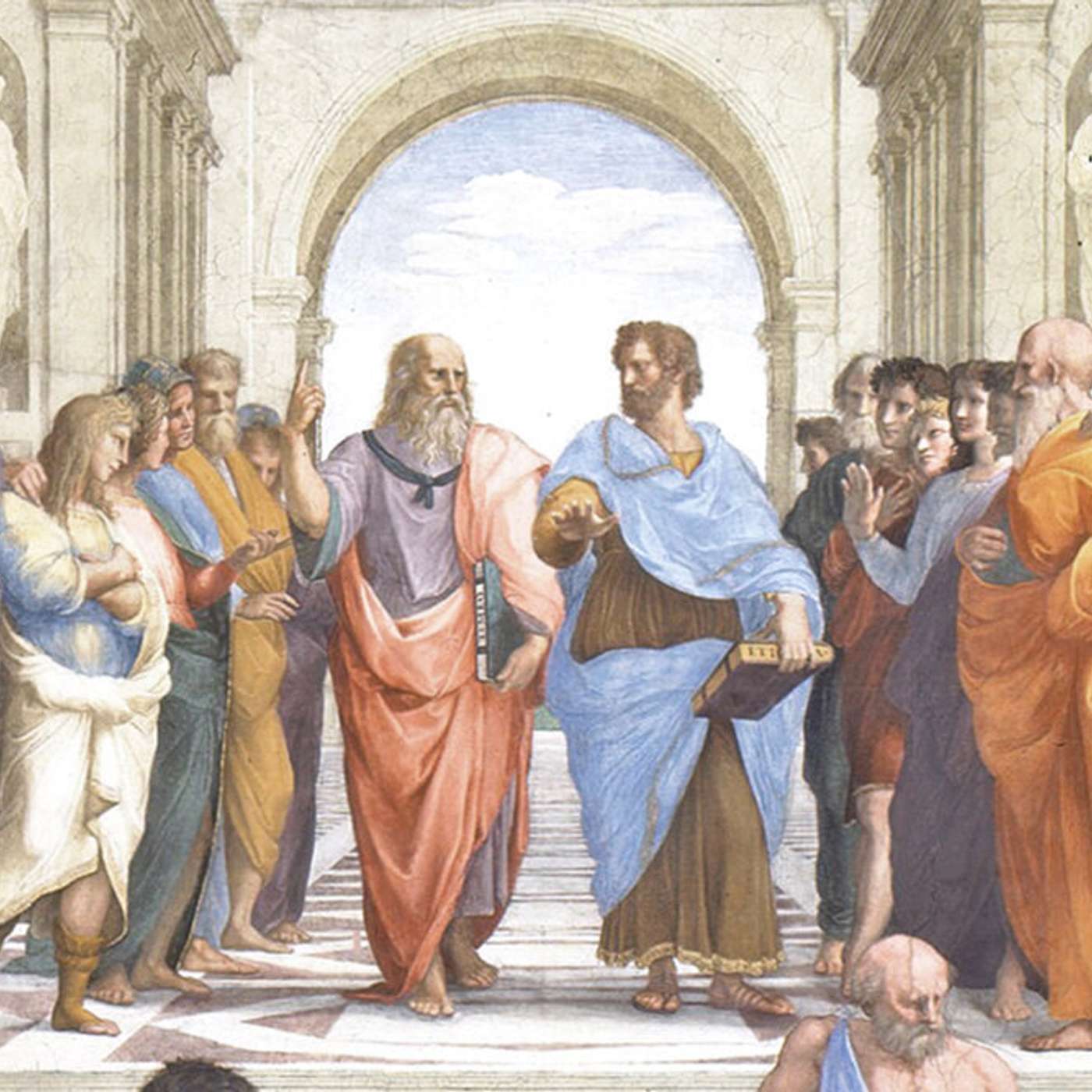
S3 Ep 1Teaching & Defining Virtue: A Dialogue with a Panel of Experts
About our GuestsDr. Matthew Post: University of Dallas, Director of the St. Ambrose Center for Catholic Liberal Education and Culture; Assistant Professor of HumanitiesDr. Matthew Bianco: Chief Operations Officer for the CiRCE InstituteDr. Gary Hartenburg: Houston Christian University, Associate Professor of Philosophy and Director of Honors CollegePeach Smith: founder of Sacred HEART Academy, Koinonia Academy: Curriculum Coordinator, Lead Teacher, College CounselorKaren Glass: AmblesideOnline Advisory Committee, Author, Speaker, and Teacher_______________________________Show NotesWhat is virtue according to the tradition? Adrienne invited five distinguished guests: Dr. Matthew Post, Dr. Matthew Bianco, Dr. Gary Hartenburg, Karen Glass, and Peach Smith to discuss the topic of virtue in education. They engage in dialogue to contemplate an understanding of, and perhaps define virtue. Is it possible to teach this hallmark of Classical Education? Are children virtuous for sitting when told? How ought virtue be taught and can it be taught? What’s the practical end of teaching virtue? These are all questions we ponder in this episode to further our understanding of what virtue is and how to attain it. Some Topics and Ideas in this Episode Include: What is virtue according to the tradition?How do we define virtue?Elements of virtue according to Plato, Aristotle, and the Bible.Teaching through stories and a caring life.What about the Charlotte Mason perspective of teaching virtue?Resources and Books & Mentioned In This EpisodeVirtues in Practice programThe Bible-Philipians 4:8 and 1 Thessalonians 4:9The Meno by PlatoThe Cratylus by PlatoA Philosophy of Education by Charlotte Mason (first 20 pages)Formation Of Character by Charlotte Mason (Part 4)Poetic Knowledge: The Recovery of Education by James S. TaylorAesop's Fables by AesopThe Narrative of the Life of Frederick Douglass, an American Slave by Frederick Douglass The Souls of Black Folk (Ch. 6: of the training of black men) by W. E. B. DuBoisThe Education of Black People by W. E. B. DuBoisWorks of Jane Austen such as Pride and Prejudice and Mansfield Park__________________This podcast is produced by Beautiful Teaching, LLC. OUR MISSIONWe exist for the benefit of both parents and teachers. Teaching is an art and teachers need opportunities to cultivate their craft. Parents need to feel confident that their children are receiving the best education possible. Therefore, our goals are to help parents make well-informed decisions about the education of their children, and to help teachers experience true joy in their vocation. We desire to bridge a large gap that currently exists between most classical schools and the parents who send their students to these schools. Immersing both parents and teachers into the beauty of good teaching is paramount to our goals! Our formative sessions are designed to be LIVE so that you can experience classical education through participating and doing. This is what is expected in classical education. In order to mentor you well, we invite you to participate for a full classical experience. Our online sessions assume modeling, imitation, and meaningful conversation as the basis of experiencing good teaching. OUR SERVICESIf you like our podcast, you will love our online sessions! We offer immersion sessions so you can experience classical pedagogy. A complete listing of our courses is at https://beautifulteaching.coursestorm.com/Becoming an effective educator requires participation and doing, not merely listening to the ideals of a theory being talked about. Experiencing the labor of thinking, speaking, and asking questions is non-negotiable for a real classical experience. For this reason our courses are LIVE and not recorded. Participation is paramount to a true classical education.Teachers and Home Educators: Grow in your craft of teaching! Do you want to know how to apply what we discuss on our podcast? Check out our affordable on-line immersion courses with master teachers. https://beautifulteaching.coursestorm.com/Parents: Do you want to understand how to support your student in a classical school? Or, do you simply want to know more about classical education? Consider our affordable book seminars. Explore why a classical education is truly a beautiful way of learning. Our book seminars and immersion sessions can you help you make an informed choice as well as help you understand how to support your children who may attend a classical school. https://beautifulteaching.coursestorm.com/Schools: We offer professional development for schools onsite or online. Email Adrienne at [email protected] for more information. _________________________________________________________Credits:Sound Engineer: Andrew HelselLogo Art: Anastasiya CFMusic: Vivaldi's Concerto for 2 Violins in B flat major, RV529 : Lana Trotovsek, violin Sreten Krstic, violin with Chamber Orchestra of Slovenian Philharmonic © 2023 Beautiful Teaching, LLC. A
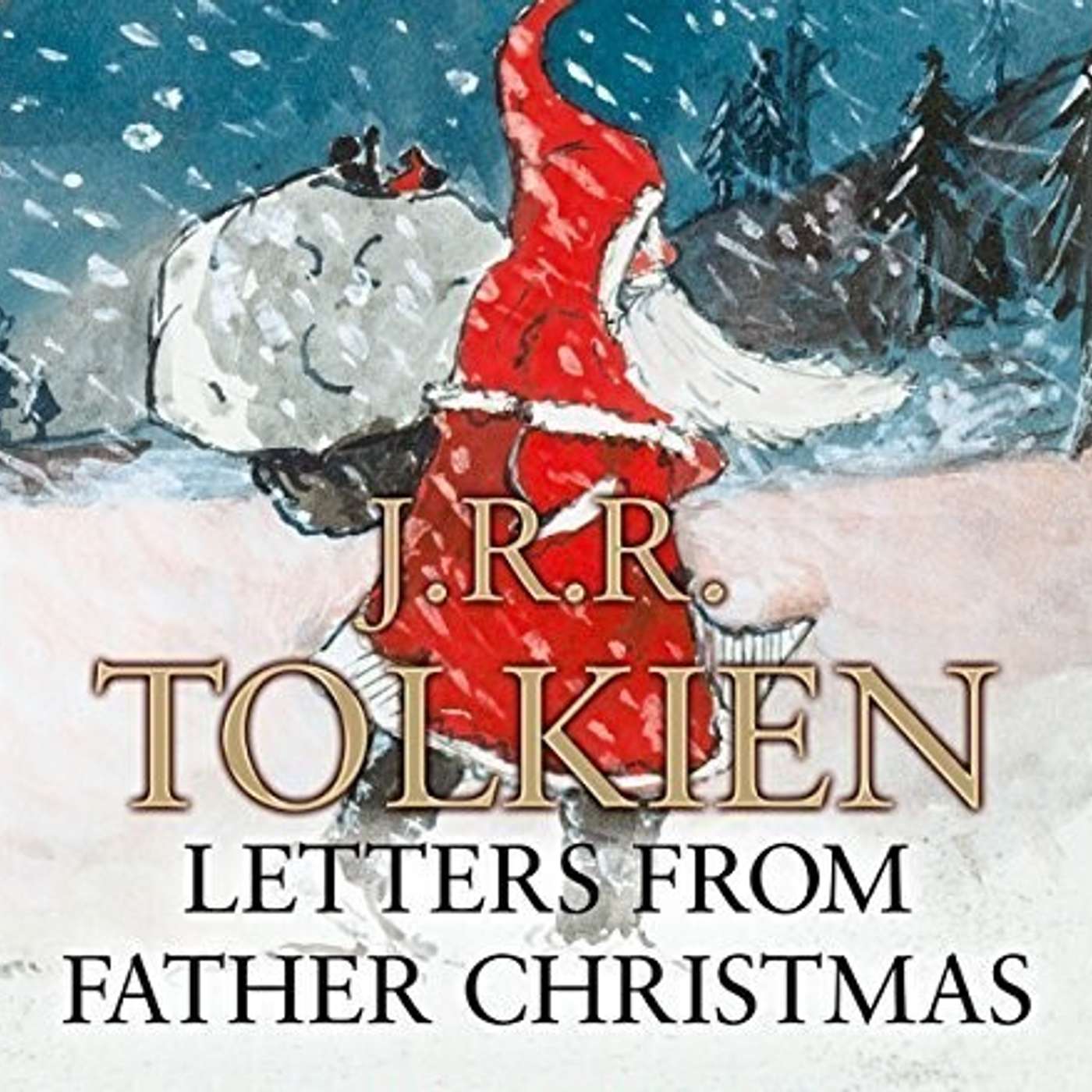
S2 Ep 17Tolkien and Father Christmas with Richard Rohlin and Dr. Reno Lauro
About Our GuestsRichard W. Rohlin is an Orthodox Christian, author, podcaster, medievalist, and data analyst living in Grand Prairie, TX. A husband and father, he is the co-host of The Amon Sul Podcast on Ancient Faith Radio, regularly contributes to Jonathan Pageau's The Symbolic World YouTube channel, has published several works of fiction and non-fiction, and currently has several projects under development, including a collection of essays called Finding the Golden Key: Essays Toward a Recovery of the Sacramental Imagination. His most recent book, the Akboritha, a work of liturgical mythopoeia, is available from Darkly Bright Press.Dr. Reno Lauro is a Classical Education Curriculum and Pedagogy Specialist for Coram Deo Academy. He received his Ph.D. from the University of St. Andrews Institute for Theology, Imagination and the Arts in 2011, where he wrote on J. R. R. Tolkien’s philosophy of Mythopoeia. For the past ten years, he has worked at the intersection of Humane and Digital learning. After completing his degrees, Theology (MDiv) and History (BA), Reno apprenticed for 18 months on the Palme d’Or winning film The Tree of Life with director Terrence Malick, which transformed his understanding of the Classics, the modern world, and how to communicate the relationship between the two. He has taught at the graduate and undergraduate levels (University of Dallas and University of Arizona) and in both Lower and Upper School classrooms of Classical Schools. Before coming to Coram Deo Academy. He served as the Assistant Headmaster at Saint Peter’s and of a Great Hearts Archway School. He also worked closely with the CEO of the globally recognized BASIS.ed charter schools to create and pilot seminar-style history courses as alternatives to AP classes. _____________________________Show NotesIn this episode, Reno Lauro and Richard Rohlin introduce us to the fatherly nature of Tolkien. Beginning with a definition of Mythopoeia, we then dive into The Letters of Father Christmas. Richard unpacks a brief history of these letters and how they developed into a full-fledged story about Father Christmas and the happenings at The North Pole. The Spirit of Christmas quickly become the center of our conversations. Our guests discuss the idea that Christmas lore helps us navigate the general hardships of daily life. Reno says, "These tales have teeth in reality and make sense of the life we live." The rich tradition of folk tales, stories, and myth helps us to see the implications of the incarnation and to make sense of the real God we see in the Christ Child. Richard closes by reading from Tolkien's Mythopoeia, saying, "Our whole understanding of the cosmos goes back to Christmas!" from MythopoeiaHe sees no stars who does not see them firstof living silver made that sudden burstto flame like flowers bencath an ancient song,whose very echo after-music longhas since pursued. There is no firmament,only a void, unless a jewelled tentmyth-woven and elf-pattemed; and no earth,unless the mother's womb whence all have birth.Some Topics and Ideas in this Episode Include: Celebrating the Spirit of Christmas in your homeWhat are some misunderstandings about Christmas and Santa Clause?From St. Nicholas to Santa Clause, how ought Christians celebrate Christmas?The origins of Christmas as a pagan holidayReal and true are two different things and they have a necessary relationship to help our children engage the world as an enchanted space. Connect with Richard's Resources:Jonathan Pageau's Symbolic World, Medieval Universal History playlist: https://www.youtube.com/watch?v=_N5s4n_lwB8&list=PLVX4HUUPrIY_M2uZP3yW6EEiod3fGD6FD&ab_channel=JonathanPageau Amon Sul Podcast (Tolkien & Orthodox Christianity): https://www.ancientfaith.com/podcasts/amonsul The Akboritha (mythopoeic liturgical fantasy): https://darklybrightpress.com/akboritha/Connect with Reno's Resources:Reno Lauro's blog, Time Out of JointReno's Tolkien's House of Being Facebook PageOther Titles Mentioned:The Letter's From Father Christmas by J.R.R TolkienChesterton's Essay Santa Clause and ScienceChristmas at a Crisis for Civilization by ChestertonA Christmas Carol by DickensThe Lion, the Witch, and the WardrobeThe Two Babylons: Or, the Papal Worship Proved to Be the Worship of Nimrod by: Alexander HislopMythopoeia by J.R.R. TolkienThe Tree of Life film by Terrence MalickTolkien's essay on The Green KnightAnglo-Saxon Advent poem Christ IDr. Reno Lauro ends our podcast reading the first sentence in this poem. The whole poem is stunning! O Earendel, brightest of angels,sent to mankind over middle-earth,righteous sun's radiance,splendid above all stars! Of thine own selfthou ever enlightenest every age.As thou, God born of God long ago,Son of the true Father, eternally existedwithout beginning in the glory of heaven,so thine own creation cry with confidenceto thee now for their needs, that thou sendthat bright sun to us, and come thyselfto lighten those who long have

S2 Ep 16Scholé: An Education Rooted in Joy with Dr. Jarrid Looney
About Our GuestJarrid Looney was born and raise in southwestern Virginia until 2004. He then attended Berea College, from whence he graduated in 2008 with a Bachelor’s in Theatre and Classical Civilizations. He attended Royal Holloway, University of London for his Master’s Degree and Doctorate of Philosophy in Classics. Dr. Looney has taught English, History, Spanish, Latin, and a plethora of electives. He currently serves as Millennium Charter Academy's Upper School Director. In his free time, Dr. Looney enjoys hiking, fishing, camping, cooking, gardening, and reading. He enjoys all of his hobbies with his wife, Erin, and their children.Show NotesIn this episode, Trae and Dr. Looney discuss how to reimagine education through the lense of Scholé. If you want to understand what is at the heart of a humane education both for students and teachers, this episode will inspire you to embrace scholé as the foundation of a beautiful education. Dr. Looney gives an anechdote of applying scholé in an AP history and literature class while applying the phases of the trivium into the lessons. Dr. Looney emphasizes that the pedagogy and schedule of a school reflect its anthropological position. Administrators need to establish the culture and carefully consider blocks of time for each class in order to lay the proper foundation for scholé. Some Topics and Ideas in this Episode Include: Definition and application of scholéWhat is labor and how do we work with joy?How does this philosophical idea of scholé work practically in the classroom with students?What makes real culture and how do cultivate good culture in our learning environment?How does the school administration invite the school faculty into this way of living?Resources and Books Mentioned / Referenced Season 1 Episode 11 on May 6, 2023 Episode with Dr. Gary Hartenburg on Aristotelian Education Aristotle: Education for Virtue and Leisure published by Classical Adademic Press.Leisure the Basis of Culture by Josef PieperThe Devil in the White City by Erik LarsonJohn Senior's 1,000 Good BooksThe Restoration of Christian Culture by John SeniorThe Magician's NephewThe HobbitThe Dead Poet's SocietyOn-line Courses with Beautiful Teaching Consultants: https://beautifulteaching.coursestorm.com/_________________________________________________________Credits:Sound Engineer: Andrew HelselLogo Art: Anastasiya CFMusic: Vivaldi's Concerto for 2 Violins in B flat major, RV529 : Lana Trotovsek, violin Sreten Krstic, violin with Chamber Orchestra of Slovenian Philharmonic © 2022 Beautiful Teaching LLC. All Rights Reserved ★ Support this podcast ★
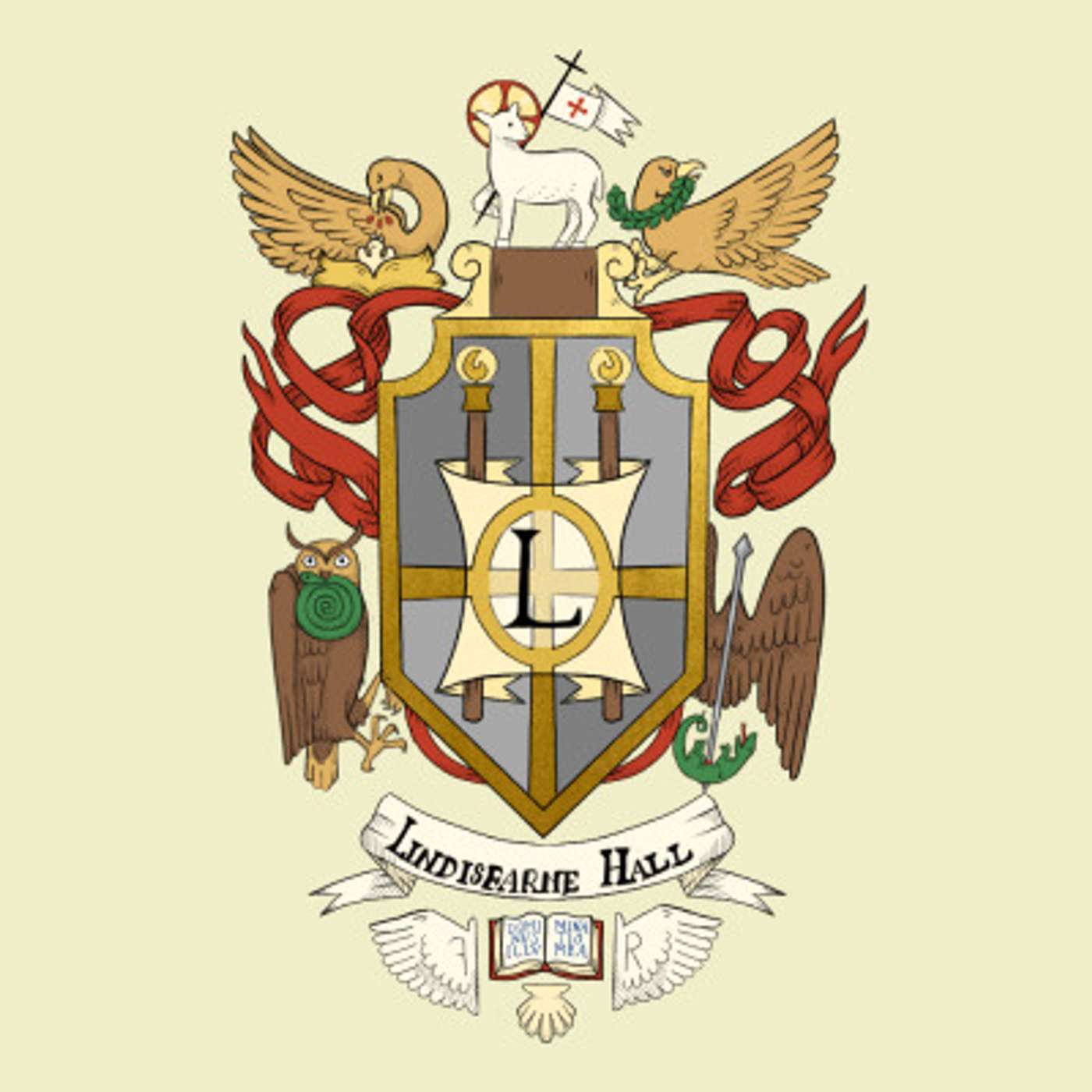
S2 Ep 15Teaching Among the Saints at Lindisfarne Hall with Headmistress Diana Cunningham
About Our GuestDiana Cunningham is the founding headmistress of Lindisfarne Hall, a classical Anglican school in Fernandina Beach, Florida. Learn more about the good work going on at this school at https://www.lindisfarnehall.com. NotesIn this episode, Diana Cunningham shares with Trae how a homeschool resource center at a church turned into a full-scale classical Christian school. From a very young age, Diana was touched by the importance of atmosphere within places of education. Now that she serves as a school headmistress, she can intentionally nurture an atmosphere informed by classical principles, aimed at beauty, and structured by tradition and worship. Some Topics and Ideas in this Episode Include: Creating an Atmosphere Worthy of 10,000 Hours of a Student’s Classroom Life How Academics Can Create Tunnel Vision Designing a School Schedule as a Christian Oasis Incorporating a Contemplation Period (An Unexpected Student Favorite) How Non-Churched Students Fall in Love With Traditional English Hymns The Faculty is the School The Church as an Authority Learning by Listening to Church Bells The “Hidden Curriculum” Charlotte Mason’s Principals of Education “Socratic Narration” Teaching History with Primary Sources Avoiding Workbooks (How to “Keep the Words in their Habitat”)Initiating Teachers into the Philosophy of Classical Education The Limitations of the Scientific Method The Church Calendar and the Life of the School Sorting Students into Houses (Yes, like Harry Potter) The Lives of the Saints Resources Mentioned / ReferencedRead More about the Classical Approach at Lindisfarne Hall HereFind Academic Plans and Sample Reading Lists Here Get a Peak into the Life of the School on Facebook On-line Courses with Beautiful Teaching Consultants: https://beautifulteaching.coursestorm.com/_________________________________________________________Credits:Sound Engineer: Andrew HelselLogo Art: Anastasiya CFMusic: Vivaldi's Concerto for 2 Violins in B flat major, RV529 : Lana Trotovsek, violin Sreten Krstic, violin with Chamber Orchestra of Slovenian Philharmonic © 2022 Beautiful Teaching LLC. All Rights Reserved ★ Support this podcast ★
S2 Ep 14Karen Glass on Norms & Nobility
About our GuestKaren Glass is part of the Advisory of AmblesideOnline. She has four children, ages 13 to 27, who have been homeschooled using Charlotte Mason’s methods from beginning to end. Karen has been studying and writing about Charlotte Mason and Classical Education for over twenty years and has written the popular books Consider This: Charlotte Mason and The Classical Tradition, Know and Tell: The Art of Narration, In Vital Harmony, and her newest book A Thinking Love: Studies from Charlotte Mason's Home Education. Online Consulting and Courses with KarenKaren also serves as a consultant for our podcast support team, Beautiful Teaching: Consulting in Classical Education.She leads a book study for our listeners through our online sessions. Click the links to register for her online Book StudiesJanuary, 2023- Norms & NobilityMarch, 2023- Know & Tell: The Art of Narration _______________________________Show NotesKaren has lead book studies with Norms & Nobility in the past and is well-versed in this seminal book. We discuss why this book is so important and what exactly Hicks is inferrring with his title. We discuss Adrienne's favorite passage in the book and how it impacts our teaching methods. Resources and Books & Mentioned In This EpisodeNorms & Nobility by David HicksConsider This by Karen GlassPlato's RepublicAbolition of Man by C.S. LewisFor the Children's Sake by Susan Sshaeffer-MacauleyHow Then Shall We Live? by Francis SchaefferA Philosophy of Education by Charlotte MasonOn-line Courses with Beautiful Teaching Consultants: https://beautifulteaching.coursestorm.com/_________________________________________________________Credits:Sound Engineer: Andrew HelselLogo Art: Anastasiya CFMusic: Vivaldi's Concerto for 2 Violins in B flat major, RV529 : Lana Trotovsek, violin Sreten Krstic, violin with Chamber Orchestra of Slovenian Philharmonic © 2022 Beautiful Teaching. All Rights Reserved ★ Support this podcast ★

S2 Ep 13Autumn Kern: The Common Classical Charlotte Mason Mom
About Our Guest "Autumn Kern is a wife, mother, and keeper of an actual commonplace book. When she was twenty-one, she sat under a tree with a man who told her the woman he married would homeschool his children. Handsome as he was, she didn’t anticipate being that woman, but here she is with three little ones in tow, and, as in all God’s providential ways, it has been the greatest gift" (TheCommonplacePodcast.com). Autumn writes, produces, and hosts The Commonplace Podcast and Youtube channel.Consider joining a community of Charlotte Mason mother teachers (and Trae) and supporting Autumn's work through Patreon here. NotesIn this episode, Autumn Kern shares with Trae some of her journey from discovering classical education through an internet quiz taken on a lark to becoming someone who delights in reading Plato and Aristotle and putting into practice the educational philosophy of Charlotte Mason. While Autumn has grown in knowledge and reading abilities, she has not lost touch with the common things of life, including common people. If anything, she finds joy in being a "common mom" called to join The Great Conversation, share in fine culture, and relate rightly to all things in the pursuit of Truth, Goodness, and Beauty. And better yet, she gets to share all that with Mr. Kern and their little kernels. Some Topics and Ideas in this Episode Include: What if Education Was Not Utilitarian? Charlotte Mason's Place Within the Classical Tradition Responding to the Herbartian "Mind Bucket"Synthetic Knowledge Before Analytical Knowledge Charlotte Mason's Principal #4: "Authority is not a license to abuse children, or to play upon their emotions or other desires, and adults are not free to limit a child's education or use fear, love, power of suggestion, or their own influence over a child to make a child learn."How What you Motivate With is What You Motivate Towards Moving Backwards Into the Future Searching for "Marks of Authenticity" Solving Problems and Sanctification Through MarriageAvoiding Sin in the Pursuit of IdealsWonder Working Mothers (Doing What's Best for Children)Resources and Books Mentioned / Referenced Grove City CollegeThe CiRCE Institute's Definition of Classical Education Norms and Nobility by David Hicks The Abolition of Man by C.S. Lewis Confessions by St. Augustine Institutes of Oratory by Quintillian On the Consolation of Philosophy by Boethius Digital Minimalism by Cal Newport Jason Barney on Charlotte Mason and the Liberal Arts Tradition Margarita Mooney Clayton on John DeweySean Johnson on Technology in the Home Joshua Gibbs on The Teacher Who Points Karen Glass Brandy Vincel Heidi White ★ Support this podcast ★
S2 Ep 12Rethinking Educational Philosophy with Margarita Mooney Suarez: Why Teachers Don't Have to be Bureaucratic Therapeutic Reformers
About Our GuestMargarita Mooney Suarez (Clayton)* is an Associate Professor in the Department of Practical Theology at Princeton Theological Seminary. She founded The Scala Foundation in 2016 and continues to serve as Scala’s Executive Director. Scala Foundation’s vision is to restore meaning and purpose to American culture by focusing on the intersection of artists (culture creators), liberal arts education, and religion (liturgy, personal prayer, theology).NotesIn this episode, Trae and Margarita Mooney Suarez (Clayton) take a closer look at the philosophical underpinning of modern education. The late American philosopher, psychologist, and educational reformer John Dewey maintains a massive influence on how contemporary schools and families think about learning and the role of the school and its teachers. Dewey’s philosophy of education, while seemingly positive on some points, is ultimately grounded in the denial of the spiritual needs of students and a rejection of tradition. As a result, Dewey's views have contributed to the rise of beliefs and practices that effectively turn teachers into little more than bureaucratic therapeutic reformers, cut off from tradition with little to no approaches to teaching outside the scientific method applied across subjects. Today, most schools strip students of traditional beliefs and practices and expect them to build a future on no sure foundation. If we want to undo the influence of Dewey and restore a common unity between the church, the household, and the school, we will need some help. Enter Jacques Maritain and Luigi Giussani. * Margarita married David Clayton after this recording and now shares his last name. Some topics and ideas in this episode include:Deep Rot in Our Education System The Influence of Philosophy on Education Jacques Maritain and Luigi Giussani's Concerns with John Dewey Teachers as Beuarocratic Therapeutic ReformersTruth and The Scientific Method All Education as Moral Education The Freedom to Choose What’s Right Teaching as an Art Common Unity Between Household, Church, and School Tradition and Authority Deconstruction, Questioning, and Scepticism Resources and Books & Mentioned In This EpisodeAfter Virtue by Alasdair MacIntyreA Common Faith by John Dewey Letters to a Young Education Reformer by Frederick M. HessThe Crisis of Western Education by Christopher DawsonThe Burnout Society by Byung-Chul HanEducation at the Crossroads by Jacques MaritainThe Risk of Education: Discovering Our Ultimate Destiny by Luigi Giussani Margarita’s Foundation and Books SCALA Foundation The Acton Institute 28th Anniversary SpeechThe Love of Learning: Seven Dialogues on the Liberal Arts The Wounds of Beauty: Seven Dialogues on Art and Education_________________________________Credits:Sound Engineer: Andrew HelselLogo Art: Anastasiya CFMusic: Used with permission. cellists: Sara Sant' Ambrogio and Lexine Feng; pianist: Alyona Waldo © 2022 Beautiful Teaching. All Rights Reserved ★ Support this podcast ★

S2 Ep 11Halloween Special: Frankenstein & Dracula with Dax Stokes and Melissa Smith-Lauro
About our GuestsDax Stokes is the host of the award-winning podcast "The Vampire Historian," and a frequent lecturer on the topics of Dracula and vampire folklore. As an academic librarian in the North Texas area, he has organized two symposia on vampire studies featuring scholars from across the United States. His published works on Dracula can be found in IndieJudge Magazine, the Fantastika Journal, Vamped.org, and at thevampirehistorian.com. Melissa Smith-Lauro is a corporate writer and content strategist who taught literature & composition at the university level for eight years. She’s the indefatigable mother of four sons who play baseball and attend in-person classes at the Flint Academy in Arlington, TX, and online classes with Miss Esther’s Integrated Homeschool Curriculum through the Classical Learning Resource Center. For fun, she works with local creatives to produce collaborative, beautiful, story-driven multimedia children’s content. Melissa is a proponent of Charlotte Mason principles, classical education content, and Montessori education methods. She is a gentle parenting enthusiast and an advocate for ADHD and autism awareness, accommodation, and inclusion in classical schools. Show NotesTrae and Adrienne invited Dax and Melissa to discuss the two most famous monsters in gothic fiction literature, Frankenstein and Dracula. The big ideas in these classics help us wrestle with what it means to be a human being through exploring the rich stories of these two monsters. What is a monster, and why should we read these books? Should students in classical schools read them? Join us as we explore these two famous monsters and their authors.Be sure to check out The Vampire Historian podcast with Dax Stokes too! Movies MentionedDracula (1992) The Coppola Version- Portrays all forms of DraculaGothic: Movie with Julian Sands and ShelleyMary Shelley’s FrankensteinCount Dracula: BBC 70’s version with Louis JourdanThe Search of Dracula: documentaryDracula Dead and Loving It (Mel Brooks and Leslie Nielson)Nofaratu (destroyed from law suit)Young Frankenstein with Gene Wilder (a Mel Brooks film)YouTube on Albertus Magnus, St. Thomas Aquinas and the Robot Books mentioned1818 version of Frankenstein1831 version of FrankensteinTransylvanian Superstitions by Emily GerardIn Search of Dracula: The History of Dracual and vampires The Icelandic Dracula , 1901 - Powers of Darkness: The Lost Version of Dracula by Bram StokerSwedish version of Dracula - not translated into English yetVarney the Vampire (Penny Dreadfuls)The Vampire Book (Now the Vampire Almanac)Dr. John Polidori’s The Vampyre (1819)_________________________________________________________Credits:Sound Engineer: Andrew HelselLogo Art: Anastasiya CFMusic: Vivaldi's Concerto for 2 Violins in B flat major, RV529 : Lana Trotovsek, violin Sreten Krstic, violin with Chamber Orchestra of Slovenian PhilharmonicSpecial Music: Toccata and Fugue in D Minor, BWV 561; Public Domain classics sourced from the: https://archive.org/. © 2022 Beautiful Teaching. All Rights Reserved ★ Support this podcast ★

S2 Ep 10An Education Deep in History and Faith with Ferdi Mcdermott
About Our GuestFerdi McDermott studied Languages at Edinburgh University before a decade in Catholic publishing in London. In 2002 he founded Chavagnes International College, an international Catholic school for boys (www.chavagnes.org). He now combines leadership of the school with a lectureship in English literature at the Vendée Catholic university, ICES (www.ices.fr). He is pursuing a doctorate in Education through the University of Buckingham.NotesIn this episode, Adrienne and Trae join Headmaster Ferdi Mcdermott on a journey through the French countryside and into the historic site of a Roman villa turned thirteenth-century monastery, turned junior seminary now operating as a Catholic boarding school for boys that offers a classical Christian education for students from all over the world. To support this good work, please visit their website here. Some topics and ideas in this episode include:Living and Teaching in a Place with a Long History Teaching and Modeling Physical, Intellectual, and Spiritual Virtues The Key Role of the Chapel in the Life of a School The History of Classical Education in Europe The Influence of Ancient Egypt on Education Traditional Catholic Education What Makes a Good Teacher? Why Should Teachers Sing to Their Students? Resources and Books & Mentioned In This EpisodeLetters to Captains by Andre Charlier Godliness and Good Learning by David Newsome John Senior on the cultural soil being depleted “The Twelves Virtues of a Good Teacher” by Br. Agathon The National Association of Private Catholic and Independent Schools (NAPCIS)“Lay Catholics in Schools” by The Sacred Congregation of Catholic Education “The Catholic School on the Threshold of the Third Millennium” by The Sacred Congregation of Catholic Education “Divini Illius Magistri” by Pope Pius XIFerdi’s Favorite Quote (Corrected):“To live is to change, and to be perfect is to have changed often.”- St. John Henry Newman Don’t miss Mr. McDermott singing a hymn in honor of St. John Henry Newman at the end! Please Support us on Patreon._________________________________________________________Credits:Sound Engineer: Andrew HelselLogo Art: Anastasiya CFMusic: Vivaldi's Concerto for 2 Violins in B flat major, RV529 : Lana Trotovsek, violin Sreten Krstic, violin with Chamber Orchestra of Slovenian Philharmonic © 2022 Beautiful Teaching. All Rights Reserved ★ Support this podcast ★
S2 Ep 9Dr. Matthew Post on The Art of Teaching, Guided by Beauty
About our Guest: Dr. Matthew Post Assistant Professor of Humanities and Associate Director, Saint Ambrose Center for Catholic Liberal Education and Culture at the University of Dallas. He has spent his career teaching the Great Books of the Western tradition, having worked in Canada, Japan and Slovakia in addition to the U.S. In the Slovak Republic, he had the privilege to build a Great Books program at a school whose mission was to renew classical education after decades of communist rule had obscured the country’s history and traditions. His research explores how best to understand and promote virtue, service and leadership through education. His academic interests include the ancient Greeks, St. Augustine and St. Thomas Aquinas, the Enlightenment, the American Founding and German Idealism.Show NotesThe art of teaching encompasses freedom which allows for students to rest in a state of wonder. If we allow students to enjoy the ideas that they are learning, it captures the essence of teaching with beauty as the center of the lesson. Beauty is not just about a master teacher conducting a symphony, but about all the teachers and the spirit of the school working in community because beauty has form and unity. As Dr. Post unpacks the transcendentals (truth, goodness, and beauty). He explains that If a soul is disordered, the “good” helps to reorder the soul in order to know beauty. Dr. Post also explores where order comes from. The activity of making sense of an idea leads us to commune with or engage with truths that are unchanging. He builds upon these ideas and how they operate through good teaching. The episode closes discussing the importance of the poetic Homer texts, and how they point us towards what true forgiveness looks like. Some topics in this episode include:What is beauty? and How did the Greeks approach beauty through poetry?What are the transcendentals?How does formation help students to recognize beauty?How do teachers balance The True, The Good, and The Beautiful in classroom instruction?How does constraining or forcing, The True, The Good, and The Beautifu affect a student when they go out into the world?The Greek importance of Kalos Agothas (kalokagathos) for the attainment of virtue through a genuine submission to truth.Approaching education with a spirit of reverence for truth to lay a foundation in beauty.Books & Resources In This EpisodeThe Ethics of Beauty by Timothy PatitsasThe Iliad and The Odyssey by HomerPlatonic Texts:The RepublicTimaeusThe SymposiumFavorite Quote & A book that is neglected: Quote: "I have kissed the hands that slew my children" - HomerA neglected work that is worth looking at: The Captives (a play about slavery) by a Roman comedian, PlautusPlease Support us on Patreon_________________________________________________________Credits:Sound Engineer: Andrew HelselLogo Art: Anastasiya CFMusic: Vivaldi's Concerto for 2 Violins in B flat major, RV529 : Lana Trotovsek, violin Sreten Krstic, violin with Chamber Orchestra of Slovenian Philharmonic © 2022 Beautiful Teaching. All Rights Reserved ★ Support this podcast ★

S2 Ep 8Reforming Education in Nigeria with Daniel Olushola
About Our Guest Daniel Olushola is the founder and former headmaster of Reformation Wall School. He holds a Bachelor of Engineering in Mechanical Engineering from Covenant University and was trained in Business Management and Entrepreneurship by African Management Initiate (AMI), Kenya, and Global Business Foundation, Nigeria.Daniel Olushola is reforming education in Nigeria. What started as a small gathering in a two-bedroom apartment has grown into a thriving classical Christian school in Jos, Plateau State, Nigeria.In our interview, we observed that Daniel constantly uses one phrase throughout our conversation: "I'm still learning." We are delighted that Daniel and his staff have taken on the task of learning and bringing classical education to their part of the world. We hope you are encouraged by hearing the story of Reformation Wall School. Please visit the school's website here if you want to see more and support this good work.Some topics and ideas in this episode include:The state of education (materially and philosophically) in NigeriaHow discovering a Youtube video about a classical Christian school in the states encouraged Daniel to investigate classical education for his own country The importance of educating virtuous human beingsThe joys of reading great books like The Iliad and Plato's Republic for the first time as an adult The universality of Truth, Goodness, and Beauty Charlotte Mason and "living books" Resources Mentioned In This EpisodeThe Rafiki Foundation If you want to support the work at Reformation Wall School, please consider sponsoring a student. Read more about how to become a sponsor here. If you would like to discuss sending books, supplies, or other means of support, please contact Reformation Wall School through their website here. Credits:Sound Engineer: Andrew HelselLogo Art: Anastasiya CFMusic: Vivaldi's Concerto for 2 Violins in B flat major, RV529 : Lana Trotovsek, violin Sreten Krstic, violin with Chamber Orchestra of Slovenian Philharmonic © 2022 Beautiful Teaching. All Rights Reserved ★ Support this podcast ★
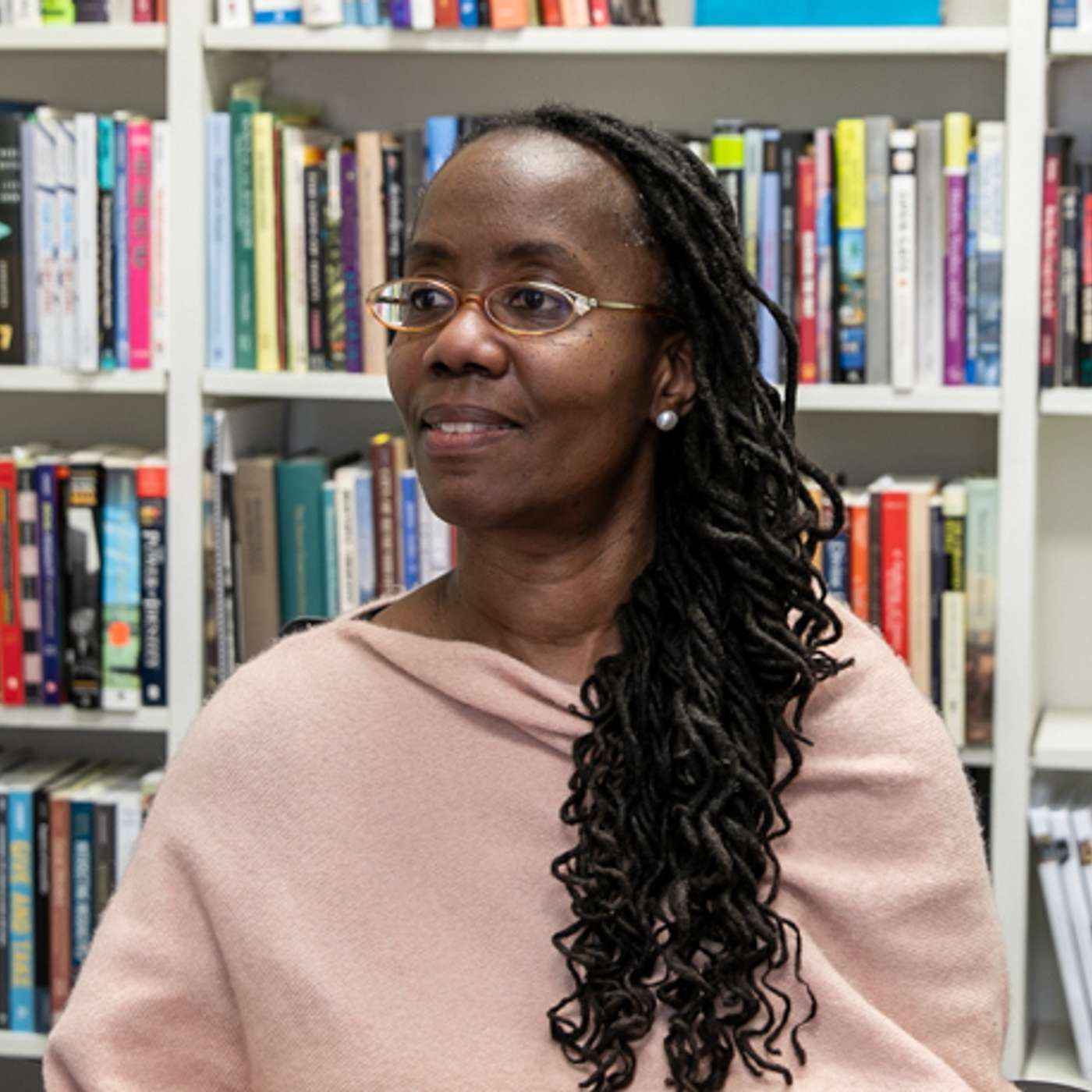
S2 Ep 7Dr. Angel Parham on A Liberal Education for All
About our Guest: Dr. Angel Parham is Associate Professor of Sociology and senior fellow at the Institute for Advanced Studies in Culture at the University of Virginia. Her area is historical sociology, where she engages in research and writing that examine the past in order to better understand how to live well in the present and envision wisely for the future. Her research and teaching are inspired by classical philosophies of living and learning that emphasize the pursuit of truth, goodness, and beauty. She shares this love of history and of classical learning through Nyansa Classical Community, an educational non-profit focused on K-12 students which provides lower and upper school curricula in the humanities to schools and homeschools. Parham is the author The Black Intellectual Tradition: Reading Freedom in Classical Literature, published with Classical Academic Press (2022). She is also the President of the Board of Academic Advisors for the Classic Learning Test (CLT) which takes an approach to academic testing that seeks to reconnect knowledge and virtue. Parham completed her B.A. in sociology at Yale University and her M.S. and Ph.D. from the University of Wisconsin-Madison.If you would like to volunteer or write for Nyansa Classical Community, email Angel. [email protected] or visit Nyansa Classical Community here. Show NotesDr. Paham discusses her Christian outreach through Nyansa Classical Community (a non-profit Classical after-school program). Nyansa works alongside schools to help them give beautiful classical texts in public schools for the children who stay for after-school care. We also dive into the debate between Booker T. Washington and W.E.B. Du Bois in the eduation of African-Americans. We also discuss "What is a liberal arts eduation and why does it matter?" The origins of "liberal" means that it is freeing and to truly flourish. Some topics in this episode include:Why Homer is important for all students and to help develop good foundations for understanding a virtue-based learning environmentWhat is the African-American tradition?The education debate between Booker T. Washington and W.E.B. Du BoisWhy a liberal arts education casts a vision for the future and why it matters. Anna Julia Cooper's impact on the tradition of African-American educationWhat is the true heritage of the African-American education in The United States? The grammar, logic, and rhetoric stages according to the essay, "The Lost Tools of Learning" by Dorothy Sayers. What is the black intellectual tradition? The importance of learning languages from other cultures to fully explore other cultures and their literatureBooks In This EpisodeThe Iliad and The Odyssey by HomerSong of Solomon by Toni MorrisonOmeros by Derek WalcottUp From Slavery by Booker T. WashingtonMusicans in the Black TraditionJoseph BologneOpera CréoleBook she wishes she had read earlierThe Republic by PlatoPlease Support us on Patreon_________________________________________________________Credits:Sound Engineer: Andrew HelselLogo Art: Anastasiya CFMusic: Vivaldi's Concerto for 2 Violins in B flat major, RV529 : Lana Trotovsek, violin Sreten Krstic, violin with Chamber Orchestra of Slovenian Philharmonic © 2022 Beautiful Teaching. All Rights Reserved ★ Support this podcast ★
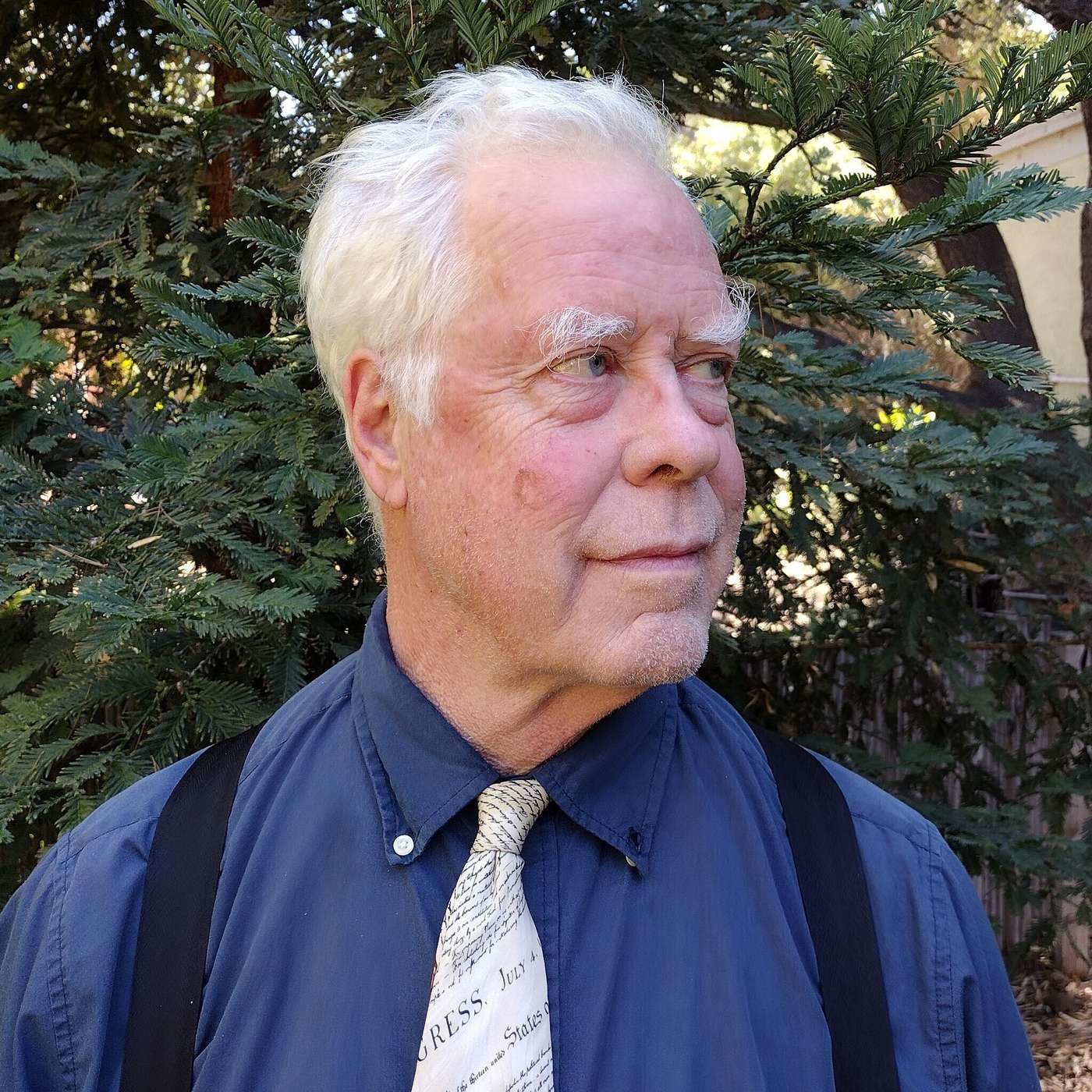
S2 Ep 6Dr. Richard Ferrier on Embracing Adventitious Experiences to Become a Well-Educated Person
About our Guest: Dr. Richard Ferrier was born April 18th 1948, Berkeley California, married wife Kathyrn 1972, 8 children, 9 grandchildren. He is currently a faculty member with Thomas Aquinas College (1978-present). B.A. Liberal Arts 1971, St Johns College, AnnapolisM.A. and Ph.D History of Science 1980, Indiana UniversityTeacher at Key School, Annapolis 1969-74 (taught Algebra, Geometry, Physics, Greek, English and American Lit, Drama, and Music)Founding Board Member St. Augustine Academy, Ventura California.Chairman Ventura County Republican Party 1991-2, Vice Chairman "Yes on 209" campaign, 1996. Prop 209 banned, by Constitutional Amendment, preferential treatment by race, sex, or ethnicity in state agencies. It passed and is still state law.His most recent book is The Declaration of America,Our Principles in Thought and Action, published by St. Augustine's Press. Show NotesDr. Ferrier is a true sage in classical education and his wisdom shines in this discussion. Hearing from his heart as a dad and grandparent was an absolute blessing. This interview was an absolute delight. We jumped from beautiful topic to beautiful topic. Dr. Ferrier and Trae shared several personal stories and especially discuss the upbringing of boys during several various points in this episode. The bullet point summary, as well as the book list, provides a good snap shot of the depth and breadth of this conversation. He wisely said "We live in a world of riches, why should we waste our minds?"Some topics in this episode include:Defining classical education and making free menLiberal Arts v. Servile Arts (useful arts)Arithmetic & Geometry as the music and dance of the quadriviumThe importance of music for the human soul Civics through American patriotic hymnsThe importance of reading to your childrenHow to read well and simply delight in great books from Dr. Seuss to the best American Speeches to Homer and back to nonsense poetry! The arts of grammar, logic/dialectics, and rhetoricTeaching rhetoric with the best speechesThe importance of integrative instruction through the 7 Classical Liberal Arts and the useful artsWhy practitioners in the "useful arts" NEED to know how to think well and communicate wellEducating boys and giving them great books as well as hands on experience with tools and going fishingAdventitious learning The difficulties in homeschooling that drive a parent to online learningHe shared his personal testimonies with homeschooling his children and what struggles they hadBooks & Resources In This EpisodeMother GooseDr. Seuss (The Cat in the Hat)Ogden NashThe Declaration of IndependenceThe Constitution of the United StatesEdward Lear's Book of NonsenseJabberwocky by Lewis CarrollHomer's Illiad and OdysseyLincolns' Speeches and Euclid's Elements"John Brown's Body" by Stephen Vincent Benét"By the Waters if Babylon" by Stephen Vincent Benét"The Devil and Daniel Webster" by Stephen Vincent Benét"The Destruction of Sennacherib" by Lord ByronThe Christmas Carol by Charles DickensI Saw Three Ships by Elizabeth GoudgeLandmark BooksTolkien TrilogyFaustPensées by Blaise PascalDostoevsky"Siddhartha" by Hermann Hesse"The Glass Bead Game" by Hermann Hesse "Beneath the Wheel" by Hermann HesseCalvin Coolidge's Speech on The Declaration of Independence: Lecture by Dr. FerrierMoviesGettysburgJohn AdamsKen Burn's Civil War seriesCasablancaFavorite QuoteVirgil when he is looking at the destruction of his home. "sunt lacrimae rerum"--- Tears for thingsPlease Support us on Patreon_________________________________________________________Credits:Sound Engineer: Andrew HelselLogo Art: Anastasiya CFMusic: Vivaldi's Concerto for 2 Violins in B flat major, RV529 : Lana Trotovsek, violin Sreten Krstic, violin with Chamber Orchestra of Slovenian Philharmonic © 2022 Beautiful Teaching. All Rights Reserved ★ Support this podcast ★

S2 Ep 5The Art of Teaching Science & Pursuing Truth with Dr. Steve Mittwede
About our Guest: Steve Mittwede, PhD, EdSDr. Mittwede is privileged to be a teacher of Earth Science at Randolph School in Huntsville (Rocket City!), Alabama, after having taught at two great classical schools in Texas for the past seven years. Heartily committed to lifelong learning, his most recent degree was an EdS in Educational Leadership from Columbia International University (CIU), following degrees in geology from The College of William and Mary (BS) and the University of South Carolina (MS and PhD), the last two while concurrently working as a full-time mineral resources geologist for the South Carolina Geological Survey. During that time in South Carolina, he married Dana, and they were blessed with four sons in close succession – all now grown, married, and raising their own broods (13 grandchildren and counting!). Steve also has an MA in intercultural studies from CIU and an MTh in theology from Union School of Theology/University of South Wales (UK). With his family, Steve lived for 23 years in Ankara, Turkey where he worked as an educator, academic researcher, consulting geologist, and scientific/technical editor. His main research “squeeze” over the last few years has been the great Peripatetic, Theophrastus, a paragon of scholarly virtues that are especially applicable in science education.Show NotesAdrienne interviews master teacher, Dr. Steve Mittwede on the art of teaching science. As an expert in the classroom, Steve brings practical ideas for teachers to consider for good, truth-driven instruction. He discusses in detail how to help students use good language (grammar mode of the trivium) to help them in habits of attending and defining their observations. We also discuss the truth pursuits around the unity of knowledge and how important this is to the foundation of integerated instruction. If truth is a foundation to classical education, then integrating all the "subjects" together ought to matter! His Three Realms of Knowing is a construct he developed about 20 years ago showing students that everything fits together. Some topics in this episode include:What is a good definition of science?How should science text books be used?What are best practices in the art of teaching science?How to engender conversations for good scientific hypotheseWhy nature study is critical for good science practices with studentsHow scientific thinking can help us integrate and make connections to all truth and reality. The Law of NoncontradictionHorizontal integration of science with poetry and Socratic inquiryBooks & Resources In This EpisodeAristotle's Metaphysics"Learning Scholarly Virtues from Theaphrastus" by Dr. Mittwede, published by SCLOpus Majus by Roger BaconPoems for Science classHymn before Sun-rise, in the Vale of Chamouni By Samuel Taylor ColeridgeI Am Like a Slip of Comet by Gerard Manley HopkinsQuotes that Dr. Mittwede uses in his science classes"Truth, like gold, is not be obtained by its growth, but by washing away from it all that is not gold."- Leo Tolstoy"I would rather be ashes than dust! I would rather that my spark should burn out in a brilliant blaze than it should be stifled by dry-rot. I would rather be a superb meteor, every atom of me in magnificent glow, than a sleepy and permanent planet. The proper function of man is to live, not to exist. I shall not waste my days in trying to prolong them. I shall use my time."- Jack LondonPlease Support us on Patreon_________________________________________________________Credits:Sound Engineer: Andrew HelselLogo Art: Anastasiya CFMusic: Vivaldi's Concerto for 2 Violins in B flat major, RV529 : Lana Trotovsek, violin Sreten Krstic, violin with Chamber Orchestra of Slovenian Philharmonic © 2022 Beautiful Teaching. All Rights Reserved ★ Support this podcast ★
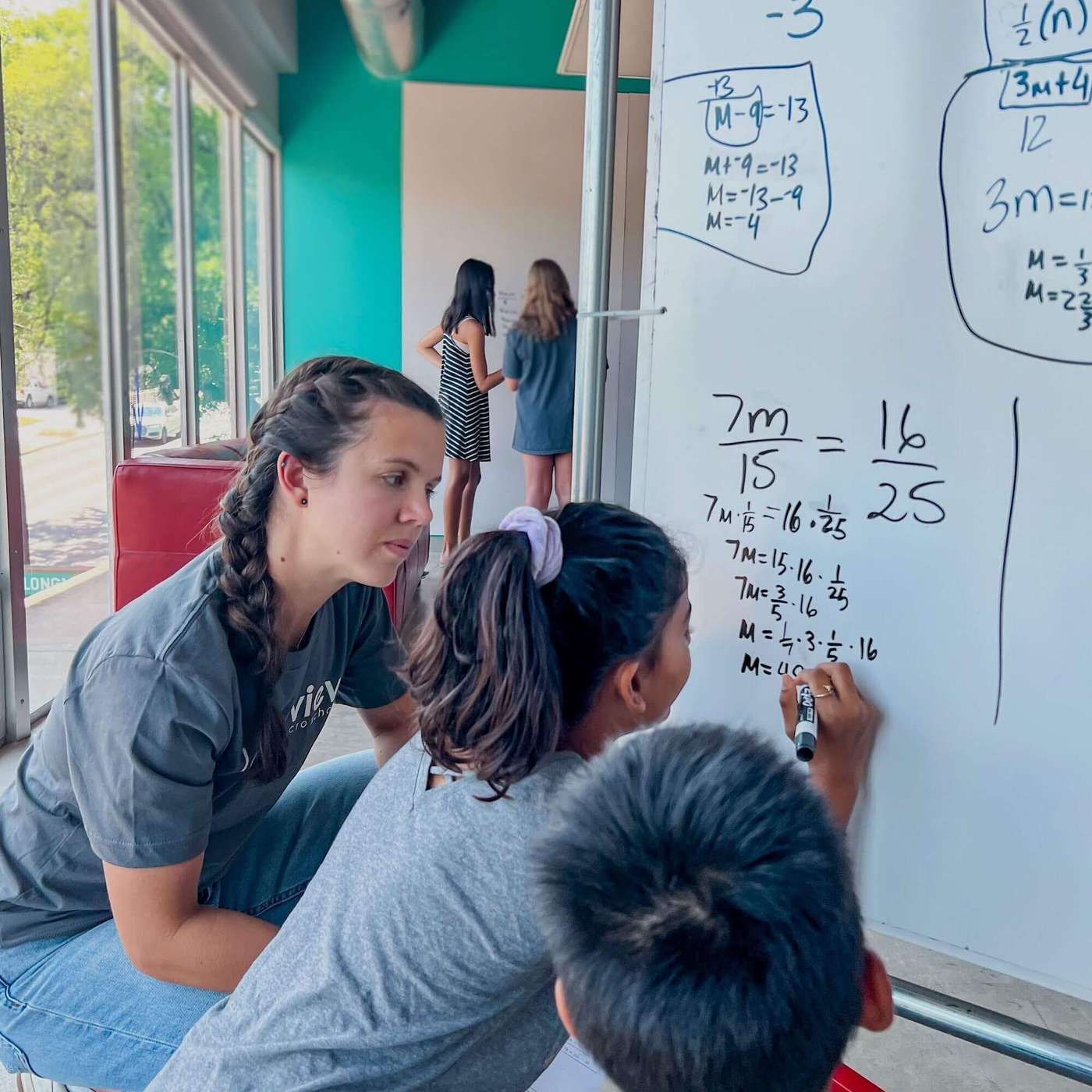
S2 Ep 4Teaching Math Like Socrates: Engaging Students as Mathematicians
About our GuestsKevin Moore is an experienced educator of young learners as well as a respected instructional leader. Presently, Kevin's attention and energies are consumed by two ventures of which he is a Co-Founder, Long-View Micro-School and The Number Lab. Long-View Micro School is a STEM focused, highly innovative, learner-centered educational environment thoughtfully designed for upper elementary and middle-school-aged learners. Through his work at Long-View, Kevin is committed to impacting the educational landscape locally by adding to the diversity of schooling options for families in Austin Texas. In his work with The Number Lab, Kevin helps to design and facilitate professional development seminars for teachers who provide mathematics instruction to young learners. These seminars are meant to help teachers strengthen their own conceptual understandings of mathematics and inspire a culture of learning in their classrooms that engages learners as mathematicians. Kevin’s work with The Number Lab connects him with educators throughout the United States and beyond. Kaylie White is an experienced educator at Long-View Learning, where she strives to transform mathematics education by working with both young learners and educators from across the country. Kaylie designs and leads learning experiences for young mathematicians at Long-View Micro School — a STEM-focused, highly innovative, learner-centered educational environment designed for upper elementary and middle-school-aged learners. Through Long-View’s teacher-facing work, Kaylie creates and facilitates professional development for teachers, including in-person workshops, Field Study Days at Long-View Micro School, and virtual coaching. She also leads the social media marketing for Long-View Learning. Kaylie is a bold, creative, and passionate educator who sees herself as a learner first. She eagerly works to collaborate with her team to continuously iterate and improve the learning experience for all. When she is not teaching and learning, Kaylie enjoys time with her husband and one-year-old son in Austin, Texas where they cook, hike, read, play soccer, and cheer on Austin FC.Follow their work: Instagram: long_view_learning School’s instagram: long_view_atx Website: long-view.com Professional Development from The Number Lab (Long-View Team) Find Support from the team at https://www.long-view-learning.com/Show NotesAdrienne and Trae interview two master teachers in mathematics from Long- View Micro School in Austin, Texas. While Long-View is a progressive school, they have discovered the truth of dialectis in the classroom. While they do not formally consider their methods as classical, and their terminology may be different than common terms in classical education, they truly embrace the art teaching math dialectically. Teaching math is not about state standards or facts and formulas to memorize, but rather it is a discipline that is engaging, interesting, and helps students learn thinking and communication skills which are common to the goals of classical education. Some topics in this episode include:The high abilities of children to wrestle with big ideas and participate in deep and meaningful workThe importance of a healthy community of learners with teachers as facilitators who will challenge and mediate students through meaningful ideasChildren need opportunities to grapple with complex ideas so that they can learn the art of dialectics (Longview school is not classical and does not call it the art of dialectics, but that is inadvertently what is being discussed). Real understanding emerges from the messiness of learning how to be precise with good language, with communication, and with tapping into creative ways of solving problems.Setting a school culture where learning is a process that everyone does together..Books & Resources In This EpisodeA Mathematician's Lament: How School Cheats Us Out of Our Most Fascinating and Imaginative Art Form by Paul Lockhart and Keith Devlin Visilbe Learning by John HattieDaring Greatly by Brené Brown Learner-Centered Teaching by Maryellen WeimerPlease Support us on Patreon_________________________________________________________Credits:Sound Engineer: Andrew HelselLogo Art: Anastasiya CFMusic: Vivaldi's Concerto for 2 Violins in B flat major, RV529 : Lana Trotovsek, violin Sreten Krstic, violin with Chamber Orchestra of Slovenian Philharmonic © 2022 Beautiful Teaching. All Rights Reserved ★ Support this podcast ★
S2 Ep 3Homeschooling with Amy Sloan from Humility and Doxology
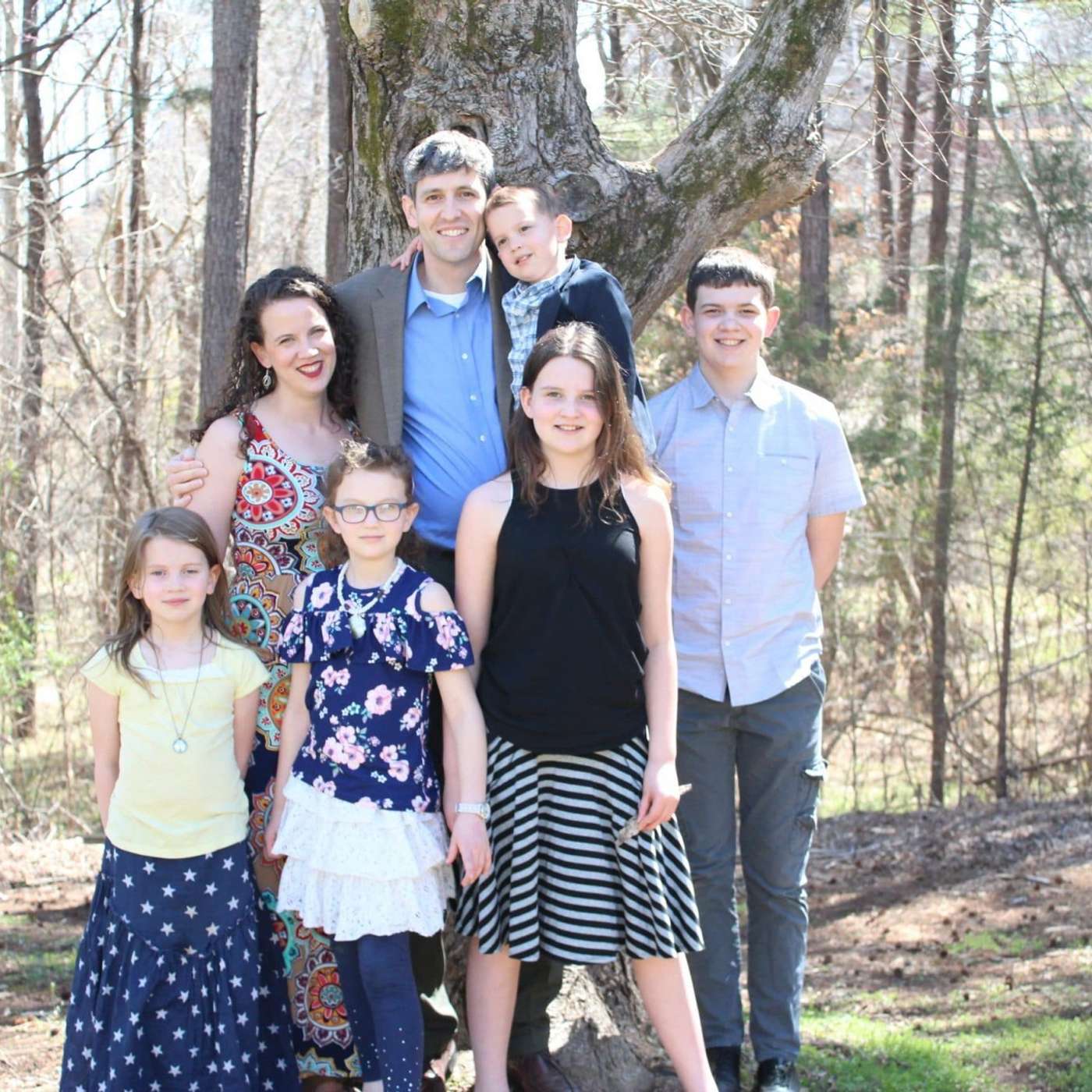
About our GuestAmy Sloan and her husband John are 2nd-generation homeschoolers to 5 children from 7 to 17 years old. The Sloan family adventures together in NC where they pursue a restfully-classical education. If you hang out with Amy for any length of time you’ll quickly learn that she loves overflowing book stacks, giant mugs of coffee, beautiful memory work, and silly memes. At any moment she could break into song and dance from Hamilton, 90s country music, or Shakespeare. Amy writes at HumilityandDoxology.com and hosts the “Homeschool Conversations with Humility and Doxology” podcast. Follow Amy on her website Humility & Doxology and her podcast Homeschool Conversations.Show NotesAdrienne interviews Amy and discusses the ins and outs of homeschooling. Amy shares her experience as a second generation homeschooler. She discusses how classical education shaped her life as a student and now as a homeschool mom. Many golden nuggets of wisdom are shared between Adrienne and Amy as they explain the common experiencs typical in the life of a homeschooler. Listen and be encouraged not to give up or to seriously consider homeschooling as a solid educational choice for your family. Some topics in this episode include:The hard realities in homeschoolingPrioritizing sibling frienships in a homeschoolThe common stresses in most homeschoolsCultivating integrative learning: being purposeful to connect all the subjectsThe Christian classical idea of teaching with a spirit of humilityAmy discusses the end goals to help answer the question, "why should I homeschool?".How to consider outsourcing needs and options as a homeschoolBooks & Resources In This EpisodeMissy Andrew's memoir, My Divine ComedyThe Liberal Arts Tradition by Clark and Jain Better Together by Pam BarnhillTeaching From Rest by Sarah MacKenzieFor the Children's Sake by Susan Schaeffer McaulayPodcasts from Homeschool Conversations mentioned in this episode as most helpful for getting started in homeschooling:Dr. George Grant interviewAnn Karako InterviewJami Marstall interviewPam Barnill and Heather Tully interviewKaren Glass InterviewAdrienne Freas InterviewCindy Rollins InterviewCurriculum Mentioned:Sonlight CurriculumAmblesideOnline CurriculumSaxon MathMath-U-SeeRightStart MathThe quote that Amy shared:"What we suffer from today is humility in the wrong place. Modesty has moved from the organ of ambition. Modesty has settled upon the organ of conviction where it was never meant to be. A man was meant to be doubtful about himself, but undoubting about the truth. This has been exactly reversed. Nowadays the part of a man that a man does assert is exactly the part he ought not to assert, himself. The part he doubts is exactly the part he ought not to doubt, the divine reason. Huxley preached a humility content to learn from nature, but the new skeptic is so humble that he doubts if he can even learn. Thus, we should be wrong if we had said hastily that there is no humility typical of our time. The truth is there is a real humility typical of our time, but it so happens that it is practically a more poisonous humility than the wildest protrations of the aesthetic. The old humility was a spur that prevented a man from stopping, not a nail in his boot that prevented him from going on. For the old humility made a man doubtful about his efforts which might make him work harder. But the new humility makes a man doubtful about his aims, which will make him stop working altogether." - G.K. Chesteron, Orthodoxy (ch. 3)Please Support us on Patreon _________________________________________________________Credits:Sound Engineer: Andrew HelselLogo Art: Anastasiya CFMusic: Vivaldi's Concerto for 2 Violins in B flat major, RV529 : Lana Trotovsek, violin Sreten Krstic, violin with Chamber Orchestra of Slovenian Philharmonic © 2022 Beautiful Teaching. All Rights Reserved ★ Support this podcast ★
S2 Ep 2Teaching Literature (Plus Book List) with Dr. Laura Eidt and Robin Johnston (pt. 2)
Guest BiographiesDr. Laura Eidt received her BA in English Literature and Linguistics from the University of Hamburg (Germany) and her MA and Ph.D. in Comparative Literature from the University of Texas at Austin. She has been teaching Spanish, German, Comparative Literature, and Humanities at the University of Dallas since 2006 and has published on German and Spanish poetry and on ekphrasis. For many years she taught an applied foreign language pedagogy class that sent students to local area schools to teach their language to elementary children, and she was a mentor at a bilingual school in Dallas for four years. Her courses include classes on foreign language pedagogy, teaching classical children’s literature, and great works in the modern world. She is the faculty advisor for UD's Classical Curriculum team and is currently writing a Latin curriculum for K-5rd grade.Robin JohnstonRobin Ann Johnston is a daughter, sister, wife, mother of five, grandmother of four (so far,) and a convert to Catholicism. She graduated from Loyola University of New Orleans in 1985, cum laude, with a bachelor's degree in Cognitive Psychology and a minor in music. When her children were all old enough to go to school, she returned to the workforce as a teacher for Mount St. Michael Catholic School (MSMCS) in south Dallas. Robin taught mostly ELAR and World History during her years there, for grades ranging from 4th to 12th. As the lead middle-school teacher, she was instrumental in transitioning the school’s culture and curriculum instruction to a classical model. During those decades, Robin was given the “Work of Heart” award for excellence in teaching (twice) by the Catholic Diocese of Dallas. After retiring from teaching full time, she began writing classical ELAR and Humanities curriculum lessons and novel study guides. Robin’s passion is for igniting students’ hearts with a love for learning and helping teachers have a toolbox of ideas that are easy to use while making a real difference in the classroom. She is now working on a master's degree in Humanities and Classical Education. In her free time, she likes to craft, read, swim, and, along with her husband of 35 years, babysit the grandchildren. Show NotesIn this episode, Adrienne, Robin, and Laura continue their conversation on teaching literature. They delve deep into the art of narration, responding to common objections, and ways to use narration as a life-giving assessment. Some topics and ideas in this episode include:How to Assess NarrationsRead-Aloud RecommendationsModeling Delight and Play Through Narration What is a “living book”?Is Narration Just a Tool? What About Violence in Fairy Tales? Book Recommendations for Pre-K - Elementary, Middle School, and High School Resources and Books & Mentioned In This EpisodeThe Chronicles of Narnia by C.S. LewisInstitutes of Oratory: or, Education of an Orator by Quintilian Pre-K - 5 Eric Carle Jan BrettTasha Tudor Jerry Pickney Astrid Lindgren (Dr. Eidt’s favorite) George MacDonald The Princess and the Goblin (Librivox Recording) The Wise Women Undine The Complete Tales of Winnie The Pooh by A.A. Milne Audio Drama with Judy Dench, Stephen Fry, et al. Rabbit Ears Radio Barbara Cooney Ingrid D'AulairesWilliam Steig Beatrix Potter
S2 Ep 1Teaching Literature with Dr. Laura Eidt and Robin Johnston (pt. 1)
Guest BiographiesDr. Laura Eidt received her BA in English Literature and Linguistics from the University of Hamburg (Germany) and her MA and Ph.D. in Comparative Literature from the University of Texas at Austin. She has been teaching Spanish, German, Comparative Literature, and Humanities at the University of Dallas since 2006 and has published on German and Spanish poetry and on ekphrasis. For many years she taught an applied foreign language pedagogy class that sent students to local area schools to teach their language to elementary children, and she was a mentor at a bilingual school in Dallas for four years. Her courses include classes on foreign language pedagogy, teaching classical children’s literature, and great works in the modern world. She is the faculty advisor for UD's Classical Curriculum team and is currently writing a Latin curriculum for K-5rd grade. Robin JohnstonRobin Ann Johnston is a daughter, sister, wife, mother of five, grandmother of four (so far,) and a convert to Catholicism. She graduated from Loyola University of New Orleans in 1985, cum laude, with a bachelor's degree in Cognitive Psychology and a minor in music. When her children were all old enough to go to school, she returned to the workforce as a teacher for Mount St. Michael Catholic School (MSMCS) in south Dallas. Robin taught mostly ELAR and World History during her years there, for grades ranging from 4th to 12th. As the lead middle-school teacher, she was instrumental in transitioning the school’s culture and curriculum instruction to a classical model. During those decades, Robin was given the “Work of Heart” award for excellence in teaching (twice) by the Catholic Diocese of Dallas. After retiring from teaching full time, she began writing classical ELAR and Humanities curriculum lessons and novel study guides. Robin’s passion is for igniting students’ hearts with a love for learning and helping teachers have a toolbox of ideas that are easy to use while making a real difference in the classroom. She is now working on a master's degree in Humanities and Classical Education. In her free time, she likes to craft, read, swim, and, along with her husband of 35 years, babysit the grandchildren. Show NotesIn part one of this two-part episode, we reconsider the foundations of good reading with the help of influential thinkers like C.S. Lewis and Mortimer Adler and think about how an overabundance of “screen time” paired with modern “reading strategies” and a focus on “college prep” pale in comparison to the potential for life transformation within the classical tradition. Some topics and readings in this episode include:How can we become good readers? Why is beauty harder to analyze than truth? What role should “vocabulary words” play in our approach to teaching literature? “College Prep” vs. Pursuit of Transcendence Reading and the Fear of GradesThe Role of Morals and Virtues in Teaching Literature The Origin and Place of Plot Analysis Is it ever ok to skim when reading? Narration and Picture Study Readings and Resources An Experiment in Criticism by C.S. Lewis How to Read a Book by Mortimer Adler Walking on Water by Madeleine L’Engle“Introduction to Poetry” by Billy Collins Heidi by Johanna SpyriAesop’s Fables Little Red Ride Hood _________________________________Credits:Sound Engineer: Andrew HelselLogo Art: Anastasiya CFMusic: Vivaldi's Concerto for 2 Violins in B flat major, RV529 : Lana Trotovsek, violin Sreten Krstic, violin with Chamber Orchestra of Slovenian Philharmonic © 2022 Beautiful Teaching. All Rights Reserved ★ Support this podcast ★

S1 Ep 21The Passionate Teacher to Her Class with Mariah Martinez
About Our GuestMariah Martinez has worked in education since 2015 as a teacher, curriculum developer, and mentor teacher. Mariah was introduced to a progressive version of classical education through her high school's International Baccalaureate program. She was later immersed in a traditional classical atmosphere through her honors program in college. Mariah attended the Honors College at Houston Baptist University, where she received a B.A., double majoring in philosophy and English. She also holds an M.A. in humanities with a concentration in classical education from the University of Dallas. She is certified as a 7-12 ELAR instructor in Texas with an additional ELL (English Language Learner) supplement. Currently, she teaches at a Founders Classical charter school in Northeast Texas and works as a freelance consultant for Beautiful Teaching. Show NotesIn this episode, Adrienne, Trae, and Mariah have a wide-ranging conversation about establishing the proper relationship between teacher, student, and text. Mariah is admittedly not the "fun teacher." Still, students enjoy her classes, make discoveries in her classroom, and learn to take up a posture of humility and understanding toward the stories and ideas she teaches. Some topics and ideas in this episode include:Rewards and Risks of Class Discussions How to Respond to Ideological CommentsHow to Foster a Posture of Understanding The Role of Narrative Across SubjectsAvoiding the Infantilization of TeenagersAn Engaging Approach to Narration Mariah's Online Course - Teaching Disputation: Well-ordered Thinking for a Disordered World Resources and Books & Mentioned In This EpisodeThe Divine Comedy by Dante Alighieri"The Passionate Shepherd to His Love" by Christopher MarloweBeautiful Teaching Online Courses Mariah's Favorite Quote: "The mass of men lead lives of quiet desperation." – Henry David Thoreau_________________________________Credits:Sound Engineer: Andrew HelselLogo Art: Anastasiya CFMusic: Used with permission. cellists: Sara Sant' Ambrogio and Lexine Feng; pianist: Alyona Waldo © 2022 Beautiful Teaching. All Rights Reserved ★ Support this podcast ★
S1 Ep 20Neoclassical vs. Classical Education with Kiernan Fiore
About Our GuestKiernan Fiore has worked as a teacher, administrator, teacher trainer, and curriculum developer since 2011. After receiving a Charlotte Mason classical home education, she earned a BA in English (summa cum laude) from Hillsdale College and an MA in English (Merit) from King's College, London. She is certified in 4-8th Grade ELAR and Social Studies in Texas. She began her teaching career at a private Charlotte Mason school and since then has worked in private, charter, and virtual schools to promote the benefits of classical education. Currently, she works as a freelance consultant for Beautiful Teaching and writes for the City of Ladies newsletter. Show NotesIn this episode, Adrienne and Trae enter into a critique of neoclassical education, joined by Kiernan Fiore. Together, they consider how educators in the renewal of classical education can reflect on how the wholesale adoption and systematizing of one Dorthy Sayers essay has led to critical departures from the tradition. In this conversation, we claim that Charlotte Mason affirmed and restored person-honoring principles and practices from the classical tradition in her time. We also point out that neoclassical education in practice tends to suffer from a pragmatism inherited from progressive philosophies of education. Finally, Kiernan paints a beautiful picture of the proper relationship between systematic lesson planning and teaching in the spirit of classical education. Some topics and ideas in this episode include:Classical vs. Neoclassical Classical Education Appropriate for Our Time State and Societal Pressures on Parents and Teachers Teaching Classically in a Nonclassical School The Christian baptism of classical education Neoclassical vs. Classical Narration Systems vs. Conversations within Relationships Narration as Assessment or Art? Lesson Planning in the Spirit of Classical Education Resources and Books & Mentioned In This Episode“The Lost Tools of Learning” by Dorthy Sayers Jason Barney on Charlotte Mason, Modern Science, and The Classical Tradition“Mending Wall” by Robert Frost Beautiful Teaching Online Courses Kiernan’s Favorite Quote: "Education is an atmosphere, a discipline, and a life." - Charlotte Mason’s Parents' National Educational Union motto _________________________________Credits:Sound Engineer: Andrew HelselLogo Art: Anastasiya CFMusic: Used with permission. cellists: Sara Sant' Ambrogio and Lexine Feng; pianist: Alyona Waldo © 2022 Beautiful Teaching. All Rights Reserved ★ Support this podcast ★
S1 Ep 19Jason Caros on American Classical Education
About Our GuestJason Caros serves as the headmaster at Founders Classical Academy. He graduated from Florida State University, earning a Bachelor of Arts with concentrations in History and Religion. He also holds a Master's Degree in Educational Leadership from Nova Southeastern University. Mr. Caros was a high school history teacher and a district-level curriculum administrator for more than fifteen years. In 2012, he was selected by Hillsdale College's Barney Charter School Initiative and Responsive Education Solutions to serve as the first headmaster of Founders Classical Academy, a K-12 grade classical charter school in Lewisville, TX. Mr. Caros attributes the growth and success of the school to the efforts of an excellent faculty and staff, supportive parents, dedicated students, and the work of its parent organization, Responsive Ed. In addition to his headmaster duties, Mr. Caros loves to teach his high school Western Civilization I class. Mr. Caros lives in Flower Mound with his wife and children; his daughter is a Founders alumna, and his son attends Founders as a rising junior.Show NotesIn this episode, Adrienne and Trae meet with headmaster Jason Caros to discuss the American Classical Charter School model. Founded initially as a Barney Charter School Initiative in American Classical Education, Founders Classical Academy in Lewisville, Texas, is an example of a thriving charter school. They are part of the Responsive Education Solutions (RES) charter schools community with a mission to provide education options that promote a free society with moral and academic excellence. Mr. Caros shares stories about how a love of learning and reading paired with patriotism bring his community together. Mr. Caros describes how commencements, holiday programs, and events focused on civic virtue give shape and meaning to the life of his school. Furthermore, Mr. Caros explores the qualities of a good teacher pertaining to the classical categories of Logos, Pathos, and Ethos. Mr. Caros explains how the stability of his school rests on consistency in the faculty and maintaining ongoing alumni relationships. Some questions in this episode include:What are the qualities of a good headmaster?How do you foster deep conversations in pursuit of the highest good in your particular context?What is at the heart of American Classical Education?How do you retain teachers?How do you support your faculty?Resources and Books & Mentioned In This EpisodeDante’s Inferno by Dante AlighieriParadise Lost by John MiltonThe Divine Comedy by Dante AlighieriShakespearean Plays by William Shakespeare The Abolition of Man by C.S. LewisNicomachean Ethics by AristotleRepublic by PlatoCicero by PlutarchThe Roots of the American Order by Russell KirkVideo: Jordan Peterson interviews Yeonmi ParkThe Bill of RightsThe Constitution of the United States of America The Restoration of Christian Culture by John SeniorNorms and Nobility: A Treatise on Education by David V. Hicks_________________________________Credits:Sound Engineer: Andrew HelselLogo Art: Anastasiya CFMusic: Used with permission. cellists: SaraSant'' Ambrogio and Lexine Feng; pianist: Alyona Waldo © 2022 Beautiful Teaching. All Rights Reserved ★ Support this podcast ★
S1 Ep 18Jason Barney on Charlotte Mason, Modern Science, and The Classical Tradition
About our GuestMr. Barney serves as the Principal of Coram Deo Academy in Carmel, IN. In 2012 he was awarded the Henry Salvatori Prize for Excellence in Teaching from Hillsdale College. He completed his MA in Biblical Exegesis at Wheaton College, receiving The Tenney Award in New Testament Studies. Before coming into his current position, Jason served as the Academic Dean at Clapham School, a classical Christian school in Wheaton, IL. In addition to his administrative responsibilities in vision, philosophy, and faculty training, Jason has taught courses in Latin, Humanities, and Senior Thesis from 3rd-12th grades. He regularly speaks at events and conferences, including SCL, ACCS, and the CiRCE Institute. He has published A Classical Guide to Narration with the CiRCE Institute and A Short History of Narration through Educational Renaissance, where he blogs regularly on ancient wisdom for the modern era.Show NotesJason Barney places Charlotte Mason squarely within the classical tradition. In this conversation, Jason points to multiple attestations within the classical tradition and contemporary science that demonstrate that Mason was on to something right in her philosophy and practices. In our conversation, Jason lays out some of the problems with the modern factory education model. He explains how the art of narration fosters what contemporary scientists call "durable learning" or deep and lasting knowledge retention. Jason also takes on Bloom's Taxonomy and explains how it risks enshrining the teacher in modernism when they would be better served reading The Abolition of Man. Some topics in this episode include:Charlotte Mason and the Classical Tradition Modern Education Movements: Ruseau, Pestalozzi, John Lock, Monstasori Lessons from Contemporary Psychology and Neuroscience Narration, Retrieval Practice, and Durable Learning Practicing Narration in the Classroom Why Students Can't recall What They Just Read/HeardProblems With the Factory Model of Education Narration Leading to Good ConversationsProblems with Blooms TaxonomyMaking Time to Read Resources and Books & Mentioned In This EpisodeA Short History of Narration A Classical Guide to Narration Educational Renaissance on Charlotte Mason Bonus Podcast Jason and I continued our conversation and talked in-depth about one of his favorite books for teachers, Teach Like A Champion by Doug Lemov. If you want to listen to that conversation, please support us on Patreon. _________________________________Credits:Sound Engineer: Andrew HelselLogo Art: Anastasiya CFMusic: Used with permission. cellists: Sara Sant' Ambrogio and Lexine Feng; pianist: Alyona Waldo © 2022 Beautiful Teaching. All Rights Reserved ★ Support this podcast ★
S1 Ep 17Karen Glass On The Art of Asking Questions
About our GuestKaren Glass is part of the Advisory of AmblesideOnline. She has four children, ages 13 to 27, who have been homeschooled using Charlotte Mason’s methods from beginning to end. Karen has been studying and writing about Charlotte Mason and Classical Education for over twenty years and has written the popular books Consider This: Charlotte Mason and The Classical Tradition and Know and Tell: The Art of Narration. Her newest book, In Vital Harmony, is a seminal work for anyone wanting to discover the beauty of humane education in keeping with the spirit and the tradition of classical education. Online Consulting and Courses with KarenKaren also serves as a consultant for our podcast support team, Beautiful Teaching: Consulting in Classical Education. She leads a book study for our listeners through our online sessions. More is coming soon! Click here to Subscribe to our newsletter so you can receive up-to-date information about more sessions Karen will be leading in the near future. Show NotesHow we posture ourselves as questioners or learners matters. As an example, Karen points to the serpent in the Garden with Eve and then God's response and what we can learn from these kinds of stories. We also discuss maieutic questioning and the role it plays in coaching students well. There are many problems with reading comprehension questions and how they interfere with natural connections between author and reader. At the heart of questions, we must begin with two questions: "What is a person?" and "What is education?" Some topics in this episode include:Sometimes, the question is more important than the answer. What happens to an answer when the right question does not precede it?What are Socratic questions, and what are common mistakes with Socratic questions?How questions create a mental postureHow does the relationship between question and answer influence the relationship between student and teacher?What is a person, and what is education? What kind of curriculum should I buy for homeschooling? What is a philosophy of education? What is the relationship between caring and asking questions?Resources and Books & Mentioned In This EpisodePlato's DialoguesTheaetetusCharlotte Mason Exam QuestionsA Philosophy of Education by Charlotte MasonThe Bible Favorite QuotesMedieval Philosophy: Selections from Modern Library Collection a quote from Hugh of St. Victor's Didascalicon_________________________________Credits:Sound Engineer: Andrew HelselLogo Art: Anastasiya CFMusic: Used with permission. cellists: Sara Sant' Ambrogio and Lexine Feng; pianist: Alyona Waldo © 2022 Beautiful Teaching. All Rights Reserved ★ Support this podcast ★
S1 Ep 16Dr. David Rose and Dr. Lawrence Reed on Civics and Economics for Hearts and Minds
About our GuestsDr. Dave Rose is a Professor of Economics at the University of Missouri-St. Louis. He received his Ph.D. in Economics in 1987 from the University of Virginia. His primary areas of research interest are behavioral economics, political economy, and organization theory. He has published scholarly articles in a wide range of areas. His work has been funded by the National Institute of Mental Health, the Weldon Spring Foundation, the HFL Foundation, the Earhart Foundation, and the John R. Templeton Foundation. He is currently in his second term on the U.S. Civil Rights Commission. In 2008 he received the St. Louis Business Journal’s Economic Educator of the year award. His book, The Moral Foundation of Economic Behavior, was selected one of CHOICE’s outstanding titles of 2012. His newest book, Why Culture Matters Most, is also from Oxford University Press. He frequently contributes to policy debates through radio and television interviews as well as in Op-Eds on topics ranging from social security, monetary policy, fiscal policy, judicial philosophy, education reform, healthcare reform, and freedom of speech. Dr. Lawrence W. (“Larry”) Reed became President of the Foundation for Economic Education (FEE) in 2008 after serving as chairman of its board of trustees in the 1990s and both writing and speaking for FEE since the late 1970s. He previously served for 21 years as President of the Mackinac Center for Public Policy in Midland, Michigan (1987-2008). He also taught economics full-time from 1977 to 1984 at Northwood University in Michigan and chaired its department of economics from 1982 to 1984.In May 2019, he retired to the role of President Emeritus at FEE and assumed the titles of Humphreys Family Senior Fellow, and Ron Manners Global Ambassador for Liberty. He holds a B.A. in economics from Grove City College (1975) and an M.A. degree in history from Slippery Rock State University (1978), both in Pennsylvania. He holds two honorary doctorates, one from Central Michigan University (public administration, 1993) and Northwood University (laws, 2008).Show NotesDr. Rose and Dr. Reed join Adrienne and Trae to discuss the foundation of a good education in civics and economics: cooperation and trust rooted in moral beliefs and lived out by ethical people in the family and society. We delve into the role of stories in economics class, preserving traditional practices and restoring home economics. For the civics and economics teachers, our guests help us see why preferring old stories to current events is best and why it's not necessarily the classroom teacher’s job to show students how to balance their checking accounts. Some topics in this episode include:The Relationship between Parenting, Culture, Civics, and Economics Framing Economics as Cooperation Self-governance in Classical Education The Family and Home Economics Moral Believes and Trust in the Family and Society The Role of Stories in Moral Education Humane Economics and Traditional Practices Gratitude and Service to Others Prudence and Democracy The Value of Failure How to Avoid “Bumper Sticker Pedagogy” Resources and Books & Mentioned In This EpisodeWhy Culture Matters, David Rose Real Heroes, Lawrence Reed Economics in One Lesson, Henry HazlittBasic Economics, Thomas Sowell Cinderella Man, Ron Howard (Director)The Whistle, Benjamin Franklin Aesop’s Fables, Aesop “The Economics of Splitting Wood By Hand,” John Cuddeback A Conflict of Visions, Thomas SowellDr. Reed’s Website Passion’s Within Reason, Robert H. Frank The Memory Book, Harry Lorayne and Jerry LucasFavorite Books and Quotes Dr. Rose’s book that he wishes he had read sooner:A Conflict of Visions, Thomas Sowell Dr. Reed’s favorite quote (corrected): “The curious task of economics is to demonstrate to men how little they really know about what they imagine they can design.” - David Hayek_________________________________Credits:Sound Engineer: Andrew HelselLogo Art: Anastasiya CFMusic: Used with permission. cellists: Sara Sant' Ambrogio and Lexine Feng; pianist: Alyona Waldo © 2022 Beautiful Teaching. All Rights Reserved ★ Support this podcast ★

S1 Ep 15Sean Johnson on The Classical Life with Family, Food, and Film
About our GuestSean Johnson holds an M.A. in English from the University of Dallas, and he teaches Great Books at Veritas School in Richmond, Virginia. Sean has reviewed movies for FilmFisher.com, and is a frequent contributor to The Circe Institute’s blog and print journal FORMA. As you notice in this interview, Sean loves family, food, and film. After the show, consider listening to Sean Johnson’s talk “The Devil Loves a Picky Eater.” Show NotesIn this episode, Sean Johnson and Trae Bailey converse on the proper relationship between family, food, and film in the classical classroom and home. Here Sean suggests movies for the whole family, what to cook with your kids, and how to deal with picky eaters.Some topics in this episode include:Our cultivated culture of pickiness How the kitchen can inform the classroom The difficult roles of teachers and parents Narration in the home Reviewing Films and Praising Well Graham Greene’s novels and screenplaysLectio Divina Alcohol and Drinking CultureHow to watch movies with your family The proper place for the television in the home Sean’s film recommendationsBooks & Resources Mentioned In This EpisodeFORMA Journal The Republic, Socrates The Supper of The Lamb: A Culinary Reflection, Farrar Capon The Third Man, Graham Greene Our Man in Havana, Graham, Greene High NoonThe Man Who Shot Liberty Valance Charlie Chaplin Movies WALL-E Ratatouille The Incredibles Sean’s Favorite Book & Quote: Beauty for Truth’s Sake, Stratford Caldecott “Is he enough of a pagan to die for the world, and enough of a Christian to die to it?” - G.K.Chesterton, Orthodoxy _______________________________Credits:Sound Engineer: Andrew HelselLogo Art: Anastasiya CFMusic: Used with permission. cellists: Sara Sant' Ambrogio and Lexine Feng; pianist: Alyona Waldo © 2022 Beautiful Teaching. All Rights Reserved ★ Support this podcast ★

S1 Ep 14Dr. Reno Lauro on Tolkien’s View of Education & Why it is Important for Classical Education
About our GuestDr. Reno Lauro received his PhD from the University of St. Andrews Institute for Theology, Imagination and the Arts in 2011, where he wrote on J. R. R. Tolkien’s philosophy of Mythopoeia. For the past 10 years, he has worked at the intersection of Humane and Digital learning.After completing his degrees, Theology (MDiv) and History (BA), Reno apprenticed for 18 months on the Palme d’Or winning film The Tree of Life with director Terrence Malick, which transformed his understanding of the Classics, the modern world, and how to communicate the relationship between the two. He has taught at the graduate and undergraduate level as well as in both Lower and Upper School classrooms of Classical Schools. Most recently, Reno has served as the Assistant Headmaster at St. Peter’s Classical School in Fort Worth, TX and of a Great Hearts Archway School and also worked closely with the CEO of the globally recognized BASIS.ed charter schools to create and pilot seminar-style history courses as alternatives to AP classes.Reno resides in Ft. Worth, Texas with his wife and 4 gloriously active young boys. He is passionate about philosophy, history, and beautiful teaching. He currently works as a Classical Pedagogy and Curriculum Specialist for Coram Deo Academies in DFW. He also is an active consultant for Beautiful Teaching: Consulting in Classical Education Philosophy & Pedagogy.His 2 Bonus Podcast Episodes can be downloaded from our Patreon Page here.Show NotesWe discuss Tolkien’s view of education through the lens of cosmology, anthropology, and story. Reno discusses the theological implications between language and story and how this view ties to the recovery of Christian classical education. Philology is the foundation of the humane letters and there is more to learning than the seeking and the mining of literature in an academic way. This “lifeless” and “dull” style of the university in Tolkien’s Valedictory Address to the University of Oxford, points to a larger anthropological view of education. This leads us to think of education as a living, breathing, and whole that is multi-faceted and varied. In this world of machines, we need to recover the fullness of human life. Key Text: We discussed at great length from The Valedictory Address to the University of Oxford refers to J.R.R. Tolkien's retirement speech from the University of Oxford, delivered on 5 June 1959. The valedictory speech is included in J.R.R. Tolkien, Scholar and Storyteller: Essays in Memoriam. Another draft was published in The Monsters and the Critics and Other Essays (1983).Some topics in this episode include:What was Tolkien's struggle with his peers at The University and how does it show us his philosophy of education?Tolkien as a Dante for the technocratic ageEncountering education as a living, breathing, whole within the cosmosThe medieval view of educationWhat was Tokien’s relationship with the cosmos and trees and how does this influence his view of learning? Books & Titles Mentioned In This EpisodeThe Inklings: C.S. Lewis, J.R.R. Tolkien, Charles Williams, and Their Friends by Humphrey Carpenter (chapters 2-3)Secret Fire: The Spiritual Vision of J.R.R. Tolkien by Stratford CaldecottMythopoeia by J.R.R. TolkienThe Discarded Image by C.S. LewisThe valedictory speech is included in J.R.R. Tolkien, Scholar and Storyteller: Essays in Memoriam. Another draft was published in The Monsters and the Critics and Other Essays (1983).Reno's quote at end of podcast:Hail Earendel, brightest of angels,Sent to men over middle-earth,And true radiance of the sun,Fine beyond stars, you always illuminate,...Source: Christ I poem from Anglo-Saxon advent liturgy_________________________________Credits:Sound Engineer: Andrew HelselLogo Art: Anastasiya CFMusic: Used with permission. cellists: Sara Sant' Ambrogio and Lexine Feng; pianist: Alyona Waldo © 2022 Beautiful Teaching. All Rights Reserved ★ Support this podcast ★

S1 Ep 13Dr. Steve Bourgeois on Motivation and Praise: How to Encourage Intrinsic Motivation
About our GuestSteven J. Bourgeois, PhD has been a practicing teacher for the past 32 years. Working primarily in Oregon and Texas, he has taught high school German, string orchestra, humanities, and applied music in addition to several years as a head tennis coach. After completing a PhD in Educational Leadership and Policy Studies from the University of Texas at Arlington in 2012, he accepted a position as Executive Director of Research, Evaluation, and Instruction at Responsive Education Solutions, one of the largest charter school organizations in Texas. After recently retiring, Dr. Bourgeois has transitioned to full-time educational consulting, focusing services on teacher attrition, distributive leadership, student motivation, and classical methods. Leveraging his skills in data analytics, survey design, and data visualization, he currently supports leaders in independent, traditional public, and charter schools. Dr. Bourgeois currently serves as an adjunct professor at UT Arlington teaching doctoral-level courses in qualitative research. Additionally, he teaches courses within the Classical Education Department of the Braniff Graduate School at the University of Dallas. Dr. Bourgeois has a record of publications in peer-reviewed educational journals and presentations at state, regional, national, and international conferences in the areas of student motivation and engagement, along with conceptual pieces on authentic engagement and intrinsic motivation.Research by Dr. BourgeoisTeaching as Entertainment: An Examination of EffectsHigh-achieving, cognitively disengaged middle level mathematics studentsThe indirect effects of school leadership on achievementPraise in the elementary classroom: The teacher’s perspectiveContingent rewards in the elementary classroom: The teacher’s perspectiveIntrinsic motivation and authentic engagement: A conceptual discussionMotivation for academically gifted students in Germany and the US: A phenomenological studyShow NotesDr. Bourgeois, Adrienne, and Trae discuss potential solutions to cultivating motivation so students can develop true virtue. They discuss modern research and the effects of praise on student motivation. Some classical school have beautiful mission statements, but their practice does not necessarily align with the philosophical truths that encourages internal motivation. For true virtue formation, students and teachers need intrinsic motivation and this is a bit more complicated than most typical practices in schools today. Some practical questions in this episode include:Please define for our listeners the differences between extrinsic and intrinsic motivation. What exactly is motivation and what role might it play in the life of a school? Is it really the job of the teacher to motivate students? And at the Highschool level (Which is where we are working) is there any hope in saving the curious nature of the learner inside of them?How do we get away from an excessive assesment mentality? Should we give prizes for reading? What does Charlotte Mason say about motivation? How can we encourage teachers today who want to transition to a more classical way of approaching student performance? These questions help us to wrestle with the idea that all education ought to be humane and focused on helping students with internal motivation. The expectations of parents, teachers, and boards on can hamper the experience of a truly classical educaiton.Resources and Quotes Mentioned In This EpisodeOld School podcast Episode 25: On Motivation and Learning Philosophy of Education by Charlotte Mason quote: “the Desire of Knowledge (Curiosity) was the chief instrument of education; that this desire might be paralysed or made powerless like an unused limb by encouraging other desires to intervene between a child and the knowledge proper for him; the desire for place,––emulation; for prizes,––avarice; for power,––ambition; for praise,––vanity, might each be a stumbling block to him.... the delightfulness of knowledge is sufficient to carry a pupil joyfully and eagerly through his school life and that prizes and places, praise, blame and punishment, are unnecessary insofar as they are used to secure ardent interest and eager work. The love of knowledge is sufficient.”Essay by Simone Weil (correct title was not stated on the podcast):Reflections on the Right Use of School Studies With a View to the Love of God by Simone Weil “'Motivation' has become the bete noire of modern educators. How can the young be moved to learn? By rewards and promises of rewards? By such inducements the young will go through the motions of education, but they will remain unmoved. But how then? Why, by exposing them to the Muses, where no phenomenon is seen except under the aspect of wonder. Mistake me not: wonder is no sugary sentimentality but, rather, a mighty passion, a species of fear, an awe-full confrontation of the mystery of things. Through the Muses the fearful abyss of reality first calls o

S1 Ep 12Soren Schwab: The Ethos, Pathos and Logos in Forming a New Model of Testing
About our GuestSoren Schwab, M.Ed is a passionate educator with a decade of experience in K-12 education. Born and raised in Germany, Soren moved to the US in the late 2000’s to pursue his literature and theology studies. He earned a B.A. in English from Hillsdale College and an M.Ed in Curriculum and Instruction from Colorado Christian University. For many years, Soren led the English Department at The Vanguard School, a classical charter school in Colorado Springs. He joined CLT in 2018 and currently serves as the Vice President of Partnerships. Soren and his wife Paula live in Annapolis, MD where they enjoy kayaking, hiking, and rooting for the Philadelphia Eagles.CLT Resource: https://www.cltexam.com/Show NotesThe Ethos, Pathos and Logos in Forming a New Model of TestingRather than teach to test, creating “testing fatigue”, the classical movement has ideas for making the content matter. Consider a new and helpful tool for Classical renewal. In this podcast, Soren Schwab discusses (CLT) Classical Learning Test, with Adrienne and Trae as they voice the many known questions and concerns about testing. Studies have proven that make the case for better content. There is a disconnect between evaluating a student’s achievement of test content, and a real aptitude by students who reason through a problem. Here, we explore something less exhausting than testing for days.Some topics in this episode include:Here is a common question: How do we deal with tests? How can content help change the outcome?Is it a popular need to look for learning gaps in students?Why not test prep?How do we address the big question about aptitude vs. achievement ?Colleges and Universities that accept the CLT:https://www.cltexam.com/colleges/Books & Titles Mentioned In This EpisodeSoren's favorite quote originally in German: "Tradition ist nicht das Halten der Asche, sondern das Weitergeben der Flamme" - ein berühmtes Zitat, geprägt von Thomas Morus (1478-1535).The Gutav Mahler paraphrase "Tradition is not the worship of ashes, but the preservation of fire."_________________________________Credits:Sound Engineer: Andrew HelselLogo Art: Anastasiya CFMusic: Used with permission. cellists: Sara Sant' Ambrogio and Lexine Feng; pianist: Alyona Waldo © 2022 Beautiful Teaching. All Rights Reserved ★ Support this podcast ★
S1 Ep 11Dr. Gary Hartenburg on Aristotelian Education: Discussions on Virtue and Leisure
About our GuestGary Hartenburg holds a BA in Bible and theology from Moody Bible Institute, an MA in philosophy of religion and ethics from Biola University, and a PhD in philosophy from the University of California, Irvine. He is an associate professor or philosophy at Houston Baptist University, where he also serves as the director of the HBU Honors College, a liberal arts program for undergraduates to read, discuss, and write about great works of Western civilization. He resides with his family in the suburbs of Houston, Texas. His most recent publication is Aristotle: Education for Virtue and Leisure published by Classical Adademic Press. Show NotesWe invited Gary to discuss his new book. In keeping with one of our Classical Education podcast goals, "to inspire educators and parents to offer an education done well, influencing children to choose a life of virtue" Dr. Gary Hartenburg will inspire you! He explains that choices are not all equal in using time well and elaborates that to be ready and able to use time well, one must be “doing a lot of philosophy and music." He also explains the Aristotelian concept of “Phronesis” in contrast to “Sophia”, which is described as “practical vs theoretical.” To accomplish wisdom and theological contemplation, we must design an education that enables students to use their leisure time well. Reaching the highest end is philosophy and contemplation of the best things, with attention equally on all of the virtues of character. Each of four Aristotelian virtues: courage, moderation, justice, and wisdom must be equally considered in a classical education. Students attain these virtue by "doing" and through the formation of good habits. Some topics in this episode include:How does leisure, as described by Aristotle, influence virtue?What is it to be happy and spend leisure time well?Will you explain phronesis and how it undergirds an Aristotelian Education?What would Aristotle say if he could speak through teachers to students?What do you think Aristotle would say about a common current approach to leisure and what would he say about the way we approach ethics in our schools?Books & Titles Mentioned In This EpisodeAristotelian Education for Virtue and Leisure by Dr. Gary HartenburgNichomachean Ethics by AristotleThe Republic by Plato_________________________________Credits:Sound Engineer: Andrew HelselLogo Art: Anastasiya CFMusic: Used with permission. cellists: Sara Sant' Ambrogio and Lexine Feng; pianist: Alyona Waldo © 2022 Beautiful Teaching. All Rights Reserved ★ Support this podcast ★
S1 Ep 10Parent and Headmaster, John Heitzenrater on Raising Virtuous Children
About our GuestJohn W. Heitzenrater II has nearly 17 years teaching and administrative experience in classical schools. Mr. Heitzenrater began his career teaching history and humanities at the Lady Margaret Roper School and St. Peter’s Orthodox Classical School in Fort Worth, Texas. In 2015, he joined Responsive Education Solutions and served as a founding headmaster, Director of K-12 History, Regional Director under the superintendent, and most recently as headmaster of the second largest Responsive Ed school with a student enrollment of approximately 915 students.Mr. Heitzenrater received his A.B. magna cum laude from the College of St. Thomas More where he studied literature, philosophy, theology, classical languages, and history. In graduate school he attended the University of Dallas where he received his Master of Humanities with a concentration in history in 2016. He brings a love for student excellence, a passion for classical education, and a quest for virtue, and wisdom to students and families. He and his wife Christina have 11 children, seven girls and four boys, many of whom attend Saint John Chrysostom Academy in Pennsylvania.Show NotesTrae and Adrienne interview John Heitzenrater, father of 11 and classical school headmaster on raising virtuous children. In this candid discussion, John shares his experiences and stories as a parent and headmaster. From discipline in a school to helping parents in the upbringing of virtuous children, this episode is rich with anecdotes and carries a spirit of humility throughout the show. John talks about the importance of headmasters partnering with parents regarding what is best for a child. We have a moral responsibility to bring up children in virtue, and the principles in classical education dictate how we behave and treat other people. Some topics in this episode include: “Having children is a matter of nature; but raising them and educating them in the virtues is a matter of mind and will. “ - St John Chyrsostom How has this quote shaped you as a headmaster?How are principles in classical education different from a progressive education?Creating a home that is working within the principles of a classical educationHow technology affects the hearts and minds of familiesBooks & Titles Mentioned In This EpisodeSt John Chrysostom: Vainglory and the Right Way for Parents to Bring Up Their ChildrenIdeas Have Consequences by Richard M. WeaverHold On To Your Kids Why Parents Need to Matter More Than Peers by: Gordon Neufeld_________________________________Credits:Sound Engineer: Andrew HelselLogo Art: Anastasiya CFMusic: Used with permission. cellists: Sara Sant' Ambrogio and Lexine Feng; pianist: Alyona Waldo © 2022 Beautiful Teaching. All Rights Reserved ★ Support this podcast ★

S1 Ep 9Music: Integrating The Foundation of All Subjects at Home and in Classrooms with Professor Carol
About our GuestFor more than 20 years, Carol was Associate Professor of Music History at the Meadows School of the Arts, Southern Methodist University in Dallas, Texas.Professor Carol Reynolds is a uniquely talented and much sought-after public speaker for arts venues and general audiences. She combines her insights on music history, arts, and culture with her passion for arts education to create programs and curricula, inspire concert audiences, and lead arts tours. Never dull or superficial, Carol brings to her audiences a unique mix of humor, substance, and skilled piano performance to make the arts more accessible and meaningful to all.Carol has has teamed with Smithsonian Journeys for cruises to the Holy Land, Mediterranean, Caribbean, Baltic Sea, Indian Ocean, and across the Atlantic. She now makes her home in North Carolina and maintains a second residence in Weimar, Germany — the home of Goethe, Schiller, Bach, and Liszt, and the focal point of much of Europe’s artistic heritage.Show NotesDynamic resources will be found in this podcast. As you listen, you’ll hear about promising and natural ways to blend music into the lives of those you teach and with whom you surround yourself. The mind shift is that it is not about fitting it in, it’s about shaping affections with beauty. There are shared musical treasures that bring people together. What if your students discovered such delight, as when one little girl exclaimed, “Mommy look! All the songs are here in one place!”?Some questions in this episode include:What should we be thinking about in Music Education?When we want to embrace Musical Education, can we first describe what the problem is?What does a robust music program look like in a Classical Education?This talk will bring your own musical stories to mind, and inspire you to preserve the beauty of the rich and timeless songs. Books, Music, and Media Mentioned In This EpisodeResources by Carol:The Circle of Scholars: by Professor Carol at professorcarol.comHymn Workshops and Webinars:by Professor Carol at professorcarol.comEssay: "A Child’s Journey Into Sacred Music" by Carol Reynolds at Memoria Press: Memoriapress.comComing soon: Into the Spiritual by Carol Reynolds, a Hymn Workshop WebinarList of Professor Carol’s Resources______________________________Father Bethel biography about John Senior Shiniche Suzuki writings In the Mood Frank SinatraBig Band MusicMother Goose Nursery RhymesTwinkle Twinkle Little StarPeter Pan RecordsPeter and the Wolf by Sergei ProkofievThe Point by Harry NilssonOld Recordings with great orchestras and singers like Bing Crosby, Boris Karloff, Burl IvesGerman Kinder songsMy Love is Like a Red, Red Rose by Robert BurnsHymnals and Devotional songsNoise Pollution Carol Reynolds Weekly Digest email blogPlato The Little Drummer Boy’s Bolero by Julie GirouxMessiah by George Frederic HandelAmerican Folk Music and Christmas SongsFolk Music from Ambleside Online Curriculum: Design Your Homeschool: amblesideonline.orgHymns from Ambleside Online Curriculum: Design Your Homeschool: amblesideonline.orgHillbilly music with Jimmie Rodgers and Ernest TubbThe Met Opera The Metropolitan Museum of ArtThe Old Rugged Cross by George BennardThe Entertainer by Scott JoplinAmerican Marches by John Philip SousaThe Scarlet Letter by Nathaniel HawthornEssays by C.S. LewisThe Singing Revolution Documentary film history of Baltic Song FestivalMy Musical Life by Nikolai Rimsky-KorsakovA Thousand Points for Children (1958) Find a similar collection of prose and poetry_________________________________Credits:Sound Engineer: Andrew HelselLogo Art: Anastasiya CFMusic: Used with permission. cellists: Sara Sant' Ambrogio and Lexine Feng; pianist: Alyona Waldo © 2022 Beautiful Teaching. All Rights Reserved ★ Support this podcast ★
S1 Ep 8Dr. Eidt and Dr. Owens: Teaching & Learning Latin (at home and in classrooms)
Guest BiographiesDr. Laura Eidt received her BA in English Literature and Linguistics from the University of Hamburg (Germany) and her MA and PhD in Comparative Literature from the University of Texas at Austin. She has been teaching in the Spanish, German, Comparative Literature, and Humanities Programs at the University of Dallas since 2006 and published on German and Spanish poetry, and on Ekphrasis. For many years she taught an applied foreign language pedagogy class that sent students to local area schools to teach their language to elementary children, and she was a mentor at a bilingual school in Dallas for four years. Her courses include classes on Foreign Language Pedagogy, Teaching Classical Children’s Literature, and Great Works in the Modern World. She is the faculty advisor for UD's Classical Curriculum team and is currently writing a Latin curriculum for K-5rd grade. Dr. Patrick M. Owens was born and raised in New York City where he graduated from Fordham University. In his pursuit of the Classical languages Dr. Owens moved to Montella, Italy to study at Vivarium Novum and then to Rome, where he earned his Ph.D. at the Salesian University. He has taught Latin, Greek, and Classical literature at the middle school, high school, and university levels. When he is not teaching, Dr. Owens continues his research on Latin literature and the history of Latin pedagogy. Additionally, he works as a consultant for schools developing curricula for Latin and Classical education. He and his wife Mallory, who is also an accomplished Latinist, raised two children in a bilingual home. Show NotesDr. Laura Eidt and Dr. Patrick M. Owens join Adrienne to discuss Latin. Both guests bring a wealth of information about classical education and teaching Latin.Their love for Latin is also contagious! This episode will not only give practical advice about incorporating Latin into your life, but the history of how to teach Latin is quite interesting.Taking us back to antiquity and through the Renaissance, Dr. Eidt and Dr. Owens unfold the history of teaching Latin as a living experience. Classical education ought to be joyful and beautiful. The immersion approach for children is not common in most Latin programs on the market today. But the University of Dallas is launching a K-5 Storybook Latin approach that is great for both homeschoolers and classroom teachers who have little to no experience with Latin! Some questions in this episode include:What is classical education? What can a parent do to help their child become interested in Latin (or Greek)What is the history of Latin education? What is the tradition of the trivium and how is it different from the neoclassical trivium? What is the role of Latin in the trivium, and what age ought a child begin learning Latin? Books Mentioned: The Very Hungry Caterpillar by Eric CarleInstitutes of Oratory by QuintilianOrbis Pictus by John ComeniusDidactica Magna (The Great Didactic), by John Amos ComeniusThe Narnia series by C.S. LewisMan’s Search for Meaning by Viktor E. Frankl Latin Resources for Adult Learning:Hans H. Ørberg’s Lingua Latina Per Se Illustrata: Familia RomanaSchola LatinaVivarium NovumPaideia InstituteVeterum Sapientia Institute (for Catholic Learning) For more information on the University of Dallas’s K-5 Latin:https://k12classical.udallas.edu/k-12-curriculum/k-5-latin-curriculum/ For consulting information from Dr. Patrick M. Owens: Dr. Patrick M. Owens offers Classical education and Latin language consulting to K-12 schools and institutions of higher education. Dr. Owens works with educators who want to develop vibrant and successful academic programming through remote consulting or on-site professional development. He has worked with groups of every size from large State Universities to small homeschool coops. You can reach him at: [email protected]_________________________________Credits:Sound Engineer: Andrew HelselLogo Art: Anastasiya CFMusic: Used with permission. cellists: Sara Sant' Ambrogio and Lexine Feng; pianist: Alyona Waldo© 2022 Beautiful Teaching. All Rights Reserved ★ Support this podcast ★

S1 Ep 7Dr. Jessica Hooten Wilson: Bringing Parents, Teachers, and Churches Together in Support of Classical Education
About our GuestJessica Hooten Wilson is the Louise Cowan Scholar in Residence at the University of Dallas. She is the author of numerous books, including The Scandal of Holiness: Renewing Your Imagination in the Company of Literary Saints, published in 2022 by Brazos Press. Her book, Giving the Devil his Due: Flannery O’Connor and The Brothers Karamazov, received a 2018 Christianity Today Book of the Year Award in the Culture & the Arts.Award-winning author Jessica Hooten Wilson explains that learning to hear the call of holiness requires cultivating a new imagination--one rooted in the act of reading. Learning to read with eyes attuned to the saints who populate great works of literature moves us toward holiness, where God opens up a way of living that extends far beyond what we can conjure for ourselves. Literature has the power to show us what a holy life looks like, and these depictions often scandalize even as they shape our imagination. As such, careful reading becomes a sort of countercultural spiritual discipline.To hear about Jessica’s newest book, Scandal of Holiness, here is a recorded lecture at Union University. Show NotesThis lively and often deeply contemplative conversation with guest Jessica Hooten Wilson offers not only reasons for choosing Classical Education, but also simple and easy ways to support sanctity and truth in the joy of raising families. Here is support for the choices you make and how to replace that which infringes upon those choices.Some questions in this episode include:What is education for? Why is sainthood something that has captivated your imagination?Walk us through your blog essay: Awakening from Digital Slumbers What does it mean to remember, and how do we embrace the importance of memory?How can the church help families?Books & Titles Mentioned In This EpisodeThe Book of the Dun Cow by Walter Wangrin, Jr.Memento Mori by Muriel SpariThe Family & The New Totalitarianism by Michael D. O'Brien, Introduction by J.H. WilsonThe Diary of a Country Priest by George Bernanos “Summer’s Harvest” poem by Gerard Manley Hopkins“Awakening from Digital Slumbers” (an online essay by Jessica)Documentary: The Social DilemmaGiving the Devil His Due: Flannery O’Connor and the Brothers Karamazov by: J.H. Wilson The Scandal of Holiness, Renewing Your Imagination in the Company of Literary Saints by J.H. Wilson Solzhenitsyn and American Culture: The Russian Soul in the West, Co-Editor J.H. WilsonLearning the Good Life from the Great Hearts and Minds that Came Before by J.H. Wilson “Mike Teavee” poem by Ronald DahlBooks by Wendell Berry“Allegory of the Cave” or “Plato’s Cave” by PlatoKristin Lavransdatter by Sigrid Undset (Jessica mentioned Well-Read Mom reading in May, 2022) _________________________________Credits:Sound Engineer: Andrew HelselLogo Art: Anastasiya CFMusic: Used with permission. cellists: Sara Sant' Ambrogio and Lexine Feng; pianist: Alyona Waldo Copyright © 2022 Beautiful Teaching. All Rights Reserved ★ Support this podcast ★
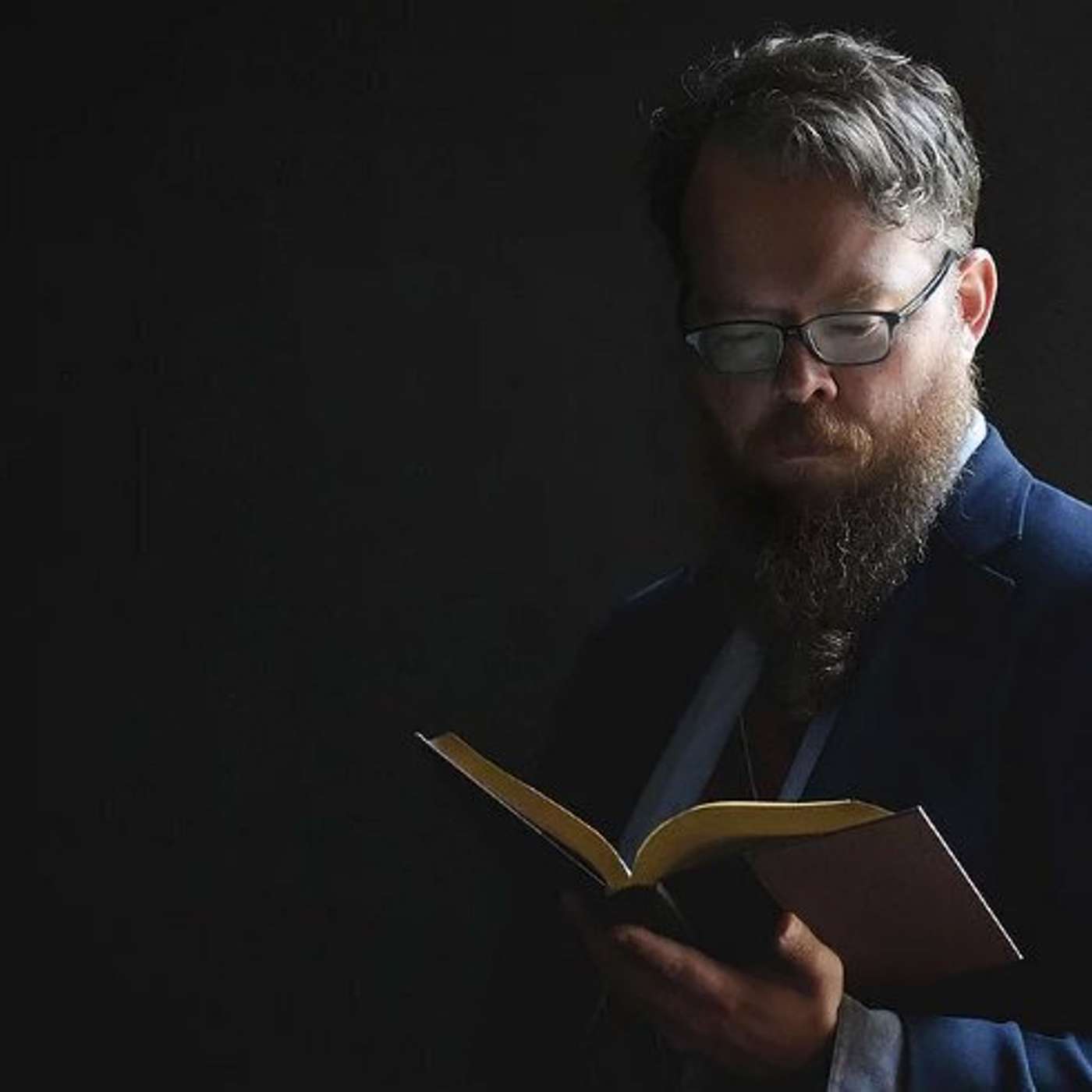
S1 Ep 6Joshua Gibbs: Teaching from a Spirit of Love, Helping Students Care
About our GuestJoshua Gibbs is a teacher, a lecturer on pedagogy and great books, and the author of several books that are listed in the show notes. For the last twelve years, Gibbs has taught classic literature in Christian schools and earned acclaim for his writing. He has been a frequent speaker at several excellent classical conferences and published for many respectable classical education resources. His work can be explored on his website https://www.gibbsclassical.com/ We also encourage you to register for his 2022 Summer Conference.Show NotesJosh discusses how to engage students with voices from the past and how to shape their affections through delighting in common things. He asks, "How do we teach a book so that a student wants to read it again?" As a teacher, it is our duty to step out of the way and let the author speak and pass on our delight in hearing voices from the past. This is how we help students fall in love with books. We want to instill a love for the right things. We need to capture the hearts of students so that they care. Some practical questions in this episode include:What are the goals of a classical teacher vs. a non-classical teacher?What types of goals ought we set and how do we go about teaching in a way that matches our goals? How do we teach a book so that students will want to read it again? How do we develop a taste for good things? These questions help us to wrestle with the idea that all education ought to be first and primarily about ordering our souls with love as the primary goal. If we set education goals too lofty or create goals that are too shallow, what are we telling our children? The goal of education is to help students care. Josh ascertains how a teacher can help students care about what they are learning. Books Mentioned In This EpisodeSomething They Will Not Forget by Joshua GibbsHow to be Unlucky by Joshua GibbsLove What Lasts by Joshua GibbsSiddhartha by Hermann HesseDemien by Hermann HesseTill We Have Faces by C.S. LewisLeviathan by Thomas HobbesPride and Prejudice by Jane AustenThe Iliad by HomerParadise Lost by MiltonThe Divine Comedy by DanteConsolation of Philosophy by BoethiusMacbeth by ShakespeareJane Eyre by Charlotte BrontëGreat Expectations by Dickens_________________________________Credits:Sound Engineer: Andrew HelselLogo Art: Anastasiya CFMusic: Used with permission. cellists: Sara Sant' Ambrogio and Lexine Feng; pianist: Alyona WaldoCopyright © 2022 Beautiful Teaching. All Rights Reserved ★ Support this podcast ★
S1 Ep 5Ben and Eden Lyda: Children Delighting in Shakespeare
Show NotesSomething delightful is happening! Ben and Eden Lyda show the way to capture the heart of stories through Shakespeare plays. Ben, founder of Children’s Shakespeare Academy, along with his articulate teenage daughter Eden, delightfully spread a contagious love of Shakespeare and drama through this bedrock of English language. Hear how virtues win and are learned in a concrete and refreshing way. Eden will invite you into the enchantment of joyful learning. Ben will encourage you to believe that children have a capacity for much, especially if you establish a wonder-filled atmosphere. For understanding the over-all definition of Reader's Theatre, Ben recommends this as a non-classical, informative video: https://www.youtube.com/watch?v=w1mStaaIxA0Books Mentioned In This EpisodeBeautiful Stories from Shakespeare by Edith NesbitTales from Shakespeare by Mary and Charles LambRetelling of Shakespeare stories by Bruce CovellThe Princess Bride by William GoldmanIvanhoe by Walter ScottThe Odyssey by Homer Plays by William Shakespeare Mentioned in This EpisodeJulius Caesar 1599A Midsummer Night’s Dream 1600The Tempest 1611The Taming of the Shrew 1594Macbeth 1623Much Ado About Nothing 1623Hamlet 1603 Credits:Sound Engineer: Andrew HelselLogo Art: Anastasiya CFMusic: Used with permission. cellists: Sara Sant' Ambrogio and Lexine Feng; pianist: Alyona WaldoCopyright © 2022 Beautiful Teaching. All Rights Reserved ★ Support this podcast ★

S1 Ep 3Chris Hall: Common Arts Education
What are the common arts? How do they relate to a classical education? How do we bring up the whole human being, thriving in wonders of life and right ordered relationships? Join us as we discuss the search for balance and bolster both common arts and liberal arts in education. We encourage discoveries and provide examples and ways of instruction that proceed outside the boundaries of paper assignments.Chris Hall is the founder of Always Learning Education, an organization dedicated to teaching, learning, and propagating the common arts. Chris has a BA in philosophy and an MAT in elementary education. He has been a classroom educator and administrator for 25 years, having served in public, independent, and classical schools. Along with his professional pedigree, he is a lifelong practitioner of several of the common arts profiled in his book. He lives on a small, homesteaded farm in central Virginia with his wife and three homeschooled sons. On this episode, we will specifically be discussing his book called The Common Arts Education: Renewing the Classical Tradition of Training the Hands, Head, and Heart.Don't miss our BONUS 30 minute podcast for Patreon Supporters this month! Chris Hall shares a few of his favorite poems and discusses poetry for science lessons! This exclusive episode will inspire you in the delightfulness of incorporating poetry and stories into science lessons.Books Mentioned In This EpisodeThe Book of Three by Lloyd AlexanderCommon Arts Education: Renewing the Classical Tradition of Training the Hands, Head, and Heart by Christopher HallThe Didascalicon of Hugh of Saint Victor: A Guide to the Arts by Hugh of Saint-VictorThe Odyssey by HomerThe BibleA Philosophy of Education by Charlotte MasonThe Little Prince by Antoine de Saint-ExuperyA New Natural Philosophy: Recovering a Natural Science and Christian Pedagogy by Ravi Scott Jain, Robbi Andreasen, Chris HallThe Abolition of Man by C.S. Lewis1984 by George OrwellBrave New World by Aldous HuxleyThe New Atlantis by Francis BaconThe Silmarillion by J.R.R. Tolkien Credits:Sound Engineer: Andrew HelselLogo Art: Anastasiya CFMusic: Used with permission. cellists: Sara Sant' Ambrogio and Lexine Feng; pianist: Alyona WaldoCopyright © 2022 Beautiful Teaching. All Rights Reserved ★ Support this podcast ★
S1 Ep 4Teacher Panel: The Joy of Teaching Plutarch
Four teachers join us to talk about their joyful experiences teaching Plutarch in both classrooms and homeschools. This episode highlights different perspectives and personal experiences with the writings of Plutarch. We discuss why classical schools ought to put forth effort to incorporate Plutarch in their curriculum. Our guests give a contagious love for Plutarch to this episode and they are all active members in our Facebook Group. Philip Schaffer: Taught Plutarch in a number of high school courses: Rhetoric, Composition, Latin, and Ancient History. He adapted sections from the Lives into Latin for his students to translate.Dawn Garrett: Teaches Plutarch in homeschool co-ops using Anne White’s Guides. Lisa Mayeux: Leads both middle school and high school students in Scholé Group with Classical Academic Press.Mrs. Peach Smith: Read and loved Plutarch as a child. She has passed her love of Plutarch to her children and her high school students. Books Mentioned In This Episode Plutarch Translations for Parallel LivesJohn Dreyden TranslationSir Thomas North TranslationA.H. Clough TranslationChildren and Teen VersionsOur Young Folk’s Plutarch by Rosalie Kaufman The Children’s Plutarch: Tales of the Greeks by F.J. GouldThe Children’s Plutarch: Tales of the Romans by F.J. GouldPlutarch's Lives for Boys and Girls by WestonEssays by PlutarchMoralia by PlutarchPlutarch on Listening to LecturesPaintings to teach Plutarch The Eclectic Light Company Credits:Sound Engineer: Andrew HelselLogo Art: Anastasiya CFMusic: Used with permission. cellists: Sara Sant' Ambrogio and Lexine Feng; pianist: Alyona WaldoCopyright © 2022 Beautiful Teaching. All Rights Reserved ★ Support this podcast ★
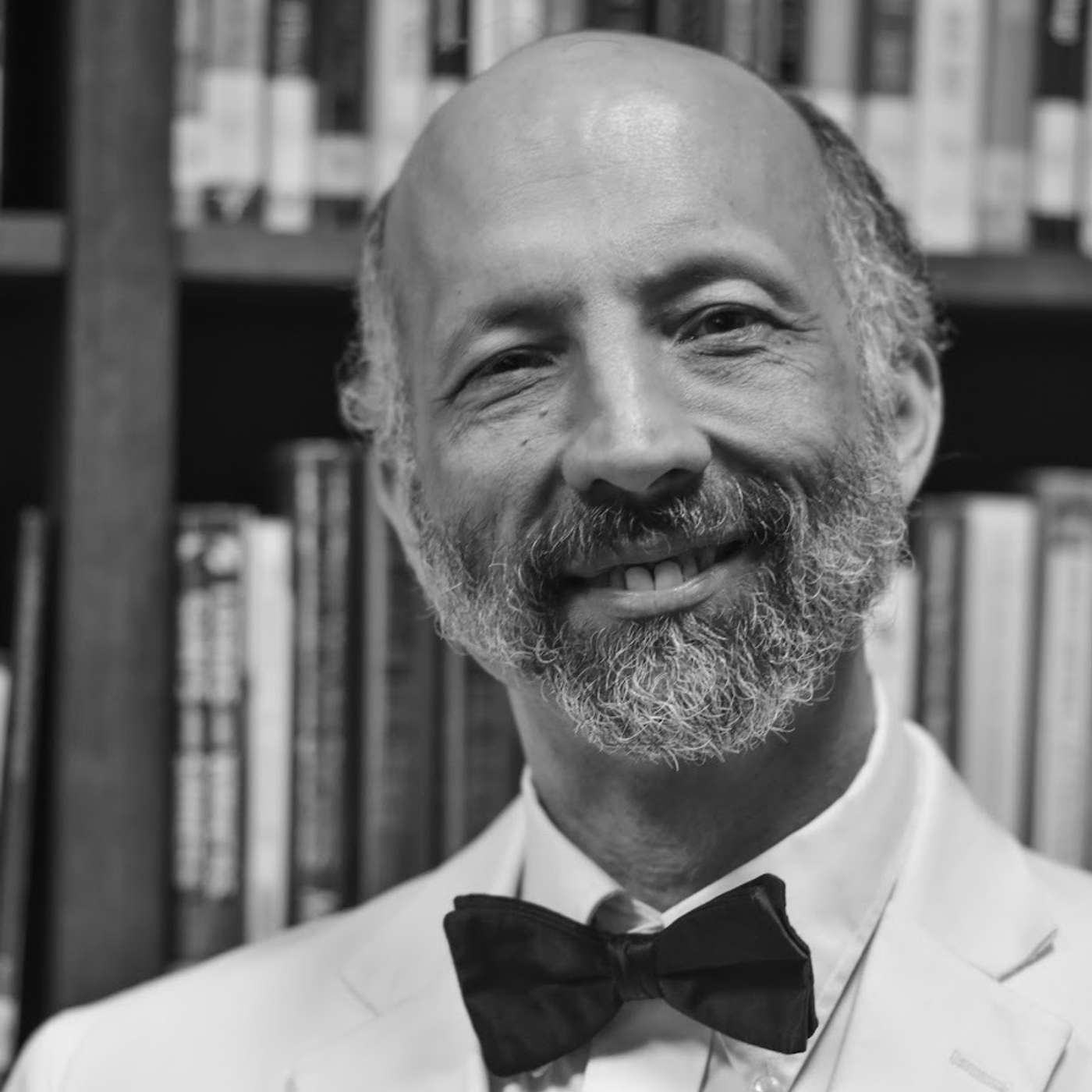
S1 Ep 2Dr. Louis Markos: The Importance of The Abolition of Man
While wrestling with the great books and great ideas, this discussion enters the realm of educating with virtues. Podcast guest, Dr. Louis Markos discusses the true, the good, and beautiful, in contrast to values and man-made culture. This podcast explores the relevance of the message in The Abolition of Man by C.S. Lewis for today’s parents and teachers. Essay by Dr. Markos about Charlotte Mason:Raising a Child According to Wordsworth and Charlotte Mason by Dr. Louis MarkosBooks Discussed in This Episode Include:Abolition of Man by C.S. LewisThe Liberal Arts Tradition: A Philosophy of Classical Christian Education by Ravi Jain and Kevin Clark“The Green Book” - Actual book: The Control of Language by Alec and Martin Restoring Beauty: The Good, The Truth. and The Beautiful in the Writings of C.S. Lewis by Louis MarkosPlanet Narnia: The Seven Heavens in the Imagination of C. S. Lewis by: Michael WardAfter Humanity: A Guide to C.S. Lewis’s The Abolition of Man by: Michael WardA Christian View of Philosophy and Culture by: Frances SchaefferMere Christianity by: C.S. LewisTao Te Ching by: Lao-TzuThe Myth Made Fact: Reading Greek and Roman Mythology through Christian Eyes by: Louis MarkosThe Golden Bowl by: Henry JamesAn Experiment in Criticism by: C.S. LewisFor The Children’s Sake by: Susan Schaefer Macaulay Consider This, Charlotte Mason and the Classical Tradition by: Karen Glass Louis Markos is a Professor of English and Scholar in Residence at Houston Baptist University, where he teaches courses on British Romantic and Victorian Poetry, the Greek and Roman Classics, and C. S. Lewis and J. R. R. Tolkien. He speaks widely for classical Christian schools and conferences and has authored 22 books, including From Achilles to Christ: Why Christians Should Read the Pagan Classics, On the Shoulders of Hobbits: The Road to Virtue with Tolkien and Lewis, The Myth Made Fact: Reading Greek and Roman Mythology through Christian Eyes, and From Plato to Christ: How Platonic Thought Shaped the Christian Faith. Credits:Sound Engineer: Andrew HelselLogo Art: Anastasiya CFMusic: Used with permission. cellists: Sara Sant' Ambrogio and Lexine Feng; pianist: Alyona WaldoCopyright © 2022 Beautiful Teaching. All Rights Reserved ★ Support this podcast ★
S1 Ep 1Introduction: Adrienne and Trae Discuss The Great Conversation
Meet Trae and Adrienne and hear them discuss the goals for the podcast. The focus on the Great Conversation encompasses the art of teaching and learning. They give an overview of the art of asking questions, engaging in the Great Conversation, and the importance of well-ordered teaching and learning. Books Discussed in This Episode Include:Norms and Nobility: A Treatise on Education, by David HicksThe Great Books of The Western WorldJohn's Senior's 1,000 Good Books ListAesop's FablesBeatrix Potter storiesPlutarch's LivesThe Little Prince, by Antoine de Saint-Exupéry, translated by Katherine WoodsThe Death of Christian Culture, by John Senior ( has 1,000 Good Books List)The Restoration of Christian Culture, by John SeniorA Philosophy of Education (Volume 6), by Charlotte MasonHome Education (Volume 1), by Charlotte MasonOurselves (Volume 4), by Charlotte MasonCredits: Sound Engineer: Andrew HelselLogo Art: Anastasiya CF ★ Support this podcast ★