Cillers Developer Experience
84 episodes — Page 1 of 2
Ep 84Cillers Developer Experience - Shai Ben Shalom
Meet Shai Ben Shalom, Senior Software Engineer at Torque (ex-Microsoft)Theme: AI-Assisted Enterprise Coding (and hackathons...) Highlights from the conversation:Your job just changed completely: Developers are becoming "mini-architects" instead of code writers. AI writes the code now, but you need to focus on security, scalability, and system design to make it production-ready.Put everything in Git for smarter AI: Keep all docs and code in one place so AI agents can understand your full project. Shai uses specialized agents for code reviews and testing that know the entire codebase context.Platform engineering makes you unstoppable: Learning the full stack from Kubernetes to databases eliminates dependencies. You can deploy and fix anything without waiting for other teams to help you.The gap isn't technical anymore, it's imagination: APIs and tools are ready - the question is how creative you can get with what problems to solve. From natural language database queries to AI troubleshooting your infrastructure.Enjoy!
Ep 83Cillers Developer Experience - Moshik Shir
Meet Moshik Shir - Principal Program Manager for Startups and Software Development at Microsoft, working across EMEA with 25+ years in tech, covering everything from VoIP pioneers to Azure resilience engineering, in a conversation about AI-Assisted Enterprise Coding.Highlights from the conversation:Context is everything - developers who are good at giving AI detailed, specific information become huge fans of AI coding. Those who give vague prompts end up thinking AI sucks. Context management is a skill you can learn and it makes all the difference.AI agents talking to other AI agents - we're moving from humans using AI to AI agents working together. One agent books your flight while another handles your hotel. This will completely change how companies handle support and knowledge management.Microsoft's winning combo - GitHub Copilot for coding + Microsoft Research (like Perplexity) for starting new projects + Teams Copilot for meeting notes. Using the research tool with Copilot together is especially powerful when kicking off new work.Learn two things, not just one - being super specialized in one area is risky now. Build skills in two domains (like tech + business, or frontend + AI) so you can adapt when AI changes your job.Copilot is everywhere at Microsoft - it works in Excel, Teams, Azure, VS Code - basically everything. People use it for finding old files, prepping for customer meetings, and getting meeting summaries without needing an assistant.Enjoy!
Ep 82Cillers Developer Experience - Kieran Llarena
Meet Kieran Llarena - a hacker, startup/community founder, Capital One intern, and co-founder @ Filipino Americans!In this episode, we talked about AI-assisted enterprise coding. Context management is one of the most critical keys to success when working with AI (LLMs) - and in this episode, Kieran shared his experiences and best practices.We dove into his favorite tools and why Kieran loves them. Here are some of the tech we talked about:https://www.warp.dev/https://www.trynia.ai/https://zed.dev/https://www.diabrowser.com/We also discussed why hackathons are unparalleled when it comes to exploring new game-changing technologies!Enjoy!

Ep 81Cillers Developer Experience - Balaj Saleem
Meet Balaj Saleem - Software Engineer at Amazon working on AI adoption at IMDb, with experience from both startups and big tech, in a conversation about AI-Assisted Enterprise Coding.Highlights from the conversation:The 80/20 rule for AI coding - spend 80% of time planning and providing context to the LLM, only 20% implementing. The cost of fixing bad code later far outweighs upfront planning.Repository-level markdown files are game-changers - create template files with business context, system assumptions, and coding guidelines that LLMs can reference for every prompt in that codebase.Question-answer sessions before coding - have 15-20 critical questions with the AI to understand the problem fully before writing any code. Often you're not 100% clear on what you want to build.LLMs excel at writing tests - they're incredibly good at test generation for existing code, making this a low-risk, high-value starting point for AI adoption.Enjoy!
Ep 80Cillers Developer Experience - Rian Corcino
Meet Rian Corcino - 7-time hackathon winner and AI Systems Support Specialist at Ayzenberg in a conversation about AI-Assisted Enterprise Coding.Rian shares his experience and insights - some highlights from the conversation:🏆 90% of his professional development came from hackathons - not from school, but from 20 hackathons in one year traveling across the US🎯 His "responsible vibe coding" approach - generates lots of code with Cursor but reads everything and asks for comments to understand how it works🛠️ His AI workflow stack - Claude for architecture planning, Cursor for coding, Warp for command line tasks, and ChatGPT for... therapy sessions⚡ Why AI + hackathons = perfect match - you can now actually build and ship real B2B SaaS products overnight instead of just prototypes📈 His winning strategy - starts with ideation and customer focus, not technology. Adapts presentations based on whether judges are technical or business-focusedEnjoy!
Ep 79Cillers Developer Experience - JD Fiscus
Meet JD Fiscus - Director of Research & Development, creator of the n8n MCP community node with 1 million downloads and host of Nerding I/O Youtube, in a conversation about AI-Assisted Enterprise Coding.JD shares his experience and insights - some highlights from the conversation:🛠️ Why he always returns to Cursor - loves their auto model feature that picks the right model for each task, keeping costs down while maintaining quality🔒 His golden rule: human in the loop always - never ships code where MCP writes directly to database or GitHub without his final approval⚡ Context engineering is everything - limits tools to 40 max, clears context frequently, and tasks out specific problems instead of zero-shot prompting🌐 MCP servers are undervalued - most people just wrap APIs, but resources, prompts, and bidirectional sampling are the real game-changers📊 Speed metrics are misleading - can't measure velocity the same way because you're working completely differently - focus on creativity and ability to pivot insteadEnjoy!
Ep 78Cillers Developer Experience - Ventsislav Petrov
Meet Ventsislav Petrov, Frontend Developer at Knowify.Topic: AI-Assisted Enterprise CodingVentsislav shares his experience and insights - some highlights from the conversation:🤯 He writes 100% AI code now - only does analysis, architecture and orchestration while AI handles all the typing⚡ Got 4000x performance improvement in 12 iterations - turned an 8-hour data analysis into 4 minutes with the same dataset💸 Burns 50 million tokens in a single day - doesn't care about token limits because the ROI on complex problems is massive📚 Spends more time reading documentation than code - because AI writes so much code so fast that humans can't keep up reviewing it all🎭 Hid his AI usage in the beginning - just like "many developers" who weren't admitting they were using AI tools at workEnjoy!
Ep 77Cillers Developer Experience - Viktor Farcic
Meet Viktor Farcic, Developer Advocate, Upbound.Topic: AI-Assisted Enterprise Coding. Viktor shares his experiences - that I first found surprising... but when I thought about it... absolutely obvious:💸 He spends $1000/month on AI tools but saves $10,000 - gets the equivalent of 3 extra developers working for him🎯 Why he ditched "cheap" AI subscriptions - they limit context to save tokens, giving him worse code quality🚀 His company has zero spending limits - and it actually costs them less than hiring expense approvers⚡ How AI transformed his daily work - coding became a "chore" so he can focus on design and architecture🔥 Why he's more excited about coding than ever: "I cannot explain how much more fun it is now"
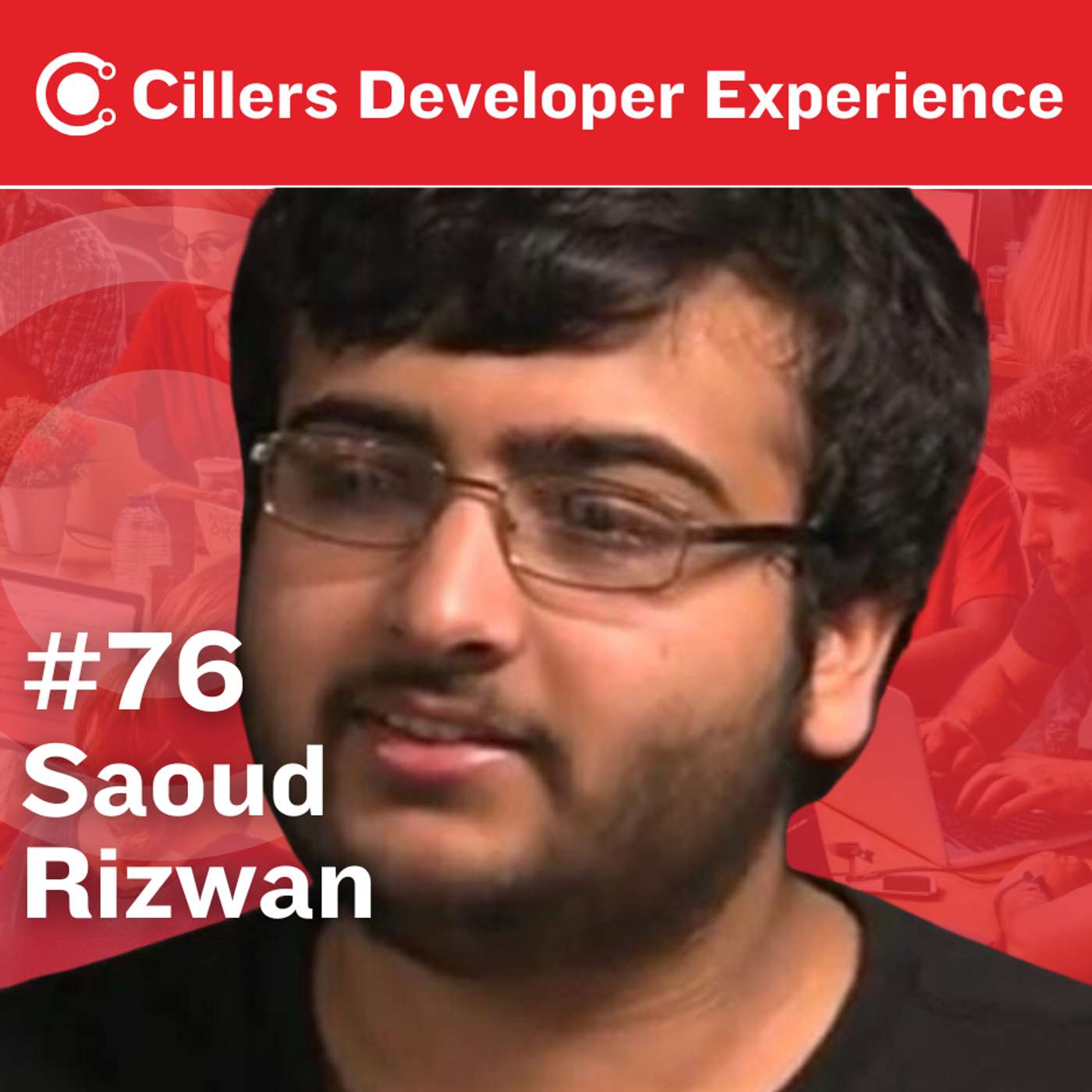
Ep 76Cillers Developer Experience - Saoud Rizwan
Meet Saoud Rizwan, Founder/CEO at ClineIn this episode we talked about AI Agentic Coding and Enterprise Development, here are some of the talking points:From hackathon reject to world-leading AI coding startup - Cline started as "Cloud Dev" for an Anthropic hackathon just 10 days after Claude 3.5 Sonnet launched, Saoud actually lost but posted it on Reddit, open-sourced it, and things exploded from there.Transparency and control over your code - Unlike other AI coding tools, Cline lets you bring your own API key, see exactly what's happening under the hood, and control where your data goes without any subscription lock-in.Smart exploration beats brute-force context stuffing - Instead of cramming entire codebases into limited context windows, Cline intelligently explores projects like a new developer would, finding only the relevant pieces it needs.Workflow orchestration, not tool wars - Cline complements rather than competes with tools like Cursor, with most developers using them together for different parts of their development process.From implementation to strategy - The biggest shift is that development now splits between understanding requirements (still critical) versus writing code (now automated), letting engineers focus on architecture and vision.Enjoy!
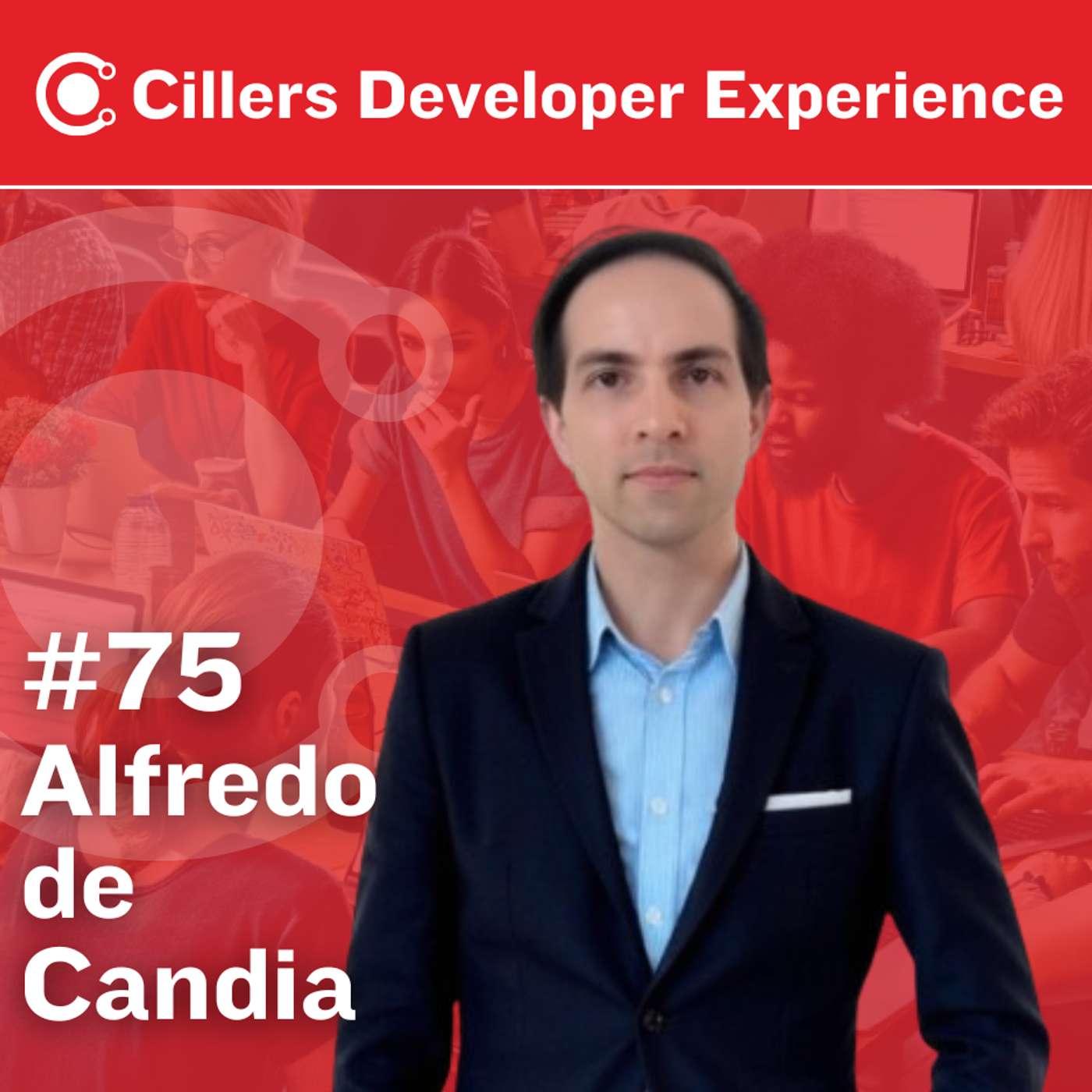
Ep 75Cillers Developer Experience - Alfredo de Candia
Meet Alfredo de Candia, CTO, Hoken Tech (ex-Google)In this episode we talked about AI Assisted Enterprise Coding, here are some of the talking points: Essential developer knowledge required - While AI coding tools are powerful, you still need basic programming skills to choose the right frameworks, implement security measures, and understand backend requirements. The tools support you but can't create everything from scratch.Key tools and testing approach - Alfredo uses Augment Code (VS Code plugin with full codebase context) and Cline for different purposes, spending ~100 hours testing each new tool on cloned codebases before allowing production use. His evaluation criteria: number of prompts needed and error frequency.Enterprise security considerations - For enterprise environments, proper user management, data protection, authentication systems, and multiple security layers are critical. AI tools can help implement best practices, but developers must understand these requirements to avoid creating vulnerable platforms.Practical workflow integration - AI tools excel at speeding up repetitive coding tasks, creating prototypes quickly for testing ideas, and implementing research papers into working code. The approach is using AI for rapid prototyping, then refining with experienced developers for production-ready enterprise solutions.
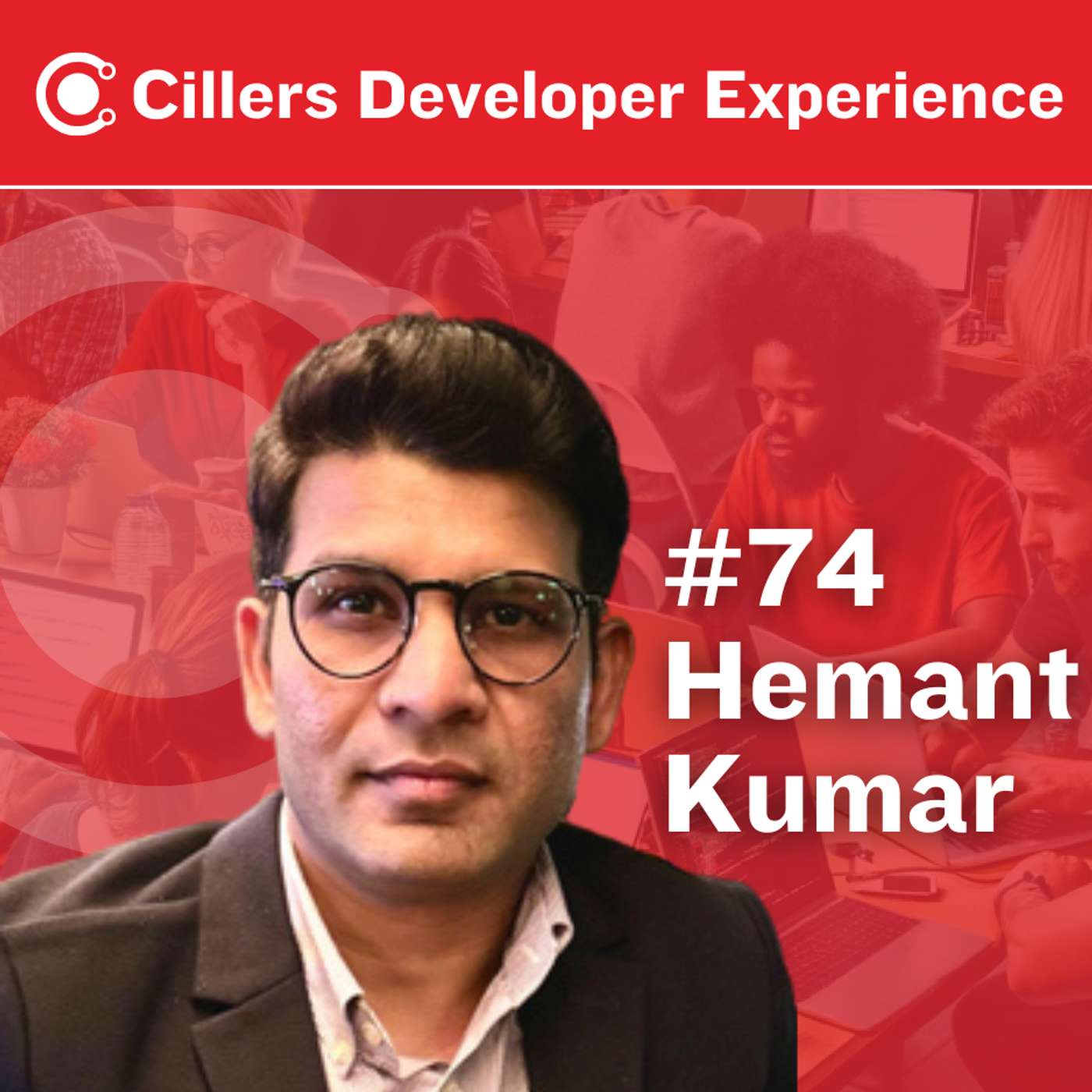
Ep 74Cillers Developer Experience: Hemant Kumar
Meet Hemant Kumar, Senior Director of Software Development, Oracle.In this episode we discussed:Understanding what customers actually need - Before building anything, you need to know what real problems you're solving for people.AI is changing how we write code fast - Big companies like Microsoft and Google already use AI tools to write 25% of their code. AI isn't just writing code anymore - it's also checking quality and creating tests.Using AI at big companies is different - Large organizations have strict rules about security and compliance that make adopting AI tools more complex than at smaller companies. The decisions they make also have to work for many years.Oracle builds AI into everything - Instead of just adding AI features on top, Oracle weaves AI throughout their entire software.As AI gets better at basic coding, developers need to focus more on big-picture design and how different systems work together.Enjoy!
Ep 73Cillers Developer Experience: Leon Lobo
Meet our guest Leon Lobo, Software Engineering Director, Oracle. Startups offering AI-Assisted Coding tools are the fastest-growing companies ever….We are now taking a deep dive in the podcast to explore how this technology can be used for enterprise environments with large codebases and high requirements for security, compliance, and confidentiality. In this episode we talked about:Enterprise AI testing requires new approaches - Moving from deterministic to probabilistic testing using vector similarity while preventing functional regressions that could crash critical business systems.RAG enables secure AI adoption without training models - Keep customer data secure and stay current with latest AI capabilities by feeding documentation through RAG pipelines instead of model training.Strong architecture becomes critical with AI coding tools - AI boosts productivity for documentation and routine tasks, but enterprise applications still need experienced architects to prevent maintenance nightmares.Oracle uses Cline and other modern AI coding tools - Practical implementation of repository-based development tools combined with guardrail services to catch security vulnerabilities and competitor code.Hackathons evolve toward product-focused collaboration - Product managers can now build AI agents directly while engineers focus more on business problems than technical implementation details.Enjoy!
Ep 72Cillers Hackathon Podcast - Monika Lionaite Part 2
Meet Monika Lionaite - CEO & Chief Innovator and Founder of Openhack 2020 Austrailia. In this episode, Monika shares insights from her research on hackathon participation benefits. Her findings reveal several inspiring takeaways. What participants experience they develop most in is collaboration, problem-solving, and learning new technologies.Resources provided by Monika: Here is the link to my thesis: Hackathons as a tool for learning in the framework of UNESCO learning citiesHere are the associated articles that cited my thesis (on Google Scholar): lionaite hackathons - Google ScholarThe Journal of Innovation & Knowledge where my thesis was cited: Academic performance indicators for the hackathon learning approach – The case of the blockchain hackathon - ScienceDirectHere is the link to the Youtube Recording where I was speaking on a panel at the World Summit AI 2025 about Intelligent Learning: How AI is Redefining Education: https://youtu.be/5iIASo4UhLo?si=qVetJvQk54gRQumsMy key take away from this panel: Post | Feed | LinkedInA link to my Impact Talk with Startup Grind - where I elaborate more about collaboration in general: https://youtu.be/GiX1G2mw_70?si=GsdoXa7IAwzzDH6y
Ep 71Cillers Hackathon Podcast - Mamta Nagaraja
Meet Dr Mamta Nagaraja.Mamta Nagaraja is a STEM leader who previously served as NASA's Associate Chief Scientist for Exploration and Applied Research. She managed science programs for the International Space Station, Moon missions, and commercial space projects, with special focus on space biomedicine. Mamta also led NASA's science communication efforts, helping share space discoveries with the public. In this episode we talked about:Mamta Nagaraja's 24-year NASA career as a scientist bridging human spaceflight and robotic explorationHer role supporting the NASA Space Apps Challenge as judge, spokesperson and advocateThe global impact of the Space Apps hackathon, which attracted 93,000 participants working on over 10,000 projectsHow space exploration inspires innovation and problem-solving across international boundariesI also had the chance to ask all my inner 10-year old question like: Do you think there is other life forms out there? How big is the universe? Is there multi universes? Enjoy!!
Ep 70Cillers Hackathon Podcast - Maximilian Vovk and Simon Van Schuylenbergh
Meet Maximilian Vovk and Simon Van Schuylenbergh. Together with Ian Chow and Dakota Cecil they are the WMPGang, the team that won the Best Use of Science award at the NASA Space Apps Challenge 2024!In this episode we talked about their cutting-edge research in astronomy, their innovative approach to visualizing Earth, comets and potentially hazardous asteroids, the heart-stopping moment when their code broke just one hour before the final presentation, and the shocking revelation that they'd won among 10,000 global submissions - known as the "NO WAY"-moment... In the middle of our podcast, an alarm goes off - there's a gas leak in the building - and my interview guests have to run to safety while the interview continues. We've probably never had this much drama in the podcast before!

Ep 69Cillers Hackathon Podcast - Slayde Sequeira
Meet Slayde Sequeira who has participated in 30+ hackathons, came 1st place in 3 and in the final round more than 10 times. He is a Computer engineer in his final year of engineering and he is 21 years old. His recent win was S.P.I.T hacks 2025 where over 700 teams competed - that is 2800 individuals - and his team secured the 1st place.In this podcast we talked about his journey from starting tech just three years ago, why in-person hackathons create better networking opportunities than online events, the competitive hackathon scene in tech hubs like Mumbai and Bangalore, and his proven strategies for winning hackathons including reading problem statements carefully and building features beyond the requirements.Slayde also shares valuable life skills gained from hackathons: hands-on coding experience, teamwork, and performing under pressure.Resources from Slayde:Here is where I find hackathons that are in mumbaihttps://devfolio.co/discoverAnd these are some of the other placeshttps://unstop.com/https://hack2skill.com/

Ep 68Cillers Hackathon Podcast - Team 42 Heroes
Meet Team 42 Heroes - Winner Of NASA SPACE APPS 2024.In this episode I interview three of the members of the winning team: The Leader of the Project, Gabriel Chayb, Project Management and UI/UX: Ana Miziara and AI DEV: Gustavo Teixeira.We talked about how this team from Brazil became the first in South America to win NASA's top technology award. They explained their clever solution for detecting moonquakes and marsquakes, which reached 97% accuracy by turning seismic data into images. The team shared the ups and downs of their intense 48-hour hackathon experience, including nearly missing the deadline when their system crashed with just hours to go. We discussed how their victory has inspired young people in their hometown and their upcoming trip to NASA where they'll meet with space scientists. Their story shows that with good planning, teamwork, and bold thinking, even the most complex problems can be solved.
Ep 67Cillers Hackathon Podcast - Monika Lionaite
Meet Monika Lionaite, CEO Chief Innovator & Founder @Openhack 2020 AustraliaIn this episode we talked about her fascinating journey from fire dancing performer to global hackathon expert. Monika shares how her diverse background in photography, gaming, and international leadership shaped her unique approach to designing impactful hackathons. We explore how she launched her company in Australia just one month before the pandemic and turned it into a global digital transformation powerhouse. Monika reveals the key differences between sustainability-focused and prize-money hackathons, and explains her innovative method of involving actual users and stakeholders throughout the development process. Learn how proper hackathon design can help organizations recruit talent, solve complex problems, and create solutions with real-world impact.
Ep 66Cillers Hackathon Podcast - Bhavya Soni
Meet Bhavya Soni, AI Code Evaluator at Outlier, 6X Hackathon Participant, 2X Hackathon Winner etcIn this episode we talked about how Bhavya discovered programming after being publicly insulted by his math teacher, which became a pivotal moment in choosing his tech path. We explored his hackathon experiences, including his first police hackathon in Jaipur with five-star accommodations, and the challenges of team dynamics where he often ended up doing most of the work despite initial enthusiasm from teammates. Bhavya emphasized how important it is to find like-minded collaborators with matching dedication levels, and how participating in hackathons has helped him test his limits and develop leadership skills at just 19 years old.

Ep 65Cillers Hackathon Podcast: Vladimir Pavlovskii
Meet Vladimir Pavlovskii, Senior Software Engineer at Twilio.In this episode we talked about:Vladimir's journey from growing up in Moscow to moving to Tallinn and working at TwilioHow Twilio's annual internal hackathons are structured and what Vladimir has learned from participating in two of themThe value of hackathons for rapidly prototyping ideas that can turn into real product featuresCommon blockers that slow down software development velocity and how to address themVladimir's perspective on the rise of AI-assisted development tools and how he prefers to leverage AI in his work
Ep 64Cillers Hackathon Podcast - Diwakar Thakore
Meet Diwakar Thakore, Entrepreneur, Startup Advisor, [email protected] etc...In this episode, we discuss the amazing learning experience that hackathons provide: how quickly you can test your idea, the benefits of fast prototyping, and execution speed.We also touch on a very special kind of hackathon: "Legal Hackathons."Additionally, we delve into Diwakar's experience as a mentor at lablab.ai and why he finds it so rewarding. He offers his best tips for business-driven developers eager to launch an AI startup, including how to achieve product-market fit, attract attention, decide when it's time for funding, and manage the dual focus on product development and customer acquisition. How do you bridge that common chasm?
Ep 63Cillers Hackathon Podcast - Carl Norling Markai
Meet Carl Norling Makai, Impact Initiative Developer, AI SwedenIn this episode, we talked about:Historical Insights into Hacking: Carl talked about the roots of the term "hack" from the book "Hackers: Heroes of the Computer Revolution" discussing its origins at MIT in the 1950s, where it symbolized an innovative solution or improvement and carried a prestigious title among tech enthusiastsThe Essence of Hackathons: We delved into what makes hackathons uniquely impactful, emphasizing their ability to bring together diverse perspectives and foster an environment where participants can explore the possibilities of technologyThe 2019 Last Mile Hackathon: Carl shared his experiences helping organize this significant event. It was a two-day international hackathon that posed clear, real-world challenges sponsored by various organizations like Postnord, IKEA, MQ, and the City of Helsingborg. These sponsors provided not only funding but also crucial resources such as datasets and insights into real-world problems, enriching the hackathon experience for all participants.
Ep 62Cillers Hackathon Podcast - Pawel Czech
Meet Pawel Czech, Co-Founder, New Native & lablab.aiThis episode is a must-listen for all business-driven AI builders! I had the great honor to interview Pawel Czech, the co-founder of New Native and lablab.ai. We discussed the origins of his ventures, the rapid growth they’ve achieved, and his inspiring vision. We delved into the dynamics and connections between AI hackathons and accelerator programs. Pawel is really driven by a vision to empower as many individuals as possible to use AI to create innovative companies, and it’s truly inspiring to hear him speak about these efforts.

Ep 61Cillers Hackathon Podcast - Joanna Slupczewska
Meet Joanna Slupczewska, Partner & Marketing Manager at New Native (that owns the famous lablab.ai.)In this episode, we talked about New Native and their initiatives like lablab.ai hackathons and the accelerator program, Lablab Next. We focused on the important topics of marketing and community building, specifically how to attract thousands of participants from around the world to these hackathons. We dove into various strategies and tools used:Newsletter: A vital tool for reaching out to potential participants.Content Creation: We discussed the large team involved in writing and producing tutorials and learning materials. The Discord Channel: The main point of contact for participants, with dedicated channels for each hackathon.Matchmaking/Team Formation: A website that helps participants form teams effectively.Mentoring: The role of mentors in guiding participants through the hackathon process.Event Formats: The mix of online, hybrid, and onsite events to engage a global community.Social Media Marketing: An analysis of which platforms work best for promoting hackathons, including LinkedIn, Instagram, YouTube, Twitch, and others. We highlighted Twitch for its effectiveness in live streaming events.Certification: The importance of providing certificates to participants as a form of recognition and achievement.Feedback: The value of gathering feedback from participants and providing API feedback to tech partners.
Ep 60Cillers Hackathon Podcast - Amna Hassan
Meet Amna Hassan—a skilled developer specializing in games, web, and AI. She also teaches and mentors at Stanford's Code in Place program. Amna has won numerous hackathons, including Harvard's 2024 CS50 Puzzle Day, and has competed in over 20 international hackathons. Additionally, she serves as a project administrator for SereniFy, an open-source app featured in Girlscript's Summer of Code Extended.In this episode, we discuss her journey in the world of hackathons and strategies for winning them. We delve into specific events such as the Google Cloud AI Hackathon, Open Source Hackathon, and Harvard's 2024 CS50 Puzzle Day. We also explore how to plan and execute each phase of a hackathon, from the idea phase and prototyping to presentations, and what to consider at each stage.Furthermore, we discuss various approaches to structuring the mentorship layer in a hackathon, and why one method stands out as the absolute best.Resources: iCodeGuru: https://icode.guru/Hack2Skill: https://vision.hack2skill.com/Paul Graham AI Bot: https://lablab.ai/event/strawberry-reasoning-with-o1/guardians-of-the-galaxy/paul-graham-founder-mode-ai-app?review=true
Ep 59Cillers Hackathon Podcast - Payal Kumari
Meet Payal Kumari, Full-stack Developer and Women Techmakers Ambassador.Payal is a passionate full-stack developer and a distinguished Women Techmakers Ambassador, committed to empowering women in the tech industry. Recognized as a LinkedIn Top Voice and a Google WTM Ambassador, she actively guides the next generation of developers through impactful events and engaging content creation. Recently, Payal was a finalist at the Google Gen AI Exchange Hackathon '24, showcasing her expertise and innovation in AI.In this episode, Payal discusses her experience reaching the finals in the Google Gen AI Exchange Hackathon '24. We explore the learning journey that comes with participating in hackathons—how each event is unique and teaches different skills. She shares insights on problem-solving, planning projects within tight deadlines, reaching out for help, presenting demos effectively, and keeping solutions simple. Payal also talks about the value of the connections made during these events, the importance of learning and growing, and how to handle rejections and feedback constructively.
Ep 58Cillers Hackathon Podast - Abdul Qadeer
Meet Abdul Qadeer, Data Scientist at Xclusive Trading.Abdul Qadeer started his tech journey in Karachi by fixing a neighbor’s computer, which sparked his interest and led to a gold medal in his academic career. He is driven by a strong desire to make a positive impact. As a Machine Learning Engineer Abdul takes on challenges like a recent customer segmentation project, finding joy in solving real-world problems. He has also solved over 200 LeetCode problems!In this episode, Abdul talks about winning his first hackathon at lablab.ai, where he competed against 3,000 participants and 300 teams. He shares the valuable lessons learned from participating in hackathons, such as teamwork, problem-solving, and rapid prototyping, and he speaks about the lasting friendships he has made.
Ep 57Cillers Hackathon Podcast - Mustafa Sherif
Meet Mustafa Sherif – Co-Author of "DREAM, HACK, BUILD"In this episode, we talked about:Hack for Earth's mission to address the United Nations Sustainable Development Goals through global hackathons, and how these events are structured to foster citizen-driven solutions.The comprehensive mentorship program at Hack for Earth, which enhances the hackathon experience by providing structured guidance through workshops and effective communication.The innovative approaches to team formation and communication across different time zones, ensuring all participants can effectively collaborate and contribute.Mustafa's insights on managing global hackathons, emphasizing the importance of clear communication and creating a collaborative environment that accommodates diverse participant needs.
Ep 56Cillers Hackathon Podcast - Abdeali Siyawala
Meet Abdeali Siyawala, Technical Product Manager at Siya Tech Ventures.In this episode, we talked about:Abdeali's role in helping non-tech founders build and scale startups at Siya Tech Ventures., focusing on MVP development and product strategy.The dual business models at Siya Tech Ventures: time and material, and equity-based studio partnerships, tailored to assist startups from ideation through scaling.Hackathons as a platform for innovation and recruitment, coupled with his mentorship at lablab.ai, emphasizing AI's transformative role in product development.The critical importance of customer obsession and rapid feedback loops in achieving product-market fit and driving successful innovations.
Ep 55Cillers Hackathon Podcast - Theodoros Ampas
Meet Theodoros Ampas, technical mentor at lablab.ai. Ampas is a tech mentor at Lablab.ai, an organization known for global AI online hackathons and a startup accelerator program. Hackathons have played a crucial role in his professional development, and in this episode he shares insights that can inspire others in the field. We discussed Ampas role in facilitating AI-focused hackathons and the accelerator program, lablab Next. He emphasized the importance of hackathons in professional development and shared insights on team formation and technical mentoring. lablab.ai hosts frequent hackathons, encouraging innovation in AI technologies with thematic challenges. Ampas highlighted the accelerator's focus on AI startups, offering mentorship and support to transform ideas into viable businesses. He also shared his personal journey and contributions to the community, including a Discord app for team collaboration.Resources:https://www.content-hive.net/https://lablab.ai/https://lablab.ai/next

Ep 54Cillers Hackathon Podcast - Nikita Koselev
Meet Nikita Kosolev, Lead Software Development Engineer at Mastercard.Nikita's interest in technology was sparked by a curiosity about how things work, influenced by his father's background in computer science and a love for science fiction. Despite financial challenges, he pursued a career in tech, ultimately becoming a software development engineer at Mastercard.In this episode we discussed various aspects of hackathons and their significance in fostering innovation and community engagement. Koselev shared his experiences with Mastercard's internal hackathons, emphasizing their role in inspiring creativity and potential product development. He also highlighted the importance of diversity in hackathon teams. Our conversation touched on the impact of AI in development, stressing the need for human skills and active listening to enhance development velocity. Koselev advised new developers to focus on community involvement and personal growth
Ep 53Cillers Hackathon Podcast - Jori Karvonen
Meet Jori Karvonen, Start-up mentor, lablabai, Helsinki University, Tech Nordic Advocates etcJori Karvonen mentors startups in incubator and accelerator programs across Europe, focusing on business strategy, product development, and securing funding. His passion for supporting startups stems from his own experiences as a founder and the support he received from local entrepreneurs and the Finnish government.In this episode we talked a lot about lablab.ai. The organization is active in AI hackathons and accelerator programs, providing a platform for international mentors and participants to collaborate. The organization focuses on AI-driven solutions, offering a global network of experts to support startups in scaling and accessing investors.
Ep 52Cillers Hackathon Podcast - Ewa Edun
Meet Oluwadamilola (Ewa) Edun, an aspiring data scientist and hackathon enthusiast!Ewa's interest in tech was sparked by a coding camp before high school, leading her to pursue data science and computer science. Her journey emphasizes the transformative impact of early exposure to technology. Now, she is making the most of her gap year by diving into hackathons.In this episode, we discuss her experiences and learnings from participating in multiple online hackathons. She highlights the importance of communication and collaboration in virtual settings and shares insights on using AI tools like ChatGPT and GitHub Copilot to enhance productivity. Edun emphasizes the diverse skills gained from hackathons, such as coding, teamwork, and problem-solving, and encourages others to participate for learning and networking opportunities. Her project, HackBody, aims to streamline hackathon workflows, although it is still in development.These are the links:HackBuddy: https://hack-buddy-silk.vercel.app/hacktrackerVSNE: https://vsne-career-mentor-bot.vercel.app/SustainaQuiz: https://sustaina-quiz.vercel.app/
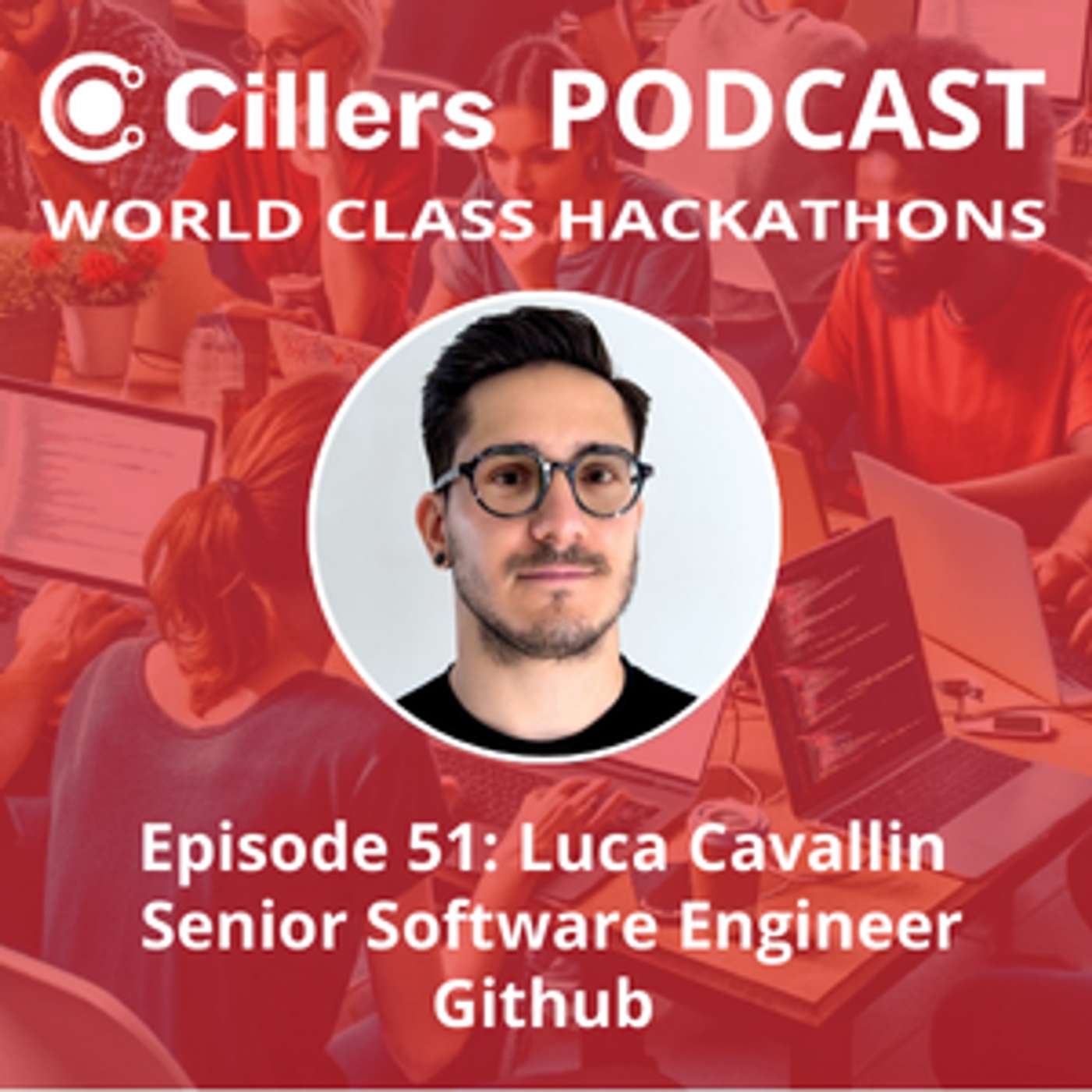
Ep 51Cillers Hackathon Podcast - Luca Cavallin
Meet Luca Cavallin, Senior Software Engineer at GitHub.In this episode, Luca shares his experiences organizing internal hackathons at GitHub, emphasizing their importance in promoting collaboration and creativity, and exploring their potential to inspire future product innovations.We also discuss strategies for increasing software development velocity, highlighting the significance of quality developer tools and effective management of technical debt. Additionally, we delve into what it's like to be a developer in the era of AI. Luca advocates for a pragmatic approach to technology adoption, advising, "Don't try to stay ahead of everything. Time will show which tools are great. Instead, try to learn the fundamentals of AI, machine learning, LLMs, etc."
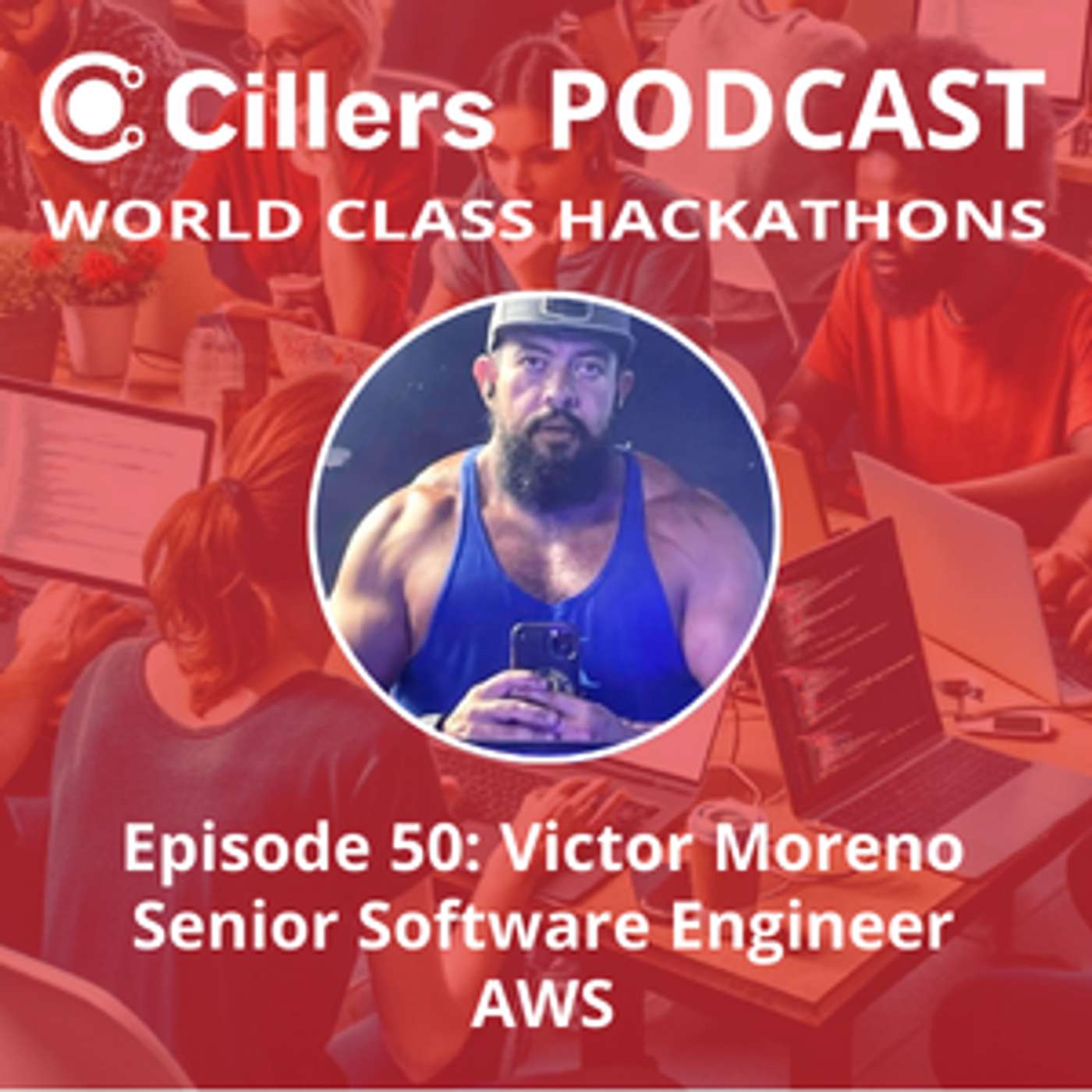
Ep 50Cillers Hackathon Podcast - Victor Moreno
Meet Victor Moreno, Senior Software Engineer at AWS.Victor Moreno has a diverse background, not just in software engineering but also in management, leadership, education, sales, recruiting, and finance. He's really passionate about helping other engineers maximize their professional impact and earnings. In this episode, we discussed the role of hackathons in driving innovation and addressing real-world challenges, highlighting a specific event focused on improving internet access in Cuba. We also talked about the importance of simplicity in coding, advocating for straightforward solutions over complex ones to enhance maintainability and software development velocity. We explored the pitfalls of excessive process and bureaucracy and their impact on project speed. Additionally, we delved into the transformative potential of AI in coding, encouraging its broader adoption to improve productivity.Finally, Victor offered advice to new developers on building foundational skills to effectively leverage AI and navigate the evolving tech landscape.

Ep 49Cillers Hackathon Podcast - Tiago Santos
Meet Tiago Santos, Software Engineer at ShopifyTiago is a tech enthusiast, a disguised nerd, an internet kid, and a home automation hobbyist. With 17 years of experience in web technologies, a solid foundation in computer science, and nine years of working with Ruby, he's currently exploring the complex field of digital identity. As a tech lead, he's dedicated to inspiring positive changes in the tech landscape.In this episode, we explore the exciting world of hackathons and uncover strategies for boosting software development velocity. Discover how hackathons: Spark innovation and drive positive change, encourage collaboration and creative problem-solvin and Pprovide a platform to showcase cutting-edge technologies like AI. Plus, learn practical tips for: Minimizing context switching and improving focus, streamlining development processes, cultivating a culture of confidence and growth, and developing an open AI mindset driven by curiosity and having fun with all the new technologies.Tune in for an engaging discussion on hackathons and software development velocity.
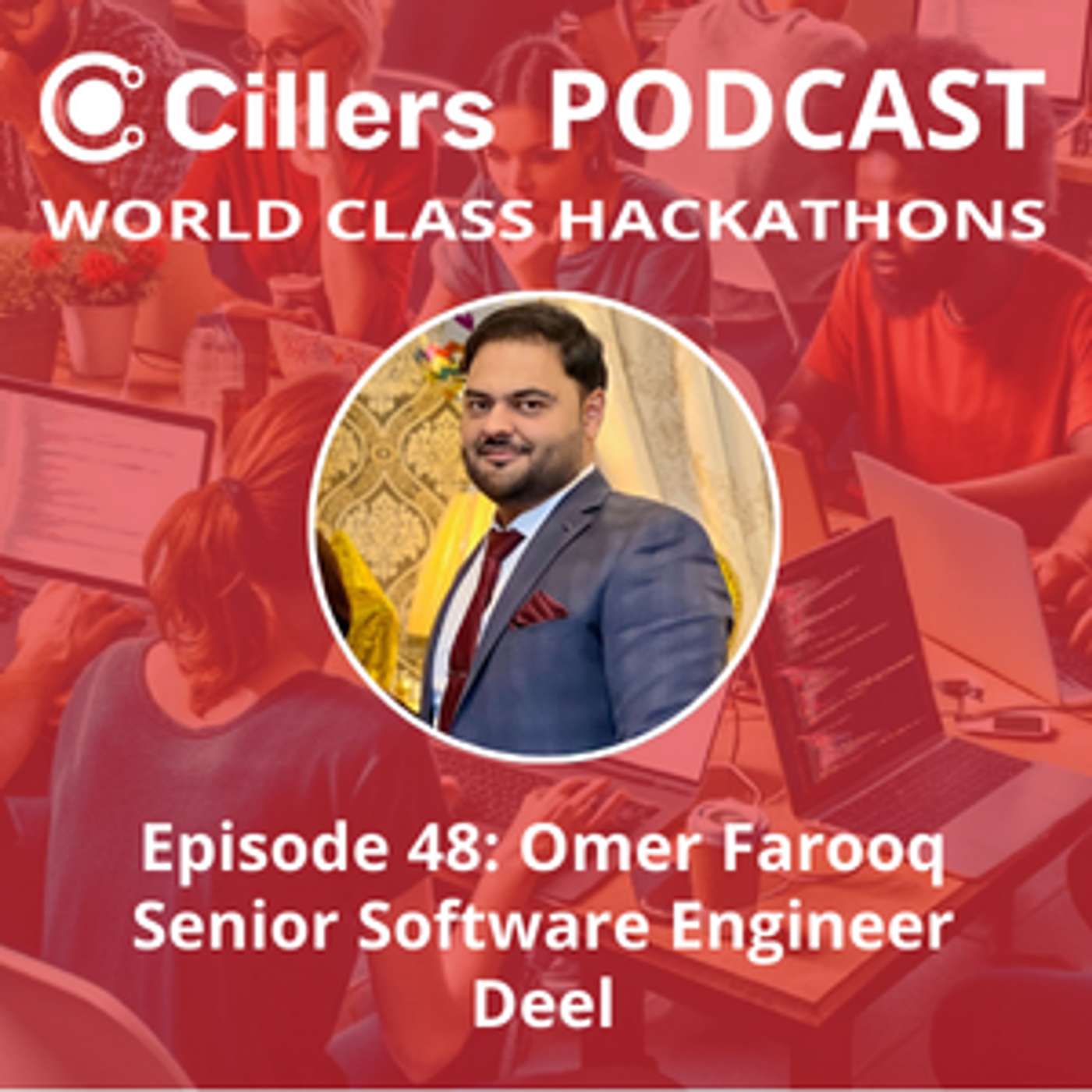
Ep 48Cillers Hackathon Podcast - Omer Farooq
Meet Omer Farooq, Senior Software Engineer at Deel.Omer Farooq is a Senior Software Engineer at Deel, specializing in web development, Android applications, and full-stack development. He has significantly influenced architectural, design, and coding practices, focusing on cost efficiency, quality, and performance. Omer's expertise extends to leading software development cycles, managing cloud transitions, and system automation, with a strong emphasis on AI, ML, and cloud technologies. His efforts are centered on the practical implementation of technological advances in software engineering.In this episode, we dive into the benefits of hackathons. Omer believes that hackathons are a powerful way to unlock potential and promote growth, saying, "In a hackathon, you explore your mind to your maximum potential." He highlights how these events bring together diverse individuals from various industries, fostering personal and technical development.We then examine how Deel strategically employs hackathons and sprints within their development process. Deel organizes hackathons when they face challenges in their product roadmap that lack established solutions. The company selects individuals globally who are best suited to creatively tackle these problems, encouraging out-of-the-box thinking.In contrast, Deel’s sprints are defined by their structure and clarity. Before any work begins, every developer must ensure they completely understand their tasks. If there’s any uncertainty, developers are expected to proactively reach out to the product owner and ask questions until everything is crystal clear. This practice of encouraging questions, I reflect, is a prime example of psychological safety in action.Reflecting on our discussion, it occurs to me that Deel might have discovered a best practice for how tech companies should balance the creative freedom of hackathons with the structured focus of sprints. This approach not only nurtures innovation but also ensures precise execution, contributing to a workplace culture that supports both exploration and detailed understanding. This balance, in my view, could serve as a model for the industry, demonstrating how to effectively blend creativity with operational efficiency.
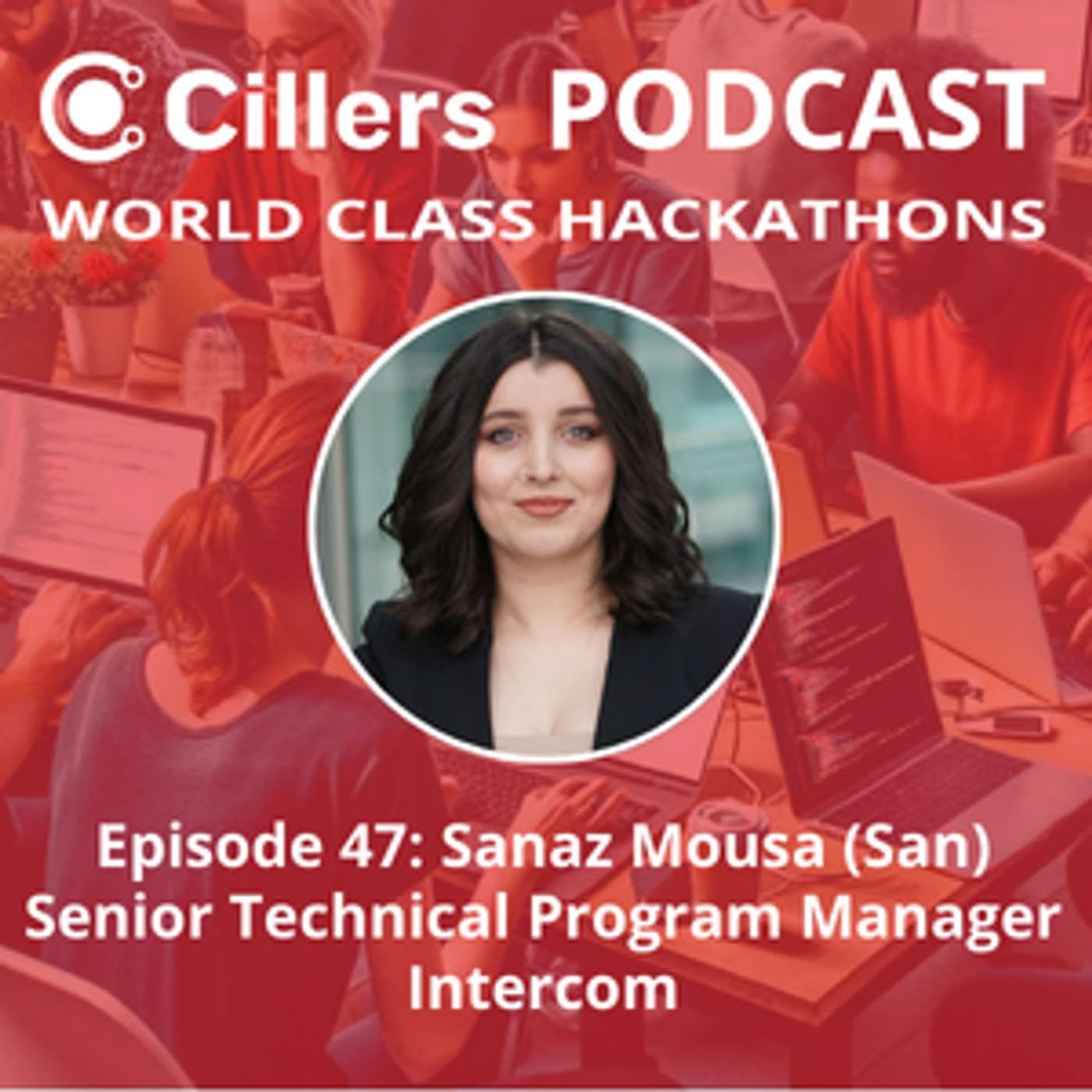
Ep 47Cillers Hackathon Podcast - Sanaz Mousa (San)
Meet Sanaz Mousa, Senior Technical Program Manager, Intercom.Sanaz Mousa, commonly known as San, is a Senior Technical Program Manager at Intercom and is pursuing an MSc in Cybersecurity Management at Munster Technological University. Her experience spans academia, humanitarian efforts, and the tech sector, providing her with a broad view of the cybersecurity landscape. Known for her strong organizational skills, San is adept at structuring and optimizing systems. Outside of work, she enjoys traveling and exploring various cultures, and is venturing into content creation to share her knowledge.This episode delves into the evolving realms of AI and cybersecurity. San gives us an introduction to these vital areas, emphasizing their importance. We also explore the concept of Humanitarian Hackathons and discuss the benefits of organizing an AI Cybersecurity Hackathon for the developer community.

Ep 46Cillers Hackathon Podcast - Chris Konarski
Meet Chris Konarski, Vice President, Client Engineering, IBM.Chris leads the Client Engineering team at IBM, renowned for forming a global team that partners closely with clients to develop cutting-edge tech solutions. He's a master at sparking new business ideas and guiding teams towards success. Off the clock, Chris loves to immerse himself in nature, watching wildlife or casting a line far out at sea.In this episode, we discussed:How IBM Builds Teams: We delved into how IBM assembles teams to support clients with complex challenges. These teams typically include designers, architects, business technology leaders, AI engineers, and platform engineers, often delivering a basic working product within 30 days.AI in Action: Chris shared insights from over 5000 AI projects, highlighting that most clients use AI to boost employee productivity, generate code, and enhance customer support. We also explored AI's growing role in manufacturing.Hackathons at IBM: Our chat revealed insights into IBM’s tailored hackathons, whether for a single client or multiple clients. Chris highlighted how these events focus on real business challenges that capture the attention of top executives. Together, IBM and clients form teams, really showing their partnership. We also covered IBM’s massive internal hackathon, which involved 170,000 employees—that’s 70% of their workforce! This event not only deepens employees' understanding of their products but also drives home the ability to sell them effectively, and generates a long list of potential improvements identified by AI.Here are some links Chris provided:TechZoneIBM Client EngineeringWatsonx – IBM AI PlatformClient and Partner Stories
Ep 45Cillers Hackathon Podcast - Kevin Dubois
Meet Kevin Dubois, Senior Principal Developer Advocate at Red Hat.Kevin is a Java Champion, keynote speaker, cloud-native developer, open source contributor, and author!In this episode, we discussed two hackathons organized by Red Hat. The first was an AI Hackathon at the University of Brussels, long before AI became a hype. It featured an interesting concept with gamification where teams trained their AI for a shooting game. After two days of building and training the model, the third day was all about combat! We also talked about how hackathons can increase the adoption of your platform. These hackathons, called Deep Dive Sessions, focus on helping customers execute better on specific and important use cases with the help of your technology.Additionally, we discussed what typically slows down development velocity. According to Kevin, the major issues include 1) configuration—setting up the local environment and getting everything to work correctly, 2) automation, and 3) finding necessary documentation, figuring out responsibilities, and creating tickets.Here are the links to some of the projects we discussed in the podcast: quarkus.io - Java framework that puts developer experience as a top concernbackstage.io - an open source developer portal building tool to centralize developer resources and automate the creation of new projectsdevelopers.redhat.com/rhdh - the Red Hat implementation of the backstage project developers.redhat.com/products/red-hat-openshift-ai - Openshift AI, the platform we used for the hackathon with the Brussels University (ULB)instructlab.ai - the tool to fine tune models using plain yaml text files allowing you to contribute knowledge and skills back to AI models such as the IBM Granite models.podman-desktop.io - UI interface for working not only with containers but also to run AI models on your local machine very easily
Ep 44Cillers Hackathon Podcast - Kirill Ianchuk
Meet Kirill Ianchuk, Technical Lead at DeelDeel, established in 2019, quickly became the fastest-growing B2B software company in the world. As an all-in-one payroll and HR platform for global teams, Deel simplifies managing a workforce, covering everything from onboarding and compliance to global payroll, HRIS, and immigration support. Today, Deel boasts 4,000 team members across over 100 countries and serves more than 35,000 clients in 120 countries.Kirill began his career at Deel as a Backend Engineer, advanced to Senior Software Engineer, and in August 2024, he became the Technical Lead.In this episode, we delve into what typically slows down software development projects and how to address these challenges. Kirill shares his insights through engaging storytelling. We discuss the importance of finding meaning in work and maintaining motivation. We also explore several key strategies: incremental and iterative development for building software in manageable stages, techniques for limiting work in process to enhance productivity, and applying the theory of constraints to focus on the balance between efficiency and effectiveness.Additionally, we examine what skills are crucial for software engineers in the era of AI. According to Kirill, mastering prompt engineering is key.Below are links to resources that Kirill mentioned during the show:Pomodoro technique for time managementWardley mapping (related to efficiency vs effectiveness)
Ep 43Cillers Hackathon Podcast - David Tippett
Meet David Tippett, Search Engineer at GitHubDavid is building the future of search at GitHub. Before joining GitHub, he worked at AWS as the Senior Developer Advocate for OpenSearch, where he taught developers how to build search experiences on the open-source datastore. With a background spanning network automation, software engineering, DevOps, and data engineering, he loves helping new engineers find their passion.In this episode, we discussed three very interesting topics! First, the Open Source Hackathon Program that David helped put together with other enthusiasts at AWS. Second, the "Ship to Learn" principle—a philosophy and a system that increases development velocity at GitHub. And finally, how to write better code faster with AI, where David recommends everyone check out Open Web UI.
Ep 42Cillers Hackathon Podcast - Daniel Ung
Meet Daniel Ung, Full-Stack Intern at SAPDaniel is a full-stack intern at SAP and a member of the Hackathon Team at SJSU Computer Science Club.In this episode, we explore how a hackathon profoundly impacted Daniel's life. The energy and camaraderie at these events inspired him to attend countless hackathons. We discuss the vibrant hackathon culture in the Bay Area, focusing on Berkeley's annual large-scale event, which draws over 1,000 participants. Daniel also shares insights from organizing his first hackathon. If you're looking to do the same at your university, we cover some major challenges and strategies to overcome them.Lastly, we dive into how to accelerate coding with AI. Daniel highlights common pitfalls, emphasizing the importance of knowing when AI tools can be helpful. While AI can expedite writing boilerplate code, it requires caution for more complex issues. Blindly copying and pasting code may seem fast but can lead to later complications. Understanding the core problem is crucial to maintaining productivity.Link: https://hackberkeley.org/#sponsors
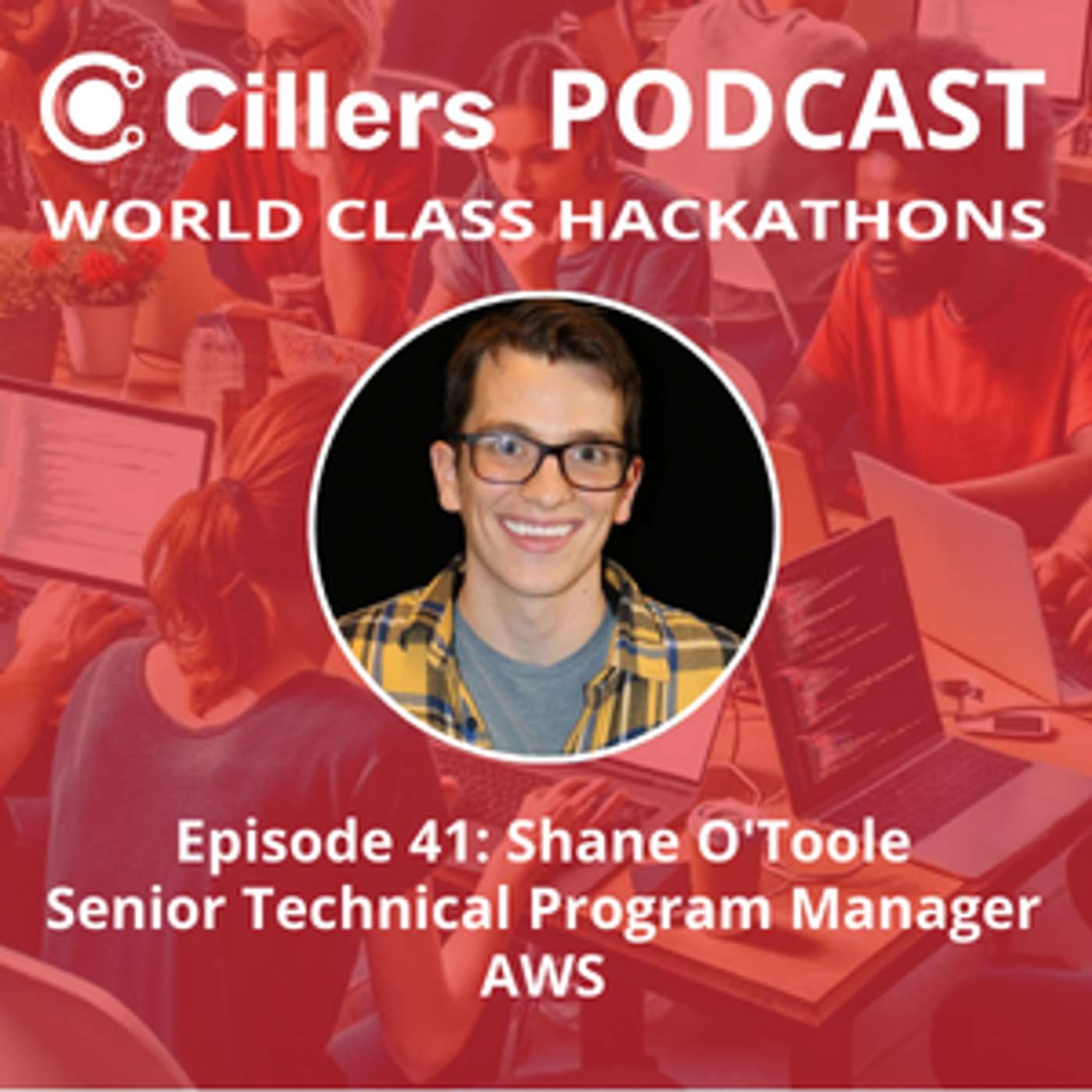
Ep 41Cillers Hackathon Podcast - Shane O'Toole
Meet Shane O'Toole, Senior Technical Program Manager at AWSShane helps customers use cloud technology to meet their goals for reducing carbon emissions. Shane works with AWS customers, partners, and internal teams to develop and implement solutions that improve sustainability. He has over ten years of experience in various roles including operations, maintenance, engineering, education, and management.In this episode, we discuss why hackathons are the best way to learn how to build a Minimal Viable Product (MVP) quickly. We also talk about different times when it's beneficial to organize a hackathon. Shane points out one particular situation that stands out: using hackathons to prove to clients or decision-makers that something is possible. He emphasizes, "Show them it's possible," highlighting that a live demo can be more convincing than even the best PowerPoint presentation. We also explore what usually slows down the speed of development. Shane believes that understanding the customer is crucial, and sometimes it’s tough to figure out what the customer really wants to achieve.Additionally, we provide links to the AWS Sustainability Solutions library. These resources are great for setting up Sustainability Hackathons: AWS Solutions includes links to open-source repositories like Sustainability Data Fabric (GitHub link) and Sustainability Insights Framework (GitHub link).
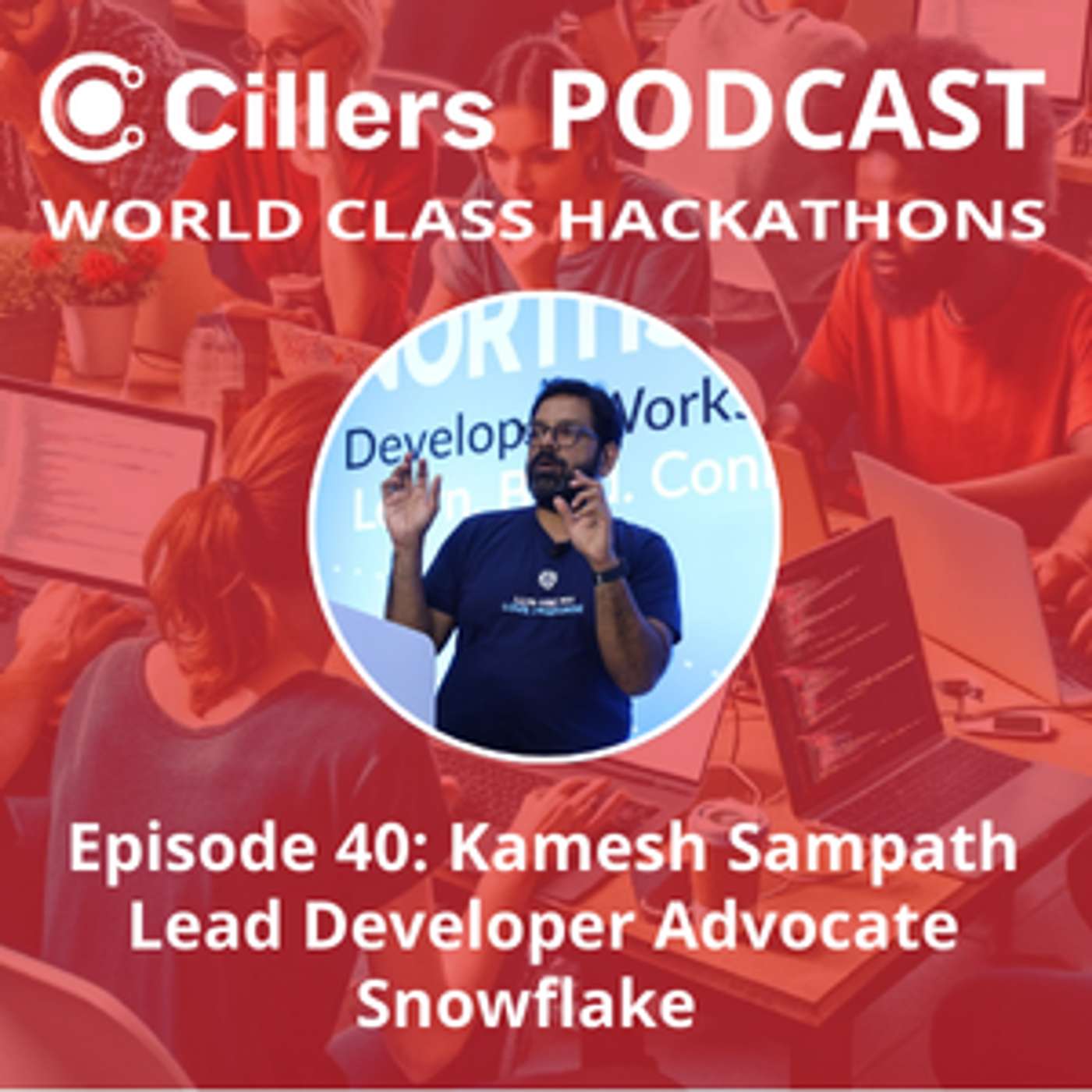
Ep 40Cillers Hackathon Podcast - Kamesh Sampath
Meet Meet Kamesh Sampath, Lead Developer Advocate at Snowflake Kamesh is a veteran tech innovator with 20 years in the trenches. As an author and developer advocate, he's on a mission to demystify data and cloud technologies. His passion? Empowering developers to push boundaries and create the impossible. With a track record of crafting enterprise solutions across diverse industries, he brings battle-tested insights to the dev community. In this episode, we explored a crucial element of hackathons: judging. Kamesh Sampath has developed a comprehensive framework for evaluating hackathon demos and presentations. His approach includes several key components: understanding the problem being addressed, researching existing solutions to see what has already been tried, and scrutinizing the proposed solution’s architecture to ensure it meets the essential requirements. Additionally, his framework involves examining the technology stack used, the methods for deploying the solution, and the authenticity of the code. Kamesh also focuses heavily on the team’s thought process, the rationale behind their proposed solution, and their ability to handle questions during their presentations. Additionally, we discussed what typically slows down development velocity. According to Kamesh, mastering the right tools, automating what you can, minimizing distractions, iterating from an MVP, and maintaining composure are key to increasing development speed. When it comes to writing better code faster with AI, the most crucial skill is knowing how to ask the right questions in the right way.Useful LinksFor more insights on what Snowflake is doing with DevOps for data to increase development velocity, check out these resources:Video on Snowflake and DevOpsSnowflake’s Approach to Data VelocityRelated blog posts:Announcing General Availability for Snowflake REST & Python Control Plane APIsSnowflake CLI Now Generally AvailableFor those interested in trying Snowflake:Sign up for a free trial with $400 creditTo get started:Snowflake Quickstarts
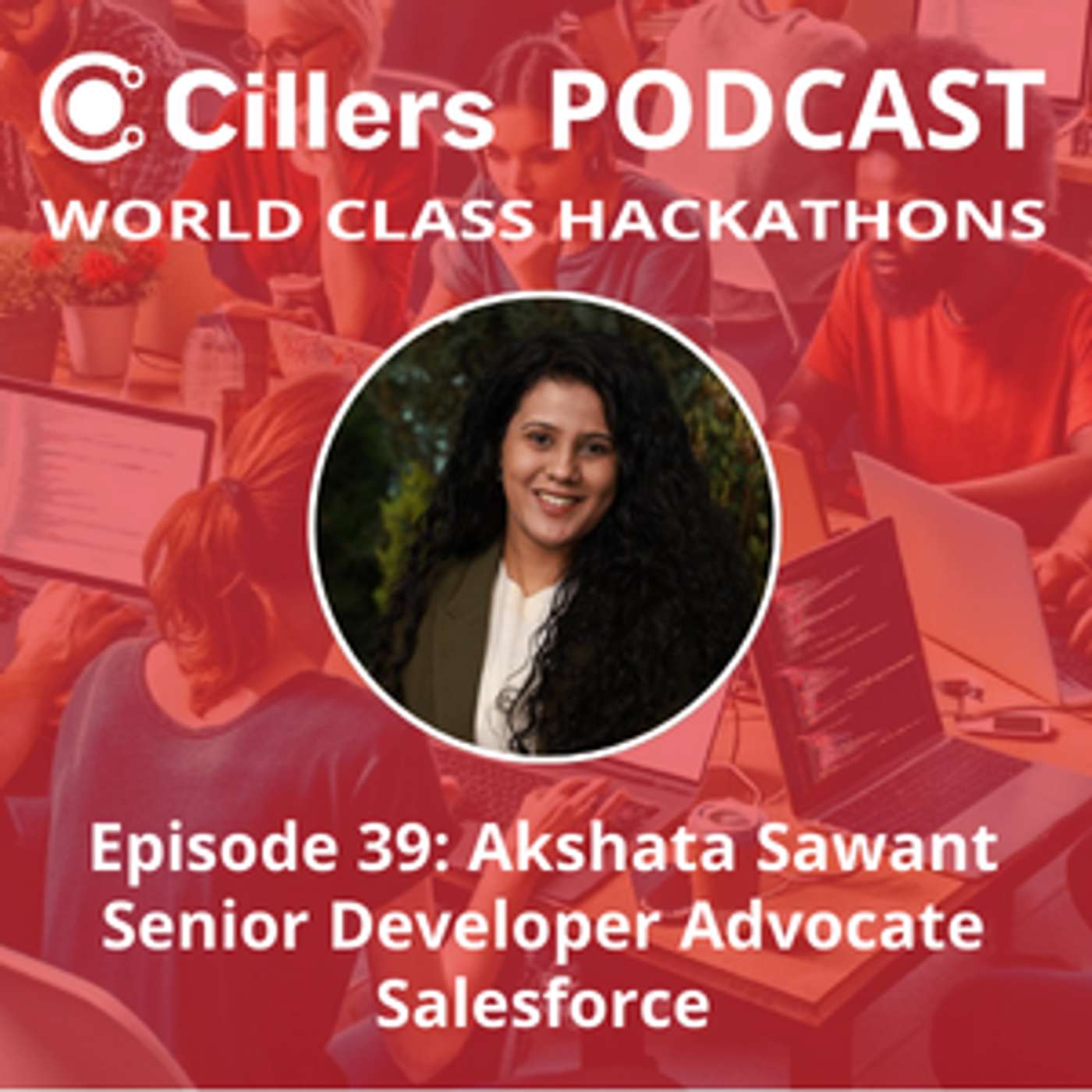
Ep 39Cillers Hackathon Podcast - Akshata Sawant
Meet Akshata Sawant, Senior Developer Advocate at Salesforce.Akshata co-authored "MuleSoft for Salesforce Developers," published by Packt Publication. As a global speaker, she has presented at major tech events including Dreamforce, Devoxx, APIDays, and DevOpsDays. Her current focus areas include conference speaking, leading tech meetup groups in London, Manchester, and Mumbai, evangelizing MuleSoft, promoting women in technology, and developing AI projects.In this episode, we discussed Salesforce hackathons that promote AI adoption. We explored how hackathons could help governments use AI to optimize critical processes. Akshata also shared her experience using AI tools to enhance text content, blog posts, and videos.Useful links from the episode:Connect with Akshata: https://www.linkedin.com/in/akshatasawant02/Register for Mule + AI Workshop: https://meetups.mulesoft.com/events/details/mulesoft-mulesoft-community-special-events-presents-mulesoft-mega-meetup/cohost-manchesterLearn about Intelligent Document Processing: https://www.mulesoft.com/platform/intelligent-document-processingGet her book "MuleSoft for Salesforce Developers": https://tinyurl.com/26rnddzjAI Tools mentioned: Writer.AI: https://writer.com/Adobe Podcast EnhanceMuleSoft Resources: Main website: https://www.mulesoft.com/Free 30-day Anypoint Platform trial: https://anypoint.mulesoft.com/login/signupMuleSoft Community: https://www.linkedin.com/showcase/mulesoftcommunity/posts/?feedView=all
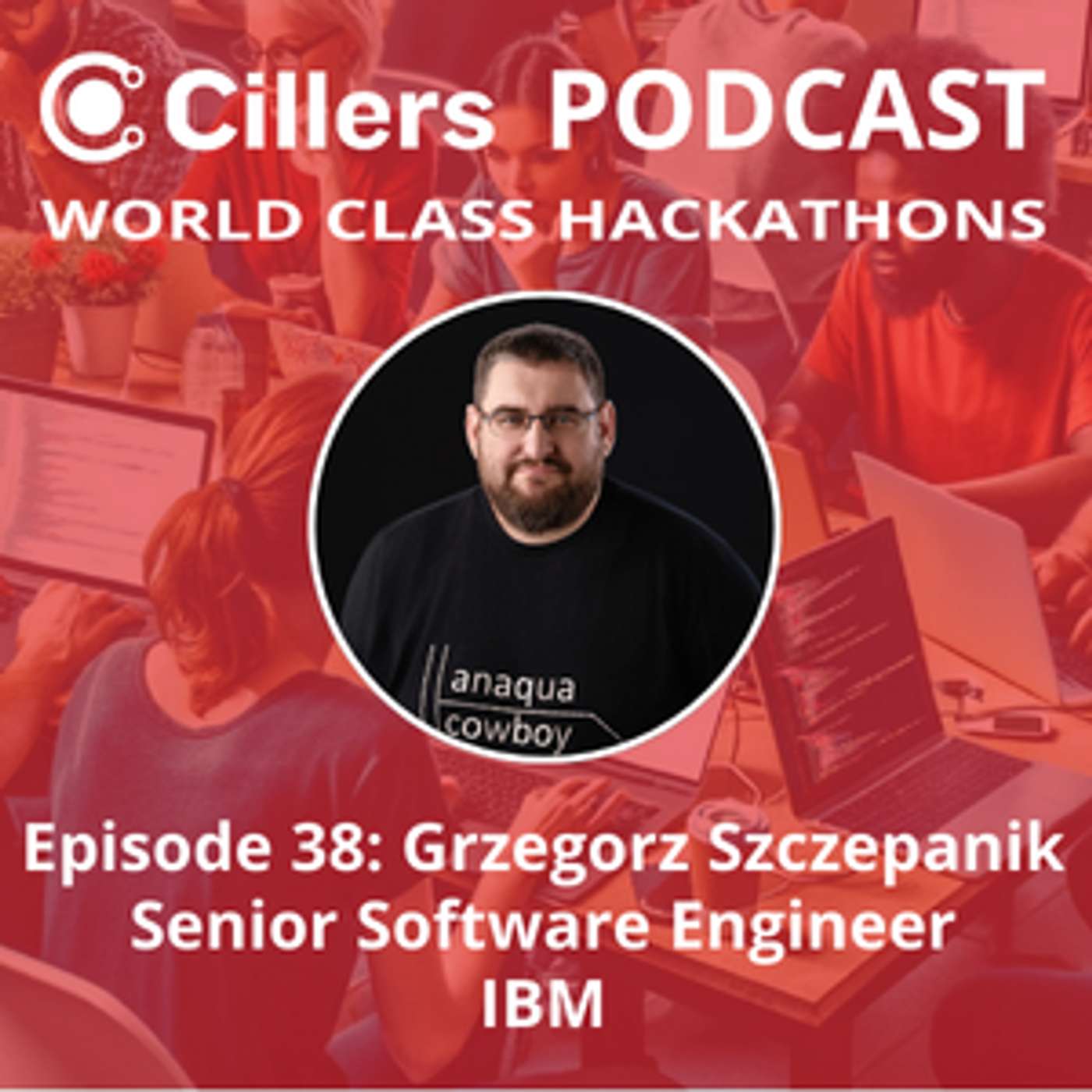
Ep 38Cillers Hackathon Podcast - Grzegorz Szczepanik
Meet Grzegorz Szczepanik, Senior Software Engineer at IBMGrzegorz Szczepanik is a Senior Software Engineer at IBM. In his early career, he co-founded a small ISP company with friends before joining a game development company, where he spent seven enriching years. Since 2013, he has been with IBM, where his passion for innovation has led to authoring over 40 granted patents. Grzegorz describes himself more as a generalist than a specialist, with a keen interest in history and society beyond the IT world.In this episode, we discuss "Innovation Hackathons," a special kind of hackathon developed by IBM in Poland. These events are not focused on coding but rather encourage participants to step back and brainstorm solutions to persistent problems that haven’t been addressed in day-to-day projects.We also delve into Grzegorz’s top tips for increasing software development velocity: do something productive every day, keep meetings brief (about 15 minutes), and jot down a single sentence at the end of each day summarizing what you have accomplished. Additionally, he shares valuable advice on how to expedite mundane yet essential projects.
Ep 37Cillers Hackathon Podcat - Charlie Isaacs
Meet Charlie Isaacs, CTO for Customer Connection at Salesforce.Charlie helped develop the Connected Car platform, connecting cars directly with Salesforce technology. He also led the creation of healthcare solutions during the pandemic, including systems for Remote Patient Care and Vaccine Management. He has been instrumental in promoting the Internet of Things within Salesforce for over eight years, securing more than 20 patents in the process.In this episode, we explored how a remarkable 2-month hackathon, initiated by Marc Benioff, led to a groundbreaking connected-car product showcased at major events. The hackathon's success highlights the importance of focusing on proving business value rather than just building flashy demos, or in Charlie’s words, “spaghetti on the wall hackathons vs. valuable hackathons.”We also discussed strategies for increasing software development velocity. Key tips include using existing platforms to avoid reinventing the wheel, leveraging AI code assistants to write better code faster, and securing strong executive sponsorship to rally support and resources.Interestingly, the discussion revealed how taking good care of the development team during intense periods, such as providing meals and creating a supportive environment, can significantly boost productivity and morale. By combining the energy of hackathons, the capabilities of AI tools, a focus on business impact, and a commitment to developer wellbeing, software teams can dramatically increase velocity.Links from Charlie: The codebuilder:https://developer.salesforce.com/docs/platform/sfvscode-extensions/guide/vscode-overview.htmlAnd here's the Jetson Nano Robot in action: https://www.linkedin.com/posts/charlieisaacs_agentforce-activity-7253663862049116160-PgvX?utm_source=share&utm_medium=member_desktop
Ep 36Cillers Hackathon Podcast - Priyank Mehta
Meet Priyank Mehta, Software Engineer at AWSPriyank Mehta is a Software Engineer at AWS, where he ensures the payment systems used by many AWS customers are reliable and capable of handling numerous transactions. He is passionate about supporting startups in the US and India, advising non-tech founders on product development. Additionally, he mentors Indian students in the US, guiding them through graduate programs and connecting them with internship and full-time opportunities.In this episode, we talked about something truly astonishing. Priyank decided to organize a hackathon at his university. With a can-do spirit, he began planning the event, secured funding, and spread the word. Astonishingly, 12,000 people showed up! TWELVE THOUSAND PARTICIPANTS. The following year, they reached 50,000!! And that's not all; we also had time to talk about development velocity, and Priyank shared his philosophy on making decisions faster, the importance of breaking things down into smaller, manageable parts, and the power of AI.
Ep 35Cillers Hackathon Podcast - Chintan Shah
Meet Chintan Shah, Tech and Product Lead at SalesforceChintan Shah is a Tech Lead at Salesforce, where he simplifies how data is handled by improving ETL processes—that's the technology used to gather and prepare data for analysis. An experienced software developer, he has helped build major platforms at companies like SanDisk and Microsoft, impacting millions of users. Chintan is also a mentor and the creator of the tech newsletter CS Talks, sharing insights and guidance with up-and-coming software engineers.In this episode, we discussed some of his hackathon experiences, from his university days to his time at Microsoft, and some major learnings, especially how to structure a hackathon to make the most of the available time. We also delved into how to increase software development velocity in day-to-day projects, emphasizing the importance of clarity (asking questions until you truly understand the scope and having a good brief) and team collaboration. Additionally, you will hear Chintan’s top tips for writing better code faster with AI, such as mastering prompt engineering, the necessity of having in-depth domain knowledge, how to utilize AI co-pilots, and why attending hackathons is beneficial for learning more about AI.Here are the links Chintan mentioned:CS Talks Newsletter - https://cstalks.substack.com/?r=3tce3j&utm_campaign=pub&utm_medium=webHackathon Article - https://open.substack.com/pub/cstalks/p/hackathons-fueling-innovation-for-tech?r=3tce3j&utm_campaign=post&utm_medium=webTopmate Offerings - https://topmate.io/cstalks1:1 Mentorship Offering- https://topmate.io/cstalks/506814-------Social Media Presence: Instagram - https://www.instagram.com/cs_talks_Linkedin - https://www.linkedin.com/in/shahchintan1/X - https://x.com/schintan22