Christian Humanist Profiles
286 episodes — Page 1 of 6
Christian Humanist Profiles 286: Bruce Chilton on Berenice
Christian Humanist Profiles Episode 285: Bruce Chilton and Aramaic Jesus
Christian Humanist Profiles Episode 285: Beverly Gaventa
Christian Humanist Profiles Episode 284: Chelsea Yarborough
Christian Humanist Profiles Episode 283: Volker Leppin
Christian Humanist Profiles 281: Sean Keilen
Christian Humanist Profiles Episode 280: Ian Hunter
Christian Humanist Profiles Episode 279: Philip Ziegler
Christian Humanist Profiles Episode 278: Charles E. Moore
Christian Humanist Profiles Episode 277: David Zahl
The New Testament book of Revelation is light on scenes of battle but never hesitates to announce that God has won a battle. Whether the text implies that a battle never actually happened or just moves the battles so far out of the narrative’s zone of attention that they’re rendered unimportant, Revelation as a narrative never says that the disciples of Jesus don’t need to be killers because God has already won the battles but seems to imply something like that. David Zahl’s book The Big Relief: The Urgency of Grace for a Worn-Out World brings a version of that good news to 21st-century folk, to scenes of exhaustion more than persecution, exploring some of the fake news that tries to do the work of grace and showing why only grace really saves. Christian Humanist Profiles is glad to welcome David to the show to talk about fake grace and real.

Christian Humanist Profiles Episode 276: Gabriel Said Reynolds
Stories of spiritual origins often begin as the new way emerges against the dominant traditions of the region. Thus Siddhartha grows up among the Brahmins and Moses among the Egyptians. Joseph Smith and Elijah Muhammad, each in his own way, emerges among American Protestants. But what about the much older, Arabian Muhammad? Many stories of Islam’s rise situate Muhammad among polytheists, proclaiming one God to folks with plentiful spirits. But Gabriel Said Reynods invites us, in his recent book Christianity and the Qur’an, from Yale University Press, to consider another possibility: what if Arabian Christianity stands as the Qur’an’s earliest conversation counterpart? Christian Humanist Profiles stands glad to welcome Dr. Reynolds on the show to talk about his research on these questions.
Christian Humanist Profiles 275: Nick Sorensen
When teachers complain about the ways that schools evaluate our teaching–and we do so with frequency and enthusiasm–one of the common refrains has to do with the measuring instruments and their inability to account for randomness and adjustment to randomness. Many a hallway story involves a moment when a teacher’s plans became irrelevant and the teacher responded. Sometimes in these stories we adapt. Sometimes we invent. But as often as anything else, we improvise, a word that we share with the worlds of jazz music and stage comedy. Nick Sorensen has taken that moment and proposed ways to evaluate the work of teachers in more complex and ultimately more adequate ways, and his recent book The Improvising Teacher: Reconceptualising Pedagogy, Expertise, and Professionalism presents his research and some proposals for moving forward more intelligently. Christian Humanist Profiles is glad to welcome Dr. Sorensen to the show.
Christian Humanist Profiles 274: Bethany Mannon
Ask six Americans what the adjective or the noun “evangelical” means, and you’ll get as many answers. Ask six historians, and you might get twelve. But what if you ask a rhetorician? We’re going to find out today as Christian Humanist Profiles welcomes Dr. Bethany Ober Mannon to the show to talk about her book I Grew Up in the Church: How American Women Tell Their Stories. Along the way we’ll visit and revisit some figures and some phrases that our long-time listeners will remember from episodes of The Christian Feminist Podcast, and perhaps we can add to the conversations that we inherit from them.
Christian Humanist Profiles 273: Joy Vaughan
Most of the world happens when I’m not in the room. That’s been a guiding principle for me as I’ve read and heard about all kinds of things I’ve never seen. I know some folks prefer David Hume’s assumption that anything that doesn’t resemble closely enough what one has witnessed directly is more likely delusion or deception than real testimony, and I know others would just as soon dismiss the experiences of folks not from the Atlantic and Pacific coasts as primitive or worse, but I’ll take Hamlet over Hume on these kinds of matters: “There are more things in Heaven and Earth, Horatio/ Than are dreamt of in your philosophy.” And although our approaches to these matters differ somewhat, I think I found an ally in Joy Vaughan’s book Phenomenal Phenomena: Biblical and Multicultural Accounts of Spirits and Exorcism. Christian Humanist Profiles is glad to welcome Dr. Vaughan to the show to talk about her research.
Christian Humanist Profiles 272: Rebekah Spera & David M. Peña-Guzman
When Amaziah, Priest of the Shrine of Bethel, confronts the prophet Amos for conspiring against King Amaziah, Amos replies with a very specific denial: “I am no prophet, nor a prophet’s son.” And it’s hard to run for president of the United States without insisting early and often that “I’m not a politician.” What about philosophers? What happens when you ask a philosopher whether or not she’s a philosopher? We might find that out today as we talk with Rebekah Spera and David M. Peña-Guzman about their recent book Professional Philosophy and Its Myths from Lexington Books. And even if we don’t, I imagine we’ll find ourselves posing questions about the field that we call academic philosophy that are worth posing.
Christian Humanist Profiles 271: Rhodri Lewis
Living among human beings gives an observant person plenty of occasions to think about delusion. Whether one watches the young revolutionary or the aging politician, the conspiracy theorist or the devotee of conventional wisdom, human beings take a peculiar joy in fooling ourselves. And we don’t have to limit ourselves to a single explanation of delusion either: Calvin’s workshop for idols and Nietzsche’s clever forgetting ape both make good sense, depending on whom one watches and in which moment. One could even imagine someone wondering, and forgiving the gendered language of his moment, “What a piece of work is man!” And if that last one rings true, you’re already geared up to hear about Shakespeare’s explorations of human delusion, specifically in his tragedies. Rhodri Lewis’s recent book Shakespeare’s Tragic Art puts delusion in the center of the conversation, and Christian Humanist Profiles, with a very clear mind indeed, is glad to welcome him to the show.
Christian Humanist Profiles 270: Andrew Perrin
In the middle of the twentieth century a process of collection started, one that would profoundly shape of Biblical studies for decades to come, all the way to our own moment. To say more than that would run afoul of any number of chapters of Andrew Perrin’s book Lost Words and Forgotten Worlds: Rediscovering the Dead Sea Scrolls from Lexham Press, so I’ll try not to overstep. Instead I’ll say that his book stands both as an introduction to this fascinating collection and its place in our knowledge of Biblical cultures and that for someone like me who studied Qumran back when Bill Clinton was president, the book provides some interesting new questions to pose.
Christian Humanist Profiles 269: Gerald Bray
Every story of thought and thinking runs into its own kinds of problems. Progressive accounts do well showing how predecessors were not quite as sharp or as moral as we are, but they have a hard time saying what might come to pass in years or generations to come. Conservative narratives have to distinguish between things worthy to conserve and things best left to antiquarians. Revolutionary accounts anticipate radical ruptures but tend to neglect good things that revolutions tend to leave behind. And Christian stories of the history of thought face the struggle of deciding when to say, with Jesus in Matthew, that whoever is not with us is against us; and when to say, with Jesus in Mark, that whoever is not against us is with us. Gerald Bray’s book Athens and Jerusalem: Philosophy, Theology, and the Mind of Christ takes up that work of distinguishing influences of Christian theology from resistance to the same, and Dr. Bray is here to talk to us about that project.
Christian Humanist Profiles 268: Philip Thomas
If a tree falls by an axe, the stump will, given enough time, grow back. Human beings who fall violently have no such hope–we never rise again. With that image, from Job 17, the book’s title character indicts the violence of the LORD and the finality of that violence. But many centuries later, in a very different book, Philip S. Thomas enlists that image to do very different rhetorical work, and that’s what we’re here to investigate. Dr. Thomas’s new book Hope for a Tree: Artistic Afterlives of Job examines films and poetry and literary nonfiction and other artifacts that take up Job’s lines and do other things with them. The investigation leads to persistently interesting questions that arise from traditions whose books are holy, and Christian Humanist Profiles is glad to welcome Dr. Thomas to Christian Humanist Profiles.
Christian Humanist Profiles 267: Debra Band & Menachem Fisch
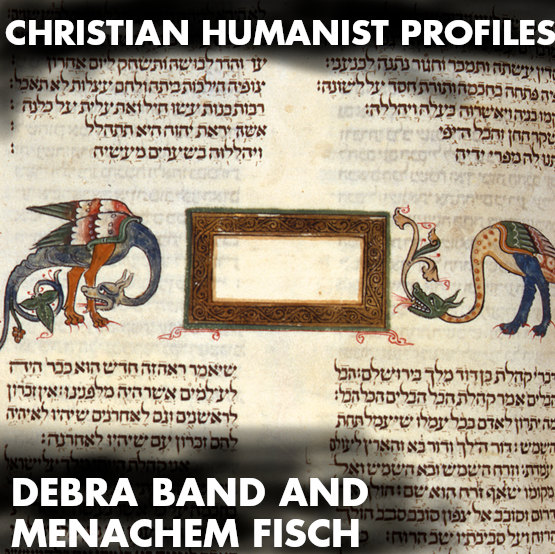
Do not think any man happy until he has died, free from suffering. That line, or something like it depending on the translator, ends the grand tragedy Oedipus Tyrannous, Oedipus the King. Such meditations on death give us memorable aphorisms, and they come to us not only from the Greeks or the Egyptians but from the teachers of Israel as well. Among the troubling texts of Israel’s wisdom tradition is Qohelet, whose title in English Bibles is often the transliterated Greek word Ecclesiastes and among whose questions one can find this one: what makes a life worthwhile if succeeding generations undo the good that one has done? Scholars and preachers and readers have disputed for centuries where the intellectual center of the book resides, how the author relates to the persona who seems to be Solomon, and a dozen other questions from and about and related in other ways to this puzzling book of the Bible. Today Menachem Fisch, a philosopher, and Debra Band, an artist, will be helping me ask new questions of Qohelet and talking about their book from Baylor University Press titled Qohelet: Searching for a Life Worth Living. Christian Humanist Profiles is glad to welcome both to the show.
Christian Humanist Profiles 266: Philip Jenkins
“Congress shall make no law respecting an establishment of religion, or prohibiting the free exercise thereof.” Growing up under that Constitutional law, even as an amendment, gave me the idea that there were two things, one called religion and the other called government, and that they existed in nature separate from each other. A working knowledge of history shatters that separation, and Philip Jenkins, in his recent book Kingdoms of this World: How Empires Have Made and Remade Religions, shows just how varied and how complicated the interactions between crowns and churches and technology and pilgrimages have been. Christian Humanist Profiles is glad to talk about politics and religion today with Dr. Jenkins.
Christian Humanist Profiles Episode 265: Simon P. Kennedy
When I got serious about Christian discipleship in the early nineties, Christian worldview was in the air. The menace of secular humanism loomed large, and when I enrolled at Milligan College (now Milligan University), a Christian liberal arts college, several people in my life were quite pleased precisely because there, I might emerge with something called a Christian worldview and do battle against something called secular humanism. That was more than thirty years ago, and Simon P. Kennedy has some questions for the folks who promoted that vision of Christian education. His recent book Against Worldview from Lexham Press proposes not an abolition of Christian worldview but new postulates, namely wisdom and cultivation, as alternatives to the old war-metaphors. Christian Humanist Profiles is glad to welcome Dr. Kennedy to the show.
Christian Humanist Profiles 264: Bill Carter
In 1917 four seismic shocks rocked the human species: in Russia, the Bolshevik Revolution brought a specter from Europe into the center of the world’s most expansive land empire. In Europe, an armistice ended the Great War. Around the world, a pandemic virus began to kill its millions. And in America, the first jazz recording became available. Communism and viruses and jazz had been around before then, of course, but history tells stories with sources, so here we are. A hundred and eight years later, the span between Chicago Cubs World Series wins, the Reverend William Carter is here to join us and talk about the spirituality of it all. Okay, mainly of jazz. His book Thriving on a Riff from Broadleaf Books meditates on spiritual matters with one hand on the Bible and the other on the piano keys, and Christian Humanist Profiles is glad to welcome him to the show.
Christian Humanist Profiles 263: Jeff Bilbro
With the obvious exception of Plato’s Phaedrus, really old books don’t spend much time on technology. Perhaps the tools didn’t change fast enough. Perhaps their writing materials were expensive enough that they didn’t want to spend time on instrumental matters. Perhaps the questions just never occurred to them. But some time in the modern era, folks started to write about the ways that our tools change and the ways that new sets of tools shape our souls for good and for ill. And one of the moments when those changes were doing the most–the most harm or the most benefit we’ll talk about as the hour rolls along–was the nineteenth century. Jeff Bilbro’s new book Words for Conviviality explores some of the writers engaging with those changes and invites us to hold up those nineteenth-century moments as mirrors to our own, and Christian Humanist Profiles is glad to invite him back on the show.
Christian Humanist Profiles 262: Richard Detweiler
Liberty has always carried tricky questions with it. Most folks in 2025 would agree that human beings should have liberty, but how one becomes free persists as a debate. Do we spring fully free into this world? Does participation in certain kinds of communities make us free? Can education of this or that sort develop freedom? This last question leads a conversation into the possibility of liberal arts, and Richard Detweiler’s book The Evidence Liberal Arts Needs takes up not only a discussion of what makes an education a liberal-arts education but also why and how people in our moment still should make the case for liberal arts. Christian Humanist Profiles is glad to welcome Dr. Detweiler to the show.
Christian Humanist Profiles 261: Phillip Cary
My own tradition within the Church was an early adopter of the motto “No creed but Christ.” For what intentions are worth, my forerunners seem to have had good ones: in the historical moment, confessions and catechisms and boundary-documents of all sorts were proliferating among Protestant communities, and one way for a unity movement to make progress might be to pare away the documents that some but not all Christian communities took to be central. That was the nineteenth century; now we’re in the twenty-first, and Dr. Phillip Cary has other work for the Nicene Creed to do: we need to learn how to ask Christian questions. That’s what his recent book The Nicene Creed: An Introduction sets out to accomplish, and Christian Humanist Profiles is glad to welcome him to the show.
Christian Humanist Profiles 260: Colin Seale
Among education writers, the phrase “critical thinking” can run from nebulous notions to utter ciphers. Few will disagree that critical thinking is good and needed, but relatively few will agree about what it is in the first place. Colin Seale has not only written about critical thinking in more precise language but established institutions for developing critical thinking as a group of practices that teachers in different places can deploy for students of all kinds of ability levels. His recent book Thinking Like a Lawyer, soon to be released in a new edition, proposes a core set of classroom sessions that develop flexibility and power in thinking, and Christian Humanist Profiles is glad to welcome Seale to the show.
Christian Humanist Profiles 259: Katherine Dell
When I was a novice in Biblical Studies Hans Frei’s book The Eclipse of Biblical Narrative invited me to consider not only the world that gave us the Bible but also the world that the Bible gives us, to read the canonical text as world-generating as well as world-contingent. As I continued in the discipline, another world emerged, namely the world that teaches us to pose certain questions and attend to certain realities within the text. And so I learned to understand the interplay of Torah and creation and wisdom and prophecy in these texts not only as emerging from their moments of composition–that never goes away–but also from the intellectual and cultural and military struggles of the nineteenth and twentieth centuries. The stories of the Bible’s readers stand just as important as the stories of the Bible’s writers. Katherine Dell’s book The Lord by Wisdom Founded the Earth: Creation and Covenant in Old Testament Theology renews our inquiries into all of these worlds, and Christian Humanist Profiles is glad to welcome her to the show.
Christian Humanist Profiles 258: Ben Witherington
Slogans have always occupied our public attention, and the ways that an enemy redefines a slogan can be as important as the phrase’s original connotation. We can learn a fair bit about public life and public speech just tracing the course and changes and counter-thrusts surrounding words and phrases like fake news, alt-right, social justice, and woke. Sola Scriptura goes back centuries before these other terms, and its career likewise promises to shed light on some complex relationships between texts and communities whose common lives involve something called Bible. Dr. Ben Witherington’s recent book Sola Scriptura: Scripture’s Final Authority in the Modern World from Baylor University Press explores both the ways Sola Scriptura as a phrase has changed and the important continuities that emerge when careful historians examine the Church’s relationships with the Holy Scriptures.
Christian Humanist Profiles 257: David Jasper
Taken down to their etymological components, scriptures are any written texts and literature is any human craft involving letters, usually of some alphabet or another. But etymological roots don’t go far making sense of the fascination and the division and the devotion and the emotion that literature and scriptures bring forth in readers of all sorts. David Jasper has spent a career examining the literary character of Christian and Jewish Scriptures, the strange gravitational influences those Scriptures have exerted on recent literature, and all kinds of likewise compelling things, and his new collection of essays Scripture and Literature: A David Jasper Anthology traces some of the big questions that he’s pursued over the years for the benefit of just those readers, including us.
Christian Humanist Profiles 256: Jeffrey Bilbro & David Henreckson
What is education for? The oldest grand library of which I have any knowledge is the tablet-collection of the Assyrian emperor Ashurbanipal, and as far as I can tell, it’s mainly a collection of magic spells for the court sorcerers to draw from when they need this or that kind of wizardry. And on the other end of things, in our little corner of the twenty-first century, some colleges seem to advertise exclusively (or pretty dang near exclusively) what kinds of financial benefits their schools offer to those who enroll. Folks who have heard the Christian Humanist Radio Network talk about education over the years know that we tend to favor visions of education from somewhere in between historically and nowhere in the vicinity theologically, and that’s why I’m excited to have Dr. Jeffrey Bilbro and Dr. David Henreckson on the show to talk about The Liberating Arts: Why We Need Liberal Arts Education from Plough Press. This collection, which they edited with Jessica Hooten Wilson, doesn’t really get into the sorcery end of things–just not that urgent any more, I suppose–but have a good deal to say about the aspirations and visions of education that in our moment stand as a compelling and faithful calls to Christian communities concerned with teaching what’s most worth teaching.
Christian Humanist Profile 255: Michael F. Bird
If you don’t spend much time around Biblical-studies people, the neologism “parallelomania” might be a new one on you, so let me explain: for different reasons, some writers in Biblical studies seem bent on discovering, naming, and insisting on a particular significance for any text that looks like, sounds like, works like, and otherwise resembles canonical and orthodox and historically central texts. Sometimes the parallelomaniac insists that the similarities render orthodox Christianity a mere winner among contenders, historically speaking, and sometimes the parallelomaniac wants to say that the tradition that comes down to most of us is not much more than centuries of plagiarism. Dr. Michael F. Bird wants to slow down a bit: yes, the ways that worshipers talk about Jesus develop from generation to generation, and yes, some of the formulations differ from one another, but the conclusions might be too hasty. His recent book Jesus Among the Gods: Early Christology in the Greco-Roman World proposes some different practices for reading a spectrum of ancient texts, and then he shows the reader what those reading processes look like, and Christian Humanist Profiles is glad to welcome him to the show to talk about all of it.
Christian Humanist Profiles 254: Gary Dorrien
History as a practice examines the contingent. Everything that leaves evidence of having-happened might have happened otherwise, and nothing that has come to be except that it displaced other things that might have been. In the realm of Black religion in the United States, the what-if questions and counterfactuals wonder about a seventy-year-old Dr. King, to be sure, but they also wonder about the directions that theological and political and cultural movements took and what possibilities, lost to contingency, might be worth reclaiming. Such claims and counter-claims are the stuff of Dr. Gary Dorrien’s book A Darkly Radiant Vision: The Black Social Gospel in the Shadow of MLK from Yale University Press, and Christian Humanist Profiles is thrilled to welcome Dr. Dorrien back to the show.
Christian Humanist Profiles 253: Eckart Frahm
Some of us first encounter them as the wicked city that Jonah eventually visits. For others they’re one of the Asian empires that Herodotus surveys on his way to the grand showdown between the Persians and the Greek-speaking city-states. Some of us have run into their legendary figures Sardanapallus and Semiramis in Dante or Byron. And of course some of us still aren’t sure how to avoid the Gorge of Eternal Peril when the old man asks us “What is the capital of Assyria?” (We’ll address that one later.) But relatively few of us know much about the Assyrians as they present themselves and how they fit into the changing landscape of ancient civilization. So Christian Humanist Profiles is glad today to welcome Eckart Frahm, whose recent book Assyria: The Rise and Fall of the World’s First Empire does just what the title promises, showing us what that ancient world looks like from inside Assyria as well as the spectrum of views from beyond the fall of those grand urban walls.
Christian Humanist Profiles 252: Trevor Laurence
You have heard that it is said: love your neighbor and hate your enemy. Translations might differ, but what follows comes across well in most translations: Jesus enjoins those hearing the Sermon on the Mount to love enemies and pray for persecutors. Those unsettling commandments never stop scandalizing those who spend time meditating on them, and those who contemplate the New Testament and pray the Old Testament run into another problem: certain of the Psalms pray regarding enemies, but few readers would mistake them for loving intercessions. How can a follower of the one who forgave his enemies from the cross pray onthe same God that God break those enemies’ teeth? That question has always been before us, whether we know it or not, and Dr. Trevor Laurence’s book Cursing with God takes it as seriously as Holy Scriptures demand, articulating a theology of Scripture, of forgiveness, and of the role of the faithful along the way. Christian Humanist Profiles is glad to welcome Dr. Laurence to the show.
Christian Humanist Profiles 251: Shaun Ross
Theology and literature have always seemed a natural pair to me. In fact, I’ve written a Master’s Thesis examining Ezekiel with the help of William Blake; another digging into Christology through Aemelia Lanier and John Milton; and a doctoral dissertation arguing that Spenser, Shakespeare, and Milton were making moves in theological ethics that the theological academy only caught up to in the late twentieth century. So when I found out that Dr. Shaun Ross had a book for me to read about the Eucharist and seventeenth-century English poets, I knew I was going to be talking to my kind of thinker. Shaun’s recent book The Eucharist, Poetics, and Secularization from Oxford University Press poses some really great questions about some really great poems, and Christian Humanist Profiles is really glad to welcome him to the show.
Christian Humanist Profiles 250: Heather Hoover
The stereotype, whether we want to dismantle it or acknowledge it, holds that those who teach college English begin a quest in graduate school to be rid of teaching writing. As early as the mid-twentieth century Richard M. Weaver told the same story, and Weaver was among the first to take that stereotype not as an acknowledgment of rerum naturem but as the story of a fall, a decline from a day when the professor of rhetoric stood at the pinnacle of undergraduate education to a moment when those who still teach it in mid-career must have fumbled somehow. Mercifully, in the last decades of the 20th century and the first decades of the 21st, a sort of rhetorical renaissance has blossomed in English departments, and Dr. Heather Hoover’s book Composition as Conversation: Seven Virtues for Effective Writing has taken a seat at that grand banquet of teachers who celebrate writing rather than fleeing the same. Christian Humanist Profiles is glad to welcome Dr. Hoover to talk with us about the book.
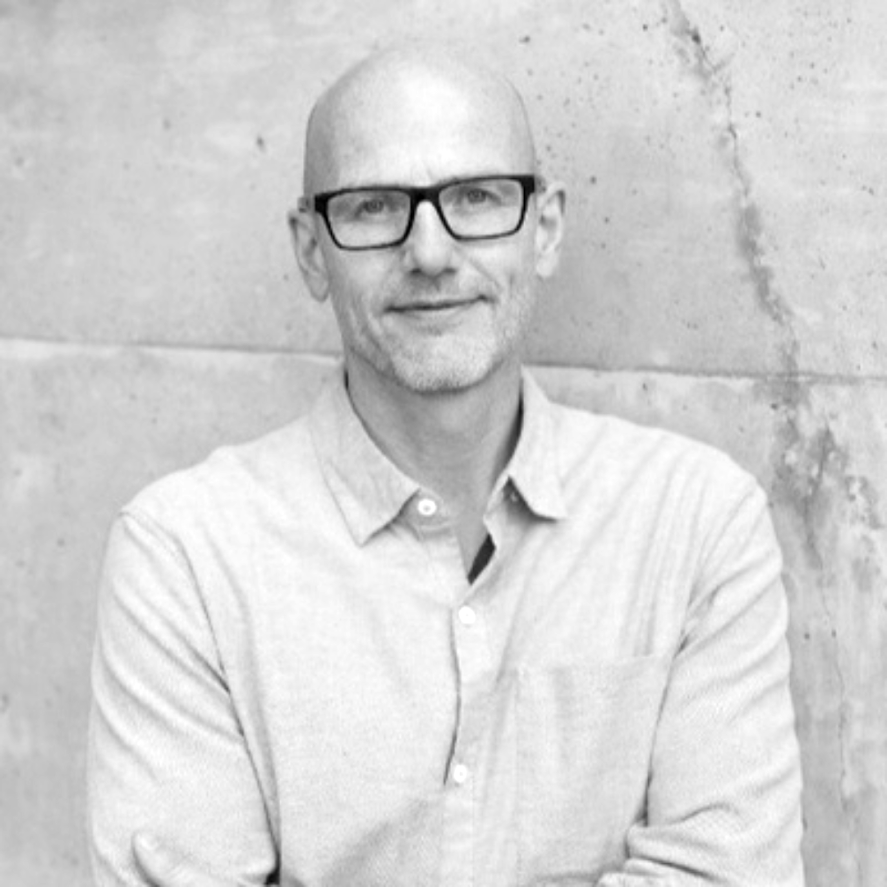
Theology Beer Camp Remix: Myron Penner
With Theology Beer Camp 2023 just around the corner (alas, I won’t be here, as I’m trying to be judicious taking days off during year one of my career change), I wanted to get Myron Penner’s talk from last year’s camp, along with our conversation that happened a spell later, out to you. Here’s the backstory: Myron and I did a live podcast back in October 2022, but the laptop on which the interview was being recorded cut out 30 minutes in. So Myron and I got together on Zoom some time later and had a conversation, with the benefit of a few months’ reflection, based on our notes from that weekend. Visit www.christianhumanist.org to view Penner's talk from Theology Beer Camp for some context.
Christian Humanist Profiles 249: Lyric Theology with Thomas Gardner
Genesis–Bereshith in the Hebrew–opens with grand narratives of beginnings and generations, and the New Testament starts with four distinctive narrative accounts of Jesus, the anointed one. For traditions that consider theology an interpretive endeavor at the outset, then, stories are the start, and Psalms and hymns and prophetic verse follow close behind. But somewhere along the line, the propositions and syllogisms and refutations and such that get their start as commentaries on the narrative and Psalmic and apocalyptic start to make demands of their own, and theology becomes even more a ground for contest than it seems to be in the texts that we call Bible. Where does that leave us when it comes to theology? Dr. Thomas Gardner’s book Lyric Theology calls us back to verse and narrative and on ahead into film, reminding us that it can’t hurt to come back home when it comes to theology.
Christian Humanist Profiles 248: Valerie Tiberius
Philoctetes is not the best-known Sophocles tragedy, but its questions stick with me. When the title character insists on his dignity as a man of war, he runs afoul of the Odysseus of Sophocles, who could not care less about the wounded warrior’s sense of being wronged, so he enlists Neoptolemus, son of Achilles, who insists that abstract virtues of war must govern everything that concerns the struggle. I won’t spoil the ending of Philoctetes today, but I will say that conflicting values have not become any less interesting in the two and a half millennia since. Dr. Valerie Tiberius has brought that conversation off the mythological battlefield and into the very real tensions between money and reputation and peace of mind and different kinds of abstract principles in her recent book What Do You Want out of Life, and Christian Humanist Profiles is glad to welcome her to the show.
Christian Humanist Profiles 247: The Secret Gospel of Mark
What’s on the table when we claim that a newly-discovered text came from a Biblical author? To answer that question might take an investigation that spans the Roman Empire, desert monasteries, New York City apartments, the academic publishing industry, and the libraries and universities that change hands during wars and elections and all sorts of other events that intervene between us and that glorious first century. Such a story is before us today, and Geoffrey S. Smith’s and Brent C. Landau’s recent book The Secret Gospel of Mark is going to show us just how complicated and sometimes how weird the world of textual criticism can be. Christian Humanist Profiles is glad to welcome them to the show.
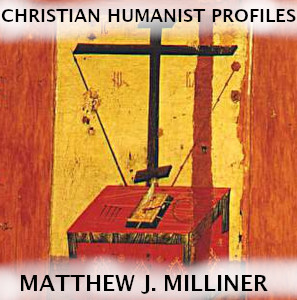
Christian Humanist Profiles 246: Matthew Milliner
Tell me where you spend your Sunday mornings, and then where your grandmother spent her Sunday mornings, and I’ll venture a guess at what you think Christian art looks like. In the realm of Christian art that involves basilicas and mosaics the icon holds a special place: by some accounts mainly a window through which one looks upon divine reality, the artistry of the icon nonetheless promises a different view of the world we inhabit, and the Virgin of the Passion, if Matthew Milliner is right, seeks nothing less than to set the world’s eyes back on the Christ who saves by suffering and whose passion does not begin on a cross but in his very infancy. His book Mother of the Lamb: The Story of a Global Icon, from Fortress Press, tells the story of that icon, beginning as it does with an artist who departs an imperial city and continuing in our day as his work journeys everywhere people call out to the heavens. Christian Humanist Profiles is glad to welcome Matthew to the show.
Ep 245Christian Humanist Profiles 245: Ben Witherington & Jason Myers
“I, brethren, when I came to you, came not with excellency of speech or of wisdom.” When I first read those words from St. Paul, they inoculated me against certain kinds of inquiry. St. Paul must not have been an orator the way we think of orators, because he didn’t rely on eloquence when he spoke. His education, therefore, must have been irrelevant to his epistles. And certainly we won’t learn anything by attending to the rhetorical form when we take on his writings. But here’s some good news for you, listeners: Ben Witherington and Jason Myers are here to get those ideas off the table. The second edition of their book New Testament Rhetoric demonstrates that not only Paul but all sorts of New Testament writers exhibit familiarity with and formation through ancient canons of rhetoric, and Christian Humanist Profiles is glad to welcome them to the show.
Christian Humanist Profiles 244: Paul Blaschko
The one who saves his life will lose it. The one who sows to the spirit will reap life. I am the way and the truth and the life. Life is like a box of chocolates. Ways of life and forms of life and such matters concerning life have occupied sages and philosophers and poets and preachers as long as human beings became word-slingers, and yet attempting the good life seems to require that each generation start anew somehow, to shape lives and to seek life for the first time every time. Meghan Sullivan and Paul Blaschko’s recent book The Good Life Method: Reasoning Through the Big Questions of Happiness, Faith, and Meaning grew out of a redesigned introduction to philosophy class that deliberately sets that shaping and seeking of a good life at the project’s center, and we’ll talk about that at some length before too long. For now Christian Humanist Profiles is happy to welcome Dr. Paul Blaschko to the show to talk about that journey and that book.
Christian Humanist Profiles 243: Bren DuBay
Somethin’s brewin’ on the podcast. I wonder what it could be? If you’ve seen the stage musical version of “The Cotton Patch Gospel” you know what and whom we’re talking about, but just in case you’ve never heard that musical, or if you’ve not read The Cotton Patch Gospels, or if you have no idea about anything I’ve mentioned up to this point, you’re just the person to have a seat and chat with us. Clarence Jordan, Georgia Baptist preacher and the best kind of trouble-maker, was preaching and starting up Koinonia Farm and drawing the wrath of the KKK and publishing a new version of the Bible and keeping entirely busy in the middle twentieth century, and we’re here to talk some about what he said and what he wrote, compiled in the recent Plough Publishing House book The Inconvenient Gospel. Joining me is Bren Dubay, who runs Koinonia Farm today (and who no doubt will correct that verb as soon as I shut up here), and Christian Humanist Profiles is glad to welcome her on the show.
Christian Humanist Profiles 242: Peter K. Fallon
The book I expected to read would present all the ways in which human communities in the digital age are dealing with a decentralized authority structure, how any given woman or man might jump on the Internet, either through a browser or a social-media program or by some other means, and encounter half a dozen figures, all competing for status as authorities on the question at hand, disagreeing with each other not on marginal matters but on the most important, most central parts of the public policy or scientific finding or the political tension at hand. The book I expected to read would look at all that and warn me about the dangers of a post-truth world. Peter K. Fallon takes a look at the same stew of unstable sources and says, “How cool is that?” His new book Propaganda 2.1 from Cascade Books draws from the rightly-renowned examinations of Jacques Ellul and then launches forward, never denyinig the dangers of citizenship in an Internet context but also looking at the genuinely good possibilities that emerge. Christian Humanist Profiles is glad to welcome Dr. Fallon to the show.
Christian Humanist Profiles 241: Walter Brueggemann
Walter Brueggemann did not only teach me to read the Bible: he taught me to read. In the twenty-two years since I first read A Theology of the Old Testament I’ve been bringing the questions that book poses to Biblical texts over to every literary text I’ve come across: in what ways am I reading primary testimony or counter-testimony as I take on Toni Morrison or John Milton or Sophocles? How are these texts relating to and creating audiences when I teach Shakespeare or Plato or James Baldwin? And where do my own readings fit into stories of interpretive and disciplinary conversations whenever I engage with any text? Those questions keep on doing their work in Brueggemann’s recent collection of essays Resisting Denial, Refusing Despair, and Christian Humanist Profiles is thrilled to welcome him back to the show.
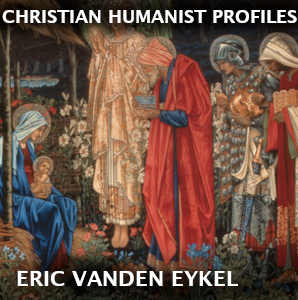
Christian Humanist Profiles 240: Eric Vanden Eykel
I don’t often talk about my own high-school years on this podcast, but I remember in high-school jazz band playing a Christmas medley called “Heaven and Nature Swing.” It led with a “Caravan”-inspired arrangement of “We Three Kings”--if you don’t know “Caravan,” hit YouTube post-haste–and when I hear the hymn, these thirty years later, I always feel cheated when it doesn’t break out into snake-charmer saxophone runs at the ends of the rhyming lines. Today we’re not talking about jazz, but we are talking about what we think we should see and we should hear when we take on stories and characters that we think we know. Eric Vanden Eykel’s recent book The Magi: Who They Were, How They’ve Been Remembered, and Why They Still Fascinate treats the Magi (and my pronunciation of that word is going to move around as we talk–blame seminary Greek and T.S. Eliot) as a kind of jazz standard–we do well to study the first recording, and we also learn some really cool things when we take on later arrangements and reimiginings and even deconstructions of these mysterious figures from Matthew. Christian Humanist Profiles is glad to welcome Dr. Vanden Eykel to the show.
Christian Humanist Profiles 239: Shaun C. Brown
Some intellectuals are famous, and some are intellectual-famous. N.T. Wright appeared on The Colbert Report, and Reinhold Niebuhr testified before Congress, and Cornel West was in a couple Matrix movies. George Lindbeck didn’t do any of those, as far as I know, but in certain circles of Christian theologians, he’s indisputably intellectual-famous, opening up possibilities for ecumenical engagement and influencing Stanley Hauerwas and attending Vatican II and such. My own engagement with Lindbeck has been almost exclusively with his 1984 book The Nature of Doctrine, so when I got a chance to read Shaun C. Brown’s recent book George Lindbeck: A Biographical and Theological Introduction, I came away seeing his work in that book as a chapter in a rich and rightly intellectual-famous career. Christian Humanist Profiles is glad to welcome the Doctor Reverend Brown to the show.
Christian Humanist Profiles 238: Matthew Ichihashi Potts
“Forgive us our trespasses as we forgive those who trespass against us.” I pray those words every Sunday morning at Bogart Christian Church, and I think I have a basic idea of what I mean when I do. But that sense of solid knowledge conceals philosophical and theological disputes not only what the verb “to forgive” and the noun “forgiveness” mean but also how those realities relate to violence, reconciliation, narrative, memory, and all sorts of other complex matters. In his recent book Forgiveness: An Alternative Account, Matthew Ichihashi Potts proposes that to ask God to forgive us as we forgive is a matter of analogy, not identity, and the temporality and finitude of human existence stand crucially important to our understanding and our practicing forgiveness. Christian Humanist Profiles is glad to welcome the Doctor Reverend Potts to the show.