ChooseFI
759 episodes — Page 11 of 16

Ep 135135R | The Plot Thickens
Another look at whether you should pay off your mortgage or invest, plus: Spam Caller Life Hack Life Hack for Small Business Owners Achieving FI on a Modest Income For more information, visit the show notes at https://www.choosefi.com/135r

Ep 135135 | How to Leverage A Modest Income to FI with Joel from How to Money
Joel from How to Money talks about how he has pursued FI on a relatively low income, how he is reaching FI with five rental properties, and working on the Clark Howard Show. For more information, visit the show notes at https://choosefi.com/135
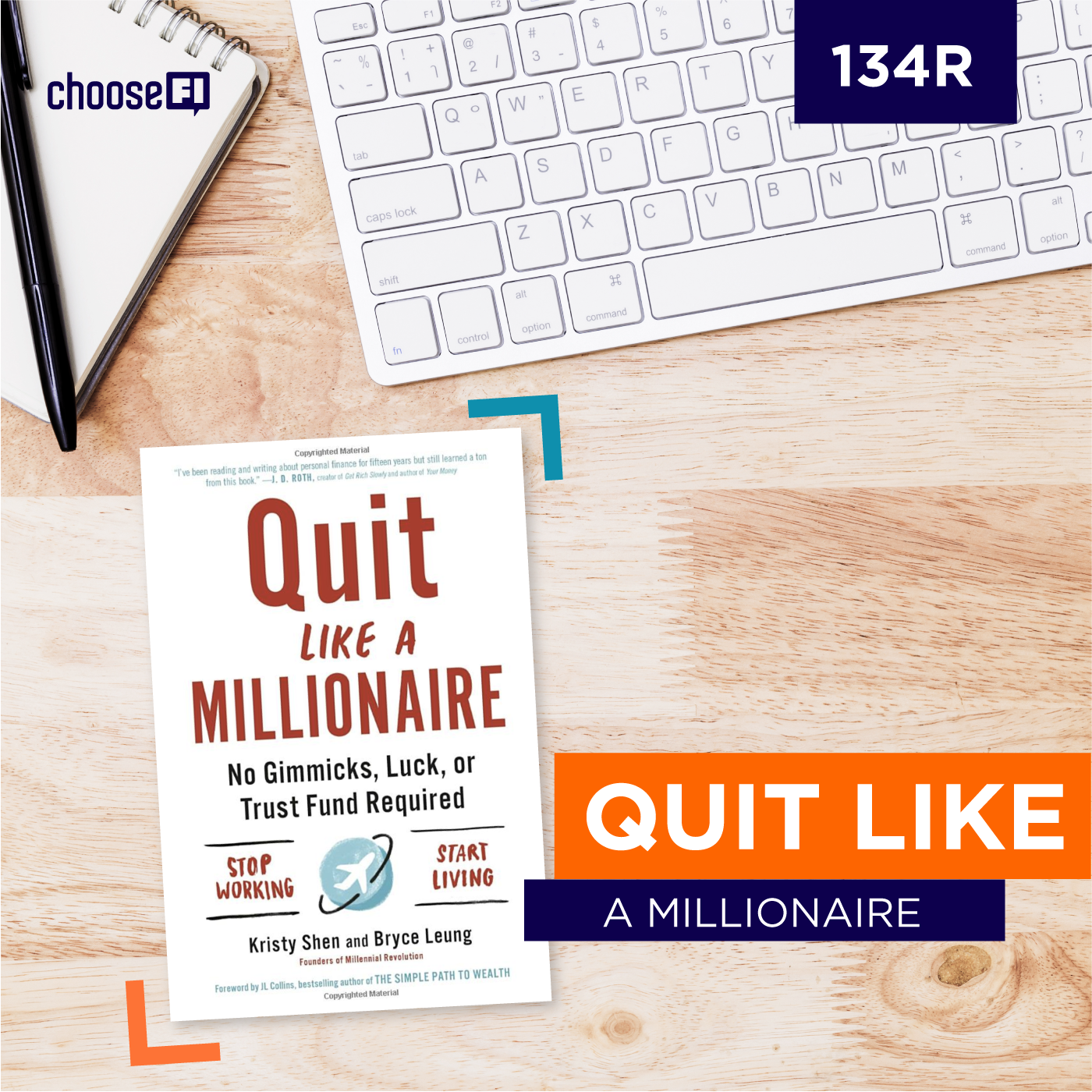
Ep 134134R | Quit Like a Millionaire | Kristy Shen and Bryce Leung
Kristy Shen and Bryce Leung talk about their new book, Quit Like a Millionaire. Plus, Brad and Jonathan give updates on solar panels and YNAB. For more information, visit the show notes at https://choosefi.com/134r

Ep 134134 | Early Retirement Case Study With Route To Retire
Jim from Route To Retire talks about about life after retirement and geo-arbitrage. His path to FI didn't start with a community, it began when he was testing for Y2K bugs with Quicken. Don't know what we're talking about? You'll just have to listen to find out. For more information, visit the show notes at https://www.choosefi.com/134

Ep 133133R | Should I Pay off My Mortgage Early Or Invest
Possibly the most burning questions of FI: Should you Invest or Pay off your Mortgage early? We go through the numbers in today's show. For more information, visit the show notes at https://choosefi.com/133R

Ep 133133 | How To Get Started Making Money With Airbnb | Zeona McIntyre
Zeona McIntyre built a successful AirBNB business and shares her best strategies, including Buying Properties Scaling the Business and Best Practices for an AirBNB Business For more information, visit the show notes at https://ChooseFI.com/133

Ep 132132R Insurance | A Framework
Find out what kinds of insurance you actually need and where to find them. Jennifer Fitzgerlad, the CEO of Policy Genius walks us through everything you need to know. For more information, visit the show notes at https://ChooseFI.com/132R
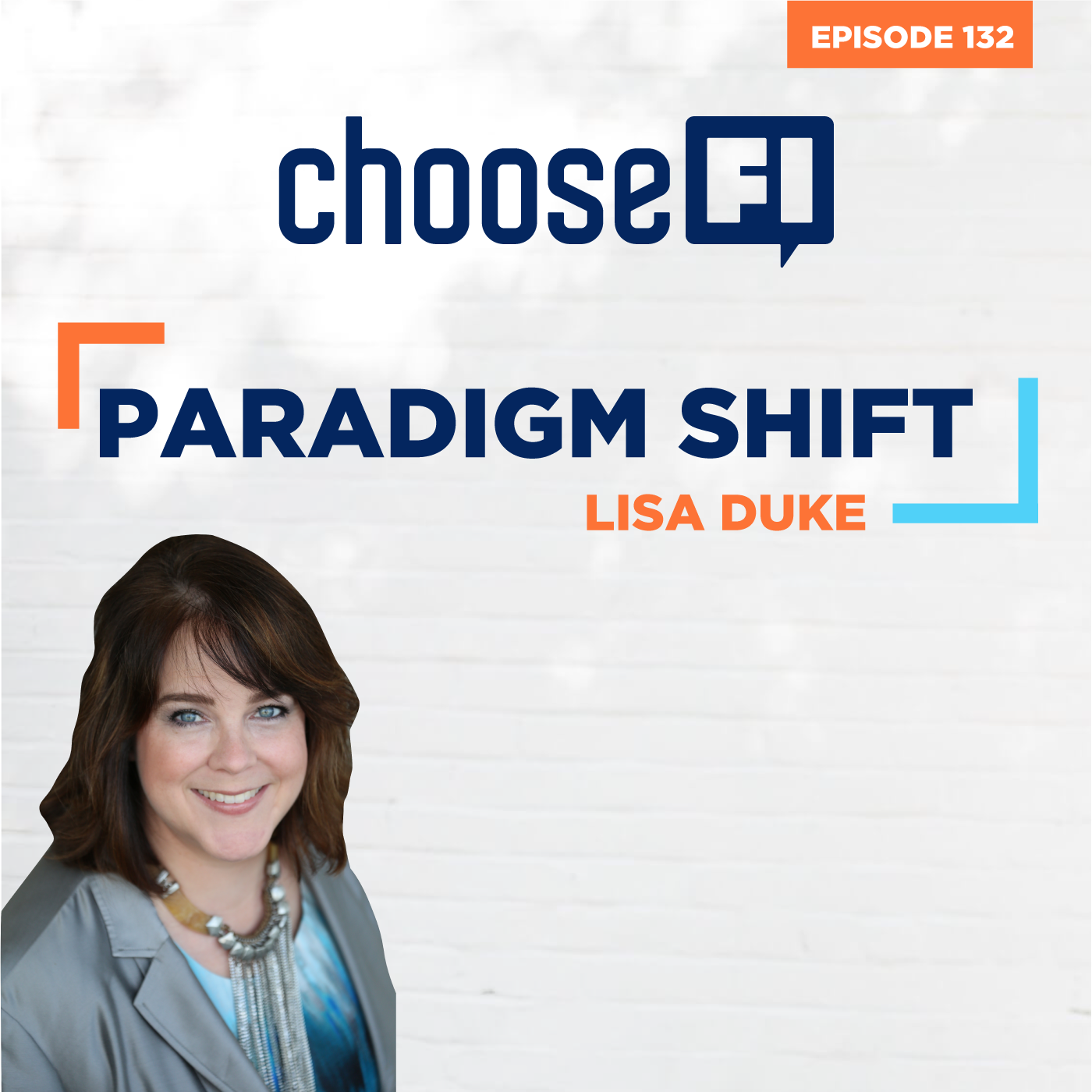
Ep 132132 | Downsizing Your Life And Financial Coaching With Lisa Duke
Lisa Duke talks about her mindset shift and turning liabilities to assets. On today's show: Second Home--Asset Or Liability? Action Steps To Renting Out Your Home Getting off the "hedonic treadmill" ...and more. For more information, visit the show notes at https://ChooseFI.com/132

Ep 131131R | Building a Brick in Your Wall
A recap of our conversation with Mr. Money Mustache and Mr. 1500. Plus, Jonathan and Brad answer listener questions about compounding and drawdowns during retirement. For more information, visit the show notes at https://ChooseFI.com/131R

Ep 131131 | Mr. Money Mustache & Mr. 1500 | Past, Present, Future
Mr. Money Mustache and Mr. 1500 discuss community building and second generation FI. For more information, visit the show notes at https://ChooseFI.com/131

Ep 130130R | Simplifying The Ultimate Buy And Hold Strategy With M1 Finance
Brad and Jonathan just returned from the world premiere of Playing with FIRE in San Diego. They discuss future showings (visit choosefi.com/tugg) and then get into the ultimate buy and hold portfolio strategy. For the entire show notes, go to https://choosefi.com/130R

Ep 130130 | Paul Merriman | The Ultimate Buy and Hold Portfolio
Today we talk to Paul Merriman. The goal is to contrast the "Simple Path to Wealth Approach" with the "Ultimate Buy and Hold Portfolio." Paul is a proponent of the Ultimate Buy and Hold strategy and a legend in this space. The insights Paul provides about this strategy are priceless. For more information, visit the show notes at https://choosefi.com/130

Ep 129129R | Focused Work Ethic
Earlier this week, Liz from Chief Mom Officer explained how she leveraged her work ethic and will to succeed into a successful six-figure career. Today we dig deeper into the work ethic topic with John, a 24 year old currently making 6-figures. We also announce our newly created Travel Rewards Course. For more information, visit the show notes at https://choosefi.com/129r

Ep 129129 | Breaking the Glass Ceiling | Liz, Chief Mom Officer
Liz from Chief Mom Officer.org talks about working moms building careers from the ground up. In this episode we learn: ⁃ How To Grow Your Salary ⁃ Figure Out What You Should be Paid ⁃ Work Hard Strategically ⁃ How To Negotiate For more information, visit the show notes at https://choosefi.com/129

Ep 128128R | Zone of Awareness
Multi-level marketing, side hustles, energy audits, and expanding your "Zone of Awareness" -- all in today's Friday Roundup! For more information, visit the show notes at https://choosefi.com/128r

Ep 128128 | Building Your Suit of Armor on the Path to FI | Alan Donegan
Alan Donegan joins us to discuss leveraging the power of FI to pursue your dreams with the ability to be free to fail. For more information, visit the show notes at https://choosefi.com/128

Ep 127127R | Cut through the Noise Diet and Debt Consolidation
Gina Pogel joins us to discuss different types of debt and how to tackle them. We also dive into tactics to optimize both your health and your debt. The goal is to simplify your finances and your health by stacking multiple optimization tactics together. For more information, visit the show notes at https://ChooseFI.com/127R

Ep 127127 | Scott Scherr | Health Optimization
Brad and Jonathan discuss health optimization strategies with Dr. Scott Sherr. This episode is packed full of useful information, however, do not make life altering medical decisions based on this show alone. Although we are talking to a real doctor, do not take this as medical advice. Consult with your own physician before making any major medical decisions. For more information, visit the show notes at https://ChooseFI.com/127

Ep 126126R | What is an Annuity
Brad and Jonathan tackle a listener question about annuities and discuss some updates to the travel rewards landscape. For more information, visit the show notes at https://ChooseFI.com/126R

Ep 126126 | Estate Planning Wills vs Trusts | Mark Moss
Last week, Brad and Jonathan talked to Chelsea Brennan about her Family Emergency Binder. In the same theme of planning for your family's future, today we talked to Mark Moss about estate planning. For more information, visit the show notes at https://choosefi.com/126

Ep 125125R | Grocery Store Wars
Ways to optimize your grocery shopping, the family emergency binder, and sharing stories from the community. For more information, visit the show notes at https://choosefi.com/125R

Ep 125125 | The Family Emergency Binder | Chelsea Brennan
Chelsea Brennan from Smart Money Mamas and creator of the Family Emergency Binder is here to talk about her unconventional choices that led to a happier life. For more information, visit the show notes at https://choosefi.com/125
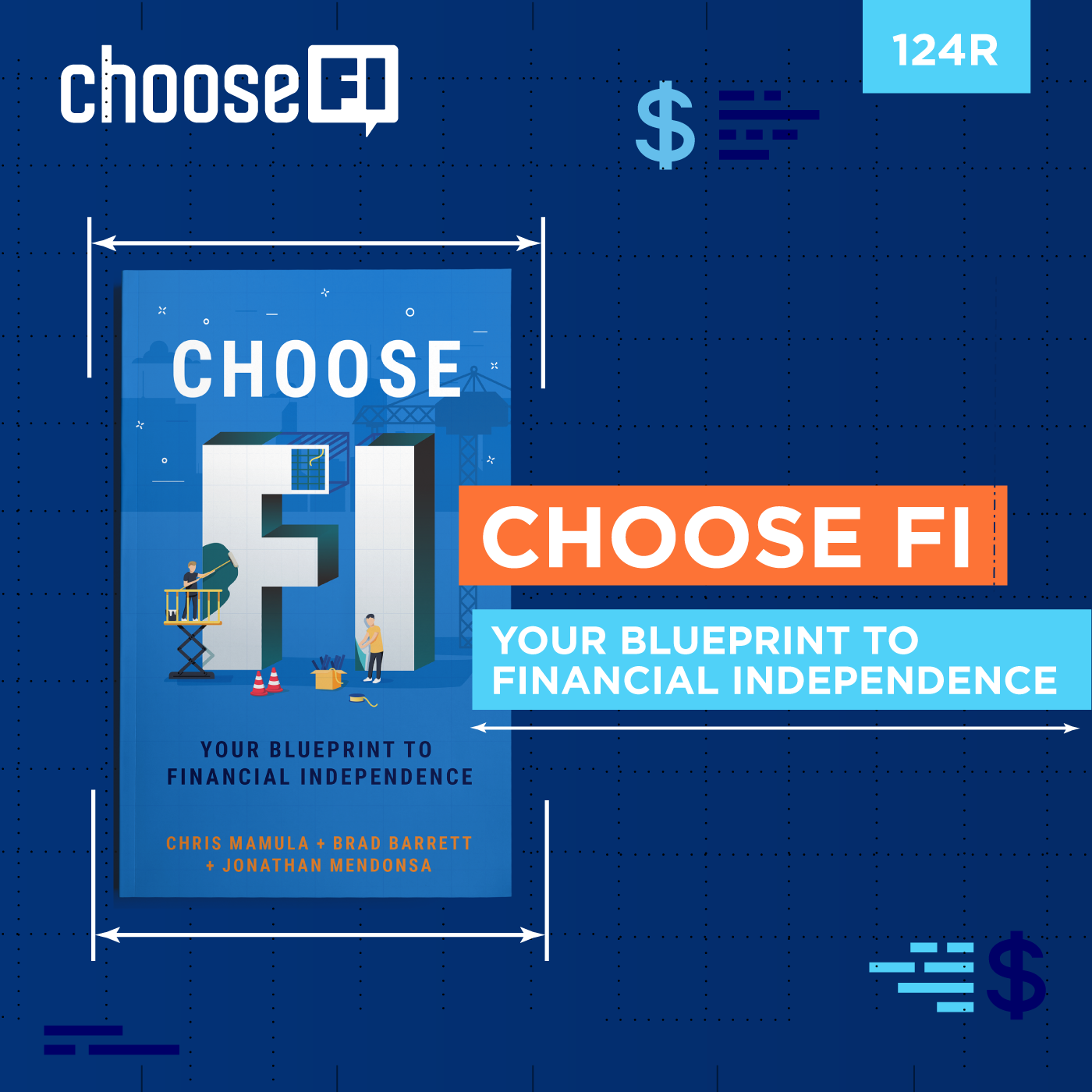
Ep 124124R | Choose FI Your Blueprint to Financial Independence
Brad and Jonathan discuss the release date of a ChooseFI book, finding the best auto insurance rates, and Lynn Frair's path to FI. The book, "ChooseFI: Your Blueprint to Financial Independence" will be released on October 1, 2019. The goal of the book is to outline options for your path FI. Everyone's journey will be different because the concept of FI is really based on choosing your own adventure. However, there are common threads between all of the success stories. We pull that together so that you can make your own journey a successful one. To pre-order the book, go to https://www.choosefi.com/book The complete show notes can be found at https://choosefi.com/124R

Ep 124124 | Dirtbag Millionaire | Chris Mamula
Chris Mamula, the "Dirtbag Millionaire," describes the mistakes he made on the way to FIRE, the challenges he facing in his early retirement, and the origin story of a book that will outline a Blueprint to financial independence based on the information shared by members of the ChooseFI community. For more information, visit the show notes at https://ChooseFI.com/124

Ep 123123R | Hail Mary FI
Brad and Jonathan give us an update about the "Playing with FIRE" documentary, hail mary FI and how to build an escape route from the corporate hierarchy that doesn't make room for you. For more information, visit the show notes at https://choosefi.com/123R

Ep 123123 | Rich & Regular
Kiersten and Julien from Rich and Regular talk about the specific challenges that the black community faces on their journey to FI. Recognizing the fact that not everyone starts from the same spot is important, so we are diving deep into the differences today. For more information, visit the show notes at https://choosefi.com/123

Ep 122122R | Dividend Deep Dive
Brad and Jonathan are joined by Brian Feroldi and Karsten from Early Retirement Now. With the goal of gaining a deeper understanding of dividend investing, Brad and Jonathan ask the hard questions. As the devil's advocate, they uncover more information about dividend stocks from passionate investors. If you are ready to learn more about dividend investing, then let's dive in. For more information, visit the show notes at https://ChooseFI.com/122R

Ep 122122 | Intro To Dividend Investing
Dividend investing has been a hotly debated topic in the FI community. Brad and Jonathan dive into the details of dividend investing with Craig from Retire Before Dad. For more information, visit the show notes at https://choosefi.com/122

Ep 121121R | How to Get Any Job
Brad and Jonathan sleep habits, energy efficiency, and the best ways to land a job with Chris Hutchins from Grove. For details, visit the show notes at https://ChooseFI.com/121R

Ep 121121 | Tread Lightly on the Path to FI
Angela from Tread Lightly Retire Early has been an active member of the ChooseFI community for around two years. She has built a life that combines FIRE with sustainability. Additionally, she is a leader that recognizes the women in the FIRE movement. Brad and Jonathan learn about Angela's journey and practical sustainability advice that could help the FI community. For more information, visit the show notes at https://ChooseFI.com/121

Ep 120120R | Find the Range
Jonathan and Brad discuss wielding the flexibility of money, how to move to the upper end of your salary range, and hunting with eagles in Mongolia. For more information, visit the show notes at https://ChooseFI.com/120R

Ep 120120 | Your Money and Your Relationships | Jean Chatzky
Jean Chatzky is a well-respected figure in the personal finance community. The financial editor of the NBC Today Show and author of several books is recognized for a specialized understanding of the relationship between women and their money. However, both men and women can learn something for Chatzky's insights. On today's episode, Brad and Johnathan will delve into the relationships that each of us has with money. For more information, visit the show notes at https://ChooseFI.com/120

Ep 119119R | Position of Strength
Jonathan and Brad discuss their favorite books from 2018, negotiating from a position of power, career hacking, and what they would do differently if they were recording episode 1 today. For more information, visit the show notes at https://ChooseFI.com/119R

Ep 119119 | Everything is Negotiable | Mr. Refined by Fire
Mr. Refined from Refined by Fire has overcome a staggering amount of debt that accumulated from student loans and medical bills. After finding the FI community, he was able to triple his net worth! Mr. Refined talks openly about his debt, how he negotiated his way out of debt, and why he is pursuing FI. For more information, visit the show notes at https://ChooseFI.com/119

Ep 118118R | What is Socially Responsible Investing?
Talent stacking, becoming a renaissance man, and financial infidelity: We recap Monday's show and highlight some listener comments. For more information, visit the show notes at https://ChooseFI.com/118R

Ep 118118 | From Financial Infidelity to His & Her Money
118 | Talaat McNeely from His and Her Money talks about how his money mistakes led to financial infidelity. Most importantly, he shares how he was able to rebuild trust with his wife Tai and successfully work towards common financial goals together. Through Talaat and Tai's story, you will learn practical ways to build the financial trust that many couples hope to achieve. For more information, visit the show notes at https://choosefi.com/118

Ep 117117R | Build a Portfolio
Brad and Jonathan discuss "the Kleenex" of low-cost mutual funds, Bradley Rice's story about choosing to move towards part-time work, and make an announcement about a new voice on the podcast. For more information, visit the show notes at https://choosefi.com/117R

Ep 117117 | Making the Case for Part Time | Bradley Rice
Bradley Rice has successfully reclaimed the hours in his day by transitioning to part-time work. He made this unconventional choice to take back his time when his daughter was born to spend more time with her. Bradley works 20 hours a week, while still earning a high salary. Bradley openly talks about the path that allowed him to reclaim his time and how you can recreate a similar journey. We All Have Choices Along The Way Each of us makes different choices throughout our lives. We do so hoping to march closer to our long-term goals. Everyone has to make choices that align with their values, so each person's journey will be different. Having a high paying job certainly helps you reach your FI goals, but if it's taking away time from your life, you may question its true value. In Bradley's opinion, time is our most valuable resource because it truly is finite. Many of us would prefer to use that time to enjoy the important things in life, like our family. The pressure becomes especially noticeable if you have young kids because the time you have to spend with them while they are young is limited. Even if you agree that that time is your most valuable resource, you may feel trapped in the mindset that there is no way to earn your current income while transitioning to part-time work. Caught between the fact that you have to work to provide for your family and the need to spend more time with them, the dilemma continues to grow more real every day. Our guest, Bradley Rice, was faced with the same dilemma when he had his daughter. He knew that he didn't want to continue working full-time while his daughter was growing up. He needed to find a way to spend more time with her during her childhood. Bradley was able to make the switch to part-time and maintain a high salary in the process. It was an unconventional choice, but it worked out exceptionally well for his family. Let's dive into his inspiring story! For more information, visit the show notes at https://ChooseFI.com/117

Ep 116116R | Escape
Karen Hoxmeier joins the show to share how and why she built a coupon-sharing website, Brad and Jonathan talk about optimizing food, taxes and home insurance, and a review of Monday's episode with Wendy Mays. Brad and Jonathan are excited about a chicken shawarma recipe they hope Laura will add to the ChooseFI Vault soon. Wendy, from Monday's episode, tackled her family's grocery bill when she started pursuing financial independence. Food shouldn't just be cheap; it should also be good. What is Brad's strategy for decreasing his phone usage and dependence? For taxes, what matters the most is your tax liability, not your tax withholding. While tax refunds are currently decreasing in the U.S., that's actually because the withholding tables have changed and people are sending less extra money to the government throughout the year. Estimating your taxes throughout the year so that your tax return is about $100 is pretty extreme tax optimization, but a minimal tax return means you've had access to all your money for saving and investing throughout the year, instead of loaning it to the government. Brad signed a contract to install solar panels on his house and paid half the cost, then realized that he hadn't contacted his home insurance company. Wendy tackled one thing at a time, optimizing a little bit at a time, until she was saving her family $6,000 a month, without a significant decrease in lifestyle. Spend money on what brings your life value, then cut everything else ruthlessly. ChooseFI community member Karen Hoxmeier joins the show: Karen worked in a wide variety of jobs in her youth and early adulthood, until becoming a stay-at-home mom in 1994. In 1999 Karen started sharing coupon deals with friends, via email, until that became too taxing, and she decided to build a website. How did Karen learn html code to build her website? Karen realized she could start making money from her website when she discovered Amazon's affiliate program. Karen's advice for someone who wants to make money blogging: Make content that is valuable Set up an email list Treat your customers like they're your friends If you're interested in an affiliate relationship, Karen recommends starting a conversation with a representative from the company. Companies are often willing to pay a higher commission to advertise or link with blogs or websites that will provide high-quality leads. For more information, visit the show notes at https://ChooseFI.com/116R

Ep 116116 | Adoption, FFLC & the House of FI | Wendy Mays
116 | Wendy Mays, from House of FI, tells the story of growing her family from 4 to 8 through adoption all while moving states and changing careers, and ultimately kickstarting her family's pursuit of financial independence. Wendy and her family first learned about financial independence about 4 years ago. Wendy was commuting from Phoenix, Az., to San Diego, Ca., as her husband was living in California in pursuit of a new teaching job. Wendy now has a family of six children, four of whom are adopted. During her husband's job search Wendy's law practice in Phoenix was the family's primary income, so she made significant changes to balance keeping her job with the family's logistical challenges, including a shift in the type of legal work she did. In the midst of this hectic commuting lifestyle, Wendy and her husband finalized the adoption of three of their children, including a 4-day-old baby. Once the adoptions finalized, Wendy finally moved fully to San Diego. In March 2017, Wendy started adjusting their financial lifestyle to begin pursuing financial independence. First step was understanding where their money was really going. Wendy dropped her average food/grocery expenses from about $3,500 to about $1,000. By eliminating a few unnecessary big-ticket items, and optimizing smaller expenses, Wendy cut about $6,000 from their monthly expenses. Beginning in 2018, Wendy's husband maxed out his savings and retirements accounts, increasing their family savings rate to about 28%. In October 2018, Wendy transitioned from legal work in Phoenix to real estate in San Diego. Having a large family impacts Wendy's financial commitments: Larger housing expenses Larger vehicles – a Suburban Bigger clothing expenses Financially reasonable family activities require creativity. Currently, Wendy's family is on a 7-year path to financial independence. Making these changes has been really challenging for Wendy, but tracking progress and looking back is encouraging. There are several different types of adoption Domestic private adoption – using courts, lawyers, very expensive Private international adoption – using courts, lawyers, very expensive Adoption via foster care – usually low cost After adopting through foster care, there are ongoing financial assistance programs that help Wendy and her husband to offset the costs associated with raising adopted children. Wendy is hopeful she might pay off her student loan debt in 5 years. For more information, visit the show notes at https://ChooseFI.com/116

Ep 115115R | How to Get Out of Debt
115R | A how-to conversation about strategies for tackling consumer debt, a review of Monday's episode with Bonnie Traux, and a few updates about the ChooseFI community. Brad's wife no longer working as a CPA – although she was technically laid off, she's excited for the extra time in her schedule. Being at FI gave Laura the ability to be happy for her previous employer and move on with a smile. Bonnie Traux, from Monday's episode, is an ultimate side hustler. If you're stuck, you'll have to do something different if you want a different result. Bonnie reached financial independence in about 13 years. Before starting to save, Bonnie spent years paying down consumer debt as her husband was continuing to build it. The journey towards financial independence doesn't start at zero – it often starts with tackling debt. How to tackle debt Use account-tracking software - examples: Mint.com, YNAB (You Need A Budget), or even Excel or a pen and paper. Know what's coming in, and what's going out. List out all the debts you have, their payments and interest rates. Reasonable interest rates are somewhere near or below 6%. The Debt Snowball – take all your debts and organize them from smallest balance to largest. Continue making minimum payments for all debts, and commit any extra to paying off the smallest debt. When it's paid off, roll that payment into paying off the next smallest. The Debt Snowball is a psychological win, but ignores interest rates. The Avalanche – the interest rate is the most important thing. Always pay toward the balance with the highest interest rate. The Hybrid Method – combine these two strategies to pay off a few smaller debts at first, then commit to paying toward the highest interest debt. You could earn more – start a side hustle, work a little extra A no-spend month Optimize regular monthly expenses A credit card balance transfer Consolidating debt Part 1: Know where to find your account information Part 2: Acknowledging that you can't afford debt. Part 3: Debt Payoff Strategy Part 4: Creating the Margin For more information, visit the show notes at https://ChooseFI.com/115R

Ep 115115 | Poverty, Divorce and FI by 43 | Bonnie Truax
115 | Bonnie Truax, a blogger and early retiree, shares her story of growing up below the poverty line, scraping her way out of inherited debt, reaching financial independence without knowing what it was, and understanding how to talk about money with your spouse. Bonnie grew up with family income that was technically half of the poverty level, but always debt free. In a town of only 35 people, W2 jobs were hard to come by, so Bonnie worked any odd job that she could find – mowing lawns, decorating cakes, roofing. What did Bonnie do with the income from her side hustles? Bonnie got married shortly after college and inherited significant debt. The first step to getting out of that debt, was learning spreadsheets and prioritizing which debt she would tackle first. Bonnie was managing thousands of dollars of debt and got back to broke, even as her spouse was actively spending and maxing out credit cards. What is Bonnie's financial advice for people before they get married? Financial literacy isn't distributed evenly throughout the country – not everyone understands how to manage finances. Not everyone is comfortable talking about money, even with their spouse. If Bonnie could do it again, she would start by talking about fears associated with money. When Bonnie started over she was 30, earning about $25k. Bonnie learned IT with her free time at a reporting job, eventually becoming the manager of an IT team. Before she got remarried, Bonnie and Trin had become very close friends at work and had already talked about finances, so she was confident about their joint approach to money as a couple. Trouble doesn't have to be a disaster. Getting out of debt on a low income is possible – you shouldn't have to eat rice and beans your whole life, but if you're getting out of debt, you might have to them for a while. Bonnie and her husband automated their finances and didn't give much attention them; they found a comfortable way to live regardless of their increasing incomes. Bonnie didn't plan to retire, but when work became toxic, their savings gave them the freedom to leave work. Instead of just leaving money in their savings account, Bonnie and her husband began purchasing foreclosed home and renting them out. Without a knowledge of the financial independence community, how did Bonnie determine that she and her husband were financially ready to leave their jobs to retire? Bonnie and Trin are traveling the world for a few years before they decide where to retire abroad. It's never too late to make tomorrow better. Anything that comes into Bonnie's blog goes to support a safehouse in Ecuador. Fear of missing out is just an excuse; you are always choosing what you miss out on. For more information, visit the show notes at https://ChooseFI.com/115

Ep 114114R | Fine Tuning the College Equation
114R | Brian Eufinger returns to fill the gaps and address questions from the community about PSATs and National Merit Scholars, Brad and Jonathan discuss the benefits of creating a college-hacking strategy early, and the ChooseFI community responds to Monday's episode. Financial independence is generally about knowing the rules and making decisions according to what you value in life. Many colleges use an equation to award merit aid --> a specific GPA + a specific test scores = a certain amount of merit aid. With a better strategy to studying for the SAT or ACT, even a small bump could save someone tens or hundreds of thousands of dollars. Is it better to get a summer job, or spend the summer studying for the SAT/ACT? With the Common Application, it's beneficial to apply to a few extra schools because the merit aid packages available are hugely varied. Just being aware of the rules gives you the best opportunities to succeed, and to opens up as many options as possible. How has Brad's mindset toward paying for college changed during the past two years of ChooseFI interviews? A message from Paul in the Facebook group, who appreciated that Brian presented college scholarships with a realistic perspective about the challenges. A comment from Rayanne, who shares the process her daughter is navigating as a graduating senior in California, looking for the best scholarship opportunities. Lynn is grateful for Brian's realistic suggestion that students don't start studying for the SAT until the end of their sophomore year; in New Jersey even sixth graders are being asked to consider future standardized tests. Julie messaged to remind parents that students should also study for the PSAT, as the PSAT is what determines a student's National Merit standing. Brian Eufinger, from Monday's episode, returns to talk about the PSAT and National Merit Scholars: CLEP credits and dual enrollment are good options for high school and current college students. Academic Common Market – in some states, students can pay in-state costs at an out-of-state school if they're majoring in a subject unavailable in-state. Making a college-transfer strategy early will help students transfer from a community college to a four-year institution without any hiccups. "There's no greater financial aid than finishing in four years." Bringing AP credits into college gives a student more flexibility to change majors, study abroad, work internships or co-ops, or study for post-grad tests. In rural areas that don't offer as many AP courses, many states offer online AP courses. The reward for being a National Merit Scholar varies widely between universities, but can be as much as a full ride, books, etc. PSAT is offered in sophomore and junior year. If your sophomore student scores higher than 1300 on a PSAT, it's a disservice to not study for the PSAT in their junior year. Only 50,000 students get National Merit status: Top 16,000 students are awarded "semi-finalist" status Next 34,000 get "commended" status Many campuses offer cash for participating in graduate research projects. Being a Resident Advisor (RA) at most schools earns you free room and board, which can be as much as $20k a year. Becoming an RA is typically competitive, so start planning your application earlier. Being an RA is potentially the biggest scholarship you can get. The financial independence group in Scandinavia just surpassed 1,000 members. The Houston ChooseFI Local Group is hosting Alan Donegan from the Pop Up Business School, along with the San Diego and Los Angeles local groups. Jonathan will join the Washington, D.C., Local Group for a meet up soon. For more information, visit the show notes at https://ChooseFI.com/114R

Ep 114114 | Demystify College Admission & Aid | Brian Eufinger | Edison Prep
114 | Brian Eufinger, co-founder of Edison Prep, dives deep into the college admissions process and explains how a student should approach grades and test scores to give themselves the best college options, and how to pay for college without collecting a huge student loan debt. Most merit aid that students earn comes directly from the university. Brian attended Washington University in St. Louis, earning about 2/3 merit scholarship and pieced together other scholarships and on-campus jobs to pay for his education. Many states or schools give merit scholarships for students who earn high test scores and high grades. Brian is surprised by the vast differences in aid packages among schools with similar academic profiles. Many schools will offer a few high school classes in the 8th grade year. Brian's advice for helping students get into the best college and find the best merit aid is to sign up for challenging classes, starting in middle school if you can, earn the highest GPA possible, and find a few extracurricular activities you are passionate about. A super high SAT score will not offset a bad GPA; you can repeat a test, but not a class from 9th grade. The Common Application has made it more difficult for universities to evaluate an overwhelming number of applications, which is why a students' numbers are so important when admissions officers are making initial evaluations. Grade inflation makes it difficult to understand GPAs; your student just needs to stand out among their school peers. Earning a "C" in their junior years is one of the bigger mistakes a student can make. The No. 1 academic risk for high school students is over committing to extracurricular activities, including sports, when they should be focusing on academics. Division I schools are able to give out athletic scholarships, while Division 3 schools typically don't offer athletic aid. However, there are still options for earning scholarships at Division 3 schools for student-athletes. Merit aid is based on evaluation of your grades, test scores, application, etc. Need-based financial aid is based on perceived financial need. Students don't need 1,000 hours to study for SAT/ACT tests; if they treated tests like a sport for one season, they would have all the hours they need. The perfect time to start studying is after sophomore year, before junior year is complete. Sophomores should make sure to take a full-length practice test, created by the actual test makers, to determine whether they'll be more successful on the ACT or SAT. It's better to focus on one test than to try to be good at two. Practice is crucial. The best calculator for these tests is the TI-84 Plus CE, followed by a TI-84 and TI-83. It's best to find a local tutoring company, with a small number of employees, that hires full-time professional tutors. For more information, visit the show notes at https://www.choosefi.com/114

Ep 113113R | Making your Retirement Plan Bullet Proof | Tanja Hester
113R | Tanja Hester retired early 15 months ago and joins the show to share her experience of being work optional, Brad makes a decision about solar panels, and a review of Monday's episode with Grant Sabatier. Brad shares some updates with his car malfunctions and follows up about his solar panel cost analysis. Brad anticipates a 9.6% return on his solar panel investment, compared to Brian's 12.5% return in Rhode Island. Solar panels are expected to last for about 25 years. Message from Dan, who realized while listening to Monday's episode with Grant Sabatier, that he is charging too little for his side hustle work, and paying too much in taxes. Sales is story telling – Grant figured out how to tell his story right and understand potential client's needs. A message from Ben, who feels like building relationships with recruiters is more likely to get you job options that is $10-15k, compared to the $60-80k Grant mentioned. You're unlikely to get a big pay bump by staying with the same company; getting a significant jump usually requires moving jobs. Maybe you don't need a budget, but you do need to know what your life costs. Tanja Hester, author of Work Optional, joins the show: How did Tanja change from wanting to stick with her career forever, to choosing early retirement? Took Tanja and her husband about 6 years to reach early retirement. It's hard to know your "why of FI", but moving into early retirement requires some life planning. After 15 months, is early retirement meeting Tanja's expectations? Whether you're retiring at 45 or 65, the transition is still very similar; we all have a desire to matter and contribute. What are Tanja and Mark pursuing now that allows them to contribute? What things should people be considering in order to make their retirement plan bullet proof? A variety of different retirement options, aside from full retirement. One-phase or two-phase retirement – should you plan differently for your expenses and savings before and after the traditional retirement age? Does 25x and/or 4% work for you? When and how to cut your spending? It's always better to over save. Tanja's FI calculations don't include social security, as there's a possible it could change. Most retirees spend about $300k on medical expenses, beyond Medicare. For more information, visit the show notes at https://ChooseFI.com/113R

Ep 113113 | Swing for the Fences | Grant Sabatier
113 | Grant Sabatier from Millennial Money and author of Financial Freedom, shares his story of unemployment and entrepreneurship, and his strategies for increasing your income and optimizing your finances. In 2010, with a college degree in philosophy Grant had been laid off twice and found himself living at home as 24-year-old. Grant sent out more than 200 resumes without a single callback before he found the information he needed to start learning Google Ad campaigns. The certification process took about 30 days and he received a job offer almost immediately. The first step to getting out of a rut is being honest enough to admit that you're stuck. Most people are only 2 or 3 steps away from a life that they'd love. A million dollars could be 10 years away; just take the next step. When Grant looked at all his friends and his parents' friends, they were stressed about money so he decided to learn how to do it differently. Grant learned how to build Wordpress websites and began selling his services to law firms, quickly securing large contracts at lower prices than large agencies. Grant's first client became his most valuable client because he served as a credible reference for more than a year. How does Grant recommend getting your first client? What matters is helping your client look good to their boss. Selling is story telling – who you are as a person is more important that what you're selling. The paradox of the gig economy is that many people are actually less flexible and more stressed about getting their next client than they would be working a 9-5. Whether you're happy with your current job or not, optimizing your finances through your full-time job is where you need to start. Talking to recruiters in your particular industry will give insight into the direction the industry is moving, what parts of your resume might be lacking, and the market value of your work. How does Grant maintain relationships with recruiters? Face-to-face meetings Taking people out to lunch Form an actual relationship, don't just try to get something from them. For Grant, forcing someone into a budget that cuts out small things like wine and coffee just reinforces a scarcity mindset. The only way to get from a 5% to a 30% savings rate is to decrease your housing, transportation and food costs. There is a limit to how much someone can cut back, but making money is unlimited. Grant invested 100% of his side hustle income. For more information, visit the show notes at https://ChooseFI.com/113

Ep 112112R | Planned Obsolescence
112R | An evaluation of the long-term savings that result from driving old cars, a review of how Naseema McElroy has optimized her finances and reversed lifestyle creep, and a series of voicemails and messages from the ChooseFI community. For more information, visit the show notes at https://choosefi.com/112R

Ep 112112 | Zero Based Budgeting | How I paid off 1 million in Debt | with Naseema from Financially Intentional
112 | Naseema McElroy, a registered and practicing nurse and blogger at Financially Intentional, explains how to accumulate $1 million in debt, and how she earned her freedom through financial independence. How does someone accumulate $1 million of debt? Naseema is from West Oakland, Ca., where she was taught to either join the military or go to college. She attended the University of Southern California for both her undergraduate and graduate degree, then later completed an accelerated nursing certification program at the University of California in San Francisco. Floor nurses where Naseema works earn above $200,000. How could Naseema have been significantly more efficient with her college education? Many nurses have two jobs: Naseema works part time with benefits (three eight-hour shifts), and a per diem job (two 12-hour shifts) without benefits, at a higher pay rate. Even after finishing her education and working full time, Naseema accumulated more than $1 million in debt, and was living paycheck to paycheck. Most of her debt was student loans and Bay-Area mortgage costs. What inspired Naseema to move from a 5002ft apartment closer to the city into a 40002ft home in the suburbs? Even with the house and the car and the seemingly perfect set up, Naseema did not feel secure, and even owed her family money. Dave Ramsey set Naseema on the course to pay off her debt. What was her first step? Once Naseema began tracking her expenses, she was an early user of Dave Ramsey's Every Dollar app. A zero-base budget is projecting how much you'll earn and set aside how much is intended for paying off debt, then adjust the remaining numbers to reflect other obligations and other adjustable expenses. What inspired Naseema to begin blogging at Financially Intentional? Before Naseema sold her suburban house, she had already paid $300k of debt. Naseema chose to leave one of her jobs when it became an unhealthy environment, because living debt-free gave her the room in her budget to do so. Currently, Naseema has moved out of the Bay Area and commutes back into the city 6 days a month for work. Building wealth is a mindset. You have everything it takes to be successful. Links: Clever Girl Finance The Stock Series For more information, visit the show notes at https://ChooseFI.com/112

Ep 111111R | Make the Impossible Possible
111R | Jillian from Montana Money Adventures gives advice for laying out roadmap in your life, right after and Brad and Jonathan review Monday's episode and highlight activities from several local groups around the globe. Brad and Jonathan reflect on last week's episode with Billy Banholzer. A video inspires Brad to learn swimming from his daughter. Your current behavior or mistake doesn't have to define you for the rest of your life. One of the first steps to Billy's success was setting goals. What are Brad's suggestions for developing into a better writer? Billy found ChooseFI while he was looking for a community of people who were pursuing the same things he wanted to pursue. Getting started on the path to financial independence can be really hard at first, but it gets easier as you move further down the path. Brad shares excitement about a local meet up and changes people are making locally. Highlight reel of local group activities: Combined Southern California and San Diego groups have a sold-out meeting where Jillian from Montana Money Adventures will speak. The Nebraska local group is meeting every two months with specific topics. A new group in The Netherlands has more than 20 members. The local group in Portland, Ore., met every week in 2018. A Northern Ireland local group doubled its membership in the past month. Alex, an admin from the Baltimore group, is setting up mastermind groups. Jillian, from Episode 84, talks about building a life roadmap: Focusing on your values is the first step to building a better life. How did Jillian and her husband create space to talk about their values and what they wanted their life to look like? Be. Have. Do. Jillian uses sticky notes to brainstorm her ideas and organize her thoughts. What is a Quit List? How does Jillian consider seasons of life? Each person's superpower includes: What you're passionate about. What you're naturally good at. What activities you get caught up in and find really fun. Brad talks about listening to where there's resistance in your life. Could. Should. Want. Writing down your thoughts helps clarify and anchor them. Tickets for Chautauqua 2019 will go on sale soon. For more information, visit the show notes at https://ChooseFI.com/111R

Ep 111111 | The Lost Decade | From Prison to FI | Wealth Well Done
111 | Billy B., a writer, entrepreneur and blogger at Wealth Well Done, shares his story of finding freedom in prison, starting over in his 30s and pursuing financial independence despite the setbacks. For more information, visit the show notes at https://ChooseFI.com/111