
ChinaTalk
560 episodes — Page 11 of 12
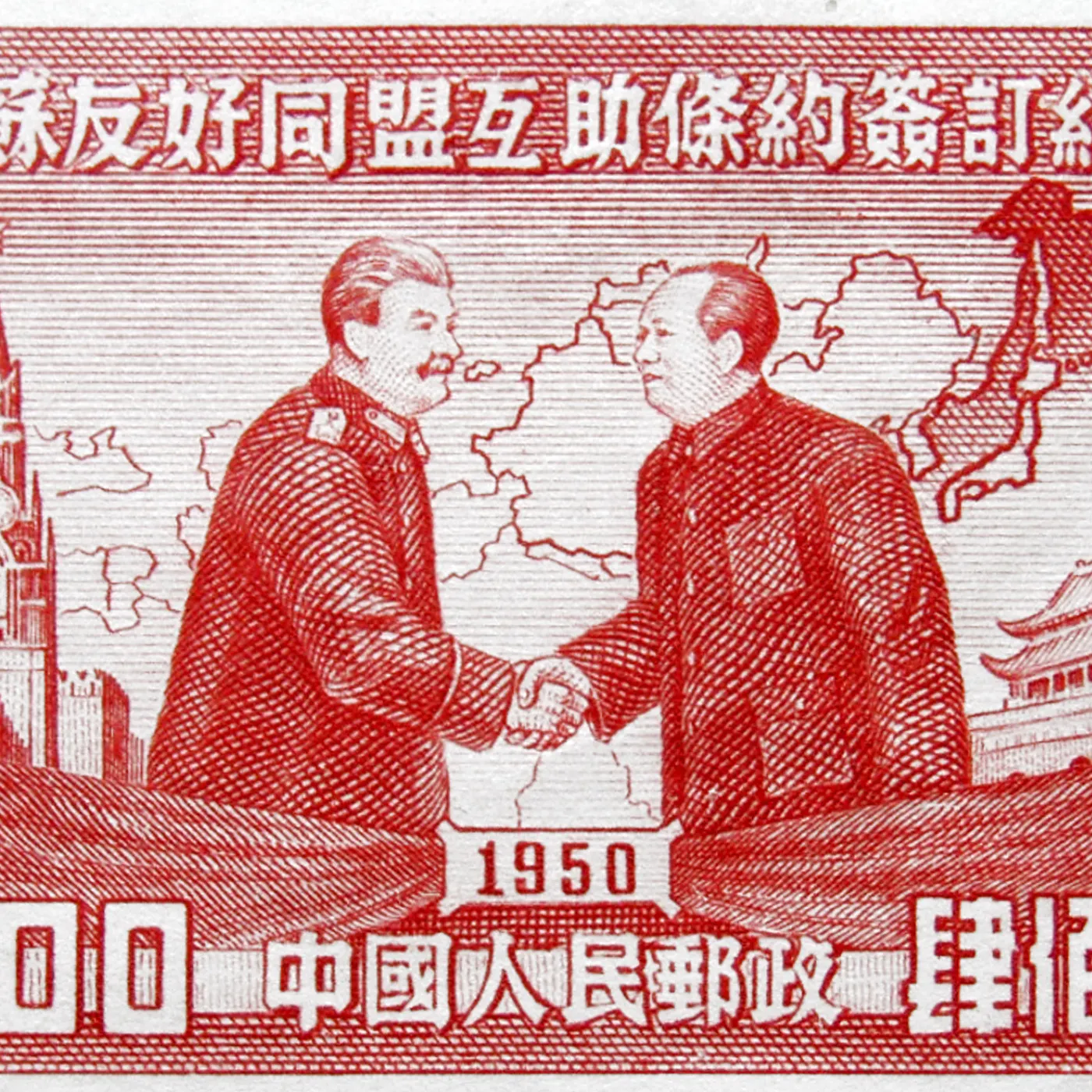
Reform and Opening with Soviet Characteristics: Russian Perspectives on China’s Rise
This week on ChinaEconTalk, Jordan interviews Chris Miller, associate professor of international history at Tufts University and a specialist on Russian politics, economics, and foreign policy. Drawing on some of his recent publications, Miller discusses topics ranging from Sino-Soviet collaboration and competition to their respective economic and political reform programs in the 1970s and 80s. Miller concludes by exploring the significance of the collapse of the USSR in terms of the impression it made on Chinese officials, including Xi Jinping, and what this may suggest about the future of Chinese politics and the ongoing Sino-Russian relationship. As Xi himself is reported to have said during a closed-door meeting in 2012: “Why did the Soviet Union disintegrate? Why did the Soviet Communist Party collapse? … Finally, all it took was one quiet word from Gorbachev to declare the dissolution of the Soviet Communist Party, and a great party was gone. In the end nobody was a real man, nobody came out to resist.” What to listen for on this week’s ChinaEconTalk: 34:17: On the Soviet origins of Deng’s Reform and Opening strategy: “There was a period of learning [by China] from the Soviet Union in the 1950s right after the revolution...Deng picked that back up to a certain extent in the late 1970s...the goal was to give space to private enterprises in the countryside and to give space to farmers to operate without central Party control...Deng saw this and said, ‘I wonder if we can try something like this at home in China, and we can use Lenin to justify it.’” 52:15: “The CCP interpretation, which is also the interpretation of many in Russia today, is that it’s plausible to have had a strong man reform the economy but keep the party and the state as they were, and in my research that just seems extraordinarily implausible…in some ways the Xi Jinping view is the ‘have your cake and eat it too’ version, and the reality is the history doesn’t support that counterfactual.” Get bonus content on Patreon See acast.com/privacy for privacy and opt-out information. Learn more about your ad choices. Visit megaphone.fm/adchoices
East Asian AI: Researching Chinese, Japanese, and Korean Tech in Canada
This week on ChinaEconTalk, Jordan speaks with Dongwoo Kim, a postgraduate research fellow at the Asia Pacific Foundation of Canada who specializes in AI. Dongwoo discusses his research on the progress of AI development in Japan, Korea, and China, including the challenges faced by Chinese AI researchers overseas, and the need for greater tech literacy in general. What to listen for on this week’s ChinaEconTalk: 4:49: Misconceptions abound when it comes to AI, as do references to “Skynet” from the Terminator movies. “Strictly speaking, that’s not what we’re talking about,” Dongwoo says. “People have such a misunderstanding about this, and also the way in which we’re using AI now, it’s kind of subtle, right? It’s used by Google, it’s used by Facebook. If you don’t have the tech literacy, you’re not always going to be aware of it. So I think there’s a potential that if we don’t educate people about what AI really is and why this matters, we might get to a situation where people don’t really have a clear conception of what this AI thing is when it will be affecting so many aspects of their lives.” 32:36: On Chinese AI researchers in Canada: “[Problems are] not as overt as in the U.S. I think, if anything, the concerns that have materialized are if there’s funding within a Canadian postsecondary institution that is tied to an American partner, that may compromise their ability to continue working on that research project for a researcher of Chinese ethnicity. But there has been no concrete move to do that in Canada.” Get bonus content on Patreon See acast.com/privacy for privacy and opt-out information. Learn more about your ad choices. Visit megaphone.fm/adchoices
The Party in Cyberspace: China’s Digital Ecosystem
This week, Jordan speaks with Graham Webster, a China digital economy fellow and coordinating editor of the DigiChina project at New America. He was previously a senior fellow and lecturer at Yale Law School’s Paul Tsai China Center. The two talked about Graham’s work at DigiChina, artificial intelligence in China and its complex legal infrastructure, the facts (and fiction) behind China’s controversial social credit system, and the potential for a new cold war between the U.S. and China. What to listen for on this week’s ChinaEconTalk: 10:23: “If the Chinese government wants to step on Huawei or somebody to get access to data, they’re not going to need this particular provision of law to do it. I think it’s a similar case with VPNs and these cross-border data rules. The pretty clear intent behind these rules is to expand on an increasingly detailed regime for protecting Chinese peoples’ data from abuse by companies or cyber criminals or just breaches due to bad security practices. It could be read in a way that would make VPNs problematic, but there are already other sets of regulations that make VPNs kind of problematic under Chinese law… From my perspective, this would be a very strange way for the Chinese government to try to cut down on VPNs, when they could just go at it directly and say it’s a violation of the principle of cybersovereignty.” 32:59: “In the end, we’re having this global discussion and people around the world are realizing how unaccountable various institutions and businesses are when they use automation. And there’s both real things going on in China, especially in Xinjiang, and a bunch of maybe slightly exaggerated or imagined things going on that capture people's imaginations about what could go wrong… I really would like it for people to be better informed about the realities of, for example, social credit because — my [former] colleague Jeremy Daum likes to say sometimes: ‘There are plenty of actual Chinese government offenses against human rights and against the dignity and well-being of Chinese citizens; we don’t need to invent other ones. We should focus on what’s actually happening.’” Get bonus content on Patreon See acast.com/privacy for privacy and opt-out information. Learn more about your ad choices. Visit megaphone.fm/adchoices
Little Red Book, Big Red Ideas: Part 2 of A Global History of Maoism
This week, in part 2 of a special two-part edition of ChinaEconTalk, Jordan interviews Professor Julia Lovell, author of the recently published book on Mao’s international legacy entitled Maoism: A Global History. In this episode, Lovell recounts the ways in which Maoism truly started going global in the 1950s and 1960s. With some prompting courtesy of the Chinese government’s propaganda machine, self-described Maoist groups sprang up in Southeast Asia, sub-Saharan Africa, Latin America, Western Europe, and even the U.S. Lovell explains how groups around the world interpreted the works and words of Mao in various ways and with varying results — from Black Panthers hosting study sessions of Mao’s Little Red Book in the U.S. to members of the Shining Path who espoused a Marxist-Leninist-Maoist ideology as they committed acts of guerilla warfare in Peru. Sign up here for the ChinaEconTalk newsletter. Learn more about CLI here and use the promo code 'jordan' for $100 off any program. Quotes to listen for on this week’s episode: 21:19: Lovell describes the “counterculture craze” of the 1960s in Western Europe and the U.S., and the appeal of Maoism to such groups. “Student protestors, for example, who were dissatisfied with their universities and with their governments identified — or misidentified — Mao’s Cultural Revolution as a youth protest, and adopted its slogans such as ‘To rebel is justified’ (造反有理 zàofǎn yǒulǐ) or ‘Bombard the headquarters’ (炮打司令部 pàodǎ sīlìngbù) in their own revolts and demonstrations… Many Western radicals felt solidarity with Mao’s China, which was America’s number one detractor through this time. And this really followed the logic of ‘My enemy’s enemy is my friend.’” 34:13: Lovell tells the story of one of Mao Zedong’s generals, operating under the pseudonym of Mafaxian, who was sent to Zambia in an effort to recruit and indoctrinate lieutenants loyal to the political and militaristic precepts of Maoism. His mission was ultimately a failure, with Mafaxian feeling “embittered” toward the end of his years-long tenure. Lovell explains how this oral history is a “perfect grassroots example of how limited the possibilities of China’s ability to export its model were, despite the huge amounts of generosity and largesse.” Get bonus content on Patreon See acast.com/privacy for privacy and opt-out information. Learn more about your ad choices. Visit megaphone.fm/adchoices
Little Red Book, Big Red Ideas: Part 1 of A Global History of Maoism
This week, in part 1 of a special two-part edition of ChinaEconTalk, Jordan interviews Professor Julia Lovell, author of the recently published book on Mao’s international legacy entitled Maoism: A Global History. In this episode, Lovell introduces the core tenets of Maoist thought and its complex impact on both the Chinese Communist Party and other, offshoot devotees around the world. She outlines the key events in Mao’s life, the events that helped shaped his ideology, his idea of “violent, tumultuous world revolution,” and the friction during the Cold War that eventually culminated in the Sino-Soviet split. Sign up here for the ChinaEconTalk newsletter. Learn more about CLI here and use the promo code 'jordan' for $100 off any program. Quotes to listen for in this episode: 15:10: “Maoism, although it has this singular name, it doesn’t actually correspond to a single, unitary phenomenon...it’s a set of ideas and practices that is living and breathing that has been translated and mistranslated across different decades and across many different regions. And above all, it’s a set of often very contradictory ideas. And this is no coincidence because Mao himself was a great admirer of the idea of contradiction. He saw contradictions as possessing a kind of primal energy. He saw them as something that drove history on. So when there were contradictions in his own ideas or when he perceived them around him, he tended to embrace them. Inconsistency didn’t bother him.” 43:48: “The intellectual, political nub of it is that Mao feels that after Stalin’s death, Khrushchev is losing the Soviet Union, losing their revolutionary bite. They’re making nice with the United States and they’re turning their backs on the idea of a violent, tumultuous world revolution.” 46:03: “Throughout his career and particularly toward the end of his life, he consistently saw himself as a rebel, as an outlier, as someone who made trouble. You see this very strongly in the Cultural Revolution, but you also see this in the way he tries and often succeeds to provoke the Soviets.” Get bonus content on Patreon See acast.com/privacy for privacy and opt-out information. Learn more about your ad choices. Visit megaphone.fm/adchoices
Learning to listen: China's billion-dollar podcast industry
While it may be a pipe dream for ChinaEconTalk to ever merit a billion-dollar price tag, in China, podcast “unicorns” are everywhere. Companies like Ximalaya and Yudao have multibillion-dollar valuations, but feature startlingly different content from what consumers expect in the West. What drives these differences, and what does the future hold for spoken audio in China? To answer these questions, Yi Yang, a young podcast host and founder of the Mandarin-language podcast startup JustPod 播客一下, joins Jordan to explain how, after the advent of podcasts in China, people are finally “learning to listen.” Yi Yang's original podcast is called LeftRight 忽左忽右. His two branded podcasts are Startup Insider 创业内幕 and Bessie’s Notes 贝望录. ChinaEconTalk's newsletter is dope. Sign up here at www.chinaecontalk.substack.com. The latest issues include an analysis of why Amazon lost in China and learn about the bane of China’s automobile industry. Get bonus content on Patreon See acast.com/privacy for privacy and opt-out information. Learn more about your ad choices. Visit megaphone.fm/adchoices
Of cell phones and seed prices: The Chinese legal system in theory and practice
This week on ChinaEconTalk, Jordan speaks with Donald Clarke, a specialist in Chinese law and the David Weaver Research Professor at George Washington University. Following a thorough introduction to the structure of the Chinese legal system starting from the Qing dynasty, Clarke discusses a provocative article he recently co-authored, Who owns Huawei?, which discusses in detail the legal ownership of Huawei Technology Co., Ltd. Clarke also deconstructs Huawei’s own legal arguments regarding whether its products (and, by extension, customers’ data) is subject to the Cybersecurity Law of the PRC and the National Intelligence Law of the PRC. Get bonus content on Patreon See acast.com/privacy for privacy and opt-out information. Learn more about your ad choices. Visit megaphone.fm/adchoices
The Future of U.S.-China Relations: Is ‘Collective Pressure' the Answer?
This week, in the second installment of the series “The Future of U.S.-China Relations” on ChinaEconTalk, Jordan speaks with Professor Hal Brands of the Johns Hopkins School of Advanced International Studies and Zack Cooper, a research fellow at the American Enterprise Institute. In addition to offering some prescriptions for relieving some of the tension points in the U.S.-China relationship more generally, the pair discuss the major takeaways from their co-published paper in the Texas National Security Review, “After Responsible Stakeholder, What? Debating America’s China Policy.” Get bonus content on Patreon See acast.com/privacy for privacy and opt-out information. Learn more about your ad choices. Visit megaphone.fm/adchoices
From Beijing to Cairo: Peter Hessler on What Makes a Real Revolution
This week on ChinaEconTalk, Jordan speaks with veteran journalist Peter Hessler. Peter spent seven years in China as a correspondent for The New Yorker, followed by five years in Egypt. In this episode, Peter discusses his long and prolific career reporting on the society, politics, and culture of these two dynamic nations; he also considers the similarities and differences in the ways the Chinese and Egyptian people make sense of their respective places in the world based on their rich historical and cultural legacies. In addition, Peter reflects on the 30th anniversary of the Tiananmen Square massacre, and contrasts it with the 2013 mass protests and eventual coup d'état in Cairo. Check out the ChinaEconTalk newsletter here, and please leave us a review on iTunes! Get bonus content on Patreon See acast.com/privacy for privacy and opt-out information. Learn more about your ad choices. Visit megaphone.fm/adchoices
How Local Bureaucrats Helped Create Chinese Tech Giants
Why did Shenzhen, a backwater fishing village, spawn the likes of industry leaders ZTE, Huawei, and Lenovo, while Suzhou, which previously scored massive investments from top “dragon head” foreign firms like Samsung and Philips, failed to spawn domestic innovation? What role did FDI and the local bureaucrats in charge of economic development play? And what lessons does this story hold for today's Chinese industrial policy as well as development and innovation economics more broadly? For answers, we turn to Ling Chen, an assistant professor at the Johns Hopkins School of Advanced International Studies, and the author of the recent book Manipulating Globalization: The Influence of Bureaucrats on Business in China. Get bonus content on Patreon See acast.com/privacy for privacy and opt-out information. Learn more about your ad choices. Visit megaphone.fm/adchoices
The Future of U.S.-China Economic Relations: The Case for Change
This week, ChinaEconTalk launches its “Future of U.S.-China Economic Relations” miniseries with an interview featuring Melanie Hart, a senior fellow and the director of China Policy at the Center for American Progress. At the Center, Melanie specializes in U.S.-China foreign policy and explores new opportunities for bilateral cooperation on topics such as energy, climate change, and cross-border investment. In this episode, she discusses the central arguments in two of her recent articles, "Mapping China's global governance ambitions" and "Limit, leverage, and compete: A new strategy on China,” and lays out her vision for what progressive U.S. policy making in response to new political trends in China might look like. Check out the ChinaEconTalk newsletter here, and please leave us a review on iTunes! Get bonus content on Patreon See acast.com/privacy for privacy and opt-out information. Learn more about your ad choices. Visit megaphone.fm/adchoices
Harnessing the Educational Power of AI
Over 100 million Chinese adults have used the Liulishuo (流利说 liúlì shuō) app to learn English through AI-powered tutoring. This week on ChinaEconTalk, host Jordan Schneider interviews Liulishuo co-founder and CTO Ben Hu about the company’s journey from its early days to its recent listing on NASDAQ. Along the way, they discuss the current state of development of Liulishuo’s speech-recognition capabilities, general strategies for Chinese companies seeking to succeed abroad, and the motivational stories of some of the app’s users. Please take a moment to review ChinaEconTalk on iTunes. Get bonus content on Patreon See acast.com/privacy for privacy and opt-out information. Learn more about your ad choices. Visit megaphone.fm/adchoices
Huawei May, But How?: China's Role in Global IT Infrastructure
Is Huawei unfairly maligned or rightly feared? Are the tech supply chains running through China a marvel of 21st-century globalization, or dangerous oversight on the part of U.S. tech firms and the federal government? Today’s guest on ChinaEconTalk — Nick Weaver, a researcher at the International Computer Science Institute and a lecturer at UC Berkeley — provides some clarity. Huawei and other Chinese tech titans have found themselves on the defensive, pushing back against allegations of system backdoors and Chinese government influence. In layman’s terms, Nick explains some of the technical aspects behind the fears that have arisen around China’s role in tech supply chains and information technology infrastructure around the world. Please take a moment to review ChinaEconTalk on iTunes! Get bonus content on Patreon See acast.com/privacy for privacy and opt-out information. Learn more about your ad choices. Visit megaphone.fm/adchoices
Aerial Acrobatics: China's Aviation Industry
This week on ChinaEconTalk, host Jordan Schneider discusses China’s aviation industry with Neil Thomas, Research Associate at the Paulson Institute’s in-house think tank, MacroPolo. Focusing on Boeing’s long history in China, they explore how the company’s interactions with the state have actually proven to be a microcosm of the larger U.S.-China relationship — from early involvement navigating business in the Mao era to the more recent period of strategic competition. Jordan and Neil reflect on this remarkable evolution, and debate whether China’s dependence on U.S. aviation technology is sustainable or even desirable from a Chinese perspective. Get bonus content on Patreon See acast.com/privacy for privacy and opt-out information. Learn more about your ad choices. Visit megaphone.fm/adchoices
Red Guards to Red Entrepreneurs: How Mao Era Thought Seeps Into Modern Chinese Business
In this episode of ChinaEconTalk, host Jordan Schneider interviews Professor Christopher Marquis, professor at Cornell’s SC Johnson College of Business. Christopher discusses a few of his recent publications, which focus primarily on how Chinese communist ideology impacts thinking within private sector firms and policy implementation by Chinese politicians. Recommended reading: Also by Christopher Marquis: Waking from Mao’s Dream: Communist Ideological Imprinting and the Internationalization of Entrepreneurial Ventures in China Defending Mao’s Dream: How Politicians’ Ideological Imprinting Affects Firms’ Political Appointment in China. You can subscribe to the ChinaEconTalk newsletter here: chinaecontalk.substack.com. Get bonus content on Patreon See acast.com/privacy for privacy and opt-out information. Learn more about your ad choices. Visit megaphone.fm/adchoices
ChinaEconTalk Crossover Episode: China Tech Investor Podcast
This week’s episode is a crossover with the China Tech Investor podcast. Join Jordan in conversation with China Tech Investor co-hosts James Hull and Elliot Zaagman as they discuss their perspectives on Chinese ecommerce, live streaming, fashion, the lessons Facebook is learning from WeChat, and emerging investment opportunities. Get bonus content on Patreon See acast.com/privacy for privacy and opt-out information. Learn more about your ad choices. Visit megaphone.fm/adchoices
China's exploited tech workers fight back
This episode of ChinaEconTalk features a discussion with two of the people behind recent, high-profile efforts to mobilize Chinese programmers against labor exploitation via GitHub, the world’s leading software development platform: Suji Yan, CEO of Dimension, and Katt Gu, J.D., Advisor at Asian-Pacific Blockchain Development Association and PhD candidate in informatics at the University of Illinois at Urbana-Champaign. Suji and Katt are on the front lines of a growing movement of thousands protesting working conditions for Chinese tech workers, which are characterized by outrageously long working hours — a practice widely referred to as “996,” shorthand for shops that require staff to work “from 9 a.m. to 9 p.m., six days a week.” In response, Suji and Katt developed and published the “Anti-996 License,” which allows developers to prohibit the use of their code by entities that do not adhere to basic labor standards. The license has been adopted by over 2,000 software projects to date and “liked” over 200,000 times. In addition to discussion their advocacy efforts, in this episode Suji and Katt share their views on the ever-evolving Chinese tech sector, including the history of Linux and the ongoing importance of open-source software development tools. You can subscribe the ChinaEconTalk newsletter at: chinaecontalk.substack.com. Get bonus content on Patreon See acast.com/privacy for privacy and opt-out information. Learn more about your ad choices. Visit megaphone.fm/adchoices
Building – and Selling – the Great Firewall
This week on ChinaEconTalk, host Jordan Schneider speaks with James Griffiths, senior producer for CNN International, to discuss his new book, The Great Firewall of China: How to Build and Control an Alternative Version of the Internet. Together, they trace the history of the internet in China, from the early, heady days of relative freedom through the slow but steady tightening of government controls, and discuss China’s recent efforts to export its comprehensive model of internet censorship. Along the way, they consider questions on a range of issues including the impact of Google and the tireless efforts of netizens to work around online restrictions. Get bonus content on Patreon See acast.com/privacy for privacy and opt-out information. Learn more about your ad choices. Visit megaphone.fm/adchoices
One hour, Two Sessions
One hour, Two Sessions China’s Two Sessions, the national annual gathering of the leadership of the People’s Republic of China, will soon be coming to a close. This week on ChinaEconTalk, Jordan sat down with Chris Beddor, a columnist for Reuters Breakingviews, to discuss highlights from this year’s gathering, including state-owned enterprise reform, implications for Made in China 2025, the evolving role of Li Keqiang, and more. Subscribe to the ChinaEconTalk newsletter here. Get bonus content on Patreon See acast.com/privacy for privacy and opt-out information. Learn more about your ad choices. Visit megaphone.fm/adchoices
ChinaEconTalk with special guest Russ Roberts
This week's guest is Russ Roberts. He's a research fellow at Stanford's Hoover Institution and the host of the EconTalk podcast, a weekly interview-based show that’s vaguely about economics but that has, over time, evolved into an extended meditation on the human condition. Its diverse topics in the last few weeks have included Solzhenitsyn, the 2008 financial crisis, and gratitude. Even though this conversation will have little or nothing to do with China, seeing as Russ served as the inspiration for the ChinaEconTalk podcast, I hope you all find it interesting. Get bonus content on Patreon See acast.com/privacy for privacy and opt-out information. Learn more about your ad choices. Visit megaphone.fm/adchoices
Rubber ducks and semiconductors: Navigating China’s legal system
“The champagne days are over,” writes Dan Harris, reflecting on how the tone of his China Law Blog has evolved since its creation in 2006. As the founder of Harris Bricken, an international law firm with a major China presence, Dan has a unique window into how macro changes in China’s economy and trade relations play out within a law firm. In this conversation, Jordan and Dan discuss common misconceptions about the law in China; memorable Chinese legal scams; joint ventures in China; day-to-day operations of an international law firm in the country; intellectual property cases and enforcement within the Chinese legal system on the mainland. Get bonus content on Patreon See acast.com/privacy for privacy and opt-out information. Learn more about your ad choices. Visit megaphone.fm/adchoices
Diplomatic bookkeeping with Ryan Hass
This week’s guest on ChinaEconTalk is Ryan Hass, a David M. Rubenstein Fellow in the Brookings Institution’s Foreign Policy program, who is jointly appointed to the John L. Thornton China Center and the Center for East Asia Policy Studies. From 2013 to 2017, he served as the director for China, Taiwan, and Mongolia at the National Security Council (NSC) during President Obama’s second term. Ryan offers reflections on his time at the NSC; the diplomatic strategies and objectives regarding U.S.-China relations during his time in the White House; elaboration on an article he co-authored at Brookings titled “Assessing U.S.-China relations 2 years into the Trump presidency”; and thoughts on the trajectory of the bilateral relationship under the current administration. Check out our newsletter at www.chinaecontalk.substack.com. Also, join the fan club and rate ChinaEconTalk on iTunes! Get bonus content on Patreon See acast.com/privacy for privacy and opt-out information. Learn more about your ad choices. Visit megaphone.fm/adchoices
China’s foothold in India’s tech ecosystem
Today, nearly half of the top 100 apps in India's Google Play store are made by Chinese companies. After past failures to enter the Indian tech market, what's driving China tech's sudden success on the subcontinent? How have new Chinese companies like Bytedance and Xiaomi been able to localize more successfully than the likes of Tencent in the early 2010s? And just how seriously do Chinese firms take issues like child porn and fake news in India? To explore these topics, we spoke with Shadma Shaikh, a writer at Factor Daily. She and Jordan examine the multiple different aspects of China’s growing presence in India’s technology space. They also discuss the successes and failures of Chinese tech companies in India, the strategies that helped those companies find success, and the unique features of Indian culture (such as multiple languages), which have created difficulties for Western and Chinese tech companies that are eager to gain access to the Indian tech market. ChinaEconTalk is open for sponsorships! Reach out on Twitter or LinkedIn for opportunities to connect with over 2,000 listeners who are passionate about China’s economy. Get bonus content on Patreon See acast.com/privacy for privacy and opt-out information. Learn more about your ad choices. Visit megaphone.fm/adchoices

The Obama era of U.S.-China economic relations
How did the U.S.-China economic relationship evolve during the Obama administration? Are the economic tensions we see today between the two countries a product of inevitable forces, or more contingent on the choices of the Trump and Xi administrations? To discuss these topics and more, we have on today’s show Caroline Atkinson, who served as President Barack Obama’s deputy national security adviser for international economics. Get bonus content on Patreon See acast.com/privacy for privacy and opt-out information. Learn more about your ad choices. Visit megaphone.fm/adchoices
A ‘Qianlong’ look back at China’s economic history
How does autocratic repression impact societies? Can the legacy of political repression ripple out across centuries, creating a vicious autocratic cycle? Today, on ChinaEconTalk, we're going back to the Qing dynasty — the time of the Qianlong Emperor, and before — to find out. Our guest is Melanie Meng Xue, a postdoctoral fellow at the Department of Economics and the Center for Economic History at Northwestern University, whose recent paper on the topic can be found here. Get bonus content on Patreon See acast.com/privacy for privacy and opt-out information. Learn more about your ad choices. Visit megaphone.fm/adchoices
Changing tides in 2019, with Gordon Orr
“The U.S.-China equilibrium of the past 20 years has gone,” declares Gordon Orr in his recent piece on what to expect in China in 2019. So what will replace it? What impact will the increasingly activist Chinese government have on the broader economy? And what broader reflections does a 30-year China veteran have about recent changes in China? Orr is currently a director emeritus at McKinsey, having previously helped open the firm’s Beijing office and led its Greater China practice. He is also a board member of Lenovo and Meituan Dianping. Check out the new ChinaEconTalk newsletter here. Get bonus content on Patreon See acast.com/privacy for privacy and opt-out information. Learn more about your ad choices. Visit megaphone.fm/adchoices
The world’s largest video game industry
China’s video game market is the world’s largest. Over 600 million people play video games in China, and collectively, they spend over $40 billion a year on games. This episode, featuring Abacus reporter Josh Ye and localization expert Frankie Huang, explores the market as well as gaming culture in China. Check out our newsletter exploring the best long-form Chinese reporting on tech and business at chinaecontalk.substack.com. Get bonus content on Patreon See acast.com/privacy for privacy and opt-out information. Learn more about your ad choices. Visit megaphone.fm/adchoices
Chinese Policymaking Made Easy with Trivium China
Chinese politics is boring and confusing. Or is it? This week Jordan speaks with Andrew Polk and Trey McArver, economics and politics specialists at Trivium China. The three discuss the size of the Chinese bureaucracy, how policy is formed and implemented, and the Chinese economy. Check out the Trivium China's daily tip sheet for "a cheeky dose of China analysis" each morning. Sign up to the recently launched ChinaEconTalk newsletter, a weekly look into Chinese-language sources on business, tech, and the broader economy. Feel free to out to Jordan directly on Twitter, LinkedIn, or on wechat at jordanschneider. And lastly, scan here to join the ChinaEconTalk wechat group: Get bonus content on Patreon See acast.com/privacy for privacy and opt-out information. Learn more about your ad choices. Visit megaphone.fm/adchoices
The Chinese Financial Crisis That Never Came, with Logan Wright
Foreign investors have lost billions expecting a Chinese financial crisis that hasn't come yet. So what gives? According to the Rhodium Group's Logan Wright, it's not China's domestic savings rate or RMB-denominated debt that’s keeping the economy afloat, but rather the government's credibility. Get bonus content on Patreon See acast.com/privacy for privacy and opt-out information. Learn more about your ad choices. Visit megaphone.fm/adchoices
Daniel Kurtz-Phelan on George Marshall’s China Mission
Daniel Kurtz-Phelan, the executive editor of Foreign Affairs, is the author of the recent book The China Mission: George Marshall's Unfinished War, 1945–1947. George Marshall, World War II hero and creator of the Marshall Plan, spent 1945-47 drinking baijiu with Mao and playing croquet with Chiang Kai-shek, fighting to stave off a civil war. Was the “loss of China” to the CCP inevitable? Did Marshall, with his strategy of forcing reconciliation on the Nationalists and Communists, in any way contribute to it? And what can we learn from Marshall's expedition to China about the limits of American influence abroad? If you have a professional opportunity you think Jordan might be a good fit for, please reach out to him at https://www.linkedin.com/in/jorschneider/, [email protected], or JordanSchneider on WeChat. Thanks so much! Get bonus content on Patreon See acast.com/privacy for privacy and opt-out information. Learn more about your ad choices. Visit megaphone.fm/adchoices
China's Domestic Sports Market With Mark Dreyer
China's government aims to create a $500 billion sports industry by 2020. But how are those ambitions playing out on the ground in the Chinese basketball and soccer leagues? There's more to sports in China than the well-known problems of exorbitant transfer fees and match fixing, but with the government apparently unable to resist interfering in private leagues, does China have much hope for ever developing world-class teams? SupChina columnist and longtime China sports watcher Mark Dreyer gives his take. Get bonus content on Patreon See acast.com/privacy for privacy and opt-out information. Learn more about your ad choices. Visit megaphone.fm/adchoices
How Chinese Firms Succeed and Fail at Internationalizing (Featuring Bytedance)
What is Bytedance and how does it make its money? How do politics and culture get in the way of Chinese firms' internationalization efforts? What can Chinese phones in Africa and electric buses in LA teach us about localization challenges? Elliott Zaagman, co-host of TechNode's China Tech Investor podcast, takes on these issues for the latest episode of ChinaEconTalk. Get bonus content on Patreon See acast.com/privacy for privacy and opt-out information. Learn more about your ad choices. Visit megaphone.fm/adchoices
KFC, the Business of Propaganda, and the 'Toilet Revolution'
Why is KFC so big in China? What is the “Toilet Revolution” and why does it matter? How does Chinese propaganda work? How have bicycles’ role in Chinese society evolved over time? Neil Thomas of MacroPolo takes on all this in ChinaEconTalk’s latest show. Get bonus content on Patreon See acast.com/privacy for privacy and opt-out information. Learn more about your ad choices. Visit megaphone.fm/adchoices
Matt Sheehan on Google in China
What is the history of Google in China? Does the company have any hope of bringing its search engine back into the Chinese market? How does China’s development of artificial intelligence stack up against the rest of the world’s? To answer these questions, Matt Sheehan of MacroPolo makes his triumphant return to ChinaEconTalk. Get bonus content on Patreon See acast.com/privacy for privacy and opt-out information. Learn more about your ad choices. Visit megaphone.fm/adchoices
When Trade Wars Turned Bloody: The Opium War with Stephen Platt
When it came to trade wars, the British didn't mess around. Four steam-powered battleships sent by the English to force China to change its trade policy in the mid-19th century changed the course of history. But how did they end up fighting the Chinese in the first place, and what are the contemporary echoes of this historical trade fight? Stephen Platt, the author of the recent Imperial Twilight: The Opium War and the End of China's Last Golden Age, answers these questions and more on the latest episode of ChinaEconTalk. Get bonus content on Patreon See acast.com/privacy for privacy and opt-out information. Learn more about your ad choices. Visit megaphone.fm/adchoices

Tencent's History and Future with Matthew Brennan
Matt Brennan, professional speaker and co-host of China Tech Talk, comes on the show to discuss the history and evolution of China's most popular app, WeChat, as well as threats on the horizon for the company that created it, Tencent. Get bonus content on Patreon See acast.com/privacy for privacy and opt-out information. Learn more about your ad choices. Visit megaphone.fm/adchoices

David Dollar on U.S.-China financial friction
David Dollar is a senior fellow at the John L. Thornton China Center at the Brookings Institution. He has previously served as the U.S. Treasury Department emissary to Beijing during the Obama Administration, and the World Bank's country director for China and Mongolia. He discusses his storied career and the recent history of U.S.-China financial relations, including the current trade war's origins in the 2008 financial crisis. Get bonus content on Patreon See acast.com/privacy for privacy and opt-out information. Learn more about your ad choices. Visit megaphone.fm/adchoices

China’s Grand AI Ambitions with Jeff Ding
Rhodes Scholar Jeff Ding breaks down how China stacks up to the rest of the world in the race to develop AI. He delves into the connections between Chinese tech companies and government AI targets, AI’s military implications, as well as the ethical considerations of AI applications in China’s police state. We discuss his recent paper “Deciphering China’s AI Dream” as well as recent articles on AI he has translated from Chinese media on his ChinAI newsletter. Get bonus content on Patreon See acast.com/privacy for privacy and opt-out information. Learn more about your ad choices. Visit megaphone.fm/adchoices
Trade War Tale of the Tape with Chad Bown
Chad Bown is a fellow at the Peterson Institute for International Economics in Washington, DC and cohost of the excellent Trade Talks, a weekly podcast on the economics of international trade policy. In this episode, we discuss the competing grand strategies of US and China as well as their different tactics for executing their trade war policies. We touch on potential internal inconsistencies in Trump's trade outlook, the implications for the USD and RMB, as well as potential endgames. Outtro music by VaVa Get bonus content on Patreon See acast.com/privacy for privacy and opt-out information. Learn more about your ad choices. Visit megaphone.fm/adchoices

Data Policy with Samm Sacks
Guest Samm Sacks Senior Fellow, Technology Policy, Center for Strategic and International Studies @CSIS Samm Sacks | Center for Strategic and International Studies Samm Sacks (@SammSacks) | Twitter Samm Sacks, Senior Fellow at CSIS, is perhaps America's leading expert on Chinese data privacy policy. Yes, you heard that right, the world's most advanced surveillance state has a corporate data privacy policy even more stringent than what's currently on America's books. In this episode, we compare China's new law to the GDPR, what privacy policy means for Chinese tech firms with international ambitions, and the implications of the latest Facebook scandal involving Huawei. ChinaEconTalk is proud to announce that it has recently joined Sinica Podcast Network! For more information, visit SupChina.com Get bonus content on Patreon See acast.com/privacy for privacy and opt-out information. Learn more about your ad choices. Visit megaphone.fm/adchoices

What China Thinks of the Trade War with Chublicopinion's Ma Tianjie
Ma Tianjie, founder of the long-running blog Chublicopinion is perhaps the leading English-language chronicler of Chinese public opinion. In this episode, he discusses the official and popular responses to the trade war, ranging from hard right nationalists calling for a return to Maoist autarchy to liberals thanking Trump for pushing China to open its markets. In his day job, he works for ChinaDialogue, a site that covers Chinese environmental issues. Get bonus content on Patreon See acast.com/privacy for privacy and opt-out information. Learn more about your ad choices. Visit megaphone.fm/adchoices

Trump's Trade War Tactics with Chris Balding
(The audio stops beeping after 1 minute I promise!) Chris Balding as a Bloomberg Views contributor and professor based in Shenzhen. In this interview, we discuss two recent posts on his blog Baldingsworld which both make the case for America's hard line stance toward China's economic policies as well as decry Trump's lack of skill in tactical execution. Get bonus content on Patreon See acast.com/privacy for privacy and opt-out information. Learn more about your ad choices. Visit megaphone.fm/adchoices

Made in China 2025 and Bytedance with Lorand Laskai
Lorand Laskai is a researcher at a prominent American think tank who recently wrote a piece on the Trump administration's animosity to Xi's Made in China 2025 program. In this episode, we discuss what exactly ticks American policymakers off about the initiative, why Chinese unicorn CEOs related to content have had to issue apologies, what moral calculations foreigners make when deciding to work for firms caught up in these sorts of issues, and the Chinese debate scene. Athena Cao, a Beijing-based industry analyst, also joined us to guest host. Get bonus content on Patreon See acast.com/privacy for privacy and opt-out information. Learn more about your ad choices. Visit megaphone.fm/adchoices

How China Learned to WTO with Henry Cao
Guest henry gao henry gao (@henrysgao) | Twitter Prof. Henry Gao is Associate Professor of law (tenured) at Singapore Management University and Dongfang Scholar Chair Professor at Shanghai Institute of Foreign Trade. And co-author alongside Gregory Schaffer of the recent paper China's Rise: How It Took on the U.S. at the WTO. As evidenced by China’s behavior in the recent trade scuffles with the US, it’s clear that Chinese lawyers are far from rubes when it comes to trade. In this interview, we discuss what it took for the PRC to learn to speak the language of international legal trade law and the implications this develompent had both domestically and internationally, particularly in the context of the current US-China trade war. Get bonus content on Patreon See acast.com/privacy for privacy and opt-out information. Learn more about your ad choices. Visit megaphone.fm/adchoices

Gaming in China with Charlie Moseley and Chang Jung-Erh
Guest Charlie Moseley Washingtonian in Asia. Predisposed to wanderlust. Charlie Moseley's Personal Website charlie (@justcharlie) | Twitter China's over 600 million gamers contribute to a gaming market that generated $30 billion in 2017. ChinaEconTalk discusses this part of the Chinese economy and society with Charlie Moseley, an independent game developer and longtime resident of Chengdu, and Chang Jung-Erh (Polly), a past intern at Netease Games. Topics include the evolution of the Chinese gaming market, the impact of gaming giants Tencent and Netease, female gamers in China, and Chengdu hip hop. Mentioned in the episode: DJI university robot contest Robomasters and Chengdu-based rapper Kafe-Hu Get bonus content on Patreon See acast.com/privacy for privacy and opt-out information. Learn more about your ad choices. Visit megaphone.fm/adchoices

Internet Finance with Martin Chorzempa
Guest Martin Chorzempa Research Fellow, @PIIE. China Econ/Finance, FinTech, Financial Development Martin Chorzempa | PIIE Martin Chorzempa (@ChorzempaMartin) | Twitter Martin Chorzempa of the Peterson Institute is over traditional finance. Instead, spends his time analyzing the wild west of innovative consumer finance in China, a space full of unicorns, ponzi schemes, and overworked regulators desperately trying to stay up with the times. We discuss the promise and peril of social credit scores like Alibaba's Sesame Credit and the boom of Chinese peer to peer lending. Martin also explains how a digital gaming currency created by Tencent in the 2000s that developed a secondary market set the pattern that you can today see with its handling of bitcoin. Outtro song: "We are all Bitcoins" Get bonus content on Patreon See acast.com/privacy for privacy and opt-out information. Learn more about your ad choices. Visit megaphone.fm/adchoices

Nick Consonery on China's Economic Reform Trajectory
Guest Nick Consonery Director of China Macroeconomic & Policy research @rhodium_group Rhodium Group Nick Consonery (@nconsonery) | Twitter Nick Consonery of the Rhodium Group with support from the Asia Society recently published The China Dashboard. This piece of research provides a quarterly update on the key fields of economic policy reform, including topics like the environment, fiscal policy, and innovation. In this podcast, we review the dashboard's latest disappointing findings, and discuss why some policy aims may be at cross-purposes. Get bonus content on Patreon See acast.com/privacy for privacy and opt-out information. Learn more about your ad choices. Visit megaphone.fm/adchoices
The Chinese Rustbelt with Song Houze
China's northeast, a region that in the 1970s comprised over 10% of national GDP, now only makes up 3%. In this interview, Song Houze walks listeners through the policy challenges facing the rustbest. He also provides some context behind two developments that recently made international news: a famous entrepeneur berating a local official for squeezing his ski resort and provincial-level GDP revisions.. For more research, see his recent series up on Macropolo on the province of Liaoning. Get bonus content on Patreon See acast.com/privacy for privacy and opt-out information. Learn more about your ad choices. Visit megaphone.fm/adchoices

Oona Hathaway and Scott Shapiro on How the World Order Evolves
Guests Oona Hathaway Professor @YaleLawSch, Director @YaleLawGLC, Editor @just_security, fmr Special Counsel @DeptofDefense, co-author of The Internationalists Oona A. Hathaway - Yale Law School Oona Hathaway (@oonahathaway) on Twitter Scott Shapiro Prof @YaleLawSch + Philosophy @Yale. Visiting Quain Prof @UCLLaws. Editor, Legal Theory and Stanford Encyclopedia of Philosophy. #Internationalists THE INTERNATIONALISTS Scott Shapiro (@scottjshapiro) on Twitter Given how Xi today struts on the world stage with ambitions to use today's "historic opportunity" to reshape the international order, its useful to look back in history to the last time the world faced a revolution in legal norms. Yale Law Professors Scott Shapiro and Oona Hathaway recently published The Internationalists, an intellectual history of how international legal norms have evolved since the days of Grotius. In particular, they focus on the movement to outlaw war peaking in the early 20th century with the Kellogg Briand Pact fundamentally reframed interstate relations and created many aspects of the modern international system China is navigating today. This discussion ranges from how Japan adopted to the western legal reality in the late 19th and early 20th century, to origins of sanctions, the South China Sea and even wars started by claims of wife-stealing. Get bonus content on Patreon See acast.com/privacy for privacy and opt-out information. Learn more about your ad choices. Visit megaphone.fm/adchoices

Barry Eichengreen on the Rise and Fall of Global Currencies
Barry Eichengreen, Professor of Economics and Political Science at Berkeley (not to mention one of my favorite authors of accessible yet profound global economics books) recently published his How Global Currencies Work: Past, Present, and Future. We talk about the rise of the US Dollar and how its transition to global leader was slower and more gradual than many have thought. We then turn to the Yuan and the challenges it faces as the government pushes the currency's internationalization. Get bonus content on Patreon See acast.com/privacy for privacy and opt-out information. Learn more about your ad choices. Visit megaphone.fm/adchoices