Changeling the Podcast
172 episodes — Page 4 of 4
Ep 20episode 20 – court of all kings
Episode 20! It's pretty amazing that we've made it this far, given how hectic life has been over the last few months. But as autumn (just regular, lowercase-a autumn) sets in, and we have time to center ourselves a bit, we're trying to get things in order to keep bringing you Changeling content into the coming seasons. To that end, this week we're talking about Court of All Kings, the third supplement in the Immortal Eyes trilogy of setting/chronicle books, which focuses on Ireland and the fae one finds there. (A note from Pooka: I feel a bit of a fool, because I didn't realize that the lengthier show notes were getting cut off on certain podcasting platforms. Hopefully folks who were interested went on to the website in order to see the rest of what they were after, but in the interest of making everything visible to everyone, we'll try to keep things trim, or at least put the important stuff "above the fold" from now on... so for example, here's the link to our Discord: https://discord.gg/SAryjXGm5j) videos in gaeilge In the episode, we referenced an example of a monolingual Irish speaker interviewed for a documentary a number of years ago... and behold, the video. It's from In Search of the Trojan War, from 1985; the connection they make is that Irish storytelling in the oral tradition has a number of features that link it with other forms of Indo-European epic. The storyteller, Seán Ó hEinrí, passed away in 1998 and is thought to have been (possibly) the last monolingual speaker of the language. (There are plenty of other videos on YouTube if you're interested in the language and its contemporary usage. Several series of the soap Ros na Rún are on there in their entirety, and the documentary No Béarla is a pretty stark demonstration of how few people in Ireland speak Irish.) ... salmon of knowledge The sculpture known as The Big Fish in Belfast is reminiscent of the mythological salmon of knowledge: a fish who ate the hazelnuts of wisdom that fell into its pool, and was then eaten in turn (most myths say by Fionn MacCumhaill/Finn MacCool, first leader of the Fianna). Its tiles are printed with old photographs, children's drawings, snippets of maps and newspapers, and other fragments of Belfast culture: They say that kissing the fish grants one a bit of wisdom, much as kissing the Blarney Stone gives you the gift of the gab. (We can neither confirm nor deny these rumors, but please do rinse your lips carefully if you try.) In Changeling terms, this does seem like it would be some kind of powerful chimerical entity... a poll shall be posted in the Discord (link below) to decide! ... ciarán's playlist In a recent play-by-post game, Pooka had a character who was a Daireann sidhe named Ciarán that kept a "cauldronhouse" (freehold) in trust for the House, disguised as a pub in Dublin. As a character-building exercise, they created a sample playlist of songs to help set the mood. While this barely scratches the surface of the enormous variety of Irish- or Celtic-inflected music out there, it's presented here for your enjoyment, perhaps to listen to while you skim Court of All Kings—just hopefully not while you're also listening to the episode. No idea if a Spotify embed will even work on some platforms, but let's find out...! (Feel free to put this on shuffle as well, the order is pretty flexible.) ... your hosts Josh Hillerup (any pronoun) found an eighteen-leaf clover the other day, and it turns out, there is such a thing as too much luck. Pooka G (any pronoun/they) once climbed a statue of the púca goat in Killorglin, and the very earth shook with unbridled delight. ... Is fearr Gaeilge bhriste, ná Béarla cliste. (Broken Irish is better than clever English.) —Irish proverb (psst! email us at [email protected] if you want) (support us on Patreon for additional treats at https://www.patreon.com/changelingthepodcast!)
Ep 19episode 19.5 – minisode: poems with pooka
bonusJust because we're having a chaotic summer doesn't mean we can't occasionally find time to generate some scraps of content. While we search for time to catch up on chonkier recordings, herewith is a short minisode of something that nobody asked for: a set of poems that are (arguably) Changeling-y in themes. Pooka threw this episode together solo, and recorded it very late at night, so please forgive them for the quality. And if you think you hate poetry, well, hopefully this will at least not make you think you hate it more. The poems featured in this episode: - Emily Dickinson, "To Make a Prairie" - Peter Campion, "Dandelions" - Dylan Thomas, "Fern Hill" - Natalie Diaz, "My Brother at 3 A.M." - Randall Jarrell, "The Woman at the Washington Zoo" - Samuel Taylor Coleridge, "Kubla Khan" - Tony Gloeggler, "2B" - Langston Hughes, "Dreams" and "Harlem" - Sandy Gingras, "The Light Factory" ... your host Pooka G (any pronoun/they) thinks the ellipsis is the most air-headed of punctuation marks, while the em-dash is the sassiest. ... (psst! email us at [email protected] if you want) (and join our Discord at https://discord.gg/SAryjXGm5j !) (support us on Patreon! it's now live at https://www.patreon.com/changelingthepodcast)
Ep 19episode 19 – the shadow court
ESooner or later, the most sinister of the Unseelie were bound to rear their greasy and/or misshapen heads, no? While Banality is an ever-present threat that changelings must struggle against, and nobles-versus-commoners is an important piece of the metaplot, it's important to remember that the balance of light and darkness is another critical conflict for the Kithain. The Shadow Court is the first supplement in the canon to really go in-depth into the Unseelie ethos, the structure and motivations of their court, and what it means to be a baddie (or a beastie, or a bogie). This week, we're taking a deep look at that tome, which is one of the densest with material in the entire line. Bear with us for the wild ride... the nature of evil This is a Big Topic that will probably get its own episode at some point, but a few things need to be said about the relationship of the Unseelie, and the Shadow Court, to eeeeviiilll. The WoD games overall trade in shades of grey, making it difficult to say that the Seelie are overtly "good" and the Unseelie overtly "bad". One could claim that the traits, actions, and outlooks that do fall into the "good" camp tend to crop up more regularly, in sum, among the Seelie, and vice versa among the Unseelie. But there are Seelie who are bloodthirsty, haughty, tyrannical, inflexible, and manipulative, following codes for their own sake and believing that they are Right about everything. And there are Unseelie who are empathetic, joyful, egalitarian, and honest. To draw a parallel with Dungeons and Dragons (yeah, yeah), the better analogy for the Courts might be "Lawful" (with a tendency towards good) for Seelie vs. "Chaotic" (with more wiggle room for evil) for the Unseelie, and where an individual falls within them is on the Good–Evil spectrum is their own thing. The Shadow Court, as a book, just kind of stirs the already-murky waters. There are Unseelie in the book who, despite their contempt for the Seelie, seem to simply be passionate freedom-lovers with the occasional bad temper. But then there are amoral jerks who engage in human sacrifice and make a career out of emotionally abusing Dreamers to get their Glamour fix. Introducing the Thallain as kiths who can never become Seelie and operate as the right hand of nightmare doesn't exactly help the reputation of the "dark side." Importantly, the Shadow Court is not the Unseelie Court; just as importantly, the former is often pulling the latter's strings. Even among the Shadow Court, though, true evil is not a given, especially because the book seems to highlight the fluidity of Court identity: changelings come and go from its ranks, rising and falling in prestige. (That being said, many Shadow Courtiers certainly seem willing to hang out with some truly twisted types...) Ultimately, the game is more interesting when the nature of good and evil isn't predetermined, and the movement between the two becomes the focus of a story, with the Court conflict as a metaphor. Why shouldn't a Thallain have a redemption arc? Why shouldn't the most prim and proper Seelie countess have a long slide into decadence? Changelings rebel against stagnation and stasis, so shifting attitudes, identities, and allegiances are perhaps more in line with this game than the others. As we mention in this episode, Changeling has a reputation for being "not dark enough" (for whom? what does that even mean?), but as this book demonstrates, there is a whole buffet of options that range from the purest of the pure to the dankest of the dank. A word of caution, though—the book's wishy-washiness extends to its use of gaming tools to protect the sensibilities of gamers when needed. It doesn't really offer a stance on how to use or not use violence, sexuality, depravity, etc., so remember: talk. to. your. players. and find out everyone's mileage for different dishes at that buffet. ... responding to hot takes We solicit comments for recordings on our Discord (and here's the link! woooo), but for this episode, we totally forgot to respond to two hot takes from one of our listeners. So, here's some brief responses: Hot Take 1: "The Thallain were never meant to interact with the Kithain. They aren't another splat, they're the main characters from a fundamentally darker game." From an in-game point of view, this certainly seems true. The Thallain came into the Autumn World at the behest of the Fomorians (or so the story goes), their goals and wishes are quite different from Kithain's, and in some cases (see: beasties), Kithain actively try to attack them. But what they were meant to be like doesn't negate the possibility of figuring out stories that accommodate both Thallain and Kithain as protagonists. You need a particularly agreeable one or more of the former, and a particularly tolerant one or more of the latter, but somewhere between the feverish kaleidoscope of Changeling: the Dreaming and the blood-soaked pandemonium of... erm, Thallain: the Horrifying?, there is pote
Ep 18episode 18 – kithbook: trolls
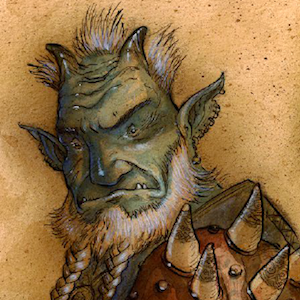
So, we took an extra week off due to individual life stuff that needed sorting out. But now we're back to talk about the first of the splatbooks for Changeling, Kithbook: Trolls, in all of its blue-tinted glory. Takeaways from the book include: oaths matter; legend is more important than history; and if it's anything kind of large and fae-ish, it's probably a troll. Something to remember is that the kithbooks spanned a much larger period of time for their complete set (1996 to 2018), cutting not only across editions but also some serious changes in the world and its sensibilities—so, KB: Trolls feels very different from KB: Eshu and waayyy different from KB: Boggans. But we have to start somewhere, so the beginning seemed like a decent place to start. troll culture The word troll and the concept overall come from Norse mythology and derived Scandinavian folklore, blended in fantasy literature—and CtD as a whole—with similar concepts from other Germanic lore (including English). So it was a bit of a surprise that there was fairly little overt Norse influence on the book, or Celtic (which tends to be the top coat of paint on the entire game), save for a few names, artifacts, and artistic flourishes. It may be unfair to put too much of the burden on the ST and playgroup to bridge the gap between the text and the kind of game they want, but the text is neutral enough that you can have a troll hail from anywhere in the world that supports the myth of "big thing smash with honor". Because this book came out before Changeling's kith bloat really went into overdrive, it implies that all such folkloric beings are trolls, in some form—your mileage may vary with how much you want to fold all those legends into a single kith that is Northern European in its origin. The game has received a lot of justified criticism for its Eurocentrism; the way that different fae who smash with honor regard each other is something that can have in-game effects and consequences. Since this is first edition, there is also a strong thread of "changelings hang out with their own kind". But the rest of the game materials don't exactly bear that out; the fiction and setting materials of 1st edition imply mixed populations as common enough, and future editions make it more or less the norm. Kithbook: Trolls presents them as having almost a standalone society whose uniqueness extends back to the legendary days, with their own freeholds and societies and whatnot. There's nothing wrong with this, and it opens up the possibility of a troll-only game. But it's an oddity to read in the light of what comes after. (Pooka's note: kinship is a strong theme in Changeling, but it's different from the tribalism of Werewolf, or Vampire where bloodline is often the only kind of kinship that matters. CtD is much more supportive of the concepts of found family and building new, small-scale culture together. My take is that giving the trolls all of this material without talking about how it's integrated into Kithain society at large kind of runs counter to that theme.) ... a note on artwork Apologies if we came off too harsh about the artwork in this book. Some of it is genuinely cool! The Maul of Thunder Treasure (which the text suggests is basically the "backup" Mjölnir) genuinely looks pretty cool! And then there's like, this chapter opening with a... cop? Maybe he's after this... eco-terrorist? We're just saying, quality varies. Speaking of cops: there's a whole society of trolls, the Protectorate, who are basically love cops. Their oaths and dutiful natures are entirely centered on facilitating and protecting true love wherever they find it, because nothing makes a romantic encounter like an eight-foot-tall hulking blue dude with a massive axe standing watch over you and your beloved as you exchange honeyed words under the chimerical moonlight. (Also, he's probably watching. Awkward.) Anyway, that's a Kithain reality show we'd like to see. ... the other kithbook: trolls As one of our listeners pointed out, there was at one point another, online "Trolls Revised", from long before social media or Storyteller's Vault or any of that. (The early days of the Web were a wild place, folks!) For those who do want a more Norse-inflected version, here's the archived link: https://web.archive.org/web/20090910043150/http://www.traitorsgate.net/trolls/. We haven't thoroughly read or reviewed this yet, but may do in the future. (Initial impression: the author mentions that the original kithbook presents the trolls as a "pseudo-Celtic tribal group," which we don't think quite hits the mark. However, they are absolutely right that there are vast amounts of cultural background and history that the kithbook left unattended, so we're curious to see how this fan effort approaches these things.) But that's a saga for another day...! ... your hosts Josh Hillerup (any pronoun) met a troll under a bridge, but it turned out to just be a sentient shopping cart loaded with boxes of

Ep 17episode 17 – interview with toronto by day
Greetings, all! We've been taking a bit more of a break than we anticipated due to life getting in the way of podcasting, which slowed down our production process more than usual this week. But we're getting back on track, beginning with this episode, a conversation with the cast of Toronto by Day: Tales from the Rookery, a Changeling game that streams regularly on Twitch. They've just wrapped up Season 2 (though it was still nearing its finale at the time of this recording), with Season 3 on the horizon. But in the meantime, join us as we chat with Cliff (the ST), Zev (player of Volodomir the nocker) and Crystal (player of Lilly the korred) about their experiences with CtD in general and this game in particular, with some helpful wisdom to share for anyone who's thinking about running/joining a streaming game. catching up on the show in question... Our notes for this episode are rather brief, since the game sort of speaks for itself. (It is worth saying, this is probably the only time we've ever seen someone actually playing a korred.) But to that end, here's the most recent installment with the current cast. Even if you don't follow an actual play regularly to know the ins and outs of the plot, just skimming through any of their videos often gives a good idea of the timbre of the game and its players: But! If you do want to check out the series from the start, the playlist for Season 1 can be found here, and for Season 2 here. Note that the shows are hosted on YouTube by, and the game is (loosely?) connected to the world of, Vancouver by Night and its family of games; if you enjoy Vampire and other games, check out their channel for additional tidbits. ... ...and keeping up with it in the future So, if you want to watch the shows (which are pre-recorded, but broadcast live—formerly on Tuesdays, though this may change) as they air, you'll want to check out some pages: Twitch: https://www.twitch.tv/Vancouverbynight Facebook: https://www.facebook.com/groups/145770064177049/ Twitter: https://twitter.com/Vancitybynight Linktree for VbN across other sites: https://linktr.ee/jadelens (Again, as of this posting, the show is on its season hiatus, but that means this is the time to get yourself caught up for its return...!) Some of the current cast also have various web presences if you want to follow their work elsewhere: Cliff (the ST): on Instagram Zev (Volodomir the nocker): on Twitter Babe Blade (Rosaleen the sluagh): on Instagram Nahjra (Fagua the eshu): on Twitter Michael (Hunter the troll): on Twitter Once again, we'd like to say thanks to the cast for chatting with us about the experience of running the game, and encourage you all to think about starting one of your own...! ... your hosts Josh Hillerup (any pronoun) was trying to come up with rhymes for "livestream," but couldn't get past "thrive beam," which is a concentrate ray of good vibes that instills anyone in its path with the energy and willpower to pull themselves out of dire circumstances. Pooka G (any pronoun/they) was trying to come up with rhymes for "actual play," but immediately went to "factual splay" which sounded kind of dirty and uncomfortable, so they decided to make a batch of chocolate chip cookies instead. ... All the world's a stage, And all the men and women merely Players... —William Shakespeare, As You Like It (psst! email us at [email protected] if you want) (and join our Discord at https://discord.gg/SAryjXGm5j !) (support us on Patreon for additional treats at https://www.patreon.com/changelingthepodcast!)
Ep 16episode 16 – player’s guide
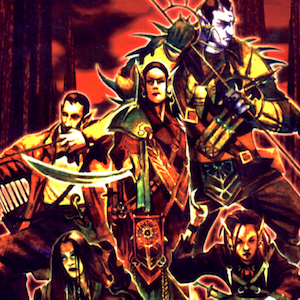
No, not the C20 one that came out in 2019; we're taking a look at the 1st edition Player's Guide from... year unclear. (We think it's 1997? But there's an ad for Hunter: the Reckoning in the back, so who knows.) As WoD Player's Guides go, the Changeling one has a lot of your standard fare: Merits and Flaws before those became standard in the corebook, additional Traits, new kewl powers. But this book also stands out for its full introduction of the Nunnehi after their brief appearance in Rage Across Appalachia (see episode 10), its thorough treatment of the nine core kiths, and some insightful short essays into the roleplaying experience from a player's perspective. It also feature a full-on errata section of material that got dropped from The Autumn People, because these were the heady days when deadlines were tight and editing was a luxury. In short, this book really packs a lot into its just-shy-of-200 pages. Let's have a look at some tidbits, shall we? art corner Changeling: the Dreaming art is often kind of a mixed bag, but especially as we approach the end of 1st Edition and its full-color books, it's nice to see some truly gorgeous examples in these page. The splash pages at the start of each chapter by Mark Jackson are especially fab, as in these examples: Thematic and evocative! There are also some pretty groovy portraits associated with each kith by Adam Rex, such as this redcap who's charging out of the page, knuckle spikes bared, but who still has some sensible heels and hefty socks for battle: And then there are these troll ladies. We're not entirely sure what's going on with them, but we include them as a reminder that no book's assortment of art will be perfect, and it is only through contrast that we learn to truly appreciate the pieces we really adore: We report, you decide! ... collective nouns Aside from established terms like a corby of redcaps and a tragos of satyrs, some suggestions for what to call a group of each kith: a nosiness or industry of boggansa rowdiness of clurichaunan intrigue of eshuan agitation or complaint of nockersa suspicion of piskiesa veracity or certainty of pookaa nibble of redcapsan excitement of satyrsa sleeking of selkiesan insufferability or pomp of sidhean unsettlement of sluagha bravado of trolls Suggestions for others welcome! ... more nunnehi research We gave some advice and shared some links last time we discussed the Nunnehi, in the Rage Across Appalachia episode. Following up on that, here are some more links that you might find useful for delving into the mythic background of the Indigenous kiths of Concordia: May-may-gway-shi: http://www.native-languages.org/memegwesi.htmRock Giants: http://www.native-languages.org/stonecoat.htm and possibly references to the Gahonga in this book from 1922Nanehi: http://www.native-languages.org/morelegends/nunnehi.htmYunwi Amai'yine'hi: not much, but there's a reference in section 78 of James Mooney's 1900 work, Myths of the CherokeeYunwi Tsundsi: http://www.native-languages.org/morelegends/yunwi-tsunsdi.htmCanotili: http://www.native-languages.org/morelegends/canotila.htmTunghat: unclear; it seems as though the name and "gamekeeper" concept might be taken from Yup'ik ritual (see for example https://www.penn.museum/sites/bulletin/1907/)Kachinas: http://www.native-languages.org/kachinas.htm and http://americanindianoriginals.com/kachina-doll-glossary.htmlSurems: https://parentseyes.arizona.edu/node/506 Water Babies: http://www.native-languages.org/water-babies.htmNümüzo'ho: references and tales in this collectionPu'gwis: mentioned on http://www.native-languages.org/kwakiutl-legends.htm; note that the -s at the end is not a plural!Inuas: less anthropomorphized than in the game; the concept of inua is apparently more abstract in Inuit lore, as outlined in this book from the Smithsonian on artwork that deals with the subject As always, it's important to be aware that one's own research might be flawed, and that digging around on the internet can't fully substitute for thorough academic books and/or talking with an actual expert on the topic. It's also worth noting that digging around for information on the folklore behind these kiths turned up, among other things, sites that claimed to give background to the myths that was directly quoted from the Player's Guide (to the point of talking about "fae mien"). Doing background research is not easy! While you might not need to dive all the way down on these legends for the sake of a game session, you should still be ready to spend more time than you think you will need to try and separate what seems authentic from what seems like the random (even if reasonably informed) invention of someone online. ... your hosts Josh Hillerup (any pronoun)'s weapon of choice: frog-venom-tipped lawn darts. Pooka G (any pronoun/they)'s armor of choice: wadded-up back issues of Utne Reader tied with heavy-duty rubberbands. ... Millions of spiritual creatures walk the earth Unseen, both when we w
Ep 15episode 15 – ten books for inspiration
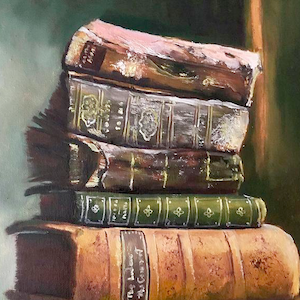
Thanks for joining us! This week is a bit of a breather: we're talking about ten books that inspire us for Changeling: the Dreaming. The show notes are therefore pretty straightforward, as we'll just have the list below with a few notes. (You are encouraged to find, borrow, or purchase these books at a library or bookstore, for we will not be linking to a certain bookselling megacorp on this post.) In a more general sense, we're opening a conversation here about media as inspiration; we anticipate talking about another stack of books in the future, but also graphic novels, television, film, even artwork. Given that the game is to some extent about inspiration and story, it seems fitting to think about more than just "books about faeries." How can players and STs get the most out of the media they encounter for their games? What qualifies as a narrative that has something to do with Glamour and Banality, or the other themes of the game? Things to consider for future iterations of this series of episodes... (Also, we threw in three honorable mentions at the end, because stopping at ten books just wasn't going to happen.) the list Emma Bull, War for the Oaks — Blurb: "Eddi McCandry sings rock and roll. But her boyfriend just dumped her, her band just broke up, and life could hardly be worse. Then, walking home through downtown Minneapolis on a dark night, she finds herself drafted into an invisible war between the faerie folk. Now, more than her own survival is at risk—and her own preferences, musical and personal, are very much beside the point." There was some talk long ago about adapting it for film (to the point that a low-budget trailer got made), but alas, it has not yet come to be...John Crowley, Little, Big; or, the Fairies' Parliament — A truly magnificent 25th anniversary edition just came out...which actually makes it a 40th anniversary edition, so how's that for a publishing delay? But anyway, even though that version is frighteningly expensive, you can at least get a sense for the book by reading the first couple chapters here: https://littlebig25.com/.Charles de Lint, The Wild Wood — Blurb: "A young artist returns to her cabin in the deep woods of Canada to concentrate on her illustrations. But somehow, strange and beautiful creatures are slipping into her drawings and sketches. The world of Faerie is reaching out to her for help--and she may be its last chance for survival." See an example of the Brian Froud art paired with this book below (used for the cover, in fact).Cory Doctorow, Someone Comes to Town, Someone Leaves Town — This one is freely available for download, presumably because Doctorow is a big proponent of Creative Commons and whatnot: https://craphound.com/category/someone/Joanne M. Harris, Honeycomb — Author's website with some Q&A and other information: http://www.joanne-harris.co.uk/honeycomb/Neil Gaiman, Neverwhere — Multimedia moment: Neverwhere was actually a TV series first, some of which you can watch for free because some kind soul has put it online (start with https://www.youtube.com/watch?v=tKlsXquUKdA). So technically the novel is a novelization, and we might cover this again for when we talk about TV... but then, it's also been made into a stage play, and a radio drama, and a graphic novel. Many options for your media-consumer pleasure. Seanan McGuire, the October Daye series — Author's website: https://seananmcguire.com/toby.php; you can check out her other series as well here.Terry Pratchett, Hogfather (and many other Discworld novels besides) — Another one with a TV adaptation, featuring Ian Richardson and Michelle Dockery (of Downton Abbey fame), which you can fairly easily watch online as well (https://www.youtube.com/watch?v=JoWifSyA9NQ). Salman Rushdie, Haroun and the Sea of Stories — A brief excerpt: "So Iff the water genie told Haroun about the Ocean of the Stream of Stories, and even though he was full of a sense of hopelessness and failure the magic of the Ocean began to have an effect on Haroun. He looked into the water and saw that it was made up of a thousand thousand thousand and one different currents, each one a different colour, weaving in and out of one another like a liquid tapestry of breathtaking complexity; and Iff explained that these were the Streams of Story, that each coloured strand represented and contained a single tale. Different parts of the Ocean contained different sorts of stories, and as all the stories that had ever been told and many that were still in the process of being invented could be found here, the Ocean of the Streams of Story was in fact the biggest library in the universe. And because the stories were held here in fluid form, they retained the ability to change, to become new versions of themselves, to join up with other stories and so become yet other stories; so that unlike a library of books, the Ocean of the Streams of Story was much more than a storeroom of yarns. It was not dead, but alive."Bill Watterson, any
Ep 14episode 14 – mage + changeling with terry robinson
Hi, Mage fans! And/or Changeling fans! On this week's episode, we're having a conversation with Terry Robinson, host of Mage: the Podcast, to talk about crossover between Mage and Changeling. If you aren't well versed in Mage: the Ascension, don't worry—we'll give you some of the key terms and concepts to get you going with incorporating mages into your Changeling game. Not only that, but we hash out every crossover issue you could possibly want to deal with! (Well, okay, that was an outright lie, because we could do an entire separate podcast just on those issues.) (Maybe someday...) In any case, have a listen, and as always, feel free to hop in our Discord (link at the bottom of this page) to discuss your thoughts and ask your questions. wibbly-wobbly themey-wemeys Probably the most important thing to talk about with any game crossover situation are the themes and moods of the games and how they align. We brought this up with Terry, and discussed three that do, and three that don't: Imagination and hope are incredibly powerful. From the Changeling perspective, this is pretty self-evident and central to the game; their power stat of Glamour that reflects (in part) this theme. With Mage, it's a little more subtle. The paradigms with which the willworkers construct their magic rely on imagination—which in theory can make mages powerful Dreamers, with the right outlook—and they build (some of) their hopes upon the strength of that paradigm and their ability to manifest its power. For mages whose way of magic is danger of going extinct, hope takes on an extra veneer of urgency.Culture is valuable. The ideas of groups of mortals have literally shaped changelings into what they are, in terms of kiths. Culture has also given structure to the magic used by mages, a structure which they must follow (at least, at first). Both groups are invested in preserving their originating cultures, although the need to combine those traditions with growth and modernity presents an interesting element of tension in each game.Everything is temporary. Terry frames this in relation to the desire to keep alive the connections to the past that give both changelings and mages strength. On top of that, mages are mortal, and although changelings reincarnate, Banality often means their time as self-aware fae is limited. But how the character reacts to these facts can also provide compelling story material. Both splats may strive for immortality and struggle against the way of things, creating all kinds of interesting drama (and possibly hurting a lot of people along the way).Mortals and isolationism. In theory, both Mage and Changeling are centered on their protagonists' interactions with mortals. In practice, tables often run both games without mortals making a single appearance. We'd wager that Changeling players are guilty of this more often: many groups do Dreaming-centric games with Glamour drawn from chimera or wherever rather than interacting with Dreamers. With Mage, "Hogwarts games" entirely set in a mages-only space are rarer, and to some extent have to be, because...The shifting of destiny. Mage and Changeling start at opposite ends of a spectrum in terms of how they affect the ultimate fates of mortals. A mage wants their way of handling reality to be the correct one for everyone (because they know it's correct for them). They start with the goal of changing civilization and work their way down. Changelings, on the other hand, cultivate individual artists; it's more the philosophy that pushing a pebble in the stream might eventually change the course of the mighty river. Neither one usually ends up altering all of human destiny that much, but it's important to realize that they're coming from very different places.Balance. Changeling has this theme baked into the Glamour/Banality mechanics, and it drives the entirety of the game. Mage... does not really have this. You can add Resonance and Quiet and everything, but fundamentally, there's very little (e.g, a morality stat) stopping mages from quickly going down Megalomaniac Road. ... terry's art corner Terry mentions at one point a lovely anecdote about getting into Mage by reading the 2nd edition of the "Big Purple" and a sharp memory of some John Cobb art. For the viewing pleasure of you, the audience, here's what we believe to be the art in question that stuck in Terry's mind: And now perhaps it will stick in yours. Whatever this might say about Terry's aesthetic sensibilities, we leave to others to decide! ^~^/ ... demesne and Dreaming There's a Background introduced in Mage 20th Anniversary Edition called Demesne (pronounced like "da MAIN") which has... something to do with dreams. It's a "semi-permanent Dream Realm," according to that corebook, which doesn't really give much in the way of hard mechanics for interactions between a changeling and a mage who has such self-control over their subconscious. Some suggestions from Terry: Demesne can be a "resistance stat" to som
Ep 13episode 13 – shadows on the hill
Lucky thirteen! In this installment, we move forward in the Immortal Eyes chronicle, Shadows on the Hill, following the protagonist oathmates to their next adventure in Hawaiʻi. Like the previous book, The Toybox, the storyline (and included adventures) of the Immortal Eyes is kind of ancillary to the setting details laid out here. We found this one somewhat richer overall, with a lot of material that could be used for games set in the islands, with the caveat that one should always use discretion and do some additional research before taking everything in these pages for granted. (Disclaimer: we're both white folks with limited knowledge of the setting and culture.) But even if you don't use the book as intended, it has many beautiful passages and lots of bits that you might want to incorporate into a chronicle of your own. File under "not strictly necessary to buy, but a nice addition to the collection," if that's a label you're keen to use. in the beginning... There's a passage describing the creation of the Hawaiʻian island chain that Pooka mentions reminds them of the intro to the first Civilization computer game. For the sake of a visual aid, and to do a throwback to a game even older than Changeling: the Dreaming, here's the video. It doesn't have quite the same power when the tinny Sound Blaster music isn't piping out of your cheap speakers, but you get the idea. (Pooka will not be taking questions on how many hours they've wasted playing the games in this series, so you'll just have to guess.) ... sacred sites and science One of the secondary antagonists in the book's first adventure is an Autumn Person geologist, Jennifer Friedman, whose character is not really developed beyond that description. She's mentioned as part of a group of tourists who are depleting the mana from the land, as part of an ongoing framing of mana as Glamour specifically infused with the notion of being a dream of the land, an idea of the people, and the relationship between the two. While that concept of mana is an intriguing one, the use of this geologist in relation to it just seems too easy—another foray in the anti-science mentality that crops up regularly in 1st edition. The issue of science intruding on culture is a longstanding one in Hawaiʻi, with the Thirty Meter Telescope protests being the most recent and high-profile conflict. (Note: the protests were erroneously referred to in the episode as taking place on Mauna Loa; they are actually on Mauna Kea.) Changeling has always been a game with the capacity to responsibly explore political issues like this, and if a group wants to engage with heritage and tradition in relation to land use and rights, this is a possible situation to address. On the other hand, the technical knowledge gained about how the planet works can be just as Glamour-inspiring for some, not to mention life-saving for others. That's part of why the character of Dr. Friedman as a throwaway line is so frustrating: she's a one-dimensional foil to the characters. We don't dispute the book's foregrounding of Hawaiʻi as a spiritual landscape first, but if you choose to have a scientist as a villain, at least make them more interesting than being just another Autumn Person. If they're going to disrespect the land to give players a reason to stand against them, they should have some kind of reason for it. This goes for other similar cases as well. All around the world are places and moments where passionate belief is challenged by thirst for data. You can certainly have unabashedly corrupt foes—Pentex and their local branch, Big Fruit, spring to mind—but we recommend giving you and your group the space to get more complex here, because the game allows you to. The nature of Glamour and Banality is a theme we keep returning to; when the stakes are the well-being of entire groups of people, the question of what each of those forces means to people becomes all the more urgent. ... hot tub satyr machine That was a pretty serious topic in the last section. For a bit of whimsy to counterbalance it, here's the hot tub picture from page 124 that Josh found weird and uncomfortable: It's really the satyr's face that does it. The longer you look at it, the more uncomfortable it gets. ... a few resources The book that Pooka mentioned finding at the local bookmonger was the second volume of the Nānā i ke Kumu series. The first two were published in the 1970s as a joint venture between the University of Hawaiʻi at Manoa and local community leaders/organizations. They cover all manner of legend, folktale, custom, and religious belief over the course of hundreds of pages; a third volume, published in 2020, covers more modern social problems from a cultural context. You can find more information/purchase the books at the press website, or (if you want) use a certain rapacious corporation's website instead. Such a collection is valuable for creating verisimilitude in your game—there are plenty of stories, practices, and ka
Ep 12episode 12 – harbingers of winter with charlie cantrell
As in certain fantasy series of some repute, Winter has been coming for a very long time in the mythos of Changeling: the Dreaming, but never quite fully arriving. With the release of Harbingers of Winter, we get one take on what it might look like in the 20th Anniversary Edition, in the shape of the various antagonists who populate the world of the game: Autumn People, Thallain, Dauntain, and more. In this episode, we have a conversation with C20 writer, STV contributor, and longtime community fixture Charlie Cantrell about his stewardship of the project under the banner of his group Radio Free Arcadia. Join us as we talk about his history with the game, the genesis of the book, and a chapter-by-chapter exploration of how to deploy these foes—some updated, some brand new—for your chronicle. notable artworks! There's much scuttlebutt in the episode about the Brood Mother Fomorian, who churns out chimerical monstrosities from the grist of changelings sacrificed to her maw. (Gross.) Charlie mentions a piece of artwork originally from Denizens of the Dreaming that seems to portend all her squoodly glory twenty years later: It seems her image was lingering in the pages of canon, just waiting to get a write-up somewhere down the line... Also, we talk about the excellent art of Alaina Milare, who did the maeghar splat artwork near the end of the book, which is this mopey fae vampire guy here: Please check out her work at https://www.alainamilareart.com/ ! Much of it is Changeling-focused character work that evokes the spirit of the game and has a very classic splat-portrait feel. ... poll: who's your favorite fomorian? Just as a shameless attempt to get some awareness out there about our Discord (the link, as always, is https://discord.gg/SAryjXGm5j), we'll have a poll there for your favorite Fomorian character (or general Court, if you can't decide). Because there are over twenty options from the named Fomorians given some details and backstory in the Harbingers book, here are the six heavyweights that you can pick from: Balor: the original Big Bad of the Fomorians, with the evil eye to end all evil eyes (as well as anyone who it gazed upon)Z'laad, Storm of Color: a pure tempest of primordial and colorful Dark Glamour, rampaging like a cluster headache oil slick through the DreamingEnphida, Goblin Queen of Machines: inventor of despicable war machines, whose inspiration took everywhere from the Unseelie nocker freehold of Goblin Town to (apparently) a tryst with an Etherite mageBrood Mother: see above for all you need to know, reallyBres: the surprisingly beautiful grandson of Balor who was briefly tapped as ruler of the fae by the Tuatha (until it didn't go so well for all involved)Marena: Queen of Frost and embodiment of all the cruelty of winter And if you can't decide, you can always just vaguely vote for The Green Court (inscrutable, nigh-Lovecraftian beings), The Red Court (unthinkably powerful and bloodthirsty war-titans), or The White Court (cold and calculating grand-scale manipulators). Whoever wins, we'll do... something. A write-up? A series of story hook ideas? A ritual sacrifice? Only time will tell! ... optional shapes of things It's important to remember that the shape of Winter in this book is just one possibility—as we mention a couple times in this episode's discussion, the Golden Rule of White Wolf games, and Changeling in particular, is that you can and should reshape things to better serve your game. If something doesn't fit with your vision, change it! Not everyone wants to imagine the world of the fae going in a direction quite so dark or horrific (or maybe their brand of horrific just looks different). Harbingers of Winter features antagonists who would go against the Kithain for a variety of reasons, each of which comes with their own baked-in set of themes and narratives, but none of them are set in stone. If you want to include Thallain as part of a redemption arc, new and complicated varieties of Dauntain, or Tithed who have a less antagonistic relationship with their fae "twins," go for it. Winter is to some extend what you make of it at your table, both in-character and out-of-character. Will it be slow and eternal, or just another passage of a season? Will it be exceptionally brutal, with Kithain cutting each other's throats for the barest hint of Glamour and Fomorians rampaging through the Dreaming, or will it be a much more boring, Banal affair where the fae are slowly smothered into forgetfulness? How aware of it are the characters, if at all? Is their narrative arc one of bleak fatalism, determined questing to bring on a new Spring, or unified survival in the most hidden parts of the world? To some extent, these are the questions that underlie the discussion of what Changeling 5th Edition (in the distant, possibly alternate, future in which that appears) might look like. So far, Vampire is our only point of reference in print, and it's both grittier and more low-level-focused
Ep 11episode 11 – nobles: the shining host
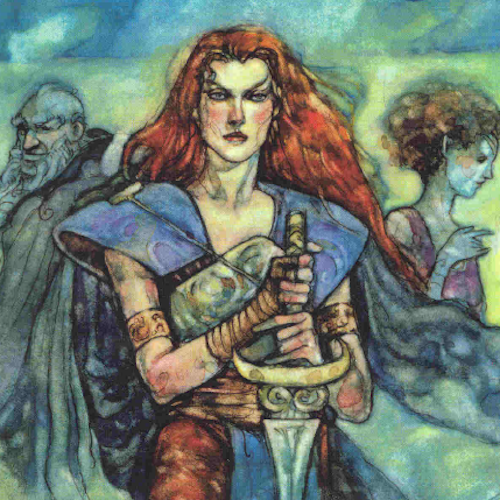
ESettle in, because this is a long one... the raw audio for this recording was the longest we've had by far. But that's because Nobles: the Shining Host, the first Changeling book to delve into Kithain nobility, covers a lot of bases. It's not quite "Kithbook: Sidhe," but there's enough about them in there to satisfy most players and STs who want to know more about the kith; on top of that, you have plenty about the social structure and cultural dynamics of nobles from any background. We get bits of history, an epic tale, political parties and secret societies, information about Concordia's monarchs, some new Traits (including two new Arts), a new House, character templates... the book really packs it in. We cover it in this episode as briskly, yet thoroughly, as possible—but even so, this is almost our longest episode thus far. (This is also the reason why it's going out a bit late this week. Nostra maxima culpa.) how to play a sidhe Just kidding—we're not going to tell you the exact answer to that, because there really isn't one. Ultimately, you do what you want to do. But, since the book focuses heavily (not entirely!) on this kith, we are going to point out a couple things about trends and possibilities. See, the traditional roles for sidhe in CtD games have tended towards: 1. pretty Mary Sues who are (or demand to be) able to do anything (especially when people just want to play a sidhe for that extra Boon), 2. uptight patricians who treat egoism and sucking all the oxygen out of a room (or gaming session) as a virtue, 3. as Josh put it, the real-life protagonists of soap operas (for the viewing pleasure of the commoners), or 4. all of the above, which is doable because the first three are stat-, personality-, and narrative-based, respectively. The exact shape of these things has waxed and waned over the years—"mysterious warrior-sorcerer with Appearance 7 and/or an ethereal presence" seems to be a common expression of (1) these days—but the common threads are quite visible. The unfortunate thing is that the early books, at least, set up a lot of alternatives to these archetypes, even as they also provide examples of them. And yet somehow, the alternatives seem to have faded more and more into the background. Maybe this is due to real-world ideals working their way into the game: commoners are moving front and center with progressive, anti-aristocratic ideas, and the sidhe have flattened more and more into these Tolkien-elf types with little variation. The sidhe are a kith; Title is a Background; nobility is a quality; and while the three may overlap more than most other kith-Trait-characteristic combinations, it is not a necessity. (Remember, those in the back: your sidhe does not have to have a Title/be part of a House.) We mention this because the sidhe fall into the trap most often, maybe, of becoming one-dimensional characters, with the only variation being the specific Trait build that represents their particular snottiness. It's true that kiths tend to shape characters; it's also true that more and more, especially with C20, there is pushback against such determinism. (Old fogies' note: it was always there, e.g., you could play soft-hearted Seelie redcap who liked macrame, but the game's willingness to foreground that varied.) So why would you not make a sidhe who is more interesting than the typical [insert Title here] [insert elaborate faux-Sindarin name here] [insert House here] [insert optional florid moniker here], knight and/or wizard and/or courtier par excellence? One of the first canon sidhe in fiction is Leigh from the Immortal Eyes trilogy, who is a teenage redhead knight struggling to reconcile her newly-discovered nature, princess memories, and swelling sense of honor with her upbringing as a working-class cop's daughter, as well as her fervent desire to be a chef. She has a soft spot for protecting childlings (though she's also a firm babysitter), she has a crush on the bad-boy Unseelie eshu, and she worries about making ends meet with her line-cook salary in her crummy one-bedroom (but she's also thrilled to be living away from her mortal family for the first time). She is far from perfect, but aspires to be better, and she has the capabilities of a beautiful warrior, but is far from defined by them. This book gives a lot of material to work with to navigate that level of complexity, as do many of the others—if you're willing to look for it. We encourage you, therefore, to think outside the box and make being a sidhe (or being a noble) not the most important thing about your character. It may not be the least important either, but give your character a little depth before working that piece in. Obviously, this advice can be applied to any kith—it's just that sidhe tend to suffer for it most than the others. ... the Trod Background Just because the headache that is this Background deserved to be reproduced in its entirety, here it is in table format. Pick the Background level you wa
Ep 10episode 10 – rage across appalachia
Finally, we enter the double digits of episodes (well, unless you count our introductory one) as we discuss Rage Across Appalachia. Despite the cover art, the font and border styles, and the overwhelming majority of the content all suggesting this is a supplement for Werewolf: the Apocalypse, there is in fact the note that says it's also intended for Changeling: the Dreaming. Ergo, we're including it in our Lost in the Library series of book dives—however, this ended up being kind of a mini-sode, because really the entirety of the Changeling content fits into one chapter and some extra pages for the whole book. Still, we get some useful pieces, including the first substantive information on the Nunnehi, the Indigenous fae of the continent. somewhere in the dreaming... freehold heraldry Moving forward, the "Somewhere in the Dreaming" tag will be useful for instances where we speculate on alternate directions the Changeling universe might've gone, when we see hints of a decision about the canon briefly showing up in one book, and then disappearing again with little if any trace. In an alternate dimension—or a Dream Realm of some kind—perhaps there is a shape of the game-that-could've-been that contains some of these elements. And in the case of Rage Across Appalachia, there are two freeholds (Roan Mountain and Highcastle Eyrie) that have their own stained-glass style crests, as each of the kiths do. (Pooka was going to attempt to work some Photoshop magic and extract the line drawings to create a mockup of each, but they didn't have time, for even sorcery must give way to temporal logic in the absence of Chronos.) What this suggests to us is that in some other version of Changeling, there are icons like this for each and every freehold, and an entire system of heraldry based around fae affiliations with them. Boggans with a head for memorizing all this shit could be there at tourneys or pitched battles announcing the representative from this-or-that freehold, the pennons of each minor knight could feature the design, and so on. If you're thinking, "but there would be hundreds to thousands of such icons!" just... just look at how bonkers the system of European heraldry got, historically. However, it might be too much for the artists and designers of the game, so if this was ever a possibility, it's easy to see why it got cut. Still, though... ... ballads and bluegrass and reelbands (oh my) When you grow up with folk and traditional music, you learn about how important ballads are for passing along stories, warnings, wisdom, feuds, history, and so on. The oral tradition is alive and well, even if we don't always know its shape when we're living in the middle of it. (Maybe memes and the explanations for why they're funny will be what we pass down in the future.) Rage Across Appalachia has a nice little section in the Appendix where they talk about how to leverage these into a game—not just in the Appalachian setting, but it works quite well there—as sources of information and inspiration. Lots of this stuff is already scattered through the canon, because a nonzero number of the line's authors have been musicians of different sorts, sometimes (we believe?) in these genres. But just for an example, here's a classic about a noble vs. commoner duel: This kind of stuff makes good background music for a game with the right vibe; it's especially nice when you can get tracks from local acts (which are unfortunately kind of a pain to find online, if you have specific bands that, say, you went to see at the Renaissance Faire every year as a kid). The corpus for this music is vast, and extends far beyond the Celtic-immigrant-inflected flavor that this book in particular goes for. Check out traditional music where you can, and you'll find ways it can be incorporated into your chronicle, as both plot hook and atmosphere. ... nunnehi research As we mention in the episode: we're both white folks, with little personal connection to Indigenous groups or issues, so we're doing our best to handle them delicately as they come up in our read of these books. While we're glad to see the Nunnehi evolve in this book beyond the mentions they had in earlier ones (i.e., raiding war parties and nothing else), they're still a way off from really being three-dimensional to the degree that other changelings in the game are. Something important to bear in mind when dealing with the Nunnehi as a player or Storyteller who's not of Indigenous background is to ask yourself, why is it important to play/feature this character? Closely following that question in importance is, what research do I need to do? The answer to the first one should always be something more substantial than just "because they're cool," and the answer to the second one is "probably more than you think." Because citation is so rare on the internet, you can often find the same text over and over again, remixed and repurposed, but you may have no alternative unless you have an in
Ep 9episode 9 – autumn people
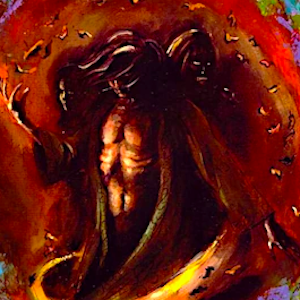
EThis episode we'll be talking about The Autumn People, which gave extensive information and options about Banal antagonists for Changeling as part of White Wolf's first annual event, 1995's "Year of the Hunter." It's a short book, but densely packed with information, as well as some curious layout choices. Overall, it did its job of pushing out the boundaries of the game world, even if some of the text was left out by accident (and errata'd later), and other parts are a bit difficult to parse. Our conversation centers on the various ways that the Autumn People, Dauntain, and other Banal things are presented, and how they might be useful in a game. categorizations One of the hallmarks of this book is how there are numerous ways to divide up the Banal antagonists (Bantagonists?): mortal vs. fae, aware vs. unaware of other fae, passive vs. active, etc. Here's a graphic that hopefully will illustrate at least some of the many options the book introduces, which may or may not be diegetic and/or in-character; it's hard to tell at points. If you're slightly baffled by this, don't worry! We were too. Suffice to say, whatever particular spin you want to put on the Autumn Person in your chronicle, chances are this book gives it at least one label. ... powers of the autumn people There are a range of abilities that these antagonists possess. The Banal Chimera have Redes that can inflict Banality; Autumn Fae get Agendas; Dauntain get Stigmas, in addition to their (possible) retention of Arts and Realms. But then, Mundane (human) Autumn People also get little blindsiders like this: Any time a changeling comes into direct contact with an Autumn Person, the Storyteller may decide to check and see how the character is affected. This is done by rolling the Autumn Person's Banality against a difficulty of the character's Glamour. Each success causes the character to gain a point of temporary Banality. The Storyteller may choose to make this roll at any time in which the character has contact with the Autumn Person; additionally, this roll may be made multiple times if the character remains within the vicinity to the Autumn Person in question, though care should be taken that it is not overdone or the character will soon be lost to Banality. Given that Autumn People have Banalities of 8 or higher, and changelings tend to have Glamour in the 4 to 6 range, getting four or five successes on this roll is not unlikely. And that means four or five points of Banality just from bumping into (for example) an overprotective mother or restrictive librarian. No wonder changelings were seen as imploding at the slightest whiff of stasis in 1st edition. ... pooka's poetry corner On that subject, here's some shameless padding for the show notes in the form of a poem by Mark Strand that is, well, a little bit peculiar, but also has some nice pooka vs. librarian vibes: Eating Poetry by Mark Strand Ink runs from the corners of my mouth. There is no happiness like mine. I have been eating poetry. The librarian does not believe what she sees. Her eyes are sad and she walks with her hands in her dress. The poems are gone. The light is dim. The dogs are on the basement stairs and coming up. Their eyeballs roll, their blond legs burn like brush. The poor librarian begins to stamp her feet and weep. She does not understand. When I get on my knees and lick her hand, she screams. I am a new man. I snarl at her and bark. I romp with joy in the bookish dark. And just to end this post, here's an art piece from the book that shows an owl pooka becoming Undone, which apparently means his hair gets bleached out, his pupils and mouth go grey, and his brain gets filled up with math. Still, it's a cool picture; there's a lot of surprisingly good art in this book about the folks who would probably prefer to erase all creativity from existence. ... your hosts Josh Hillerup (he/him) is wanted for the theft of sixteen family-size jars of applesauce from the local commissary. Pooka G (any pronoun/they) can neither confirm nor deny their whereabouts during the hour when all of the reptile house cameras were switched off. ... "Life is intrinsically boring and dangerous at the same time. At any given moment the floor may open up. Of course, it almost never does; that's what makes it so boring." —Edward Gorey (psst! email us at [email protected] if you want) (and join our Discord at https://discord.gg/SAryjXGm5j !) (support us on Patreon! it's now live at https://www.patreon.com/changelingthepodcast)
Ep 8episode 8 – werewolf + changeling with josh heath
Another special guest joins us this week! Josh Heath from Werewolf: the Podcast is here to talk about Werewolf: the Apocalypse and its synergies with Changeling: the Dreaming. What are some of the similar themes? Do the Garou and Kithain have shared history to call out? How should one set up a crossover between the two? We tackle these questions and more, and natter for a bit about the Auspice we'd all be (because WtA astrology is a thing). mirror images One of the interesting bits of connective tissue between WtA and CtD to bear in mind is that characters in each can often do similar things, but from different perspectives (metaphysically, spiritually, grammatically, etc.) Various kiths have the ability to change shape, as the Garou and other Changing Breeds do, but they're rarely doing it to go into battle or even commune with their nature. Delirium hides the actions of the Garou as a remnant of primal human terror; the Mists hide the actions of the fae as a form of preservation (and maybe also a bit of human terror). Each group has an otherworld they can enter with relative ease—though stepping sideways is usually simpler—and with which they have a deep spiritual connection. But those realms are entirely different in terms of their atmospheres, level of danger, their denizens, and the lessons they teach. Maybe most importantly, both groups lean heavily into the importance of social (Title/motley and Rank/pack) and familial (Kinfolk and Kinain) ties, but have very different structures for dealing with both their fellow supernaturals and mortal Kin. There are also lots of points of similarity. There are redcaps as bloodthirsty as any Ahroun, raiding a Pentex facility is something many changelings will support just as much as a werewolf, and songs and epic tales are arguably essential to the survival of both. Aside from the mechanics that have to be organized for a crossover game, bearing thematic links like these is important to have the game feel right. Players can explore what it means to their characters to see their comrade doing the not-quite-same thing as they do, and consider whether it's an opportunity for one or both of them to grow a bit. ... assorted crossover notes Among the X20 books, there's more about crossovers in C20 than W20 (Werewolf mystics "can apparently travel to Arcadia"?? but changelings who go with them fall into Malfeas??) (these are not recommended as story elements for your game), but more solid material can be found in the older books. Some assorted tidbits that might be helpful: While C20 has walked this back a bit, traditionally the Black Spiral Dancers have had dealings and occasional alliances with the Shadow Court.There are three Fianna Kinfolk families (two of Irish background, one of Breton) called "The Kin" who have high rates of werewolf and fae blood in their lineage. 3 out of 10 of their children are Garou (triple the rate of most Kinfolk families), 1 to 3 out of the remaining 7 will be Kithain, and the rest are likely to be Kinain (in addition to Kinfolk).A Fianna elder apparently lives at Caer Palisades and is Queen Mab's advisor on Prodigal affairs in the Kingdom of Apples.House Balor insists that the fomori are not the Fomorians or their agents, and are only threats to Prodigals; they would know the difference.We talk about why the Get of Fenris despises the fae (especially sidhe) so much in the episode, but trolls and the Nunnehi are specifically exempt from their ire.In addition to the other Changing Breeds mentioned in the episode (Ananasi, Bastet, Corax, Rokea), the Kitsune and the Nuwisha are popular crossover choices, due to their tricksiness. And on top of that, we do have an upcoming episode about Rage Across Appalachia, the specific Werewolf/Changeling crossover book! (Spoiler: it's mostly Werewolf.) ... where to find josh heath Some places online where you can find Josh and his work: Werewolf: the Podcast feed (https://keepontheheathlands.podbean.com/)!...as well as its Twitter (https://twitter.com/podcastwerewolf) and Facebook (https://www.facebook.com/werewolfthepodcast/)We should also use this as an opportunity to once again shout out Mage: the Podcast (http://www.magethepodcast.com), of which Josh is technically a host......but also, for all things Trinity Continuum related, check out the OpCast (https://anchor.fm/opcast/)!Stealing shamelessly from the show notes of Mage: the Podcast's chat with Josh, here's a list of the many projects he's contributed to on Storyteller's VaultJosh can also sometimes be found in various places on Discord, distributing truth and beauty about the Garou Nation like a Jaggling in the night ... your hosts Josh Hillerup (he/him) asks, "Werewolf?" Pooka G (any pronoun/they) responds, "There. There, wolf. There, castle," thinking Josh wanted to talk that way. ... "The dream is not like the world of flesh... Here the same hunt can have many endings." —Hopper in Robert Jordan's The Dragon Reborn (psst! email us at podcast@ch
Ep 7episode 7 – freeholds and hidden glens
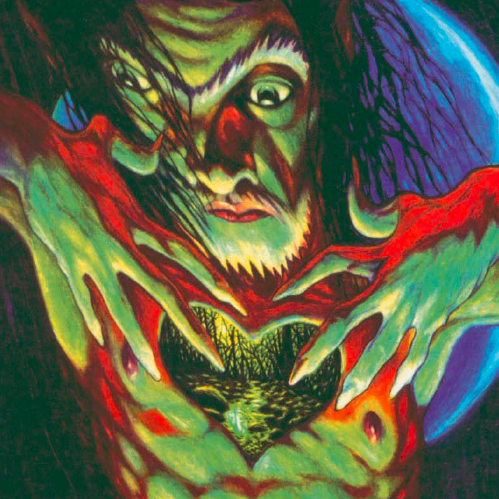
As we enter the Seelie half of the year, it's time to talk about Freeholds and Hidden Glens, which gave us seven thorough descriptions of the spaces where changelings get together for the doing of all manner of sundry things. Each of the freeholds is rather different, offering a range of ideas and story setting possibilities for a game. Each of us were rather partial to one or two of them, but we'll let you be the judge of which ones sound the most interesting... uncanny places Something that came up briefly in the discussion (but will not be expanded here to the voluminous amount it could be) is Stephen King as a point of reference for the trope of semi-conscious places, most of which turn out to be creepy. This is slightly different than what you'd usually get with Haunts in Wraith, where the spookiness of a haunted house or wherever gets mostly attributed to the presence of the ghosts. But when the place itself begins to take on an intelligence of its own, that's another matter entirely. Works by King like The Shining and perhaps Rose Red have this thread of a place becoming corrupted by the violence or evil deeds that took place there, which causes it to gather a malevolence of its own, which leads to more such deeds, making the place stronger. It all seems very darkly Glamourous. But this isn't unique to horror literature, and obviously folklore is thick with mythology and superstition about the relationship between past events and present influences in specific locations. You could easily set a scene in a place that causes people to become joyful, or lustful, or whatever. The Dreaming is brimming with emotion, so it's not unreasonable that places in close contact with it, freeholds or otherwise, would have an outsize influence on the feelings of those who enter them. If the building or glade or skate park or whatever is set up as antagonistic to a motley as well, it presents slightly more of a puzzle for players: how do you fight a landscape? How do you reason with geography? How do you prevent yourself from becoming sucked into its emotional vortex when you enter to rescue the childling/find the Treasure/defeat the nocnitsa? Ghost stories do not have a monopoly on these topics, and folding them into your chronicle can be a clever way to give changelings something a little more nebulous to deal with. But equally, it's fitting for the themes of the game; that uncertainty and sense of being out of place, what theorists since Freud have called the uncanny, reminds us that sometimes the horror in a faerie-story is from the sense that your surroundings are just somehow, indefinably wrong. Food for thought! ... just because... It's always nice to see White Wolf folks poking fun at each other with their writing, and sometimes the artwork... So, one of the freeholds, Gangster's Hideaway, is situated along a trod where all the abandoned objects in the world eventually end up (supposedly). Here we have some keys, a pen, matchbook advertising a phone sex line, a thumbtack... and a curious book buried underneath that old-school Vampire players may recognize. Because of course, if the Endless Trod is the place where all lost and abandoned junk ends up, VtM books will and should be there. (J/k, VtM players. <3) Maybe that sweatstained sock is what you're supposed to use to bookmark the page with the Vicissitude 10 power. ... Your Hosts Josh Hillerup (he/him) can't find the microfilm, and he's meeting his contact at midnight. What to do? Pooka G (any pronoun/they) couldn't think of much to write for this week's show notes, because Beltaine was off the hook and life is tiring. Next time, Gadget. ... "The house shelters day-dreaming, the house protects the dreamer, the house allows one to dream in peace." —Gaston Bachelard (psst! email us at [email protected] if you want) (and join our Discord at https://discord.gg/SAryjXGm5j !)
Ep 6episode 6 – immortal eyes: the toybox
This week, we're taking a look at the (debatable) "first chronicle book for the World of Darkness", Immortal Eyes: The Toybox (not to be confused with its tie-in novel, The Toybox) (things gets complicated sometimes). The first in a trilogy of game supplements that follows the oathmates of the Immortal Eyes storyline, this is primarily a Kithain's guide to San Francisco and the Bay Area, with a few stories baked in that STs can run for their group. Although a lot of the setting information has been superseded in the last 25 years—and much of it is freely available online—there is enough depth of detail and hooks to grab onto for current groups to find some use. We highlight some of the bits we find most useful in this episode, so... give a listen! ... tourism One topic that came up early on in our discussion is tourism with relation to Glamour and Banality. Could a visitor to San Francisco seeing the Golden Gate Bridge for the first time generate Glamour, or does it simply add to Banality, flattening the rich tapestry of the city into icons to be checked off a list? Is it both, or neither? Does it depend entirely on the tourist, or possibly the landmark? There aren't any hard and fast answers in the books (that we can think of at the moment), but it's an interesting avenue of thought to wander down. As always, it raises the question of the relativity of Glamour and Banality, and might demonstrate that while Glamour is volatile, ephemeral, localized, and situational, Banality is more numbing, creeping, spreading, and generalized. We'll keep an eye out for other bits in the books that give more substance to this discussion, since it would be significant for groups running their game in a major city with lots of visitors. (Lookin' at you, NYC.) ... shameless self-promotion Late last year, Pooka published this homebrew Changeling book! It was simultaneously written to be an homage to this supplement, an update to some of the setting, a clunky pun, and an excuse for coming up with selkie business (since they make their first appearance in this book). It's available on Storyteller's Vault here: https://www.storytellersvault.com/product/375875/. Proceeds go to the medical fund for Nicky Rea, Changeling author emerita, so please consider having a browse and a purchase for a good cause. <3 ... moar boox! Josh is a fan of the October Daye series of novels by Seanan McGuire, as surely some of our listeners also are. (They are on Pooka's ever-lengthening to-read-someday list.) He muses that the author might have been directly inspired by CtD and/or this book, because they are set in a fae-inflected San Francisco with a changeling protagonist. There's a bunch of great inspirational reading material for the city as a whole, but this might be a particularly useful series to pair with The Toybox supplement, for a more contemporary urban fantasy feel for the place. If you like them, there are currently sixteen novels in the series—the most recent just came out!—and numerous stories, novellas, etc. McGuire has scored a few Hugo nominations for the series as well, which is a good sign. The official publisher's page is: https://www.penguinrandomhouse.com/series/BK8/october-daye. ... san fran travelogue The recording of this episode took place less than 24 hours after Pooka had returned from San Francisco for their first proper voyage in years. While we might be past the era of your parents renting a slide projector to inflict photos from the family vacation on everyone using a sheet hung over the living room windows (#Banality), here are a few hastily-snapped moments for your perusal and edification: The Japanese Tea Garden—a freehold, according to the Toybox supplement!—is one of my favorite spots in the city. I like to sit and meditate there; it's astonishing how much passers-by shut up when they see someone sitting with their eyes closed in that space. There's something indescribably powerful and mournful about being in the AIDS Memorial Garden, and seeing all the names etched into the stone. On this visit, my attention was especially captured by this particular note about Douglas Watson and Larry Silva, "who met the day humans walked on the Moon," given that event's connections to Changeling's story. For the Easter season, this one house had some kind of ostrich made of forged metal scraps on which they had placed bunny ears and a basket. Typical décor for the area. And along Macondray Lane, there are these disembodied trousers hanging out with plants growing out of them, which feels like a chimerical representation of something, or possibly some really messed-up Inanimae. Haight Street was the epicentre of the hippie movement, they say, and is the first setting we get (in the first corebook sample adventure) for Changeling. It's presented in pretty loving detail, and yet the last few decades have seen the neighborhood gentrify like so many other spots in the city. There are still some old head shops and clothing stores
Ep 5episode 5 – book of storyteller secrets, player’s kit, cantrip cards
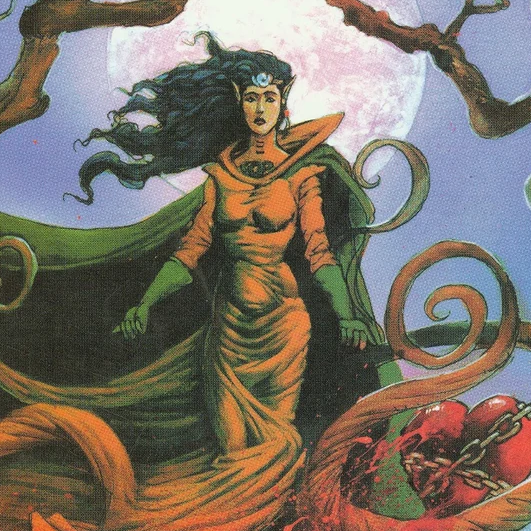
Herein we talk about the first proper supplement for Changeling: the Dreaming, 1995's Book of Storyteller Secrets (not to be confused with the identically-named supplement for Vampire: Dark Ages the following year). Following hard on the heels of the corebook, Changeling's BSS clocks in at 64 pages, most of which are taken up by a jump-start adventure that's largely separate from both the overall metaplot of the world and the Immortal Eyes chronicle that shaped a lot of the early supplements. There are also a few pages of crossover rules which, as we discuss, are kind of... just there. The BSS also came with this swanky Storyteller's screen: Disclaimer: the story in the book is heavily centered around mental health, forced committal to an institution, and similar psychological issues, which may not be for everyone. (For listeners: we discuss these pretty directly starting around the 18 minute mark and 45 minute mark of the episode, if you want to kind of skip over a few minutes at those points.) But it's also worth saying that this is a theme deeply embedded into the game, especially its first edition, and a prime example of how Changeling handles "darkness" as a concept. It's a more subtle, personalized kind of horror than the gore or edgelordiness that people often point to when they talk about WoD games as a whole; arguably, that makes it more insidious, and many people are less practiced in examining it. Aside from this book, we also briefly discuss the Player's Kit, which is basically a pamphlet of kith-specific Bunks for each level of each Art (all six, at that point). The Kit also comes with a full-color pad of character sheets that are too pretty to use, really, and some additional templates for your cantrip cards. On that note...! Here are some of the cards Pooka managed to get their hands on, purely for the purposes of this episode. It's more of a historical curiosity than anything else, but we stand by our overall assessment of them as a concept: quirky and pretty as artifacts, clunky and unnecessary for the actual playing of the game. (There is an undeniable twinge of Glamour when riffling through them, though... connecting with the past, etc.) This is most likely the closest we'll ever get to an unboxing video on this podcast, but never say never, right? ... Your Hosts Josh Hillerup (he/him) rides a friendly tardigrade to work each Thursday. Pooka G (any pronoun/they) can tune a piano, but can't tuna fish. ... "One can't build little white picket fences to keep nightmares out." —Anne Sexton (psst! email us at [email protected] if you want) (and join our Discord at https://discord.gg/SAryjXGm5j !)
Ep 4episode 4 – interview with ian lemke
Our first interview episode! This time around, we are chatting with noted White Wolf figure Ian Lemke. After helping to develop the Mind's Eye Theatre LARP system, he was tapped as an author and the first developer of Changeling: the Dreaming, which he steered through its formative years—note that the cantrip cards were not his idea. In this conversation, Josh and Pooka talk with Ian about his early involvement with White Wolf, some of the inspirations and conversations around the creation of Changeling, and what it was like to be involved in those halcyon days... After parting ways with the company not long before Changeling was wound down prior to the rest of the World of Darkness, Ian worked in a few jobs before coming back to the TTRPG industry a few years ago, just in time to help out with Changeling's 20th Anniversary Edition. Some of his other recent/upcoming projects include developing the Expanse RPG for Green Ronin, the Talisman Adventures RPG*, and Nevermore, an "American Gothic Horror" RPG from his own Nepenthe Games. * side note from Pooka: if you never played the 80s Talisman game, also known as "no, the other game from Games Workshop," this is the glorious chonky box from the 2nd edition, which sat on the games shelf in my childhood home: It was one of those ultra-generic 80s fantasy games that you could just keep playing forever, for example if you and your siblings had nothing better to do before you had the internet and you'd run out of money for the game shop, so you just kept adding characters and circling the board, keeping each other from winning. It was like the Monopoly of fantasy board games. Weeks. Months, in one infamous case (well, in my house, anyway). Did we tire of the official game expansions to the point that we made our own? Yes, of course we did. ... science and banality This will almost certainly have to be an episode of its own at some point, especially since it's one of the most contentious topics among fans, but it came up in our conversation, so—you heard it here, from the developer himself. Science does not have to be Banal. Ian makes the good point that what's Banal is when people's dreams of science, and technology for that matter, are crushed by the reality of doing the various forms of structural tedium that have been created around it. Grant applications, spreadsheets, and just gruntwork will all very quickly drain the wonder out of creating technological marvels or uncovering mysterious phenomena. The same is true for many non-scientific pursuits as well, of course. And certainly there is Banal science, and science whose application has caused mostly problems for the world. But it seems like it gets a worse rap in early WoD than most of the other things for which we could raise this debate. Maybe it's because as a set of disciplines, it tends to be seen as more inscrutable or more separated from the everyday public; people don't always get to see the science itself or how it directly (and hopefully positively) impacts their lives, in the immediate, emotional way that the arts very intentionally try to showcase. Part of this is why things like science museums, public demonstrations, and The Magic School Bus are so important. Keep science alive, because science is great! It's the greed and paperwork that has to go. /soapbox ... where to find ian Herewith some links and things! Ian's Twitter Page (https://twitter.com/theianlemke)!...and Patreon (https://www.patreon.com/ianlemke), where you can see and support several examples of the aforementioned RPG projectshis own outlet, Nepenthe Games (https://nepenthegames.com/), where you can keep up on the latest Nevermore news...and the Nepenthe Twitter (https://twitter.com/NepentheGames)!Ian's author page for Green Ronin (https://greenronin.com/blog/author/ianlemke/)a small collection of information about Talisman Adventures (https://www.talismanisland.com/category/talisman/rpg/rpg-rpg/) Otherwise, keep your eyes peeled on the trods for him... ... Your Hosts Josh Hillerup (he/him) was once spied emerging from the sewers under Parliament with a hatbox mysteriously similar to that reported purloined by the then-Premier. Pooka G (any pronoun/they) walks the left-hand path of more pastries than any body should reasonably contain, and if it means damnation, then a sweet damnation it shall be. ... "Those who dream by day are cognizant of many things which escape those who dream only by night." —Edgar Allan Poe, "Eleonora" (psst! email us at [email protected] if you want)
Ep 3episode 3 – 1st edition corebook
This is the first of our deep dives into the individual books for Changeling, so naturally, we're starting at the beginning, with the First Edition corebook. Released in July 1995, it was the last of the original lineup of five games for the World of Darkness. We go through each section of the book in detail, discuss it both in the context of its original release and the more recent editions, and talk about various themes and ideas that the text summons up. (Because the book is just short of 300 pages, this is also our longest episode by a wide margin... for now.) art Briefly, here are two examples of the full-page spreads that make up the book's prologue: Given how the World of Darkness books are kind of grim and gritty, printed in black and white, the use of these photographs as both diegetic texts (the pages contain information about the game setting, written by one of the metaplot characters to another) and an aesthetic choice (note the signed photograph of Dr. Julian Bashir, emphasizing the 90s-ness of these pages) creates a marked contrast to the other lines. That's Changeling—starting off with a bang. As for the other art in the book: some of the most iconic pieces are the diTerlizzi kith portraits used at the start of each chapter, which eventually became the covers for the kithbooks. But then there are things like a somewhat cartoonish satyr and sidhe (possibly) about to have a tryst. Sublime to puzzling and everything in between. ... star trek Speaking of Dr. Bashir, some thoughts from Pooka that got cut from the episode... To me, there are some interesting parallels between the editions of Changeling and the Star Trek franchise. In the same way that the Original Series had its grognards from 20 or so years before the Next Generation came out, 1st edition Changeling is already set against a backdrop of a 20-year-old metaplot: the Resurgence and Accordance War. The characters, as a new generation of Kithain, are still positioned against that inherited history, which defines so much of the setting. Then you get 2nd edition, which complicates and develops the setting, moving away from the general-backdrop setting to a specific metaplot arc: the disappearance of High King David. Like Deep Space Nine (or Voyager, I suppose), following hard on the heels of TNG, there is a single continuous story arc that structures everything in the game for that era. And after a gap of several years without any active shows, C20 has come back to heavily re-invent the game—as Discovery, Picard, and Lower Decks have done, creating an entirely new audience (and potentially a new set of grognards, for those who are now 20+ years out from TNG, DS9, and Voyager). I don't know that the "edition wars" of Changeling get quite as vicious as the flame wars Trekkies sometimes engage in, but it's interesting to think about. This is going to stick in my brain like a piece of taffy on an August day. ... cantrip cards Briefly, here's how the cantrip system worked in 1st edition: You have bought cantrip cards in packs of 10 and/or photocopied the template at the end of the corebook and filled them in. These are divided into individual levels of Arts and Realms, Bunks, Nightmares, and Treasures. They are also collectible, with over 160 different illustrated cards.The Art and Realm cards go into your hand, and correspond to the dots in each you've bought and listed on your character sheet. A number of Bunks equal to the total number of dots in Arts you have get shuffled into a deck.You cast a cantrip by choosing the appropriate Art and Realm from your hand and placing them in front of you, then drawing a Bunk card. (You can spend Glamour to draw additional ones.) Each Bunk involves performing a specific action, and limits the number of successes you can gain on your cantrip roll.The actual cantrip roll is determined by the Attribute associated with the Art + the Ability associated with the level of the Realm you have, against a difficulty of the target's Banality. Failing the roll gives you a temporary point of Banality or puts a Nightmare card into your Bunk deck; botching gives you a permanent point of Banality. But, if the Bunk card matches the Art of the cantrip, you get a bonus success.All the cards except one are returned to where they came from; Arts and Realms go back in your hand, Bunks get shuffled into the deck. You can only regain all your cards after a "deep, satisfying and prolonged rest"—the book specifies that this occurs between stories, i.e., only after several game sessions—or by engaging in Reverie or Rapture (not Ravaging), which refreshes a number equal to the Glamour you gained... Beyond this, there are additional rules about how oathmates can share and trade cantrip cards, successes being automatically determined by the Bunk card when they're used in a freehold/on an enchanted being or chimera, changelings invoking Banality to resist a cantrip... and remember, you should be out there, buying packs of cards to shor
Ep 2episode 2 – the fae before changeling
In this episode, we discuss some of the conceptions of the fae in the World of Darkness before Changeling came out (and indeed, before it was even certain that it would). Behold some snippets of faerie lore from eons past, by which we mean the early 90s: ... From the 1st Edition Vampire Storyteller Handbook (1992): Older Cainites remember a time when Faeries ran free on this planet, going where they liked, doing whatever they would. Now Faeries are as rare as honest politicians (well, maybe not that rare). Those same Cainites who remember those long ago times speak of a great cataclysm which split our realm from Arcadia, the birthplace of the fey races. Some Faeries live here permanently, making their homes in out-of-the-way places where humans are unlikely to bother them. Others manage to sneak their way into our realm for their own purposes. Some of these get trapped here and quickly wither away and die. Some come to steal children to take back to Arcadia with them and some have been discovered living for years as humans. No Kindred claims to understand why Faeries come to steal children. The most popular theories have to do with the nature of Arcadia as a place of magic wholly lacking in reality. Some believe the Faeries need the children to provide an anchor of true creativity for their actions, for otherwise they would be caught in eternal loops of their own actions, unable to break old patterns. The few Kindred that have ventured into Arcadia have never returned. Most believe them to be deceased, while others think they have joined with the Unseelie court of Arcadia, doing battle with the noble Seelie. Some also believe the Tremere actively support the Unseelie, but then everyone believes the worst of that Clan. Faerie powers vary widely. Illusions and insight, entropy and energy, levity and levitation all seem to exist side by side. Even the results of drinking Faerie blood are not constant. Sometimes the Kindred will be filled with great power and other times the drinker will become lost in a land of hallucinations. Sometimes it acts as poison and other times as water. Faerie Kidnapper from the Storyteller's Handbook: Quote: "Hee hee hee. You mean you really don't know how you got here? Hee hee hee." Concept: The Faerie Kidnapper has come to our reality in hopes of capturing the characters. Whether he needs them as warriors in a great battle, prizes in a scavenger hunt or attractions at a new zoo, he will hunt them and his other prey down and bring them back to Arcadia with him. An expert at illusion and deception, the Faerie Kidnapper will bring his targets back with him by hook or by crook. He will use promises, lies, mind control or brute force to accomplish his goals. He has specific requirements regarding anyone he will bring back to Arcadia (they must be bound, willing, laughing or whatever), but once they meet the requirement they will find themselves in a new realm. Roleplaying Hints: Your type of logic is quite foreign to anyone you are likely to meet on this plane, just as theirs is likely to be alien to you. Laugh at totally inappropriate events, burst into tears for no apparent reasons and completely befuddle your targets. Nature: Deviant Demeanor: Jester Physical: Strength 3, Dexterity 5, Stamina 4 Social: Charisma 2, Manipulation 5, Appearance 4 Mental: Perception 3, Intelligence 2, Wits 4 Talents: Acting 4, Alertness 3, Brawl 4, Dodge 5, Subterfuge 3 Skills: Melee 3, Music 5, Security 3, Stealth 5 Knowledges: Linguistics 2, Occult 4, Faerie Lore 4 Disciplines: Auspex 4, Celerity 2, Chimerstry 5, Obfuscate 3, Presence 2, Protean 5 Virtues: Conscience 0, Self-Control 0, Courage 2 Humanity: 0 Willpower: 9 ... ... A few useful bits for Kindred from the Vampire Player's Guide 2nd edition (early 1993): Faerie Affinity: (2 pt Merit) Your presence does not frighten faeries; indeed, it attracts them, and you are naturally attuned to their ways. You are able, unlike most Kindred, to enter Arcadia, the mystical kingdom of the faeries, provided you find an entrance. Faerie Lore You possess information pertaining to the Seelie and Unseelie faeries, and know something of their great kingdom: Arcadia. Because Kindred are unable to travel to this realm, most of your knowledge is hearsay, and thus difficult to verify. * Novice: Your knowledge is largely speculation and hearsay. * * Practiced: You know some relevant facts. * * * Competent: You possess a general knowledge of their ways. * * * * Expert: You possess expansive knowledge. * * * * * Master: You think you know the secrets of these creatures. Possessed by: Faeries, Lupines, Occultists, Vampires, Magi, Witch-Hunters Specialties: Enchanting Music, Faerie Food, Somniare, Atlantium, Antrum, Caelum, Barathrum, Tartarus Spirit Thaumaturgy * * Spirit Eyes ("The Sight"): This power is very similar to Aura Perception, but the character perceives spirits instead of auras. He sees them in the forms they take: i.e. fox spirits, faerie plant spirits, etc.
Ep 1episode 1 – intro to changeling: the dreaming
If you haven't played Changeling before, we welcome you to listen through our little primer here. We give an overview of the game's history, what we see as the moods and themes, a summary of changelings' in-game origins, and a glossary of useful terms. And just for shiggles, here are those same terms, alphabetized, for your eyeballs' pleasure: Arcadia: mythical homeland paradise of the changelings deep in the Dreaming, from which many of those on Earth were banished or kept awayArts and Realms: groups of related magical effects (Arts) and related targets (Realms) that comprise fae magicThe Autumn World: Earth, or its fleshier side at leastBanality: the force of sameness, conformity, disbelief, dullness, apathy, and stasis that changelings struggle againstCantrip: a fae "spell", often created by a changeling using Glamour and drawing on the power of the DreamingChimera/Chimerical reality: dreams given form, and sometimes a life of their own, populating our world at a level of perception that only the fae and their friends interact with (usually)Concordia: the federation of changeling kingdoms that cover Canada, the United States, and MexicoThe Dreaming: the fluid and chaotic realm created from human dreams (and from which human dreams arise), which changelings can enter and exploreFreehold: a changeling hang-out where they can be themselves and recover their strengthGallain: catch-all term used by Kithain for all kiths that are unfamiliar to themGlamour: the force of dream/nightmare, creativity, wonderment, emotion/passion, inspiration, and belief that keeps the fae soul vibrantKith: a "family" of changelings, derived from a particular set of dreams; there are many of theseKithain: catch-all term for the nine (in older editions) or thirteen (in the newest edition) kiths that are most common in ConcordiaMien: a changeling's chimerical appearance that shows their fae nature, coterminous with their human body, which other fae can seeThe Mists: mysterious force that clouds the minds of those moving between the Dreaming and the Autumn World, and hides the fae from mortal memoryNobles and Commoners: a class distinction amongst fae that is reinforced by the power of the Dreaming; source of much political dramaSeeming: the life stage of a changeling, who moves between childling (youthful, energetic), wilder (coming of age, passionate), and grump (mature, thoughtful)The Sundering and The Shattering: historical eras when the Dreaming slowly started separating from Earth as humans' belief in the fae eroded, leading to the definitive moment (14th century, in Europe) when the fae were forced to either abandon Earth or take on human flesh (the Changeling Way) to surviveTrod: paths lacing the landscape of the Dreaming, occasionally connecting to portals in the Autumn World (Host note: we totally didn't mention "freehold" in the episode, but it's an important one!) Your Hosts Josh Hillerup believes that the secret to the universe is [REDACTED]. Pooka G (any pronoun/they) once snorted a blue Pixy Stik, just to see what it was like. (It was unpleasant.) ... "Stories of imagination tend to upset those without one." —Terry Pratchett (psst! email us at [email protected] if you want)
episode 0
Greets and welcomes! So, if you're here, you were either looking for Changeling: the Podcast, or you weren't. If it's the former, success! If it's the latter, we hope you'll stick around and peruse for a bit, at least! This is our first podcast and first attempt at show notes (eek); let's see how this goes. But anyway, this is a podcast about Changeling: the Dreaming, a TTRPG (tabletop roleplaying game) first produced by White Wolf in the 1990s/early 2000s, then Onyx Path in the late 2010s, and currently dormant until its next incarnation. It's about faerie souls in human bodies trying to make it in a bleaker version of our modern world (a.k.a. the World of Darkness), trying to keep wonder, adventure, magic, dreams, and nightmares alive in spite of the slow erosion of belief. We'll be tracing the history of the game from its earliest days to its ever-tenuous present, with deep dives into the sourcebooks, discussions about Topics of Import, interviews with other fans/figures in the Changeling-verse, and whatever else we can come up with. Come for the Glamour, stay for the vibes. This episode is mostly us talking about ourselves, our love of the game (and other games), and various tidbits to whet your appetite for future episodes. It was as much a mic test as anything else; we'll forgive you if you skip it. But then you might never know mysterious factoids about our origins...! Your Hosts Josh Hillerup is a long-time gamer, LARPer and Changeling aficionado based out of Canada… Pooka G (any pronoun/they) started with RPGs by sneaking a look at the D&D red box one afternoon and making a character before anyone could stop them. They discovered Changeling as a young teen, joined some Internet forums on the subject, and it was all downhill from there. When not writing homebrew supplements, turning up for a session now and then, or ranting about games on Discord, they devour anything and everything to do with language like some kind of lexical redcap, and skulk the dimly-lit corners of Northeastern U.S. bookstores and alleyways like some kind of typical sluagh. Shout-Outs This podcast was pretty directly inspired by a few others, so credit where credit's due: Mage: the Podcast - conversations about Mage: the Ascension, the other WoD game near and dear to our heartsWerewolf: the Podcast - deep learnings about Werewolf: the Apocalypse; do you see the common title thread here?Walking Away from Arcadia - a much-beloved Changeling podcast of wit and wonderThe Story Told - reviews and broad discussions of the ever-widening tabletop universe in generalOP Cast - deep dives into the Trinity Continuum, another shared game universe from Onyx Path ... “The world is full of painful stories. Sometimes it seems as though there aren't any other kind and yet I found myself thinking how beautiful that glint of water was through the trees.“ —Octavia Butler, Parable of the Sower (psst! email us at [email protected] if you want)