Catalyst Sale Podcast
472 episodes — Page 1 of 10
Stanley Cup Playoffs - Round II Predictions
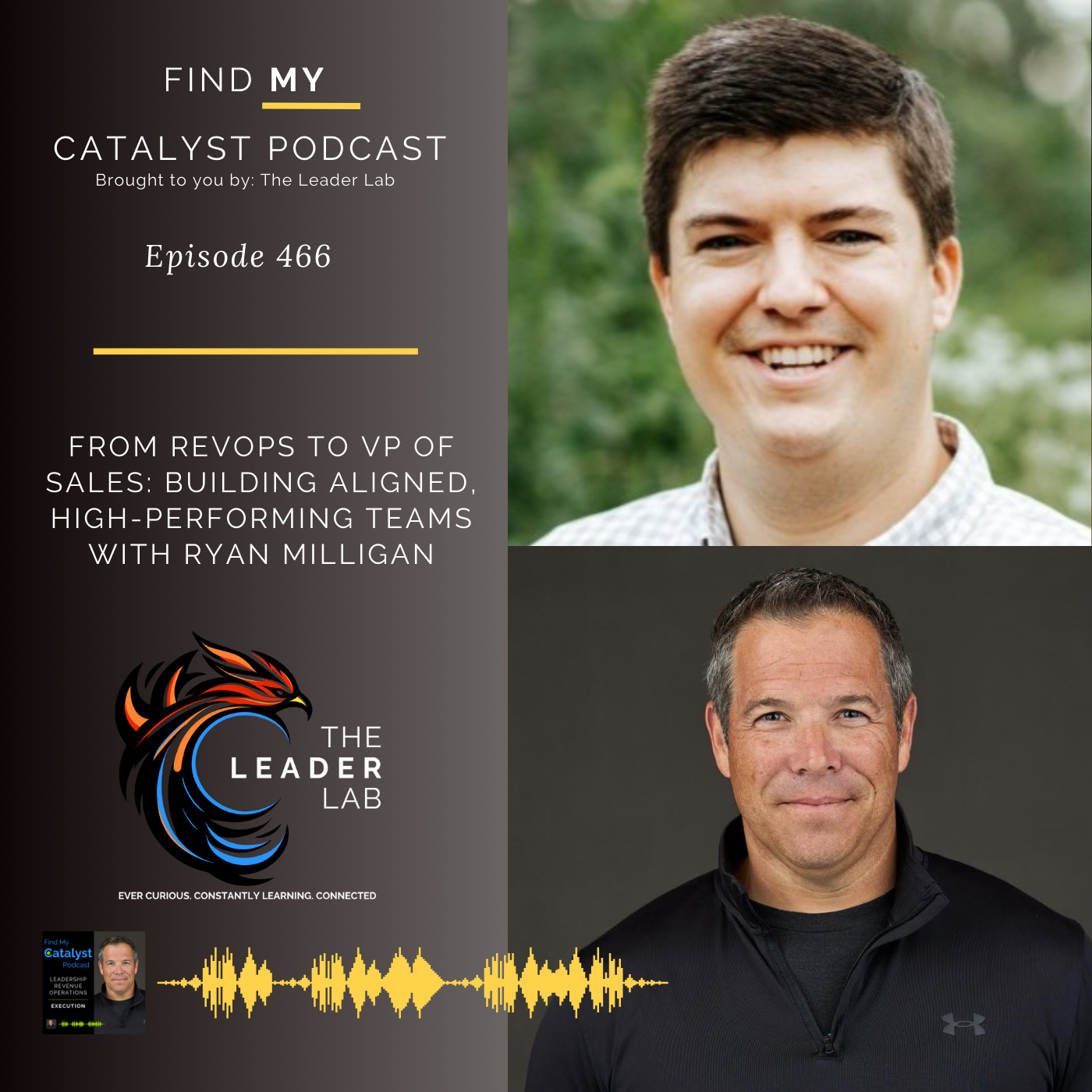
Ep 466From RevOps to VP of Sales: Building Aligned, High-Performing Teams with Ryan Milligan
Ryan Milligan is the VP of Sales at QuotaPath, where he leads sales within a unified go-to-market organization alongside marketing and revenue operations. His career spans Wayfair, data science, performance marketing, and RevOps, giving him a systems-driven approach to sales leadership. Ryan focuses on using clear incentives, aligned teams, and data-backed planning to drive revenue retention and sustainable growth. Ryan's catalyst has been learning how to connect systems, people, and incentives to create better outcomes for both reps and the business. Three Key Quotes from Ryan Milligan On clarity and results "What follows that clarity is a level of focus, and that focused attention actually leads to results." On compensation as a tool "You can actually use the comp plan to change how your team's performing and operating daily." On career growth "A lot of the biggest amount of growth I've had in my career has been in identifying those projects that don't live in the bullet point list of things that they hired me to do." Ryan Milligan, VP of Sales at QuotaPath, explains how RevOps thinking can be a catalyst for better sales leadership, smarter quota setting, and stronger revenue retention. This episode covers comp plan design, cross-functional alignment, rep confidence, and how data-driven sales teams win in today's market. VP of Sales, quota setting, RevOps, revenue retention, sales leadership, compensation plans Five Key Takeaways: Find Your Catalyst 1. Compensation Can Be a Catalyst for Sales Behavior Comp plans should guide daily actions Simple plans drive clearer decisions Bigger incentives change real behavior 2. Better Customers Create Better Retention Sales shapes retention before the deal closes Quality pipeline matters more than volume Incentives should reward long-term fit 3. Career Growth Is Not a Straight Line Raise your hand for cross-team projects Small initiatives build big skills Curiosity creates new opportunities 4. RevOps Thinking Makes Better Sales Leaders Look at the whole system, not just deals Data helps remove emotion from decisions Neutral thinking builds trust across teams 5. Alignment Is the Catalyst for Scale Assume positive intent across teams Talk directly to solve problems faster Shared goals reduce silos
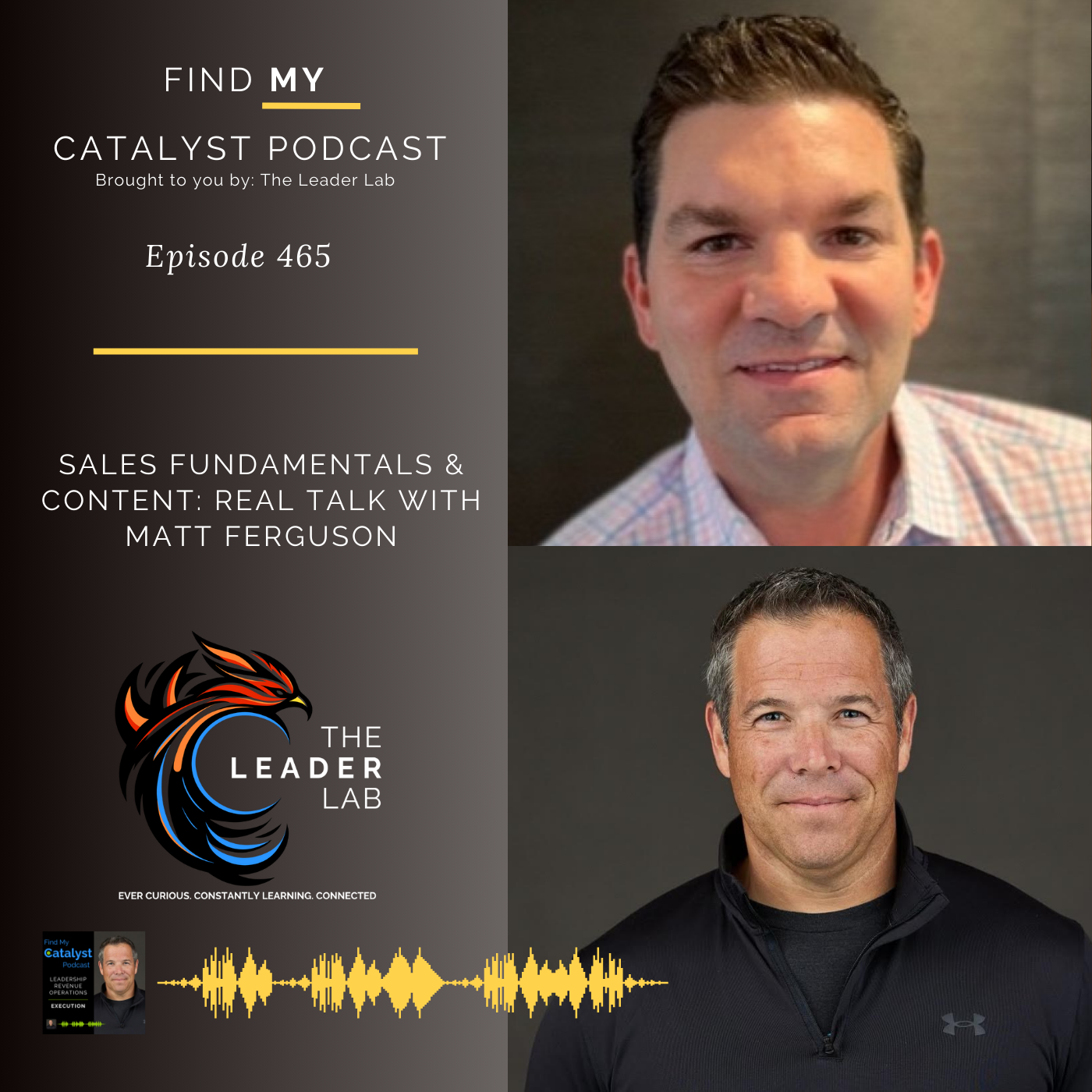
Ep 465Sales Fundamentals: Real Talk with Matt Ferguson
EMatt Ferguson is a seasoned sales leader and coach with a global reach, having worked with clients in over seven countries. Known for his direct, story-driven teaching style, Matt focuses on sales fundamentals, leadership alignment, and the importance of clear communication. He joins the podcast to unpack the noise in modern sales, the misuse of technology, and the role of fundamentals in driving consistent success. Three Key Quotes from the Podcast with Matt Ferguson "Stories that other people go through benefit people way more, and I think that's in your head." "We all have the same problems in some way…because you're dealing with people." "You saying stuff all the time—you're almost kinda looked at as dad. Like, 'Oh, there goes dad again.'" In this lively and thoughtful conversation, Matt Ferguson and host Mike explore the true fundamentals of sales—storytelling, project management, communication, and mindset. They tackle AI tools, fake content, and the importance of real human connection in leadership and selling. The episode is packed with insights, humor, and authentic experiences. ales fundamentals, sales leadership, AI in sales, sales tools, sales communication 5 Key Takeaways and Their Catalyst Connection 1. The Right Tools Only Work When You Use Them Intentionally AI note-takers like Elephant are only helpful if you revisit and apply what they capture. Sales leaders often hoard tools without gaining insight—intent matters more than tech. Use tools like rangefinders in golf: they're useful when aligned with real awareness. Catalyst Connection: Intentional use of tools sparks clarity and momentum. 2. Fundamentals Beat Noise in Sales Fundamentals include: asking questions, storytelling, time management, and project management. The sales world is filled with "fake fundamentals" that distract from what matters. Clarity in fundamentals is what helps reps and leaders progress confidently. Catalyst Connection: Re-centering on true fundamentals activates consistent growth. 3. Communication is the Core of Everything Misalignment in teams and sales processes usually stems from poor communication. Clarify, verify, and create space for others to share—especially in leadership. Don't assume people understood what you said; ask them to reflect it back. Catalyst Connection: Clear communication removes blocks and empowers action. 4. Storytelling Makes Lessons Stick Matt brings client stories into conversation to make abstract lessons real. Stories create emotional connections and help teams remember and apply learnings. Don't hide lessons from clients—share them (respectfully) to help others grow. Catalyst Connection: Storytelling ignites empathy and shared learning. 5. Leadership Doesn't Mean Doing It Alone Leaders often believe they must solve every problem solo. Team alignment and shared ownership make challenges easier to overcome. Create space for "players-only meetings" and organic collaboration. Catalyst Connection: Asking for help or offering collaboration can be the spark that changes everything. Find Your Catalyst at findmycatalyst.com

Ep 464Why Most Sales Teams Fail: Marcus Chan on Root Cause Thinking
EMarcus Chan is the founder of Venli Consulting Group and a top sales coach known for transforming underperforming teams into high-performing machines. With a background that spans individual sales excellence and large-scale team leadership, Marcus brings a laser focus to diagnosing the real problems behind poor sales results—and solving them with intention, systems, and deep-rooted discipline. "Are you solving a symptom or are you solving the problem?" "Preparation creates precision." "Eighty, ninety percent of people float. They just float. They're not intentional." Marcus shares how sales teams can stop fixing the wrong problems. He explains how better planning, strong systems, and smart leadership lead to real results. With a focus on doing the right work, Marcus shows how to stop floating through the day and start making real progress in sales and life. 5 Key Takeaways 1. Solve the Real Problem, Not Just the Symptoms Most teams focus on more activity, not better outcomes. Real change starts with finding the root cause, not guessing. Diagnose first—then fix the problem that matters most. 2. Most People Float—Intentionality is the Catalyst 80–90% of people "float" without a clear plan. Build routines and systems to stay focused on big goals. Being intentional helps you win the day before it starts. 3. Fixing Frontline Leadership with CHARGE Many sales managers were never taught how to lead. The CHARGE model outlines six key leadership skills: Coach, Hire, Align, Run pipeline, Grade performance, Engineer culture. Good leadership creates strong teams that perform with purpose. 4. Not Every Manager Role Fits—and That's Okay Some top reps struggle in leadership roles. Honest, safe conversations help leaders find the right fit. It's better to step back into your strength than stay stuck. 5. Build These 3 Essential Skills Emotional intelligence to understand yourself and others. Communication to lead and connect across any team. Adaptability to grow through change, not get stuck in it. Learn more about Marcus Chan and his work at: ➡️ https://www.venliconsulting.com Looking for that nudge to do the things you are meant to do? Find Your Catalyst at https://www.findmycatalyst.com Subscribe to our weekly newsletter and view previous versions at findmycatalyst.com

Ep 463From Burnout to Breakthrough: Jamie Vinck on Coping, Addiction & Life Transitions
Jamie Vinck is a seasoned behavioral health executive, therapist, and author of The Rehab Playbook. With a background in corporate HR and a powerful personal journey through family, leadership, and loss, Jamie brings a unique blend of clinical insight and real-world business acumen. As the CEO of The Meadows and a board leader in national addiction treatment efforts, she is passionate about helping people find healthier coping mechanisms and create lasting change. Her work bridges professional success and personal healing — a true catalyst for transformation. Three Key Quotes "Addiction is a chronic brain disease" "We all have coping strategies — they're healthy until they're not." "We heal in community. We're all hardwired for connection." Jamie Vinck shares her journey from corporate HR to behavioral health leadership, highlighting the realities of addiction, coping mechanisms, and life transitions. She unpacks how trauma, stress, and even success can mask addiction — and how finding a healthy outlet can be the catalyst for real healing and lasting transformation. 5 Key Takeaways 1. Redefining Addiction Addiction is not about willpower; it's a chronic disease with biological and psychological components. Misconceptions about addiction can delay treatment and increase stigma. Understanding addiction's complexity helps us become better allies and support systems. 2. Cross-Addiction is Real Switching from one addiction (e.g., opioids) to another (e.g., gambling or shopping) is common. The brain seeks dopamine, not the specific substance. Healthy coping mechanisms must be intentional and structured. 3. The Danger in Life Transitions Moments like empty nesting, divorce, or job loss can trigger relapse or new addictions. Many people don't see these changes as high risk, but they are. Awareness and preparation during transitions can prevent maladaptive behaviors. 4. Healthy Coping Isn't Always Healthy "Healthy" outlets like work or exercise can become addictions if they harm relationships or self-care. Self-reflection questions (e.g., "Am I hurting anyone?") help determine if habits are problematic. Balance is the key — passion shouldn't overshadow wellbeing. 5. Exposure Creates Possibility In treatment, people are introduced to new passions — journaling, sports, horses, music, and more. Discovery is key to replacing negative patterns with fulfilling practices. The light in someone's eyes when they find joy is a powerful catalyst for growth. Looking for that nudge to do the things you are meant to do? Find Your Catalyst at https://www.findmycatalyst.com/ Subscribe to our weekly newsletter and view previous versions of the newsletter at findmycatalyst.com
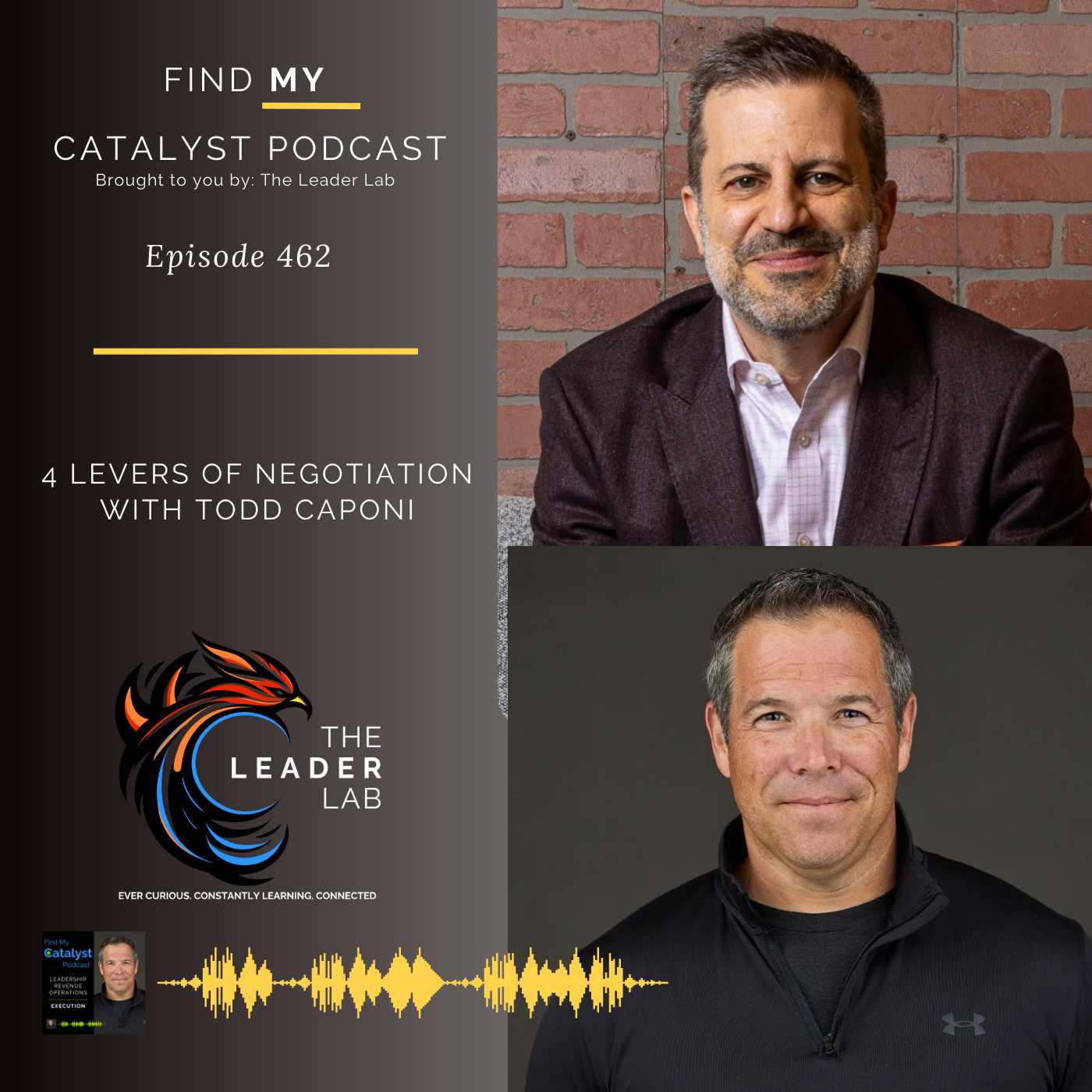
Ep 462The 4 Levers of Negotiation: with author Todd Caponi
Todd Caponi is a sales historian, author, and transparency advocate. With decades of experience in leadership and sales strategy, Todd is best known for transforming how people think about negotiation. His latest book, "The Four Levers of Negotiation," introduces a refreshingly honest, trust-building framework that empowers sellers and buyers alike to make better, faster decisions together. "Every for profit company in the world - they run their business based on four things, and that's, where four levers negotiating comes from." - Todd Caponi Todd Caponi joins the show to share how sales teams can stop lying, start building trust, and negotiate smarter using four clear business levers. He explains how transparency, mutual value, and long-term thinking outperform short-term tactics. From pricing to procurement, Todd reframes negotiation as a collaborative, data-backed, and trust-driven process. 🔑 5 Key Takeaways 1. Negotiation is a Process, Not an Event Like marathon training, successful negotiation starts long before the final conversation. Set clear expectations from the beginning to avoid surprises later. Stop treating negotiation as a high-stakes showdown—collaborate early and often. 2. The 4 Levers That Drive Business Decisions Every for-profit company depends on: Volume Timing of cash Length of commitment Predictability These four factors can be traded like currency during negotiation. Playing your "cards face up" creates mutual benefit and trust. 3. Why Transparency Builds Trust (and Better Deals) Stop hiding pricing logic—buyers can see through the games. A transparent approach leads to fewer discounts and more accurate forecasting. Trust equals speed. Buyers move faster when they understand the "why" behind your terms. 4. Real People Have Real Problems Personas are imaginary. Focus on helping actual people with specific pains. Use discovery to understand what matters most to the individual—not just the company. Help buyers prioritize their problems, even if it's something they've ignored for months. 5. Storytelling Beats Data in Driving Change Stories connect; data divides. Use storytelling to shift mindsets. Structure your message like a reality makeover show: Understand the current state Teach and educate Lead them to a better future Make the customer the hero—not your brand. Looking for that nudge to do the things you are meant to do? Find Your Catalyst at https://www.findmycatalyst.com/ Subscribe to our weekly newsletter and view previous versions of the newsletter at findmycatalyst.com
Ep 461DeShawn Wynn - Events, Planning, Execution, and the Power of Retreats
DeShawn Wynn is a veteran event strategist, entrepreneur, and transformational retreat leader. With nearly 30 years of event planning experience and 15 years as the founder of Winning Touch Event Design, she blends logistics and heart-centered transformation. Her mission? To help people pause, ask deeper questions, and reconnect with the why behind their actions. "An event is supposed to cause change — people should leave different than when they came in." "Don't wait for a tragedy to be your catalyst. Let a luxurious retreat be your wake-up call." "Value means putting yourself in the equation — not after the job, the family, or the to-do list, but now." DeShawn Wynn shares the behind-the-scenes truths of event planning and the powerful inner work needed to live with intention. She discusses her transformational retreats, the importance of mindset, and how understanding your "why" can shift everything. This episode is a roadmap for moving from autopilot to purposeful action — without waiting for crisis. 🔑 5 Key Takeaways (Connected to "Find Your Catalyst") 1. True Transformation Begins with Questions Asking "why" helps uncover hidden motivations. Self-reflection is the start of real change. A catalyst doesn't need to be a crisis — it can be a conscious pause. 2. Events Should Spark Change The purpose of an event is to create transformation. Planners must consider every stakeholder's expectations. Cookie-cutter agendas fail to meet evolving human needs. 3. Mindset is More Than Motivation Mindset = Attitude + Belief + Clarity of Definition. Most people live reactively instead of intentionally. Your mindset shapes how you value yourself and others. 4. Serve, Don't Just Show Up Speakers should align with the event's mission, not just their topic. Responsiveness and reliability build trust with event planners. Add value by being available beyond your scheduled time. 5. Retreats as Catalysts for Realignment DeShawn's retreats are designed to help people rediscover purpose. Reflection time is often the missing piece in a busy life. Real breakthroughs happen when you're surrounded by intention and community. How Event Planning Can Be Your Catalyst for Change — with DeShawn Wynn From Logistics to Legacy: DeShawn Wynn on Purposeful Living Don't Wait for a Crisis: Transform Now with DeShawn Wynn's Retreats Looking for that nudge to do the things you are meant to do? Find Your Catalyst at https://www.findmycatalyst.com/ Subscribe to our weekly newsletter and view previous versions of the newsletter at findmycatalyst.com

Ep 459Relationship Currency - with Author Ravi Rajani
Ravi Rajani is a master of impactful communication, storytelling, and leadership development. He is the author of Relationship Currency and helps professionals unlock their influence through the power of intentional storytelling. From theater and investment banking to keynote stages and coaching rooms, Ravi's journey is a testament to finding alignment and embracing authenticity. https://www.theravirajani.com/ "Charisma is an innate superpower we all possess, which allows others to feel significant in our presence." "Your daughters will marry your example. Your sons will follow it." "The more you do the inner work, the more the dream works." In this heart-led and insight-packed conversation, Ravi Rajani dives into storytelling, authenticity, and personal transformation. He explores how inner alignment fuels outward success, the power of leading with vulnerability, and how storytelling can be the catalyst for influence and connection. It's a masterclass in communication that truly resonates. 1. Parenthood Becoming a parent reshaped Ravi's perspective on leadership and legacy. Children reflect the examples we set—our integrity, actions, and mindset matter. Personal growth becomes urgent when others look to you as a model. 2. Masks, Authenticity, and Alignment We wear masks to protect ourselves, but they often block genuine connection. True growth happens when we embrace who we are, not who we pretend to be. Removing the mask can be the catalyst to meaningful relationships and self-leadership. 3. Redefining Charisma Charisma isn't about attention—it's about making others feel they matter. Ravi's ASI framework (Authenticity, Specificity, Impact) turns compliments into transformations. When people feel seen and heard, they unlock their own potential. 4. From Pain to Story to Influence Ravi guides listeners to turn personal challenges into powerful stories. His "Acorn Checklist" (Attention, Conflict, Outcome, Relevance, Narrative) helps craft stories that stick. Your story is a bridge—when shared well, it invites others to step into their own journey. 5. Technology and Human Connection AI can support growth, but it must not replace human reflection and depth. Fast results without inner work risk shallow success. Use tools like AI to make space for deep conversations, not avoid them. Unlock Your Charisma: How Ravi Rajani Uses Storytelling as a Catalyst for Change Why Your Story Matters: Building Influence Through Authentic Communication From Masks to Meaning: Ravi Rajani on Living and Leading with Integrity Looking for that nudge to do the things you are meant to do? Find Your Catalyst at https://www.findmycatalyst.com/ Subscribe to our weekly newsletter and view previous versions of the newsletter at findmycatalyst.com
Ep 460DevLearn Prep - with Brent and Mike
Mike Simmons and Brent Schlenker are learning and enablement veterans with a deep passion for helping professionals connect, prepare, and get the most out of events. Mike brings expertise in sales enablement and field learning, while Brent is a long-time learning and development (L&D) leader known for building communities and driving conversation in the L&D space. Together, they dive into how to make the most of DevLearn 2025 — from tactical planning to real-time strategies for networking, booth visits, and personal performance at large conferences. "Go in with a plan. Take a leadership position, identify your top ten." – Mike Simmons "Training is an event. Learning is a process. Technology supports them both." – Brent Schlenker "You're not measured by the number of booths you visit. You're measured by the quality of conversations you have." – Mike Simmons Mike Simmons and Brent Schlenker offer a real-time breakdown of how to prep for DevLearn 2025. With humor and experience, they share tips for navigating expo halls, creating intentional booth strategies, and focusing on meaningful conversations. It's about finding your catalyst through connection, clarity, and curiosity at conferences. 🔑 5 Key Takeaways 1. Have a Clear Conference Strategy Identify your top 10 booths before entering the expo hall. Use the conference app to scan vendors and set goals. Approach with purpose, not just curiosity. 2. Know Who You Want to Meet Research vendor teams on LinkedIn. Look for people in product, sales, and marketing roles. Ask to speak with specific people to drive deeper conversations. 3. Plan, But Be Flexible Set intentions, but be okay when plans change. Great conversations often happen by chance. Let spontaneity and connection guide you. 4. Make Your Time Count Avoid the food lines—go talk to vendors during peak break times. Take notes and prioritize what matters most. Track who you talk to and why to follow up meaningfully. 5. Support and Enable Performance Focus on learning tools that drive real outcomes. Look for vendors tackling onboarding, enablement, and everboarding. Remember: improving human performance is the goal, not just collecting tech. "How to Crush DevLearn 2025: Pro Tips from Industry Veterans" "Expo Strategy, Connection, and Performance: Your DevLearn Game Plan" "Why You Need a Top 10 List for DevLearn (And How to Use It)" Looking for that nudge to do the things you are meant to do? Find Your Catalyst at https://www.findmycatalyst.com/ Subscribe to our weekly newsletter and view previous versions of the newsletter at findmycatalyst.com
Ep 458Custom-Fit with Author Kate Morgan
Kate Morgan is the author of Custom-Fit, and the founder of BostonHCP. She is a no-nonsense, passionate voice in the world of HR, culture, and team development. With a background in scaling teams, Kate focuses on helping small business owners build thriving organizations from the inside out. She's a Forbes-published author, EO Accelerator Chair, and a firm believer in people as the ultimate competitive advantage. "A core value isn't a value unless you can say…you'll be fired if you don't live up to it." "Execution rests with your people. Get that right and you're going to be head and shoulders above your competition." "Your culture will evolve regardless—but it won't necessarily be good unless you design it." Kate Morgan joins the podcast to discuss why HR gets messy, how culture can be intentionally designed, and what it takes to move from solopreneur to entrepreneur. With sharp insights on performance reviews, core values, and team alignment, she brings clarity to the chaos many small business owners face when scaling. https://www.bostonhcp.com/ 🔑 5 Key Takeaways 1. HR Isn't Just Foosball and Perks HR's role evolved from talent attraction to compliance and development. Misaligned expectations between business and HR cause friction. Clear strategy and purpose must guide HR, not just "being nice." 2. Core Values Are Not Marketing Material If you can't fire someone for violating a "core value," it's not real. Culture becomes real when values are non-negotiable edicts. Culture misalignment causes costly turnover and performance issues. 3. Performance Reviews Aren't Optional Avoid lawsuits by documenting honest performance feedback. Managers often give inflated scores to avoid discomfort. A simple PIP (Performance Improvement Plan) can protect the business. 4. From Solopreneur to Entrepreneur True entrepreneurship involves replicating yourself and hiring others. Let go of control—your team can do it better with guidance. Growth means shifting dopamine from personal success to team wins. 5. Building a Culture in Remote Teams Start with daily "Word of the Day" huddles to check mindset. Open books and open conversations lead to stronger connections. People thrive with transparency, structure, and shared values. From Solopreneur to CEO: Kate Morgan on Building Culture That Scales Why HR Fails—and How to Fix It: Kate Morgan's Guide for Small Businesses The Culture Mistakes Killing Your Company (And How to Avoid Them) Looking for that nudge to do the things you are meant to do? Find Your Catalyst at https://www.findmycatalyst.com/ Subscribe to our weekly newsletter and view previous versions of the newsletter at findmycatalyst.com
Ep 457From Parks to Boardrooms: Leadership Lessons from Nature with Donald Forgione and Mike Simmons
Donald Forgione — Former Director of 175 Florida State Parks, with 40+ years in ecotourism, leadership, and public service. Now a business owner, speaker, and coach, Donald connects leadership lessons from nature to business. Mike Simmons — Founder of Find My Catalyst, leadership coach, and sales strategist, helping people identify and act on their catalyst for change. Three Key Quotes Donald Forgione: "Trust is the key to absolutely everything… If they're not feeling what I'm saying, I might as well throw it out the window." Mike Simmons: "A revenue challenge is often a culture challenge in disguise. Culture starts with leadership. Leadership starts with self." Donald Forgione: "Superman ain't coming. You have to be your own Superman, your own Wonder Woman — and figure it out." Mike and Donald explore the deep connections between nature and leadership, revealing how adaptability, trust, and asking the right questions can transform teams and culture. They share real-world lessons from state parks to sales, showing leaders how to align purpose, overcome obstacles, and create environments where people thrive. 5 Key Takeaways – Finding Your Catalyst in Leadership 1. Adaptability is Essential Nature changes daily, sometimes hourly — so do business environments. Leaders must adjust "sails" when conditions shift, not fight the wind. Like a river finding a new path, flexibility keeps momentum moving forward. 2. Trust is the Foundation Without trust, communication falls flat — people must feel you're genuine. Consistent standards and fairness build credibility. Trust enables teams to follow direction, even in tough changes. 3. Ask Better Questions Leaders have an obligation to ask questions others won't. Tone, timing, and context matter — the "tailgate" setting often works best. Asking opens doors to insight; telling can shut them. 4. Sales is Everyone's Job Selling is solving problems, not pushing products. Every role in an organization impacts customer experience. Internal and external "customers" both require thoughtful service. 5. Break Down Silos Customers don't care which department "owns" the problem. Internal collaboration is as important as external service. Remove political barriers so the mission comes first. Find your Catalyst at https://findmycatalyst.com Check out Tailgate Talks at https://tailgate-talks.com/speaker-experience/podcasts/ You Can Put the Work in to Practice, and we'd love to hear about it. Listener Challenge: Your Catalyst Connection This week, take 15 minutes to connect one lesson from nature to your work. Step 1 – Observe: Go for a walk in a park, your neighborhood, or any outdoor space. Notice one thing that stands out — a tree's growth pattern, the way water flows, how animals interact, or even the weather. Step 2 – Reflect: Ask yourself: What obstacle is this natural element facing? How is it adapting or overcoming? How does this mirror challenges in my team or business? Step 3 – Act: Identify one small change you can make in your leadership or work this week inspired by that observation. Example: If you see water rerouting around rocks, consider how you can redirect your team's energy around a roadblock rather than trying to push through it. Share Your Story: Email Mike and Donald with your insight — you might inspire the next podcast conversation.
Ep 456Fidel Cache Flow on Anonymity, Job Stacking, and Leadership in Tech Sales
EFidel Cache Flow is an account executive at a public company and an influential voice in the "burner verse" – the world of anonymous social media accounts. Through his Twitter profile, he openly shares unfiltered takes on tech sales, job stacking, leadership, and career strategies, while also building a thriving community that helps others grow in tech sales. Follow Fidel here: https://x.com/FidelCacheFlow "There's freedom in being anonymous. It lets me speak truthfully without fear." "Job stacking isn't about cheating. It's about working smarter, not harder." "Leadership starts with yourself—even if you don't have a title." In this episode, Fidel Cache Flow explains why he built an anonymous online persona, the rise of job stacking, and how community drives success in tech sales. He shares bold ideas about career growth, leadership, and building trust while staying authentic. This episode challenges traditional work models and inspires independent thinking. 5 Key Takeaways 1. The Power of Anonymity Freedom to share raw, unfiltered ideas Builds confidence to challenge norms Encourages finding your voice despite risks 2. Job Stacking as a Catalyst Multiple income streams create independence Requires strong personal accountability Forces you to rethink time and value 3. Leadership Starts with Self Leadership is influence, not just titles Self-awareness improves teamwork and results Learning leadership early changes your future 4. Community Drives Growth Mentorship accelerates your learning curve Peer groups help solve tough problems Teaching others strengthens your own skills 5. Rethinking Career Paths Big companies provide a strong foundation Smaller roles offer freedom and creativity later Strategic moves can be your career catalyst Find Your Catalyst at https://findmycatalyst.com
Ep 455Why Accurate Sales Forecasts Are Overrated with Bill Kantor
Bill Kantor is the co-founder of Funnelcast, a forecasting platform designed to help businesses understand, optimize, and act on their sales pipelines. With decades of experience in sales operations and revenue analytics, Bill is on a mission to shift how companies use forecasting — from chasing accuracy to driving meaningful change. 💬 3 Key Quotes from Bill Kantor: "The job of the forecast is to tell you what to change in order to make the outcome better." "People think the job of the forecast is to tell you what you're going to close. But your sales are not like the weather. You can control the outcome." "Don't chase hyper-accuracy in forecasts — focus on what you can control to change the outcome." Bill Kantor joins the show to challenge the conventional view of forecasting. Rather than striving for accuracy, Bill advocates for forecasts as tools for change. He explains the math behind pipelines, common mistakes in sales forecasting, and how better definitions and insights can empower sales teams to improve outcomes — not just predict them. 🔑 5 Key Takeaways 1. Forecasting Is a Catalyst for Change Forecasts should help you identify where to take action, not predict perfectly. Think of forecasting like coaching — it's about improvement, not prediction. Use forecasting to find leverage in your pipeline, not just to report numbers. 2. You Can't Predict Individual Deals — And That's Okay The idea that you can call specific deals is flawed and statistically impossible. Treat your pipeline as a portfolio — not a list of "yes" or "no" bets. Focus on the distribution of outcomes, not just the "commit list." 3. Pipeline Math is Simple but Powerful Three levers drive outcomes: number of deals, size of deals, and win rate. These factors are dynamic and function over time. Modeling those time-based variables correctly uncovers more accurate and actionable insights. 4. Sales Stages Must Be Clearly Defined Poor stage definitions lead to forecast noise and misalignment. Consistent definitions enable higher forecast fidelity. Clarify criteria for entering and exiting each stage to drive accountability and insight. 5. Tools Don't Replace Thinking Too many teams buy tools before building skills. Forecasting tools like Funnelcast amplify insight but aren't a magic fix. Simplify your model before layering in complexity — get the basics right first. "Why Accurate Sales Forecasts Are Overrated with Bill Kantor" "The Forecast Is Not the Goal: How to Change Outcomes with Bill Kantor" "Forecasting for Impact: Ditch the Guesswork, Embrace the Math" Find your catalyst at https://findmycatalyst.com
Ep 453Selling to Farmers & Leading with Empathy: Lessons in Rural Sales from Sinjin Cramer
ESt. John "Sinjin" Cramer is a dynamic sales strategist, keynote speaker, and host of the Rural Sales Success podcast. A UK native now based in New Zealand, Sinjin helps businesses understand how to sell with empathy, especially in high-stakes, rural environments. His philosophy? Stop selling. Start serving. "If you don't like where you are—move. Even a small shift can be a catalyst for growth." "Don't sell to farmers—or anyone. Help them make informed decisions." "Be a buyer's assistant. If you're not helping people feel safe in a purchase, you're not selling—you're pushing." Sinjin Cramer shares wisdom from decades in rural sales, exploring why trust and understanding context matter more than tactics. From metaphors on movement and mindset to book recommendations and rugby strategy, this episode uncovers how small actions, curiosity, and service can create lasting transformation—for both buyers and sellers. 🔑 5 Key Takeaways 1. Movement Creates Momentum Small shifts, like rearranging your desk or changing your routine, can spark meaningful change. "Little and often over the long haul" beats intense bursts of action. Movement—literal or metaphorical—fuels growth. 2. Help, Don't Sell Farmers and other buyers don't want to be sold to; they want help making smart, lasting decisions. Shift from "salesperson" to "buyer's assistant" to build trust and long-term success. Sales is a service, not a transaction. 3. Context is Everything Understand the world your customers live in—their risks, community, and long-term vision. Farmers, for example, live with their purchases—literally seeing them every day. Specificity in how you serve different buyers makes all the difference. 4. Trust Is Earned, Not Titled Becoming a "trusted adviser" isn't a label you give yourself—it's a role others bestow on you. It takes time, reps, and a true focus on the buyer's needs. Curiosity and service build credibility over time. 5. Books as Catalysts Books like Man's Search for Meaning, Legacy, and The Talent Code offer timeless insights on mindset, resilience, and leadership. Rereading key books can reinforce principles you're working to live. Reading fiction, too, can ignite creativity and empathy—critical tools for any change-maker. Why You Should Stop Selling and Start Serving: A Masterclass with Sinjin Cramer Little Changes, Big Impact: Sales, Trust, and Movement with Sinjin Cramer Selling to Farmers & Leading with Empathy: Lessons in Rural Sales from Sinjin Cramer Find your Catalyst at https://findmycatalyst.com
Ep 452Skip the Rookie Mistakes - Podcast Mastery Tips from Seth Goldstein
Seth Goldstein is a 15-year podcast pro, coach, and former journalist. He runs "Podcast Mastery" and helps new hosts skip common mistakes. Seth's big message: have a simple plan, keep the show real, and hit record—because action is the true catalyst. "If you have a plan and a cadence, it works. When you don't, it usually doesn't." "Your first ten episodes are practice—most people won't even know they exist." "People listen because they want to feel part of the conversation." Seth Goldstein and host Mike Simmons swap straight-talk tips on starting and growing a podcast. They cover gear, planning, guest fit, and why breathing and pressing record beat perfection. The chat shows how small, steady steps turn ideas into a real show—your catalyst for sharing big ideas. 5 Key Takeaways Start Small, Start Now A low-cost mic and headphones are enough. Zoom works—don't wait for fancy tools. Hitting record is the catalyst that moves dreams to action. Make a Simple Plan Pick a release rhythm (weekly, twice-a-month). Know your ideal listener and guest. A clear plan sparks steady progress. Practice Builds Confidence First episodes are mostly for you. Reps polish voice, pace, and stories. Each episode becomes a mini catalyst for the next. Keep It Real Light edits—leave natural pauses and laughs. Listeners bond with honest sound. Authentic voice is a trust catalyst. Measure and Iterate Check basic stats: downloads and listens. Test formats—solo, guest, or hybrid. Data-driven tweaks act as feedback catalysts. "Podcast Beginner? Seth Goldstein's 3-Step Plan to Launch Fast" "From Idea to Mic: Seth Goldstein Reveals the Catalyst for Podcast Success" "Skip the Rookie Mistakes - Podcast Mastery Tips from Seth Goldstein" Find your Catalyst at https://findmycatalyst.com
Ep 451The ADHD Boss: Clear Communication and Why Coaching Matters
Mike Simmons, founder of Catalyst and host of the "Find Your Catalyst" podcast, returns for a solo Q&A session. In this episode, he explores how ADHD shows up in leadership, strategies for clear communication, and why coaching is an essential part of personal and business growth. Mike shares personal experiences and systems that help him and others focus, execute, and lead effectively. 💬 3 Key Quotes "Don't diagnose people—understand behaviors and build systems that reduce chaos." "There are things that are said, things that are heard, and things that are remembered—and rarely are they the same." "A coach helps people think differently, see differently, and ultimately do differently." Mike Simmons dives into leadership with ADHD, how communication often breaks down, and the critical role coaching plays in helping people move faster and smarter. With practical tools like priority lists and communication preferences, Mike shows how clarity and systems can be a catalyst for better business and personal outcomes. 🔑 5 Key Takeaways 1. Leading with ADHD: Embrace Focus and Flexibility Leaders with ADHD often juggle many ideas, creating confusion for their teams. Systems and priority lists can reduce stress and clarify direction. Asking "Where does this fit in our priorities?" curbs the chaos of chasing new ideas. 2. Communication is a Two-Way Street Don't assume understanding—validate what was heard. Ask: "What did you hear me say?" to catch misalignment early. Clear definitions help reduce frustration and improve team trust. 3. Define Accountability Clearly Use the framework: Who will do what by when. Color-code notes to track priorities, ideas, and action items. Avoid assumptions—clarity builds accountability. 4. Build and Share Communication Preferences Leaders should express how they prefer to receive information (e.g., text over email). Encourage team members to share their preferences too. Revisit these preferences regularly to improve efficiency. 5. Coaching as a Catalyst Coaching helps people go from where they are to where they want to be. A coach shifts perspectives and simplifies next steps. Mike emphasizes making coaching more visible and accessible for leaders and teams. How to Lead with ADHD: Focus, Systems & Coaching Tips The ADHD Boss: Clear Communication and Why Coaching Matters Said, Heard, Remembered: Mastering Team Communication with Mike Simmons Find Your Catalyst at https://findmycatalyst.com
Ep 450The Hidden Power of Marketing Ops: Why It's More Than Just Execution with Mike Rizzo
Mike Rizzo is the founder of MarketingOps.com and the vibrant Mo Pros community—a 6,500+ member strong network dedicated to elevating marketing operations professionals. With a background in martech and a passion for building systems that scale, Mike champions the art of connecting strategy, technology, and people. "Marketing operations is the backbone of strategic success." "Slow down to speed up—operational rigor helps eliminate chaos." "Invest in your community, and it will invest back into you." Mike Rizzo shares how marketing operations drives business success by combining strategy with execution. He explores how the Mo Pros community helps professionals connect, grow, and share. Through clear systems, thoughtful collaboration, and investment in self and others, Mike shows how ops can become a true catalyst for innovation and clarity. 🔑 5 Key Takeaways: 1. Marketing Ops as a Strategic Catalyst It's not just tactical; it underpins strategy and growth. Clear systems and aligned definitions unlock momentum. Marketing ops professionals translate business goals into technical execution. 2. Slow Down to Speed Up Operational rigor avoids repeated mistakes. Standardized onboarding, process, and measurement create efficiency. The best systems are built to support speed through structure. 3. Community is the Shortcut to Growth The Mo Pros community offers peer support, advice, and shared experiences. Professionals thrive when they ask for help and offer it to others. Engagement fuels growth: ask, share, listen, repeat. 4. Invest in Self to Find Your Catalyst Learning communities and workshops accelerate development. Real growth comes from applying skills like communication and problem-solving. Participation leads to deeper insight, connections, and opportunity. 5. The Future of Ops: From Execution to Architecture The goal is not just using tools but designing systems that work. Understanding the "why" behind tools matters more than knowing how to use them. Leadership in ops comes from curiosity, critical thinking, and clarity. "Marketing Ops as a Catalyst: Building Strategy Through Systems with Mike Rizzo" "From Chaos to Clarity: Why Community and Ops Are the Key to Growth" "The Hidden Power of Marketing Ops: Why It's More Than Just Execution" Find Your Catalyst at https://findmycatalyst.com
Ep 449GTM Engineering Explained: Automation, AI & Fearless Thinking with Benyamin Holley
Benyamin Holley is a "GTM engineer" who blends technical tools and creative problem-solving to revolutionize go-to-market strategies. With a background in music tech and a passion for scrappy, AI-driven workflows, Benyamin brings a fresh, practical approach to solving sales and operations problems. Currently at Sift, he's helping shape how startups use automation to scale smarter, not just faster. "Sales is a thinking process. And if you think well, you can build better systems." "Less is more — I don't want more leads; I want better ones." "Fear of being wrong holds people back. But if you're doing something good, the world conspires in your favor." Benyamin Holley joins the show to share how he's redefining sales and go-to-market strategies using AI and automation. From his roots in music education tech to pioneering GTM engineering at Sift, Benyamin dives deep into what it means to proactively solve problems, embrace tools like Clay, and find true product-market fit. 🔑 5 Key Takeaways 1. GTM Engineering Is a Thinking Process GTM (go-to-market) engineering isn't just a buzzword—it's a mindset. It involves problem-solving across the sales funnel using AI and automation. You don't need to be a coder, just scrappy and optimistic. 2. Start with the Right Fit Whether it's customers, culture, or tools, fit reduces friction. Good fits feel like "no-brainers"—they flow without forcing. If you're constantly battling resistance, it may not be the right match. 3. Fear Stops Progress People often hesitate to act because they fear being wrong. Startups thrive when people tackle problems without waiting for approval. Building confidence through small wins helps overcome this fear. 4. The List Is the Strategy Outbound success depends on building a high-quality, well-qualified list. Tools like Clay help isolate the right leads with fewer but better targets. Relevance in outreach increases connection and reduces noise. 5. Let Robots Do the Busywork Automation isn't about replacing humans, but enhancing them. Benyamin shares how AI tools manage waitlist follow-ups automatically. Freeing time from manual tasks lets people focus on meaningful conversations. "From Music Tech to GTM Engineer: Benyamin Holley on Sales Innovation with AI" "Why Less Is More in Sales: Benyamin Holley's Playbook for Smarter Outreach" "GTM Engineering Explained: Automation, AI & Fearless Thinking with Benyamin Holley" Find Your Catalyst at https://findmycatalyst.com
Ep 448The Sales CONTRARIAN - Steve Heroux
ESteve Heroux is a sales thought leader, author of The Sales Contrarian, and founder of The Sales Collective. Known for his humorous and no-fluff approach, Steve challenges outdated sales methodologies and champions a people-first philosophy. With roots in comedy and admiration for icons like Bob Ross and Larry David, Steve brings heart and honesty into the world of sales, coaching, and leadership. "He didn't paint to show you how good of a painter he was. He painted to show you how good of a painter you could be." – On Bob Ross's influence and philosophy. "Selling ice to an Eskimo doesn't make you a great salesperson. It makes you an asshole." – On ethical, value-driven sales. "You have to teach people how to swing like them, not like you." – On individualized coaching and leadership. Steve Heroux joins the podcast to dismantle traditional sales myths, challenge robotic training, and advocate for purpose-driven selling. From detaching from outcomes to building self-awareness, Steve shares personal stories and strategies that ignite self-leadership and redefine success—proving that joy, ethics, and humility are the real game changers in sales. 🔑 5 Key Takeaways 1. Sales Isn't About Scripts—It's About Humanity Robotic scripts kill connection; human presence builds trust. Salespeople should call audibles, just like smart quarterbacks do. Be you—your unique voice is your catalyst. 2. Detach from Outcomes to Drive True Performance Obsessing over quotas leads to burnout and misalignment. Focus on inputs you can control: preparation, practice, and care. Daily performance indicators (DPIs) matter more than KPIs. 3. Failure Is Not the Opposite of Success—It's Part of It Real learning comes from being wrong, not being right. Self-awareness starts with admitting mistakes. Humor and humility unlock better performance. 4. Gamify What Matters—The Process, Not Just Results Use point systems to reward meaningful actions (thank you notes, learning). Make the work fun and joyful—like fishing or painting. Execution creates consistency; passion sustains it. 5. Leaders Must Coach the Individual, Not the Group One-size-fits-all training is outdated and ineffective. Great leadership develops the person's swing, not the leader's swing. Sales DNA assessments reveal unique strengths and blind spots. "Why Sales Quotas Are Broken: Steve Heroux on Ethical Selling and Self-Leadership" "Sales Without Scripts: Steve Heroux on Finding Your Voice and Letting Go of Outcomes" "From Bob Ross to Sales Boss: Steve Heroux Redefines Success in Business" Find Your Catalyst at https://findmycatalyst.com
Ep 447Totality 2025: Reinventing the Sales Conference Experience - Dale Dupree
Dale Dupree is the founder of The Sales Rebellion and a dynamic thought leader in modern sales. Known for his rebellious mindset and deeply human approach, Dale challenges traditional business thinking. He shares his love for nature, the power of curiosity, and his vision for Totality—a transformative experience that's reshaping what a business conference can be. "Change exists on a daily basis for me. So I don't live in comfort or stagnation." "We can't reflect on what we're going to do—you have to do it, then reflect." "Totality is a mix of medicine and enlightenment. It's about thinking much deeper about your existence." Dale Dupree reflects on his journey from urban life to the mountains, the importance of community and discomfort, and how these lessons shaped Totality 2025. He reimagines business experiences by emphasizing creativity, human connection, and inner exploration. This episode is about finding your catalyst by embracing unpredictability and authenticity. 🔑 5 Key Takeaways 1. Discomfort Is a Catalyst for Growth Leaving comfort zones leads to personal clarity and transformation. Dale's story—from city life to mountain quiet—reflects this principle. Challenges force us to reevaluate what really matters. 2. Authenticity Fuels Connection Dale values genuine interaction over polished personas. Small-town experiences gave him meaningful community bonds. Totality mirrors this by removing conference fluff in favor of real talk. 3. Curiosity Is the Rebel's Tool Asking "what else is there?" breaks the cycle of complacency. Exploration is not just physical—it's emotional and intellectual. Rebelling isn't destruction; it's deep curiosity in action. 4. Creativity Transforms Sales and Life Creativity is often undervalued in sales, but it's a game changer. Totality brings hands-on, unexpected experiences to foster it. Real innovation starts by doing things differently—and with feeling. 5. Designing Experiences Creates Lasting Impact Pairing music and scent with moments enhances memory and meaning. Dale blends sensory cues and mystery to create Totality's magic. People remember how you made them feel—not just what you said. "Dale Dupree on Why Discomfort Is the Key to Living Fully" "Totality 2025: Reinventing the Sales Conference Experience" "The Rebellion Begins: Dale Dupree on Curiosity, Community & Creativity" Find your Catalyst at https://findmycatalyst.com
Ep 446Why Fractional Leaders Drive Faster Business Impact with Tim Dyck - 446
Tim Dyck is the founder of Best Culture Solutions and a seasoned expert in leadership development, employee engagement, and culture transformation. With a strong background in designing meaningful customer and team experiences, Tim is passionate about helping businesses thrive through intentional design and fractional leadership. "Leadership starts with self. Leaders build leaders." – Highlighting the importance of designing a process that begins with personal discipline. "If you don't have a process, how can you expect to achieve repeatable results?" – Emphasizing the foundational role of process in business and leadership success. Mike and Tim explore how fractional work can help businesses fill critical gaps fast, manage uncertainty, and create memorable customer experiences. They break down leadership mindset, designing for success, and why managing expectations matters. This episode helps leaders rethink how they structure their team, processes, and strategy with clarity and intent. 🔑 5 Key Takeaways 1. Fractional Work Is Strategic, Not Temporary Fractionals help close gaps quickly without long-term commitment. They offer deep expertise in areas the business needs most. Fractional roles allow companies to stay agile during uncertain times. 2. Designing for Experience Builds Trust Consistency in customer and team experience increases loyalty. Details matter—like the entrance to a ballpark or a product touchpoint. Poorly designed experiences break trust and create risk. 3. "Weenies" Keep Momentum Borrowing from Disney, "weenies" are milestones or visuals that pull people forward. Every process should include visible progress markers to reduce confusion. These checkpoints build confidence and clarity in a journey. 4. Process Creates Repeatable Results Jumping from A to Z rarely works—stepping stones reduce risk. Leaders should design backward (from the goal) and execute forward. A thoughtful process builds momentum and enables consistent delivery. 5. Mindset and Self-Discipline Drive Success Many leaders struggle due to lack of focus and process. True leadership begins with managing oneself effectively. Clear mindset = clarity of goals + consistent actions + defined expectations. Why Fractional Leaders Drive Faster Business Impact Designing for Experience: Lessons from Disney and Fractional Strategy The Power of Process: How Fractional Work Builds Clarity and Trust 📈 Podcast Improvement Suggestions Add a listener story or case study: Real-world success from a fractional project would deepen connection and credibility. Use audio chapters: Segmenting by topic (mindset, design, process) improves replay value. Summarize steps visually: A one-page PDF download of the "design backward, execute forward" model could increase engagement. Learn. Think. and Act. with us every Sunday. Our Sunday email is filled with sections dedicated to helping leaders Learn. Think. and Act. These short weekly emails will help you make a difference and accelerate speed to impact at work, with self, and within your family. Subscribe here: https://www.findmycatalyst.com/learn-think-act-opt-in
Ep 4452025 Stanley Cup Finals - Constantine, Jacquelyn, Mike
EJacquelyn: "It honestly looked like a high school or college team was playing a professional team." Constantine: "Passion. Commitment. Tenacity. These guys live and breathe this shit." The crew recaps Round 2 of the Stanley Cup playoffs, confessing their inaccurate picks and celebrating Constantine's 50% accuracy. With deep hockey insight and hilarious banter, they preview the East and West Conference Finals, reveal their personal favorites, and emphasize the emotional, strategic, and human side of playoff hockey. 🔑 5 Key Takeaways 1. Finding a Catalyst in Failure Jacquelyn admits picking the Leafs was a mistake—owning failure leads to better choices. The group learns from incorrect picks to sharpen predictions for the next round. Recognition of poor team performance (like the Caps) becomes a call to realign and refocus. 2. Performance Under Pressure Constantine praises players like Ottinger and Bobrovsky for stepping up in high-stakes moments. The playoffs reveal which players rise when it counts most. Success is tied not just to talent but to composure under fire. 3. Respect and Resilience in Sport The team highlights the powerful sportsmanship seen in handshakes and honoring personal struggles (e.g., Scheifele's loss). Emotional intelligence and empathy make great athletes greater. Team support and unity often become the catalyst for comeback performances. 4. The Power of Passion "Live and breathe this shit"—Constantine's line underscores the deep love for hockey. The community's passion, including fans and commentators, fuels the game's momentum. Passion is infectious; it inspires action and elevates purpose. 5. Bold Predictions Drive Engagement All three make distinct, thoughtful predictions, showing conviction despite past mistakes. Debating outcomes encourages critical thinking and creative confidence. Even incorrect calls create opportunities to reflect, learn, and improve—hallmarks of catalyst-driven thinking. Learn. Think. and Act. with us every Sunday. Our Sunday email is filled with sections dedicated to helping leaders Learn. Think. and Act. These short weekly emails will help you make a difference and accelerate speed to impact at work, with self, and within your family. Subscribe here: https://www.findmycatalyst.com/learn-think-act-opt-in
Ep 4452025 NHL Conference Finals Breakdown: Picks, Passion & Predictions
EThis lively roundtable features hockey fans Mike, Constantine, and Jacqueline as they break down the 2025 NHL Conference Finals. From unexpected losses to bold predictions and favorite hockey movies, their passionate insights and friendly banter bring energy to every play and player discussed. 🗣️ Key Quotes "Sales is a thinking process. Business is a thinking process. Life is a thinking process. How are you thinking different about your process?" – Mike "It honestly looked like a high school team was playing a professional team." – Jacqueline on the Capitals' performance. "Connor McDavid deserves the chance to earn a Stanley Cup." – Constantine In this episode, the crew dives into the NHL Conference Finals with unfiltered opinions, emotional takes, and hilarious side commentary. They revisit missed predictions, analyze key players and coaches, and share their picks for who moves on. It's all about hockey, heart, and how perspective can be your catalyst. 🔑 5 Key Takeaways 1. Bold Predictions & Upsets No one saw the Jets getting dominated by Dallas. Edmonton's strong playoff showing surprised the group. Everyone chose the Panthers to win, even if they secretly rooted for the Hurricanes. 2. Mental Game is the Real Game The Leafs' emotional collapse highlighted playoff pressure. The Caps looked lost on the ice—poor positioning and ineffective power plays. Focus and mental resilience were discussed as crucial catalysts. 3. Respect Runs Deep in Hockey The handshake line after Game 7 was praised for its emotional weight. Mark Scheifele's emotional performance reminded listeners of hockey's human side. Respect and tradition were spotlighted as hidden catalysts for unity and growth. 4. Coaching as a Catalyst Brind'Amour and Paul Maurice received high praise for leadership. Coaching decisions and team mentality are game-changers in playoffs. Great coaching bridges talent and execution under pressure. 5. Pop Culture Meets Passion Favorite hockey movies? "Miracle" and "Mighty Ducks" win hearts. Lundqvist's Netflix doc and commentary team banter added depth to the fandom. Loving the game—on and off the ice—is a reminder that passion is the true catalyst. Learn. Think. and Act. with us every Sunday. Our Sunday email is filled with sections dedicated to helping leaders Learn. Think. and Act. These short weekly emails will help you make a difference and accelerate speed to impact at work, with self, and within your family. Subscribe here: https://www.findmycatalyst.com/learn-think-act-opt-in
Ep 444Round Two - Stanley Cup Playoffs - Predictions and Reflections
This episode features a lively, hockey-fueled roundtable with Jacquelyn Nicholson, Constantine Johns, and host Mike Simmons. The trio dives into the second round of the 2024 Stanley Cup Playoffs, sharing personal stories, team loyalties, spirited banter, and insightful predictions—all through the lens of sports as a catalyst for connection, memory, and emotion. "Playoff hockey, hands down, is the best entertainment I've ever seen." – Constantine Johns In this high-energy episode, Jacquelyn, Constantine, and Mike dissect round one of the Stanley Cup Playoffs and make bold predictions for round two. With deep personal ties to the sport, they explore how hockey has shaped their memories and identity, proving sports can be a powerful catalyst in life. 🔑 5 Key Takeaways: 1. Sports Create Catalytic Memories Constantine recalls growing up watching Patrick Roy and the Avalanche lift the Cup. Jacquelyn shares childhood memories of fuzzy-TV Blackhawks games and tabletop hockey. Mike remembers frozen pond skating and the thrill of playoff intensity. 2. Shared Passion Builds Community The team has fun tracking predictions, brackets, and emotional team support. Friendly rivalries and shared experiences form strong bonds. Their family traditions (like mailing a plastic Stanley Cup) reinforce connection. 3. Resilience as a Game Changer Mike highlights how goalie Connor Hellebuyck overcame adversity in Game 7 as a catalyst moment. Constantine expresses heartbreak over the Avalanche loss, linking emotion to team loyalty. They emphasize how players grow stronger under playoff pressure. 4. Bias, Loyalty, and Fun Drive Engagement The crew openly admits their emotional (not always logical) picks. Teams like the Leafs, Oilers, and Panthers stir heated opinions. The playful tension among the group reveals how personal investment drives deep passion. 5. Change and Transition Spark Strong Reactions The Arizona Coyotes' move to Utah triggered strong emotional reactions. Nostalgia for local teams and childhood connections fueled frustration and loss. These changes highlight how teams often serve as emotional anchors. Learn. Think. and Act. with us every Sunday. Our Sunday email is filled with sections dedicated to helping leaders Learn. Think. and Act. These short weekly emails will help you make a difference and accelerate speed to impact at work, with self, and within your family. Subscribe here: https://www.findmycatalyst.com/learn-think-act-opt-in
Ep 443The Accidental CISO - Anonymous Accounts and Security
The Accidental CISO (AC) is an anonymous voice in cybersecurity who stumbled into the Chief Information Security Officer role through a mix of timing, skill, and necessity. With a background in IT operations and service delivery, AC found unexpected purpose, community, and a platform for candid reflection on security, leadership, and personal growth. He now hosts The Mindful Business Security Show, educating SMB leaders on practical security. 🧠 Three Key Quotes "I was just looking for a place to vent. I didn't want to get fired for telling the truth." "Security exists at the confluence of people, process, and technology—it's not just about tools." "I'm more me under the persona than I actually am in real life." ✏️ 50-Word Summary In this episode, The Accidental CISO shares how he unintentionally stepped into a security leadership role, the power of anonymity, and how embracing his alter ego helped him find community, confidence, and a calling. He dives into the human side of cybersecurity, masking, and helping others through authenticity and honesty. 🔑 5 Key Takeaways 1. You Can Find Purpose Through Unplanned Paths AC became a CISO by accident, not ambition. He leaned into unfamiliar responsibilities and grew into the role. Sometimes, your catalyst finds you before you find it. 2. Anonymity Can Be a Catalyst for Authenticity Online anonymity gave AC a safe space to express frustrations and truth. He found a vibrant community that shared his struggles and passions. His persona became more "real" than the masked version of himself at work. 3. Security Is a Business Enabler, Not a Barrier AC believes in collaborative security—not saying "no" but saying "yes, and…" Security must align with business goals and risk tolerance. He views security as a multiplier when built with context and care. 4. Risk Is Inevitable—Managing It Is Leadership Risk is part of doing business and drives innovation. A mature approach balances safety with operational freedom. Security teams should advise, not own, risk decisions—that belongs to leadership. 5. Self-Awareness and Community Fuel Growth AC's journey helped him understand and support his own neurodiversity. His experiences empowered deeper connection with his children, who face similar challenges. Real leadership starts with knowing who you are and finding your people. Learn. Think. and Act. with us every Sunday. Our Sunday email is filled with sections dedicated to helping leaders Learn. Think. and Act. These short weekly emails will help you make a difference and accelerate speed to impact at work, with self, and within your family. Subscribe here: https://www.findmycatalyst.com/learn-think-act-opt-in Follow AC at - https://www.accidentalciso.net/
Ep 442Inside the 2025 Stanley Cup Playoffs: Predictions, Picks, and Passion for Hockey Fans
"It is playoff hockey time—the best time of year." "If you're not a hockey fan, become one during the playoffs; the intensity is absolutely amazing." "Find a player, find a team, find a story—and enjoy your playoff hockey journey." Mike and Jacqueline break down the opening round of the 2025 NHL Stanley Cup Playoffs. They compare their brackets, share hockey fandom stories, and highlight key players to watch. It's a mix of friendly banter, expert insights, and encouragement for new fans to fall in love with playoff hockey's unmatched excitement. 1. Passion Powers Persistence Playoff hockey demands unmatched intensity—players dig deep to win. Fans' passion creates lasting loyalty, driving deep team connections. Find your personal "playoff moment" to ignite passion in your work or life. 2. Embrace the Unexpected Playoff upsets and overtime games show that anything can happen. Embracing uncertainty builds resilience and reveals hidden strengths. Catalysts often emerge from surprising, pressure-filled moments. 3. Choose Heart Over Logic Sometimes Heart picks (like cheering for the Senators) bring joy even if risky. Emotional decisions, when thoughtful, can lead to meaningful experiences. Don't be afraid to follow your heart when finding your catalyst. 4. Community Strengthens the Journey Hockey communities create bonds that last beyond the season. Shared experiences and team spirit are vital for long-term motivation. Building a community around your catalyst can speed up your growth. 5. Love the Process, Not Just the Outcome Win or lose, playoff hockey is about the journey, not just the Cup. Progress, learning, and enjoyment are key parts of finding fulfillment. Focus on the small wins and personal growth along your catalyst journey. Learn. Think. and Act. with us every Sunday. Our Sunday email is filled with sections dedicated to helping leaders Learn. Think. and Act. These short weekly emails will help you make a difference and accelerate speed to impact at work, with self, and within your family. Subscribe here: https://www.findmycatalyst.com/learn-think-act-opt-in
Ep 441Experience and Expertise - Matter in the Hiring and Fractional World
Mike Simmons is a leadership and operations expert who helps organizations drive growth through clarity and execution. He leads initiatives through Find My Catalyst, offering services in leadership, revenue, and operations. Tim Dyck brings deep experience in recruitment and people strategies. He is the founder of Best Culture Solutions, helping companies build great teams with purpose. Together, Mike and Tim dive into the nuances of fractional leadership, sharing hard-won lessons, memorable metaphors, and actionable insights. 💬 Three Key Quotes "Don't mistake knowledge for experience. And don't mistake experience for expertise." "If you're hiring a fractional leader, make sure they've run out of gas before—because they'll know how to get you back on the road." "Learning is great. But presenting yourself as an expert without experience can do more harm than good." 📌 50-Word Summary Mike Simmons and Tim Dyck unpack the world of fractional work, using real-life analogies to explain the value of experience and the risk of surface-level knowledge. They share the difference between knowing, doing, and mastering—and how true expertise accelerates impact. A must-listen for leaders hiring with intention. 🔑 5 Key Takeaways 1. The Fuel Tank Metaphor for Expertise Experience is knowing how far your vehicle can go on empty. True experts have broken down before—and know how to recover fast. Awareness, experience, and expertise are not the same—and each plays a different role. 2. Beware of Shallow Expertise Surface-level learners can use the right words but may not deliver results. Using tools like ChatGPT doesn't replace real-world experience. Misrepresented expertise can harm organizations and delay progress. 3. Fractional Leadership is Not for Learners Fractional leaders must already know how to solve the problem you have. They're not there to "figure it out"; they're there to execute. Expecting quick results means you need someone who's already done the work. 4. Simplify to Accelerate Speed to Impact Complexity slows progress; simplify by removing what's unnecessary. Clear next steps fuel momentum in leadership and operations. Fractional experts help reduce overwhelm and focus on what matters. 5. Align Role with Readiness Use readiness assessments before hiring fractional talent. Match the right expert to the right job—based on proven track record. Fractional success is rooted in fit, not just availability. Learn. Think. and Act. with us every Sunday. Our Sunday email is filled with sections dedicated to helping leaders Learn. Think. and Act. These short weekly emails will help you make a difference and accelerate speed to impact at work, with self, and within your family. Subscribe here: https://www.findmycatalyst.com/learn-think-act-opt-in

Ep 440The Perception Formula: How to Build Trust and Influence with Shira Abel
Shira Abel is a marketing and sales expert with over 25 years of experience, having built a seven-figure agency specializing in account-based marketing (ABM). She is the creator of the Perception Formula, a framework that helps people understand trust, communication, and decision-making in business and relationships. Shira's expertise spans startups, team dynamics, and behavioral economics, making her a powerful speaker and consultant. Key Quotes: "Trust isn't just about intent—it's about understanding how someone thinks." "If your business relies on manipulation, it won't last—trust builds long-term success." "The golden rule isn't enough; you need to adapt to how others think and perceive the world." Shira Abel shares the Perception Formula, a framework built on heuristics, hormones, history, and heritage, to improve trust, sales, and team dynamics. She discusses cultural communication differences, feedback, and how perception shapes success. Whether in startups, leadership, or personal growth, understanding how people think can be your greatest catalyst. https://www.linkedin.com/in/shiraabel/ 5 Key Takeaways: 1. The Perception Formula: Understanding How People Think Perception is shaped by heuristics (mental shortcuts), hormones, history, and heritage. Without emotional connection, people won't remember or trust you. Aligning with someone's background improves communication and decision-making. 2. The Role of Trust in Sales, Marketing, and Teams Trust isn't about manipulation—it's about delivering real value. High-value sales rely on relationships, not tricks. Cultural differences impact trust (e.g., "ask" vs. "hint" communication styles). 3. Feedback: The Key to Growth and Learning Feedback helps you iterate and improve faster. "Nice" people avoid tough conversations; "kind" people tell the truth to help others grow. The best teams and leaders actively seek and apply feedback. 4. Hormones and Decision-Making: The Science Behind Influence Dopamine drives excitement and engagement (e.g., notifications, rewards). Cortisol (stress hormone) blocks clear thinking—positive reinforcement is key. Oxytocin and serotonin create trust and belonging in teams and customer relationships. 5. Coachability: The Differentiator Between Success and Failure Coachability is not about instant agreement—it's about long-term adaptation. The most successful people take feedback, reflect, and adjust. Leaders should observe who listens, applies feedback, and improves over time. Want to level up your thinking and leadership? 💡 Learn. Think. and Act. with us every Sunday. Our Sunday email delivers insights to help leaders accelerate their impact at work, in life, and in their families. 📩 Subscribe here: https://www.findmycatalyst.com/learn-think-act-opt-in

Ep 439Why Your Hiring & Onboarding Process is Broken – Christina Brady on Fixing It
EChristina Brady is a sales leader, entrepreneur, and the CEO of Luster.ai, a company dedicated to measuring and improving sales proficiency through AI. With 18 years of experience in sales, she is passionate about fixing broken hiring and onboarding processes and enabling professionals to succeed. Christina is also the Chicago Chapter Head of Pavilion and serves on the executive team at Women in Sales. Three Key Quotes from Christina Brady "If you don't measure proficiency, you don't know who you're hiring, how to up-level them, or why they struggle." "AI isn't here to replace you—it's here to make you better at what you do." "Founders have 'magic' because they know the mistakes that have been made and the risks they're willing to take. You can't expect a new hire to replicate that." In this insightful conversation, Christina Brady discusses why hiring and onboarding in sales are fundamentally broken and how AI can transform proficiency measurement. She also breaks down the "founder magic" that makes transitioning from founder-led to AE-led sales so difficult. This episode is a must-listen for leaders looking to scale effectively. 5 Key Takeaways on Finding Your Catalyst 1. The Hiring Process is Fundamentally Broken Companies often hire without a clear understanding of what makes a candidate successful. The interview process is subjective, leading to mismatches between candidates and roles. Relying on past success (e.g., quota attainment at another company) does not predict future success. 2. Onboarding Needs to Be Personalized and Continuous Most onboarding programs are generic and fail to address individual deficiencies. Employees are often left confused after onboarding, with no clear roadmap for success. The best organizations move from "onboarding" to "everboarding," offering continuous training and development. 3. Measuring Proficiency is the Key to Success Companies struggle because they don't objectively measure proficiency at the skill level. AI tools can now map skills, identify deficiencies, and predict performance gaps before they become issues. Without measurement, companies rely on subjective "gut feelings," leading to inefficiencies and lost talent. 4. AI is a Tool for Enablement, Not Replacement AI should be used to enhance human capability, not replace it. The right AI tools help sales teams avoid revenue-impacting mistakes before they happen. Leaders must shift their mindset from fear to experimentation when adopting AI. 5. Founder-Led Sales is a Different Game Founders have "magic" because they understand the product deeply and can flexibly adjust deals. Expecting an AE to replicate a founder's selling process is unrealistic. The transition from founder-led to AE-led sales requires a structured process, proper tooling, and realistic expectations. Final Thought Learn. Think. and Act. with us every Sunday. Our Sunday email is filled with sections dedicated to helping leaders Learn. Think. and Act. These short weekly emails will help you make a difference and accelerate speed to impact at work, with self, and within your family. Subscribe here: https://www.findmycatalyst.com/learn-think-act-opt-in

Ep 438Mindset, Resilience, and the Power of Small Steps with Jordan Benjamin
Jordan Benjamin is a mindset and sales expert passionate about helping people unlock their full potential. With a background in sales leadership and coaching, Jordan shares insights on resilience, professional growth, and the power of mindset. He emphasizes the importance of taking action, embracing failure, and building a strong network for success. Three Key Quotes from Jordan Benjamin: "The best ideas don't come from grinding at your desk—they come when you create space, like taking a walk or being in the shower." "Authenticity is showing up as an imperfect human. None of us have all the answers—we're all making it up as we go." "It's not about winning or losing—it's about winning or learning. Every failure is a chance to grow." Jordan Benjamin joins the podcast to explore the power of mindset, resilience, and authenticity in professional and personal growth. He shares actionable strategies for overcoming fear, embracing failure, and developing habits that lead to success. From taking small steps to seeking coaching, Jordan's insights help listeners find their catalyst for lasting change. Five Key Takeaways: 1. The Power of Nature and Taking Breaks Stepping away from work for a walk or time in nature can spark creativity and reduce stress. Short breaks can be more effective than grinding through mental blocks. Small moments of mindfulness, like deep breathing, can improve focus and decision-making. 2. The Mindset Shift: Growth vs. Fixed Thinking A growth mindset helps you see obstacles as opportunities rather than dead ends. Failure is not the opposite of success—it's a part of the process. Reframing challenges as learning experiences builds long-term resilience. 3. The Importance of Coaching and Accountability A coach provides an outside perspective that helps you see blind spots. Real change happens between coaching sessions, through consistent action. Accountability helps reinforce new habits, making long-term transformation possible. 4. Authenticity as a Strength, Not a Weakness True leaders embrace their imperfections and encourage vulnerability in others. Everyone struggles with self-doubt—imposter syndrome is normal, even for top performers. Asking for help is a sign of strength, not weakness. 5. Taking Small, Consistent Steps Toward Change Massive change starts with small, manageable actions (e.g., one deep breath, one extra sales call). Repetition strengthens habits and rewires the brain for success. Making a goal easy and achievable increases the likelihood of long-term commitment. Join Us Every Sunday! Learn. Think. Act. with us every Sunday. Our weekly email is filled with insights to help leaders accelerate their impact in work, life, and family. Subscribe here: Find My Catalyst - Learn, Think, Act

Ep 437Leading Up, Across & Down: Mastering Leadership at Every Level - and How to Work with Mike Simmons
In this episode, host Mike Simmons dives into the complexities of leadership—how to lead up to difficult leaders, work effectively across teams, and lead teams with clarity and purpose. Mike shares personal experiences, leadership philosophies, and actionable strategies to help listeners navigate leadership challenges at all levels. Key Quotes: "Leadership starts with self. If you're looking for leadership, start with a mirror." "If you think different, you can do different. If you do different, you can be different." "Sometimes, the hardest part of leadership is managing the assumptions we make about others." Episode Summary (50 Words): Leadership isn't just about managing others—it's about self-awareness, clear communication, and building trust. In this episode, Mike Simmons explores how to lead up to difficult leaders, collaborate across teams, and inspire those we manage. He shares tools and insights to navigate leadership challenges with confidence, clarity, and a service-oriented mindset. 5 Key Takeaways: 1. Leading Up to Leadership Challenges Understand your leader's background, concerns, and goals before making assumptions. Improve communication by aligning with their priorities and preferred methods. If a leader is ineffective, decide if you can help—or if it's time to move on. 2. Building Strong Cross-Team Relationships Empathy is key: understand what other teams care about and what challenges they face. Transparent communication fosters collaboration, even in competitive environments. Align team efforts with business goals to create a unified direction. 3. Leading Your Team with Clarity Get to know your team's goals, communication styles, and career aspirations. Provide opportunities for cross-functional learning to build leadership skills. Lead with transparency, trust, and a willingness to adapt. 4. The Importance of Effective Communication Leadership is built on clear, purposeful communication. Miscommunication happens—what's said, what's heard, and what's remembered are rarely the same. Tools like structured feedback loops and regular check-ins prevent misunderstandings. 5. Leadership as an Act of Service Leadership isn't about control—it's about enabling others to succeed. Sometimes, leaders struggle due to insecurity; build trust to help them delegate. If leadership doesn't align with your values, it's okay to step away. Final Thoughts: Leadership is a journey of continuous growth. Whether leading up, across, or down, it starts with self-awareness and service. This episode provides practical insights to help you lead with confidence, no matter your position. Learn. Think. and Act. with us every Sunday. Our weekly email helps leaders accelerate their impact at work, in life, and within their families. 📩 Subscribe here: https://www.findmycatalyst.com/learn-think-act-opt-in

Ep 436Podcasting, Creating Magic, and Building What's Next with Jody Maberry - 436
Jody Maberry is a seasoned podcaster, content creator, and business strategist known for his work with high-profile executives like Lee Cockerell. He has helped launch and grow numerous podcasts, build impactful courses, and guide senior executives in shaping their post-corporate careers. In this episode, Jody shares insights into podcasting, content creation, and the evolution of his work in helping leaders transition to their next chapter. Key Quotes "When you have to show up every week with something to say, you actually start to find out what you believe in." "There's nothing new except what has been forgotten." "If you even have a little bit of interest in podcasting, just start doing it." Episode Summary In this episode, Jody Maberry and Mike Simmons dive deep into the evolution of podcasting and content creation. Jody shares how podcasting has changed over the years, why it's easier than ever to get started, and how he helps executives transition from corporate careers to creating their own platforms. They also explore the power of AI in content creation and why having a podcast—even if you don't monetize it—is a valuable tool for personal and professional growth. Key Takeaways 1. Podcasting as a Catalyst for Clarity Recording a podcast regularly forces you to articulate and refine your ideas. The discipline of speaking weekly helps shape and develop strong viewpoints. Even if you don't publish episodes, podcasting is a powerful way to process thoughts. 2. The Evolution of Podcasting Technology Tools like pocket-sized microphones make recording easier than ever. AI-generated show notes save time and improve efficiency. New platforms like NotebookLM summarize content and generate podcast-style conversations. 3. Navigating the "What's Next" for Senior Executives Many executives struggle with feeling less relevant after leaving corporate roles. The challenge is translating decades of experience into a digestible, engaging format. Creating content—whether podcasts, books, or courses—helps preserve and share their expertise. 4. The Power of Relationships in Content Creation Jody met Mike through their mutual connection with Lee Cockerell. Communities formed around content—whether podcasts or masterminds—have long-term impact. Shared experiences and collaboration lead to new ideas and opportunities. 5. The Realities of Podcast Longevity While millions of podcasts exist, only a small fraction are consistently updated. Success in podcasting comes from consistency, not necessarily the number of listeners. The average podcast fades out after just 10 episodes—sticking with it is a differentiator. Final Call to Action Learn. Think. and Act. with us every Sunday. Our Sunday email is filled with sections dedicated to helping leaders Learn. Think. and Act. These short weekly emails will help you make a difference and accelerate speed to impact at work, with self, and within your family. Subscribe here: https://www.findmycatalyst.com/learn-think-act-opt-in
Ep 435Why More Companies Are Using Fractional Executives (And Should You?) - 435
Tim Dyck is an expert in HR and recruiting, specializing in fractional leadership—a growing approach that helps organizations get high-level expertise without committing to full-time hires. As the founder of Best Culture Solutions, Tim provides fractional HR services to help businesses build strong teams efficiently. Mike Simmons, host of Find Your Catalyst, is a leader in revenue growth and business strategy, guiding organizations to achieve operational excellence through fractional leadership and strategic execution. Top 3 Quotes: "Fractional leadership isn't new—it's just getting a name. Leaders have been doing this for years without calling it 'fractional.'" "The goal isn't to stay forever—it's to create movement and momentum, then step away so the business can thrive without you." "If you're struggling with leadership, operations, revenue, or execution, you don't need to struggle—there are operators who can help." Fractional leadership is gaining traction as a powerful way for businesses to get high-level expertise without long-term commitments. Tim Dyck and Mike Simmons break down what fractional leadership is, why it matters, and how it can be applied effectively. They discuss different fractional models, success strategies, and the key to finding the right fit. 5 Key Takeaways: 1️⃣ What is Fractional Leadership? Fractional leadership allows businesses to hire experienced leaders for specific needs without full-time costs. It has existed for years under different names, such as consulting or contract leadership. The right fractional fit depends on the business's goals, structure, and existing team. 2️⃣ Why Companies Choose Fractional Leaders Small businesses benefit from executive expertise without hiring a full-time executive. Startups and scaling companies use fractional roles to fill gaps until they can hire full-time. Fractional leaders bring fresh insights and cross-industry experience, accelerating growth. 3️⃣ The Different Models of Fractional Work Some fractional leaders work hourly, while others charge per project or outcome. The best model depends on the business's needs—operational execution vs. strategic guidance. A good fractional leader integrates into the organization while maintaining independence. 4️⃣ How to Find the Right Fractional Leader Leaders should assess their organization's specific needs before hiring fractionally. A clear scope of work ensures alignment and success in fractional engagements. Businesses must avoid hiring a fractional leader just to "fill a gap" without a clear strategy. 5️⃣ The Leadership Mindset in Fractional Roles The best fractional leaders set up systems and processes to succeed without them. Success isn't about staying long-term—it's about enabling the organization to move forward. Strong communication and alignment with the company's goals drive the best results. Resources & Links: 📌 Take the Fractional Readiness Assessment: https://FindMyCatalyst.com/fractional 📌 Learn more about Best Culture Solutions: bestculturesolutions.ca Learn. Think. and Act. with us every Sunday. Our Sunday email helps leaders accelerate their impact in work, life, and leadership. 👉 Subscribe here: FindMyCatalyst.com/learn-think-act-opt-in
Ep 434Faith, Sales, and the Power of "And" – A Conversation with Morgan Ingram - 434
Morgan Ingram is a sales strategist, content creator, and keynote speaker known for his innovative approach to outbound sales and personal branding. A three-time guest on the podcast, Morgan shares insights on continuous experimentation, leveraging LinkedIn for business growth, and the importance of faith and flow in both personal and professional life. Key Quotes from Morgan Ingram "You cannot lose if you do an experiment. It's near impossible." "Most people who say something is 'dead' just aren't good at it." "Faith is believing in something bigger than yourself, that is hard to describe, but you know it's there." Morgan Ingram returns to discuss the power of continuous testing in business and personal growth. He dives into his structured approach to LinkedIn outreach, the role of faith in navigating life's challenges, and how finding flow has transformed his daily routine. A must-listen for anyone seeking clarity, strategy, and inspiration. 5 Key Takeaways 1. The Power of Experimentation Treat every test as a learning opportunity—you can't lose. Keep refining strategies based on real-world data. Be patient and persistent—what doesn't work today might evolve into tomorrow's breakthrough. 2. Embracing an "And" Mindset in Sales & Business Outbound and content marketing are not either-or; they work best together. Success comes from adapting strategies, not declaring them obsolete. A blended approach increases efficiency and builds stronger relationships. 3. Faith and Personal Growth Faith provides grounding when external circumstances are uncertain. Relying on something bigger than yourself reduces stress and increases clarity. Investing in spiritual growth can positively impact other areas of life. 4. Leveraging LinkedIn for Business Success Engage only with people who have posted in the last 30 days for higher response rates. Use a CRM-like system for tracking sales conversations and outreach. Video content stands out—executives rarely receive personal videos, making them a game-changer. 5. Finding Flow in Life and Work A well-structured routine creates balance across fitness, relationships, spirituality, and career. Eliminating distractions leads to better focus and increased productivity. Seeking mentorship and coaching accelerates growth and provides accountability. Final Thought Learn. Think. and Act. with us every Sunday. Our Sunday email is filled with sections dedicated to helping leaders Learn. Think. and Act. These short weekly emails will help you make a difference and accelerate speed to impact at work, with self, and within your family. 📩 Subscribe here: https://www.findmycatalyst.com/learn-think-act-opt-in

Ep 433Mastering Feedback: Leadership Lessons with Heli Nehama-Ozery
Heli Nehama-Ozery, an expert in leadership development and organizational design, dives into the transformative power of feedback in leadership. From strategies for giving and receiving feedback to using it as a catalyst for growth, Heli shares her insights on creating cultures that thrive on learning, reflection, and effective communication. Key Quotes from Heli Nehama-Ozery "Feedback is the most marvelous leadership tool that is usually not used enough or correctly. It elevates performance by providing an outside perspective." "The real control comes from asking questions, not from what you say. Questions let you understand where the other person is and build better communication." "When we put growth and learning as our main focus, that's where real behavioral change happens." In this episode, Heli Nehama-Ozery explores the art and science of feedback as a leadership tool. She explains how to overcome common fears around giving and receiving feedback, the importance of separating facts from interpretations, and using feedback to unlock individual and team growth. Heli also discusses actionable ways to improve communication, self-awareness, and organizational learning. Find your Catalyst at https://findmycatalyst.com 5 Key Takeaways 1. The Power of Feedback in Leadership Feedback reveals blind spots that improve individual and team performance. Fear often prevents leaders from delivering feedback; preparation can overcome this. Intentional feedback strengthens relationships when approached with empathy. 2. Receiving Feedback with Openness Focus on extracting actionable insights, even if the delivery is flawed. Use Stephen Covey's Circle of Influence to identify what's within your control. Ask clarifying questions to fully understand feedback and avoid emotional reactions. 3. Giving Feedback Effectively Prepare the recipient to avoid triggering defensive responses. Combine facts and interpretations while remaining open to discussion. Encourage reflection with specific, actionable examples to build understanding. 4. The Role of Communication in Feedback Silence is a tool; give space for the recipient to think and process. Differentiate between fact-based observations and subjective interpretations. Tailor feedback to the recipient's communication and processing style. 5. Cultivating a Growth-Oriented Feedback Culture Balance strengths and areas for improvement; aim for a 50/50 focus. Use feedback to highlight positive behaviors for team-wide learning. Leaders must model lifelong learning and embrace feedback to inspire teams. Heli Nehama Ozery is the founder of Artemis OD, a consulting firm that empowers frontline managers and trainers to elevate performance and build meaningful relationships. Through tailored leadership development programs, experiential learning, and practical communication tools, she helps global teams thrive and achieve lasting impact. Website: https://www.artemisod.com/ LinkedIn: https://www.linkedin.com/in/helinehamaozery/
Ep 432AI in Leadership Coaching: Pianpian Xu Guthrie's Vision for the Future
Pianpian Xu Guthrie is an innovator at the intersection of AI and leadership coaching. With a background in product management at companies like Ticketmaster and GoDaddy, Pianpian has translated her experiences into building AI tools designed to enhance workplace collaboration and individual growth. Her latest venture, Amotions, delivers real-time coaching for professionals, aiming to make AI a trusted partner in team dynamics and sales effectiveness. Three Key Quotes "AI makes it possible to have a coach with you 24/7—no judgment, just guidance." "When building AI products, we have to address skepticism by showing clear, measurable results." "If someone has a burning problem, they're often willing to use a solution—even if it's not perfect." Pianpian Xu Guthrie shares her journey from product management challenges to creating cutting-edge AI solutions for leadership and sales coaching. She discusses the transformative potential of AI in professional growth, strategies for integrating AI tools into organizations, and how real-time feedback can improve communication, productivity, and emotional intelligence in the workplace. Find your Catalyst at https://findmycatalyst.com Five Key Takeaways Why Build Amotions Pain points in early career fueled Pianpian's vision for AI-driven coaching. She saw AI as a solution to bridge gaps in leadership communication. Real-world challenges inspired scalable, accessible solutions for professionals. AI's Role in Collaboration and Coaching AI can analyze emotions and provide actionable insights during meetings. Coaching tools offer real-time and post-meeting feedback to users. Personalized AI tools address diverse preferences for learning and adaptation. Balancing Product Vision with Customer Needs Successful product development requires balancing user feedback with strategic priorities. Prioritization tools like structured feedback systems help maintain focus. Open communication between sales, engineering, and product teams is crucial. Embracing AI in a Skeptical World Challenges include concerns over data security and AI accuracy. Early adopters have spurred broader acceptance by showcasing clear benefits. Transparency and measurable results are vital to overcoming skepticism. The Future of AI Coaching Young professionals increasingly prefer AI as a non-judgmental tool. Amotions innovations include role-playing scenarios and real-time coaching. AI's potential lies in its ability to enhance human interactions and outcomes. Connect with PianPian at - https://www.amotionsinc.com/
Ep 431AI tools, thinking, agents, and GTM Efficiency - Coach K
ECoach K (Jonathan) is an AI and Enablement expert and business consultant, deeply engaged in how emerging technology reshapes industries. Known for his sharp insights into leveraging AI for efficiency, scalability, and innovation, Jonathan shares transformative ideas about staying ahead in a rapidly evolving tech landscape. Key Quotes: "AI isn't just a tool; it's an amplifier for human potential. It's about taking what makes you unique and multiplying it by ten." "Are you willing to think and do things differently from what you've done before?" "The moat of the future will be humans and what one person can do with a fleet of AI agents." Jonathan (Coach K) explores the transformative power of AI agents, challenging listeners to rethink their approaches to business and technology. From automation to amplifying human skills, he unpacks the mindset shifts needed to thrive in a future where innovation is constant, and adaptability determines success. Find your Catalyst at https://www.findmycatalyst.com/ 5 Key Takeaways: The Role of AI as a Catalyst: AI amplifies individual capabilities, turning a person's expertise into scalable results. Effective prompting and expertise produce exponentially better AI outputs. Companies leveraging AI for automation experience dramatic efficiency gains. Thinking Differently in the AI Era: Adopting a beginner's mindset allows exploration and continuous learning. Old strategies may not apply—AI opens doors for innovative solutions. Success requires being uncomfortable and testing boundaries. The Power of Agents in Automation: Agents go beyond chatbots by making decisions and executing tasks autonomously. They can create workflows, analyze results, and iterate without constant input. Businesses must learn to trust and train AI for complex operations. AI as a Revenue Plumber: AI can identify inefficiencies and leaks in business processes. Outcome-based approaches ensure technology is aligned with measurable results. Thinking of AI as a partner, not just a tool, maximizes its potential. Bridging the Comfort Gap: Start small but aim for large-scale innovation by testing AI in safe areas. Challenge limiting mindsets, such as seeing AI as an "intern." Encourage teams to view AI as an extension of expertise, not a replacement. Connect with Coach K: Find Jonathan (Coach K) on LinkedIn for updates, insights, and resources. Stay tuned for his upcoming projects on leveraging AI agents to create transformational change. Connect with Coach K at https://www.linkedin.com/in/jmkmba/
Ep 4302025 Kickoff - What's New and What's Next
In this solo episode, host Mike Simmons kicks off 2025 with a focus on leadership, personal growth, and impactful goals. Drawing from experiences in business, family, and life, Mike shares insights into building better leaders, fostering collaboration, and addressing the persistent leadership gap. Key Quotes from Mike Simmons: "Leadership starts with self. Build self-worth, self-awareness, and self-confidence, and then earn the right to lead others." "Stop wasting your team's time with ineffective meetings—engage them in solving real problems with clear next steps." "Think different so that you can do different, and ultimately, be different." Mike Simmons reflects on the successes and lessons of 2024 while setting an ambitious agenda for 2025. With two key goals—expanding the Leader Lab and hosting 200 guided whiteboard sessions—Mike emphasizes the importance of leadership development and effective collaboration. He also shares personal aspirations and strategies for achieving clarity and impact. Key Takeaways: 1️⃣ Leadership Starts with Self Build a foundation of self-worth, self-awareness, and self-confidence. Assess and align personal values to lead authentically. Leadership isn't a title—it's a practice you earn and refine. 2️⃣ Effective Collaboration in Meetings Differentiate between communication, decision-making, and collaboration meetings. Use structured tools to focus meetings on problem-solving or alignment. Clear next steps and accountability prevent wasted time and effort. 3️⃣ The Leader Lab's Mission A community for leaders who want to think and act differently. Focus on building leaders at every level—not just executives. Goal: 100 members by June 2025 to inspire and sustain a global leadership movement. 4️⃣ Guided Whiteboard Sessions for Results Facilitate 90-minute virtual sessions for teams to solve problems or design strategies. Engage team expertise to drive results with clarity. Develop team-building and sales skills using catalyst tools. 5️⃣ Goals Beyond Business Personal Goal: Achieve under 200 lbs. and 14% body fat by April. Family Focus: Create lasting impact and strengthen bonds through intentional action. Apply tools and systems to personal life for holistic growth. Action Steps for Listeners: Join the Leader Lab: Build your leadership capabilities. Book a Guided Whiteboard Session: Transform how your team collaborates. Reflect on how you can think differently about your leadership and process. 📧 Questions or Suggestions? Email [email protected] 🌐 Learn More: FindMyCatalyst.com
Ep 429Finding Freedom: Vincent Pugliese on Experiences, Connection, and Living Fully
EVincent Pugliese, a former sports photographer turned entrepreneur, shares his transformative journey of creating meaningful experiences, building connections, and inspiring others to live with intention. From his spontaneous trip to the Rose Bowl to the deeply personal lessons learned from his late brother, Vince embodies the power of living authentically. His work focuses on helping people find freedom through creativity, community, and recurring revenue. Three Key Quotes: "Live your life. Eliminate the excuses. Do the work to make it happen." "Sales is not about doing something to someone; it's about doing something for someone." "You don't need funnels or big budgets; conversations and relationships are what create meaningful impact." Vincent Pugliese dives into his philosophy of living a life rich in experiences, honoring loved ones, and inspiring action through connection. Sharing personal stories and actionable advice, Vince challenges us to reframe how we approach decisions, social media, and community building to create freedom and purpose in our lives. Check out Vince at - https://mymembershipfreedom.com/ Find Your Catalyst at - https://www.findmycatalyst.com/ 5 Key Takeaways: The Power of Spontaneous Experiences Don't wait for the "perfect time"—make the decision and act. Experiences leave lasting memories, not regrets. Facing loss can inspire a renewed commitment to living fully. Building a Legacy Through Stories Share personal stories to honor loved ones and connect with others. Vulnerability strengthens bonds and creates impact. Legacy is shaped by the relationships and experiences we leave behind. Reframing Social Media as a Tool for Connection Treat social platforms as a way to build attention, trust, and connections. Focus on creating valuable, authentic content. Personal engagement can lead to deeper relationships and greater impact. Embracing Mistakes and Uncertainty Mistakes are the greatest teachers; embrace them. Fear of imperfection often prevents meaningful action. Reframe challenges as opportunities for growth and learning. Freedom Through Recurring Revenue Prioritize recurring income streams to free your time for what matters most. Align your business with personal values like family and creativity. True freedom is the ability to choose experiences over obligations.
Ep 4282024 Reflections - Stop Start Continue - with Mike Simmons
Mike Simmons, founder of Find My Catalyst, reflects on 2024's milestones, challenges, and lessons learned. He dives into leadership, communication clarity, and strategies for personal and professional growth while sharing insights on building the Leader Lab and addressing leadership challenges. Three Key Quotes from Mike Simmons: "Stop what you would not start." Emphasizing the importance of eliminating activities and relationships that no longer serve your goals. "If you're looking for leadership, start with a mirror." Leadership begins with self-awareness and personal growth. "The revenue challenge inside your business is likely a culture challenge in disguise." Highlighting the deep connection between culture and financial success. Mike Simmons recaps 2024, exploring what worked, what didn't, and where he's stuck. From refining leadership strategies in the Leader Lab to improving communication clarity, Mike discusses creating space for growth, focusing on self-leadership, and the ongoing challenge of turning abstract concepts into actionable steps for personal and organizational success. Find Your Catalyst at https://www.findmycatalyst.com/ Key Takeaways: Leadership is a Personal Journey Leadership begins with self-awareness and self-improvement. Build clarity and focus to simplify decision-making and execution. Eliminate distractions and relationships that don't align with your goals. The Power of Reflection Use a "start, stop, continue" framework to evaluate progress. Reflect on time management to prioritize meaningful experiences. Recognize and celebrate milestones to sustain momentum. Communication and Clarity Bridge the gap between abstract ideas and actionable plans. Use tools like whiteboards or soundbites for effective communication. Test and iterate on messaging to ensure alignment with your audience. Overcoming Business Challenges Address leadership and cultural challenges to unlock revenue growth. Create systems that facilitate autonomous conversions without direct involvement. Seek expert advice in areas like copywriting and marketing for improvement. Fostering Growth and Impact Engage in intentional outreach to amplify reach and influence. Leverage platforms like YouTube and LinkedIn for broader engagement. Focus on accelerating the transition from insight to action for clients and audiences.
Ep 427Golf, Community, Business, and Life with Terence Daniels
Terence Daniels is an experienced golfer, community-builder, and business strategist. A former college athlete, Terence shares how his love for golf evolved into a passion for connecting people and leveraging lessons from the sport to enhance both personal and professional growth. He recently launched The Cactus Club AZ, a local golf community initiative aimed at fostering connections and sharing insights within Arizona's vibrant golf scene. Key Quotes "Golf is a long journey, just like business. You might birdie one hole and bogey the next, but it's about how you plan and adjust that determines your success." "Community is the best part of golf—connecting with people you wouldn't meet otherwise while learning and growing together." "Confidence is key in golf and business. If you believe in your approach, the likelihood of success is much higher." In this episode, Terence Daniels explores the parallels between golf and business, emphasizing the value of community, data-driven improvement, and strategic planning. He discusses his journey from competitive golf to building The Cactus Club AZ and shares tips for beginners, including the importance of group lessons and practicing with purpose. FInd Your Catalyst at https://www.findmycatalyst.com/ Key Takeaways Golf as a Catalyst for Growth Embrace the challenge: Golf teaches patience and resilience, traits essential for personal growth. Learn from others: Play with better golfers to improve, just as mentorship accelerates professional development. Focus on small wins: Like improving a single skill in golf, success in life builds incrementally. Community Drives Success Shared interests build connections: Golf brings together diverse people, fostering lifelong relationships. Group lessons ease intimidation: For beginners, community learning reduces pressure and builds confidence. Cross-community opportunities: Golf creates overlap with other interests, sparking unexpected collaborations. Parallels Between Golf and Business Strategic planning matters: In golf, as in business, understanding the "course" ahead leads to better results. Use data to improve: Track performance to identify weaknesses and focus your practice. Learn to fail fast: Both golf and business require resilience and quick recovery from setbacks. Confidence and Perspective Trust your preparation: Confidence in tested methods increases success in high-pressure situations. Adjust your lens: A fresh perspective, like setting the camera correctly in golf, changes how you solve problems. Avoid comparison: Stay focused on your journey, whether in golf or business. Starting Your Golf Journey Begin at the range: Use rental clubs and explore options like Topgolf for fun introductions. Join group clinics: Affordable and beginner-friendly, clinics build skills in a supportive environment. Celebrate progress: Success comes in small steps, like hitting the sweet spot or mastering one club. Links and Resources Connect with Terence Daniels: https://x.com/terencedaniels https://www.instagram.com/terencedaniels/ http://thecactusclubaz.com https://www.linkedin.com/in/terencedaniels/ Tools and Apps Discussed: Garmin Golf App, Arccos Golf
Ep 426A.I. - Tools, Use Cases, Practical Application, and Risks with Jonathan Moss
Jonathan Moss, a thought leader in AI and emerging technologies, dives into how AI can help streamline processes, empower individuals, and unlock creative potential. As a passionate advocate for leveraging AI as a "thought partner," Jonathan shares insights on practical use cases, the future of AI agents, and strategies for overcoming adoption hurdles. Key Quotes from Jonathan Moss "AI is not going to replace your job, but someone who uses AI in the same job as you will replace you." "Think of AI as an intern; it needs clear instructions, context, and practice to deliver great results." "The tools we use today are enabling humans to do better human things—they simplify and empower." In this episode, Jonathan Moss explains how AI tools can revolutionize workflows, from eliminating mundane tasks to supporting strategic decision-making. By viewing AI as an extension of human creativity, Jonathan emphasizes the importance of integrating these tools thoughtfully to achieve measurable outcomes while managing risks effectively. Key Takeaways 1. AI as a Thought Partner AI excels at augmenting human creativity by handling repetitive tasks. It can brainstorm solutions and highlight blind spots in decision-making. A successful approach to AI requires learning and refining prompts. 2. Enhancing Efficiency Across Functions AI tools reduce time spent on non-strategic tasks like meeting preparation. Conversational intelligence platforms can automate coaching workflows. Documenting and optimizing processes with AI saves significant time and resources. 3. Exploring Practical AI Applications AI simplifies research for market analysis, strategic planning, and onboarding. Platforms like ChatGPT and Notebook LM enable dynamic learning and adaptation. Real-world use cases include creating recipes, designing workflows, and enhancing customer interactions. 4. Mitigating Risks in AI Adoption Ensure data security by leveraging private models or walled garden setups. Address workforce concerns by emphasizing AI as a tool for enhancement, not replacement. Regularly validate AI outputs to prevent inaccuracies or over-reliance. 5. Future Trends: Custom LLMs and AI Agents Smaller, customized large language models (LLMs) tailored to specific needs will dominate. AI agents can autonomously accomplish objectives, such as travel bookings or process automation. Tools like Relevance AI and Notebook LM offer glimpses of this future potential. Actionable Challenge for Listeners Start small with AI: use a tool like ChatGPT or Canva for a personal task, such as brainstorming ideas or creating visuals. Reflect on how the tool simplifies the process and builds confidence for professional applications.
Ep 425Better Meetings: Using the Jobs to Be Done Framework with Mike Simmons
Mike Simmons explores the art of effective meetings using a "Jobs to Be Done" framework. As a leadership coach and expert in organizational dynamics, Mike breaks down common meeting challenges, offers actionable strategies, and introduces practical tools for fostering clarity, engagement, and collaboration. Three Key Quotes from Mike Simmons "Clarity is key—if you don't have a specific objective for the meeting, you're setting everyone up for frustration." "Stop combining decision-making, information-sharing, and collaboration into one meeting—it wastes time and energy." "Leverage the collective intelligence of your team to solve problems and design solutions collaboratively." Mike dissects meeting inefficiencies and introduces an approach that leverages a "Jobs to Be Done" framework to improve the effectiveness of your meetings. Categorizing meetings into decision-making, information-sharing, and collaborative types. By avoiding multitasking and fostering clarity, leaders can eliminate wasted time, enhance engagement, and drive meaningful outcomes. Tools like guided whiteboard sessions and clear next steps improve team alignment and accountability. Five Key Takeaways Define Meeting Objectives Clearly Meetings without objectives lead to confusion and wasted time. Use tools like a call plan to set the purpose and desired outcomes. Align the team on specific goals before starting. Different Types of Meetings Serve Different Purposes Decision-making: Share criteria and ensure alignment in advance. Information-sharing: Prepare pre-read materials and anticipate Q&A. Collaboration: Solve problems, design solutions, or align strategies as a group. Avoid Combining Meeting Types Multitasking meetings dilute focus and reduce effectiveness. Assess each meeting's purpose and categorize accordingly. Create specialized agendas for each meeting type to enhance efficiency. Clarify and Assign Next Steps Use tools like color-coded notes or whiteboards to document decisions. Specify "who will do what by when" to ensure accountability. Publicly document agreements to eliminate misunderstandings. Harness the Power of Collaboration Guided whiteboard sessions enhance problem-solving and team cohesion. External facilitators can neutralize biases and encourage fresh perspectives. Leverage team diversity to innovate and tackle complex challenges effectively.
Ep 424Three Hiring Mistakes and How to Solve Them - Tim Dyck and Mike Simmons
Tim and Mike dive into the challenges businesses face in hiring, the importance of leadership, and how fractional leadership can be a game-changer for organizations. They explore common hiring pitfalls, misconceptions about experience and skills, and the role mindset plays in leadership and business success. Their conversational style combines humor and actionable insights. Three Key Quotes: "If you think your leadership is defined by how much you meddle in day-to-day operations, you're doing it wrong." "Experience doesn't predict future performance or motivation to succeed." "Hiring isn't about finding a perfect resume—it's about finding someone motivated and passionate to grow with your organization." Tim and Mike tackle hiring challenges, from assessing candidates effectively to crafting meaningful job descriptions. They emphasize the need for clear, repeatable hiring processes and the importance of mindset in leadership. With practical advice and engaging anecdotes, they shed light on overcoming biases, redefining "fit," and leveraging fractional leadership to drive growth. Find Your Catalyst at https://www.findmycatalyst.com/fractional Key Takeaways: Hiring Right is Critical: Success begins with the right team; everything else builds from there. Misguided job descriptions often exclude exceptional candidates. Skills matter, but motivation and passion are the ultimate drivers. Common Hiring Challenges: Overreliance on experience instead of transferable skills. Ineffective interview processes fail to reveal true potential. Biases and unrealistic expectations hinder decision-making. Building Better Hiring Processes: Map out processes to ensure consistency and measurable outcomes. Incorporate feedback loops to refine hiring strategies. Align job descriptions with real organizational needs, not templates. Fractional Leadership as a Solution: Fractional leaders provide specialized expertise without long-term commitments. They can elevate internal teams by modeling forward-thinking practices. Suitable for various roles, including HR, operations, and marketing. The Power of Mindset: Leadership challenges often stem from insecurity and lack of focus. Embracing openness and adaptability fosters better hiring and team dynamics. Leaders who think differently can inspire innovation and drive change.

Ep 423Lead Generation and Leadership for Business Growth with John Karsant
John Karsant, founder of LevelUp Leads, shares his journey from tennis coaching to establishing a successful lead generation agency. With years of experience in sales development, John provides insights on building pipelines, hiring sales development representatives (SDRs), and the importance of aligning sales processes with organizational goals. Key Quotes: "If you don't have a sales process and expect an SDR to figure it out, you're setting them up for failure." "A lot of outbound campaigns fail because companies overlook the small things—like having a professional website and a clear social presence." "Don't rely on one channel for leads; diversifying your approach is the key to long-term success." John Karsant discusses the essentials of building a scalable sales pipeline and the pitfalls of outsourcing sales development too early. He highlights the importance of leadership, process documentation, and aligning marketing and sales efforts. John also emphasizes the role of consistent branding and creating trust with potential clients. Find Your Catalyst at https://www.findmycatalyst.com/ 5 Key Takeaways: Start with the Basics: Document processes early, even if they evolve over time. Ensure internal resources are in place before outsourcing. SDRs need direction and tools to succeed; don't hire without a solid sales framework. Outsourcing Sales Development: Pros: Faster go-to-market, reduced overhead, and immediate access to expertise. Cons: Risk of misalignment without clear internal processes. Choose outsourcing when the focus is on rapid scalability and experimentation. Building a Professional Presence: A polished website builds trust and credibility. Case studies and customer testimonials are critical for proving your value. Social media activity enhances visibility and establishes authority in your field. The Right Time for SDRs: Ensure product-market fit before scaling outreach. SDRs thrive when companies provide clear guidelines and ICP (Ideal Customer Profile). Avoid hiring if your company lacks a defined process or materials to support sales. Effective Lead Generation Strategies: Combine inbound and outbound efforts for maximum impact. Use data-driven insights, like growth rates and employee turnover, to identify prospects. Diversify lead-generation tactics to adapt to market changes and reduce risk. Connect with John Karsant on LinkedIn or visit LevelUp Leads to learn more about streamlining your sales development process. If you enjoyed this episode, share it with someone who would benefit and tag John and the host on LinkedIn or Twitter.

Ep 422Three tools to improve your leadership capabilities today - with Mike Simmons
Mike Simmons, leadership advisor, coach, guide and host of the "Find My Catalyst" podcast, emphasizes self-leadership as the foundation for guiding others. With years of experience helping leaders and teams achieve alignment and success, Mike shares actionable tools and insights for effective decision-making, communication, and goal execution. Key Quotes "Leadership starts with self. If you're looking for leadership, start with a mirror." "Use these tools as your lever, know where to place it based on your skills, and you will start moving the world." "The journey of 10,000 steps starts with one. Take one step aligned with your strategy to achieve your goals." In this episode, Mike explores the importance of self-awareness, confidence, and self-worth in leadership. He introduces practical tools like the 2x2 decision-making matrix and the game plan framework to improve execution and achieve meaningful results, encouraging listeners to adopt a mindset of continuous learning. Find your Catalyst at https://www.findmycatalyst.com/ 5 Key Takeaways Self-Leadership is the Foundation of Success Start with self-awareness, self-confidence, and self-worth. Leadership is a mindset: focus on controlling the controllables. Strong self-leadership attracts others and builds trust. Effective Decision-Making with the 2x2 Matrix Prioritize tasks by urgency and importance to manage time. Use energy and impact as criteria to focus on fulfilling and effective work. Delegate tasks that are high-impact but drain energy to create partnerships. Communication is a Two-Way Process Understand both your objectives and the audience's needs. Use the "who, what, and next steps" framework for effective meetings. Clear communication fosters trust and ensures alignment. Goal Setting and Execution Simplified Break big goals into manageable steps to maintain focus. Align daily tactics with overarching strategies for maximum efficiency. Always define the "where," "how," and "when" for achieving goals. Leverage Tools to Drive Results Leadership is about using the right tools in the right context. Develop problem-solving, decision-making, and communication skills. Regularly iterate and refine strategies in a collaborative environment.
Ep 421Better Meetings through Jobs to Be Done, Design, Planning, and Execution - with Mike Simmons
Mike Simmons explores the intersection of leadership and meetings, focusing on how intentional planning and effective communication transform gatherings into powerful catalysts for success. He shares insights on running impactful meetings, leveraging collaboration, and cultivating leadership from self-awareness to organizational influence. 3 Key Quotes from Mike Simmons "Leadership starts with self. Once you lead yourself well, you earn the right to lead others." "Design backward and execute forward—clarity on objectives leads to impactful meetings." "Collaboration thrives when the right people are in the room, listening and engaging authentically." In this episode, Mike shares how leadership principles can transform meetings into catalysts for action. From decision-making to collaboration, he outlines strategies to align teams, solve problems, and achieve goals. Mike highlights tools like guided whiteboard sessions and the importance of starting with self-leadership to build stronger, thriving organizations. Find Your Catalyst at https://www.findmycatalyst.com/ 5 Key Takeaways Leadership in Meetings Effective leadership starts with self-awareness and self-confidence. Leading others is earned through personal growth and success. Leadership extends from individuals to teams, then organizations. Types of Meetings Decision-making: Provide clarity and criteria for group choices. Information-sharing: Engage through Q&A while conveying structured content. Collaboration: Solve problems or align on strategies collectively. Meeting Design Principles Have a call plan: Know objectives, participants, and desired outcomes. Design backward: Plan meetings to achieve specific next steps. Limit action steps: Keep follow-ups focused and manageable. Guided Whiteboard Sessions Enhance engagement using visual collaboration tools. Leverage group intelligence to align on tactics and strategies. Outside facilitators bring unbiased perspectives to problem-solving. Event and Meeting Preparation Define goals: Outline clear objectives for every interaction. Utilize tools: Event apps can facilitate connections and planning. Be curious: Engage with others authentically to build lasting relationships. Schedule a Guided Whiteboard Session with your team at https://www.findmycatalyst.com/whiteboard

Ep 420How to Create Video that Makes an Impact with Tiger Joseph
Tiger Joseph is the founder of Video Builders, a company that helps businesses create effective video content for B2B audiences. With a background in documentary filmmaking, Tiger emphasizes authentic storytelling and concise messaging, aiming to connect on an emotional level with viewers. Key Quotes "Storytelling is about transforming beliefs or behaviors. If your content doesn't have a clear message, it just becomes noise." "Creating video content is about being real—picking up your phone and sharing one thing that will help your audience." "Every video should start with a strong hook; it's a promise to the viewer about what they're going to get." 5 Key Takeaways 1. The Power of Storytelling in Business Storytelling helps people connect by breaking down complex ideas into relatable narratives. It transforms beliefs or behaviors by focusing on emotional connections rather than just tasks or metrics. Using a clear structure (beginning, problem, solution) keeps audiences engaged and leads to better message retention. 2. Importance of Simplicity in Content Creation Start by addressing one problem and providing one solution to keep the message clear. Avoid overcomplicating; focus on how your content will help the audience change or think differently. Simplicity leads to action—each piece of content should encourage viewers to make a change. 3. Hooks and Structure for Engaging Video Content The hook should clearly define the problem and hint at the solution to grab attention immediately. Break content into small points and always answer the "so what?" to keep it engaging and informative. Closing with a clear action item helps turn interest into action. 4. Adapting Your Message for Different Mediums Visual media (video) can convey tone and personality better than text, which requires imagination. Consistent video posting helps build trust and allows viewers to feel connected to you over time. Using text elements, like captions, enhances understanding and makes content accessible across platforms. 5. Video Production Basics for Business Lighting and camera setup are important but secondary to the message and content quality. Start with the equipment you have and focus on delivering valuable ideas rather than perfect visuals. Bullet points or brief scripts help keep the content focused and reduce overthinking. By following Tiger Joseph's advice on video content creation, listeners can better understand how to craft meaningful, action-oriented videos that resonate with their audience.

Ep 419From Cold Calls to Connections: James Buckley on the Art of Contextual Sales
EJames Buckley, sales leader and host of the Daily Sales Show via Sell Better brings energy and passion to the world of sales. Known for his insightful, high-energy hosting style, James leverages daily interactions with sales experts to provide accessible advice for both new and seasoned sales professionals. With a background that spans from cold-calling to guiding in-depth sales panels, James emphasizes the power of experimentation, contextual outreach, and genuine connections in the sales world. Key Quotes "It's not your job to convince or persuade people to buy what you have; it's your job to sell what you have to the people that need it." "Reputation is so important…you are the first impression." "Pragmatism is the religion of sales—we do what works. When you find what works, double down on it." James Buckley discusses the importance of authenticity, targeted communication, and reputation in sales. He emphasizes experimentation, value-driven content, and creating genuine relationships with clients. By embracing a mindset of pragmatism and understanding buyer needs, James explains how sales professionals can refine their approach to thrive in modern sales. Connect with James on LinkedIn and at https://sellbetter.xyz/ Find your Catalyst at https://www.findmycatalyst.com/ Key Takeaways Build Relationships and Reputation Engage with genuine, value-driven interactions that prioritize client needs. Avoid "transactional" language; build trust through understanding and adaptation. Remember: Your reputation starts with the first impression; credibility is earned over time. Master Contextual Outreach Tailor outreach to be specific and relevant, focusing on the prospect's needs and timing. Use recent developments in your industry as touchpoints to reach out meaningfully. Contextual interactions create "forward momentum," making follow-ups more natural and valuable. Embrace Pragmatism and Experimentation Test different approaches and double down on strategies that show results. Use data to refine your methods continuously, adapting based on feedback. Every interaction is an opportunity to learn; approach each one with curiosity. Focus on the Buying Cycle, Not Just the Sales Cycle Align your process with the customer's buying journey, respecting their timing and steps. Avoid imposing timelines on clients—listen to understand their process and respond accordingly. Recognize that buyers may have unique organizational hurdles; adapt your approach as needed. Use Content as a Tool for Connection Creating or curating content that resonates with potential buyers can act as a "magnet" for sales. Share insights relevant to your industry to become a trusted resource, not just a salesperson. Develop your brand in a way that attracts the right clients and repels those who aren't a fit.

Ep 418Humility, Burnout, and Finding Balance with Jeff Bajorek
"You can't reflect on what you're going to do or what you've read in a book. You have to go out there and do the work." "Humility is realizing that I was trying to be pretty good at a lot of things, but you can't be great at everything." "You don't realize how burned out you are until you stop, and suddenly, you're not obligated to report to work." Jeff Bajorek joins Mike this week, and dives into lessons learned from burnout, the critical role of humility, and the importance of staying focused. He shares personal stories about navigating ego, asking for help, and regaining balance after being overextended. The episode offers practical advice for aligning personal and professional growth. Find your catalyst at https://www.findmycatalyst.com/ 5 Key Takeaways: Embrace Humility for Growth: Understand that you can't excel at everything. Humility enables you to ask for help when needed. Success comes from focusing on fewer things and mastering them. Overcoming Burnout: Recognize the signs of burnout before it's too late. Take time to rest and reflect on your experiences. Burnout recovery is gradual—give yourself space to recharge. The Importance of Doing the Work: Real learning comes from experience, not theory. Reflection is only valuable after action. Feedback loops are crucial for continuous improvement. The Balance Between Ego and Asking for Help: Let go of the need to do everything yourself. It's okay to ask for help—it strengthens relationships. Being open to feedback fosters growth and clarity. Finding Your Catalyst in Setbacks: Challenges can serve as catalysts for personal growth. Take setbacks as opportunities to reassess your path. Use humility and reflection to make meaningful adjustments in life.