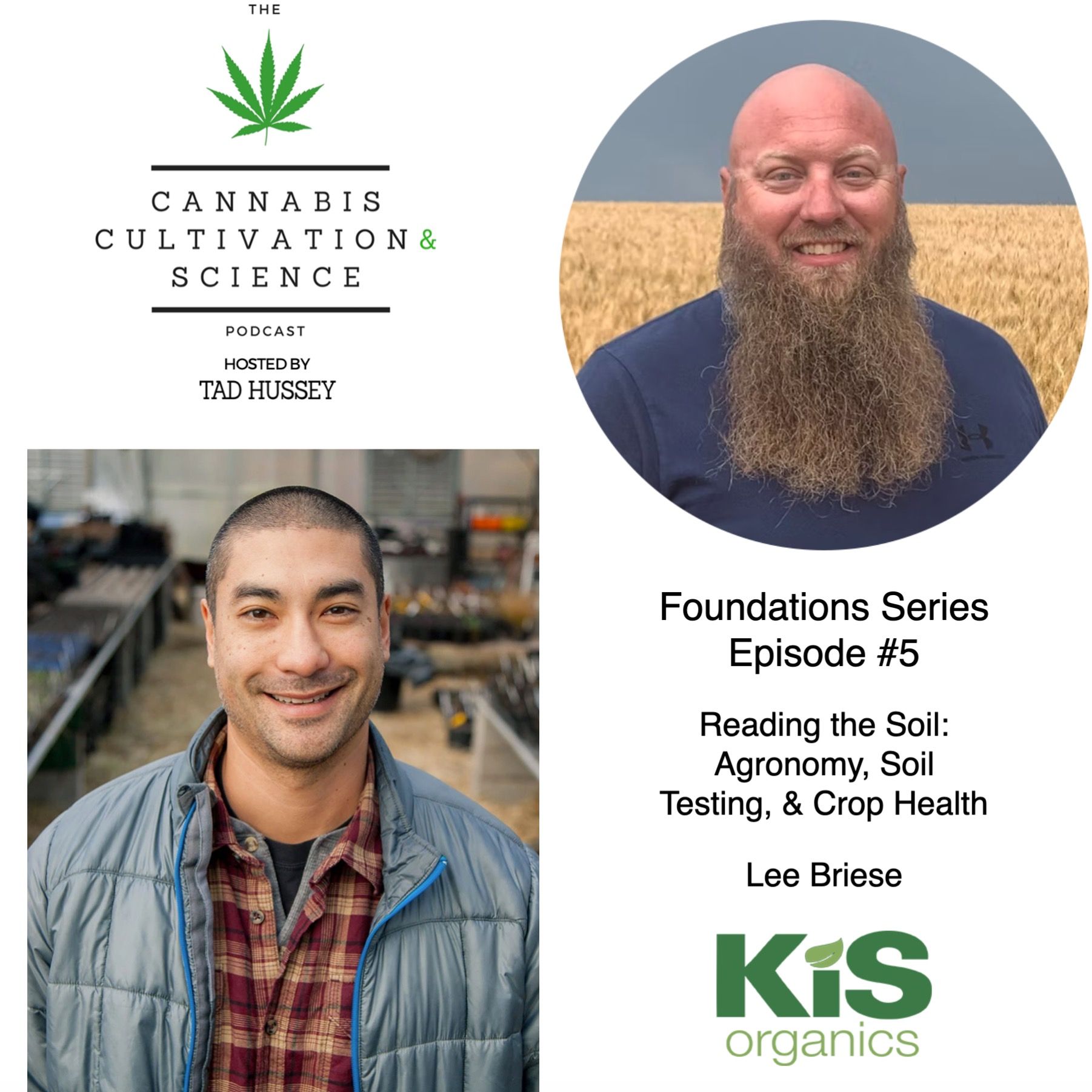
Foundations Series #5: Reading the Soil: Agronomy, Soil Testing & Crop Health with Lee Briese
In this episode, agronomist and crop consultant Lee Briese shares his practical approach to understanding and managing soil health. Drawing from years of field experience working with farmers, Lee explains why reading the soil requires more than just lab reports — it involves observation, interpretation, and understanding how chemical, physical, and biological properties interact. Lee discusses why he often prioritizes chemical soil analysis when making management decisions, and how tools like soil testing, visual assessment, and field experience help diagnose what crops truly need. He also emphasizes the importance of soil structure and aggregation, and why physically interacting with the soil — touching it, smelling it, and walking the land — provides insights that lab data alone cannot. The conversation explores how experienced agronomists approach soil much like doctors approach the human body: looking at multiple indicators together to identify underlying issues and guide effective interventions. Originally released as Episode 87, this conversation remains a valuable reminder that successful crop management starts with careful observation, sound data, and a holistic understanding of the soil system.
Cannabis Cultivation and Science Podcast · KiS Organics, Tad Hussey, Lee Briese
Audio is streamed directly from the publisher (afp-901980-injected.calisto.simplecastaudio.com) as published in their RSS feed. Play Podcasts does not host this file. Rights-holders can request removal through the copyright & takedown page.
Show Notes
Key Topics & Notes
• Why experienced crop consultants rely heavily on chemical soil analysis for making management decisions
• The limitations of relying solely on biological soil testing
• Why soil structure and aggregation play a critical role in plant health
• How soil physical properties influence water movement, aeration, and root development
• The importance of walking fields and directly interacting with soil
• Using smell, texture, and visual indicators to understand soil conditions
• How agronomists diagnose soil problems using multiple indicators at once
• Why soil management is similar to medical diagnosis — identifying root causes rather than symptoms
• The role of experience and pattern recognition in interpreting soil tests
• Bridging lab data with real-world field observations
Hosted by Simplecast, an AdsWizz company. See pcm.adswizz.com for information about our collection and use of personal data for advertising.