
Canada Foundation for Innovation
90 episodes — Page 1 of 2

S3 Ep 510,000 ways | Jan Rainey is untangling the mysteries of spider silks
The Dalhousie University researcher is looking to create synthetic versions of spider's silk that have the potential to help heal damaged nerves and damaged hearts. Researcher Jan Rainey’s curiosity about synthetic fibres began during an undergraduate work term with DuPont. Years later, he heard stories from a fellow researcher that alluded to the amazing properties of spider’s silk. Now he's studying the unique characteristics of spider fibres in hopes of generating synthetic versions that are stronger than bullet-proof Kevlar and body restorative. Drop in, stick around and get trapped in a great science story from a cutting-edge bio-lab. Want to know more? • Jan Rainey’s biography from Dalhousie University • Learn about the fascinating history of Lycra • Explore the history of a most extraordinary textile fibre, spider silk • Cicada recording courtesy of Songofinsects.com

S3 Ep 410,000 ways | Pooneh Maghoul: Working at the forefront of geotechnical engineering
(Available only in French) Can our critical infrastructure withstand the effects of climate change? Pooneh Maghoul and her research team are working to make our bridges, roads and other critical infrastructures more resistant to climate change and extreme environments on Earth and in space. She founded the Sustainable Infrastructure and Geoengineering Lab at Polytechnique Montréal. In this podcast, she explains the complexities of permafrost engineering and shares the most important lesson life has taught her. Some of the additional content for this podcast is only available in French. Read Pooneh Maghoul's biography on the Polytechnique Montréal website; Read the La Presse article: Du permélisol... jusqu'à la Lune! Read the blog post from the school of engineering at Polytechnique Montréal: An earthworm robot ... for the Moon!; Awards and honours: Winner of the prestigious ISSMGE (International Society for Soil Mechanics and Geotechnical Engineering) award; Recognized by the Canadian Geotechnical Society

S3 Ep 310,000 ways | Researchers from the University of Saskatchewan are global leaders in pandemic preparedness
In 2002, German researcher Volker Gerdts relocated to Saskatoon. Cutting-edge vaccine research was the attraction. Now he is at the helm of the Vaccine and Infectious Disease Organization (VIDO) World-renowned infectious disease specialist Volker Gerdts calls himself a “builder” who is carefully assembling a passionate team working to stop disease outbreaks in their tracks. His passion is infectious as he strives to keep people in Canada safe from future pandemics. The Vaccine and Infectious Disease Organization (VIDO), working out of the University of Saskatchewan, is at the frontline of Canada’s pandemic preparedness initiatives. Want to know more? Learn more about VIDO and how it’s helping to build a healthier world Click here if you’re interested in knowing more about immunology and vaccinology Find out how VIDO is working to identify future diseases in order to control and contain initial outbreaks Visit VIDO’s profile on the Research Facilities Navigator to learn more about research and business opportunities

S3 Ep 210,000 ways | How neuroendocrinology crosses sectors to create promising new insights
(This podcast is only available in French) Nafissa Ismail focuses on the effects of hormones on the brain to pin down the interactions between our organs and our emotions Epidemiological data shows that the roots of depression form during puberty or adolescence for 75 percent of adults experiencing it. Nafissa Ismail is a professor at the University of Ottawa's School of Psychology and a leading figure in mental health research. Her work is making a significant contribution toward understanding the causes of mental disorders and how to treat them.

S2 Ep 110,000 ways | The future of flight depends on sustainability that goes beyond biofuels
The University of Waterloo’s Suzanne Kearns is a global leader in sustainable aviation, but her flight path wasn’t without turbulence. Suzanne Kearns grew up in Wiarton, Ont., where she would lie in the grass and watch airplanes from the local airport take flight overhead. Her dreams of flying led to a fixed-wing licence at 16 and helicopter licence a year later. At 24, she was a full-time university lecturer on aviation. Today, as the founder of the Waterloo Institute for Sustainable Aeronautics, she is helping curb the environmental impacts of flight and inspiring the next generation of aviation professionals in the process. Want to know more? Suzanne Kearns biography from the University of Waterloo. More about the history, mission and vision of the Waterloo Institute of Sustainable Aeronautics (WISA), its research studies and its flight simulator lab. Pipistrel Aircraft , a light aircraft manufacturer aiming to provide sustainable and environmentally-friendly solutions to the aircraft industry. Read about University of Waterloo alum Jeremy Wang and his company Ribbit, an innovator in pilotless planes.
S2 Ep 410,000 ways | Meet Acadian researcher Céline Surette, for whom interdisciplinarity is second nature
(The audio content of this podcast is only available in French.) Céline Surette embodies both the chemistry of living things and interdisciplinarity to serve the real needs and questions of communities. And to achieve this, and ensure that critical thinking triumphs, she'll pull out all the stops. Céline Surette is Dean of the Faculty of Science and Professor in the Department of Chemistry and Biochemistry at the Université de Moncton. She has a unique perspective on natural ecosystems as well as New Brunswick’s research community, including mentors and students, for whom she is a guiding light. And she isn’t easily thrown off course, even in the face of attempts to criticize science. Listen to Céline Surette talk about all the dimensions of her work in the field and in the lab. Want to know more? Biography: Dr. Céline Surette, Environmental Scientist Group of Shediac, N.B. residents calling for bylaw to ban pesticides - New Brunswick | Globalnews.ca Tracadie- Sheila looking at by-law to ban the use of glyphosate Manganese in water tied to kids' low IQ | CBC News Protecting the health of our oceans: Fisheries and Oceans Canada

S2 Ep 310,000 ways | Should bodies of water have the same legal status as people?
This podcast is about curious researchers, leading-edge science and the joys of discovery and gets its name from Thomas Edison who said, “I have not failed. I’ve successfully found 10,000 ways that will not work.” Researcher Kelsey Leonard, member of the Shinnecock Nation and founder of the Wampum Lab at the University of Waterloo, delves into ocean, water and climate justice. Shinnecock is a dialect derived from the Algonquian language. It means “people of the stony shores.” It’s along the stony shores of the Shinnecock Nation, on the Atlantic-facing eastern coast of New York’s Long Island that Kelsey Leonard developed her passion for the water. Undergraduate studies took her to Samoa and graduate studies brought her to the University of Waterloo, where she is now the Canada Research Chair in Indigenous Waters, Climate and Sustainability.

S2 Ep 210,000 ways | Science (sea) star
(Available only in French) This is a podcast about curious researchers, leading-edge science and the joys of discovery. Our podcast gets its name from Thomas Edison who said, “I have not failed. I’ve successfully found 10,000 ways that will not work.” Ocean science research is at a pivotal moment according to Guillaume St-Onge, Director of the Institut des sciences de la mer de Rimouski at Université du Québec à Rimouski. Canada abounds with ocean science expertise and technology, yet its fleet of research vessels has seen better days. Should we be concerned about how this will impact Canadian research in marine geology, physical oceanography, marine biology and marine chemistry? In this episode, a professor of marine geology at Université du Québec à Rimouski and Canada Research Chair in Marine Geology lets us in on his thoughts. Want to know more? Guillaume St-Onge: Guillaume St-Onge's personal page on ISMER's website (French only) Guillaume St-Onge's personal page on UQAR's website (French only ) Canada Research Chair in Marine Geology (French only ) Profile of Guillaume St-Onge on the Fonds de recherche du Québec website (French only ) Facility and partnerships: Navigator's profile for the Paleomagnetism and Marine Geology Laboratory Institut des sciences de la mer de Rimouski (ISMER) of Université du Québec à Rimouski (French only) Paleomagnetism and Marine geology Laboratory Réseau Québec maritime (RQM) (French only) Institut France-Québec maritime (IFQM) (French only) Articles about Guillaume St-Onge’s research (in publication order, from most recent to oldest): L’UQAR obtient le renouvellement de sa Chaire de recherche du Canada en géologie marine [UQAR gets its Canada Research Chair in Marine Geology Renewed], by Jean-François Bouchard, published in UQAR-INFO (August 30, 2023) L'UQAR et ses partenaires reçoivent 154M$ du Fonds d’excellence en recherche Apogée Canada pour l’action climatique et le rôle des océans [UQAR and its partners receive $154 million in funding from the Canada First Research Excellence Fund for climate action and the role of oceans], from the UQAR communications department (May 4, 2023) Remonter dans le temps pour mieux connaître les risques de séismes dans l’estuaire [Going back in time to better understand the risks of earthquakes in the estuary], by Julie Tremblay, published in Radio-Canada ICI Bas-Saint-Laurent (January 19, 2023) Le chercheur Guillaume St-Onge à l’honneur dans Québec Science [Researcher Guillaume St-Onge in the spotlight with Québec Science], with Bis Petitpas, episode on Radio-Canada’s Bonjour la Côte (January 19, 2023) Tremblements de fleuve [River earthquakes], by Joël Leblanc, published in Québec Science(January 12, 2023) Un chercheur de l’UQAR figure pour une quatrième fois parmi les dix découvertes de l’année de Québec Science [UQAR researcher named for the fourth time in Québec Science’s top ten discoveries of the year], by Jean-François Bouchard, published in UQAR-INFO (January 12, 2023) Apogée, un programme de recherche sur les océans sans précédent [An unprecedented marine research program], by Jean-François Bouchard, published in UQAR-INFO (January 9, 2023) Articles of interest on topics addressed in the podcast: Prédire le comportement futur du champ magnétique terrestre [Predicting the future behaviour of Earth’s magnetic field], by Pauline Gravel, published in Le Devoir (February 20, 2016) Le secret du cratère des Pingualuit [The secret of the Pingualuit crater], by Joël Leblanc, published in Québec Science (December 13, 2012) Information about the research vessels mentioned in the podcast: The Coriolis II, ISMER web page (French only) The Coriolis II, REFORMAR web page Le Coriolis II, un laboratoire flottant pour des recherches océanographiques [The Coriolis II, a floating laboratory for marine research], by Valérian Mazataud, Guillaume Levasseur, Alexis Riopel, published in Le Devoir (August 12, 2023) The Listening River , dossier written by Pascaline David, photos by Benjamin Rochette and sound from besidemedia · BESIDE in partnership with Novarium 2 The Amundsen The JOIDES Resolution, press release from the National Science Foundation of the United States: Climate can grind down mountains faster than they can rebuild Daily reports from the JOIDES Resolution Science Operator (International Ocean Discovery Program)

S2 Ep 110,000 Ways | Reinforcing the reliability of our vulnerable electricity grid
Welcome to 10,000 ways. This is a podcast about curious researchers, leading-edge science, and the joys of discovery. York University’s Pirathayini Srikantha studies power grid systems with the aim of keeping Canada’s infrastructure safe from fluctuations and hackers. Find out why she’s passionate about power. Our power grid is vulnerable. For one thing, it’s aging. For another, it’s prone to hackers. In the meantime, climate change means we need to find ways to integrate renewable energy sources that are intermittent with the shining sun or blowing wind. To avoid the crippling cost of replacing this infrastructure, jurisdictions must find ways to adapt. Pirathayini Srikantha, from York University’s, Lassonde School of Engineering, is an award-winning engineer who is confronting these multiple challenges.
S1 Ep 510,000 ways | Alex Langlois fell in love with the Arctic. Find out why he's fired up!
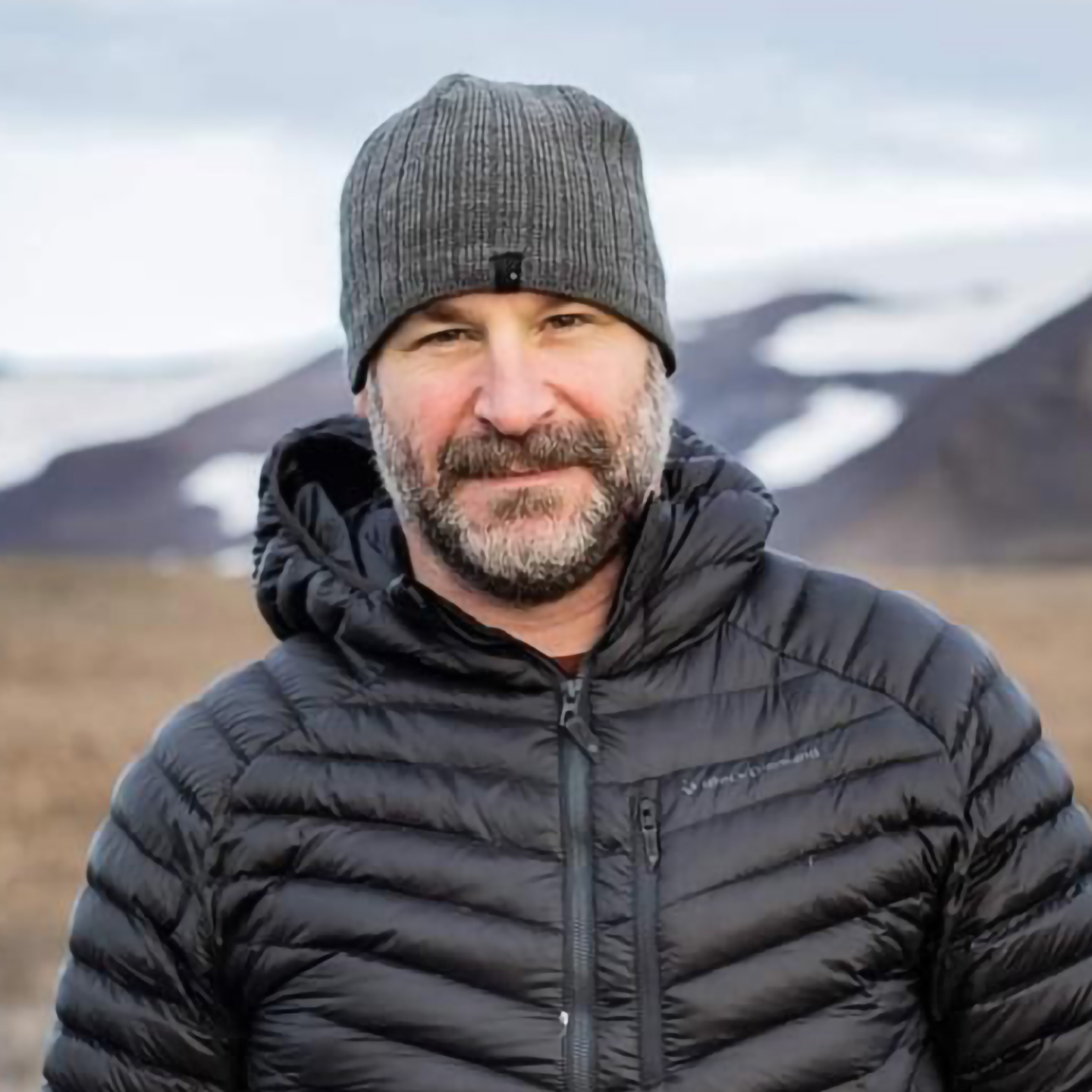
(This podcast is available only in French) Alexandre Langlois is passionate about all aspects of his job. As a researcher in Northern Canada, he studies the fastest-warming place on the planet and presents data on the issues that await us in terms of climate change. Like a high-level athlete, Alexandre Langlois has been training since the age of nine to live in extreme cold conditions. Today, his research in physical geography provides him with a unique understanding of the evolution of the Earth, past and future and his observations on the relationship between man and nature leave him with clear insights about the impact of humans on the climate and environment.
S1 Ep 410,000 ways | The healing power of food: how nutrition and Carla Prado help treat cancer
On a cold March 2, 2004, Carla Prado arrived on the doorsteps of the University of Alberta. She left behind her native Brazil to fulfill a dream of studying abroad. Today, she is an academic leader in body composition research who passionately shares the benefits of protein-rich diets in the treatment of cancer. She uses social media and classic movies like The Wizard of Oz to help explain the science behind by her research.
S1 Ep 310,000 ways | Why using sound to treat disease is beautiful music to Simone Dalla Bella's ears
(This podcast is available only in French) Simone Dalla Bella of Montréal’s International Laboratory for BRAin, Music and Sound Research asks “How can music help us in our daily tasks? And how can it slow down the deleterious effects of diseases such as Parkinson’s?” Why is it that some people who are perfectly capable of hearing a beat still can’t dance? Researchers at the International Laboratory for Brain, Music, and Sound Research are trying to establish a correlation between music and cognitive skills such as speech, memory, attention span and a host of other executive functions. Their research findings could lead to major breakthroughs for people with cognitive impairments.
10,000 ways | Learn how Leyla Soleymani's curious nature is making life less sticky!
S1 Ep 210,000 ways | Learn how Leyla Soleymani's curious nature is making life less sticky!
Leyla Soleymani is Canada’s Research Chair in Miniaturized Biomedical Devices. Her passion for the miniature world of nanotech and her commitment to collaboration have led her and her colleagues at McMaster University to inventions ranging from rapid tests that use pig saliva to disease detection to a plastic wrap that repels pathogens like rain drops off a lotus leaf.
10,000 ways | How does Anna Blakney use TikTok to help people understand mRNA vaccines?
S1 Ep 110,000 ways | How does Anna Blakney use TikTok to help people understand mRNA vaccines?
For many, RNA vaccines seem to have appeared out of nowhere. The curious and the hesitant have wondered how a vaccine to fight COVID-19 could have been brought to market so quickly. In fact, messenger RNA (mRNA) vaccines have been in development for over three decades. Here is the story about a persistent RNA vaccine pioneer and her socially connected admirer, University of British Columbia researcher, Anna Blakney.
Julie Carrier: Taking on sleep medicine
Julie Carrier: Taking on sleep medicine
This podcast is only available in French.Une chercheuse à l’Université de Montréal se concentre sur le sommeil des femmes.Julie Carrier of the Université de Montréal has devoted her academic career to the fascinating world of sleep, using equipment she received from the CFI to monitor the slumber patterns and sleep disorders of her test subjects. When she began her studies more than 20 years ago, little was known about women and sleep. Now, an aging population and the effects of menopause on sleep make Carrier’s research more relevant than ever. In celebration of International Women’s Day, Carrier has pledged to focus her research more on women and sleep. She begins this podcast by telling us why women weren’t considered ideal candidates for these kinds of studies when she first started her research.This podcast is part of an International Women’s Day podcast series called Groundbreakers.
Stéphane Laporte: Using genetics to eliminate the side effects of drugs
This podcast is only available in French.A researcher at the Research Institute of the McGill University Health Centre explores ways to improve drugsStéphane Laporte, a researcher at the Research Institute of the McGill University Health Centre, became interested in pharmacological research when he noticed just how often drugs were associated with harmful side effects. In his lab at the Centre for Translational Biology, Laporte and his team are working to understand how pharmaceutical drugs work on the body in order to find ways to minimize unwanted side effects.READ: Research institute puts Canada at the forefront of health care
Stéphane Laporte: Using genetics to eliminate the side effects of drugs
Tigran Galstian: Creating molecular lenses
Tigran Galstian: Creating molecular lenses
This podcast is only available in French.One of the co-founders of LensVector talks about the origins of their molecular lens.Tigran Galstian, professor in the Department of Physics, Engineering Physics and Optics at Université Laval and co-founder of LensVector, explains the invention of a molecular lens that could, among other things, improve our cellphones.Tigran Galstian received the David E. Mitchell Award of Distinction at the Ernest C. Manning Innovation Awards ceremony on October 22, 2014.
Jacques Genest: Developing new interventions to cure cardiovascular disease
This podcast is only available in French.A researcher at the Research Institute of the McGill University Health Centre studies the link between genetics and cardiovascular disease.In the 1980s, when Jacques Genest was starting out in the Faculty of Medicine, cardiovascular disease was the leading cause of death among Canadians. Dr. Genest and his team built on advances in molecular genetics to discover multiple genes that predispose people to early cardiovascular disease and tested many drugs to fight them. At the McConnell Centre for Innovative Medicine of the Research Institute of the McGill University Health Centre, Dr. Genest continues to study familial hypercholesterolemia using genetic screening to identify other family members at risk of this asymptomatic disease and give them medical treatments to mitigate the danger.READ: Research institute puts Canada at the forefront of health care
Jacques Genest: Developing new interventions to cure cardiovascular disease
Ian Clark: Tracing contaminants in the earth
Ce balado est uniquement disponible en anglais.Ian Clark, professor of Earth sciences at the University of Ottawa, explains how radiocarbon dating using an accelerator mass spectrometer can help resolve significant issues surrounding contaminated environments.This podcast is part of an in-depth report on the Advanced Research Complex.
Ian Clark: Tracing contaminants in the earth
Constantin Polychronakos: Using genetics to find a cure for juvenile diabetes - Podcast
Constantin Polychronakos: Using genetics to find a cure for juvenile diabetes - Podcast
Ce balado est uniquement disponible en anglais.Constantin Polychronakos has devoted his career to studying the genetics of juvenile diabetes and treating children afflicted with the disease. As head of the Child Health and Human Development Program at the Research Institute of the McGill University Health Centre, he is working towards new interventions to replace the need for painful daily insulin injections.READ: Research institute puts Canada at the forefront of health care
Chris McGibbon: How real-world exoskeletons could change the future of rehabilitation
Chris McGibbon: How real-world exoskeletons could change the future of rehabilitation
Ce balado est uniquement disponible en anglais.Chris McGibbon from the University of New Brunswick is researching robotic exoskeletons to help people with brain and spinal cord injuries regain mobility.The fundamental goal of the John R. Evans Leaders Fund is to help universities attract and retain the world’s top researchers by giving them the tools they need to push the boundaries of their work. In the podcasts below, meet three of the leaders behind the projects receiving support from the April 2016 fund.READ: Government of Canada support for science helps attract top talent
Basil Petrof: Accelerating new treatments for respiratory diseases like asthma - Podcast
Ce balado est uniquement disponible en anglais.Basil Petrof heads the Program for Translational Research in Respiratory Diseases at the Research Institute of the McGill University Health Centre. His research group participated in a clinical trial that proved the efficacy of a new therapy that burns away the muscle tissue in the lungs of asthmatic patients to help open their airways. It’s this kind of cutting-edge discovery that Petrof expects will move more rapidly from concept to proven treatment thanks to the new facilities at the RI-MUHC.READ: Research institute puts Canada at the forefront of health care
Basil Petrof: Accelerating new treatments for respiratory diseases like asthma - Podcast
Jordan Grigor: Studying the tigers of the plankton aboard the CCGS Amundse
Ce balado est uniquement disponible en anglais.PhD student in Oceanography at the Université Laval, Jordan Grigor, discusses his research on the Arctic arrow worm, known as the tiger of the plankton. He also gives a glimpse into life aboard the CCGS Amundsen, Canada's only dedicated Arctic research vessel.Image credit: Cyril Aubry
Jordan Grigor: Studying the tigers of the plankton aboard the CCGS Amundse
John Rudan: Human Mobility Research Centre finds new way to keep baby boomers on their feet
John Rudan: Human Mobility Research Centre finds new way to keep baby boomers on their feet
Ce balado est uniquement disponible en anglais.With an aging population, the need for joint replacements is increasing. Researchers at Queen's University are working to solve this problem. Dr. John Rudan, an orthopaedic surgeon at Kingston General Hospital and a principal investigator at the Human Mobility Research Centre discusses their technique.
Brian Greenspan: Attention Future Shoppers
Ce balado est uniquement disponible en anglais.The holiday shopping spree of the future will be nothing like the crowded, stuffy gauntlet of today, according to Brian Greenspan, director of Carleton University’s Hyperlab. Greenspan and his students research the implications of a Big Brother culture that inevitably comes about when we live in the cloud. In this podcast, Greenspan takes listeners on a tour of the mall of the future, describing how marketers mine the data we continuously generate through our mobile devices to shape the way we shop.
Michael Kramer: Examining the adverse outcomes of pre-term birth
Ce balado est uniquement disponible en anglais.Pediatrician and epidemiologist Michael Kramer studies the long-term effects of pre-term births, including by Caesarean section or induced labour, as well as other adverse pregnancy outcomes such as still births and infant mortality. He will oversee these types of important population health studies as the director for the Centre for Outcomes Research and Evaluation at the Research Institute of the McGill University Health Centre.READ: Research institute puts Canada at the forefront of health care
Verena Tunnicliffe: The only woman on board
Ce balado est uniquement disponible en anglais.The University of Victoria’s Verena Tunnicliffe recalls the open hostility she faced when she first began boarding research ships to conduct her oceanographic studies. In one instance, the cook refused to sail, saying it was either him or her. Guess who walked that plank? Tunnicliffe persevered, despite the male-dominated nautical culture, to answer fundamental questions about deep sea ecosystems off the west coast. She was one of the lead researchers who used CFI-funds to build VENUS, a system of interconnected underwater cables that beam real-time measurements from the sea floor to onshore computers. Such on-demand access has opened the field for many female researchers who would otherwise have had to choose between a career in science and raising a family. In this podcast, Tunnicliffe takes us to the deepest, darkest corners of the ocean where some of the creepiest experiments have occurred. Her story begins in the 1980s as one of the only woman on board a research ship at sea in the Pacific Ocean where she experienced a few dark moments.This podcast is part of an International Women’s Day podcast series called Groundbreakers.
Michael Kramer: Understanding the long-term impacts of breastfeeding
Ce balado est uniquement disponible en anglais.In 2001, pediatrician and epidemiologist Michael Kramer and his colleagues published the largest ever randomized trial on breastfeeding which followed 17,000 babies into their teenage years and showed links between how exclusively and for how long they were breastfed and improved cognitive development at an early school age. Kramer will oversee these types of important population health studies as the director for the Centre for Outcomes Research and Evaluation at the Research Institute of the McGill University Health Centre.READ: Research institute puts Canada at the forefront of health care
Leslie Weir: An innovative librarian who led the way to digital access
Ce balado est uniquement disponible en anglais.Leslie Weir, the first female university librarian at the University of Ottawa, led a team who received $20 million from the CFI in 1997 to help 64 Canadian university libraries make the leap from print to digital. Prior to the Canadian Site Licensing Project, researchers — or their grad students, Weir says coyly — would physically track down articles in paper journals buried in the library stacks. After the project was launched in the early 2000s, Weir says researchers had access to more digital publications than they’d ever had before. That blast of on-demand information fundamentally shifted how research was done in Canada and became a model for countries around the world. In this podcast, Weir talks about her path to becoming the innovative librarian who led this project, with a story that begins on a day that tragedy shook the world.This podcast is part of an International Women’s Day podcast series called Groundbreakers.
John Braun: Making sense of wildfire data through visualization
Leslie Weir: An innovative librarian who led the way to digital access
John Moore: Salmon swimmers of the Skeena
Ce balado est uniquement disponible en anglais.Spindly black spruce cloak the mountains and rise from the banks of the Skeena River, one of the longest free-flowing rivers in British Columbia. But Jonathan Moore is more interested in what lies below the water’s surface — thousands of sockeye salmon charging up these channels in their annual marathon to spawn. Moore, a biologist at Simon Fraser University, studies the complex life cycles of this iconic fish in the Skeena and in its big brother to the south, the Fraser River. In this podcast, he explains the ecology of salmon and why their conservation is essential. But first, he takes us below the river’s waves and into the rush of swimming with salmon.