
Can I Laugh On Your Shoulder?
449 episodes — Page 6 of 9

Bonus Episode: A CONVERSATION ON RACE, INFLUENCE, HOPE, & ACTION | Marissa Williams, Shiquita Hyman, & Tiffany Moon - Content Creators & Founders of Our Shades of Influence
bonusI am honored to welcome to the show Marissa Williams, Shiquita Hyman, and Tiffany Moon - all amazing content creators and also founders of "Our Shades of Influence." Our Shades of Influence is a group of three diverse women within the influencer community. Their goal as influencers is to inspire, educate, and empower people of all shades, shapes, and sizes. They strive to improve the visible shortage of partnerships between businesses and influencers/bloggers of color. As women of color, they will partner with businesses to represent their brands with integrity while helping to tap into the buying power of the minority market, because there is beauty in color. One of the things I love about hosting this podcast, Business with Purpose, is the fact that I get the privilege of having the opportunity to have important conversations that will challenge, encourage, convict, and inspire you. I want to have conversations that educate you (and me!) to know better and to do better. I've had a lot of important conversations on this podcast about racism, but honestly, probably none more important than this conversation we had right here. This episode is a bonus episode that is outside of my normal weekly content for the show... but I pray that you take the time to sit and really LISTEN to this week's episode and my conversation with Marissa, Shiquita, and Tiffany. I pray that this conversation would be one that would give you space to learn and grow in your anti-racism journey... and equip you with steps to move forward to take ACTION. Because I believe when we are living lives of purpose, that includes taking action where it's needed most. Contact Shiquita Hyman: Ig: https://instagram.com/unconventionalsouthernbelle Facebook: https://m.facebook.com/unconventionalsouthernbelle/ Twitter: https://mobile.twitter.com/ShiquitaHyman Pinterest: https://www.pinterest.com/Unconventional_Southern_Belle/ Contact Marissa Williams: https://www.shabbychiccheap.com/ https://twitter.com/ShabbyChicCheap https://www.instagram.com/shabbychiccheap https://www.facebook.com/shabbychiccheap https://www.pinterest.com/shabbychiccheap Contact Tiffany Moon: http://thenorthernbelleofthesouth.com/ https://twitter.com/tiffturnermoon https://instagram.com/thenorthernbelleofthesouth https://pinterest.com/thenorthernbelleofthesouth https://www.snapchat.com/add/redlipredbottom

Ep 196Marriage with Purpose | EP 196: Dr. Randy Schroeder, Author & Marriage & Family Counselor
When people ask me where I want to be when I'm 80-years-old, one of the first answers I always give is something to the effect of, "Holding hands and still madly in love with my husband, John." I am so passionate about marriage and the amazing gift that it is. Today's episode is for both married and single people. There really is something for everyone in this episode. I understand that marriage can be a sensitive topic for some who've maybe been divorced, in harmful marriages, grew up as a child of divorced parents, or maybe you long to be married. I want you to know that you are loved, and I hope this episode is encouraging to you. My guest today has spent the majority of his life using his ministry to bless and encourage couples and families. Dr. Randy Schroder is a licensed marriage therapist, pastor, and retired professor of pastoral counseling who has a lifetime of expertise in marriage both professionally and personally. For three decades he has helped well over 1,000 couples establish the simple habits that are essential for developing a fulfilling and gratifying marriage. I actually just finished reading Dr. Schroder's book, Simple Habits for Marital Happiness. We had such a great conversation and I hope you enjoy this episode and are blessed by it! 7:58 - The Randy 101 Randy and his wife have been married for 45 years. They have two married sons and six grandchildren. Randy has helped individuals, couples, and marriage have satisfying lives with over 60,000 hours of counseling. Randy plans on continuing helping people until he's 90! Randy's wife encouraged him to write a book to give couples skills and tools to work on their marriages together. His book is called Simple Habits for Marital Happiness. His counseling practiced opened in 1990, and as he helped more and more people, he also started to learn from couples what skills, behaviors, words and tools make for a happy marriage. The divorce rate is roughly 50% and Randy says that of couples who are married, about 70% are not happy. Randy was discouraged by those odds and that was another reason he decided to write a book to give couples the simple knowledge needed to work on marriage. 14:28 – Intentionality Intention is the first step to healthy, happy relationship. A lot of couples don't recognize the importance of never taking your spouse or your marriage for granted. The number one goal is to overcome complacency. Motivation alone is not sufficient; couples have to be equipped with knowledge. This means understanding how to communicate, apologize, forgive, manage finances, staying in love after the honeymoon, guarding your relationship, disagreeing, and more. You can't change your spouse, but you can change how you react and handle situations. It's impossible to change someone else but continuing to grow and adapt together will lead to more understanding. It's important to work on your marriage as a couple, but it's equally important that each individual in the marriage continues to work on their own growth as well. Complacency is the biggest threat to any marriage. It's ok to communicate with your spouse about what you need! If it's comfort you seek from your spouse, figure out for yourself how you want to be comforted, and then ask for that directly from your partner. 26:22 – Grieving Together, Differently It's important to talk about times when you're grieving and how to communicate that and walk through it together, even when it may be happening in different ways. Expectations affect everything in a marriage. Making our expectations known clearly and directly can bond couples together in powerful ways. Your spouse cannot read your mind, but it's a very common expectation that people have of their spouses! 30:27 – The Success Stories In his former work as a pastor and now a counselor, Randy's greatest joy is hearing the success stories of the people he's helped. There have been couples on the brink of divorce who come back and work to find a happy marriage after being equipped with knowledge. Simple Habits for Marital Happiness helps people have direction on how to have a satisfying relationship. If someone asks you to drive without your GPS or without a map, you may get there but it may take weeks or months for you to get there because you don't know where you're going. It's not hard to give up when you're frustrated instead of equipped. Specific skills are needed for all areas of marriage, and for that matter, all areas of dealing with life in general. Many couples will come to see Randy before there is trouble because they want to be equipped so that down the road, their marriage is stronger and ready to handle anything they might go through in the future of the relationship. 38:24 – Struggle During the Coronavirus The number of people filing for divorce has gone up over the past few months since the start of stay-at-home ordinances around the country. Couples can focus on improving their relationship by 1% per week, work on having heal
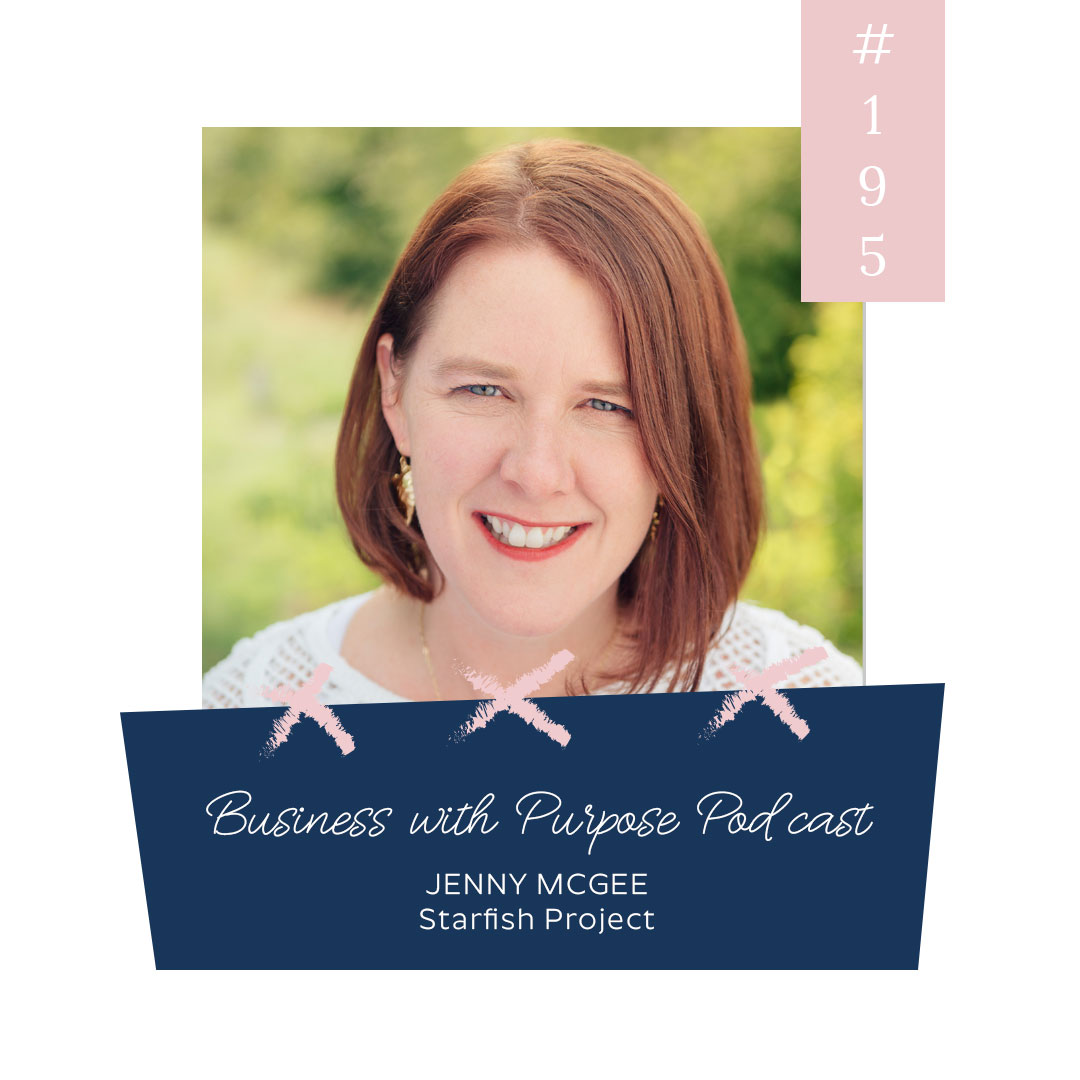
Ep 195Fighting Human Trafficking Through Jobs | EP 195: Jenny McGee, Starfish Project
If we want to have a productive and honest conversation about what it's going to take to end human trafficking, we've got to start thinking about what to do on the front end. How do we keep people from falling into the trap of human trafficking in the first place? One of the biggest factors in that prevention means providing jobs, education, and sustainable economic opportunities. This is how we end human trafficking. My guest today started a social enterprise that is caring for women escaping human trafficking and exploitation in East Asia. Jenny McGee is the founder and director of Starfish Project. Jenny started her work by visiting brothels every week and building relationships with the women and girls who worked there. She found that many of them had either been tricked into working in these places, or they came from incredibly desperate circumstances. Most had very little education, and many could not read and write. Jenny started Starfish project to provide alternative employment and educational opportunities for these women and girls. Starfish project started with five women working around a kitchen table and has grown to employ over 150 women! Today, Starfish Project has two women's' and children's' shelters and reaches thousands of women every year through their outreach programs. One hundred percent of their profits are reinvested in their social mission to restore hope to exploited women and girls. Without further ado, join me for this great conversation with Jenny. 4:03 - The Jenny 101 Eighteen years ago, Jenny moved to Asia after studying abroad there and falling in love with East Asia, specifically. She started learning the language and building a life there with her husband and three children. She started to notice a lot of young women working on the streets and brothels. One of Jenny's friends wanted to start reaching out to the women and girls and reached out to Jenny for help translating. As Jenny started to get to know the women and girls better, she was surprised that many were coming in from poor villages in the countryside and looking for work in the city. A lot of them were sending money back to their village for their brothers to be able to go to school. Most were there for economic reasons and didn't want to be there doing that kind of work. Building those connections and relationships was the foundation for Starfish Project. It allowed Jenny to begin to find educational and safe employment opportunities for the women. They started with just five women working around a kitchen table and it grew from there. Starfish Project is a social enterprise jewelry company that cares for women who are escaping human trafficking and gives them opportunities to experience freedom, establish independence, and develop careers. There are teams that go into the brothels each week to visit the women working in the shops there. 7:40 – Experience Freedom, Establish Independence, and Develop Careers. Starfish Project builds relationships in person and even through social media apps. They offer the option of a way out through employment and women and children's shelters. They also provide benefits, retirement, and career development. They try to employ women coming out of human trafficking and exploitation throughout all levels of the company from graphic designers, artisans, photographers, accountants, and more. If the women want to continue working at Starfish Project they can, but they can also take the skills they've developed to new opportunities in self-employment or jobs with other companies. Working at Starfish also gives women a chance to be a part of a team and build community. Those first coming into the program can see the potential for their future in women who've worked there a little longer and developed their skills. Starfish Project is one of the few organizations in the area that has very few women going back to work in the brothels. Part of that is that because newer women in program, even if they're just starting with very simple skills, can see someone with their same background who's made it as a photographer, accountant, graphic designer, etc. 13:48 - Indiana to East Asia Jenny initially came to East Asia as a part of a semester abroad program with Bethel College in Indiana. She fell in love with East Asia (a very different city than it is today). She's not exactly sure what it is that made her love it so much, and she truly feels that being there was a calling on her heart. Jenny and her family live in a migrant village so that they can share life with the people they felt were their community. Jenny's kids go to an international school with kids from all over the world as well. They experience life in a mix of cultures. 19:03 -Adapting and Innovating During a Global Pandemic Since they're in Asia, Starfish Project dealt with Covid-19 early on and in a sense, are now in round two of the pandemic. The women in the program went home during the Spring festival time (imagine it being
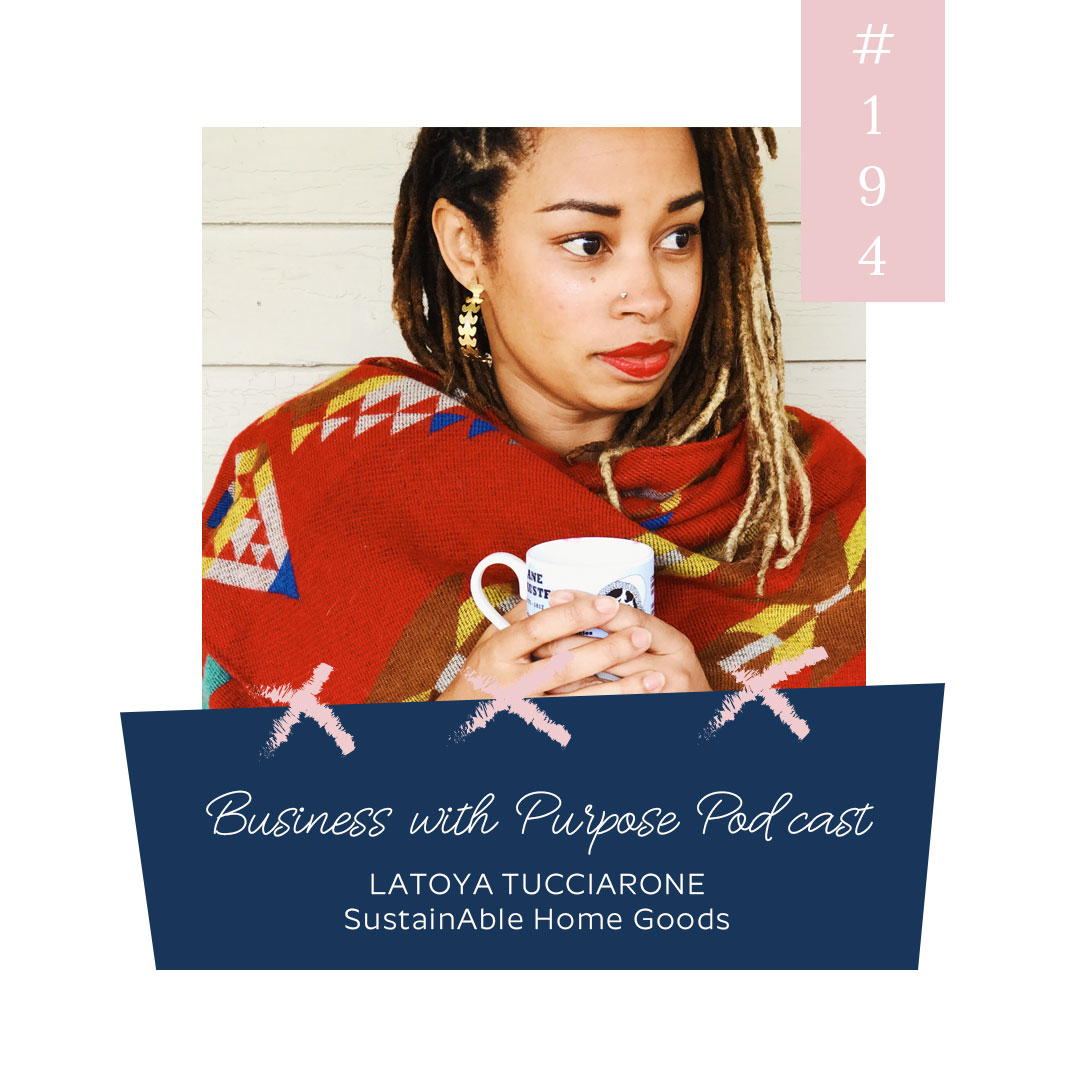
Ep 194The Story We Tell Through the Things We Buy | EP 194: LaToya Tucciarone, Founder + CEO, SustainAble Home Goods
Have you ever thought about the story you are telling with the things you bring into your home? Have you ever thought about what your décor style says about you? I love seeing how different people's home décor or personal style says so much about their personality, culture, history, where they've traveled, and what they hold near and dear to them. My guest today has combined her passion for travel, culture, and fair trade into a thriving business that is helping others tell their stories in a beautiful way. Latoya Tucciarone is the founder and owner of Sustainable Home Goods. Latoya started Sustainable Home Goods in 2017 because she truly believes that one of the best ways to end world poverty is through trade, not aid. Prior to starting Sustainable, she worked for fair-trade jewelry company, Noonday Collection (which is no stranger to this podcast)! During her time with Noonday, Latoya noticed a rise in ethical shopping for jewelry and clothing, but very few fair-trade options for the home. She saw a niche and she wanted to fill it. Sustainable Home Goods can be found online and at Ponce City Market in Atlanta, GA. Latoya graduated from Elon University (just down the road from me!), started a successful photography business, and has traveled all over the world. She's also raising four amazing kids with her husband Andrew. I loved this conversation with Latoya. We could have talked all day. Sit back, relax, and join me for this great conversation! 3:52 - The Latoya 101 Latoya and her husband are beautifully busy in Atlanta, GA with their four children, ages 4, 7, 10, and 11. Latoya grew up in southern California, which fostered her love of being connected to people from all different cultures. In college Latoya had a chance to study abroad and live in South Africa for a month. That's when she first fell in love with people groups and really realized her love for the world and for traveling. Between Latoya's travel and her husband Andrew's travel for his production company, the two have seen more than 50 countries! Her experiences traveling also grew her heart for recognizing the need to engage vulnerable communities through fair trade in a sustainable way. That means collaborating with them through trade, not just charity. Latoya's family facilitated cultural experiences without leaving the house, whether through music available for the kids to listen to, or art prominently displayed throughout the house. 8:30 – Trade Not Aid Populations that are already vulnerable are even more so during a crisis like the one we're in now with the global Coronavirus pandemic. There are so many systemic issues that still have to change to protect vulnerable communities when things are good! Latoya and Andrew took their kids to Guatemala last July so that they could meet the artisans and understand the process, love, and tradition that goes into handmade items. The kids don't think of the artisans as receiving charity, they see them as talented partners. Talent is equally distributed, but opportunity is not. -Leila Janah Latoya's focus is to find talented people and partner with them so that there is an opportunity for their unique, handcrafted work to be seen, celebrated, and purchased! Sustainable Home Goods works hard to create a story-driven experience to show people how each piece was made. Pieces can be even more treasured knowing that people have the honor of bringing a unique, special item into their home. 21:56 - Between Two Tensions Latoya credits her experience with Noonday Collection as the first time she really understood how business can be used for good. She loved working with jewelry and Noonday Collection, but she was drawn to home décor and creating a warm and inviting space and filling homes for stories. When she surveyed the retail landscape, she noticed there weren't as many options for purchasing ethically for the home like there were for purchasing ethical fashion. Latoya knew she wanted to create a space for people to shop safely, knowing there was no exploitation behind the pieces they purchased. She started slowly with basic e-commerce for a year and a half, followed by a few pop ups shops and markets. Seeing people pick up products in their hands and connect with a story made Latoya quickly realize that it was time to open a brick and mortar. She knew there was only one place she wanted to be. She called the Ponce City Market in Atlanta, Georgia. The location in "the Hollywood of the South" allows Sustainable Home Goods to foster even more meaningful conversations with regular people, celebrities, and scientists about breaking poverty and violence cycles with jobs, sustainable income, and trade. When people visit the store from other countries, they comment about feeling right at home. Latoya is well on her way toward a goal of Sustainable Home Goods becoming "the Whole foods of ethical shopping." Sustainable Home Goods is very mindful about what they bring into the store, and everything is careful

Ep 193How to Pivot on Purpose | EP 193: Lauren Peterson, Travel Patterns
Anyone who has ever started a business knows that entrepreneurship is hard. Starting a business takes courage. Starting a business takes conviction, perseverance, grit and tenacity. It is not for the faint of heart and often the occasion arises where you may need to change something to keep your business going. In our current time right now, pivoting is what a lot of businesses are finding themselves in a position to do. My guest today is an entrepreneur who has a lot of experience with exactly that. Lauren Peterson is the founder and CEO of Travel Patterns, a travel-inspired social impact brand that envisions a world where every woman understands her unique value, is connected to her own story, and is empowered to boldly pursue her daring life adventure while enabling others to do the same. I had so much fun having Lauren on the show and she's actually the first guest I've interviewed from home during Covid-19. Lauren has so many wise insights regarding how businesses can adapt and pivot during this time. Join me for this encouraging conversation with Lauren! 3:35 – The Lauren Peterson 101 Lauren is the founder of Travel Patterns, an ethically made travel and home accessory brand that partners with weaving cooperatives in different countries to provide products through a sustainable marketplace. Lauren studied interior design and practiced the profession for a decade before jumping full time into working on Travel Patterns. She even had a unique job working with the Army Corps of Engineers as an interior designer! Her entrepreneurial journey started in college when she knew she wanted to start her own company. After graduating, she knew God was calling her to a career in interior design, but He was not calling her to a TYPICAL career in interior design. When she graduated in 2008 as the economy crashed, Lauren realized very quickly that her career options would be limited. She was living in Chicago at the time and decided she would need to move home to continue to pursue career opportunities, though there were none. She never would have moved home or taken a government job working with the Army Corps of Engineers if not for the economic circumstances at the time. She felt God calling her to something she never expected for herself. Lauren worked with the Army Corps of Engineers for 10 years in Alabama and left her job there a year and a half ago. Halfway through her work with the Army she was able to further foster her love of global textiles with global travel for her job. All of her projects were outside of the US, and it fostered an understanding for how business could positively impact other communities. When she traveled, she learned more about communities with their own unique textiles and crafts. She would bring handmade products home that everyone wanted to learn more about. Over time, the lightbulb went off that she could build a business that supported the artisan groups she was able to interact with and provide a sustainable livelihood through business partnership. In 2014, Lauren started her company and rebranded it to become Travel Patterns in 2016. 16:23 – Pivoting in 2020 So many different business entities whether small businesses, large corporations, fair-trade businesses, restaurants, and ethical businesses are having to pivot and problem solve during this global pandemic. Lauren is no stranger to pivoting. She built her business while working full time. At the time she was just purchasing products from different artisan groups overseas and reselling the products. It was a sustainable relationship, but she quickly realized it wasn't scalable. The inventory was always hit or miss. Lauren knew that in order to have true, sustainable partnership for her cooperatives, they needed to be designing their own products. She rebranded the company for a fresh start and refocused on one cooperative in Guatemala, designing their first original collection. Soon they launched with a small product line of travel accessories like pouches, zip bags, and laundry bags. From 2017-2018, Lauren and her husband started planning for her to leave her full-time job to focus solely on Travel Patterns. During that time, they looked at adding future product lines and adding new partnerships. She is now in the middle of adding a home goods line (in the middle of a global crisis). Lauren has learned a lot from her cooperatives about moving forward in a time of crisis. Many of their communities are accustomed to adversity on a basis level and are equipped to work through overcoming these kinds of situations. Most of the raw materials for the products made for the cooperatives are made in people's homes and later taken to a workshop to be made into a finished product. The difficulty during a pandemic is not getting the parts and pieces for handmade goods, but finishing the product to send it. Now Travel Patterns is brainstorming what can be handstitched together rather than relying on the larger equipment in the workshops
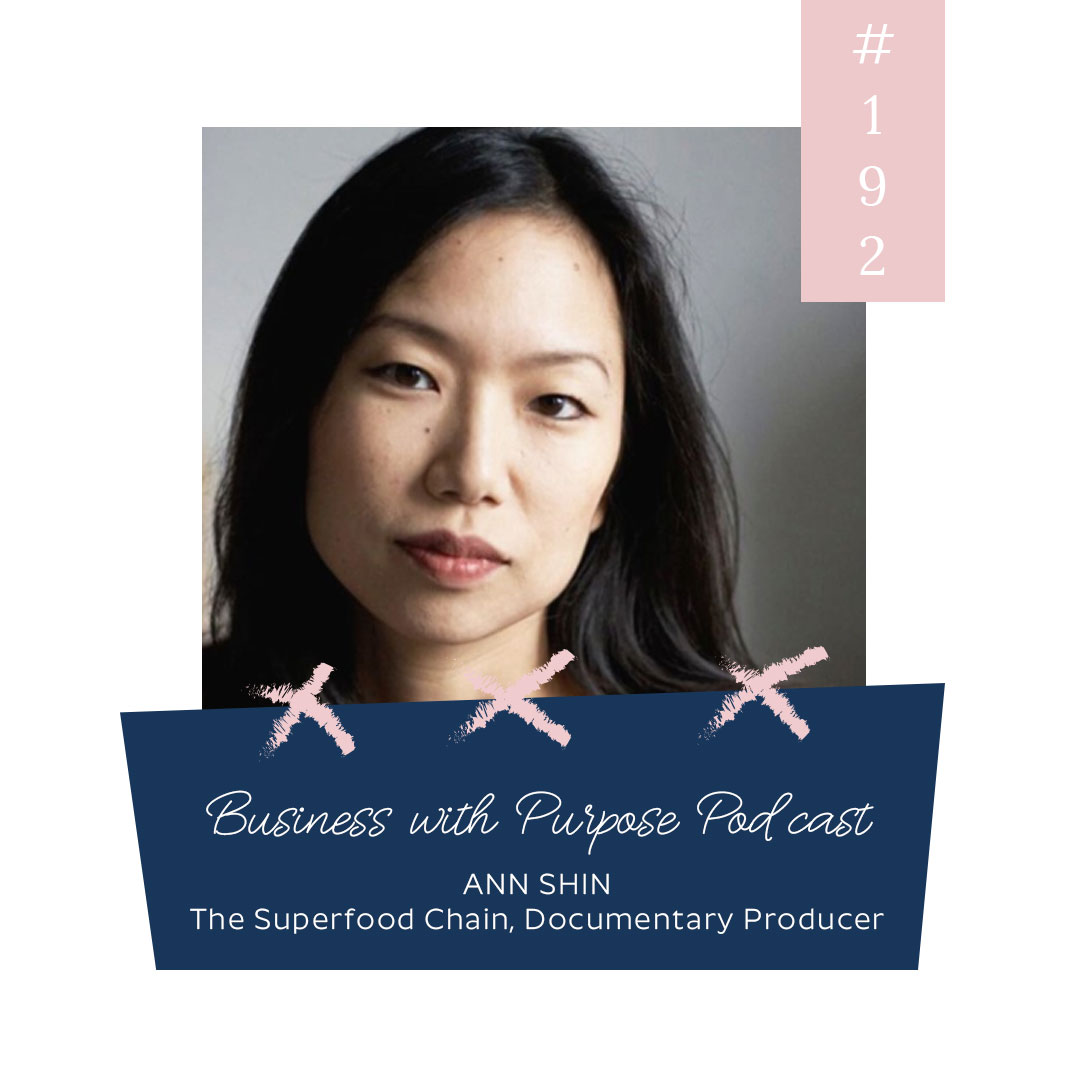
Ep 192Uncovering The Superfood Chain | EP 192: Ann Shin
How often do you hear the term superfoods these days? I hear health and fitness gurus talking about it all the time and my local grocery store even has a dedicated aisle just for superfoods! My guest today was really intrigued by this Superfood phenomenon. She wanted to know how these superfoods affect our bodies and how the growing of the foods affects farmers. Ann Shin is an award-winning director and producer known for beautiful, compelling documentary films, series, and innovative, interactive projects. Hers films and series have aired all over numerous networks including HBO, ABC, HGTV, and Discovery, just to name a few. Her latest documentary, The Superfood Chain, follows Ann as she meets farming families in Bolivia, Ethiopia, Philippines, and more who are affected by the Superfood industry. This was a fascinating conversation and I know you're going to enjoy learning from Ann too. The Ann 101 Ann is a writer and documentary film maker who made her start at CBC radio. She has loved both writing and stories all her life and started her career doing radio documentaries. Ann loved working in the studio using clips to create stories with soundscapes. It wasn't long before she realized she wanted to work on long form documentaries. Growing up on a mushroom farm in Langley, BC, Ann learned a lot about vegetable gardening. She lives in Toronto now and having a smaller patch of land got her curious about where we are getting our foods these days. It started her journey toward making The Superfood Chain, a documentary about superfoods from around the world. Ann's experience with documentary subjects is vast. She has also covered stories about two war vets from the Iran, Iraq War called My Enemy, My Brother that was nominated for an Emmy and short-listed for an Oscar! She has also covered North Korean defectors escaping North Korea through China in a piece called The Defector. Ann has always loved expression through visual arts and made the transition from radio producer to TV producer, gradually pitching her own stories. At that time Ann also started working for production companies on documentary series. She directed a documentary for the National Film Board called Western Eyes about cosmetic surgery among Asian populations. Soon Ann was also directing as a freelancer on a range of lifestyle and documentary series. Many in the industry find the lifestyle series a grind because it's so repetitive, but it helped Ann gain a lot of the directing experience she would need to go out on her on in the future. 8:45 – The Superfood Chain Like many of us, Ann enjoys shopping for healthy and whole foods, especially after learning more about where our food comes and growing a small garden with her daughter. When out shopping, she started to notice that every month there was a new superfood and marketing to go along with it. She started to wonder why suddenly superfoods were being introduced and promoted. She also wanted to understand the impact it had on farmers growing superfoods. Most superfoods are age-old crops grown on a small scale, and Ann questioned how the growth footprint may have changed as superfoods seemed to be exploding on a much larger (and popular) scale. When she served her children a dinner made with a superfood, they would ask where it's from. Ann realized she couldn't tell her kids the cultural significance of the food and only that they were eating it because it's healthy. She started researching superfoods grown in other countries and how they get to our dinner plates. In popular culture, superfoods are known as healthy foods that help combat diseases and are super rich with nutrients and antioxidants to help us stay healthy. In many cases, Ann learned that these descriptors were just a big marketing tactic. As she researched more, she realized it was leading consumers to believe that superfoods are somehow better than the other nutrient-rich foods they have always had access to. We don't necessarily need extra nutrients in North America where we have easy access to all the nutrients we need already. The hype around superfoods can lead people to think that they need to buy superfoods to be healthy when in fact there are tons of (non-superfood) foods around us that are very nutritional. 16:46 - A Shift We've seen a huge shift in the food industry in the last 10-15 years toward more organic, whole, and non-GMO food, and people are questioning where their food comes from more. Ann and her daughters took a trip to Boliva to learn how quinoa is grown. They learned that as demand for quinoa skyrocketed in North America, farmers in Boliva initially became wealthy, but quinoa soon became too expensive for local Bolivians to purchase. There was a big disruption in the sustainability of quinoa. When larger farms in Boliva and other parts of the world became successful, the quinoa prices dropped and the farmers who were initially successful started turning their farms back to grow potatoes because they made mo

Ep 191Using a Terminal Diagnosis to Leave a Legacy of Impact | EP 191: Eric Erdman, Give a Child a Voice Foundation
My guest this week is Eric Erdman, the founder of the Give a Child a Voice Foundation. When Eric learned he had advanced brain cancer in July of 2016 at the age of 16, he had no idea all the ways his life would change. He faced medical procedures including both brain surgery and eye surgery, and lost hearing as well as sight in one of his eyes. Yet the fear and grueling procedures are not what Eric remembers most about the months after he was diagnosed with Anaplastic Grade III Ependymoma. He remembers the voluntary kindness friends, families, neighbors, and even strangers who helped him find his voice, to share his story and speak out. The coming together of so many different people, all with the same goal of showing support, transformed his perspective on life and inspired him to pay it forward. Today, after four brain surgeries, three rounds of radiation, a round of chemo, and complications, Eric is more excited than ever to continue to help other struggling kids find their voice through his foundation, Give a Child a Voice. While some children battle critical pediatric illness, others face challenges such as bullying and abuse in their schools and homes. In addition to the immediate harm it causes, these difficult experiences can cause long-term emotional suffering. Eric dreams that other kids who experience difficult situations receive the same kindness he received at one of the most vulnerable times of his life. He started Give a Child a Voice to engage the community and get children the help they need so positive change is possible. His dream and movement have become a reality thanks to the work being done through his foundation. I was so beyond inspired by my conversation with Eric. This young man is making the most of his time to inspire and encourage kids who've experienced bullying and so much more. I know you are going to be encouraged by him too, so without further ado, please enjoy my conversation with Eric! 3:32 - The Eric 101 Eric started Give a Child a Voice after he was diagnosed with cancer. His foundation helps children who have dealt with or are dealing with bullying, abuse, and life-threatening illness. Give a Child a Voice strives to emphasize the importance of children being able to speak up about their experiences. For many years, Eric did not speak up about being physically and mentally abused and bullied. It took him three years before he felt safe enough to talk about it to just his mom. He told her when he was 16 years old, at the same time as his diagnosis. He was diagnosed with stage three anaplastic ependymoma brain tumor. It is a very rare brain cancer and only 200 kids and about 52 adolescents are diagnosed each year. Eric is now stage four and has been through four brain surgeries, three rounds of radiation (61 sessions) at the highest dose. In August of 2019, he was given six months to live. Eric says he knows his body and how it reacts to so many surgeries and treatments. He's been accustomed to medical procedures his whole life and says cancer has given him the ability to help others. Eric says he wouldn't change anything because his experience is helping kids through similar experiences. Often people receive bleak diagnoses and prognoses by feeling sorry for themselves and being negative. Eric chose the opposite. He intentionally decided to take the positive, happy route to help his family and to focus to live in the moments he has now. 14:55 – A Strong Advocate Eric has always been happy, but his diagnosis brought out his personality. He is much more extroverted now and he has become such a strong advocate for children who are victims of abuse, having been bullied himself. Eric realized through his own experience with bullying that confronting a bully isn't always straightforward. Kids who are bullies may be getting abused at home because of their home environment. Eric encourages those who've been bullied to speak up about what they're going through at that moment, not only to protect themselves but also to help the kid that is doing the bullying. Speaking up is the first step. Once you speak up, something can be done to help everyone in the situation. It helps so many kids, not just the kid who is speaking up. 23:40 - Empowering Others Eric knows he would not have started a foundation to help others if not for his cancer. He wanted to take all the negative things he had been through and turn it around to use it for something good for other kids and teens. We can use our own life experiences to amplify the voice of others. If you would like to learn more about Give a Child a Voice, you can find more on the website and on Facebook. You can find a video about Eric's story that was filmed at St. Jude's Children's Hospital. When Give a Child a Voice is also looking at ways for people to get involved in volunteer opportunities. Reach out to Eric if you'd like to become involved with Give a Child A Voice. He would love to hear from you directly, and the contact form goes d
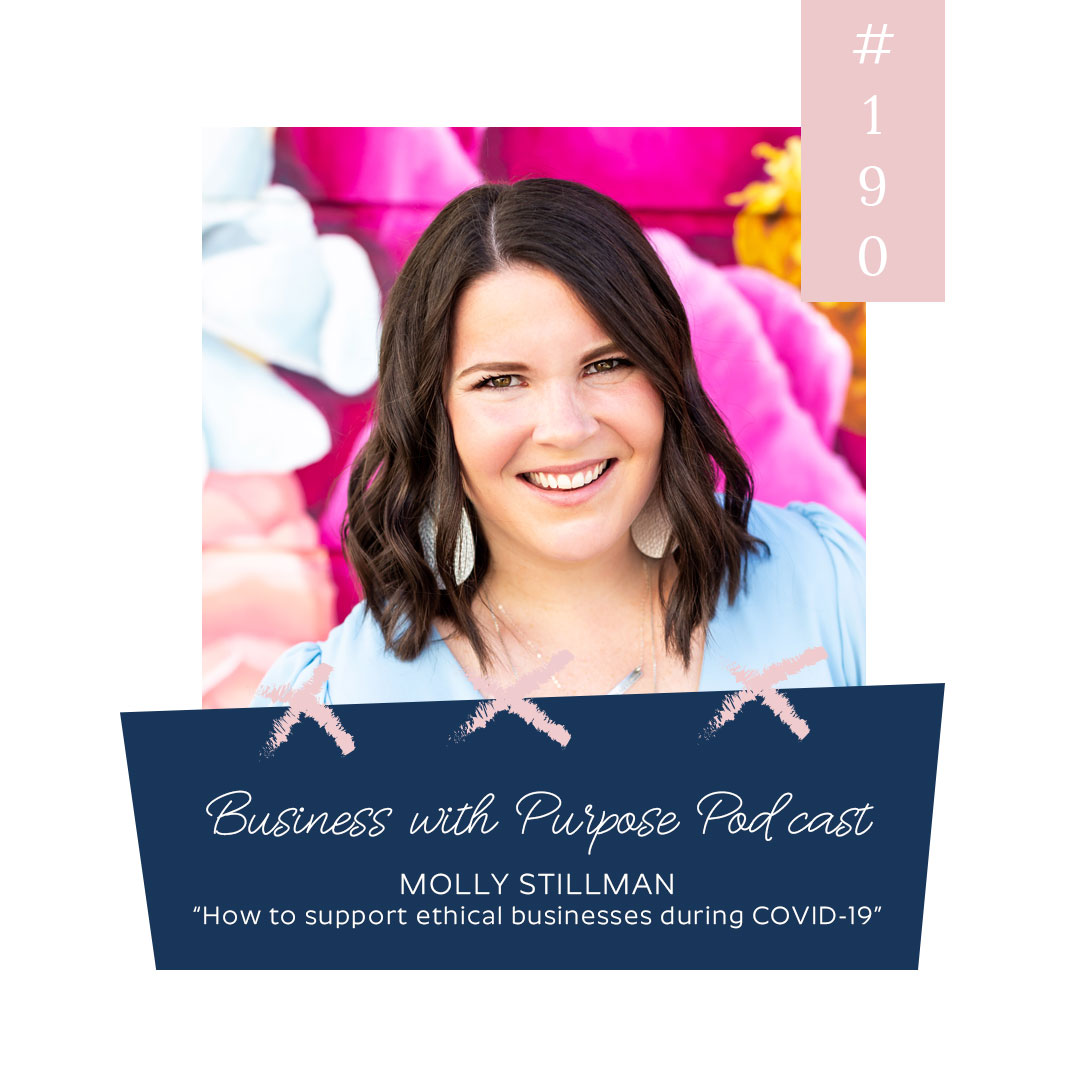
Ep 190How to Support Ethical, Fair Trade, and Small Businesses During COVID-19 | EP 190
It's Episode 190, which means it's time for another solo episode! When I was thinking about what I wanted to do for this episode, I was talking to my husband about how surreal this time is that we're in right now while we're social distancing all over the world. I've been taking social media Sabbaths on the weekends from Friday night until Monday morning, and it has been so good for my soul. Limiting my news intake has been life-giving for my mental health and my family's mental health. I realize that there is a privilege to be able to do that, and it may not be the reality for so many people, so I want to be very intentional about using it to bring glory God and to uplift others. While I realize we could have whole podcast series about to support people during this time, I am in a unique position to speak to you about the specific challenges these brands are facing and highlighting ways to collectively support them. While I will be speaking on topics that require a certain amount of monetary investment, I also realize that money is tight for a lot of people right now, and I've also included ways to support that are completely free. 5:01 - It might feel like you can wait to support these small businesses when things get back to normal. But truly, right now is the time to support these businesses so that they are still here and thriving when we make it through this season. Just a few of the things that they're facing right now are that all conferences, expos, markets, and speaking engagements have been canceled or postponed. That means these ethical businesses are experiencing less exposure and fewer sales. Small shops are closed, so wholesale has come to a halt, and trips to visit artisan partners have been canceled, which means there are no new products to offer or promote. Additionally, artisan partners have had to cut back on production, but the businesses here are still trying to pay them so that they can continue to eat and provide for their families. 6:25 - There's such a hard balance for feeling guilty for trying to sale products, but that's exactly what they rely on in order to continue supporting their artisan partners. The entire country of India, and many don't have money in savings or credit cards to continue buying food and supplies for their most basic needs. It's a life or death situation for so many people, completely unrelated to the fear of catching the virus. 7:42 - There is hope, especially when we come together to support each other and continue to make big change happen to help these businesses not only continue in this season, but continue to thrive in this season. 7:56 - I'm going to start by sharing six ways you can support ethical, fair trade, and small businesses during COVID-19 that are completely free: Follow them on social media Engage with their content. Every engagement is the opportunity to get more eyes on their products that are changing the world: Sign up for their newsletter Like their posts Comment on their posts Share their posts If you already own products from a small, fair trade, or ethical business that you love, post pictures of yourself using or wearing those products and tag them online. Think of a friend who might also like that product and might have the funds to buy it right now. Recommend small businesses, ethical, or fair-trade businesses to friends when they're looking for suggestions for certain things. Get involved with Fashion Revolution Week (happening this week)! Fashion Revolution Week 2020 is from April 20th – April 26th. You can go to http://fashionrevolution.org/to learn more. You'll hear conversations from people all over the world about who makes our clothes, how to help the ethical fashion industry, how to stop things like fast fashion, environmental sustainability and more. You can also get involved with Fashion Revolution throughout the year! Be patient. Patience is key, as is grace. There's a lot that's delayed with backorder delays, shipping delays, and shipping pauses. Everyone is experiencing these challenges, so please give businesses some grace and understanding, they're doing their best to fulfill orders and there is so much that is out of their control. 11:32 - If you have the means to purchase products to support ethical fashion, fair trade, and small businesses, be thoughtful about it. Is this item that you want or need something you can buy from a small or ethical business right now? Even Amazon is behind, so being able to wait a few more days for something from a small, ethical business makes a huge difference. As an example, do you need shampoo? Instead of going to Target, Walmart, or Ulta, try getting it from Missio Hair, Be Pure Beauty, or Plane Products. What about household products or toilet paper? You can check out a hilariously named company called Who Gives A Crap, or talk to Rachel at Simple Switch who was on the podcast just a few weeks ago! Need some new shoes or a handbag? There's The Root Collective, Malia Deigns, Se
Ep 189Giving Up What You Think You Want for What Will Set You Free | EP 189: Nicole Zasowski, Author & Marriage & Family Counselor
My conversation this week could not have come at a better time. I want to continue to bring encouraging and inspiring content to you during these unprecedented times. We are meant to live in community, and while we are social distancing right now, it can feel strange as many of us are wondering how we will communicate with our friends, family, and coworkers in new ways. If you're married, your marriage could feel strained because you and your spouse are in closer proximity with each other all the time. It's important to be focusing on those relationships and what matters most while we're navigating this new and uncharted way of staying connected. My guest this week is Nicole Zasowski, a licensed Marriage and Family Therapist, writer, and speaker. She lives in a small town just outside New York City with her husband Jimmy and her two sons. With the vulnerability of your closest friends, and the wisdom of your most trusted resource, Nicole reveals her own story of how challenges such as unwanted transition, multiple miscarriages, and crippling anxiety gave her empty hands to receive everything she had been looking for in the presence and person of Jesus Christ. She's also the author of the new book, From Lost to Found: Giving Up What You Think You Want for What Will Set You Free. I loved this conversation and listening back to it over the last week or so has really ministered to my heart, and I know it will to you too. 5:36 - The Nicole 101 Nicole is a Marriage and Family Therapist who has a private practice in Connecticut, and is also on staff with an organization called The Hideaway Experience, a marriage intensive that works with four to five couples for four days. Nicole just published her first book, From Lost to Found, that weaves her personal story with her professional therapy experience and faith journey. It wasn't until she started writing the book that she realized she'd been missing out on the freedom she helped her clients find. Nicole specializes in working with couples and sees individual clients of all ages. She is careful to hear their stories in the context of the family people grew up in or the systems they're a part of currently. She studied abroad her entire sophomore year of college, living with 50 other college students and a faculty family from her school in one house. The experience fostered many unique conversations with young people asking, "Who am I?", and "What is my purpose in life?" Nicole has always enjoyed one-on-one, deep conversations with people and her classmates turned to her as "the house therapist." She became someone whom many classmates trusted with their struggles. The faculty member who went with the students happened to be the head of the psychology department at Nicole's college. She took Nicole out for coffee at the end of the year and asked Nicole "Are you sure you don't want to be a therapist?" It became clear to Nicole right away that it was exactly what she wanted to do. After that, Nicole changed all her courses and went straight into a graduate program in Marriage and Family Therapy after completing her undergraduate degree. Nicole admits that therapy is a challenging fit for her personality type. She struggles with performance and wants to know that she can conquer a given task. But often therapy is messy, often with no clear-cut answers. That's what tethers her to the hope of Christ and His strength. 12:03 – Counseling, Transitions, and Maintenance Nicole and her husband experienced a big transition when they moved from California to Connecticut, where Nicole built a successful private practice. For her own marriage, Nicole's attitude is that everyone is learning and growing. While she's learned a lot in school and through her clients, it's an entirely different thing to apply those lessons to her own relationships. She recognizes that as soon as she loses touch with the fact that she needs to learn and grow too is when she's in trouble. Nicole's husband is familiar with the model of therapy she uses, called Restoration Therapy, and they work on their relationship together; they use the same model Nicole uses for her clients. Many people view therapy as something to start when things are hard. The more we can de-stigmatize counseling and marriage counseling, the more people will realize that grief is much more manageable when it's something we add to our lives as a regular habit. For many, starting counseling feels like admitting that there's a problem, but that doesn't have to be the case. It helps anyone in any type of relationship navigate communication so that you're not suddenly blindsided by a problem in your most important relationships or in your own personal growth. 22:51 – The Tapestry from Loss In her book, Nicole shares about a season of life where she experienced much change and loss, including having five miscarriages. She believes wholeheartedly that God is not the author of our suffering but loves us too much to waste our suffering. Nicole
Ep 188Making the Switch to Ethical Simple | EP 188: Rachel Kois, CEO and Founder of Simple Switch
If you are brand new in your journey of shopping ethically, or if you've been shopping ethically for a while, one of the most common frustrations I hear from people is that there's not one central place to find all the things they need to buy. They don't want to have to scour the internet and go to ten different websites to find all of their ethically made products. My guest today is trying to solve that exact problem. Rachel Kois is the founder and CEO of Simple Switch. Three years ago, Rachel was a business consultant for entrepreneurs in the poorest parts of South Africa. She was so impressed by what they created and learned so much from them. Rachel also understood the privilege she held, and when she came back from her trip, she knew she wanted to use her everyday choices to empower those with fewer resources. She found it was actually a very difficult thing to do. The hours it took to research company ethics, labor laws, and environmentally sustainable impact did not fit into her busy life and schedule. She wanted to make a positive impact, but she felt exhausted every step of the way. This gave Rachel the idea to start Simple Switch to help people like her, people like you, and people like me find easier ways to spend our money on products that help us vote for the kind of world we want to live in. The companies that Simple Switch has partnered with have committed to improving livelihoods, protecting the beautiful Earth that we live on, and empowering people to change their future; our future. Rachel firmly believes that even if one person uses Simple Switch, it would be worth the work of creating and sustaining the company. Simple Switch really is a one stop shop for finding ethically made, simple products that you use in your everyday life. I loved my chat with Rachel, and I know you're going to be inspired by her too! 3:25 - The Rachel 101 Rachel is a young entrepreneur living between Denver and Boulder, Colorado. She grew up in Colorado with the mountains as her playground, and the outdoors are a big part of her life. She majored in both Business and Theatre Performance. Her theatre background has helped her take care of herself, express herself, and connect with people while starting Simple Switch. Rachel loves traveling and just finished visiting her 28th country! Her travels have been both personal trips, mission trips, and now, business trips to meet with Simple Switch partners. Rachel has had a heart for learning about other cultures from a young age. She learned a lot about both entrepreneurship and the world outside of the US from her parents who owned a real estate company and were friends with pastors in Nigeria. When Rachel graduated, she thought she wanted to go into counseling but choose business instead as a safeguard. She was surprised with how much she fell in love with business, specifically, business as an opportunity to do good in the world. She had a chance to intern in South Africa and do business consulting there. When she came home, she wanted to use her everyday choices to help support people like the clients she'd worked with in Africa. She recognized that they were incredible businesspeople but didn't have the same access to market as we do here in the US. This is where Rachel's idea for Simple Switch took root. 5:58 - Simple Switch Simple Switch is an online marketplace for "positive impact purchasing." They carry over 3,000 products from home goods to jewelry, and even toilet paper! The company started out of the desire to help people make simple changes in their purchasing decisions in order to support ethical businesses. Rachel saw that Amazon had such convenient ways to purchase with their "One-Click" buy feature, but ethical companies were so much harder to find, requiring hours or research, difficult payment, and long shipping times. Simple Switch was started to create an easier, more convenient place for people to find ethically made products without so much hassle. The biggest challenge for Simple Switch has been changing customer perception. Often this kind of shopping is still viewed as a niche for things you don't need every day and will only money on if your motivation is making a positive impact. Rachel realized there are so many day-to-day items out there that are sustainably made. In our society, we've had it drilled into our brains that these story brands for the "feed good" factor. Simple Switch is trying to change the narrative that people can switch to ethically made brands for typical shopping needs. Owners of big brands don't have personal relationships with the people who make their products. It really makes us all more interconnected when we can say who made our clothes and know a little bit about that person's life and story. Consumer stories are just as powerful too. Simple Switch is always hearing about how someone's entire perspective can change when they realize how their small decisions can have a huge global impact. Connections between consu
Ep 187Living & Working For More Than Just A Great Resume | EP 187: Sasibai Kimis, Earth Heir
My guest this week is Sasibai Kimis, the founder and director of Earth Heir. Sasi founded Earth Heir in 2013 as a social business focusing on luxury craftsmanship and showcasing the skills and traditions of craftspeople. She has a background in investment banking, private equity, nonprofit development agencies, mining, finance, sustainable development, corporate responsibility and microfinance. She's also lived in eight countries and four continents. She is so passionate about environmental sustainability, eco-tech, and traveling. It was so cool using technology to speak with Sasi across the world where she lives in Malaysia. Join me to hear more about how Sasi is using her faith and knowledge to run a business with purpose. 6:50 - The Sasi 101 Sasi was born in Malaysia, but her grandfather came to Malaysia from India. Sasi spent time in the US, UK, West Africa, and Europe when studying abroad. When she was almost 30-years-old, Sasi decided to return home to Malaysia. In the summers, Sasi would return to India. It was so different from what she was accustomed to, and she was struck by how much poverty she saw there. In Malaysia, most basic needs were met, unlike what she saw in India. From a young age, she gained an understanding that there are many worlds out there that she had no idea about. The idea grew for Sasi that people who are poor need money, and she should work to earn a lot of money to donate to people in need. She worked at a bank and made great money, but quickly became disillusioned when the people around her didn't care about what was happening in the world. Most of them were only focused on making more and more money for themselves. Sasi quit her job when she realized that while money is a means to an end, its focus should be supporting people who are going to go out and make a difference. Sasi wanted to better understand why poverty exists, so she studied environment and development, gender, microfinance, and more in graduate school. Sasi also worked in Ghana for two years with the UN and an NGO. She saw the NGO doing a lot of good work, but funding started to be cut as the country became more developed. She and her colleagues questioned how their work supporting orphans of the HIV/AIDs crisis would be able to continue without proper funding. Sasi thought of a way to both make money and continue to do good, so that they didn't have to rely on the donations or grants that had started to wane. It was the seed of social entrepreneurship in her life. 12:30 – The Wake Up Call When she returned to Malaysia, Sasi started working in finance again. One night on her way home, she fell asleep at the wheel. Luckily, she didn't crash, but it was a wake-up call for her. She told God that she didn't want to die for a job. If she died tomorrow, she wanted to know that her life meant something and that she could leave a legacy that she was proud of. Sasi's focus until that point had been about building up a shiny CV. She decided to take some time off so that she could figure out how to give God the best of herself; as much as she had given to her career and education. She quit her job and joined Youth with a Mission in Hawaii, learning about the bible and building her relationship with God. When her teamed moved from Hawaii to Cambodia, they started work teaching English and building houses. Sasi met many families who were struggling; mothers who'd lost children to traffickers and children who'd been rescued from trafficking. Sasi decided to support those families by purchasing from weavers and selling their products to her family. She also met with an impact investor, Dr. Kim Tan, a few months later. Dr. Tan told Sasi that if she really wanted to help the women, it couldn't just be her side gig. It had to be her full-time business. She was nowhere near ready to start her own business but asked God to help her use her skills and passions in a business capacity to help the local women. Soon after, she started Earth Heir. The name comes from Genesis 2:15, when God tells Adam to be a good steward of what God has given him. As Christians, we are called to be good stewards of the environment, animals, people. Sasi believes that Christians should be at the forefront of ecological conservation. The Earth Heir logo includes a fern from Ghana. The fern's name translates to "God with us." Sasi's dad was both her biggest supporter and biggest critic. At first, he was disappointed that she'd quit her job with all of her education and skills. In the beginning, she was selling scarves, and he felt like she might be wasting her talent. After six or seven years of running Earth Heir, the company is successful at standing up for conscious consumption, safe factory conditions, and how to do good through business. Earth Heir (20:03) is an artisan-focused social enterprise that works with refugees and indigenous tribes and rural women to make ethical fashion. Some people and businesses are beginning to realize that "business
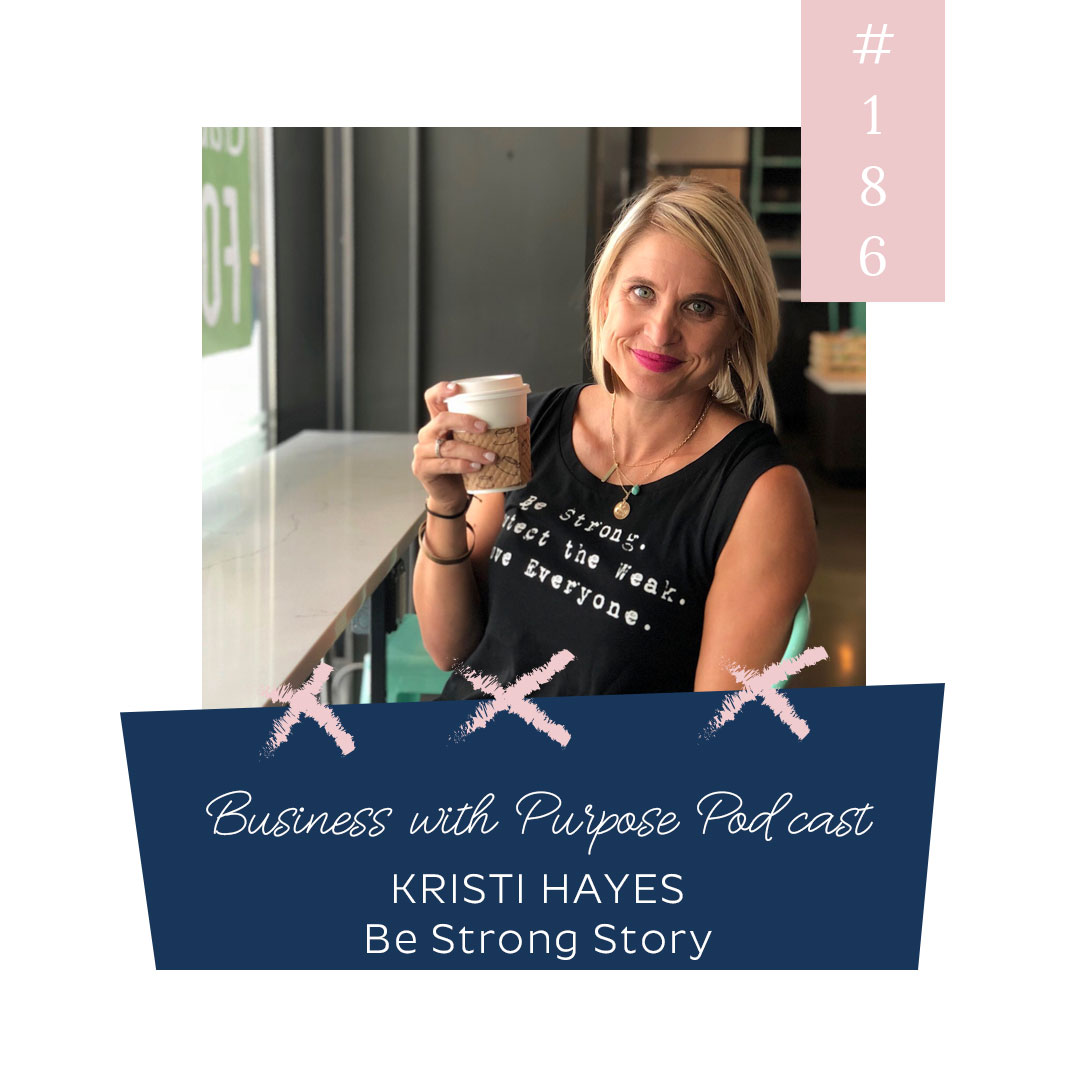
Ep 186A Lunchbox Note That Changed Everything | EP 186: Kristi Hayes, Be Strong Story
Did anyone ever leave you a note in your lunch box when you were a kid? If you're a parent, do you ever write an encouraging note in your kid's lunch box? Would you ever think that a lunch box note could change your life or someone else's? For my guest today, that's exactly what happened. Kristi Hayes is the founder of Be Strong Story Family and host of the Be Love podcast, a company that was inspired by a lunch box note that her husband wrote to her son. The note said, "Be strong, protect the weak, love everyone." Kristi is hilarious and so inspiring. I love the way she and her family live out this mantra that came from a lunch box note. I had the opportunity to be on Kristi's Be Love podcast (episode 45). It was such a blast to have Kristi on my show, so join me to learn more about how one little action can change the course of your life and change lives! 2:23 - The Kristi 101 Kristi lives in Denver with her husband and two kids. She's always had an entrepreneur's heart, but her background is in youth ministry. Kristi's husband was in the secret service, and while her family was living in DC, Kristi worked in politics on Capitol Hill and press advance for the White House. After DC, the family moved back to Oklahoma City and Kristi went back into youth ministry. About four years ago, Kristi and her family started a company called Be Strong Story. One day Kristi's son started having trouble with a friend on the playground. Her husband put a message in his lunch box that said "Be Strong, Protect the Weak, Love Everyone." Kristi wanted her family to live out the message in their family and now the share that message through apparel, family coaching, and a children's book. Be Strong Story also has a podcast called Be Love podcast that shares stories of people loving each other well. When Kristi started her career in politics, she didn't know anyone nor what she was getting into but learned as much as she could along the way. One day in a meeting Kristi froze right before she was called on to speak about an amendment. One of her coworkers buzzed her Blackberry to tell her exactly what she needed to say. It's a great reminder to Kristi that even in a competitive environment, people can give with no agenda. Moving so often and living in places like DC, Oklahoma, St. Louis, and Colorado taught Kristi and her family so much about making community wherever life took them 17:14 – Be Strong The impact of Be Strong is about teaching our kids (and ourselves) to be who we are created to be. She wants to prepare her kids, other kids, and adults that negative words or gossip to not define them. All of us are weak. Usually those who appear weak are actually the strongest. At some point, any of us in life will be weak. It's ok to be weak and ask for help, and when we are the ones able to bring light to others, it's our job to step up for those who need a little help. Be Strong encourages us to keep an eye out for those who need help. We especially need to keep an eye out for those who are a little harder to love. There is a Be Strong Families group that serves every month together. Families that work toward a mission together to live their values form a very special bond with each other and grow as individuals too. When we sit with others and hear their stories, it removes our judgements and preconceived notions and we see the humanity in someone who is more similar to us than they are different. When you strengthen a family unit, entire communities are made stronger as well. Often children don't care about the things that adults notice. Kids often teach us as much or more when we're serving with them than we teach them. Kids don't have the same biases as adults, and don't care when someone else acts different or looks different or had a very different life. 28:44 - Serving Right Where You Are Everyone has their own talents that can be used to serve others. You don't even need a grand plan, and often you don't even know what someone else needs. Be Strong asks people what they need instead of making their own plan or agenda to help. Helping is easy, and you can get involved even if you don't live near Be Strong. Each month, Be Strong has a Family Coaching Network that helps teach different topics like communication, love languages, building a family mission, how to serve in your own home, serving with your kids when they're little and more! There's also an online community you can join to network and get connected to other like-minded people in your area who also want to help. 31:09 - Getting To Know Our Guest Find out what trends Kristi thinks people might be nostalgic for in 40 years, how she'd prove she's from the future if she could travel back in time, what her walk up/hype song would be, and of course, what it means to Kristi to run a business with purpose! Memorable quotes: 19:01: "There's a phrase I say everyday to my kids as we fist pump out the door and it's "Eyes Wide, Light Shine." 21:30: "People are seeing the be

Ep 185A Manifesto for a More Generous World | EP 185: Yancey Strickler, Author & Co-Founder of Kickstarter
America used value community, purpose, and fairness. But now it kind of feels like virtually every decision is based on what will make the most money. My guest today has a dream, a vision that this is changing. He has created a manifesto for a more generous world. Yancey Strickler is the cofounder and former CEO of Kickstarter, the mission-driven, global public-benefit company that helped pioneer crowdsourcing. He is also the author of the recently released book, "This Could Be Our Future: A Manifesto for a More Generous World." I've been a big fan of Yancey's work for quite some time and am so excited to have him on the show today. Join me as I learn more about Yancey and his inspiring manifesto! 2:08 - The Yancey 101 Yancey grew up on a farm in southwest Virginia. He didn't have neighbors and farm-life forced him to be a bit more creative. He dreamt of being a writer and reading and writing is how he kept himself busy and entertained on the farm. He studied writing in college and after graduating, moved to New York City where he worked as a music journalist. While reviewing records and writing about musicians, he became friends with Perry Chin, the creator of crowdfunding. Together, Yancey, Perry Chin, and Charles Adler created and launched Kickstarter, which has since introduced crowdfunding to the world and generated more than $4 billion to creative projects. Along the way, Kickstarter also became a public benefit corporation. The three founders put a lot of effort into governing Kickstarter according to the values that felt most true to them. In Yancey's last four years at the company, he also served as CEO. Two years ago, Yancey left Kickstarter to write his first book called "This Could Be Our Future: A Manifesto for a More Generous World." It explores what our role models for success are and the optimistic direction families, work, and companies can take to evolve toward generosity. Yancey's father was a musician who sold waterbeds to make a living for the family. Yancey has an artistic side from his father's country and bluegrass interests and also grew up in a church that taught him about responsibility and caring for others. He loved listening to Indy Rock and Punk growing up, which also inspired a message about being true to your community. 10:45 – A Community Start at a Restaurant called "Diner" Yancey and Perry met in Brooklyn at a nice restaurant called "Diner." They spent a lot of time bonding over a shared love of good eateries and basketball. One day Perry shared his idea for Kickstarter, but Yancey wasn't a fan of the idea at first. Perry's pitch reminded Yancey of a reality show like American Idol, but Perry assured Yancey that the idea was more about highlighting sub-cultures that don't fit in to the mainstream, allowing those people to share ideas more widely. Yancey had no dreams of being an entrepreneur and felt very anxious about stepping over the line between business and creativity. It was a stretch far beyond his comfort zone. Once Yancey was fully on board and Kickstarter was launched into the marketplace, he was surprised to see that not only small passion projects idea were on board, but so were people with million-dollar idea projects. It was a real shift in the level of activity and responsibility of Kickstarter. The beauty is that it's a platform for anyone to add their ideas. It is perpetually renewable for this reason. The hope is that Kickstarter remains a place where anyone can indulge their ideas rather than forgetting them or giving up. It's for anyone young or old to keep their creative muscle flexing throughout their lifetime. 23:16 - A Generosity Manifesto Yancey's book This Could Be Our Future: A Manifesto for a More Generous World explores both how our communities once valued togetherness, purpose, and fairness, and how in business, most decisions are made based on what's going to make the most money. Some business owners are going outside of the current societal norm to not only run a business, but also make a positive impact on their communities and cultures. Can society get back to a place where that is more of the norm? The idea for Yancey's book started when he was giving a talk for Kickstarter around the time that the company was becoming a public benefit company. They were changing expectations and accountability to not only maximize shareholder value, but also produce a positive benefit to society. As he started looking around at peer companies, he noticed that everyone seemed to be operating around an ideal that whatever will produce the greatest economic growth is by default the correct choice. Yancey started to explore debating clear economic decisions that could be predicted and the downsides of what's less profitable. The ideas that make the most money often win, and the "everything else" that we feel emotionally but don't actually have a concrete plan for just falls to the wayside. He tried to imagine a CEO who didn't have to choose between values a
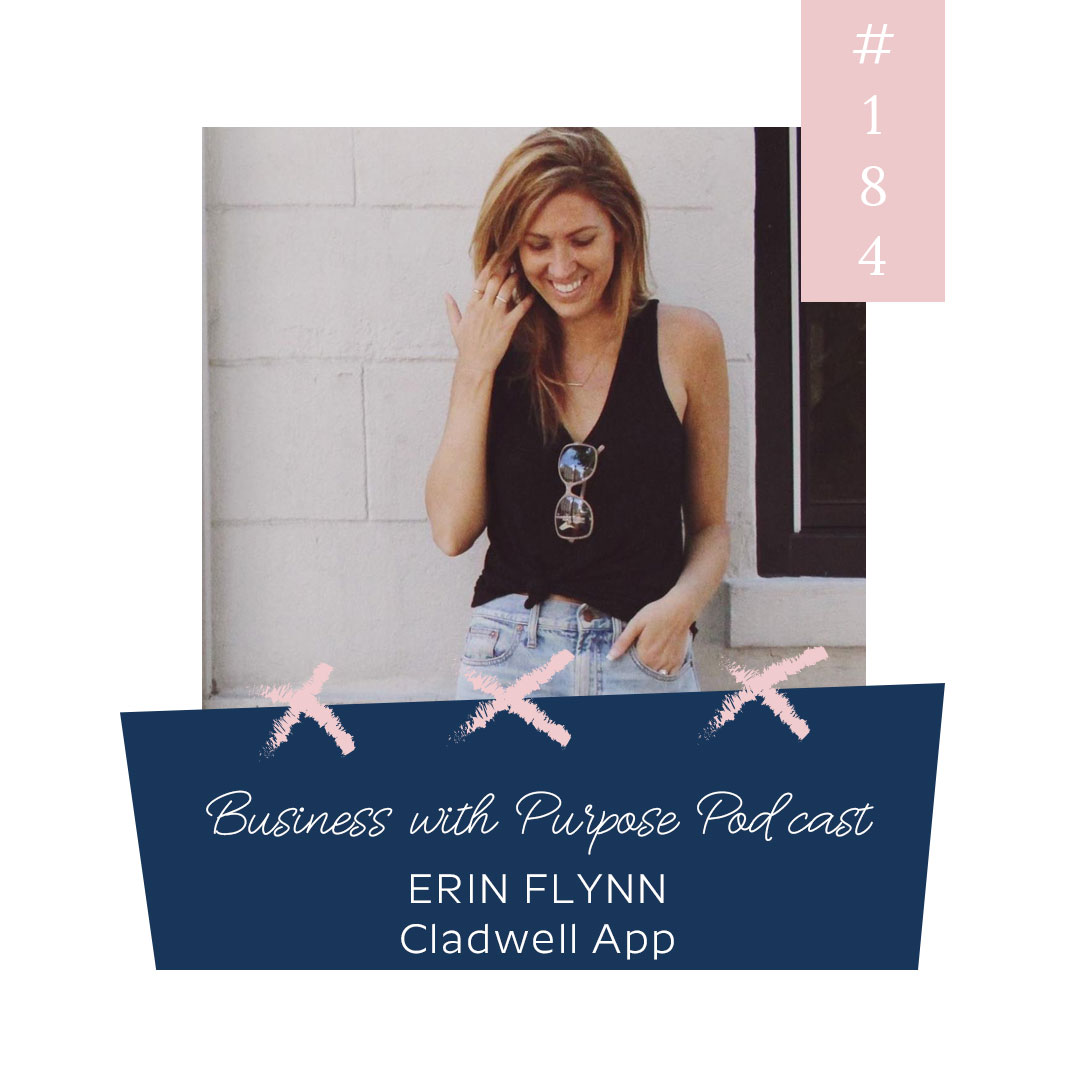
Ep 184Personal styling for those who don't fit in a box | EP 184: Erin Flynn, Co-Founder and CEO of Cladwell
Please tell me I'm not the only one who loves the movie Clueless?! Now, I realize how ridiculous of a movie it is, but in a "I love how ridiculous this movie is" kind of way, right? It is what began my love affair for Jeep Wranglers, and I longed for Cher Horowitz's infamous closet with the computerized system that dressed her every day. My guest today was not in the movie Clueless, but she did create an App called Cladwell that is basically the 2020 version of Cher's closet dressing system. Erin Flynn is the CEO of Cladwell, a personal styling app that transforms your closet into one where you love and wear everything you own and makes getting dressed easy every morning with daily outfit recommendations. It does so much more than that, and you'll hear how when you tune in and listen to how Erin is making a positive impact with her career. Cladwell has been featured on Good Morning America, and even did a partnership with Marie Kondo! Cladwell isn't Erin's first startup, and she has so many startup stories to tell. Listen now to hear about my love of the Cladwell App and Erin's vision for creating personal style with ease. 3:30 – The Erin 101 Erin grew up in Indiana and received a full ride scholarship to play Division II Basketball in Memphis, TN. She played for all four years of college, and very soon after graduating, got married, moved to Pennsylvania, started a new job, and got a dog! This was 2009, the economy was tanking, and Erin could not find a viable job in marketing. She tried for three months to work no-pay internships and as her frustration and grew and her bank account dwindled, Erin decided it was time to take control of her career and her future. Erin started a fashion blog when influencer marketing was just taking off. Erin grew her blog into a small business, working with brands and attending fashion week. Erin noticed a disconnect in communication between brands and bloggers even though it was clear the two markets desired to work together. Erin's first startup was a business called Canopy. She transitioned her blog into an influencer network and jumped into her first startup experience. She continued to work at it for three years, but it was difficult for consumers to understand this new world of influencer marketing. In 2011, she closed the startup and she and her husband moved back to the Midwest. Erin soon took a job with EW Scripps. EW Scripps owns over 35 television stations over the country. Erin was able to work in an entrepreneurial role there and learned more about starting something new within a company. As Erin felt a desire to get back into the startup world, she also had some angst about it, knowing first-hand the risks, sacrifices, and inevitable failures involved.. She decided to meet with the founder of a company similar to Cladwell, but for men. Erin thought she would try her hand at taking that market to women, and from there Cladwell was born. 8:08 – What Am I Going to Wear Today? When Cladwell first started, it was a platform for men to solve their personal shopping needs, a way to help them figure out what to buy next for their wardrobe. Erin came on board in 2015 when their products were changing and talks about expanding the market to women had just begun. Cladwell became interested in a capsule wardrobe, specifically helping women love and wear every piece of clothing in their closet. Erin's personal experienced gave more shape to the idea because she'd wake up every morning, open her closet, and have no idea what to wear. Erin didn't understand how it was possible to "not have anything to wear" when she owned 450 pieces of clothing. She had too many clothes but was still completely unsatisfied with the clothing she already had. She didn't understand how she'd gotten to that point. Cladwell wanted to approaching personal style with capsule wardrobes to help women become more content with their clothing choices and less overwhelmed with continual shopping and overcrowded closets. The app was developed two and a half years ago to help women with an easy getting ready experience. It helps transform closets over 30, 60, 90 days, etc., to help you narrow down what you actually love and wear most often. The app also helps you declutter, hone-in on your personal style, and shop smarter while inspiring new and creative outfit combinations so that you can continue to wear what you already own in new ways. Cladwell helps you become mindful and thoughtful about what you truly love, which helps reveal your own personal style. Capsule wardrobes also help those who want to shop ethically and reduce waste! 15:16 - Declutter Without Overwhelm You don't have to add every single piece of clothing you own to the app. You can add your favorite 10 items to start. Cladwell will match that to the 17,000 items they already have in their database. You can also take a photo of your own items and add them to your app. Holding onto things can keep us stuck in the past after we've gone throu

Ep 183Creating Jobs in Rural Honduras | EP 183: Emilee Connell de Umanzor, SoloHope
People who see something that they want done and do are the people who create impactful change in their community. They leave a legacy by acting rather than sitting around and talking about it. I admire people who step out of their comfort zones and into the uncomfortable and unfamiliar to make things happen. My guest today is the epitome of a "doer." She saw an opportunity to partner with others and brought that opportunity to fruition to make real, lasting change. Emily Connell Umanzor is the founder of Solo Hope. Solo Hope began in 2012 after Emily heard women in rural Honduras describe the challenges they face every day to overcome poverty. Solo Hope works with more than 10 women and two co-ops to create designs for the home and body. It was so exciting that Emily was able to join me in-person for this interview the day she returned to the States. It was a joy to connect in person, and I know you're going to love hearing our chat! Join me to find out how Solo Hope empowers women and fosters opportunities for a safe and successful future. 3:24 - The Emily 101 Emily is from the southern United States but found herself in love with the country of Honduras. The seed was planted on Emily's 10th birthday. She woke up with a feeling that the Lord was telling her to go to China. At 16, she had an opportunity to go to Honduras. When she arrived, she immediately felt right at home. After learning about the culture and women in Honduras who were trying to raise their children with very little support and no job opportunities, her dream for Solo Hope came alive. Because she witnessed a lot of men who were absent from their children's lives, Emily never thought she'd marry a Honduran man. In 2016, she hit it off with a driver she contracted with to transport her teams. They'd met before but during one particular trip, they couldn't stop looking at each other. Emilee knew God gave her the word "Home" for 2016. While she kept saying it meant finding a home in God, she knew God also meant a home in marriage. Emilee and Ever were married in Honduras within that same year! Emilee's husband Ever doesn't speak English, and it has given her children an opportunity to learn another language and culture at an early age. It's such a beautiful picture of God's creation. 12:32 – Solo Hope God pulled on Emilee's heart and showed her that women in Honduras needed jobs. She witnessed Honduran women receiving some aid, but once it was gone, they were right back in a vulnerable position again. Emilee met with a Honduran woman named Dilcia in 2012 and created rough sketches of bracelet ideas. Dilcia had the skills to make the designs, but she didn't have a market. Dilcia took Emilee's designs and brought them to life. Dilcia asked her best friend Maribel if she wanted to help make bracelets, and that's how Solo Hope began. Emilee's biggest privilege is being able to work with the women face-to-face and get to know them as friends too. In 2013, Emilee quit her full-time job and moved to Honduras for four months to help work on a product line that could also be offered in the United States. There were three artisans in 2013, and Solo Hope continued to add to the group as need or interest arose. They're currently working with 10 artisans now and the women have really taken ownership of their work. When they need help, they look for other women in their community who need a job. Solo Hope is more than just a business with a purpose. It's a family too, and taking care of each other goes both ways. Emilee can confide in the women and the women can confide in Emilee. They pray for each other and regularly experience life together. 19:23 – Traditional Honduran Arts The weaving, hand-looming, and leather crafting is all traditional to the area of La Esperanza, Honduras. The artisan partnerships are all relationship based so that traditional skills are recognized and connected to a viable market. Solo Hope products tell a story and the women work hard to create pieces that will last a long time, a timeless work of art that customers can enjoy for many years. Products are mainly sold here in the US. Solo Hope is working hard to continue growing sales stateside to ensure that supporting women in Honduras stays strong. Life in Honduras is a bit like stepping back in time in some ways. The roads are rough, the water sometimes gets shut off, but the best difference between living in Honduras and the United States is that people slow down to visit with each other for hours without feeling like any time is being wasted. Social connections are much more about relationship and taking a lot of time to be with each other in person, no matter what work needs to be done.Neighbors do not feel inconvenienced with helping or stopping life to bring someone in like a family member. 32:15 – How We See Success Solo Hope wants to grow while balancing how they measure success. When things have been hard, it's easy to wonder how the work can continue. God specificall

Ep 182Turning Plastic Ocean Waste into Activewear | Business with Purpose Podcast EP 182: Hannah Tomita, Kaira Active
By the year 2050, it's estimated that there will be as much plastic in the ocean as there are fish. The industrial fishing industry actually generates a staggering 10% of this waste in the form of abandoned fish nets and fishing gear, approximately 640,000 tons each year. It's estimated that 46% of the plastic in the Great Pacific Garbage Patch comes from fishing gear alone. Luckily, I'm talking to someone today who is tackling the problem of ocean plastic in a really unique way. Hannah Tomita is the founder and designer of Kaira Active. Kaira Active makes all of their products out of recycled fishnets and fishing gear! Hannah grew up in Hawaii and moved to California for college. After stumbling into her passion for fashion while a senior, she decided to sew her own swimwear to avoid spending hundreds of dollars on a swimsuit from a store. She taught herself how to make her own swimsuits by watching YouTube videos and reading articles online. After building a portfolio of her work, Hannah landed a job as an assistant designer at a swimwear consultancy where she worked with several high-profile international brands. I love hearing people who use their unique passions to solve problems in really unique ways, and I can't wait for you to hear how Hannah is making a difference for the environment with her business. 5:20 - The Hannah 101 Growing up in Hawaii, Hannah visited the ocean at least a couple times a week. Experiences in nature were very accessible, and she spent her childhood exploring the island of Oahu. Hannah studied industrial design in college at Arizona State University. Hannah started sewing swimsuits and learned how to make designs from patterns and online tutorials. It was sharing her designs online that ultimately led Hannah to her first job as an assistant fashion designer at a consultancy. She worked with big clients like Urban Outfitters, Tommy Bahama, True Religion and more. Hannah immersed herself in fashion and while she loved it, she quickly realized that the industry was riddled with fast fashion and little to no concern for sustainability. No one was diving deep into thinking through designs and materials used. A few years after working in the fashion industry, Hannah realized the need for companies that thought through how their practices would affect the world. That's when she started Kaira Active. When she was a student, Hannah loved designer swimwear, but couldn't afford designer swimsuits on a college student budget. Missing the beach while studying in Arizona and not being able to afford the swimsuits she liked led her to start playing around with sewing her own swimwear. 8:40 – Kaira Active What began as a curiosity and hobby turned into a unique fashion brand that recycles industrial fishing nets and turns them into functional, beautiful active wear. Sadly, there are a lot of ways these nets end up polluting the ocean. Sometimes fisherman will illegally dump their nets to avoid getting caught. In other situations, nets are lost due to bad weather or getting snagged. There's currently no good system in place to regulate the situation. When Hannah first started working at the swimwear consultancy, a vendor came in from Italy selling fabric made out of recycled fish nets. At the time, sustainability wasn't being paid attention to very much, but seeing the fabric made Hannah excited about merging her love of nature and her very active lifestyle. Hannah was also looking for a way to get the most out of her activewear. Her fitness and outdoor hobbies are eclectic, and she wanted a way to use one outfit for both the yoga studio and surfing. 16:26 – Fishing Nets to Fabrics to Clothing Kaira Active partners with a nonprofit organization called Healthy Seas that sends divers to pull nets out of the ocean. Since industrial fishing nets are made of Nylon, the nets are taken to a facility and chemically regenerated back into their pure form of Nylon and made into ECONYL. ECONYL is the technology that forms the Nylon into a thread which is then sewn in with Spandex to make fabric for Kaira Active clothing. You can learn more about the stages of the process here: https://kairaactive.com/pages/protecting-the-ocean The majority of the fishing nets are collected from the North Sea, Adriatic Sea, and Mediterranean Sea where there are many shipwrecks. Fun fact: Since 2013, the Healthy Seas initiative has recovered 453 tons of fishing nets from the ocean – that's the weight of 3 blue whales! Kaira Active is also committed to reducing their waste, energy, emission, and water consumption. They partner only with manufactures that focus on sustainability, their electricity is derived from renewable sources, and they have adopted a water system aimed at reducing polluting agents before it is sent to the municipal water treatment plant. There's more and you can learn about their reduction of harm HERE. Kaira's dad believed in her vision and encouraged her to go for it. He invested 2 bitcoins right befo
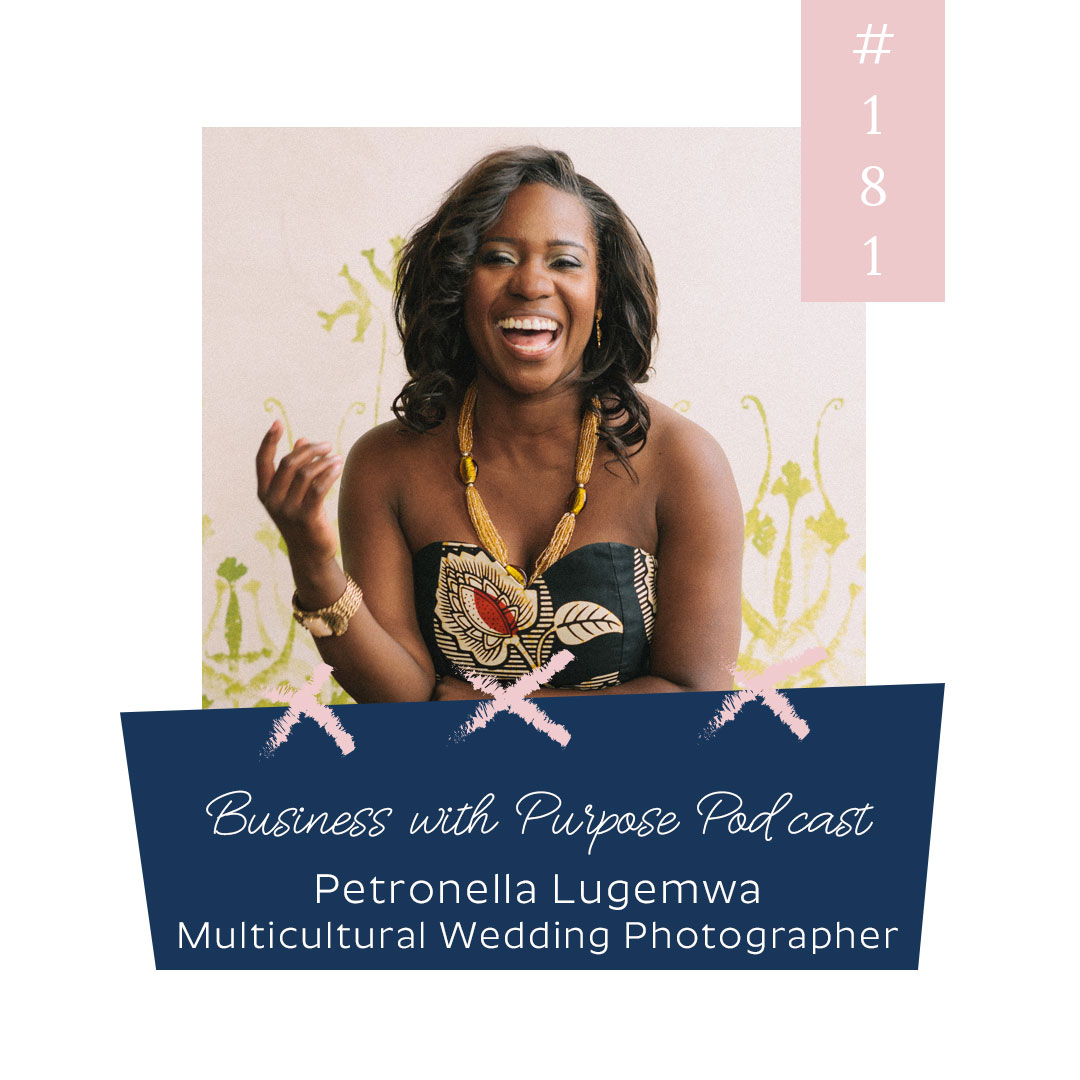
Ep 181The Beauty & Diversity of Weddings | EP 181: Petronella Lugemwa, Multicultural Wedding Photographer
I am a sucker for a beautiful love story. Celebrating two people coming together in holy matrimony is a beautiful display of love and an amazing way to see different family traditions come together. My guest today has a vision and passion for bringing to life the beauty and diversity of multicultural and multiethnic weddings through stunning portraiture. Petronella Lugemwa is an international wedding and marriage proposal photographer and speaker who specializes in helping multicultural couples celebrate their love in a modern way. Petronella believes that what makes you different makes you beautiful. I had such a great time chatting with Petronella and hearing about her passion for highlighting love through cultural traditions. Sit back, relax, and enjoy hearing about Petronella's travels and her stories of love from all over the world! 3:15 - The Petronella 101 Petronella Lugemwa is the creative director and owner at Petronella Photography, a New York based international wedding and marriage proposal photography studio. She's also a podcast host and uses her Instagram platform to share multicultural stories that help people learn more about each other and feel more connected. In addition to being an extremely talented and skillful photographer, her niche and her story makes her very unique in the wedding photography industry. She's very passionate about bringing different cultures to life through photography. Petronella was born in Uganda and raised in Alabama. When she was born, the dictator Idi Amin was President of Uganda and it was a very unstable and dangerous time in the country's history. Even on the night she was born, there were many bombs in the city and her parents knew they had to get out and find better opportunities for their young family. When she was six months old, Petronella's family moved to Kenya and continued to travel until they found better opportunities. Petronella grew up in Zimbabwe and when her dad found an amazing opportunity to persue his PhD in America. When she was 10 years old, she arrived in Birmingham, Alabama with her mom, sister, and two suitcases. As her family started figuring out life in America, Petronella's parents knew they wanted to be sure their kids received a good education and enrolled Petronella in private school. There weren't a lot of people who looked like Petronella at her school or in Birmingham. As a kid who really wanted to fit in, Petronella learned to hide certain parts of herself in order to assimilate and fit in. Petronella received both engineering and business degrees and entered the corporate world. It wasn't until well after that journey that she realized she'd been hiding a lot of her background and culture that makes her unique. 13:42 – A Wedding in Mexico Petronella felt some pressure to enter a stable, "parent-approved" profession when she considered her career, but photography has always been a way for her to share her mind and heart. One of Petronella's coworkers saw some of her photography and asked Petronella to come to Mexico to photograph her wedding. After that first wedding was published, Petronella quickly discovered a side of herself she wanted to explore more and slowly transitioned out of corporate America. She knew she had to find a way to make photography a career. Petronella received a blessing in disguise when she was laid off from her job. It gave her the permission she needed to fully focus on her photography business. Attending Lara Casey's Making Things Happen Conference is where Petronella's "pivot" began. Seeing someone else share her story of following a spark to something new made Petronella realize she wasn't alone in her feelings of wanting to make a big change. These experiences allow Petronella to guide people through big life changes like blending two different family cultures into a wedding day as a new family begins a new life through marriage. 22:00 - Celebrating Cultures Through Love When we talk about something being "multicultural,", it is to mean any situation where a person has to navigate two or more worlds on a daily basis whether interracial, biracial, interfaith, and/or being an immigrant. Petronella works closely with her clients to help them decide which parts of their culture and family details they actually want to incorporate and celebrate on their wedding day. Often tension can arise for multicultural cultures when their families also want them to incorporate family traditions and blending older traditions into a modern wedding. Petronella's life experiences help her clients navigate the many familial and cultural aspects of blending two families and two cultures on a wedding day. 32:43 - Getting To Know Our Guest Find out what trend Petronella thinks we'll be embarrassed by in 10 years, what her "walk up" song would be, something that's really important to her that she doesn't get to talk about often, and who would play her in a movie. Be sure to stick around to hear the question I ask all my

Ep 180What Does "Conscious Consumerism Mean?" & More... All your ethical terminologies explained! | EP. 180
[Rough Transcript of this week's episode] Welcome to Business with Purpose - I am your host, Molly Stillman of stillbeingmolly.com and this show is all about bringing you the stories behind the brands, companies, and small businesses that are changing the world. Each week I interview an entrepreneur, a CEO, non-profit director, community leader, or just all-around amazing person who is trying to make a positive impact not only through their personal life, but also with their career. My goal is to show you that no matter what you do for a living, you can make an impact right where you are… This is episode 180 which means it is time for another SOLO episode! I love connecting with you in a little bit of a different way during these solo episodes to either answer a burning question that you have, talking about a timely topic, or educating you on something that I think might be helpful… So this week, I am doing a little combination of answering a frequently asked question and doing a little education. One question I have received often is, "There are so many buzzwords and phrases thrown around like "ethical fashion" "fair trade" "conscious consumerism" "social enterprise" etc….. WHAT DO THEY ALL MEAN? What is the difference? So today, I am going to be like your own personal Webster's Dictionary: ethical edition and share some of the terminologies with you that you might hear on this podcast or out in the world and what it is they mean! A couple of things I wanted to share with you before we go over the terms and definitions… After over 3.5 years of doing this podcast, I continue to be blown away by your encouragement and support. I know I can talk all day about this show, but I wanted you the listener to hear from FELLOW LISTENERS on which episode is THEIR favorite and why they love the show… so here are a few: [TUNE IN TO LISTEN TO THE LISTENER TESTIMONIALS!] What Does "Conscious Consumerism Mean?" and More... All your ethical terminologies explained! Conscious consumerism Conscious consumerism is a way of saying that we are able to retain the awareness of our purchasing power no matter what is going on in the world around us. ... The conscious consumer is one that seeks out ways to make positive decisions on what they buy, and solutions to the negative impacts caused by consumerism. Fair trade vs. fairtrade When used as "fair trade," as two words rather than one, this refers to the general movement advocating for trade on fair terms for the environment and people involved. However, the largest and most globally recognized fair trade organization is Fairtrade International, the umbrella organization of the international system that our partner Fairtrade America belongs to. Listen to episode Episode 139 with Marc Choyt - right around the 31:50 mark we talk briefly about this! Ethically made / ethical fashion Ethical fashion is an umbrella term that includes fashion design, production, retail, and purchasing. The exact definition is vague but overall ethical fashion is understood to indicate an active approach to creating goods that positively impact the environment and the lives of those making them, reducing poverty through non-exploitative (fair pay, good conditions) employment. In reality, it's virtually impossible for a brand creating new products from new materials to ever be completely ethical as it just does not positively impact the environment. It is, however, a good reference point for brands to have in an attempt to better their production practices. Zero wasteZero Waste is a set of principles focused on waste prevention that encourages the redesign of resource life cycles so that all products are reused. Social enterprise A social enterprise is an organization that applies commercial strategies to maximize improvements in financial, social and environmental well-being—this may include maximizing social impact alongside profits for co-owners. Slow fashion As you would expect, slow fashion is the opposite of fast fashion. It's about rejecting consumeristic impulses and embracing a slower, more mindful model of consumerism. While this doesn't eradicate shopping entirely, it refers to only buying things you actually need and items of quality that will last. Circular fashion Circular fashion refers to the entire lifecycle of a product and centers on a circle of create, use, recycle, rather than create, use, dispose. It looks at products beyond their original function and timespan and focuses on how their materials can be consistently utilized and repurposed. Circular fashion takes in to consideration everything including the design, sourcing, transportation, storage, marketing, sale and disposal of the product. Closed loop In fashion it means that all new clothes are made from preexisting clothes and textiles, The Guardian explains. Once an item has fulfilled its use, it can be broken down through an environmentally sound process and turned back into yarn/fabric and then recycled into another garment. Th
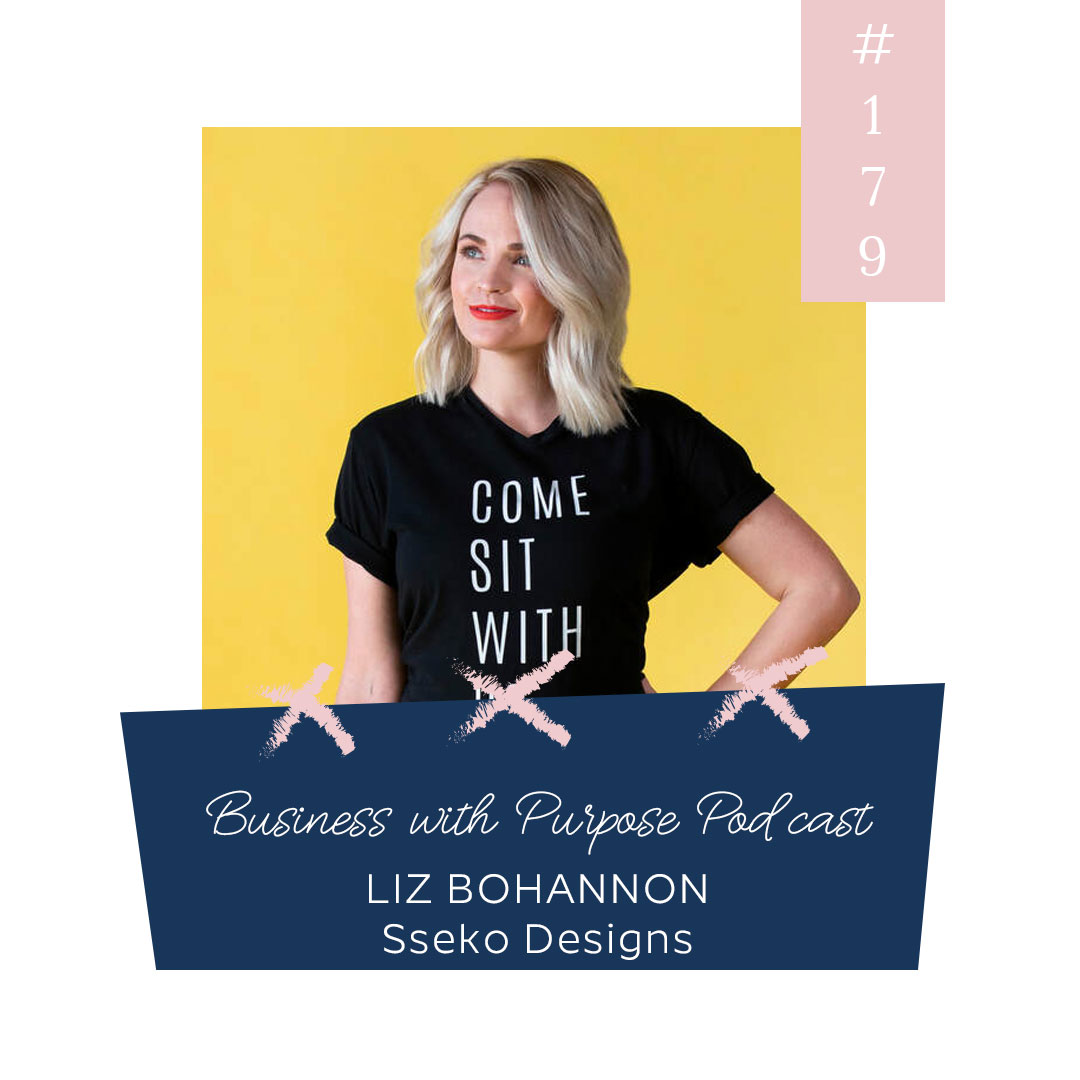
Ep 179Beginner's Pluck | EP 179: Liz Bohannon, Sseko Designs
My guest this week is Liz Bohannon, the CEO and founder of Sseko Designs, a fair trade, socially conscious fashion brand that is providing dignified jobs in developing nations around the world. Sseko Designs also gives university scholarships to the brightest, young female leaders in East Africa. This is actually Liz's second time on the show! You can hear our first conversation all the way back at episode #28 in March of 2017! Over the years, Liz and I have become dear friends and it was so great having her back on the show! Join me to hear about Sseko Designs, Liz's first book Beginners Pluck, and how Liz has lived a life of purpose, passion, and impact. 4:53 – The Liz 201 (A Business Model Change) Liz has been running her ethical fashion brand, Sseko Designs for ten years. Three years ago, the organization experienced a fundamental shift as a company when they decided to shut down their wholesale channel. They knew they were creating change for women all over the world with fair wages, education, and strong communities, but recognized that they were not fostering the same community on the retail side of their business yet. When Sseko started 10 years ago, the term "social enterprise" didn't exist. Sseko started to wonder if they could take the "business of good" and put it into the hands of regular, everyday consumers. They launched Sseko Fellows, a social selling model to put products in the hands of women to sell Sseko products. It was a very small-scale beginning, but taught Sseko how to build a better model for women to earn a legitimate income. Liz knew that there were more women who also wanted to dream big to help women who also want to build their own businesses. Sseko Fellows evolved into a social enterprise with teams that create full-time, fair-waged jobs for a year for artisans across the globe as well as university scholarships for the brightest female scholars in East Africa. When people are provided dignified, fair-wage opportunity, they are far less likely to be trafficked into an illegal labor market. Often those who fall victim to these crimes are answering fake job ads, desperate to get out of poverty and unaware that it's a trap until it's too late. When basic needs are met through safe jobs, the cycle of evil and abuse can be stopped. 15:49 – A Woman Connected to Her Purpose While there are so many volunteer and non-profit causes that help make the world better, Liz and her team also recognized that women have more time and energy to contribute without burning out when they are equipped with a competitive salary and business resources. If the way a woman contributes to her passion and purpose also generates an income, you free her to focus on social change work while making sure her childcare needs, bills, mortgage payments, car payments, groceries, etc. are not going to be a burden. Something really magical happens when we know that there are others who want to show up and cheer for us. That is the atmosphere Sseko strives to create. When people, particularly women, start new endeavors, the world often sits and waits for them to fail. Sseko women are encouraged to dream big with support from a like-minded sisterhood that helps set them up for success! In the last few years, the Sseko community both in the United States Fellows Program and the Scholarship and Business programs in Africa have fostered a global family of women supporting women and championing each other through community, not competition. If you don't find community and make an impact, Sseko will fully refund your starter kit investment, which is only $150 for $400 worth of product. Working with Sseko not only brings financial freedom, enjoyable work, and finding a purpose, but the most common response from Sseko women about what they get out of the program is that they've found genuine female friendships to help in hard times and celebrate in the good. 29:48 – Become a Sseko Fellow If you are interested in learning more, you too can join me as a Sseko Fellow! All you have to do is go to https://ssekodesigns.com/mollystillman and click the "Join Now" link at the top menu bar! 32:05 – Fun Bonus: You should probably all check out Liz's cooking show with her two-year-old son, Theo on Instagram (@lizbohannon) 33:05 - Beginner's Pluck: Build Your Life of Purpose and Impact Now Liz just wrote her first book called Beginner's Pluck. I read it in a day and a half. It's not your typical book on business, it's much better. This is the book you'll want to help you truly grow right where you are rather than just hearing feel good mantras. Finding your passion isn't a magical, one-time moment. Your life matters and you can make a difference, but it doesn't just happen naturally for anyone. Liz shares new ways of thinking about things that leaves people relieved and removes the pressure around achievement and shifts it to waking up to one's own voice. It's a model of tapping into people's lives and meaning rather than their fears an

Ep 178Supporting Small Kenyan Tea Farmers in a Big Way | EP 178: Paul Bain, JusTea
Can you guess which country in the world is the largest exporter of tea? Did you guess Kenya? That's right, Kenya provides for tea drinkers all around the world from black tea to green tea, and now a new delicious purple tea that has more antioxidants than any other type of tea and has only 40% of the caffeine. Unfortunately, a large part of the tea industry is using exploitative labor on their farms. My guest this week is trying to change that. Paul Bain is the "Tea Captain" of JusTea. JusTea is a company that represents family tea partnership with small scale Kenyan tea farmers. Paul has traveled from Vancouver to Kenya every year for the past seven years. Aside from Canada, Kenya is the country Paul has spent the most time in. In many ways, it's become home to him as he works directly with small scale farmers and living with them on the tea gardens, processing tea together. Paul is passionate about connecting you back to the farmer who made your cup of tea possible. Join me as I hear more from Paul about the ways that small scale tea farms are changing lives and communities in Kenya. 4:09 – The Paul 101 JusTea is a family business with Paul, his wife Sally, and their three-year-old daughter, Cleo. They started JusTea in 2012, not long after Paul graduated from university with a focus on East African Studies and International Development. Paul had spent time in Uganda doing charity work as well, and after talking to his family about the needs the witnessed for projects on the ground, he wanted to find a way to raise awareness and create more impact on the ground. There wasn't enough money raised for the projects that local Ugandans were trying to help with in their communities. Paul went back to Uganda in 2012 to try to find partners to help up a social enterprise. Their intention was to focus on trade rather than aid and to create sustainable wages. Their first partnership was with tea farmers, and Paul and his team learned all about the ins and outs, the joys and struggles of working on a tea farm. After researching for about a year and a few trial runs, JusTea was born in 2014. 6:53 – The Largest Exporter of Tea in the World While Kenya is relatively new as a tea growing country, as a former British colony, the country has a huge demand for tea exports to the UK. Tea farming has been passed down from generation to generation, and there are now over half a million small scale tea farmers. Tea is also a regular part of Kenyan culture. When you visit a Kenyan household, you'll always be greeted with a cup of hot Chai. The country has become a powerhouse in the industry is just 100 years. They also have the perfect conditions for growing tea: the farms are chemical and pesticide free and they're right on the equator at a high elevation. Even though Kenya is the largest exporter of black tea, no one really knows about it because the story of the farmers in Kenya isn't told. JusTea is trying to change that to present a whole-leaf, flavorful cup of tea directly from farmers who have sustainable employment and stories that are known. 11:14 – Partnering with Farmers Larger, well-known tea brands have cut corners to down grade the product. Both farmers and the environment can be hurt when big corporations want to obtain their tea as cheaply as possible. When researching the Tea Act in Kenya, Paul quickly discovered it's not set up to benefit the small-scale farmer. Massive factories and corporations are the ones allowed to produce the tea. It was actually illegal for farmers to pick the tea and make it into a finished product. JusTea worried they might even be shut down at the very beginning of their business. JusTea was able to present to the county governor and Tea Board of Kenya about the quality of their tea and their goals to tell the Kenyan story and put Kenya on the map. Farmers loved the plan because they were earning more without having to go through brokers, distribution houses, tea shops, etc. Kenya actually changed their Tea Act to make it legal for farmers to set up a cottage industry license to set up a tea producing factory on their own farm or in a cooperative. Kenya and Kenyan farmers face an uphill battle for independence as a former British colony. Whether farmers own their own few acres of farms or are tea pickers working for larger corporations, there is little opportunity for people to leave the industry. They have their basic needs met but have no way out of the cycle. Farmers only earn a portion of the amount of pay for tea leaves that they drop off at the factory. They typically receive a bonus at the time of year when school fees are due, but when there is an oversupply of tea, they receive very little bonus or no bonus at all. 19:00 – Shifting from Trade, Not Aid JusTea realized that farmers were not able to sustain their families as tea pickers or small-scale farmers. JusTea set up the first small-scale farmer owned farms with loans and training on how to make their own tea. Farmers p

Ep 177Journey to Better Food | EP 177: Adnan Durrani, American Halal Co. Inc. & Saffron Road Foods
The food system in America has changed so much in the last 30-40 years. Organic and non-GMO are terms that have become popular more recently, and we're much more aware about the importance of clean ingredients and real, whole foods. Let's be honest though: life is moving much faster today than it was even just 10 years ago. It's still important for families to have convenient options when it comes to making meals. My guest today has infused his passion for entrepreneurship, organic and clean ingredients in foods with convenience. Adnan Durrani has created a revolutionary company that is popping up in grocery stores around the country. Adnan is the founder and CEO of American Halal Co, which wholly owns its flagship brand, Saffron Road. As a long-time social entrepreneur, Adnan was searching for a social enterprise that would bring people together over delicious, convenient, and healthy food. The evidence of his dream is now in grocery stores like Sprouts, Harris Teeter, Kroger, Whole Foods and more. You can find Saffron Road meals just about everywhere now! I was so honored to have Adnan on the show today. His lifetime of experience in the food and beverage industry and his pioneering in so many areas of innovation was fascinating. Join me as I hear more of Adnan's fascinating story. 3:53 - The Adnan 101 Adnan journey into the food and beverage industry might not be quite what you'd think at first. He actually started on Wall Street for many years. During the original stock market crash of 1987, he went from doing well to having an epiphany that the "immediate gratification" business was no longer for him. Adan decided the "delayed gratification" business would be a much better fit for him, i.e. becoming a venture capitalist or entrepreneur. Soon after leaving Wall Street, he started a company called Vermont Pure Spring Water. He had an idyllic view of the entrepreneur life, but really didn't know what he was getting into at first. It was a much harder way to earn a living than he initially realized. As difficult as starting that first company was, his was one of the first bottled water companies to have strong environmental values around it. They gave a lot of money back to the state of Vermont by partnering with a nonprofit to take care of the bridges and spring waters in Vermont. It eventually became the second largest bottled water company in the Northeast. Many people discouraged Adnan from going after several of the industries he was interested in, including bottled water and yogurt. They thought Americans drank soda and kids would never eat yogurt. Both concepts were shot down by many successful business tycoons. Where others were short-sighted, Adnan watched trends in Europe and saw a market to improve lives and people's heath amid water quality issues and foods with too much gelatin instead of healthy cultures. After that, Adnan was introduced to a man named through his venture capital company (Condor Ventures Inc.) named Gary Herzberg. Gary introduced Adnan to a group called Social Venture Network. Adnan was able to meet amazing entrepreneurs through the network of like-minded people who were trying to better humanity by creating businesses with a triple bottom line and socially responsible methods to give back to communities. Adnan learned that being socially responsible can be a for-profit motive. Twenty years ago, Adnan and his network were ahead of the game, pioneering how businesses can be operate while being compassionate and giving back to all stakeholders, not just shareholders. 11:40 - The Natural and Organic Shift When Adnan entered the natural and organic industry, it was only a $200-300 million-dollar industry. It's not a $50 billion-dollar industry in the United States alone. When mentoring other entrepreneurs, Adnan reminds them to be a bit of a rebel, but with a cause. Be sure to fight conventional wisdom but also take a deep dive into knowledge and research. He focused on shifts in lifestyles, the problems cropping up with antibiotics in the food system, strong studies on the effects organic and clean food was having on long-term health, and more. Adnan also saw the consumer demand start to take off for organic food. Many farms were hesitating to switch because of they would lose a lot of money initially switching the farms and becoming compliant for organic products. Once they saw the opportunity in the long game, the industry started to pick up and consumers had more organic options available to them. Adnan started to see opposing trends with Halal Foods customers between the European Halal consumer and the American Halal consumer. In the United States, there are 4-8 million Muslims who tend to be much more educated than the average American. Adnan recognized the buying power of this demographic and realized no one else was appealing to that market. Many wondered in the beginning why Adnan was focused on millennials and not baby boomers. He recognized that millennial brand loyalt
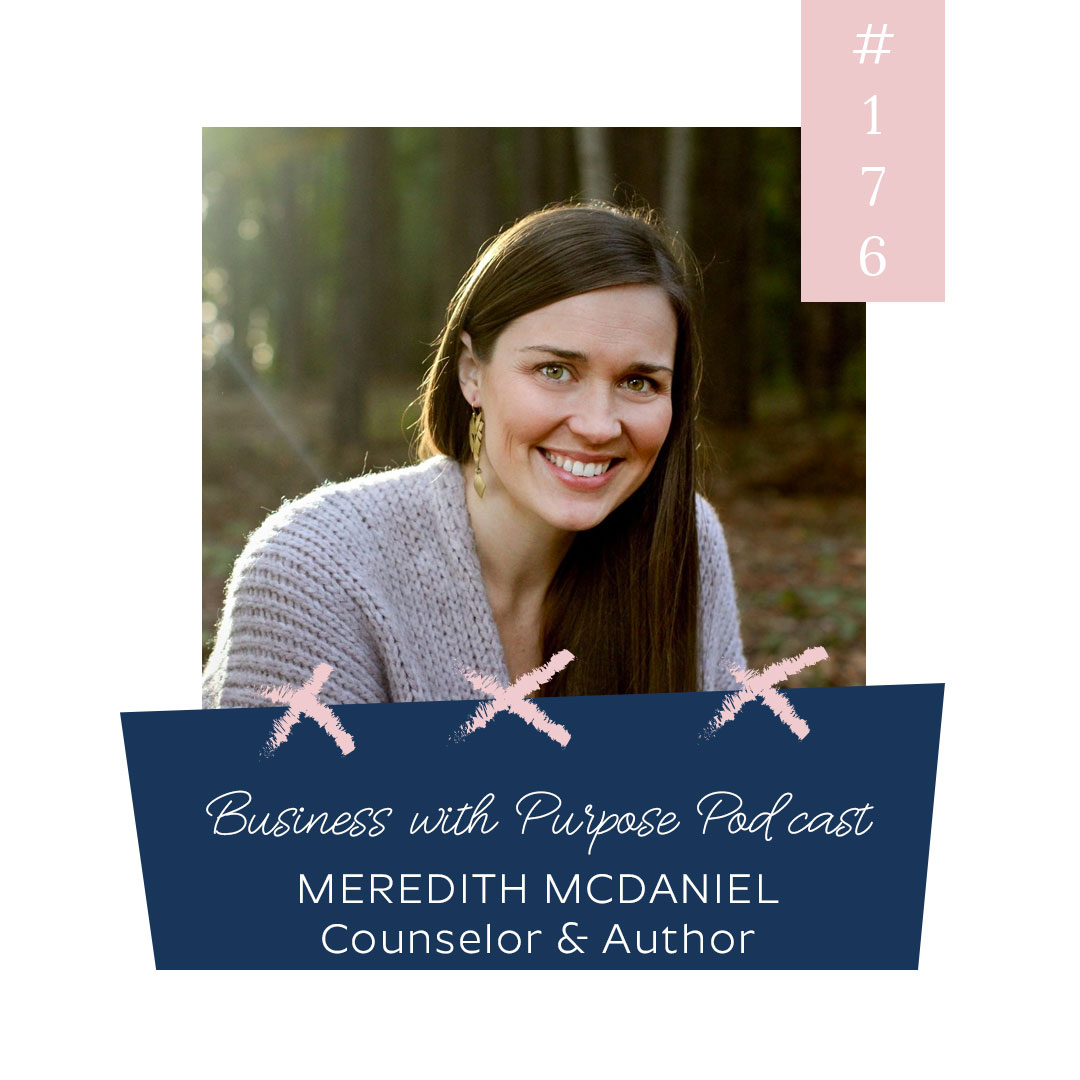
Ep 176Hunting for Manna | EP 176: Meredith McDaniel, Licensed Counselor & Author
It's hard to fight the false narrative that working harder, making more money, and acquiring more stuff will bring happiness and fulfillment. My guest today is here to debunk that myth and help us discovery what's truly most important to us. Get ready, because Meredith McDaniel is going to share her incredible wisdom about what we are truly searching for as humans. Meredith is a licensed professional counselor and owner of her own private practice, Milk and Honey Counselling. She is a graduate of the Gordon Conwell Theological Seminary and has served on staff with Young Life and worked as the lead counselor for Inheritance of Hope. She has a new book coming out next week on January 21st, 2020 called In Want + Plenty: Waking Up to God's Provision In a Land of Longing. I highly recommend you preorder it right away. I've already had the chance to read it, and it is simply incredible. Meredith says that she feels called to sit with and listen to the stories of women and men, helping them discover who they are and experience life more fully. She enjoys entering into the quiet places of people's lives in a safe setting to offer hope and help others taste of the Land of Milk and Honey. It was so refreshing, encouraging, and challenging to speak with Meredith today. Join me for this serene moment with Meredith McDaniel. 3:07 – The Meredith 101 Meredith is a licensed counselor who also went to seminary. She completed her Master of Christian Counseling program at Gordon Conwell Theological Seminary. She studied core bible classes, but her main focus was integrating Christianity and Psychology. It's so important for the Church to care not only for people's spiritual lives, but for people's mental health as well. About half of Meredith's clients in her private practice are walking with the Christian faith and half of them are not. Her goal is to provide a safe space for people to process their lives. She doesn't approach sessions from an evangelical mindset, but questions like "Who Am I?", "Why Am I Here?", and "What Is My Purpose?" often come up naturally in sessions with people who don't identify as Christians. Meredith has been encouraged that the stigma with mental health has started to wane. There are far more organizations speaking about anxiety and depression, and more conversations are happening on podcasts and social media. In the near future, Meredith will work with a local school to provide counseling onsite so that students don't have to worry about missing as much school to get to appointments. 10:08 – A Universal Feeling: Purpose & Meaning There's a common story that brings us all together: We all want meaning and purpose in our lives no matter what our beliefs and backgrounds. Meredith calls it a yearning. Some feel it deeper than others, but we all feel it to some degree. Meredith began to notice a pattern that no matter what season of life people are in, many different people feel as if their lives are unraveling and they've lost sight of their purpose. Many people feel stuck in that space and don't feel like they can pull themselves out of it. The key seems to be finding movement and seeing our lives in a new way while being at peace with knowing there are a lot of factors out of our control. This is what gave Meredith the ideas for much what she wrote for In Want & Plenty: In Want + Plenty: Waking Up to God's Provision in a Land of Longing. 13:40 - The Exodus Provision Meredith compares our modern lives to biblical characters who wandered in the wilderness for years. Our mouths are dry, and our stomachs are rumbling, and we are wandering. Think about it this way: We wake up, we scroll through our phones, our minds are running with to do lists, we don't stop to breathe, stretch or sweat, and we have trouble connecting to each other in a real way. If you take a closer look, we can relate to the people in the story of Exodus and other parts of the bible. Meredith talks about the idea of "manna" both in her book and often on social media. If you're not familiar with that term, the Hebrew translation is literally, "What Is It?" The dictionary definition from biblical context is "the substance miraculously supplied as food to the Israelites in the wilderness (Exodus 16)." Meredith summarizes the feeling of a "manna moment" to be a moment where God has provided for her in a way that she was surprised by that she didn't quite fully understand. Sometimes "manna moments" come in the form of things we may not like or prefer. We may not know why certain things happen, but we can surrender and trust that God has the big picture that we can't see. We want what we want, and we want it right now, but if we can unearth the manna that is in every single corner of our lives, it completely changes our view and we start recognizing it. 21:13 – How to Hunt for Manna In her book, Meredith equips readers to look for manna in their lives. The number one way to do this is slowing down. Our world is too fast and we don't have
Ep 175Why Would You Hire a Ghostwriter? | EP 175: Joshua Lisec, Award Winning Ghostwriter
Today I asked all the questions I know you want the answers to about writing a book, or more specifically, working with a ghost writer! My guest this week is Joshua Lisec. Joshua is the world's ONLY award-winning, celebrity-recommended, #1 International Bestselling, certified professional ghostwriter. Wow! He's the founder of The Entrepreneur's Wordsmith, LLC as well as a contributor to Forbes, a TedEx speaker, and a two-time published novelist. He's taken his gift of writing and used it create change, impacting so many people. I was so fascinated by today's conversation and I know you're going to love learning more about Joshua and his ghostwriting skills! 2:31 - The Joshua 101 You heard a little of Joshua's accolades in the introduction. Not only is he a wildly successful ghostwriter, he's also been personally recommended by celebrities for ghostwriting. They've also endorsed his books! His books have sold tens of thousands of copies a month after the book's release! California State University (Long Beach) is the only academically sponsored ghostwriting training program in the world. Only about 50 people have completed this course by not only completing the degree, but also demonstrating professional proficiency as a ghostwriter. Joshua is the first and only person in Ohio to complete the program. As a kid, Joshua loved reading The Chronicles of Narnia series and The Space Trilogy, both by C.S. Lewis. He was so inspired that he decided he wanted to become a novelist. At just 20 years old, Joshua had a two-book deal with an independent publishing house of Washington, D.C. Around this time, he also started a freelance writing business. As he's began promoting his novels, some of his clients told him they loved his writing and novels. They didn't want to write a novel, but they did want to share their stories with Joshua's help. Joshua didn't even know what ghostwriting was at the time! He learned a bit more and agreed to help. 40 books later, and he's still helping people tell their stories. 8:29 – How Does Ghostwriting Work? There are many people who want to get their stories out, but don't know exactly what to say or are inhibited by their own self-criticism or self-censorship. It can even happen to people who've already written a book or self-published. Just as entrepreneurs desire to work on their business and not in their business, authors desire to work on their book, not in their book. Their time and energy is better focused on the impact they want their book to have rather than agonizing over style and grammar as well. In order for a Joshua to understand what's going on in a person's head, he starts with a free manuscript strategy session. To start, this helps answer whether a person should be writing a book at all. If the answer is yes, the next step is to figure out what that person's future readers want. A ghostwriter literally helps an author figure out what the book should be about if there's a good idea there. This first step is an iterative process that goes on for about a month, and the goal is to figure out what the book will cover, what it will deliver, and how it will transform the readers it's intended for. For several months, the writer and ghostwriter will work on one chapter each week for several months. Everything written is in the voice of the author. Often a ghostwriter is better at pulling out what an author is trying to say if they are the best version of themselves, the uncensored version. It's not just what they want to say, it's the best possible version of what they want to say. Once a rough manuscript is ready, Joshua helps edit line-by-line, chapter-by-chapter in The Chicago Manual of Style. They style considerations are what separates a self-published book apart from a book on a bestseller list. 15:37 – The Jay Conrad Levinson Rule Jay Conrad Levinson wrote the International bestseller, Guerilla Marketing. It was the first book of its kind to help small business with low or no cost advertising. When asked how much money the book made him, Levinson said it was about 10 million dollars. The royalties over 30 years only paid about $30,000, but the book opened a door to consulting, speaking, products, services, upsells, masterminds, etc., that accounted for the remaining 9.9 million dollars. Following the Jay Conrad Levinson rule where people can gain from further resources that accompany your book after they've read it is the only way to see a big return on investment in the process of writing a book. 24:00 – Could Your Book Sell If You Didn't Market It? Have you ever thought about writing a book? Would you have ever thought you need to know about SEO when coming up with your book title? Joshua also equips authors with resources (like Publisher Rocket) to know how to title your book. It literally tells you what book titles are profitable and which ones are not profitable. 33:23 – Live Ghostwriting and More Joshua also helps people who are interested in writing a book on thei

Ep 174Jobs End Poverty | EP 174: Amy Brewer, Founder of Elizabeth's Voice
We can often overlook the gravity of the situation that Jesus' mother Mary faced when she suddenly became pregnant by the Holy Spirit. It was scandalous! She was a teenager, engaged to Joseph, facing gossip and shame from her community. One of her relatives, Elizabeth, believed Mary and took her in. Inspired by Elizabeth, Amy Brewer took this same idea of taking in and supporting women when they need it the most and started an entire organization to make a difference. Amy is the founder of Elizabeth's Voice, a nonprofit on mission to provide dignified jobs to women and empower them to give back to their communities in Uganda and Lebanon. Join me as I hear from Amy about how supporting women changes the world. 2:24 - The Amy 101 Amy went to college with a plan to become a nurse. She specifically wanted to become a nurse who helped women in developing nations. Her plan unfolded from wanting to be a doctor, and then a nurse. In the end, she became a midwife! She worked in a midwife clinic in South Sudan in a place with little to no electricity and limited supplies. It was very difficult, but she knew it was meant to do that for a long time. In 2013, Amy's team was scheduled to fly home for the Christmas holiday. At the same time, fighting broke out again in South Sudan. Amy always thought she'd return to Sudan, but God had other plans for her. In 2016, Amy had an opportunity to help a friend re-open a clinic in Mozambique that had been closed due to lack of funds. Both experiences in the Sudan and Mozambique clinics taught Amy that the only difference between her and the women she met in the clinics was opportunity. When her work with the clinics was complete, she couldn't stop thinking about the women she'd served. She knew more than anything that what they needed were jobs, so Amy started two artisan groups for women in Uganda and one in Lebanon for Iraqi and Syrian refugees. 7:04 – God Encounter at a Backpacker's Hotel Amy stayed at a hotel where a Ugandan woman was selling products to tourists. She knew the moment she saw the woman that she was supposed to work with her. This woman also told Amy that several months before they met, she saw Amy's face in her dream. This Ugandan woman was trying to employ single moms and widows in her community, even though she herself was also living in poverty while a single mom and widow. Amy's new Ugandan friend was only selling a few items a day. She and Amy decided to become business partners in 2016 and now have 28 full-time employees. In Lebanon, they partner with a missionary who has a Women's Center for Iraqi and Syrian refugees to receive food packages and bible studies. They also work to find the women jobs they can to supplement their family's income or help single mother's make ends meet. 11:07 –The "She Was Hired" Story In the Bible, when Mary finds out she's pregnant with Jesus, Elizabeth takes her in and cares for her and encourages her (Luke 1:56). Elizabeth's Voice is built on the idea of women helping women and being there when women need the most support. The "She Was Hired" story is the story of a young woman from a small village in Uganda. Even though Amy and Elizabeth's Choice received this woman's permission to share her story, they chose to keep her identity anonymous to reiterate that her story does not define her. Amy's business partner in Uganda is Eveline, and she's known in the community as a warm, caring women. She is called the Ugandan words meaning "Born Again." One day while Evelin she was walking down the road, she came across a very young woman who was crying on the side of the road. The woman told Eveline that she was an orphan who didn't have the opportunity to finish school and no way to make money. She was also trying to take care of her brother. Often in Uganda, women have to resort to prostitution as the only option to make ends meet. After Eveline heard her story, she made sure this didn't happen and brought this young woman into the family of Elizabeth's Voice. She was hired that day and is still the first person to show up to work every day. Eveline taught her to sew and make paper beads but sewing is her favorite job. Now she can make a living in a safe environment doing a job she enjoys. 18:56 - Elizabeth's Voice Speaks to the Future The main goal of Elizabeth's Voice is sustainable work for the women who are a part of the organization. They also started a hospital visiting program where the ladies sit with people and pray and also bring basic supplies to the hospital like soaps, tea, laundry detergent, toothpaste, bibles, etc. Some of the women from a smaller village recently found a group of 12 vulnerable children who needed their school fees paid. They raised money to pay for the fees and volunteered to take care of the kids on school breaks and make sure their basic needs are met. The vision of the women in Elizabeth's Voice in both Lebanon and Uganda is to recognize the biggest needs in their communities and work to fill t
Ep 173Sharing Stories of Social Change | EP 173: Camille Laurente, Hueman Group Media
More show notes to come! Connect with Camille and Hueman Group Media: https://www.huemangroupmedia.com/ Podcasts: https://www.huemangroupmedia.com/shows https://twitter.com/camlaurente https://twitter.com/hueman_media https://www.instagram.com/sincerelyhueman/ ABOUT CAMILLE: Camille is the CEO and Co-Founder of Hueman Group Media, a company that inspires people to do good through the power of audio storytelling. HGM partners with thought leaders, brands and organizations to create riveting audio content. From innovations in generosity to advancing gender equality, HGM's award-winning podcasts inspire people to do good through the power of audio storytelling. We've worked with amazing partners including SAP, UN Women, Fairygodboss, Global People's Summit to name a few. Camille is the creator, producer and co-host of Sincerely, Hueman, a narrative podcast featuring the vivid lives of humans people should know, and their stories of doing good in the modern age. The show tells the remarkable tales of advocates, philanthropists and everyday people who have changed the lives of strangers and communities around the world. She is also the co-producer of The Fix with Michelle King, a podcast hosted by leading global gender expert and UN Women's Head of Strategy for Innovations Michelle King. The Fix shares stories of women and men who are taking action and innovating to advance equality in the workplace and beyond. Featured guests include Arianna Huffington, Zoe Saldana, Abby Wambach, Gina Rodriguez, Iceland Prime Minister Katrín Jakobsdóttir, Justin Baldoni and so much more! Camille finished her master's program at Columbia University's School of International and Public Affairs (SIPA) where she specialized in technology, media, advocacy and communications. Prior to moving to New York City to pursue her second post-graduate degree, Camille worked at Baker McKenzie as a corporate and commercial lawyer for top tech and Fortune 500 companies. Thank you our sponsor for this episode of the Business with Purpose Podcast: noissue! noissue. is the online platform for designing and ordering custom, sustainable packaging for your business or brand. With low minimum order quantities, worldwide delivery in three weeks or less (for free!!!), and a team of designers ready to help, noissue is making customized packaging accessible for businesses of all shapes and sizes. You can use the promo code purpose15 for 15% off your first order!

Ep 172Cultivating a Better World | EP 172: Caitlin Leibert, Director of Sustainability, Chipotle Mexican Grill
Well, friends…the day is here. Chipotle Mexican Grill is on the Business with Purpose Podcast, and I cannot contain my excitement! If you know me at all, you know I'd take meeting for burritos over meeting for coffee any day. And of course, we'd get chips and guac too! Not only am I a fan of Chipotle's food, I also love their mission and purpose. The care about sustainability and use real, clean ingredients while supporting local farms worldwide. Join me as I hear more about this from Chipotle's Director of Sustainability, Caitlin Liebert. She's responsible for creating and implementing the company's sustainability vision and strategy in more than 2,500 restaurants all over the world. We're not just talking material waste reduction; this also means tackling energy management, water stewardship, and more! Hit that play button to hear more about Caitlin's beginnings with Chipotle and the initiatives she's led to take Chipotle to the next level! 4:45 - The Caitlin 101 Hailing from Cleveland, Ohio, Caitlin is a Cleveland sports fan like me! Go Browns! She always wanted to attend Dartmouth College and when she didn't get in after an early-decision application process, she decided to make the most out of a start fresh at a university she knew nothing about. She had a great four years at The University of New Hampshire and after graduating, moved back to Cleveland with a plan to pursue sports marketing. Caitlin was recruited straight out of college to work in sports marketing with the PGA Tour. She knew immediately that it wasn't the right job for her. A few weeks later, her mom told her that she'd seen a marketing position at Chipotle in Cleveland. Even though Caitlin had no interest in working in the food industry and was still set on the sports marketing industry, she applied after some encouragement from her mom. Chipotle flew Caitlin out for a day-long interview at a regional office in D.C. By the end of the day, it was clear that Chipotle was the right company for her. The rest is history and Caitlin has worked for Chipotle for the past thirteen years! 8:25- Starting Sustainability Caitlin eventually moved to Boston and helped open up the New England market. After three years, she had an opportunity to start the Sustainability Department. She moved to Denver for nine years before moving to Orange County, CA when the company relocated. Chipotle has a mission to cultivate a better world, and Caitlin' and her team's job is to help fulfill that promise on the environmental side of that mission. The Sustainability Department is responsible for waste, energy, and water while also cultivating a better world in the way Chipotle grows and raises food, supporting the next generation of farmers, and even benefits they offer employees. Caitlin and her team also write the Chipotle Sustainability Report that is published every two years. They set "aggressive industry-leading but attainable goals" to continue improving the way they approach food, animals, people, and the environment. 10:29 - Setting the Standard Chipotle has been a unique leader by setting the standard for the way similar restaurants approach sustainability and health. In 2015, Chipotle announced that they were going completely non-GMO. Steve Ells founded Chipotle in 1993 with a vision to drive sales with flavor. He began to learn about how animals are raised, and that the quality of an animal's life impacts the way the meat tastes. The idea of food with integrity started early. Food with integrity has grown to changing how people eat fast food. From that foundation, Chipotle can continue to make strides in cultivating a better world. A clear vision and the ability to make a positive impact in the community attracts the best talent; people who are passionate about their work. Chipotle also partners with local food supply chains to source ingredients from local farmers. It's incredibly impactful when a large corporation is passionate about offering local, organic ingredients, and animal welfare meat at an affordable price point. The accessibility of the quality of food that Chipotle offers is very unique. Younger generations seem to be embracing the idea of both delicious good and sustainability. You don't have to choose between good food and supporting something positive; Chipotle is providing both! 18:48 – Defining and Achieving Sustainability Sustainability does not currently have a precise definition; it can mean different things to different people and various industries. One of Chipotle's biggest goals has been to divert half of their waste by 2020. One of the biggest challenges in sustainability is that disposable waste is a component of the restaurant industry. Many customers want to take their leftovers home or order "to go." Chipotle is working on sustainability by considering where disposable waste comes from, how it's used in the restaurant and where it ends up. It's a huge challenge but the mentality at Chipotle is innovative and creative solut

How a Love of Food and Faith Fueled Change | EP 171: Lawrence Yoo, Founder of Sushioki
My guest today took his love of food and faith one step further to start a business that impacts his community on a greater scale. Lawrence Yoo is the owner of Sushioki, a local sushi burrito restaurant in Durham, North Carolina. Sushioki is a restaurant with so much purpose and passion for people and the local community. Not only do they focus on sustainable, fresh, healthy ingredients, they also hire immigrants and refugees coming from vulnerable situations. No matter where you're listening from today, I know you'll be inspired by the work of Lawrence and his team to bring opportunities for families to build their lives in a new place. Join me as I sit down to chat with Lawrence, and if you're local to Durham, get ready to run, not walk to Sushioki! 4:07 - The Lawrence 101 Lawrence has been around entrepreneurship his entire life. His father has owned a sandwich shop, construction company, market and restaurant. He's the first-born son of a first-born son in an immigrant family and there was always a lot of pressure on him to succeed. In high school Lawrence's life was radically changed when he first heard the gospel and ever since, this life has been driven by the call God put on his life. Lawrence had a desire to see new things come to life and see the community lifted up. About five years ago, he became a pastor and planted a church called Waypoint church. In the same year, he and his wife Gina had a baby and started Mebane Pediatric Dentistry. You don't have to have lots of special skills, education, or success to be faithful in the call God has put on your life. You only have to be obedient. That is the key to contentment. Lawrence uses the entrepreneurial heart God has given him to better the community around him and believes the local church is called to look out for the welfare of the community to the glory of God. One day the idea just came upon Lawrence to start a restaurant. He immediately found an elder in the church named Jeff Carter and shared his vision. Lawrence thought Jeff and his family would be a great team to start a restaurant with, even though Jeff already had a career in Pharmacy. 8:45 - Sushioki for the People Being on the board of World Relief and Samaritan's Health, Lawrence recognized that the biggest needs for refugees are sustainable, flexible jobs that pay a living wage. Often refugee families come here with four or more children. Buses and public transpiration are difficult to navigate, affordable childcare is hard to find, children get sick, and school schedules fluctuate. Lawrence wanted to build a company that would understand these difficulties of caring for a family in a new place; a company full of understanding, grace, and assistance while providing a sustainable, living wage. While Lawrence recognized that restaurant industry can be tough, he thought it was the best entry point to help workers learn new skills in America. A twist on a traditional Korean sushi roll called Kimbop gave Lawrence an idea to create large, hand-held sushi rolls. Jeff and Lawrence moved forward with their idea and brought on Jeff's son Joey who had a lot of restaurant-management experience. When they first began, they employed mostly refugees, but as the number of refugees coming to America has decreased, Sushioki has also hired immigrant and local families in vulnerable situations. 11:43 – An Opportunity to Provide For Their Own Most refugee families don't plan on coming to America. They don't want to leave their homes, but are forced to leave due to persecution, genocide, war, violence, etc. When they arrive, they are so far away from home where they don't know anyone or the language. It's a terrifying experience. When it comes to refugees, It's not an us an them situation. We would all hope and pray that if we ever found ourselves in a situation where we had to up and leave our home at a moment's notice and travel to an unknown place where we don't speak the language, that we would be welcomed with open arms; that people we find along the way and upon arrival would be willing to give us a chance and a little help. This is what it means to be a neighbor. Jesus said the most important commandment is to love God and to love your neighbor as yourself. Sustainable, flexible employment allows people the opportunity to self-support and provide for their families while they build a new life. 18:25 – Challenges and Surprises Lawrence is an ultimate optimist. If he had a theme song, it would be "Everything is Awesome" from The Leggo Movie. Tempering expectations has been difficult and while things have gone well, there is a delicate balance of running a business, using better ingredients, paying people well, being well-staffed, and treating people well. This has forced Lawrence and his team to be longer sighted rather than short-minded. They believe that building a business this way is better in the long run. Success usually doesn't happen overnight, even though it often looks that way. Treating p

How My Faith Impacts My Passion for Fair Trade | EP 170
I didn't really grow up in the church. My walk with God as a kid included being friends with a Christian in elementary school until she broke up with me because I wasn't "Christian" enough for her, a brief stint as the lead singer of a Christian worship band in middle school called Doubting Thomas - they needed a singer and I could sing so I fit the bill, and going to Catholic mass on Christmas and Easter…. needless to say, I did not truly understand the gospel until my mid 20s. I came to Christ after years and years of pushing Him away and even at times denying His entire existence. I thought I could do life on my own… I was so confident that I didn't need Him and that no matter what life threw at me, I could handle it. I AM AN INDEPENDENT WOMAN. All the women who independent, throw your hands up at me! But I got to a point where the burden I was carrying was way too much… the load too heavy. For a long time I bought into that lie that "God will never give you more than you can handle" and if I'm being honest, it wasn't until the last two years or so that I realized that cliche is a bold faced lie. God will absolutely give you more than you can handle. But He will never give you more than HE can handle. I'm often asked about my faith and my story and today's episode isn't my testimony but it is a little different… today I'm sharing just a little bit about how my faith impacts my passion for ethical fashion and purchasing with purpose. 5:13 - A little background on the fast fashion industry and its connection to modern day slavery and human trafficking April 24, 2013. The Rana Plaza in Dhaka, Bangladesh collapsed. 1,134 people killed. 2,500 injured. More than half of the victims were women and children. The Rana Plaza complexed house garment factories for some of the world's most prominent fashion brands. It is the deadliest garment factory tragedy in history. 7:15 - We plan an active role in the fight against human trafficking 8:23 - Here's where my faith and my passion for ethical and fair trade shopping intersect 11:15 - How God brought hope and restoration to my life Thank you our sponsor for this episode of the Business with Purpose Podcast: noissue! noissue. is the online platform for designing and ordering custom, sustainable packaging for your business or brand. With low minimum order quantities, worldwide delivery in three weeks or less (for free!!!), and a team of designers ready to help, noissue is making customized packaging accessible for businesses of all shapes and sizes. You can use the promo code purpose15 for 15% off your first order!
THE 2019 ETHICAL GIFT GUIDE! EP 169 with Co-Host Em Sexton, CEO of The Flourish Market
The 2019 Ethical Gift Guide is HERE! This is the most anticipated podcast episode (and post!) each year because not only do we have great gift ideas for almost everyone on your list, but also, my co-host, Em Sexton, founder of The Flourish Market joins me. We laugh! We talk gifts! We do trivia! Tell Christmas stories! Answer listener questions! It's so much fun. Enjoy this year's ethical gift guide... Thank you our sponsor for this episode of the Business with Purpose Podcast: noissue! noissue. is the online platform for designing and ordering custom, sustainable packaging for your business or brand. With low minimum order quantities, worldwide delivery in three weeks or less (for free!!!), and a team of designers ready to help, noissue is making customized packaging accessible for businesses of all shapes and sizes. You can use the promo code purpose15 for 15% off your first order! WOMEN'S ETHICAL GIFTS! 1. ENCIRCLED The Dressy Sweatpant - The Dressy Sweatpant is easy to dress up or down because of the modern design and luxurious fabric that's comfortable, breathable and sustainable. This fancy sweatpant features a tapered leg with ruching at the ankle. Chic enough for the office and casual enough for weekends. The must-have pant for all seasons. Knit, dyed and sewn in Toronto! Use code "stillbeingmolly" for free shipping until January 8th, 2020. 2. POPPY ROW WEEKEND CAPSULE - Poppy Row is an ethically made, environmentally friendly clothing brand for women sized 2-28. Their fabric is made from Eucalyptus, which means it's naturally cooling + wicks your body sweat! SO comfy and amazing. The Weekender Capsule… 3 pieces - shirt, pants, skirt… all can be worn interchangeably! Use code MollyHoliday19 (15% off through Dec 25). 3. Ten Thousand Villages Eco-Leather Convertible Tote (Black) – This amazing bag can be used 3 different ways. It can be used liked a tote, a fold over clutch, or even as a trendy asymmetrical handbag. It is handmade in India by a group that seeks to develop economic self-sufficiency for a vulnerable segment of society through traditional handcrafting skills. CRC provides marketing, design, finance and exporting assistance to a large number of artisan groups across India. Use CODE: stillbeingmolly25 for 25% off one regularly priced item. 4. Daria Day - Gemstone Jewelry - Beautiful and contemporary, Daria Day jewelry is ethically sourced and exquisitely handcrafted. They are deeply committed to elevating the lives of the artisans who create each piece. They create wearable and functional art for people looking for style and authenticity of the materials used, believing in the healing and connecting power behind each gemstone. Daria Day works with a group of local miners to source our gemstones and silver. They are closely affiliated with the Rupani Foundation, an NGO that has created a rigorous testing process and ensures our gemstones are of the highest quality. Daria Day works with 50 – 60 artisans from three collectives living in remote mountain communities in Gilgit Baltistan in Northern Pakistan. While their artisans live in largely isolated and economically disadvantaged communities, each one has their own story to tell and they are working hard to create a prosperous life. Use code MOLLY15 for a 15% off discount! 5. World Finds - gorgeous jewelry made out of recycled Kantha fabric! Perfect for the colorful person in your life. WorldFinds mission is to empower women through fair trade. Their jewelry and accessories create work for over 700 artisans in vulnerable communities in India. These thoughtful designs and sustainable practices bring change to the lives of the artisans, provide a bright future for their children, and strengthen their communities. They're a { mostly } women-powered brand that began in 2001. We design all of our items in-house, and love to work collaboratively - both here at our office in the states as well as with our amazing artisans halfway around the world. Use code GG15 for 15% off! MEN'S ETHICAL GIFTS! Brave Soles - They sell bags, accessories, sandals made out of recycled TIRES! (both mens and womens!) But one of their most innovative and incredibly creative lines is their Aircraft Collection! Their Aircraft upcycled leather collection is made from 100% upcycled plane seat leather and inner tubes. Beautiful, soft and with a lifetime of stories to tell, this collection is available for a limited time. The Pierre Upcycled leather wallet would be a great gift for a man in your life! They also have passport covers, card holders, etc. I have to also mention the Heather leather envelope clutch if you're loving the upcycled aircraft collection! Use code EthicalTuesday20 at checkout! Sseko Designs Men's Collection - I talk about Sseko all the time! The men's collection is so amazing - wallets, leather belts, an amazing briefcase, and weekender duffel bag all in gorgeous oiled chocolate. Fair trade. Ethically made. Classic pieces! SHOP HERE >> ssekodesigns.com/moll

Ending Poverty through Education | EP 168: Amy Ahiga, Grain of Rice Project
About Amy Ahiga, Founder of Grain of Rice Project: Amy Ahiga is a wife, mother, former art teacher, and the co-founder of Grain of Rice Project, an organization that seeks to empower Kenyans through educational and training initiatives in Jesus' name. Amy is passionate about ensuring children from marginalized and underprivileged parts of society in Kenya have access to quality education. She is currently in the process of starting a school in Nanyuki, Kenya. Amy divides her time between Kenya and Valparaiso, Indiana, where she resides with her husband and 1-year old son. The Kibera slum is the largest urban slum in Africa. Recent estimates show that over 235,000 people live in the single square-mile area that makes up Kibera. Other sources suggest the total Kibera population may be as high as a half a million to well over a million people depending on which slums are included in defining Kibera. Life in Kibera is beyond challenging. Men, women, and children live in simple shacks made of sticks, mud, and tin. There's no running water, sewage runs rampant, and most people survive on less than $1 a day. Children born in the slum of Kibera are at such a high risk of continuing the cycle of extreme poverty. Access to something as simple and basic as education can mean the difference between life and death. My guest today is doing her part to tip the scale and make a difference in the lives of kids in Kibera. Amy Ahiga is the cofounder of Grain of Rice Project, an organization that seeks to empower Kenyans through educational and training initiatives in Jesus' name. Amy is passionate about insuring that children from marginalized and underprivileged parts of society in Kenya have access to quality education. She's also in the process of starting a school in Nanyuki, Kenya. I actually met Amy at the Fair Trade Federation Conference last Spring and knew right away I wanted to have her on the show. I'm so excited to share this conversation with you and can't wait for you to hear more about Amy and Grain of Rice's work in Kibera! 3:00 - The Amy 101 Amy grew up in Indiana and began her career as a teacher there. After two years, she decided to quit her job and move to Kenya. It was a big change and a lot of people didn't understand why she was doing it. She lived with a Kenyan family for about eight months which really helped her learn about the culture on an authentic level. When Amy came back to the US, she wasn't sure what she wanted to do next, so she went back to teaching and visited Kenya on Summer breaks. Amy brought her sister along on her second trip, and the two decided they wanted to get involved in a long-term situation to provide support and opportunities for Kenyan communities. Amy and her sister started Grain of Rice Project to empower people living in Kibera with artisan training, business training, life skills, and the ability to run their own businesses. They also work with kids to help them find opportunities for education and spiritual teaching, art classes, and more. Amy is also married to a Kenyan and she and her husband have a one-year-old son. Kenya is woven into Amy and her beautiful family's story. 7:39 – Why Kenya? Amy was actually hesitant to go to Kenya the first time after she quit teaching in the States. Even after she became involved in kid's programs, she thought she'd only make a one-time trip to Kenya. Once Amy saw the beautiful culture as well as the needs in the country, she became connected to the Kenyan people and continued to go back. God uses the very things we think are not in our plan. When we step out on faith in situations we didn't want to do or that we're uncomfortable with, it's incredible how God blesses us. 11:12 - A Local Team The staff of Grain of Rice Project is entirely Kenyan. It's very important to have local people on the ground running things since they are the leaders in the community. True change comes when those who best understand the needs of the area are running the daily operations. This is an important thing to remember when working in developing nations. It's a beautiful picture of how God created us to work in community and respect each other's cultures, empowering one another with a hand up rather than a handout. Amy recalls having a great idea to teach locals how to make beads. When she brought the supplies in, a local woman pulled jewelry out of her bag to show Amy that they already knew how to make the products but didn't know how to sell them. It was just the humble reminder Amy needed to see her blind spot and understand the actual needs of the community. 17:35 - The Largest Slum in East Africa To tackle a problem as big as poverty, we have to see the root of the need. It starts with education and access to sustainable economic opportunities. Grain of Rice Project tackles both. It can be overwhelming to think about how to help ease poverty in a slum of over 1 million people. It's hard work and it's not a quick fix, but just like the name Grain

Hair Products that Fight Human Trafficking | EP 167: Lorin Van Zandt, Founder of MISSIO Hair
A woman who has become a victim of human trafficking loses many things. One of those things is the vital feeling of self-worth. There's a lot to be said about the impact of a lack of self-worth on a woman's overall physical, spiritual, and emotional health. Sometimes, even the smallest gestures of assistance and kindness can help a woman on her journey to speak the truth that she is fearfully and wonderfully made. My guest this week is Lorin Van Zandt, the founder of Missio Hair, a hair-product company that uses beauty to restore hope and fight human trafficking. I met Lorin at a human trafficking education event in North Carolina and I fell in love with Lorin, the Missio mission and the Missio products. Join me as I hear from Lorin about how she combined her interest in hair care with her desire to end human trafficking. Lorin was so generous to offer a coupon code to Business With A Purpose Podcast listeners. Use code MOLLY20 for 20% off your purchase from Missio Hair. 4:16 - The Lorin 101 Lorin is a mom of two and has been married to her husband Kyle for 13 years. Lorin's career started as an elementary school teacher, but she knew deep down that she really wanted to be a hair stylist. Lorin went after her dream and started cosmetology school while working full time as a teacher. There is a very unique opportunity for relationship that exists between a stylist and a client when getting a haircut. The walls come down and you get to know someone quickly. Lorin saw the time she spent with clients as a time to get to know them and to encourage them. Lorin realized just getting a haircut could change someone's day. She knew she could take that opportunity to people who needed it more: women in transition from homelessness and drug rehab centers. She eventually started working with victims of human trafficking as well. While partnering with a nonprofit ministry in Southern California, Lorin was encouraged to use her gifts to serve others in creative ways. One day Lorin received a call asking if she could help a woman who had chunks of hair ripped out by her abuser. 9:50 - Missio Hair's Beginning Lorin arranged for this woman to come to a salon that was closed on a Sunday. Just one other staff member was present in order to create a safe, peaceful atmosphere. The transformation after her haircut was incredible. She went from having no confidence to holding her head up and blossoming instantly after her haircut. She jumped up and down, smiled, laughed and loved the way she looked. The experience made Lorin realize she wanted to do something to help other women out of similar situations and encourage them on their new journeys as much as possible. There is so much power in treating a fellow human with dignity and kindness. Missio Hair has learned after working with so many survivors that a simple hair cut can help someone feel normal and safe again. Lorin and Missio also work to educate other stylists and salons on simple tips for care services, how to look out for signs on human trafficking, and resources for getting help. 17:32 - The Missio Launch Lorin and her husband Kyle had the idea to start a nonprofit to continue helping those healing from human trafficking. They soon met with a mentor who encouraged them to create a product to sell that supported the mission. After moving back to North Carolina, Lorin and Kyle realized that pursing a product line would open tremendous opportunity for impact. They put together a plan and started sharing it. Eventually an investor approached them to help the business get off the ground. Of course, all of this took off as Lorin and Kyle were busy parenting a three-month-old. They started learning the ins and outs about launching a product. Two years ago, Missio was launched despite their busy schedules and inexperience in creating a new product from scratch. 22:07 – Education and Resources While Lorin was working as a hair stylist she became very concerned about one of her regular clients who came in with bruises, slurred speech, and stories that raised a lot of red flags for Lorin. Even with her training, Lorin was unsure of what to do to help. Thanks to partnerships with organizations in the area, Lorin became educated on the steps to take to find help for woman to get themselves out of dangerous situations. Lorin quickly learned that rather than a dramatic intervention by a swat team or local authorities, the most important way to help a woman out of a bad situation was to be a safe place for them to reach out for help. Lorin gave her client a phone number to call. Lorin realized that if this is happening all over the world, she had to get involved to give more people resources to help. You have the tools to help someone, whether educating yourself on red flags or arming yourself with something as simple as a phone number and connecting someone to resources. You can't force someone to get help, but you can open a door and let them to decide if they want to walk through i
A Picture Worth Way More than 1000 Words | EP 166: Kylee Maughan, Kylee Ann Photography
I love pictures and taking pictures, but I really enjoy being in them if my loved ones are in them with me as well. I take so many pictures with my kids and family because photos capture time, memories, heart, and love. Pictures are powerful. My guest today realized she could use her gift of photography to give back and create memories for people in need. Kylee Maughn is the founder of Kylee Ann Studios and the Kylee Ann Passion Project, photographing people in need, pro bono. I'm so inspired by the work that Kylee does, and I think you will be too. Join me as I learn more about the legacy, impact, and priceless connections she's making by providing visual memories to people who need them the most! 7:02 - The Kylee 101 Kylee started photography about eight and a half years ago. At that time, it was just a one woman show. Her fiancé (now husband) knew she wanted to become a photographer so one year for Valentine's day, he sold his Xbox to buy Kylee her first professional camera (Aww)! Initially she just took photos of her family and friends, but gradually people started hiring her. When she had her first child a few years later, she shifted her photography to a full-fledged business, jumping in with both feet. Kylee has come a long way from those humble beginnings. These days she has a full associate team, commercial and branding photography, a marketing assistant, an editor, and more. They shoot 75 weddings a year and Kylee is also a speaker and photography educator hosting online and in-person workshops. As Kylee's business grew bigger and bigger, she received terrible news that her young cousin had been diagnosed with cancer. Kylee's family asked her if she would photograph her cousin's journey as she battled with the illness. The best part of this story is that Kylee had the honor of photographing her cousin ringing the cancer-free bell as she left the hospital after her last treatment. 13:49 – The Best and the Worst Moments Photographing the best and worst moments in people's lives taught Kylee that there are a lot of reasons people need photographs. Her family would not have had those crucial moments of their lives documented if not for Kylee's photography. She recognized that her family (and many other families) can't afford to hire a photographer and don't necessarily think to capture their own powerful stories. A few months after her cousin was cancer free, a friend's sister was diagnosed with breast cancer. Kylee felt moved to ask her if she wanted any photos of her journey. Would you believe that this woman had been praying for someone who could take photos of her after her diagnosis? They did a huge fancy photoshoot with a designer gown on the day she shaved off her hair. On a day that is often touted as the most difficult of someone's cancer journey, this woman told Kylee that she'd never felt more beautiful. That was the beginning of the Kylee Ann Passion Project. 17:37 - Kylee Ann Passion Project You can nominate anyone with a financial or physical need to receive a free photo session with Kylee Ann Studios. She has photographed funerals, miraculous recoveries, and life-changing moments that continue to drive her to pursue her purpose of serving those in need. Sometimes Kylee is taking photos for families that will be their last family photos. Sometimes they are nervous, but often Kylee is often contacted later by families that tell her that they're so relieved to have them if they ever want to look at them. These photos provide outlets for healing and continue the stories of people families have lost, or the triumph of victory over a difficult path. It's a vulnerable feeling to walk into the rooms without happy endings. Kylee takes comfort in the fact that the camera can actually connect her to people, even in the worst moments. Kylee's unique service to offer this kind of help aids in the coping and healing of those grieving. It also helps Kylee cope with being a witness to tough moments. Kylee is always up for a passion project and if someone contacts her, she'll do it. Her new idea is to focus heavily on one passion project a week for six weeks during the giving and holiday seasons. 31:42 - Getting to Know Our Guest: Find out what trend Kylee's embracing now that might embarrass her in 10 years, what her "walk up" song would be, her strangest pet peeve, and of course, what it means to her to run a business with purpose. Memorable Quote: "There's a lot of people out there who are struggling physically, emotionally, and financially, and their stories are really important and should be shared." Connect with Kylee: https://kyleeannphotography.com/passion-project/ http://instagram.com/kyleeannstudios https://kyleeannphotography.com/ https://www.facebook.com/kyleeannphoto
Fighting Poverty & Fighting Plenty | EP 165: Santiago "Jimmy" Mellado, Compassion International President & CEO
Wherever you are, you have an opportunity to serve. My "life verse" is 1 Peter 4:10: "Each of you should use whatever gift you have received to serve others as faithful stewards of God's grace in its various forms." When we meet the calling on our life right where we are, powerful and life-changing waves are set in motion. My guest on the Business with Purpose Podcast today is Santiago "Jimmy" Mellado, and I can't wait for you to hear how the waves of his experiences growing up in seven different countries and being an Olympic athlete lead to fulfilling a calling to serve the church and become the President and CEO of Compassion International. Compassion International is one of the oldest, largest, and most reputable Christian Humanitarian Aid Child Sponsorship organizations in the world. Their mission is dedicated to the long-term development of children living in poverty. If you've ever considered sponsoring a child through Compassion International, today is your day! Jimmy and I will talk more about sponsorship during the show, but you can also go to compassioninternational.com/molly for more information. 5:26 - The Jimmy 101 Santiago "Jimmy" Mellado was born in El Salvador and grew up in seven different countries due to his Jimmy's father's career in development building roads, powerhouses, and dams in developing countries. The faith of his parent's created stability while they moved around different parts of the world. Jimmy's mother grew up in Mexico and her parents were migrant farmers. Jimmy's mom didn't realize she was poor because she grew up with joy and dignity, as well as a heart for the poor. Jimmy's father joined the US army at 18-years-old and served in the Korean War for three years. After Jimmy's parents got married, his family traveled around the world for his father's various engineering jobs. Both of Jimmy's parents served the poor in their roles, whether with his father's engineering projects bringing electricity to people who'd never had it before, or his mother educating her children to care for the less fortunate. Jimmy's travel and love of athletics grew into a fascination with the Olympic games and their power to bring people and nations together. He went to college in the US and competed in several colligate sports, but he dreamed of competing in the Olympics. In 1987 he received a letter from his birth country of El Salvador asking if he would compete for them in the Pan American games. The next year, Jimmy went on to train for the Olympics during a civil war and ended up competing in in the 1988 Olympics as the only male track and field competitor from El Salvador. 15:14 – You Can Call Me Jimmy Before Jimmy left El Salvador to come back to the United States, the President of the El Salvador Olympic committee told him that most of their athletes leave for the US or Europe and never come back. For a few decades, Jimmy was more focused on being successful in the US and forgot about the world he came from for a long time. During a church meeting, his pastor reminded the staff of the lack of diversity in leadership and in their congregation. Jimmy spoke up about his heritage, but his colleagues associated him with being an American rather than his Hispanic heritage. It forced Jimmy to ask why he was running away from his identity, heritage, and culture. Jimmy helped start Spanish services at that same church, which kickstarted his journey toward leading at Compassion International. 22:48 - Revival in a country, Redemption in a calling Compassion had its start in Soul, Korea, where Jimmy competed in the 1988 Olympics. The country experienced a huge revival right after the end of the Korean War. Jimmy was invited to a church to be prayed over before his competitions, and he heard the stories of revival. He wanted to be a part of a movement like it to start serving the church. After Jimmy finished business school in the US, he made a career out of serving local churches but mostly worked in the well-resourced world. It wasn't until many years later that he felt the call to serve churches in areas of poverty. When the baton was literally passed to Jimmy in a ceremony to become the new leader of Compassion International, his mom couldn't get any words out, so she simply hugged her son and told him in Spanish, "We'll talk later." Jimmy's mother's experience of coming from poverty was fully redeemed in seeing her son coming back to serve the developing world. 29:03 – The Roots of Compassion International The revival in Korea started in the North. As the Korean War began, many believers fled the North and went South. When the country was split into North and South Korea, South Korea was ravished by the war with poverty, orphans, and no economy. Various countries came together to help South Korea get back on its feet. An evangelist named Everett Swanson went to preach to the troops in South Korea. Swanson noticed how many orphans there were, and so many of them were freezing to death in the
Teaching Kids About Generosity & Giving | EP 164: Alison Storm, HIS Radio Host, Founder of Crowdsourcing Kids
Kids can change us just by being themselves. When we give them opportunities to find solutions to problems, their innovative imaginations are amazing. The results create a world-changing ripple effect. My guest this week is Alison Storm. Alison saw an opportunity to provide clean water to communities in India by partnering with the savviest business owners, kids. Alison founded Crowd Sourcing Kids to bring kids together to fully fund a well-drilling project in India, changing lives forever! When children join forces to help with Crowd Sourcing Kids, babies will live, girls will be educated, and people will stay healthy. I'm so excited to hear more from Allison, and I know you're going to love it too! 4:08 - The Alison 101 After graduating from a Journalism program in college, Alison learned of a very unique contest in her hometown. She lived in a car with five other people for a chance to win the car. Shortly after the contest she became a local celebrity and started putting her Journalism training to work at a local news station. Her career led her to a CBS affiliate in Greenville, South Carolina but after having to cover too many heart-breaking stories she decided she had to find a way out. Alison soon began freelance writing for major magazines. After her son was born she received an offer to work in morning radio for a Christian radio station and decided to take a chance and try it out. The show was the first of its kind in Christian radio: A television show for radio, streamed live and made available to watch later as well. Joy was thrilled at the opportunity to work on more uplifting stories with a TV/Radio format, and recently celebrated her five-year anniversary of working at His Radio! 9:24 - World Water Crisis While working for His Radio, Joy started learning about the global water crisis (people world-wide lacking access to clean water, and water scarcity for certain communities in the world). She became involved in water missions and one of her first fundraisers involved riding Vesper scooters around North and South Carolina. Progress is made when people stand up and say, "we can do something." Everyone has the power to make a small change that inspires a collective wave of change. God has equipped us to do good work, take action, and make change. During worship on Sunday, an idea popped into Alison's head to involve children in helping ease the world water crisis. 14:06 – The Origin of Crowd Sourcing Kids Alison first worked with an organization called "Set Free" that drills wells in Liberia, Sierra Leon, and India. Alison made the tough choice to go to India when her son was very young, and it changed her life. Set Free also rescues children from slavery. Alison spent time with a pastor who risks his life to save children from slavery. Witnessing young children working in mines changed Alison's life forever and showed her a new purpose for her work. Crowd Sourcing Kids helps rescued kids learn new skills in safe working conditions. Children in America sell elephants handmade by children in India to raise funds to build wells in local villages in India. The crowd sourcing idea means 50 kids come together to fund a well in India. It's also a learning opportunity to show kids they can make a difference. 22:09 - Train Up A Child Crowd Sourcing Kids started on World Water Day in 2018 and are on the 5th well of the program. Now thousands of people have clean water, and it's all because of kids. Kids of all ages participate, and traditions continue as the children grow up. Kids learn valuable lessons about generosity and kindness at a young age. Compassion, responsibility, and a sense of significance kills entitlement. Kids need to feel like they have the power to make meaningful contributions and knowledge that helps them learn to appreciate their blessings. 43:43 - Getting To Know Our Guest Find out what Alison's "Walk Up Song" would be, who she'd pick to play her in a movie, her biggest pet peeve, and what TV show she recently made an appearance on! And of course, stay tuned to hear what it means to her to run a business with purpose. Memorable quotes: ~49:17 - "Running a business with purpose means realizing just how blessed you are and being able to then turn around and take those blessings and use them in a way to help others. ~49:32 – "That's really the heart of Crowd Sourcing Kids. I just want kids to realize how blessed they are growing up where they're growing up." ~49:41 - "No matter what you're facing, you've been given so much and there's a purpose for that, there's a reason. You're that bridge to those who don't have as much." His Radio airs across the Carolinas and coastal Georgia. You can hear Alison on Hisradio.com or download the His Radio app. It's also streamed on Roku, Apple TV, and Alexa (request His Morning Crew)! You can find Alison on Instagram at @alistorm Learn more about Crowd Sourcing Kids HERE. What if Business with Purpose Podcast kids could pitch in and build a well fr
The Power of Story | EP 163: Joy McBrien, Founder of Fair Anita
Studies show that 98% of domestic violence victims also experience financial abuse and stay in abusive relationships due to financial insecurity. Today's guest is Joy McBrien and her ethical jewelry brand Fair Anita creates financial opportunities for women around the world. Their artisans partners carefully design and create every product by hand, and Fair Anita also gives them the resources for economic self-sufficiency. Along with that, Fair Anita also maintains strong ethical standards in the production chain, working conditions, living wages, and full transparency of business practices. Join me as I speak with Joy about the journey of Fair Anita, and the life-changing mission to help women feel safe, valued, and respected, no matter where they live. 3:58 - The Joy 101 Joy started Fair Anita when she was just 24-years-old to help combat the issues with sexual violence that she'd experienced in her own life. After a lot of research, it became clear to her that financial insecurity is the main reason women stay in abusive partnerships. She also knew early on that she wanted her organization to help tackle the problems that can be found in consumerism and the exploitation of women in consumer supply chains. Starting her first jewelry company at age 15 gave Joy a knowledge of jewelry design that helped her connect to artisans and the ways they incorporate their own culture into designs. While living in Peru, Joy witnessed horrible factory conditions and became passionate about knowing where her purchases came from and the working conditions of the people making those products. Joy knew there were already many big names in the fair trade world but realized an opportunity to make fair trade products that were more personalized, accessible, and affordable. 8:55 - Developing Fair Anita As she traveled the world, Joy built a network of women doing incredible work and reached back out to them when she started Fair Anita. They worked together to incorporate artisan's traditional skills into updated designs for US markets. Joy was very intentional to make sure Fair Anita offered fair trade goods with accessible price points. She believes ethical fashion is only truly ethical if it is affordable and accessible to more than one subset of people. Fair Anita artisans are still paid two to three times the living wage where they're located. Volume of sales rather than higher-priced items makes this possible. The demand is being driven by Millennials and recent a Forbes article shows that 73% of Millennials are likely to purchase a mission-based product if they're given a comparable alternative in price and design. Brands will have to adapt to this demand and start focusing more of their supply chains on ethical practices. This helps create a fair trade market that is accessible to average consumers as well. Smaller brands also get a chance to shine and push the market to meet higher fair trade standards. 17:20 - Sustainable Options and Ethical Storytelling Moving forward, Fair Anita wants to continue helping larger organizations improve by creating sustainable options for their customers. Joy will also be turning her focus to international women's rights and bringing suppliers back into direct conversations about supply chains. One of the biggest parts of Fair Anita's mission is making sure artisans give consent for their stories to be shared. Artisans should be the ones deciding whether or not to share about their lives, which also means managing consumer's expectations to hear them. When people do decide to share their story, it's important to create safe spaces where they can share rather than have other people repeating their stories. 32:37 - Getting To Know Our Guest Find out who Joy would most like to sit next to on a 10-hour flight, her guilty pleasure, what books she's reading, and of course, what it means to run a business with purpose. ABOUT JOY Joy McBrien is a global learner who is passionate about creating opportunities for women and girls. She is the Founder and CEO of Fair Anita, a social enterprise that strives to build a more inclusive economy for women by providing economic opportunity and dignified jobs through beautiful fair trade jewelry and accessories. She has worked with thousands of women around the world, using her empathetic nature to understand circumstances and develop creative solutions, including having built a battered women's shelter in Peru and working at a girl-focused middle school in St. Paul. Joy has been recognized for her leadership in this space, giving a TEDx talk and receiving awards including: Top Ten Outstanding Young Minnesotans 2015, Open Hands Initiative Fellow 2016, Minnesota Business Magazine's 35 Entrepreneurs Under 35, CauseArtist's 35 Entrepreneurs to Watch, and the Real Power 50 Award. Joy is a member of the Global Shapers Community, and has spoken on women's issues at various events with the World Economic Forum, including the Annual Meeting of New Champions (aka Sum
Creating Zero Waste Eco-Luxury | EP 162: Lela Orr, Project Runway & FERRAH
You can tell a lot about a person by the way they dress or style something. Fashion is an art form of self-expression. But just because fashion is enjoyable doesn't mean that we should allow it to harm others or our planet. My guest this week is Lela Orr. That's right, Lela Orr from the most recent season of Project Runway! Join me to hear how Lela is making a positive impact with fashion through her eco-luxury clothing brand Farrah. You'll also hear some behind the scenes about Project Runway and how Lela came to design something for the one, the only, Beyoncé! 2:29 – The Lela 101 Lela grew up in Dallas, Texas and Monroe, Louisiana. She is an ethically conscious vegetarian with a passion for zero waste. Lela's mom and grandmother were her muses for fashion. Not only was her grandmother's style transformative in leading Lela to design, she also learned from both women about the value of reusing and repurposing old clothing. The roots of Lela's brand, Ferrah, sprouted when Lela was in college and learned about the Rana Plaza garment factory collapse in Bangladesh in 2013. She knew then that the fashion industry is too creative and forward-thinking to allow the neglect of the people who make our clothes. She knew the industry could and should do better. Lela wanted her brand to be high-end and luxury, but as sustainable as possible. She repurposed all of the scraps from her designs and worked with zero-waste patterning. She believes more brands need to define what being "green" and sustainable means to them. For Lela and Farrah, zero-waste is the core of the brand. It takes longer, but it also forces greater creativity while reducing waste at the same time. 13:55 – Project Runway Lela grew up a huge fan of the TV show Project Runway and was inspired early on by the show and the success of contestants like Christian Siriano. When the show moved to Bravo TV to cast for a new season, Lela submitted her information with gentle encouragement from a good friend. The show kept contacting her and eventually she landed a spot as a contestant! Lela was encouraged that her season of the show had more sustainably-minded designers and contestants compared to seasons in the past. 16:40 – Fixing Fashion Damage Lela began learning more about microplastics that pollute our water when we wash synthetic fibers in our laundry and only works with natural fibers and dies. Other brands like H&M are working to be more sustainable in their fashion chain with initiatives that allow people to bring their clothes (any brand) to be repurposed in exchange for a discount off their purchase. People want to know the stories behind their clothes, and Ferrah doesn't want their customers to have to rebuy them a year down the road. That's why Ferrah uses the best materials and offers them at a higher price point. 23:00 – Eco-Luxury Lela coined the term eco-luxury with her mentor when she realized there were many brands that were luxury and eco-friendly, but not many with the combination of the two. Eco-luxury is environmentally friendly but made with luxury textiles for gowns and statement-making occasion wear. At the same time, Ferrah falls under the category of minimalism with pieces that are easy to throw on but make you feel glamourous. 25:11 – Designing For Beyoncé Beyoncé's team is all about finding and working with emerging designers, and while Lela was working as a design apprentice for Charles Harbison who was hired Beyoncé's team to create a few custom pieces for Beyoncé to wear to upcoming events. Lela worked with Harbison to source fabric and design details to create a red custom jumpsuit that Beyoncé ended up wearing to a huge televised event. Farrah's first celebrity client piece will premiere in January, so be sure to stay tuned to see what it is and who it's for! 29:54 – Getting To Know Our Guest Hear what Lela's favorite TV show was growing up, her guilty pleasure, behind the scenes of life on a reality show, and what she would do differently if no one was watching. Of course, you've got to stay tuned to hear what it means to Lela to run a business with purpose!
Grief, Purpose, and Healing to Fuel Business | EP 161: Marianna Sachse, Jackalo
Marianna Sachse is the founder of Jackalo, an industry-changing line of durable, organic children's clothes. That in and of itself is awesome, but Marianna and Jackalo take their purpose one step further by accepting all of their used clothes back to be repaired and resold or responsibility recycled. Jackalo's innovation is reducing the environmental impact of the children's apparel sector and I can't wait for you to hear Marianna's story and how Jackalo came to be! 2:16 – The Marianna 101 Marianna founded Jackalo, a line of durable and sustainable playwear for kids ages 4 to 14. Before starting Jackalo in July of 2018, Marianna already had a career in public health as well as many years of experience working in social change. Originally from Washington D.C., four years she moved to The Netherlands for her husband's job. She knew she wanted to get an idea of the ground at that time focusing on the durability of children's clothes. When she noticed that her oldest son's clothes weren't lasting very long, she started researching more durable clothing brands, but very few of them met her standards on ethics and environmentalism. She saw an opportunity to do it better and decided to start pursuing her idea of her own clothing line. More specifically, she noticed that her mom friends who had kids who were more sensitive needed durable clothing that still felt good to the touch. Living in The Netherlands proved a great location to build the foundation of her company. She lives near hubs of the fashion industry and fabric production. 7:04 – Where Do You Begin? Trial and error seem to be a theme when starting a business from scratch, and Marianna's story is no different. She started with a fabric trade show in Paris and walked the floors with her business card just talking to vendors. Most of the vendors were not prepared to help a startup business in a sustainable way because they were looking to sell more fabric than a startup would need. Marianna quickly learned that it wasn't the right path. Instead, Marianna joined an online group called Startup Fashion and found a mentor named Dana Fried, who has helped many successful fashion companies and helped Marianna carve her own path to a sustainable clothing business and while proving to partners that her business would grow. Marianna did her own fabric sourcing in order to have more control over quality and sustainability. When she researched a little deeper, she often found environmental certifications for fabric companies lacking with the tougher fabrics. Marianna found a mill in Germany that works with sustainable producers to raise cotton at the highest level of organic certification while also using solar energy and taking smaller fabric orders. Since Marianna knows how to sew, knit, draw, etc., Marianna initially hired a freelancer for the first garment and then studied taught herself how to do technical flat designs. 15:18 – Purpose and Healing When Marianna's son was just four months old, her mother was diagnosed with stage 4 lung cancer and began palliative care. In the middle of her mother's illness, Marianna found out she was pregnant with her second son, and a month-in-a-half into the pregnancy she found out she was in the early stages of a "molar pregnancy." In a season of loss, community with women who understand is a powerful thing. Once Marianna told her story, she realized it was important not only for her to share for her own healing, but the healing of others as well. No matter what kind of loss you experience, you don't get over grief, you move on with it. It's important to experience grief together while understanding we all experience it differently. This journey of grief taught Marianna about the need to nurture her creative side. It made her realize how central creativity is to her identity and decided to set aside time and space for creating every day. 32:16 – The Future of Jackalo Marianna's goal with Jackalo is to find ways to reuse as much as possible for as long as possible. Her research has shown that there are plenty of sustainable, durable clothes to reuse with Infants and toddlers, but the market is lacking in the same kinds of clothes for older kids. Jackalo aims to sell clothes that are so well made that they will last through a hand-me down phase AND the second-hand market. Jackalo's trade program allows families to send back their used Jackalo clothing to be washed, repaired, and resold. Marianna is now starting to receive hand me downs back that only need to be washed and will upcycle any of those that cannot be resold. Keeping second-hand clothes in the US is also an important way to reduce the waste we send to places that don't want it and where it disrupts the local economy. 38:18 – Getting To Know Our Guest Find out what Marianna's favorite TV show when she was a kid, what cheesy song she has memorized, what she's reading, and of course what it means to her to run a business with purpose. Connect with Marianna Marianna Sachs
HAPPY 3rd BIRTHDAY, BUSINESS WITH PURPOSE PODCAST! | Special Episode #160
Happy Birthday, Business with Purpose Podcast! You are three years old, and this one's for you! It's time to take a look back and celebrate over 160 episodes and all the fun we've had along the way! In this solo show, I'll be reflecting on the incredible stories about people who are changing the world in both their personal lives and their careers. I never would have dreamed we'd still be here three years later telling these stories to inspire thousands of you all over the world to pursue a life of purpose and passion, impacting the world around you on a greater scale. I'll be answering your questions, and even bringing my husband on for a segment! Sit back, relax, and enjoy as we celebrate three years of the Business with Purpose Podcast! 2:48 – Lessons from the Pros 1. Don't Wait, Just Start! Every. single. guest. on my show has wishes they'd started sooner. Whatever it is you want to do, don't wait for it to be perfect. Put in the hard work but start right where you are. 2. Don't Quit Success happens to those who keep showing up, especially when the going gets tough. It's hard, but as long as there if work left to be done, you have to keep going! 3. Ask for Help (So that You Can Keep Going) We are created to live in community, and you can't go at it alone. Ask friends and family for support and hire employees for the places that are pain points. 6:18 – Which ones of these do you struggle with? Let me know in the comments on social media, send me an email. I'd love to have your feedback! 6:43 – Your Questions! 7:22 - Question One: "How have you seen the impact of fair trade and ethical brands grow over the past three years?" 9:26 - Question Two: "If your business ended today, what would you want to pursue?" 11:17 – Question Two: "How do you find speaking engagements? Do you have an agent? How do you do that?" 14:27 – Question Three: "How well do Amos and Lilly really get along?" 16:27 – "Have you ever gotten a negative comment about shopping ethically, and how did you respond?" 18:48 – "What does your typical day look like? Typical week?" Thank you for your questions! 23:34 – My husband, John Stillman Joins Me to Answer More Questions 27:28- How often do you get away without the kids? 30:00 – What is your favorite date night this year? 31:48 – As you've edited Molly's show over the last three years, what is something you've learned that maybe you didn't expect you'd learn? 34:47 – Your wife is really passionate about shopping ethically. Are you as passionate, or are you passionate because she is, and do you have any advice as I try to get my husband on board? Thank you so much for joining me for this 3rd Birthday Celebration of the Business With Purpose Podcast! I'd love it if you'd share this episode on social media and tag me @StillBeingMolly and @BusinessWithPurpose podcast with the hashtag #businesswithpurposepodcast Let me know which of the 160 + episodes are your favorite so far! Let us know on social media, tag us, share it, and leave us a little birthday present in the form of subscribing and leaving us a review. This lets us me know what you're liking and how the show is personally impacting you! Happy 3rd Birthday, Business With Purpose Podcast! Thank you for all of your support along the way! I couldn't do it without you! Here's to many more episodes and celebrations along the way! Now, go do something good, with purpose, on purpose.

Fair Trade as a Sustainable Business Model | EP 159: Wen King, Rover + Kin
Wen King is the founder of the Fair Trade brand, Rover + Kin. I first met Wen at the Fair Trade Federation Conference after stumbling upon her table at the expo. Her gorgeous fair trade clothing literally stopped me in my tracks. Wen has combined her incredible eye for design with a passion for supporting artisans and their stories. Join me as I hear from Wen about living in Northern India, building a Fair Trade small business from the ground up, and taking her business one step further to explore education, health care, microfinance, and more. 4:50 - The Wen 101 After college, Wen was faced with the question of whether to go to graduate school or find an entry level job. Instead, she decided to flip the script by moving to India. She started her first business and lived in India for more than eight years. Wen sourced local handmade goods for her café, and found herself drawn to both the traditional craft and artisan stories behind the products she sold. When she and her husband moved back to the US, Wen knew she wanted to bring those crafts back with her, and she and her husband opened their first store in Berkley, CA. Rover + Kin started by growing a business to support as many artisans in India as possible. It's important to Wen to understand the process of creating traditional textiles in India, as well the time and attention necessary to create a hand-made article of clothing. 10:44 – From Cafe to Clothing The name Rover + Kin came from Wen being the "Rover" who goes place to place visiting artisans or "Kin". Sustainability on both sides is very important to Wen. Rover + Kin artisans are paid around 35% higher than the average wage of the industry in India, receive access to full healthcare, educational resources for their children, community microfinancing, and capacity-building initiatives. Wen creates simple, timeless designs knowing that they will remain popular despite trends that come and go. Rover + Kin clothing is made in woman-owned and managed co-op in West Bengal, India. The co-op has been around for 34 years, long before Fair Trade became popular in the West. Wen and the women work closely together to create a mutually understanding of the process of making sustainable, fair trade clothing. 28:43 – Telling The Stories Wen would like to work with nonprofit partners on the ground in India to grow the story-telling side of her business to share more artisan stories with the world. Getting To Know Our Guest Find out who Wen would choose to sit next to her on a 10-hour flight, what she would do if she knew no one was judging her, what she's reading right now, and of course, what it means for her to run a business with purpose. ABOUT Wen-Yan King Wen is the founder of Rover & Kin, a fair trade fashion brand that incorporates modern design with traditional artisan techniques. Wen was born in Taiwan and raised in Minnesota. But curiosity of the world got the better of her so she spent most of her 20s backpacking around the world. Wen eventually settled in northern India where she lived and ran her first business for nearly a decade. During her time in India, she fell in love with the craftsmanship of artisan made and witnessed first hand the impact of fair trade. Since then, she has been a proactive advocate for fair trade as one of the most effective methods of sustainable development. Wen is currently based in the San Francisco Bay Area and is also the co-owner of Koraa, a fair trade brick and mortar based in Berkeley, California. Connect with Rover & Kin http://roverandkin.com https://www.facebook.com/roverandkin https://instagram.com/roverandkin Memorable Quotes: 12:53 "I was always very attracted to the idea of fair trade because it's not a charity, it's not a handout. It's a sustainable business model that works for both sides." 13:00 – "It was always really important to me that it wasn't a handout. The artisans are proud of what they do, and they grow alongside us. It's a mutually beneficial business partnership." 15:06 – "You can see how through these resources and all these benefits of fair trade, that families are actually able to get out of the cycle of poverty and do incredible things with their lives."

Empowering Female Entrepreneurs | EP 158: Jennifer Allwood
Successful entrepreneurs make running a business look smooth. It's easy to see the success, but rare to see the behind the scenes of the hard work, failure, fatigue, baby steps it took to make it. Jennifer Allwood is a dynamic business coach and host of The Jennifer Allwood Show podcast. Jennifer helps creative women build their social media and turn their passions into lucrative online businesses. She fosters an online community of over half a million people and coaches over 2,000 women monthly on how to find their tribe and grow their business online. You'll be encouraged by my chat with Jennifer as we discuss the time early on in business when you're giving it all you've got for the sake of your dream. 5:08 - The Jennifer 101 Jennifer coaches creative entrepreneurs from makers to designers, bloggers, artists, bakers, and more how to grow and monetize their social media channels. Twenty years ago, her life looked much different in a regimented business world of software development, but she would spend her free time working side jobs in interior design and painting. After she was laid off, she saw an opportunity to take her side business full time. Being laid off made Jennifer realize she didn't want to go back to a cubicle. Jennifer literally started knocking on the doors of interior designers to expand her painting business and left the corporate world forever in the year 2000. When she was pregnant with her first son, she hired her first employee and landed a huge interior design job in a mansion. It wasn't long before her business took off. It also wasn't long before she realized she was hustling too hard for there not to be more money coming in. 14:16 - Clients Anywhere Jennifer asked herself why she wasn't making more when the stress was high and she was working hard. She gradually grew a Facebook following, and knew that following would be interested in how she did things. She had the idea to teach her interior design techniques through online videos. It wasn't long before she sold $100,000 of videos sold in a year (before it was even a thing)! The "ah ha!" moment came when Jennifer realized she could extend her reach beyond her own town by teaching to anyone online, anywhere. She doubled down on social media and grew a following 350,000 people on Facebook, as well as large audiences on Pinterest and Instagram. She encountered a lot of business owners who had large followings online but were not yet making any money from it. She began teaching others how to build their social media and use it to make money for their business. 39:50 - Blessings In Disguise Jennifer felt a calling to bless others through her experiences, but it happened over a long period of time. She takes each day one at time and trusts that there's a reason God only gives her small glimpses of the future to protect her from overwhelm. If she'd not been laid off from her software job, Jennifer may have stayed in a cubicle and office environment for ever. Sometimes what seems like a roadblock ends up being the exact thing to get us where we're supposed to be. Jennifer's online business grew enough to allow her husband to quit his corporate job and work with her full time. Their "full time" schedule is four days a week from 9am-3pm. Now she has the time to focus on her family and is actually grateful for being laid off. Success in Jennifer's business has also meant pursuing things that do not come naturally to her. She continues to equip other creative women with the skills to get out of their comfort zones. In the same way that successful people spoke truth into Jennifer's life, her work is to do the same for others. She focuses on doing the next right thing for those she can influence, even if it means tackling public speaking or tackling her first book. 45:54 - Getting to Know Our Guest Find out what things Jennifer does every day that she wishes were automated, her guilty pleasure, what books and podcasts she's listening to, and of course, what it means to run a business with purpose. Memorable Quote (45:12): "It changed something in me, and I feel a deep responsibility that if I can do that for a few other people, it can change something in them and then it can change a part of their world." Meet Jennifer Jennifer Allwood is a wife, mother, dynamic business coach, and host of The Jennifer Allwood Show podcast. She has been a business owner for over 18 years, getting her start with decorative and faux painting, and has turned that into a booming empire. Today she coaches creative entrepreneurs in turning their crafts and hobbies into profitable businesses. Jennifer's casual, girl-next-door decorating style has brought her a social media following of over half a million people and a thriving online business academy for creative entrepreneurs. Through her social media following, Jennifer encourages home owners to decorate and paint their homes to be a space they love. Through her monthly coaching group, The Creators' Inner Circle,
Shopping Blind to End Blindness | EP 157: Bradford and Bryan Manning, Two Blind Brothers
At a young age, brothers Bradford and Bryan Manning were diagnosed with an eye disease that causes blindness over time. They've used their circumstances to help work toward a cure for blindness through the sales of their ultra-soft designer clothing line. Their vigilance for details carries over into the quality of their products, and you'll love hearing the coincidental story of how the idea for their brand came about. Join me as I learn more about the inspiring Bradford and Bryan Manning. 3:08 - The Brad and Bryan 101 Brad and Bryan were diagnosed with Stargardt's disease when they were each seven years old. Stargardt's is a genetic disease that typically destroys center vision. The idea for the Two Blind Brothers business started to form after Brad and Bryan shopped in the same store now knowing until after they'd left that they'd purchased the same shirt based on how it felt to the touch. Touch is a sense that's critical to those with vision impairments. Brad and Bryan started talking about focusing on the sense of touch to develop their clothing brand. One hundred percent of the proceeds from Two Blind Brothers is donated to organizations that fight diseases like Stargardt's and other forms of vision impairment. 7:55 - It's A Community The goal was never a successful business, but a pure passion to help the community and raise funds for research. The brand was driven by people who wanted to support the cause, rather than just shop for an item of clothing. After learning that man with a retinal eye disease who'd never met another person with an eye disease found an online community through Two Blind Brothers, a huge paradigm shift occurred in the business. It became about fostering hope for the community that the brothers deeply care about. 15:42 - Shop Blind Holiday Brad and Bryan created a video on social media about how those who are vision-impaired rely on trust to get around in the world. During the holiday season, Two Blind Brothers then ran a campaign called "Shop Blind", and pulled all the images from their website and products and added the question "Will You Shop Blind?" The Shop Blind experiment gave customers an option to pick from different price points, but they were not able to see what was being selected for them. Not only did the Shop Blind experiment raise money for retinal research, it also raised awareness to the experience of those who face obstacles due to vision impairment. Building trust builds your ability to connect and be social. When you can't see, you automatically put yourself out there to become closer to others much faster. 38:41 - Getting To Know Our Guests You'll think Brad and Bryan are even more impressive as you hear what they'd pick as their pump-up songs, the things no one would ever guess about them, and more. Of course, stay tuned to hear what it means to Brad and Bryan to run a business with purpose. Memorable Moments "We started with the full intention that this would empower folks who have a vision impairment or relate to facing challenges and making a social impact." "Everyone in the world has their issue. It doesn't make you better." "There really is no growth without friction. You're never going to really unlock your potential, creativity, assertiveness, resourcefulness unless you're put in a position to challenge those things." Meet Your Guests, Co-Founders, Two Blind Brothers Bradford and Bryan Manning are curing blindness! At a young age, both brothers were affected with Stargardt disease, a form of macular degeneration that destroys central vision over time. To fight back, they left their former careers in finance to start Two Blind Brothers. Within 1 year, they propelled the small charitable clothing company into one of the fastest growing brands in the country with endorsements from Ellen DeGeneres, Ashton Kutcher, Richard Branson, NBC Nightly News, and many others. Their luxury clothing project is focused on quality, comfort, and "sense of touch". The clothing is produced by a team of blind and visually-impaired workers in Dallas, Texas. Two Blind Brothers donates 100% of its profits to researchers and the Foundation Fighting Blindness to find cures for blindness. The funds from Two Blind Brothers are driving life-changing treatments that are already being used in patients such as "Voretigene Neparvovec", a gene therapy developed by Spark Therapeutics. The brothers are evangelists for charitable and social enterprises. They were recently nominated to the Facebook Small Business Council for their use of social media to empower others and consult on branding, story-telling, corporate responsibility, and sustainable fashion. The brothers have also participated in various public speaking engagements, most notably two TEDx talks since founding the company. Originally from Charlottesville, Virginia, both brothers graduated from the University of Virginia. Bradford received a degree in finance and Bryan a degree in statistics. Prior to launching Two Blind B
The Courage to Earn | EP 156: Brandi Riley, Content Creator
Are you an entrepreneur? While the startup, paperwork, and hustle is never easy, often the hardest part is asking to be paid what we're worth. My guest this week is Brandi Riley, and she's tackling this issue head on. Brandi is a blogger at Mama Knows It All and founder of Courage To Earn, an online community for creative female entrepreneurs. Brandi is a thought-leader and powerhouse in the content-creation industry. She is using her knowledge, skills, and passion to inspire women to pursue their creative purpose and get paid for it. Join me as I talk with Brandi about going after your worth in both business and life. 3:31 - Brandi 101 Brandi started blogging when her daughter was almost a year old. She had no idea she could earn an income doing it, she was just looking for a way to get her feelings out. Once she joined a few Yahoo blog pages, she realized she could earn an income from blogging. After working for a number of years in social media, marketing, and freelance, the one thing that stood out in all of her experience was that women were not talking about money. Brandi started Courage to Earn as a challenge to digital content creators to help them figure out ways to earn more money. Shortly after her mother-in-law passed away, Brandi realized her mother-in-law could have left her stressful, low-paying job to pursue her talents as a seamstress if she'd had someone to help her begin. 8:15 - The "How To" Courage To Earn is a place where women are empowered to learn. Brandi strives to help women with the emotions that are tied to asking to be paid what you're worth. The Courage to Earn community holds women accountable to each other without the ugliness that can be associated with internet communities. Consistent transparency is a pillar of Courage To Earn. Not only does that mean that the community talks about opportunities, they share all the details that come with each opportunity. Brandi also has a team of women supporting her to help make sure that the Courage to Earn community prioritizes collaboration over competition and abundance over scarcity. Being aware of our mindset helps us determine what's for us and how we can celebrate both our own victories as well as the success of others. 14:47 - Recognizing Your Worth Is A Process While working a full-time job that was her passion, Brandi couldn't afford to pay rent, bills, and childcare. While her boss gave her a raise after she asked for one, it was troubling that he didn't understand why she needed it. Recognizing your worth is a process that doesn't happen overnight. It became clear to Brandi through a series of events over time that she had to be the person looking out for financial health. Even if we don't get what we want, we can learn to ask for it regardless of what we think the result will be. It's not always cut and dry, but we can also grow our negotiating skills over time. It's more productive to understand why a certain issue makes us uncomfortable, rather than being upset by the person involved with the situation. You can still be upbeat and positive while asking for what you're worth. Talk about what you think you want so that the you've presented an opening for your needs to be considered. Moving forward, Courage To Earn is focusing on global impact by creating opportunities for more women to find jobs, hiring more women for digital support positions, and holding more in-person meetups for women to cultivate their relationships. Ultimately, Courage to Earn will be a go-to resource for women to learn. 41:38 - Getting To Know Our Guest Hear Brandi's thoughts on recent trends, what song she'd choose as her theme song, her biggest pet peeve, and more. You'll love hearing the details of what it means to Brandi to run a business with purpose. Memorable Quotes: (19:28) "I realized I can be happy in my work, and still get paid what I'm worth." (19:53) "They weren't looking to just throw money at me because I was such a great person. That's when it became clear to me that I had to be the person to look out for myself financially."
No Longer "Nice" | EP 155: Sharon Hodde Miller, Author, Speaker, Theologian
Sharon Hodde Miller is an author, speaker and church planter who is passionate about cultivating the gifts of women through ministry. In addition to leading Bright City Church in Durham, NC with her husband Ike, she has released two books: Why Life is Better When it's Not about You (2017), and Nice: Why We Love to Be Liked and How God Calls Us to More (2019). Join me to hear Sharon's wisdom about the power of our words, speaking with bold conviction, and how we can change our "nice" habits into substantive kindness. 4:30 - The Sharon 101 Sharon decided to pursue a doctoral degree in Educational Studies to find out what motivates women to go to seminary when so few women are in seminary. After working in ministry from some time, Sharon realized that women build platforms from their stories. Sharon felt that the best way to be a good steward of her platform was to pursue formal theology education and training. After finishing seminary at Duke Divinity School, where the gender breakdown was fairly even, she pursued a PhD from Trinity Evangelical Divinity school, where there were far fewer women. Sharon made it her mission to figure out what was working for women who were already studying to earn a Master of Divinity degree. Most of Sharon's research came from STEM fields, and the common thread for both women in STEM and the ministry field was that someone identified their passions and encouraged them to think about pursing them. 12:51 - Your Words Have Power It doesn't matter if you yourself are in a place of visible leadership, we all have the life-changing ability to encourage others to step into their God-ordained gifts. We know words are powerful because we are made in the image of God, and God SPOKE creation into existence. God can use our journey, no matter how big or small. It's freeing to know that we don't have to handle everything on our own. God will never give us more than HE can handle. 17:31 - On Being A Nice Christian Girl It can be rewarding to be the "nice Christian girl." Sharon recognized quickly that she earned a lot of praise this way, but started questioning whether she was honoring Jesus, or seeking the good feelings for herself. She noticed this question creeping back up again as she became involved in ministry. She sees it now when she feels the Holy Spirit prompting her to write about something difficult or controversial. People love hearing about spiritual discussions that help them through their private life, but many people don't like controversial topics pertaining to what Jesus speaks about in the bible. Sharon's most recent book NICE came to be when she started examining these questions centered around the nice Christian girl image that looks like the real thing but is motivated by something else. Jesus talks about knowing a tree by its fruit. It's important to know the bad fruits of niceness. We also have to be careful not to reward people for the same bad fruits. 24:00 - How God Calls Us To More If we excuse bad behavior in leaders because they are nice to us, we're not loving the people under their leadership well. There can be pushback when you speak about God's heart, but that's what we should be talking about. It's a natural overflow of loving Jesus and wanting to serve him. We have to be careful in these moments not to be angry or self-righteous. God calls those to correct the people who listen to us without becoming sanctimonious. It's important to understand the difference between being nice and being kind. Kindness has conviction, niceness does not. Niceness will appease or shatter and is replaced by cynicism. 47:19 - Getting To Know Our Guest Find out something about Sharon that you'd never guess about her, her guilty (or not-so-guilty) pleasure, and what books she's reading right now. Be sure to stay tuned to hear Sharon's wise words about what it means to her to run a business with purpose. Website: https://sheworships.com/ Book: Nice: Why We Love To Be Liked And How God Calls Us To More Free of Me

A Mission to Impact 1 Million Women | EP 154: Kisha Mays, Just Fearless
Kisha Mays is a Successful Serial Entrepreneur, Visionary Global Business Development Strategist, Best Selling Author, Angel Investor, and Philanthropist. Her primary focus is on helping to develop 1,000,000 Fearless Female Entrepreneurs generating a minimum of $1,000,000+ in annual revenue. Turning them into unicorn global businesses through the Just Fearless Angel Fund which is a fund exclusively for female founded companies. She pays it forward by supporting non-profits worldwide that specifically support & empower women and girls. Kisha and her team are developing strategic partnerships for 2019 and beyond to take this international business and brand to an explosive level bringing Just Fearless from behind the scenes to the forefront. In 2019 they are launching HERstory Connections for Women in Business, Women in Creatives, and Women in Literary to help them increase their revenue and help us reach our 1,000,000 goal mentioned above. She and her team are excited for the abundance of opportunities, expansion, and partnerships to be announced very soon. She has been featured in the Business Insider, New York Times, Wall Street Journal, Fast Company, and Forbesto name a few. The Just Fearless team has worked with Pepsi, GE, and Home Depot to name a few. Kisha released her Best Selling book "From Failure to Fearless: Still Completely Flawed BUT Thriving Fearlessly" to rave reviews. Most successful people only talk about the good parts of their journey. In her book, "From Failure to Fearless," Kisha details her many, some very public, failures and how she overcame them in a transparent and vulnerable way. Based on the many positive reviews readers can relate to this from both a personal & business perspective. Her major influences are Madam C. J. Walker, Oprah Winfrey, Sara Blakely, Malala Yousafzai, Nelson Mandela, and Richard Branson, for their fearlessness, exceptional courage, drive and ambition, willingness to go after what they desire & believe in all while setting the standard and breaking through any and all ceilings. Even with all the success she has achieved, Kisha still feels like she is only getting started. Based on her early success at a young age and her drive and ambition, her future and continued success is undoubtedly going to leave a major mark in history. She is Just Fearless and Building Her Global Just Fearless Empire!
Laughter is the Best Medicine | EP 153: Comedian Kevin Fredericks, aka: @KevOnStage
Laughter is the best medicine, and Kevin Fredericks (KevOnStage) is here to talk about how humor can heal and bring us together. Kevin does it all. He has nearly 5 million followers and 140 million views on YouTube. He's a fast-rising entertainer who's already sold out a 50 city self-produced tour, written and produced several TV shows and movies, and grown All Def Digital from 300,000 fans to nearly 10 million fans. Join me in laughter for this fun show with KevOnStage. 3:45 - The Kev 101 Kev's first comedy show was a church talent show while in high school, and during college, he and his brother transitioned to creating plays. After some local success, Tyler Perry's booking agent came to see one of the plays. They thought it was their big break, until they realized it would still cost $300,000 for them to produce their own play. Kev's kids were young at that time, so the family decided to quit doing plays and focus on raising their children. With the rising success of YouTube stars, Kev suggested they put some funny sketches online to try and grow their notoriety and then travel to promote their plays. After their videos gained immediate viral success, Kev and his team transitioned primarily to feature video content for social media. Kev quickly started his own channel, quit his job and added a stand-up routine to his repertoire. Making funny videos on the internet has played a huge role in Kevin's career success. Kev and his family moved to Los Angeles where he worked in the TV industry, and has since gained vast experience with editing, directing, and digital media. The majority of his work now consists of producing content for YouTube, podcasts, and his stand-up routine. 13:45 – Relatable Unites We are drawn together by our shared human experiences, and that is even more powerful when mixed with humor. While Kev is a comedian who is a Christian, he is not a Christian comedian. He makes jokes about himself, his family, his experiences, music, married life, the audience, Bobby Caldwell, etc. to reach more people and more audiences who are not all Christians. Kev wants to use his platform to show that you can have a good life with God. Often his fans find a good message in his jokes and relate that feeling to getting back to church. When Kev feels like his comedy isn't going over well with the audience, instead of introducing shock value to his material, he'll go back to jokes he knows go over well. In the early days, he'd just leave early. "It's totally ok to get off the stage if you are not doing your job, which is to make people laugh." 26:18 - Sharing is Caring The world wide web has allowed Kev success by building a dedicated audience online. It's much easier to do 30 minutes of standup when the audience already knows you and likes you. Kev was already well-versed in stand up before his online career took off, so audiences were able to witness a well-oiled comedy machine once Kev started going viral. With all the negativity you can find in social media or the daily news, Kev has used his social media presence as a platform for influencing people in a positive way. Kev's ultimate goal is to produce long-form content independently for himself as well as for other creators. 31:59 - Comedy Tour and What's Next Kev is traveling with his Real Comedians of Social Media Tour with Tony Baker, TM, and Doughboy. On the major cities tour stops, Kev and his wife also record their podcast with the live audiences before the comedy lineup begins. As the lines between TV and social media are blurred, Kev is seeing continued success in opportunities outside of the traditional Hollywood route. Kev has a new show on Facebook Watch called Kev on Everything where he learns new skills, completely unscripted. He also plans on adding other forms of entertainment (like music!) into his stand-up shows. One of the greatest things about being creative and sharing creativity in the age of social media is that that the opportunities to spread your ideas have no physical boundaries. 38:11 - Getting to Know Our Guest Listen to hear who Kev names as his favorite comedians and biggest influences, what song he has to sing along with anytime it comes on, and a recent joke that was a complete flop. Most importantly, you'll hear what it means to Kev to run a business with purpose.

Living a Life for a Greater Purpose | EP 152: Jeremy Cowart, The Purpose Hotel, Photographer
Have you ever had an idea so big that it feels impossible, too scary, too out of reach? If you have a calling that overwhelms you, join us to hear how Jeremy Cowart's career has tackled all those questions and more. Jeremy has accomplished many wonderful callings including work as a humanitarian photographer, artist, author, and founder of The Purpose Hotel! We'll discover the impact of Jeremy's work and the mighty power behind the simple act of asking. 3:05 - The Jeremy 101 Jeremy Cowart is a man of many ideas and many callings. He's an artist, photographer, humanitarian, fine art creator, public speaker, painter, and founder of Help Portrait and The Purpose Hotel. Knowing how much Jeremy has accomplished would make you think it's always been that way, but school did not come easily to Jeremy. He struggled thinking he'd never amount to much and thought his grades reflected his value as a human being. In junior high, Jeremy fell in love with the arts and his parents encouraged him to pursue graphic design as a more stable career path. In college, Jeremy jumped head first into graphic design and even worked for an ad agency after college. In 2001, Jeremy left the advertising world to pursue his own design agency and has worked for himself ever since. 7:47 - Follow Your Purpose While working on a photography job, Jeremy found himself walking through The Standard (hotel) in LA. As he walked by the rooms, the thought randomly popped into his head that each room could tell a story. Every aspect of a hotel stay reminded Jeremy of a cause that helps people. Each room could sponsor a specific child, keys could be linked to The Giving Keys, the art could come from humanitarian artists, the soap could come from Thistle Farms, and so on. Like many of us with big dreams or entrepreneurship visions, Jeremy spent a lot of time in fear of the grand scale of his idea. On a flight over NYC, the visual of thousands of skyscrapers lead Jeremy to ask "Why can't that be me?" It's a great lesson for all of us: If God calls us to something specific, all we are required is to trust that next small step put before us. 12:44 - For People, By People Since The Purpose Hotel idea revolves around helping other people, crowd funding seemed fitting to help get the idea off the ground. While over 4,700 people contributed to the first Kickstarter campaign for the hotel, the original campaign fell well short of the $2 million goal. What looked like an initial setback proved once again a lesson in trusting things to line up in just the right way. With a second Kickstarter set at $350,000, the next campaign raised around $750,000. When we hit a roadblock on the path to a big dream, instead of letting what looks like failure hinder us, we can recognize it as a setup rather than a setback. 17:03 – The Orchestrated Details Speaking of setbacks, another one popped up when the first plans for the hotel's location fell through. The next day at the annual Help Portrait event, Santa Claus (no joke!) surprised Jeremy with a Christmas miracle and offered him land to build The Purpose Hotel right next to the brand new Nashville Convention Center. A chance meeting with Horst Schultze of THE Ritz Carlton did not initially go well, but at the last minute, Jeremy asked if he could show Schultze the full presentation. A 10-minute meeting turned into three hours of conversation and a big offer from Schultze. When things feel like they just won't work out, God is orchestrating something bigger and better that we don't always know about right away. The Purpose Hotel plans to break ground next year and open in 2022. The long-term hope is to continue building hotels all over the world as a beacon of light helping humanity. 30:25 - I'm Possible. Jeremy's new book is called "I'm Possible." It's Jeremy's story of turning "I can't do this" to the reminder of "I can do all things through Christ who strengthens me." Hear Jeremy tell us about how that change allowed him to bear witness to more orchestrated moments, including stories of healing from Rwanda in his "Voices of Reconciliation." 42:38 - Getting To Know Our Guest Jeremy has been all over the world, so I'm sure you're curious to know where he'd go if he had to move somewhere outside of the US! You'll also learn who he'd pick to narrate a movie about his life, what book has influenced him the most, and which 1900s era he'd travel back in time to visit and why! Most importantly, Jeremy shares with us what it means to run a business with purpose (you don't want to miss hearing what it means for him to be creative)! JEREMY COWART BIO: Named the "Most Influential Photographer on the Internet" by Huffington Post, Forbes and Yahoo in 2014, Jeremy Cowart is an award-winning photographer, artist, and entrepreneur whose mission in life is to "explore the intersection of creativity and empathy." Jeremy has published four books and is a sought-after speaker, having presented at TEDx, the United Nations and creative conferen
Business as a Force for Good | EP 151: Kate Hayes, Echoing Green
Today's Purpose: You don't have to be in the public sector or start your own charity to make a difference in the world. You can make a huge impact with business! It's possible to be in both the corporate world and non-profit world and lead the way in social responsibility. Today's guest is Kate Hayes, who oversees Echoing Green's "Ecosystem Programming' to find, fund and support early-stage global leaders who have incredible ideas to change the world. 2:24 - The Kate 101 During college, Kate studied neuroscience and was interested in knowing how change happens. While working in Boston, she stumbled upon a mobile healthcare clinic that was started by an Echoing Green fellow. Kate's career made a sharp turn from medicine to the non-profit sector, digging deep into understanding nonprofits and the role of the private sector in supporting them. In her first role with Echoing Green, Kate connected business leaders to their purpose and helped them understand their mission, connecting them to the social change ecosystem. In her new role as Director of Ecosystems, Kate helps connect nonprofits across the globe to help make an even greater impact. 5:15 - What Exactly Does Echoing Green Do? Echoing Green is named after a poem by William Blake about making the world a better place. The fellowship program is the backbone of Echoing Green. It provides enough seed funding for organization founders to get started and helps with a portfolio management structure for clear planning and developing a strong business acumen. Echoing Green creates community by connecting social entrepreneurs with each other for collaboration and support in the first few years of their organizations and beyond. A big priority is determining how to access to capital whether philanthropic or investment and connecting leaders to a broader community who cares about similar issues. A lot of businesses think you have to do something drastic like start a business or nonprofit based on a social cause. However, businesses can get involved, even if they're not a charity or nonprofit. 10: 31 - Where Do We Start? There are so many people who want to make a difference in the world, whatever their career path, and Echoing Green helps them figure out exactly how they can do that while remaining in the private sector. For those ready to dive in, Echoing Green helps people identify what issues matter to them, and sends them on a domestic site visit to understand first hand how change is happening on the ground. For those who are overwhelmed with the endless possibilities of affecting social change, Echoing Green helps them connect with what they care most about and matches that to their skillsets. It's ok to just take baby steps on your own while also bringing people to your team to help you implement those steps. Outside support is what really helps us thrive in our efforts to be involved in social change. 20: 30 - Diversity in Leadership Kate was part of a group of governance practitioners where it was communicated that board diversity was not only not priority, but not important. She saw an opportunity and became very passionate about communicating need for diversity in leadership. This has to start with organizations defining what diversity means in relation to their cause, whether age diversity, racial diversity, or all of the above and more. Boards need a shared understanding of the impact that diversity can have on creating effective change in communities. Boards need to look outside of their circles to find as broad a pool of leaders as possible. There may be major fundraising implications for Boards that don't take diversity seriously. Once you've achieved a more diverse board, it's as equally important to create trust, inclusivity, and equality. It's about having in intention in everything you do, admitting mistakes, and getting uncomfortable. 35: 59 - Getting To Know Our Guest Find out what Kate is grateful for, what she would do differently when no one's watching, something you'd never guess about her, and what books she's reading (Moms, take note)! Memorable Moment: [spp-tweet tweet="Take a step toward embodying purpose rather than just finding it." - Kate Hayes] Article on diversity on boards: https://ssir.org/articles/entry/a_roadmap_to_better_boards Website: https://www.echoinggreen.org/about-echoing-green Meet Your Guest: Kate Hayes serves as Echoing Green's Director for their Catalyze Ecosystem programming. She oversees several programs at Echoing Green, including Direct Impact, an innovative board leadership program designed to prepare the next generation of board members and transform nonprofit boards. She also manages Echoing Green's alumni programs, ecosystem building and place-based strategy work, and internal program operations. She leads retreats, workshops, and immersive site visits focused on leadership development, purpose, strategic governance, philanthropy, and social entrepreneurship. Prior to joining Echoing Green, she worked as Di
31 Tips to Reduce Your Waste & Live More Sustainably | EP 150 (SOLO EPISODE)
We create so much waste. We don't recycle enough, and we throw out tons of textile waste every year with no thought of the impact it has on our planet. In 2017, I visited the largest landfill in East Africa, the Dandora dump in Kenya. It was a horrifying and life-changing experience that made me think twice about my habits. We are to be good stewards of the Earth God gave us, so let's explore little changes in our habits that can collectively make a massive difference. Here are 31 ways you can live more sustainability and reduce your negative impact on the environment by creating less waste: 1. Use reusable straws: You can find glass and metal reusable straws on Amazon. When asked if you want one at a restaurant, you can tell them know, and keep one handy at home, in the car, and in your bag 2. Bring a fork and knife with you to restaurants that use plastic cutlery. You can purchase ones for carrying while you're traveling or just out to eat. 3. Switch to reusable water bottles, coffee mugs, and/or drink tumblers. You can travel with them and fill them at water fountains. 4. Coffee lovers: Switch to a French Press or pour overs. 5. Tea lovers: Switch to loose-leaf tea instead of using tea bags. For more on reducing waste from coffee and tea use: https://www.treehugger.com/htgg/how-to-go-green-coffee-tea.html 6. Switch to reusable, zero-waste bath products from companies like Plaine Products. They'll send the you the product and when you're done, you mail it back to be refilled and used again. Here's my review of their products. Follow this link Stillbeingmolly.com/plaineproducts and use the code "Molly" for 20% off. Click here for more on my interview with Plaine Products founder, Lindsey Mccoy. 7. Use refillable soaps and household cleaners through brands like Fillaree or Mama Suds. Fillaree is based in Durham, NC, and if you're local, you can visit one of their refilling stations in the area. Fillaree also sells compostable sponges. Michelle of Mama Suds has also been on the podcast, and sells a concentrated household cleaner that you can refill along with a lot of other refillables: https://www.mamasuds.com/ 8. Put a recycling bin or bag in your bathroom for bath products and walk it to the main recycling bin when it's full. 9. Reusable grocery bags: It's easy to forget them, so create a space for them in the trunk of your car and be sure to immediately put them back when you're finished using them. 10. Reusable produce bags greatly cut down on plastic use! They come in different sizes and are washable. Keep them in your car with the reusable grocery bags so they're always at the ready. 11. Get your produce from the farmers market, local produce stands, or join a local CSA. This reduces both your carbon and plastic footprint. 12. Buy in bulk: Shop for staple ingredients like nuts, lentils, and spices in bulk. Remember to bring a reusable bag or mason jar when shopping bulk items. You can keep them in your trunk with the produce and grocery bags. 13. Switch to reusable plastic wrap. Beeswax Wrap is works just like plastic wrap, is biodegradable, and is washable and usable up to 100 times. 14. Reusable snack bags and lunch containers reduce plastic waste in daily lunches and work well for travel. 15. Switch to cloth napkins. This is also a great way to use textile waste that can't be donated or thrifted. 16. Use reusable kitchen towels or rags to cut down on paper towel waste. 17. Switch from tissues to handkerchiefs. 18. Switch out cotton balls or rounds for reusable muslin cloths. They're great for removing makeup and nail polish. 19. Purchase a makeup removal cloth like the Endure Lash Eye Cloth, which only uses water to remove 99% of your makeup. 20. For the ladies: Use a menstrual cup instead of tampons. 21. Another one for the ladies: Instead of a pad, check out "momma cloth." In addition to reducing waste, they're more comfortable, save money, and don't contain harmful chemicals! 22. Switch to cloth diapers instead of disposable diapers. Check out a recent blog post for what I learned after 5 years of using cloth diapers: https://www.stillbeingmolly.com/2019/03/19/cloth-diapering-basics-101/ 23. Who Gives A Crap? is a toilet paper company with the best name ever. Their products are made out of recyclable materials, and they donate 50% of their profits to help build toilets for those in need. 24. Rechargeable batteries are an easy way to save money and the planet! 25. Consign or trade old clothes: Check out podcast Episode 130 to about hear ways you can sustainably get rid clothing in your closet. 26. Before you throw something out, be sure to ask these questions: Can I repair it? If I can't repair it, is there another use for it? How can I sustainably can I dispose of it? 27. Buy toys more sustainably. Can you buy them used? Can you buy a version that's not plastic? Can you buy a wooden version? And while you're thinking about that, check out Green Toys, made from recyclable plastics. 28. Go paperle
The Maker to Market Movement | EP 149: Llenay Ferretti, Ten Thousand Villages & Bhavana World Project
Do you realize how much power you have as a consumer? I'm serious. There's that famous quote that I use all the time which is "You vote every single day by the way you spend your money." and over the last couple of years, I've found that this is truer than ever… your beliefs drive how you purchase goods and services and companies that don't adhere to your personal values or beliefs, more often than not, don't get your money. And money talks. But… that doesn't mean that you just buy a product SIMPLY because you believe in the values behind it… there's a whole lot more to it and it's something that my guest today has spent nearly 20 years working to study... 5:10 - The Llenay 101 Llenay's Ferretti's success as a fashion designer gave her a robust knowledge of international sourcing as well as access to iconic industry mentors. It also paved the way for her future in fair-trade. Fair-trade found Llenay after she met women basket weavers on a 2001 volunteer trip to Uganda with 10,000 Villages. Llenay's skills in pattern, color, and textile helped the women reimagine their beautiful patterns for capturing market. After working as the Executive Director for 10,000 Villages, Llenay started her own organization in 2007 called Bahavana World Project. Bahavana World Project brings technical skills and services to women's organizations in the developing world. In 2016, Llenay joined the 10,000 Villages board and is currently the acting CEO while the organization searches for a permanent CEO. 10:05 - Our Purchases Are Powerful When people have access to growth and fairly paid work, their lives can change significantly by giving them the tools to sustain themselves. Consumers have the power to shape the market in the ways they chose to invest their dollars. This is as true in the fashion industry as it is in fair-trade, and purchasing decisions affect everyone in the global community. These days, consumers are much more aware of the impact they have on the global community with conscious and ethical participation in fair-trade purchases. Consumers who are not involved in fair-trade purchases sometimes ask: "Isn't that job better than no job?" This idea does not apply to vulnerable communities working in unsafe conditions for unfair wages. Working for fair wages eliminates the vulnerability of being stuck in a cycle of exploitation. Control should be in the hands of both the maker and the buyer. 10,000 Villages gives interest advances and pays artists in full for products, creating a risk-free financial environment where artists don't have to wait an unreasonable amount of time to be paid. 20:40 - The Demand For Transparency All businesses need to be transparent, and consumers should know how workers are treated and how they are paid. The April 24th, 2013 Rana Plaza Complex Disaster in Bangladesh started a global demand for transparency and for workers to be treated with dignity and respect. A campaign was started by the Fashion Revolution organization that asked companies "Who made my clothes?" instead of "Where were my clothes made?" 10,000 Villages has used a model of transparency from day one. Having the artisan tell their stories for 70 years has built sustainability and trust with both artisans and consumers. The addition of fair-trade practices by large fashion brands like J.Crew, Athleta (Gap), Target, etc., has created more accountability in the industry: In the past, companies would simply pass off stories of artisans as checking the fair-trade box, but if it's not well made, on trend, and functional, it's just creates a one-time pity purchase. Fair-trade organizations work toward proving that women are being educated, children are going to school, people's medical needs are being fulfilled, housing is available, and college education is accessible. Transparency should reveal an equal respect in a trading relationship, and build a long-term commitment between makers and markets. 32:40 - Connecting Makers To Markets The mission of 10,000 Villages is to link makers to markets through fair-trade, sustainable, long-term relationships. A personal connection in every step of the transaction is key. The voice of the consumer matters; you actually can shop your values! 10,000 Villages refreshed their brand by inviting the consumer into maker stories even more. Now the goal is to establish a value chain that communicates everything from maker to the market, encouraging the consumer to join the movement. Industries need to base their practices on consumer needs in order to keep up with a changing market. Women around the world want the same things for their children and their communities. Llenay's inspiration moving forward is to be able to demonstrate her values not only through her career, but also as a consumer. 48:23 - Getting to Know Our Guest: Find out Llenay's Fav TV Shows (think old school Saturday mornings), recent kitchen successes, and what's on her reading list. 47:34 - New Question Time! Llenay answers it fi
A Mission to End Human Trafficking | EP 148: Bridget Brewster, Agape International Missions
You know very well by now my intense passion and heart for ending human trafficking. This is an issue that when I first REALLY learned about it in 2011, I could no longer sit back and ignore it… it's an issue I quickly dove into learning as much as I could about it. It's an issue that affects women, men, and children of all ages, races, socio-economic statuses, genders, religions, cultures… it happens in every state in the United States and every country around the world. It's a massive issue… but when we let the fact that something like human trafficking is such a massive issue cloud our vision and keep us from DOING anything about it… that's when we have to sit back and realize that we CAN do something… we have to start SOMEWHERE. 3:00 - The Bridget 101 Bridget and Don Brewster discovered, AIM, Agape International Missions while Bridget's husband Don was the Executive Pastor of a church in Northern California. On a 10-day trip to Cambodia with AIM, it became obvious that the country was still suffering from the effects of the civil war. They witnessed extreme poverty and broken families. A longing for kindness and hearing about the hope of the Lord was evident all around them. Two weeks after returning home to the US, Bridget and Don saw a news special about children being sold into trafficking. It was happening just outside Cambodia's capital of Phnom Penh near the areas Bridget and Don had visited on their prior trip. Having not heard anything about the problem until they'd returned home, Bridget and Don reached out to the founders of the church planting arm of AIM and returned to Cambodia to learn more about the problem. Many organizations were forced to stop rescues due to lack of resources and safe places for survivors to experience restoration. At this point, many children ended back on the streets, in brothels, or in jail. 5:28 – Prevention, Rescue, Restoration, Reintegration Bridget and Don sold their home in the US and moved to Cambodia to help Agape set up a restoration home where trafficking survivors could begin the healing process and prepare for the future. After just three months, their facilities were at capacity, but step-by-step, God revealed resources to help them manage the needs of survivors. For Agape, it's based on four pillars of prevention, rescue, restoration, and reintegration. Agape checks in with each survivor once a month when they have entered the reintegration pillar. Only 5% of girls in the Agape program go back to their former lives. Christ is at the center of Agape's mission. Unconditional love, community, and employment with a living wage (for both a survivor and her family) allows them to return to a new life with honor and dignity. 8:20 – Restoration Rescuing is not as simple as finding trafficking victims and getting them out. There must also be trauma-informed approach tailored to each individual's needs. Children of many different religions or no religion come to Agape. While they do not have to become Christians, they are taught about the hope of Christ and who Christ created them to be. Agape knew that Jesus needed to move into the Svay Pak community, a large hub of trafficking in Southeast Asia. Agape planted a church there and reached out to help the men in the community learn about their identity in Christ. The school, church, transition home, and clinic have served as preventative tools to help keep kids safe from trafficking risks. Agape just opened a new school facility where the children learn together instead of being spread out in different buildings. 11:33 – Changing Hearts One At A Time Agape creates stability and assurance by providing a living wage through three employment centers where daily devotions, family-style meals, benefits, and child-care are provided. The community was resistant to Agape's presence in the beginning, but the creation of sustainable jobs and the building of intentional relationships helped with the trust needed to implement true change. Much of Cambodia lost the traditional family structure during the time of the Khmer Rouge. Agape works to restore families through parenting classes and teaching about the ways God reveres children. 18:45 – But What Can I Do? You don't have to leave town to fight human trafficking. Start by being aware of the problem. Bridget recommends several documentaries including: Nefarious, The Pink Room (this one is about Agape International Missions), and CNN's Every Day in Cambodia. Be aware of what trafficking looks like and get involved in local community organizations that support the welfare and education of children. Support Women: Find Molly's lists of places to shop that support not only survivors of trafficking, but companies that also provide sustainable economic opportunity to vulnerable areas. Help organizations that provide mentoring, shelter, and resources to girls who age out of the foster care system when they turn 18. Prevention is key: Homeless children are especially vulnerable to tr