PLAY PODCASTS
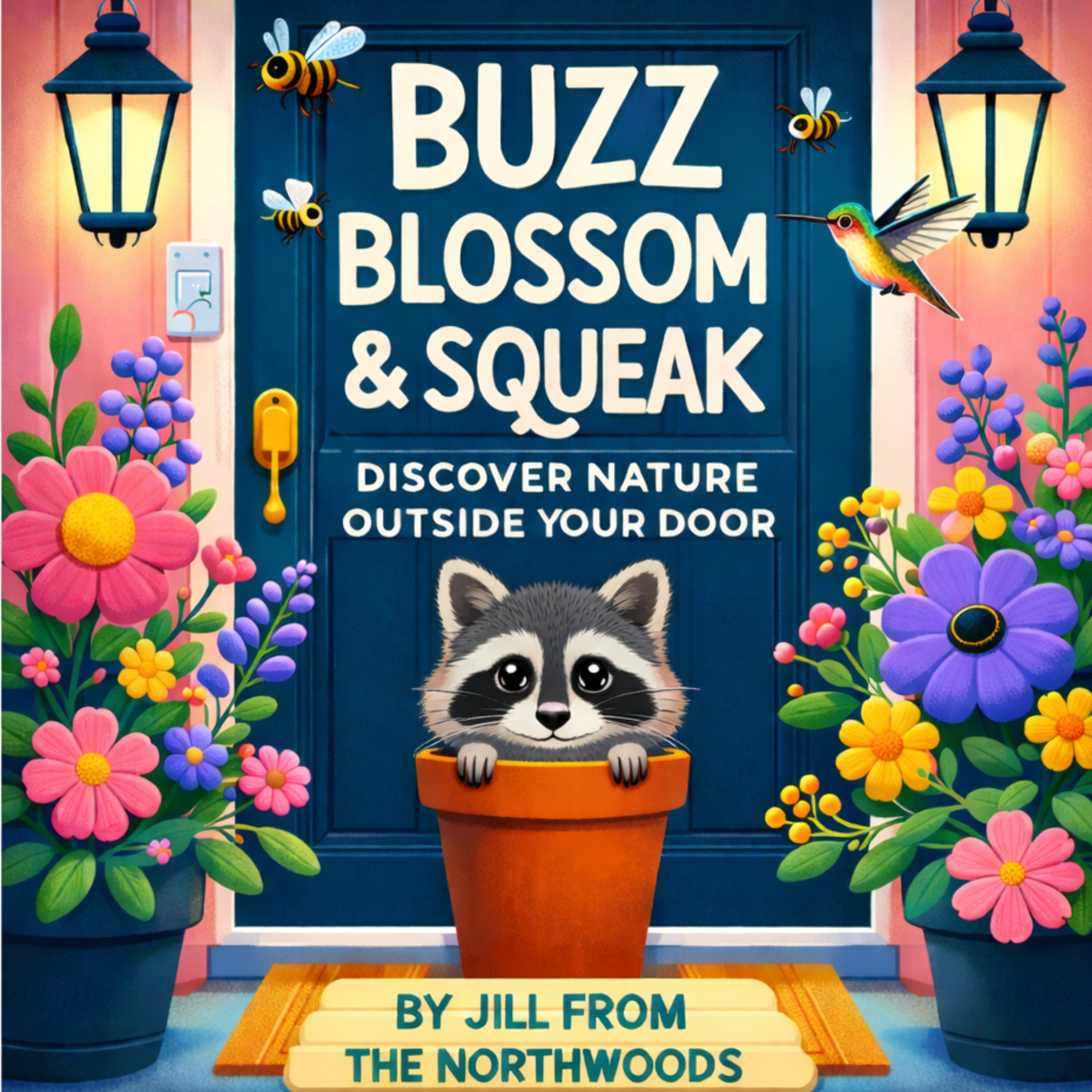
Buzz Blossom & Squeak

Buzz Blossom & Squeak

Become a neighbhorhood naturalist right outside your front door!

Jill McKinley

114 episodesEN

Show overview

Buzz Blossom & Squeak has been publishing since 2024, and across the 2 years since has built a catalogue of 114 episodes. That works out to roughly 30 hours of audio in total. Releases follow a weekly cadence.

Episodes typically run ten to twenty minutes — most land between 14 min and 19 min — and the run-time is fairly consistent across the catalogue. None of the episodes are flagged explicit by the publisher. It is catalogued as a EN-language Science show.

The show is actively publishing — the most recent episode landed yesterday, with 19 episodes already out so far this year. Published by Jill McKinley.

Episodes
114
Running
2024–2026 · 2y
Median length
16 min
Cadence
Weekly

From the publisher

Buzz, Blossom & Squeak is a quiet, curious walk into the natural world right outside your door. You don’t need to be a scientist, a hardcore birder, or someone who hikes miles into the wilderness. This podcast is for anyone who has ever paused to notice a bird call, wondered about a plant growing along a sidewalk, watched insects move through a garden, or felt the seasons shifting without quite knowing why. Each episode focuses on small, approachable pieces of nature—birds, bugs, plants, weather, ecosystems, and natural patterns—explained in a way that’s calm, curious, and grounded in observation. Instead of rushing toward big conclusions, Buzz, Blossom & Squeak invites you to slow down and really notice what’s happening in the living world around you. You’ll hear about things like: How birds use different layers of trees and sky Why certain plants grow where they do What insects are actually doing when they buzz past How seasons quietly reshape landscapes The hidden systems that connect soil, water, plants, and animals The goal isn’t mastery—it’s familiarity. Nature becomes less overwhelming when you take it one small step at a time. This podcast is especially for people who: Want to understand nature without feeling intimidated Enjoy learning through real-world observation Prefer gentle explanations over fast facts Like noticing patterns, habits, and rhythms Find peace and wonder in everyday outdoor moments Episodes are designed to be thoughtful, practical, and reflective. You might walk away with a new question to watch for, a detail you’ve never noticed before, or simply a deeper appreciation for the ordinary wild things that share your space. Buzz, Blossom & Squeak isn’t about traveling far to find nature. It’s about realizing you’ve been standing in it all along.

Latest Episodes

View all 114 episodes

113 - Reading the Sky: What Storm Colors Are Telling You

May 14, 202637 min

112- Why Is Water Blue? The Science of Color in Lakes, Oceans, and Ice

May 7, 202628 min

111 - Spectrometry in Space: What Every Planet Is Telling Us

May 1, 202615 min

110 - How Light Reads the Universe

Apr 23, 202615 min

109 - The Science of Noticing When Nature Happens

Apr 16, 202615 min

Ep 108108 - How to Actually Identify Ducks

Duck season is here — and ducks are confusing. If you've ever stood at the edge of a pond going completely blank while trying to name what you're looking at, this episode is for you. I'm launching a new series called Birds That Fool You, and we're starting with ducks: how to build a reliable ID strategy and how to sort out the most commonly confused pairs.Color Is a Trap — Shape Is ReliableMost people lead with color when identifying ducks. But color changes by season, by sex, and by lighting conditions. Shape doesn't lie — a duck's head and body silhouette stays consistent year-round, in both males and females. Behavior locks it in further: dabblers tip up to feed, divers plunge completely under. Use color to confirm, not to identify.Strategy: Pairs, Groups, and Permission to Stop EarlyDucks tend to flock with their own kind, so if you can identify the male in a pair, the female beside him is probably the same species. And it's perfectly okay to call it "a scaup" without knowing if it's a greater or lesser. Partial identification is real progress.Canvasback vs. RedheadBoth have reddish heads on males, but the canvasback has a long, sloped forehead that runs almost in a straight line from bill tip to crown — very aerodynamic. The redhead has a rounded, dome-shaped head, friendlier and softer. This head shape distinction works in any light and for females too.Mallard vs. American Black Duck, and the Underrated GadwallThe female mallard has a streaky pattern with an orange-and-black bill. The American Black Duck is darker and more uniform, with an olive or greenish-yellow bill — no orange. Both species overlap in the Midwest and East and get misidentified constantly. The gadwall looks plain from a distance but reveals an intricate herringbone scallop pattern up close — one of the most beautiful ducks in the field once you see it.Teals, Scaup, Buffleheads, Goldeneyes, and MergansersTeals are tiny and fast — size alone often tips you off. Blue-winged, green-winged, and cinnamon teal each have distinct field marks once you slow down to look. Bufflehead vs. common goldeneye comes down to size: ping-pong ball vs. full-sized duck. Mergansers are unmistakable with their shaggy rock-and-roll crest and serrated bill — once you've seen one, you never forget it.ClosingStart with one or two pairs. Get comfortable with canvasback vs. redhead, or bufflehead vs. goldeneye. Add another pair next season. The Birds Near Me app (Apple only, powered by eBird) is a great way to see what species others have logged at a specific pond — use it as a sanity check while you're still learning.Jill’s Linkshttp://jillfromthenorthwoods.comhttps://www.buymeacoffee.com/smallstepspodTwitter - https://twitter.com/schmernYouTube @BuzzBlossomSqueakBy choosing to watch this video or listen to this podcast, you acknowledge that you are doing so of your own free will. The content shared here reflects personal experiences and opinions and is intended for informational and educational purposes only. I am not a licensed biologist, ecologist, or wildlife professional. Any nature observations, identifications, or suggestions offered should not be considered a substitute for professional scientific or environmental guidance. Always follow local regulations when observing or interacting with wildlife and natural spaces. You are solely responsible for any decisions or actions you take based on this content.

Apr 10, 202624 min

Ep 107107 -The Dusk Chorus: What Happens When the Sun Goes Down

You've heard the dawn chorus — but have you heard the dusk chorus? Step outside at sunset and a whole different world comes alive. In this episode, Jill heads out to a Wisconsin oak savanna just before dark and witnesses something spectacular: the American Woodcock sky dance, the haunting winnowing of a Wilson's Snipe, and eight woodcocks performing courtship displays just feet away. Best of all, neither bird makes its sound with its voice — it's all in the feathers. We also cover sandhill cranes bugling into the marsh at sunset, Whip-poor-wills and Common Nighthawks (the night hunters of the insect world), the eerie calls of the barred owl, and the invisible rivers of migrating birds that stream over your county every night during peak spring migration.Jill’s Linkshttp://jillfromthenorthwoods.comhttps://www.buymeacoffee.com/smallstepspodTwitter - https://twitter.com/schmernYouTube @BuzzBlossomSqueakEmail the podcast at mailto: [email protected] choosing to watch this video or listen to this podcast, you acknowledge that you are doing so of your own free will. The content shared here reflects personal experiences and opinions and is intended for informational and inspirational purposes only. I am not a licensed healthcare provider, psychiatrist, or counselor. Any advice or suggestions offered should not be considered a substitute for professional medical or mental health advice. You are solely responsible for any decisions or actions you take based on this content.

Apr 2, 202615 min

Ep 106106 - Why Do Birds Sing at Dawn?

Have you ever woken up at five in the morning, stepped outside into the cold and the dark, and heard a single bird start to sing — and then another, and then another, until the whole world seemed to be answering? That's the dawn chorus. And once you've really heard it, you'll never take a quiet morning for granted again.What Is the Dawn Chorus?The dawn chorus is a surge of bird song that builds in the 30 to 90 minutes around sunrise, peaking in spring when birds are establishing territory and finding mates. It happens on every continent where birds live, and it follows the same logic everywhere. In the Upper Midwest, the loudest, most species-rich mornings tend to arrive in mid-May, when the spring migrants have settled in. There's even an International Dawn Chorus Day — the first Sunday of May — that started in Birmingham, England in 1984 and has since spread worldwide.Why at Dawn Specifically?The timing is not accidental. In the early morning, insects aren't active yet — it's too cold and too dark to forage efficiently. Rather than burn energy looking for food in poor conditions, birds fill that window with the social work of claiming territory and attracting mates. And sound works in their favor: at dawn, the way temperature layers the atmosphere causes sound to travel two to three times farther than it would at midday. A bird singing at dawn is broadcasting to a much larger audience.The Hormone FactorSpring's longer days trigger a surge of testosterone in male songbirds, and hormone levels peak right at dawn. A male who goes silent in the morning is signaling illness or weakness, and potential mates notice. Singing early, loudly, and with complexity is a fitness advertisement: I survived the night, I'm healthy enough to sing before I've eaten, and my territory is still mine.Who Sings First?The sequence of the dawn chorus is predictable enough that you can track the morning by listening. Birds with larger eyes relative to their heads go first. Robins are famous early singers, often starting 30 to 40 minutes before sunrise. Towhees, Wood Thrushes, and Ovenbirds follow. Then come Song Sparrows, Yellow Warblers, Red-winged Blackbirds, and Common Yellowthroats. By full sunrise, Baltimore Orioles, Scarlet Tanagers, and Veeries are joining in. The Merlin app (free, from the Cornell Lab of Ornithology) can identify individual species even when they're all singing simultaneously — something genuinely astonishing.The Females Are ListeningThe dawn chorus isn't a one-sided broadcast. Female birds are evaluating. The male who sings earlier, longer, louder, and with more complexity is advertising fitness, territory quality, and energy reserves. Singing before breakfast costs real resources. The females know that.If you want to hear it for yourself, set an alarm about 30 minutes before sunrise this spring. Find a spot near water or a marsh if you can. You don't need to know a single bird by name to be moved by it. Just listen.Recommended reading:Trees in My Forest by Bernd HeinrichWhy Birds Sing by David RothenbergJill’s Linkshttp://jillfromthenorthwoods.comhttps://www.buymeacoffee.com/smallstepspodTwitter - https://twitter.com/schmernYouTube @BuzzBlossomSqueakEmail the podcast at mailto: [email protected] choosing to watch this video or listen to this podcast, you acknowledge that you are doing so of your own free will. The content shared here reflects personal experiences and opinions and is intended for informational and inspirational purposes only. I am not a licensed healthcare provider, psychiatrist, or counselor. Any advice or suggestions offered should not be considered a substitute for professional medical or mental health advice. You are solely responsible for any decisions or actions you take based on this content.

Mar 26, 202617 min

Ep 105105 - The First Thing Every Animal Does When Spring Arrives

Spring fever is real — and it turns out every creature in the natural world has it too. In this episode I'm exploring the very first thing each animal does the moment winter releases its grip. From frogsicles thawing in vernal ponds to bumblebee queens hunting for a home underground, nature wastes absolutely no time.Frogsicles and Spring PeepersWood frogs freeze solid over winter — no heartbeat, no breathing, just ice crystals in their body held together by glucose flooding from the liver. When they thaw, the first thing they do is head straight for a vernal pond to breed. Spring peepers, barely bigger than your thumb, do the same on the first rainy 42-degree night.Turtles, Bears, and GroundhogsPainted turtles spend winter buried in mud, breathing through their skin. When they surface, their first priority is warmth — they can't even digest food until they soak up enough sun on a log. Black bears emerge already having given birth during hibernation, now needing to rebuild the 30% of body weight lost. Groundhog males emerge weeks before the females — not to predict weather, but to map territory and locate burrows before the females arrive.Birds on the MoveRed-winged blackbirds are often back before the snow is fully gone, the males arriving first to claim their patch of marsh and start singing. Robins never fully left — they moved into the deep woods — and now edge back toward lawns as the soil begins to thaw. And sandhill cranes return to the same wetlands year after year, reconnecting with their partners through an elaborate rattling call and dance.The Bumblebee QueenShe spent the entire winter underground — alone, as the sole surviving member of last year's colony. In early spring she emerges and takes on every role at once: architect, forager, nurse, and furnace to her eggs. If you see a big, slow bumblebee hovering close to the ground, she's not lost — she's searching for the right den to start everything over again.One Thing They All Have in CommonNobody eases into spring. Whether it's finding food, finding a mate, finding a home, or just warming up enough to move — every creature acts immediately. There are no warm-up stretches in the wild. Spring is a deadline, and they all know it.Want to participate? Start a nature log. Track your first red-winged blackbird, your first spring peeper, your first bumblebee queen. You'll be amazed what you notice when you start paying attention.📚 Book recommendation: Winter World and Summer World by Bernd HeinrichJill’s Linkshttp://jillfromthenorthwoods.comhttps://www.buymeacoffee.com/smallstepspodTwitter - https://twitter.com/schmernYouTube @BuzzBlossomSqueakEmail the podcast at mailto: [email protected] choosing to watch this video or listen to this podcast, you acknowledge that you are doing so of your own free will. The content shared here reflects personal experiences and opinions and is intended for informational and inspirational purposes only. I am not a licensed healthcare provider, psychiatrist, or counselor. Any advice or suggestions offered should not be considered a substitute for professional medical or mental health advice. You are solely responsible for any decisions or actions you take based on this content.

Mar 19, 202615 min

Ep 104104 - Spring Is Already Here — You Just Have to Know Where to Look

Step outside with me for a minute. The grass is still brown and undecided. There are patches of snow on the north side of the fence. The ground is soft on top but frozen just a few inches down. Nothing looks alive — but it really, truly is. Somewhere near your foundation, by the mailbox, wherever the snow melted first, something is already blooming. And something with wings is already looking for it. This episode is about those bold, easy-to-miss first flowers of spring, and the equally bold creatures that depend on them.Look Up: The Trees Are Already BloomingBefore anything blooms at eye level, look up. Silver maples and red maples push out tiny flower clusters before their leaves appear — reddish clumps or deep red bursts on gray branches that look like fuzz or frost from a distance. They're wind-pollinated and bloom early on purpose: no leaves yet means nothing blocking the pollen from moving. Pussy willows along creek edges and damp ground are swelling with soft gray catkins loaded with pollen — an oasis for a bumblebee just waking up from winter. Birch and alder add dangling brown tassels to the show, swaying in the breeze and dusting the air with their own early contribution.Drop Your Eyes: The Ground Flowers Are HereSnowdrops are usually first — small white bells pushing straight through frozen soil, and remarkably, they generate a small amount of their own heat to melt the snow immediately around them. They're literally opening their own path into spring. Crocuses follow in purple, yellow, white, and striped, opening wide in sun and closing tight on cold days to protect their pollen. The small blue star-shaped glory-of-the-snow and Scilla carpet the ground when almost nothing else does. Daffodils hold their own too — they contain lycorine, an alkaloid that makes them toxic to most deer and rodents, which is why they tend to survive when tulips don't. And coltsfoot, one of the earliest wildflowers in the Midwest, blooms at the edge of roadsides with flowers that appear before its leaves — bright yellow and easy to miss if you're driving fast.The Bumblebee Queen — Most Important Insect of Early SpringThat large, lone bumblebee you see in March is almost certainly a queen. She survived the winter underground, alone, on stored fat. She emerges starving and needs nectar for energy and pollen to begin laying eggs. Everything — the entire summer colony — depends on those first flowers being there when she wakes up. She's not aggressive; she's focused. She cannot fly below around 50 degrees Fahrenheit, which is why a cold snap after a warm week can be genuinely dangerous for her. If she gets caught out foraging when the temperature drops, she needs leaf litter, a log, or a brush pile to shelter in.Other Early Pollinators Worth NoticingMining bees are tiny, solitary bees that nest underground and hover over patches of bare soil in early spring — one reason a tidy, fully-mulched yard is harder on bees than a yard with a little bare ground. Some butterfly species overwinter as adults, tucking into bark and tree cavities and emerging on warm February or March days to feed on sap and overwintered berries — the mourning cloak butterfly is one of the most common early fliers in the Midwest. Hoverflies round out the group: they look like bees, don't sting, and are quietly doing important pollination work while everyone ignores them.When the Snow Comes Back — and It WillEarly spring flowers are tougher than they look. Many contain antifreeze-like compounds in their cells, and snow actually provides insulation rather than damage. Tulips, which require a cold period called vernalization to bloom properly, are genuinely built for late snow — it doesn't set them back. The crocuses get buried and come right back up. What's more fragile is the bumblebee queen caught out in the cold, which is why leaving the leaf litter, the brush pile, the stick pile just a little longer into spring matters more than we might think.Spring doesn't arrive all at once — it sneaks in from the edges, from the treetops and the muddy patches and the south-facing spots by the foundation. Your small step this week: go outside and find something blooming. Look up into the tree branches. Watch for the bumblebee queen making her rounds. If you want to do something for next year, consider planting some early bulbs this fall — crocus, snowdrops, Scilla — and leave the leaves a little longer this spring. You might also start a nature journal: write down your first crocus, your first bee, your first butterfly. You'll be surprised what you start to notice when you're actually looking.Jill’s Linkshttp://jillfromthenorthwoods.comhttps://www.buymeacoffee.com/smallstepspodTwitter - https://twitter.com/schmernYouTube @BuzzBlossomSqueakEmail the podcast at mailto: [email protected] choosing to watch this video or listen to this podcast, you acknowledge that you are doing so of your own free will. The content shared here reflects personal experience

Mar 11, 202615 min

Ep 103103 - Feathers Are More Incredible Than You Think

I walk past feathers all the time — on the trail, in my yard, floating across the floor when my bird molts — and I'll be honest, I never gave them a second thought. But when you actually stop and look at what a feather is, you realize you've been walking past one of the most complex, precisely engineered structures in the entire animal kingdom. Today we're getting into all of it, and I promise you won't look at feathers the same way again.Feathers Are Tiny, Interlocking Zippers A feather isn't just a fancy piece of fluff — it's a shaft lined with dozens of branches called barbs, each growing smaller branches called barbules, each tipped with tiny hooks that lock together like Velcro. That's what gives a feather its smooth, flat surface. When the hooks come apart, the feather looks scraggly. When a bird preens, it's literally zipping those hooks back together with its beak — running a quality check on hundreds of tiny zippers every single day.A Wardrobe of Feathers, Each With a Job Birds don't have just one kind of feather — they have a whole wardrobe. Contour feathers form the sleek outer jacket. Down feathers underneath are soft, hookless, and trap warm air like a personal sleeping bag. Flight feathers are long, stiff, and asymmetrical — the narrower front edge helps generate lift the same way an airplane wing does. Filoplumes act as touch sensors, alerting the bird when preening is needed. Bristle feathers around the face of flycatchers form a built-in bug net.Color That Comes From Light, Not Pigment Cardinals are red because of pigment. But the iridescent blue of a kingfisher, the shimmering green of a hummingbird, the teal and purple of a peacock's tail? None of that color actually exists in the feather. Instead, microscopic layered structures in the feather scatter light the same way a soap bubble does — creating what scientists call structural color. The feather hasn't changed. The light has. It's the same technology now used in anti-counterfeiting ink on banknotes, and birds had it figured out long before we did.Owl Feathers and the Science of Silence Owls fly in near-total silence, and it's entirely by feather design. The leading edge of their wing feathers has a comb-like serration that breaks up air turbulence before it can create sound. Other feathers have a velvety texture that absorbs rather than reflects noise. For an owl, silent feathers aren't impressive — they're essential. Without them, the mouse hears it coming.Fun Facts Worth Knowing Hummingbirds have the fewest feathers of any bird — around 1,000. Tundra swans can have 25,000, mostly dense down for Arctic survival. A bird's entire set of feathers (plumage) often weighs more than its skeleton — which makes sense, since bird bones are hollow. The longest feather ever recorded was a rooster tail feather in Japan, measuring over 30 feet. And flamingos? Not naturally pink — they turn pink from the algae and crustaceans they eat.The next time you find a feather on a walking path or watch a bird land on a fence post, take a second look. That feather can zip and unzip itself, generate color from light, muffle sound, trap heat, and slice through the air — all at once. It's not just a bird accessory. It's a structural miracle hiding in plain sight.Jill’s Linkshttp://jillfromthenorthwoods.comhttps://www.buymeacoffee.com/smallstepspodTwitter - https://twitter.com/schmernYouTube @BuzzBlossomSqueakEmail the podcast at mailto: [email protected] choosing to watch this video or listen to this podcast, you acknowledge that you are doing so of your own free will. The content shared here reflects personal experiences and opinions and is intended for informational and inspirational purposes only. I am not a licensed healthcare provider, psychiatrist, or counselor. Any advice or suggestions offered should not be considered a substitute for professional medical or mental health advice. You are solely responsible for any decisions or actions you take based on this content.

Mar 5, 202614 min

Ep 102102 - Why Can Animals Eat Things That Would Kill Us?

Have you ever watched a dog eat something off the ground and thought — I would be in the hospital right now? Or stared at a koala stuffing eucalyptus leaves into its face and wondered how that's even possible? Today I'm digging into one of those questions that just sits with you — why can animals eat things we simply can't? The answer is genuinely fascinating, and once you understand it, you'll see the animals in your backyard in a completely different way.Specialists vs. Generalists: The Big IdeaEvery animal on Earth is essentially a custom-built system, optimized for a very specific food supply in a very specific environment. A bear living in the forest has exactly the enzymes, gut bacteria, and stomach chemistry needed to process fish, berries, roots, and the occasional deer. We humans are something different — we're generalists. We eat a huge variety of things, including cooked food, which semi-processes our meals and makes calories more accessible without requiring the long, specialized digestive machinery that many animals carry. That generalist toolkit is part of what supports our higher brain function. We gave up dietary specialization in exchange for cognitive power.Enzymes: The Chemical Workers InsideEnzymes are proteins your body manufactures to break down food — tiny, specific workers in your digestive tract. The key word is specific. Different animals have entirely different enzyme profiles. The koala is the perfect example: eucalyptus is toxic to most mammals, including us, but koalas have liver enzymes specifically designed to neutralize those compounds. It's essentially a built-in detox filter. Monarch butterflies do something similar with milkweed — not only tolerating the toxin, but storing it in their bodies so that anything that eats them gets sick. The food becomes a weapon.Gut Bacteria: The Community That Shapes What You Can EatWe're learning more about gut bacteria than ever before, and the science keeps getting more interesting. Trillions of microorganisms — not harmful, but essential — live in our digestive systems, helping break down food, support immunity, and regulate metabolism. Every species has its own gut microbiome community, shaped over time by what they eat. Vultures are the extreme example: their gut bacteria has evolved specifically to neutralize pathogens like botulism, anthrax, and salmonella that would put you or me in the hospital. Combined with their extraordinary stomach acid, they have what amounts to an industrial-grade sanitation system built right in.Stomach Acid: The First Line of DefenseThe pH scale runs from 0 (extremely acidic) to 14 (base/alkaline), with 7 as neutral. Your stomach acid sits around pH 2–3 — strong enough to break down food and kill a good number of bacteria, roughly similar to vinegar. Vultures operate at pH 1, closer to battery acid, making them the most acidic-stomached vertebrate on the planet. That extreme acidity is their first line of defense against dangerous pathogens. The stronger the acid, the more it can destroy before anything gets further into the system.Cellular Biology and Some Surprising ExamplesBeyond enzymes and gut bacteria, the cellular biology of different animals is simply built differently. Cats are obligate carnivores — they must eat meat — and their livers are highly efficient at processing vitamin A from animal tissue. For us, too much vitamin A causes hypervitaminosis A: headaches, bone pain, skin problems, and worse. Arctic explorers in the early 1900s sometimes died after eating polar bear liver, which accumulates massive amounts of the vitamin. The polar bear handles it easily. We do not. Dogs can handle raw meat better than we can partly because of shorter digestive tracts — food moves through faster, giving bacteria less time to cause trouble. Seagulls have a salt gland near their eyes that filters excess sodium directly from their blood, letting them drink ocean water that would accelerate dehydration in us.The Tradeoff: Specialization Has a CostEvery superpower comes with a constraint. Koalas can eat eucalyptus, but they can barely eat anything else. Monarchs depend entirely on milkweed — which is why protecting milkweed plants from mowing and development matters so much. Cats must eat meat; their biology gives them no other option. Vultures are tied to carrion; that's their role in the ecosystem, and they fill it well. Specialization is a form of excellence, but it's also fragility. When the one thing your system is built for disappears, the whole system is at risk. We gave up that depth for breadth — and the ability to adapt.Next time you watch a vulture circling or a seagull drinking from the ocean, you're not seeing a tougher animal. You're seeing a different kind of engineering — finely tuned for a specific role in a specific world. We have our own version of that. It just looks like the ability to eat pizza one day and a salad the next.Jill’s Linkshttp://jillfromthenorthwoods.comhttps://www.buymeacoff

Feb 26, 202617 min

Ep 101101 - From Skywatching to Wall Clocks: How Nature Became Our Calendar

How did watching the sky turn into the calendar on the wall and the clock we check every day? This episode explores how ancient sky observations evolved into the structured systems of time we now take for granted.⏳ Time Before ClocksLong before digital watches and printed planners, humans looked to the sky. The rising and setting of the sun, the phases of the moon, and the shifting constellations provided the first reliable markers of time. While animals still follow light, temperature, and seasonal cues, humans began translating those natural cycles into numbers and systems.🌍 The Babylonian BreakthroughAround 4,000 years ago in ancient Mesopotamia, the Babylonians created a mathematical framework that still shapes how we measure time today.Base 60: The Language of TimeInstead of counting in base 10 (like we do), the Babylonians used a base 60 system. Why 60?It divides evenly by many numbers (2, 3, 4, 5, 6, 10, 12, 15).It made calculations practical.It allowed flexible fractions.This system gave us:60 seconds in a minute60 minutes in an hour360 degrees in a circleThe 12-part division of day and nightThese weren’t cosmic requirements — they were human decisions that worked well.🌙 Lunar Months and Drifting SeasonsEarly calendars were based on the moon. A lunar month lasts about 29.5 days. Twelve lunar months equal 354 days — about 11 days short of a solar year.Without correction, calendars drifted away from the seasons.The Babylonians solved this by occasionally adding an extra month (intercalation), keeping lunar months aligned with agricultural seasons. This lunar-solar balancing act is still reflected in calendars like the Hebrew calendar today.♈ The Zodiac: Astronomy Before AstrologyOriginally, the zodiac was not about horoscopes or personality traits.It was practical astronomy.As the sun appeared to move through 12 constellations over the year, these regions of the sky became seasonal markers. They helped determine:When to plantWhen to harvestWhen festivals should occurWhere the sun would rise and setOnly later were myths and personality traits layered onto these sky markers.🕰️ Sundials, Angles, and NavigationThe Babylonian framework of 360 degrees made tools like sundials and later sextants possible.A sundial uses the Earth’s 360° rotation to cast measurable shadows.The Earth rotates about 15° per hour.Navigators used angular measurements between stars and the horizon to determine position at sea.Time and position became mathematically linked through the sky.🌎 Many Cultures, One SkyThe Babylonians were not alone in reading the sky.Ancient Egypt used shadow clocks and star risings to divide day and night.Maya civilization developed multiple interlocking calendars and tracked Venus and eclipses with remarkable precision.Ancient China created detailed star catalogs and lunisolar calendars aligned with solstices and equinoxes.Polynesian navigators memorized star paths, ocean swells, and bird behavior to travel vast distances without instruments.Different tools. Same principles.Time comes from motion.Cycles matter more than numbers.The sky is readable.📅 From Lunar Drift to Modern CalendarsThe Romans shifted from lunar to solar reckoning to stabilize civic life. The Julian calendar standardized 365 days with a leap year every four years.But small errors accumulated over centuries.The Gregorian calendar refined the leap year rules, realigning the calendar with the solar year and seasonal cycle. That is the calendar hanging on most walls today — still carrying Babylonian math, Roman structure, and lunar ancestry.🔄 What This MeansDespite reforms and refinements:We still divide the circle into 360 degrees.We still count 60 minutes per hour.We still organize the year into 12 months.We still adjust for solar drift with leap days.We still quietly track the moon.Our clocks and calendars are layered systems — ancient skywatching translated into geometry, then governance, then everyday routine.Nature hasn’t changed. The sun still rises. The moon still cycles. Constellations still shift with the seasons.What changed is that we turned those motions into a shared human agreement — a language of time that lets us plan crops, festivals, travel, and even vacations years in advance.🌌 In This EpisodeWhy 60 became the foundation of modern timekeepingHow lunar calendars drift and how civilizations corrected themThe practical origins of the zodiacHow angles, shadows, and stars shaped navigationWhy nearly every culture developed sky-based time systemsHow we arrived at the modern Gregorian calendarTime isn’t just numbers on a screen — it’s the sky translated into structure.Jill’s Linkshttp://jillfromthenorthwoods.comhttps://www.buymeacoffee.com/smallstepspodTwitter - https://twitter.com/schmernYouTube @BuzzBlossomSqueakEmail the podcast at mailto: [email protected] choosing to watch this video or listen to this podcast, you acknowledge that you are doing so of your own free will. The content shared here reflects

Feb 18, 202620 min

Ep 100100 - Berries: Nature’s Winter Survival Strategy

Winter isn’t empty—it’s stocked with hidden food. Berries are nature’s survival pantry when everything else disappears. Look closer, and you’ll see winter is very much alive.This episode explores why berries are one of the most overlooked yet essential food sources in nature, especially during winter. While the landscape may look barren, berry-bearing trees and shrubs are quietly sustaining birds and mammals when insects and fresh vegetation are gone. The discussion walks through how berries store summer energy, how different species rely on them, and why winter is not a pause in nature, but a continuation of it. The episode also highlights how planting native berry-producing plants can support wildlife right outside the door.Top Topics CoveredWhy Berries Matter in WinterBerries act as concentrated packets of energy, holding sugars and fats created during the growing season. Unlike many fruits that fall quickly, berries often stay attached to shrubs and trees deep into winter, standing out against snow as visible signs that food is still available.Birds That Depend on BerriesAs insect-eating birds leave and seed-eaters struggle with snow-covered ground, berry-eating birds thrive. Species like robins adapt by shifting their diet entirely to berries once the ground freezes. Cedar waxwings go even further, traveling in tight flocks and stripping entire trees of fruit in minutes.Berry Trees as Wildlife Gathering HubsA single berry-laden tree can attract multiple bird species at once, turning a quiet winter yard into a brief burst of activity. These trees function as communal feeding stations that support biodiversity even in the coldest months.Mammals and the Berry NetworkDeer, foxes, coyotes, squirrels, and small mammals all rely on berries for winter calories. Forgotten squirrel caches feed other animals, connecting species that never directly interact but depend on the same food system.Timing, Fermentation, and Nature’s HumorSome berries delay being edible until freeze-thaw cycles soften them, spreading food availability across the season. Occasionally, natural fermentation creates slightly intoxicated birds, adding an unexpected and harmless bit of comedy to winter survival.Key TakeawaysWinter is not a dead season—it’s a different chapter in nature’s story. Berries prove that energy harvested in summer continues to circulate through ecosystems long after leaves fall. Paying attention to berry plants reveals how wildlife adapts, survives, and stays connected even in harsh conditions.Planting native berry-producing trees and shrubs supports local wildlife while adding beauty and life to winter landscapes. Watching what happens to berries over the season offers a deeper understanding of how nature works right outside the door.http://jillfromthenorthwoods.comhttps://www.buymeacoffee.com/smallstepspodTwitter - https://twitter.com/schmernYouTube @BuzzBlossomSqueakEmail the podcast at mailto: [email protected] choosing to watch this video or listen to this podcast, you acknowledge that you are doing so of your own free will. The content shared here reflects personal experiences and opinions and is intended for informational and inspirational purposes only. I am not a licensed healthcare provider, psychiatrist, or counselor. Any advice or suggestions offered should not be considered a substitute for professional medical or mental health advice. You are solely responsible for any decisions or actions you take based on this content.

Feb 11, 202610 min

Ep 9999 - Reading the Tracks: Discovering Animal Stories Right Outside Your Door

Every snowfall writes a story across the ground. Each footprint is a clue left behind by a hidden neighbor. All you have to do is slow down and learn how to read it.This episode explores how winter snow turns the outdoors into a living field guide. By paying attention to tracks left behind by animals, it becomes possible to uncover where they traveled, how fast they moved, and what they were trying to do. Instead of needing special tools or deep expertise, curiosity and observation become the main skills. Snow reveals a hidden world that is always present but often overlooked, offering a deeper connection to nature right outside familiar doors.Top TopicsSnow as Nature’s NotebookSnow makes movement visible in a way that other seasons often hide. Tracks reveal patterns, decisions, and behavior, turning the ground into a record of recent activity. This visibility helps train attention and encourages careful observation.Thinking Like a Nature DetectiveRather than immediately naming the animal, the focus is on asking questions. Was the animal walking or hopping? Did it move in a straight line or wander? These questions lead naturally to understanding what happened before identifying who made the tracks.Movement Patterns and EnergyDifferent animals move in distinct ways. Walkers travel efficiently in straight lines. Hoppers leave paired prints that show bursts of speed. Bounders create clustered patterns that reflect long bodies and short legs. Birds add wing marks, tail drags, and sudden takeoffs that tell their own stories.Time, Weather, and CluesTracks also show age. Sharp edges mean recent visits, while softened or filled-in prints suggest older activity. Wind, sun, and new snowfall all leave evidence that helps reconstruct when events occurred.Finding Tracks EverywhereAnimal stories don’t require remote wilderness. Driveways, sidewalks, fences, shrubs, and bird feeders all serve as corridors. These everyday places often hold the most surprising discoveries.Key TakeawaysWinter is not empty or barren; it is active and full of life. Tracks are temporary, reminding us to pay attention in the moment before the evidence disappears. By slowing down and observing carefully, it becomes possible to understand not just which animal passed through, but what it was doing and why. With practice, reading tracks turns familiar spaces into places of continual discovery.http://jillfromthenorthwoods.comhttps://www.buymeacoffee.com/smallstepspodTwitter - https://twitter.com/schmernYouTube @BuzzBlossomSqueakEmail the podcast at mailto: [email protected] choosing to watch this video or listen to this podcast, you acknowledge that you are doing so of your own free will. The content shared here reflects personal experiences and opinions and is intended for informational and inspirational purposes only. I am not a licensed healthcare provider, psychiatrist, or counselor. Any advice or suggestions offered should not be considered a substitute for professional medical or mental health advice. You are solely responsible for any decisions or actions you take based on this content.

Feb 5, 202613 min

Ep 9898 - Snowflakes, Snert, and Snow Sharks: A Tour of Winter’s Icy Wonders

In this episode, we explore the remarkable diversity of snow and ice, uncovering the hidden science and sensory experiences behind winter weather. From the light crunch of fresh powder underfoot to the glassy threat of black ice, snow isn't just snow—it’s a constantly shifting part of life in the Northwoods. Whether you ski, hike, or just appreciate winter’s beauty, this episode will help you notice the small differences in the snow around you—and maybe even fall in love with winter a little more.Top Topics:The Many Faces of Snow:We start by learning how temperature, moisture, and wind create wildly different types of snow. Whether it's dry and fluffy powder or heavy, wet snow perfect for snowballs, each type affects how we walk, shovel, ski, and play. Discover how temperatures inside the clouds shape the snowflake and why not all snow is great for building snowmen.Lake Effect and Fern Snow:Snow isn't just formed in the clouds—bodies of water like the Great Lakes play a big role. Lake effect snow can dramatically increase snowfall totals in localized areas. We also discuss “firn” snow—partially melted and refrozen snow that forms the beginnings of glaciers—and how mountaineers and skiers value it for its firm, supportive texture.Slippery Situations – Ice and Safety:From sleet and freezing rain to invisible black ice and dangerous blizzard conditions, not all winter hazards look dramatic. Learn how and why freezing fog and melting snow create treacherous walking and driving conditions, and the best ways to stay safe while still enjoying the season.Nature’s Winter Artistry:Hoarfrost, rime frost, and diamond dust aren't just pretty names—they’re among the most beautiful and delicate signs of winter. These phenomena turn ordinary mornings into sparkling fairylands and offer moments of quiet magic for anyone willing to step outside early enough to see them.Takeaways:This episode invites listeners to deepen their relationship with winter by observing its nuances. Noticing how snow crunches or drifts, how frost forms on the east side of a tree, or how sleet bounces off a jacket can transform a routine winter day into something fascinating. Winter isn’t just cold and inconvenient—it’s alive with detail, beauty, and opportunity. Whether you're a skier, snowshoer, or sidewalk stroller, understanding snow helps you appreciate what nature is doing right outside your door. The next time it snows, take a moment. Listen. Look. Feel. It might just change the way you see the season.

Jan 29, 202621 min

Ep 9697 - Why Orion Is the Coolest Constellation in the Sky

Why Orion Is the Coolest Constellation in the SkyIn this episode, we explore the majestic constellation Orion—why it's a favorite, how it acts as a celestial guide, and what makes it so scientifically and culturally significant. From its seasonal appearances in the northern hemisphere to its use in navigation and its dynamic stellar structures, Orion offers both beauty and depth. This episode is not just about stargazing—it's about understanding the powerful stories, science, and personal connections embedded in one of the most recognizable constellations in the night sky.Top Topics Covered:1. Orion as a Seasonal and Celestial LandmarkWe begin with Orion's role as a seasonal marker in the sky. Most visible from late fall to early spring, Orion heralds the coming of winter. Listeners learn how its presence or absence reflects Earth’s position relative to the sun. It's a comforting constant—rising early in winter evenings and disappearing in summer daylight—making it easy to identify and emotionally meaningful.2. Personal Connection to OrionThis episode shares a nostalgic, heartfelt story of Orion as a guide in the Northwoods, offering a sense of direction and wonder. Whether walking home alone in the dark or traveling halfway across the world, Orion has served as a reassuring cosmic companion—always overhead, always familiar.3. Orion and Its Stellar NeighborsWe explore how Orion leads the way to other constellations and stars. Using Orion’s Belt, one can trace paths to Sirius in Canis Major, Aldebaran in Taurus, and the Pleiades. Gemini, Canis Minor, and Lepus the Hare also make an appearance. It’s a connected sky map of myths, astronomy, and interstellar beauty.4. The Science Behind the StarsOrion is not just visually impressive—it’s a stellar laboratory. We look at Betelgeuse (a red supergiant nearing its end) and Rigel (a blue supergiant in its youth), as well as the vibrant Orion Nebula—a star-forming region rich with young stars, protoplanetary disks, and radiant gas clouds. Orion offers a snapshot of stellar birth and death in one constellation.5. Getting Started with StargazingFor newcomers, Orion is the perfect constellation to begin exploring the night sky. We talk about observing it with binoculars, identifying its stars and nebulae, and using it to branch out into deeper skywatching. Tips include binocular recommendations and practical advice for seeing Orion in all its glory—even without a telescope.Takeaways:Orion is more than a group of stars—it's a cosmic storybook. It teaches us about the life cycle of stars, provides ancient navigation cues, and offers emotional grounding across seasons and life experiences. For anyone looking to get started in stargazing, Orion is a beautiful, reliable, and awe-inspiring starting point. It reminds us how vast and connected the universe really is, and how accessible it becomes once you know where to look.So grab your binoculars, step outside on a crisp winter night, and find Orion. Whether you’re a seasoned astronomer or a casual skywatcher, there’s something in those stars for everyone.http://jillfromthenorthwoods.com https://www.buymeacoffee.com/smallstepspod Twitter - https://twitter.com/schmern YouTube @BuzzBlossomSqueak Email the podcast at mailto: [email protected] By choosing to watch this video or listen to this podcast, you acknowledge that you are doing so of your own free will. The content shared here reflects personal experiences and opinions and is intended for informational and inspirational purposes only. I am not a licensed healthcare provider, psychiatrist, or counselor. Any advice or suggestions offered should not be considered a substitute for professional medical or mental health advice. You are solely responsible for any decisions or actions you take based on this content.

Jan 22, 202618 min

Ep 9696 - The Secret Life of Winter Lakes: A Hidden World Beneath the Ice

"What if I told you that beneath this silent, frozen surface, fish are still swimming, plants are still growing, and nature hasn’t stopped at all?"In this episode, we explore the quiet yet vibrant world of lakes during winter. Though a frozen lake may appear silent and lifeless, there's an entire ecosystem at work beneath the ice. From slow-moving fish and dormant plants to persistent microbes and crackling ice sheets, winter in a lake is a carefully balanced, structured, and active time of year. This episode takes you under the surface—literally and figuratively—to reveal how life adapts and thrives in extreme conditions, offering a beautiful metaphor of resilience and quiet survival.Top Topics:1. Ice as Protector, Not EnemyWe kick off by dispelling the myth that ice suffocates lake life. Ice forms a protective lid on the lake, preserving a liquid environment beneath it. This frozen surface insulates the lake, shielding it from the bitter cold and allowing life to carry on in a slower but steady rhythm.2. Life Beneath the IceFish don’t hibernate. They shift gears. Perch and trout remain relatively active, while bass and sunfish conserve energy in deeper waters. Aquatic plants store energy in roots and rhizomes, and some even stay green, producing oxygen. Insect larvae like dragonflies and mayflies feed slowly, providing vital nutrition for fish.3. Microbial Magic and Nutrient RecyclingMicrobes remain tirelessly at work in near-freezing waters, breaking down decaying material and recycling nutrients. Their activity is so significant, they release gases that become trapped in bubbles under the ice—a visible sign that life continues, even unseen.4. Amphibians and Bottom DwellersFrogs and salamanders overwinter in lakebed mud, barely moving, relying on oxygen exchange through their skin. Alongside them, snails, worms, and crustaceans contribute to a slow but ongoing ecological process, helping keep the system in balance.5. The Lake’s Organized LayersWinter doesn’t bring chaos—it brings structure. The lake layers into zones: the icy lid, a freezing cold upper layer (epilimnion), a shifting middle layer (thermocline), and a life-rich lower refuge (hypolimnion). Each plays a role in protecting and organizing life below.6. Cracking Sounds and Ice AcousticsOne of winter’s wonders is the eerie, musical cracking of lake ice. These sounds—booms, groans, and pops—are the result of pressure shifts and temperature changes. Far from dangerous, they are a sign of the ice adjusting and holding strong, transmitting sound like a natural amphitheater.Takeaways:Winter lakes are not lifeless—they’re marvels of adaptation and resilience. From the surface, it might seem like everything has stopped, but underneath, life reorganizes, endures, and prepares for spring. It’s a reminder that in times of stillness, growth continues in quiet ways. Understanding this hidden activity deepens our appreciation for nature’s complexity and strength. So next time you're near a frozen lake, remember: it’s not asleep. It’s alive and waiting.Whether you're a nature enthusiast, a hiker, or someone just looking for a deeper connection to the natural rhythms around you, this episode invites you to see winter not as an end—but as a powerful pause filled with quiet determination.http://jillfromthenorthwoods.comhttps://www.buymeacoffee.com/smallstepspodTwitter - https://twitter.com/schmernYouTube @BuzzBlossomSqueakEmail the podcast at mailto: [email protected] choosing to watch this video or listen to this podcast, you acknowledge that you are doing so of your own free will. The content shared here reflects personal experiences and opinions and is intended for informational and inspirational purposes only. I am not a licensed healthcare provider, psychiatrist, or counselor. Any advice or suggestions offered should not be considered a substitute for professional medical or mental health advice. You are solely responsible for any decisions or actions you take based on this content.

Jan 15, 202618 min

Ep 9595 - Start the New Year with Nature: A Personal Challenge to Reconnect

Start the New Year with Nature: A Personal Challenge to ReconnectIn this episode, we explore how to make nature a central theme in your life this year. Whether you're a curious beginner or someone who already enjoys the outdoors, this episode offers a fresh perspective on using January as a launchpad for a meaningful and cumulative journey through the natural world. It’s not about mastering everything at once but about starting with one small, meaningful area of interest and allowing that spark to grow over time. From birds and trees to weather patterns and constellations, there’s something for everyone—right outside your front door.Top Topics:The Power of Starting SmallStarting a nature practice doesn’t have to be overwhelming. Whether it's identifying one bird, learning one tree species, or tracking a few cloud types, the key is consistency. You don't need a journal or a checklist. You just need curiosity and a willingness to notice.Building Cumulative KnowledgeOne of the most encouraging things about getting into nature is how your knowledge naturally builds. You start with a robin or a maple tree, and before you know it, you're noticing migration patterns, seasonal changes, or even rare species in your area. Every year can bring deeper understanding if you start with something that truly sparks your interest.Personal Nature JourneysFrom birding to weather tracking, to constellations and mosses—examples from personal experience and friends show how diverse and rewarding nature interests can be. Some start with birdwatching, others get hooked on clouds or water systems. Once you're in, it's easy to expand.Resources to Support Your ExplorationA wide range of tools and websites are recommended—from the Cornell Lab’s bird quizzes to the Seek app for identifying plants and bugs. Astronomy lovers can try apps like Sky Tonight or Stellarium. Those interested in weather and water systems are guided to the National Weather Service or the USGS Water Science School.Takeaways:This episode is a heartfelt invitation to choose just one piece of the natural world to focus on this year. It’s about making nature part of your daily life—not through obligation, but through genuine interest. Start with what calls to you. That could be a single bird, a type of tree, or the patterns in the clouds. Let that initial interest be the foundation for a broader connection to the environment around you. You don’t have to be a scientist or outdoors expert—just someone who notices. And as you keep noticing, your knowledge, appreciation, and personal joy will naturally grow.Jill’s Linkshttp://jillfromthenorthwoods.comhttps://www.buymeacoffee.com/smallstepspodTwitter - https://twitter.com/schmernYouTube @BuzzBlossomSqueakEmail the podcast at mailto: [email protected] choosing to watch this video or listen to this podcast, you acknowledge that you are doing so of your own free will. The content shared here reflects personal experiences and opinions and is intended for informational and inspirational purposes only. I am not a licensed healthcare provider, psychiatrist, or counselor. Any advice or suggestions offered should not be considered a substitute for professional medical or mental health advice. You are solely responsible for any decisions or actions you take based on this content.

Jan 8, 202610 min

Ep 9494 - Black, Brown, and Polar Bears: What Makes Each Unique?

Black, Brown, and Polar Bears: What Makes Each Unique?In this episode, I explore the fascinating world of bears—not just as powerful wilderness icons, but as intelligent, adaptable, and ecologically essential animals. From their plantigrade feet to their mental calendars, from myths about hibernation to the science of nitrogen recycling, this episode uncovers what truly makes bears extraordinary. Whether you’re an avid camper, nature enthusiast, or simply curious about wildlife, you’ll gain a deeper appreciation for bears and the roles they play in ecosystems around the world.Top Topics:1. Bear Biology and Evolutionary AdvantageWe start by exploring the basic anatomy and versatility of bears. With plantigrade feet like humans and powerful shoulders built for digging and climbing, bears are built for survival in vastly different environments—from polar ice to tropical forests. Their adaptable skull and omnivorous diet give them a competitive edge, making them ultimate opportunists in the animal kingdom.2. Bears and Their Strategic DietContrary to the popular belief that bears are mainly carnivores, we uncover that up to 80% of their diet in some regions is made up of plant material. Berries, roots, nuts, and grasses dominate their intake. Meat becomes part of their diet when it’s efficient, such as during salmon runs or scavenging. Bears are strategic eaters with a mental map of seasonal abundance.3. Hibernation and Medical MarvelsBear hibernation isn’t the sleep-all-winter myth many think it is. Their heart rates drop, and they don’t eat or drink, but they don’t suffer muscle wasting or bone density loss. Medical researchers study hibernating bears for clues to treating human conditions like osteoporosis and kidney failure. Even more fascinating—mothers give birth during hibernation, nurturing newborn cubs in their dens until spring.4. Intelligence and Human InteractionsBears aren’t just brawn—they’re brains. Their problem-solving skills and memory help them navigate natural and human-influenced environments. But this intelligence can lead to dangerous food conditioning when humans leave food out or feed them intentionally. Once a bear associates humans with easy calories, it often ends poorly for both species.5. Bears as Ecosystem EngineersBeyond their charisma, bears are ecological powerhouses. Their digging aerates soil. Their scat spreads seeds. And in salmon-rich regions, their leftovers enrich forests with marine nutrients. These subtle behaviors make them essential to the health of their habitats.6. Safety Tips for Bear CountryCamping or hiking in bear territory? You’ll learn practical advice on how to stay safe: lock food in bear-proof containers, make noise while hiking, and never run from a bear. Black bears typically avoid humans, but brown and polar bears pose greater risks. Knowing what to do during an encounter can make all the difference.7. Bear Species Around the WorldWe take a global tour of the bear family—from North America’s black, brown, and polar bears to Asia’s sloth, sun, and panda bears, and South America’s spectacled bear. Each species has evolved to fit its unique environment, yet all share core bear traits. We even bust the myth that raccoons are mini bears—they’re distant cousins, not siblings.Takeaways:Bears are much more than symbols of wilderness—they are brilliant, adaptable, and vital parts of the ecosystems they inhabit. Their intelligence, physical strength, and ecological contributions remind us how interconnected life really is. Learning about them encourages us to respect wildlife, make safer choices in nature, and better understand the world just outside our doors. Whether it’s a bear track on a hiking trail or a story of an accidental close encounter, every moment shared with these creatures teaches us something about nature, survival, and balance. Jill’s Links http://jillfromthenorthwoods.comhttps://www.buymeacoffee.com/smallstepspodTwitter - https://twitter.com/schmernhttps://www.youtube.com/@smallstepswithgodEmail the podcast at mailto: [email protected] By choosing to watch this video or listen to this podcast, you acknowledge that you are doing so of your own free will. The content shared here reflects personal experiences and opinions and is intended for informational and inspirational purposes only. I am not a licensed healthcare provider, psychiatrist, or counselor. Any advice or suggestions offered should not be considered a substitute for professional medical or mental health advice. You are solely responsible for any decisions or actions you take based on this content.

Dec 30, 202515 min
Copyright 2026 Jill McKinley