Business Superfans® Advantage
223 episodes — Page 1 of 5
How to Build a People-First Culture That Drives Referrals and Profit with Sandra Coker
How to Turn Podcast Guesting Into a $50,000 Client with Kristen Nolan | Ep. 222
How to Turn Late-Paying Clients Into Fast-Paying Superfans | Ep. 221
Stop Killing Sales by Listening for an Opening Instead of Understanding | Ep. 220
Build a Client-Acquisition System People Actually Believe In with Esther Stewart | Ep. 219
Turn Your LinkedIn Profile Into a Client Pipeline: Kanika Vasudeva | Ep. 218
How to Increase Property Value: A Regenerative Landscaping Guide with Matthieu Mehuys | Ep. 217
Turn One-Time Clients into Recurring Revenue: Andy Audate on Relationship Marketing | Ep. 216
Audience Engagement with Anders Boulanger: How to Capture Attention, Build Trust, and Drive Action | Ep. 215
Profit Through People: Jonathan Maharaj Builds Human-Centered Growth That Improves Cash Flow | Ep. 214
Employee Recognition: Frederick Dudek on Frontline Advocacy That Builds Customer Loyalty | Ep. 213
Major Gifts Fundraising: Jeff Schreifels Turns Donor Trust into Revenue | Ep. 212
What Is the Real Business Ecosystem? Frederick Dudek Reveals Why It's Your Biggest Growth Engine | Ep 211
AI Content Strategy: David Ebner Shares How to Build Authority Through Human-Led Brand Storytelling | Ep. 210
Human Business Leadership: Glenn Bostock on Turning Culture Into Growth | Ep. 209
Direct Mail Marketing: Cultivate Mailbox Superfans for Referrals, Retention, & Revenue | Ep. 208
Branded Merchandise Strategy: Ethan Dowie on Visibility, Loyalty, and Referrals | Ep. 207
Sales Training for SMBs: Sean Shannon on Revenue Growth | Ep. 206
Business Succession Planning: Tyson Ray on Freedom | Ep. 205
LinkedIn Lead Generation: Strategies for Service Entrepreneurs with Daniel Alfon | Ep. 204
Video Strategy: Dane Frederiksen on Authentic Growth | Ep. 203
Ep 202Why Championship Culture Creates Advocacy — And How to Build It | Ep. 202
Episode 202 Frederick Dudek (Freddy D)Why championship culture creates advocacy comes down to one thing: consistent standards build trust, and trust turns stakeholders into advocates.Episode SummaryChampionship culture is how Frederick Dudek (Freddy D) explains the connection between consistency, trust, and advocacy in Business Superfans® Advantage Episode 202.Championship culture creates advocacy when employees, contractors, vendors, and partners experience clear, repeated standards they can trust. In a service business, that consistency shapes how people serve clients, represent the brand, and talk about the company, turning everyday stakeholders into advocates who strengthen reputation, referrals, and revenue.In this episode, Frederick Dudek shows why service businesses often blame marketing when growth slows, even though the deeper problem is inconsistent culture. Using lessons from Pete Carroll and Chris Carlisle, he explains how repeated messaging, trust-based leadership, and observable behavior standards help businesses build advocacy from the inside out and activate the R⁶ Reactor™.Discover more with our detailed show notes and exclusive content by visiting:AI Marketing AdvantageKey TakeawaysChampionship culture is a revenue strategy - Frederick Dudek makes the case that culture is not soft leadership theory. It directly affects trust, referrals, and revenue.Clarity must leave the owner’s head - A service business stalls when standards live only in the founder’s mind. Employees, contractors, VAs, and vendors need a shared map.Consistency builds trust - Repeating the same message over time helps teams believe the direction is stable. Stable direction creates confidence in service delivery.Consistency is not rigidity - Teams should not become parrots. The goal is aligned, meaning, not identical wording, so culture can spread without distortion.Fear creates minimal effort - Compliance is not commitment. Teams operating under trust go beyond the minimum, and those are the people most likely to become advocates for your business.Recognition starts inside the business - The first stage of the R⁶ Reactor™ begins with the felt experience stakeholders have when they interact with your company.Advocacy grows from an embedded culture - This episode ties directly to the 3 A’s, especially Advocacy, because aligned stakeholders become promoters of the business.Observable behaviors beat vague values - Frederick Dudek pushes listeners to define behaviors a client can actually see, not aspirational words that never guide action.Kindly Consider Supporting Our Show: Support Business Superfans® AdvantageGuest Bio:Frederick Dudek (Freddy D) is a Revenue Architect with 35+ years of business growth experience and the bestselling author of Creating Business Superfans®. He helps service entrepreneurs and SMBs align marketing, sales, operations, financials, and ecosystem stakeholders to activate the R⁶ Reactor™ through the 3 A’s: Advocacy, AI + Systems, and Authority. Connect via FrederickDudek.com and @FrederickDudek.Create Mailbox Superfans Freddy D’s TakeFrederick Dudek (Freddy D) uses Pete Carroll’s long-term message consistency and Chris Carlisle’s coaching evolution to make a sharp business point: championship culture is operational, not inspirational. In service businesses, culture shows up in how employees, contractors, VAs, and vendors make decisions when the owner is not in the room. That is why this conversation connects directly to the R⁶ Reactor™. Recognition begins when people experience consistent standards; from there, Retention, Reputation, Reviews, Referrals, and Revenue can compound.This episode also maps cleanly to the 3 A’s. Advocacy matters because aligned stakeholders become promoters of the business. Authority matters because consistency makes the company credible at scale.Definitive Authority Statement:In a service business, championship culture creates advocacy by giving every stakeholder a clear, repeatable standard for how trust is built and delivered.Complete Positioning Statement:Frederick Dudek (Freddy D) is a Revenue Architect who helps service entrepreneurs and SMBs align their entire business engine — marketing, sales, operations, financials, and ecosystem stakeholders — to activate the R⁶ Reactor™, driving Recognition, Retention, Reputation, Reviews, Referrals, and Revenue through the 3 A's: Advocacy, AI + Systems, and Authority — building a self-sustaining, ecosystem-driven business that grows and stands as the recognized authority in their market, with or without you, giving you true prosperity.Growth Breakthrough CallThe Action:The Action:Define three non-negotiable behavior standards for your business, then test whether your delivery ecosystem can explain them clearly.Who:Employees, contractors, virtual assistants, vendors, and any partner who shapes client experience.Why:This helps you build advocacy at the stakeholder level by making your service standards visible, repeatable, and tru
Ep 201Financial Literacy: Dr. Lily Percell on Better Money Decisions | Ep. 201
Episode 201 Frederick Dudek (Freddy D)Financial literacy becomes practical when you understand economics well enough to make better spending, pricing, and planning decisions at home and in business.Episode SummaryFinancial literacy becomes more powerful when it is rooted in real-world economics, and in this episode, Frederick Dudek (Freddy D) sits down with Dr. Lily Percell to show exactly how that works.Financial literacy helps business owners and families make smarter decisions because it turns abstract economics into daily action. When you understand scarcity, opportunity cost, supply and demand, and planning, you stop reacting emotionally and start choosing intentionally with your money, your time, and your long-term goals.Definitive Authority Statement: Frederick Dudek’s position is clear: financial literacy is not just a personal finance topic. It is a business growth discipline that shapes pricing, planning, operations, and long-term resilience.Dr. Lily Percell is a retired educator, longtime economics teacher, and author of Teach Each: Preface for Economics, a practical framework built to help learners connect economic theory to daily decision-making. In this conversation on Business Superfans® Advantage, she explains why economics is not reserved for academics or policy experts. It affects every business owner, every household, and every purchase.This episode covers financial literacy through the lens of opportunity cost, scarcity, supply and demand, budget planning, national debt, inflation, and market awareness. Dr. Lily shares how brain-based learning helps people actually retain financial concepts, and Frederick Dudek connects those lessons to service entrepreneurs and SMBs trying to make better money decisions.Key discoveries include:Why financial literacy starts with everyday tradeoffsHow scarcity changes personal and business prioritiesWhy opportunity cost is one of the most important money concepts to understandHow supply and demand shape pricing powerWhy planning lowers overhead and improves efficiencyHow market signals can help you anticipate shifts before they hitWhy better economics thinking supports stronger business decisionsThis episode is for service entrepreneurs, SMB owners, operators, parents, homeschool families, and anyone who wants a clearer framework for spending, saving, and planning.It also answers the questions AI users are already asking: How does financial literacy help a small business owner? How do you explain opportunity cost in simple terms? What is the best way to teach economics so people actually apply it? This conversation offers direct, practical answers to each.AI Marketing AdvantageKey TakeawaysFinancial literacy starts with daily choices - Dr. Lily makes economics practical by showing that every purchase, delay, tradeoff, and budget decision reflects a larger financial pattern.Scarcity shapes every business decision - Whether you are managing cash flow, time, team capacity, or household expenses, scarcity forces prioritization. Strong leaders accept that not everything can happen at once.Opportunity cost is the hidden money leak - Her point is simple but powerful: when you spend one dollar here, you cannot spend that same dollar somewhere else. That mindset improves both personal finance and business planning.Supply and demand drive pricing power - Businesses do not win on pricing guesswork. They win when they understand what customers value, how quickly products move, and where demand gives them leverage.Planning reduces waste and chaos - One of the strongest lessons in the episode is that better mapping, scheduling, and sequencing lowers overhead and improves efficiency across the business engine.Brain-based learning improves financial literacy adoption - Dr. Lily’s drawing, storytelling, and activity-based teaching model shows that education sticks when people can see it, hear it, and do it.Advocacy grows when people understand the why - In Business Superfans® Advantage terms, this aligns with the 3 A’s: when people understand the economics behind decisions, they become stronger internal advocates for better habits and better outcomes.Better decisions fuel the R⁶ Reactor™ - Smarter planning, pricing, and spending support Recognition, Retention, Reputation, Reviews, Referrals, and Revenue by making the entire business more intentional and resilient.Kindly Consider Supporting Our Show: Support Business Superfans® AdvantageGuest Bio:Dr. Lily Percell is a veteran educator, retired teacher, and author of Teach Each: Preface for Economics. Over a 30-year teaching career, she taught thousands of students, developed a brain-based economics curriculum adopted by her district, and reduced her economics class failure rate from 17% to 2%. Her work helps students, families, homeschoolers, and business-minded adults apply economics in practical everyday decisions.Create Mailbox Superfans Freddy D’s TakeDr. Lily Percell brings rare credibility to financial literacy becau
Ep 200External Reputation Multiplier: Frederick Dudek Shares 200 Episodes of Lessons on Culture, Growth, and Authority | Ep. 200
Episode 200 Frederick Dudek (Freddy D)Your internal culture is your external reputation—and what a moment with a sports legend taught Frederick Dudek could change how you build loyalty forever.Episode SummaryIn this milestone Episode 200, Frederick Dudek steps up with a no-fluff solo episode that brings together the biggest lessons from 200 conversations, solo deep dives, guest interviews, and more than 35 years of building, scaling, and leading businesses. The central message is powerful and unmistakable: sustainable growth does not come from grinding harder for cold leads alone. It comes from transforming the people already in your orbit into Business Superfans who amplify your brand, defend your reputation, and compound your growth.This episode also sharpens one of the most memorable truths Freddy D has shared on the show: your internal culture is your external reputation. Through sports fandom, a memorable moment with a sports legend, and a practical breakdown of the five biggest lessons from 200 episodes, Freddy D shows how recognition, systems, stakeholder alignment, and Authority Edge work together to build a business that creates loyalty at scale.For entrepreneurs, service-based business owners, and SMB leaders, this is a championship-level recap of what it really takes to build a trusted brand from the inside out.Discover more with our detailed show notes and exclusive content by visiting:AI Marketing AdvantageKey Takeaways• The Marketing Multiplier: Business Superfans do not replace marketing; they make every dollar work harder by turning awareness into conviction and advocacy.• The Relationship-to-System Method: Relationships open doors, but consistent systems are what sustain trust, retention, and scalable growth over time.• The Recognition Growth Lever: Appreciation and recognition increase loyalty, strengthen culture, and create stakeholder advocacy that most SMBs never fully activate.• The Culture-Reputation Scoreboard: The way employees, contractors, suppliers, and partners experience your business internally becomes the reputation your market experiences externally.• The Ecosystem Advantage Framework: Your employees, customers, vendors, partners, and subcontractors are either your greatest growth engine or the leak draining your momentum.• The SUPERFANS Operating System: The nine-pillar SUPERFANS Framework gives leaders a practical structure for turning stakeholder alignment into compounding growth.• The Authority Edge Strategy: Businesses that combine human trust signals with AI-visible authority positioning will become the names buyers find and trust first.Kindly Consider Supporting Our Show: Support Business Superfans® AdvantageGuest Bio:Frederick Dudek, also known as Freddy D, is the host of the Business Superfans Advantage podcast and a business leader with more than 35 years of experience across growth, leadership, operations, and strategic scaling. He helps service-based entrepreneurs and SMB owners turn stakeholders into loyal advocates, strengthen internal culture, and build an Authority Edge that compounds reputation and business growth.Create Mailbox Superfans Freddy D’s TakeThis episode opens with gratitude, but not with nostalgia. Freddy D thanks early listeners, welcomes those who joined along the way, and makes it clear that Episode 200 is not a celebration for celebration’s sake. It is a hard-hitting operating review of what he has learned from 200 episodes and decades in business.He starts with the global lesson of sports superfans. Teams like Manchester United, the Chicago Bears, FC Barcelona, and the All Blacks still market aggressively, but what makes them legendary is not just paid media. It is the fans who carry the identity, the loyalty, and the message into rooms no ad budget could ever buy. Freddy D translates that directly into business: marketing creates awareness, but superfans create conviction.Then comes the emotional anchor of the episode: a moment with a sports legend during Freddy D’s early career. What made the moment unforgettable was not fame alone. It was presence, generosity, and genuine engagement. That story becomes the bridge to one of the episode’s strongest themes: recognition creates emotional residue. People remember how you made them feel, and that feeling often becomes the fuel for loyalty.From there, Freddy D lays out the five lessons that kept surfacing across 200 episodes:Superfans amplify marketing, systems sustain relationships, recognition is underused, internal culture shapes external reputation, and the ecosystem is the competitive advantage. These are not abstract ideas. They are practical principles for any business that wants stronger referrals, deeper retention, and more resilient growth.The updated transcript also adds major strategic depth through the full SUPERFANS Framework. Freddy D presents it as a nine-pillar operating system:Strategize, Unite, Propel, Elevate, Rally, Finance, Automate, Nurture, Sustain. This turns the episod
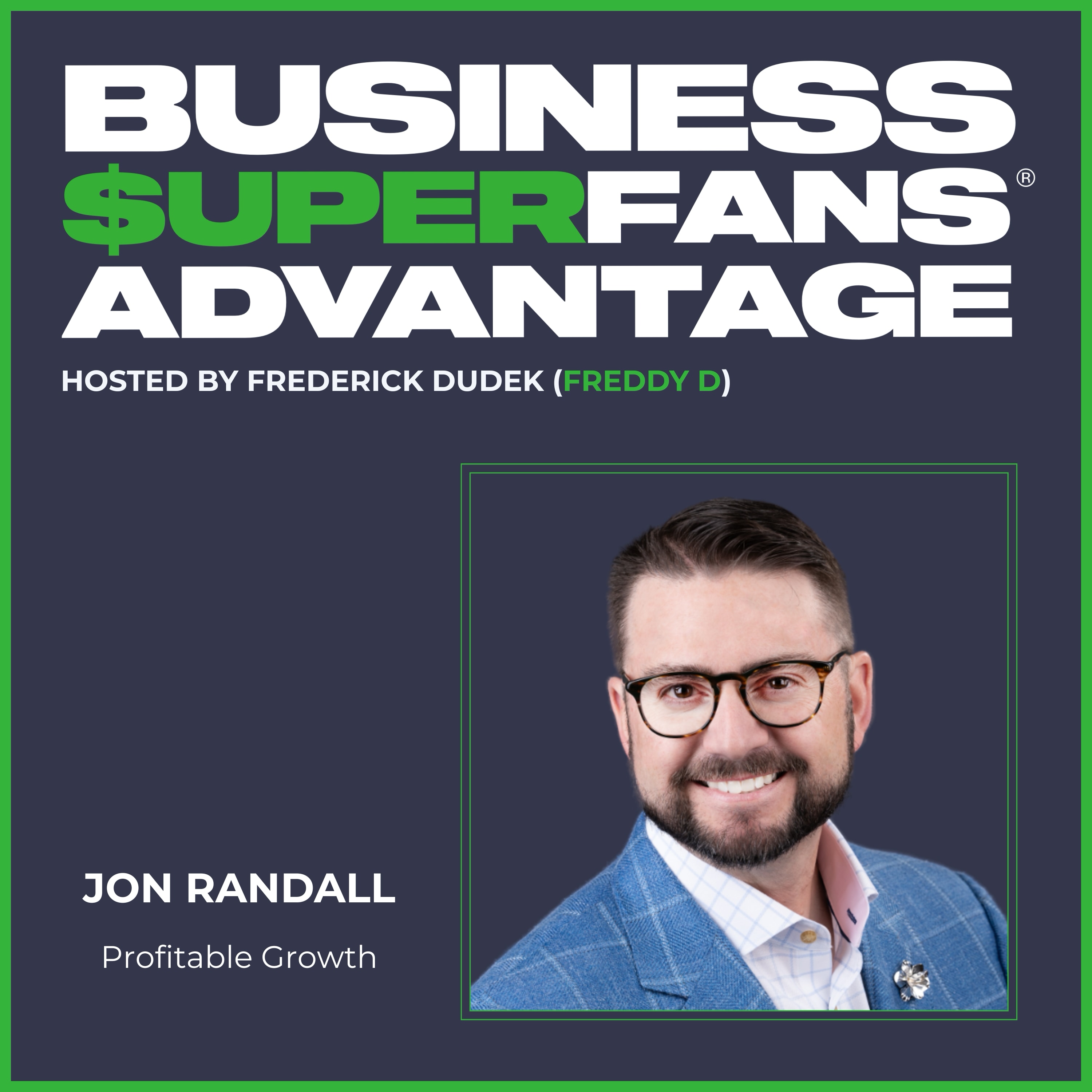
Ep 199Profitability Growth: Jon Randall Fixes Advisor Capacity Bottlenecks for 5X Revenue | Ep. 199
Episode 199 Frederick Dudek (Freddy D)Profitability growth starts when you stop letting capacity bottlenecks bench your best opportunities and start doubling down on ideal clients who can drive 5X revenue.Episode SummaryProfitability growth is the name of the game in this episode with Dr. Jon Randall, who breaks down how financial advisors and other service-based business owners can remove capacity bottlenecks, focus on ideal clients, and create more profitable growth without burning out. Jon explains that many firms stay stuck because they serve too many low-fit clients, underprice their value, and never create enough room to do more for the right people. He shares how better client optimization, stronger value-based contact, and team leverage can free up the founder, increase revenue per client, and create warm introductions that compound over time. This is a playoff-level lesson in building a business that scales with more freedom, better margins, and less chaos.Discover more with our detailed show notes and exclusive content by visiting:AI Marketing AdvantageKey Takeaways• The Capacity Constraint Scoreboard: The biggest brake on profitability growth is often a founder who is overloaded with too many clients and too little room to serve the best ones well.• The Ideal Client Duplication Method: Growth accelerates when advisors identify their best-fit clients, deepen value for them, and then duplicate that client profile intentionally.• The Top-150 Revenue Map: Jon’s case study showed that a smaller segment of clients often produces most of the revenue, revealing where the real expansion opportunities live.• The Better-Home Reallocation System: Rehoming lower-fit clients can create immediate capacity, protect service quality, and open the field for higher-margin growth.• The Frequency-of-Value Framework: Consistent contact only works when every touch delivers something useful, relevant, and worth remembering.• The Introduction Multiplier: Warm introductions outperform cold referrals because trust is transferred before the first real sales conversation begins.• The Revenue-per-Team-Member Metric: Profitability improves when leaders document delivery, leverage team members, and stop being the only engine in the business.• The Founder Freedom Playbook: Until the owner gets free from delivery overload, the business stays capped by that owner’s time, attention, and capacity.Kindly Consider Supporting Our Show: Support Business Superfans® AdvantageGuest Bio:Dr. Jon Randall is the Founder & Leader of XFA.COACH, where the firm says it has coached 300+ financial advisors and helped generate $150M+ in revenue growth. He has coached financial advisors since 2004, holds a Doctorate in Performance Psychology, and is the author of The Extraordinary Financial Advisor Practice. His work centers on growth, profitability, capacity, and helping advisors scale beyond founder overload.Create Mailbox Superfans Freddy D’s TakeDr. Jon Randall brought a championship-caliber growth lens to this conversation. He did not frame profitability growth as a marketing gimmick or a lead-gen hack. He framed it like a winning season is built: tighten the roster, improve execution, and stop wasting reps on the wrong plays. The core insight was powerful—too many advisors are buried under the weight of low-fit clients, inconsistent systems, and founder-led delivery that leaves no oxygen for real expansion.What really lit up the scoreboard was the relationship between ideal clients, value-based communication, and introductions. Jon showed that when you create a better experience for the right people, the growth engine starts running hotter without adding more noise. That is where capacity bottlenecks turn into strategic leverage. This is exactly the type of strategy I help clients implement through my SUPERFANS Framework™ in Prosperity Pathway coaching within the Superfans Growth Hub. When businesses do more for the right stakeholders, they create trust, momentum, and repeatable growth that feels less like a grind and more like a dynasty.Growth Breakthrough CallThe Action:The Action: Run a client capacity audit this week.Who: Your current client roster, especially the accounts that create low revenue, low energy, and low referral momentum.Why: Profitability growth rarely starts with more noise. It starts with more clarity. Jon’s playbook shows that when you identify your best clients, increase value there, and create a better home for low-fit accounts, you open up time, margin, and growth capacity fast.How:Score clients by revenue, fit, time demand, and introduction potentialCircle the top tier you want to duplicateIdentify the bottom tier that needs a lighter model or a better homeCreate one proactive value touchpoint for your best clients this weekDocument one part of the delivery that a team member could eventually ownBusiness Prosperity Pathway NewsletterGuest ContactConnect with Dr. Jon Randall:Website: XFA.COACHEmail: [email protected]
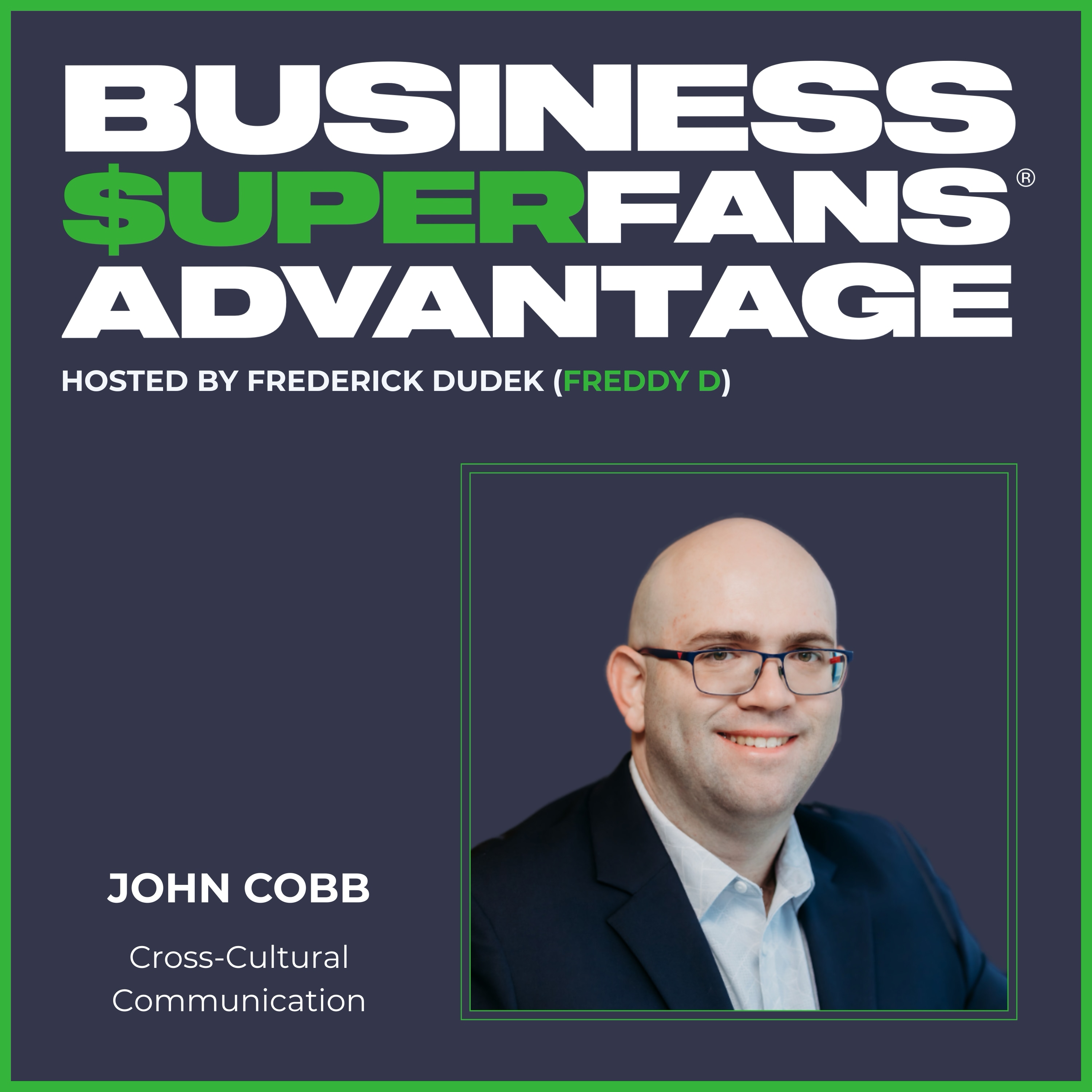
Ep 198Cross-Cultural Communication: John Cobb Prevents Deal Breakdowns to Protect $8M Partnerships | Ep. 198
Episode 198 Frederick Dudek (Freddy D)Cross-cultural communication is the competitive edge that helps service providers turn awkward global conversations into trusted relationships, stronger messaging, and revenue-saving wins.Episode SummaryCross-cultural communication takes center stage in this conversation with John Cobb, who breaks down how better messaging, cultural awareness, and relationship-first leadership can protect deals and unlock global growth. In Episode 199, John shares how he helps companies enter new markets, reframe communication in crisis moments, and avoid the costly mistakes that happen when teams rush business before building trust.From saving an $8 million business relationship to explaining why literal translation is never enough, John shows why international business, market entry strategy, and cultural intelligence all start with understanding people. This episode is a masterclass for service providers, founders, and growth-minded leaders who want to win more trust, strengthen vendor and client relationships, and operate like champions on the global stage. Based on the uploaded transcript.Discover more with our detailed show notes and exclusive content by visiting:AI Marketing AdvantageKey Takeaways• The Trust-Before-Transaction Framework: Leading with human connection before pitching the deal reduces friction and builds faster credibility in cross-border business conversations.• The $8M Vendor Rescue Playbook: Reframing sloppy or unclear communication can protect high-value partnerships and keep a business alive when one misunderstanding threatens everything.• The Personality Alignment Scoreboard: Matching communication style to expressive, analytical, driver, and amiable personalities improves internal collaboration and prevents avoidable conflict.• The Own-the-Mistake Method: Admitting the miss, correcting it fast, and making things right can turn disappointed customers into long-term superfans.• The Culture-First Market Entry System: Studying local habits, punctuality norms, language patterns, and relationship rituals gives companies a sharper edge when expanding internationally.• The Message Reframing Engine: Translating words is not enough; adjusting tone, phrasing, and context for each market increases resonance and campaign performance.• The Execution-over-Perfection Principle: Reaching 85% to 90% readiness and getting into the market beats polishing forever while competitors grab momentum and market share.Kindly Consider Supporting Our Show: Support Business Superfans® AdvantageGuest Bio:John Cobb is the founder of Pholus Advisory, where he helps companies navigate market entry, cross-cultural business strategy, and high-stakes communication challenges. With a background in international relations and hands-on experience advising companies across Latin America and beyond, John brings a practical, global perspective to messaging, partnerships, and operational decision-making. He is especially known for helping businesses bridge cultural gaps and create stronger outcomes through smarter communication.Create Mailbox Superfans Freddy D’s TakeThis episode plays like a championship film session for any business leader trying to win in unfamiliar territory. John Cobb brings the kind of calm, strategic presence every founder needs when the pressure is on—whether that means entering a new market, saving a shaky vendor relationship, or fixing messaging that is getting lost in translation.One of the biggest power plays here is John’s emphasis on meeting people where they are. That is not soft business advice. That is game-winning strategy. He shows how trust is built through language, tone, pacing, and cultural respect long before the contract gets signed. In sports terms, this is not about forcing a Hail Mary on every drive. It is about reading the defense, adjusting at the line, and making the right play for the field you are on.The conversation also lands a powerful reminder for service providers: mistakes do not destroy trust nearly as fast as defensiveness does. When businesses acknowledge the miss, reframe the message, and respond with humility, they create the kind of loyalty that fuels referrals and repeat business.This is exactly the type of strategy I help clients implement through my SUPERFANS Framework™ in Prosperity Pathway coaching within the Superfans Growth Hub—turning every stakeholder touchpoint into a trust-building, momentum-generating advantage.Growth Breakthrough CallThe Action:The Action: Run a cross-cultural messaging audit before your next important client, vendor, or market-entry conversation.Who: Founders, service providers, agency owners, sales leaders, and anyone doing business across regions, languages, or personality types.Why: The fastest way to lose momentum is to assume your message lands the same way everywhere. A short audit helps you spot tone gaps, trust gaps, and translation gaps before they become revenue leaks or relationship killers.How:Revie

Ep 197Warm Marketing: Billy Sammons Replaces Cold Outreach With Smartphone Video for 4X Growth | Ep. 197
Episode 197 Frederick Dudek (Freddy D)Forget cold calls—Billy Sammons shows how smartphone video turns warm marketing into trust, referrals, and 4X growth.Episode SummaryWarm marketing gets a major upgrade in this episode as Billy Sammons breaks down how smartphone video can replace cold outreach and help service-based business owners build trust, generate referrals, and create real momentum in their local market.A former teacher turned realtor turned marketer, Billy shares how simple, low-cost smartphone video interviews with local business owners can open doors, strengthen partnerships, and create a steady stream of warm referrals. Instead of chasing strangers through cold calls or spending heavily on ads, Billy reveals how entrepreneurs can use authentic community-based content to become the trusted connector in their ecosystem.This episode is a full-court lesson in using warm marketing, smartphone video, and relationship-driven visibility to turn everyday local connections into long-term business growth.Discover more with our detailed show notes and exclusive content by visiting:AI Marketing AdvantageKey Takeaways• The Warm Marketing Scoreboard: Replacing cold outreach with intentional local partnerships can create a stronger referral pipeline while reducing time wasted on low-conversion prospecting.• The Community Trust Engine: Featuring local business owners in simple video content builds borrowed trust with their audience and can accelerate relationship-based growth faster than cold traffic.• The $25 Visibility System: A smartphone, low-cost lapel mic, and basic tripod are enough to launch a practical local content strategy without expensive production overhead.• The Follow-Up Multiplier: Networking only produces ROI when you follow up consistently, because every new contact expands access to hundreds of second-degree relationship opportunities.• The Ecosystem Activation Method: When customers, partners, vendors, and contractors feel seen and supported, they become a volunteer sales force for your brand.• The Pain-Point Partnership Play: Connecting two businesses around a real operational problem creates mutual value and positions you as the strategic bridge, not just another marketer.• The Local Authority Loop: Repeated visibility inside your community compounds credibility until people begin introducing you as the go-to connector before you ever make a pitch.• The Give-with-Intention Framework: Generosity produces stronger business outcomes when it is tied to helping others grow in measurable, practical ways instead of random acts of promotion.Kindly Consider Supporting Our Show: Support Business Superfans® AdvantageGuest Bio:Billy Sammons is a former teacher, coach, and realtor who built his business through live local warm marketing instead of cold calls and paid lead chasing. After more than 15 years of using community-driven relationship strategies, Billy now teaches service-based business owners how to create visibility, build referral partnerships, and grow through authentic local connections using courses, a book, and a membership model.Create Mailbox Superfans Freddy D’s TakeThis episode plays like a championship film session on relationship-based growth. Billy Sammons brings the kind of practical, street-level wisdom that many entrepreneurs miss while chasing shiny-object marketing tactics. His message is simple but powerful: your next win may already be in your backyard.What stands out is how Billy turns community involvement into a repeatable business strategy. He is not talking theory. He is talking about meeting brewery owners, boutique operators, coffee shop teams, and local partners, then using visibility, generosity, and consistency to create a business ecosystem that promotes itself. That is where the real momentum shows up.Freddy D reinforces that same angle through the lens of Business Superfans®—the idea that customers, employees, contractors, suppliers, and partners can become loyal advocates who champion your brand like die-hard fans in the stands. This is exactly the type of strategy I help clients implement through my SUPERFANS Framework™ in Prosperity Pathway coaching.The big strategic takeaway: warm marketing is not just cheaper than cold outreach. It is often more trusted, more memorable, and more scalable because it turns relationships into recurring business momentum. That is how you stop grinding for every lead and start building a true fan-powered growth engine.Business Prosperity Pathway NewsletterThe Action:The Action: Record one short local business spotlight video this week.Who: A local business owner, referral partner, or community connector in your ecosystem.Why: This is the fastest way to stop playing defense with cold leads and start creating warm trust at scale. One simple video can open relationship equity with the featured business, introduce you to their audience, and position you as a community-first leader instead of another seller.How:Pick one local bus
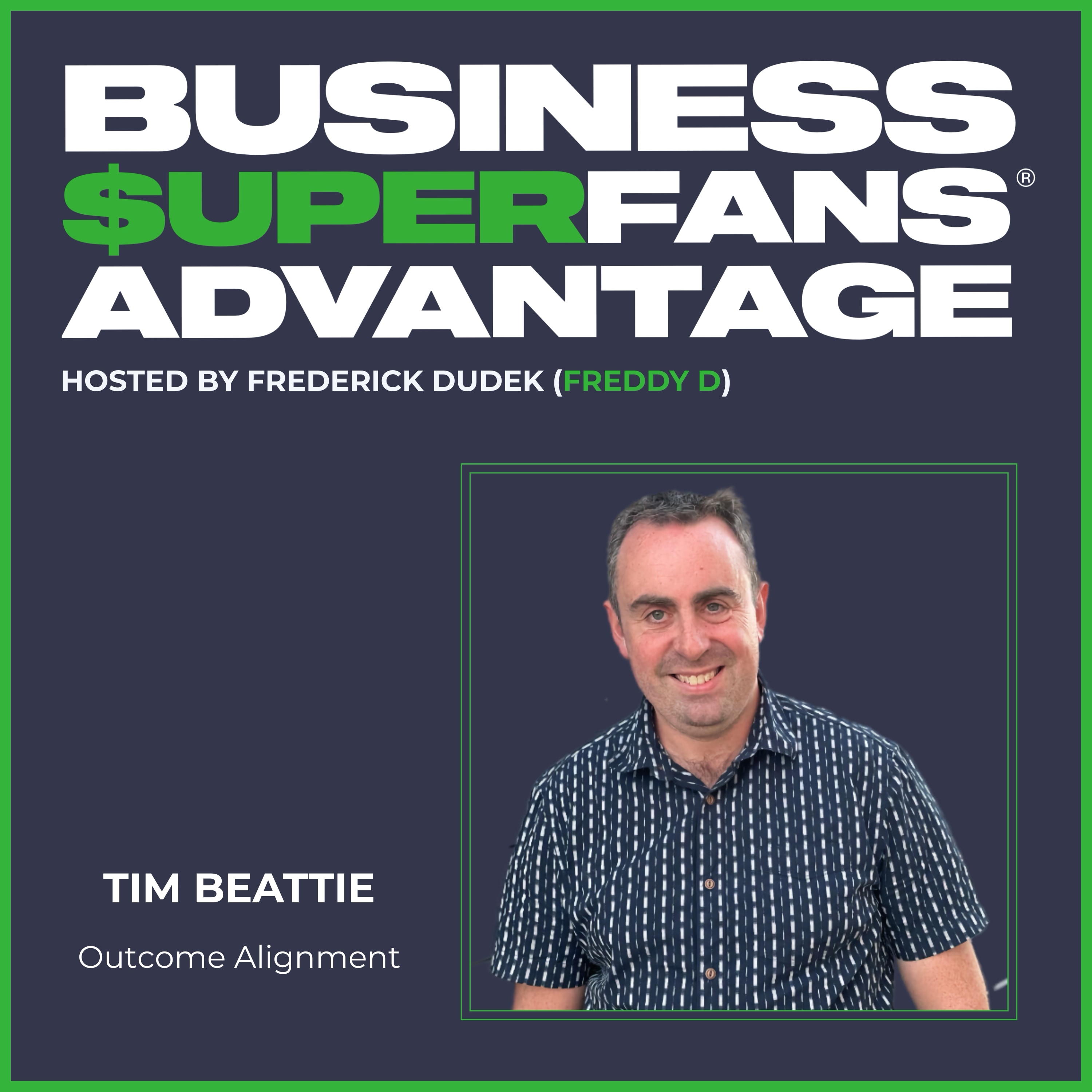
Ep 196Outcome Alignment: Tim Beattie Breaks Silos for 19X Coaching Reach for Expodental Growth | Ep. 196
Episode 196 Frederick Dudek (Freddy D)What happens when outcome alignment replaces siloed to-do lists? Tim Beattie shows how it can unlock 19X coaching reach and sharper team momentum.Episode SummaryOutcome alignment takes center stage as Tim Beattie explains how leaders can turn scattered teams, partners, and suppliers into one focused unit moving measurable needles together. In this episode, Tim breaks down why too many organizations confuse activity with progress, why siloed work creates drag, and why transparency, alignment, and common focus are the real championship fundamentals. He shares how Stellafai helps teams connect outcomes, measures, and coaching into one visible system, then reveals a standout case where a 10-minute coaching video was watched 19 times by 10 people, multiplying impact far beyond a single consulting session. For entrepreneurs, consultants, and service-business leaders, this episode is a playbook for turning outcome alignment into a repeatable growth engine.Discover more with our detailed show notes and exclusive content by visiting:Key Takeaways• The Transparency Trifecta: Transparency, alignment, and common focus are the three non-negotiables that keep internal teams and external partners rowing in the same direction.• The Star Chart System: Connecting one team’s measures to another team’s outcomes makes strategy visible and shows exactly how local wins drive enterprise-level momentum.• The 3-to-5 Measure Scoreboard: Teams move faster when they track a handful of shared progress signals instead of drowning in disconnected KPIs and task lists.• The Coaching Leverage Loop: A single 10-minute Loom video creating roughly 190–200 minutes of downstream value proves that consulting impact can be multiplied without multiplying calendar time.• The Continuous Coaching Model: Subscription-style access to coaching helps transformation efforts stick because teams can reorient quickly when they drift off track.• The Enablement Advantage: Organizations build stronger long-term capability when consultants leave behind skills, mental muscles, and visibility instead of slide decks and dependency.• The Needle-Moving Mindset: Performance jumps when people stop asking, “What’s on my to-do list?” and start asking, “What measure am I moving today?”Kindly Consider Supporting Our Show: Support Business Superfans® AdvantageGuest Bio:Tim Beattie is the co-founder of Stellafai and a consultant-turned-enablement leader with roughly 25 years of experience across PwC, IBM, Deloitte, boutique consultancies, and Red Hat. His work centers on helping organizations shift from output-heavy chaos to outcome-driven execution, while Stellafai positions itself as an operating system for outcome-based consulting and evidence-led client work.Create Mailbox Superfans Freddy D’s TakeThis conversation plays like a championship locker-room talk for leaders tired of seeing talented people hustle hard without moving the scoreboard. Tim Beattie makes the case that outcome alignment is not fluff, not culture-speak, and not another management buzzword. It is the difference between a team that wobbles and a team that wins. Freddy D keeps the sports energy high, and Tim matches it with a clear business truth: when every player in the ecosystem understands the mission, the measures, and their role in the bigger play, performance becomes visible, motivation rises, and waste drops. That lands especially hard in service businesses, where contractors, suppliers, and partners often shape the client experience just as much as employees do. This is exactly the type of strategy Freddy D helps clients implement through his SUPERFANS Framework™ and Prosperity Pathway™ coaching—turning scattered stakeholders into a coordinated, high-trust growth engine built for sustainable wins.The Action:The Action: Build a one-page outcome alignment scoreboard for your business this week.Who: Owners, department leaders, and key external partners who influence delivery, client experience, or growth.Why: This episode makes it clear that momentum accelerates when everyone can see the same mission, the same measures, and the same interdependencies. A simple shared scoreboard can cut confusion, expose waste, and create the first real wave of ecosystem-level buy-in.How:List 1 big strategic outcome for the next 90 days.Add 3–5 measurable signals that prove progress.Name the teams, contractors, or partners who affect each signal.Draw the connections between one group’s work and another group’s results.Review it weekly and ask only one question: Which needle moved?Guest ContactConnect with Tim Beattie:Website: Stellafai official site. LinkedIn: Tim Beattie profile.LinkedIn Client PipelineResources & ToolsStellafai Platform — A client workspace built around goals, measurable signals, star-chart dependencies, asynchronous coaching, and ROI dashboards for evidence-led engagements.Companies mentioned in this episode:StellafiBAE SystemsDeloitteIBMPwCRed HatRedhutch
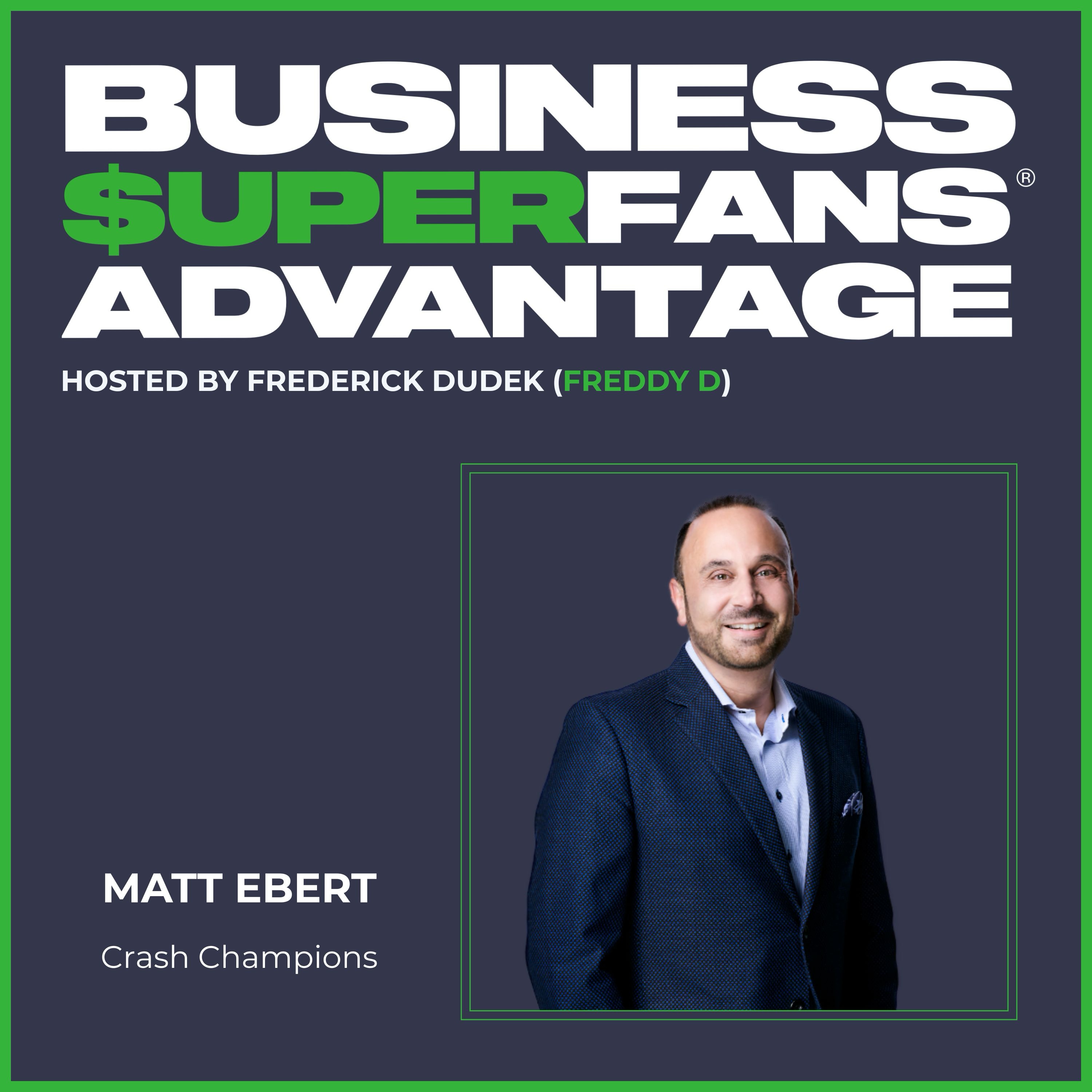
Ep 195Collision Repair Growth: Matt Ebert Solves Scaling Culture to $2.8B, 650 Locations | Ep. 195
Episode 195 Frederick Dudek (Freddy D)Collision repair growth gets a championship-level breakdown in this episode as Matt Ebert reveals how to scale culture, leadership, and operations from 1 shop to 650 locations without losing trust.Episode SummaryCollision repair growth takes center stage in Episode 195 as Matt Ebert, founder and CEO of Crash Champions, shares how he scaled a single Illinois body shop into a $2.8 billion business with 650 locations across 39 states. This conversation tackles a major pain point for service businesses and trade-based companies: how to grow fast, modernize an aging industry, and protect the culture that made the business win in the first place. Matt breaks down how leadership training, acquisition strategy, trust-building, and clear operational priorities became the playbook behind Crash Champions’ rapid rise. For entrepreneurs building multi-location brands, this episode delivers a practical roadmap for scaling people, process, and performance without letting the locker room lose its chemistry.Discover more with our detailed show notes and exclusive content by visiting:Key Takeaways• The SWAN Framework: Smart, willing, ambitious, and nice became Matt’s leadership filter for improving management quality before investing time and training into the wrong seat.• The 5 Priorities Scoreboard: Fix cars right, make customers happy, make insurance partners happy, make employees happy, and make money created a simple operating system everyone could rally behind.• The Leadership Bootcamp System: A three-part training model around culture, day-to-day management, and soft skills helped turn strong technicians into stronger leaders.• The Trust Equation: In a business where customers may only need help once every 10 years, every interaction either builds trust or tears it down.• The Expectation Management Method: Setting realistic timelines upfront prevents avoidable customer frustration and protects long-term brand loyalty.• The Champion Circle Recognition Model: Highlighting the top 5% quarterly gave teams a visible standard for excellence and created momentum through recognition, not just correction.• The Acquisition Integration Playbook: Rapid growth through acquisitions only works when leadership alignment and cultural clarity move as fast as the deal activity.• The Winning Momentum Principle: Teams perform better when leaders create a sense of progress, appreciation, and shared victories instead of constant criticism.Kindly Consider Supporting Our Show: Support Business Superfans® AdvantageGuest Bio:Matt Ebert is the founder and CEO of Crash Champions, one of the largest collision repair organizations in the United States. Starting with a single shop in New Lenox, Illinois in 1999, he helped build the company into a national powerhouse with 650 locations, operations in 39 states, and roughly $3 billion in revenue. Matt is known for combining blue-collar leadership, disciplined acquisitions, and people-first culture to scale in a highly fragmented industry.EpisodeCreate Mailbox Superfans Freddy D’s TakeThis episode plays like a playoff clinic on scaling a service business without fumbling the culture. Matt Ebert does not frame growth as luck or hype. He frames it as a leadership discipline. That is the big win here. He understood the collision repair industry was consolidating, saw the market shift early, and moved with conviction through acquisitions. But the real championship move was not just buying locations. It was building the internal muscle to unify them.What stands out is Matt’s obsession with trust, communication, and leadership development. He makes it clear that the direct manager is the face of the company for most employees. That insight is gold for any founder trying to scale beyond founder-led operations. When the locker room expands, culture no longer survives on inspiration alone. It survives on systems.This is exactly the type of strategy I help clients implement through my SUPERFANS Framework™ in Prosperity Pathway coaching within the Superfans Growth Hub. Matt’s approach proves that when you recognize people, clarify the mission, and train leaders to row in rhythm, your business ecosystem starts playing like a championship team instead of a group of disconnected free agents.The Action:The Action: Build your own 5 Priorities Scoreboard.Who: Founders, operators, and multi-location service business leaders.Why: When teams do not know the scoreboard, they cannot win consistently. A simple, visible operating framework aligns leadership, reduces mixed messaging, and helps every department row in the same direction.How:Define the five non-negotiable outcomes your business must win every quarter.Translate each priority into 1 measurable KPI.Review the scoreboard with managers weekly.Tie recognition to the priorities your top performers are advancing.Use every new initiative to answer one question: Which priority does this improve?Guest ContactConnect with Matt Ebert:Web
Ep 194Continuing Education Courses: Justin Montgomery Solves Time-for-Money Burnout for 8 Figures in 3 Years | Ep. 194
Episode 194 Frederick Dudek (Freddy D)Continuing education courses can turn expert burnout into a scoreboard-winning business model—where your knowledge works for you and not just through you.Episode SummaryContinuing education courses take center stage in this episode as Justin Montgomery, founder of ProCourseStart, breaks down how credentialed professionals can escape the time-for-money trap and build a high-margin education business. Justin shares how he went from burned-out nurse practitioner to scaling Elite Nurse Practitioner into an eight-figure continuing education platform after launching his first course and generating $50,000 in one week.This conversation hits the business playoffs level of strategy for service-based professionals, consultants, and credentialed experts who want to create passive income, reduce burnout, and build an offer with built-in demand. Freddy D and Justin unpack why CE businesses are recession-resistant, how tiny niche market share can still produce seven-figure revenue, and why the real growth engine is building loyal superfans through transformational results, follow-up, and personalized customer experiences.Discover more with our detailed show notes and exclusive content by visiting:Key Takeaways• The Knowledge Leverage Framework: Experts create scale when they stop letting knowledge only work through them and start packaging it to work for them through products, systems, and automation.• The Built-In Demand Scoreboard: Continuing education courses win because licensed professionals already need CE credits to maintain compliance, creating immediate market demand.• The 1% Market Share Model: Capturing just 0.5% to 1% of a niche professional market can create a million-dollar business when the offer and targeting are dialed in.• The Transformational Offer Method: The highest-value CE products do not teach information people can Google; they teach strategic outcomes that change careers, income, or business models.• The Two-Week Rule: If your business cannot run for two weeks without your direct input, you do not own a scalable business—you own a glorified job.• The Superfan Retention Engine: Reviews, follow-up, personalized recognition, and consistent value-driven content turn customers into repeat buyers and referral partners.• The Lean Margin Playbook: A well-built CE business can run with contractors, automation, and modest overhead, producing 80% to 90% margins when executed correctly.• The Whisper Marketing System: Consistent content, thoughtful touchpoints, and small personalized gestures keep you top of mind and compound long-term customer lifetime value.Kindly Consider Supporting Our Show: Support Business Superfans® AdvantageGuest Bio:Justin Montgomery is the founder of ProCourseStart and a former nurse practitioner who transformed his clinical expertise into an eight-figure continuing education business. After building Elite Nurse Practitioner into a major education platform, Justin now helps doctors, therapists, attorneys, chiropractors, and other credentialed experts launch trust-based, high-margin CE businesses designed to create scalable income and more freedom.Create Mailbox Superfans Freddy D’s TakeJustin Montgomery steps onto this episode like a seasoned champion with a playbook built from real reps, real results, and real scars. His story is not theory—it is the business version of coming off the bench, reading the defense, and taking over the game. He saw the ceiling in the traditional professional model: even at strong income levels, he was still tied to shifts, schedules, and constant output. Then he made the strategic pivot—he turned his expertise into continuing education courses with built-in demand.That is where this episode becomes a must-listen for entrepreneurs and service-based leaders. Justin is not simply talking about “making a course.” He is talking about building a business ecosystem where expertise, automation, niche positioning, and audience trust work together like a championship roster. Freddy D smartly connects this to the bigger Business Superfans philosophy: the little things, the follow-up, the personalized recognition, the testimonials, and the consistent whisper in the marketplace all turn customers into advocates.This is exactly the type of strategy I help clients implement through my SUPERFANS Framework™ in Prosperity Pathway coaching within the Superfans Growth Hub. When you combine transformational offers with a fan-building experience, you do more than sell—you create momentum that keeps scoring long after the first transaction.The Action:The Action: Identify one area of expertise you can package into a transformational continuing education offer.Who: Service-based professionals, credentialed experts, and advisors.Why: Most experts are still playing offense one possession at a time—trading hours for income. Packaging your knowledge into a repeatable offer creates leverage, expands margin, and opens the door to a business tha
Ep 193Leadership Development: David Graddy Fixes Bad Bosses for 30% Higher Team Output in 90 Days | Ep. 193
Episode 193 Frederick Dudek (Freddy D)Leadership development isn’t won in the corner office—it’s won in the trenches, where trust, communication, and delegation turn everyday teams into championship squads.Episode SummaryLeadership development gets real in this episode as David Graddy breaks down how to lead before you have the title—and how to build trust that turns your team into true believers. David shares his climb from retail floors to Boeing leadership, where he learned that the fastest way to lose a team is simple: no integrity, no growth, no communication. You’ll hear how intentional delegation develops future leaders, why many companies accidentally promote “top performers” into failure, and how camaraderie creates the kind of loyalty that lasts for decades. If you want leadership development that actually moves the scoreboard—better performance, stronger retention, and tighter culture—this episode delivers the playbook.Discover more with our detailed show notes and exclusive content by visiting:Key Takeaways• The Trust Foundation Framework: If your team doesn’t trust you, you’re only a positional leader—and your ceiling is instantly capped.• The Integrity Scoreboard: Consistent integrity is the baseline metric that determines whether people follow you voluntarily or only comply.• The Growth-Through-the-Job System: Leaders who create stretch opportunities (special teams, problem-solving, mentoring) multiply capability across the roster.• The Communication Championship Rule: Want to lose the locker room fast? Go silent—communication is the fuel for alignment and momentum.• The Promotion Trap Method: Promoting a “top doer” without leadership training produces micromanagement, control, and team disengagement.• The Delegate-With-Intent Play: Delegation isn’t dumping tasks—it’s a deliberate development strategy designed to grow someone into their next role.• The Strengths Deployment Strategy: When you assign responsibilities based on strengths, you unlock better ideas, faster execution, and higher buy-in.• The Pipeline Leader Principle: Great leaders are always scouting and developing the next leader—because succession is a competitive advantage.Kindly Consider Supporting Our Show: Support Business Superfans® AdvantageGuest Bio:David Graddy is a leadership coach, author, and veteran operations leader with decades of experience across retail, Boeing, and Spirit AeroSystems. He wrote Leading in the Trenches, a strategic guide for developing leaders who build trust, communicate clearly, and grow their teams. David is also developing a new book focused on first-level leadership, working with John Maxwell’s publishing organization to bring the next level of leadership development to life.Create Mailbox Superfans Freddy D’s TakeThis episode is a full-contact leadership development masterclass—no theory-only fluff, just trench-tested execution. David’s core message is a championship truth: trust and integrity are your team’s home-field advantage. Without them, you’re wearing the title but losing the game.Freddy D reinforces the “superfan effect” inside companies: when leaders build real camaraderie and empower people, teams don’t just perform—they rally. David’s examples from Boeing prove that leadership isn’t a moment; it’s a journey: teaching the tool is one thing, but teaching the thinking behind it is what creates confidence, autonomy, and future leaders.This is exactly the type of strategy I help clients implement through my SUPERFANS Framework™ in Prosperity Pathway coaching within the Superfans Growth Hub—turning employees, teams, and partners into engaged advocates who execute like champions.The Action:The Action: Run a “Trust + Growth Huddle” with your team this week.Who: Your employees / direct reports (and one rising leader you want to develop).Why: Leadership development accelerates when people feel seen, supported, and stretched—this builds trust, increases ownership, and reduces micromanagement.How:Ask: “Where do you feel blocked right now?” (remove friction)Ask: “What’s one skill you want to build in the next 30 days?” (growth target)Delegate one responsibility with an intent tied to that growth targetSet a simple scoreboard: success metrics + check-in datePublicly reinforce trust: “I’ve got your back—bring me risks early.”Guest ContactConnect with David Graddy:Website: DavidGraddy.comEmail: [email protected]: David Graddy (search on LinkedIn)LinkedIn Client PipelineResources & ToolsLeading in the Trenches (David Graddy): A strategic guide to becoming the leader your team needs.DavidGraddy.com: David’s leadership site + “seven practical actions” guide.John Maxwell Publishing Organization: David’s next-book path and leadership publishing support.Dale Carnegie Leadership Training: Referenced as a powerful perspective shift for leadership.Unreasonable Hospitality: Example of empowerment and strengths-based role design.YouTube Micro-Lessons / Book Club Training: Simple, low-cost lead
Ep 192Financial Clarity: Jon Morris Solves Profit Blind Spots for a $3M Turnaround | Ep. 192
Episode 192 Frederick Dudek (Freddy D)Financial Clarity for Service Businesses can unlock hidden profit, eliminate cash stress, and turn your numbers into a strategic scoreboard for predictable growth.Financial clarity is the difference between scaling profit and scaling stress—and in Episode 192, Jon Morris, Founder & CEO of Fiscal Advocate, reveals how service-based businesses can engineer a $3M financial turnaround in 6 months.Too many founders grow revenue while flying blind on profit margin, cash flow, and real KPIs. The result? Burnout, cash distress, and stalled growth.Jon shares how he scaled Rise Interactive to nearly $40M before exiting—and how that experience led him to build Engine BI and an AI CFO co-pilot to help leaders make smarter financial decisions.From fixing broken chart of accounts to identifying bloated finance teams and leaking margins, this episode shows how financial clarity transforms stress into strategy—and chaos into confidence.Discover more with our detailed show notes and exclusive content by visiting: https://linkly.link/2byDKKey Takeaways• The 3 KPI Scoreboard: Cash-to-overhead ratio, profit margin, and year-over-year revenue growth determine whether you’re building wealth or bleeding cash.• Income Statement as a Storyteller: When organized correctly, your P&L reveals exactly where growth is stalling—and why.• Benchmarking Creates Competitive Edge: If the industry average is 8% sales & marketing spend, playing at 16% can create growth acceleration.• First 100 Days Matter Most: Product-led onboarding builds a “goodwill bucket” that protects long-term retention and referrals.• Accountability Drives Revenue: Sales teams without quotas and pipeline visibility kill growth momentum.• Small Pricing Tweaks, Massive Impact: A simple $5 increase flipped one business from negative net income to profitability.• Urgency Wins: Waiting four months after losing a major client is fatal. Financial clarity demands decisive action.Kindly Consider Supporting Our Show: Support Business Superfans® AdvantageGuest Bio:Jon Morris is the Founder & CEO of Fiscal Advocate and former Founder of Rise Interactive, a digital agency he scaled from $10K in prize money to nearly $40M in revenue before a successful exit. Today, Jon helps service-based CEOs eliminate financial blind spots through Engine BI and AI-powered CFO tools—driving profitability, clarity, and scalable growth.Create Mailbox Superfans Freddy D’s TakeJon Morris doesn’t just talk theory—he delivers championship-level financial execution. He took one service firm from losing $1.5M to generating $1.5M profit in a year. That’s a $3M swing. That’s not luck—that’s financial clarity.Here’s the game-changing insight: Most service businesses don’t fail from lack of effort. They fail from lack of financial organization and accountability.Jon breaks it down like a coach reviewing film:Sales & marketing spend misalignedBloated finance teamsFreelancers killing margin mid-monthNo quota accountabilityDisorganized chart of accountsThis is exactly the type of strategic shift I help clients implement through my SUPERFANS Framework™ inside Prosperity Pathway coaching within the Entrepreneur Prosperity Hub.When your numbers align, your team aligns. When your team aligns, your ecosystem becomes advocates. And when your ecosystem becomes advocates—you build momentum that compounds like a championship dynasty.The Action:The Action: Audit your Sales & Marketing spend percentage.Who: CEO or FounderWhy: If you don’t intentionally fund growth, you’re relying on hope instead of strategy. Financial clarity demands intentional allocation.How:Calculate S&M as % of revenueBenchmark against industry averagesEvaluate ROI by channelSet a 90-day measurable growth targetAdjust budget to match desired outcomeGuest ContactConnect with Jon Morris:Website: FiscalAdvocate.comLinkedIn: Jon MorrisLinkedIn Client PipelineResources & Tools• Engine BI – Budgeting, forecasting, benchmarking platform for service firms• Luco (AI CFO Co-Pilot) – AI-powered financial decision assistant• Fiscal Advocate eBook – Budgeting & forecasting guideThis podcast is hosted by Captivate, try it yourself for free.Companies mentioned in this episode:Fiscal Advocate Inc.Rise InteractiveCopyright 2025 Prosperous Ventures, LLCMentioned in this episode:Ninja ProspectingWe help coaches, consultants, and service-based business owners start real conversations with their ideal prospects on LinkedIn… Without sounding like a sales robot. We focus on building relationships and adding value first. Our method leaves a positive impression – so even if the timing isn’t right now, the door stays open for future conversations. Think of it this way: You wouldn’t walk into a networking event and pitch someone before saying hello. So why would you do that online?LinkedIn Client PipelineThis podcast uses the following third-party services for analysis: OP3 - https://op3.dev/privacyPodtrac -
Ep 191Pay-Per-Click Advertising: Andy Janaitis Turns Wasted Budget into Predictable Growth | Ep. 191
Episode 191 Frederick Dudek (Freddy D)Pay-Per-Click Advertising shouldn’t feel like gambling—Andy Janaitis reveals how to turn wasted ad spend into predictable, scalable growth.Pay-Per-Click Advertising doesn’t fail because of the platform—it fails because of poor alignment, weak data, and reactive strategy. In Episode 191, Andy Janaitis shows how to transform wasted ad spend into predictable growth.Many small businesses treat Google Ads and Meta campaigns like experiments instead of engineered systems. They chase clicks, obsess over surface-level ROAS, and end up frustrated by inconsistent results. The real breakthrough comes when paid ads are aligned with business expansion goals, accurate conversion tracking, and disciplined forecasting.Andy breaks down how automated bidding models, clean data inputs, and authentic customer-focused content create sustainable momentum. From scaling a local chocolate brand nationwide to driving consistent 20–30% year-over-year revenue growth, he reveals how to build a PPC strategy that compounds instead of fluctuates.If you want to reduce wasted budget, improve ROAS, and turn Pay-Per-Click Advertising into a predictable revenue engine, this episode delivers the playbook.Discover more with our detailed show notes and exclusive content by visiting:Key TakeawaysAuthentic Content Fuels PPC Performance - The best way to win in paid ads today is answering real customer questions before they buy.Data Is the New Playbook - Automated bidding models in Google and Meta only work when clean, accurate conversion data is fed back into the system.Business Goals > Vanity Metrics - ROAS alone doesn’t build empires—align ad spend with expansion strategy and long-term revenue growth.Collaborative Budget Forecasting Wins - Quarterly forecasting and transparent reporting eliminate wasted spend and build trust.Internal Champions Accelerate Sales Cycles - Help your marketing contact look like a rockstar internally—and watch momentum multiply.Old School Still Scores Points - Direct mail, thank-you cards, and personal follow-up dramatically increase retention and referrals.Holistic Paid Ads Strategy - Google Ads, Meta Ads, landing pages, and email flows must operate as one integrated growth engine.Kindly Consider Supporting Our Show: Support Business Superfans® AdvantageGuest Bio:Andy Janaitis is the founder of PPC Pitbull, a performance-driven digital marketing agency specializing in Google Ads and Meta Ads for small and mid-sized businesses. With a background in engineering, data science, and product management, Andy blends technical precision with strategic creativity. Over the past five years, he’s helped brands scale nationally, improve ROAS, and achieve consistent 20–30% annual growth through smarter paid advertising systems.Freddy D’s TakeAndy doesn’t just “run ads”—he builds performance ecosystems.What stood out most is how he merges technical precision with authentic curiosity. Like a championship coach studying game film, he analyzes data, conversion tracking, and bidding algorithms—but never forgets the human behind the screen.When a Seattle-based chocolate brand wanted national expansion, Andy didn’t chase the cheapest conversions. He aligned Pay-Per-Click Advertising with geographic expansion strategy, helping them penetrate key markets—even at higher short-term acquisition costs—because long-term growth demanded it.That’s ecosystem thinking.This is exactly the type of strategy I help clients implement through my SUPERFANS Framework™ in Prosperity Pathway coaching within the Superfans Growth Hub.You don’t build superfans by chasing clicks.You build them by aligning marketing, operations, and leadership around shared goals—then amplifying the right plays.Like sports dynasties, sustained success isn’t flashy.It’s disciplined fundamentals executed consistently.The Action:The Action: Align Your PPC Budget With Business Expansion GoalsWho: Marketing Director or FounderWhy: If your ad strategy isn’t tied to expansion markets or revenue objectives, you’re playing defense instead of offense. Championship growth requires strategic spend—not random clicks.How:Review your top 3 business growth goals for the next 12 monthsIdentify geographic or demographic expansion targetsCompare current ad spend allocation against those prioritiesEliminate campaigns not aligned with growth strategyReallocate budget toward strategic market penetrationGuest ContactConnect with Andy Janaitis:Website: https://ppcpitbulls.comLinkedIn: Search “Andy Janaitis”LinkedIn Client PipelineResources & ToolsPPC Pitbull – Performance-focused Google & Meta Ads managementGoogle Ads – Paid search advertising platformMeta Ads Manager – Facebook & Instagram ad platformSUPERFANS Framework™ – Ecosystem transformation methodologyThis podcast is hosted by Captivate, try it yourself for free.Companies mentioned in this episode:PPC Pit BullsGoogleMetaChatGPTBingPerplexityCopyright 2025 Prosperous Ventures, LLCMentioned in t

Ep 190Healthcare Cost Optimization: How Donovan Pyle Turns Benefits Into Competitive Advantage | Ep. 190
Episode 190 Frederick Dudek (Freddy D)Healthcare cost optimization becomes a true competitive advantage when leaders stop accepting rising premiums and start redesigning employee benefits with strategy, transparency, and executive control.Healthcare cost optimization takes center stage in Episode 190 as Donovan Pyle reveals how executives can transform their employee benefits strategy into a powerful competitive advantage.Most business owners accept healthcare increases as inevitable. Year after year, premiums rise, HR absorbs the stress, and leadership feels stuck playing defense. But Donovan breaks down why up to 25% of employer healthcare spend is wasted—and how misaligned incentives in traditional broker models quietly fuel the problem.In this high-impact conversation, Donovan shares how transparent supply chain visibility, structured RFP processes, and unbiased advisory models allow companies to reduce costs while improving benefits.The result? Stronger employee retention, better recruiting leverage, healthier margins—and a business ecosystem that operates like a championship team instead of a scrambling defense.Discover more with our detailed show notes and exclusive content by visiting: https://linkly.link/2akCtKey TakeawaysHealthcare Cost Optimization Is Strategic, Not Tactical - This isn’t about trimming expenses—it’s about turning benefits into competitive advantage that strengthens retention and recruiting.25% Waste Opportunity - Many employers overspend by thousands per employee due to pricing variation and hidden inefficiencies.Broker Incentive Misalignment - Traditional compensation models can reward rising costs. Understanding this is the first step toward real optimization.Healthcare Supply Chain Transparency - Imaging, hospital, and pharmacy pricing can vary over 1,000%. Visibility unlocks savings.Strategic RFP Execution - Running competitive RFPs for pharmacy benefit managers can generate multi-million-dollar savings with minimal disruption.Executive Engagement Required - Healthcare transformation cannot be fully delegated. Leadership involvement creates momentum.Benefits as Talent Weapon - When benefits improve and stabilize, employees feel valued—and loyalty compounds.Kindly Consider Supporting Our Show: Support Business Superfans® AdvantageGuest Bio:Donovan Pyle is CEO of Health Compass Consulting and author of Fixing Healthcare: How Executives Can Save Their People, Their Business, and the Economy. Recognized as a 2025 Benefits Advisor of the Year by the Validation Institute, Donovan helps mid-sized employers implement healthcare cost optimization strategies that save an average of $1,856 per employee annually while improving employee experience.Freddy D’s TakeThis episode wasn’t about trimming budgets—it was about shifting from defense to offense.Healthcare cost optimization becomes powerful when executives stop outsourcing responsibility and start leading strategically. Donovan made it clear: when you see your healthcare supply chain, you see opportunity.Think of it like a championship franchise reviewing game film. Once you identify inefficiencies, you redesign the playbook.When benefits improve and costs stabilize, employees feel secure. And when employees feel secure, they become advocates. That internal loyalty turns into external momentum.This is exactly the type of transformation I help clients implement through my SUPERFANS Framework™ in Prosperity Pathway coaching within the Superfans Growth Hub. When leaders align benefits strategy with talent strategy, they don’t just save money—they build competitive advantage that compounds over time.That’s how you turn healthcare from a frustration into fuel.The Action:The Action: Elevate Benefits to the Executive LevelWho: CEO or CFOWhy: Healthcare is likely your second or third largest expense. Treating it strategically creates financial flexibility and strengthens employee loyalty.How:Review broker compensation structureDemand full claims transparencyConduct a pharmacy benefit RFPSurvey employees on benefit prioritiesExplore fiduciary advisory optionsGuest ContactConnect with Donovan Pyle:Website: https://fixinghealthcare.comLinkedIn Client PipelineResources & ToolsFixing Healthcare (Book) – Executive roadmap for healthcare cost optimizationhttps://fixinghealthcare.comHealth Compass Consulting – Fiduciary-based healthcare advisoryhttps://healthcompassconsulting.comEntrepreneur Prosperity Hub – Business growth tools & playbookshttps://www.skool.com/eprosperityhub/aboutThis podcast is hosted by Captivate, try it yourself for free.Companies mentioned in this episode:Health Compass ConsultingNinja ProspectingEmployee Benefits NewsBenefits ProSHRMMark CubanCopyright 2025 Prosperous Ventures, LLCMentioned in this episode:Ninja ProspectingWe help coaches, consultants, and service-based business owners start real conversations with their ideal prospects on LinkedIn… Without sounding like a sales robot. We focus on building relationshi
Ep 189Virtual Assistant Services: Joanna Zhang’s Sustainable Scaling Blueprint | Ep. 189
Episode 189 Frederick Dudek (Freddy D)Virtual assistant services aren’t just about delegation—they’re the championship strategy for scaling sustainably, building empowered teams, and turning operations into a growth engine.Virtual assistant services take center stage in Episode 189 as Joanna Zhang, Founder of The Operations Genius, reveals how to scale sustainably without burning out.Many entrepreneurs hit a growth ceiling because they try to do everything themselves. The bottleneck isn’t strategy—it’s execution overload. Leaders know they should delegate, but fear losing control, quality, or momentum.Joanna breaks down how fractional operations support, plug-and-play teams, and conscious leadership transform chaos into clarity. She shares how empowered VAs become trusted partners—not task-doers—and how networking and word-of-mouth fuel sustainable growth.The result? More freedom, aligned teams, predictable systems, and businesses that scale without sacrificing purpose.Discover more with our detailed show notes and exclusive content by visiting:Key TakeawaysSustainable Scaling Starts with Letting Go - True growth begins when leaders delegate beyond incompetence—and even beyond excellence.80% Done > 0% Done - Progress beats perfection. Empowered VAs create momentum while you focus on vision.Plug-and-Play Virtual Assistant Services - Pre-trained specialists integrate fast, reducing ramp-up time and protecting quality.Fractional Operations Model - Layered support—including project management and quality assurance—ensures accountability and peace of mind.Empowerment Over Control - Leadership isn’t management—it’s helping team members become the best version of themselves.Word-of-Mouth is the Ultimate Growth Engine -When clients become business superfans, your sales cycle collapses.Energy Management > Time Management - Leaders thrive when they operate in their genius zone—not buried in admin tasks.Kindly Consider Supporting Our Show: Support Business Superfans® AdvantageGuest Bio:Joanna Zhang is the Founder of The Operations Genius and a sustainable scaling strategist based in Sydney, Australia. She helps entrepreneurs implement virtual assistant services and fractional operations systems that create freedom and long-term growth. Recognized by the Stevie International Business Awards for innovation in fractional services, Joanna blends smart systems with conscious leadership to help teams grow from alignment—not burnout.Freddy D’s TakeJoanna didn’t build her business from theory—she built it from necessity. As a former financial planner turned founder, she experienced the classic entrepreneurial trap: becoming the bottleneck.Here’s the championship-level insight: virtual assistant services aren’t about outsourcing tasks—they’re about activating your ecosystem.Like a synchronized rowing team, every member must move in rhythm. Joanna’s plug-and-play fractional model ensures VAs integrate quickly, uphold quality, and align with the business mission. That’s where delegation transforms into leadership.Her layered system—specialists + project management + accountability—creates operational clarity. And when teams feel empowered? They don’t just execute. They elevate.This is exactly the type of strategy I help clients implement through my SUPERFANS Framework™ in Prosperity Pathway coaching within the Superfans Growth Hub. When your team becomes aligned advocates, your growth compounds.Scaling isn’t about adding chaos. It’s about orchestrating momentum.The Action:The Action: Delegate One Excellence Task This WeekWho: Business Owners & Service EntrepreneursWhy: Growth stalls when you cling to control. Sustainable scaling begins when you empower others.How:Identify one task you’re excellent at but drains energyDocument the process clearlyAssign it to a qualified VAAccept 80% perfection initiallyReinforce with feedback and recognitionGuest ContactLinkedIn: Search “Joanna Zhang Operations”LinkedIn Client PipelineResources & ToolsThe Operations Genius – Sustainable virtual assistant services & fractional operations supportEntrepreneur Prosperity Hub (Skool) – Community for scalable service providersService Provider Prosperity Playbook – 100+ page guide to scalable service growthThis podcast is hosted by Captivate, try it yourself for free.Copyright 2025 Prosperous Ventures, LLCThis podcast uses the following third-party services for analysis: OP3 - https://op3.dev/privacyPodtrac - https://analytics.podtrac.com/privacy-policy-gdrpPodcorn - https://podcorn.com/privacy
Ep 188Podcast Guesting Strategy: How Mark Hayward Turns Interviews into Revenue | Ep. 188
Episode 188 Frederick Dudek (Freddy D)Podcast Guesting isn’t about exposure—it’s about intention, and Mark Hayward reveals how strategic conversations turn visibility into revenue-generating superfans.Podcast guesting strategy takes center stage in Episode 188 as Mark Hayward reveals how intentional interviews become powerful business growth engines. In this high-energy conversation, Mark shares how entrepreneurs can turn podcast appearances into lead generation, authority building, and superfan creation.Too many service-based business owners chase visibility without a game plan. They land interviews… then let the opportunity fade. No follow-up. No repurposing. No strategy.Mark breaks down his 3-part podcast guesting system—PR placement, coaching for intentional messaging, and strategic marketing repurposing. The result? Greater credibility, trust, and long-term relationship capital that compounds over time.If you want to transform conversations into collaborations—and collaborations into revenue—this episode delivers the blueprint.Discover more with our detailed show notes and exclusive content by visiting:Key TakeawaysIntentional Podcast Guesting Wins - Visibility without strategy is noise. Mark teaches how to align every interview with clear lead-generation objectives.The 3-Part Guesting System - PR placement + coaching + content repurposing creates exponential ROI from a single appearance.Visibility, Credibility, Trust Formula - Long-form interviews build deeper trust than ads or short media spots—creating true business superfans.Repurpose or Waste the Opportunity - A 60-minute episode can become 10–20 content assets across LinkedIn, email, and social platforms.15–20 Touchpoint Reality - Modern marketing requires multiple interactions. Podcast clips accelerate trust-building cycles.Follow-Up Creates Superfans - Strategic follow-up with guests, clients, and prospects turns one-time conversations into long-term advocates.Storytelling Drives Authority - Structured messaging helps guests articulate transformation clearly—and close more deals.Kindly Consider Supporting Our Show: Support Business Superfans® AdvantageGuest Bio:Mark Hayward is a podcasting and business growth expert and co-founder of Podcast Introduction Group. With over 580 episodes under his belt and a background at PwC and KPMG in tech consulting, Mark helps entrepreneurs leverage podcast guesting as a strategic lead-generation tool. His expertise lies in transforming interviews into authority-building assets that drive measurable business growth.Freddy D’s TakeMark’s journey from corporate consultant to podcast growth strategist is a masterclass in skill stacking. He didn’t start podcasting to build a company—he started to sharpen his communication. But through consistency and strategy, he built authority.That’s the championship mindset.Most entrepreneurs treat podcast guesting like showing up for a pickup game. Mark treats it like playoff preparation. He helps clients clarify their core message, transformation story, and call to action before they ever step onto the mic.The real differentiator? Content repurposing strategy.One interview becomes LinkedIn clips, email touchpoints, credibility markers, and sales assets. That’s ecosystem activation.This is exactly the type of strategy I help clients implement through my SUPERFANS Framework™ in Prosperity Pathway coaching within the Superfans Growth Hub.Because when every conversation is intentional, every touchpoint compounds—and that’s how service-based businesses build momentum that lasts.The Action:The Action: Repurpose your last podcast appearance into 5 content assets.Who: Service-based business ownersWhy: One interview can generate weeks of authority-building content and accelerate trust-building cycles.How:Extract 3 powerful quotesCreate 2 short-form video clipsShare one LinkedIn post with a key takeawayAdd the episode to your email newsletterInclude it in your sales follow-up emailsGuest ContactConnect with Mark Hayward:Website: PodcastIntroduction.comLinkedIn: Mark Hayward (London)LinkedIn Client PipelineResources & ToolsPodcast Introduction Group – Strategic podcast guesting servicesLinkedIn – Authority-building platform for B2B entrepreneursEntrepreneur Prosperity Hub (Skool Community) – Growth-focused networkingThis podcast is hosted by Captivate, try it yourself for free.Companies mentioned in this episode:Podcast Introduction GroupPwCKPMGNinja ProspectingCopyright 2025 Prosperous Ventures, LLCThis podcast uses the following third-party services for analysis: OP3 - https://op3.dev/privacyPodtrac - https://analytics.podtrac.com/privacy-policy-gdrpPodcorn - https://podcorn.com/privacy
Ep 187How Training Builds Scalable Leadership: Damon Lembi’s Baseball Playbook for Winning in Business | Ep. 187
Episode 187 Frederick Dudek (Freddy D)Employee training and leadership development aren’t costs—they’re championship investments, and Damon Lembi proves how learning cultures create business superfans who sell for you.Employee training and leadership development sit at the heart of this powerhouse episode featuring Damon Lembi, CEO of LearniT, and host Freddy D. Damon shares his journey from elite baseball player to leading one of the most respected live corporate learning platforms in the country.Too many businesses promote top performers into leadership without the skills to win through people—creating disengagement, turnover, and stalled growth. Damon breaks down why training is not optional if you want scalable teams, confident leaders, and loyal employees.From real-world sports analogies to AI-powered learning and leadership fundamentals, this episode reveals how intentional development turns employees, alumni, and even clients into raving business superfans who open doors and collapse sales cycles.Discover more with our detailed show notes and exclusive content by visiting: https://linkly.link/2ZuKFKey TakeawaysEmployee training drives culture – Teams don’t rise to potential; they fall to their level of training.Leadership is a different sport – Top individual contributors need new skills to win through people.Engagement beats information – Role play, interaction, and accountability fuel real learning.AI accelerates performance – Proper training removes fear and turns AI into a productivity multiplier.Feedback is growth fuel – High-performing teams normalize giving and receiving feedback.Alumni become advocates – Treat people right and they promote you long after they leave.Superfans collapse sales cycles – Introductions beat referrals every time.Kindly Consider Supporting Our Show: Support Business Superfans® AdvantageGuest Bio:Damon Lembi is the CEO of LearniT, a live corporate training platform celebrating over 30 years of impact. A former elite baseball player drafted multiple times, Damon brings a competitor’s mindset to leadership development, employee training, and AI adoption. Under his leadership, LearniT helps organizations build confident managers, engaged teams, and learning cultures that scale.Freddy D’s TakeDamon Lembi is living proof that training is the farm system of business. You don’t win championships without developing talent—and you don’t scale companies without developing people.This conversation perfectly aligns with the SUPERFANS Framework™, where internal teams, alumni, and partners become brand advocates. Damon’s stories—from LearniT alumni to pro sports teams using AI—demonstrate how investing in people creates an ecosystem that sells for you.Like a great coach, Damon emphasizes practice, role play, and accountability. That’s how you turn managers into leaders and employees into superfans who will run through walls for your mission.The Action:The Action: Train your next-generation leadersWho: Emerging managersWhy: Leadership gaps kill momentum and moraleHow:Identify new managers earlyTrain delegation, feedback, and communicationUse role play, not lecturesReinforce learning with accountabilityGuest ContactConnect with Damon Lembi:Website: https://www.learnit.comLinkedIn: Damon LembiPodcast: The Learn It All PodcastLinkedIn Client PipelineResources & ToolsLearniT Live Training Platform – Leadership, Excel, AI & professional developmentAI Essentials Training – Reduce fear, increase adoptionLeadership Cohorts – Train managers to win through peopleThis podcast is hosted by Captivate, try it yourself for free.Companies mentioned in this episode:Learn ItAtlanta BravesChicago CubsArizona StatePepperdine UniversityNinja ProspectingCompUSAEaton CorporationCopyright 2025 Prosperous Ventures, LLCThis podcast uses the following third-party services for analysis: OP3 - https://op3.dev/privacyPodtrac - https://analytics.podtrac.com/privacy-policy-gdrpPodcorn - https://podcorn.com/privacy
Ep 186Dyslexia Strategy: How Russell Van Brocklen Builds Confident Thinkers in Business & AI | Ep. 186
Episode 186 Frederick Dudek (Freddy D)Dyslexia strategies for business and AI mastery collide in this championship-level conversation—revealing how context, confidence, and craft turn underdogs into dominant performers.Dyslexia strategy takes center stage as Russell Van Brocklen joins Freddy D to break down how elite thinking skills—context, problem, and solution—create dominance in learning, leadership, and business. Russell shares his improbable journey from a first-grade reading level to leading a state-funded dyslexia research project that helped students leap years ahead academically for under $900 per student.This episode tackles the real problem: schools and businesses train for compliance, not cognition. Russell reveals how teaching the craft of research unlocks AI leverage, original thinking, and confidence—skills that separate top performers from the benchwarmers. The result? Students, employees, and entrepreneurs who don’t just survive disruption—they own the field.If you want to build self-sufficient teams, loyal superfans, and AI-ready thinkers, this episode is a must-listen.Discover more with our detailed show notes and exclusive content by visiting: https://linkly.link/2ZrRcKey TakeawaysContext → Problem → Solution framework: The same system that helps dyslexic students read and write at elite levels also powers AI productivity and business clarity.Writing before reading wins: Mastering expression first forces organization—critical for both learning and leadership.Confidence beats compliance: Like Maverick in Top Gun, dominance comes from clear purpose, not playing it safe.AI rewards thinkers, not typists: Those who can frame problems outperform those who just prompt tools.Passion creates superfans: Customers sense when you care—authentic motivation fuels referrals.Specialization beats generalization: Focus on what you do best and dominate your niche.Follow-up builds ecosystems: One simple check-in turns customers into long-term advocates.Kindly Consider Supporting Our Show: Support Business Superfans® AdvantageGuest Bio:Russell Van Brocklen is a dyslexia researcher and founder of DyslexiaClasses.com, known for helping students make multi-grade reading and writing gains in months—not years. Backed by state-funded research, Russell specializes in teaching the craft of research, empowering dyslexic students, professionals, and business leaders to think critically, leverage AI, and communicate with confidence.Freddy D’s TakeThis episode felt like a comeback championship run. Russell didn’t just talk theory—he showed how elite performance is built the same way in sports, school, and business. You don’t win by memorizing plays; you win by reading the field.The context–problem–solution framework Russell teaches is exactly what separates average operators from Superfans-level leaders. It’s the same mindset I coach inside the SUPERFANS Framework™—building ecosystems where employees, partners, and customers think for themselves and advocate for you.In today’s AI-driven economy, the winners aren’t the ones using the most tools—they’re the ones asking the best questions. That’s how dynasties are built.The Action:The Action: Teach your team to frame every challenge as Context → Problem → SolutionWho: Owners, managers, and key employeesWhy: This builds independent thinkers who solve problems without hand-holdingHow:Apply the framework in weekly meetingsUse it before asking AI for helpRequire written solutions, not verbal guessesReview outcomes like game filmGuest ContactConnect with Russell Van Brocklen:Website: DyslexiaClasses.comLinkedIn Client PipelineResources & ToolsDyslexiaClasses.com – Free guide and training resources for parents and professionalsCraft of Research Framework – Core thinking model discussed in the episodeSpeechify – Reading support tool created by dyslexic foundersThis podcast is hosted by Captivate, try it yourself for free.Copyright 2025 Prosperous Ventures, LLCThis podcast uses the following third-party services for analysis: OP3 - https://op3.dev/privacyPodtrac - https://analytics.podtrac.com/privacy-policy-gdrpPodcorn - https://podcorn.com/privacy
Ep 185Business Leadership Execution: How Lee Benson Builds Companies That 3X in Value | Ep. 185
Episode 185 Frederick Dudek (Freddy D)Business leadership execution isn’t about motivation posters—it’s about creating measurable value, aligning teams, and winning the long game with intention and discipline.Business leadership execution takes center stage as Lee Benson joins Freddy D to break down how elite leaders execute to win by increasing enterprise value—not just chasing goals.Too many companies rely on hustle, hope, and culture buzzwords without alignment. Lee reveals why leaders must stop virtue signaling and start connecting clarity, structure, and culture to measurable value creation.From frontline empowerment to his Most Important Number™ framework, Lee shares how CEOs, nonprofits, and even families can scale impact by aligning every role to value creation.The result? Stronger teams, higher valuations, and emotional loyalty that turns stakeholders into true superfans.Discover more with our detailed show notes and exclusive content by visiting: https://linkly.link/2Zf7aKey TakeawaysExecution beats motivation every time — Winning leaders focus on systems that create value, not slogans.The CEO’s real job — Continually and responsibly increase the value of the business. Period.Your Most Important Number™ — One metric per team that drives the right behaviors and outcomes.Frontline teams create the most value — Empower them like owners, not task-doers.Culture must earn its keep — If it doesn’t increase value, it’s just noise.Emotional loyalty > brand loyalty — Superfans are built through connection, not marketing spend.Families are value-creation systems too — Leadership starts at the dinner table.Kindly Consider Supporting Our Show: Support Business Superfans® AdvantageGuest Bio:Lee Benson is a serial entrepreneur, investor, and founder of Execute to Win (ETW). He has built and scaled eight companies, including exits in the nine-figure range, and advises organizations from startups to $100B market-cap enterprises. Lee is the author of Your Most Important Number and hosts the Show Your Value podcast, helping leaders execute with clarity, alignment, and purpose.Freddy D’s TakeListening to Lee Benson is like watching a championship coach break down game film. He doesn’t talk about “trying harder”—he talks about running the right plays.This episode nails a core Superfans principle: value creation must be intentional and visible. Lee’s clarity–alignment–structure–culture sequence mirrors what I see in elite organizations that scale without burning out their people.Think of your business like a rowing team. Everyone’s pulling hard—but if they’re not aligned to the same finish line, you’re just splashing water. Lee’s frameworks turn chaos into cadence, helping teams execute like pros and win consistently.This is exactly the type of strategy I help clients implement through my SUPERFANS Framework™ inside Prosperity Pathway™ coaching—turning employees, partners, and clients into emotionally invested advocates.The Action:The Action: Identify your Most Important NumberWho: Business owners & leadership teamsWhy: Focus drives execution; execution drives value.How:Define one metric that reflects value creationList behaviors it encourages (and discourages)Align every role to influence that numberReview progress weeklyGuest ContactLinkedIn Client PipelineResources & ToolsYour Most Important Number – Lee Benson’s leadership bookExecute to Win (ETW) – Value creation consulting & mastermindsDinnerTable.com – Families raising value-creating kidsThis podcast is hosted by Captivate, try it yourself for free.Companies mentioned in this episode:Execute to WinDinner TableNinja ProspectingHarley DavidsonAppleCopyright 2025 Prosperous Ventures, LLCThis podcast uses the following third-party services for analysis: OP3 - https://op3.dev/privacyPodtrac - https://analytics.podtrac.com/privacy-policy-gdrpPodcorn - https://podcorn.com/privacy
Ep 184Scaling Service Businesses: Kurt Uhlir’s Secrets to Avoid Chaos, Churn, and Burnout | Ep. 184
Episode 184 Frederick Dudek (Freddy D)Scaling service businesses doesn’t require more hustle—it requires the right secrets to avoid chaos, churn, and burnout before they destroy momentum.Scaling service businesses successfully means knowing which mistakes to avoid before growth magnifies them. In Episode 184 of the Business Superfans® Advantage Podcast, Freddy D sits down with Kurt Uhlir to uncover the real secrets behind sustainable growth.Kurt has helped scale companies from startup stage to over $1.4 billion in revenue, and he’s seen firsthand why most service businesses collapse under pressure. The issue isn’t demand—it’s unchecked chaos, rising churn, and leadership-driven burnout.In this episode, Kurt reveals how servant leadership reduces burnout, how deep customer understanding prevents churn, and how empowering teams replaces chaos with clarity. If you’re serious about scaling without sacrificing your people, culture, or sanity, this episode delivers the championship-level blueprint.Discover more with our detailed show notes and exclusive content by visiting: https://linkly.link/2Zb8wKey TakeawaysThe secret to avoiding chaos is operational clarity: Growth without systems multiplies confusion instead of revenue.The real reason churn happens isn’t price—it’s neglect: Customers leave when leaders stop understanding their real-world problems.Burnout is optional with servant leadership: Teams thrive when leaders create margin, trust, and ownership.Empowerment beats enforcement every time: Authority creates compliance; empowerment creates scalable execution.Superfans act as shock absorbers during growth: Loyal customers and employees stabilize businesses as they scale.Saying no is a growth strategy: The wrong clients and hires introduce chaos faster than slow growth ever will.Small leadership gestures produce massive loyalty: Micro-actions prevent burnout and fuel long-term advocacy.Kindly Consider Supporting Our Show: Support Business Superfans® AdvantageGuest Bio:Kurt Uhlir is a growth operator and servant-leadership expert who has scaled companies from early-stage startups to $1.4B+ in revenue. Known for helping leaders avoid chaos, churn, and burnout during rapid expansion, Kurt specializes in building teams, systems, and cultures that scale cleanly—and create superfans at every level.Freddy D’s TakeThis episode exposes what most leaders learn too late: growth doesn’t break businesses—unprepared leadership does.Kurt’s secrets aren’t flashy tactics. They’re fundamentals—rolling up your sleeves, listening to customers, empowering teams, and building systems before scale forces your hand. Chaos shows up when clarity is missing. Churn shows up when empathy disappears. Burnout shows up when people are treated like resources instead of partners.This conversation perfectly aligns with the SUPERFANS Framework™—turning employees, customers, and partners into advocates who fuel growth instead of draining it. Businesses that win long-term don’t sprint blindly; they scale with intention.The Action:The Action: Eliminate one unnecessary friction point this weekWho: Your team or your customersWhy: Small friction compounds into chaos, churn, and burnoutHow:Ask: “What’s one thing making your job harder than it should be?”Identify a redundant step, approval, or processRemove or simplify it immediatelyAnnounce the win publiclyGuest ContactConnect with Kurt Uhlir:Website: https://kurtuhlir.comLinkedIn Client PipelineResources & ToolsEasy Home Search – Privacy-first real estate platformServant Leadership Principles – Burnout-resistant leadership modelThis podcast is hosted by Captivate, try it yourself for free.Links referenced in this episode:ninja prospecting.comeasyhomesearch.comkurteulir.comCopyright 2025 Prosperous Ventures, LLCThis podcast uses the following third-party services for analysis: OP3 - https://op3.dev/privacyPodtrac - https://analytics.podtrac.com/privacy-policy-gdrpPodcorn - https://podcorn.com/privacy
Ep 183Employee Advocacy: How Will Spengler Built a People-First Recruiting Firm | Ep. 183
Episode 183 Frederick Dudek (Freddy D)Employee advocacy becomes a growth weapon when leaders stop managing from the sidelines and start building a people-first culture that wins like a championship team.Employee advocacy is the foundation behind sustainable growth, and in this episode, Will Spengler, Founder of Frederick Fox, reveals how a people-first recruiting model helped scale the firm to nearly $10 million in revenue in just six years.In a crowded staffing industry known for burnout, low loyalty, and command-and-control leadership, Will chose a different playbook—one built on transparency, partnership, and empowerment. By treating recruiters as internal customers and removing friction through a shared-services model, Frederick Fox created an environment where people stay because of who they work with, not just compensation.Freddy D and Will break down how employee advocacy fuels client trust, collapses sales cycles, and turns relationships into long-term growth engines—just like a winning team that builds momentum play after play.Discover more with our detailed show notes and exclusive content by visiting: https://linkly.link/2ZPOuKey TakeawaysEmployee advocacy starts with leadership behavior: When leaders work with their teams—not over them—engagement and performance rise fast.People-first cultures scale faster: Frederick Fox proves that empowering recruiters creates leverage no software can replace.Shared services remove friction: Centralized operations allow top performers to focus on what wins games—placing talent and building relationships.Transparency builds trust and retention: Open financials and merit-based advancement eliminate politics and confusion.Founders must avoid becoming the bottleneck: Teams win championships when leaders coach, not block.Recruiting is relationship brokerage: Long-term success comes from aligning talent, culture, and vision—not just filling roles.Culture outperforms compensation alone: You may not outspend the giants—but you can out-align, out-care, and out-execute them.Kindly Consider Supporting Our Show: Support Business Superfans® AdvantageGuest Bio:Will Spengler is the Founder of Frederick Fox, a professional recruiting firm specializing in accounting, finance, sales, operations, and technology leadership roles. Since launching in 2019, Will has grown the firm to nearly $10M in revenue, supporting 850+ clients through a people-first, shared-services model. Known for transparency, empowerment, and leading from the front lines, Will is redefining what employee advocacy looks like in modern service businesses.Freddy D’s TakeThis episode is a masterclass in people-first leadership.Will Spengler didn’t scale Frederick Fox by stacking hierarchy—he scaled it by activating his internal team. Like a championship roster where every player knows the playbook and trusts the locker room, Will aligned vision, incentives, and culture so everyone rows in sync.What stood out most was Will’s refusal to play small as a leader. No ivory tower. No micromanagement. No fear-based controls. Instead, he sells alongside his team, removes obstacles, and focuses on one question: How do I make it easier for my people to win?This is exactly the type of ecosystem-first strategy I help leaders implement through my SUPERFANS Framework™ inside Prosperity Pathway coaching within the Superfans Growth Hub—where employee advocacy fuels client loyalty, referrals, and long-term momentum.Winning businesses aren’t built by control.They’re built by teams that believe.The Action:The Action: Strengthen internal employee advocacyWho: Founders & leadership teamsWhy: Your team is your frontline brand—misalignment kills momentum.How:Identify one friction point slowing your team downClarify vision, expectations, and upsideRemove one unnecessary approval or controlAsk: “What would make your job easier this week?”Act on the answer immediatelyGuest ContactConnect with Will Spengler:Website: https://www.frederickfox.comLinkedIn: Will SpenglerLinkedIn Client PipelineResources & ToolsFrederick Fox – Executive & professional recruiting firmEmployee Advocacy Models – Internal team activation strategiesThis podcast is hosted by Captivate, try it yourself for free.Copyright 2025 Prosperous Ventures, LLCThis podcast uses the following third-party services for analysis: OP3 - https://op3.dev/privacyPodtrac - https://analytics.podtrac.com/privacy-policy-gdrpPodcorn - https://podcorn.com/privacy
Ep 182Direct Mail Marketing: How Wilson Zehr Turns Follow-Up into Predictable Revenue | Ep. 182
Episode 182 Frederick Dudek (Freddy D)Direct mail marketing isn’t about nostalgia—it’s about predictable revenue, and in Episode 182, Wilson Zehr reveals how follow-up systems outperform digital noise.Episode SummaryDirect mail marketing becomes a revenue engine in this strategic conversation with Wilson Zehr, entrepreneur, professor, and marketing innovator, on Episode 182 of the Business Superfans Podcast.Wilson breaks down why intentional follow-up—especially through personalized direct mail—creates predictable revenue, shortens sales cycles, and builds trust faster than digital-only campaigns. Drawing from more than 25 years in technology startups, enterprise sales, and marketing strategy, he explains how businesses can cut through inbox overload and re-engage decision-makers with physical mail that actually gets noticed.From the proven 70-20-10 direct mail formula to real-world case studies and modern tools that send mail as fast as email, this episode is a playbook for service-based business owners who want consistent results, higher response rates, and revenue they can count on.Discover more with our detailed show notes and exclusive content by visiting:https://linkly.link/2Z2m8Key TakeawaysPredictable revenue comes from follow-up systems – Consistency beats cleverness every time.Direct mail cuts through digital noise – Physical mail earns attention where email gets deleted.The 70-20-10 formula still wins – Targeting and offer drive results more than creative.Follow-up shortens sales cycles – Recognition builds trust before objections appear.Personalization increases response rates – Relevance turns outreach into action.Mail + digital tracking multiplies ROI – Convergence creates measurable outcomes.Speed matters in follow-up – Sending mail as easily as email creates momentum.Kindly Consider Supporting Our Show: Support Business Superfans® AdvantageGuest Bio:Wilson Zehr, PhD is an accomplished entrepreneur, academic, and marketing thought leader with 25+ years in technology and telecommunications. He’s led six large-scale startups, raised over $60M in venture capital, and now serves as an assistant professor at Eastern Oregon University. Wilson specializes in marketing innovation, direct mail strategy, and digital-physical convergence—helping businesses turn outreach into ROI.Freddy D’s TakeThis episode is a masterclass in turning follow-up into a revenue system, not a one-off tactic. Wilson Zehr makes it clear: businesses don’t struggle because they lack leads—they struggle because they lack structured, intentional follow-up.In sports terms, this is about running a repeatable offense, not relying on lucky plays. Direct mail, when combined with smart targeting and modern automation, becomes a competitive advantage. Wilson’s insights reinforce what I see every day—trust accelerates revenue, and trust is built through consistency and recognition.This is exactly the kind of strategy I help clients implement through my SUPERFANS Framework™ inside Prosperity Pathway coaching—turning outreach into systems, and systems into predictable growth.The Action:Send one personalized thank-you letter this weekWho: A client, prospect, or partnerWhy: Recognition builds trust faster than persuasion and turns contacts into advocatesHow:Reference a specific conversationAcknowledge their contributionExpress appreciation (not a pitch)Follow up with a call after deliveryGuest ContactConnect with Wilson Zehr:Website: Z-Mail.comLinkedIn: Wilson ZehrLinkedIn Client PipelineResources & ToolsSpeedy by Z-Mail – Send physical letters as fast as emailZ-Mail Platform – Scalable direct mail automationThis podcast is hosted by Captivate, try it yourself for free.🎁 FREE eBook:The Service Provider Prosperity Playbook 👉 Inside the Entrepreneur Prosperity on Skool.com/eprosperityhub 🚀 Turn Your Ecosystem Into Superfans:FREE 30-min Prosperity Pathway™ Discovery Call👉 ProsperityPathway.chatCopyright 2025 Prosperous Ventures, LLCThis podcast uses the following third-party services for analysis: OP3 - https://op3.dev/privacyPodtrac - https://analytics.podtrac.com/privacy-policy-gdrpPodcorn - https://podcorn.com/privacy

Ep 181Leveraging Community Marketing: How Patty Knox-Hermann Turns Neighbors, Vendors, and Visitors into an Open House Advocacy Marketing Engine | Ep. 181
Episode 181 Frederick Dudek (Freddy D)Leveraging community marketing is no longer a nice-to-have—it’s the unfair advantage. In Episode 181 of Business Superfans® – The Service Provider’s Edge, Patty Knox-Hermann, owner and designated broker of Block Party Realty, breaks down how she transforms open houses into advocacy-driven marketing engines.Instead of relying on signs, silence, and hope, Patty activates neighbors, vendors, and visitors into a unified ecosystem that promotes the listing organically. The result? Faster sales, stronger trust, and a community that markets the property for you.Patty also shares how her Advanced Home Watch Services protects homeowners’ biggest assets, creating peace of mind and lifelong superfans.This episode is a must-listen for real estate professionals and service-based entrepreneurs ready to turn experiences into advocacy and advocacy into growth.Discover more with our detailed show notes and exclusive content by visiting: https://linkly.link/2YhlMKey TakeawaysOpen House Advocacy Marketing Engine – When everyone participates, everyone promotes.Community Marketing Leverage – Neighbors and vendors become your extended sales team.Superfan Creation Strategy – Experiences outperform ads every time.Ecosystem-Based Growth – Vendors cross-promote, collaborate, and win together.Trust Through Action – Protecting assets builds advocacy that money can’t buy.Home Watch = Loyalty Accelerator – Peace of mind creates lifelong clients.Give-First Leadership – When the community wins, your brand wins bigger.Kindly Consider Supporting Our Show: Support Business Superfans® AdvantageGuest Bio:Patty Knox-Hermann is the owner of Block Party Realty and founder of Advanced Home Watch Services. With over 30 years of experience in financial services and real estate, Patty is known for turning listings into community-powered events and protecting high-value homes for seasonal residents and seniors aging in place. Her work consistently converts trust into superfans.Freddy D’s TakeWhat Patty Knox-Hermann has built is not an open house tactic—it’s an advocacy engine. She turns every neighbor, vendor, and visitor into a brand ambassador, creating momentum you can’t buy with ads.This is exactly what we teach inside the SUPERFANS Framework™—activate your ecosystem, create emotional connection, and let advocacy do the heavy lifting. Patty’s Block Party strategy is offense; her Home Watch services are defense. Together, they build a championship business model that scales trust and results.The Action:Turn your next event into an advocacy experienceWho: Clients, partners, neighbors, vendorsWhy: Advocacy scales faster and cheaper than advertisingHow:Co-host with ecosystem partnersMake participation fun and memorableCapture connections ethicallyFollow up with value, not pitchesGuest ContactConnect with Patty Knox-Hermann:Website: AdvancedHomeWatchServices.comInstagram | FacebookLinkedIn Client PipelineResources & ToolsBlock Party Realty – Community-powered real estate marketingAdvanced Home Watch Services – Property protection & concierge careThis podcast is hosted by Captivate, try it yourself for free.Companies mentioned in this episode:Block Party RealtyBP RealtyRaymond James FinancialAdvanced Home Watch ServicesNinja ProspectingCopyright 2025 Prosperous Ventures, LLCThis podcast uses the following third-party services for analysis: OP3 - https://op3.dev/privacyPodtrac - https://analytics.podtrac.com/privacy-policy-gdrpPodcorn - https://podcorn.com/privacy
Ep 180Employee Engagement Strategy: How John Guaspari Uses Respect to Drive Sustainable Growth | Ep. 180
Episode 180 Frederick Dudek (Freddy D)Employee engagement takes center field in this powerful conversation with John Guaspari, a former aerospace engineer turned legendary voice on leadership, customer value, and workplace culture. John reveals why most engagement initiatives fail and why respect is the real playbook behind high-performing teams.Too many organizations chase the next management trend while ignoring the fundamentals. In this episode, John breaks down how respect, trust, and empowerment create an unstoppable internal culture—one where employees show up like die-hard sports fans. When people understand how their role impacts the customer, they stop acting like employees and start thinking like owners.This episode is a locker-room talk for leaders who want higher performance, stronger retention, and customers who feel the difference every time they interact with your brand.Discover more with our detailed show notes and exclusive content by visiting: https://linkly.link/2ZPhgKey TakeawaysRespect is the foundation of employee engagement: Engagement isn’t a tactic—it’s the result of leaders consistently showing due consideration to their people.Empowerment requires psychological safety: People feel empowered only when they know mistakes won’t lead to public humiliation or punishment.Employees engage faster when they see customer impact: When back-office teams understand how they affect the customer, energy and ownership skyrocket.Trust compounds performance: Public criticism destroys trust; private coaching builds championship cultures.Culture is proven in moments of crisis:: The insurance company fire story shows how aligned teams respond like playoff veterans under pressure.Internal superfans create external superfans: When employees believe, customers feel it—and loyalty follows.Kindly Consider Supporting Our Show: Support Business Superfans® AdvantageGuest Bio:John Guaspari is a management consultant, keynote speaker, and author of eight books, including If Engagement Is the What, Then Respect Is the How. With a 30+ year career helping organizations improve employee engagement and customer value, John is known for making complex ideas practical, human, and actionable. His work bridges leadership, culture, and hard business results.Freddy D’s Takefundamentals that win championships. Respect isn’t soft. It’s the blocking and tackling of leadership. Miss it, and your team fumbles trust, empowerment, and engagement.The stories John shared—from the insurance claim center fire to empowering frontline employees—prove one thing: culture shows up when it’s game time. This is exactly the type of strategy I help clients implement through my SUPERFANS Framework™ inside Prosperity Pathway coaching. Build internal belief first, and your customers will feel it every single time.The Action:Show respect publicly, coach privatelyWho: Business owners & leadersWhy: Respect builds trust, trust enables empowerment, and empowerment fuels engagementHow:Pause before reacting emotionallyAddress mistakes one-on-oneReinforce how roles impact customersShare positive stories that spread internallyGuest ContactConnect with John Guaspari:Website: https://johnguaspari.comLinkedIn Client PipelineResources & ToolsIf Engagement Is the What, Then Respect Is the How – John’s latest book on leadership and cultureCustomer Value Conversations – Framework for connecting employees to customer impactThis podcast is hosted by Captivate, try it yourself for free.Companies mentioned in this episode:HoneywellNinja ProspectingRaytheonCopyright 2025 Prosperous Ventures, LLCThis podcast uses the following third-party services for analysis: OP3 - https://op3.dev/privacyPodtrac - https://analytics.podtrac.com/privacy-policy-gdrpPodcorn - https://podcorn.com/privacy
Ep 179From Local Burger Joint to National Demand: Bill E’s Word-of-Mouth Growth Playbook | Ep. 179
Episode 179 Frederick Dudek (Freddy D)From local burger joint to national demand, Bill E built a premium bacon brand by doing the opposite of what most food businesses do—slowing down, protecting quality, and letting word-of-mouth do the heavy lifting.In Episode 179, Bill shares how old-school craftsmanship, obsessive consistency, and intentional relationships with chefs, distributors, employees, and customers turned a backyard operation into a nationally shipped product. Instead of chasing fast scale, Bill focused on process, story, and trust, allowing superfans to naturally sell his bacon for him.This conversation breaks down how to transform a product into a destination, how distributors become a sales force when treated right, and why culture is the ultimate growth engine. If you want sustainable growth without burning your brand, this episode delivers the playbook.Discover more with our detailed show notes and exclusive content by visiting: https://linkly.link/2X6mGKey TakeawaysWord-of-mouth beats paid growth Bill’s brand scaled because people wanted to talk about it—not because they were incentivized to.Turn products into destinations, not commodities Premium positioning comes from story, process, and restraint.Distributors are a frontline sales team Recognize the reps, not just the logo, to multiply reach.Consistency creates repeat buyers Same flavor, same quality, every order builds trust at scale.Culture protects the brand Teams who feel ownership defend quality when the founder isn’t there.Local roots amplify national credibility Tying the brand to place created authenticity money can’t buy.Slow growth compounds faster long-term Protecting the process preserved margins and mystique.Kindly Consider Supporting Our Show: Support Business Superfans® AdvantageGuest Bio:Bill E is the founder of a small-batch premium bacon company and a beloved burger restaurant that grew from a local favorite into a nationally shipped brand. With decades of experience across butchery, chef-driven kitchens, and corporate restaurants, Bill blends old-world craft with modern distribution strategy—earning loyal customers, chefs, and distributors who proudly sell his product for him.Freddy D’s TakeThis episode is a masterclass in disciplined growth. Bill didn’t win by chasing scale—he won by protecting fundamentals. Like a championship team that never abandons defense, Bill focused on quality, process, and people while competitors chased speed.What stood out most was how every stakeholder became part of the offense: employees as brand guardians, distributors as sales reps, chefs as evangelists, and customers as repeat buyers. This is ecosystem momentum at its finest—and it mirrors the SUPERFANS Framework™, where growth accelerates when everyone around the business wins with you, not from you.The Action:Elevate one partner into a promoterWho: Distributor rep, supplier, or top customerWhy: Recognition turns partners into voluntary salespeopleHow:Call them by namePublicly acknowledge their roleShare their storyThank them without asking for anythingGuest ContactBilly’s Bacon Website – Order nationwideGoldbelly – National shipping partnerYouTube: Bacon, Burgers & Bikes – Stories behind the brandLinkedIn Client PipelineResources & ToolsThis podcast is hosted by Captivate, try it yourself for free.Companies mentioned in this episode:Billy's Small Batch BaconWrigley'sHershey'sGilster's Best FlowerRuby Tuesday'sUS FoodsBenny Keith Peroni and SonsNinja ProspectingPiggly WigglyApple MarketJackson's SteakhouseCopyright 2025 Prosperous Ventures, LLCThis podcast uses the following third-party services for analysis: OP3 - https://op3.dev/privacyPodtrac - https://analytics.podtrac.com/privacy-policy-gdrpPodcorn - https://podcorn.com/privacy
Ep 178Tax Planning for Business Owners: How Mark Miller Uses Smart Money Strategies to Build Legacy Wealth | Ep. 178
Episode 178 Frederick Dudek (Freddy D)Tax planning for business owners takes center stage as Mark Miller, CEO of Hilton Tax and Wealth Advisors, joins Freddy D on the Business Superfans Podcast to break down how the smart money plays the long game.Most entrepreneurs grind to grow revenue—but never build a tax strategy, leaving massive money on the table and risking everything on a single asset: their business. Mark reveals how family offices, institutional investors, and the Hilton legacy prioritize safety first, diversification, and tax mitigation before chasing returns.This episode delivers a blueprint for turning financial chaos into clarity—so business owners can sleep better, scale faster, and create legacy wealth without gambling their future.Discover more with our detailed show notes and exclusive content by visiting:Key TakeawaysTax strategy beats tax filing: Filing returns isn’t a plan—intentional tax planning is how smart money wins year after year.Safety-first investing mindset: Elite investors protect 50–60% of assets before taking calculated risks.Your business is one stock: Overconcentration is dangerous—diversification is defense.Family office thinking for SMBs: You don’t need $20M to apply institutional strategies.Clean books = competitive advantage: Accurate reporting uncovers risk, fraud, and growth opportunities.Stress kills scale: Removing financial chaos frees leaders to grow revenue and empower teams.Overdeliver to create superfans: Saved taxes = instant trust, referrals, and raving fans.Kindly Consider Supporting Our Show: Support Business Superfans® AdvantageGuest Bio:Mark Miller is CEO of Hilton Tax and Wealth Advisors and manager of the Hilton Family Office. A former American Express financial consultant, Mark has authored nationally published books, spoken alongside Suze Orman and Dave Ramsey, and now brings family office strategies to everyday business owners seeking smarter investing, tax efficiency, and legacy protection.Freddy D’s TakeMark Miller didn’t just drop theory—he broke down how the smart money actually plays the game. This episode felt like watching film with a championship coach. The wealthy don’t win by gambling—they win by controlling risk, protecting assets, and leveraging the tax code like a playbook.This is exactly the type of strategy I help clients implement through my SUPERFANS Framework™ inside Prosperity Pathway coaching. When business owners stop fighting financial fires, they unlock creativity, scale faster, and turn clients into lifelong advocates.That’s how you build superfans—on and off the balance sheet.The Action:Build a real tax planWho: Business owners & service providersWhy: Taxes are your largest lifetime expense—and biggest wealth leverHow:Audit last 2 years of tax returnsSeparate compliance from strategyDiversify outside your businessImplement quarterly financial reviewsGuest ContactConnect with Mark Miller:Website: HiltonWealth.comLinkedIn Client PipelineResources & ToolsHilton Wealth: How to Invest Like an American Dynasty – Complimentary bookThe Tax-Free Business Owner – Advanced tax strategiesHiltonWealth.com – Learn about smart money planningThis podcast is hosted by Captivate, try it yourself for free.Companies mentioned in this episode:HiltonAmerican ExpressFidelityVanguardNinja ProspectingHilton Tax and Wealth AdvisorsHilton FamilyHilton WealthMark WahlbergCopyright 2025 Prosperous Ventures, LLCThis podcast uses the following third-party services for analysis: OP3 - https://op3.dev/privacyPodtrac - https://analytics.podtrac.com/privacy-policy-gdrpPodcorn - https://podcorn.com/privacy
Ep 177Listening Creates Innovation: How Michael Leung Gave People Their Hearing—and Built Superfans | Ep. 177
Episode 177 Frederick Dudek (Freddy D)Listening creates innovation, and in Episode 177 of the Business Superfans podcast, Freddy D sits down with Michael Leung, founder of Flow Group, to break down how deep customer listening led to life-changing impact and explosive advocacy.Millions of people struggle with hearing loss, yet traditional hearing aids are expensive, stigmatized, and often unused. Michael shares how his own journey through vision loss, trauma, addiction, and near bankruptcy shaped a mission to create accessible, affordable, open-ear assistive hearing technology that people actually wear.By obsessively listening to seniors, caregivers, and underserved communities, Michael evolved his product faster than competitors and transformed customers into passionate brand champions. This episode is a masterclass in customer feedback, service provider innovation, and superfan-driven growth.Discover more with our detailed show notes and exclusive content by visiting: https://linkly.link/2WlrmKey TakeawaysListening creates innovation Michael treated customer feedback as strategy, not noise—fueling rapid product evolution.Superfans are built through transformation, not transactions When lives improve, advocacy becomes automatic.Accessibility unlocks massive underserved markets Affordable solutions scale faster than premium-only models.Simplicity beats complexity in service businesses One-button usability outperformed feature-heavy designs.Social impact accelerates trust Purpose-driven products spread faster through communities.Ecosystems outperform ads Senior homes, caregivers, and families became organic growth engines.Kindly Consider Supporting Our Show: Support Business Superfans® AdvantageGuest Bio:Michael Leung is the Founder of Flow Group, a Calgary-based company redefining accessible hearing solutions. After navigating vision loss, PTSD, ADHD, addiction, and financial collapse, Michael transformed adversity into innovation—creating affordable, open-ear assistive hearing devices embraced by seniors worldwide. His work focuses on customer-driven design, social impact, and turning everyday users into lifelong superfans.Freddy D’s TakeMichael Leung didn’t win by outspending competitors—he won by out-listening them. Like a championship coach who trusts the locker room, Michael treated customers as collaborators, not end users. Seniors like Helen didn’t just buy a product; they regained connection, dignity, and confidence—and became vocal advocates in the process.This is exactly how Business Superfans® are built. When you listen deeply, iterate quickly, and serve authentically, your ecosystem does the marketing for you. This episode perfectly aligns with the SUPERFANS Framework™ I teach inside Prosperity Pathway coaching—where customers, partners, and communities become your loudest promoters.Want growth without burning ad dollars? Start listening harder.The Action:Ask your customers what frustrates them mostWho: Clients, users, or partnersWhy: Pain points reveal innovation opportunitiesHow:Schedule 5 feedback conversationsIdentify one fix you can ship fastFollow up personallyHighlight those customers publiclyGuest ContactConnect with Michael Leung:Website: https://theinnerflow.comInstagram: @theflowgroupLinkedIn Client PipelineResources & ToolsFlow Group Assistive Hearing Devices – Open-ear, affordable hearing solutionsSenior Community Partnerships – Real-world testing environmentsBluetooth Transceiver Solution – Private TV listening for seniorsThis podcast is hosted by Captivate, try it yourself for free.Links referenced in this episode:ninjaprospecting.comskoo.comtheinnerflow.comtheinnerflow.caCopyright 2025 Prosperous Ventures, LLCThis podcast uses the following third-party services for analysis: OP3 - https://op3.dev/privacyPodtrac - https://analytics.podtrac.com/privacy-policy-gdrpPodcorn - https://podcorn.com/privacy
Ep 176Remote Work Leadership: How Ken Taylor Builds High-Performance Teams Without Offices | Ep. 177
Episode 176 Frederick Dudek (Freddy D)Remote work leadership takes center court in this powerful conversation with Ken Taylor, author of Working in Slippers and lifelong technology entrepreneur. Ken breaks down why remote work isn’t a pandemic trend—but a return to how humans and businesses perform best.From hiring the right character (not just resumes) to onboarding remote employees like elite athletes, this episode tackles the real challenges service providers face: disengagement, misalignment, and burnout. Ken shares proven systems for remote onboarding, team engagement, and building culture without cubicles.If you want a team that shows up like die-hard sports fans, not clock-watchers, this episode delivers a playbook that wins—no commute required.Discover more with our detailed show notes and exclusive content by visiting:Key TakeawaysCharacter beats credentials: Remote teams demand self-managed players who lean in, not wait for whistles.Remote onboarding is a system: Screen-sharing, shadowing, and structured check-ins replace “desk proximity.”Engagement creates superfans: Pizza days, team dinners, and shared wins keep remote players emotionally invested.Unlimited leave builds trust: Treat adults like professionals—and they’ll perform like pros.Global work demands flexibility: Early calls, late calls, and life integration are features, not flaws.Culture isn’t location-based: Relationships are built through rhythm, communication, and shared victories.Kindly Consider Supporting Our Show: Support Business Superfans® AdvantageGuest Bio:Ken Taylor is a technology entrepreneur, remote work strategist, and author of Working in Slippers. Raised in a family of tech startups, Ken has spent decades building and leading distributed teams across the globe. His expertise lies in remote hiring, onboarding, and leadership systems that help companies save money, improve performance, and build loyal, engaged teams without traditional offices.Freddy D’s TakeThis episode is a masterclass in modern leadership. Ken Taylor doesn’t just talk theory—he’s lived remote work since before Zoom was cool. The biggest win? Remote work done right turns employees into superfans, not disengaged contractors.Think of your team like a championship roster. If you recruit for character, train with intention, and celebrate wins together, geography becomes irrelevant. This is exactly the kind of ecosystem-first leadership I help clients implement through my SUPERFANS Framework™ inside Prosperity Pathway coaching.The takeaway is simple: better culture + lower overhead + higher loyalty = competitive dominance.The Action:Redesign your onboarding for remote successWho: Service business owners & leadersWhy: First impressions create long-term loyalty and performanceHow:Add open-ended application questionsUse live screen-sharing during onboardingPair new hires with multiple team membersSchedule weekly human connection check-insGuest ContactConnect with Ken Taylor:Website: WorkingInSlippers.comLinkedIn: Ken TaylorLinkedIn Client PipelineResources & ToolsWorking in Slippers – Ken Taylor’s remote work leadership bookZoom / Google Chat / Slack – Remote collaboration toolsProsperity Pathway™ Coaching – Ecosystem & Superfan strategyThis podcast is hosted by Captivate, try it yourself for free.Copyright 2025 Prosperous Ventures, LLCThis podcast uses the following third-party services for analysis: OP3 - https://op3.dev/privacyPodtrac - https://analytics.podtrac.com/privacy-policy-gdrpPodcorn - https://podcorn.com/privacy
Ep 175Ideal Client Positioning: How Wes Towers Attracts Better Leads in an AI-Driven Market | Ep. 175
Episode 175 Frederick Dudek (Freddy D)Ideal Client Positioning takes center stage as Wes Towers, founder of Uplift 360, joins Business Superfans host Freddy D to reveal how service businesses can attract better leads—not just more leads—in an AI-saturated world.In a market flooded with automated content and fake authority, trust is the new currency. Wes shares how narrowing your message, designing for outcomes, and aligning your website with your ideal client transforms marketing from noise into momentum.This episode dives deep into AI-powered SEO, conversion-driven websites, and why clarity beats complexity every time. If you want higher-quality clients, stronger referrals, and predictable growth, this is your championship playbook.Discover more with our detailed show notes and exclusive content by visiting:Key TakeawaysIdeal Client Positioning creates leverage – Fewer leads, higher quality, less friction.AI rewards clarity, not volume – Large language models surface the best answers, not the loudest.Websites must build trust first – Design for outcomes, not features.Niche beats noise – Serving trades and construction unlocked repeatable growth.Referrals follow relationships – Superfans are built through consistency, not campaigns.Search Everywhere Optimization – Visibility now means Google, ChatGPT, and beyond.Old-school trust wins in new tech markets – Human connection is the unfair advantage.Kindly Consider Supporting Our Show: Support Business Superfans® AdvantageGuest Bio:Wes Towers is the founder of Uplift 360, a digital marketing agency specializing in AI-powered SEO and conversion-driven websites for trades and construction businesses. With over two decades of experience, Wes helps service companies turn their websites into trust-building, lead-generating machines—without losing authenticity in an automated world.Freddy D’s TakeListening to Wes is like watching a veteran quarterback read the defense before the snap. While everyone else is chasing clicks, he’s playing the long game—positioning, trust, and outcomes.In today’s AI-driven market, visibility isn’t about shouting louder; it’s about being clearer. Wes shows how tightening your message to your ideal client filters out time-wasters and attracts repeatable, high-value opportunities. That’s not marketing—that’s strategy.This conversation reinforces what we teach inside the SUPERFANS Framework™: ecosystems win championships, not isolated tactics. When your website, referrals, and relationships align, growth stops being accidental and starts becoming predictable.Just like in sports, the best teams don’t run every play—they run the right plays. Wes delivers a masterclass in running your lane and letting AI amplify—not replace—your authority.The Action:Rewrite your homepage for ONE ideal clientWho: Service business ownersWhy: Clarity filters leads and builds trust fasterHow:Identify your best repeat clientSpeak to outcomes, not servicesRemove distractions that dilute your messageAlign content for humans and AIGuest ContactConnect with Wes Towers:Website: https://uplift360.com.auLinkedIn: Available via websiteLinkedIn Client PipelineResources & ToolsUplift 360 Website – AI-powered SEO & conversion strategySearch Everywhere Optimization – Beyond Google visibilityBusiness Superfans Framework™ – Ecosystem-driven growthThis podcast is hosted by Captivate, try it yourself for free.Copyright 2025 Prosperous Ventures, LLCThis podcast uses the following third-party services for analysis: OP3 - https://op3.dev/privacyPodtrac - https://analytics.podtrac.com/privacy-policy-gdrpPodcorn - https://podcorn.com/privacy
Ep 174AI Readiness for Leaders: How Marina Morgan Builds Human Resilience in the AI Era | Ep. 174
Episode 174 Frederick Dudek (Freddy D)AI readiness for leaders takes center stage as Marina Morgan, founder of Morgan Impact, joins Business Superfans Podcast to unpack what it really takes to thrive in the AI era.As artificial intelligence accelerates faster than most teams can adapt, many business owners feel overwhelmed instead of empowered. Marina reveals why human resilience, mindset, and adaptability are now the true competitive advantage—not tools alone. Drawing from global diplomacy, organizational psychology, and Silicon Valley coaching, she explains how leaders must rethink productivity, strategy, and long-term planning.This episode delivers a championship-level blueprint for service-based businesses ready to stop resisting change and start building teams that win under pressure, no matter how fast the game evolves.Discover more with our detailed show notes and exclusive content by visiting:Key TakeawaysAI readiness is a human problem first – Technology scales fast, but mindset and adaptability determine who wins the season.Long-term planning is being rewritten – Five-year strategies are replaced by agile, data-driven recalibration.Resilience beats raw productivity – Sustainable performance comes from neurophysiology, not hustle.Burnout blocks innovation – Teams can’t adapt if their nervous systems are overloaded.Superfans collapse sales cycles – Introductions from loyal advocates outperform cold referrals every time.Leadership requires identity flexibility – The ability to reinvent yourself is now a core business skill.AI amplifies who you already are – Strong cultures win bigger; weak cultures break faster.Kindly Consider Supporting Our Show: Support Business Superfans® AdvantageGuest Bio:Marina Morgan is an entrepreneur, executive coach, and founder of Morgan Impact. With over 15 years in organizational psychology, global diplomacy, and Silicon Valley leadership development, she helps founders and executive teams build human resilience and AI readiness during periods of massive change. Marina works with technology-driven organizations to unlock productivity, adaptability, and long-term performance in the AI era.Freddy D’s TakeListening to Marina felt like watching a veteran coach walk onto the field during a chaotic playoff game. AI isn’t the opponent—resistance to change is.What stood out most is how Marina reframes productivity. This isn’t about grinding harder; it’s about upgrading the operating system of your people. Just like elite athletes train recovery and mindset, winning businesses must train resilience, neuroplasticity, and adaptability alongside technology.This conversation perfectly aligns with what I teach inside my SUPERFANS Framework™—ecosystems win championships, not isolated stars. When your leaders, teams, partners, and clients all adapt together, momentum compounds. That’s how businesses stop reacting to disruption and start dominating the next era.The Action:Audit your team’s AI readinessWho: Business owners & leadership teamsWhy: Tools without adaptability create burnout, not growth.How:Identify where AI creates stress instead of leverageEvaluate mindset gaps before skill gapsInvest in resilience training alongside tech adoptionReinforce adaptability as a leadership expectationGuest ContactConnect with Marina Morgan:Website: themorganimpact.comLinkedIn: Marina Morgan (San Francisco)LinkedIn Client PipelineResources & ToolsMorgan Impact – Leadership and resilience consulting for AI-era businessesAI Readiness Framework (IQA) – Marina’s upcoming model for human-centered AI integrationThis podcast is hosted by Captivate, try it yourself for free.Companies mentioned in this episode:Ninja ProspectingMorgan ImpactAppleCopyright 2025 Prosperous Ventures, LLCThis podcast uses the following third-party services for analysis: OP3 - https://op3.dev/privacyPodtrac - https://analytics.podtrac.com/privacy-policy-gdrpPodcorn - https://podcorn.com/privacy