Burn Your Boats Wealth
111 episodes — Page 2 of 3
S1 Ep 50Episode 50: How to Know When Enough is Enough
When is Enough, Enough? In this episode of the Burn Your Boats Wealth Podcast, Clark Lunt and David Shaw unpack the profound idea of 'enough' within the realms of investing, retirement, and personal fulfillment. They dissect the delicate dance between ambitious pursuits and the genuine joy of living, examining the potential for investment addiction and the critical importance of sustainable income streams over simply amassing wealth. The discussion underscores the necessity of clearly defining individual goals and highlights the role of consistent cash flow in achieving true financial freedom. Ultimately, they inspire listeners to envision their ideal life and construct their financial strategies around this vision.When do you think enough is enough? Comment below!TakeawaysThe concept of 'enough' varies for everyone.Investment addiction can lead to neglecting personal enjoyment.Retirement is not just about financial readiness but also about personal fulfillment.Defining personal goals is crucial in the journey to financial freedom.Cash flow is more important than net worth for achieving financial independence.Sustainable income allows for a balanced lifestyle.Enjoyment in work can lead to a more fulfilling life.Time is a critical factor in determining when enough is enough.Real estate can provide a continuous source of income without the need to retire from it.Visualizing the life you want is essential for building a successful financial strategy.Sound Bites"When is enough enough?""It's not greed that's driving me.""I want lower stress income."Chapters00:00The Challenge of Finding New Topics07:26The Reality of Retirement and Financial Freedom12:44The Evolution of Goals and Financial Aspirations20:31Sustainability and Enjoyment in Real Estate Investing26:14Understanding Financial Freedom33:07The Role of Age in Financial Planning37:49Long-Term Perspectives on Wealth42:25Building a Life Around Your Goals44:02BYB Outro.mp4keywordsinvestment, retirement, cash flow, personal goals, real estate, financial freedom, sustainable income, life balance, enough is enough, wealth management#FinancialFreedom #FIREMovement #EarlyRetirement #SustainableInvesting #MindfulMoney#InvestmentAddiction #WorkLifeBalance #PersonalFinance #Podcast #BurnYourBoats #RealEstateInvesting #Investing #wealthfocusedinvestments #Investment #Retirement #CashFlow #PersonalGoals #RealEstate #FinancialFreedom #SustainableIncome #LifeBalance #EnoughIsEnough #Wealth Management Hosted on Acast. See acast.com/privacy for more information.
S1 Ep 49Episode 49: Burn Your Boats Episode 49: David Greene's Cash Flow Stance: Brilliant or Bonkers?
Clark and David dissect a recent social media post of a quote by David Greene, sparking a lively debate on the paramount importance of cash flow and scale in real estate investing. They challenge the conventional wisdom, arguing that while cash flow is crucial, it primarily serves as a defensive shield, safeguarding investments rather than being the sole driver of immediate financial freedom.The conversation delves into the virtue of delayed gratification, the strategic use of debt as a lever for growth, and the critical role of diligent property maintenance in fostering long-term wealth accumulation. Recognizing the unique opportunities presented by the current market landscape, Clark and David urge listeners to seize the moment and embrace 2025 as a pivotal year for strategic real estate investments.TakeawaysCashflow is a defensive metric, not a primary income source.Investing in real estate requires patience and delayed gratification.Scale is crucial for achieving significant cashflow.Real estate can build wealth over time, not overnight.Maintaining properties is essential for attracting quality tenants.Market conditions in 2025 present unique opportunities for investors.Consistent investment is more effective than sporadic large purchases.Understanding debt is key to managing real estate investments.Cashflow should cover expenses and debt service, not be the sole focus.Successful real estate investing requires hard work and dedication.Sound Bites"Cashflow is a defensive metric.""2025 is a year of opportunity.""Successful people work their ass off."Chapters00:00Welcome to 2025: Real Estate Challenges Ahead05:45The Cash Flow Debate: Is It Really Important?17:18The Reality of Real Estate: Hard Work and No Shortcuts30:10The Blended Approach to Wealth Building32:57Understanding Delayed Gratification in Real Estate38:41The Importance of Consistency in Real Estate Investment49:022025: A Year of Opportunity in Real Estate01:02:26The Importance of Feedback01:03:01The Power of Storytelling01:03:08BYB Outro.mp4keywordsreal estate, cashflow, investing, wealth building, property management, market trends, financial freedom, rental properties, investment strategies, 2025 goals Hosted on Acast. See acast.com/privacy for more information.
S1 Ep 48Episode 48: 2024 as an Entrepreneur - Market Challenges, Pivots, and New Beginnings
Reflecting on 2024 navigating challenges and building resilience. In this candid episode, Clark and David dive deep into their personal and professional journeys throughout the challenging year of 2024. We share our raw and honest reflections on:Overcoming setbacks: From navigating market volatility to facing unexpected challenges in partnerships, we discuss the lessons learned and how we persevered.The power of action: How taking calculated risks and stepping outside our comfort zones fueled our personal and professional growth.The importance of financial freedom: We explore the significance of building a strong financial foundation and the impact it has on our lives and our ability to pursue our passions.Growth in podcasting: We share insights gained from interviewing successful individuals and how these conversations have shaped our own perspectives on wealth creation and entrepreneurship.This episode is a candid and insightful conversation about resilience, growth, and the importance of never giving up on your dreams.Listen now and join us as we reflect on 2024 and prepare to conquer the challenges that lie ahead. Takeaways2024 was a challenging year filled with discomfort.Financial freedom allows for career flexibility and growth.Building a podcast requires significant effort and learning.Market conditions can impact real estate strategies.Partnerships can lead to valuable lessons, even when difficult.Delaying gratification is essential for long-term success.Action breeds confidence and leads to personal growth.Navigating challenges can lead to unexpected opportunities.Success often comes from hard work and perseverance.Learning from failures is crucial for future success.Sound Bites"I want financial freedom.""We truly burned our boats.""Action breeds confidence."Chapters00:00Navigating the Current Real Estate Landscape07:12Pursuing Financial Freedom Through Real Estate13:20The Journey of Podcasting and Learning22:32Adapting to Market Changes and Interest Rates30:56Building a Business from Scratch39:53The Importance of Partnerships in Real Estate49:01Overcoming Challenges and Embracing Growth56:32Key Takeaways from Successful Entrepreneurs59:15The Importance of Feedback59:50The Power of Storytelling59:57BYB Outro.mp4keywords2024 review, financial freedom, podcasting, real estate, personal growth, challenges, partnerships, market conditions, lessons learned, success strategies Hosted on Acast. See acast.com/privacy for more information.
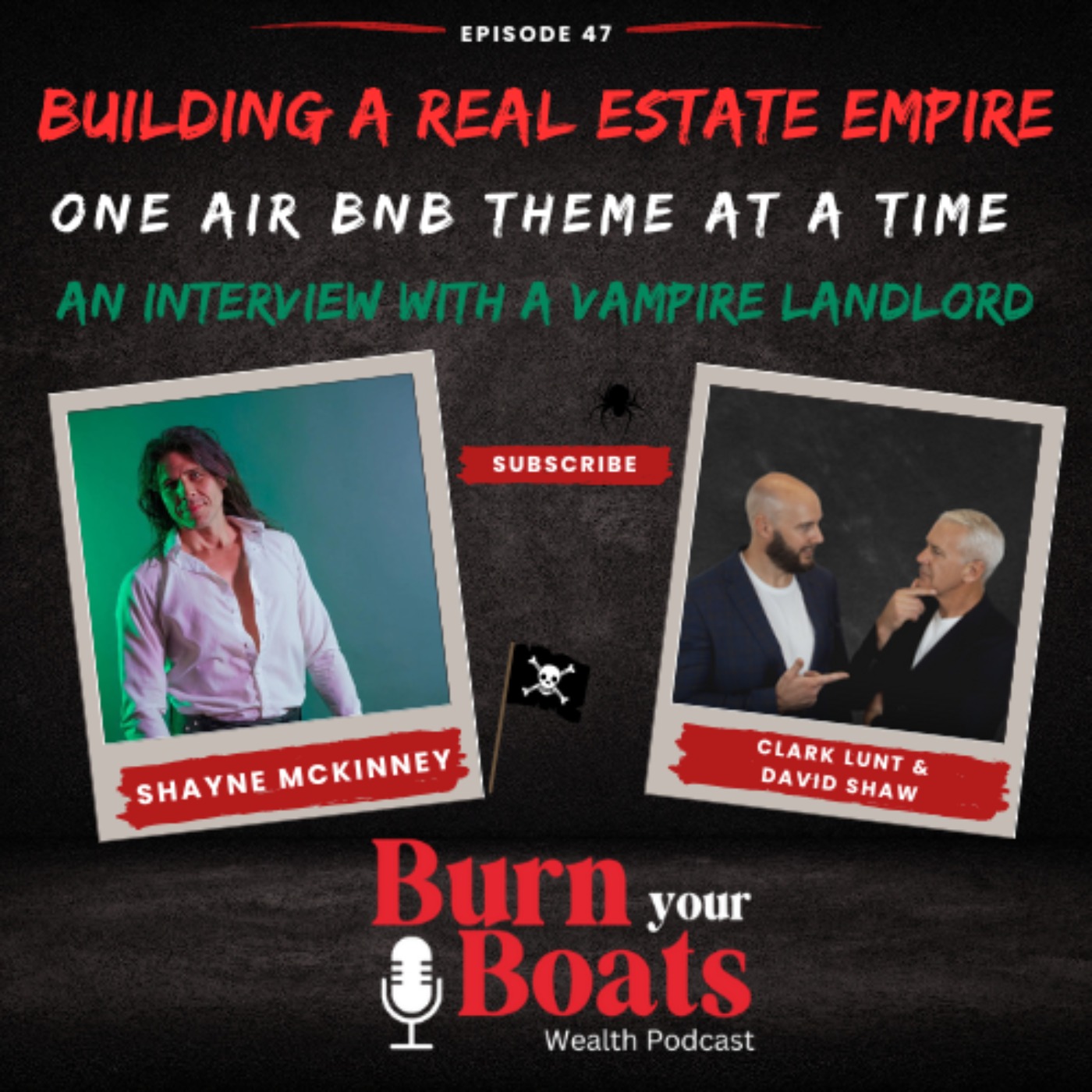
S1 Ep 47Episode 47: Building a Real Estate Empire One Air BNB Theme at a Time
Tired of the 9-to-5 grind? Want to build wealth through real estate? Every stayed at a Pirate themed Airbnb?Join hosts Clark and David as they sit down with Shayne McKinney, a tech entrepreneur turned successful real estate investor through a unique approach to Airbnb themes. Shayne shares his journey, leaving the comforts of his career to revealing how he built a thriving portfolio while prioritizing tenant happiness and community impact.Discover:Shayne's unconventional approach to landlording: Learn how he creates unique and memorable experiences for his tenants.The secrets to successful real estate investing: Gain valuable insights into market trends, deal analysis, and long-term investment strategies.Overcoming the challenges of funding your real estate ventures: Shayne shares his firsthand experience and provides actionable advice.Don't miss this inspiring conversation with Shayne. He'll motivate you to take control of your financial future and build a life of freedom and abundance.TakeawaysAuthenticity in real estate is crucial for building trust with clients and tenants.Emotional intelligence helps investors manage challenges and setbacks effectively.Empathy for tenants can lead to better relationships and outcomes in property management.The real estate market in Northwest Arkansas is growing rapidly due to low living costs and job opportunities.Investors should look for properties that others might overlook due to perceived issues.Understanding the local market dynamics is essential for successful real estate investing. Many successful investors regret not holding onto more properties.Creating unique experiences in rentals can lead to higher bookings.Investors should focus on long-term gains rather than quick flips.Community support can help overcome financial hurdles in real estate.Empowering others can lead to a more sustainable real estate market.Real estate education should focus on practical, repeatable methods.Sound Bites:"I need to be a real estate investor right now.""I want my house to have an unusual personality.""Normal is boring. Normal is another word for boring.""I made over a hundred thousand dollars on it.""Providing an experience that becomes a memory.""I want to inspire people."Chapters00:00 The Journey to Real Estate: Burning the Boats06:03 Authenticity in Real Estate: The Power of Transparency08:51 Emotional Intelligence in Real Estate Investing12:10 Empathy for Tenants: A Unique Approach to Landlording15:12 Market Insights: The Growth of Northwest Arkansas35:24 The Regret of Not Holding Property39:04 Creating Memorable Experiences in Rentals44:45 Overcoming Financial Hurdles in Real Estate48:32 Analyzing Real Estate Deals and ROI54:06 The Future of Real Estate Investment01:00:07 Empowering Others Through Real Estate01:08:06 The Importance of Community and SupportKeywords:real estate, investing, authenticity, emotional intelligence, tenant empathy, Arkansas, microclimates, haunted house, podcast, wealth, real estate, property investment, Airbnb, financial hurdles, memorable experiences, community support, ROI, empowerment, unique rentals, market analysisFind Shayne on:Youtube: https://www.youtube.com/ @shayneisgreat Tik Tok: https://www.tiktok.com/ @shayneisgreat Hosted on Acast. See acast.com/privacy for more information.
S1 Ep 46Episode 46: Let's Discuss How To Exit Real Estate, Business, and W2
How do you get out of an investment you no longer want? What steps can you take to leave your W2 job and create a more passive income stream? In this insightful episode, Clark and David shed light on the crucial yet often overlooked aspect of exit strategies in both real estate and business. They emphasize the importance of a well-defined exit plan, regardless of whether you're a seasoned real estate investor or a budding entrepreneur.The conversation delves into various exit strategies, including traditional methods like selling properties and innovative approaches such as owner financing. They explore the benefits and drawbacks of each strategy, helping listeners make informed decisions.Moreover, they discuss the significance of transitioning from a traditional W2 job to a more flexible, financially rewarding path. They provide practical tips on how to strategically plan and execute this transition, minimizing risks and maximizing opportunities.Ultimately, the episode underscores the power of strategic thinking and planning in achieving financial freedom. By implementing sound exit strategies, individuals can secure their financial future and enjoy the fruits of their hard work and investment.TakeawaysNavigating the real estate market requires strategy and knowledge.Exit strategies are crucial but often overlooked.Real estate investors should regularly assess their portfolio's performance.Selling properties can be challenging, especially if they are underperforming.Alternative exit strategies include owner financing and wholesaling.Business owners should build their businesses with an exit strategy in mind.Exiting a W2 job requires careful planning and financial preparation.Investing in real estate can build wealth but may not provide immediate cash flow.Understanding market trends is essential for making informed exit decisions.Taking action and surrounding oneself with the right people is key to success.Sound Bites"No one ever freaking talks about it.""It's all about action, everyone.""You are the one that can change that."Chapters00:00Understanding Exit Strategies in Real Estate06:41Identifying Underperforming Properties12:48Evaluating Renovation vs. Quick Sale25:06Exploring Lease Options and Owner Financing32:13The Importance of Business Exits38:02The Reality of Exiting a W2 Job46:39Transitioning from W2 to Entrepreneurship56:45New Chapter57:41BYB Outro mp4Keywordsreal estate, exit strategies, property investment, business exit, W2 job, financial freedom, wealth building, investment strategies, entrepreneurship, market trends Hosted on Acast. See acast.com/privacy for more information.
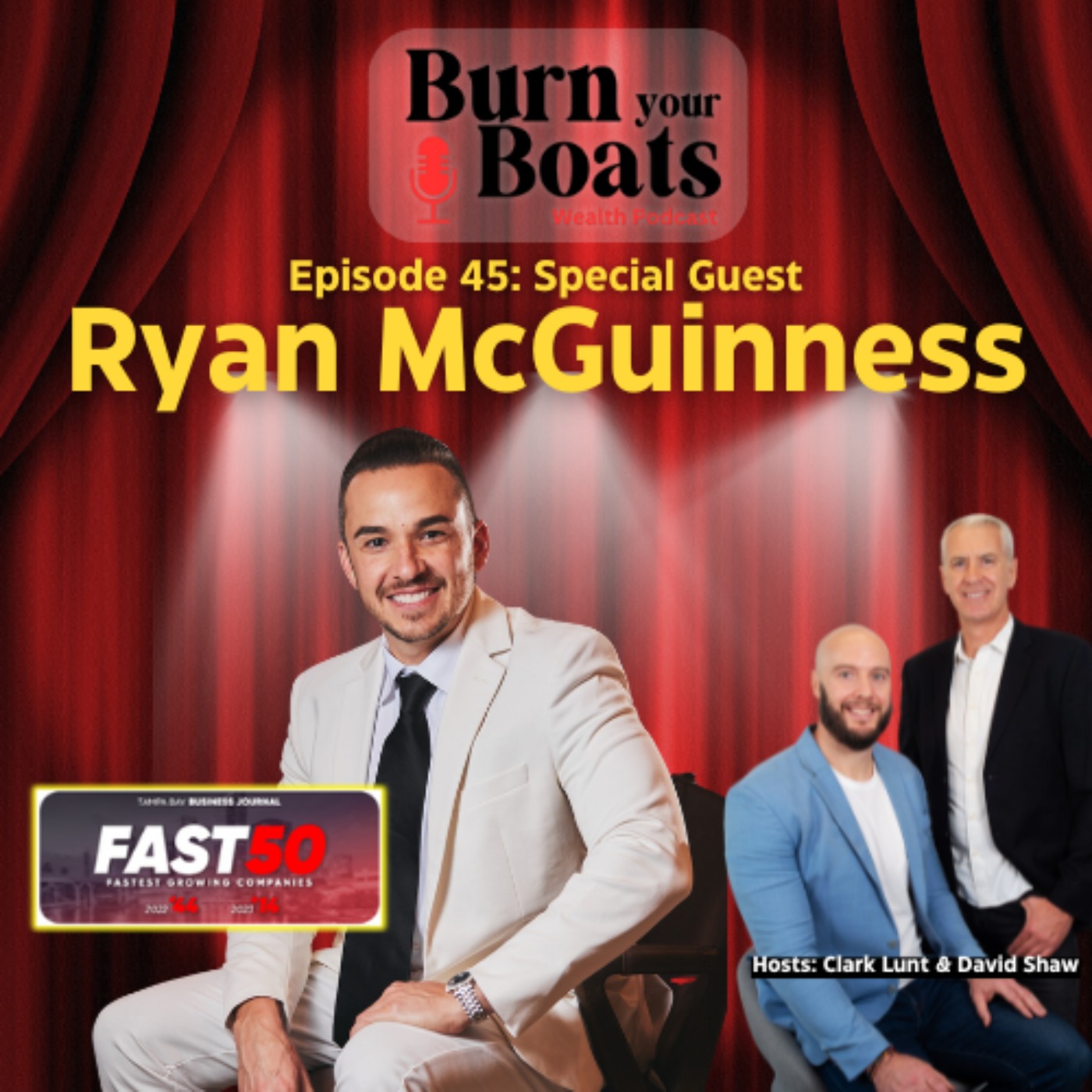
S1 Ep 45Episode 45: How to build a $100m Company w/ 3 partners
On this episode of "Burn Your Boats," we sit down with Ryan McGuinness, a successful entrepreneur who's journey from pizza shop owner to prominent Tampa Bay lender is nothing short of inspiring. Ryan shares how his father's entrepreneurial spirit ignited his own, the valuable lessons learned from early business ventures, and the importance of taking calculated risks. He discusses his transition from flipping houses to lending, highlighting the reduced risk and scalability of the lending business. Throughout the conversation, Ryan emphasizes the significance of networking, building strong relationships with borrowers, and maintaining a relentless work ethic. He also reflects on the nature of wealth and success, the excitement of unique deals, and his passion for collectible cars.TakeawaysRyan's entrepreneurial spirit was heavily influenced by his father's example.Early experiences in business taught Ryan valuable lessons about risk and responsibility.Taking risks is essential for growth and learning in entrepreneurship.The transition from flipping houses to lending provided Ryan with a more scalable business model.Maintaining a low loan-to-value ratio minimizes risk in lending.Building strong relationships with borrowers is key to success in lending.Word of mouth and personal connections are powerful marketing tools.Ryan's ability to connect with people enhances his business opportunities.Wealth is a byproduct of hard work and dedication, not the ultimate goal.Passion projects, like collecting cars, provide balance and joy in life.Sound Bites"You have to fight through the boredom.""Every deal is unique and exciting.""I love collecting classic cars."Chapters00:00Early Entrepreneurial Experiences03:42Lessons from the Pizza Business07:00Transitioning to Real Estate and Flipping09:52The Shift to Lending and Risk Management13:08Scaling a Business with Minimal Staff15:58Navigating Challenges in Business18:45Conclusion and Key Takeaways29:26The Advantages of Being a Lender34:12Understanding Default Risks38:54The Psychology of Lending44:05Identifying Quality Borrowers49:09The Art of Connection53:16Wealth and the Journey57:55Passion for Cars and Investments01:04:03The Importance of Feedback01:04:38The Power of Storytelling01:04:45BYB Outro 1.mp4#entrepreneurship #risktaking #realestate #lending #businessgrowth #personaldevelopment #wealthbuilding #networking #familyinfluence #successstories #investor #mindset #burnyourboatswealth #ryanmcguinness #tampabaykeywordsentrepreneurship, risk-taking, real estate, lending, business growth, personal development, wealth building, networking, family influence, success stories Hosted on Acast. See acast.com/privacy for more information.
S1 Ep 44Episode 44: Optimism: The Secret Sauce for Business Success!
Unlock the Power of Optimism: Your Key to Business and Investment Success! In this episode, Clark and David delve into the transformative power of optimism. Discover how a positive mindset can revolutionize your approach to business and investing. Learn how to:Capitalize on Opportunities: Uncover hidden gems and seize lucrative deals by adopting a contrarian perspective, especially in bearish markets.Attract Winning Partnerships: Learn how a positive outlook can magnetically draw successful collaborators and investors.Cultivate a Growth Mindset: Explore practical strategies to surround yourself with optimistic influences and foster a resilient, success-oriented mindset.Through inspiring real-world examples, we'll demonstrate how optimism can lead to groundbreaking achievements and invaluable lessons. Tune in to unlock the secrets to long-term success and learn how to harness the power of positive thinking to achieve your goals.TakeawaysOptimism is a core principle for successful investing.Surrounding yourself with optimistic people can change your perspective.In a pessimistic market, there are still opportunities to be found.Being optimistic allows you to adapt to changing market conditions.Learning from setbacks is essential for growth and confidence.Optimism attracts deals and partnerships in business.You must be proactive in creating opportunities, not just waiting for them.Real-life examples show how optimism leads to successful outcomes.The journey of investing is about personal growth and resilience.Embracing optimism is crucial for long-term success.TitlesThe Power of Optimism in BusinessFinding Opportunities in a Pessimistic MarketSound Bites"Optimism is a superpower.""Be greedy when others are fearful.""You have to create those deals."Chapters00:00Introduction and Reflection on Past Episode02:27The Current Market Landscape05:18Optimism vs. Pessimism in Real Estate08:53Surrounding Yourself with Success12:15The Importance of Optimism15:29Countercyclical Thinking in Investing19:46Finding Opportunities Amidst Fear22:41The Contrarian Advantage25:02Confidence Through Optimism26:27Navigating Today's Real Estate Market30:45The Importance of Optimism in Investing36:00Learning from Experience and Adapting41:52The Power of Optimism in Deal-Making48:36Strategies for Success in a Fearful Market51:07The Importance of Feedback51:42The Power of Storytelling51:49BYB OutroKeywordsoptimism, business success, investing, mindset, contrarian thinking, real estate, wealth building, personal development, resilience, learning#optimism #businesssuccess #investing #mindset #contrarianthinking #realestate #wealthbuilding #personaldevelopment #resilience #learning #investor #realestate #realestatemarket2024 #glasshalffull #growthmindset Hosted on Acast. See acast.com/privacy for more information.
S1 Ep 43Episode 43: The Trump Effect: 7 Ways the outcome Could Reshape Real Estate
Tune in to hear how the recent election will shake up the economy! We dive deep into the impacts on deregulation, interest rates, and immigration, and how they'll affect your wallet and the housing market. Plus, we'll share tips on staying positive and taking control of your finances, no matter what the future holds.SummaryIn this episode, the hosts discuss the implications of the recent election on various economic factors, including deregulation, interest rates, and immigration policies. They explore how these elements will affect the housing market and overall economic optimism. The conversation emphasizes the importance of personal responsibility and optimism in navigating the changing landscape, regardless of political outcomes.TakeawaysBig changes are expected in the economy over the next four years.Deregulation can significantly impact local housing markets.Interest rates are influenced by the bond market, not directly by the president.Perception of economic conditions can drive market behavior.Immigration policies can affect labor availability and housing prices.Tariffs may lead to increased costs for goods and housing.Market volatility is a reality that investors must navigate.Personal responsibility is key in adapting to economic changes.Optimism is essential for success in real estate and investing.Taking action is crucial; doing nothing leads to missed opportunities.Sound Bites"Perception is reality.""Nothing generates nothing.""Only you can do that."Keywordselection, deregulation, interest rates, economic optimism, immigration, tariffs, housing market, market volatility, personal responsibility, real estateChapters00:00Election Aftershocks: A Global Perspective03:08Deregulation: Local Impacts on Real Estate11:26Interest Rates: The Trump Effect20:57Perception vs. Reality: Economic Optimism27:27Economic Perspectives on Immigration30:17The Impact of Immigration on Labor and Housing38:34Tariffs and Their Economic Implications44:30Market Volatility and Mortgage Rate Uncertainty46:58Personal Responsibility in Economic Outcomes53:37New Chapter54:35BYB Outro.mp4#election #deregulation #interestrates #economicoptimism #immigration #tariffs #housingmarket #marketvolatility #personalresponsibility #realestate #realestateinvesting #investor #entreprenuer #burnyourboats #wealthcreation Hosted on Acast. See acast.com/privacy for more information.

S1 Ep 42Episode 42: Kaleb Marti: From Wrenches to Wealth - The Unlikely Rise of a Multifamily Empire
Join Clark and David, as Kaleb Marti shares his inspiring story of transformation from a humble W2 auto mechanic to a real estate powerhouse. From facing early career challenges to making bold decisions that set him on a path to financial freedom, Kaleb reveals the secrets behind building a $100 million real estate empire. Discover how focus, hard work, and a determined mindset can turn dreams into reality.This incredible story of transformation will leave you inspired.Join Kaleb on Facebook: https://www.facebook.com/kaleb.marti/aboutVisit his website: https://kalebmarti.com/Keywords: Kaleb, real estate, entrepreneurship, passive income, multifamily, business growth, investment strategies, success stories, mindset, financial freedomTakeawaysKaleb's journey illustrates the importance of resilience and adaptability in business.Burning the boats can lead to unexpected opportunities and growth.Self-doubt is a common challenge for entrepreneurs, but overcoming it is crucial.Passive income is a goal worth pursuing, but it requires strategic planning.Scaling from single-family homes to multifamily properties can significantly increase cash flow.Building strong relationships with banks and lenders is essential for growth.Understanding the numbers and metrics in real estate is key to success.Networking with like-minded individuals can provide valuable insights and opportunities.The transition from transactional to passive income models can lead to greater financial stability.Continuous learning and adaptation are vital in the ever-changing real estate market.Sound Bites"I had no other option.""I could picture 200 doors.""I was just trying to find where I fit in."Chapters00:00The Journey of Entrepreneurship03:07Burning the Boats: A Leap of Faith09:17Overcoming Challenges in Business14:59The Path to Sustainable Growth21:05Shifting Mindsets and Learning23:29From Rentals to Business Ventures29:15The Shift to Real Estate Investment33:59Navigating the Rental Market39:21Leveraging Credit for Growth44:10Scaling Up: The BRRRR Strategy49:56Transitioning from Single Family to Larger Portfolios58:25The Shift from Single Family to Multifamily Investments01:01:49Rapid Growth: Acquiring 100 Doors in Six Days01:06:34Leveraging Personal Relationships for Financing01:11:12Building a Portfolio: From 10 Million to 100 Million01:14:46The Mindset Shift: Visualizing Growth and Success01:20:15Future Aspirations: Scaling to a Billion in Assets01:31:08New Chapter01:32:06BYB Outro.mp4#KalebMarti #realestate #entrepreneurship #passiveincome #multifamily #businessgrowth #investmentstrategies #successstories #mindset #financialfreedom #realestateinvesting #entreprenuer Hosted on Acast. See acast.com/privacy for more information.
S1 Ep 41Episode 41: How looking backwards will excel your growth
Are you constantly juggling tasks, feeling overwhelmed, and yet, not quite achieving the results you desire? In this episode, we debunk the myth that being busy is a sign of success. Join us as we delve into the importance of self-reflection, decluttering your life, and the transformative power of subtraction.We'll discuss how to:Establish healthy boundaries to protect your time and energySay no to distractions and focus on what truly mattersCultivate a growth mindset to embrace challenges and achieve sustainable successTune in to discover how to break free from the cycle of busyness and unlock your true potential.Sign up for the Burn Your Boats Mailing list: https://api.leadconnectorhq.com/widget/form/rEwFsBhqWbpzTVoMBLqmTakeawaysBeing busy does not equal being successful.Self-reflection is crucial before adding new commitments.Less is often more; focus on what truly matters.Implement the one in, one out rule for better organization.Saying no is a powerful tool for managing time and energy.Establish clear boundaries to protect your focus.Single tasking is more effective than multitasking.Conduct personal audits to identify time-wasting activities.A growth mindset is essential for long-term success.Focus on incremental improvements to achieve your goals.Sound Bites"Learn the art of saying no.""What got you here won't get you there.""Go take a look at yourself in the mirror."Keywordssuccess, busyness, opportunities, self-reflection, productivity, growth mindset, boundaries, single tasking, personal audit, entrepreneurshipChapters00:00Introduction and Context Setting03:36The Concept of 'Less is More'09:25Cleaning Up Your Life for Success14:10Prioritizing Subtraction Over Addition20:19The Art of Saying No25:34Decluttering for Clarity34:28Establishing Boundaries for Success42:56Cultivating a Growth Mindset48:16The Importance of Feedback48:51The Power of Storytelling48:58BYB Outro Hosted on Acast. See acast.com/privacy for more information.
S1 Ep 40Episode 40: Real Estate Cost Segregation & Bonus Depreciation with Marcus Crigler, CEO of BEC Accounting
In this enlightening conversation, Burn Your Boats welcomes the esteemed Marcus Crigler, who masterfully unravels the complexities of bonus appreciation and its myriad benefits for real estate professionals. He underscores the necessity of grasping real estate professional status, delves into the mechanics of cost segregation, and elucidates the profound effects of recent tax law changes on depreciation strategies. This engaging discussion not only equips high earners with powerful investment strategies, including the remarkable advantages of 1031 exchanges, but also emphasizes the critical importance of investing in high-quality real estate. Furthermore, Clark, David, and Marcus shed light on the lucrative potential of short-term rentals and the strategic benefits of leveraging spousal income to maximize tax deductions.As you listen, you'll find invaluable insights that can transform your financial journey and inspire you to seize opportunities that pave the way toward lasting wealth and financial freedom.TakeawaysBonus appreciation allows immediate tax benefits on property purchases.Real estate professionals can utilize depreciation to shelter income.Cost segregation accelerates depreciation on property components.Tax law changes affect the percentage of bonus depreciation available.Investing in high-quality real estate yields better tax benefits.1031 exchanges allow deferral of taxes on property sales.Spousal income can be leveraged for tax advantages in real estate.Short-term rentals can provide unique tax benefits.Understanding tax brackets is crucial for effective tax strategy.Planning ahead can prevent tax crises for entrepreneurs.Sound Bites"Exciting world of bonus appreciation.""What is a real estate professional?""It's not a use it or you lose it situation."Chapters00:00Demystifying Real Estate Tax Strategies10:20Understanding Cost Segregation and Bonus Depreciation20:20Maximizing Tax Benefits through Real Estate Investments30:03Strategies for Real Estate Professionals and Passive Investors34:05The Importance of Feedback34:40The Power of Storytelling34:47BYB Outro.mp4 Hosted on Acast. See acast.com/privacy for more information.
S1 Ep 39Episode 39: Special Guest: Marcus Crigler- How To Use Retirement accounts to Invest in Real Estate
In this highly anticipated episode, join hosts Clark and David as they embark on a journey into the world of wealth-building strategies, featuring the expert insights of Marcus Crigler, CEO of BEC CFO & CPA. Together, they shine a spotlight on the critical importance of proactive tax planning, revealing how it can empower both novice and seasoned investors to make informed financial decisions. The conversation delves into the advantages of self-directed IRAs, making these powerful financial tools relatable and accessible for everyone. Listeners will also discover the essential role of financial literacy for entrepreneurs, positioning Burn Your Boats as an invaluable resource for those eager to enhance their financial acumen. Additionally, they discuss the distinctions between Roth and traditional accounts, while addressing the challenges associated with implementing self-directed IRAs. They conclude by inviting you to explore the Financial Liberation University, reinforcing Burn Your Boats’ commitment to fostering a supportive and knowledgeable community of investors.TakeawaysProactive tax planning is essential for financial success.Self-directed IRAs provide flexibility in investment choices.Roth accounts offer tax-free growth opportunities.Documentation is crucial when using self-directed accounts.Financial literacy is a key factor in entrepreneurial success.Understanding your burn rate is vital for cash management.The entrepreneurial journey requires strategic financial planning.Investors should be aware of prohibited transactions in IRAs.Financial Liberation University aims to educate entrepreneurs.Building wealth requires a combination of strategy and knowledge.Chapters00:00Introduction to Self-Directed IRAs09:10Understanding Self-Directed Accounts and Their Benefits14:21The Entrepreneurial Shift in Wealth Building18:28Roth vs. Traditional Accounts: Making the Right Choice22:35Overcoming Challenges with Self-Directed IRAs30:17Financial Liberation University: Bridging the Knowledge Gap35:26The Role of Tax Strategy in Real Estate Investment35:26New Chapter36:25BYB Outrohttps://burnyourboatswealth.com/https://beccfo.com/ Hosted on Acast. See acast.com/privacy for more information.

S1 Ep 38Episode 38: Hurricane-Proof Your Portfolio: Beyond Real Estate
In this Post Hurricane Milton episode from Tampa Bay, Florida, Clark and David open up about the profound impact Hurricane Milton had on their lives, weaving their personal narratives into a broader discussion on the critical importance of diversification in real estate investments. They share invaluable strategies for constructing a robust and diverse portfolio, spotlighting tools like ETFs and hard money lending that can empower you on your financial journey. Their conversation serves as a rallying cry for adopting a balanced investment approach, urging listeners to resist the allure of fleeting trends while steadfastly maintaining their core competencies. As they explore new opportunities, they remind us that informed decisions are the cornerstone of sustainable financial growth. Join the conversation, and let’s foster a community where shared insights and experiences can guide us all toward greater financial resilience!TakeawaysDiversification is crucial to mitigate risks in investments.Real estate can be a wealth builder but requires careful management.Cash flow is essential, especially after unexpected damages.Investing in ETFs can provide a safer alternative to individual stocks.Hard money lending offers a reliable income stream.Maintaining liquidity is important for navigating financial challenges.Avoiding shiny object syndrome helps in staying focused on core investments.Building new properties can be a strategic way to diversify.Personal experiences shape investment strategies over time.Wealth building is a habitual process that requires consistent effort.Sound Bites"We want to make sure that we don't have all our eggs in one basket.""I am very well diversified.""I don't care how they fluctuate in value."KeywordsHurricane Milton, diversification, real estate, wealth building, investment strategies, ETFs, hard money lending, personal finance, property management, financial growthChapters00:00Post-Hurricane Reflections and Diversification08:02The Importance of Diversification in Wealth Building12:33Real Estate Focus vs. Broader Investment Strategies21:50ETFs and Alternative Income Strategies27:09Building Skills and Adapting to Market Changes33:23The Importance of Feedback33:58The Power of Storytelling34:05BYB Outro.mp4 Hosted on Acast. See acast.com/privacy for more information.

S1 Ep 37Episode 37: Weathering Seismic Storms: Pivot and Prosper
Hurricane Helene and then Milton. In this controversial episode, Clark and David delve into the impending hurricane poised to strike Tampa, illuminating the far-reaching implications that natural disasters have on both communities and economies. They boldly explore the transformative concept of 'creative destruction,' revealing how these calamities can serve as catalysts for economic opportunity and innovation. Emphasizing the critical need for proactive disaster preparedness, they align with Burn Your Boats mission to empower individuals toward financial independence and strategic foresight. The conversation takes a poignant turn as they address the unique challenges faced by low-income communities post-disaster, underscoring Burn Your Boats unwavering commitment to fostering a supportive network of investors dedicated to uplifting these vulnerable populations. Ultimately, listeners are urged to pivot in their personal and financial lives, seizing the moment to uncover opportunities in adversity, in perfect harmony with Clark and David's empowering message.takeawaysNatural disasters can create both challenges and opportunities.Being proactive in disaster preparedness is crucial.Creative destruction can lead to economic growth after a disaster.Gentrification often follows natural disasters, impacting communities.The importance of pivoting in business and life cannot be overstated.Communities with higher income recover faster after disasters.Insurance costs can skyrocket after a disaster, affecting affordability.The role of government intervention is critical in supporting low-income communities.Understanding the economic impact of disasters is essential for recovery.Embracing change and growth is necessary for long-term success.The Aftermath of Disaster: A New BeginningThe Role of Community in Disaster Recovery"What happens after the storm?""You can stick your head in the sand.""Every developer is running around trying to buy."Chapters00:00Preparing for the Storm04:44Coping Strategies and Mindset07:59The Impact of Natural Disasters10:58Creative Destruction and Economic Shifts13:42The Importance of Pivoting16:58Gentrification and Community Changes19:51The Role of Wealth in Recovery22:39Insurance and Safety Concerns25:36Opportunities in Adversity28:17The Future of Neighborhoods31:17Conclusion and Reflections54:37BYB Outro 169.mp4keywordshurricane, pivoting, economic impact, creative destruction, gentrification, housing market, community safety, natural disasters, opportunity, recovery, hurricane helene, hurricane milton, tampa florida, tampa bay Hosted on Acast. See acast.com/privacy for more information.

S1 Ep 36Episode 36: Hurricane Helene- Before, During, & After Observations From the Ground
Community Resilience After the Storm. In this compelling episode, Clark and David delve deep into the profound aftermath of Hurricane Helene, shedding light on the remarkable resilience exhibited by Florida's communities. They underscore the critical importance of strategic planning and foresight, inspiring listeners to navigate challenges with confidence and empowerment, in alignment with Burn Your Boats' mission. The discussion also highlights invaluable lessons learned from the housing market's response to the storm, urging investors to engage proactively and make informed decisions that can significantly alter their financial trajectories in the wake of natural disasters. Furthermore, the implications of Airbnb regulations take center stage as a pivotal topic, compelling the audience to reflect on how such changes can impact housing availability and investment opportunities. By sharing personal observations, Clark and David create a relatable connection that reinforces the community-driven ethos of Burn Your Boats, providing listeners with valuable insights that resonate on a personal level. Conclusively, they issue a powerful call to action, motivating the audience to adopt proactive mitigation strategies and emphasizing the critical importance of financial literacy and informed decision-making in flood-prone areas.TakeawaysHurricane Helene has brought a new dawn for Florida's waterfront neighborhoods.The aftermath of the storm reveals significant challenges for accommodation.Community resilience is evident as people come together to help each other.Airbnb regulations have created a shortage of available housing during crises.The future of housing may see a boom in new construction due to storm impacts.Mitigation strategies are essential for preparing for future storms.Choosing the right location is crucial when buying a home in Florida.The storm's impact was more about flooding than wind damage.Education on flood zones and insurance is vital for homeowners.Proactive measures can minimize risks associated with living in flood-prone areas.Sound Bites"This is a new day of reckoning.""Can you talk to me about hurricanes?""Accommodation is going to be a really, really big problem."Keywords:Hurricane Helene, Florida, property investment, community resilience, Airbnb regulations, housing market, storm mitigation, real estate, flood zones, construction boom, Florida real estate, fema, coastal living, evacuation zone, Chapters00:00Introduction and Context of Hurricane Helene04:40Personal Observations and Community Response07:43Before the Storm: Decisions and Preparations10:53After the Storm: Damage Assessment and Experiences13:38Understanding Different Types of Storms16:34The Impact of Home Types on Flood Damage19:37Rural Areas and Their Vulnerabilities22:24Mitigation Strategies and Community Action24:58The Importance of Elevation and Location27:38Moving Forward After the Storm40:05The Aftermath of the Storm48:45Accommodation Crisis Post-Storm50:44Rebuilding Decisions: Renovate or Rebuild?53:49The Future of Home Construction in Florida57:41Insurance and Financial Considerations59:00Government's Role in Infrastructure and Support01:03:59Personal Responsibility and Future Choices01:13:53New Chapter01:14:51BYB Outro Hosted on Acast. See acast.com/privacy for more information.
S1 Ep 35Episode 35: Portfolio Reboot - Using the 1031 Exchange to Revitalize Your Portfolio
How can your current real estate profile bring you more Joy? Clark and David delve into the dynamic and ever-evolving landscape of real estate investing, shedding light on how this transformation can profoundly influence your financial aspirations. They passionately advocate for the critical need to reassess your investment strategies, particularly as your life goals evolve, urging you to seize the opportunity to pivot towards greater financial independence and fulfillment. Through the lens of the transformative 1031 exchange, they unveil a strategic pathway for consolidating properties and shifting your focus from mere quantity to the quality of your real estate portfolio. The discussion resonates with relatable stories of individuals who have experienced remarkable transformations by aligning their investments with their true desires, fostering a sense of community within the Burn Your Boats movement. As the episode draws to a close, the Clark and David empower you with actionable advice that inspires you to actively evaluate your investment journey, encouraging you to embrace the pursuit of a more aligned and fulfilling financial future. Tune in and take the first step towards realizing your dreams!TakeawaysInvestors often need to reassess their strategies as life goals change.The 1031 exchange is a powerful tool for property consolidation.Quality assets tend to perform better than quantity in real estate.Market trends can often be misleading and should be viewed holistically.Investing in new construction can provide better opportunities in today's market.It's important to identify underperforming properties in your portfolio.Real estate investing should bring joy, not stress.Investors should focus on long-term goals rather than short-term market fluctuations.The evolution of an investor's portfolio is a natural process.It's never too late to change course and realign your portfolio.Sound Bites"Reassessing your strategy. Does it still work for you?""Real estate is just not something that you go home every night and watch."Chapters00:00The Perception of Real Estate in the Current Market08:07The Success of New Home Builders14:58Challenges Faced by Investors with Lower-End Properties27:04The Evolution of Real Estate Investors30:32The Hindsight of a Real Estate Journey34:09Understanding the Purpose of Buying for Tax Purposes36:09The Benefits of a 1031 Exchange for Property Consolidation38:57Realigning Your Portfolio for Joy and Success57:39The Importance of Feedback58:13The Power of Storytelling58:20BYB Outro Hosted on Acast. See acast.com/privacy for more information.
S1 Ep 34Episode 34: Blunders to Breakthroughs: Traits That Transformed Our Journey
What characteristics and qualities will shape your success? Clark and David's journey is a testament to the transformative power of humility and hard work, much like a sculptor chiseling away at a block of marble to reveal a masterpiece hidden within. As they reflect on their successes, they don’t shy away from discussing the missteps that shaped them, creating a vivid tapestry of triumphs and trials. Their stories underscore the value of being thrifty and investing early, all while maintaining a sense of urgency that propels one forward. But perhaps the most crucial lesson is the importance of a supportive network—like a well-tended garden, the right people can nurture your growth and help you flourish. They remind us that true success is a marathon, not a sprint, requiring patience and a long-term vision. So, let’s not just chase after financial metrics; let’s redefine success to embrace a holistic view of life that celebrates personal fulfillment and community connection. Are you ready to join the Burn Your Boats movement and embark on your own journey to a richer life?TakeawaysSuccess is often harder to discuss than failures.Being humble and not seeking to impress others is crucial.Investing early and consistently can lead to long-term success.Surrounding yourself with ambitious and like-minded individuals is important.Maintaining a sense of urgency while being patient with results is key.Health and fitness play a significant role in overall success.Understanding the relationship between debt, time, and scale is essential.Living below your means can create financial freedom.Curiosity and continuous learning are vital for personal growth.Aligning personal and professional goals leads to greater fulfillment.success, personal growth, real estate, entrepreneurship, financial independence, mindset, investment, life lessons, business strategies, self-improvementSound Bites"We are flipping the script on you guys""Today is actually a pretty unique one""We want you, the listener, to be able to take those mistakes"Chapters00:00Introduction09:03The Value of Authenticity and Humility17:12Keeping Expenses Low and Investing Early22:53Thrifty and Risk-Tolerant: Traits for Success26:29Avoiding Toxic Environments and Surrounding Yourself with Positivity29:46The Power of Curiosity and Knowing Your Destination30:51The Power of Work Ethic and Self-Employment37:31Embracing Discomfort and Seeking Growth44:01The Importance of Honesty, Integrity, and Reputation46:51Understanding Debt, Time, and Scale48:41Prioritizing Health and Fitness50:31Valuing Each Day and Embracing the Journey56:50The Impact of Spousal Alignment59:31The Importance of Feedback01:00:06The Power of Storytelling01:00:13BYB Outro.mp4 Hosted on Acast. See acast.com/privacy for more information.
S1 Ep 33Episode 33: From Chaos to Control: The Role of an Asset Manager
Financial oversight in real estate: Your questions answered. In a heartfelt exchange, David and Clark delve into the intricate world of real estate portfolio management, revealing the emotional weight that property owners often carry. They candidly share their own struggles, painting a vivid picture of the challenges that arise in the pursuit of optimizing asset performance. Their discussion underscores the pivotal role of proactive oversight by asset managers, whose expertise can transform overwhelming responsibilities into streamlined processes that empower property owners. By distinguishing between the duties of property managers and asset managers, they illuminate the necessity of understanding market dynamics and the strategic foresight required to scale investments effectively. This conversation serves as a crucial moment for listeners, inviting them to reflect on their investment strategies and consider the profound benefits of enlisting an asset manager to lift the burdens of property management. As they extend an invitation to the Burn Your Boats community, David and Clark encourage everyone to share their own experiences and challenges, fostering a sense of camaraderie and support. Ultimately, they leave listeners inspired to take actionable steps towards financial empowerment, urging them to reconsider their approach to asset management as a vital pathway to achieving their financial aspirations.TakeawaysAsset management is crucial for real estate investors.Property managers handle day-to-day tasks but are not asset managers.Understanding your portfolio's performance is essential for growth.Proactive oversight can prevent costly mistakes.Scaling a real estate portfolio can become overwhelming without help.Asset managers can optimize returns and manage property managers.Investors should evaluate the quality of their assets regularly.The opportunity cost of managing properties can be significant.Investing in higher quality assets can lead to better returns.Private lending can be a viable alternative to property management.Sound Bites"You need a break, you need a strong cocktail.""Owning a real estate portfolio is not one of them.""Your ownership responsibilities start at home with you."Chapters00:00Introduction and Personal Challenges03:57The Work Starts at Your Mailbox09:06The Responsibilities of Owning a Real Estate Portfolio19:15The Limitations of Property Managers25:18The Challenges of Scaling a Rental Portfolio29:51The Role of Asset Managers in Property Management35:38How Commercial Investors Handle Property Management37:59The Importance of Return on Equity41:20The Responsibilities of an Asset Manager52:26The Freedom of Asset Managementkeywordsreal estate, property management, asset management, investment strategy, rental properties, portfolio management, landlord challenges, financial oversight, tenant relations, scaling investments Hosted on Acast. See acast.com/privacy for more information.
S1 Ep 32Episode 32: A Formula That Will Change How you Grow Your Wealth.
In this enlightening episode, Clark and David unravel the transformative power of the rule of 72, a simple yet profound formula that could redefine your financial future. Imagine the life-changing potential of a small investment; with just $10,000 set aside for an infant today, we’re talking about a staggering $2.56 million in 48 years! This is not just a number—it's a powerful reminder that every journey to financial independence begins with a single step, and understanding the rule of 72 can be your guiding light through the often murky waters of investment growth. They expertly break down this concept, illustrating how it demystifies the investment process and empowers you to make informed, strategic decisions that align with your dreams of wealth and security. By choosing the right investment vehicle tailored to your financial timeline and goals, you can take control of your financial destiny.Join us in this vibrant community at Burn Your Boats, where the journey to financial literacy and independence is not just encouraged but celebrated. Embrace the opportunity to learn, grow, and transform your financial future—because your aspirations deserve to thrive!Don't forget to Like, Share, and Leave a Review!Keywordsrule of 72, financial decision-making, investment growth, manage expectations, financial freedom, time as wealth, investing, investment vehicles, real estate private lending, wealth creation, cashflowTakeawaysThe rule of 72 is a powerful formula that helps estimate how long it will take for an investment to double in value given a fixed annual rate of return.Understanding the rule of 72 can provide clarity and help manage expectations when it comes to investment growth.The rule of 72 simplifies the decision-making process by cutting through analysis paralysis and allowing for quick calculations of investment timelines.Time and money have a relationship in the rule of 72, and understanding this relationship is crucial for making informed financial decisions. Time is a valuable form of wealth that can be used to grow investments.The rule of 72 can be applied to understand the impact of compounding returns over time.Choosing the right investment vehicle depends on the amount of time and money available.Real estate private lending offers a secure and predictable investment option.Sound Bites"The rule of 72 is a simple, powerful formula that has significantly impacted my thinking.""The rule of 72 allows you to measure your risk-return relationship and helps you identify your real goals and expectations.""The power of 72 can be used to manage your expectations and balance risk in your investment decisions."Chapters00:00 Introduction and Importance of Guests03:47 Narrowing the Focus of the Podcast05:46 The Ecosystem of Real Estate and Financial Growth10:35 Explaining the Rule of 7213:18 The Rule of 72 in Financial Education17:51 Managing Expectations with the Rule of 7223:12 Applying the Rule of 72 in Various Scenarios28:07 The Relationship Between Time and Money30:05 Introduction to the Rule of 7232:34 The Power of Compound Interest Over Time35:51 Applying the Rule of 72 to Retirement Planning38:08 Choosing the Right Investment Vehicle39:59 The Importance of Stability and Integrity in Investments44:30 Exploring Different Investment Options51:20 The Role of Real Estate in the Rule of 7257:10 Real Estate Private Lending as a Secure Option01:02:15 Simplifying Investment Decisions with the Rule of 7201:04:52 The Importance of Feedback01:05:26 The Power of Storytelling01:05:33 Outro Hosted on Acast. See acast.com/privacy for more information.
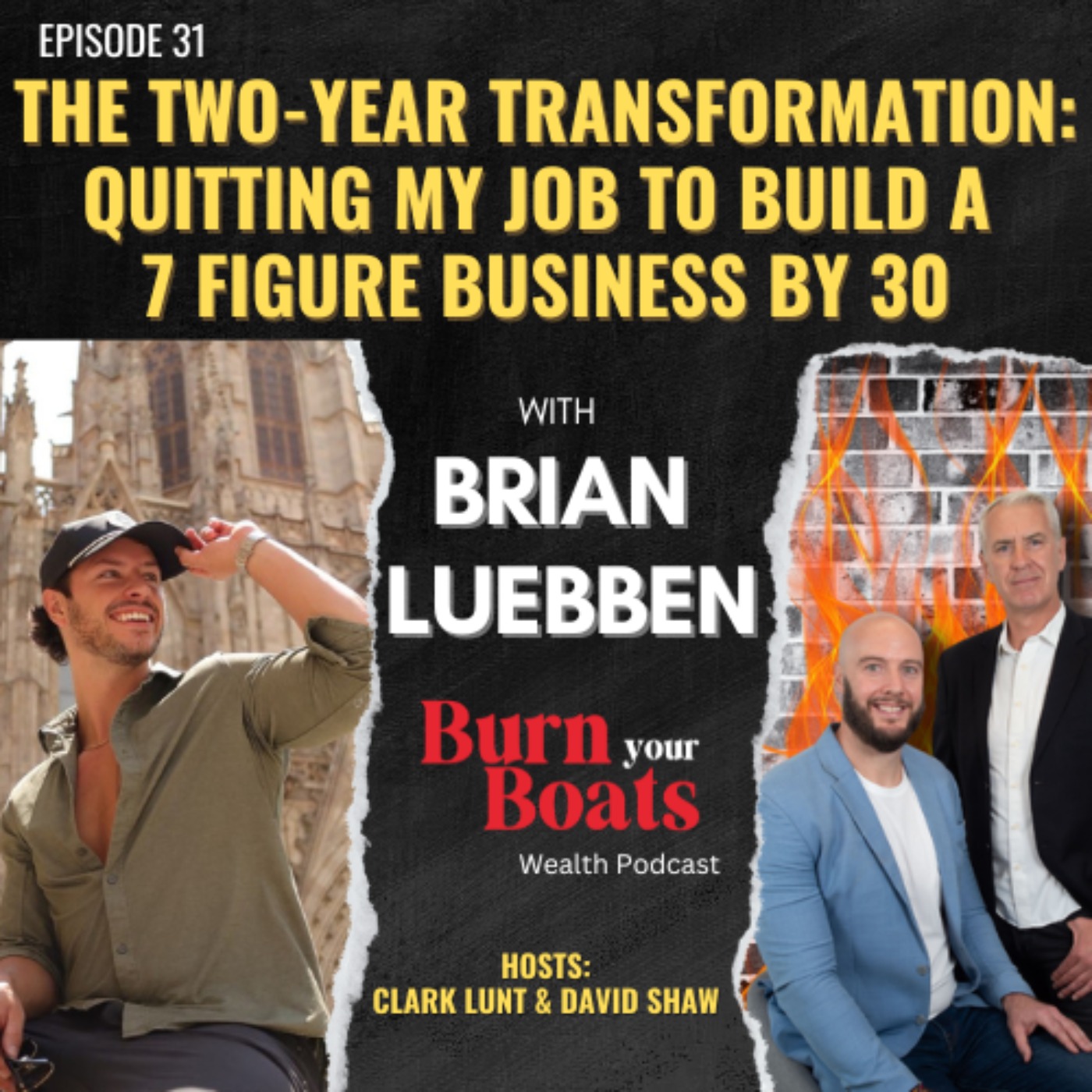
S1 Ep 31Episode 31: Special Guest: Brian Luebben: The Two-Year Transformation: Quitting My Job to Build a 7 figure Business by 30!
Clark and David interview Brian Luebben, owner of The Action Academy, who shares his journey of leaving a high-paying corporate job to pursue entrepreneurship and financial freedom at only 28 years old. Brian Luebben's leap from the corporate ladder to the entrepreneurial summit is nothing short of awe-inspiring—he’s not just breaking the mold; he’s setting it ablaze! By shedding the shackles of a high-paying job, he discovered the true essence of empowerment and freedom that Burn Your Boats champions. Brian embodies the spirit of pushing boundaries and seizing opportunities, reminding us that the journey to joy is often paved with bold choices and new experiences. His adventures in travel have not only broadened his horizons but also enriched his understanding of life’s intricate tapestry. As we navigate through the various stages of our lives, our priorities and goals naturally evolve, urging us to reflect on our financial aspirations with fresh eyes. Brian champions the idea of investing your energy wisely and nurturing relationships, whether through coaching or cultivating a vibrant community. In a world where business sustainability reigns supreme, Brian's insights on choosing timeless industries and forging powerful partnerships resonate deeply.Action Academy: https://www.actionacademypod.com/TakeawaysPush your limits and explore different opportunities to find what brings you joy.Travel can provide new perspectives and expand your worldview.Priorities and goals shift over time, and it's important to adapt and grow.Invest in people through coaching and building a community to condense time and accelerate growth.Choose industries that have been around for a while and will continue to be in demand for sustainable businesses.Be cautious about partnerships and consider the time and energy commitment involved.Real estate can be a valuable asset for creating wealth, especially when understood in terms of debt, time, and scale.Sound Bites"We're all just giant meat puppets walking around in a spinning, floating rock in an infinite universe.""The secret to happiness is the pursuit of a hard thing and the pursuit of a hard goal constantly.""I think it's a game of limits. I think the goal of your twenties and the goal of your thirties is to figure out where your limits are and expand them.""Build a calm, cool cucumber while I built my business up to seven figures.""Return on energy, right?.""There's nothing passive about business. Passivity is found on the other side of profits and people."Chapters00:00 Challenging Conversations and Asking 'Why'01:55 Burning Your Boats and Enjoying the Journey04:37 The Pursuit of Hard Goals11:19 The Value of Travel and Gaining New Perspectives22:59 The Importance of Return on Energy in Investment Decisions28:11 Building a Cashflow Vehicle for Financial Stability32:54 Taking Action and Surrounding Yourself with Like-Minded Individuals33:44 Identifying Your Strengths and Finding the Right Business to Buy37:26 The Importance of Sustainable Industries and Clean Financials41:33 Combining Business and Real Estate Investments for Wealth Creation48:22 Investing in People and Finding the Right Coaches and Communities01:06:15 Condensing Time and Taking Action01:07:40 Harnessing Technology and Building a Community01:08:20 Surrounding Oneself with Experienced Professionals01:10:30 The Importance of Controlled Growth01:11:09 Dedication to Personal Brand, Community, and Business01:11:25 The Power of Hard Work and Action01:11:47 New Chapter01:12:45 BYB Outro Hosted on Acast. See acast.com/privacy for more information.
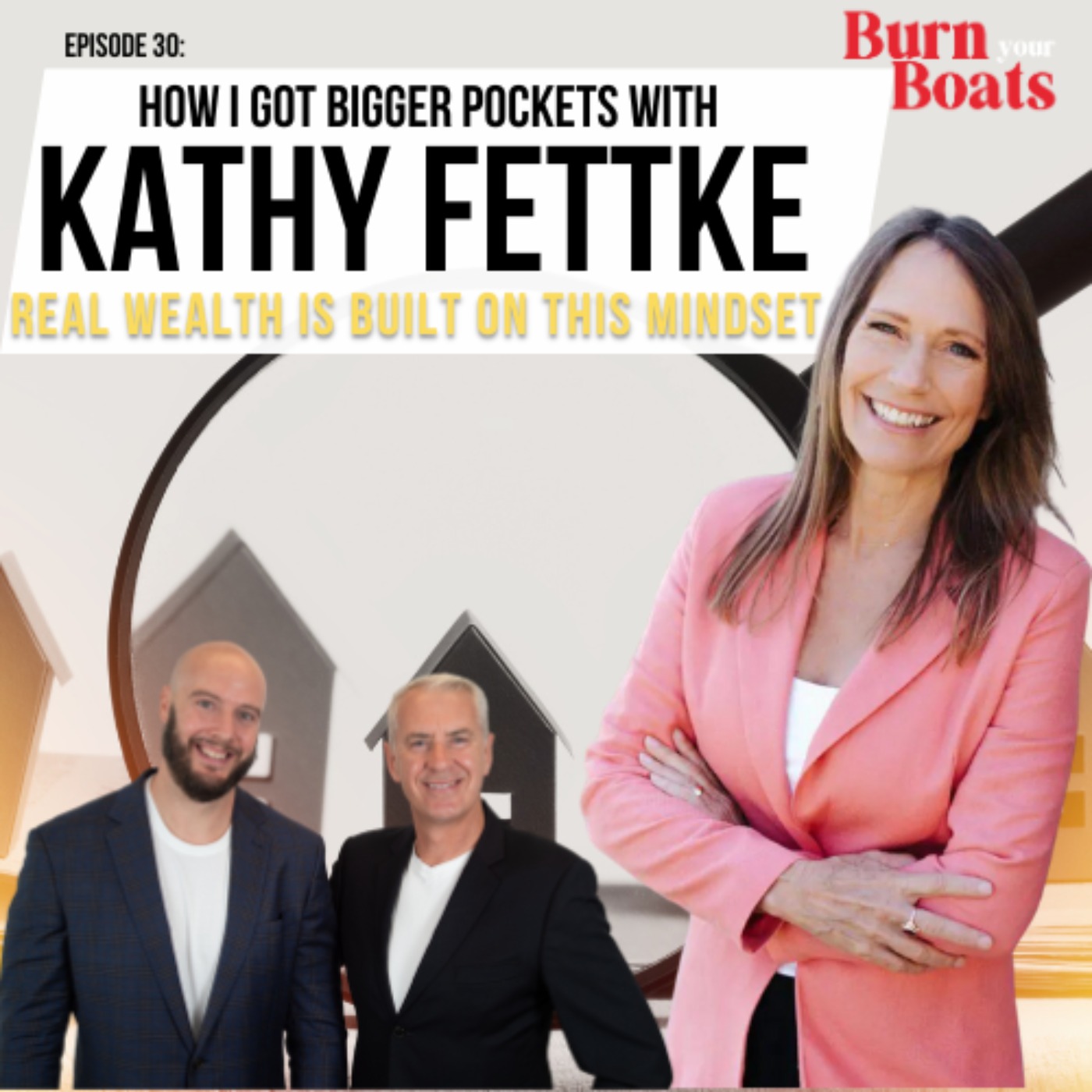
S1 Ep 30Episode 30: How I got Bigger Pockets with Kathy Fettke
In this captivating episode of the Burn Your Boats Wealth podcast, hosts David Shaw and Clark Lunt welcome the incredible Kathy Fettke, who takes us on a transformative journey through the power of resilience and the art of overcoming adversity on the path to success! Kathy opens up about her own personal trials and triumphs, sharing invaluable lessons learned from failure that can ignite your own financial ambitions. This conversation dives deep into the psychological barriers that often hold investors back and highlights the boldness required to embrace risk. Kathy's insights on the necessity of honesty and communication within the investing community are not to be missed, along with her passionate call to action for early engagement in real estate investing. Plus, they tackle the unique challenges women face in the industry and encourage everyone to discover their distinctive superpower. Don't just listen—get involved! Reflect on your challenges and join our vibrant community as we share strategies to navigate the world of investing together. Tune in now and be inspired to take the next step in your wealth-building journey!Keywordsresilience, overcoming difficulties, failure, psychological barriers, taking risks, honesty, communication, getting started early, women in real estate, superpower, real estate investing, risk aversion, active income, passive income, property appreciation, boots-on-the-ground information, future planning, women in real estate, bigger pockets, real wealth, bigger pockets, real wealthTakeawaysResilience is key to overcoming difficulties and achieving success. Embrace failure as an opportunity to learn and improve.Honesty and communication with investors are crucial in building trust and maintaining strong relationships.Taking risks is important in real estate investing, but it's essential to do thorough research and have a support network in place.Delaying gratification and living below your means in the early stages can lead to greater financial freedom.Understand your level of expertise and experience before taking on new ventures in real estate investing.Focus on living inexpensively and investing in your active income when you're young, while also building for the future.Invest in properties that will appreciate over time, rather than solely focusing on cash flow.Look beyond the headlines and trust boots-on-the-ground information when making investment decisions.Sound Bites"Happiness is when expectation meets reality.""Analysis paralysis is just being frozen and not being able to do something. Whereas analysis is very, very important.""When you're young, you can dive in and take risks with your own money, not with other people's money.""I went back to what I can do it, but just know you're taking a big risk. Like, unless you're partnering."Chapters00:00 Introduction and Acknowledging Kathy's Experience04:12 Overcoming Difficulties and Failures in Investing13:22 The Importance of Getting Started Early17:56 Knowing Yourself and Your Unique Abilities22:22 Challenging Stereotypes in Real Estate Investing22:50 The Power of Honesty and Transparency23:18 The Challenges and Progress of Women in Society28:20 Resilience and Support: Keys to Overcoming Failure33:17 The Role of Risk-Taking in Success39:32 Investing in Real Estate at a Young Age52:45 Building Wealth and Passive Income as You Get Older54:33 The Progression of Investors and the Importance of Active Income55:58 Investing for the Future: Appreciation and Building Wealth01:02:29 Time as a Valuable Commodity: Spending it Wisely01:11:55 Mentoring and Empowering Others in the Real Estate Industry01:13:20 Launching a Women's Mastermind for Real Estate Investors Hosted on Acast. See acast.com/privacy for more information.

S1 Ep 29Episode 29: Guest: Ariel Herrera: Mining for Gold in Real Estate
Clark & David welcome Ariel Herrera, a real estate investor and data scientist, who shares her journey into real estate and the importance of data in the industry. She emphasizes the three pillars of real estate: data gathering and analytics, field work, and contracts management. Ariel discusses how she collated economic and market data to analyze markets and find the best deals. She also highlights the value of using data to identify distressed properties and target motivated sellers. Ariel's approach brings a commercial real estate mindset to residential real estate investing, providing valuable insights and tools for investors. Ariel Herrera discusses the importance of using data and technology in real estate investing. She emphasizes the value of accessing public records and using web scraping to gather information on motivated sellers. Ariel explains how her software, Coffee Clozers, streamlines the process of finding and analyzing deals, as well as automating tasks like data collection and underwriting. She highlights the benefits of using data to identify up-and-coming areas, make informed investment decisions, and save time. Ariel also discusses the different ways her audience can connect with her, including through her YouTube channel, Facebook group, and Coffee Clozers platform. Tech in Real Estate: techinrealestate.com Coffee Clozers: https://www.coffeeclozers.com/ LinkedIn: https://www.linkedin.com/in/arielherrera/keywordsreal estate, data gathering, data analytics, field work, contracts management, market analysis, distressed properties, motivated sellers, investing, data, technology, public records, web scraping, motivated sellers, software, Coffee Clozers, automation, underwriting, up-and-coming areas, investment decisionstakeawaysData gathering and analytics, field work, and contracts management are the three pillars of real estate.Using data to analyze markets and find the best deals can dramatically increase success in real estate investing.Identifying distressed properties and targeting motivated sellers is crucial for finding deals.Ariel Herrera's approach brings a commercial real estate mindset to residential real estate investing, providing valuable insights and tools for investors.Using data to identify up-and-coming areas and make informed investment decisions can lead to higher returns.Connecting with a community of like-minded investors can provide support and guidance in building a successful real estate business.Chapters00:00 From Tech Analyst to Real Estate Investor11:19 Choosing Real Estate as an Investment18:00 The Importance of Data in Real Estate Analysis25:31 Using Data to Find Deals and Build a Team30:04 Web Scraping and Automation in Real Estate33:20 User Feedback and Improving Data Analysis Tools38:32 The Value of Property-Specific Data in Negotiations40:01 Streamlining Underwriting with APIs40:59 Going Deep with Data Analysis42:44 Ariel Herrera's Suite of Products51:44 The Growing Trend of Walkability55:30 Exploring Creative Real Estate Strategies58:48 Using Ariel Herrera's Tools at Different Stages of Life01:13:22 David and Clark's Recap of Interview Hosted on Acast. See acast.com/privacy for more information.

S1 Ep 28Episode 28: OMG I F*cked Up! - Part B
In this episode, Clark and David discuss what to do when you find yourself in a real estate investment that is not going as planned. They emphasize the importance of staying calm, controlling your emotions, and not blaming others. They highlight that real estate can always be fixed, either with money or time. They advise taking your medicine quickly and not being greedy, as holding onto a bad deal can cost you more in the long run. They stress the importance of never losing faith and staying in the game, as every successful investor has made mistakes. They also provide practical tips for dealing with specific scenarios, such as refinancing or bringing in a partner. The conversation explores various strategies for dealing with negative cash flow in real estate investments. The hosts emphasize the importance of delaying gratification and taking a long-term perspective. They discuss options such as refinancing, renting by the room, lease options, and owner financing. They also highlight the value of looking at the bigger picture and using tools like an IRR sheet to understand the long-term profitability of an investment. The hosts encourage listeners to join their free mastermind community for ongoing support and guidance.keywordsreal estate, investment, mistakes, staying calm, controlling emotions, fixing problems, taking medicine quickly, not being greedy, never losing faith, practical tips, real estate, negative cash flow, delaying gratification, long-term perspective, refinancing, renting by the room, lease options, owner financing, IRR sheet, mastermind communitytakeawaysStay calm and control your emotions when faced with a real estate investment that is not going as planned.Real estate can always be fixed, either with money or time.Take your medicine quickly and don't be greedy, as holding onto a bad deal can cost you more in the long run.Never lose faith and stay in the game, as every successful investor has made mistakes.Consider practical solutions such as refinancing or bringing in a partner to mitigate the challenges of a struggling investment. Delaying gratification and taking a long-term perspective is crucial in real estate investing.Using tools like an IRR sheet can help investors understand the long-term profitability of an investment.Joining a mastermind community can provide ongoing support and guidance in real estate investing.Sound Bites"You will experience problems like this in the future guaranteed. If you continue to stay consistent with your real estate and buying and just know that everyone else has been there and it's not the end of the world. Again, this too shall pass.""Real estate can always be fixed. It just takes money or time.""You can get out of the mousetrap. There might not be any cheese when you get out of it, but at least you're out of the mousetrap now.""Your 10 year in the future self will be so freaking glad that you didn't sell that house at a $10,000 loss or a $3,000 gain.""Start thinking outside the box a little bit and maybe infuse them in different capital."Chapters00:00Introduction and Recap02:58Staying Calm and Controlling Emotions05:55Fixing Real Estate Problems: Money or Time?09:54Taking Your Medicine Quickly and Avoiding Greed22:48Practical Solutions for Struggling Investments31:55Getting Out of the Mousetrap39:07The Goal Post Moved45:54Real Estate Will Bail You Out47:00Maintaining Your Mindset52:27Understanding Long-Term Profitability57:19Joining a Mastermind Community Hosted on Acast. See acast.com/privacy for more information.
S1 Ep 27Episode 27: OMG I F*cked Up! - Part A
SummaryIn the two-part series of the Burn Your Boats podcast, Clark and David candidly share their own screw-ups and F-ups in real estate investing. They stress the importance of learning from mistakes and provide actionable takeaways for listeners. In their conversation, they delve into common mistakes and screw-ups made by investors in real estate, such as overpaying for properties, cutting corners on renovations, not understanding comps, using cheap contractors, lacking multiple exit strategies, and not comprehending debt and financing terms. They also highlight the challenges faced by investors who purchased properties from new home construction builders. As a trusted source of real estate investing education, Burn Your Boats offers practical and professional insights for both novice and seasoned investors. Join the Burn Your Boats investor community to access exclusive content and resources for personalized advice on wealth building and management. Overall, this conversation provides valuable lessons for real estate investors, showcasing relatable examples and emphasizing the importance of learning from mistakes to achieve success in the industry. Link to Skool: https://www.skool.com/burnyourboatswealth/aboutKeywordsreal estate investing, screw-ups, F-ups, overpaying, soft costs, renovations, problematic areas, red tags, permits, real estate, investing, mistakes, screw-ups, overpaying, cutting corners, renovations, comps, contractors, exit strategies, debt, financing, new home constructionTakeawaysReal estate investing is a long game and everyone makes mistakes along the way.Factor in soft costs such as closing fees, utilities, and prepaid expenses.Understand the time it takes for renovations and plan accordingly.Be cautious of buying in areas with problematic neighbors or issues.Understand the importance of permits, red tags, and working with experienced contractors.Be cautious of properties with unpermitted additions or inaccurate square footage.Have multiple exit strategies and consider the long-term rental option.Understand the terms and costs of debt, especially with hard money loans.Evaluate comps and understand the market conditions before making a purchase.Don't rely on one trick pony strategies; have backup plans and multiple options.Be aware of the challenges faced by investors who bought properties from new home construction builders.Join the Burn Your Boats Wealth community for access to free tools and resources.Sound Bites"It's super exciting to own real estate or any asset when it is growing exponentially, the market is bubbling, you can see your profits rolling in monthly.""We're going to discuss all of our absolute mess ups over the years. If we made them, trust me, you're going to make them too.""Burning your boats using real estate is not something that happens overnight. You have to have the gumption and the foresight and the ability to hold real estate long term.""You overpay for a property, that means you have to underpay for other things."Chapters00:00Introduction and Purpose of the Episode11:44Chapter 1: Avoiding Overpaying and Understanding Soft Costs15:21Chapter 2: Managing Renovation Timelines and Delays27:06Chapter 4: The Importance of Red Tags and Permits29:03Chapter 5: The Dangers of Cutting Corners in Real Estate Investing33:30Hiring Experienced Contractors37:18Understanding Property Value43:52Multiple Exit Strategies52:36Buying Near New Home Construction56:40Joining a Real Estate Community57:50Outro Hosted on Acast. See acast.com/privacy for more information.

S1 Ep 26Episode 26: Effortless Cash Machine
This Podcast Episode discusses the concept of hard money lending as a way to generate income in real estate without the hassle of being a landlord or the risks of flipping properties. Clark and David emphasize the importance of building relationships and maintaining a good reputation as a borrower or lender. They highlight the benefits of being a lender, such as consistent monthly income and protection through collateral. They also mention the risks involved for both borrowers and lenders, but note that the default rate in the hard money lending industry is typically low. Clark and David suggest that hard money lending can be a viable option for those who have capital to invest and are looking for steady returns. Private lending, also known as hard money lending, is a lucrative and low-risk way to make money in real estate. Borrowers who seek hard money loans include fix and flippers, developers, professionals needing capital for business ventures, and individuals going through life changes like divorce. Lenders in this space are typically retirees or experienced real estate professionals who want passive income and have the capital to lend. Private lending offers a predictable and sustainable income stream, and lenders have the advantage of analyzing deals and mitigating risks.keywordshard money lending, real estate, income, borrower, lender, collateral, risks, reputation, relationships, default rate, capital, private lending, hard money lending, real estate, fix and flip, developers, passive income, retirees, capital, borrowers, income streamtakeawaysHard money lending is a way to generate income in real estate without the hassle of being a landlord or the risks of flipping properties.Lenders have the advantage of consistent monthly income and protection through collateral, while borrowers have the opportunity to secure financing for their real estate projects.The risks involved for both borrowers and lenders include potential market changes, defaulting on payments, and the need for thorough underwriting and due diligence.Hard money lending can be a viable option for those who have capital to invest and are looking for steady returns. Private lending is a low-risk and lucrative way to make money in real estate.Lenders in this space are typically retirees or experienced real estate professionals.Private lending offers a predictable and sustainable income stream."Put real dollars in your pocket every month without taking an extreme amount of risk""Lending is hands down, without a doubt, the easiest way to make money in real estate.""Private lending is a low-risk, low-brain damage way to make money in real estate.""Private lending is mailbox money. It's stress-free passive income."Chapters00:00Introduction and Setting03:48The Overlooked World of Real Estate07:54The Challenges of Real Estate Investing10:13Alternative Options: Hard Money Lending15:06The Magic of Private Lending24:02Understanding Collateral and Security28:14Utilizing Hard Money in Challenging Situations29:11The Benefits of Hard Money Lending30:07Who Borrows from Hard Money Lenders?38:03Retirees as Hard Money Lenders45:42The Shift to Hard Money Lending52:53Experienced Real Estate Professionals as Lenders55:44Becoming a Lender through Owner Financing56:18Risks for Borrowers in Hard Money Lending01:04:46The Personal Aspect of Lending and the Role of Relationships and Reputation01:11:00Lending as a Low-Risk Way to Create an Income Stream01:19:44Lending as a Source of Cash Flow in Real Estate01:23:57BYB Outro.mp4 Hosted on Acast. See acast.com/privacy for more information.
S1 Ep 25Episode 25: Focus vs Fomo
SummaryIn this episode, Clark Lunt and David Shaw discuss the importance of focus and avoiding the temptation to diversify too much. They emphasize the need to go deep in one area and become an expert before moving on to another. They caution against spreading oneself too thin and diluting resources and energy. They also discuss the different strategies of flipping, wholesaling, and buy and hold, and advise Scott, a listener, to focus on flipping and burring simultaneously rather than starting a property management company. They stress the importance of time blocking and being realistic about available time and energy. The conversation focuses on the importance of leveraging existing resources and going deep into one area of expertise. It emphasizes the need to offer value and find mentors in order to succeed. The speakers discuss the paradox of choice and the dangers of spreading oneself too thin. They advise against chasing shiny objects and recommend staying focused on one thing to achieve success. They also highlight the benefits of going deep in a specific niche and building a strong team. The conversation concludes by discussing the idea of multiple income streams and when it is appropriate to diversify.Keywordsfocus, diversification, expertise, flipping, wholesaling, buy and hold, property management, time blocking, leveraging resources, value offering, mentors, paradox of choice, spreading too thin, shiny object syndrome, going deep, specific niche, building a team, multiple income streams, diversificationTakeawaysFocus is a superpower and a key to success in entrepreneurship.Avoid spreading yourself too thin and diluting resources and energy.Go deep in one area and become an expert before moving on to another.Flipping and burring are recommended strategies for Scott, rather than starting a property management company.Time blocking is crucial for productivity and staying focused. Leverage your existing resources and offer value to others in order to succeed.Find mentors who have experience in your desired field and learn from them.Avoid spreading yourself too thin and focus on one area of expertise.Stay away from shiny object syndrome and stay focused on your goals.Go deep in a specific niche and build a strong team of professionals.Diversify and explore multiple income streams once you have achieved success in your primary area.Sound Bites"Focus is a superpower.""Profit over process for sure is something that we try and avoid.""Focus is a superpower. Stay focused.""Go offer some value... go to a REI meeting and try and shadow somebody, try and get yourself a mentor.""Once you get focused... what you get out is directly proportional to what you put in every day.""Go deep... stay away from shiny object syndrome."Chapters00:00Introduction and Personal Updates09:33The Pros and Cons of Flipping, Wholesaling, and Buy and Hold26:35The Paradox of Choice and the Temptation of Shiny Object Syndrome33:42Focus and Specialization in the Real Estate Industry46:52The Power of Focus: Going Deep vs. Diversifying53:04Avoiding Distractions: Say No to Shiny Object Syndrome01:00:19Leveraging Resources: The Value of Mentors01:10:16BYB Outro .mp4 Hosted on Acast. See acast.com/privacy for more information.

S1 Ep 24Episode 24: Buying back time: Is the American Dream worth the cost?
In this episode, the conversation explores the differences in lifestyle and mindset between Americans and Europeans, specifically focusing on France. The discussion centers around the fundamental question of 'What do you want?' and the various costs involved in realizing those desires. Clark and David underscore the pivotal role of travel in broadening one's perspective and experiencing diverse cultures. A comparison is drawn between the American pursuit of wealth and success, with the French emphasis on a more leisurely lifestyle. They delve into the expenses linked to achieving personal goals, encompassing elements like delayed gratification, diligent effort, and resilience. Throughout this episode, there is an exploration of the significance of clearly defining one's aspirations and comprehending the sacrifices entailed. Clark and David stress the virtues of perseverance, education, and embracing risks as essential components for accomplishing enduring objectives. Ultimately, the conversation encourages listeners to prioritize their own goals and take action to create income streams that don't solely rely on trading time for compensation.Keywordslifestyle, mindset, travel, differences, ambition, wealth, success, cost, desires, perspective, culture, relaxation, pace, financial freedom, control over time, defining goals, patience, learning, taking risks, buying back time, work-life balanceTakeawaysTraveling and experiencing different cultures can shape one's perspective and provide valuable insights.The American mindset often revolves around ambition for wealth and success.The cost of achieving one's desires includes deferred gratification, hard work, and patience.Financial freedom and control over one's time are ultimate goals.Slowing down, prioritizing relationships, and stepping away from the fast-paced American lifestyle can lead to a more fulfilling life. Define what you want and understand the costs associated with itPatience, learning, and taking risks are necessary for long-term successBuying back your time is a noble goalLiving in countries with a slower pace of life can lead to greater work-life balanceCreate income streams that don't solely rely on trading time for compensationSound Bites"People here appear to be much less stressed. They walk slower. They sit around in coffee shops.""There's a cultural acceptance of relaxation. They have a cultural acceptance that they all can retire.""If you're wildly ambitious, America is the best place in the world for you.""There is a huge personal toll to always being available to clients""Buying your time is going to take longer than you think""Let the joy of life be your goal"Chapters00:00Introduction and Passion for Travel05:12Exploring the Differences in Lifestyle and Culture09:45Defining Personal Goals and Priorities14:29The Cost of Achieving Desires28:06Sustainable Success: A Long-Term Perspective30:55Conclusion and Advice31:23Slowing Down and Prioritizing Relationships40:18Defining Goals and Understanding the Costs43:04Patience, Learning, and Taking Calculated Risks46:36Lifestyle Differences: United States vs. Europe51:55The Mindset and Mentality of Real Estate Investing01:02:37BYB Outro.mp4https://burnyourboatswealth.com/disclaimer Hosted on Acast. See acast.com/privacy for more information.
S1 Ep 23Episode 23:Too Many Playbooks: Overthinking is Crippling Your Next Moves
SUMMARYReal estate investing can often be overwhelming for many investors due to confusion and a lack of strategy. It is crucial to have a clear strategy and a deep understanding of how real estate works in the long term. Instead of focusing on general market trends, it is recommended to concentrate on specific submarkets and neighborhoods.A recent discussion on the real estate market in the Tampa Bay area revealed that despite an increase in active listings, new listings have remained stable, debunking the belief that the market is in free fall. The conversation also emphasized the importance of having a business strategy, being efficient, and not solely chasing profits.Two key strategies were highlighted for investors - Listen Now to hear How to develop a business strategy when investing in real estate.Don't forget to Like, Share, and Leave a Review!Sign Up to be entered into the drawing to win an Autographed copy of Devon Kennard’s Book “It All Adds Up”:https://lp.constantcontactpages.com/sl/ztFOIpH/burnyourboatswealthmailerKeywordsreal estate investing, strategy, confusion, submarkets, neighborhoods, market trends, Tampa Bay area, active listings, new listings, real estate market, market crash, business strategy, efficiency, profit, investing strategies, expert, non-cash flowing properties, lending, passive income, taking action, how to develop a business strategyTakeawaysHaving a clear strategy is crucial for successful real estate investing.Understanding how real estate works over the long term is important to avoid confusion and analysis paralysis.Focusing on specific submarkets and neighborhoods is more valuable than general market trends.Real estate statistics from the Tampa Bay area show that while there is an increase in active listings, new listings remain stable. The real estate market is not experiencing a crash, and the data supports this.Having a business strategy and being efficient is more important than solely chasing profit.Investors can choose to become experts in a specific neighborhood and buy non-cash flowing properties for long-term investment.Alternatively, investors can become lenders and generate passive income.It is important to take action and invest in real estate regardless of market conditions.Sound Bites"Delay your gratification for financial freedom.""Dial in and get knowledgeable about a specific submarket.""The strategy of real estate is always long-term.""Sales are still pretty robust, a little bit pending sales, right? But actual sales listing sold, right. Are up 7% month on month.""The months of inventory, the amount of inventory on the market right now is 3.5 months in May, 2024. 3.5 months. Okay.""I need efficiency much more important than profit because I know that the efficiency will lead to much more profit in the future."Chapters00:00Introduction and Setting05:02The Importance of Having a Clear Strategy12:11Delaying Gratification for Financial Freedom25:28Understanding How Real Estate Works28:15Debunking Negative Media Narratives29:41Debunking the Real Estate Market Crash Myth32:27The Importance of Having a Business Strategy in Real Estate35:21Two Strategies for Josh: Becoming an Expert or Getting into Lending43:56Take Action and Invest for the Long Term57:33Devon Promo (YouTube Thumbnail).mp458:08BYB Outro .mp4 Hosted on Acast. See acast.com/privacy for more information.
S1 Ep 22Episode 22: From W2 Burnout to Financial Freedom: Dan Levy's 7 Year Journey
Summary: Dan Levy bravely embarked on a journey of transformation, leaving behind the comforts of a lucrative tech job in Silicon Valley to delve into the realm of full-time real estate investing. Amidst the trials of stress-induced health issues and the disillusionment of conventional medical remedies, Dan and his partner chose to dive headfirst into the world of real estate, starting with modest single-family homes and gradually progressing to more ambitious projects. From renovating dilapidated properties to exploring the lucrative potential of multi-family units and Airbnb rentals, Dan's story underscores the significance of prioritizing well-being, taking decisive steps, fostering a supportive community, and harnessing the power of real estate to pave the way towards financial independence. Dan generously shares his inspiring story of house hacking and real estate investing, underscoring the value of delayed gratification and its transformative impact on his life. He candidly discusses the trials of residing in modest, less appealing properties while renovating others, shedding light on how this journey influenced his marriage. Dan stresses the importance of prioritizing one's well-being and how it influenced his choice to depart from his W2 employment. He eloquently explores the empowerment that comes from creating something of value for oneself and the liberty it affords. Additionally, Dan opens up about his accomplishments in constructing a real estate portfolio and the myriad benefits it has yielded, such as time autonomy and the joy of quality time spent with family and friends.Skool Community:https://www.skool.com/burnyourboatswealth/aboutTakeawaysTake action and commit to your goals, even if it means leaving a high-paying job.Surround yourself with like-minded individuals who can provide support and guidance.Real estate can be a powerful tool for achieving financial freedom and creating a sustainable lifestyle. Taking care of one's health is crucial for a fulfilling life and the ability to enjoy the fruits of one's labor.Building something for oneself and creating value for others is empowering and rewarding.Investing in real estate can provide financial security, time freedom, and the ability to live life on one's own terms.Sound Bites"We get caught up in the small stuff. We sweat the small stuff.""Focus on your health. When you're on your deathbed, you're not gonna say, 'I wish I would have bought another house.'""Burn your boats and free yourself from W2 stress and anxiety.""The only thing I'd do different is I would have done more of it.""I think it was myself trying to tell myself I should be doing my own thing and building something for my own future."Chapters00:00Introduction: Dan Levy's Inspirational Story05:10From Australia to Silicon Valley: A Journey of Change06:46Discovering Real Estate Investing10:53Dealing with Burnout and Health Issues24:12Transitioning to Multi-Unit Properties26:30Living in Sacrifice: Delayed Gratification30:36Finding a New Direction and Purpose32:50Creating Time Freedom and Living Life on Your Own Terms36:47Prioritizing Well-being and Making a Change40:50Building Equity and Achieving Financial Freedom through Real Estate50:33The Power of Delayed Gratification and Thorough Research01:02:30How to go from BURNOUT TO FINANCIAL FREEDOM.mp401:02:33Prioritizing Health and Financial Freedom: Dan and Katie's Journey01:05:37The Power of Community and Mentorship in Real Estate01:08:33Taking Action and Delayed Gratification: Keys to Success01:11:45BYB Outro.mp4 Hosted on Acast. See acast.com/privacy for more information.

S1 Ep 21Episode 21: Real Estate is Dead!
In a thought-provoking discussion, Clark and David challenge the notion that real estate is a dying industry and instead shed light on the innovative ways in which real estate professionals are evolving and seizing fresh opportunities. They emphasize the importance of adapting to mitigate risks and uncover new revenue channels in the present economic landscape. This conversation underscores how real estate experts are actively exploring unconventional tactics to boost earnings and optimize their current holdings. Through a blend of imaginative thinking and strategic utilization of their assets, real estate professionals are not just surviving but flourishing in a market undergoing significant transformation.Are you ready to unlock the secrets to sustainable wealth creation through investing? This podcast is an absolute goldmine for investors seeking to maximize their income potential. Tune in now and take your financial journey to the next level!Hard Money Lender Interest Sign Up:https://lp.constantcontactpages.com/sl/xgk3ShM/PrivateLenderInterestSkool Community:https://www.skool.com/burnyourboatswealth/aboutKeywordsreal estate, dead, adaptation, education, coaching, buy and hold funds, hard money lenders, alternative investments, real estate, hard money lending, asset management, passive income, cash flow, portfolio optimizationTakeawaysReal estate professionals are adapting to the changing market by exploring new opportunities and income streams.Education and coaching have become popular ways for experienced professionals to share their knowledge and help others enter the market.Setting up buy and hold funds allows professionals to de-risk and invest in real estate over a longer period of time.Many professionals are becoming hard money lenders, providing loans to investors who may not qualify for traditional bank financing.Exploring alternative investment strategies, such as debt funds, allows professionals to generate income without the risks associated with traditional real estate investing. Consider exploring hard money lending as a way to generate passive income without the hassle of property management.Analyze your current rentals to identify opportunities for increased cash flow, such as converting properties into short-term rentals or optimizing rental rates.Think creatively and leverage your existing assets to maximize returns and adapt to changing market conditions.Join online communities and masterminds to connect with like-minded investors and learn from their experiences.Sound Bites"Real estate is dead. Dead as a dodo.""Real estate professionals are selling the shovel.""Real estate professionals are setting up funds and syndications to buy and hold real estate over a long period of time.""We always want to be growing our portfolio. We always want to be buying real estate, but we can't flip to make the active income.""We're jumping into that business is to be able to create more income quicker right now.""If you are 45 or 55 or 65... what you want right now, the most important thing to you, is income."Chapters00:00Real Estate is Dead13:08The Death of Flipping18:34Buy and Hold: Funds and Syndications37:14Opportunities in Hard Money Lending41:36Real Estate: A Dynamic and Adaptable Industry50:48Asset Management and Maximizing Existing Properties57:10Different Strategies for Different Investors01:05:19Real Estate: A Growing and Evolving Market01:11:06BYB Outro.mp4 Hosted on Acast. See acast.com/privacy for more information.

S1 Ep 20Episode 20: From Music to Real Estate Millionaire: Nathan Brooks Serial Entrepreneur
ESummary:Nathan Brooks, a polymath with high levels of success and skill in various areas of real estate, shares his experiences and wisdom in this interview. He has been involved in music, public speaking, writing, lending, social media, masterminds, land development, and more. He emphasizes the importance of learning from real-life experiences and making intentional decisions. Nathan discusses the concept of burning your boats, which means being fully committed and all-in on a goal or endeavor. He also highlights the need to focus on the most important tasks, delegate effectively, and have a clear vision for the future. In this conversation, Nathan Brooks shares valuable insights on building successful businesses and achieving financial freedom. He emphasizes the importance of partnerships, focusing on revenue generation, and utilizing virtual assistants (VAs) to maximize efficiency and productivity. Nathan also highlights the mindset and traits of successful individuals, such as having an abundance mentality, being a good listener, and caring beyond money. KeywordsNathan Brooks, real estate, experiences, wisdom, intentional decisions, burning your boats, commitment, focus, delegation, clear vision, partnerships, revenue generation, virtual assistants, mindset, abundance mentality, successful individuals, real estate investing, cash machines, booksTakeawaysLearn from real-life experiences and make intentional decisions. Be fully committed and all-in on your goals.Focus on the most important tasks and delegate effectively.Have a clear vision for the future. Partnerships can lead to significant growth and success in business.Focusing on revenue generation is crucial for long-term success.Utilizing virtual assistants (VAs) can increase efficiency and productivity.Successful individuals have an abundance mentality, are good listeners, and care beyond money.Creating cash machines that generate consistent income is essential for financial freedom.Recommended books: 'Maximum Achievement' by Brian Tracy, 'Extreme Ownership' by Jocko Willink, 'Never Split the Difference' by Chris Voss, and 'The No-Quitters Guide to Crushing Real Estate' by Nathan Brooks.Sound Bites"I just respect the type of person that he is, his character.""I love you both dearly.""Nothing goes exactly according to plan."Chapters00:00Introduction to Nathan Brooks and His Recent Travel Experiences06:14Understanding the Concept of 'Burning Your Boats' and Commitment09:35Career Evolution and the Challenges of Pivoting12:26Building Successful Businesses: Mindset and Intentional Time Allocation41:52The Impact of Gratitude and Focus on Daily Productivity42:50The Power of Visualizing Revenue-Generating Tasks47:38Navigating Complexity in Real Estate49:06Mindset and Success in Business01:00:17The Impact of High Interest Rates01:02:34Empathy, Abundance, and Happiness01:14:47Book Recommendations for Personal Development01:21:23The Wisdom of Experience in Real Estate01:23:05Navigating Life's Challenges and Lessons01:26:25Taking Action for Financial Growth01:29:13BYB OutroNathan Brooks Linktree:https://linktr.ee/nathanbrooksrei?fbclid=IwZXh0bgNhZW0CMTAAAR0o0jIGtwQcUghw7zn1dBW8fY-FRGgXuXLz6cyPeBDf0QJd8N6kSuxnUJg_aem_AbJuGJnhtBMVn8vhitmJm_LrwVBcsiSuJvZCyzL6k6OkbVs8ibjMloO4U7f69o_rvoMMQGpOCEcOsZgjtMD0nHUj Hosted on Acast. See acast.com/privacy for more information.
S1 Ep 19Episode 19: Playbook to Engaged Parenting: Early Investing Secures Presence
EIn this episode, Clark and David discuss the challenges and considerations of parenting while also pursuing a successful career in real estate investing. They explore the concept of why some delay parenthood to focus on financial security and career growth. They also discuss the impact of having children at different stages of life, including the trade-offs between time and energy. The importance of prioritizing time with children and being present in their lives is emphasized. Real estate investing can provide financial freedom and flexibility for parents. Investing in real estate at a young age allows individuals to build wealth and create passive income streams that can support them when they become parents. Real estate investments can provide the financial stability needed to take time off work and be present for their children. The journey of real estate investing can be divided into three stages: investing in your 20s and 30s, building a portfolio in your 40s and 50s, and transitioning to a semi-passive approach in your 50s and beyond. Real estate offers various opportunities for income generation, from active investing to passive lending.Chapters00:00Introduction and Personal Experiences03:16The Connection Between Parenting and Real Estate Investing07:37The Lifestyle of Successful, Childless Individuals10:17The Delayed Parenthood Trend in Bigger Cities11:46The Financial Security Mindset Before Having Kids13:45The Pickle Jar Theory: Balancing Space and Priorities15:57The Impact of Parenthood on Friendship Groups21:08The Importance of Time in Successful Parenting23:08The Shock to the System and Reflection on Life26:26Successful Parenting: It's About Time, Not Money27:45The Need for Time and Connection with Children29:23Real Estate Investing as Preparation for Parenthood30:40Conclusion and Final Thoughts34:00The Three Core Stages of Real Estate for Parenthood Transition39:22Real Estate: From Active Investing to Semi-Passive Approaches51:22Real Estate: A Source of Income in Retirement01:07:00BYB Outro.mp4 Hosted on Acast. See acast.com/privacy for more information.
Timely Ten: Rental Property Pitfalls: 4 Must-Avoid Mistakes!
bonusAre you ready to take your real estate investing game to the next level? In this enlightening Timely 10 discussion, Clark and David unveil the four crucial factors you must never compromise on when purchasing rental properties. They adamantly stress the pitfalls of opting for low-priced properties burdened with septic tanks and drainage complications. Furthermore, they warn against investing in properties located in densely populated multifamily zones, which often result in tenant woes and diminished property worth. The golden rule here is crystal clear - always choose quality over affordability and conduct a meticulous evaluation of any potential red flags before sealing the deal.TakeawaysAvoid buying cheap properties with septic tanks as they add no value and can be costly to maintain.Pay attention to drainage issues, as they can lead to water damage and tenant dissatisfaction.Be cautious when investing in high-density multifamily areas, as it can result in challenges with tenants and property value.Prioritize quality over price and thoroughly assess potential issues before making an investment.Chapters00:00Introduction and Rebranding00:50Non-Negotiable Factors for Buying Long-Term Rental Properties01:46Chapter 1: The Pitfalls of Buying Cheap Properties with Septic Tanks06:42Chapter 3: The Risks of Buying in High-Density Rental Neighborhoods09:06Avoiding Clown Show Streets10:23The Importance of Drainage Issues15:46Investing in Quality Properties17:31Timely 10 Outro.mp4 Hosted on Acast. See acast.com/privacy for more information.
S1 Ep 18Episode 18: How to Create Cash Flow in 8% Climate
Clark and David discuss ways to continue growing and investing in a high-interest rate market. They stress the importance of thinking outside the box and finding new sources of revenue. They also address the mindset of waiting for interest rates to come down and explain why it may not be a viable strategy. The conversation highlights the defensive nature of cash flow and how it can eventually lead to life-altering wealth. They provide examples of strategies such as building ADUs, co-living, and renting out amenities like pools. David and Clark discuss various strategies to drive cash flow in real estate investments. They emphasize the importance of maximizing cash flow from existing properties by increasing rents, reducing expenses, and being creative with rental options. They also explore ways to generate additional income by renting out unused spaces such as garages, driveways, and backyards. The podcast concludes with insights on acquiring properties at a discount through wholesalers, foreclosures, and creative financing options. Overall, the episode offers practical solutions for generating cash flow in a challenging market.TakeawaysThink outside the box and find new sources of revenue in a high-interest rate market.Waiting for interest rates to come down may not be a viable strategy as they may remain high for an extended period.Cash flow is a defensive metric that ensures the security of your property and can eventually lead to life-altering wealth.Strategies like building ADUs, co-living, and renting out amenities can help increase cash flow.Don't be afraid to put in the effort and learn new strategies to maximize your cash flow potential. Maximize cash flow from existing properties by increasing rents and reducing expenses.Consider renting out unused spaces such as garages, driveways, and backyards for additional income.Acquire properties at a discount through wholesalers, foreclosures, and creative financing options.Don't make excuses and take action to drive cash flow in real estate investments.Sound Bites"The market is like driving on super skinny roads in Santorini.""Cash flow is a defensive metric. It is not designed to make you money or give you financial freedom."Chapters00:00Introduction: High Interest Rates and Investing04:22The Impact of High Interest Rates on Investing09:16The Importance of Cashflow and Delayed Gratification15:32Cashflow as a Defensive Metric28:28Utilizing Airbnb and Other Rental Strategies30:06Introduction to Cashflow and Maximizing Existing Properties31:32Converting Unused Space into Rental Units32:40The Power of Renting Out Extra Space33:33Expanding Possibilities with Additional Rental Units34:31Leveraging Desirable Locations for Rental Income35:24Seasonal Demand and Maximizing Rental Opportunities36:47Utilizing Tiny Homes and Casitas for Additional Income37:46Monetizing Unused Spaces and Assets38:36Renting Out Garages and Driveways for Extra Income39:33Thinking Differently and Maximizing Cashflow Opportunities41:22Increasing Revenue with Additional Amenities42:51Trimming Expenses and Negotiating Better Terms44:37Maximizing Rent Renewals and Tightening Expenses46:03Continuing to Buy Real Estate in a High-Interest Rate Market48:12Acquiring Properties at a Discount50:34Creative Financing and Problem-Solving56:32Creating Unique Features and Destination Properties57:14Conclusion and Action Steps01:00:46 Hosted on Acast. See acast.com/privacy for more information.

Timely Ten: Is Luxury Real Estate Less Risky?
bonusIn this Timely 10 discussion, Clark and David delve into the buoyant state of the luxury housing market, shedding light on its resilience in the face of elevated interest rates and economic uncertainties. It underscores the notable uptick in luxury real estate transactions, contrasting with the challenges faced by other segments of the market. This phenomenon is largely attributed to affluent buyers being less susceptible to interest rate fluctuations and possessing the means to venture into high-end property investments. Furthermore, the conversation stresses the significance of grasping the dynamics of the luxury market for potential investors, despite the potential lack of immediate returns. It portrays luxury real estate as an avenue for long-term appreciation rather than immediate cash flow, offering a distinct perspective on investment strategies in this sector.What are your thoughts on investing in Luxury Real Estate?TakeawaysThe luxury housing market is booming while the rest of the market is struggling.Wealthy buyers are not as affected by high interest rates and can afford to invest in luxury properties.A significant percentage of luxury home sales are cash sales, which eliminates the need for appraisals.Luxury real estate is an appreciation play rather than a cash flow play.Investing in luxury real estate requires significant capital and is more suitable for investors with higher means.Sound Bites"What the hell is going on David?""68% of all luxury sales are paid in cash.""The luxury market has increased in value over 9% in the last year."Chapters00:00The Booming Luxury Housing Market03:47The Rise of Cash Sales in Luxury Real Estate05:33Luxury Real Estate as an Appreciation Play07:27Luxury Real Estate Market Trends in Specific Cities10:16Investing in Luxury Real Estate: A Different Strategy16:03Timely 10 Outro 16 9 new.mp4Sign Up for our VIP List. As a VIP member, you unlock a complimentary 15-minute consultation with the hosts of the Burn Your Boats Podcast! https://lp.constantcontactpages.com/sl/ztFOIpH/burnyourboatswealthmailerJoin our Community on Skool and connect with other like minded investors and experts in the industry!https://www.skool.com/burnyourboatswealth/about Hosted on Acast. See acast.com/privacy for more information.
S1 Ep 17Episode 17: Burning Your Boats: From NFL to Real Estate with Devon Kennard
Summary:Clark and David welcome their first guest Devon Kennard, a former NFL football linebacker, an entrepreneur, philanthropist, and investor. This conversation explores the challenges and mindset of a professional athlete, particularly in relation to financial stability and for life after sports.Devon's message resonates deeply with the reality that change is inevitable and that preparation is key. His proactive approach towards financial security and his unwavering commitment to resilience stand out as guiding principles for athletes and individuals alike. He emphasizes the importance of realizing that your boats are always being burned, whether you realize it or not, and the need to be prepared for change. He shares his own experiences of facing injuries, coaching changes, and being released from teams, highlighting the need to have a plan B and create passive income streams. Through his journey from the NFL to real estate investment, Kennard sheds light on the financial challenges faced by athletes and stresses the significance of prudent financial management. His advocacy for early investment initiation and the cultivation of a diversified portfolio reflects a strategic mindset geared towards long-term stability. By sharing insights into various investment avenues such as turnkey properties, syndications, and personal property ownership, Devon underscores the value of a dependable support network and the ability to make decisive choices swiftly. Devon's story is a testament to the power of taking action and continuously learning in the real estate industry.This is a must listen for everyone at all stages of life. TakeawaysProfessional athletes face unique challenges in their careers, including the constant pressure to perform and the uncertainty of how long their careers will last.It is important for athletes and anyone else to realize that their boats are always being burned, and they need to be prepared for change and have a plan B.Creating passive income streams and replacing your income outside of your primary career is crucial for long-term financial stability.Having a forward-thinking mindset and being proactive about financial planning can set you up for success and provide a sense of security for the future. Start investing early and build a portfolio for financial stability.Challenges faced by athletes transitioning out of professional sports.The importance of financial responsibility and planning for life after sports.The value of having a reliable team and making quick decisions in real estate investing.Devon Kennard Website:https://www.devonkennard.com/post/a-shark-in-the-desert-arizona-cardinals-devon-kennard-builds-future-in-real-estate 42 Solutions Website:https://www.weare42solutions.com/ It All Adds Up by Devon Kennard:Amazon: https://www.amazon.com/All-Adds-Up-Designing-Financial/dp/B0B62DS2PW Forbes Article 2020: https://www.forbes.com/sites/justinbirnbaum/2020/06/16/a-shark-in-the-desert-arizona-cardinals-devon-kennard-builds-future-in-real-estate/?sh=4b3110a30403 CNBC Article 2018: https://www.cnbc.com/2018/01/31/why-nfl-player-devon-kennard-still-drives-his-2005-kia-sorento.html Hosted on Acast. See acast.com/privacy for more information.

Timely 10: Airbnb Profit Playbook: 4 Winning Moves
Summary:Are you considering running an Airbnb business? Then, you need to treat it as a business and not just a real estate investment. David Shaw and Clark Lunt discuss the key team members needed for success. They recommend starting with a reliable and thorough cleaning company, one that goes beyond basic cleaning and follows a detailed checklist. Additionally, they stress the importance of having a responsive and versatile handyman and a reliable landscaper. To streamline communication and operations, they recommend using additional software. By building systems and setting clear expectations, you can avoid common Airbnb pitfalls and ensure a successful business. So, what are you waiting for? Start building your dream Airbnb team today!Takeaways:Treating an Airbnb business as a business, not just a real estate investment, is crucial for success.A reliable and thorough cleaning company is the most important team member in an Airbnb business.The cleaning company should follow a detailed checklist and provide documentation of their work.Connecting the cleaning company to a responsive and versatile handyman is essential.Having a reliable landscaper to maintain the property's exterior is important for creating a positive first impression.Using software like Hospitable can help streamline communication and operations.Building systems and setting clear expectations are key to avoiding common Airbnb pitfalls.Chapters:00:00Treating Airbnb as a Business04:10The Importance of a Cleaning Company09:51Connecting the Cleaner to a Handyman13:19The Role of a Dependable Landscaper16:12Using Software for Management and Communication20:04Timely 10 Outro 16 9 new.mp4 Hosted on Acast. See acast.com/privacy for more information.
S1 Ep 16Episode 16: Living A Regret-Free Life: Avoiding the Biggest Deathbed Regrets
SummaryClark and David tackle the topic of taking risks and investing in oneself is crucial to avoid deathbed regrets. Whether you're an entrepreneur or an employee, owning and controlling your career path can lead to a fulfilling life. Time is our most valuable asset, and investing in real estate can provide the freedom to spend it as we desire. Don't let common misconceptions hold you back, such as the belief that you don't have enough time or money. Take calculated risks and invest in your future, because in the end, it's the things we didn't do that we regret the most.TakeawaysTaking risks and investing in oneself is crucial to avoid deathbed regrets.Entrepreneurs and real estate investors have the advantage of ownership and control over their time.Time is a valuable resource that can be spent as desired.The psychology of money and the way income is received can impact the ability to reinvest and build wealth.Success requires hard work, accountability, and the willingness to be uncomfortable.There is never a perfect time to invest or reinvest, but taking small risks and learning from experience can lead to success.Investing in infrastructure and passive income streams can provide more time and freedom.Money is looking for people with ideas and plans to invest in.Taking no risks is also a risk in itself.It is important to assess the risks and benefits and make informed decisions.Sound Bites"Everyone wanted more time and realized that the things they thought were important weren't.""Real estate investing is about having enough income and net worth to genuinely look at the income side paying off daily expenses.""Money is just a means to an end to be able to spend the time that you want."Chapters00:00Introduction02:59Regrets and the Importance of Time07:51Real Estate Investing and Time Freedom22:46Taking Risks and Avoiding Regrets29:06The Perfect Time to Invest35:26Investing in Infrastructure and Passive Income41:36The Risk of Not Taking Risks42:07Conclusion Hosted on Acast. See acast.com/privacy for more information.

S1 Ep 15Episode 15: The Paycheck Paradox
In a riveting discussion, David and Clark dissect the intricate dance between income and wealth, exposing the paradox of feeling financially strained despite a burgeoning net worth. They unravel the enigma of living on the edge paycheck to paycheck, even amidst substantial earnings. The duo confronts the complexities of possessing substantial assets but minimal liquid cash, shedding light on the vital role of astute investment strategies in ensuring both financial stability and prosperity. Amidst the dialogue, they shine a spotlight on the insidious nature of lifestyle inflation and stress the imperative need for personal financial boundaries. Furthermore, they delve into the opportunity costs of hoarding liquidity versus venturing into lucrative real estate and entrepreneurial ventures. The conversation peaks with a profound exploration of business ownership, differentiating between high-income generators and assets that pave the way for substantial net worth. Building a business that is not just profitable but also scalable demands the creation of self-sustaining systems. The narrative echoes with the palpable anxiety that plagues entrepreneurs, even those raking in substantial profits, as they tirelessly reinvest in their ventures for future growth and success.TakeawaysThere is an inverse correlation between income and wealth, where high income does not necessarily equate to wealth.Many high-income earners live paycheck to paycheck due to lifestyle creep and poor financial management.Having high net worth but no income can lead to financial anxiety and limited borrowing options.Liquidity comes at a cost, and investing in illiquid assets like real estate and businesses can provide long-term growth and income security.It is important to establish personal guardrails and be mindful of lifestyle creep to maintain financial stability and avoid unnecessary anxiety.Building a sellable business requires creating a system that can operate without the owner's direct involvement.Financial anxiety is common among business owners, even those with high income, as they often reinvest their profits back into the business.Real estate investment offers both net worth and residual income, providing stability and the ability to compound wealth over time.Chapters00:00Introduction and Reflection on Podcasting00:40Understanding the Inverse Correlation between Income and Wealth04:34Living Paycheck to Paycheck Despite High Income06:06High Net Worth with No Income09:18Personal Experience: Feeling More Financial Anxiety with Increased Net Worth12:30The Cost of Liquidity and the Illusion of Financial Security15:51Investment Strategies for Income Security and Growth20:06The Opportunity Cost of Liquidity23:40The Emotional Barrier to Investing and the Illiquidity of Real Estate26:57Real Estate as a Path to Compounding and Long-Term Investment29:21Investing in Businesses and the Challenges of Running Them29:47The Two Categories of Businesses30:46Building a Sellable Business31:42Challenges of Selling a Business33:09Financial Anxiety for Business Owners34:00The Illusion of Profit34:28The Sweet Spot: Real Estate Investment38:29The Anxiety of Having Money Sitting in the Bank40:18Moving from Being a Saver to an Investor44:12The Difficulty of Running a Business46:10The Importance of Mindset50:09The Essence of Financial Stability52:34Real Estate as the Middle Ground56:21Understanding Your Financial Position59:09The Path to Wealth Island Hosted on Acast. See acast.com/privacy for more information.
Timely 10 - What Gifts are you Giving your Future Self
SummaryAs we move through life, we often get caught up in the demands of the present moment, neglecting to consider the impact our choices will have on our future selves. In this episode, Clark and David highlight the importance of taking a proactive approach to our future by making decisions today that will benefit us in the long run. They emphasize the need to prioritize our health, relationships, and finances, and to make uncomfortable decisions that may not provide immediate gratification, but will ultimately lead to a better future. Clark and David also stress the importance of investing consistently and habitually, even during challenging market cycles, as a way to ensure a secure financial future. So, what gifts do you want to give your future self? Take action now and start creating the future you want.TakeawaysMake decisions today that will benefit your future self in terms of health, relationships, and finances.Delay gratification and make uncomfortable decisions in order to create a better future.Invest consistently and habitually, even in challenging market cycles.Think about what gifts you want to give your future self and take action accordingly. Hosted on Acast. See acast.com/privacy for more information.

S1 Ep 14Episode 14 - Surviving the Psychological Bullets of Real Estate
SummaryReal estate investing can be a challenging journey, but it's also one that can lead to financial security and freedom. To succeed in this field, you need to understand and manage the psychological challenges that come with it. The resilience required in real estate investing is unlike any other, and it's important to keep a long-term perspective. As you navigate this journey, you'll encounter psychological bullets that can be daunting. But don't worry, there are actionable tips you can use to survive them. It's also important to be aware of the regrets and emotional responses that can hold you back. Holding properties and giving them time to appreciate in value is key to success in real estate investing. Building resilience and endurance will help you weather any storm and come out on top. Remember, the power of real estate investments can be life-changing, so keep pushing forward!Chapters00:00Introduction: The Psychological Bullets of Being a Real Estate Investor04:55The Importance of Real Estate Investors as Change Makers06:56Understanding and Managing Psychological Bullets10:22Happiness: When Expectations Meet Reality13:55Known Knowns and Known Unknowns in Real Estate Investing15:51Unknown Repairs and Outliers: Dealing with Unexpected Challenges20:43Illustrating the Ridiculousness of Quitting Real Estate25:28Why People Invest in Real Estate Despite the Challenges28:23The Importance of the Overall Real Estate Portfolio29:22The Power of Real Estate Investments30:51Dealing with Psychological Bullets33:43The Importance of Long-Term Thinking37:38Thwarting Psychological Bullets40:03Actionable Tips for Surviving Psychological Bullets44:52Regrets and Emotional Responses49:47The Importance of Holding Properties54:25The Value of Time in Real Estate Investing58:34Building Resilience and Endurance01:00:42BYB Outro Hosted on Acast. See acast.com/privacy for more information.
S1 Ep 13Episode 13 - From Hard Money to Hard Assets: A Guide to Real Estate Investment Funding
SummaryWhere do you get the Money to Fund the Deals? In this conversation, Clark Lunt and David Shaw discuss the importance of money in real estate investing and how to raise capital. They emphasize the need for access to capital at every stage of real estate investing, from beginners to experienced fund managers. They highlight the unique access to capital in the United States and the importance of leveraging it to grow a real estate portfolio. They also discuss the challenges and strategies for funding the first three deals, scaling from three to ten deals, and scaling out commercially to 100 units or more. They stress the importance of dollar cost averaging and frugality in building wealth through real estate. The conversation explores various strategies for acquiring real estate properties with little or no money down. It emphasizes the importance of personal financial discipline, saving, and taking action. The first three properties may require saving and leveraging, while the next few can be acquired through creative methods like buying a business or using subject-to or seller financing. As the portfolio grows, equity can be tapped to fund future purchases. Raising capital through funds or syndications becomes a viable option to scale beyond 20 properties. The key is to be proactive, think outside the box, and be willing to step out of your comfort zone.TakeawaysMoney is a crucial topic in real estate investing, and access to capital is necessary at every stage of the investment journey.The United States offers unique access to capital and a robust legal system that allows for quick and easy funding of real estate deals.Dollar cost averaging and frugality are effective strategies for building a real estate portfolio, starting with the first three deals and gradually scaling up.Leveraging lump sums of money, such as bonuses or inheritances, can accelerate real estate investing and create long-term wealth.Real estate investors should prioritize lifestyle and financial freedom over net worth, using their investments to fund their desired lifestyle. Personal financial discipline and saving are crucial for acquiring the first few properties.Creative methods like buying a business or using subject-to or seller financing can help acquire properties with little or no money down.As the portfolio grows, equity can be tapped to fund future purchases.Raising capital through funds or syndications becomes a viable option to scale beyond 20 properties.Taking action, thinking outside the box, and being willing to step out of your comfort zone are essential for success in real estate investing.Chapters00:00Introduction to the Importance of Money05:19The Unique Access to Capital in the United States10:13The Challenges of Accessing Capital in Other Countries13:16The Difficulty of Funding Real Estate Deals28:56Dollar Cost Averaging into Real Estate35:13Saving Money and Buying the First Property39:33The Frugal Mindset and Leveraging Capital40:30Buying a Business with an SBA Loan45:57Saving and Renting Out Rooms50:15Using Subject Two and Seller Financing54:30Assumable VA Loans58:34Refinancing and Tapping into Equity01:13:47Raising Capital through Funds and Syndications01:21:30The Importance of Personal Financial Discipline01:25:04BYB Outro Hosted on Acast. See acast.com/privacy for more information.
Timely 10 - To Landlord or To Lend?
bonusSummaryIn this conversation, David and Clark discuss the concept of being a lender instead of a landlord in real estate. They highlight the challenges of being a landlord, such as dealing with maintenance and tenant issues, and the lack of immediate gratification. They introduce the idea of becoming a lender and investing in debt funds or hard money lending, which can provide consistent monthly income without the hassle of property management. They emphasize the importance of vetting borrowers and understanding the risks involved in lending. Overall, they suggest that becoming a lender can be a great strategy for generating passive income in the current high interest rate environment.Keywordsreal estate, landlord, lender, debt funds, hard money lending, passive incomeTakeawaysBeing a landlord in real estate is a long-term game that requires consistency and patience.Rentals are not truly passive income and come with challenges and trade-offs.Becoming a lender through debt funds or hard money lending can provide consistent monthly income without the hassle of property management.Vetting borrowers and understanding the risks involved in lending is crucial.Becoming a lender can be a great strategy for generating passive income in the current high interest rate environment.Sound Bites"Are there things other than buying passive real estate that are still passive where you make mailbox money?""No tenants, no toilets, no property taxes, no roof, no property management company, no insurance dropping you, no neighbors, no drama.""The debt is always, always the last thing to burn."Chapters00:00Introduction: Real Estate Wealth Building06:29The Benefits of Becoming a Lender11:22Generating Passive Income in a High Interest Rate Environment19:09Timely 10 Outro.mp4 Hosted on Acast. See acast.com/privacy for more information.
S1 Ep 12Burn Your Boats Episode 12 - The Secret Weapon of Real Estate Moguls: Strategic Partnerships
SummaryIn this episode, David Shaw and Clark Lunt discuss the importance of partnerships in real estate. They emphasize the need for trust and integrity in a successful partnership, highlighting the significance of honesty and treating each other with respect. They also stress the importance of planning for success and having post-success agreements to align visions and goals. Additionally, they discuss the benefits of partnerships, such as leveraging different skill sets, camaraderie, and networking opportunities. The conversation concludes with a discussion on money and expenses in partnerships, emphasizing the need for open communication and setting clear expectations. This conversation explores the important aspects of forming a business partnership, including distributions and tax structure, equity and value contribution, capital and skilled partners, time and business concept, vision and forward thinking, splitting equity and partnership agreements, exit strategies and changing priorities, and choosing the right business partner.TakeawaysTrust and integrity are crucial in a successful partnership.Partnerships should be based on shared values and a mutual commitment to honesty and respect.Planning for success and having post-success agreements are essential to align visions and goals.Partnerships offer benefits such as leveraging different skill sets, camaraderie, and networking opportunities. Discuss distributions and tax structure upfront to avoid issues with cash flow and tax payments.Consider the value each partner brings to the business when determining equity.Capital is easy to replace, but a skilled business partner is difficult to replace.Time, business concept, and forward thinking are important factors in determining equity.Create a partnership agreement to outline expectations and provide a roadmap for the partnership.Have an exit strategy in place and address potential issues that could lead to dissolution.Choose a business partner based on complementary skills and shared vision.Chapters00:00Introduction to Partnerships in Real Estate03:09The Importance of Trust in Partnerships06:27Integrity and Honesty in Partnerships09:15The Fun and Enjoyment of Being in a Partnership12:26The Role of Oversight in Partnerships13:59Planning for Success in Partnerships15:18The Importance of Post-Success Agreements23:25Discussing Money and Expenses in Partnerships24:38Distributions and Tax Structure26:24Equity and Value Contribution29:28Capital and Skilled Partners30:57Time and Business Concept33:22Vision and Forward Thinking36:39Splitting Equity and Partnership Agreements38:18Exit Strategies and Changing Priorities43:30Choosing the Right Business Partner Hosted on Acast. See acast.com/privacy for more information.
Timely 10 - Bingeworthy Reads & Pods: David & Clarks Favorites
SummaryIn this conversation, David and Clark discuss their favorite books and podcasts that have made a big impact on their lives. They emphasize the importance of continuous learning and self-education, especially during daily commutes or other idle times. Clark recommends books like 'Never Split the Difference' and 'How to Win Friends and Influence People' for personal and professional growth. He also mentions podcasts like 'Action Academy' and 'Nomad Capitalist' for business and investing insights. David shares his favorite podcasts in the real estate, business, and personal growth genres, including 'Onward', 'Acquisitions Anonymous', and 'The Note Investor'. They encourage listeners to make time for podcasts and books to expand their knowledge and improve their lives.TakeawaysContinuous learning and self-education are important for personal and professional growth.Books like 'Never Split the Difference' and 'How to Win Friends and Influence People' offer valuable insights for sales, communication, and empathy.Podcasts like 'Onward', 'Acquisitions Anonymous', and 'The Note Investor' provide in-depth knowledge on real estate, business, and note buying.Creating a podcast or book group with like-minded individuals can facilitate learning and meaningful discussions.Listening to podcasts during daily commutes or idle times can be a productive way to gain knowledge and stimulate meaningful conversations.Sound Bites"Never Split the Difference. It's like my sales Bible.""How to Win Friends and Influence People just really helps you to understand, step in someone else's shoes and try and look at it through their point of view.""The Go-Giver. It really talks a lot about being able to give first and with the idea that you can still give and it can be a business idea, it doesn't just have to be charity."Chapters00:00Introduction and Setting05:46Top Real Estate Podcasts11:40Exploring the Note Buying Space20:08Timely 10 Outro.mp4 Hosted on Acast. See acast.com/privacy for more information.
S1 Ep 11Burn Your Boats Episode 11 - 23 Again: Hindsight is 20/20 to Wealth Creation
SummaryIn this podcast episode, David and Clark discuss what they would do differently if they were 23 years old again. They emphasize the importance of focusing on scalable skills, such as marketing, branding, and sales. They also highlight the opportunity to buy existing businesses and leverage their skills to grow and sell them for a profit. Finally, they suggest investing the proceeds into income-generating assets like real estate or stocks to achieve financial freedom. The key takeaways from the conversation are: 1) Money doesn't solve all problems, so focus on valuable skills and take care of your health. 2) Education is valuable, but certain skills may be disrupted by AI, so consider alternative paths. 3) Consider getting into real estate as a way to build wealth and create multiple income streams. 4) Surround yourself with like-minded individuals and seek mentorship to accelerate your growth. 5) Take action, be purposeful, and avoid complacency. 6) Limit alcohol consumption and prioritize health and fitness. 7) Buy a house early on and house hack to lower expenses. 8) Invest in personal development and seek coaching or mentorship. 9) Be mindful of the company you keep and avoid naysayers. 10) Real estate is a great opportunity for wealth building, but it requires learning and understanding the business side as well.TakeawaysFocus on learning scalable skills like marketing, branding, and sales.Consider buying existing businesses and leveraging your skills to grow and sell them for a profit.Invest the proceeds into income-generating assets like real estate or stocks to achieve financial freedom. Money doesn't solve all problems, focus on valuable skills and healthConsider alternative paths as certain skills may be disrupted by AIReal estate can be a path to wealth and multiple income streamsSurround yourself with like-minded individuals and seek mentorshipTake action, be purposeful, and avoid complacencyLimit alcohol consumption and prioritize health and fitnessBuy a house early on and house hack to lower expensesInvest in personal development and seek coaching or mentorshipBe mindful of the company you keep and avoid naysayersReal estate is a great opportunity for wealth buildingSound Bites"Money doesn't make you happy.""Learn branding, marketing, and sales.""Learn a scalable skill like marketing.""It'll hockey stick the sales, just hockey stick. It'll just go parabolic for you.""Don't get stressed in your life, please. Don't let stress kill you. Take care of your health.""Education is great, but I just think it's changing. I could be wrong."Chapters00:00Introduction: The Importance of Advice for 23-Year-Olds03:56Chapter 1: Building Scalable Skills14:37Chapter 2: Sourcing or Building Products26:45Chapter 4: From Business Profits to Financial Freedom31:27Chapter 5: Balancing Financial Success with Personal Growth33:53Money, Action, and Risks36:19Learning Skills and Surrounding Yourself with Like-Minded Individuals38:13Exploring Trades and Real Estate43:22Building a Business and Acquiring Skills46:41Sales and Making Money in Your Twenties58:06Real Estate as a Path to Success01:04:24Taking Care of Yourself and Living a Balanced Life01:06:53Outro Burn Your Boats.mp4This is for entertainment purposes, this is not legal or financial advise. Please see full disclaimer at www.BurnYourBoatsWealth.com Hosted on Acast. See acast.com/privacy for more information.
Timely10 - He Said, She Said: Unmasking Media Madness
bonusSummaryIn this conversation, David and Clark discuss the confusion in the media regarding the US housing market. They highlight two conflicting articles that were published on the same day, one predicting a long period of decline in housing prices and the other reporting a rise in home prices. They explain that the confusion arises from the fact that there is strong house price resiliency and positive sentiment among sellers, while the media tends to focus on fear-based narratives. They also discuss the factors that are keeping house prices from falling, such as artificially high prices set by builders and historically low inventory. They emphasize the importance of taking action and not waiting for prices to fall, as there is pent-up demand and potential opportunities in the market.KeywordsUS housing market, confusion, media, house price resiliency, fear-based narratives, builders, inventory, pent-up demand, opportunitiesTakeawaysThe media often presents conflicting information about the US housing market, causing confusion among buyers and sellers.Despite the conflicting reports, there is strong house price resiliency and positive sentiment among sellers.Factors such as artificially high prices set by builders and historically low inventory are keeping house prices from falling.There is pent-up demand in the market, especially among millennials, and when interest rates drop, more people will enter the market.Waiting for prices to fall may result in missed opportunities, and taking action is key to growing wealth in real estate.TitlesTaking Action: The Key to Growing Wealth in Real EstateThe Confusion in the Media: Understanding the US Housing MarketSound Bites"The media says, guys, be scared. It's not a good time to buy. Interest rates are high.""The mortgage payment has just shot up so much.""It's not about timing the market, it's about time in the market."Chapters00:00Introduction: Exploring Real Estate Opportunities in Panama01:20Upcoming Episode: Buying International Real Estate06:19Why House Prices Are Not Falling09:29The Impact of High Mortgage Rates on Affordability12:32Historically Low Inventory and Its Effect on the Market15:31Pent-Up Demand: The Potential of Millennials21:26Conclusion: Timing the Market vs. Taking Action22:17Timely 10 Outro.mp4This is for entertainment purposes, this is not legal or financial advise. Please see full disclaimer at www.BurnYourBoatsWealth.com Hosted on Acast. See acast.com/privacy for more information.
S1 Ep 10Burn Your Boats Episode 10 - Unlocking Real Estate Profits: Understanding and Riding the Cycles
ESummaryIn this episode, David and Clark discuss real estate cycles and how to navigate them. They explain the four stages of a real estate cycle: elevated negativity, neutral acceptance, confidence, and irrational exuberance. They emphasize the importance of understanding where you are in the cycle and making strategic decisions based on that. They provide advice for homeowners, flippers, and other types of investors, highlighting the risks and opportunities in each stage of the cycle. They also caution against making emotional or uninformed decisions and stress the importance of data and underwriting in real estate investing. In this conversation, Clark and David discuss the different stages of the real estate cycle and how they impact investors. They emphasize the importance of understanding the current stage of the cycle and adjusting investment strategies accordingly. They also highlight the role of access to capital and fluctuations in interest rates in driving market cycles. The conversation concludes with the advice to consistently buy quality assets and not get caught up in the fear or exuberance of the market.TakeawaysReal estate cycles consist of four stages: elevated negativity, neutral acceptance, confidence, and irrational exuberance.Understanding where you are in the real estate cycle is crucial for making strategic decisions.Homeowners should consider factors such as rental income and interest rates before deciding to sell their property.Flippers need to be cautious in a high-interest rate environment with increasing inventory.Investors should rely on data and underwriting to make informed decisions and avoid emotional or uninformed choices. Understanding the current stage of the real estate cycle is crucial for investors to adjust their strategies accordingly.Access to capital and fluctuations in interest rates play a significant role in driving market cycles.Consistently buying quality assets and focusing on long-term buy and hold strategies can provide peace of mind and financial stability.It is important to be cautious and not get caught up in the fear or exuberance of the market.Sound BitesChapters00:00Introduction to Real Estate Cycles04:55Stage 1: Elevated Negativity07:50Stage 2: Neutral Acceptance14:05Stage 3: Confidence20:30Stage 4: Irrational Exuberance26:18Why Real Estate Cycles Happen36:03How to Spot Real Estate Cycles44:35Introduction and Setting the Stage44:35Understanding Market Cycles45:32Cap Rate Compression and Investor Advantage47:33Spotting Market Cycles in Different Locations49:33Different Scenarios for Homeowners51:52Different Scenarios for Flippers52:50Different Scenarios for Realtors53:48Understanding Risk and Anxiety in Different Scenarios54:46Summary and Takeaways01:28:47Outro Burn Your Boats.mp4 Hosted on Acast. See acast.com/privacy for more information.
Timely 10 Get the $&@! Out of My House!
bonusSummaryThe conversation discusses the passing of legislation HB 621 in Florida, which eliminates 99% of squatter rights. The hosts highlight the negative impact of squatters on property owners and society, including financial loss, property damage, and neighborhood disruption. David shares his personal experiences dealing with squatters and the challenges faced by property owners. The hosts express their support for the legislation and emphasize the need for fair resolution and protection for property owners. They also encourage listeners to advocate for similar legislation in their own states.TakeawaysHB 621 in Florida eliminates 99% of squatter rights, providing protection for property owners.Squatters can cause financial loss, property damage, and neighborhood disruption.The legal system often fails to provide adequate support for property owners dealing with squatters.The passing of HB 621 is a positive step towards resolving squatter issues and restoring fairness for property owners.Sound BitesChapters00:00Introduction and Background01:20David's Experience with Squatters06:18Resolving Squatter Issues09:09Details of HB 62111:27Impact and Importance of the Legislation14:39Conclusion and Call to Action Hosted on Acast. See acast.com/privacy for more information.
S1 Ep 9Burn Your Boats Episode 9 - Slumloarding
SummaryIn this conversation, David and Clark discuss why many real estate investors end up becoming slumlords and how to avoid this scenario. They highlight the importance of starting with good intentions and understanding the long-term consequences of neglecting property maintenance and rental rates. They emphasize the need to prioritize high-quality neighborhoods and properties, as well as the importance of regular tenant turnover and property improvements. By following these strategies, investors can avoid the pitfalls of becoming slumlords and maximize their cash flow and equity. The principal themes of the conversation are: treating rental properties as a business, providing high-quality housing, reinvesting in the property, setting rent based on market rates, conducting regular property walkthroughs, and maintaining the property's value. The key takeaways include: running a rental property as a business, not being afraid to invest in the property, setting rent based on market rates, conducting regular property inspections, and maintaining the property's value over time.TakeawaysMany real estate investors unintentionally become slumlords due to neglecting property maintenance and rental rates.Starting with good intentions is not enough; investors need to prioritize high-quality neighborhoods and properties.Regular tenant turnover and property improvements are essential to maintaining cash flow and equity.Neglecting property maintenance and rental rates can result in significant financial losses over time. Treat rental properties as a business and provide high-quality housing.Reinvest in the property to maintain its value and attract high-quality tenants.Set rent based on market rates and consider the increasing costs of running the business.Conduct regular property walkthroughs to stay on top of maintenance and ensure tenant satisfaction.Chapters00:00Introduction: The Topic of Becoming a Slumlord05:25The Genesis of Becoming a Slumlord12:46The Standoff with Tenants16:21Deferred Maintenance and Selling at a Discount19:18The Tired Landlord and Selling to Cash Buyers23:39Selling at a Discount to Flippers or Wholesalers27:51The Cost of Being a Slumlord33:15How to Avoid Becoming a Slumlord46:31Avoiding Slumlord Status50:28The Importance of Long-Term Thinking53:51Balancing Cash Flow and Asset Appreciation57:11The Profound Effect of Early Decisions59:39Summary: Don't Be a Slumlord59:56Outro Burn Your Boats.mp4 Hosted on Acast. See acast.com/privacy for more information.