PLAY PODCASTS
Break Fake Rules: Change Big Giving For Good

Break Fake Rules: Change Big Giving For Good

Some rules are meant to be broken

Stupski Foundation

52 episodesEN

Show overview

Break Fake Rules: Change Big Giving For Good has been publishing since 2024, and across the 2 years since has built a catalogue of 52 episodes, alongside 2 trailers or bonus episodes. That works out to roughly 25 hours of audio in total. Releases follow a monthly cadence, with the show now in its 3rd season.

Episodes typically run twenty to thirty-five minutes — most land between 25 min and 35 min — and the run-time is fairly consistent across the catalogue. None of the episodes are flagged explicit by the publisher. It is catalogued as a EN-language Business show.

The show is actively publishing — the most recent episode landed 5 days ago, with 25 episodes already out so far this year. The busiest year was 2026, with 25 episodes published. Published by Stupski Foundation.

Episodes
52
Running
2024–2026 · 2y
Median length
30 min
Cadence
Monthly

From the publisher

Some rules are meant to be broken—especially the fake ones! Break Fake Rules is a podcast that brings today’s news and big philanthropic issues into focus, challenging the self-imposed rules that shape the flow of money, power, and resources in America. Join Glen Galaich, CEO of the Stupski Foundation, and a rotating cast of co-hosts as they unpack the news of the day and engage in conversations with principled rulebreakers in philanthropy, nonprofits, government, media, and more. Each episode examines the fake rules holding the systems in place that don’t serve us—and which rules we must break to secure a better future for all. If you have ever questioned why we live by certain rules and wondered what becomes possible when we do things differently, this show is for you.

Latest Episodes

View all 52 episodes

Philanthropy Needs a Youth-Led Update feat. Gilbert Murillo & Godswill Uyon

Aug 19, 202629 min

The Fight Is Generational. The Funding Should Be Too. feat. Emily Lee

Aug 5, 202630 min

Is The Future of Philanthropy Impermanence? feat. Santhosh Ramdoss

Jul 22, 202624 min

Philanthropy Needs Its Critics feat. Gara LaMarche

Jul 8, 202632 min

What If America’s 250th Becomes a Turning Point for Repair? feat. Aria Florant

Jun 17, 202630 min

Can Funders Beat Thanos Without Engaging in Politics? feat. Vu Le

Jun 3, 202625 min

Asset-Framing to End Philanthropy's Savior Complex feat. Trabian Shorters

May 27, 202626 min

New Data Highlights Reality Gap Between Nonprofits & Funders feat. Elisha Smith Arrillaga

May 20, 202631 min

The F Word Philanthropy Avoids Is the One It Needs Most feat. Nwamaka Agbo

May 13, 202626 min

When We Invest in Women, We Transform Democracy for Generations feat. Jennifer Siebel Newsom & Dr. Kimberlé Crenshaw

May 6, 202633 min

The Biggest Fake Rule in the Media? OBJECTIVITY. feat. Faiz Shakir

Apr 29, 202622 min

Philanthropy Gets Smarter When Youth Direct Where Funds Flow feat. Josh Lee

Apr 22, 202630 min

Beyond 5%: Philanthropy as a Bridge, Not Backup Government with Jamie Allison feat. Elizabeth Cushing
Apr 15, 202631 min

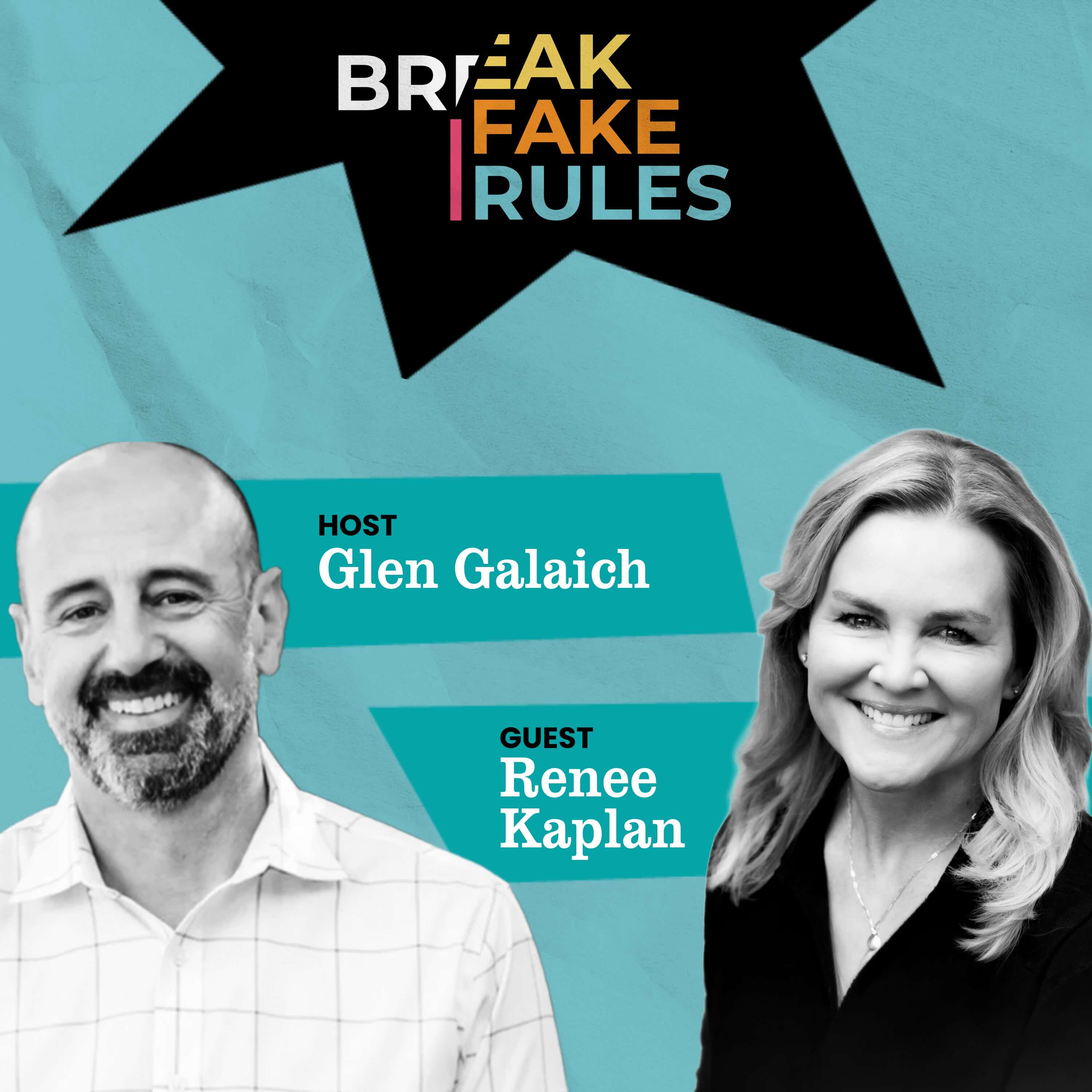
S3 Ep 12We Need Plans, Not Pledges feat. Renee Kaplan

What happens when we stop designing philanthropy around preservation, control, and donor comfort, and start asking how to put more capital, trust, and collective action to work? In this episode, Glen Galaich speaks with Renee Kaplan, CEO of Forward Global, in a conversation recorded at the Forward Global Summit in Whistler. They challenge the fake rules that keep philanthropy cautious and exclusive, and explore what opens up when wealth holders, nonprofit leaders, entrepreneurs, and other changemakers come together to solve problems side by side.Renee shares how Forward Global has evolved into a global community and impact platform built to amplify what works, accelerate collective action, and move resources at the pace this moment demands. If you’re ready to replace judgment and rigid boundaries with trust, openness, and a shared belief that no single person can drive lasting change alone, this episode is for you.💡Renee Kaplan: Are you ready to deploy, or are you only into preservation?Learn more about Forward Global and how you can join their global community.Order your copy of Glen’s book, CONTROL: Why Big Giving Falls Short. Learn about the Stupski Foundation.Guest: Renee Kaplan | Forward Global Executive Producer: Claire CallahanVisual Production Team: SeeBoundlessProduction Team: PodflyGraphic Design: Middle MGMT
Apr 8, 202624 min

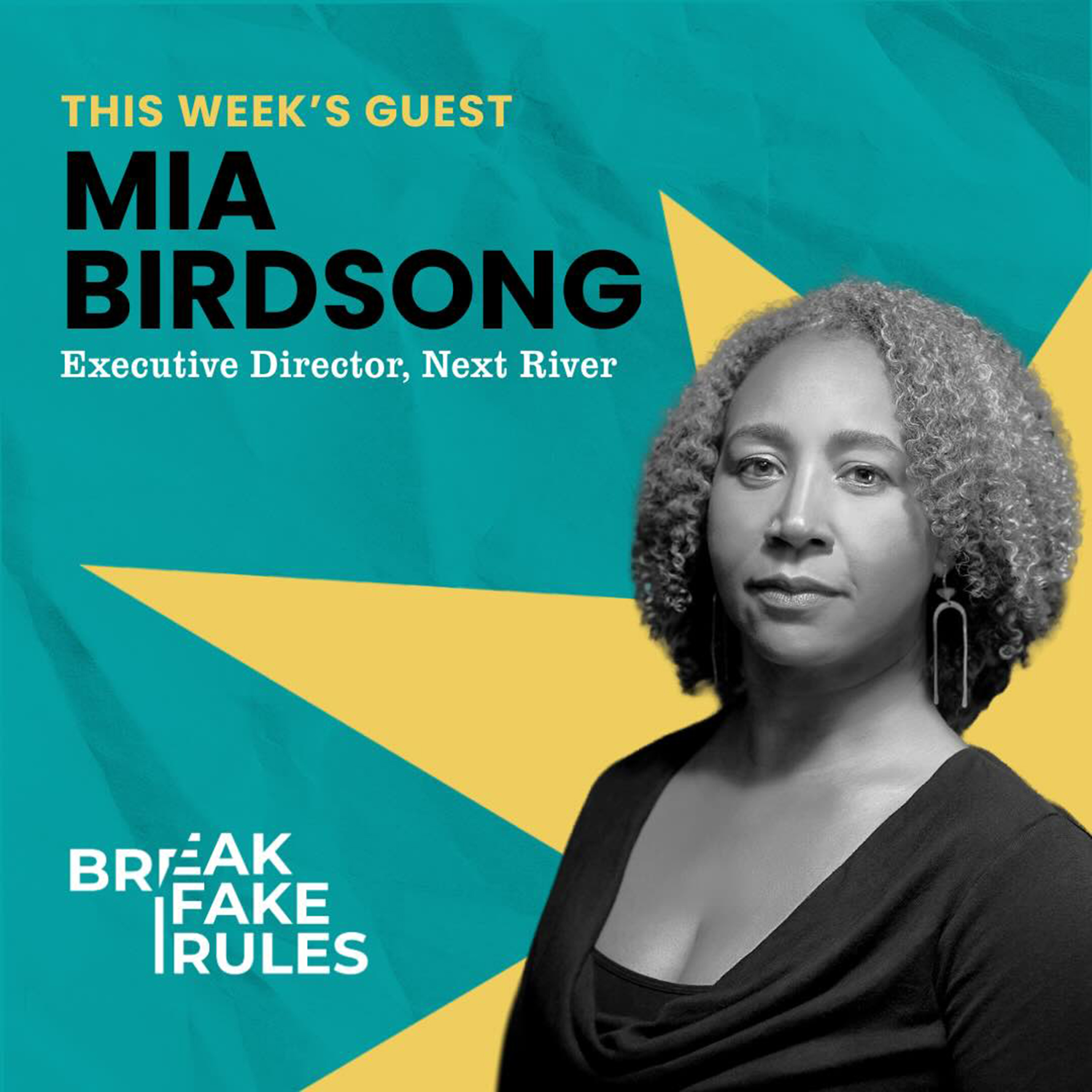
S3 Ep 11How Do We Break the Rules of Individualism to Build Interconnected Freedom? feat. Mia Birdsong

What happens when we stop chasing individual freedom and start asking what it would mean to be free together? In this episode, Stupski Foundation CEO Glen Galaich sits down with Mia Birdsong, founder and executive director of Next River, where she is creating the cultural conditions necessary for a truly free world to emerge. Together, they break the fake rules of individualism, redefine what freedom actually is, and explore how we might pivot from a society organized around separation and scarcity to one rooted in care, connection, and collective well being.💡Mia Birdsong: I understand the kind of fear and anxiety that has us wanting to grip tightly to what's familiar, because it feels safe, but it's not safe. It's never been safe.💡Mia Birdsong: If we can find the courage to let go of trying to hold on to this thing, trying to fix this thing, and trust that together, if we are oriented toward our collective care and well being, we can build something better.Learn more about Next River and their work to create the cultural conditions for a truly free world to emerge.Order your copy of Glen’s book, CONTROL: Why Big Giving Falls Short. Learn about the Stupski Foundation.Guest: Mia Birdsong | How We Show Up Executive Producer: Claire CallahanProduction Team: PodflyGraphic Design: Middle MGMT
Apr 1, 202624 min

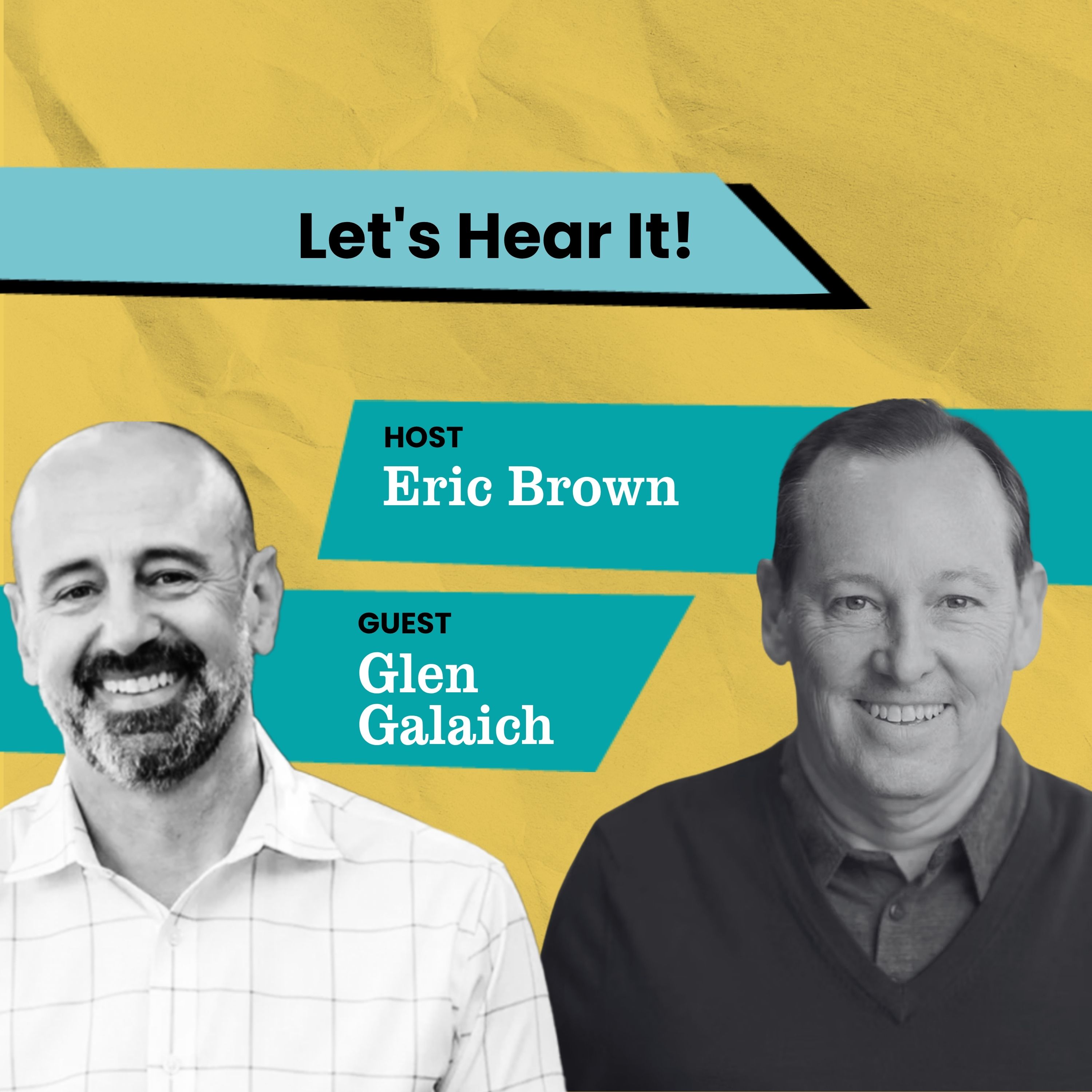
S3 Ep 10Let’s Hear It: Glen Galaich on Why Big Giving Falls Short

We’re excited to share a special feed swap this week from our friends, Eric Brown and Kirk Brown, on the Let’s Hear It podcast! In this episode, you’ll get to hear directly from Glen Galaich and frequent Break Fake Rules co-host and Let’s Hear It host, Eric Brown, as they talk about Glen’s newly released book, CONTROL: Why Big Giving Falls Short. Order your copy of Glen’s book, CONTROL: Why Big Giving Falls Short. Join Glen on the book tour!CONTROL: Why Big Giving Falls Short, out now, makes an argument as simple as it is explosive: when a donor takes a tax deduction to give money away, they've made a deal with the public. That money isn't theirs anymore. But the system we've built lets donors park billions in foundations and donor-advised funds indefinitely — dribbling out 5 cents on the dollar while the rest sits on Wall Street going absolutely nowhere.Glen isn't an outside critic. He's a sitting foundation CEO who spent years reinforcing every rule he's now trying to break. Eric read an early draft, argued with him about it, and told him his central framing was too polite. Glen ignored him. They pick up that conversation here.Follow Let's Hear It and leave a rating so more people can find the show.Learn about the Stupski Foundation and Glen Galaich.

Mar 24, 20261h 0m

S3 Ep 9Co-Host Takeover! CONTROL: Why Big Giving Falls Short with Eric Brown feat. Jamie Allison, Ralph Lewin, and Dr. Carmen Rojas

This week, the co-hosts of Break Fake Rules are taking control of the show to talk behind Glen Galaich’s back about his new book, CONTROL: Why Big Giving Falls Short, out today!Eric Brown, principal of Brown Bridge Strategies and co-host of Let’s Hear It, locks Glen out of the Break Fake Rules studio to bring you a conversation with all of your favorite co-hosts: Jamie Allison, executive director of the Walter and Elise Haas Fund; Ralph Lewin, executive director of the Peter E. Haas Jr. Family Fund; and Dr. Carmen Rojas, president and CEO of the Marguerite Casey Foundation.Together, they dig into the book— what resonated, where they differed, and what it made them reconsider in their own work. What starts as a conversation about CONTROL opens into something larger: a candid conversation about leadership, power, accountability, and what philanthropy owes the communities it claims to serve. They also make a compelling case for why CONTROL is worth reading. Not because it offers easy agreement, but because it forces harder questions to the surface so we can change Big Giving for good.💡Jamie Allison: I think what's more important is breaking the fake rule that proximity to resource, proximity to wealth, equals wisdom…wealth does not necessarily equal wisdom.💡Jamie Allison: I think Control is worth reading because it invites philanthropy to look honestly in the mirror and ask whether our systems are truly serving the communities that we say that they're meant to.💡Carmen Rojas: I think we need a different operating model and control offers us a different pathway to operate as a society in response to these current crises.💡Ralph Lewin: The fake rule that stuck out to me from this book is that we spend all our time on 5% of our resources, when 95% of our resources is not necessarily mission aligned.Order your copy of Glen’s book, CONTROL: Why Big Giving Falls Short. Join Glen on the book tour!Learn about the Stupski Foundation.Co Hosts: Eric Brown, Jamie Allison, Carmen Rojas & Ralph LewinExecutive Producer: Claire CallahanProduction Team: Podfly

Mar 16, 202625 min

S3 Ep 8How Do We Break the Rules of a Broken Immigration System? with Dr. Carmen Rojas feat. Nikki Marín Baena

What happens when philanthropy treats this moment like a true crisis and local organizers refuse to let cruelty become normal?In this episode, Glen Galaich is joined by co-host Dr. Carmen Rojas, President and CEO of the Marguerite Casey Foundation, for a conversation filmed at the first of a series of events called Common Thread, a new initiative designed to bring people together through conversation, culture, and connection. Glen and Carmen talk about how people can get involved and attend future Common Thread events this year, then turn to the urgent realities of immigrant rights and due process as communities confront detention, deportation, and government overreach.Carmen reflects on using her LinkedIn community and platform to humanize the lives affected by disappearances and deportations. She also challenges some of philanthropy’s most entrenched assumptions, including the idea that institutions must hold tightly to wealth even in moments they themselves call a crisis.Then local organizer, Nikki Marín Baena, co-founder and co-director of Siembra NC, joins the conversation to talk about who pays when philanthropy plays it safe on immigrant rights. Nikki shares what organizing for immigrant rights looks like on the ground in North Carolina. From helping neighbors connect, making communities safer, supporting Know Your Rights efforts, building Fourth Amendment workplace trainings, and responding to immigration operations that reshape daily life for workers and families. Together, Nikki, Glen and Carmen uncover the fake rules forming around immigration and mass deportation in America, and call on philanthropy to embrace risk in support of the people doing this work. 💡Nikki Marín Baena: I think that we are taking it for granted that this moment of big hatred that we're in is the way that it has to be. We don't have to accept that there's just widespread hatred. We can find another way.Learn more about Siembra NC and their work to protect immigrant communities and build collective power in North Carolina. Sign up to volunteer! Preorder your copy of Glen’s book, CONTROL: Why Big Giving Falls Short. Learn about the Stupski Foundation.Co-Hosts: Carmen Rojas & Glen GalaichGuest: Nikki Marín Baena - Siembra NC | Defend and Recruit | LinkedIn Executive Producer: Claire CallahanProduction Team: PodflyGraphic Design: Middle MGMT

Mar 11, 202630 min

S3 Ep 7The Overhead Myth Is Undermining Impact with Jamie Allison feat. Rusty Stahl

What happens when philanthropy stops treating the people doing the work as an unnecessary expense and starts funding nonprofit partners like it actually wants them to win? In this episode, Stupski Foundation CEO Glen Galaich and returning co-host Jamie Allison, Executive Director of the Walter and Elise Haas Fund, react to a Chronicle of Philanthropy piece on the high cost of low nonprofit salaries and the dangerous backlash nonprofits are facing right now.They are joined by guest Rusty Stahl, president and CEO of Fund the People, a leading advocate for investing in nonprofit workers, to make the case that strengthening the nonprofit workforce is not just a strategic investment, it is crucial to protecting democracy itself.💡Rusty Stahl: What we're seeing in our research is the more money you put into the staff and the people doing the work, the better the program is, and the greater the impact and results.Learn more about Fund the People and their work to strengthen the nonprofit workforce so organizations can win for their missions.Preorder your copy of Glen’s book, CONTROL: Why Big Giving Falls Short.Learn about the Stupski Foundation.Co-Hosts: Jamie Allison & Glen GalaichGuest: Rusty Stahl: Fund the People | Fund the People PodcastExecutive Producer: Claire CallahanProduction Team: PodflyGraphic Design: Middle MGMT

Mar 4, 202627 min

S3 Ep 6Systems Don’t Change Unless People Do with Jamie Allison feat. Catherine Bracy

What happens when we stop pretending that systems will fix themselves, and ask what it really takes to change them? In this episode, Stupski Foundation CEO Glen Galaich and returning co-host Jamie Allison, Executive Director of the Walter and Elise Haas Fund, first discuss the Endeavor Fund and what it means to back organizations with long-term, trust-based support. Then they sit down with guest Catherine Bracy, founder and CEO of TechEquity and author of World Eaters: How Venture Capital Is Cannibalizing the Economy, to examine how venture capital shapes our everyday lives.Catherine traces how venture capital shifted from funding innovation to driving financialization, and why wealth inequality functions as a strategy as much as an outcome. She breaks down the power law logic that underwrites the entire system, what it extracts from workers and communities, and why it matters when foundations are more invested in venture than the organizations doing the work on the ground. The conversation lands on a challenge that’s hard to ignore: if philanthropy wants different outcomes, it has to question the assumptions behind where its money is parked, and prioritize community benefit over donor comfort.💡Catherine Bracy: The dirty little secret of venture capital is that it’s organized like a power law itself. The vast majority of these funds do not outperform the S&P 500, so what are you actually getting for that money?Learn more about TechEquity and their work to build a more equitable tech economy.Preorder your copy of Glen’s book, CONTROL: Why Big Giving Falls Short.Learn about the Stupski Foundation.Co-Hosts: Jamie Allison & Glen GalaichGuest: Catherine Bracy | World Eaters: How Venture Capital is Cannibalizing the Economy Executive Producer: Claire CallahanProduction Team: PodflyGraphic Design: Middle MGMT

Feb 25, 202631 min
Copyright 2026 Stupski Foundation