
PLAY PODCASTS
Brazil Crypto Report

Brazil Crypto Report

Insights, analysis and interviews exploring Latin America's largest crypto market

Aaron Stanley

195 episodesEN

Show overview

Brazil Crypto Report has been publishing since 2022, and across the 4 years since has built a catalogue of 195 episodes. That works out to roughly 150 hours of audio in total. Releases follow a weekly cadence.

Episodes typically run thirty-five to sixty minutes — most land between 38 min and 56 min — though episode length varies meaningfully from one episode to the next. None of the episodes are flagged explicit by the publisher. It is catalogued as a EN-language News show.

The show is actively publishing — the most recent episode landed 3 days ago, with 15 episodes already out so far this year. Published by Aaron Stanley.

Episodes
195
Running
2022–2026 · 4y
Median length
47 min
Cadence
Weekly

From the publisher

News, analysis and interviews exploring the Brazilian crypto market brazilcrypto.substack.com

Latest Episodes

View all 195 episodes

#194: The Fraudsters Have Agents Now with Sumsub's Ilya Brovin

Aug 20, 202636 min

Episode #192: The Modular Stablecoin Revolution with M0's Luca Prosperi

Aug 14, 202644 min

Episode #191: Crossing the Stablecoin Adoption Chasm: Live from Bitso Stablecoin Conference 2026

Aug 1, 202632 min

Episode #190: The Coming Neobank Shakeout? with Olivia Vande Woude of Ava Labs

Jul 28, 202628 min

Episode #189: El Dorado CEO Guillermo Goncalves Live from Bitso's Stablecoin Conference

Jul 17, 202624 min

Episode #188: Inside Trace Finance's $32M Series A Raise

Jul 13, 202630 min

#187: He Left Visa to Build Caliza with Ezra Kebrab

Jun 26, 202615 min

Episode #186: Unbundling the SuperApp with Pods CTO Robson Silva

Jun 19, 202634 min

Episode #185: Unlocking Stablecoin Liquidity with Checker CEO Jack Chong

Jun 10, 202635 min

Episode #184: David Z. Morris on Effective Altruism and the Inner Workings of Sam Bankman-Fried

Jun 5, 20261h 6m

Episode #183: Tokenized Credit for Brazil's Creative Economy with DUX
May 26, 202658 min

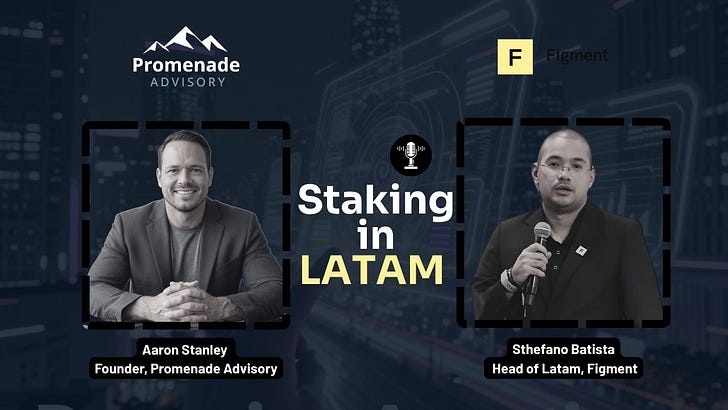
Episode #182: Live from Merge Sao Paulo: Staking Goes Global with Figment's Sthefano Batista

🙌 You can listen to BCR on your favorite podcast platform YouTube | Spotify | Apple Podcasts🔥 Join the BCR English language Telegram group to continue the conversationOla pessoal! I had the chance to catch up with Sthefano Batista at Merge Sao Paulo. Sthefano is Head of Latam at Figment, which is the world’s largest provider of institutional staking services with more than $18 billion in assets staked. Figment counts BlackRock, Nubank, and Robinhood among its clients, and is responsible for 5 to 6 percent of all Ethereum validated globally. Why Institutions Are Embracing StakingFor traditional finance, digital asset staking is a genuinely new concept. It is not a bond. It is not a dividend. The yield comes from supporting the network itself, and the risk profile is fundamentally different from anything in a legacy portfolio.What has resonated with institutional clients, Sthefano explains, is precisely that difference. Staking on a network like Solana or Ethereum, done correctly through a non-custodial provider, means client assets never leave their wallets. Figment never touches private keys. If Figment disappeared tomorrow, clients would still have their assets.That can be a hard pitch to make to compliance teams. But once it lands, it tends to land well.The Edge Is in the DetailsFigment’s positioning is not built on offering the highest yields. It is built on risk-adjusted performance, and that distinction matters.The firm has a dedicated protocol team that vets every network before onboarding it, monitors governance and inflationary changes, and helps institutional clients understand what updates like Solana’s FireDancer mean in practice. They have never had a slashing event in their history. When you are validating 5 percent of all Ethereum, you do not take shortcuts.Brazil as a Test Case for Regulated StakingBrazil’s updated VASP framework, revised last November, has created one of the clearest regulatory environments for staking anywhere in the world. For Figment, that has been a genuine business accelerant, giving Faria Lima institutions the confidence to move from curiosity to commitment.Sthefano frames it well: the blockchain is global, but how Brazil thinks about investment risk, inflation, and wealth protection is distinctly local. You need people on the ground who understand both.Key Takeaways* Figment manages $18B in staked assets and validates 5 to 6% of all Ethereum* Non-custodial staking means client assets are never held by Figment* Brazil’s VASP regulation has created a clear, compliant path for institutional staking* BlackRock and Nubank are among Figment’s publicly confirmed clients* Figment just launched a USDC yield product and is expanding across the AmericasRecent Episodes Get full access to Brazil Crypto Report at brazilcrypto.substack.com/subscribe
Apr 1, 202633 min

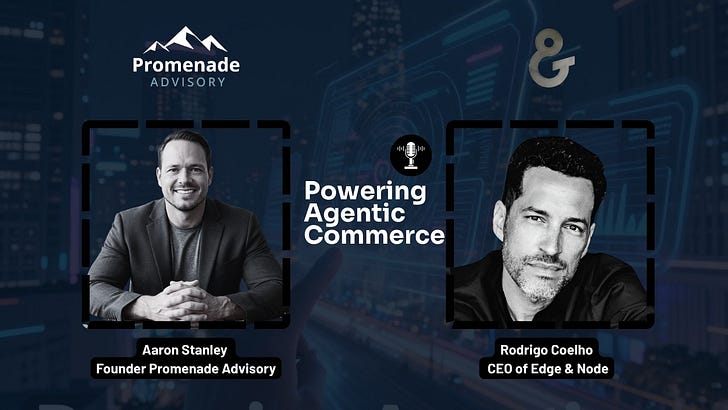
Episode #181: Live from Merge Sao Paulo with Edge & Node CEO Rodrigo Coelho

🙌 You can listen to BCR on your favorite podcast platform YouTube | Spotify | Apple Podcasts🔥 Join the BCR English language Telegram group to continue the conversationOla pessoal!At Merge São Paulo, I caught up with Rodrigo Coelho, CEO of Edge & Node, which is the original team behind The Graph protocol.We talked about one of the most exciting intersections in tech right now: agentic commerce and the future of blockchain-powered payments.Rodrigo was born in Brazil, and his family moved to the US when he was young. His path into Web3 started the way a lot of great origin stories do, by accident. Working out of a San Francisco co-working space in 2016, he struck up a friendship with Yaniv Tal, who was building the pitch deck for what would become The Graph.A few years later, Rodrigo was the team’s first hire. He has been with them ever since, taking over as CEO just over a year ago.For the uninitiated, The Graph is the indexing and querying layer that sits beneath much of Web3. If you have ever interacted with a decentralized application, you have almost certainly used it without knowing it.Edge & Node recently launched AMP, a new product that modernizes that infrastructure for institutional use. It offers cryptographic data verification, cross-chain compatibility, and a predictable flat-fee pricing model that banks and financial institutions are finding increasingly attractive as their API costs spiral.The part of our conversation that really stood out was the discussion around agentic commerce.As AI agents become capable of executing real-world tasks autonomously, they need a way to pay for things. A rational agent is not going to choose a payment rail that charges a 3% fee and requires KYC when it could settle a transaction for a thousandth of a cent using stablecoins. That calculus is not even close.Edge & Node has been working on micro-payment infrastructure since 2021. When Coinbase’s X402 standard launched, they jumped on it immediately, contributing a deferred payment scheme that allows nano-payments to be batched and settled on-chain in bulk.It is exactly the kind of boring-but-essential plumbing that makes a new financial system actually work.We also got into the competitive landscape, whether Visa and MasterCard can reinvent themselves before crypto rails make their fee extraction model obsolete, and why the stablecoin wars may not produce a single winner.Key Takeaways:* The Graph quietly powers much of Web3 data infrastructure, and Edge & Node’s new product AMP brings that technology to institutional players with compliance and cost predictability built in* AI agents will gravitate toward crypto payment rails naturally since they cannot easily KYC, and the fee difference vs. traditional rails is not even a contest* Ephemeral virtual cards are a short-term bridge for agentic commerce, but agent-to-agent crypto payments are where things are heading fast* The stablecoin landscape is unlikely to produce one winner; expect a fragmented but interoperable ecosystem, much like traditional banking today* Visa and MasterCard are paying close attention, but their 3% fee model faces a serious structural threat as X402-style rails go mainstreamGive it a listen!Have a great week everyone,-AWSBrazil Crypto Report is presented byFigment is the leading independent provider of staking infrastructure with $18B assets under stake and provides the complete solution for over 1000 institutional clients in Latin America and globally. Through its enterprise-grade infrastructure, Figment enables clients such as banks and exchanges, to earn rewards on Proof-of-Stake assets such as Ethereum and Solana, while maintaining the highest standards of security, compliance, and performance.Recent Episodes Get full access to Brazil Crypto Report at brazilcrypto.substack.com/subscribe
Mar 26, 202641 min

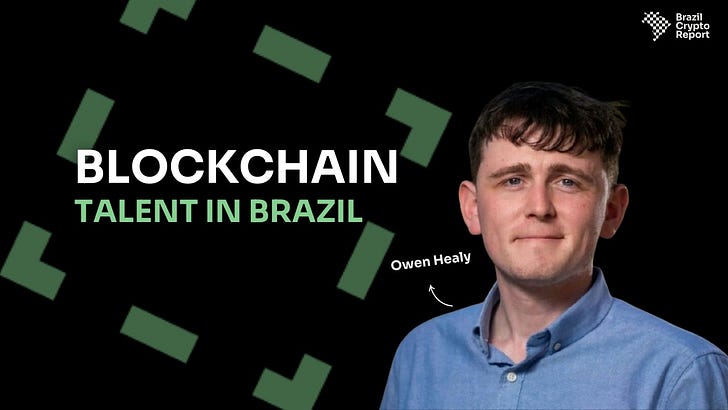
Episode #180: Why Brazil is a World Class Blockchain Talent Hub with Owen Healy

🙌 You can listen to BCR on your favorite podcast platform YouTube | Spotify | Apple Podcasts🔥 Join the BCR English language Telegram group to continue the conversationOla pessoal!If you want to understand where the blockchain talent market is heading, talk to a recruiter. They’re always six months ahead of the news cycle.Owen Healy of Owen Healy Blockchain Talent proves the rule.The Ireland-based blockchain headhunter has spent five years placing developers, BD professionals, DevRels, and marketers at some of the most promising projects in the space. With 50,000 LinkedIn followers and a track record of successfully placing Brazilian talent at global crypto firms, Owen brings a ground-level perspective on where the industry is hiring, who it’s hiring, and why Brazil keeps coming up as one of the most exciting talent pools in the world.BCR is excited to be a media partner for Merge Sao Paulo next week. Shoot me a note if you’re going to be around want to catch up! Key takeaways from the episode:* The blockchain job market is growing up. The early days of hiring only developers and BD folks are over. Product managers, legal professionals, and candidates with traditional finance backgrounds are now in high demand as crypto projects move from experimentation into operational maturity.* TradFi talent is finally making the jump. Wall Street professionals who were curious about crypto but reluctant to give up salary and benefits are finding it easier to transition now — as more institutional-grade firms enter the space and offer risk profiles that actually suit them.* Brazilian talent punches above its weight. Owen consistently highlights Brazilian candidates for their strong engineering skills, clear communication, honesty about their experience, and competitive rates relative to North American counterparts - all while working in compatible time zones.* Remote work is getting harder to secure. Time zones matter more than they did in 2021, and hybrid models are increasingly common. The candidates who remain location-independent are those whose skills are rare enough that companies will bend the rules to hire them.* Job boards alone won’t cut it. Owen’s advice for job seekers: go “multi-chain.” Apply through official channels, but also build genuine relationships inside target companies, get internal advocates, and come to interviews prepared with competitive intelligence.* Referrals still rule. In a small industry where everyone is a second-degree connection from everyone else, a warm introduction remains the single most powerful job search tool.Have a great week everyone,-AWSBrazil Crypto Report is presented byFigment is the leading independent provider of staking infrastructure with $18B assets under stake and provides the complete solution for over 1000 institutional clients in Latin America and globally. Through its enterprise-grade infrastructure, Figment enables clients such as banks and exchanges, to earn rewards on Proof-of-Stake assets such as Ethereum and Solana, while maintaining the highest standards of security, compliance, and performance.Recent Episodes Get full access to Brazil Crypto Report at brazilcrypto.substack.com/subscribe

Mar 12, 202642 min

Episode 179: BRL Stablecoin Deep Dive with Rodrigo Trindade

🙌 You can listen to BCR on your favorite podcast platform YouTube | Spotify | Apple Podcasts🔥 Join the BCR English language Telegram group to continue the conversationOla pessoal!Rodrigo Trindade is an investor with Iporanga Ventures. He joins the show to discuss his groundbreaking research on local stablecoin adoption across Brazil and Latin America. As both a venture investor and consultant in the region’s crypto ecosystem, Rodrigo identified a critical gap in the market: comprehensive, reliable data tracking the growth and usage of regional stablecoins.He developed a tracking dashboard that monitors on-chain data for Latin American stablecoins on a weekly basis, capturing supply metrics, holder counts, active addresses, transaction volumes, and DeFi activity including TVL for local stablecoin pairs. This infrastructure now serves as the primary source of market intelligence for investors and builders operating in the space.Our conversation explores why local currency stablecoins represent essential infrastructure for the region’s emerging on-chain financial system. While USD-denominated stablecoins will likely maintain global dominance, Rodrigo argues that functional on-chain economies in Latin America require native currency rails. Users need to transact, borrow, and generate yield in their local currencies—not just convert everything to dollars.Key Takeaways:* Transparency gaps remain critical: The industry needs to move beyond monthly reserve attestations toward real-time proof of reserves. Rodrigo highlights partnerships like the one between Crown and Fact Finance as important steps toward better transparency standards.* Liquidity infrastructure is developing: While multiple liquidity providers and aggregators have emerged across Latin America, the market hasn’t reached maturity yet. Deeper liquidity pools remain necessary for sustainable growth.* Credit and yield are the next frontiers: Looking ahead to 2026-2027, Rodrigo identifies tokenized credit and on-chain yield products as the hottest opportunities. These building blocks will enable Latin American users to access the full spectrum of financial services on-chain.* Retail payments need refinement: While B2B crypto payment solutions have made progress, creating seamless consumer experiences for cross-border transactions and everyday payments remains an unsolved challenge.Rodrigo’s research provides rare visibility into a rapidly evolving market. For investors, builders, and institutions exploring opportunities in Latin American crypto infrastructure, his dashboard and insights offer invaluable data-driven perspective on where the ecosystem stands and where it’s headed.You can connect with Rodrigo on Linkedin and X/Twitter. Have a great week everyone,-AWSBrazil Crypto Report is presented byAvenia is the programmable financial infrastructure for Latin America. Connect to local payment rails like PIX, SPEI and CBU — using stablecoins as settlement — and unlock real-time, cross-border payments without banks, FX desks, or SWIFT.Whether you’re building a wallet, a crypto card, or a global treasury solution, Avenia gives you the APIs and compliance-ready infrastructure to scale in LatAm. Move money between BRL, USD, MXN and more — fast, transparent, and fully on-chain.https://avenia.io/Figment is the leading independent provider of staking infrastructure with $18B assets under stake and provides the complete solution for over 1000 institutional clients in Latin America and globally. Through its enterprise-grade infrastructure, Figment enables clients such as banks and exchanges, to earn rewards on Proof-of-Stake assets such as Ethereum and Solana, while maintaining the highest standards of security, compliance, and performance.Recent Episodes Get full access to Brazil Crypto Report at brazilcrypto.substack.com/subscribe

Jan 1, 202645 min

Episode 178: Can Crown Become the Circle of Brazil?

🙌 You can listen to BCR on your favorite podcast platform YouTube | Spotify | Apple Podcasts🔥 Join the BCR English language Telegram group to continue the conversationOla pessoal!Today’s episode is with John Delaney, co-founder and CEO of Crown - which has quickly become a major player in a Brazilian stablecoin market that is entering a new phase of maturity. John shares how Crown is solving what he identifies as the most acute problem in Brazil’s digital asset ecosystem: enabling institutional players to capture yield in a high interest rate environment.The Numbers Speak for ThemselvesCrown has achieved remarkable traction since launching BRLV, which is now the largest emerging market stablecoin with over 360 million BRL in circulation. The company recently closed a $13 million Series A round led by Paradigm.But what makes Crown’s approach distinctive isn’t just the capital raised or volumes achieved - it’s the architectural decisions that underpin the product.Why Brazil? Why Now?Delaney, a former Cleary Gottlieb lawyer who worked on structured finance deals including Nubank’s early credit card funding, brings deep expertise across American and Brazilian financial markets to the project.His thesis centers on three key attributes that make Brazil an ideal stablecoin market:* A trillion-dollar-plus M2 money supply* A crypto-friendly regulatory environment fostered by the Central Bank* Positive real interest rates that significantly outpace inflationThe Yield Generation AdvantageUnlike traditional stablecoin models where issuers retain all interest income generated by reserve assets, BRLV shares yield with institutional partners at what Delaney describes as “a very deep architectural level.”This design choice directly addresses the opportunity cost institutional players face when holding stablecoins in high-yield environments, a problem that doesn’t exist to the same degree in low-rate markets like the US or Europe.Security FirstBeyond yield generation, Crown has implemented what may be the most robust security structure in the stablecoin industry globally. BRLV features a bankruptcy-remote reserve holding combined with perfected legal guarantees, ensuring that token holders maintain claims on underlying assets even if Crown itself fails.This represents the first implementation of security protections outlined in frameworks like the Genius Act.An Ambitious VisionDelaney’s long-term target: one trillion BRL in circulation within ten years, representing high single-digit percentage of Brazil’s M2 money supply. He views the stablecoin market as winner-take-all, or at minimum winner-take-most, drawing parallels to the USDT/USDC duopoly.As Brazil’s stablecoin market enters a new phase of maturity, Crown’s rapid ascent offers important lessons for how institutional-grade infrastructure is being built in emerging markets.You can connect with John on Linkedin.Key Takeaways:✓ Native yield architecture – BRLV enables institutional holders to capture yield from Brazil’s high interest rate environment✓ Bankruptcy-remote structure – First global implementation of perfected legal guarantees protecting stablecoin holders✓ Market opportunity – Brazil’s trillion-dollar M2 money supply and positive real rates create optimal conditions✓ Institutional focus – Go-to-market strategy prioritizes institutional flows that drive majority of volumes✓ Ambitious scaling – Target of one trillion BRL circulation within 10 yearsHave a great week everyone,-AWSBrazil Crypto Report is presented byAvenia is the programmable financial infrastructure for Latin America. Connect to local payment rails like PIX, SPEI and CBU — using stablecoins as settlement — and unlock real-time, cross-border payments without banks, FX desks, or SWIFT.Whether you’re building a wallet, a crypto card, or a global treasury solution, Avenia gives you the APIs and compliance-ready infrastructure to scale in LatAm. Move money between BRL, USD, MXN and more — fast, transparent, and fully on-chain.https://avenia.io/Figment is the leading independent provider of staking infrastructure with $18B assets under stake and provides the complete solution for over 1000 institutional clients in Latin America and globally. Through its enterprise-grade infrastructure, Figment enables clients such as banks and exchanges, to earn rewards on Proof-of-Stake assets such as Ethereum and Solana, while maintaining the highest standards of security, compliance, and performance.Recent Episodes Get full access to Brazil Crypto Report at brazilcrypto.substack.com/subscribe

Dec 18, 202549 min

Episode #177: No Place To Hide: Brazil's New Crypto Tax Regime with Thiago Barbosa

🙌 You can listen to BCR on your favorite podcast platform YouTube | Spotify | Apple Podcasts🔥 Join the BCR English language Telegram group to continue the conversationOla pessoal!The era of taxation loopholes and gray areas appears to be rapidly coming to an end in Brazil. Thiago Barbosa, partner at Salles Nogueira Advogados and a crypto tax law expert, joins the show to discuss sweeping regulatory changes that will transform how Brazilian crypto holders must report and pay taxes on their digital assets.Brazil is undergoing a major compliance transformation on two fronts. First, the new DeCripto regime replaces the old Normative Instruction 1888 reporting requirements, aligning Brazil with the OECD’s Crypto Asset Reporting Framework (CARF). This isn’t just a bureaucratic update - it’s Brazil joining a global information-sharing network that enables tax authorities to exchange crypto holder data across borders. In other words, if you’re a Brazilian trading on a foreign exchange, that platform will be reporting your activity back to the Receita Federal.Perhaps the most contentious development is the Finance Ministry’s stance on applying IOF (tax on financial operations) to stablecoin transactions. Here’s the issue: IOF was created before stablecoins existed, and the current law only covers currency issued by governments - not digital representations of fiat issued by private companies like USDT or USDC. This creates a legal loophole that technically exempts stablecoins from IOF.However, the government is engaged in what Thiago calls “rhetoric warfare.” By publicly stating that IOF will apply to stablecoins, they’re using fear to discourage companies from adopting them, even though they lack the legal authority to collect the tax without Congressional action. When companies avoid stablecoins out of uncertainty, they stick to traditional fiat channels where the government collects more fees. It’s regulatory intimidation without legislative backing, and Thiago warns that the Receita may attempt to unilaterally collect IOF on stablecoin transactions anyway, forcing companies into costly legal battles to defend themselves.Key Takeaways:* Global reporting is here: Foreign exchanges must now report Brazilian user data to the Receita Federal under the OECD framework, creating an international surveillance net* Three reporting obligations: Exchanges in Brazil, foreign platforms serving Brazilian users, and individual crypto holders all face new disclosure requirements* VASP licensing gets serious: The Central Bank’s new requirements demand significant capital, compliance infrastructure, and regulatory approval to operate* IOF stablecoin limbo: The government claims IOF applies to stablecoins despite legal gaps, using fear tactics to discourage adoption while avoiding legislative process* Lifestyle monitoring intensifies: The Receita Federal is investing heavily in AI and surveillance tools to identify mismatches between reported income and actual spending patternsThe Bigger Picture: Financial Surveillance EscalatesPerhaps most concerning is what Thiago revealed toward the end of our conversation: this crypto crackdown is part of a much broader financial surveillance push by the Brazilian government. The IRS is pouring resources into tracking everything from Instagram posts showcasing luxury lifestyles to international travel patterns—all to identify taxpayers whose spending doesn’t match their declared income.As Thiago bluntly put it, the window for undeclared crypto wealth is closing fast. With international data sharing, AI-powered surveillance, and increasingly sophisticated enforcement mechanisms, the “degens” who thought they could stay one step ahead of the Receita Federal are running out of room to maneuver.The message is clear: Brazil is serious about bringing crypto into the regulated fold, and non-compliance is becoming an increasingly risky bet.You can connect with Thiago on Linkedin and InstagramHave a great week everyone,-AWSBrazil Crypto Report is presented byAvenia is the programmable financial infrastructure for Latin America. Connect to local payment rails like PIX, SPEI and CBU — using stablecoins as settlement — and unlock real-time, cross-border payments without banks, FX desks, or SWIFT.Whether you’re building a wallet, a crypto card, or a global treasury solution, Avenia gives you the APIs and compliance-ready infrastructure to scale in LatAm. Move money between BRL, USD, MXN and more — fast, transparent, and fully on-chain.https://avenia.io/Figment is the leading independent provider of staking infrastructure with $18B assets under stake and provides the complete solution for over 1000 institutional clients in Latin America and globally. Through its enterprise-grade infrastructure, Figment enables clients such as banks and exchanges, to earn rewards on Proof-of-Stake assets such as Ethereum and Solana, while maintaining the highest standards of security, compliance, and performance.Recent Epis

Dec 14, 202551 min

Episode #176: What's ACTUALLY Driving Stablecoin Adoption in Latam with Justin Norman

🙌 You can listen to BCR on your favorite podcast platform YouTube | Spotify | Apple Podcasts🔥 Join the BCR English language Telegram group to continue the conversationOla pessoal! Today’s episode is with Justin Norman, founder of The Flip, to discuss his recent on-the-ground research into stablecoin adoption across Latin America. Justin has spent years documenting technology adoption in emerging markets, and his latest YouTube documentary series provides rare, unfiltered insights into how stablecoins are actually being used in the region.The Argentina ParadoxJustin’s investigation in Argentina revealed a fascinating disconnect. Despite $90 billion in stablecoin transaction volumes, visible retail adoption remains minimal. You won’t find prices listed in USDT or widespread merchant acceptance.So where are these volumes coming from? The answer lies in understanding stablecoins’ true utility in Argentina’s distorted economy. They primarily serve as store-of-value instruments and facilitate cross-border trade, rather than functioning as everyday payment methods. This reflects the reality of Argentina’s parallel exchange markets and chronic dollar shortages - conditions that create natural demand for dollar-denominated digital assets.Be sure to catch Justin’s brilliant documentary exploring stablecoins in Argentina below👇Beyond the HypeJustin’s work cuts through the prevailing narratives around stablecoin adoption. While North American and European institutions focus on shaving basis points and improving settlement times, emerging markets face fundamentally different problems: currency devaluation, capital controls, and inadequate access to global financial infrastructure.The adoption pattern Justin documented isn’t limited to Argentina. He found striking similarities between Latin American markets like Bolivia and African markets like Nigeria—countries facing comparable macro pressures including fuel subsidy issues, dollar shortages, and import-dependent economies.Infrastructure MattersOne key differentiator Justin identified: Latin America’s relatively robust payment infrastructure creates better conditions for stablecoin on-ramps and off-ramps compared to many African markets. The ability to scan a QR code and instantly convert stablecoins to local currency requires strong local payment rails—infrastructure that exists in varying degrees across emerging markets.Key Takeaways:* Real use cases differ from expectations: Stablecoins in Latin America primarily serve store-of-value and cross-border trade functions, not retail payments* Context is everything: Understanding macro conditions (dollar shortages, parallel markets, currency controls) is essential to understanding adoption patterns* Infrastructure enables adoption: Strong local payment systems make stablecoin conversion seamless, creating better user experiences* Emerging markets share common drivers: Similar economic pressures across Latin America and Africa create comparable crypto adoption patterns, though at different stagesJustin’s documentary series represents essential viewing for anyone seeking to understand genuine stablecoin adoption beyond the hype cycle.You can connect with Justin on Linkedin. Have a great week everyone,-AWSBrazil Crypto Report is presented byAvenia is the programmable financial infrastructure for Latin America. Connect to local payment rails like PIX, SPEI and CBU — using stablecoins as settlement — and unlock real-time, cross-border payments without banks, FX desks, or SWIFT.Whether you’re building a wallet, a crypto card, or a global treasury solution, Avenia gives you the APIs and compliance-ready infrastructure to scale in LatAm. Move money between BRL, USD, MXN and more — fast, transparent, and fully on-chain.https://avenia.io/Figment is the leading independent provider of staking infrastructure with $18B assets under stake and provides the complete solution for over 1000 institutional clients in Latin America and globally. Through its enterprise-grade infrastructure, Figment enables clients such as banks and exchanges, to earn rewards on Proof-of-Stake assets such as Ethereum and Solana, while maintaining the highest standards of security, compliance, and performance.Recent Episodes Get full access to Brazil Crypto Report at brazilcrypto.substack.com/subscribe

Dec 1, 202558 min

Episode #175: Inside BRL1 - Brazil's Liquidity Layer with Thomaz Teixeira and Ben Reid

🙌 You can listen to BCR on your favorite podcast platform YouTube | Spotify | Apple Podcasts🔥 Join the BCR English language Telegram group to continue the conversationOlá pessoal!For today’s episode I’m joined by Thomaz Teixeira, CEO of BRL1, and Ben Reid, Head of Stablecoins at Bitso, to discuss the BRL1 stablecoin project.BRL1 represents a departure from the typical competitive dynamics we see in crypto markets. Instead of each exchange launching its own stablecoin, major Brazilian platforms Mercado Bitcoin, Bitso, Foxbit, and Cainvest formed a consortium to build shared infrastructure.Despite launching just months ago, BRL1 has already achieved impressive market penetration, regularly trading as the sixth or seventh highest-volume crypto asset on Brazilian exchanges, ahead of established tokens like Dogecoin and sometimes even Solana. More significantly, BRL1 is capturing roughly half the trading volume of USDC in Brazil on centralized exchanges, a remarkable feat considering every user already had access to dollar-denominated stablecoins.What makes BRL1 particularly compelling is its focus on institutional use cases. The project is attracting significant interest from market makers and liquidity providers who need efficient rails for moving value between exchanges globally. As Teixeira explained, his background in high-frequency trading and algorithmic arbitrage positioned him to understand the friction points in cross-exchange liquidity flows, problems that BRL1 was specifically designed to address.Reid provided valuable context on the broader stablecoin landscape in Latin America, noting that institutional market makers are increasingly positioning themselves across G20 markets and seeking to onboard trusted local currency stablecoins. This isn’t speculative positioning - these players are responding to real demand from corporates conducting cross-border payments and financial institutions seeking more efficient settlement mechanisms.We also also touch on how BRL1 addresses some of the interoperability challenges that Brazil’s now-shuttered Drex CBDC project aimed to solve. By creating standardized infrastructure that connects previously siloed liquidity pools, BRL1 is demonstrating how private sector innovation can fill gaps in market infrastructure.Key Takeaways:* Consortium Model Shows Promise: Competitors collaborating on shared infrastructure can create network effects that benefit all participants and accelerate adoption* Institutional Traction Is Real: Market makers and liquidity providers are actively onboarding BRL1 for cross-exchange arbitrage and cross-border payment flows* Volume Metrics Validate Demand: BRL1’s trading volume already represents 50% of USDC’s Brazilian exchange volume despite being live for only months* Local Stablecoins Fill Market Gaps: Non-dollar stablecoins serve distinct use cases beyond currency speculation, particularly for regional market efficiency and capital flowsYou can connect with Thomaz and Ben on Linkedin. Have a great week everyone,-AWSBrazil Crypto Report is presented byAvenia is the programmable financial infrastructure for Latin America. Connect to local payment rails like PIX, SPEI and CBU — using stablecoins as settlement — and unlock real-time, cross-border payments without banks, FX desks, or SWIFT.Whether you’re building a wallet, a crypto card, or a global treasury solution, Avenia gives you the APIs and compliance-ready infrastructure to scale in LatAm. Move money between BRL, USD, MXN and more — fast, transparent, and fully on-chain.https://avenia.io/Figment is the leading independent provider of staking infrastructure with $18B assets under stake and provides the complete solution for over 1000 institutional clients in Latin America and globally. Through its enterprise-grade infrastructure, Figment enables clients such as banks and exchanges, to earn rewards on Proof-of-Stake assets such as Ethereum and Solana, while maintaining the highest standards of security, compliance, and performance.Recent Episodes Get full access to Brazil Crypto Report at brazilcrypto.substack.com/subscribe

Nov 19, 202551 min

Episode #174: Winners and Losers of Brazil’s New VASP Rules with Carlos Russo and Cesar Carvalho

🙌 You can listen to BCR on your favorite podcast platform YouTube | Spotify | Apple Podcasts🔥 Join the BCR English language Telegram group to continue the conversationOlá pessoal!You surely saw that Brazil’s Central Bank released much-anticipated VASP regulations earlier this week. These rules have been in the works for three years now, and they bring significant clarity to the market and serve to (in some ways) level the playing field. To discuss what’s in these regulations, timelines and likely winners and losers, I’m joined by Carlos Eduardo Russo, CEO and co-founder of Bluegreen, and Cesar Carvalho, partner at Baptista Luz Advogados. Both Carlos and Cesar serve on the government relations team of the ABToken trade association and have been heavily involved in the rulemaking process. The VASP regulatory package comprises three primary resolutions addressing authorization requirements, operational compliance standards, and the integration of crypto assets into Brazil’s foreign exchange market. The framework represents the Central Bank’s attempt to balance market innovation with financial stability, though several contentious issues remain under discussion.Key Themes and TakeawaysAuthorization Timeline and Process* Regulations take effect February 2, 2025, with VASPs required to file formal authorization requests within nine months* A phased two-stage approval process is expected to span approximately three years from initial filing to final authorization* Companies must demonstrate operational readiness immediately upon filing, including compliance with cybersecurity, risk management, and AML obligationsCapital Requirements Create Market Pressures* Minimum regulatory capital ranges from R$11.2 million to R$37.2 million depending on the business model* Industry advocates are pushing for a phased contribution calendar allowing companies up to two years to meet capital requirements* Smaller players face significant barriers to entry, potentially consolidating market share among established entitiesLevel Playing Field—With Asterisks* All VASPs—domestic and international—must now report customer transactions to tax authorities with no loopholes* The framework addresses longstanding complaints from local exchanges about uneven compliance standards* However, concerns persist about regulatory advantages favoring traditional financial institutions (”TradFi”) over new VASP entrantsForeign Exchange Market Integration* Stablecoin transactions are now formally incorporated into Brazil’s regulated FX market* VASPs face stringent reporting requirements aligned with traditional FX brokers* This legitimizes crypto-based cross-border payments within Brazil’s regulatory frameworkThe regulations represent a conservative, iterative approach from the central bank, which has signaled openness to continued industry dialogue. For stakeholders, the coming months will be critical as firms assess their compliance pathways and the industry advocates for refinements to ensure genuine competitive parity across all market participants.You can connect with Carlos and Cesar on Linkedin. Have a great week everyone,-AWSBrazil Crypto Report is presented byAvenia is the programmable financial infrastructure for Latin America. Connect to local payment rails like PIX, SPEI and CBU — using stablecoins as settlement — and unlock real-time, cross-border payments without banks, FX desks, or SWIFT.Whether you’re building a wallet, a crypto card, or a global treasury solution, Avenia gives you the APIs and compliance-ready infrastructure to scale in LatAm. Move money between BRL, USD, MXN and more — fast, transparent, and fully on-chain.https://avenia.io/Figment is the leading independent provider of staking infrastructure with $18B assets under stake and provides the complete solution for over 1000 institutional clients in Latin America and globally. Through its enterprise-grade infrastructure, Figment enables clients such as banks and exchanges, to earn rewards on Proof-of-Stake assets such as Ethereum and Solana, while maintaining the highest standards of security, compliance, and performance.Recent Episodes Get full access to Brazil Crypto Report at brazilcrypto.substack.com/subscribe

Nov 15, 20251h 7m
Aaron Stanley