Bombadil | The Epstein Case and The Crisis of the Republic
波士頓書評 Boston Review of Books Podcast · 波士頓書評 Boston Review of Books
Audio is streamed directly from the publisher (api.substack.com) as published in their RSS feed. Play Podcasts does not host this file. Rights-holders can request removal through the copyright & takedown page.
Show Notes
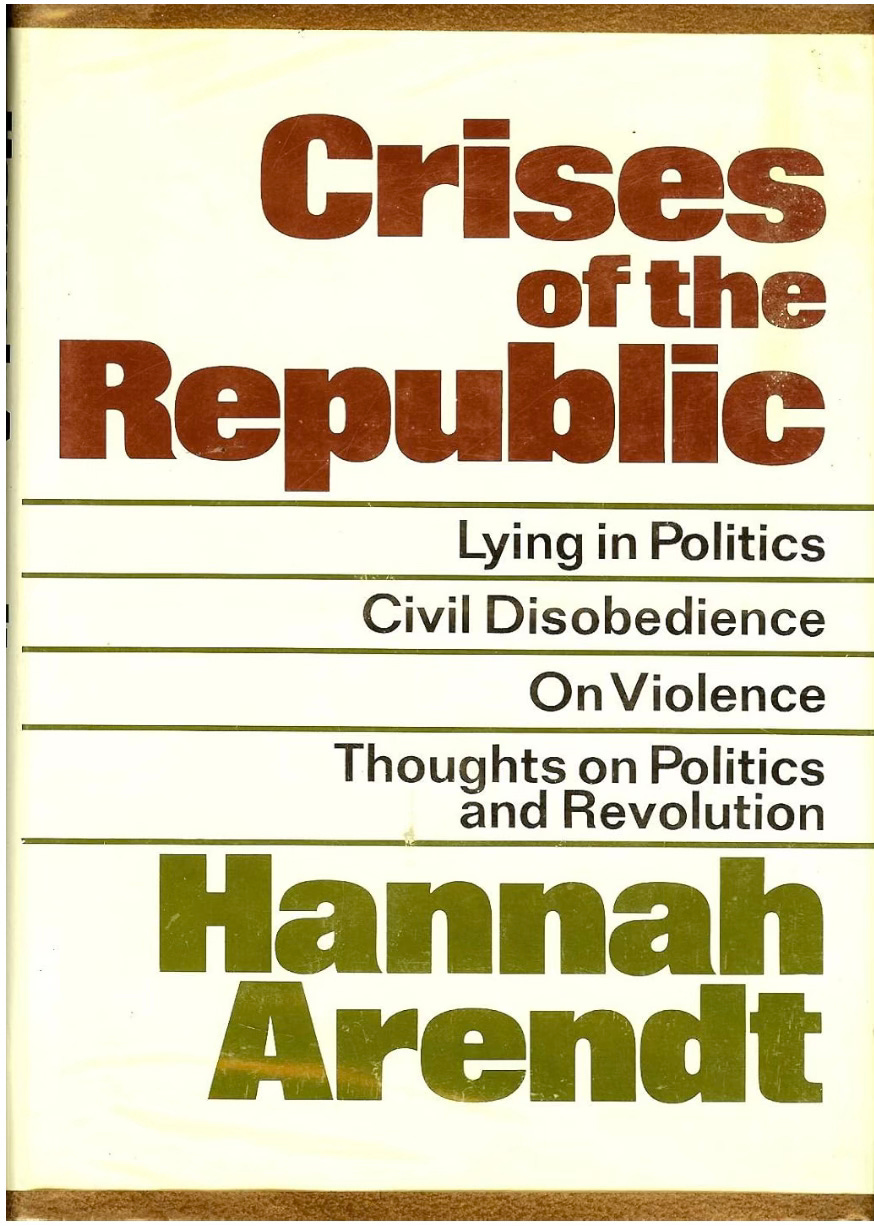
It can be said that the Epstein case profoundly reflects the crisis of the republic.
It all began when the parents of a 14-year-old girl filed a report claiming she had been sexually assaulted at Epstein’s mansion. In March 2005, the Palm Beach Police Department initiated an inquiry, and by May 2006, authorities were prepared to prosecute Epstein on multiple counts of sexual assault involving minors. Epstein was subsequently taken into custody in July of that year. On September 24, 2007, U.S. Attorney Alexander Acosta entered into a Non-Prosecution Agreement (NPA) with Epstein, which was finalized in 2008. This agreement was remarkably permissive; it shielded Epstein from federal felony indictments—specifically sex trafficking of minors, an offense punishable by life imprisonment—permitting him instead to plead guilty to two state-level charges in Florida: solicitation of prostitution and procurement of a minor for prostitution. The latter conviction necessitated his registration as a sex offender. Most notably, the NPA granted immunity from any further federal prosecution. In November 2018, Miami Herald senior journalist Julie K. Brown characterized the arrangement as “completely unprecedented and completely indefensible” in her seminal reporting. Consequently, this legal compromise is frequently cited in judicial and journalistic discourse as a “Sweetheart Deal.”
In her November 2018 investigative series, “Perversion of Justice,” published in the Miami Herald, journalist Julie K. Brown meticulously documented the mechanisms underlying this agreement: Epstein leveraged his immense wealth, a legal team of elite defense attorneys (including Alan Dershowitz and Ken Starr,The former is a Harvard Law School professor emeritus and a renowned criminal defense attorney who was involved in several high-profile “trials of the century,” including the O.J. Simpson case, and helped Epstein secure a highly controversial non-prosecution agreement in 2008; the latter is a former U.S. Independent Counsel who led the investigation into President Clinton and served as a key member of Epstein’s 2008 defense team, leveraging his deep connections within the Department of Justice to secure an exceptionally lenient plea deal. ), high-level political connections, and intimidatory tactics to manipulate prosecutors and the judicial system. Crucially, the victims remained entirely uninformed during the brokering of the deal.Brown later chronicled the accounts of over 60 victims(After Epstein was granted immunity in 2008, how many more victims were there?).In fact, the “Sweetheart Deal” constituted a violation of the Crime Victims’ Rights Act (CVRA), as prosecutors failed to notify the victims or allow them to participate in the negotiation process. The victims later initiated legal action, and in February 2019, the agreement was ruled to have violated the law; however, the courts determined that it could not be rescinded. Prosecutor Alexander Acosta faced no criminal sanctions, ultimately resigning from his position as Secretary of Labor in the Trump administration in 2019.
Upon revisiting the 2008 “Sweetheart Deal” today, its darkest provision lies in the explicit grant of federal criminal immunity not only to four specifically named close associates but also to “any potential co-conspirators.” This clause is exceedingly rare in federal judicial practice and effectively ensures that any elites subsequently discovered to be involved in the case would face no prosecution—for instance, even if evidence were to emerge implicating figures such as Bill Clinton, Donald Trump, or Bill Gates,or others in criminal conduct, they had already been preemptively exempted. Moreover, the premature termination of the FBI investigation substantially diminished the likelihood of any further exposure. In hindsight, the timeline reveals that Bill Clinton’s relationship with Epstein can be traced back to the early 1990s (including a documented 1993 White House photograph), and between 2002 and 2003 he undertook at least four international trips aboard Epstein’s private aircraft (known as the Lolita Express), encompassing a total of 26 flight segments, with the last known flight occurring in November 2003. Likewise, Donald Trump—who became president in 2016—first became acquainted with Epstein in the late 1980s, maintained close social ties throughout the 1990s (including multiple flights on Epstein’s private plane and joint attendance at parties), and in 2002 publicly described him as “”I’ve known Jeff for fifteen years. Terrific guy. He’s a lot of fun to be with. It is even said that he likes beautiful women as much as I do, and many of them are on the younger side.”(《Jeffrey Epstein: International Moneyman of Mystery》,New York Magazine,10-28-2002)With the progressive unsealing of documents, it has become clear that the 2008 “Sweetheart Deal” not only exempted Epstein personally but directly conferred immunity upon the elite figures standing behind him. Following the incremental public release of Epstein-related files, numerous European political and business figures resigned or became subjects of investigation due to their documented associations with Epstein; yet in Epstein’s primary base of operations—the United States—no individual named in the files has faced any punishment, nor has anyone publicly acknowledged having visited Epstein’s Little Saint James island (commonly referred to as “Lolita Island”).Despite the U.S. Department of Justice repeatedly asserting that reviews of the documents have yielded no indictable evidence against third parties and that no definitive “client list” exists, critical questions remain: Whose names persist in the unreleased documents? Who is shielded by the redactions? Why has the disclosure of the Epstein files lacked transparency? Ultimately, one must ask: is there a secret “Sweetheart Deal” operating behind the scenes?
According to the most recent polling data, a substantial majority of the American public perceives the existence of “elite immunity” in the Jeffrey Epstein case—wherein the wealthy and powerful routinely evade accountability. For example, a Reuters/Ipsos poll conducted in February 2026 found that 69% of respondents believed the files demonstrate that “powerful people in the U.S. are rarely held accountable”; a March 2026 Navigator Research poll indicated that 72% support additional prosecutions and investigations, while 64% hold the view that elites operate “above the law.”
“Elite immunity” signifies a severe erosion of judicial independence.
When the Founding Fathers designed the separation of powers, they envisioned the judiciary as the branch most in need of rigorous protection. The Framers believed that only an independent judiciary could prevent the “tyranny of the majority” and the abuse of power, thereby safeguarding the foundational principles of the Republic. The most conspicuous aspect of the Epstein files is the fact that a convicted sex offender still was able to maneuver within the highest echelons of American power for over a decade. Following the gradual unsealing of the documents, the responses from those involved have been characterized by a standardized rhetoric of “not recalling,” “never participating,” or maintaining “strictly professional associations.” This collective degradation of the elite—transcending both partisan and sectoral boundaries—illustrates a deeper systemic issue: a network composed of billionaires, career politicians, elite attorneys, and academic luminaries wielding a form of power that operates beyond the reach of the law. Consequently, the Department of Justice appears less like an independent “guardian of the Constitution” and more like an institution profoundly influenced by political considerations, interest group pressures, and bureaucratic inertia. The judiciary, which was intended to be the most hopeful component of the separation of powers, now struggles to exercise its function of checks and balances. This represents perhaps the most perilous challenge to the separation of powers, the very hallmark of the American political system.
While the Epstein case remains largely dormant within the Department of Justice, it has ignited a political firestorm between the two major parties. Initially overlooked, the case was rapidly politicized following Epstein’s death by suicide in a Manhattan jail in 2019, subsequently being weaponized as a tool for mutual partisan attacks. Throughout the 2024 presidential campaign and into his second term beginning in 2025, the Epstein files have devolved into a “political nuclear weapon” as Democrats and Republicans navigate a complex strategic deadlock.
The process of unsealing the Epstein files serves as a vivid illustration of how partisan machinery manipulates politics and the electorate. Although the legislation to disclose the files passed in 2025 with seemingly bipartisan cooperation (427 to 1), the entire trajectory was dominated by partisan conflict—resembling a political tug-of-war where both parties sought to weaponize “truth” against their opponents. Following Epstein’s suicide in 2019, Democrats pressured the Department of Justice and Congress for further disclosures, accusing the GOP (particularly under the Trump administration) of shielding the elite. Republicans retaliated by labeling these efforts a political conspiracy and initially delayed proceedings. During the 2024 campaign, Trump repeatedly pledged full transparency, only to hesitate after his election. In July 2025, the Trump-led DOJ’s denial of a definitive “client list” sparked a backlash within his own party, ultimately leading to the introduction of the Epstein Files Transparency Act. President Trump signed the act into law on November 19, 2025. However, since the release of the documents, both parties have engaged in a war of “selective interpretation”—Republicans focus on names like Bill Clinton, while Democrats emphasize social details involving Trump. This dynamic has transformed what should have been a judicial accountability process into a partisan political weapon. Consequently, files that ought to have focused on justice for victims, systemic sex-trafficking networks, and elite accountability have been fragmented into tools for partisan attacks. (Cf. The Wall Street Journal, February 21, 2026, “How the Epstein Files Frustrated Trump’s White House,” which details the administration’s attempts to control the narrative and how both parties utilized “selective readings” of the files for mutual defamation.) As a result, public attention has shifted from institutional systemic failures toward partisan infighting, with the media steering the discourse into an exhausting battle over “who is worse.”
By conventional logic or historical American experience, a scandal of such magnitude should have triggered a political earthquake, resulting in the resignation of high-ranking officials, systemic reforms, or even widespread social movements; at the very least, it should have served as a catalyst for civic awakening. Instead, it has been reduced to mere ammunition for partisan vitriol. The issue of factional strife is nearly as old as the nation itself. The Founding Fathers harbored profound anxieties regarding partisanship, viewing it as a “mortal disease” or the “greatest political evil” threatening the Republic. Alexander Hamilton observed that “[Partisanship is] the most fatal disease of popular governments” (The Defence). George Washington, in his 1796 Farewell Address, explicitly identified “the baneful effects of the spirit of party” as the nation’s greatest peril. Similarly, John Adams regarded the division of the republic into two great parties as the greatest political evil under our Constitution.These assertions demonstrate that the dangers of partisan conflict were profoundly recognized at the very inception of the American constitutional order. Nevertheless, this chronic malady has only intensified. Today, partisan warfare and political polarization have reached unprecedented levels. Virtually every public issue is pre-configured by partisan frameworks, leaving citizens as mere spectators or partisan tools, unable to exercise genuine agency. This represents a profound departure from the American republican tradition: the ideal of civic participation has been co-opted by the partisan machine. While the Founders envisioned civic engagement as the cornerstone of the republican spirit—with Thomas Jefferson declaring that “the participation of the citizens is the soul of liberty”—the two major parties have seemingly transformed into self-contained bureaucracies. Civic participation has been systematically marginalized, leaving voters to choose only between candidates pre-selected by the party apparatus.
Thus, to a certain extent, whether the Epstein files are disclosed, or to what degree they are released, the decision-making power remains firmly held by partisan machinery and the bureaucratic apparatus. The judicial system lacks independent authority, and the citizenry has failed to achieve genuine engagement—there have been no large-scale civic petitions, no cross-party citizen investigative coalitions, and no sustained grassroots protests demanding a comprehensive investigation into all implicated elites. Consequently, there is, of course, no revelation of the truth.
Most concerning is the gradual emergence of a consensus to “move on” within the American political discourse. In January 2026, Matt Gaetz, the Trump-nominated U.S. Attorney General, stated during a Department of Justice press briefing: “It is time for the nation to ‘move on’ from the shadow of Epstein and focus on contemporary criminal threats.” Similarly, Donald Trump had earlier posted on Truth Social, asserting: “It is time to move on from this ‘Epstein Hoax’ orchestrated by the Radical Left.” Although such “move on” rhetoric from Trump and the Republicans is perceived as a partisan maneuver to mitigate backlash after weaponizing the files against Democrats—effectively a timely damage-control measure—the ongoing cycle of partisan recriminations has gradually elevated “Epstein Fatigue” to a prominent political buzzword on Twitter (X). Independent commentators have observed that, when the truth is redacted and effective legal action cannot be pursued, sustained political theater only fosters “political nihilism,” ensnaring the United States in an inescapable quagmire of internal strife.
As it stands, the question remains: will the United States indeed “move on” from the Epstein case as Trump anticipates? The answer appears to be in the affirmative; however, the cost of such a transition is undoubtedly immense: it signifies not only the erasure of the truth surrounding the Epstein affair but also a manifestation of America’s deeper crisis. For truth constitutes the foundational basis and primary order of politics—and this holds particularly true for the United States.
In the Declaration of Independence, Thomas Jefferson famously asserted that certain “truths” are “self-evident”: that all men are created equal, that they are endowed by their Creator with unalienable rights—among them life, liberty, and the pursuit of happiness—and that the legitimate power of government derives from the consent of the governed. It must be noted, however, that the term “truth” may be semantically imprecise in this context. Philosophical truth often implies a coercive, indisputable quality, akin to a mathematical formula. More accurately, Jefferson’s “self-evident truths” were the consensual beliefs/opinions of the Founding Fathers, which was “depend not on their own will, but follow involuntarily the evidence proposed to their minds” (as drafted in Jefferson’s preamble to the Virginia Statute for Religious Freedom). In this sense, Jefferson inadvertently conceded that the tenets of equality and unalienable rights were not coercive dogmas, but rather a shared consensus and conviction. Within the political sphere, such assertions are matters of prevailing opinions; for instance, the notion that “all men are created equal” is neither inherently self-evident nor empirically provable. It functioned as a collective agreement among the Founders that liberty can only be truly realized among equals. Because this consensus lacked coercive force, it remained incomplete—a deficiency most starkly evidenced by the “Three-Fifths Compromise” in the 1787 Constitution. Nevertheless, it is undeniable that the Founders, through the Declaration, provided American citizens with a foundational promise and a creed. This very pledge has underpinned two centuries of the nation’s profound struggle for civil rights, representing what is arguably the most sublime aspect of the American political tradition.
Nevertheless, we must remain perpetually cognizant that the “self-evident truths” articulated in the Declaration of Independence are, in essence, convictions and consensuses. They necessitate active defense and pursuit by the citizenry, as they are contingent upon a shared belief in liberty, rigorous deliberation, and the dissemination of ideas through persuasion and dissuasion. Should we cease to uphold these convictions, the Declaration of Independence risks devolving into a “Declaration of Falsehoods,” thereby placing the very foundations of the Republic in jeopardy.
In contrast to the “self-evident truths” articulated in the Declaration of Independence, the fact truth of events possesses the character of absolute truth. Once an event occurs, it exists “there” forever and it becomes a fact truth.This truth, though it may remain undisclosed, obscured, or distorted, invariably persists in its essence, impervious to alteration by power, whether exercised by the Democratic Party or the Republican Party. Only upon a foundation of respect for this fact truth can legitimate and rational opinions be formed. Absent fact truth as a prerequisite—or should the facts themselves become subject to contestation—the result devolves into mere farce. In other words, without a truth underlying the Epstein case, how can American politics, and indeed America itself, truly “move on”? If compelled to “move on” nonetheless, might this not culminate in a grand farce that squanders the nation’s political credibility?
If the state invokes “Reasons of State” (raison d’état) to mandate that the nation “move on,” such a justification appears inherently tenuous. This case poses no genuine threat to national security; rather, it threatens only the security and reputations of the ruling elite. More critically, if justice is sidelined, how many will continue to place their faith in the “self-evident truths” of the Declaration of Independence—those consensuses and convictions that have animated American and global history for over two centuries? It is precisely within these principles that the foundational bedrock and the first order of the American political system reside.
Unlike past political scandals, the Epstein case stands out as a “pure” criminal matter, one that initially lacked pronounced “political” dimensions. Furthermore, the sheer horror of its criminal details can be said to directly challenge the very baseline of civilized society.
If the entire case is allowed to “move on” under the guise of some “Reasons of State” (raison d’état) , such a justification appears inherently tenuous. This case poses no threat to national security but merely imperils certain elites. More critically, how many citizen would continue to believe in those self-evident truths enshrined in the Declaration of Independence—those consensuses and convictions that have stirred the course of American and global human history for over two centuries? And yet, these very elements constitute the foundational cornerstone and primary order of the United States and its political system.
What is even more unsettling is that the evaporation of the fact truth in the Epstein case appears to be merely a quintessential example rather than an isolated incident. How many truths have been erased? Over time, the outcome is an absolute refusal to believe in the truth of anything, no matter how incontrovertible that truth may be.
In other words, when falsehoods or realities manufactured by the partisan machine persistently supplant factual truth, the ultimate consequence is not merely that lies are accepted as truth or truths are denigrated as lies. Rather, it leads to our complete loss of the capacity and interest to discern between “true” and “false,” a thorough disbelief in any reality manufactured by partisan apparatuses, and ultimately the abandonment of civic responsibility and enthusiasm.The absence of citizen action in the Epstein case serves as a stark illustration. The steadily declining voter turnout and escalating political apathy appear to manifest the consequences of partisan-manufactured realities supplanting truth over an extended period. Yet, it is precisely this civic participation that constitutes the foundational bedrock and the original intent of the Republic.
Perhaps we may derive a modicum of illusory solace and conviction from philosophy: as previously stated, once fact occurs, it possesses an irreversible quality; it “exists there,” belonging to the past, detached from human control, and endowed with a stability that transcends politics and power. Politics, by nature, is ephemeral and fluid: it arises from individuals congregating for shared objectives, and once those aims are achieved or thwarted, such political power dissipates. Ontologically speaking, fact truth surpasses political power: authority may temporarily obscure, distort, or deny truth, but the harm inflicted upon it is neither complete nor permanent. Yet what of the damage to the United States and its politics? That, indeed, proves enduring—and profoundly ugly.
This is a public episode. If you'd like to discuss this with other subscribers or get access to bonus episodes, visit bostonreviewofbooks.substack.com/subscribe