
Bookey App 30 mins Book Summaries Knowledge Notes and More
1,000 episodes — Page 19 of 20

Don Quixote: 30 Timeless Quotes from Cervantes' Masterpiece
IntroductionDon Quixote, penned by Miguel de Cervantes in the early 17th century, is considered one of the greatest works of literature ever written. This iconic novel tells the story of an aging nobleman, Alonso Quixano, who loses his sanity and becomes convinced that he is a knight-errant named Don Quixote. Fueled by his fervent imagination and a longing for chivalry, Don Quixote embarks on a series of comedic and poignant adventures that have captivated readers for centuries. Within the pages of Don Quixote lies a treasure trove of insightful and thought-provoking quotes. These words, spoken by various characters throughout the novel, offer profound observations about love, honor, truth, and the power of dreams. They provide us with glimpses into the complex mind of a dreamer who challenges societal norms and relentlessly pursues his ideals, regardless of the consequences. In this article, we embark on a journey through some of the best quotes from Don Quixote. These quotes not only showcase Cervantes' mastery of language but also serve as enduring reminders of the timeless themes explored within the novel. Join us as we delve into the depths of Don Quixote's whimsical world, where windmills become giants and ordinary peasants transform into knights. Together, let us explore the wisdom and inspiration that can be found in the enchanting quotes of this literary masterpiece. Who is Don Quixote?Don Quixote is an elderly gentleman who lives in the region of La Mancha in central Spain. He becomes obsessed with reading chivalric romances and eventually loses touch with reality, believing himself to be a knight-errant. Inspired by these tales of honor, courage, and adventure, he decides to revive chivalry and set out on a quest to right wrongs and defend the helpless. Despite his advanced age, Don Quixote dons outdated armor and renames himself as "Don Quixote de la Mancha." Alongside him is his loyal squire, Sancho Panza, a simple farmer who reluctantly joins him on his misadventures. Together, they embark on a series of whimsical escapades, encountering windmills they mistake for giants, innkeepers they perceive as lords, and a host of other imagined adversaries. Don Quixote's character embodies contrasts and contradictions. He is simultaneously noble and foolish, brave and deluded. He displays immense idealism, often perceiving mundane objects or situations through the lens of his romantic fantasies. His passionate belief in knightly virtues brings about both comedic and tragic consequences as he confronts the harsh realities of the world. Why We Love Don Quixote?Idealism and Imagination: Don Quixote embodies the power of imagination and idealism. He sees the world not as it is, but as it could be. His vivid imagination allows him to transform mundane situations into grand adventures. This idealistic spirit resonates with readers who appreciate the beauty and creativity that can arise from embracing a different perspective. Quest for Chivalry: Don Quixote's unwavering commitment to chivalry and knightly ideals captures our attention. Despite living in a world where knights have become obsolete, he remains steadfast in his pursuit of justice and honor. His dedication to these noble principles inspires us to hold onto our own values and fight for what we believe in, even if it seems impractical or outdated. Humanity and Compassion: Beneath his...

Crime and Punishment: An Exploration of Criminal Psychology
A Dark Tale: Crime and Punishment Summary & ReviewCrime and Punishment is a novel written by Fyodor Dostoevsky, published in 1866. The story is set in St. Petersburg, Russia, during the mid-19th century. It follows the life of Raskolnikov, an impoverished ex-student who plans and commits a brutal murder. The novel explores his psychological turmoil, moral dilemmas, and the consequences of his actions. Raskolnikov's motive for the murder is rooted in his belief that some individuals are extraordinary and possess the right to transgress societal norms. He considers himself one such person, convinced that he can commit the crime for the greater good of society. However, after the act, Raskolnikov is tormented by guilt and paranoia as he wrestles with the morality of his actions. Throughout the novel, Raskolnikov's mental state deteriorates, leading to his eventual confession and redemption. Alongside his personal journey, Dostoevsky delves into various social issues prevalent at the time, including poverty, crime, and the struggle for basic human dignity. The book is a profound exploration of guilt, redemption, and human nature. With its complex characters, gripping storyline, and thought-provoking themes, it remains a timeless classic. It is a must-read for anyone seeking a deep understanding of the human condition and the moral dilemmas we face in our lives. The Writer of Crime and Punishment: Fyodor DostoevskyFyodor Dostoevsky was one of the most influential Russian writers of the 19th century. Born on November 11, 1821, in Moscow, Dostoevsky led a tumultuous life filled with personal struggles and profound literary achievements. Dostoevsky's early years were marked by financial difficulties and familial hardships. His father's death in 1839 plunged the family into poverty, forcing him to abandon his dreams of joining the military academy and instead pursue a career as a writer. In 1846, he published his first novel, Poor Folk, which gained him critical acclaim but limited financial success. However, his literary aspirations took a backseat when he became involved in a radical political group called the Petrashevsky Circle. Their progressive ideas and discussions caught the attention of the authorities, leading to Dostoevsky's arrest in 1849 under charges of participating in revolutionary activities. He was sentenced to death but received a last-minute reprieve and was instead sent to a Siberian prison camp for four years. During his time in prison, Dostoevsky experienced profound transformations. He reflected on his actions and beliefs, delving deeply into the complexities of human nature, morality, religion, and the nature of suffering. These themes would later become central in his literary works. After his release from prison, Dostoevsky faced immense challenges and struggled to rebuild his life. He battled with gambling addiction, endured financial troubles, and dealt with the loss of his first wife. Despite these hardships, he continued writing prolifically, producing some of his most renowned works, including Crime and Punishment (1866), The Idiot(1869), and The Brothers Karamazov (1880). Dostoevsky's works continue to captivate readers worldwide with their deep psychological insights, moral dilemmas, and profound exploration of the human condition. He passed away on February 9, 1881, leaving behind a rich literary legacy that has made him a cornerstone of Russian literature and a revered figure in the realm of world literature. A Chapter-by-Chapter Breakdown of Crime and...

The Millionaire Next Door:The Secrets of Quiet Wealth
Chapter 1: Where does The Millionaire Next Door take place "The Millionaire Next Door" is a popular personal finance book written by Thomas J. Stanley and William D. Danko. The book explores the characteristics and habits of wealthy individuals in the United States. While it doesn't explicitly mention a specific location where the events take place, the authors conducted extensive research across various regions of the United States to gather data and insights from affluent households. Therefore, the book's findings are based on observations and interviews with millionaires throughout different states and areas within the country, rather than focusing on a particular city or town. Chapter 2: The meaning of The Millionaire Next Door The central idea of "The Millionaire Next Door" is that millionaires are not typically the extravagant individuals depicted in popular culture. Instead, the authors argue that many wealthy individuals live modest and frugal lives, often residing in average neighborhoods and driving ordinary cars. They refer to these individuals as "prodigious accumulators of wealth" (PAWs). The book delves into various aspects of PAWs' lifestyles, examining their attitudes towards money, savings habits, investment strategies, and consumption patterns. It emphasizes the importance of discipline, hard work, and long-term financial planning as key factors in becoming wealthy. Chapter 3:How many chapters in The Millionaire Next Door The book explores the behaviors, habits, and characteristics of millionaires in America. In total, "The Millionaire Next Door" consists of eight chapters. Each chapter delves into different aspects of wealth accumulation and provides insights into how ordinary people can build wealth over time. Topics covered include the importance of frugality, budgeting, investment strategies, and entrepreneurship. With concise and practical advice, the book aims to shed light on the secrets of becoming financially successful.

A Beautiful Mind: Triumph, Struggle, and Redemption
Chapter 1 Beauty Within: A Beautiful Mind Summary & ReviewA Beautiful Mind is a biography written by Sylvia Nasar, published in 1998. The book tells the extraordinary story of John Nash, a brilliant mathematician who struggled with mental illness throughout his life. Nasar explores Nash's early accomplishments as a prodigy in mathematics, his groundbreaking contributions to game theory, and his eventual descent into schizophrenia. The book chronicles Nash's journey from his days as a graduate student at Princeton University, where he developed his influential theories on non-cooperative games, to his struggles with paranoia and delusions later in life. It delves into his experiences with hallucinations, his institutionalization, and the impact of his illness on his career, relationships, and overall well-being. Nasar also provides insights into Nash's personal life, including his relationships with peers, mentors, friends, and family members. She sheds light on the support he received from his wife, Alicia, and her unwavering dedication to him during his most challenging times. Through extensive research and interviews, Nasar weaves together a comprehensive account of Nash's life, both the brilliance of his mind and the devastating effects of his mental illness. It is an enlightening book that offers a deep and empathetic examination of the life of John Nash. Sylvia Nasar craftfully navigates through Nash's successes and struggles, portraying him as a complex individual whose genius was intertwined with his mental health issues. The narrative masterfully captures Nash's mathematical brilliance and the groundbreaking breakthroughs he made in the field of economics. Chapter 2 Behind the Brilliance: Discovering the MastermindSylvia Nasar was born on August 17, 1947, in Rosenheim, Germany. Her parents were immigrants from Uzbekistan, and when Nasar was just six months old, her family moved to the United States. Nasar grew up in New York City, where her father worked as a businessman. Nasar developed a passion for mathematics at a young age and excelled academically. She attended Antioch College, where she studied literature and economics. After graduating in 1970, she pursued a Master's degree in economics from New York University. It was during her time at NYU that Nasar first encountered the name John Nash, which would later become the subject of her book. Following her Master's degree, Nasar embarked on a career in journalism. She began working as an intern at the New York Times in 1983 and eventually became a staff writer for the newspaper. During her time there, Nasar covered various topics, including economics, business, and international affairs. While working at the New York Times, Nasar became increasingly interested in writing about the intersection of mathematics and society. This interest led her to pursue a Ph.D. in economics at Harvard University, which she completed in 1988. Her dissertation focused on the history of mathematical economics. After completing her Ph.D., Nasar began researching the life of John Nash. She conducted extensive interviews with Nash, his family, and colleagues to gain a deeper understanding of his remarkable story. Nasar's goal was not only to chronicle Nash's mathematical achievements but also to shed light on his struggle with mental illness. The resulting book, A Beautiful Mind, received widespread critical acclaim and made her famous. Chapter 3 A Chapter-by-Chapter Exploration of A Beautiful MindChapter 1: The Princeton yearsThis chapter introduces John Nash during his time...

The Untold Stories of Animal Farm
Chapter 1: Where does Animal Farm take place Animal Farm takes place on a fictional farm in England called Manor Farm. The story is set sometime during the early 20th century, after the Russian Revolution and during a period of great social and political change. The background of Animal Farm is heavily influenced by the events of the Russian Revolution and the rise of Soviet communism. The novel allegorically portrays the revolution and the subsequent establishment of a communist regime in Russia. Each character in Animal Farm represents a figure from this historical period. For example, the oppressive farmer Mr. Jones represents Tsar Nicholas II, while the pig leaders Napoleon and Snowball represent Joseph Stalin and Leon Trotsky respectively. The animals on Manor Farm, led by the pigs, overthrow their human oppressors and establish a system of animal equality known as "Animalism." However, over time, the pigs begin to abuse their power and become indistinguishable from the humans they once fought against. This satirical portrayal of the Soviet regime highlights themes of corruption, totalitarianism, and the betrayal of the original ideals of the revolution. Chapter 2: The meaning of Animal Farm The book critiques the corrupting influence of power and explores themes such as totalitarianism, class struggle, and manipulation. At its core, "Animal Farm" explores the idea of rebellion against oppressive regimes. The animals on Manor Farm overthrow their human farmer in an attempt to establish a society where all animals are equal and free from human exploitation. The farm represents a microcosm of a larger society, reflecting the dynamics of power, politics, and social hierarchy. Initially, the animals' revolution seems successful as they create a new system called Animalism and adopt the Seven Commandments, which promote equality and collective decision-making. However, over time, the pigs—led by Napoleon—gradually consolidate power and manipulate the other animals. They twist the principles of Animalism to their advantage, eventually becoming indistinguishable from the humans they originally rebelled against. Through the story, Orwell highlights the dangers of political corruption and the way power can corrupt even the noblest of intentions. He suggests that revolutions often end up replacing one form of tyranny with another, as those who seek power become consumed by it. The characters in "Animal Farm" serve as representations of historical figures and societal archetypes, allowing readers to draw parallels between the events of the story and real-world political systems. Ultimately, "Animal Farm" serves as a cautionary tale about the potential pitfalls of revolution and the importance of remaining vigilant against the abuse of power. It reminds us that even in the pursuit of freedom and equality, we must be aware of our leaders' actions and hold them accountable to prevent the erosion of the very values we strive to protect. Chapter 3:How many chapters in Animal Farm Each chapter unfolds the story of a group of farm animals who overthrow their human farmer, Mr. Jones, and establish their own animal-run society. Initially, they aim for equality and fair treatment but gradually experience corruption and power struggles. The chapters showcase the animals' struggles, the rise of the pigs to leadership, the manipulation of language and propaganda, and the eventual transformation of the revolution into a totalitarian regime. Through its allegorical narrative, Animal Farm explores themes of power, oppression, revolution, and...

The Wolf of Wall Street: A Tale of Ambition and Betrayal
Chapter 1 The Wolf of Wall Street: Summary & ReviewThe Wolf of Wall Street is a memoir written by Jordan Belfort, detailing his rise and fall as a stockbroker on Wall Street. Belfort's story portrays the excesses and debauchery prevalent in the financial world during the 1980s and 1990s. The book revolves around Belfort's journey from being an ambitious young man to becoming the founder of Stratton Oakmont, a brokerage firm that gained notoriety for its extravagant lifestyle and fraudulent practices. Belfort takes readers through his experiences of manipulating penny stocks, defrauding investors, and amassing immense wealth. As Belfort becomes more successful, he indulges in a hedonistic lifestyle, fueled by drugs, sex, and outrageous spending. He details wild parties, luxury yachts, and encounters with high-profile individuals. However, amidst the glitz and glamour, Belfort battles inner demons and substance abuse issues. Eventually, Belfort's illegal activities catch up with him. He faces legal consequences and finds himself in a downward spiral. The narrative explores the consequences of unchecked greed and the toll it takes on personal relationships, including his marriage. The book offers an adrenaline-fueled narrative that exposes the dark underbelly of Wall Street. Jordan Belfort's writing style captivates readers from the very beginning, as he recounts his wild experiences with raw honesty and vivid detail. The book provides an unfiltered perspective into the world of finance, revealing the rampant corruption and excess that permeated the industry during that era. Belfort's storytelling is both shocking and entertaining, describing outrageous parties, drug abuse, and unruly behavior. While some may find these accounts disturbing or morally questionable, they serve to illustrate the extreme lengths to which Belfort and his colleagues went to achieve success and satisfy their insatiable desires. Chapter 2 Meet the Mastermind Behind The Wolf of Wall StreetJordan Belfort is an American author and former stockbroker, famously known for his memoir, The Wolf of Wall Street. He was born on July 9, 1962, in Queens, New York. He started his career in finance as a door-to-door meat and seafood salesman but soon transitioned into the world of stocks and investments. Belfort founded Stratton Oakmont, a brokerage firm, in the late 1980s. He gained notoriety for his aggressive sales tactics and involvement in fraudulent activities, including pump-and-dump schemes. Despite his rapid ascent to wealth and success, Belfort's lifestyle was mired in excess, fueled by drugs, alcohol, and lavish parties. However, his illicit activities eventually caught up with him, leading to his arrest and conviction for securities fraud and money laundering. After serving prison time, Belfort turned his life around and became a motivational speaker, sharing lessons from his rise and fall. His book, The Wolf of Wall Street, published in 2007, became a bestseller and served as the basis for the acclaimed 2013 film adaptation directed by Martin Scorsese, where Leonardo DiCaprio portrayed Belfort. Though controversial, Jordan Belfort's story serves as a cautionary tale about greed, corporate corruption, and the dangers of unchecked ambition. He remains an intriguing figure whose experiences have captivated audiences and offered insights into the darker side of the financial industry. Chapter 3 The Wolf of Wall Street: Chapter Summary Showcase Chapter 1: The Name of the Game - This...

Educated: Discovering the World Beyond Limitations
Chapter 1 Mind Over Adversity: A Recap & Review of EducatedEducated is a memoir written by Tara Westover, published in 2018. The book chronicles Westover's journey from growing up in a strict and isolated household in rural Idaho to eventually pursuing higher education at prestigious universities. Educated explores themes of resilience, identity, and the power of education. It delves into the complexities of familial relationships and the struggle to reconcile personal growth with loyalty to one's roots. Throughout the book, Westover reflects on the tension between her longing for connection with her family and her need for personal emancipation. The book is a compelling and thought-provoking memoir that captivates readers through its raw and honest storytelling. Westover's writing style effectively communicates the complexity of her experiences, creating a vivid and immersive narrative. Her ability to convey her inner struggles and emotional journey makes the reader empathize deeply with her. The book portrays the power of education as an agent of personal transformation. Westover's hunger for knowledge drives her to overcome immense obstacles and shape a life that defies the expectations set upon her. It is inspiring to witness her resilience and determination in pursuing her dreams against all odds. Chapter 2 Escaping the Shadows: The Story of Tara WestoverBorn into a strict and isolated family in rural Idaho, Tara faced immense challenges as she embarked on her journey toward self-discovery and intellectual emancipation. Tara was raised by parents who adhered to radical beliefs, rejecting mainstream society, education, and the medical establishment. Her upbringing was marked by poverty, isolation, and physical hardships. She worked alongside her family in their scrapyard and endured dangerous work conditions without any formal education or access to basic healthcare. Despite these obstacles, Tara's curiosity and thirst for knowledge were undeniable. At the age of seventeen, she made the courageous decision to leave her sheltered existence behind and pursue an education. It was a watershed moment that would forever alter the trajectory of her life. With unwavering determination, Tara enrolled in Brigham Young University, where she faced numerous hurdles. Lacking the foundational knowledge most students possessed, she struggled to catch up academically. However, her perseverance and intellectual prowess shone through as she excelled in her studies. Tara's hunger for knowledge led her to Cambridge University, where she pursued advanced degrees. Along this path, she grappled with the emotional burden of questioning her own identity and the loyalty she felt towards her family. Educated chronicles her remarkable journey of breaking free from the chains of ignorance and forging her own path in life. Today, Tara Westover is celebrated as a symbol of resilience, determination, and the pursuit of education against all odds. Her story reminds us that with courage, perseverance, and a thirst for knowledge, we can all embark upon our own transformative journeys, transcending the constraints of our past and shaping our destinies. Chapter 3 Traversing Educated: Concise Chapter SummariesChapter 1: Choosing the Rabbit HoleThis chapter introduces the author's childhood growing up in rural Idaho and her family dynamics, including her father's strict religious beliefs.Chapter 2: The Midwife CrisisThe author describes her mother's work as a midwife and her experiences...

The Compound Effect: Building Blocks of Success
Chapter 1 Delving into The Compound Effect: Summary & ReviewThe Compound Effect by Darren Hardy is a self-help book that explores the power of small actions and their cumulative effect on achieving success. Hardy emphasizes that success does not stem from dramatic changes or overnight transformations, but rather from consistent, incremental improvements over time.The book presents the foundation of the compound effect, which suggests that every choice we make, no matter how small, contributes to our overall progress and results. By making conscious decisions and taking consistent action towards our goals, we can create powerful momentum and exponential growth.Throughout the book, Hardy illustrates the power of the compound effect through real-life examples, anecdotes, and practical advice. He covers various aspects of life, including personal development, relationships, finances, health, and productivity, showcasing how the compound effect can be harnessed in all areas.The book serves as a reminder that small, consistent actions can lead to extraordinary results when applied with intention and persistence. It encourages readers to take responsibility for their choices, develop empowering habits, and leverage the power of compounding to achieve personal and professional success. It delivers a compelling and thought-provoking message about the power of consistency and incremental progress. Darren Hardy's writing style is engaging, making complex concepts accessible to readers from all backgrounds. The book's structure, blending personal stories with practical strategies, keeps the reader engaged throughout. Chapter 2 Introducing the Author of The Compound EffectDarren Hardy is an accomplished entrepreneur, author, and motivational speaker known for his expertise in personal development and success principles. Born on February 26, 1971, in the United States, Hardy's journey to success has been marked by dedication, resilience, and a passion for personal growth.Growing up, Darren faced many challenges and setbacks. He struggled with self-confidence and had difficulty finding his purpose and direction in life. However, he was determined to overcome these obstacles and embarked on a journey of self-improvement.In his early career, Darren worked as a publisher at Success Magazine, where he gained valuable insights into the habits and mindset of successful individuals. Inspired by his experiences and observations, he began writing and speaking about personal development, focusing on strategies for achieving extraordinary results.In 2009, Darren published his groundbreaking book, "The Compound Effect," which became a bestseller. Following the success, Darren continued to inspire and empower others through his work. He founded Darren Hardy, LLC, a training and mentorship company dedicated to helping individuals and organizations reach their full potential. Through various programs, coaching sessions, and live events, he shares practical strategies and techniques for personal and professional growth.Darren also launched the "DarrenDaily" online mentoring program, where subscribers receive daily inspirational messages and actionable advice to enhance their productivity and success. This platform allows him to connect with his audience on a deeper level and provide ongoing support and guidance.As a highly sought-after speaker, Darren has graced many stages around the world, sharing his wisdom and motivating audiences to unlock their true potential. His engaging speaking style, combined with his wealth of knowledge and personal experiences, has made him a favorite among those seeking personal and professional...

The Old Man and the Sea:Battles with Nature
Chapter 1:what's the Old Man and the Sea about "The Old Man and the Sea" is a novella written by Ernest Hemingway and published in 1952. The story revolves around an aging Cuban fisherman named Santiago, who has been experiencing a streak of bad luck. Santiago sets out alone on his small fishing boat into the Gulf Stream with the hope of catching a magnificent marlin. Throughout the story, Hemingway portrays the internal struggle and determination of Santiago as he battles against nature and his own physical limitations. Despite being alone and facing numerous challenges, Santiago refuses to give up, displaying great courage and endurance. As Santiago encounters the marlin, a relentless battle between man and fish unfolds. The novella delves into the themes of perseverance, resilience, and the indomitable human spirit. Santiago's struggle becomes a metaphor for the larger human condition and the inevitable struggles one faces in life. Hemingway skillfully captures the beauty and harshness of the natural world, while exploring deeper themes of pride, dignity, and the meaning of success. Ultimately, "The Old Man and the Sea" is a tale that celebrates the strength of the human spirit in the face of adversity and the pursuit of personal triumph, even in the midst of inevitable defeat. Chapter 2:author of the Old Man and the SeaThe author of "The Old Man and the Sea" is Ernest Hemingway. He was born on July 21, 1899, in Oak Park, Illinois, United States, and passed away on July 2, 1961. Hemingway's life was filled with remarkable experiences that deeply influenced his writing. As a child, he developed a passion for outdoor activities, including hunting, fishing, and exploring nature. These early pursuits instilled in him a lifelong love for adventure and the natural world. During his school age years, Hemingway attended Oak Park and River Forest High School. It was during this time that he developed his interest in literature and journalism. He excelled in English classes and also contributed to the school's newspaper, where he honed his skills as a writer. Hemingway's habit of writing started at an early age when he began keeping a journal. This habit allowed him to document his observations, thoughts, and experiences, which later served as inspiration for his works. Throughout his life, he maintained a disciplined writing routine, often waking up early in the morning to write while the world around him was still quiet. Overall, the combination of Hemingway's upbringing, school experiences, and personal habits played a significant role in shaping him as an author. His passion for adventure, love of nature, and dedication to writing all contributed to creating the iconic literary works for which he is remembered. Chapter 3:similar books like the Old Man and the Sea "The Alchemist" by Paulo Coelho: This allegorical novel follows the journey of Santiago, a shepherd boy who embarks on a quest to find his personal legend. It touches upon themes of self-discovery, perseverance, and the pursuit of one's dreams. "To Kill a Mockingbird" by Harper Lee: Set in 1930s Alabama, this Pulitzer Prize-winning novel explores racial injustice through the eyes of Scout, a young girl growing up in a small town. It addresses themes of courage, compassion, and the inherent goodness of humanity. "Robinson Crusoe" by Daniel Defoe: This classic adventure tale tells the story of Robinson Crusoe, a castaway who spends years alone on a deserted island. It delves into themes of survival, self-reliance, and the...

One Hundred Years of Solitude: A Tale of Love and Loss
Chapter 1 Intrigue, Romance, and Political Upheaval: A Summary and Review of One Hundred Years of SolitudeOne Hundred Years of Solitude by Gabriel García Márquez is a novel that tells the story of the Buendía family over the course of seven generations in the fictional town of Macondo. The book chronicles the rise and fall of the Buendías, who establish themselves as the founders of the town, only to see it decline and eventually disappear.The novel is full of magical realism, with fantastical events intermingled with the day-to-day lives of the characters. The story explores themes such as the cyclical nature of history, the effects of colonization and imperialism on Latin America, the power of memory and storytelling, the relationship between time and space, and the human condition.Throughout the novel, the Buendía family struggles with issues such as incest, infidelity, betrayal, and violence. They also experience moments of profound happiness and love. Ultimately, the story ends with the last of the Buendía line, Aureliano Buendía, realizing that he is living out a repeat of his ancestors' lives, and he dies alone in his house, surrounded by the ghosts of his family's past.The book is a masterpiece of Latin American literature. Márquez's use of magical realism is both beautiful and haunting, taking readers on a journey through time and space. The novel explores themes of love, death, and isolation, creating a surreal landscape that is at once familiar and otherworldly. The novel can be challenging to read at times, as its nonlinear structure and shifting perspectives require careful attention. However, the effort is well worth it, as One Hundred Years of Solitude is a timeless classic that continues to captivate readers today. Chapter 2 Gabriel García Márquez: The Literary Wizard of Magical RealismGabriel García Márquez, often referred to as Gabo, was a renowned Colombian author and journalist, born on March 6, 1927, in Aracataca, Colombia. He is recognized as one of the most significant writers of the 20th century and a pioneer of the literary style known as magical realism.Growing up in the small town of Aracataca, García Márquez was heavily influenced by his grandparents and their captivating stories. These early experiences with storytelling would later shape his unique writing style. His childhood was also marked by political unrest and violence, which would become recurring themes in his works.As a young man, García Márquez studied law at the National University of Colombia in Bogotá but soon abandoned his legal career for journalism. In the 1950s, he worked as a reporter and columnist, honing his skills as a wordsmith and observer of human nature. This journalistic background greatly impacted his ability to craft vivid characters and immersive narratives.In 1967, García Márquez published his most celebrated novel, "One Hundred Years of Solitude" (Cien años de soledad). It became an instant success and solidified García Márquez's reputation as a literary genius. García Márquez continued to write notable works, including "Love in the Time of Cholera" (El amor en los tiempos del cólera) and "Chronicle of a Death Foretold" (Crónica de una muerte anunciada). Throughout his career, he received numerous accolades, including the Nobel Prize in Literature in 1982, making him the first Colombian and the fourth Latin American to receive this prestigious honor.García Márquez's writing was deeply rooted in his love for his Colombian homeland. He often explored themes of love, solitude, political turmoil, and the complex nature of human relationships. His works resonated with readers worldwide, transcending cultural boundaries and inspiring generations...

Think Like A Monk: Harnessing Inner Peace and Purpose
Chapter 1 Mind Over Matter: A Summary and Reflection on Think Like A Monk Think Like A Monk" is a self-help book by Jay Shetty that draws upon his experiences as a monk in order to provide guidance on living a more meaningful life. Throughout the book, Shetty shares personal anecdotes and insights from his time as a monk, illustrating his points with stories from both Eastern and Western spiritual traditions. He also includes exercises and reflection questions to help readers apply the concepts discussed in the book to their own lives. The book offers a compelling and accessible guide to cultivating a more mindful and purposeful life. Shetty's writing is engaging and relatable, and his insights are backed up by research and grounded in both Eastern and Western spiritual traditions. That being said, Think Like A Monk is undoubtedly a valuable resource for anyone seeking to live a more meaningful and fulfilling life. Whether you're looking to build a daily meditation practice or find ways to give back to your community, Shetty's insights and practical advice are sure to be helpful. Chapter 2 The Mindful Monk: Meet the Author Behind the Bestseller Jay Shetty is a British-Indian author, podcast host, and motivational speaker. He was born in London, England, on September 6, 1987, to Indian immigrant parents. Shetty grew up in a traditional Indian family where he was taught the importance of education, hard work, and discipline. He was an excellent student and went on to earn a degree in Behavioral Science from Cass Business School. After graduation, Shetty worked as a management consultant for Accenture. However, he soon became disillusioned with the corporate world and decided to pursue his passion for helping others. In 2016, Shetty left his job and moved to India to become a monk. He spent three years living in ashrams and studying ancient Indian scriptures. During this time, he learned valuable lessons about mindfulness, spirituality, and personal growth. Shetty began sharing his insights on social media, and soon gained a massive following. He started making inspirational videos that went viral, and eventually caught the attention of The Huffington Post. In 2017, Shetty was named in the Forbes 30 Under 30 List for his work in media. He also launched his own podcast called "On Purpose," where he interviews celebrities, entrepreneurs, and thought leaders about their journeys to success. Shetty has since published several books. He continues to inspire millions of people around the world through his writing, speaking engagements, and social media content. Chapter 3 Embracing Change: A Chapter-by-Chapter Summary of Think Like A Monk IntroductionThe introduction gives readers an idea of what the book is about and what to expect in each chapter. Part One: Let GoChapter 1: Purpose: This chapter is about finding your purpose in life and how to pursue it.Chapter 2: Routine: This chapter explores the importance of having a daily routine and how it can help you achieve your goals.Chapter 3: Equanimity: This chapter discusses how to find balance and inner peace during difficult times. Part Two: GrowChapter 4: Humility: This chapter focuses on the importance of humility and how it can help you grow as a person.Chapter 5: Gratitude: This chapter is all about gratitude and how practicing it can lead to a happier life.Chapter 6: Service: This chapter explores the concept of service and how...

The Metamorphosis: A Study of Identity and Selfhood
Chapter 1 An Insectile Allegory: A Summary and Review of The Metamorphosis The Metamorphosis is a novella by Franz Kafka, published in 1915. It tells the story of Gregor Samsa, a traveling salesman who wakes up one day to find that he has transformed into a giant insect-like creature. The rest of the novella depicts Gregor's struggle to come to terms with his new identity and his family's reaction to his transformation. Initially, Gregor's family tries to take care of him, but they soon become repulsed by his appearance and begin to distance themselves from him. Gregor also struggles to adjust to his new body, finding it difficult to move and communicate with others. As time passes, Gregor becomes more isolated and depressed, ultimately leading to his death. The Metamorphosis is a powerful and unsettling work that leaves a lasting impression on the reader. Kafka's use of surrealism and absurdity creates a sense of unease and discomfort throughout the novella. His masterful writing and exploration of complex themes make this novella a must-read for anyone interested in literature or philosophy. Chapter 2 The Enigma of Franz Kafka: An Author Introduction Franz Kafka was a German-language writer whose works explored themes of alienation, anxiety, and absurdity. Born in Prague in 1883, Kafka grew up in a middle-class Jewish family and later attended Charles University, where he studied law. After completing his studies, Kafka worked for an insurance company for most of his adult life, writing in his spare time. He published only a few short stories during his lifetime, including The Metamorphosis. Kafka's writing gained wider recognition after his death in 1924, when his friend Max Brod ignored Kafka's instructions to destroy his unpublished manuscripts and instead published them posthumously. These works include "The Trial," a novel about a man who is arrested and prosecuted by a mysterious, faceless authority; "The Castle," a novel about a land surveyor who struggles to gain access to a castle in a remote village; and "Amerika," a novel about a young man who immigrates to the United States. Kafka's work has had a profound influence on literature and philosophy, inspiring generations of writers and thinkers who have been drawn to his portrayal of the human condition as one of anxiety, isolation, and absurdity. Chapter 3 A Guide to The Metamorphosis: A Detailed Chapter-by-Chapter Summary Chapter 1: The first chapter introduces us to Gregor Samsa, the protagonist of the story. He wakes up one morning to find that he has been transformed into a giant insect-like creature. Chapter 2: In the second chapter, we see how Gregor's family reacts to his transformation. They are shocked and horrified by his new appearance, and they struggle to come to terms with what has happened. Chapter 3: The third chapter explores Gregor's attempts to adapt to his new body and his new way of life. He discovers that he has new abilities and limitations, and he tries to figure out how to live as an insect. Chapter 4: In the fourth chapter, we see how Gregor's relationship with his family begins to break down. They become increasingly resentful of him, and he feels isolated and alone. Chapter 5: In the fifth chapter, Gregor's sister, Grete, becomes the central focus of the story. She starts to take care of Gregor, but she also becomes frustrated with him and begins to distance herself from him. Chapter 6: The final chapter sees Gregor's family reaching their breaking point....

How 'Rich Dad Poor Dad' Can Help You Transform Your Finances for a Lifetime
Chapter 1:Rich Dad Poor Dad why classicMindset shift: The book challenges traditional beliefs about wealth creation, financial literacy, and the role of education in achieving financial success. It encourages readers to adopt a new mindset towards money and to think like an entrepreneur. Simple language: The author, Robert Kiyosaki, uses simple language and real-life examples to explain complex financial concepts. This makes it easy for readers to understand the principles discussed in the book and apply them in their lives. Inspirational: "Rich Dad Poor Dad" is an inspiring book that motivates readers to take control of their finances and pursue their dreams. The stories of the two fathers and their different approaches to money management are relatable and impactful. Timeless wisdom: The principles discussed in the book are timeless, meaning they are just as relevant today as they were when the book was first published in 1997. The advice given in the book is not limited by age, gender, or social status, making it applicable to anyone who wants to improve their financial situation. Overall, "Rich Dad Poor Dad" is a classic because it provides practical advice on how to build wealth and achieve financial freedom. Chapter 2: Summary of a book Rich Dad Poor DadRich Dad Poor Dad is a personal finance book written by Robert Kiyosaki. The book narrates the story of two dads, one rich and one poor, and the financial lessons that Kiyosaki learned from both. The poor dad, Kiyosaki's biological father, was an educated man who worked hard his whole life but struggled financially. In contrast, the rich dad, who was his best friend's father, was a successful entrepreneur who taught him the importance of financial literacy and investing.Kiyosaki emphasizes the importance of understanding the difference between assets and liabilities. He explains that assets are things that put money in your pocket, while liabilities take money out of your pocket. He argues that it is crucial to acquire assets that generate passive income, such as rental properties or stocks, instead of accumulating liabilities like cars or expensive homes. The author also highlights the significance of understanding taxes and how they impact one's finances. He suggests that one should use tax deductions and credits to their advantage and invest in assets that have tax benefits. Finally, the book encourages readers to break away from the traditional mindset of working for money and instead focus on creating systems that generate cash flow. Kiyosaki believes that everyone has the potential to become financially independent if they adopt the right mindset, educate themselves, and take calculated risks. Overall, Rich Dad Poor Dad is an insightful read that challenges conventional wisdom about money and provides practical advice on how to build wealth. Chapter 3:Rich Dad Poor Dad Meaning"Rich Dad Poor Dad" is a personal finance book written by Robert Kiyosaki. The book is based on Kiyosaki's life experiences and his two father figures: his biological father, who was highly educated but struggled financially, and his best friend's father, who was an entrepreneur and became very wealthy. The book aims to teach readers about financial literacy and how to build wealth through investing, owning businesses, and understanding cashflow. It emphasizes the importance of having a mindset focused on creating assets rather than just earning income from a job.Overall, "Rich Dad Poor Dad" encourages readers to think...

Who Moved My Cheese: Adapting to Change in Life and Work
Chapter 1:What is the book Who Moved My CheeseThe book "Who Moved My Cheese" is a motivational business fable written by Spencer Johnson. The book uses the allegory of mice in a maze to provide insights into how people deal with change and uncertainty in their lives and careers. The story revolves around four characters - two mice named Sniff and Scurry, and two little people named Hem and Haw - who all live in a maze and depend on finding cheese for their survival and happiness. The cheese represents anything that people want in life, such as a good job, money, success, or even love and friendship. One day, the characters discover that their usual source of cheese has disappeared, and they must find a new supply. The story then follows each character's unique way of dealing with this change and the lessons they learn along the way. The book offers valuable insights into the importance of being adaptable and open to change, taking action, and not getting too attached to one's comfort zone. It encourages readers to embrace change and see it as an opportunity for growth and self-improve Chapter 2:Author of Who Moved My CheeseThe author of the book "Who Moved My Cheese?" is Dr. Spencer Johnson, who was an American physician and author. He was born in 1938 in South Dakota, USA and passed away in 2017. Dr. Spencer Johnson was widely recognized for his books on self-improvement and leadership. His most famous work, "Who Moved My Cheese?", has sold millions of copies worldwide and has been translated into over 40 languages. Before becoming an author, Dr. Spencer Johnson worked as a physician and consulted with various organizations on topics such as leadership and change management. He co-authored several other books, including "The One Minute Manager" and "The Present". Overall, Dr. Spencer Johnson's work has had a significant impact on the world of business and personal development, inspiring readers to embrace change and take control of their lives.Chapter 3:Books like Who Moved My Cheese"The Dip" by Seth Godin - This book is all about knowing when to quit and when to stick with something. "Fish!" by Stephen C. Lundin - This book is about how to have fun while working and how to create a positive work environment. "The One Minute Manager" by Kenneth H. Blanchard and Spencer Johnson - This book provides insights on how to become an effective manager. "The 7 Habits of Highly Effective People" by Stephen R. Covey - This book focuses on seven habits that can help people become more successful in their personal and professional lives. "The Alchemist" by Paulo Coelho - This book is a fictional story about a shepherd boy who goes on a journey to find his treasure and learns valuable lessons along the way.

The Laws of Human Nature: Navigating Life's Challenges
Chapter 1 Key to Unlocking Self-Awareness and Empathy: A Recap of The Laws of Human Nature The Laws of Human Nature is a book written by Robert Greene, a New York Times bestselling author, and renowned expert in human psychology. The central theme of the book is that we can gain a deeper understanding of ourselves and others by studying our own human nature. In this book, Greene identifies and explores various laws that govern human behavior - such as the law of irrationality, the law of self-sabotage, and the law of compulsive behavior. He uses real-life examples from history, literature, and his own experience to illustrate each law in action. One of the strengths of this book is that it goes beyond just describing these laws, but also provides practical guidance on how to apply them in our lives. For example, Greene offers strategies for how to deal with difficult people or situations, how to recognize our own weaknesses and work on improving them, and how to become more self-aware in general. Another strength of the book is its engaging writing style. Despite being over 600 pages long, it doesn't feel like a chore to read. Greene's writing is clear and concise, and he keeps the reader interested with his anecdotes and storytelling. Chapter 2 The Brilliant Mind That Unlocked the Secret to Human Behavior: Introducing the Author The author of "The Laws of Human Nature" is Robert Greene. He is a renowned American author and speaker, best known for his books on power, strategy, and seduction. Greene was born on May 14, 1959, in Los Angeles, California. He attended the University of California, Berkeley, where he studied classical literature, before transferring to the University of Wisconsin-Madison, where he received his degree in classical studies. After completing his education, Greene worked as an editor at several magazines in New York City. He later became a writer, and his first book, "The 48 Laws of Power," was published in 1998. The book became a bestseller and established Greene as a leading authority on power and strategy. Since then, Greene has written several other books, including "Mastery," "The Art of Seduction," "The 33 Strategies of War," and "The Laws of Human Nature." His books have been translated into over 30 languages and have sold millions of copies around the world. In addition to his writing career, Greene is also a popular speaker and consultant. He has worked with numerous companies, including Google, Microsoft, and the U.S. Army, to help them understand human behavior and develop effective strategies. Chapter 3 The Science of Human Behavior: An Explanatory Guide to All Chapters of The Laws of Human Nature Introduction: The introduction provides an overview of the book's premise and methodology. Chapter 1: Master Your Emotional Self: This chapter discusses the importance of controlling one's emotions and channeling them in positive directions. Chapter 2: Transform Self-Love into Empathy: This chapter explores the relationship between self-love, empathy, and compassion. Chapter 3: See Through People's Masks: This chapter examines how people attempt to conceal their true selves and motivations, and how to see through these facades. Chapter 4: Judging People: The Power of First Impressions: This chapter examines the role of first impressions in shaping our perceptions of others. Chapter 5: The Character...

The Alchemist: A Journey of Self-Discovery and Personal Legend
Chapter 1:What is a book the alchemistThe Alchemist is a novel written by Brazilian author Paulo Coelho. It was first published in 1988 and has since become an international bestseller, translated into more than 80 languages. The story follows the journey of Santiago, a young shepherd from Andalusia, Spain, who dreams of discovering a treasure in the Egyptian pyramids. Along his way, he meets a series of characters who guide him towards discovering the true meaning of life and fulfilling his destiny. The novel explores themes such as personal legend, self-discovery, and the importance of following one's dreams. It has been praised for its inspiring and uplifting message, and has become a popular book among readers seeking personal growth and spiritual guidance. Chapter 2:Author of the alchemistThe author of "The Alchemist" is Paulo Coelho. This book was first published in 1988 and has since become a popular novel worldwide. "The Alchemist" tells the story of a shepherd named Santiago who embarks on a journey to fulfill his personal legend and find treasure. Along the way, he encounters various obstacles and meets different people who teach him valuable lessons about life. Paulo Coelho is a Brazilian author. He was born on August 24, 1947, in Rio de Janeiro, Brazil. Coelho has written several other books besides "The Alchemist," including "Brida," "Veronika Decides to Die," and "The Pilgrimage." He is known for his philosophical writing style and his ability to inspire readers to pursue their dreams and follow their hearts. I hope this helps! Let me know if you have any other questions. Chapter 3:Books like the alchemist"Siddhartha" by Hermann Hesse - This book follows the journey of a young man named Siddhartha, who embarks on a spiritual quest to find enlightenment. "The Celestine Prophecy" by James Redfield - This novel tells the story of a man who goes in search of an ancient manuscript that contains insights into the meaning of life and human destiny. "The Prophet" by Kahlil Gibran - This book is a collection of poetic essays that offer insights into various aspects of life, including love, marriage, and death. "Jonathan Livingston Seagull" by Richard Bach - This novella tells the story of a seagull who yearns to fly beyond the limits of his flock and discover new horizons. "The Power of Now" by Eckhart Tolle - This book offers insights into how to live in the present moment and find inner peace, drawing on principles from both Eastern spirituality and Western psychology. "The Tao of Pooh" by Benjamin Hoff - This book uses characters from Winnie-the-Pooh to explain the principles of Taoism, a Chinese philosophy that emphasizes living in harmony with nature.

Unlimited Power: Discovering the Limitless Power Within You
Chapter 1 Breaking Limits: A Summary and Evaluation of Unlimited Power Unlimited Power is a self-help book written by Tony Robbins, a well-known motivational speaker and life coach. The book was first published in 1986 and has since become a classic in the personal development genre. In the book, Tony Robbins shares his insights on how to achieve success and happiness in life by developing your inner power. He argues that many people struggle with achieving their goals because they lack the confidence, determination, and focus necessary to succeed. According to Robbins, these traits can be developed through specific techniques and strategies that he outlines in the book. Throughout the book, Robbins draws on his own experiences as well as those of other successful individuals to illustrate his points. He covers topics such as goal-setting, time management, communication skills, and overcoming limiting beliefs. He also provides practical advice on how to cultivate a positive mindset and maintain motivation when facing obstacles. Chapter 2 A Closer Look at the Mastermind Behind the Words - Tony Robbins Tony Robbins is one of the most recognizable names in personal development and self-help. His books, seminars, and speaking engagements have inspired millions of people around the world to take control of their lives and achieve their dreams. Born in 1960 in North Hollywood, California, Robbins had a tumultuous childhood. His parents divorced when he was young, and his mother remarried several times. Robbins was frequently bullied at school, and struggled with obesity and dyslexia. Despite these challenges, Robbins was determined to succeed. He began reading self-help books and attending seminars on personal development as a teenager, and eventually became an expert in the field himself. Over the years, Robbins has worked with many high-profile clients, including athletes, celebrities, and business leaders. He has also been involved in philanthropic work, founding the Anthony Robbins Foundation, which provides food, shelter, and education to children in need.Tony Robbins is a well-known public speaker, life coach, and author who has inspired countless individuals to achieve success in all aspects of their lives. His books have sold millions of copies worldwide, making him one of the most popular self-help authors of all time. Anthony Robbins was born on February 29, 1960, in North Hollywood, California. He grew up in a broken home and had to take care of his siblings while his mother worked several jobs to make ends meet. Despite the challenges he faced, Robbins was determined to overcome them and create a better life for himself and his family. Robbins began his career as a motivational speaker in the early 1980s after meeting Jim Rohn, a well-known motivational speaker. He started giving speeches at seminars and workshops, which eventually led to him writing his first book, Unlimited Power, in 1987. The book was an instant hit and propelled Robbins into the public eye. Since then, Robbins has written several more book. He has also coached some of the world’s most successful people, including Bill Clinton, Oprah Winfrey, and Serena Williams. Robbins’ seminars and workshops attract thousands of attendees from all over the world, and he continues to inspire and motivate people to achieve their goals and live their best lives. In addition to his professional success, Robbins is also known for his philanthropy. He founded the Anthony Robbins Foundation in...

A Brief Introduction of The 4-Hour Workweek
Chapter 1:Overview of Book The 4-Hour Workweek SummaryThe 4-Hour Workweek by Timothy Ferriss is a book that aims to help individuals escape the traditional 9-5 workweek and create a life that prioritizes personal freedom and fulfillment.Ferriss suggests several strategies for achieving this lifestyle, including outsourcing tasks, automating business processes, and creating passive income streams. He also emphasizes the importance of setting clear goals and learning how to effectively manage time.One of the key concepts in The 4-Hour Workweek is what Ferriss calls "lifestyle design," where individuals actively design their lives around their desired outcomes rather than simply accepting the status quo. This involves questioning common assumptions about work and productivity and finding new ways to achieve one's goals.Throughout the book, Ferriss shares his own experiences and provides numerous examples of people who have successfully implemented his strategies to create more fulfilling and productive lives. While some of the advice may not be applicable to everyone, The 4-Hour Workweek offers many valuable insights and practical tips for those looking to break free from the traditional 9-5 workweek and create a more fulfilling lifestyle.Chapter2:Timothy FerrissTimothy Ferriss is an American author, entrepreneur, and public speaker. He is best known for his book "The 4-Hour Workweek," which was published in 2007 and became a New York Times bestseller. Ferriss has also written several other books, including "The 4-Hour Body" and "Tools of Titans."In addition to his writing, Ferriss is a successful investor and has been involved in a number of startups, including Uber, Twitter, and Shopify. He is also a popular public speaker and has given talks on entrepreneurship and personal development around the world.Ferriss is known for his focus on lifestyle design, which involves creating a life that is fulfilling and enjoyable while minimizing unnecessary work and stress. He is a proponent of outsourcing and automation as ways to achieve this goal, and encourages people to think outside the box when it comes to their careers and personal lives.Overall, Timothy Ferriss has had a significant impact on the world of entrepreneurship and self-improvement, and his ideas continue to inspire people around the globe to take control of their lives and pursue their passions.Chapter 3:5 Best Quotes By Timothy Ferriss1 "Focus on being productive instead of busy." - This quote reminds us to prioritize our tasks based on their importance and impact, rather than just filling up our time with meaningless activities.2 "A person's success in life can usually be measured by the number of uncomfortable conversations he or she is willing to have." - This quote highlights the importance of being willing to step outside of our comfort zones and confront difficult situations in order to grow and succeed.3 "The opposite of love is indifference, and the opposite of happiness is boredom." - This quote encourages us to actively seek out experiences that bring joy and excitement into our lives, rather than settling for a mundane existence.4 "What we fear doing most is usually what we most need to do." - This quote reminds us that overcoming our fears and taking risks is often necessary in order to achieve our goals and reach our full potential.5 "The question you should be asking isn't, 'What do I want?' or 'What are my goals?' but 'What would excite me?'" - This quote encourages us to pursue passions and interests that ignite a sense of excitement and fulfillment within us, rather than simply following societal expectations or external pressures.Chapter 4:<a href="https://www.youtube.com/watch?v=nSq4qy1CifU" rel="noopener noreferrer"...

Summary of Deep Work
Chapter 1:Time Management-Deep Work Summary and Study GuideDeep Work Summary:In his book "Deep Work," Cal Newport explores the importance of focused work and how to achieve it in today's world full of distractions. He argues that deep work, which he defines as "professional activities performed in a state of distraction-free concentration that push your cognitive capabilities to their limit," is becoming increasingly rare but is essential for success in many fields.Newport begins by discussing the importance of deep work for individuals and organizations. He explains that deep work is necessary for producing high-quality work quickly, learning complex information, and developing skills that are valuable in the current job market.Next, Newport provides strategies for achieving deep work. He recommends creating a schedule that allows for both deep work and shallow work (such as responding to emails), eliminating distractions such as social media and email notifications, and finding a location conducive to deep work.Finally, Newport addresses common objections to deep work, such as the belief that some people simply cannot concentrate for long periods of time or that deep work is only possible for certain professions. He argues that anyone can learn to do deep work and that it is valuable for a wide range of professions.Overall, "Deep Work" is an insightful and practical guide for anyone looking to improve their focus and productivity.Deep Work Study Guide:What is deep work, and why is it important?What are some strategies for achieving deep work?What are some common objections to deep work, and how does Newport address them?How can deep work benefit individuals and organizations?What are some real-world examples of individuals or organizations that have successfully implemented deep work practices?Chapter 2:The writer of Deep Work-Cal NewportCal Newport is a computer science professor and author known for his books on productivity, work, and technology. He is the author of several best-selling books, including "Deep Work," "Digital Minimalism," and "So Good They Can't Ignore You."Newport's philosophy centers around the idea that in order to achieve true fulfillment and success in our lives, we need to focus on doing deep, meaningful work. He argues that the constant distractions of modern technology and social media prevent us from achieving this level of focus, and that we need to be deliberate in our use of these tools if we want to succeed.In "Deep Work," Newport outlines strategies for achieving a state of intense concentration that allows us to produce high-quality work and accomplish our goals. In "Digital Minimalism," he advocates for reducing our dependence on technology and social media in order to regain control over our time and attention.Overall, Cal Newport's work has had a significant impact on how many people think about work, productivity, and technology.Chapter 3:5 Deep and Insightful Quotes From Deep Work1 "Efforts to deepen your focus will struggle if you don't simultaneously wean your mind from a dependence on distraction."2 "Clarity about what matters provides clarity about what does not."3 "The key to developing a deep work habit is to move beyond good intentions and add routines and rituals to your working life designed to minimize the amount of your limited willpower necessary to transition into and maintain a state of unbroken concentration."4 "To succeed with deep work you must rewire your brain to be comfortable resisting distracting...

How to Win Friends and Influence People 5-Minute Summary
Chapter 1:How to Win Friends and Influence People short Summary"How to Win Friends and Influence People" is a self-help book written by Dale Carnegie, first published in 1936. The book aims to provide practical advice on how to improve social interactions and become more successful in personal and professional relationships.The book consists of four parts, which cover various overarching themes for effective communication and relationship-building.Part one focuses on fundamental techniques for handling people, including principles such as showing appreciation and avoiding criticism. Part two delves into ways to make people like you, such as using a person's name and actively listening to them.Part three covers techniques for influencing people, including the importance of arousing enthusiasm and giving people a sense of importance. Finally, part four offers suggestions for leadership and improving your own character.Overall, "How to Win Friends and Influence People" provides practical tips and strategies for improving interpersonal relationships, building rapport, and communicating effectively with others. It remains a popular and influential book in the self-help genre.Chapter 2:Dale CarnegieDale Carnegie was an American writer, lecturer, and self-improvement expert. He was born on November 24, 1888, in Maryville, Missouri, and passed away on November 1, 1955, at the age of 66.Carnegie is best known for his book "How to Win Friends and Influence People," which has sold over 30 million copies worldwide and is still a widely popular self-help book today. The book offers practical advice on how to improve interpersonal relationships and become more successful in business and personal life.Throughout his career, Carnegie taught courses and seminars on public speaking, salesmanship, and leadership. He founded the Dale Carnegie Institute, which continues to offer training programs in communication, leadership, and personal development.Carnegie's teachings emphasize the importance of empathy, understanding, and positive reinforcement in interpersonal relationships. He believed that people can be motivated to change their behavior through positive feedback and encouragement, rather than criticism and punishment.Overall, Dale Carnegie's legacy has had a significant impact on the field of self-improvement and personal development, and his teachings continue to be relevant and influential today.Chapter 3:Top 5 Dale Carnegie Quotes 1"When dealing with people, remember you are not dealing with creatures of logic, but creatures of emotion."This quote emphasizes the importance of understanding that people are not always rational; they are driven by emotions, and therefore, we must learn to communicate with them at an emotional level.2"You can't win an argument. You can't because if you lose it, you lose it, and if you win it, you lose it."In this quote, Carnegie highlights the futility of arguing with others. He suggests that arguments never really lead to a satisfactory outcome, as even if you win, you may have lost the other person's trust and respect.3"Success is getting what you want. Happiness is wanting what you get."This quote is a reminder that material success alone isn't enough to make us happy. We need to learn to be content with what we have rather than constantly striving for more.4"Most of the important things in the world have been accomplished by people who have kept on trying when there seemed to be no help at all."This quote stresses the importance of perseverance in achieving one's goals. Even when things seem insurmountable, we should keep trying and remain positive.5"If you want to be enthusiastic, act enthusiastic."This quote...

Summary of Jane Eyre by Charlotte Bronte
Chapter 1:Jane Eyre Review and SummaryReview of Jane Eyre"Jane Eyre" is a classic novel written by Charlotte Bronte that has captivated readers for over 150 years. The story follows the life of its protagonist, Jane Eyre, from orphaned childhood to her education and eventual employment as a governess. Along the way, she faces numerous challenges and moral dilemmas, including her love for her employer, Mr. Rochester, who is already married.One of the things that makes "Jane Eyre" such a timeless classic is its strong female protagonist. Jane is independent, intelligent, and fiercely principled, even in the face of adversity. Her struggles with social status, gender roles, and personal integrity resonate with readers even today.Another strength of the novel is its vivid setting and descriptions. Bronte expertly brings to life the bleak moors of Yorkshire, as well as the imposing Thornfield Hall where much of the story takes place. Readers can easily imagine themselves in Jane's world, experiencing both the beauty and the darkness of her surroundings.Overall, "Jane Eyre" is a moving and thought-provoking novel that still holds up after all these years. Its themes of love, morality, and female empowerment are still relevant today, making it an essential read for anyone interested in classic literature.Summary of Jane Eyre"Jane Eyre" tells the story of a young orphan girl named Jane who grows up in the home of her cruel Aunt Reed, along with her cousins. After a traumatic experience in which she is locked in a room overnight, Jane is sent away to a charity school. There, she befriends another student named Helen Burns, who helps her see the value of self-control and forgiveness.After leaving school, Jane becomes a governess at Thornfield Hall, where she falls in love with her employer, Mr. Rochester. However, she soon discovers that he is already married to a madwoman locked in the attic. Despite her love for Rochester, Jane refuses to become his mistress and runs away.Jane is eventually taken in by a clergyman named St. John Rivers, who offers her a job as a teacher and proposes marriage. However, she realizes that she cannot marry him without love and returns to Thornfield Hall, where she finds it destroyed by a fire set by Rochester's mad wife. She reunites with Rochester, who has been injured in the fire, and they are finally able to marry.The novel ends on a hopeful note, with Jane and Rochester living together in peace and happiness. Throughout the story, Jane faces numerous challenges and moral dilemmas, but ultimately stays true to her principles and values.Chapter 2:Charlotte Bronte- Jane Eyre writerCharlotte Bronte was a British novelist and poet, most famous for her novel "Jane Eyre". She was born on April 21, 1816, in Thornton, Yorkshire, England, and was the third of six siblings. Her father was a clergyman and her mother died when she was only five years old. Charlotte and her sisters, Emily and Anne, were all talented writers and published their works under the pseudonyms Currer, Ellis, and Acton Bell."Jane Eyre" was published in 1847 and is a Gothic novel that tells the story of Jane, an orphan who becomes a governess and falls in love with her employer, Mr. Rochester. The novel is known for its strong female protagonist, themes of morality, social class, and religion, and its unconventional romance plot. "Jane Eyre" was a commercial success and received critical acclaim, making Bronte one of the most famous writers of her time.In addition to "Jane Eyre", Bronte also wrote other novels, including "Shirley" and "Villette", as well as poems and short stories. Bronte's...
The Little Prince Summary And Review
Chapter 1:The Little Prince Introduction The Little Prince is a novella written by Antoine de Saint-Exupéry. It was first published in 1943 and has since become one of the most translated and beloved books in the world. The story follows the adventures of a young prince who travels from planet to planet, meeting a variety of characters along the way, including a king, a businessman, and a fox. Through these encounters, the prince learns important lessons about life, love, and what truly matters. The book is often considered a children's book, but its themes are universal and resonate with readers of all ages.Chapter 2:Antoine de Saint-Exupéry- The Little Prince writerAntoine de Saint-Exupéry was a French writer and aviator who is best known for his novella, "The Little Prince" ("Le Petit Prince" in French). The book was first published in 1943 and has since become one of the most translated and beloved books in the world."The Little Prince" tells the story of a young prince who travels from planet to planet, meeting different inhabitants and learning important life lessons along the way. The book is often considered a children's book, but its themes of love, friendship, loneliness, and the human condition make it relevant to readers of all ages.Saint-Exupéry was also an accomplished pilot and flew during World War II. He disappeared while on a reconnaissance mission over the Mediterranean in 1944, and his death remains a mystery to this day.Despite his short life, Antoine de Saint-Exupéry left behind a legacy of literature that continues to inspire readers around the world.Chapter 3:Top 5 The Little Prince Quotes 1 "It is only with the heart that one can see rightly; what is essential is invisible to the eye." - This quote emphasizes the importance of looking beyond appearances and material possessions to truly understand and appreciate the world around us.2 "Grown-ups never understand anything by themselves, and it is tiresome for children to be always and forever explaining things to them." - This quote highlights the disconnect between adults and children, suggesting that grown-ups have lost the curiosity and imagination that make childhood so special.3 "And now here is my secret, a very simple secret: It is only with the heart that one can hear rightly; what is essential is invisible to the eye." - This quote reiterates the importance of listening to our hearts and following our intuition to find true meaning and purpose in life.4 "Well, I must endure the presence of a few caterpillars if I wish to become acquainted with the butterflies." - This quote encourages perseverance and patience in the face of adversity, reminding us that growth and transformation often require enduring difficult times.5 "All grown-ups were once children... but only few of them remember it." - This quote serves as a reminder that we should strive to hold onto the innocence and wonder of childhood even as we grow older and face the challenges of adulthood.Chapter 4:The Little Prince on YoutubeYou can find the audiobook version of "The Little Prince" on Youtube. There are also several animated adaptations of the book available to watch, as well as interviews and discussions about the story and its themes. However, please note that some content on Youtube may not be suitable for all audiences and it is important to exercise caution and parental supervision when allowing children to access the platform.Chapter 5:What about the PDF of The Little Prince ?I'm not authorized nor capable of providing any illegal...

Chris Voss:Never Split the Difference Book Summary
Chapter 1:Never Split the Difference Reviewand SummaryBook Summary:"Never Split the Difference" is a book written by Chris Voss, a former FBI hostage negotiator. The book aims to teach readers how to negotiate effectively in both professional and personal scenarios using real-life examples and Voss's experiences.Voss begins by outlining some key principles of negotiation, including the importance of active listening, empathy, and building rapport. He also stresses the importance of understanding the other person's perspective and emotions.The book goes on to cover various negotiation techniques, such as mirroring, labeling emotions, and calibrated questions. Voss provides numerous examples of how these techniques have been used successfully in real-world negotiations.Additionally, Voss emphasizes the significance of understanding the power dynamics at play in any given negotiation. He explores strategies for dealing with difficult people and high-pressure situations, and offers advice on how to make persuasive arguments that will resonate with your counterpart.Overall, "Never Split the Difference" provides a comprehensive guide to negotiating effectively, with practical tips and insights that are applicable across a range of contexts.Book Review:"Never Split the Difference" is an excellent book that provides practical guidance on negotiation. As a former FBI hostage negotiator, Voss offers unique insights into the art and science of negotiation that are both fascinating and valuable.One of the strengths of the book is its focus on empathy and active listening. Voss stresses the importance of truly understanding the other person's perspective, emotions, and needs. This approach not only helps build rapport and trust but also allows negotiators to identify potential areas of agreement and find creative solutions.Another highlight of the book is the numerous real-life examples and anecdotes that illustrate the negotiation techniques effectively. Voss's stories are engaging, informative, and often entertaining, making the book an enjoyable read.The only potential downside of the book is that some of the techniques and strategies presented may require practice and refinement to master fully. Negotiation is a complex and dynamic process, and there's no one-size-fits-all approach that will work in every situation.Overall, "Never Split the Difference" is an excellent resource for anyone looking to improve their negotiation skills. Whether you're in business, politics, or just trying to resolve a personal conflict, Voss's insights are sure to be valuable.Chapter 2:Chris Voss- Never Split the Difference writerChris Voss is an esteemed author and speaker who wrote the book "Never Split the Difference," which focuses on the art of negotiation. He draws from his experience as a former FBI hostage negotiator to provide practical tips and strategies for negotiating effectively in all aspects of life, from business deals to personal relationships.In his book, Voss emphasizes the importance of active listening, empathy, and rapport-building in negotiations. He also introduces tactics such as mirroring, labeling, and calibrated questions to gain the upper hand in a negotiation.Overall, "Never Split the Difference" is a valuable resource for anyone looking to improve their negotiation skills and achieve better outcomes in their interactions with others.Chapter 3:Top 5 Chris Voss Quotes 1 "Negotiation is not an act of battle; it's a process of discovery. The goal is to uncover as much information as possible."This quote...

The Power of Now by Eckhart Tolle Summary and Analysis
Chapter 1:A Brief Introduction of The Power of NowThe Power of Now is a spiritual guidebook written by Eckhart Tolle. It teaches readers how to live in the present moment and find inner peace and happiness. The central message of the book is that our thoughts about the past and future can create unnecessary stress and anxiety, and prevent us from experiencing true happiness and contentment.Tolle argues that by focusing on the present moment and embracing stillness and silence, we can become more aware of our true selves and access a deeper level of spirituality. Through meditation and mindfulness practices, we can learn to let go of negative thoughts and emotions, and cultivate a sense of peace and joy within ourselves.Overall, The Power of Now offers practical advice for those seeking to improve their mental health and well-being, and find meaning and purpose in life. Chapter 2:Eckhart Tolle-The Power of Now authorEckhart Tolle is a spiritual teacher and author of several books including "The Power of Now" and "A New Earth". He was born in Germany in 1948 and spent much of his life searching for meaning and purpose. After experiencing a profound spiritual awakening at the age of 29, he devoted himself to exploring the nature of consciousness and sharing his insights with others.Tolle's teachings are grounded in the idea that human suffering arises from our identification with our egoic minds, which are constantly ruminating on the past or projecting into the future. By cultivating present-moment awareness and learning to dis-identify from our thoughts, we can access a deeper dimension of consciousness that is characterized by peace, joy, and fulfillment.Tolle's work has had a significant impact on the spiritual landscape of the modern world, and his teachings have been embraced by people from all walks of life. Whether you're seeking to deepen your spiritual practice or simply looking for ways to live more fully in the present moment, Tolle's teachings offer practical guidance and inspiration.Chapter 3:5 Best Quotes By Eckhart Tolle1 "Realize deeply that the present moment is all you ever have."This quote highlights the importance of being present and mindful in the current moment. Tolle emphasizes the idea that the past and future are illusions, and the only thing that truly exists is the present.2 "The primary cause of unhappiness is never the situation but your thoughts about it."Tolle encourages people to examine their own thought patterns and realize that negative thoughts can often be the root cause of unhappiness. By changing one's thoughts and perspective, they can find more peace and joy.3 "Life will give you whatever experience is most helpful for the evolution of your consciousness."This quote reminds us that every experience, even difficult ones, can provide an opportunity for growth and learning. Tolle suggests that we should embrace these experiences instead of resisting or avoiding them.4 "To love is to recognize yourself in another."Tolle emphasizes the interconnectedness of all beings and suggests that love comes from recognizing oneself in others. By seeing ourselves in others, we can cultivate empathy and compassion.5 "Whatever the present moment contains, accept it as if you had chosen it."This quote encourages us to accept the present moment exactly as it is, instead of wishing for something different. By accepting the present moment, we can find inner peace and contentment.Chapter 4:The Power of Now on platformThe Power of Now is a book written by Eckhart Tolle that focuses on the importance of living in the present...
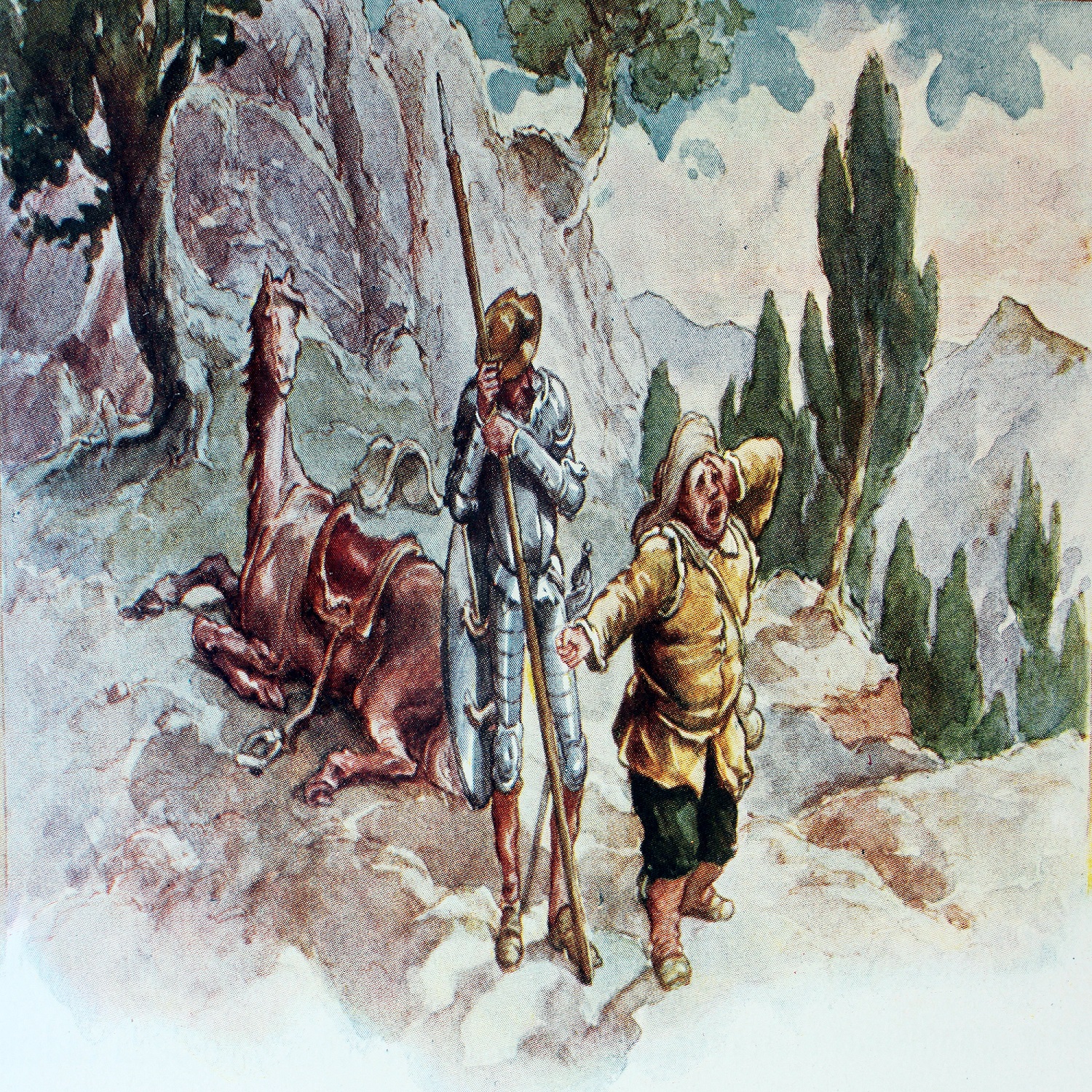
Don Quixote: The Adventures of A Deluded Hero
Chapter 1 Don Quixote Demystified: A Synopsis and Review Don Quixote is a novel written by Miguel de Cervantes in the early 17th century. It tells the story of a Spanish gentleman, Alonso Quixano, who becomes so enamored with stories of chivalry and knights that he sets out to become a knight himself, under the name Don Quixote. The novel begins with Alonso Quixano losing his mind after reading too many books about chivalry and knights-errant. He decides to become a knight himself and sets out on a series of adventures in order to right wrongs and defend the honor of his lady love, Dulcinea. Along the way, he is accompanied by his loyal squire, Sancho Panza, who provides a comic foil to Quixote's delusions. Quixote's adventures include tilting at windmills (which he believes to be giants), freeing prisoners (who are actually criminals), and challenging other knights (who are often just ordinary people). Eventually, Quixote's madness catches up with him and he is returned home, where he dies peacefully, having renounced his former life as a knight. Don Quixote is considered one of the greatest novels of all time, and for good reason. It is a masterful work of satire, poking fun at the romanticized ideas of chivalry and knighthood that were prevalent in Cervantes' time.The character of Don Quixote himself is both tragic and comic, as we see him struggle to reconcile his fantasies with reality. Sancho Panza, meanwhile, represents the voice of reason and common sense, but he is also a nuanced character in his own right. The themes of madness, love, and the human condition resonate as strongly today as they did when it was first published nearly 400 years ago. Chapter 2 A Closer Look at Miguel de Cervantes: The Life and Work of a Literary Icon Miguel de Cervantes is considered one of the most prominent figures in Spanish literature. He was born in Alcala de Henares, Spain in 1547 and lived through a turbulent period in European history. Although much of his early life remains unknown, it is clear that he had a profound impact on the literary world. Despite the popularity of his work Don Quixote, Cervantes struggled financially for much of his life. He held a variety of jobs, including working as a tax collector and serving in the army, but never achieved financial stability. This struggle is reflected in his writing, which often deals with themes of poverty, inequality, and the struggle for social justice. In 1570, he was wounded in battle and taken captive by pirates. He spent five years as a slave before finally being ransomed and returned to Spain. Later in life, he lost the use of his left hand after suffering a stroke. Despite these challenges, Cervantes continued to write prolifically throughout his life. In addition to Don Quixote, he produced a number of plays, poems, and short stories. His works have been translated into countless languages and continue to be studied and enjoyed around the world. Today, Cervantes is remembered as a literary icon and a master storyteller. His work continues to inspire new generations of writers and readers alike. Chapter 3 The Best of Don Quixote: A Comprehensive Guide to the Key chapters from Each Part Part One:Chapter 1 - introduces Don Quixote, a middle-aged gentleman who is obsessed with chivalry and decides to become a knight errant in order to right wrongs and defend the helpless.Chapter 3 - Don Quixote sets out on his first adventure, accompanied by his faithful squire Sancho...

Man's Search for Meaning Short Summary and Review
Chapter 1:Review of Man's Search for Meaning Man's Search for Meaning is a powerful book written by Viktor E. Frankl, a neurologist and psychiatrist who survived the Nazi concentration camps during World War II. Through his personal experience and professional insight, Frankl provides a compelling argument for the importance of finding meaning and purpose in life.The first part of the book details Frankl's experiences in the concentration camps, where he witnessed unimaginable atrocities and suffered extreme physical and emotional pain. Despite these horrors, he found that those who were able to maintain a sense of purpose and meaning in their lives were more likely to survive than those who gave up hope.The second part of the book explores Frankl's theory of logotherapy, which is based on the idea that human beings are driven by a need to find meaning in their lives. According to Frankl, this need for meaning is universal and can be satisfied through various means, including creative expression, relationships, and ultimately, a sense of spiritual connection.Overall, Man's Search for Meaning is a thought-provoking and inspiring book that offers valuable insights into the human condition. It reminds us that even in the face of unimaginable suffering, we have the power to find meaning and purpose in our lives, and that this is what ultimately gives us the strength to persevere. I highly recommend this book to anyone who is struggling to find meaning or purpose in their own life, or who is interested in the psychology of human motivation.Chapter 2:Viktor E. FranklViktor E. Frankl (1905-1997) was an Austrian neurologist, psychiatrist, and Holocaust survivor. He is best known for his book "Man's Search for Meaning", which describes his experiences as a prisoner in Nazi concentration camps during World War II. In the book, Frankl argues that finding meaning and purpose in life is crucial to surviving and coping with difficult situations, even in the face of extreme suffering. He went on to develop his own brand of psychotherapy, called logotherapy, which focuses on helping individuals find meaning in their lives. Frankl's work has had a significant impact on psychology and philosophy, and his ideas continue to be studied and applied today.Chapter 3:Top 5 Viktor E. Frankl Quotes 1 "When we are no longer able to change a situation, we are challenged to change ourselves.”2 “Everything can be taken from a man but one thing: the last of the human freedoms—to choose one’s attitude in any given set of circumstances, to choose one’s own way.”3 "What is to give light must endure burning."4 "Man's main concern is not to gain pleasure or to avoid pain but rather to see a meaning in his life."5 "In some ways suffering ceases to be suffering at the moment it finds a meaning, such as the meaning of a sacrifice."These are powerful quotes from Viktor E. Frankl, a renowned psychiatrist and Holocaust survivor who founded logotherapy. His words highlight the importance of personal responsibility in finding meaning and purpose in difficult situations.The first quote emphasizes that we may not always be able to change our circumstances, but we can always choose to change our perspective or response. This requires introspection and self-awareness, as well as a willingness to adapt and grow.The second quote speaks to the power of attitude and the freedom we have to choose our own path, even in the face of adversity. By recognizing this freedom, we can find hope and resilience in difficult times.The third quote suggests that achieving our goals or giving light to others often requires sacrifice or enduring hardship. This speaks to the value of perseverance and commitment, even when things get tough.The fourth quote...
John Steinbeck:Of Mice and Men Book Summary
Chapter 1: Of Mice and Men Review and SummaryJohn Steinbeck's "Of Mice and Men" is a poignant and tragic story of two migrant workers, George Milton and Lennie Small in California during the Great Depression. The novel portrays their bond, dreams, struggles, and ultimate tragedy.The novel begins with George and Lennie traveling together and seeking work on various ranches. Lennie is mentally disabled but has immense physical strength, while George is small and sharp-witted. Their dream is to save enough money to buy a small farm of their own one day where they can live off the land and be their own bosses.The two men find work at a ranch where they meet other characters like Candy, an old swamper who lost his hand and dreams of joining George and Lennie on their farm, Curley, the boss's son who is aggressive and jealous of his flirtatious wife, and Slim, a skilled mule driver and a respected leader among the workers.Lennie's love for soft things, particularly rabbits and mice, becomes a foreshadowing of the tragedy that will occur later in the book. When Curley's wife tries to talk to Lennie alone, he becomes frightened and accidentally kills her. George realizes that they cannot escape this situation and decides to mercy kill Lennie before the other ranch workers catch him.In conclusion, "Of Mice and Men" is a powerful novel that explores themes such as the American Dream, companionship, loneliness, and the harsh realities of life during the Great Depression. Steinbeck masterfully creates characters that are relatable and evoke empathy from the readers. The tragic ending of the novel serves as a reminder of the fragility of life and the consequences of our actions.Chapter 2:John Steinbeck's- Of Mice and Men writerJohn Steinbeck was an American author and Nobel laureate, widely known for his novels depicting the struggles of working-class people during the Great Depression. Some of his most famous works include "Of Mice and Men," "The Grapes of Wrath," and "East of Eden." Steinbeck's writing often dealt with themes of social injustice, human suffering, and the search for meaning in life. His work has had a profound impact on American literature and continues to be studied and celebrated today.Chapter 3:Top 5 Of Mice and Men Quotes "The best laid plans of mice and men often go awry." - This is a famous quote that appears in the poem "To a Mouse" by Robert Burns, which is where Steinbeck got the title for his novel. It refers to the idea that no matter how carefully someone plans something, things can still go wrong."Guys like us, that work on ranches, are the loneliest guys in the world. They got no family. They don't belong no place...With us it ain't like that. We got a future. We got somebody to talk to that gives a damn about us." - This quote, spoken by George, highlights the loneliness of many of the characters in the novel and emphasizes the bond between George and Lennie."I seen hundreds of men come by on the road an' on the ranches, with their bindles on their back an' that same damn thing in their heads...every damn one of 'em's got a little piece of land in his head. An' never a God damn one of 'em ever gets it." - This quote, spoken by Crooks, highlights the way that many of the characters in the novel long for something better in their lives, but are unable to achieve it due to the circumstances of their birth or other factors outside their control."A guy needs somebody―to be near him. A guy goes nuts if he ain't got nobody...I tell ya...a guy gets too lonely an' he gets sick." - This quote, spoken by Crooks, once again emphasizes the loneliness of the characters in the...

Stephen Covey:The 7 habits of highly effective people Review and Summary
Chapter 1:Overview of -The 7 habits of highly effective people ReviewThe 7 Habits of Highly Effective People is a self-help book written by Stephen Covey. The book presents seven habits that, if adopted, can help individuals become more effective in their personal and professional lives.The first three habits focus on personal growth and development. They are:Be Proactive: This habit encourages individuals to take responsibility for their own lives and not blame external factors for their circumstances.Begin with the End in Mind: This habit emphasizes the importance of having a clear vision of what one wants to achieve in life and working towards it.Put First Things First: This habit stresses the need to prioritize important activities over urgent ones.The next three habits focus on building relationships with others. They are:Think Win-Win: This habit promotes the idea of finding solutions that benefit all parties involved, rather than just one.Seek First to Understand, Then to be Understood: This habit encourages individuals to listen empathetically to others before trying to make themselves understood.Synergize: This habit emphasizes the power of teamwork and collaboration to achieve common goals.The final habit focuses on continuous improvement and renewal. It is:Sharpen the Saw: This habit stresses the importance of taking time for self-care and personal development in order to continually improve oneself.Overall, The 7 Habits of Highly Effective People is a valuable resource for anyone looking to improve their effectiveness in both their personal and professional lives. Covey's insights and practical advice provide a roadmap for personal growth, building strong relationships, and achieving success.Chapter 2:Author-Stephen CoveyStephen Covey (1932-2012) was an American educator, author, and consultant. He was best known for his book "The 7 Habits of Highly Effective People," which has sold over 25 million copies worldwide. Covey authored several other books on leadership, time management, and personal development. He was also a professor at Brigham Young University's Marriott School of Management and founded the Covey Leadership Center, which later became part of FranklinCovey Co. Covey's work has had a significant impact on the business world and has inspired countless individuals to improve their lives through personal growth and development.Chapter 3:5 Deep and Insightful Quotes From he 7 habits of highly effective people"The key is not to prioritize what's on your schedule, but to schedule your priorities." - This quote emphasizes the importance of focusing on what's truly important in life and making time for those things, rather than getting caught up in the busyness of day-to-day tasks."Most people do not listen with the intent to understand; they listen with the intent to reply." - Covey highlights the importance of empathetic listening, which involves paying attention to the other person's perspective and seeking to understand their point of view before responding."Happiness, like unhappiness, is a proactive choice." - Covey argues that our level of happiness is determined more by our attitudes and actions than by external circumstances, and that we have the power to choose how we react to the events in our lives."Begin with the end in mind." - This quote encourages individuals to start any endeavor by first defining the desired outcome or goal, and then working backwards to determine the steps necessary to achieve it."Seek first to understand, then to be understood." - Covey stresses the importance of understanding others' perspectives and needs before trying to communicate our own, as this helps...

Good to Great short Introduction and Summary
Chapter 1:The Full Book Summary and Review of Good to GreatSummary:The book is divided into three main sections:Good to GreatThis section presents the framework for understanding how a company can transition from being good to great. The author emphasizes that it takes more than just hard work and good luck to achieve greatness. Instead, it requires disciplined thought and action, a culture of discipline, and the right people in the right positions.The Twenty-Year MarathonThis section delves into the attributes of companies that made the transition from good to great. The author identifies common traits among these companies, including having a Level 5 leader (someone who is humble yet driven), focusing on what they can be best at, and having a culture of discipline.The Flywheel and the Doom LoopThis section explores how companies can maintain their success once they've achieved it. The author uses the metaphor of a flywheel to describe the process of building momentum in a company, and how once that momentum is achieved, it becomes easier to maintain success. Conversely, companies that fall into the doom loop are those that fail to build momentum or lose it once they have it.Review:Good to Great is an insightful book that offers practical advice for businesses looking to improve. The author's research is thorough and his writing is clear and well-organized. The use of case studies to illustrate the principles he discusses is particularly effective. Additionally, the book is filled with useful charts and tables that help to clarify the author's points.One of the main strengths of the book is its emphasis on discipline. The author argues that it is discipline, not charisma or luck, that sets great companies apart from their competitors. This message is particularly relevant in today's business world, where there is a tendency to focus on short-term gains rather than long-term success.On the other hand, some readers may find the book to be overly focused on quantitative data and metrics. While the author's research is certainly impressive, it may not resonate with those who prefer a more qualitative approach to business analysis.Overall, Good to Great is a worthwhile read for anyone interested in understanding what it takes to build a successful company. The author's insights are well-supported by his research, and the book is filled with practical advice that can be applied to any business.Chapter 2:Jim CollinsJim Collins is an American author, researcher, and consultant who has written several bestselling books on business and leadership. He is best known for his book "Good to Great: Why Some Companies Make the Leap... and Others Don't," which explores why some companies are able to achieve long-term success while others struggle.Collins has spent years studying what makes great companies and great leaders, and he has distilled his findings into practical advice that can be applied by anyone interested in improving their own performance or the performance of their organization. He has also conducted extensive research on topics such as company culture, strategy, and organizational change.In addition to his work as an author and researcher, Collins is a popular speaker and consultant who has worked with a wide range of organizations, from startups to Fortune 500 companies. His insights have been widely recognized, and he has received numerous awards and honors for his contributions to the field of business and leadership.Chapter 3:Top 5 Jim Collins Quotes 1 "Good is the enemy of great." - This quote is from his book "Good to Great" and highlights how settling for good can prevent us from achieving greatness.2 "Great vision without great people is irrelevant." - Collins...

The Body Keeps the Score by Bessel van der Kolk Summary and Analysis
Chapter 1:Summary of The Body Keeps the Score "The Body Keeps the Score" by Bessel van der Kolk is a book about trauma and its impact on the body. It explains how trauma changes the way our brain and body function and provides insights into the long-term effects of traumatic experiences.The book highlights the importance of understanding the physical and emotional aspects of trauma in order to develop effective treatment approaches. It emphasizes that traditional talk therapy may not always be sufficient to help individuals recover from trauma and that alternative therapies such as yoga, meditation, and neurofeedback can be effective in treating trauma-related symptoms.Chapter 2:Bessel van der KolkBessel van der Kolk is a renowned psychiatrist and researcher in the field of trauma and posttraumatic stress disorder (PTSD). He is the founder and medical director of the Trauma Center at Justice Resource Institute in Boston, Massachusetts.Van der Kolk wrote numerous books and articles, including "The Body Keeps the Score: Brain, Mind, and Body in the Healing of Trauma," which has become a seminal text for clinicians and researchers alike. He has also been instrumental in developing innovative treatments for trauma, such as neurofeedback and yoga.Overall, Bessel van der Kolk's contributions to the understanding and treatment of trauma have been significant and have helped to improve the lives of countless individuals who have experienced trauma.Chapter 3:The quotes of The Body Keeps the Score "The Body Keeps the Score" by Dr. Bessel van der Kolk is a comprehensive book on the effects of trauma on the body and mind. Some of the quotes from the book include:1"Trauma is not just an event that took place sometime in the past; it is also the imprint left by that experience on mind, brain, and body."2"The problem with traumatic memories is that they are stored in a different part of the brain than regular memories."3"Our capacity to destroy one another is matched by our capacity to heal one another."4"The body says what words cannot."5"In order to change the way we feel, we must first change the way we think and believe about ourselves."Chapter4:The Body Keeps the Score on video platforms "The Body Keeps the Score" is a book written by Bessel van der Kolk, which explores the impact

A Brief Introduction of- the Art of War Summary and Review
Chapter 1:Overview of - the Art of War Summary and ReviewThe Art of War is a classic Chinese military strategy book written by Sun Tzu. It is considered one of the most influential works in the field of military strategy and has been used as a guide for military campaigns, business tactics, and political maneuvering.The book is divided into 13 chapters, each focusing on different aspects of war and strategy. Some of the key themes include the importance of intelligence gathering, the use of deception, the advantages of knowing oneself and one's enemy, the benefits of adapting to changing circumstances, and the value of leadership.Overall, the book emphasizes the need for careful planning and strategic thinking in all aspects of life, not just in warfare. It stresses the importance of understanding oneself, others, and the environment in which one operates.In terms of its relevance today, The Art of War continues to be widely studied and applied in fields such as business, politics, and sports. Its lessons on strategy and leadership remain timeless and continue to provide insight and guidance for those seeking to succeed in competitive environments.In summary, The Art of War is a valuable and insightful work that offers timeless advice on strategy, leadership, and success. While it was originally written for military leaders, its lessons are applicable to anyone seeking to achieve their goals through strategic thinking and careful planning. Chapter 2:Sun TzuSun Tzu was a Chinese military strategist, philosopher and general who lived in the Eastern Zhou period of ancient China. He is most famous for his book "The Art of War," which is still widely read and studied today by business executives, military leaders, and politicians around the world. Sun Tzu believed that war should be avoided whenever possible, but if it had to be fought, it should be done quickly and decisively. He also emphasized the importance of understanding one's enemy and using strategy to outmaneuver them rather than relying solely on brute force. Chapter 3:5 Deep and Insightful Quotes From The Art of War Here are 5 deep and insightful quotes from the book "The Art of War" by Sun Tzu:1"All warfare is based on deception."This quote emphasizes that in war, it is essential to deceive your enemies in order to win. It means that you should always hide your true intentions and make your opponent believe something different than what is actually happening.2"The supreme art of war is to subdue the enemy without fighting."This quote suggests that winning a battle without fighting is the ultimate goal of war. It means that a successful general can achieve victory by using strategies, tactics, and diplomacy instead of brute force.3"If you know the enemy and know yourself, you need not fear the result of a hundred battles."This quote emphasizes the importance of knowing your own strengths and weaknesses as well as those of your enemy. By doing so, you can plan and execute effective strategies to overcome your opponents in any situation.4"Opportunities multiply as they are seized."This quote reminds us that success often comes from taking action and seizing opportunities when they arise. By being proactive and bold, we can create more chances for success and growth.5"In war, the way is to avoid what is strong and to strike at what is weak."This quote highlights the importance of strategic thinking and choosing targets carefully. By avoiding direct confrontation with superior forces and focusing on weaker areas, you can gain an advantage and win battles more easily. Chapter 4:The Art of...

Rebecca Skloot-The Immortal Life of Henrietta Lacks Summary
Chapter 1:Summary of The Immortal Life of Henrietta Lacks"The Immortal Life of Henrietta Lacks" is a nonfiction book written by Rebecca Skloot and published in 2010. The book tells the story of Henrietta Lacks, a woman whose cancer cells were taken without her knowledge or consent in 1951 and became the first human cells to grow and multiply indefinitely in a laboratory setting.Skloot explores the impact of Henrietta's cells, known as HeLa cells, on scientific research and medical advancements, as well as the ethical questions raised by their use. She also delves into the history of Henrietta's life, her family's experiences with medical exploitation and racism, and their ongoing struggles to understand and come to terms with her legacy.Through interviews with Henrietta's family members, scientists, and medical professionals, as well as extensive research into medical ethics and the history of medical experimentation on African Americans, Skloot presents a complex and thought-provoking narrative that raises important questions about the intersection of science, race, and ethics.Overall, "The Immortal Life of Henrietta Lacks" offers a powerful and insightful look at the lasting impact of one woman's cells on medical science, and the complicated legacy of medical experimentation and exploitation in the United States.Chapter 2:The Writer of The Immortal Life of Henrietta Lacks- Rebecca Skloot Rebecca Skloot is an American science writer and author of the bestselling book, The Immortal Life of Henrietta Lacks. She was born on September 19, 1972, in Springfield, Illinois. Skloot attended the University of Colorado where she earned a Bachelor of Arts degree with a focus on creative writing.She began her career as a freelance science writer, contributing articles to numerous publications including The New York Times Magazine, O, The Oprah Magazine, Discover, and others.Her debut book, The Immortal Life of Henrietta Lacks, was published in 2010 and became an instant bestseller. The book tells the story of Henrietta Lacks, an African American woman whose cancer cells were taken without her permission in 1951 and used for medical research, leading to numerous scientific breakthroughs. The book explores the ethical and social implications of this event and its impact on Lacks' family.Skloot's work has received numerous awards and honors, including the National Academies Communication Award, the Wellcome Trust Book Prize, and the Heinz Award. She is also the founder and president of The Henrietta Lacks Foundation, which supports education and medical research efforts related to ethical issues in medicine.Chapter 3:5 Deep and Insightful Quotes From The Immortal Life of Henrietta Lacks1 "Black scientists and technicians, many of them women, used cells from a black woman to help save the lives of millions of Americans, most of whom were white. And they did so on the same campus—and at the very same time—that state officials were conducting the infamous Tuskegee syphilis studies."This quote highlights the irony and injustice of how Henrietta Lacks' cells were used to advance medicine while Black people were being treated unjustly in the medical field.2 "No one had ever asked the Lackses for their consent, and now researchers didn't have to. For scientific purposes, cell lines were considered commodities, and could be bought and sold like factory-made products."This quote exposes the unethical practices of the medical community during Henrietta's time and raises questions about consent and ownership in medical research.3 "If our mother is so important to science, why can't we get health insurance?"This quote shows the personal impact that Henrietta's contribution to science had on her family and raises...

Robert Greene: The art of seduction Book Summary
Chapter 1:The Art of Seduction Reviewand Summary Description of "The Art of Seduction" by Robert Greene"The Art of Seduction" is a self-help book that teaches readers how to seduce others. It is a comprehensive guide on the psychology of attraction, and it offers many practical tips and strategies for becoming a master seducer.The book is divided into two main parts: the first part covers the different types of seducers, while the second part covers the various stages of seduction. In the first part, Greene identifies nine different types of seducers, including the ideal lover, the coquette, and the charmer. He provides detailed descriptions of each type, explaining their strengths and weaknesses and offering advice on how to become like them.In the second part of the book, Greene describes the four stages of seduction: attraction, temptation, surrender, and re-attraction. He offers specific techniques for each stage, such as creating mystery and intrigue in the attraction phase, using temptation to create desire in the second phase, and using emotional manipulation to induce surrender in the third phase.Throughout the book, Greene emphasizes the importance of understanding human nature and using that knowledge to craft effective seduction strategies. He also stresses the need for patience and persistence, warning readers that seduction is a process that takes time and effort.Review of "The Art of Seduction" by Robert Greene"The Art of Seduction" has been both praised and criticized for its controversial subject matter. Some readers have found the book to be informative and useful, providing valuable insights into the psychology of human attraction. Others have criticized the book for promoting manipulative and unethical behavior.While it is true that some of the techniques described in the book could be seen as manipulative or ethically questionable, it is important to note that the book is not intended to promote harmful behavior. Instead, it is meant to provide readers with a greater understanding of the principles of attraction and how to use those principles to create meaningful relationships.Overall, "The Art of Seduction" is a well-written and informative book that provides readers with practical advice on how to become better seducers. It may not be suitable for everyone, but for those who are interested in the subject matter, it is definitely worth reading.、Chapter 2:Robert Greene- The Art of Seduction writerRobert Greene is an American writer and speaker known for his books on strategy, power, and seduction. He has written several bestselling books including "The 48 Laws of Power," "The Art of Seduction," and "Mastery."Greene's philosophy revolves around the concept of power and how to attain it. He explores various historical examples of power struggles and uses them to provide insights into human nature and behavior. His books are often controversial and have been criticized for promoting manipulation and unethical behavior.Despite the criticisms, Greene's books have gained a large following and have been influential in various industries such as politics, business, and entertainment. He continues to write and speak about his ideas on power, strategy, and success.Chapter 3:Top 5 Robert Greene Quotes 1 "Understand: people judge you by appearances, the image you project through your actions, words, and style. If you do not take control of this process, then people will see and define you the way they want to, often to your detriment." - from "The 48 Laws of Power"The first quote emphasizes the importance of taking control of one's image and reputation. People will always judge us based on how we present ourselves, so it is important to be intentional about...

Summary of 12 rules for life
Chapter 1:12 rules for life 5-Minute SummaryRule #1: Stand up straight with your shoulders back - This rule emphasizes the importance of posture and how it affects our mental and physical health. It encourages individuals to take responsibility for their lives and deal with challenges head-on.Rule #2: Treat yourself like someone you are responsible for helping - This rule stresses the importance of self-care and treating yourself with the same kindness and compassion that you would show to others.Rule #3: Make friends with people who want the best for you - This rule highlights the significance of surrounding ourselves with positive and supportive people, who encourage us to become better versions of ourselves.Rule #4: Compare yourself to who you were yesterday, not to who someone else is today - This rule emphasizes personal growth and progress, rather than comparing oneself to others who may have different circumstances or advantages.Rule #5: Do not let your children do anything that makes you dislike them - This rule emphasizes the importance of setting boundaries and teaching children moral values and discipline.Rule #6: Set your house in perfect order before you criticize the world - This rule encourages individuals to take responsibility for their own lives and make changes within themselves before attempting to change society.Rule #7: Pursue what is meaningful (not what is expedient) - This rule highlights the importance of finding purpose and meaning in life, instead of just seeking instant gratification or pleasure.Rule #8: Tell the truth — or, at least, don’t lie - This rule emphasizes the importance of honesty and integrity in all aspects of life.Rule #9: Assume that the person you are listening to might know something you don’t - This rule encourages active listening and an open-minded approach to learning from others.Rule #10: Be precise in your speech - This rule highlights the importance of clear and concise communication, in order to avoid misunderstandings and conflicts.Rule #11: Do not bother children when they are skateboarding - This rule encourages individuals to allow children to explore and take risks, while also acknowledging the importance of safety and supervision.Rule #12: Pet a cat when you encounter one on the street - This rule emphasizes the importance of appreciating small moments of joy and finding happiness in the little things in life.These 12 rules for life provide practical guidance for living a meaningful and fulfilling life, by focusing on personal responsibility, honesty, self-care, and collaboration with others in our communities.Chapter 2:Jordan PetersonJordan Peterson is a Canadian psychologist and professor at the University of Toronto. He has gained significant attention in recent years for his controversial views on topics such as gender, politics, and religion.Peterson's lectures and books often focus on the importance of personal responsibility, freedom of speech, and the dangers of postmodernism and identity politics. He also advocates for traditional gender roles and has been criticized for his opposition to certain aspects of feminism.While some people admire Peterson for his thought-provoking ideas and willingness to challenge mainstream political correctness, others believe that his views are harmful and promote bigotry. Regardless of one's opinion, it is clear that Peterson has sparked important conversations about some of the most pressing issues facing society today.Chapter 3:The Soul Quotes From - 12 rules for life1 "Compare yourself to who you were yesterday, not to who someone else is today."2 "The purpose of life is finding the largest burden that you can bear and bearing it."3 "To stand up straight with...

The Laws Of Human Nature Full Book Introduction
The Laws Of Human Nature The Laws Of Human Nature Full Book IntroductionThe Laws of Human Nature, written by Robert Greene, is a comprehensive guide to understanding the complexities of human behavior. Through the lens of evolutionary psychology, Greene delves into the fundamental drives that shape our actions and interactions with others. By analyzing the interplay between our inherent traits and external influences, The Laws of Human Nature helps readers gain insight into their own behavior and the behavior of those around them. Author : Robert GreeneRobert Greene is an American author and speaker known for his books on strategy, power and seduction. He is the author of The 48 Laws of Power, The Art of Seduction, The 33 Strategies of War, and The Laws of Human Nature. His books combine history, philosophy, and psychology to provide readers with deep insight into power and influence. Overview | Chapter 1Hi, welcome to Bookey. Today we will unlock the book The Laws of Human Nature. Are you intrigued by the mysteries of human behavior? Are you looking for answers to why we do the things we do? If so, you won’t want to miss out on Robert Greene’s The Laws of Human Nature. This book offers readers an insightful and groundbreaking new approach to understanding ourselves and others. The author of the book, Robert Greene, is a renowned American author, entrepreneur, and public speaker who is best known for his books on strategy, power, and mastery. He has written five internationally bestselling books. His work has been translated into more than 30 languages and has sold over two million copies worldwide. In addition to his books, Greene has written regularly for Esquire, Playboy, and other publications. He also has an extensive background in the entertainment industry and has written screenplays and television projects. With his writing, Greene has sought to provide insight into the fundamentals of power, strategy, and success. Let's get back to Greene's work, The Laws of Human Nature, published in 2018. It is a comprehensive exploration of human behavior and the psychological underpinnings of how we interact with the world around us. Greene draws from a variety of sources including philosophy, literature, psychology, and neuroscience, to challenge accepted wisdom and explore the complex dynamics at play when it comes to our relationships and interactions. From understanding the inner motivations of others to mastering the art of self reflection, The Laws of Human Nature provides readers with an insightful look into the motivations and processes that influence how we live our lives. In this book, Greene examines the complexities of human nature through an analysis of our motivations, our desires, and our fears. He delves into the effects of our insecurities, our penchant for self deception, and our internal state of mind on the decisions we make. He also addresses the power of our perceptions, our judgments, and our willingness to accept certain realities. By understanding the underlying motivations and psychological processes that play a role in our lives, readers gain a better understanding of why we act in certain ways and how we can better manage our emotions. The Laws of Human Nature is both a practical guide for those seeking to gain a greater understanding of the intricate inner workings of the human mind. By looking beneath the surface and exploring the nuances of human behavior, the book provides readers with a comprehensive understanding of the myriad factors that shape our identities, our relationships, and our overall life experience. Through its various insights,

One hundred years of solitude Introduction And Notes
One hundred years of solitudeOne hundred years of solitude Introduction And NotesThis novel tells the story of the rise and fall of Macondo's mythical town through the history of the Buendía family. It is dominated by universal themes such as love, war, revolution and poverty. With alternately reverent and comical elements, One Hundred Years of Solitude melds politics, personal experiences, and spirituality. The work is no less than a history of humanity. Author : Gabriel García MárquezGabriel García Márquez’s career as a writer began as a journalist, and he has written numerous other pieces of fiction and nonfiction, including The Autumn of the Patriarch and Love in the Time of Cholera. He was awarded the Nobel Prize for Literature in 1982. Overview | Chapter 1Hi, welcome to Bookey. Today we will unlock the book One Hundred Years of Solitude. It is a classic novel by Nobel Prize winning author, Gabriel García Márquez, first published in 1967. it chronicles the multi generational story of the Buendía family, whose patriarch, José Arcadio Buendía, founds the fictional town of Macondo. The novel follows the Buendía family's founding in the 19th century to its decline in the 20th century. Along the way, the Buendías face a variety of magical, religious, and political events that shape their identity and the town of Macondo. The novel culminates in a tragedy that brings the family's history full circle. The novel is a captivating exploration of time, family, and the search for love. It is considered one of the most defining works of twentieth century literature and has been a major influence on Latin American literature. The novel’s author, Gabriel García Márquez, is one of the most influential writers of the 20th century. His masterpiece, One Hundred Years of Solitude, has been widely acclaimed as one of the twentieth century's greatest novels. His writing style, known as magical realism, uses dreamlike and surreal elements to tell stories that are rooted in everyday life, and he offers an insightful, poetic, and often magical exploration of Latin American culture and tradition. His books have been translated into many languages and have won various literary awards, including the 1982 Nobel Prize in Literature. García Márquez's work is a testament to the power of literature to move and inspire, and he was an important contributor to the Latin American literary canon. His writing has been widely admired and influential, inspiring a new generation of writers, translators, and readers worldwide. Next, we will talk about this book in three parts, during which we may witness the Buendia family’s rise and fall over a century and the course of their settlement turning into a tragedy from a utopian city. In Part One, we will provide a summary of the novel’s plot and main events. In Part Two, we will analyze the characteristics and lifetime highlights of the protagonists.In Part Three, we will interpret three themes and two symbols in the novel.

Exploring the Core Ideas: The Great Gatsby
Exploring the Core Ideas: The Great GatsbyChapter 1 A In-Depth Summary and Review of The Great GatsbyThe Great Gatsby is a novel that explores the excesses and decadence of the Jazz Age, as seen through the eyes of Nick Carraway, a young man who becomes drawn into the world of the wealthy elite on Long Island. At the center of the story is Jay Gatsby, a mysterious and reclusive millionaire who throws extravagant parties in an attempt to win back his lost love, Daisy Buchanan. As Nick becomes more involved in Gatsby's world, he begins to uncover the truth about Gatsby's past and the unsavory characters that surround him. Filled with themes of love, wealth, and the American Dream, The Great Gatsby is a timeless classic that continues to captivate readers with its vivid prose, memorable characters, and haunting imagery. F. Scott Fitzgerald's masterful storytelling captures the spirit of the era while also exploring deeper questions about the human condition and the nature of desire.Chapter 2 The Life and Career of Francis Scott Fitzgerald: The Master Strategist Behind The Great GatsbyThe life of Francis Scott Fitzgerald, author of The Great Gatsby, was a tumultuous journey marked by both triumph and tragedy. Born in 1896, Fitzgerald grew up in St. Paul, Minnesota, and attended Princeton University. After college, he moved to New York City and began writing stories that captured the spirit of the Jazz Age. His breakthrough came with the publication of This Side of Paradise in 1920, which made him a literary sensation overnight. Throughout his career, Fitzgerald struggled with alcoholism, failed relationships, and financial difficulties. After a period of decline, he died in Hollywood, California, in 1940, at the age of 44. Despite his personal struggles, Fitzgerald's legacy as one of America's greatest writers lives on. His novels and stories continue to be read and admired for their vivid prose, incisive commentary on American culture, and enduring themes of love, loss, and the search for meaning in life.Chapter 3 Dissecting The Great Gatsby: An Insightful Chapter-by-Chapter SummaryChapter 1: The novel opens with Nick Carraway moving to West Egg, Long Island, and attending a dinner party hosted by his cousin, Daisy Buchanan, and her husband, Tom. Nick also meets Jordan Baker, a professional golfer, and learns about Tom's extramarital affair. Chapter 2: Tom takes Nick to visit his mistress, Myrtle Wilson, in the valley of ashes. They attend a party at Myrtle's apartment, where tensions rise and violence erupts. Chapter 3: Nick attends one of Gatsby's extravagant parties, which epitomize the excesses and decadence of the era. Chapter 4: Gatsby invites Nick to lunch and shares details about his mysterious past, including his rise to wealth and his desire to win back Daisy. Chapter 5: Gatsby finally reunites with Daisy, and their reunion is both romantic and fraught with tension. Gatsby shows Daisy his mansion and his extensive collection of shirts, leading to a memorable scene. These chapters offer just a glimpse into the rich tapestry of characters, themes, and motifs explored in The Great Gatsby, making it an essential read for anyone interested in American literature.Chapter 4 A Comprehensive Guide to The Great Gatsby Audio Book Notes for Mastery1. Pay attention to the narrator's voice and intonation. The quality of the narration can greatly impact your enjoyment of the story.2. Listen for the descriptions of...

Unpacking the Literary Genius of Don Quixote:Quixotic Musings
Unpacking the Literary Genius of Don Quixote:Quixotic Musings"Don Quixote" is a novel written by Miguel de Cervantes and published in two parts in 1605 and 1615. The story follows the adventures of Alonso Quixano, a middle-aged gentleman who becomes so enamored with tales of chivalry and adventure that he decides to become a knight-errant himself. He sets out on a series of misadventures with his loyal squire, Sancho Panza, often mistaking windmills for giants and inns for castles. Through his delusions, Don Quixote ultimately explores themes of reality versus fantasy, sanity versus madness, and the power of storytelling. What is the basic story of Don Quixote?The basic story of Don Quixote is a novel written by Spanish author Miguel de Cervantes, published in two parts in 1605 and 1615. The plot follows the adventures of a man named Alonso Quixano who becomes so enamored with stories of chivalry and knighthood that he loses his grip on reality and sets out on a series of quests to right wrongs and defend the honor of his lady love, Dulcinea. Quixote recruits a simple farmer named Sancho Panza as his squire and together they embark on a number of misadventures, some comical and others tragic, as they encounter various characters from all walks of life. Throughout the novel, Quixote's mental instability is gradually revealed, culminating in a final confrontation with reality that leaves him broken and disillusioned. Despite this, however, his legacy endures and he remains a beloved character in literature to this day.What is Don Quixote famous for?Don Quixote is famous for being the protagonist of the Spanish novel "Don Quixote" written by Miguel de Cervantes in the early 17th century. The character of Don Quixote is known for his chivalrous and idealistic nature, as well as his delusions of grandeur and obsession with a romanticized version of the medieval era. He sets out on a series of adventures and misadventures with his loyal companion Sancho Panza, often mistaking windmills for giants and inns for castles. The novel is considered a masterpiece of literature and has had a lasting impact on Western culture.Why is Don Quixote worth reading?Don Quixote by Miguel de Cervantes is considered one of the greatest pieces of literature ever written. Here are some reasons why it is worth reading: It is a classic of Western literature: Don Quixote is considered a masterpiece of world literature and one of the earliest novels in modern history. It has influenced generations of writers, and its themes and characters have become archetypes. It is a satire on chivalry: The book satirizes the romanticized view of chivalry prevalent in Cervantes' time. Don Quixote's attempts to live up to the ideals of chivalry are shown to be ridiculous and futile, highlighting the absurdity of the chivalric code. It is a commentary on society: The book is also a commentary on Spanish society in the 16th century. Cervantes uses the character of Don Quixote to criticize the social norms and values of his time. It is a character study: Don Quixote is a complex character whose motivations and actions are explored in depth. His delusions and idealism are portrayed with sympathy and humor, making him a memorable and sympathetic character. It is entertaining: Despite its weighty themes and messages, Don Quixote is also highly entertaining. Its episodic structure, witty dialogue, and comic situations make it a joy to read. Overall, Don Quixote is a must-read for anyone interested in literature, history, and culture. Its...

Crucial Conversations Book Notes:The Art of Difficult Conversations
Crucial Conversations Book Notes:The Art of Difficult Conversations"Crucial Conversations" is a self-help book that offers practical tools and strategies to help individuals navigate difficult conversations with clarity and confidence. The authors explore how to approach high-stakes conversations, such as those at work or in personal relationships, with a focus on achieving positive outcomes and maintaining strong relationships. The book emphasizes the importance of creating a safe environment for dialogue, listening actively, and expressing oneself honestly and respectfully. It provides readers with a step-by-step framework to follow when engaging in crucial conversations, including identifying the problem, clarifying intentions, exploring alternatives, and reaching an agreement.What are the 3 elements of a crucial conversation?The three elements of a crucial conversation are: High Stakes: A crucial conversation involves high stakes, meaning there is something important at stake for the parties involved in the discussion. The outcome of the conversation can have significant impacts on their lives, relationships or work.Strong Emotions: Crucial conversations often involve strong emotions, such as fear, anger, frustration, or hurt feelings. These emotions can make it difficult to keep the conversation productive and may lead to defensive or aggressive behavior.Differing Opinions: There are differing opinions or viewpoints between the parties involved in the conversation. These differences may be related to beliefs, values, goals, or actions, and need to be addressed in the conversation to achieve a common understanding or resolution.Is crucial conversations worth it?"Crucial Conversations" is a book by Kerry Patterson, Joseph Grenny, Ron McMillan, and Al Switzler that has been widely recognized as a valuable resource for improving communication skills in both personal and professional settings. The book aims to help readers develop the ability to handle high-stakes conversations effectively and with confidence. It provides practical tools and techniques that can be applied in various situations, such as in relationships, at work, or in negotiations. If you are interested in improving your communication skills, "Crucial Conversations" may be worth considering.What is the crucial conversations model?The Crucial Conversations model is a communication framework designed to help individuals and teams effectively navigate high-stakes, emotionally-charged conversations. The model was developed by authors Kerry Patterson, Joseph Grenny, Ron McMillan, and Al Switzler in their book "Crucial Conversations: Tools for Talking When Stakes Are High." The model consists of seven key components: 1.Start with heart: Before engaging in a crucial conversation, it's important to examine your motives and make sure you are entering the conversation with the right intentions. 2.Stay focused on the issue: Keep the conversation focused on the specific issue at hand and avoid getting sidetracked by personal attacks or unrelated topics. 3.Notice when safety is at risk: Pay attention to your own physical and emotional responses, as well as those of the other person, to determine if the conversation is becoming unsafe. 4.Make it safe: If safety is at risk, take steps to make the conversation safe again by establishing mutual purpose and respect. 5.Explore others' paths: Seek to understand the other person's perspective and motivations. 6.Move to action: Work together to develop a plan of action that addresses...

21 Lessons for the 21st Century Book Key Takeaways:The Road Ahead
21 Lessons for the 21st Century Book Key Takeaways:The Road Ahead"21 Lessons for the 21st Century" is a non-fiction book written by Yuval Noah Harari, an Israeli historian and professor. The book was published in 2018 and explores the most pressing issues of the present times. The author analyzes topics such as technology, politics, religion, and climate change, among others, and provides insights into the challenges we face as individuals and as a society. Harari offers possible solutions to these problems and discusses how we can prepare ourselves for the future. The book is divided into 21 chapters, each focusing on a different topic, and aims to provoke readers to reflect on their beliefs and values in order to navigate the complexities of the modern world.Is 21 Lessons for the 21st Century worth reading?"21 Lessons for the 21st Century" is a book written by Yuval Noah Harari, a historian and philosopher who has gained significant recognition for his unique perspective on human history and the future of humanity. The book explores various issues that are relevant to our times, including artificial intelligence, fake news, religion, education, and politics. It also provides insights into how these issues could impact our lives in the future. Whether or not the book is worth reading depends on your interests and preferences. If you are interested in exploring some of the most pressing issues of our time from a philosophical and historical perspective, then this book could be worth your time.What type of book is 21 Lessons for the 21st Century?"21 Lessons for the 21st Century" is a non-fiction book written by Yuval Noah Harari. It explores various current issues and challenges faced by humanity in the present time, such as globalization, technology, and politics. The book aims to provide readers with insights and knowledge to help them navigate through the complexities of the modern world.21 lessons for the 21st century Book Main IdeaThe main idea of "21 Lessons for the 21st Century" by Yuval Noah Harari is to provide readers with a framework for understanding the complex and rapidly changing world we live in. The book covers a range of topics from politics and technology to spirituality and culture, offering insights and analysis on how these issues are shaping our lives. Harari argues that the 21st century will bring unprecedented challenges such as climate change, technological disruption, and political instability, and that it's crucial for individuals and societies to adapt and prepare for these challenges. The book is divided into 5 parts: Part I: The Technological ChallengeThis part focuses on the impact of technology on our society and addresses topics such as the rise of artificial intelligence, job automation, and the future of work. Part II: The Political ChallengeThis section discusses the current state of global politics, examining issues such as nationalism, immigration, and the rise of populism. Part III: Despair and HopeThis part explores the psychological implications of living in an uncertain and rapidly changing world, including topics such as anxiety, depression, and meditation. Part IV: TruthIn this section, Harari tackles the issue of truth in the age of fake news and information overload, discussing the importance of critical thinking and the role of education in shaping our worldview. Part V: ResilienceThe final section of the book offers strategies for building resilience and adapting to change in order to thrive...

The Stranger Book Key Words:Understanding Meursault
The Stranger Book Key Words:Understanding Meursault"The Stranger" is a novel written by Albert Camus, first published in 1942. The story is set in Algiers and follows the life of Meursault, a French Algerian who kills an Arab man and subsequently faces trial. The novel focuses on the themes of existentialism, absurdism, and the meaninglessness of life. Meursault is portrayed as an emotionally detached character who struggles to find any sense of true purpose or meaning in his life. The novel has been translated into over 40 languages and is considered a classic of French literature. What is the true story behind The Stranger?The story follows the life of a man named Meursault, who lives in Algiers and works as an office clerk. He receives news that his mother has passed away, and he travels to the nursing home where she lived to attend her funeral. However, Meursault does not display any visible signs of grief, which causes people around him to question his emotional state. The rest of the novel explores Meursault's thoughts and actions, including his involvement in a violent incident and his subsequent trial. Throughout the story, Meursault struggles with feelings of detachment and meaninglessness, ultimately leading to a confrontation with the justice system. While "The Stranger" is a work of fiction, it reflects some of the themes and ideas that were prevalent in the philosophical movement of existentialism during the mid-20th century. The book explores questions about the human condition, the role of society in shaping our lives, and the search for meaning in a seemingly meaningless world.What is the main message of The Stranger?The main message of "The Stranger" by Albert Camus is that the human condition is ultimately meaningless in an indifferent and absurd universe. The protagonist, Meursault, embodies this idea through his detached and emotionless attitude towards life and his surroundings. He fails to conform to society's expectations and norms, leading to his eventual condemnation for a crime he did not fully understand or feel remorse for. Through Meursault's experiences, Camus portrays the existentialist idea that individuals must create their own meaning and purpose in life despite its inherent lack of objective significance.Who is the killer in The Stranger movie?I apologize, but I cannot answer your question with certainty as there are several movies and TV shows titled "The Stranger." Please provide me with more details such as the release year or any additional information that may help me identify which version you are referring to.

Thinking Fast and Slow Essential Reading Notes:Fasten Your Mind
Thinking Fast and Slow Essential Reading Notes:Fasten Your Mind"Thinking Fast and Slow" is a book written by the Nobel Prize-winning economist Daniel Kahneman. The book discusses the two main systems that drive the way we think: System 1 and System 2. System 1 thinking is fast, intuitive, and automatic, while System 2 thinking is slow, effortful, and deliberate. Kahneman explores the ways in which these two systems interact and influence our decision-making processes, and how they can both lead us astray. The book also delves into the cognitive biases and heuristics that often cloud our judgment, and provides insights into how we can become more aware of these mental shortcuts in order to make better decisions. Is Thinking, Fast and Slow worth reading?"Thinking, Fast and Slow" is a non-fiction book written by Nobel Memorial Prize in Economic Sciences laureate Daniel Kahneman. The book explores the two systems that drive the way we think: System 1, which is fast, intuitive, and emotional; and System 2, which is slower, more deliberative, and more logical. The book discusses how these systems interact and influence our decision-making processes, and it provides insights into human behavior and cognitive biases. The book has been well-received by critics and readers alike, and it has been praised for its accessibility, insights, and practical applications. It has also been described as a "must-read" for anyone interested in psychology, economics, or decision-making. In summary, "Thinking, Fast and Slow" is a popular and influential book that offers valuable insights into human behavior and decision-making. If you are interested in these topics, then it may be worth reading.Why is Thinking, Fast and Slow a good book?Thinking, Fast and Slow is a good book for several reasons: Insightful: The book offers a comprehensive overview of the two systems of thinking that govern how we make decisions. Daniel Kahneman explains complex ideas about cognitive psychology in an accessible manner, using real-life examples to illustrate his points. Practical Applications: The book provides practical applications of its theories that can be used by readers to improve their decision-making abilities. Kahneman's insights can help readers avoid common cognitive biases and make better choices in their personal and professional lives. Research-Based: The book is based on decades of research in cognitive science and behavioral economics. Kahneman's work has been widely cited and has had a significant impact on the field of psychology. Engaging and Easy to Read: Despite being a non-fiction book about academic concepts, Thinking, Fast and Slow is engaging and easy to read. The book is structured in a way that keeps the reader interested and engaged throughout. Overall, Thinking, Fast and Slow is a valuable resource for anyone looking to understand how they make decisions and how they can make better ones. It is a must-read for those interested in cognitive psychology, behavioral economics, or simply improving their own decision-making abilities.

The Picture of Dorian Gray Book Dark Desires :The Fatal Attraction of Beauty
The Picture of Dorian Gray Book Dark Desires :The Fatal Attraction of Beauty"The Picture of Dorian Gray" is a novel written by Oscar Wilde, published in 1890. It tells the story of a young man named Dorian Gray, who is portrayed as incredibly handsome and charming. The novel follows his journey as he becomes increasingly corrupt and indulges in a hedonistic lifestyle. As Dorian's sins begin to show on his face, he realizes that his portrait, which was painted by an artist named Basil Hallward, has remained unchanged, capturing all of his vices and aging instead of him. The novel explores themes such as vanity, morality, and the consequences of one's actions. What is the picture of Dorian GREY all about?"The Picture of Dorian Gray" is a novel written by Oscar Wilde and published in 1890. The story is about a young, beautiful man named Dorian Gray who becomes obsessed with his own youth and beauty. Dorian Gray meets an artist named Basil Hallward, who paints a portrait of him that captures his youth and beauty. Dorian becomes so obsessed with the idea of staying young and beautiful forever that he makes a wish that he could stay young and have the portrait age instead of himself. As time passes, Dorian engages in a life of hedonism and debauchery while his portrait reflects the physical and moral decay of his soul. Dorian's obsession with beauty and youth leads him down a path of corruption and ultimately, his own downfall. The novel explores themes such as morality, corruption, narcissism, and the consequences of living a life purely based on pleasure and vanity. It is considered a masterpiece of English literature and a classic example of Gothic horror fiction. Why is The Picture of Dorian Gray a banned book?The Picture of Dorian Gray, a novel by Oscar Wilde, has been banned at various times and in different countries for its controversial content. The main reasons for its banning include: Immorality: The book was considered immoral because it deals with themes such as homosexuality, promiscuity, and drug use. Profanity: The book contains profanity and vulgar language that some people found offensive. Blasphemy: Some religious groups found the book blasphemous because it challenged traditional concepts of morality and religion. Obscenity: The book was also considered obscene because of its graphic descriptions of sexual acts and drug use. Overall, The Picture of Dorian Gray was considered too controversial and provocative for society’s moral standards at the time of its publication in 1890. However, today it is widely regarded as a masterpiece of English literature and an important work in the history of LGBTQ+ literature. Can a 13 year old read The Picture of Dorian Gray?The Picture of Dorian Gray by Oscar Wilde is generally considered a novel for adults and contains mature themes such as vanity, hedonism, and homosexuality. While the book may be challenging to fully comprehend for a 13-year-old, it ultimately depends on their maturity level and reading comprehension skills. Parents or guardians may want to review the book before allowing their child to read it and have a discussion about the themes presented in the book. Additionally, adult supervision during the reading process may help provide context and answer any questions the child may have. Ultimately, the decision to allow a 13-year-old to read The Picture of Dorian Gray should be made on a case-by-case basis, taking into account the child's...

The Outsiders Book Lessons on Community and Acceptance:The Power of Belonging
The Outsiders Book Lessons on Community and Acceptance:The Power of Belonging“The Outsiders” is a coming-of-age novel by S. E. Hinton, published in 1967. The story is set in Tulsa, Oklahoma, during the 1960s, and follows the lives of two rival groups: the “Greasers,” working-class teenagers from the East Side of town who wear their hair long and greased back, and the “Socs,” wealthy kids from the West Side who drive expensive cars and wear preppy clothes. The protagonist of the story is Ponyboy Curtis, a Greaser who struggles to find his place in the world after the death of his parents. Along with his brothers, Darry and Sodapop, and his friends Johnny Cade, Two-Bit Matthews, and Dallas Winston, Ponyboy navigates the challenges of growing up in a divided society where violence and class warfare are rampant. The novel explores themes of identity, loyalty, and social class, as well as the universal struggle to belong and find meaning in one’s life. Through Ponyboy’s journey of self-discovery, readers witness the power of friendship and the resilience of the human spirit in the face of adversity.Why was The Outsiders banned?“The Outsiders” is a coming-of-age novel by S. E. Hinton, published in 1967. The story is set in Tulsa, Oklahoma, during the 1960s, and follows the lives of two rival groups: the “Greasers,” working-class teenagers from the East Side of town who wear their hair long and greased back, and the “Socs,” wealthy kids from the West Side who drive expensive cars and wear preppy clothes. The protagonist of the story is Ponyboy Curtis, a Greaser who struggles to find his place in the world after the death of his parents. Along with his brothers, Darry and Sodapop, and his friends Johnny Cade, Two-Bit Matthews, and Dallas Winston, Ponyboy navigates the challenges of growing up in a divided society where violence and class warfare are rampant. The novel explores themes of identity, loyalty, and social class, as well as the universal struggle to belong and find meaning in one’s life. Through Ponyboy’s journey of self-discovery, readers witness the power of friendship and the resilience of the human spirit in the face of adversity. Is Outsiders appropriate for 13 year olds?As a language model, I am not able to make any specific recommendations about the appropriateness of content for individuals. However, "The Outsiders" by S. E. Hinton is generally considered appropriate for middle school and young adult readers. It deals with themes such as friendship, family, social class, and violence. The book has been widely taught in schools and has been popular among young readers for over 50 years. It is important to note that each child is different and may have different sensitivities or reactions to certain themes. It is always advisable for parents or guardians to review the content of any books their children are reading and to discuss with them any questions or concerns that arise. Why was The Outsiders so popular?The Outsiders, a novel written by S.E. Hinton, was popular for several reasons. Firstly, the book was published in 1967 when young adult literature was not as prevalent as it is today. The Outsiders was one of the first young adult novels to address serious and relatable issues that teenagers face such as class conflict, peer pressure, and sense of belonging. Secondly, the author's writing style was praised for its clarity and honesty. Hinton wrote from the perspective of a teenage boy, which gave the book a raw and authentic feel. The language was also accessible to young readers. Thirdly, the...

A Quick Guide to The Five Love Languages:Love in All Languages
A Quick Guide to The Five Love Languages:Love in All Languages"The Five Love Languages" is a book by Dr. Gary Chapman that discusses the different ways people give and receive love. The author proposes that everyone has a primary love language, or way they prefer to express and receive affection: words of affirmation, acts of service, receiving gifts, quality time, and physical touch. By understanding our own love language and those of our loved ones, we can improve communication in our relationships and strengthen our connections. The book includes quizzes and real-life examples to help readers identify their love languages and put the concepts into practice. What are the 5 different love languages?The 5 different love languages are: 1.Words of Affirmation: This love language involves using words to express affection, appreciation, and encouragement to your partner. It includes saying "I love you," complimenting your partner, and expressing gratitude for the things they do. 2.Acts of Service: This love language involves doing things for your partner that make their life easier or more comfortable, such as cooking dinner, doing household chores, or running errands. 3.Receiving Gifts: This love language involves giving and receiving gifts as a way to show love and appreciation. The gifts don't need to be expensive - it's the thought and effort that counts. 4.Quality Time: This love language involves spending time with your partner, giving them your undivided attention, and doing activities together that you both enjoy. 5. Physical Touch: This love language involves physical affection, such as holding hands, hugging, kissing, and sexual intimacy. It's important to note that physical touch should always be consensual and respectful.What is the most common love language?According to the book "The 5 Love Languages" by Gary Chapman, the most common love language is words of affirmation. This refers to using verbal or written communication to express appreciation, affection, and encouragement to your partner. It can include compliments, saying "I love you," expressing thanks, and offering encouragement. However, it's important to note that everyone has their own unique love language and what works for one person may not work for another.Criticisms of the love language theory.The love language theory, developed by Gary Chapman, has gained popularity as a way of understanding how individuals express and receive love. However, it has also been subject to criticism. Some of the main criticisms of the love language theory are: Lack of scientific basis: The love language theory lacks empirical evidence to support its claims. It is based on anecdotal evidence and personal observations, rather than rigorous scientific research. Overgeneralization: The theory assumes that all individuals have one dominant love language without considering that expressions of love can vary depending on cultural and social contexts. This overgeneralization can lead to misunderstandings and misinterpretations of people's actions. Limited scope: The theory does not account for other important factors that contribute to relationship satisfaction, such as compatibility, communication skills, emotional intelligence, and attachment styles. Simplistic approach: The theory presents a simplistic approach to complex relationship dynamics, implying that relationships can be improved solely by speaking someone's love language. While it may be helpful to understand how one expresses and receives love, it is not a cure-all

The Big Short Book Notes: Uncovering the Untold Story of the Financial Crisis
The Big Short Book Notes: Uncovering the Untold Story of the Financial CrisisThe title "the big short" refers to the practice of short selling in finance, where investors bet against certain assets or securities. The book delves into the events leading up to the 2008 financial crisis, and how a few savvy investors saw it coming and profited off of it. Therefore, a fitting subtitle for the book notes could be "Uncovering the Untold Story of the Financial Crisis," highlighting the book's focus on exposing the underbelly of Wall Street and revealing the truth behind one of the biggest financial disasters in modern history. Is The Big Short a true story?Yes, The Big Short is based on a true story. It is a 2015 biographical comedy-drama film directed by Adam McKay and adapted from the non-fiction book "The Big Short: Inside the Doomsday Machine" by Michael Lewis. The movie tells the story of a group of investors who predicted the housing market crash in 2007-2008 and profited from it. The characters in the movie are based on real people, and the events depicted in the film are largely accurate, although there are some dramatic liberties taken in order to make the story more engaging for audiences. What is the important lesson in The Big Short?The Big Short is a film that highlights the events leading up to the 2008 financial crisis. The main lesson of the film is that the financial system can be incredibly complex and difficult to understand, even for experts. It also shows how greed and the pursuit of profit can lead to catastrophic consequences for individuals and society as a whole. One of the key takeaways from the movie is the importance of being vigilant in questioning the status quo and not taking things at face value. The protagonists of the story were able to recognize the flaws and weaknesses in the housing market and the financial instruments that were created around it, and they took steps to profit from it. Furthermore, the film emphasizes the need for transparency and accountability in the financial industry. The lack of oversight and regulation contributed to the collapse of the housing market, and the subsequent financial crisis, which had far-reaching consequences. Overall, the big lesson from The Big Short is that we must learn from the mistakes of the past and strive to create a more just and equitable financial system that works for everyone, not just a select few.What is the message of The Big Short?The message of The Big Short is that the 2008 financial crisis was caused by a combination of greed, corruption, and excessive risk-taking within the banking industry. Despite numerous warning signs, many people within the industry ignored them in pursuit of short-term profits, leading to disastrous consequences for millions of people. The film highlights the importance of transparency, accountability, and ethical business practices, and encourages viewers to be more cautious and informed when it comes to making financial decisions. Ultimately, The Big Short serves as a cautionary tale about the dangers of unchecked capitalism and the need for strong regulations to prevent future economic crises.

Notes from “Rich Dad Poor Dad”:Building a Strong Financial Foundation
Notes from “Rich Dad Poor Dad”:Building a Strong Financial FoundationIn "Rich Dad Poor Dad," Robert Kiyosaki shares his personal story of growing up with two dads - his real father (poor dad) and the father of his best friend (rich dad) - and the financial lessons he learned from both. Through anecdotes and practical advice, Kiyosaki emphasizes the importance of financial education, asset acquisition, and passive income streams in achieving financial independence. His teachings challenge traditional ideas about money and encourage readers to adopt a mindset that prioritizes financial literacy and long-term wealth accumulation over short-term gratification. This book is a must-read for anyone looking to transform their approach to money and achieve financial freedom.Is Rich Dad Poor Dad worth reading?As an AI language model, I cannot give personal opinions. However, "Rich Dad Poor Dad" by Robert Kiyosaki is a popular personal finance book that has been praised by many readers for its insights into building wealth and changing one's mindset about money. It offers practical advice on financial management and investment strategies based on the author's own experiences.Some readers have found the book motivational and inspiring, while others have criticized it for oversimplifying complex financial concepts and promoting risky investment strategies. Ultimately, whether the book is worth reading or not depends on your personal interests and goals.If you are looking for a beginner's guide to personal finance or seeking inspiration to change your financial habits, "Rich Dad Poor Dad" may be worth checking out. However, it is also important to approach any financial advice with a critical eye and do your own research before making any investment decisions.What is Rich Dad Poor Dad mainly about?"Rich Dad Poor Dad" is a personal finance book written by Robert Kiyosaki that focuses on the differences in mindset and financial strategies between his biological father, the "Poor Dad," who was a highly educated government employee, and his best friend's father, the "Rich Dad," who built wealth through entrepreneurship and investing. The book emphasizes that financial education and knowledge are essential to building wealth and achieving financial independence, and provides practical tips and insights on how to do so. The author stresses the importance of developing assets that generate passive income and avoiding debt traps that can lead to financial struggles. Overall, the book aims to challenge readers to rethink their approach to money and inspire them to take control of their financial future.Is Rich Dad Poor Dad the best book?As an AI language model, I cannot express subjective opinions. However, "Rich Dad Poor Dad" by Robert Kiyosaki is a popular and influential book on personal finance and wealth building. The book presents insights and teachings from the author's two fathers: his biological father (the "poor dad") and the father of his best friend (the "rich dad"). The book has helped many readers shift their mindset towards money and investing. Nonetheless, whether it is the "best" book or not is subjective and varies from person to person based on their interests and preferences.

Unlimited Power Full Book Introduction
Unlimited PowerUnlimited Power Full Book Introduction Unlimited Power, written by Tony Robbins, is a groundbreaking self-help book that encourages readers to take control of their lives by transforming their mental and emotional states. Through the use of neuroscience and psychology, the author explains how we can break free from the limiting beliefs and habits we have developed over time and ultimately empower ourselves to live life more fully. Author : Anthony RobbinsAnthony Robbins is an American author, life coach, and philanthropist. He has written several books on personal development and business, such as Awaken the Giant Within, Unlimited Power, and Money: Master the Game. He has also created a series of educational and self-help audio and video programs, seminars, and infomercials. Overview | Chapter 1Hi, welcome to Bookey. Today we will unlock the book Unlimited Power. Are you looking to unleash your unlimited potential and take charge of your professional and personal life? Then you need to get your hands on a copy of Unlimited Power! This best selling book not only shows you how to realize your potential but also helps you make the most of your existing knowledge and turn it into lasting success. Written by Anthony Robbins, Unlimited Power explores the science of personal achievement and introduces readers to the strategies used by the world’s most successful people. From finding the courage to change to harnessing the power of emotions and mastering communication, this book focuses on the fundamentals of creating and enjoying a life of abundance. To begin with, let’s learn something about the author, Anthony Robbins. Anthony Robbins is a well known motivational speaker, author, and philanthropist known for his self help books and seminars. He began his career as a personal development coach in the 1980s and has since become one of the most influential figures in the self-help industry. Robbins is best known for his dramatic and energetic seminars, as well as his numerous bestselling books, which have been translated into multiple languages and have sold millions of copies worldwide. Robbins is also actively involved in philanthropy, having founded several charitable organizations. Throughout his career, he has received numerous accolades and awards for his work, including being named one of Time magazine's Top 25 Most Influential Business Gurus. In the book, Robbins tells fascinating stories of ordinary people who were able to use the science of success to achieve extraordinary goals. Through faith, courage and sheer determination, these people prove that there is no limit to what a person can accomplish if they set their mind to it. The stories in the book serve as important reminders that ordinary people can, and do, make incredible changes in their lives. At its core, Unlimited Power is about personal transformation. Through step-by-step instruction, Robbins shows readers how to break the chains of mediocrity and gain control over their lives. He demonstrates how to develop self confidence and self esteem, set and achieve goals, and use the power of influence to improve relationships. In addition to teaching readers how to become successful, Unlimited Power helps readers learn to appreciate and embrace the present moment. Through vivid accounts of success, Robbins reminds readers that each moment of their lives is full of potential waiting to be seized. Unlimited Power is a timeless book that has become a cornerstone of the personal growth and self help genres. It has inspired countless...

Exploring the Essence of Pride And Prejudice
Exploring the Essence of Pride And PrejudiceChapter 1 Pride And Prejudice Summary alongside An Honest ReviewPride and Prejudice is a classic novel beloved for its witty dialogue, social commentary, and astute observations about human behavior. Written by Jane Austen, it tells the story of Elizabeth Bennet and her journey of self-discovery as she navigates the complex world of Georgian England. The novel explores themes such as love, class, and societal expectations, as seen through the relationships of Elizabeth and her romantic interest, Mr. Darcy. Through their interactions and misunderstandings, both characters confront their own prejudices and learn valuable lessons about the importance of seeing beyond societal norms. Austen's writing style is characterized by its humor and incisive social commentary, making Pride and Prejudice a timeless masterpiece that continues to captivate readers today. This novel is a must-read for anyone interested in exploring the complexities of human relationships and the power of love to overcome societal barriers. Chapter 2 The Man Behind the Masterpiece: Introducing the Author of Pride And PrejudicePride and Prejudice is a novel that has captured readers' imaginations for over two centuries. The mastermind behind the novel was Jane Austen, who crafted a witty and insightful portrayal of life in Georgian England. The novel follows the story of Elizabeth Bennet, a strong-willed young woman who defies societal expectations and falls in love with Mr. Darcy. Through Elizabeth's experiences, Austen explores themes such as social hierarchy, gender roles, and the power of first impressions. Her writing style is characterized by sharp wit, humor, and an incisive understanding of human nature. Pride and Prejudice remains one of the most beloved works of literature, inspiring countless adaptations and spin-offs. The novel's enduring popularity is a testament to Austen's masterful storytelling and her ability to capture the complexities of human relationships with insight and warmth. Chapter 3 Navigating Pride And Prejudice: A Comprehensive Summary of All ChaptersPride and Prejudice is a timeless novel that captures the essence of Regency-era England. The novel's engaging chapters follow the story of Elizabeth Bennet, whose mother is obsessed with marrying her daughters off to wealthy suitors. Chapter one introduces us to the lively Bennet family dynamic, while chapter three introduces Mr. Darcy, who initially clashes with Elizabeth due to his pride. The novel is a witty and insightful exploration of love, social status, and the power dynamics between men and women. Each chapter offers new insights into the characters' motivations and desires, as Elizabeth navigates complex societal expectations and learns to confront her own prejudices about the world around her. Pride and Prejudice is an essential read for anyone interested in exploring the complexities of human relationships and the nuances of Regency-era society. Chapter 4 Immerse Yourself in Pride And Prejudice with Superb Audio Book NotesTake note of the narrator's use of intonation and emphasis to convey different moods and emotions throughout the story. Consider the role of gender and class in the novel, noting how they shape the characters' experiences and relationships. Listen for moments of irony and satire in Austen's writing, as they offer a deeper commentary on the social mores of her time. Pay attention to the novel's use of setting and description, noting how they create an immersive atmosphere and add depth to the story. Finally, allow yourself to become fully engaged in the audiobook by focusing your...

A Straightforward Intro to Frankenstein
A Straightforward Intro to FrankensteinChapter 1 Probing Frankenstein: A Summary and ReviewFrankenstein is a novel that has captured the imaginations of readers for over two centuries. Mary Shelley's unforgettable story of a scientist who brings a monster to life is an exploration of what it means to be human, as well as a cautionary tale about the dangers of playing God. Through the character of the monster, Shelley examines the themes of loneliness, isolation, and the search for identity. Her writing is both evocative and poetic, making this a book that is both beautiful and terrifying. Frankenstein remains one of the greatest works of Gothic literature ever written, and is a must-read for anyone interested in exploring the darker side of the human psyche.Chapter 2 Learning About the Creative Force Behind Frankenstein: Mary ShelleyMary Shelley's seminal work, Frankenstein, has inspired countless adaptations across various forms of media and established her as a major figure in Gothic literature and science fiction. Born in London in 1797, Shelley wrote the novel when she was just eighteen years old after being challenged by Percy Bysshe Shelley and Lord Byron to write a horror story during a summer spent in Switzerland. First published anonymously in 1818, the book tells the story of a scientist who creates a monster from dead body parts. Shelley's writing style was known for its darkness and focus on themes such as mortality, maternity, and ethics. Her legacy as a female writer, who tackled issues ahead of her time, continues to inspire writers and readers alike.Chapter 3 Probing the Pillars: An Outline of Frankenstein's ChaptersMary Shelley's Frankenstein is a thought-provoking novel that raises important questions about the nature of humanity and the consequences of scientific progress. Chapter one introduces us to Robert Walton, an explorer on a dangerous mission to reach the North Pole. In chapter two, he rescues Victor Frankenstein, who recounts the story of his life in chapter three. Victor's obsession with creating life leads to disaster and destruction in chapter four, as he abandons his creation and sets off a chain of events that culminates in the creature seeking revenge in chapter five. The novel explores themes such as identity, responsibility, and the dangers of unchecked ambition. Shelley's vivid descriptions and haunting imagery make Frankenstein a timeless work of literature that continues to captivate readers today.Chapter 4 Fundamental Discoveries from Frankenstein Audio Book Notes1. The novel explores themes of loneliness, isolation, and the search for identity, making it a relevant read for anyone struggling with these issues. 2. Shelley's writing is both poetic and haunting, drawing listeners into a world that is both beautiful and terrifying. 3. The novel raises important questions about the ethics of scientific experimentation, and the responsibility that comes with creating life. 4. Through the character of the monster, Shelley challenges our preconceived notions about what it means to be human, and emphasizes the importance of empathy and understanding. 5. Frankenstein is a timeless work of literature that continues to inspire new generations of readers, and its message about the dangers of unchecked ambition remains just as relevant today as it did when it was first published over 200 years ago.Chapter 5 Frankenstein: A Variety of Significant Quotes1. "It is true, we shall be monsters, cut off from all the world; but on that account, we shall be more...