Blume Podcast
47 episodes

S4 Ep 8How Square Yards Moves ₹18,000 Cr of Real Estate Every Year | S4E8 | Destiny Avenged | Weekday Episode
What does it take to build a category-defining real estate company in India—starting from scratch, without hype, and going truly all in? In this episode of the Blume Podcast, Karthik Reddy sits down with Tanuj Shori, Co-founder & CEO of Square Yards, to unpack the long, invisible journey behind one of India’s largest real estate and financial services platforms. This is not a story about overnight success or fundraising theatrics. It’s about: • How brutal work ethic during the Global Financial Crisis reshaped ambition• Why exposure to China’s Lianjia helped connect the dots for Square Yards• The moment obsession turned into a 48-hour decision to quit banking• What “going all in” really meant—selling homes, including their parents’• Building only where you have a clear right to win Today, Square Yards moves ~₹18,000 Cr of real estate annually while refusing to chase adjacencies without category leadership. If you’re building for decades, thinking about conviction, or wondering how founders cross the line from comfort to commitment—this episode is a masterclass. 🔔 Don’t miss more founder stories from Season 4: Destiny Avenged. ⏱️ Timestamps (Weekday Episode) 00:00 — “What is equity?”: early career confusion and learning the hard way04:10 — Lehman, GFC, and why hard work changed everything07:30 — China’s Lianjia, angel investing, and connecting the dots11:40 — Going all in: selling homes and building Square Yards with conviction Season Partners This season is brought to you by IDFC FIRST Bank and Ultrahuman. Disclaimer The views and opinions expressed in this content are for informational purposes only and do not constitute investment, legal, tax, or accounting advice, nor an offer or solicitation to buy or sell securities. References to companies or outcomes are illustrative only and should not be construed as endorsements. Past performance is not indicative of future results.

S4 Ep 8How 15 Co-Founders Built an ₹18,000 Cr Company | S4E8 | Destiny Avenged | Weekend Ep.
What does it take to build a full-stack real estate platform in India, a market defined by broken processes, low trust, and extreme fragmentation, without following the traditional VC playbook?In this Season 4 finale of the Blume Podcast, Karthik Reddy sits down with Tanuj Shori, Founder of Square Yards, to unpack a decade-long journey of building one of India’s most quietly scaled businesses, now moving ~₹18,000 Cr of real estate annually.This is not a story of blitzscaling or overnight success. It’s a story of risk taken early, course-correction done fast, and patience sustained over decades — in a market most founders actively avoid.This episode dives into:- Why Square Yards refused to build “just another” property search platform- The decision to go full-stack in a deeply interdependent real estate ecosystem- Why category leadership mattered more than adjacency or incremental revenue- Hiring co-founders, not employees, and building a 15-person founding bench that’s still intact a decade later- A capital philosophy rooted in the belief that equity is the most expensive thing in the world- How retail distribution — not product or tech — became the hardest problem to solve- Why the team is building with a 20–40 year horizon, not for milestones or exitsFrom selling their own homes and going all-in, to building an IPO-ready platform designed to outlive its founders, this conversation offers rare insight into what it takes to organise a broken market at national scale.Timestamps00:00:00 – From Lehman Brothers to questioning “what is equity”00:04:24 – Risk appetite, early course-correction, and being “all-in”00:08:15 – Banking years, hard work, and why competence creates passion00:14:29 – The accidental entrepreneur and the Square Yards origin story00:20:20 – Selling personal and family assets to go all-in00:31:01 – Why search & discovery failed — and full-stack was necessary00:37:25 – Category leadership as a non-negotiable mandate00:44:20 – Cracking scale: retail distribution, COVID tailwinds, and growth00:54:38 – Destiny avenged, IPO as governance, and building for decadesThis season is brought to you in partnership with IDFC FIRST Bank and Ultrahuman.------------------------------------------The views and opinions expressed in this content are for informational purposes only and do not constitute investment, legal, tax, or accounting advice, nor an offer or solicitation to buy or sell securities. References to companies, transactions, or market events are illustrative only and should not be construed as endorsements or statements of value. Any views expressed by individuals are solely their own and do not represent those of Blume Ventures, its affiliates, partners, or employees. Past performance is not indicative of future results.
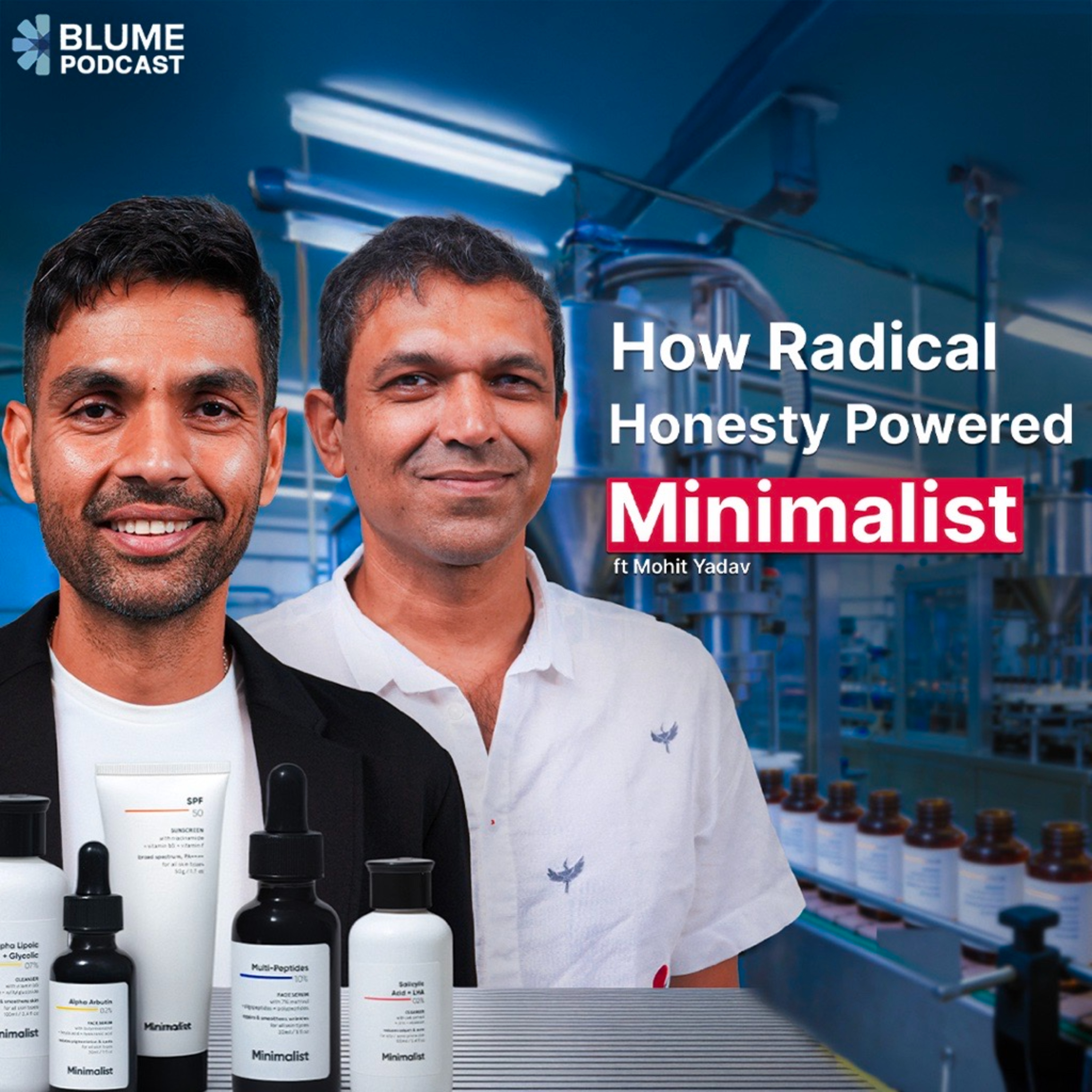
S4 Ep 7How Minimalist Hit ₹100Cr in Just 8 Months from launch | S4E7 | Destiny Avenged | Weekday Ep
What does it take to build a ₹100-crore skincare brand in under a year — in one of the most crowded consumer categories in India?In this episode of the Blume Podcast, Karthik Reddy sits down with Mohit Yadav, Co-founder of Minimalist, to unpack the long, invisible journey behind the brand’s seemingly overnight success.This is not a story about hype, influencers, or clever marketing. It’s about:- Why transparency became Minimalist’s core competitive advantage- How two years of “failed” experimentation at Freewill laid the real foundation- The shift from personalised haircare to problem-led, science-first skincare- Why Minimalist focused only on “need-to-have” products in its first year- How referrals, repeats, and honest customer conversations compounded growth- Why Tier-3 India surprised them the most — and what it says about knowledge parityIf you’re building a consumer brand, thinking about PMF, or wondering how trust scales faster than ads — this episode is a masterclass.🔔 Don’t miss more founder stories from Season 4: Destiny Avenged.⏱️ Timestamps (Full Episode)00:00 — Why Minimalist believed it could stand out in a crowded beauty market01:00 — From Freewill to Minimalist: the pivots, mistakes, and COVID reset08:30 — Radical transparency, clinically proven products, and black-and-white design10:30 — The surprise insight: 50% of customers came from tier-3 IndiaSeason PartnersThis season is brought to you by IDFC FIRST Bank and Ultrahuman.DisclaimerThe views and opinions expressed in this content are for informational purposes only and do not constitute investment, legal, tax, or accounting advice, nor an offer or solicitation to buy or sell securities. References to companies or outcomes are illustrative only and should not be construed as endorsements. Past performance is not indicative of future results.

S4 Ep 7How Minimalist Won India’s Skincare Market By Being Transparent | S4E7 | Destiny Avenged | Weekend Ep.
What does it take to build a ₹3000Cr skincare brand in the middle of a global pandemic — without celebrity endorsements, influencer hype, or big-budget marketing? In this episode of S4 of the Blume Podcast, Karthik sits down with Mohit Yadav, Co-founder of Minimalist, to unpack the years of quiet compounding behind the brand’s breakout — from two brothers experimenting across multiple businesses, to launching a science-first skincare brand during COVID. This is not a story of overnight virality or growth hacks. It’s a story of: • Winning trust through ingredient transparency and product clarity• Why India has wealth disparity, but skincare “knowledge parity” is rising fast• What Minimalist got right (and what actually differentiated them)• Why they chose to grow without influencers — and the flywheels that worked instead• The underrated advantage of building from Jaipur• The prior years of work that made their rapid growth possible In a category built on hype and advertising, Minimalist won by respecting the consumer’s intelligence — and letting the product do the talking.Chapters:00:00:00 – Why Minimalist thought it could stand out (problem-first, “knowledge parity”) 00:04:21 – Jaipur roots, humble background, and why the two brothers chose “dhandha” 00:11:04 – First business: Scopial (design community) and how it started 00:13:31 – Snapdeal’s Kunal invests → pivot to Mango Street kidswear → acquisition exit 00:17:04 – CarDekho years: scaling up + Indonesia chapter + deciding to start again 00:25:07 – Freewill (personalised haircare) → regulatory roadblock → COVID → Minimalist is born 00:32:40 – Minimalist’s brand DNA: clinical proof, radical transparency, black-and-white design language 00:50:53 – Going global (GCC/SEA/US), Target rollout, building from Jaipur, Unilever deal + rapid-fire + advice (till end)This season is brought to you in partnership with IDFC FIRST Bank and Ultrahuman.
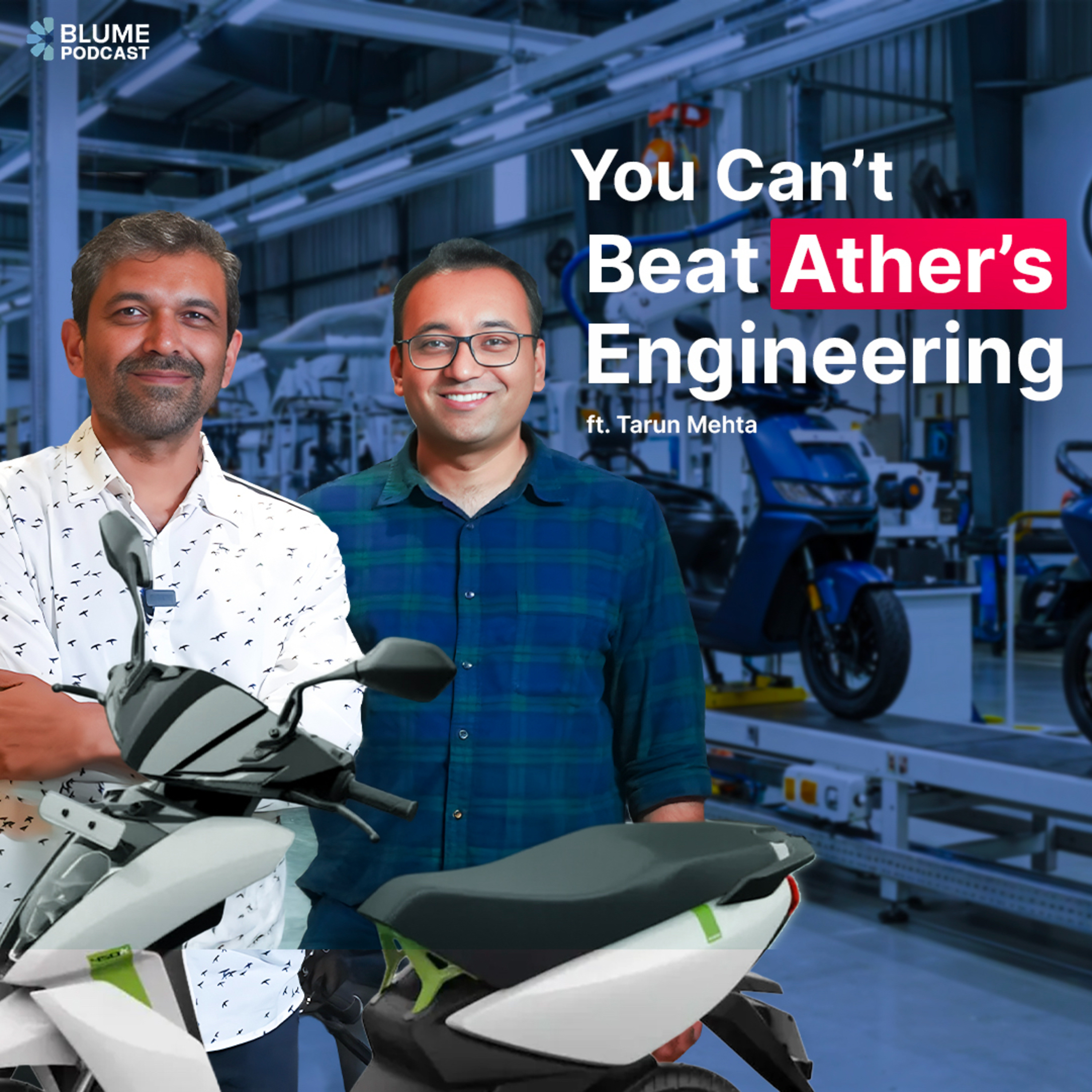
S4 Ep 6Ather Didn’t Copy. They Rebuilt EVs From Scratch into a ₹26,000 Cr Company | S4E6 | Destiny Avenged | Weekday Ep.
What does it take to build an EV in a country that had no supply chain, no ecosystem, and no conviction that world-class hardware could be engineered locally from scratch? In this episode of Destiny Avenged, Tarun Mehta takes us back to the true origins of Ather — long before the scooters, the charging grid, or the brand India now knows. It begins inside IIT Madras’ CFI lab, where a new culture of weekend building, late-night experiments, and first-principles engineering quietly took hold. Tarun and Swapnil spent years sleeping on yoga mats in the department, teaching themselves battery design, building swappable packs, and prototyping chargers. But one insight changed everything: India didn’t want batteries. It wanted a world-class electric scooter.That leap — from component to full-stack — is what eventually became Ather Energy. This conversation dives deep into: • How CFI and IIT Madras accidentally engineered a startup culture• Why Ather took five years before launching anything• The battery-first approach and the pivot to full-stack EVs• Why building hardware requires long gestation and no shortcuts• The engineering advantages EVs unlock that ICE can never match• Why Ather chose the hardest possible path — and how it paid offChapters:00:00 – Building Ather’s first batteries02:23 – How IIT Madras accidentally created a startup factory06:03 – Quitting jobs, sleeping on yoga mats, and early swappable battery ideas09:11 – Pitching the full scooter & why deep tech isn’t a capital problemIf you’ve ever wondered how an engineering-first company gets built in India, this is the blueprint. 🎧 Watch the full episode and explore more founder stories in Season 4: Destiny Avenged. Season Partners: IDFC FIRST Bank and Ultrahuman (Blume portco)

S4 Ep 5Ather at ₹26,000 Cr: The IIT Madras Experiment That Became an EV Giant | S4E6 | Destiny Avenged | Weekend Ep.
What does it take to build an EV scooter from scratch in a country that had no EV supply chain, no ecosystem, and very little faith in hardware built in India?In this episode of the Blume Podcast (Season 4: Destiny Avenged), Karthik sits down with Tarun Mehta, Co-founder & CEO, Ather Energy, to unpack the impossible decade behind Ather — from two college kids sleeping on yoga mats in IIT Madras labs, hand-building battery packs and prototypes, to shipping their first 10 scooters nearly 5 years after the first cheque.This is not a story of hacks and shortcuts. It’s a story of:- Saying no to “copy China” and betting on original engineering- Spending years in the lab building batteries, BMS, chargers and a full-stack scooter before seeing any real revenue- Building an R&D culture that prides itself on engineering excellence, even when it meant slower growth and higher risk.00:00 – If Tesla called, would Tarun collaborate? (cold open)01:23 – Destiny Avenged intro & how a hostel project became Ather Energy03:37 – Growing up in Ahmedabad, Gujarat board & an obsession with gaming08:23 – Choosing IIT Madras, Engineering Design & meeting Swapnil + the Stirling engine21:39 – Quitting auto jobs, camping at IIT, and pivoting from batteries to full-stack scooters34:46 – Deep tech vs internet: capital, gestation and why metrics are the real bottleneck45:14 – EVs as experience machines: Infinite Cruise, smart helmets & software-led moats57:23 – IPO, life as a public company & what Ather should look like in 2035If you’re a founder, operator, or anyone who’s ever wondered whether it’s worth betting a decade on hard problems, this conversation is a masterclass in patience, craft, and long-term thinking.In this candid conversation, Karthik dives deep with Tarun into how Ather was built the hard way — one experiment, one setback, and one breakthrough at a time.Season Partners: IDFC FIRST Bank and Ultrahuman (Blume portco)------------------------------------------The views and opinions expressed in this content are for informational purposes only and do not constitute investment, legal, tax, or accounting advice, nor an offer or solicitation to buy or sell securities. References to companies, transactions, or market events are illustrative only and should not be construed as endorsements or statements of value. Any views expressed by individuals are solely their own and do not represent those of Blume Ventures, its affiliates, partners, or employees. Past performance is not indicative of future results.
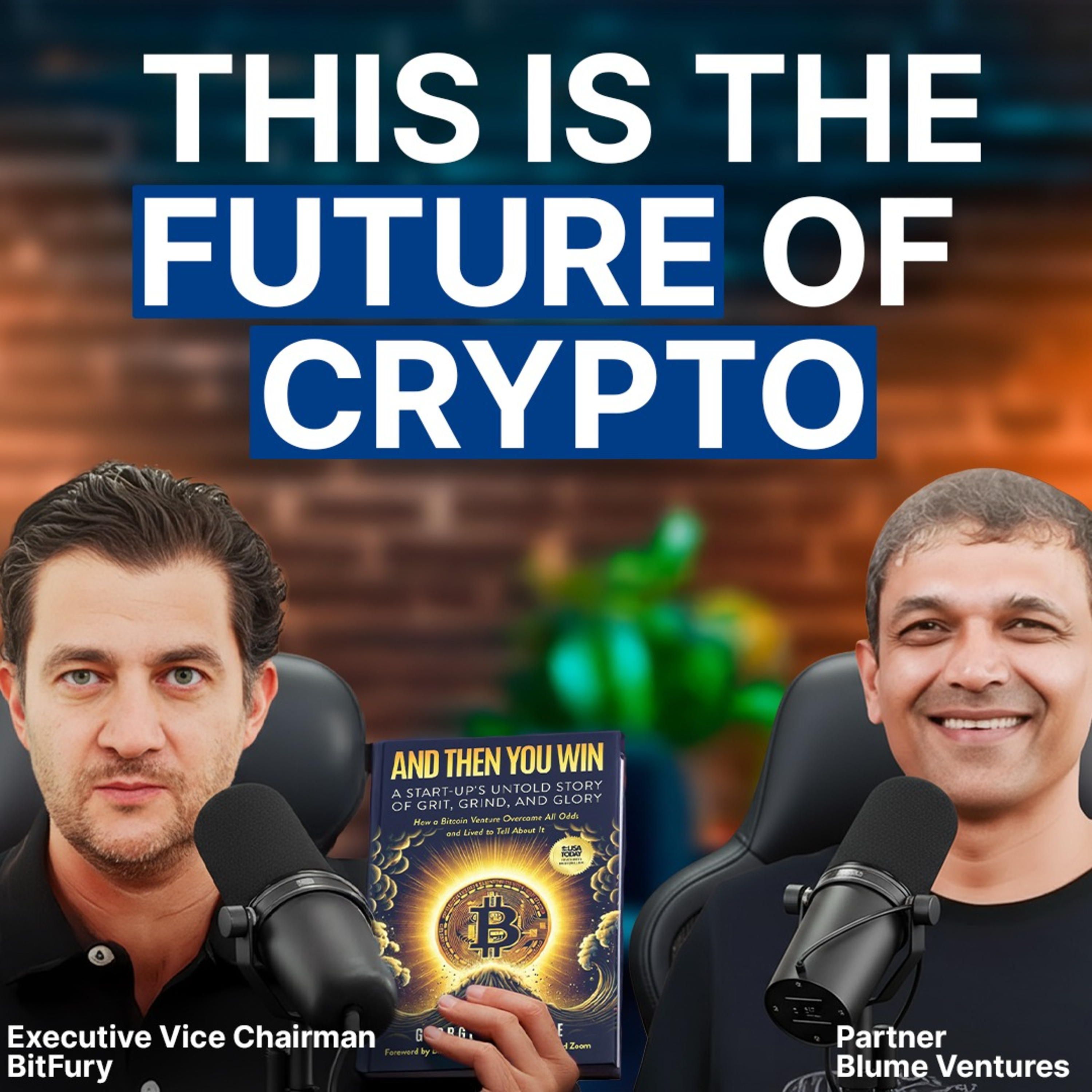
S4 Ep 5New Swaraj, New Money: Inside the BitFury Revolution | S4 E5 | Destiny Avenged | Weekday Ep
Imagine betting your entire fortune on Bitcoin back in 2012, when it traded at $20 a coin.That's what George Kikvadze, Executive vice chairman of Bitfury, did in 2012 when most people dismissed Bitcoin as “magic internet money”.On the surface, it sounded like pure madness. Newly fired from his hedge fund job, family thinking he’s lost it, the asset trading below a dollar just two years earlier. Who does that?But as George puts it, “The comfort level of owning Bitcoin is directly proportional to the time you spend studying it.” He studied math, cryptography, monetary history. He watched the Cyprus banking crisis play out, saw accounts frozen, and connected it back to his childhood in the Soviet Union where his parents’ savings evaporated overnight.That’s where his core thesis came from:- Global debt levels keep rising- Governments and central banks will keep printing more fiat money- Bitcoin, with 21 million hard-capped supply and declining issuance, is an asymmetric bet on that lack of discipline.This understanding allowed him to hold his nerve when everyone thought he was crazy — and then use that belief to build, not just trade.Along with his co-founder Val, he built not one but THREE bitcoin unicorns from the BitFury Universe, choosing to focus on enabling mining versus hoarding coins.And George still isn’t done. On CNBC, he doesn’t say Bitcoin might hit a million dollars. He says it will — driven by the same forces he’s been tracking for over a decade.Karthik sits down with George to unpack his journey, his book “And Then You Win”, and his $1M Bitcoin thesis on the latest weekday episode of the Blume Podcast.Chapters:0:00 — Trailer1:05 — The $20 Bet, Reinvention & Early Bitcoin Lessons8:19 — CNBC Moment, Chip Failure & Bitfury’s Toughest Crisis13:32 — Why Bitcoin Still Wins: Scarcity, Debt & DisciplineSeason Partners: IDFC FIRST Bank and Ultrahuman (Blume portco)

S4 Ep 5The Man Who Built 3 Bitcoin Unicorns | S4 E5 | Destiny Avenged | Weekend Ep
He bought Bitcoin at $20 when everyone called it "Magic Internet Money"Today, he’s built an empire worth billions, powering Bitcoin’s infrastructure — from mining chips to AI data centers. In this weekend episode of Season 4: Destiny Avenged, George Kikvadze, Vice Chairman of BitFury, joins Karthik to unpack how a Soviet-born financier, laid off the day Satoshi released the Bitcoin whitepaper, reinvented himself — and helped turn belief into billion-dollar reality. This isn’t a crypto hype story — it’s a founder playbook: of betting on people, building infra when speculation was easier, and surviving brutal cycles with integrity intact.In this episode:🔹 From Soviet collapse → Hedge fund layoff → Bitcoin’s “whitepaper day”🔹 The $20 Bitcoin bet that built Bitfury🔹 Backing Ukraine’s chip-design geniuses & mining 600,000 BTC🔹 Surviving a 99% chip-yield crash and rebuilding from scratch🔹 The trade-off: Hold 300,000 BTC or build real companies🔹 Spinning out billion-dollar ventures: Hut 8, Cipher Mining, cooling & AI chips🔹 Why “Gandhi would’ve loved Bitcoin” — truth, self-reliance, decentralization🔹 Why infra outlasts price charts and hype cycles00:00:00 - Gandhi, Truth & Self-Reliance → Bitcoin 00:01:07 - Setup & Stakes: $20 BTC, job loss, Bitfury, the book00:04:41 - Reinvention arc: crisis, travel, Cyprus shock → all-in00:10:23 - Gandhi lens & India hook: 1 BTC = 1 crore sats 00:16:54 - Finding Val & the Ukrainian “textbook” chip team00:26:39 -CNBC ‘this thing mines Bitcoin’ → 16nm yield crisis & fix00:35:32 - The 300k BTC trade-off; spin-outs: Hut 8, Cipher, AI 00:40:09 - Macro playbook, $1M BTC thesis, 21 lessons, rapid-fire, wrap Season Partners: IDFC FIRST Bank and Ultrahuman (Blume portco)---------------------------------------The views and opinions expressed in this content are for informational purposes only and do not constitute investment, legal, tax, or accounting advice, nor an offer or solicitation to buy or sell securities. References to companies, transactions, or market events are illustrative only and should not be construed as endorsements or statements of value. Any views expressed by individuals are solely their own and do not represent those of Blume Ventures, its affiliates, partners, or employees. Past performance is not indicative of future results.
S4 Ep 4The 25-Year Grind Behind India’s Travel Revolution: The MakeMyTrip Story | S4 E4 | Destiny Avenged | [Weekend Episode]
Revenue drops 96%—overnight. Rival complaints try to derail your IPO at the 11th hour. SARS, 9/11, and the dotcom bust threaten bankruptcy. Competitors burn cash to steal your market share. Most founders walk away when faced with even one of these. Deep Kalra and Rajesh Magow didn’t flinch. In this weekend episode of the Blume Podcast, host Karthik Reddy sits down with Deep and Rajesh, MakeMyTrip’s co-founders, to dissect the habits and decisions that forged a generational company. Each crisis forced them to reinvent the company. When rivals unleashed aggressive hotel discounts, Rajesh and Deep faced a hard choice: match the losses and jeopardize the P&L, or hold firm and watch market share slip away. Instead, they rewrote the playbook—leveraging their balance sheet to acquire Goibibo and redBus, shifting the battle from pricing gimmicks to market leadership by scale. When COVID wiped out 96% of revenue overnight, the easy path would have been to lay people off. Instead, they kept their team intact and focused—incubating products like Ad Tech and a new Homestay platform to be ready for recovery. They even pitched in to help build Aarogya Setu for the government, keeping employees engaged, and purposeful despite unprecedented disruption. While others pulled back and went on defense, Deep and Rajesh seized the moment—doubling down on investments, driving fresh innovation, and using every crisis as a springboard for transformation instead of retreat. Their journey is a masterclass in resilience—a blueprint for building a Rs 60,000 crore internet powerhouse against all odds.00:00:00 Origin and courage to start MakeMyTrip00:12:58 Early India internet reality and liberalization context00:22:56 Early funding rounds and capital discipline00:27:53 Picking metrics that matter (conversion focus)00:40:20 Deciding to go public and post-IPO reflections00:43:28 IPO comps (Expedia, Ctrip) and sprint to listing00:51:15 Pre-IPO hurdle: competitor complaint to the SEC00:59:56 Strategic shift: Goibibo and redBus acquisitions01:11:16 COVID shock: revenue down 96% and survival playbook01:30:14 Closing insights: repeat rate and retention as north starsPartners: IDFC FIRST Bank and Ultrahuman (Blume portco)------------------------------------------The views and opinions expressed in this content are for informational purposes only and do not constitute investment, legal, tax, or accounting advice, nor an offer or solicitation to buy or sell securities. References to companies, transactions, or market events are illustrative only and should not be construed as endorsements or statements of value. Any views expressed by individuals are solely their own and do not represent those of Blume Ventures, its affiliates, partners, or employees. Past performance is not indicative of future results.
S4 Ep 4[Weekday Ep.] Building a ₹60,000 Cr Internet Travel Company: MakeMyTrip’s 25-Year Playbook | S4 E4 | Destiny Avenged | Podcast
MakeMyTrip is a Rs 60,000 crore company that, by all logic, shouldn't exist. It launched in 2000 when India's internet barely worked. Connections dropped, credit cards failed online, and most people used the internet to browse, not buy. The company faced a triple whammy of the dotcom bust, 9/11, and SARS in the early days, each hitting global travel harder than the last. Two decades later, COVID brought travel to a grinding halt—again. In between, deep-pocketed competitors launched brutal price wars that burned cash faster than revenues could grow. Desktop UX was losing ground to nimbler competitors. Hotels remained stubbornly offline—despite celebrity campaigns, the fragmented market wouldn't budge. Yet, against every odd, they didn't just survive—they rewrote India's internet story. In this weekday episode of the *Blume Podcast*, Karthik Reddy sits down with co-founders Deep Kalra and Rajesh Magow to chat about building a generational company through two decades of chaos. Here's what makes their story remarkable: They grew 25× between 2005 and 2010—from near-bankruptcy in 2001, working without salaries in a ₹12/sqft mezzanine office where their knees touched when they swiveled around.They rang the Nasdaq bell in 2010—when Indian internet companies going public on a foreign exchange was virtually unheard of. 75-80% of employees held ESOPs that turned into real wealth practically overnight. They bet the company on mobile-first when it mattered—abandoning desktop entirely to win on app UX, never looking back. They survived a quarter with 96% revenue drop during COVID—and emerged with ruthless cost discipline and a stronger product, while keeping their best talent motivated when competitors were hiring aggressively. As Rajesh says, "Every crisis gives you the license to fix what you couldn't before."Today, MakeMyTrip is worth over ₹60,000 crore—but for its founders, it's still Day 1. With India's macro tailwinds and AI reshaping travel, the next chapter might just be their biggest yet. Season Partners: IDFC FIRST Bank and Ultrahuman (Blume portco)00:00:00 — Episode intro & the audacious idea (Karthik asks why MakeMyTrip even existed)00:00:14 — Early internet reality & the browsing-not-booking problem (Deep on why people used the web to look, not buy)00:13:25 — Existential crisis: 2001 triple-whammy, buybacks & layoffs (the toughest moment)00:15:52 — Breakout growth: 2005–2010 (25x growth and key fundraises)00:24:22 — COVID shock: revenue down 96% & the culture/cost reset that followed00:26:47 — The future: AI, mobile, staying paranoid — what comes next for MakeMyTrip---------------------------------------Disclaimer: The views and opinions expressed in this content are for informational purposes only and do not constitute investment, legal, tax, or accounting advice, nor an offer or solicitation to buy or sell securities. References to companies, transactions, or market events are illustrative only and should not be construed as endorsements or statements of value. Any views expressed by individuals are solely their own and do not represent those of Blume Ventures, its affiliates, partners, or employees. Past performance is not indicative of future results.
S4 Ep 3 | S4 E3 | Weekend Ep. | Becoming the AI power grid for the world - E2E Networks | Destiny Avenged | Podcast
What does it take to build India’s “power grid” for the AI era? In this weekend episode of Season 4: Destiny Avenged, Karthik sits down with E2E Networks’ (Fund I vintage) co-founders (and married duo) Tarun Dua & Srishti Baweja to learn how they went from a cloud hosting company to becoming India's AI infrastructure pioneers. From racking servers by hand and winning a ₹30,000 first check, to an SME IPO oversubscribed 70×, to a bold 2018 pivot into NVIDIA GPUs—this is the rarely told, India-first cloud story that kept compounding when no one was watching. You'll hear:How E2E “invented cloud before ‘cloud’ was a word”—uniform infra, contractless compute, and brutal cost disciplineWhy they went public early (2018 SME IPO) and what really changes post-IPOThe inside story of their 2018 GPU bet (V100s) and the tailwinds from COVID to GenAISovereign AI, software built in India, and keeping scrappy DNA while scalingCandid founder talk: debt vs equity, losing a 30–35% revenue client overnight, and husband-wife co-founder dynamics 00:00 - Intro04:40 - The ₹30,000 first cheque and why contractless compute mattered08:30 - Word-of-mouth growth: CarDekho → Flipkart and 100% YoY without salespeople16:20 - Building as a married founding team — lanes, trust, and obsession23:45 - Surviving without VC: ₹3 Cr equity + debt discipline33:00 - 2018 SME IPO — why they went public early and what changed after44:15 - The GPU pivot: betting on NVIDIA V100s before the AI wave56:20 - Sovereign AI: building data, hardware, and software stacks in India🔔 Don’t miss more stories of grit and destiny in Season 4: Destiny Avenged. Listen on Spotify: https://open.spotify.com/episode/2U3H...Listen on Apple Podcasts: https://podcasts.apple.com/in/podcast...Sponsors: IDFC FIRST Bank and Ultrahuman (Blume Portco)Disclaimer: The views and opinions expressed in this content are for informational purposes only and do not constitute investment, legal, tax, or accounting advice, nor an offer or solicitation to buy or sell securities. References to companies, transactions, or market events are illustrative only and should not be construed as endorsements or statements of value. Any views expressed by individuals are solely their own and do not represent those of Blume Ventures, its affiliates, partners, or employees. Past performance is not indicative of future results.

S4 Ep 3[Weekday Ep.] | S4 E3 | Powering India’s Sovereign AI: The E2E Blueprint | Destiny Avenged | Podcast
They began with a ₹30,000 cheque and a bold idea: build India’s contractless compute cloud. In 2009, while hyperscalers dominated, Tarun Dua and Srishti Baweja grewE2E Networks through customer obsession, frugality, and relentless uptime —laying early foundations for an India‑first approach to AI and data sovereignty.From word‑of‑mouth wins to an SME IPO oversubscribed 70x, and from designing servers in‑house to an early GPU pivot, this Weekday episode traces the near‑misses, the breakthroughs, and the discipline behind E2E’s rise.Married cofounders, public‑market pressures, and a builder’s mindset — this is the real story behind India’s original cloud underdogs and their role in a future where critical AI infrastructure is built at home.Highlights- The ₹30,000 first customer and the contractless compute play - How startup referrals (CarDekho → Flipkart, etc.) created a flywheel - Why the IPO wasn’t an exit but an accountability milestone- Betting on GPUs before the AI wave and what that changed- Building culture: frugality, reliability, and clear roles as cofoundersChapters: 00:00 – Intro01:29 – Tarun’s Silicon Valley moment: seeing “Flickr of videos” become YouTube05:52 – CarDekho becomes a pivotal customer, leading to Flipkart07:30 – From SME IPO to main board: the shift in pressure14:44 – COVID, GPUs & stock surge: how ESOPs created millionaires🔔Don’t miss more stories of grit and destiny in Season 4: Destiny Avenged. Sponsors: IDFC FIRST Bank and UltrahumanDisclaimer: The views and opinions expressed in this content are for informational purposes only and do not constitute investment, legal, tax, or accounting advice, nor an offer or solicitation to buy or sell securities. References to companies, transactions, or market events are illustrative only and should not be construed as endorsements or statements of value. Any views expressed by individuals are solely their own and do not represent those of Blume Ventures, its affiliates, partners, or employees. Past performance is not indicative of future results.

S4 Ep 2S4 E2 [Weekend Episode] | From 5 Acres to ₹2100 Cr: Sula’s Wine Revolution 🍷 | Destiny Avenged | Blume Podcast
What does it take to turn five acres of Nashik grassland into a ₹2100 Cr wine empire?In this weekend’s episode of the Blume Podcast, Karthik sits down with Rajeev Samant, the founder who left Oracle and Silicon Valley in the 1990s to build something India had never seen before—an Indian wine brand that could compete globally. With no background in farming or winemaking, Rajeev relied on conviction, curiosity, and a willingness to think differently. From experimenting with grapes in his backyard to drafting Maharashtra’s groundbreaking wine policy, from surviving high-interest loans to launching India’s first wine tourism experience—his journey is a masterclass in grit and long-term vision.Today, Sula commands over 60% of India’s wine market, hosts 3.5+ lakh visitors a year, and has put Indian wine on the global stage. Rajeev’s story shows how bold ideas, backed by relentless execution, can build not just a company but an entire industry.🎧 Join host Karthik Reddy as we explore how one man made wine mainstream in a whiskey-drinking nation—and built a brand now valued at over ₹2100 Cr.Chapters: 0:00 – "Why a lunatic tried making wine in whiskey land"2:15 – "From Oracle in Silicon Valley to Nashik farmlands"5:40 – "Stanford lessons: question authority, embrace entrepreneurship culture"9:10 – "Quitting tech to chase something meaningful back home"13:00 – "Spotting Nashik’s Napa-like microclimate for wine grapes"16:30 – "The first scrappy experiment fermenting grapes into wine"20:45 – "Drafting Maharashtra’s landmark Grape Processing Policy in 2001"24:55 – "Surviving debt, bootstrapping, and building patiently for decades"30:20 – "Sula’s dominance: 60% share, 3.5 lakh visitors yearly"36:05 – "Challenges that stop India from becoming a 10x wine market"43:15 – "Why Sula went public and the realities post-IPO"50:40 – "Building a culture of autonomy and sustainability at Sula"This season of Destiny Avenged is brought to you by IDFC FIRST Bank and Ultrahuman.DisclaimerThe views, opinions, data and information expressed in our podcasts, videos, blogs, articles or any other written or verbal form (the “Content”) are for informational and discussion purposes only. They do not constitute investment advice, a recommendation, an offer, or a solicitation to buy or sell any securities, nor should they be relied upon for any investment decision. References to specific companies, transactions, or market events are illustrative and not endorsements.Blume Ventures, its affiliates, partners, or employees may hold investments in some companies or sectors mentioned. Such references do not imply recommendations or bias. Views expressed by individuals are their own and do not represent those of Blume Ventures or its affiliates.While we use sources believed to be reliable, we make no warranties regarding accuracy or completeness. Past performance is not indicative of future results. Nothing here should be construed as legal, tax, accounting, or investment advice. Seek independent professional guidance before acting on any information.Transmission or use of this Content does not create a relationship between you and Blume Ventures. All rights reserved.
S2 Ep 2[Weekday Episode] Rajeev Samant: The “Crazy” Founder Who Put Indian Wine on the Map | S4 E2 | Destiny Avenged | Blume Podcast
From Oracle to India’s Wine Revolution: Rajeev Samant of Sula VineyardsIn this episode of the Blume Podcast (Season 4: Destiny Avenged), Karthik Reddy sits down with Rajeev Samant, the visionary behind Sula Vineyards, to unpack how one man’s “crazy” idea in the 90s turned into India’s largest wine brand and a cultural phenomenon.Armed with a Stanford degree and zero background in farming or viticulture, Rajeev walked away from Silicon Valley to plant the seeds of an entirely new industry in Nashik. From fermenting his first experimental batch at home, to co-authoring Maharashtra’s wine policy, to building India’s first wine tourism destination—Rajeev’s story is one of grit, patience, and conviction.We explore:🍇 The early “lunatic” days of introducing wine to a whiskey-dominated India🏡 Building India’s first wine tourism hub at Sula📈 Navigating debt, policy battles, and eventually, a successful IPO🌍 How Sula put Indian wine on the global map🚀 Why today’s entrepreneurs have it easier—and what lessons endureThis conversation is more than just the story of Sula. It’s about reimagining what’s possible when you follow conviction over convention.🔔 Don’t miss more stories of grit and destiny in Season 4: Destiny Avenged.Sponsors This season is brought to you by IDFC FIRST Bank and Ultrahuman.🎧 Listen to the full episode now and toast to the cradle of Indian wine with us at Sula!Blume Venture Investment Manager LLP (“Blume Ventures”) Disclaimer:The views, opinions, data and information expressed in our podcasts, videos, blogs, articles or any other such written or verbal form (the “Content”) are provided solely for informational and discussion purposes and they do not constitute investment advice, a recommendation, an offer, or a solicitation to buy or sell any securities, nor should they be relied upon as the basis for any investment or other decision. References in the Content to specific companies, transactions (including mergers, acquisitions, or exits), or market events are illustrative in nature and should not be construed as endorsements or statements of value.Blume Ventures, its affiliates, partners, or employees may, from time to time, hold investments in some of the companies or sectors mentioned, whether in a professional or personal capacity. Such references are incidental and do not imply any recommendation, conflict of interest, or bias. Any views or opinions expressed by individuals in the Content are solely their own and do not represent those of Blume Ventures, its affiliates, partners, or employees.While we endeavour to use sources we believe to be reliable, Blume Ventures makes no representation or warranty, express or implied, regarding the accuracy, completeness, or timeliness of any information contained in the Content. Past performance is not indicative of future results, and market conditions may change without notice. We assume no liability for the interpretation and/or use of the Content contained on our website, nor does it offer any warranty of any kind, either expressed or implied in relation to such Content.Nothing contained in the Content should be construed as legal, tax, accounting, or investment advice. You should seek independent professional advice before acting on any information contained herein. Blume Ventures expressly disclaims any liability arising from reliance on the Content, or from any errors or omissions therein.The above stated, the Content is not intended to be and you should not consider the content or information contained therein to be an advertisement, solicitation, inducement or invitation for a relationship. Transmission, receipt or use of this Content, does not constitute nor create a relationship between us and you.All rights reserved.
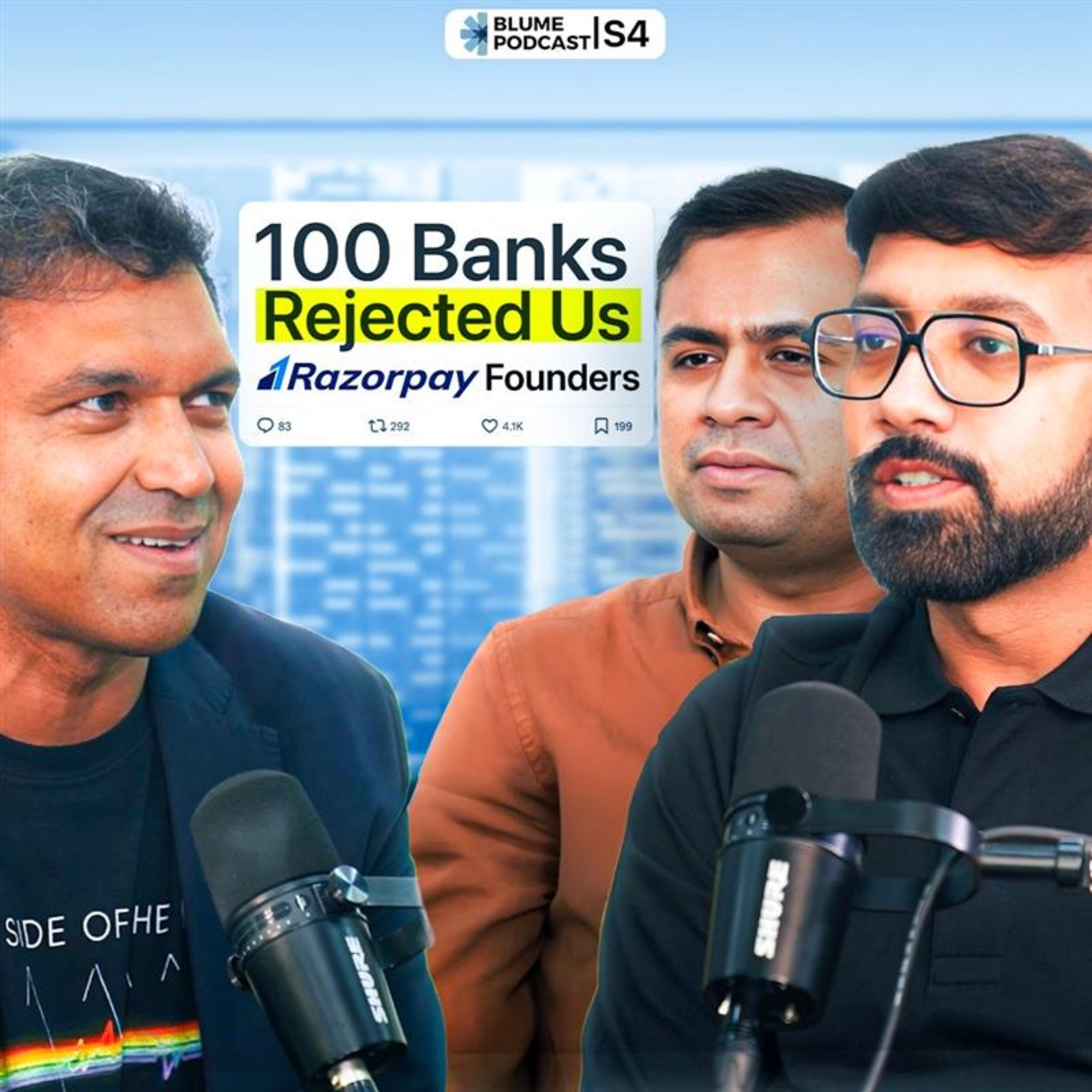
S4 Ep 1S4 E1 | How Two Coders Built a $7.5 Billion Fintech | Destiny Avenged
Razorpay’s founders are no strangers to podcasts. But most conversations stop at scale, valuation, or IPO chatter. This one is different.On the Blume Podcast, Harshil Mathur and Shashank Kumar sit down with Karthik Reddy to walk through the raw Razorpay journey—the rejections, near-dead ends, and scrappy hacks that shaped India’s payments backbone.You’ll hear stories rarely told elsewhere: how they built coding culture at IIT Roorkee’s SDS Labs (raising money from the college itself and even sneaking in “presentation monitors” to get approvals), how a simple crowdfunding side-project revealed the broken state of India’s online payments, and why they were turned away by ~100 bankers before one “yes” finally came—with a condition of a ₹25 lakh security deposit, funded by Shashank’s grandfather.Beyond the anecdotes, this is a deep dive into what it takes to build regulated infrastructure in India:If you’ve only heard the polished Razorpay story, this episode offers the unvarnished version: two coders, relentless grit, and the mindset shift from “startup survival” to building an enduring institution.Listen on Spotify: https://open.spotify.com/show/227rW4Ee4ob6wRT8U7pJ8s?si=c9a3bca90e394dd3Apple Podcasts: https://podcasts.apple.com/gb/podcast/blume-podcast/id1651800944#IndianStartups #Entrepreneurship #VentureCapital #BlumenVentures #StartupJourney #IndianTechBrought to you in partnership with IDFC First Bank and Ultrahuman (Blume Fund III portco).Blume Venture Investment Manager LLP (“Blume Ventures”) Disclaimer: The views, opinions, data and information expressed in our podcasts, videos, blogs, articles or any other such written or verbal form (the “Content”) are provided solely for informational and discussion purposes and they do not constitute investment advice, a recommendation, an offer, or a solicitation to buy or sell any securities, nor should they be relied upon as the basis for any investment or other decision. References in the Content to specific companies, transactions (including mergers, acquisitions, or exits), or market events are illustrative in nature and should not be construed as endorsements or statements of value.Blume Ventures, its affiliates, partners, or employees may, from time to time, hold investments in some of the companies or sectors mentioned, whether in a professional or personal capacity. Such references are incidental and do not imply any recommendation, conflict of interest, or bias. Any views or opinions expressed by individuals in the Content are solely their own and do not represent those of Blume Ventures, its affiliates, partners, or employees.While we endeavour to use sources we believe to be reliable, Blume Ventures makes no representation or warranty, express or implied, regarding the accuracy, completeness, or timeliness of any information contained in the Content. Past performance is not indicative of future results, and market conditions may change without notice. We assume no liability for the interpretation and/or use of the Content contained on our website, nor does it offer any warranty of any kind, either expressed or implied in relation to such Content.Nothing contained in the Content should be construed as legal, tax, accounting, or investment advice. You should seek independent professional advice before acting on any information contained herein. Blume Ventures expressly disclaims any liability arising from reliance on the Content, or from any errors or omissions therein. The above stated, the Content is not intended to be and you should not consider the content or information contained therein to be an advertisement, solicitation, inducement or invitation for a relationship. Transmission, receipt or use of this Content, does not constitute nor create a relationship between us and you.All rights reserved.
S4 E0: Blume Podcast Season 4 Kickoff | The Story Behind "Destiny Avenged"
In the season opener of the Blume Podcast Season 4, Karthik Reddy, co-founder and Partner, takes us behind the scenes of the season’s theme: "Destiny Avenged." Drawing inspiration from the popular Avengers theme from the Marvel Cinematic Universe and startup culture, this episode explores what it truly takes to build category-defining companies in India's unique startup landscape."Destiny Avenged" speaks to the journey of entrepreneurs who not only chase their calling but vindicate their audacious dreams against all odds. It's about founders who were told "this can't be done in India" or "this is only for large conglomerates," yet persevered to prove skeptics wrong. From wine pioneers to EV revolutionaries, Karthik reveals how founders like those behind Sula Vineyards, Razorpay, and Ather Energy defied skeptics to create first-of-their-kind businesses. This episode isn't just about celebration – it's a deep dive into why true startup success should be measured in decades, not years, and paints an inspiring vision of India's entrepreneurial future through 2030. Whether you're a founder, investor, or startup enthusiast, this conversation offers valuable lessons on resilience, innovation, and the power of staying true to your destiny.Brought to you in partnership with IDFC First Bank and Ultrahuman (Blume Fund III portco).Featured Companies: Sula Vineyards, Razorpay, Ather Energy, IDfy, Niqo, Pixxel, and more#IndianStartups #Entrepreneurship #VentureCapital #BlumenVentures #StartupJourney #IndianTechBlume Venture Investment Manager LLP (“Blume Ventures”) DisclaimerThe views, opinions, data and information expressed in our podcasts, videos, blogs, articles or any other such written or verbal form (the “Content”) are provided solely for informational and discussion purposes and they do not constitute investment advice, a recommendation, an offer, or a solicitation to buy or sell any securities, nor should they be relied upon as the basis for any investment or other decision. References in the Content to specific companies, transactions (including mergers, acquisitions, or exits), or market events are illustrative in nature and should not be construed as endorsements or statements of value. Blume Ventures, its affiliates, partners, or employees may, from time to time, hold investments in some of the companies or sectors mentioned, whether in a professional or personal capacity. Such references are incidental and do not imply any recommendation, conflict of interest, or bias. Any views or opinions expressed by individuals in the Content are solely their own and do not represent those of Blume Ventures, its affiliates, partners, or employees.While we endeavour to use sources we believe to be reliable, Blume Ventures makes no representation or warranty, express or implied, regarding the accuracy, completeness, or timeliness of any information contained in the Content. Past performance is not indicative of future results, and market conditions may change without notice. We assume no liability for the interpretation and/or use of the Content contained on our website, nor does it offer any warranty of any kind, either expressed or implied in relation to such Content.Nothing contained in the Content should be construed as legal, tax, accounting, or investment advice. You should seek independent professional advice before acting on any information contained herein. Blume Ventures expressly disclaims any liability arising from reliance on the Content, or from any errors or omissions therein.The above stated, the Content is not intended to be and you should not consider the content or information contained therein to be an advertisement, solicitation, inducement or invitation for a relationship. Transmission, receipt or use of this Content, does not constitute nor create a relationship between us and you.All rights reserved.

S3 Ep 10S3 E10 | Neeraj Chopra: From Haryana's Hinterlands to Olympic Gold | Inspiring a Billion Hearts
Join us for an inspiring conversation with Neeraj Chopra, India’s first athletics Gold medalist, and Karthik Reddy, co-founder and Managing Partner of Blume Ventures. In this podcast, Neeraj shares his journey from a small village in Haryana to standing on the Olympic podium, while reflecting on the challenges, sacrifices, and triumphs along the way. Get an inside view on what it takes to be a champion. Timestamps: 0:00 - Intro 3:21 - Neeraj Chopra’s youth and childhood 9:17 - Neeraj Chopra’s love for farming 13:01 - First big win 16:00 - The pressure to represent the country 19:15 - How did Neeraj feel after winning gold at the Olympics 21:15 - Neeraj’s Silver at the Paris Olympics 27:55 - Difference between individual and team sports 35:08 - Who is the supporting cast to Neeraj? 41:00 - What is Neeraj Chopra’s routine? 43:44 - How does Neeraj Chopra deal with disappointment and pressure? 48:26 - Why did Neeraj Chopra choose to represent STAGE? 52:50 - State of sports infrastructure in India 57:07 - Rapid fire questions This episode is packed with valuable insights into the life of a world-class athlete, touching on mental resilience, discipline, and the importance of a strong support system. A special thank you to IDFC First Bank for being a partner for this podcast and STAGE (Blume Fund IV) for helping us connect with Neeraj Chopra and for generously providing their office space to record this episode.
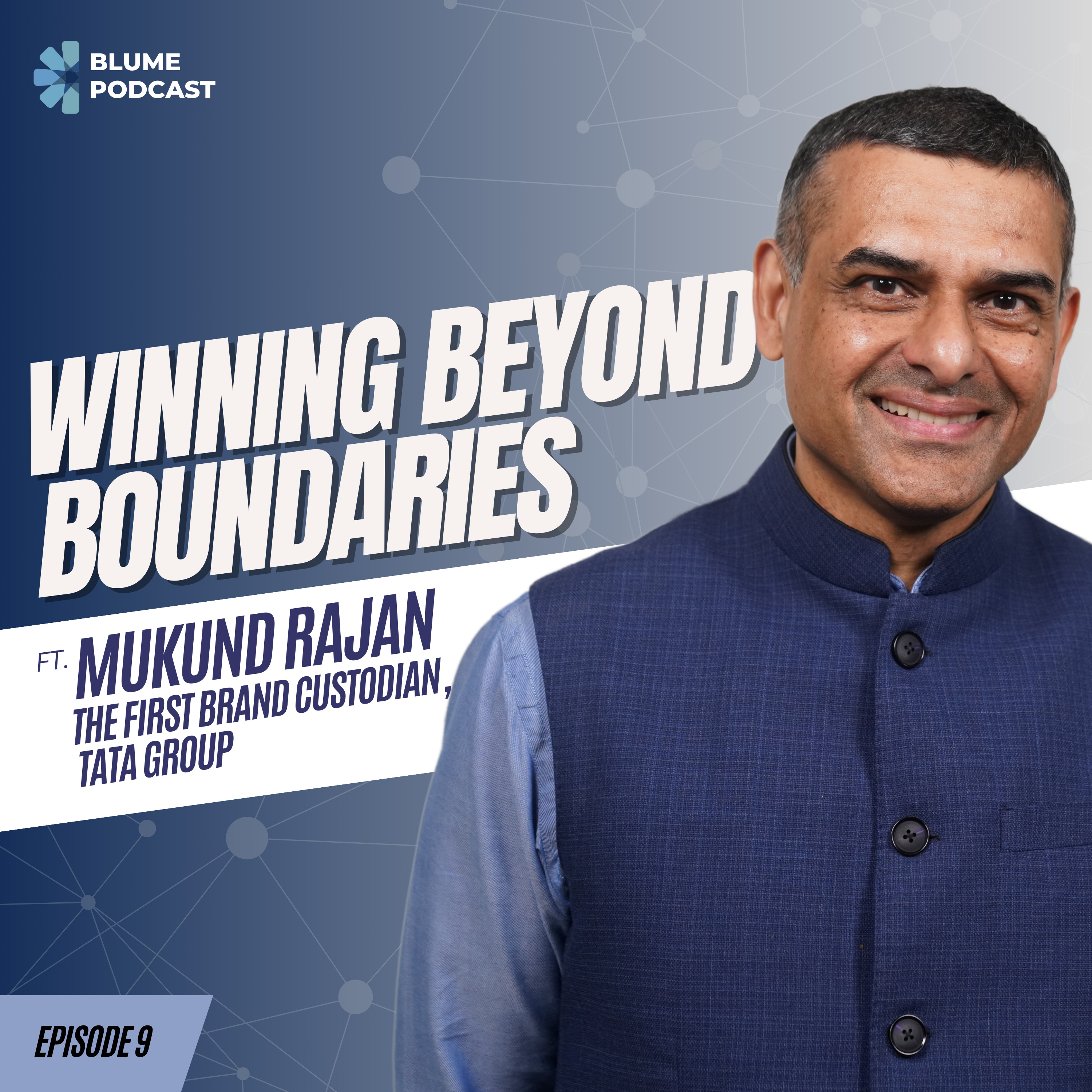
S3 Ep 9S3 E09 | Tata’s $400 Billion Secret: Ethics, Innovation & Leadership ft. Mukund Rajan
Join us for episode nine of the Blume Podcast - Winning Beyond Boundaries, featuring Dr. Mukund Rajan, former brand custodian of the Tata Group, in conversation with Karthik Reddy of Blume Ventures. In this chat, Dr Rajan takes us through his inspiring journey, from his early days as a Rhodes Scholar at Oxford to his impactful 23-year tenure at Tata. He shares personal anecdotes and insights that reveal the human side of corporate leadership, including his close working relationship with Ratan Tata and the lessons learned along the way. Key topics discussed: Dr Rajan's unique childhood experiences across various countries The evolution of the Tata Group and its global impact Personal stories that highlight Ratan Tata's leadership style The history, purpose, and challenges of Tata Administrative Services (TAS) in building sustainable leadership Dr Rajan’s role in launching one of India's premier airline services 'Vistara' , and its future Balancing tradition with innovation in today’s business landscape Insights into sustainable leadership and the future of Indian business Don’t miss this inspiring conversation with Dr. Mukund Rajan as he shares valuable leadership lessons, behind-the-scenes stories from the Tata Group, and his vision for a sustainable future. Whether you’re an aspiring entrepreneur, a business leader, or simply curious about the legacy of one of India’s most iconic companies, this episode has something for everyone. Thanks to our annual partner IDFC First Bank and Sponsor Ultrahuman for making this episode possible. Chapters: [00:00:00] Introduction and Mr. Tata’s Letter to Vajpayee [00:01:08] Welcome and Guest Introduction [00:03:27] Early Life and Diverse Exposure [00:06:17] Family Influence and Dinner Table Conversations [00:08:11] Tata Journey and First Encounter with Ratan Tata [00:12:31] Evolution of Tata Administrative Services (TAS) [00:17:11] Fun Anecdotes about Ratan Tata [00:22:05] Tata Group’s International Ambitions [00:27:06] Framework for Strategic Decisions [00:34:27] Passion for Design and Architecture [00:41:00] Founding the Tata Opportunities Fund [00:44:04] TCS IPO: A Masterclass in Corporate Governance [00:50:18] Chief Ethics Officer and Overhauling the Code of Conduct [00:55:30] Origins and Future of Vistara [01:03:14] Launching ECube and ESG Focus [01:09:11] Rhodes Scholarship and Philanthropic Efforts [01:11:01] Rapid Fire Questions
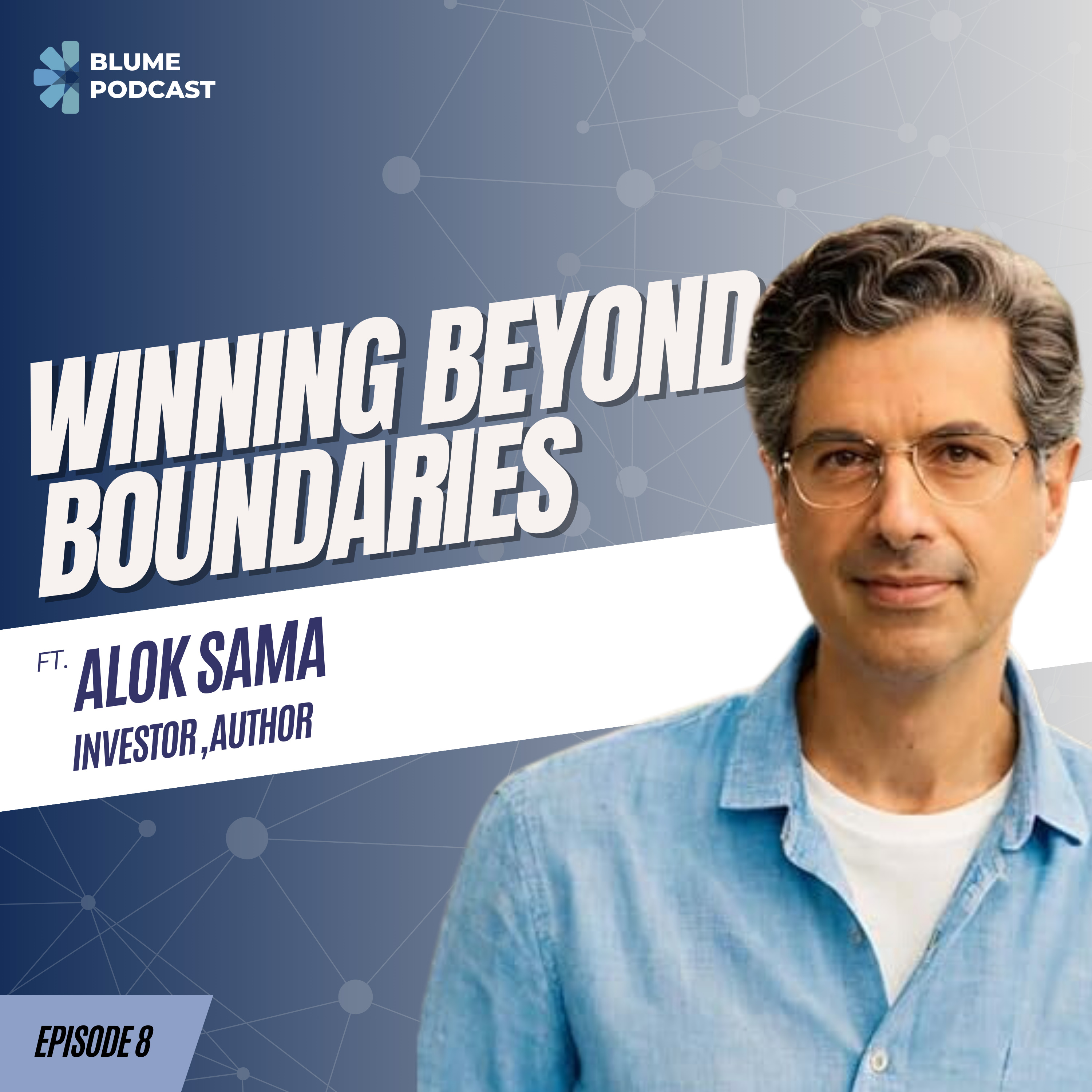
S3 Ep 8S3 E08 | Masa, Mergers, and Making It Big ft. Alok Sama, SoftBank’s Deal Whisperer
Join us for Episode 8 of Season 3 of the Blume Podcast - Winning Beyond Boundaries, featuring Alok Sama, former President and CFO of SoftBank Group International in conversation with Karthik Reddy of Blume Ventures. In this fascinating conversation, Alok shares insights from his remarkable journey across global finance and technology, including orchestrating some of the largest deals in tech history, like the $59B Sprint-T-Mobile merger and SoftBank's $34B acquisition of ARM. Drawing from his recent book "The Money Trap: Lost Illusions Inside the Tech Bubble," Alok offers a candid look at working alongside Masayoshi Son during SoftBank's most volatile period, unpacks three decades of experience in investment banking and VC, and shares valuable lessons on navigating complex global deals. From his early days in Delhi to shaping Morgan Stanley's TMT practice in Asia-Pac and eventually becoming one of Masa Son's closest advisors, Alok's story is a masterclass in understanding global markets and tech ambition. Currently a senior advisor at Warburg Pincus, he continues to influence the intersection of technology and finance. Key topics discussed: The journey from Delhi to global finance Behind-the-scenes of major tech deals Working with Masayoshi Son The future of technology and AI India's evolving tech ecosystem Lessons from a career in global dealmaking Timestamps: 0:00 - Introduction and early SoftBank days 1:05 - Welcome and guest introduction 2:54 - Growing up in Delhi and early influences 6:42 - Indian influences and cricket passion 9:46 - Journey into mathematics and finance 15:33 - Serendipity in career choices 20:57 - Writing "The Money Trap" 24:01 - Morgan Stanley years and global deals 31:05 - Understanding mega-deals 38:40 - Masayoshi Son's unique qualities 41:49 - Vision Fund and investment strategy 47:57 - Future of technology and AI 54:19 - India's startup ecosystem 1:03:12 - Current role at Warburg Pincus 1:05:03 - Rapid fire questions This episode is brought to you by IDFC First Bank, a committed partner to India's startup community. IDFC First Bank continues to foster innovation and support entrepreneurship, playing a crucial role in the growth journey of numerous startups, including many Blume portfolio companies. #BlumePodcast #TechInvestment #StartupIndia #VentureCapital #SoftBank #GlobalFinance #Leadership #MasayoshiSon #TechDeals #InvestmentBanking #IndianStartups #GlobalTech #Innovation #Entrepreneurship #BusinessLeadership #VCFunding #TechnologyInvestment #DigitalTransformation #StartupGrowth #MergersAndAcquisitions #TechIndustry #BusinessStrategy #InvestorInsights #FutureOfTech #AITechnology #IndianTech
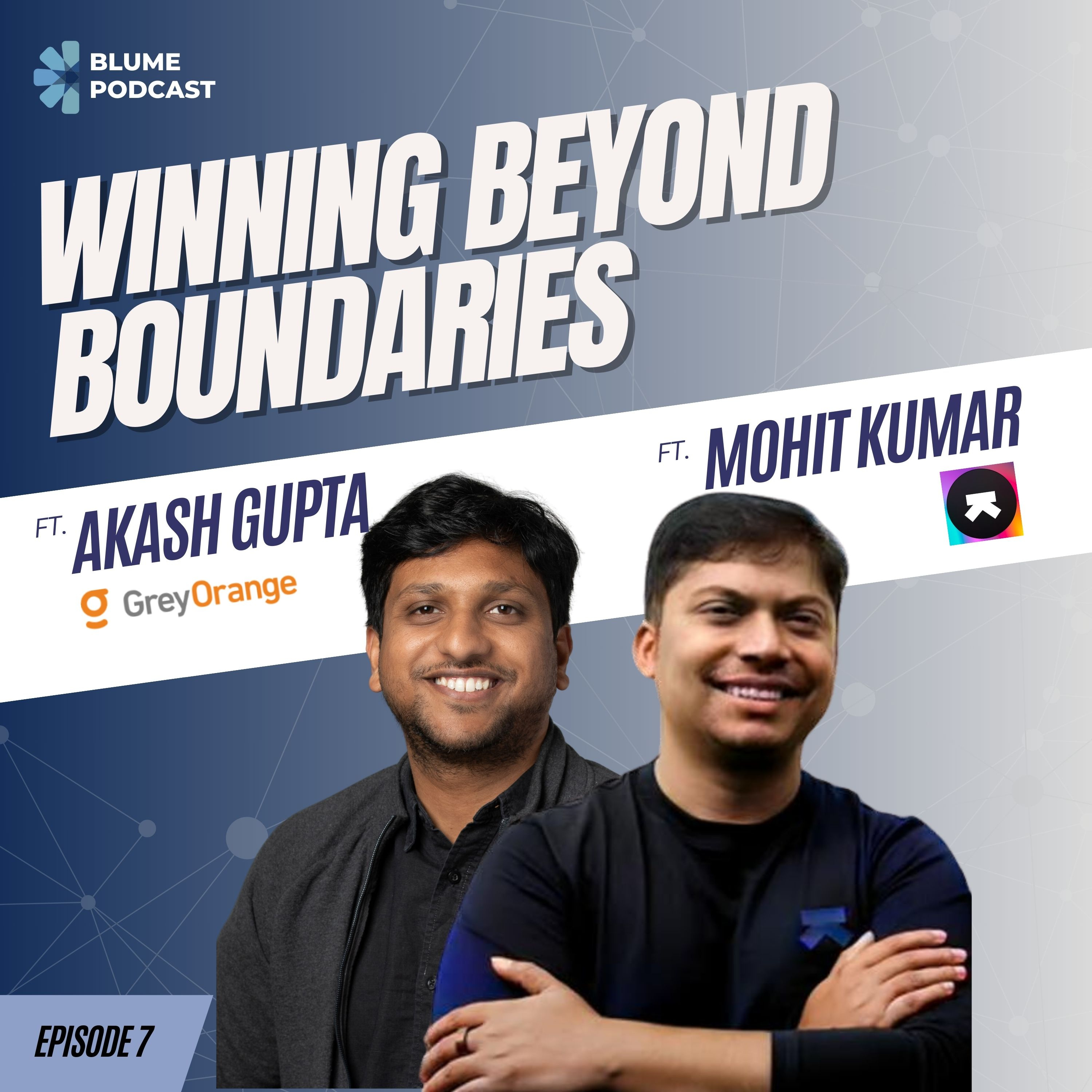
S3 Ep 7S03 E07 |Revolutionizing Make in India: ft. Akash Gupta of GreyOrange & Mohit Kumar of Ultrahuman
In the 7th episode of the Blume Podcast, the host Karthik Reddy, co-founder and Partner at Blume Ventures, dives deep into the fascinating world of hardware innovation with two extraordinary founders who have redefined what it means to build hardware companies from India. Join us as we host Akash Gupta (CEO & Co-founder, GreyOrange) and Mohit Kumar (CEO & Co-founder, Ultrahuman). Both GreyOrange and Ultrahuman are part of Blume's portfolio. From revolutionizing warehouse automation to pushing the boundaries of personal health monitoring, these founders share their incredible journeys of building globally respected companies from India. Learn about their challenges, strategies, and insights on: • Building hardware companies in India • Global market expansion • Manufacturing and talent challenges • Future of hardware innovation • Building world-class teams Part of Blume Podcast Season 3: "Winning Beyond Boundaries" 🔍 Key Timestamps: 00:00 Introduction & Guest Introductions 03:02 Early Hardware Journey in India 08:40 Building GreyOrange: From College Project to Global Company 15:30 Ultrahuman's Evolution & Hardware Development 21:45 Manufacturing Challenges & Building in India 32:15 Going Global: Market Expansion Strategies 43:20 Building Teams & Culture in Hardware Companies 52:40 Hardware Talent Ecosystem in India 1:03:30 Future of Hardware Manufacturing 1:12:45 Advice for Hardware Founders 1:20:30 Rapid Fire Round 1:23:40 Future Vision & Closing Thoughts
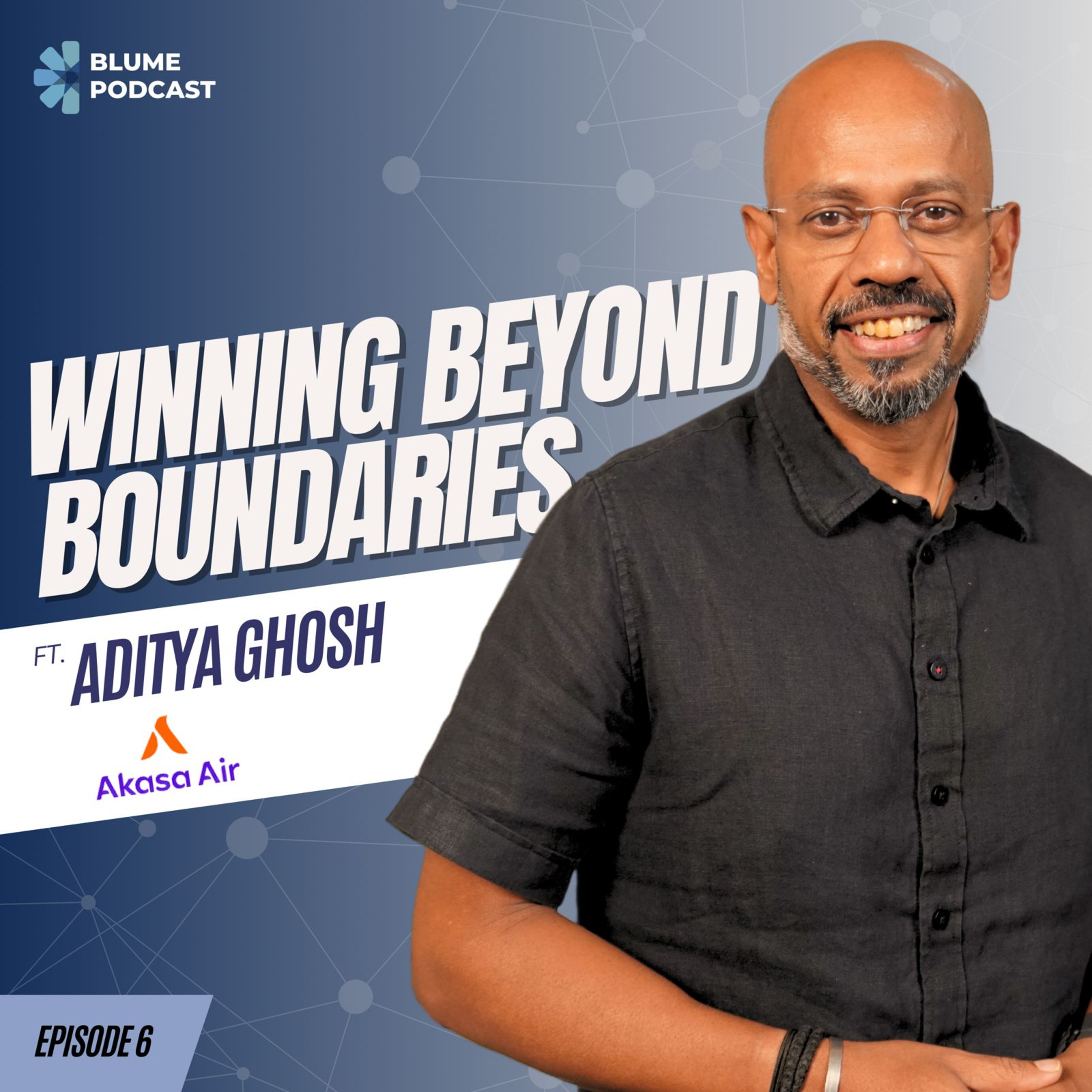
S3 Ep 6S03 E06 | From IndiGo to Akasa: Aditya Ghosh on Winning in Indian Aviation #blumepodcast
Join us for an insightful conversation with Aditya Ghosh, one of India's most dynamic business leaders, in the 6th episode of Blume Podcast S3, Winning Beyond Boundaries. From leading IndiGo Airlines' meteoric rise to becoming India's largest airline, to now steering Akasa Air's ambitious journey, Aditya shares invaluable insights into building successful businesses in India. In this candid discussion with Karthik Reddy, Aditya reveals:• His journey from a young lawyer at JSA to becoming IndiGo's CEO• The unique partnership between Rahul Bhatia and Rakesh Gangwal that created IndiGo• Critical business strategies that helped IndiGo maintain profitability in a challenging industry• How structural advantages built on Day 1 shaped IndiGo's success• The importance of empathy and people management in building great organizations• His current role in shaping Akasa Air's future• Insights into India's aviation market potential and growth opportunities Aditya also shares personal stories about his upbringing in a government colony, his early career decisions, and the values that have shaped his leadership style. His perspective on India's consumption story and the opportunities it presents for entrepreneurs makes this episode a must-watch for business leaders and aspiring entrepreneurs alike. Key Timestamps:[02:36] - Episode Introduction [04:01] - Views on Entrepreneurship [06:47] - Growing Up Years [13:20] - Path to Law [17:18] - First Job Experience [19:26] - The InterGlobe Connection [21:43] - Birth of IndiGo [24:27] - Seizing Opportunities [30:14] - Leadership Philosophy [34:08] - Building Culture [42:03] - IndiGo's Success Formula [44:54] - Cost Management [46:40] - Strategic Advantages [50:56] - The Akasa Journey [53:46] - Future of Aviation [57:39] - The Founding Partnership [01:02:10] - Rapid Fire Round [01:09:42] - Closing Thoughts Special thanks to our Season Partner IDFC First Bank for supporting this series. #BusinessLeadership #IndianAviation #Entrepreneurship #StartupIndia #BusinessPodcast #IndiGo #AkasaAir #Leadership #Aviation #IndianBusiness
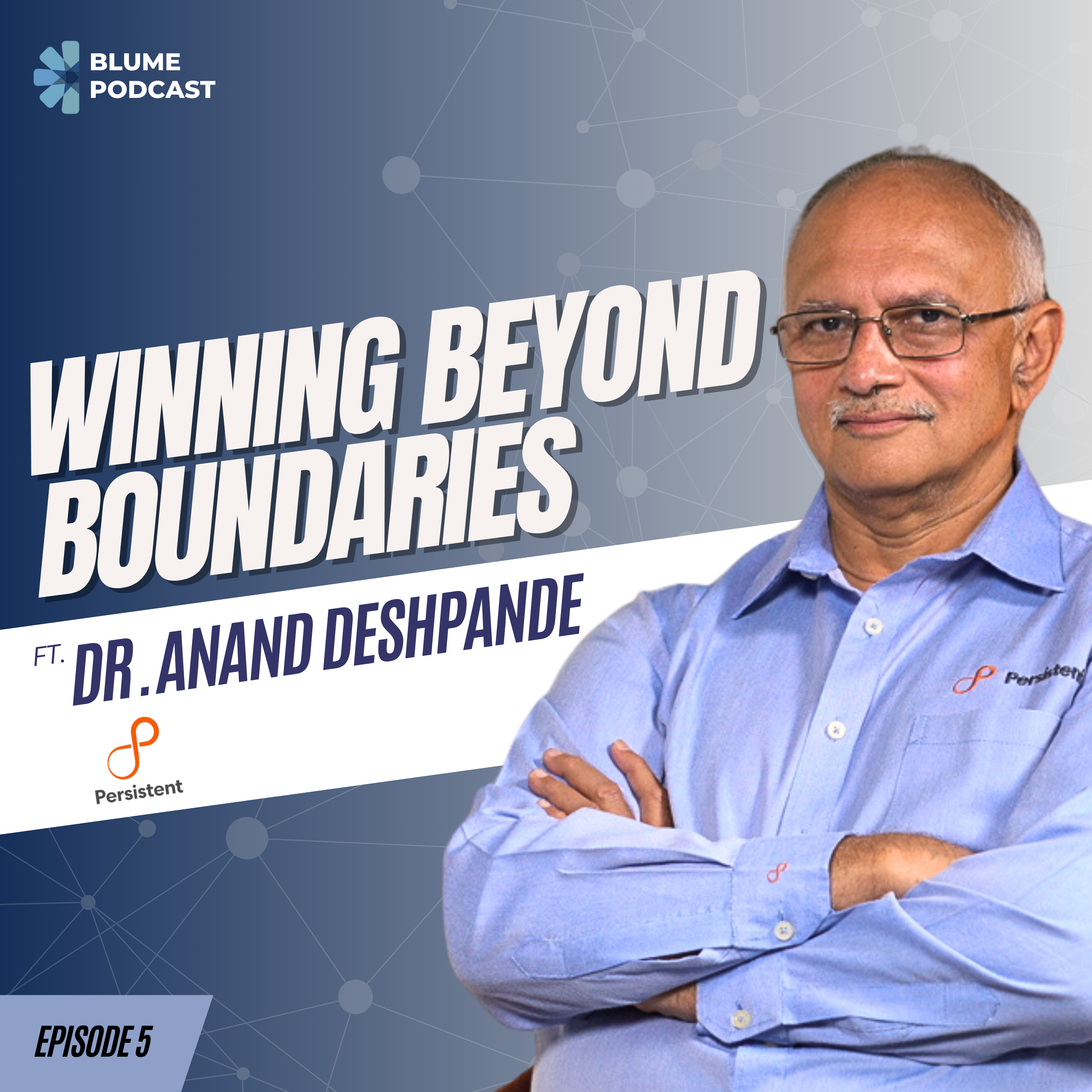
S1 Ep 5S3 E05 | How Anand Deshpande Built a $9 Billion Powerhouse: The Persistent Systems Story
This episode provides a deep dive into the journey of Persistent Systems, from its humble beginnings to becoming a global technology powerhouse. Anand Deshpande shares insights on company growth, leadership transitions, and the importance of adapting to market changes. His perspectives on entrepreneurship, technology trends, and social impact offer valuable lessons for aspiring entrepreneurs and established business leaders alike. Key Topics: Persistent’s growth journey and evolution through multiple business orbits Entrepreneurship challenges, scaling strategies, and leadership transitions Technology trends, including the impact of AI on the IT industry Social impact initiatives and philanthropic efforts Global expansion and understanding international markets Timestamps 00:03:18 - Early life 00:06:55 - IIT Kharagpur experience 00:09:59 - US education and work 00:19:34 - Founding Persistent Systems 00:26:29 - Indian IT challenges in 1990 00:32:00 - Business model evolution 00:35:25 - Persistent’s S orbits 00:39:46 - Transition from ‘My’ to ‘Our’ company 00:56:18 - VC funding and IPO 01:01:42 - Philanthropic initiatives 01:08:16 - Research projects 01:14:12 - AI impact on IT 01:16:36 - Rapid-fire questions
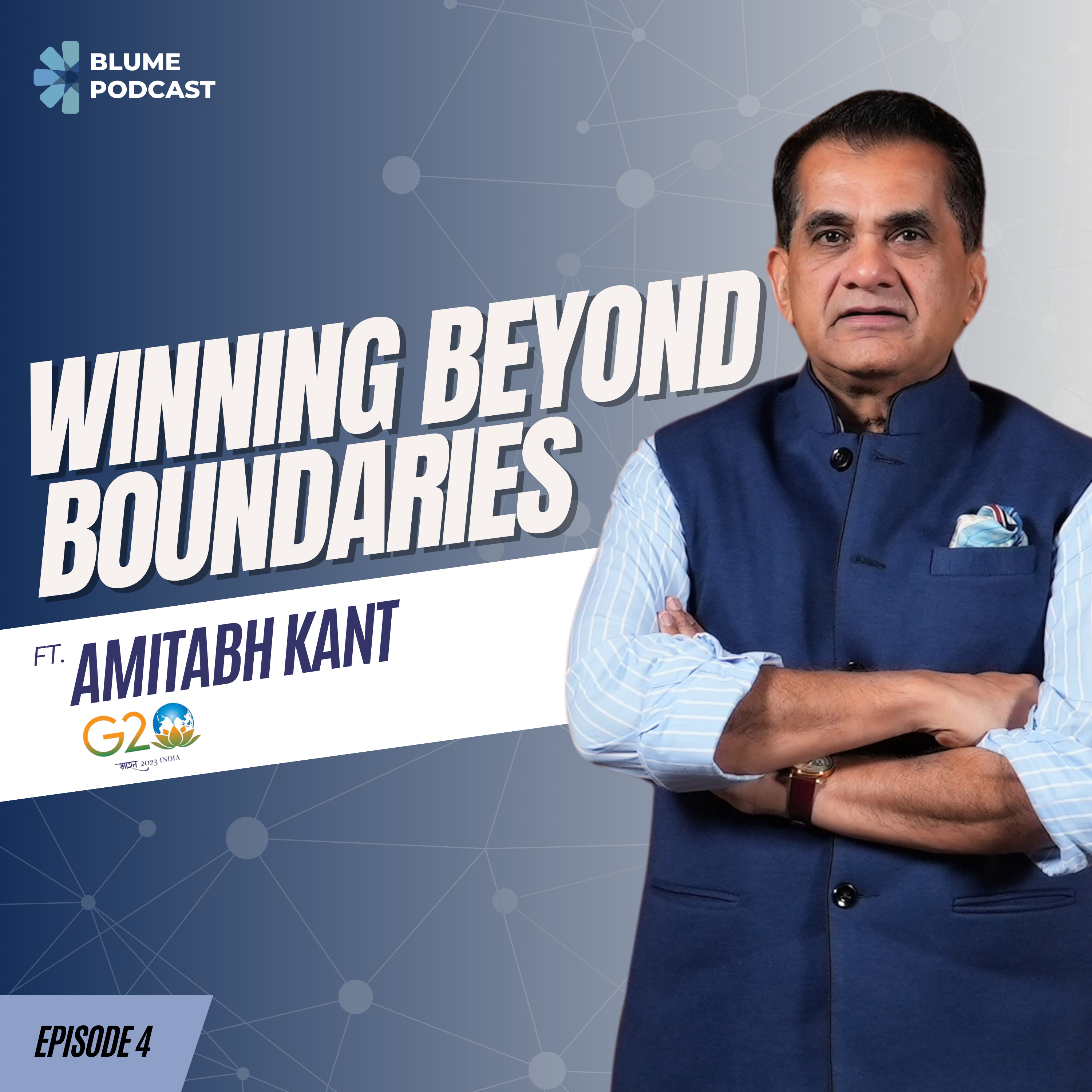
S3 Ep 4S3 E04 | Amitabh Kant's Vision for India's Transformation: From Incredible India to Invincible India
This episode offers invaluable insights into India's economic transformation and its aspirations to become a global powerhouse. Amitabh Kant shares his diverse experiences from grassroots development in Kerala to high-level diplomatic roles, highlighting his contributions to India's progress. His perspectives on entrepreneurship, digital infrastructure, and global competitiveness provide inspiration and practical advice for entrepreneurs aiming to build world-class businesses from India. Chapters: 00:02:41 - Early career in Kerala 00:04:55 - Transforming the lives of fishermen in Kerala 00:07:24 - "God's Own Country" campaign 00:10:54 - Public-private partnership in Kerala 00:14:05 - Hosting Prime Minister Vajpayee 00:15:52 - The Incredible India campaign 00:18:40 - Ease of doing business ranking 00:21:02 - Startup India initiative 00:23:15 - Impact of Digital Public Infrastructure 00:26:49 - Global market penetration for India's growth 00:29:30 - Vision for India as a developed nation by 2047 00:32:46 - Key qualities of team members 00:34:48 - Leadership skills 00:36:48 - Navigating cross-border cultural differences 00:37:45 - Rapid-fire questions
S3 Ep 3S3 E03 | Scaling Marico to Rs 86,000 cr global brand | Harsh Mariwala’s Winning Formula
This episode offers invaluable insights into building a successful FMCG business from scratch and expanding it globally. Harsh Mariwala shares his journey of transforming a family commodity business into Marico, a leading multinational FMCG company. His experiences and perspectives on talent management, innovation, brand building, and international expansion provide inspiration and practical advice for entrepreneurs aiming to create world-class businesses from India. Key Topics: Harsh Mariwala’s early years and transition from family business to building Marico The journey of converting unbranded commodities to powerful consumer brands Importance of talent acquisition and retention in building a successful company Strategy of focusing on categories where MNCs were not strong Going public early and its impact on corporate governance and growth International expansion strategy starting with neighbouring countries Acquisition approach to enter new markets like Egypt, South Africa, Vietnam Transforming Saffola from an edible oil to a health brand Approach to D2C brands Creation of ASCENT Foundation to support and mentor entrepreneurs Marico Innovation Foundation's work in accelerating innovative startups Leadership transition and importance of clear roles post stepping down as CEO Hiring practices and key leadership qualities sought in executives Advice for entrepreneurs on grit, continuous learning, and creating differentiation #HarshMariwala #Marico #FMCG #IndianEntrepreneurs #GlobalBrands #Innovation #InternationalExpansion #D2CBrands #Entrepreneurship 00:58 - Early days and family business background 07:36 - Lessons for entrepreneurs from Harsh Mariwala's experience 10:00 - Transition from unbranded to branded products 15:43 - Importance of talent and learning in building Marico 17:55 - Portfolio strategy and becoming market leaders 22:58 - Acquisition strategy and international expansion 26:05 - Going public and its impact on Marico 29:57 - Transforming Saffola into a health brand 32:54 - Views on D2C brands and Marico's approach 38:50 - International expansion strategy 45:32 - Future of international expansion 48:51 - Transitioning out of CEO role 52:40 - Hiring practices and leadership qualities 53:50 - ASCENT Foundation for promoting entrepreneurship 55:35 - Marico Innovation Foundation 58:16 - Rapid fire questions
S3 Ep 2S3 E02 | Game, Set, Match: Mahesh Bhupathi's Story of Global Domination
Guest: Mahesh Bhupathi, Tennis Grand Slam Champion and Entrepreneur Host: Karthik Reddy, Co-founder of Blume Ventures This episode provides insights into what it takes to achieve global success and excel on the world stage. Mahesh shares his journey from a young tennis prodigy to a Grand Slam champion, offering valuable lessons applicable to both sports and business. His experiences and perspectives on talent development, overcoming challenges, and transitioning to entrepreneurship provide inspiration and practical advice for anyone aiming to win beyond boundaries. Key Topics: Mahesh's early years and his father's influence on his tennis career The journey to becoming a Grand Slam champion Partnership with Leander Paes and dynamics of doubles tennis Memorable Olympic experiences and dealing with tough losses Physical and mental discipline required for a long-lasting tennis career Transition from professional tennis to entrepreneurship Founding and growth of Globosport Insights on talent spotting and development in tennis The state of Indian tennis and challenges in building a robust ecosystem Parallels between sports and entrepreneurship Advice for aspiring tennis players and young entrepreneurs Current focus on sports management #MaheshBhupathi #Tennis #IndianTennis #LeanderPaes #Olympics #GrandSlam #FrenchOpen #Wimbledon #USOpen #AustralianOpen Timestamps [00:00:00] - Introduction [03:17] - Mahesh talks about his early tennis beginnings and his father's influence. [05:25] - Discussion on the importance of family support in sports careers. [06:59] - Mahesh recounts his first visit to Wimbledon at age 12. [11:58] - The story of Mahesh's first Grand Slam win in mixed doubles at the 1997 French Open. [16:03] - Mahesh discusses his partnership with Leander Paes. [18:49] - Insights into why the ‘Indian Express’ clicked and how they overcame challenges [21:23] - Discussion of the 2004 Athens Olympics match against Federer and Allegro [24:52] - Mahesh talks about recovering from tough losses, particularly the Athens Olympics bronze medal match [28:22] - Discussion on maintaining physical and mental discipline over a long career [31:10] - The importance of continuous learning and improvement in tennis [33:19] - Mahesh shares insights on coach-player relationships [36:30] - Discussion on the right time to retire [38:48] - Mahesh talks about starting Globosport and his business endeavours. [41:39] - Insights into spotting tennis talent and the state of Indian tennis. [45:41] - Discussion on developing a system for nurturing tennis talent in India. [49:05] - Rapid-fire questions

S3 Ep 1S3 E01 | Building a $3.5B global giant, from Chennai to NASDAQ | Ft. Girish Mathrubootham - Blume Podcast
Guest: Girish Mathrubootham, Founder and Executive Chairman of Freshworks Host: Karthik Reddy, Co-founder of Blume Ventures This episode provides deep insights into building a global SaaS company from India, scaling a startup to a public company, and the future of SaaS with AI. Girish Mathrubootham shares his journey from Chennai to NASDAQ, embodying the spirit of "Winning Beyond Boundaries." Key Topics: Girish's background, including his admiration for Superstar Rajinikanth and early entrepreneurial experiences The founding story of Freshworks (originally Freshdesk), inspired by a customer service experience Building a global SaaS company from Chennai, India, and overcoming cultural barriers Freshworks' journey from startup to NASDAQ-listed company, including key funding rounds Critical decisions in Freshworks' growth: inbound business model, multi-product strategy, enterprise sales Hiring strategies and talent development at different company stages, from campus recruitment to executive hires Experience in becoming and running a public company, likened to a "big fat Indian wedding" The impact of AI on SaaS and Girish's decision to focus on AI as Executive Chairman The growth of the Indian SaaS ecosystem and initiatives like SaaSBoomi to create a "product nation" Girish's involvement in Together Fund and supporting the next generation of SaaS founders Freshworks' culture and the emergence of a "Freshworks mafia" in the startup ecosystem Girish's venture into sports with FC Madras, expanding his influence beyond tech The episode showcases how Girish Mathrubootham and Freshworks have put India on the global SaaS map, achieving a successful IPO on NASDAQ and creating a blueprint for other Indian SaaS startups. It highlights the importance of "Winning Beyond Boundaries" in building world-class products from India and nurturing the SaaS ecosystem through initiatives like SaaSBoomi. PS- Special thanks to Ultrahuman for gifting their cutting-edge rings to our guests and to IDFC First Bank for being our annual partner. Links: Blume podcast transcripts: https://blume.vc/podcasts/blume-podcast Spotify: https://open.spotify.com/show/227rW4Ee4ob6wRT8U7pJ8s?si=9e43c6b4c7d54ea0 YouTube: https://www.youtube.com/@BlumeVenturesIN/ Timestamps: 0:00 - Introduction of Girish Mathrubootham and Freshworks 2:38 - Girish talks about his love for Superstar Rajinikanth 5:55 - Early days and college friendships that backed Girish's ventures 7:31 - Girish's journey at Zoho (AdventNet) and becoming a product manager 11:57 - Origins of building global products from India 13:20 - The idea and impetus for starting Freshworks 16:23 - Early challenges in building a global company from Chennai 18:47 - Disruptive business model of Freshworks 26:55 - Getting funded by Accel and Tiger Global 36:58 - Key pivotal decisions in Freshworks' journey 39:30 - Going multi-product and choosing what to build 45:33 - Hiring and talent strategies at different stages 52:20 - Experience of becoming a public company 57:48 - Girish's decision to move to Executive Chairman role and focus on AI 1:10:52 - Motivations behind SaaSBoomi and Together Fund 1:15:43 - Pride in seeing the "Freshworks mafia" 1:16:30 - Rapid fire questions
S3 E0 | Winning Beyond Boundaries | Ft. Karthik Reddy - Blume Podcast
Karthik Reddy, Blume Ventures co-founder and host of the Blume Podcast, unveils the exciting theme for Season 3 of the Blume Podcast. Discover how Indian startups are making waves on the international stage 🌏 in this must-watch explainer video. Understand why 'Winning Beyond Boundaries' is more than just a slogan Learn about India's transition from IT services to innovative global products Hear success stories of Blume portfolio companies like Ultrahuman, Gray Orange, and Carbon Clean 🌟 Key Insights: • The surge of confidence in Indian tech and deep tech startups • How SaaS unicorns like Freshworks and Chargebee are inspiring a new generation • The rise of Indian D2C brands in global markets 💡 Karthik breaks down: The 'You ain't seen nothing yet' mindset driving Indian entrepreneurs How brand India is evolving and gaining recognition worldwide The diverse range of guests for Season 3 - from arts and sports to policymakers and startup founders 🎙️ Get ready for an inspiring season showcasing Indian innovation, entrepreneurship, and cultural impact across the globe. Subscribe now and hit the notification bell to catch every episode!
S2 Ep 10The Epilogue: Looking back at S2 of the Blume Podcast | Karthik Reddy and Rohit Kaul
We've reached the end of the road for the second season of the Blume Podcast, which was championed by its theme: the power of compounding. Karthik and Rohit discuss, analyse, and deconstruct their favourite moments from the season, which featured stalwarts like Manish Sabharwal, Nithin Kamath, and Radhika Gupta. They haven't just built companies. But rather, institutions, in their own right. Understand why Karthik encourages everyone at Blume to listen to all episodes, his utmost belief in step-function compounding, and how every founder journey is inherently unique, even if it bears similarity with others. It's been a true pleasure bringing you these conversations across industries, sectors, and domains. Tune in for episode ten, and see you very soon again!
S2 Ep 9E9. Mithun Sacheti on building CaratLane and solving for trust
Diamonds are forever.But in 2008, they also went online. In our first ever video episode of the Blume Podcast, which happens to the last episode of Season 2, Karthik Reddy sat down with Mithun Sacheti, the CEO of CaratLane who spilled some gems on the glitzy yet laborious world of being a D2C jewellery brand. In a traditionally ‘low-trust’ society like India, Mithun and his team went from his early days selling jewellery with the family-owned Jaipur Gems to becoming an indispensable part of the Titan group. The journey has is fair share of ups and downs, including a riveting conversation with Rakesh Jhunjhunwala, the topsy-turvy process of raising capital, and solving for trust through brand-building.You can find Transcripts on Blume's official website - https://blume.vc/podcasts/blume-podcast
S2 Ep 8E8. Radhika Gupta on taking the right kind of risks, rebuilding from the ground up, & being an accessible leader
Join us in this insightful episode of the Blume Podcast as Karthik engages in a candid fireside chat with Radhika Gupta, the dynamic Managing Director & Chief Executive Officer of Edelweiss Mutual Fund. Delve into Radhika's fascinating journey from a diplomatic upbringing to becoming a trailblazing entrepreneur in the financial services sector. Discover the twists and turns, the challenges faced, and the strategic decisions that led her to her current role. Gain valuable insights into the world of asset management, entrepreneurship, and the power of compounding success.
S2 Ep 7E7. R.G. Chandramogan: From Ice Cream Carts to Dairy Dominance - The Hatsun Agro Journey
Join us as we delve into the remarkable story of R.G. Chandramogan, who went from selling ice cream on pushcarts in the 1970s to becoming the chairman of India's largest private-sector dairy company, Hatsun Agro. Discover his pioneering journey in the world of dairy, entrepreneurship, and resilience. With a 7,000+ crore revenue company, Chandramogan's insights and determination to build a generational business are truly inspiring.
S2 Ep 6E6. Vinati Saraf Mutreja's Journey: Resilience, Leadership, and making chemistry cool
For the latest episode of the Blume Podcast, Vinati Saraf Mutreja of Vinati Organics takes us through her journey of growth, innovation, and resilience, leading one of India’s most respected chemical manufacturing companies that she joined all the way back in 2006.In conversation with Blume Ventures’ Karthik Reddy, Vinati spoke about the importance backward-integration in a heavily commoditised business like chemicals, why equity is the important source of capital, and some hidden insights around India’s misunderstood manufacturing industry.Later on in the episode, Vinati speaks about the changing landscape of women leadership in the corporate world and why staying healthy is more important than being successful.It’s an episode for the ages.Listen now!You can find Transcripts on Blume's official website -[https://blume.vc/podcasts/blume-podcast]Don't forget to subscribe to our YouTube channel for all our latest videos and follow the Blume Podcast on your favourite podcast app.#blumevc #podcast #vinatiorganics #chemicalmanufacturing
S2 Ep 5E5. Manish Sabharwal from TeamLease on the upside of being a second-time founder
In this episode, Manish Sabharwal from TeamLease discusses the origins of the staffing company and the key traits that contributed to its success. He shares his memories of India Life and how it eventually led to the creation of TeamLease. Additionally, he talks about the differences in decision-making between the two companies and the advantages of being a second-time founder. Manish discusses the key areas that need attention for India's development. He emphasizes the need for civil service reform, as it plays a crucial role in regulatory reform and ease of doing business. The conversation also touches upon the significance of human capital for a country's growth. Manish cites India's achievements in software exports and the pharma industry as examples of successful utilization of human capital. However, he acknowledges the need for basic school education to ensure a strong foundation for the entire population. Manish discusses the concept of balancing short-term and long-term goals, drawing on the distinction between Amanat and Jagir from his Kashmiri upbringing. He explains that Amanat refers to a trusteeship, where one is expected to pass on something in better condition to the next generation, while Jagir represents personal ownership and consumption. Drawing on this analogy, Manish highlights the importance of expanding time horizons beyond immediate gains and optimizing for long-term growth, rather than focusing solely on short-term profits by emphasizing the achievements of companies like HDFC, Infosys, and TCS, which have built lasting value through decades of consistent growth and compounding. In this conversation with Karthik B. Reddy, Manish discusses why, for long-term growth, a company should adhere to certain principles. Firstly, it should differentiate between a "baby" company poised for growth and a "dwarf" company that remains small, based on a balance between short-term and long-term goals. Manish emphasizes the importance of the cap table and funding sources to secure perpetual capital for future aspirations. Additionally, he stresses the need for cognitive diversity within the team to incorporate different perspectives and skills. Lastly, Manish advises companies to avoid making detrimental decisions, such as diversification, excessive debt, or non-compliance and recommends having safeguards in place to prevent such mistakes. Check out the entire episode for lessons on building a long-lasting business.
S2 Ep 4E4. Dinesh Agarwal of IndiaMART on Starting a Business in India During the Internet Boom
In this podcast episode, Dinesh talks to Karthik B. Reddy of Blume Ventures about his journey starting a business in India around the time the internet was first introduced there. He was passionate about doing some business that would be centered around the internet and in India. He waited for the internet to be announced in India, and as soon as the announcement was made on August 15th, 1995, he asked his manager to transfer him back to India. Dinesh also shared his thoughts on business growth and profit margins. The compounding can come to you when your margins are expanding. He encourages entrepreneurs to aspire to this kind of compounding. He also talks about the importance of having a mix of talent in a team, including those who are operationally strong and can focus on present problems, as well as those who are forward-thinking and consider future trends. On India’s growth story, he emphasizes the importance of small and medium-sized enterprises (SMEs) in creating employment and income in India. He argues that ignoring SMEs could lead to disastrous consequences for the country. Dinesh's thoughts on SMEs and the importance of employment highlight his commitment to building a successful business in India that benefits all stakeholders.
S2 Ep 3E3. Nithin Kamath of Zerodha on bootstrapping his way to build the largest online brokerage in India
In this episode, Nithin Kamath, founder and CEO of Zerodha sat down with Karthik B. Reddy, Managing Partner at Blume Ventures, to talk about building and scaling an online brokerage firm without any external capital. Nithin's idea was to attract a small niche group of active online traders, which is how Zerodha started. The company was never meant to be a large brokerage, but rather a boutique firm to cater to these traders. Nithin's journey serves as an example of the power of compounding and his ability to inspire young entrepreneurs.He emphasizes the importance of building trust before buying a financial product, which is built through word of mouth. They have worked on building trust by answering customer queries on forums and providing market intelligence.Highlighting Zerodha's self-sustainability, Nithin argues that having growth capital could have allowed them to grow faster, but also acknowledges it still happened at the same pace nevertheless minus the pressure of raising one round after the other. Nithin discusses the importance of long-term thinking in business, contrasting with other peers who focus on short-term goals. At Zerodha, the core team has been together for at least five or six years, ensuring their understanding of the business and skill sets compound over time. This approach has kept the business together, as the top hundred members are dedicated to the company's philosophies, such as treating customers right and using success to give forward.In this season of Blume Podcast, we hosted another eminent personality in the finance space, Raamdeo Agrawal of Motilal Oswal Financial Services. Check out our last episode here - https://blume.vc/podcasts/blume-podcast/raamdeo-agrawal-podcast

S2 Ep 2E2. Raamdeo Agrawal of Motilal Oswal discusses investing frameworks, betting on India, and the right reasons to start up
In the second episode of the Blume Podcast, host Karthik B. Reddy of Blume Ventures engages in a captivating conversation with Raamdeo Agrawal, Chairman and Co-Founder of Motilal Oswal Financial Services, one of India's leading financial services firms. Agrawal shares his insights on various topics, including his investment philosophy, the dangers of building a startup for the wrong reasons, and his views on the growth of India. Throughout the conversation, Agrawal emphasises the importance of being passionate about one's work and having a strong sense of purpose. He shares how he and his co-founder built their company from scratch, starting with a small office and gradually building it into a national brand. On his investing outlook, shared his experience with Bharti Airtel to discuss the value of having a framework for understanding the value of a company. He also talks about the importance of creating a solid brand identity and the role that marketing plays in building a successful business, and how Jagdeep Kapoor of Samsika Marketing inspired him. The conversation concludes with Agrawal offering some advice to startup founders. He emphasises the importance of having a clear vision and patience in building a sustainable business instead of focusing on short-term returns and a temporary valuation bump. Watch this space for more.
S2 Ep 1E0. Karthik Reddy and Rohit Kaul talk about the Power of Compounding
S2 E0. Karthik Reddy and Rohit Kaul talk about the Power of CompoundingBlume PodcastAugust 02, 202300:20:58S2 E0. Karthik Reddy and Rohit Kaul talk about the Power of CompoundingAudio Player103000:00:0000:00:001x The Blume Podcast is compounding! Our new season will feature remarkable founders who have dedicated their lives to building generational companies. The focus will be on their tales of courage, anecdotes of resilience, and the stories of compounding. Why are we doing this? Because there is an urgent need to shift the narrative away from the obsession with unicorn valuations and instead highlight the importance of building sustainable and profitable organisations. Karthik B. Reddy, co-founder and managing partner of Blume Ventures, takes us through the motivations that drive an entrepreneur to persist and ride on incremental wins only to create outsized returns in the long term. Warren Buffet attributes his wealth to living in America, fortunate genetics, and compound interest. He is known as one of the best investors and wealthiest individuals globally, with a net worth exceeding $100Bn. Interestingly, almost 98% of it accumulated after his 60th birthday. This is the Power of Compounding, the overarching theme of the current season. In the trailer, we talk about how this compounding can create institutions out of companies and why these stories need to drive upcoming founders to build for the long term. Think of it as the story of the hare versus the tortoise race. Who cares about who leads when 25% or 50% of the race is done? What matters is the end outcome. And as Buffet has shown, it's clear then which path gets you favourable results. In our last season, we covered X-Unicorns. These aren’t your blue-eyed, pedigreed, get every round systematically every year or two and rapidly scale to a Unicorn status in five-six years. They didn’t fit the traditional mould of the type of Unicorn that the media was obsessed with, yet attained long-term success. Check out all the episodes here: https://blume.vc/podcasts/blume-podcast https://open.spotify.com/show/227rW4Ee4ob6wRT8U7pJ8s https://podcasts.apple.com/in/podcast/blume-podcast/id1651800944 https://podcasts.google.com/feed/aHR0cHM6Ly93d3cub21ueWNvbnRlbnQuY29tL2QvcGxheWxpc3QvNGJiMzM3MDQtNjE1Yi00MDU0LWFhZTktYWNlNTAwZmQ0MTk3L2IxZjk3NGJiLWUxMWMtNDZlYy1hNzFkLWIwMTgwMDlkZjk1Ny8xMTViMzZlYi0yNzY0LTRiZTEtYThmYy1iMDE4MDA5ZGY5ODEvcG9kY2FzdC5yc3M

S2 Ep 1E1. Peyush Bansal of Lenskart talks about clarity of purpose, customer obsession and leading with culture
In this podcast, Peyush Bansal, founder and CEO of Lenskart, India's largest eyewear company talks to Karthik B. Reddy, co-founder and managing partner of Blume Ventures, the importance of hiring the right people in building long-lasting businesses, the pathological obsession of founders to solve a particular problem, which is essential in India's small market, and balancing short-term objectives with long-term goals. Bansal built Bagskart, Watchkart, Jewelkart, before focusing his energies on Lenskart, and the disturbing statistic where said that 75% of people in India who need specs are not them helped “focus his vision.” And as a reward for his clarity of purpose, IDG Ventures was soon on board. Bansal was also inspired by Uniqlo’s growth in the West, where it managed to create differentiation in the same category of products. He gives the example of shoes: People no longer just want sports shoes. There’s one for walking, one for fast-paced running, and one for slow running. This trend is expected to continue in the future, with eyewear products being offered to cater to every single need of a consumer. Bansal also emphasizes the need for long-term thinking and sustainability in the business. They discuss the success of Maruti and the importance of considering the long-term impact of their decisions. Peyush also shares his thoughts on wealth and the influence of Indian entrepreneur Ronnie Screwvala, who has significantly impacted his outlook on life and career. For more on the importance of hiring right, check out Naveen Tewari of Inmobi’s episode on X-Unicorns. https://open.spotify.com/episode/2b0PgICcwg2DQI49zqpWay https://blume.vc/podcasts/blume-podcast/naveen-tewari-on-the-quest-for-a-purposeful-life-the-beauty-of-creating-versus-competing-and-building-a-culture-of-compounding-trust All episodes: https://open.spotify.com/show/227rW4Ee4ob6wRT8U7pJ8s https://podcasts.apple.com/in/podcast/blume-podcast/id1651800944 https://podcasts.google.com/feed/aHR0cHM6Ly93d3cub21ueWNvbnRlbnQuY29tL2QvcGxheWxpc3QvNGJiMzM3MDQtNjE1Yi00MDU0LWFhZTktYWNlNTAwZmQ0MTk3L2IxZjk3NGJiLWUxMWMtNDZlYy1hNzFkLWIwMTgwMDlkZjk1Ny8xMTViMzZlYi0yNzY0LTRiZTEtYThmYy1iMDE4MDA5ZGY5ODEvcG9kY2FzdC5yc3M
S1 Ep 9S1 E9. Naveen Tewari on the quest for a purposeful life, the beauty of creating versus competing, and building a culture of compounding trust
In the finale episode, Sanjay Nath chats up Naveen Tewari of InMobi on building two unicorns, creating an "institution" vs an organization, and not getting phased by feedback. Sanjay also shares how Naveen has been a major influence in his journey of co-founding Blume. Tune in for more.
S1 Ep 8S1 E8. Manish Taneja on Purplle’s frugality principle, short-term pains vs long-term gains, and niceness as a superpower
In this episode, Manish Taneja of Purplle tells Ashish Fafadia of Blume about the perils of moving away from your vision because "some VC told you to" and the mistakes that entrepreneurs should avoid in their journey.

S1 Ep 7S1 E7. Prashant Pitti on being curious rather than cautious, finding talent in-house, and taking the hard call of postponing a carefully planned public listing
In this episode, Karthik B. Reddy sat down with Prashant Pitti of EaseMyTrip to talk about his journey from IIT Madras and working in the US to returning to the homeland and starting up with his brothers.
S1 Ep 6S1 E6. Ashwin Damera on the wisdom of failure, the best form of fundraising, and unlearning through creative destruction
In this episode of X-Unicorns, Karthik B. Reddy of Blume Ventures sat down with Ashwin Damera of Emeritus Education about the wisdom of failure, the wrong reasons to become an entrepreneur, and the "three box approach" to build a successful business.
S1 Ep 4S1 E5. Nitish Mittersain on entering an industry that didn’t exist, aiming for the stars and landing on the moon, and success being an outcome of EQ
In this episode, Arpit Agarwal, Director at Blume Ventures, sat down with Nitish Mittersain of Nazara Technologies on running a listed gaming company. From coding at the age of seven to bouncing back from an incorrectly timed IPO listing decades later, Nitish's unconventional path to success makes him a true X-Unicorn founder.
S1 Ep 4S1 E4. Srikanth Velamakanni on the inventor’s curse, becoming comfortable with criticism, and building a client-centric data analytics company
In this episode, Sajith Pai, Director at Blume Ventures, chatted with Srikanth Velamakanni, Co-Founder, Group Chief Executive & Executive Vice Chairman at Fractal Analytics. From being wary of becoming an entrepreneur to succeeding as one for 22 (almost 23!) years now, Srikanth shares the incredible story of starting Fractal, trusting bright 20-somethings in their initial rounds of hiring, and building a people-friendly company.
S1 Ep 3S1 E3. Aniruddha Sharma on hopium, the need for more competitors in the carbon capture industry, and taking long-term passionate risks for the planet
In conversation with Karthik B. Reddy of Blume Ventures, Aniruddha Sharma of Carbon Clean talks about how he bunked IIT exams to walk the lanes of Sand Hill Road, the personal tragedy that influenced his decision to build in the climate tech space, and what made him stay the course even when there was no venture backing.
S1 Ep 2S1 E2. Niraj Singh on aspirational purchases, solving for trust, and building the most loved used car platform in India
In our maiden X-Unicorns episode, Arpit Agarwal sat down with Niraj Singh of Spinny to discuss his journey from a small town called Daltonganj to becoming a unicorn founder of an online used cars marketplace. After two failed ventures, Niraj hit on his (literal) billion-dollar area with Spinny. But how do you know your idea works? How do you keep going without the validation of venture backing? How do you make sure you hire for success? Tune in for the answers.

S1 Ep 1S1 E1. The Rise of the X-Unicorns
When first introduced into venture parlance, the definition of a Unicorn was strictly limited to a privately-held company valued at over $1 billion within a decade of its existence. In 2013, this definition applied to only a few Indian companies such as InMobi and Flipkart. It is now becoming clear that India is birthing new variants of this mythical creature - the zebras, the hippos, and the rhinos of the venture kingdom and we're calling them ‘X-Unicorns’. In this series, we celebrate founders who play it by their rules, taking unconventional, or even long-drawn-out paths to get there.