
Blind Skeleton's Three Tune Tuesday
135 episodes — Page 1 of 3
The Cemetery Blues
The Real Thing
Bell Records
The Press
Memories
Lakes
Food Glorious Food
The Beach
Musical Interpretations
Schubert
Strike!
Empire
Languages
Discovery and Gold
The American Revolution
First Times
Animal House
Games
D-Day
Double Middles
The Billy Murray Story
Victoria Day
Preventative Health (The Purge)
Cinco de Mayo
April
402
Wax Cylinders

Ep 108Easter and Passover
Spring arrives with music this week on Three Tune Tuesday, as we mark the convergence of Easter and Passover with three recordings that span the full range of what this season sounded like on early shellac. We open with a detour into pure coincidence — Vessella’s Italian Band recorded the “Blushing Maiden March” on this very date in 1911, a bright and breezy piece of light entertainment from one of Victor’s most beloved concert bands, the resident ensemble of Atlantic City’s famous Steel Pier. From there we turn to the sacred, with tenor Frederic Freemantel’s “Resurrection,” a 12-inch Red Seal recording of Oliver Holden’s great hymn tune “Coronation” — a melody so enduring it is considered the oldest American hymn tune still in continuous use, here given the full solemnity of Victor’s prestige format. We close on the other side of spring’s spiritual calendar, with Cantor Mordechai Hershman’s deeply moving “K’shimcho,” a Passover prayer recorded with Nathaniel Shilkret conducting, in which one of the golden age of chazzanut’s finest voices brings an ancient liturgical text into the modern world of recorded sound.

Ep 107Inner Peace
This week on Three Tune Tuesday, the theme is Inner Peace — inspired by a vision over the weekend. We open with a Today in History pick: on this very date in 1907, Prince’s Military Band recorded The Dream of the Rarebit Fiend for Columbia Records, a chaotic, lurching musical portrait of the nightmare state that reminds us what peace is not. From there we move to something quieter — the Revillon Trio’s 1915 instrumental recording of Somewhere a Voice Is Calling, a melody written by Arthur F. Tate on holiday in Whitby, England, in which the voice of the title goes unheard and the listener is left simply waiting, still, in the dusk. We close with one of the most hard-won declarations of peace in the entire hymn tradition: It Is Well With My Soul, recorded in 1906 by William F. Hooley and the Handel Mixed Quartet, the text written by Horatio Spafford as his ship crossed the spot in the Atlantic where his four daughters had drowned. Three recordings, three different ways of arriving at the same place — because inner peace, it turns out, is never simply given. It has to be found. Lyrics Somewhere a Voice is Calling Dusk and the shadows falling O’er land and sea; Somewhere a voice is calling Calling for me Dusk and the shadows falling O’er land and sea; Somewhere a voice is calling Calling for me Night and the stars are gleaming Tender and true; Dearest, my heart is dreaming Dreaming of you Night and the stars are gleaming Tender and true; Dearest, my heart is dreaming Dreaming of you It is Well With my Soul When peace, like a river, attendeth my way, When sorrows like sea billows roll; Whatever my lot, Thou hast taught me to say, It is well, it is well with my soul. Refrain: It is well with my soul, It is well, it is well with my soul. Though Satan should buffet, though trials should come, Let this blest assurance control, That Christ hath regarded my helpless estate, And hath shed His own blood for my soul. My sin—oh, the bliss of this glorious thought!— My sin, not in part but the whole, Is nailed to the cross, and I bear it no more, Praise the Lord, praise the Lord, O my soul! For me, be it Christ, be it Christ hence to live: If Jordan above me shall roll, No pang shall be mine, for in death as in life Thou wilt whisper Thy peace to my soul. But, Lord, ’tis for Thee, for Thy coming we wait, The sky, not the grave, is our goal; Oh, trump of the angel! Oh, voice of the Lord! Blessed hope, blessed rest of my soul! And Lord, haste the day when the faith shall be sight, The clouds be rolled back as a scroll; The trump shall resound, and the Lord shall descend, Even so, it is well with my soul.

Ep 106The Follies of War
March 24, 1918: German forces crossed the Somme during Operation Michael, Ludendorff’s great spring offensive — the war machine’s last confident lunge toward a victory that never came. In 2026, with the Trump administration dismantling alliances built on the bones of two world wars, treating the consequences of war as someone else’s problem, and marching forward with the kind of certainty that history tends to punish, it felt like a good week to reach back to the era when people were still trying to make sense of what industrialized war actually meant — and some of them were brave enough to say so. “Peter Piper” — Arthur Pryor’s Band (Victor, 1905) It sounds like a march — all brass and forward momentum and purpose. But “Peter Piper” is built on a nursery rhyme tongue-twister, a piece of music that moves with great confidence toward absolutely nothing. Arthur Pryor was the second most famous bandleader in America after Sousa, and when his band played, people stood up straight. On the anniversary of the Somme crossing, it seemed like the right way to open: all that certainty, all that momentum, built entirely on nonsense. “Stay Down Here Where You Belong” — Henry Burr (Victor, 1915) Irving Berlin wrote this in 1915, before America entered the war and before he understood which way the wind was blowing. The conceit is simple and devastating: the Devil urges his son to stay in Hell rather than venture up to the surface, because up there they’re making butchers out of brothers, and there’s more hell above ground than below. Henry Burr recorded it with the quiet conviction of a man who meant it. Within two years, America was at war, Berlin had moved on to writing songs for the troops, and this one was quietly shelved. It is the voice that said don’t go — before the drums got loud enough that nobody could hear it anymore. “Oh! It’s a Lovely War” — Courtland & Jeffries (1918) By 1918, four years in, the Somme and Verdun behind them and millions dead, two music hall performers called Courtland & Jeffries were on stage insisting that everything was absolutely fine. Every verse of this song catalogs the miseries of army life — the mud, the tinned jam, the absurdity of military hierarchy — and every verse ends with the chorus cheerfully declaring it all perfectly wonderful. It is one of the only songs of the era that got away with mocking the war while it was still being fought, by the simple trick of never technically admitting that’s what it was doing. The humor is the gap between what is said and what is meant. In 1918, that gap was the width of the Western Front.

Ep 105St. Patrick's Day
St. Patrick’s Day This week, Boneapart and Yulia talk about St. Patrick’s Day and share some songs celebrating the emerald isle. Mother Machree There’s a spot in my heart which no colleen may own there’s a depth in my soul never sounded or known There’s a place in my mem’ry my heart that you fill no other can take it no one ever will CHORUS Oh I love the dear silver that shines in your hair and the brow that’s all furrowed and wrinkled with care I kiss the dear fingers so toil worn for me Oh God bless you and keep you Mother Machree Every sorrow or cure in the dear days gone by was made bright by the light by the smile in your eye like a candle the burns in the window at night you fond love has cheered my and guided me right. The Wearing of the Green O Paddy dear, and did you hear the news that’s going round? The Shamrock is forbid, by laws, to grow on Irish ground No more St. Patrick’s day we’ll keep, his colour last be seen For, there’s a bloody law agin the Wearing of the Green. Oh! I met with Napper Tandy, and he took me by the hand, And he says; How is Poor Auld Ireland, and does she stand? She’s the most distressed Country that ever I have seen For, they are hanging men and women for the Wearing of the Green. And since the colour we must wear, is England’s cruel red, Auld Ireland’s sons will ne’er forget the blood that they have shed. Then take the Shamrock from your hat, and cast it on the sod It will take root, and flourish still, tho’ under foot ’tis trod. When the law can stop the blades of grass from growing as they grow. And when the leaves, in Summer time, their verdure does not show. Then, I will change the colour I wearin’ my cabbeen But, till that day, please God ! I’ll stick to the Wearing of the Green. But if, at last, her colours should be torn from Ireland’s heart Her sons, with shame and sorrow, from the dear old soil will part I’ve heard whispers of a Country that lies far beyond sea, Where rich and poor stand equal, in the light of Freedom’s day. O Erin! must we leave you driven by the tyrant’s hand Must we ask a Mother’s blessing, in a strange but happy land Where the cruel Cross of England’s thraldom never to be seen But where, thank God! we’ll live and die, still Wearing of the Green. Ireland Must be Heaven, for my Mother Came From There I’ve often heard my daddy speak of Ireland’s lakes and dells, The place must be like Heaven, if it’s half like what he tells; There’s roses fair and shamrocks there, and laughing waters flow; I have never seen that Isle of Green, But there’s one thing sure I know. Ireland must be Heaven, for an angel came from there, I never knew a living soul, one half as sweet or fair, For her eyes are like the star light, And the white clouds match her hair, Sure Ireland Must be Heaven, For My Mother Came From There. I’ve pictured in my fondest dreams old Ireland’s vales and rills, I see a stairway to the sky, formed by her verdant hills; Each wave that’s in the ocean blue just loves to hug the shore, So if Ireland isn’t Heaven, then sure, It must be right next door.

Ep 104The Blues
This week Yulia and Boneapart talk, not sing, The Blues. We discuss some history and share two very fantastic Blues songs that come from different backgrounds. Of course, we also play a song “Released on this Date In History.” Songs Irish Hearts Artist: Fred Van Eps (banjo solo, with orchestra) Composer: Henry Frantzen Arranger: Everett J. Evans Recorded: March 10, 1916, New York Label: Columbia, catalog number A2283 Matrix: 46487, Take 00 Format: 10-inch disc Other title: “March and Two-Step” Flip side: “Pearl of the Harem” (Harry P. Guy / Fred Van Eps), same session Anticipatin’ Blues Southern Negro Quartette Recorded June 30, 1921, New York Columbia A3444, Matrix 79920, Take 4 Flip side: “I’m Wild About Moonshine” (Turner Layton / Henry Creamer) Composer: Billy James / Jean Harmon Format: Male vocal quartet, unaccompanied Lyrics I’ve been waiting ever so long, watching and praying for you, for you. Say if you know that my love is gone. What are you going to do? Don’t keep me worrying you. I’m tired of being alone. You hear me stating, I’m tired of waiting. You’d better worry back home, back home, of God’s laws. Tired of waiting, gonna steal the pain. It’s gonna flow, flow, flow. I’m getting worried, I’m starting to hurry. Hearing of my words, every so low, too low, too low. But what you’re telling me, I always thought that. I’ve been waiting ever so long, watching and praying for you, for you. Say if you know that my love is gone. What are you going to do? Don’t keep me worrying you. I’m tired of waiting, gonna steal the pain. You hear me stating, I’m tired of waiting. I’m tired of waiting, gonna steal the pain. You hear me stating, I’m tired of waiting. I’m tired of waiting, gonna steal the pain. You hear me stating, I’m tired of waiting. And there’s a pain now, flow, flow, flow, flow, flow. Someday you’ll regret what you’ve done. You’ll worry back, you’re my side, my side. But you’ll find another someone, and blame on me as his bride. Don’t keep me stalling around, waiting for what I don’t get. Oh how I’m sighing, say that you’re trying. So they can make me forget, forget. I’ve got no words. I don’t wait, sing those damn tears. The pain is so blue, blue, blue. I’m getting worried, it’s better to hurry, dear. Stop my burning with the blue, blue, blue. Those are what you tell me, always thought sad. And there’s a pain now of fifty percent. The others ain’t done. And there’s a pain now of fifty percent. The others ain’t done. The pain is so blue, blue, blue. I’m getting worried, it’s better to hurry, dear. Stop my burning with the blue, blue, blue. Oh how I’m sighing, say that you’re trying. So they can make me forget, forget. I’m getting worried, it’s better to hurry, dear. Stop my burning with the blue, blue, blue. Lose, lose, lose, lose, lose When someone does me wrong I always face down I’ve got the size of a thumb, no, why oh reason I’ve got the size of a ring and just the fate ain’t Lose, lose, lose, lose, lose Don’t be rich, it ain’t on trick I will join your life and I will kill you quick I’ve got the size of a ring and just the fate ain’t Lose, lose, lose, lose, lose, lose Some loooooose Crazy Blues Recording details: Artist: Mamie Smith & Her Jazz Hounds Recorded: August 10, 1920, OKeh Records, New York Released: November 1920 on OKeh 4169 Matrix/Take: S-7529, take C Flip side: “It’s Right Here for You” Composer: Perry Bradford (originally published as “Harlem Blues,” itself adapted from even earlier material) Lyrics I can’t sleep at night I can’t eat a bite ‘Cause the man I love He don’t treat me right He makes me feel so blue I don’t know what to do Sometime I sit and sigh And then begin to cry ’Cause my best friend Said his last goodbye There’s a change in the ocean Change in the deep blue sea, my baby I’ll tell you folks, there ain’t no change in me My love for that man will always be Now I can read his letters I sure can’t read his mind I thought he’s lovin’ me He’s leavin’ all the time Now I see my poor love was blind Now I got the crazy blues Since my baby went away I ain’t got no time to lose I must find him today You might also like Blue Yodel No. 1 (T for Texas) Jimmie Rodgers Believer Imagine Dragons Gimme a Pigfoot and a Bottle of Beer Bessie Smith Now the doctor’s gonna do all that he can But what you’re gonna need is an undertaker man I ain’t had nothin’ but bad news Now I got the crazy blues Now I can read his letters I sure can’t read his mind I thought he’s lovin’ me He’s leavin’ all the time Now I see my poor love was blind I went to the railroad Hang my head on the track Thought about my daddy I gladly snatched it back Now my babe’s gone And gave me the sack Now I’ve got the crazy blues Since my baby went away I ain’t had no time to lose I must find him today I’m gonna do like a Chinaman Go and get some hop Get myself a gun, and shoot myself a cop I ain’t had nothin’ but bad news Now I’ve got the crazy blues

Ep 103Fuck Trump
This week on Three Tune Tuesday, Boneapart and Yulia open with a piece of music history: on this day in 1916, Swedish tenor Aage Wang-Holm stepped into a New York recording studio to record a tender song of longing for home, sung in his native language for the millions of Scandinavian immigrants who made up a largely invisible audience for the early phonograph industry. Then the episode turns to its theme – freedom versus authoritarianism – beginning with Arthur Pryor’s Band and their 1904 march commemorating the Boston Tea Party, a moment of defiance against an empire that had decided the colonies existed to serve the crown rather than themselves. The episode closes with Reinald Werrenrath, one of the most recorded voices of his era, singing “Freedom for All Forever” – a WWI rallying cry built around a phrase chosen by the American public in a nationwide wartime slogan contest, and written by a soldier-songwriter then serving in the Canadian Engineers. Recorded in March 1918 with the outcome of the war still uncertain, it was a declaration that some things are worth fighting for. A century later, we’re still having that argument.
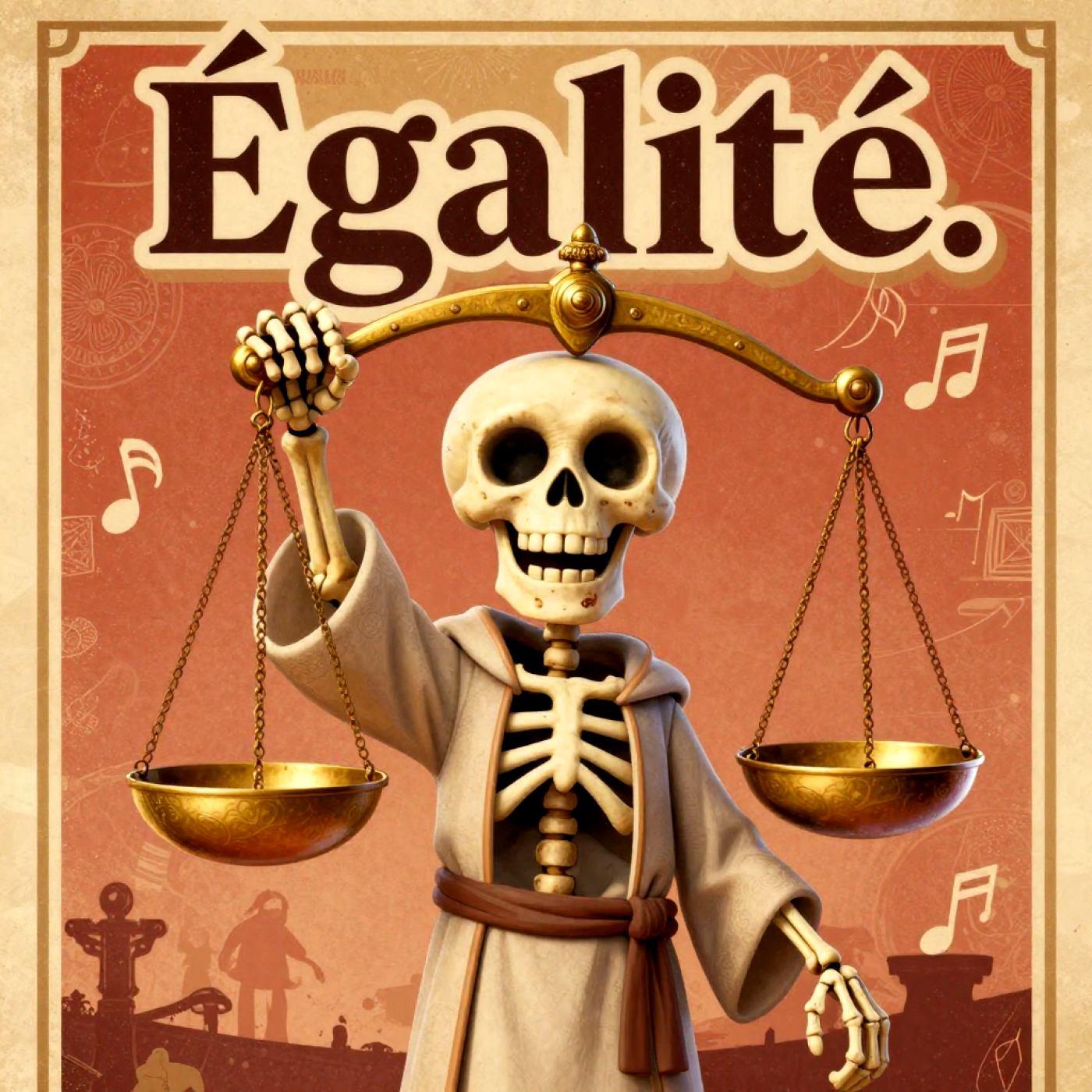
Egalite
This week on Three Tune Tuesday, Boneapart and Yulia explore the theme of Égalité — equality — through three recordings from the acoustic era. We open with a "This Day in History" spin: the All Star Trio's rollicking fox trot medley "You Ain't Heard Nothing Yet," recorded by Victor Arden, George Hamilton Green, and F. Wheeler Wadsworth in New York City on this very date in 1920. Then we turn to the theme, beginning with the Manhattan Harmony Four's stirring 1923 recording of "Lift Every Voice and Sing" — the Black National Anthem, written by James Weldon Johnson and his brother Rosamond, and pressed on Black Swan Records, the pioneering Harlem-based label founded by Harry Pace as an act of racial pride and cultural self-determination. We close with Emile Van Bosch, a Belgian-born operatic baritone, delivering a thunderous Dutch-language performance of De Internationale — recorded in Berlin in August 1925, just as the tensions that would define the coming decades were beginning to gather. Three songs, three movements, one enduring question: what does it mean to demand a more equal world?
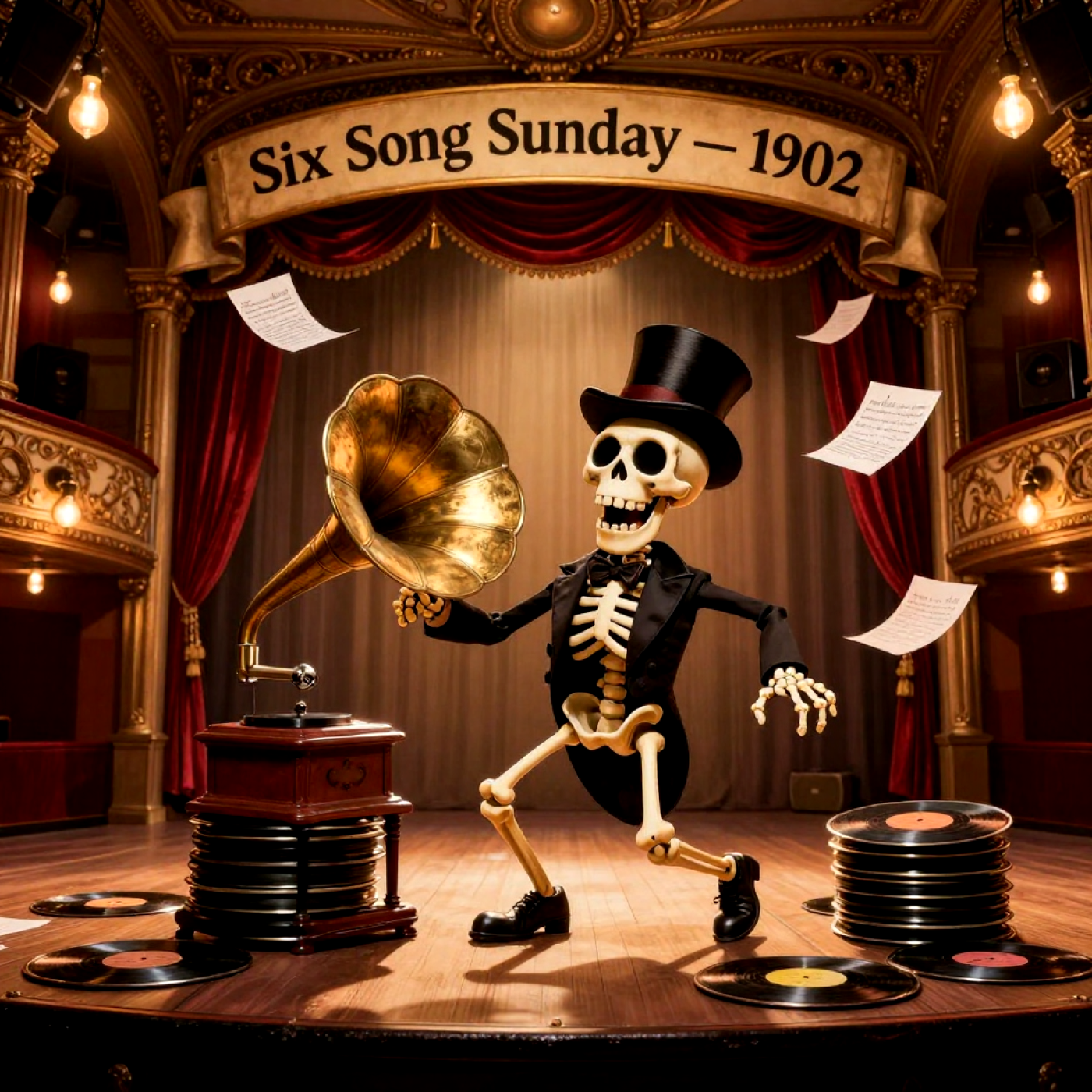
Six Song Sunday
Coinciding with The Colonial Theatre in Phoenixville discovering that their theatre was actually opened in 1902, not 1903, Yulia and Boneapart visited the theatre and recorded a special, one-off, Three Tune Tuesday - named "Six Song Sunday" - in the hotel room the night before! All songs were recorded in 1902!

Fraternite
In this week's episode, Boneapart and Yulia continue their Liberty, Equality, Fraternity series with a look at Fraternité — brotherhood, solidarity, and standing together — themes that feel as urgent today as they did a century ago. We open with a "today in music history" moment: Marcel Journet's rich bass voice bringing the Porter's Song from Flotow's opera Martha to life in a 1905 Victor recording. Then we turn to our theme, starting with a stirring 1922 brass band march simply — and perfectly — titled "Fraternity," performed by the St. Hilda Prize Band, a group of coal miners from South Shields who happened to be among the finest musicians in Britain. We close with "Hold the Fort," recorded in 1914 by the Chautauqua Preachers' Quartette — a gospel hymn born from a Civil War battle cry that found new life as a labor movement anthem. Three songs, three stories, one enduring message: we're stronger together. Pull up a chair, pour yourself something warm, and join us.

Liberte
In this week's episode, Boneapart and Yulia both get ready to run through a wall after a listen to an early recording of Patrick Henry's famous (possibily anachronistic) Give me Liberty speech. They also listen to a couple other Liberte inspired runes and get all sorts of riled up.

Imbolc
On this Imbolc-themed Three Tune Tuesday, Boneapart and Yulia spin three pre-1926 gems: a cheeky hospital flirtation in Billy Murray's "Good-night, Nurse" (1913), the hopeful robin-call of Charlotte Kirwan's "When the Robins Nest Again" (1913), and Irving Berlin's tender confession "Tell Her in the Springtime" (1924). Amid crackly grooves and seasonal candlelight, they explore rebirth, from personal healing to nature's first whispers

Self Care
The world today sucks. So do fascists. It's important to remember that fighting them also requires Self Care. In this episode we try for some levity as a method of self care.

Its Electric
1925 was the year that "electric recording", or "orthophonic" records, were designed, greatly enhancing the sound of recorded music. This week Yulia and Boneapart discuss what made electric recording such a game changer and provide examples of just how much of an improvement over previous "acoustic" recording it made.

Looking Forward
This week on Three Tune Tuesday, we’re looking forward—not with naïve optimism, but with determination. Through a 1914 recording of Danse macabre, the unsettling call of Your King and Country Want You, and the resolute stance of We’ll Never Let the Old Flag Fall, we explore how resolve survives the rise of authoritarianism—and how easily it can be misused. These songs come from a moment when the world stood on the edge of catastrophe, yet they still speak to endurance, awareness, and the refusal to surrender one’s values. This isn’t about cheering for power or glory; it’s about recognizing the voices that try to claim us, remembering that no regime lasts forever, and choosing—quietly, stubbornly—to keep looking ahead.

Peace
Peace opens the 2026 season of Three Tune Tuesday by tracing how the idea of peace sounds when it’s assumed, hoped for, and finally begged for. We begin with a carefree 1913 duet recorded on this very day in history—light, romantic, and blissfully unaware of the catastrophe to come—before moving into two post–World War I songs that reflect a world trying to steady itself after profound loss. From ringing bells to a grieving father’s plea to stop singing about war altogether, this episode listens closely to how music carries exhaustion, hope, and quiet resolve across a decade forever changed.

New Years
New Year’s has a funny way of sneaking up on us. This week on Three Tune Tuesday, we slip into the quiet spaces between resolutions and reminiscence with three early recordings that circle home, goodbyes, and the people we carry forward with us. From ivy-clad nostalgia, to a polite-but-suggestive farewell at the window, to a solemn solo take on Auld Lang Syne, this 45-minute episode skips the noise and leans into reflection. No countdown. No fireworks. Just a moment to look back—before stepping ahead.

Yule
This week Boneapart and Yulia discuss Yule, it's origins, and it's place in society. Oh, and they play songs to celebrate it, too.

Hanukkah
This week on Three Tune Tuesday, we explore Hanukkah, the Jewish Festival of Lights, through early 20th-century recordings preserved by the Library of Congress. Rather than modern holiday songs, this episode listens to the prayers and sacred music that would have surrounded Hanukkah a hundred years ago — voices of continuity, resilience, and quiet faith. Along the way, we talk history, pronunciation, and even count out the Hanukkah candles, letting the music and conversation illuminate what the holiday has meant across generations. It’s a reflective episode about persistence, memory, and light that endures longer than expected.

Kwanzaa
This week on Three Tune Tuesday, Boneapart has a birthday with a lighthearted nod to the passage of time before shifting into a thoughtful, Kwanzaa-season exploration of two remarkable early spiritual recordings. After the celebratory 1911 Birthday Serenade, the episode moves into Marian Anderson’s 1923 performance of Deep River, a piece whose themes of faith, unity, and shared purpose resonate with several principles of Kwanzaa. The journey continues with the 1902 Dinwiddie Colored Quartet rendition of Steal Away, an intimate and historically rich glimpse into the spiritual tradition’s roots. Together, the selections form a quietly powerful reflection on resilience, community, and the ways music carries meaning across generations.
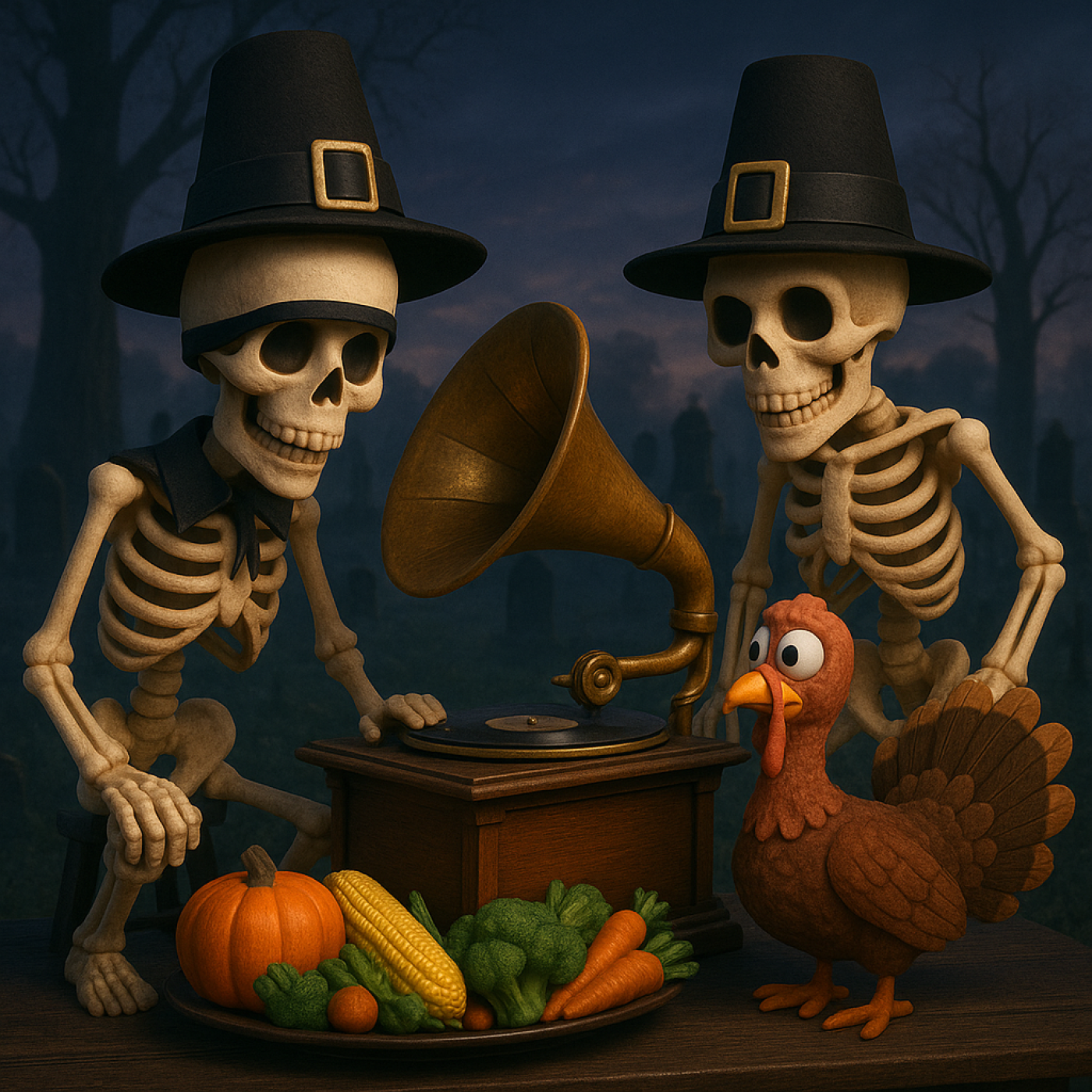
Thanksgiving
It's Thanksgiving in December! Come join Yulia and Boneapart as they spend this episode talking turkey!
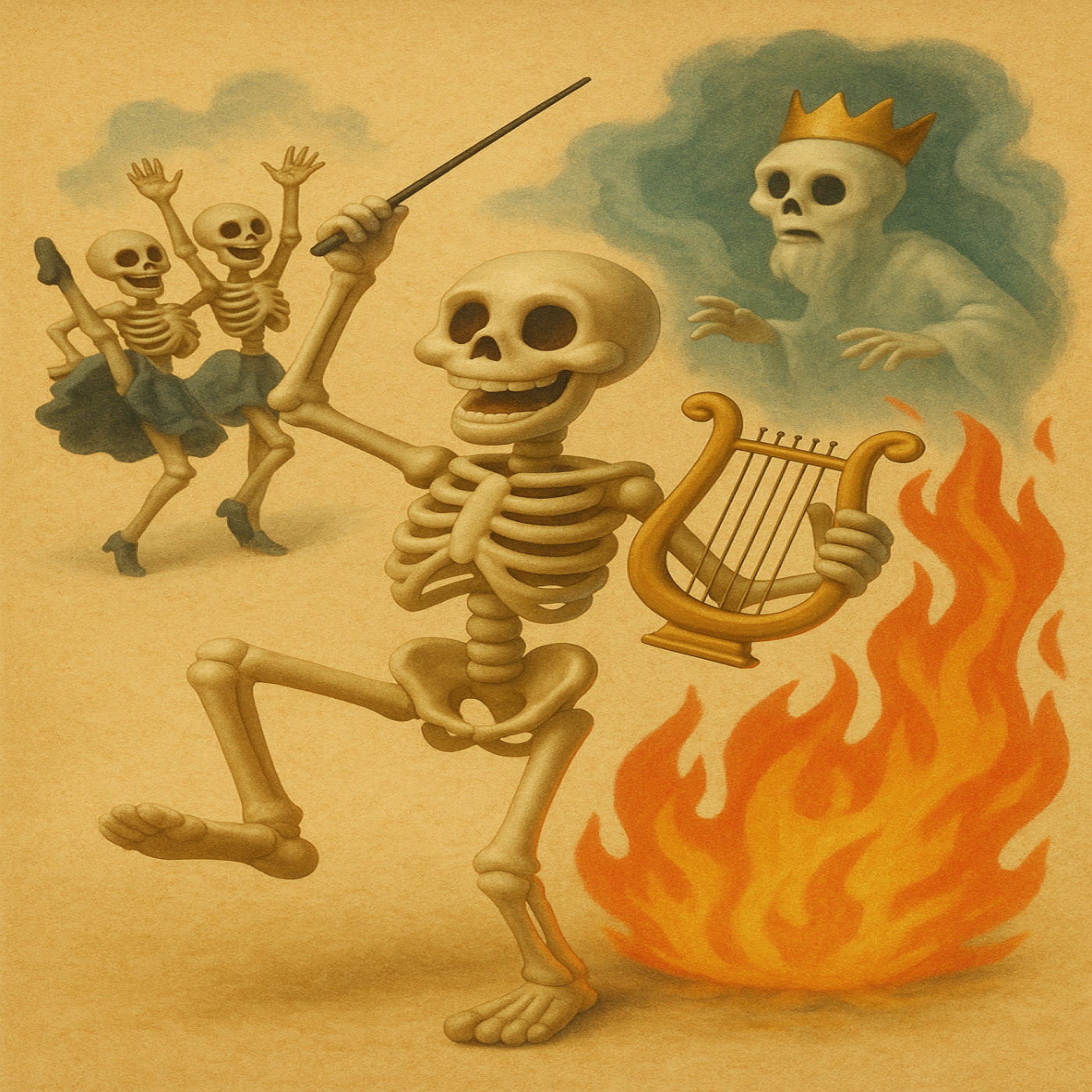
Mythology
In this week’s episode of Three Tune Tuesday, we dive into the realm of myth—where gods, spirits, and mortals blur together in music that’s anything but ordinary. Offenbach’s Orpheus in the Underworld turns divine tragedy into biting satire, poking fun at power and pretension through a Parisian can-can. Schubert’s Erlkönig pulls us into the dark woods of folklore, where whispers in the wind may be more than they seem. And Wagner’s Magic Fire Scene ignites the heavens themselves, capturing the moment a god’s compassion reshapes destiny. Three visions of myth—comic, tragic, and cosmic—each revealing a different truth about what it means to be human.

Veterans Day, Remembrance Day, and Armistice Day
This week we're honouring our Veterans from many countries, with songs celebrating the United States, Canada, and the United Kingdom.

The Universe
This week on Three Tune Tuesday we go a little cosmic with “The Universe,” tracing a quiet arc from wonder to reach to trust. We open with “Underneath the Stars” (1915), a secular nocturne that lingers on night air and distant light—humankind gazing up and asking big questions. Then we lift off with “Come, Josephine, in My Flying Machine” (1910/11), the giddy early-aviation fantasy where romance and technology climb skyward together. We land with “Whispering Hope,” the enduring parlor hymn that softens the room and lets us place a little faith in the order of things. Three sides, one journey—from looking at the stars, to reaching for them, to listening for their answer.