Bletchley Park
296 episodes — Page 3 of 6
E106 - Invasion Norway
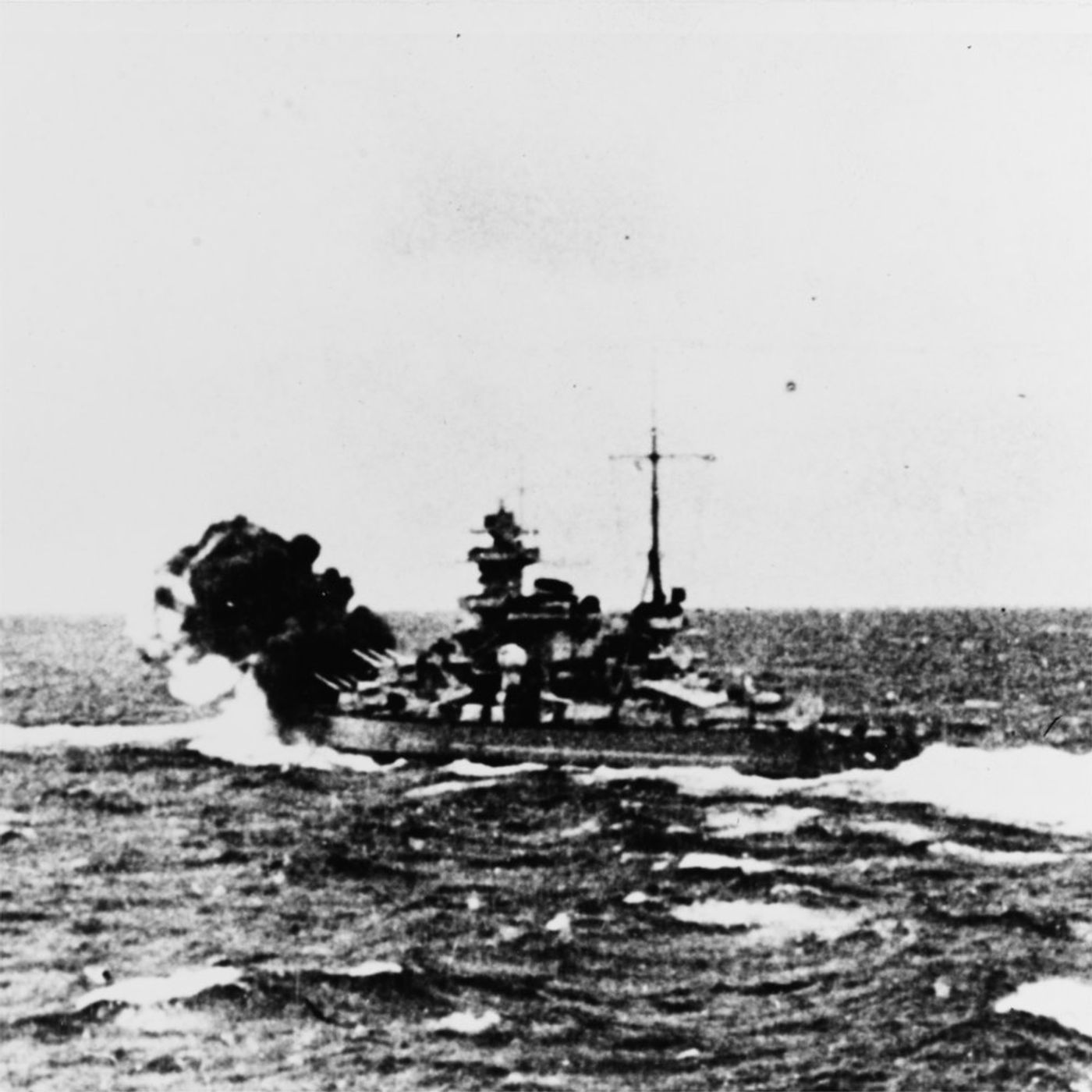
April 2020 In early 1940, as winter turned to spring, the world waited for the ‘Phony war’ to end with the expected German attack in the west. But the leaders of both Allied and Axis forces were looking in another direction, to the north, to the snow and the steel, to Scandinavia.Meanwhile in a wooden hut at Bletchley Park, recent recruit Harry Hinsley was certain a German fleet was preparing to set sail, but how could he, a 21-year-old civilian in a highly secret department, persuade the Admiralty that he was right?In this ‘It Happened Here’ episode we explore the difficult start of Bletchley Park’s role in Britain’s war at sea. Bletchley Park’s Research Historian Dr David Kenyon will be our guide.As usual special thanks go to Mr Ben Thomson for voicing our archival documents.* Producers Note *We have had to record this episode remotely due to the ongoing COVID-19 situation. This means that the audio quality is not to the high quality we would normally wish it to be. We hope our listeners will understand and still enjoy this episode.Image: Public Domain Naval History and Heritage Command#BPark, #WW2, #BletchleyParkEnigma80, #Enigma80
Intelligence Insight No. 002
April 2020 2017 was the centenary of a relatively little-known genius who went straight from studying mathematics at Cambridge to codebreaking for the Government Code and Cypher School. The crucial role that Bill Tutte played in the attack on the system used by Hitler and his high command, Lorenz, not only broke it but also helped paved the way for the creation of the world’s first large-scale electronic digital computer, Colossus. Finally Bill received the recognition he so richly deserved with a BBC Documentary, an exhibition at Bletchley Park and, on the day of his centenary, a symposium of talks about his life and work. Here for the first time we can bring you, instead of just highlights, the entire talk and Q&A session from GCHQ’s shortly to retire Departmental Historian, Tony Comer. In his talk Tony looked at the fundamental changes that had happened at GC&CS to allow Bill Tutte to carry out his breath-taking achievements. We have also included again the interview we recorded at The National Arboretum in 2019 with Tony. It was an opportunity to look back at his career and to exclusively introduce his replacement to the world. Image: ©Bletchley Park Trust 2020 #BPark, #WW2, #BletchleyPark, #Enigma, #GCHQ
Intelligence Insight No. 001
March 2020 Bletchley Park Museum is currently closed as a precautionary measure to help contain the spread of coronavirus (COVID-19). Our staff and volunteers like so many around the world are in lockdown, self-isolation or working remotely from home. Bletchley Parks CEO Iain Standen said “This isn’t the first time that Bletchley Park has operated at unprecedented times of national crisis and it is the values of those that have and still work here – understanding, collaboration, integrity, perseverance, resilience – that we hold dear at this moment.” While we can we will continue to produce our normal podcasts but in addition to that the Podcast Team have decided to bring you something each Friday for the next few weeks. With 8 years of content we will not only return to some gems from previous shows but also bring you things that have not been heard before. For this first episode our producer Mark Cotton has dipped into the over 100 hours of recordings to bring you a selection of interviews that he has found most memorable. Included are: Wyn RibchesterFlo ColeMary Watkins & Betty WebbMarigold Freeman-AttwoodJeannie Kotchie We hope all our listeners, their families and friends, stay safe and well. Image: ©Bletchley Park Trust 2020 #BPark, #WW2, #BletchleyPark, #Enigma
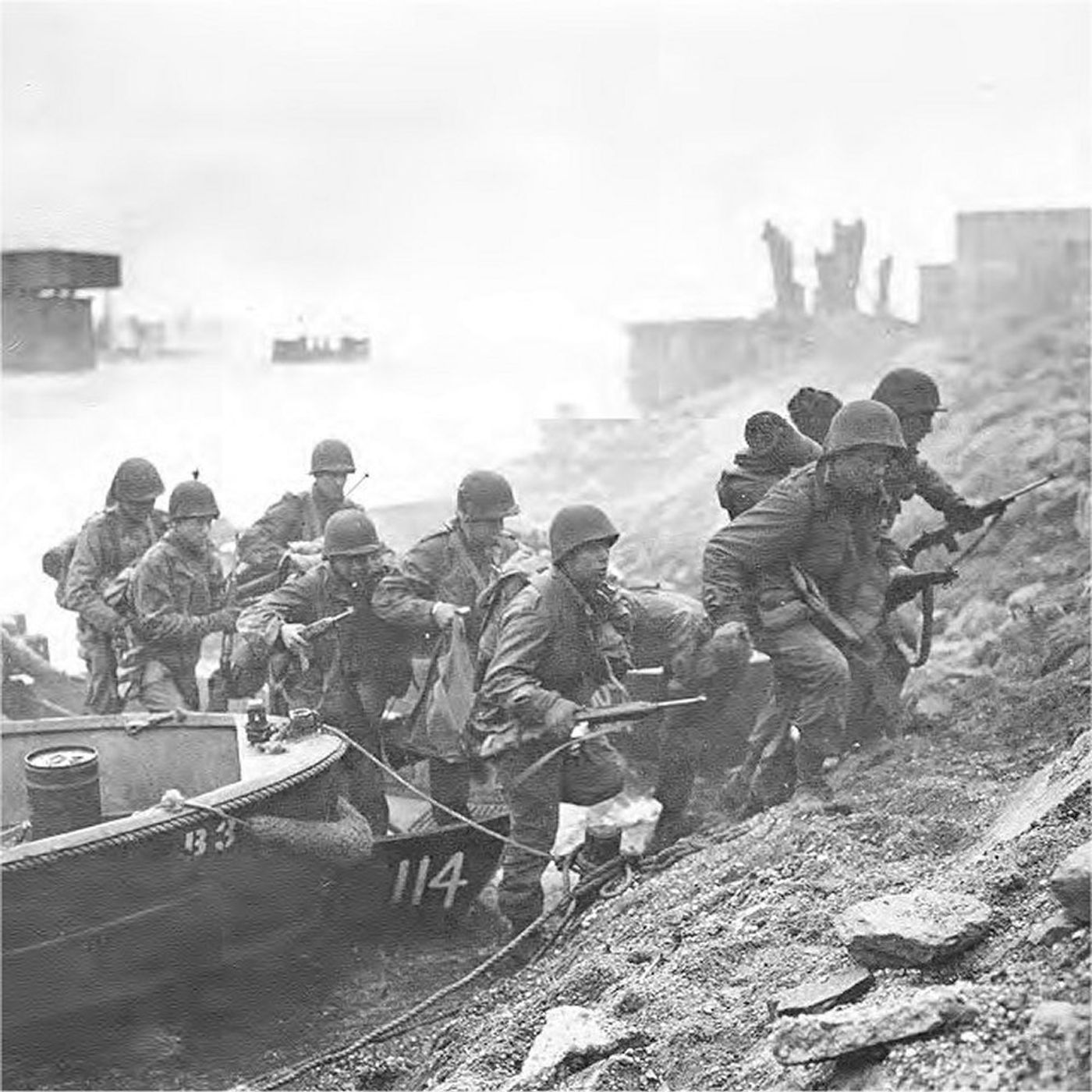
E105 - Plunder on the Rhine
March 2020 As 1945 began, the Germans’ last roll of the dice in the Ardennes has failed. They were left to face the overwhelming force of men and materiel of the Allied armies approaching the Fatherland from all directions. For the Allies in the west, the natural barrier of the Rhine River was all that lay between them and the open plains of Germany, and the last phase of the war in the west. Meanwhile the Government Code & Cypher School at Bletchley Park were producing more intelligence than ever before, but for how much longer? We’ll find out how it was at this point that the Germans challenged the Codebreakers like never before. In this It Happened Here episode our Research Officer Dr Thomas Cheetham will take us through the action on the front line and reveal just how difficult it was becoming to keep supplying actionable Intelligence in the last year of the war.As usual special thanks go to Mr Ben Thomson for voicing our archival documents.In memoriam, Eileen Younghusband BEM (1921-2016) WAAF Section OfficerImage: US Army Green Books
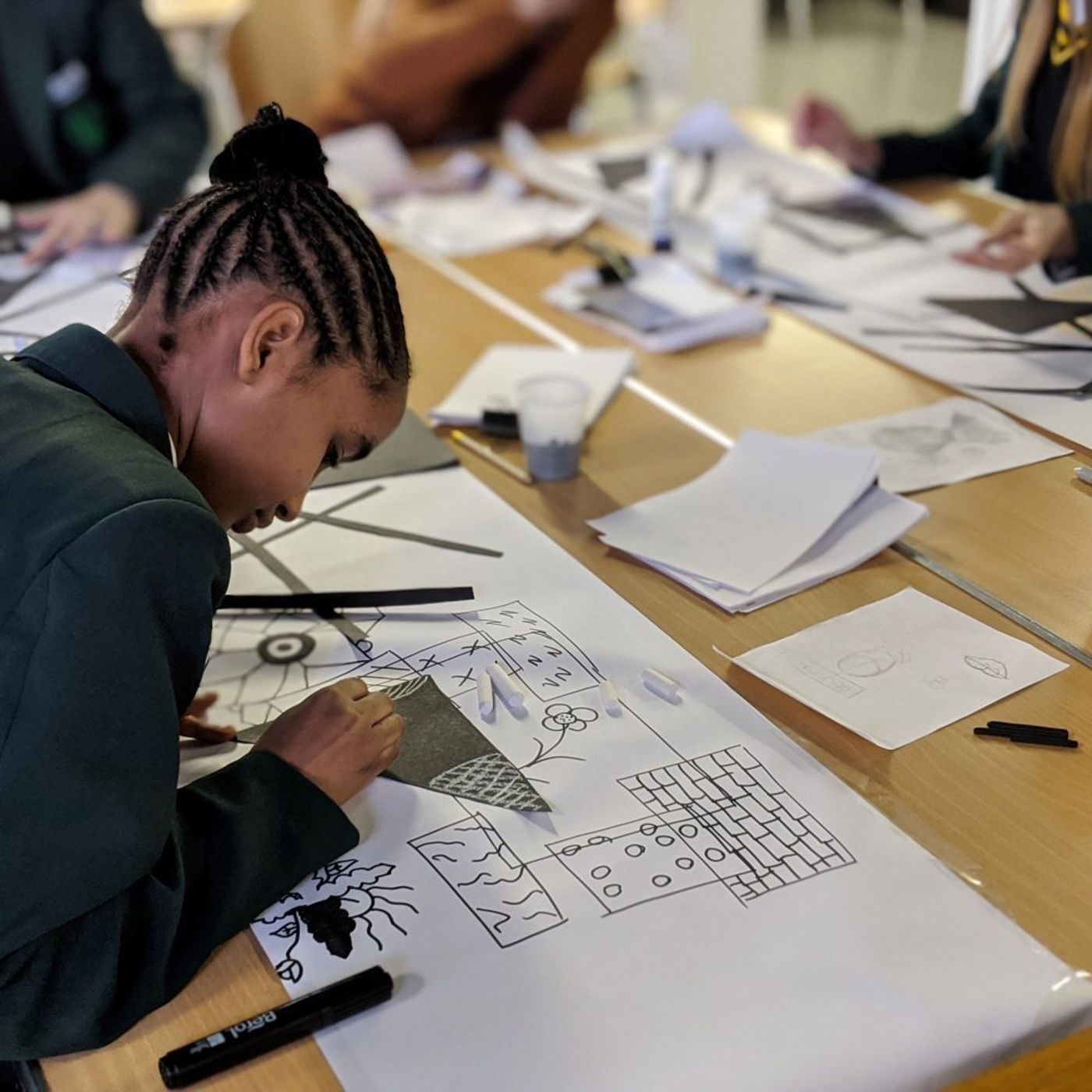
E104 - Challenge HQ
February 2020 In contrast to its roots as a top secret organisation, the name of Bletchley Park is now recognised around the world. Sharing Bletchley Park’s stories with our audiences through education is at the heart what we now do here. Since first opening the site as a museum in 1992, educational programming has been a crucial part of the work of Bletchley Park Trust. Our Learning team of dedicated staff and volunteers now welcomes over 35,000 visitors to the site each year and reaches even more through their growing Outreach and Digital programmes. Their workshops, tours and events have won awards at the national School Travel Awards and a prestigious Sandford Award in 2019. A recent project, Challenge HQ, has seen Bletchley Park open brand new learning spaces on site to complement the increasing work done by this busy team. This gives us a perfect opportunity for our listeners to meet the Learning team and find out more about this exciting new project. For the Bletchley Park Podcast, we brought five local young people, who have taken part in the new project, back to the Park to meet a Veteran of BP’s Japanese Section, Betty Webb. Image ©Bletchley Park Trust 2020 #BPark, #WW2, #BletchleyPark, #Enigma
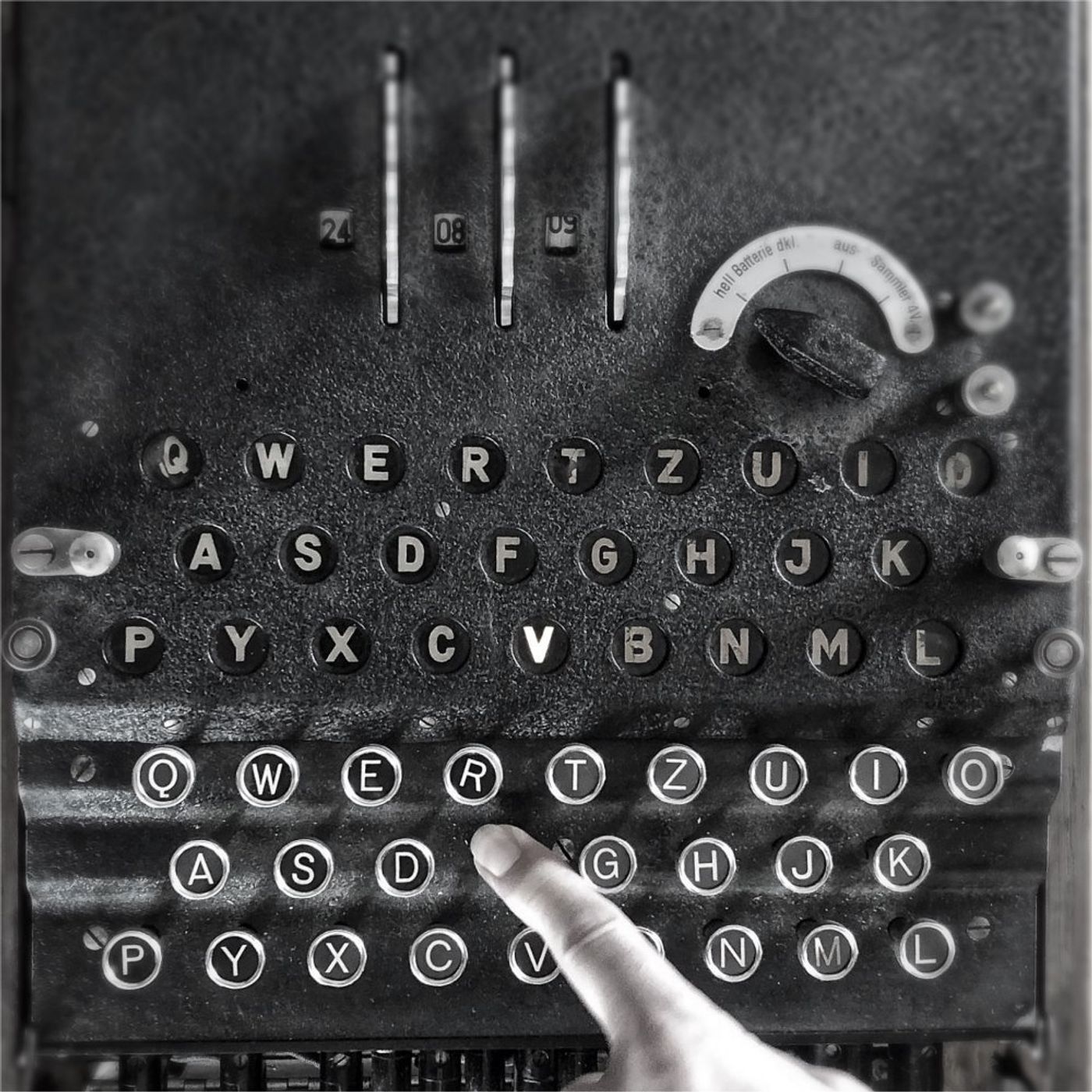
E103 - Enigma Unlocked
January 2020 80 years ago, in January 1940, British and French troops were freezing in their dugouts awaiting a German attack which would not come for several months yet; the so-called ‘Phony war’. Bletchley Park, by contrast was a hive of activity as efforts were made to break into German codes and ciphers, including the Enigma system, before the land war began in earnest. In this ‘It Happened Here’ episode we are guided by Bletchley Park’s Research Historian Dr David Kenyon through the evolution of this infamous cipher machine, and the international efforts which led to the unlocking of its secrets in January 1940. As usual special thanks go to Mr Ben Thomson for voicing our archival documents. Image courtesy of Vic Roberts. #BPark, #WW2, #BletchleyParkEnigma80, #Enigma80
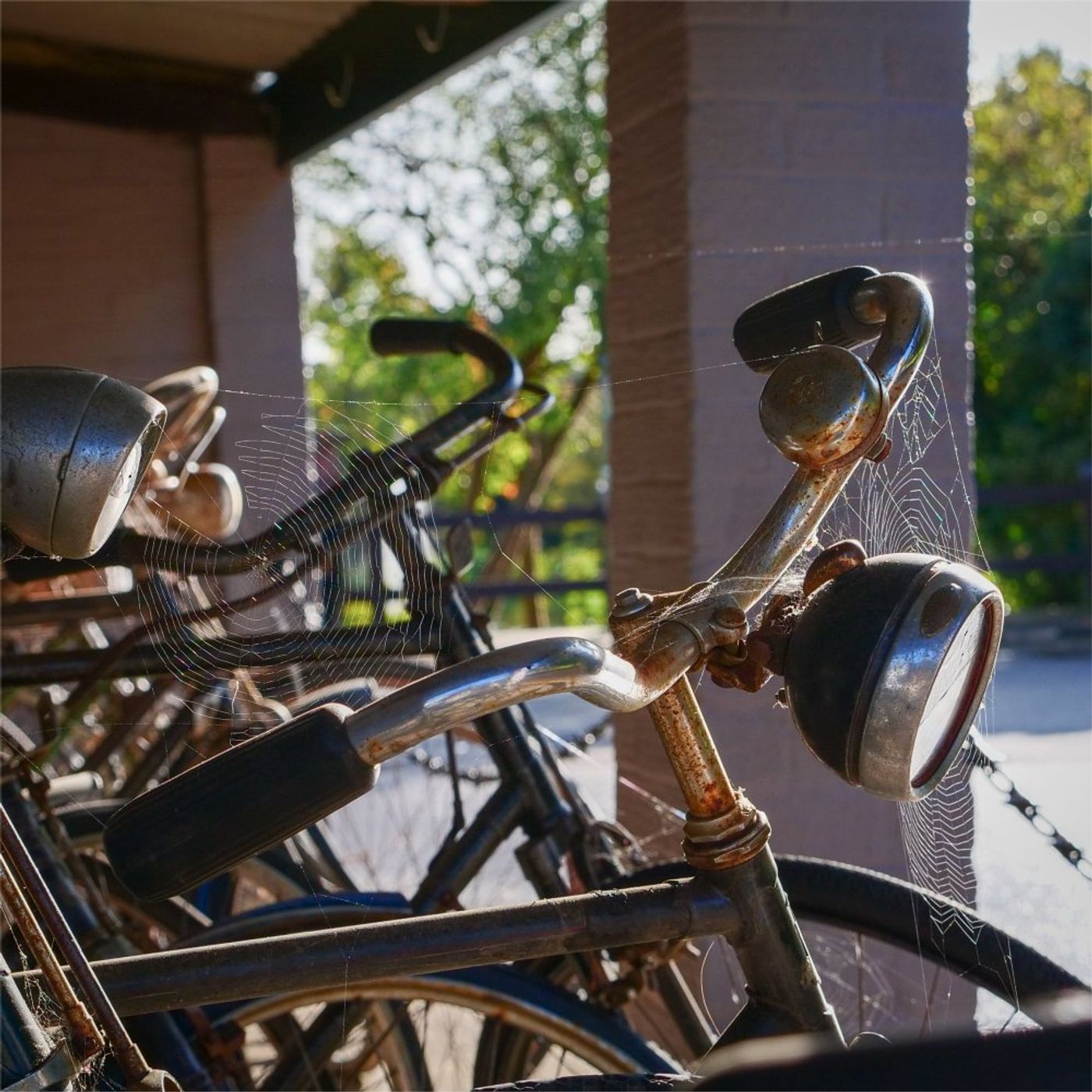
E102 - Collegiate Connections
December 2019 During World War Two, 34 alumnae of St Hugh’s College Oxford ended up working at Bletchley Park and its Outstations and In March 2020 the college will be holding a symposium to celebrate them. In this, the last of three episodes this month, our Oral History Officer Jonathan Byrne tells us how this has opened up a potential new source for us to discover more of our Veterans and to hopefully capture more stories before it is too late. The rest of this episode is given over to the fascinating stories of Wenda Reynolds and Nancy Sandars two of those St Hugh’s College ladies. Bletchley local, Miss Wenda Reynolds worked at GC&CS in both the Mansion and Hut 9 from 1941 till 1945. Miss Nancy Sandars served first as a motorcycle despatch rider, and then joined the WRNS as a Y-Service Wireless Operator. In memoriam, Miss Wenda Reynolds (1914-2017) and Miss Nancy Sandars (1914-2015) Image: ©Bletchley Park Trust 2019 #BPark, #Bletchleypark, #WW2
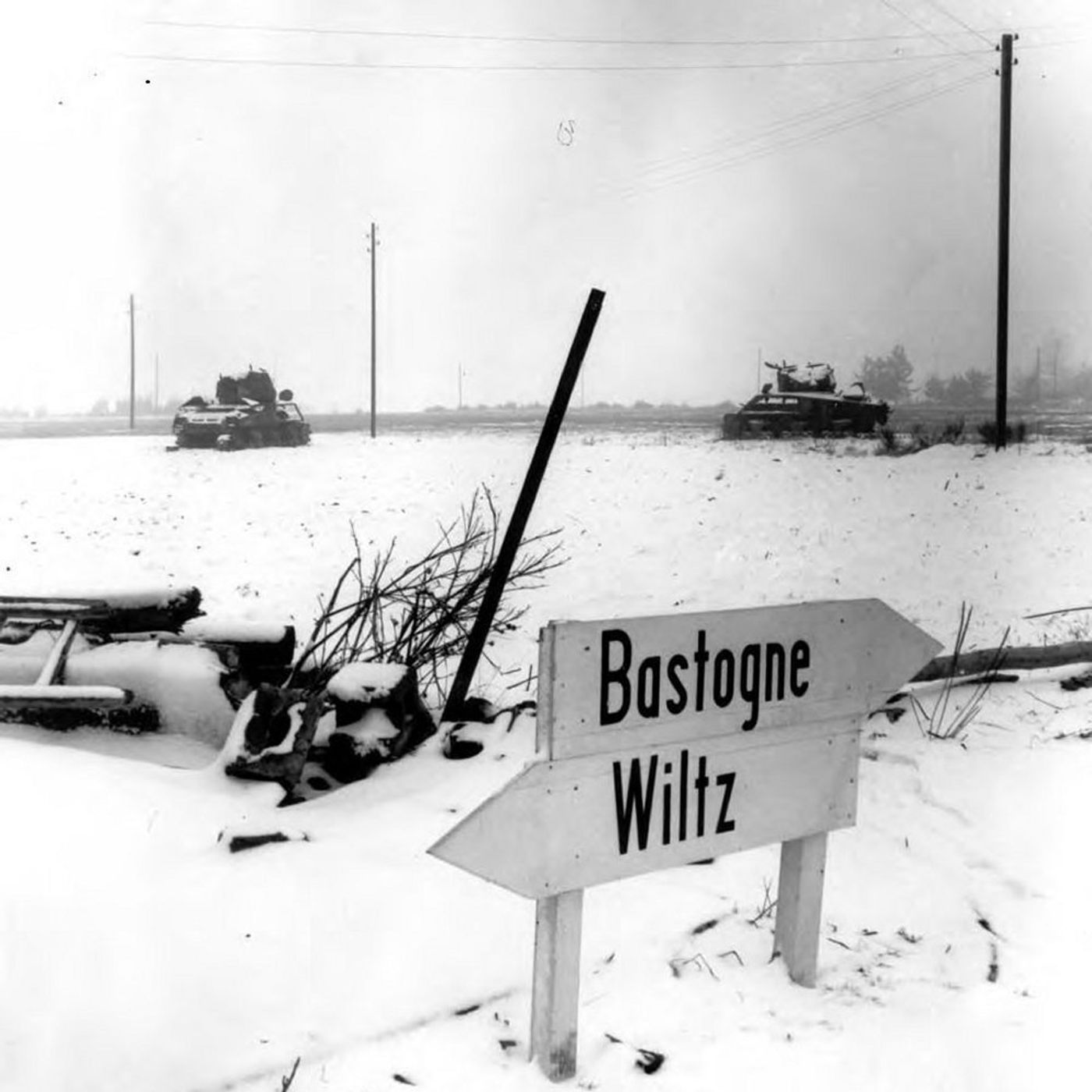
E101 - Battle of the Bulge
December 2019 After nearly 6 months of fighting from the beaches of Normandy, by early December 1944 the Allies’ front line stretched for 600 miles from the North Sea coast to the borders of Switzerland. The Scheldt estuary had finally been cleared, allowing the port of Antwerp to be opened and to start to ease their supply problems. With one of the coldest winters on record taking hold and Christmas approaching many of the front line troops probably expected a respite for at least a few weeks. What they didn’t expect was for more than 400,000 German troops to come smashing through the Ardennes on a mission to recapture Antwerp and split the Allied forces in two. Why was the Battle of the Bulge such a surprise? Was it Allied complacency or German ingenuity? In this “It Happened Here” episode, using contemporary archival documents, Bletchley Park’s Research Officer Dr Thomas Cheetham, will try to answer those questions. Special thanks to Mr Ben Thomson for playing the role of our Intelligence Officer. In memoriam, Eileen Younghusband BEM (1921-2016) WAAF Section Officer #BPark, #Bletchleypark, #WW2, #Bulge75
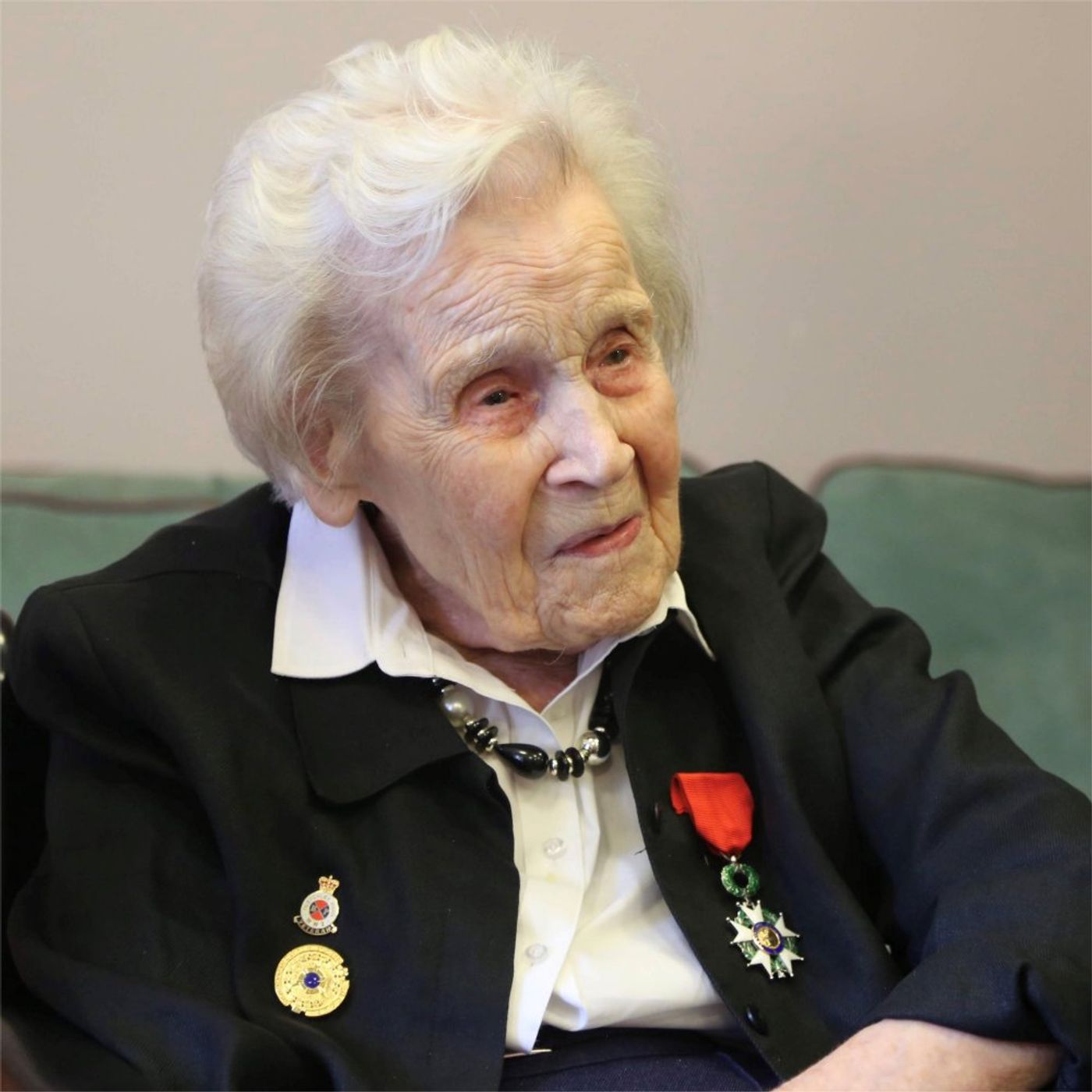
E100 – Légion d’honneur
December 2019 At the end of each year we like to focus on the important work that our Oral History Officer Jonathan Byrne and his team of staff and volunteers carry out. The interviews they record not only help to build a better picture of the vital work carried out here during World War Two but also help us develop new ways to share those stories with our visitors, such as exhibitions, family activities and online resources. In this, the first of three episodes this month, we catch up with Jonathan and find out about the presentation of France’s highest order of merit, the Légion d’honneur, to Bletchley Park Veterans. We also introduce the newest member of Jonathan’s team, Oral History Assistant, Will Hankey who describes his passion for his work. The rest of this episode explores the experiences of three of our Légion d’honneur recipients. Mrs Helene Aldwinckle worked in Hut 6 and Block D (6) at Bletchley Park from 1942 till 1945. RAF Flight Sergeant Gordon Rosenberg served in Special Liaison Units 8 and 9, first in Europe and then later in the Pacific. Walter ‘Joe’ Wright served with the Royal Signals in Special Communications Units 1 and 8 from August 1944 till September 1945. Image courtesy the Aldwinckle family. #BPark, #Bletchleypark, #WW2
E99 - 100 Years of Codebreaking
November 2019 In this month’s 2nd episode celebrating the anniversary of the creation of GCHQ, where better to learn more about those 100 years than in the heart of its current Headquarters. We were given special permission to record within the walls of the famous ‘Doughnut’ building in Cheltenham. Our guide to those top secret corridors is GCHQ’s new official Historian David Abrutat. With a century of codebreaking behind them, there is a rich history to dive into and it’s not just about Bletchley Park. The team at today’s Bletchley Park have marked GCHQ’s Centenary with a new display called From GC&CS to GCHQ. We find out about some of the people and stories in the exhibition from Exhibitions Manager and podcast host, Erica Munro. A very special thanks to GCHQ for allowing us to record this exclusive episode. Image: ©Crown Copyright #BPark, #Bletchleypark, #WW2, #GCHQ100
E98 - GCHQ at 100
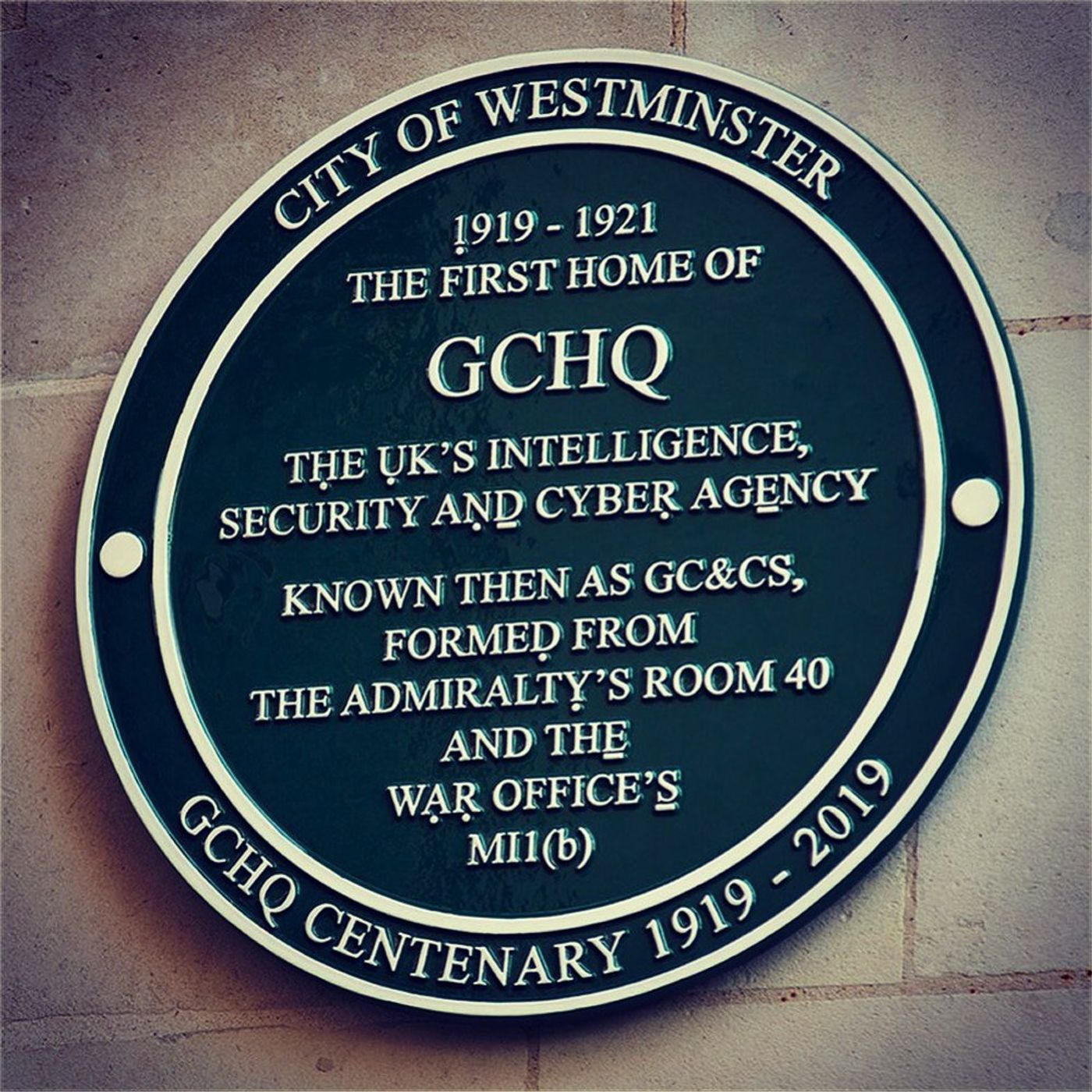
November 2019 During WW1 the United Kingdom had two separate cryptographic organisations, the Navy’s Room 40 & the Army’s MI1(b). Both had major codebreaking success during the conflict but it was decided that after the war that they should merge. On the 1st of November 1919 the Government Code & Cypher School or GC&CS was created. Best known for its work during WW2 at Bletchley Park, after the war its name was changed to one more familiar to us today GCHQ. To mark the anniversary, a special event was held exactly 100 years later with past and present members of staff and representatives of the other Five Eyes Intelligence Services from around the world. We’ll hear from GCHQ’s current director Jeremy Fleming as well as memories from the staff that were specially recorded for the event. We catch up with Bletchley Park Veteran Betty Webb who shares her pride at being part of the organisation and talks about the changing role of women in defence with her guest Retired Colonel Ali Brown. Finally we mark the retirement of a very good friend of the podcast, GCHQ’s Official Historian Tony Comer. The centenary event was a chance to say goodbye to Tony and meet his replacement, whose identity we can exclusively reveal in this podcast. #BPark, #Bletchleypark, #WW2, #GCHQ100
E97 - Early Days
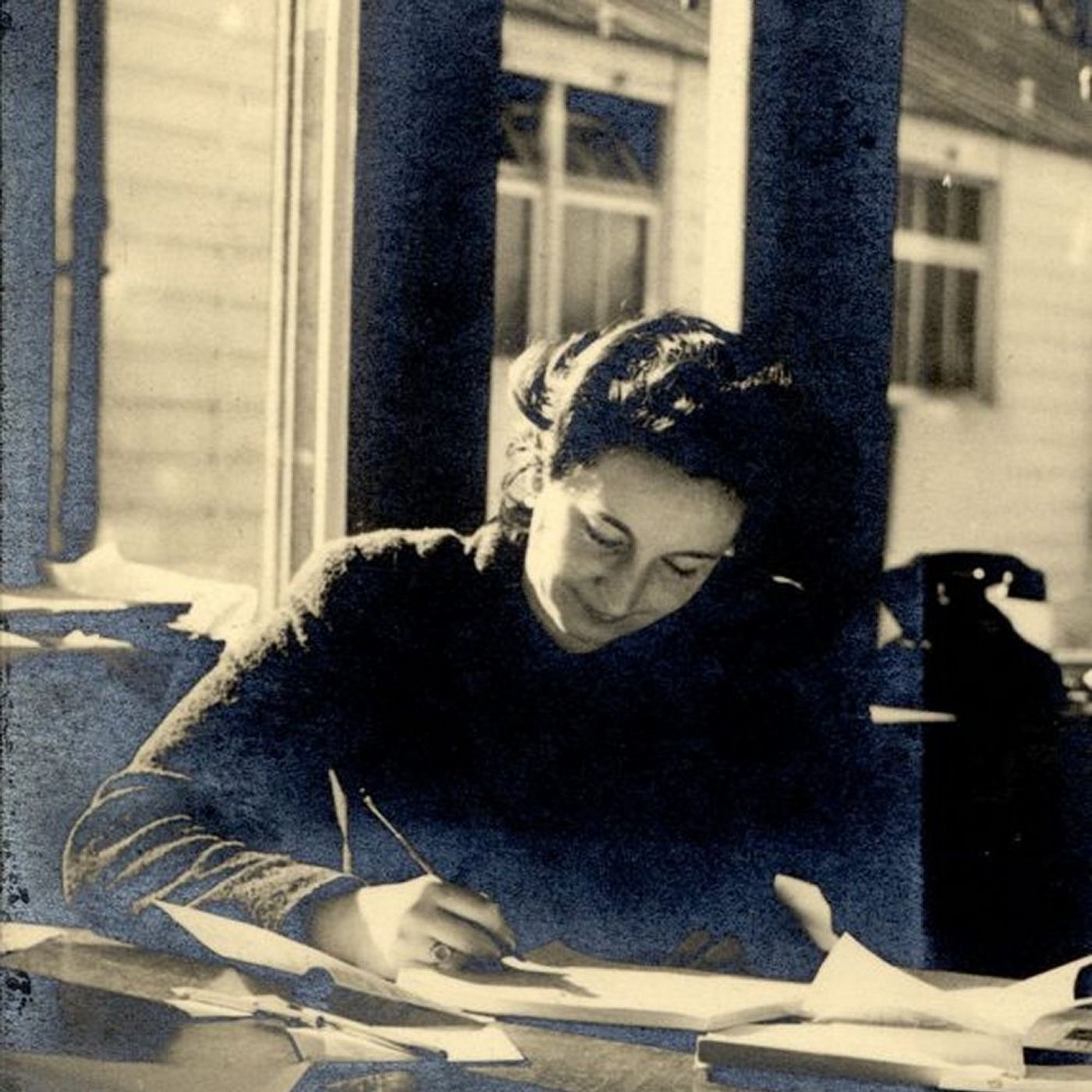
October 2019 “Gas masks are to be taken” so ends what seems a rather mundane government memo dated the 2nd of August 1939. It importance becomes apparent when you discover this was the Move Order sent to the staff of the Government Code and Cypher School. As Hitler threatened Poland it seemed another war in Europe was inevitable, so it was decided the staff of GC&CS should move to their War Station in the Buckinghamshire countryside. With hindsight we now know that over the next 6 long years, Bletchley Park would become a codebreaking factory, but what were those Early Days really like? In this “It Happened Here” episode, our host, Erica Munro & Bletchley Park’s Research Officer Dr Thomas Cheetham take us back to August 1939 and through documents held in the archives tell the story of the arrival at Bletchley and dispel a few myths along the way. Special thanks to Mr Ben Thomson for voicing our archival documents. In memoriam, Jane Fawcett MBE (1921–2016) FO Civilian Hut 6 Image courtesy Judie Hodsdon #BPark, #Bletchleypark, #WW2, #80WW2

E96 - Market Garden
September 2019 By early September 1944, with the Normandy Campaign behind them, 6 Allied Armies were racing across Northern France and into the Low Countries. Ahead of them the remnants of the German Army were retreating to the borders of the Fatherland. To many on the Allied side it seemed that a bold action was all that was needed to finish the war by Christmas. The plan called for a carpet of paratroopers to capture and hold bridges along a 64 mile road, allowing an armoured spearhead to reach its goal of the bridge at Arnhem. If successful this would leave the route to the industrial heart of Germany, The Ruhr, wide open. For this “It Happened Here” episode, Bletchley Park’s Research Officer Dr Thomas Cheetham has been looking in detail at the entire operation, including Bletchley Park’s contribution, to tell us if it always was going to be just A Bridge Too Far. Special thanks to Mr Ben Thomson for playing the role of our Hut 3 Intelligence Officer. In memoriam, Eileen Younghusband BEM (1921-2016) WAAF Section Officer #BPark, #Bletchleypark, #WW2, #MarketGarden75
E95 - Veterans’ Reunion 2019
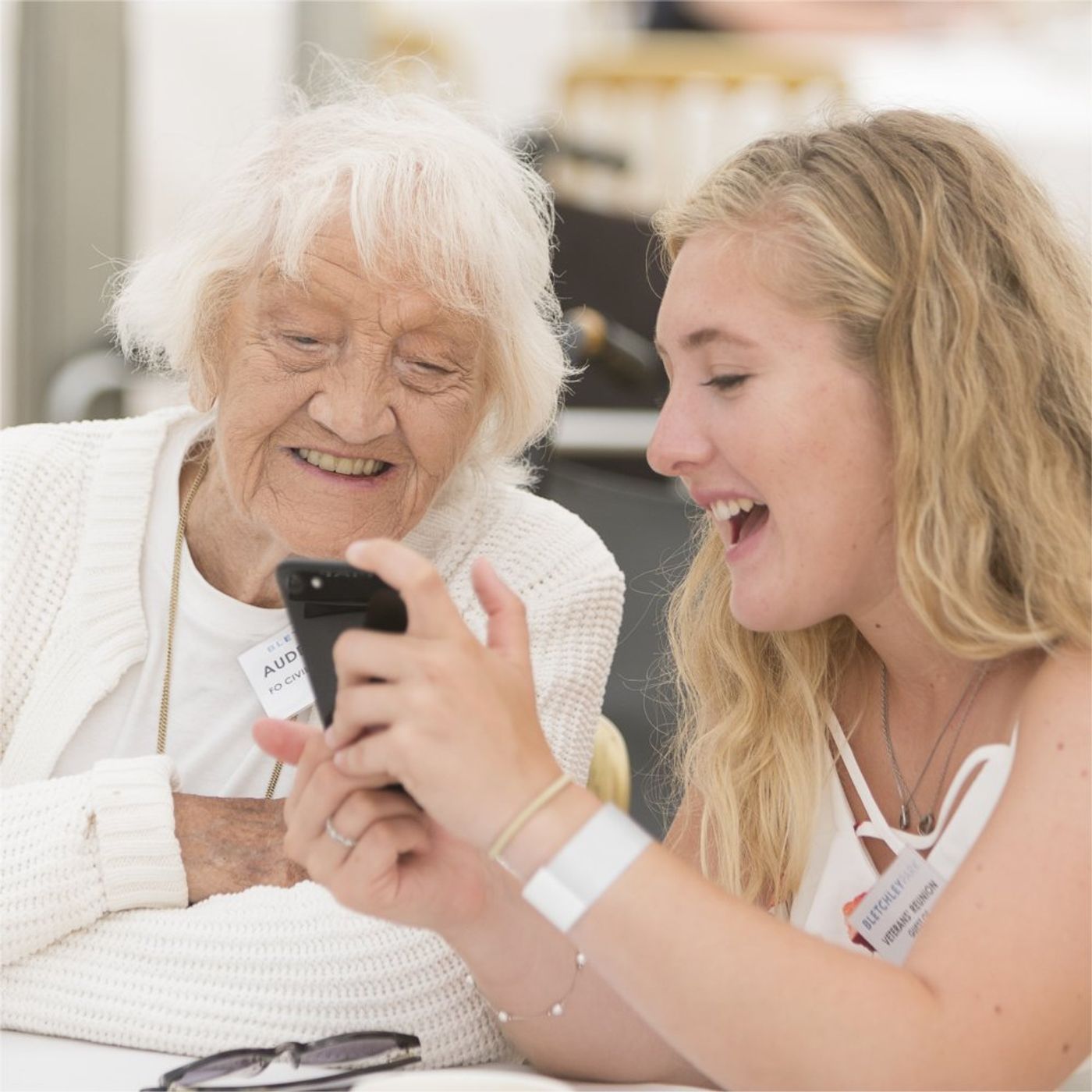
September 2019 Each year, to mark the arrival of the first Codebreakers at Station X in 1939 we hold our Veterans Reunion. This year it was made more poignant as the date fell on the 80th anniversary of the invasion of Poland. The Reunion is always a very special day for us at Bletchley Park as it gives us the chance to thank our Veterans for their service. For the Veterans it is a chance to meet old friends, reminisce and tell stories of their time here. This is the podcasts 8th reunion and this year we were lucky enough to sit down with four of these amazing people to have a chat. Many are accompanied by their families and for them it can be very emotional as for the first time they get to hear in detail what their relation did during World War Two. Christine Brose set this year’s record for travelling to the reunion, coming with her two sons from Tasmania. She insists she “didn’t do anything important” but at age seventeen in 1941 she ended up working in Hut 8 Naval Section under Hugh Alexander. When Winston Churchill made his one war-time visit to the home of the codebreakers, it was Alexander who jumped to Christine’s defence. The army originally wanted Arthur Maddocks to be a Tank Commander but he thinks the study of economic theory at Oxford University probably made him more suited to breaking codes in The Testery. Even though he was only at GC&CS for the last year of the war it would have an effect on the rest of his life as it led to him meeting his wife of 72 years. Audrey Hodges is proud of her service and she feels she was “doing her bit to protect her country”. After leaving a factory job she hated in Newcastle she ended up in 1941 working for the Foreign Office at Bletchley Park. Her granddaughter Nicole tells us just how cool it is to have a ‘Nan’ who worked as a Codebreaker. Finally, we join Eric Dodd and four generations of his very proud family. Eric was in the Royal Signals working as a Special Wireless Operator for our Y Service. On D-Day he could understand his German counterparts for the first time as under attack they broke with procedure. Special thanks to our roving reporter Sarah Langston. Image: ©Will Amlot for the Bletchley Park Trust 2019 #BPark, #Bletchleypark, #WW2, #80WW2
E94 - 90 Days
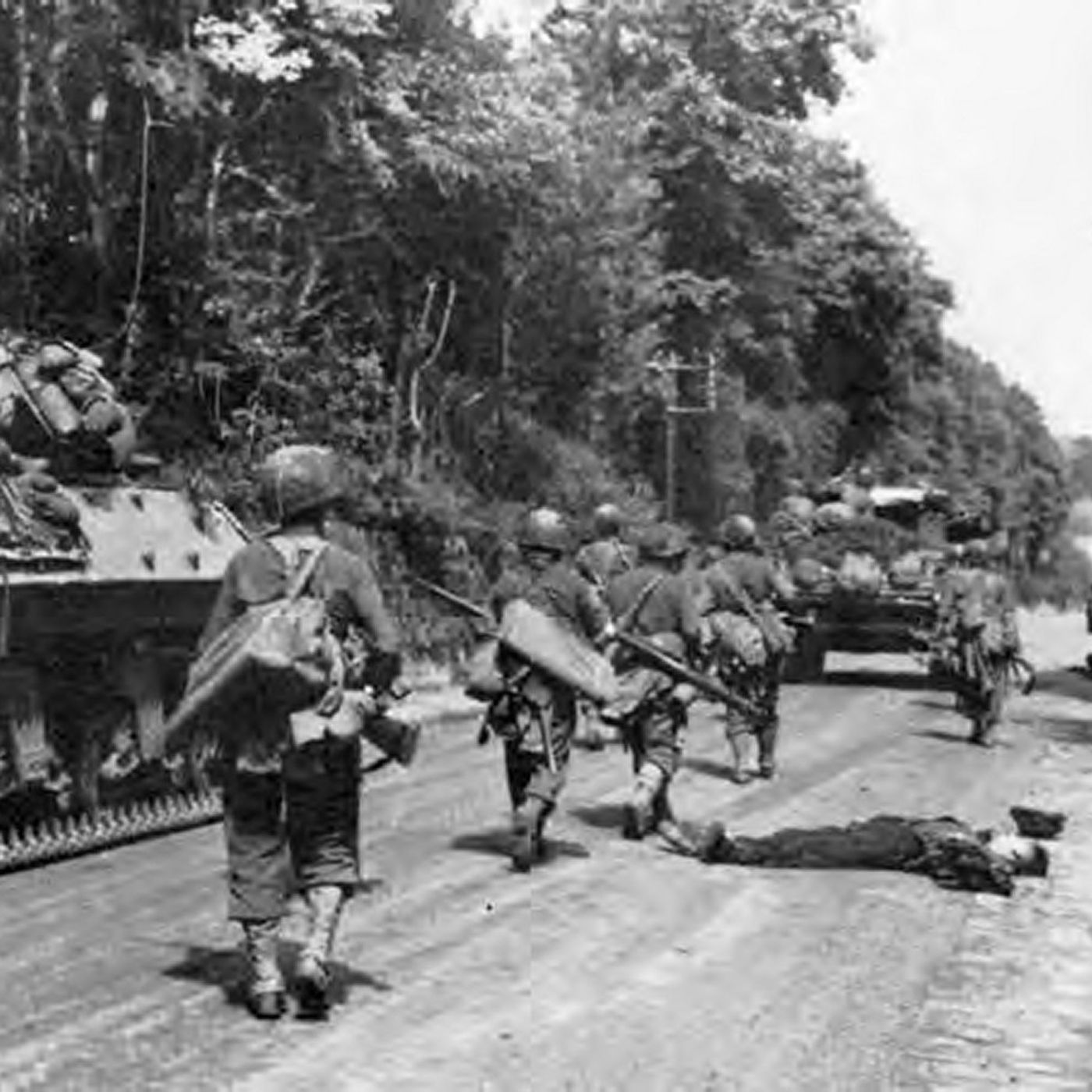
August 2019 In earlier episodes this year we have concentrated on the preparations for, and the events of D-Day itself, the 6th of June. However D-Day was only the beginning of the Normandy Campaign. The Allies had to face an enemy determined to throw them back in to the sea and it led to some of the bitterest fighting that Western Europe saw in WW2. It would eventually, after three months, end in a massive victory for the Allies and the liberation of Paris at the end of August 1944. In this “It Happened Here” episode, we see how Bletchley Park continued to contribute to Allied success. We’ll find out how the nature of this contribution changed from one of supporting the planning of future operations, to one of supporting an ongoing battle. Bletchley Park’s Research Officer Thomas Cheetham has been exploring the role of ULTRA intelligence in this crucial campaign. #BPark, #Bletchleypark, #WW2, #DDay75, #BletchleyParkDDay
E93 - The GPO and GC&CS
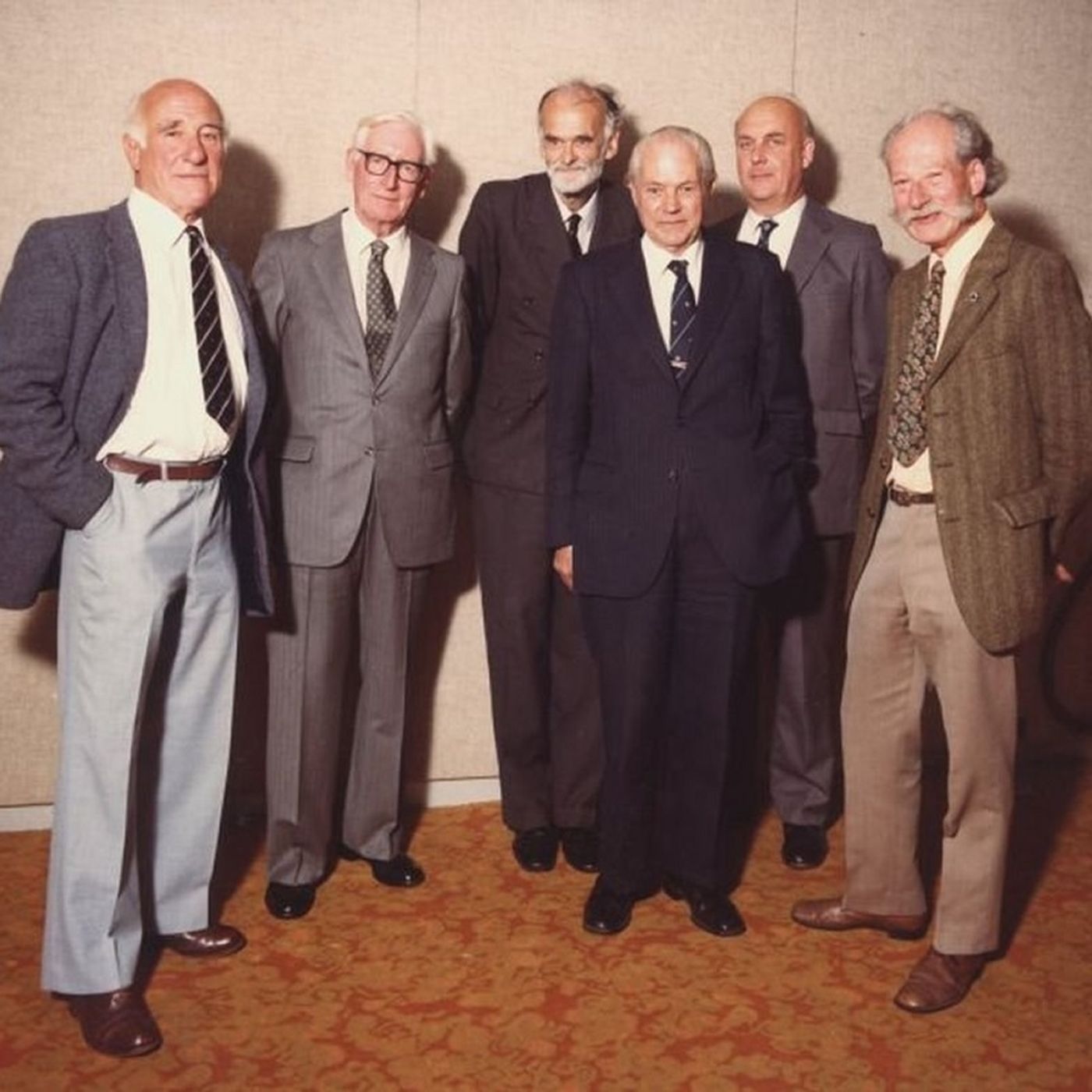
July 2019 Most people now know of the work carried out by Tommy Flowers and his team that ultimately led to the design and construction of ‘Colossus’, the world’s first large-scale electronic digital computer. Flowers worked for the General Post Office at their Research Station at Dollis Hill but that work was just one part of the connection between the GPO and the Codebreakers at Bletchley Park. With the opening this year of our new exhibition, D-Day: Interception, Intelligence, Invasion, that link with the modern GPO, British Telecom now called BT, continues. In this episode our research historian, Dr David Kenyon, sat down with the Head of Heritage and Archives for BT, David Hay, to talk about our shared history. Also in this episode we bring you something very special indeed. In 1981 at the modern equivalent of Dollis Hill, Adastral Park, Tommy Flowers and some of his original team gave a talk about their wartime work and thanks to BT we can bring you highlights of that reunion. BT is the Sole and Exclusive Corporate Partner of the restoration of Teleprinter Building and the Exclusive and Sole Partner of the Exhibition. Image: ©BT ref TCB 638/RES 23706-05 Tommy Flowers & Team 1981 reunion #BPark, #Bletchleypark, #WW2, #DDay75, #BT

E92 - The D-Day Dodgers
July 2019 In this It Happened Here episode we leave the invasion of Western Europe and return to the hard fought battles of the Italian Campaign. Since first invading in September 1943, Italy had been anything but the “soft underbelly” that Churchill had called it. Finally in the spring and summer of 1944, after months of being held back by German forces defending Italy, things started to move. With the eyes of the world on Normandy the men fighting their way up the boot of Italy felt they had been forgotten back home, but they were not by codebreakers at Bletchley Park. Our research historian, Dr David Kenyon, will be your guide to the vital support GC&CS gave to the Army’s on the Italian Front. It would be their hard fighting that would ultimately lead to the capture of the first of the Axis Capitals, Rome. We also look at the absolutely enormous offensive launched by the Soviet forces in late June 1944, Operation Bagration. Very special thanks to Lowden Jim for his recording of The D-Day Dodgers. His work can be found at www.youtube.com/Lowdenjim We dedicate this episode to Sgt Charles Leslie Harris and Gunner Gordon Brown, two of our own D-Day Dodgers. #BPark, #Bletchleypark, #WW2, #DDay75, #BletchleyParkDDay
E91 – David Kenyon presents: Bletchley Park and D-Day
June 2019 On June the 6th 2019, Bletchley Park ran a number of events to mark the 75th anniversary of D-Day. Never before seen handwritten decrypts were release to the public and we took over Twitter for the day to Tweet those very messages in real time, as if it was 1944. You can now find these messages on our website at www.bletchleypark.org.uk/news/bletchley-park-and-d-day In this episode we take you to the dining room of the iconic mansion and bring you the talk that our research historian Dr David Kenyon gave on the day to celebrate the launch of his new book; Bletchley Park and D-Day. Bletchley Park and D-Day is published by Yale University Press. Image: ©Bletchley Park Trust 2019 #BPark, #Bletchleypark, #WW2, #DDay75, #BletchleyParkDDay
E90 – Overlord
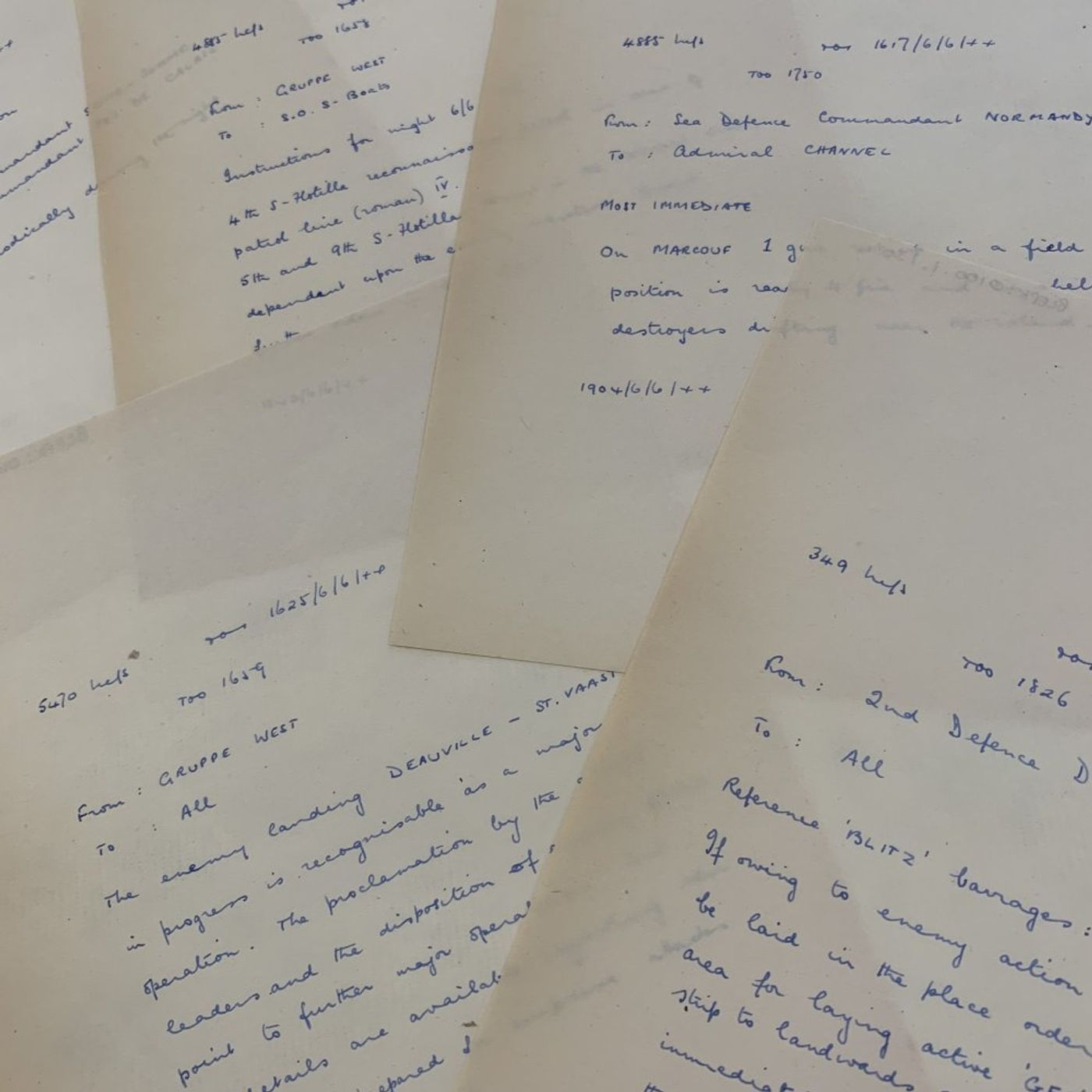
June 2019 75 years ago today, more than 150,000 allied troops were boarding planes, gliders and landing craft as they prepared to invade Fortress Europe in Operation Overlord, the Normandy Invasion. Meanwhile, 200 miles away in the Buckinghamshire countryside the Codebreakers of GC&CS were also ready and waiting. A special section, known as NSV(X), spent the day decrypting German messages and forwarding that vital intelligence to allied commanders. In many cases only two hours after the German operators had sent them. Today at Bletchley Park our Archive holds hundreds of these handwritten decrypts and using a selection of these we tell the story of The Longest Day. Our Research Historian Dr David Kenyon & Research Officer Thomas Cheetham will be your guides. Also Veterans’ Pat Davies & Colette Cook share a couple of short memories from that eventful day. Special thanks to Mr Ben Thomson for playing the role of our Intelligence Officer. Image: ©Bletchley Park Trust 2019 #BPark, #Bletchleypark, #WW2, #DDay75, #BletchleyParkDDay
E89 - Bletchley Park and D-Day
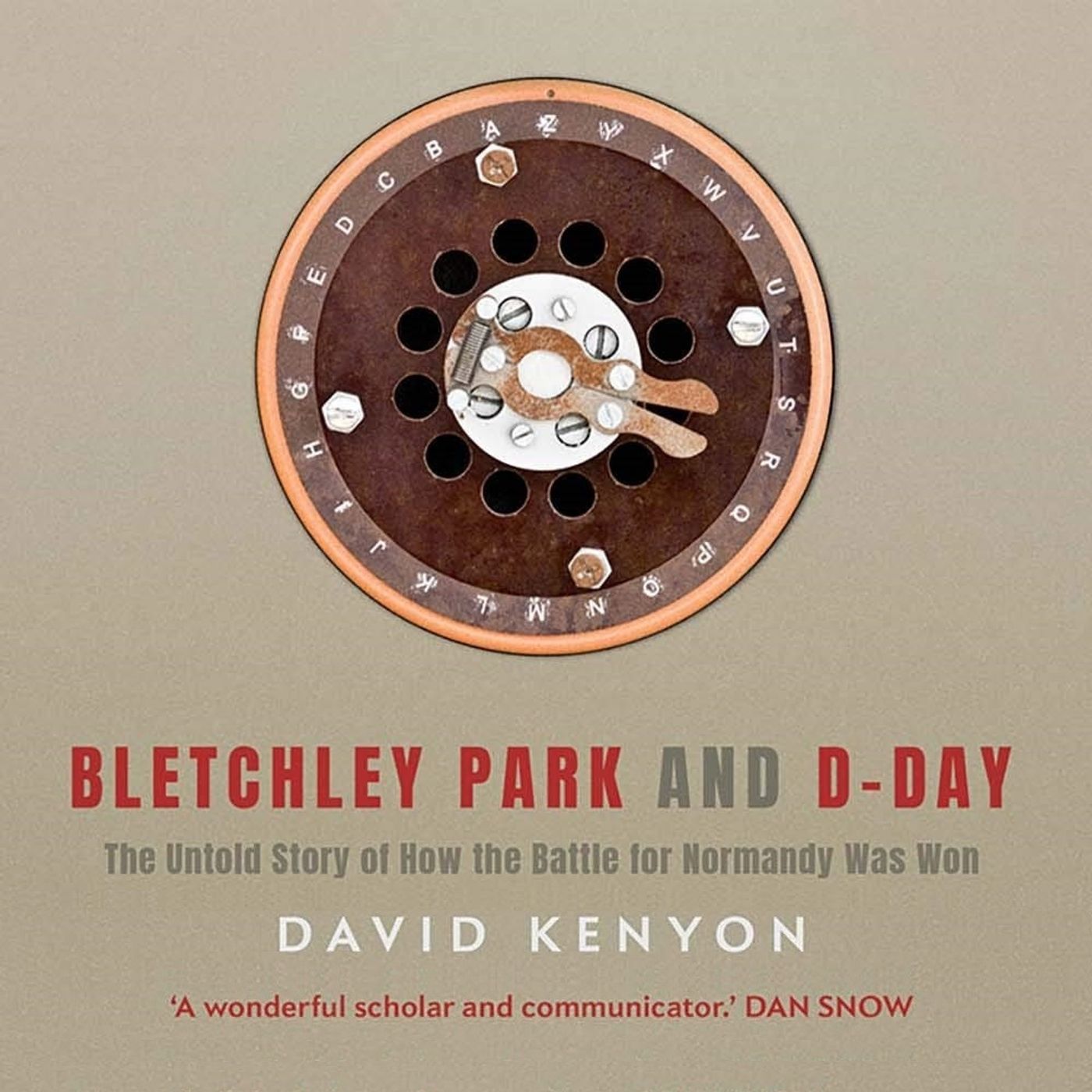
May 2019 With the opening of D-Day: Interception, Intelligence, Invasion, the key role that Bletchley Park played in the success of the Normandy campaign is finally being told. Now, a new book written by our very own research historian, Dr David Kenyon adds even more depth to that story. Using previously classified documents, David casts the work of Bletchley Park in a new light, as not just a codebreaking establishment, but as a fully developed intelligence agency. This account reveals the true character of GC&CS’s vital contribution to success in Normandy, and ultimately, Allied victory. Podcast Producer Mark Cotton sat down with David to talk about the book, the process of writing military history, and the challenges of re-writing a well-known story in the light of new evidence. Image: ©Yale University Press #BPark, #Bletchleypark, #WW2, #DDay75
E88 - The Tide of Victory
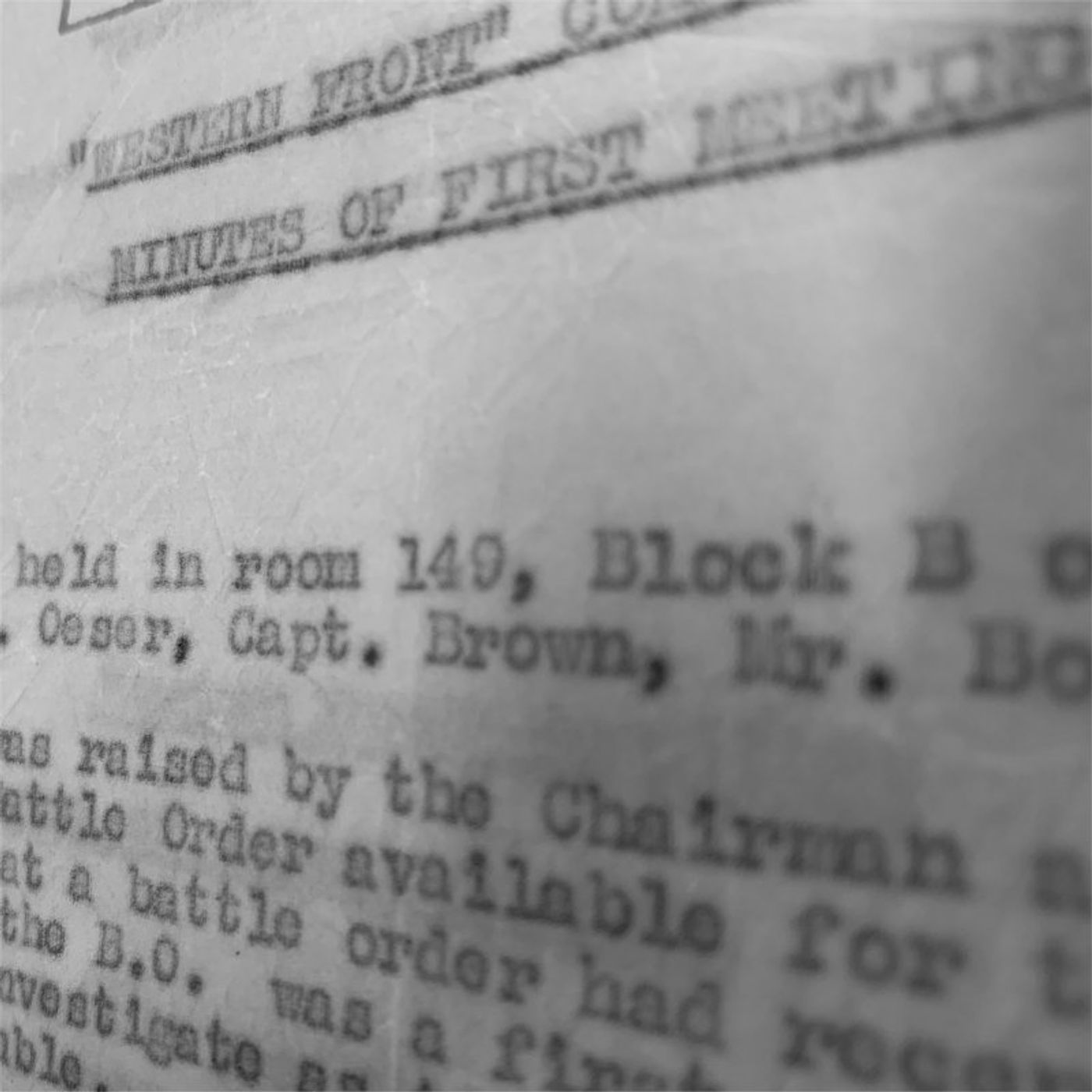
May 2019 It Happened Here this month takes us to a Britain who’s south coast in May 1944 resembled one huge army camp as over 2 million men waited for D-Day. In the Buckinghamshire countryside the staff at GC&CS carried on feeding detailed and crucial intelligence to the Allied forces that would play an integral part in the success of the upcoming Operation Overlord. The Western Front Committee was established at Bletchley Park in October 1942 and for the next 18 months built up a comprehensive picture of German forces in the West, recording every unit, its location and its strength. From February 1943 the committee began to produce reports of which over 450 pages are now held in our archives. Our Research Historian, Dr David Kenyon uses these to illustrate how the various departments, using multiple sources, came together to create the vital information that the D-Day planners needed, in some cases even leading to last minute changes. Special thanks to Mr Ben Thomson for playing the role of our Hut 3 Intelligence Officer. Image: ©Bletchley Park Trust 2019 #BPark, #Bletchleypark, #WW2, #DDay75
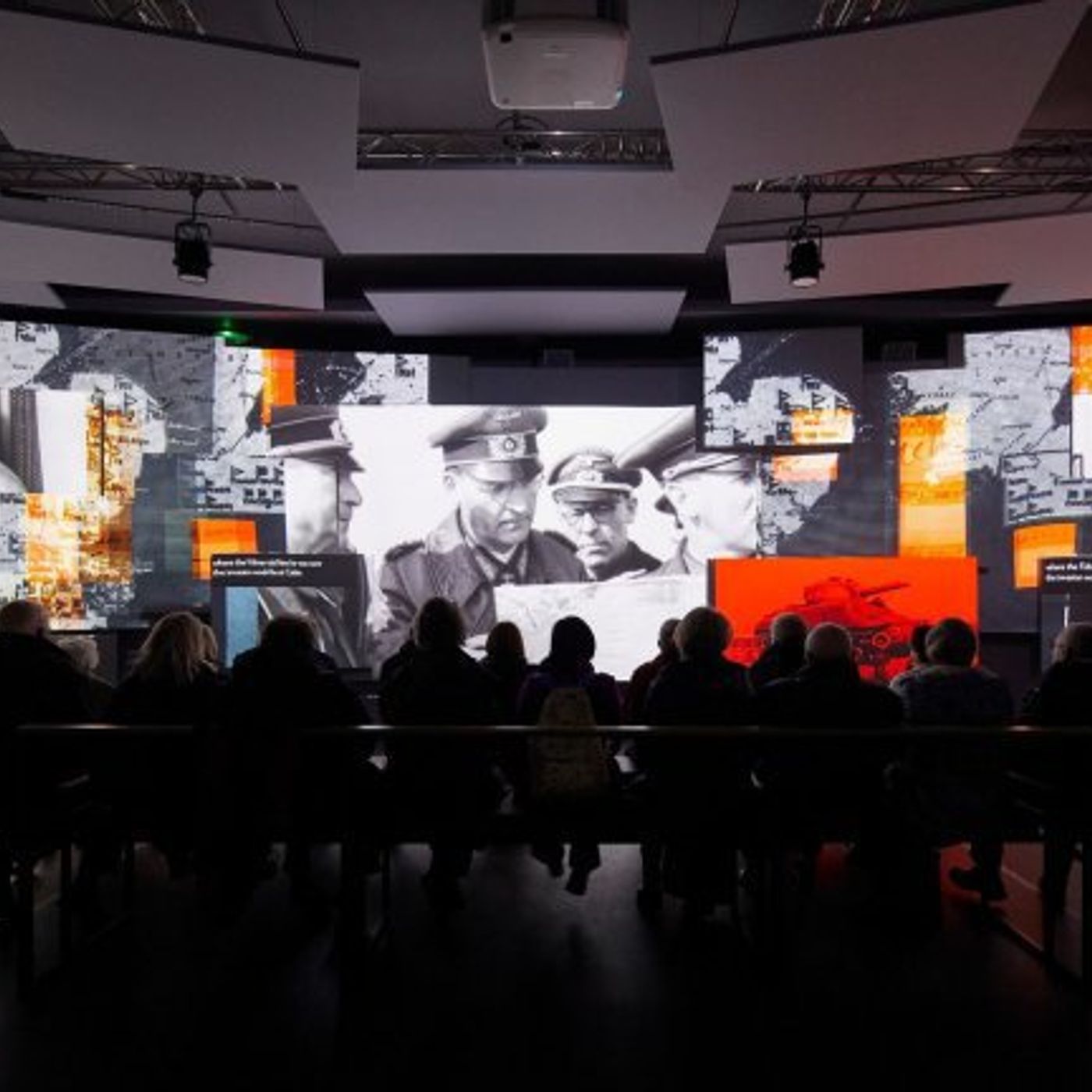
E87 - D-Day: Interception, Intelligence, Invasion
April 2019 In this month’s episode we take you to the preview opening of a major new exhibition, D-Day: Interception, Intelligence, Invasion. For 18 months prior to the launch of Overlord the staff at GC&CS produced intelligence that was integral to the invasion plans. The detailed picture that the codebreakers created of German forces in France made sure that as the troops hit the beaches on the 6th of June 1944, they knew almost as well as the Germans what to expect. Based on recently declassified information a specially commissioned 12 minute film is projected onto a curved 22m screen in the newly restored historic Teleprinter Building, giving visitors a truly immersive cinematic experience. So join us at the launch party for interviews and speeches from some of the team who put this new experience together, including our Guest of Honour broadcaster Chris Packham. Image: ©Bletchley Park Trust 2019 #BPark, #Bletchleypark, #WW2, #DDay75
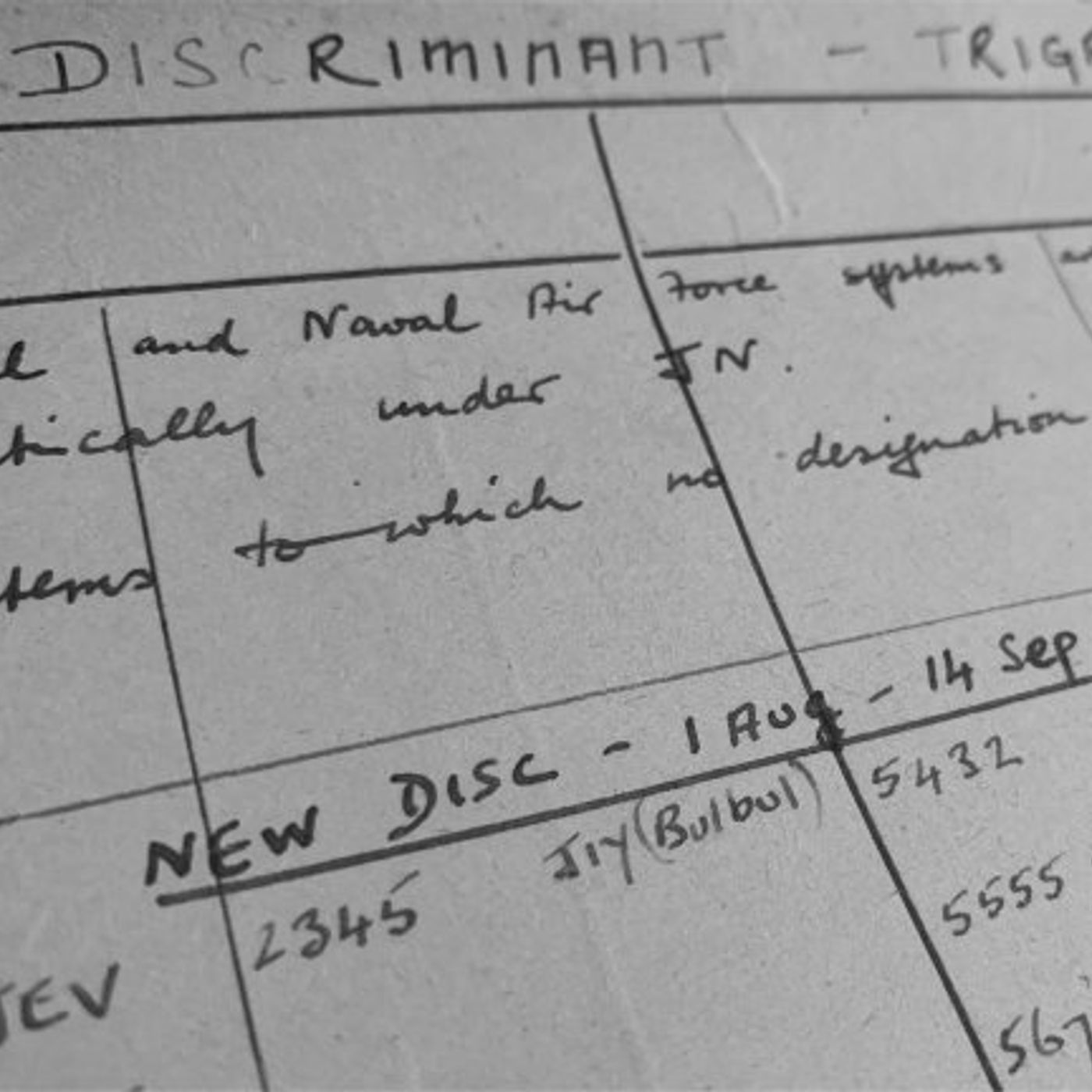
E86 - From Cassino to Kohima
March 2019 In this It Happened Here episode we go back to the spring of 1944 when much of Europe, and indeed the world held its breath awaiting the ‘Second Front’ in Europe. This would be realised in June when Operation OVERLORD; the D-Day landings, began in France. During that spring, however British and Allied troops were involved in some of the fiercest fighting of the war, in Italy and in the Far East as the tide finally turned against the Japanese in Burma. The codebreakers at Bletchley Park continued to support these operations, and were able to achieve some of their most significant successes yet, against both German and Japanese codes and ciphers. As usual our guide to these events is Dr David Kenyon, Bletchley Park’s Research Historian. In memoriam, Stephen Freer (1920-2017) and Edward Simpson (1922-2019) Image: Original Japanese Section Archive material ©Bletchley Park Trust 2019 #BPark, #Bletchleypark, #WW2, #OralHistory
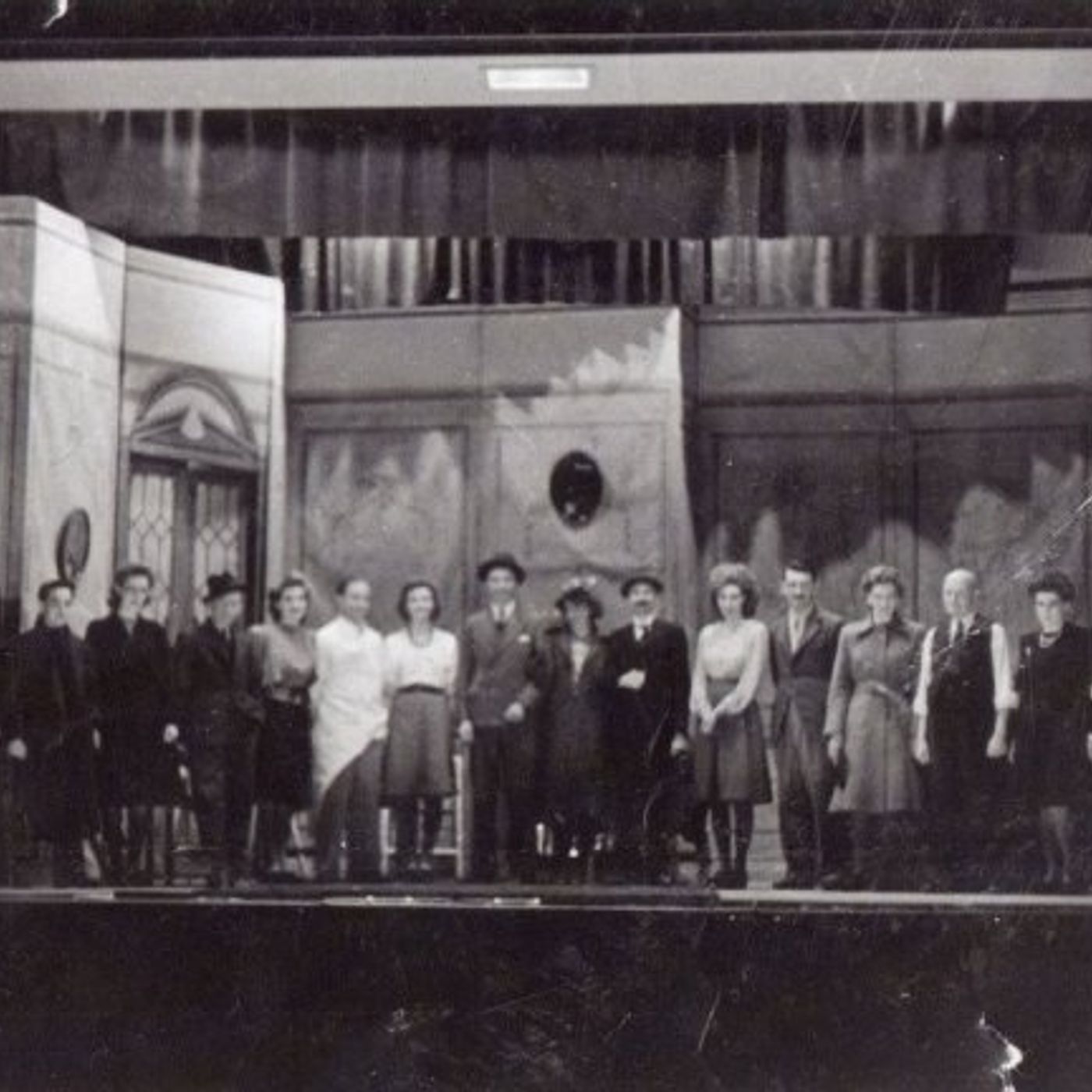
E85 - Drama at Bletchley Park
February 2019 This month we leave the code breaking behind and focus on what became an important part of the Off-Duty time for many of the staff at GC&CS during World War 2. Working long shifts and being far from the bright lights of London and other major towns, the staff of Bletchley Park organised much of their own entertainment. As early as 1940 the management recognised that the staff needed diversions to fill their down time and encouraged the organisation of many of these. With a staff drawn from so many clever and gifted people it wasn’t long before there was a film society, a gramophone club and various clubs for amongst other things fencing, sculpture, architecture and Scottish Dancing. One of the most successful of these was the Bletchley Park Drama Group who between 1941-1946, staged performances of established plays and wrote their own musical reviews. Bletchley Park volunteer steward and guide, Harold Liberty, has been researching the Drama Group over the last year and we sat down with him to find out what he had discovered. Our Veterans add some colour to the story as they fondly remember the Drama Group from interviews from our own Oral History Archive. Reproductions of original scripts performed by Harold Liberty. Image: The cast of Saloon Bar from October 1944 #BPark, #Bletchleypark, #WW2, #OralHistory
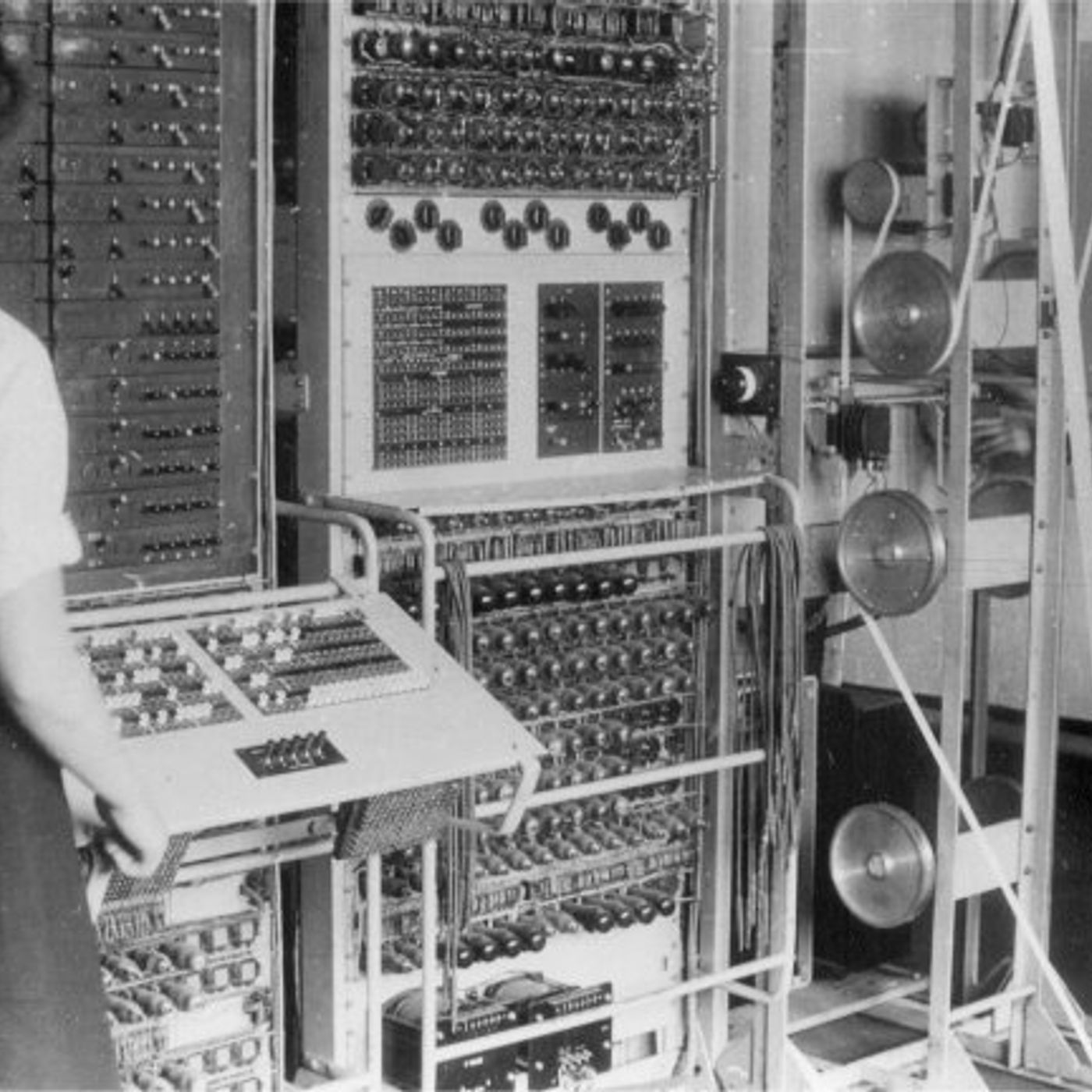
E84 - Second Front Now
January 2019 1943 had been a year of Turning Points in World War 2, but 75 years ago few people could have known for certain the monumental events that would unfold in 1944. In this It Happened Here episode we take stock and look at the year ahead. The Big Three, Churchill, Roosevelt and Stalin met together for the first time and took decisions that would ultimately lead to the 6th of June, D-Day. In the wider war the Germans had bogged the Allies down on the Italian Front, while at sea Bletchley Park saw success with their contribution in the sinking of the Scharnhorst. Meanwhile back in the Buckinghamshire countryside, GPO Engineer Tommy Flowers delivered Colossus 1 to Bletchley Park. Seen now as the world's first large scale electronic digital computer, at the time it was part of the evolution of machinery that the codebreakers had at their disposal. As always, Bletchley Park’s Research Historian, Dr David Kenyon is our guide. Image: ©Bletchley Park Trust 2019 #BPark, #Bletchleypark, #WW2, #DDay75
E83 - Bletchley Park & Beyond Part 2
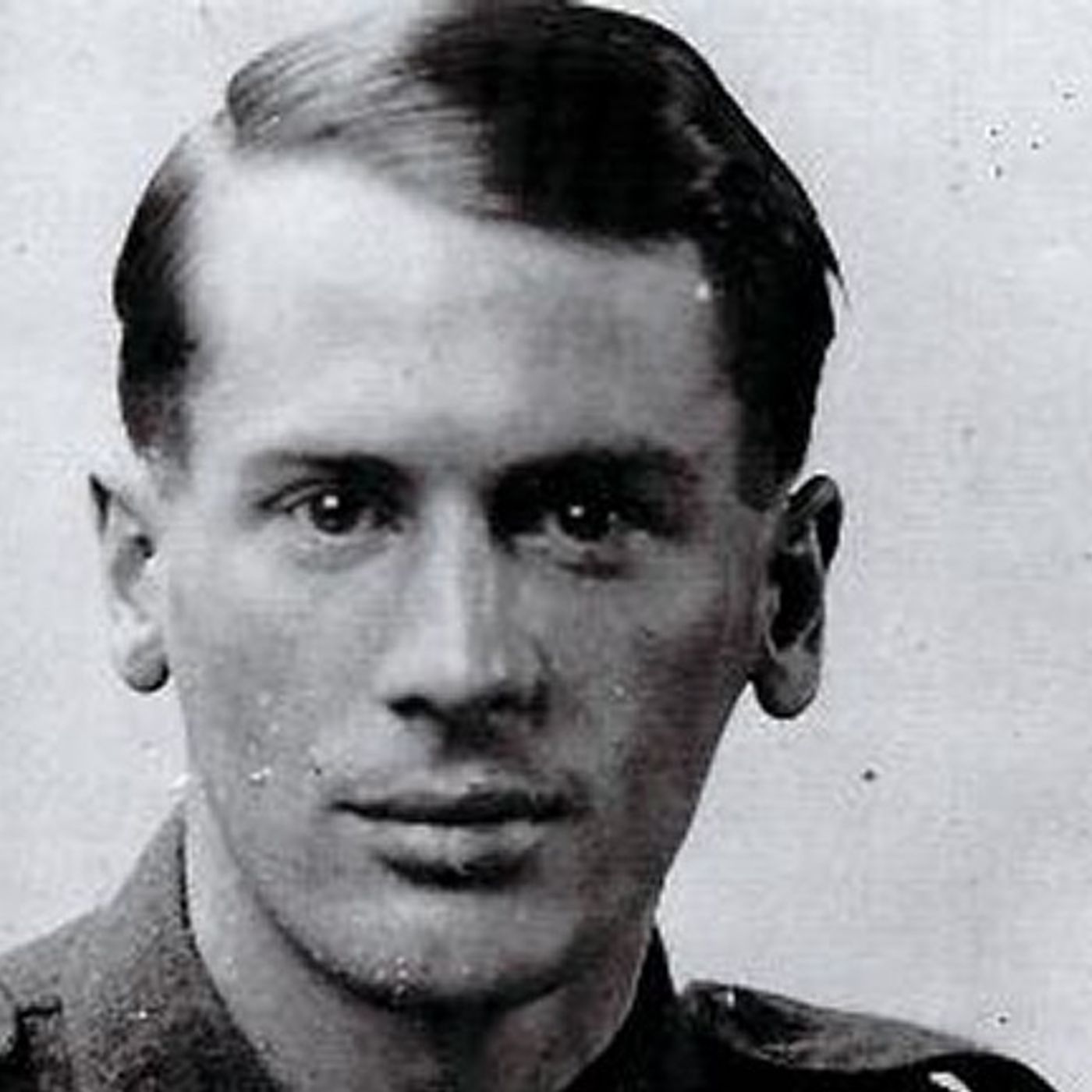
December 2018In this second of our two episodes this month we bring you two more interviews from our Oral History Archive.Our Oral History Officer Jonathan Byrne and his team have collected over 450 interviews in the last 7 years with our Veterans’. Now with the support of Milton Keynes Council the project is being extended to include local people with connections to the wartime Bletchley Park.Judith Wainer couldn’t have been a closer neighbour to Station X as she lived on Wilton Avenue. Her family had senior GC&CS staff billeted on them but she never got to see what was inside the fence that was literally at the end of her road. In this interview she is joined by her childhood friend Jean Cheshire who grew up with her family during WW2 living in Cottage 2 within that very fence, as her father Robert was Chief Groundsman, Quartermaster, driver and Head of the Refreshment Hut.Jimmy Thirsk joined the Intelligence Corps in April 1942, first serving at Beaumanor before coming to the Home of The Codebreakers later that year. Even at the age of 100, when this interview was recorded, his detailed recall of the vitally important Traffic Analysis work he did in the SIXTA Group is astonishing.In memoriam, James “Jimmy” Thirsk (1914-2018)Image of Jimmy Thirsk: ©Jimmy Thirsk#BPark, #Bletchleypark, #WW2, #OralHistory
E82 - Bletchley Park & Beyond Part 1
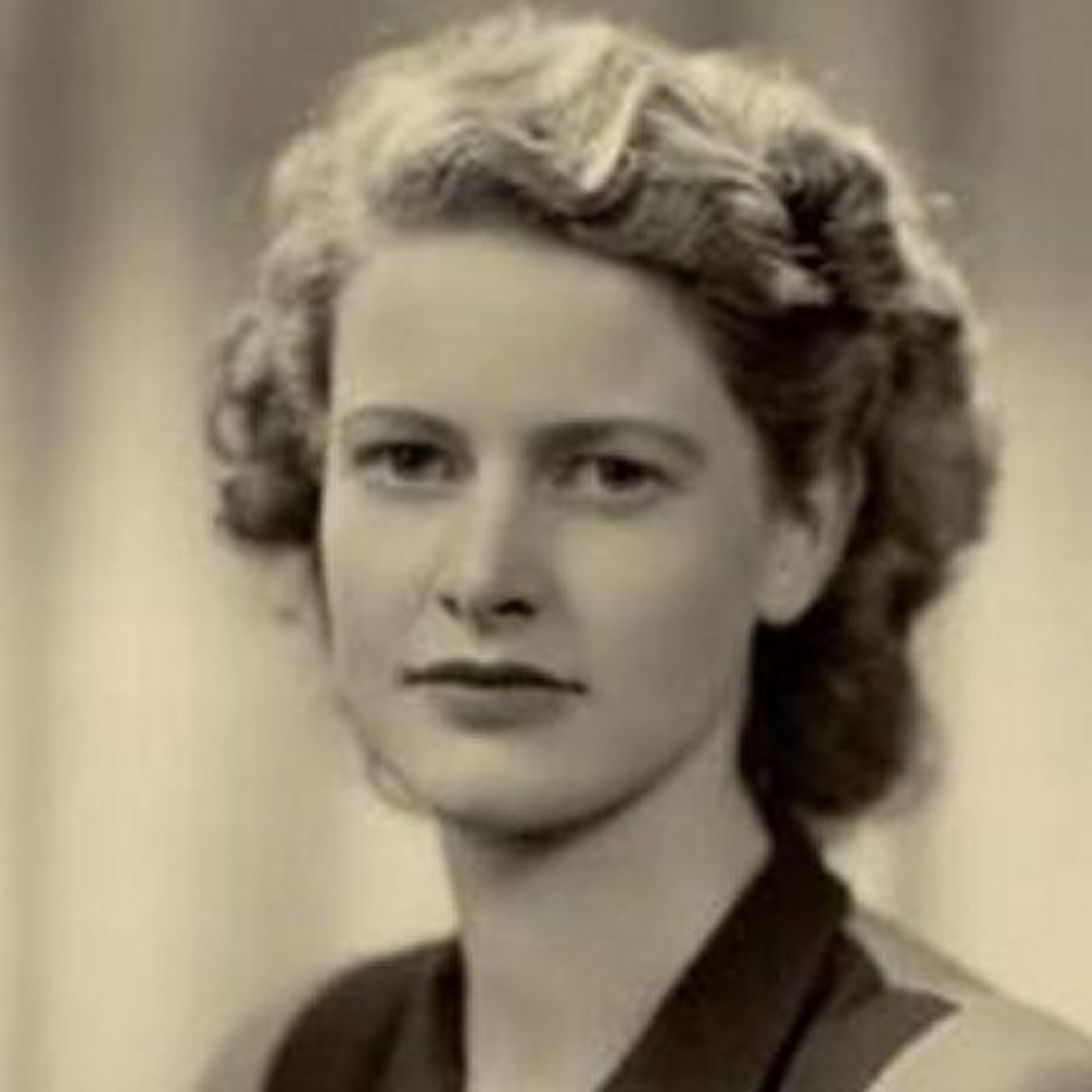
December 2018 In the first of two episodes this month we bring you three interviews of Veterans and local people from our Oral History Archive. Our Oral History Officer Jonathan Byrne and his team have collected over 450 interviews in the last 7 years. He tells us about a new project, being run with the support of Milton Keynes Council, to extend our archive to include local people with connections to the wartime Bletchley Park. At the outbreak of World War 2 Val Pinker was a teenager living in Wolverton Park House. She recalls her mother’s horror at the thought of having evacuees and instead had 4 members of staff from GC&CS billeted on her for the rest of the war. Gwendoline Herbert was not only a local but after an interview with her headmistress, started work as a civilian in the Transport Section at the home of the code breakers. Betty Lawrie’s memories of her time working for The Foreign Office at Bletchley Park are as clear as day, including her part in getting a grandmother of a future Royal pickled. Image courtesy of Mrs Betty Lawrie. #BPark, #Bletchleypark, #WW2, #OralHistory
E81 - Inside GCHQ
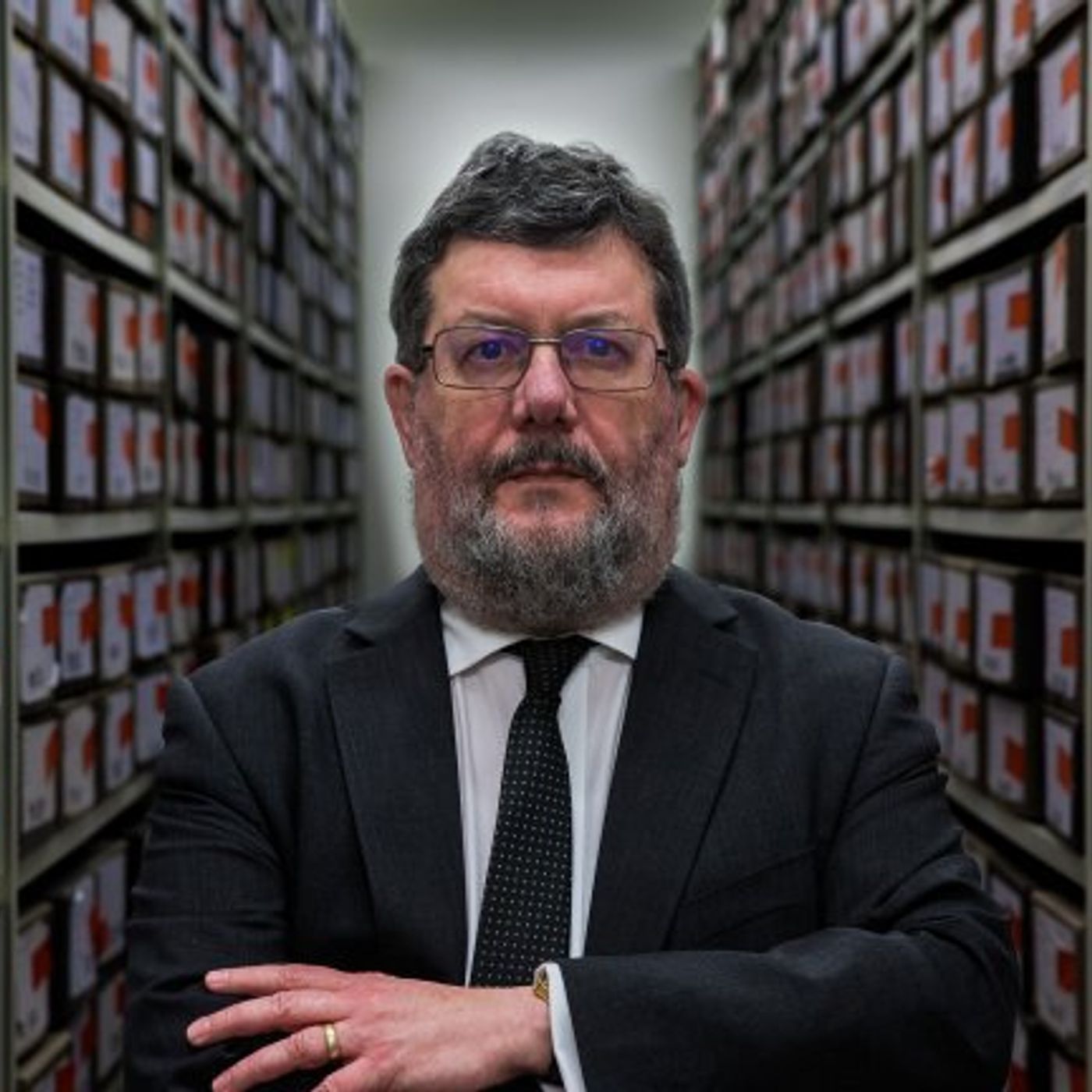
November 2018 In this exclusive additional episode, podcast producer Mark Cotton was given special permission to record inside the normally top secret walls of GCHQ in Cheltenham. There he met GCHQ’s Departmental Historian Tony Comer to talk about the life of a modern GCHQ insider, how it has changed over the last 3 decades and was given a guided tour of their own secret museum. Tony also gives us some sneak peeks into how their upcoming Centenary in 2019 will be celebrated. Grateful thanks to GCHQ for all their help and for allowing us to record this very special episode. Image: ©Crown Copyright #BPark, #Bletchleypark, #GCHQ100
E80 – Eastcote From GC&CS to GCHQ
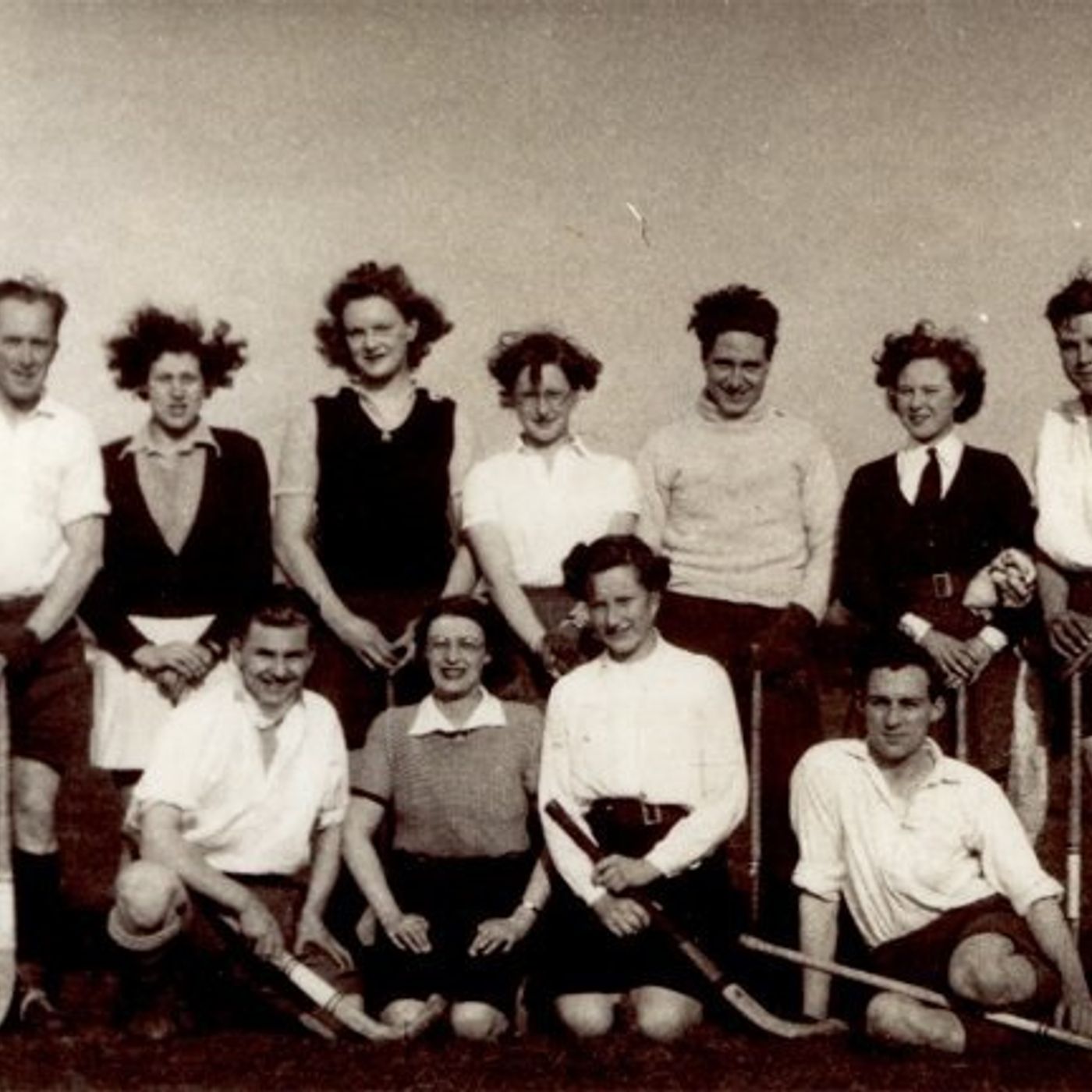
November 2018 In this month’s ‘It Happened Here’ we are marking 75 years since the establishment of the Eastcote Outstation, the site at which Bombe machines were operated from the autumn of 1943. By 1945 over 100 machines were at Eastcote along with over 800 Wrens and RAF technicians, and a small group of American GIs. How did it start and what was life there really like? Bletchley Park’s research historian Dr David Kenyon tells us the complete story with help from our Archivist Guy Revell and Veterans’ Audrey Wind, Colette Cook and Betty Flavell. Image: Eastcote Joint RAF-WRNS Hockey Team ©Bletchley Park Trust 2018 #BPark, #Bletchleypark, #WW2, #Veteran, #OralHistory
E79 - Over Here & Over There
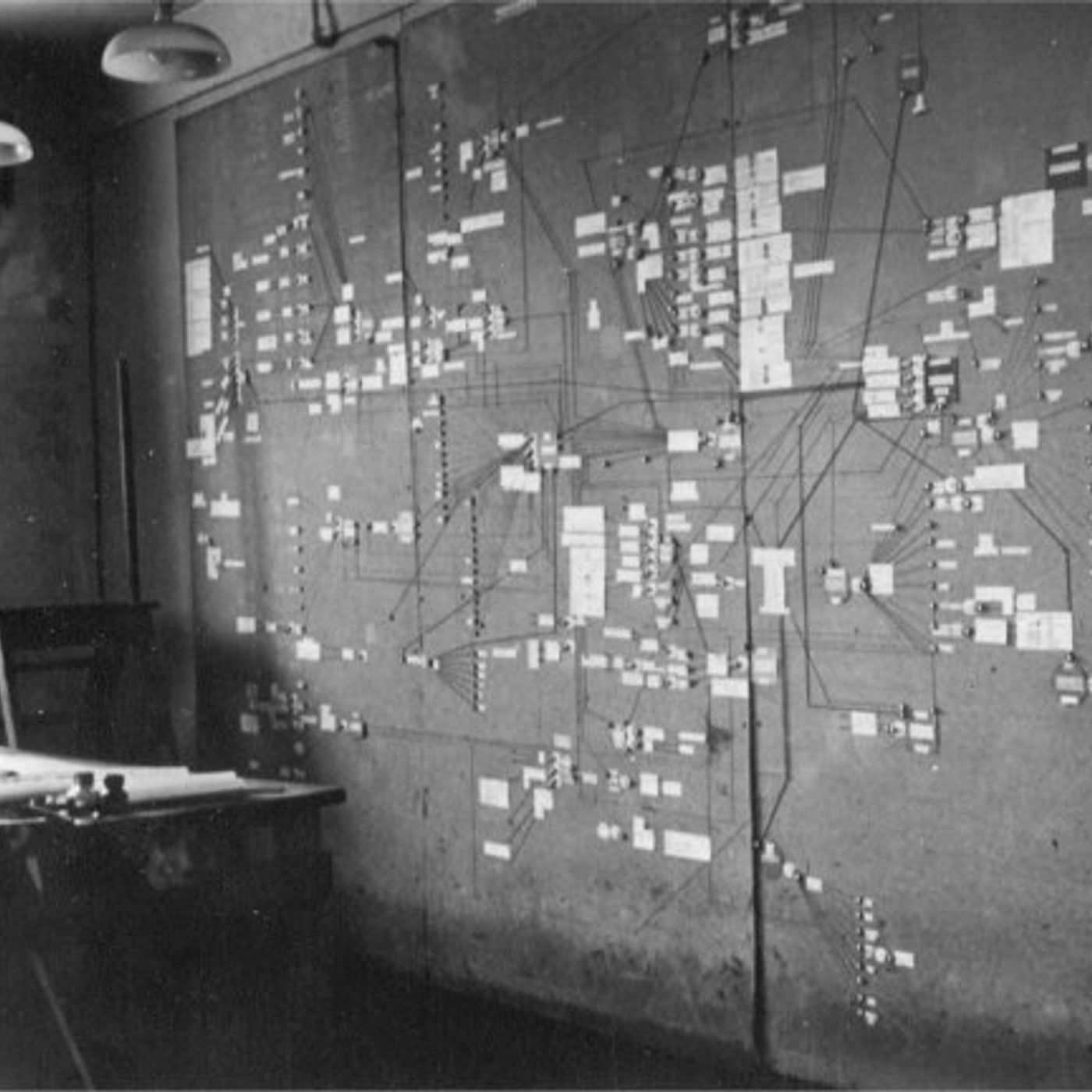
October 2018 In this It Happened Here episode we are going back to the autumn of 1943 and the invasion of Italy. British Prime Minister Winston Churchill saw it as strike at the Germans via the “soft underbelly of Europe”, while our American allies saw it as a “tough old gut”. At a strategic level the allies may have had differing opinions but in the Intelligence War the cooperation grew closer with the increasing involvement of American personnel in the code breaking operations at GC&CS. Bletchley Park’s resident historian Dr David Kenyon explains what they were doing both over here in the UK and over there In the United States. Image: ©Crown. Reproduced by kind permission, Director, GCHQ #BPark, #Bletchleypark, #WW2, #Veteran, #OralHistory
E78 - Veterans’ Reunion 2018 Part 2
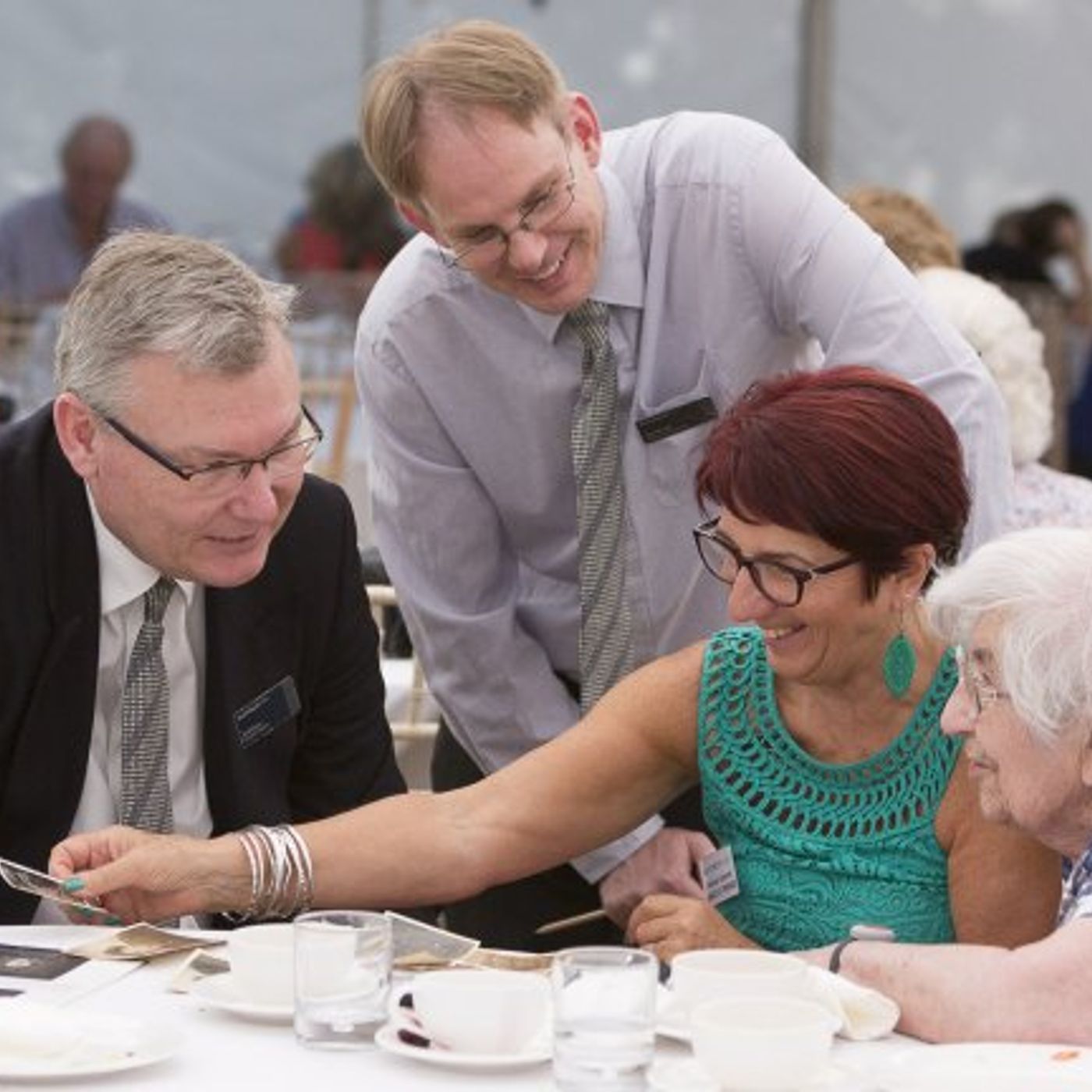
September 2018 During World War Two more than 10,000 people worked for GC&CS either at Bletchley Park, it’s Outstations or connected branches both Civilian and Military. This gives us a wealth of different stories to be able to tell and in this second visit to this year’s Reunion we will bring you 3 more exclusive interviews with our Veterans. Sergeant Stanley Clegg served from 1943 till 1945 in the RAF and with Special Liaison Unit 8 in North Africa, Italy and France. His fascinating story includes Jockeys hiding from the Germans and having to give up his nice warm palace for a tent. Watching London being bombed early in the war gave Pauline Lee “a huge surge of patriotism” and after an interview at the Foreign Office her prayers were answered and she found herself at Bletchley Park for the next 4 years. Finally we hear how seventeen year old Tom Howie thought joining the RAF would be his route to escape working on a farm, but a failed medical and a visit from a man from Montrose, sent him off to London for secret work for the Radio Security Service monitoring German radio transmissions. Many thanks to our roving reporters Sarah Langston and Kerry Howard for this episode. Image: © Will Amlot for the Bletchley Park Trust #BPark, #Bletchleypark, #WW2, #Veteran, #OralHistory
E77 - Veterans’ Reunion 2018 Part 1
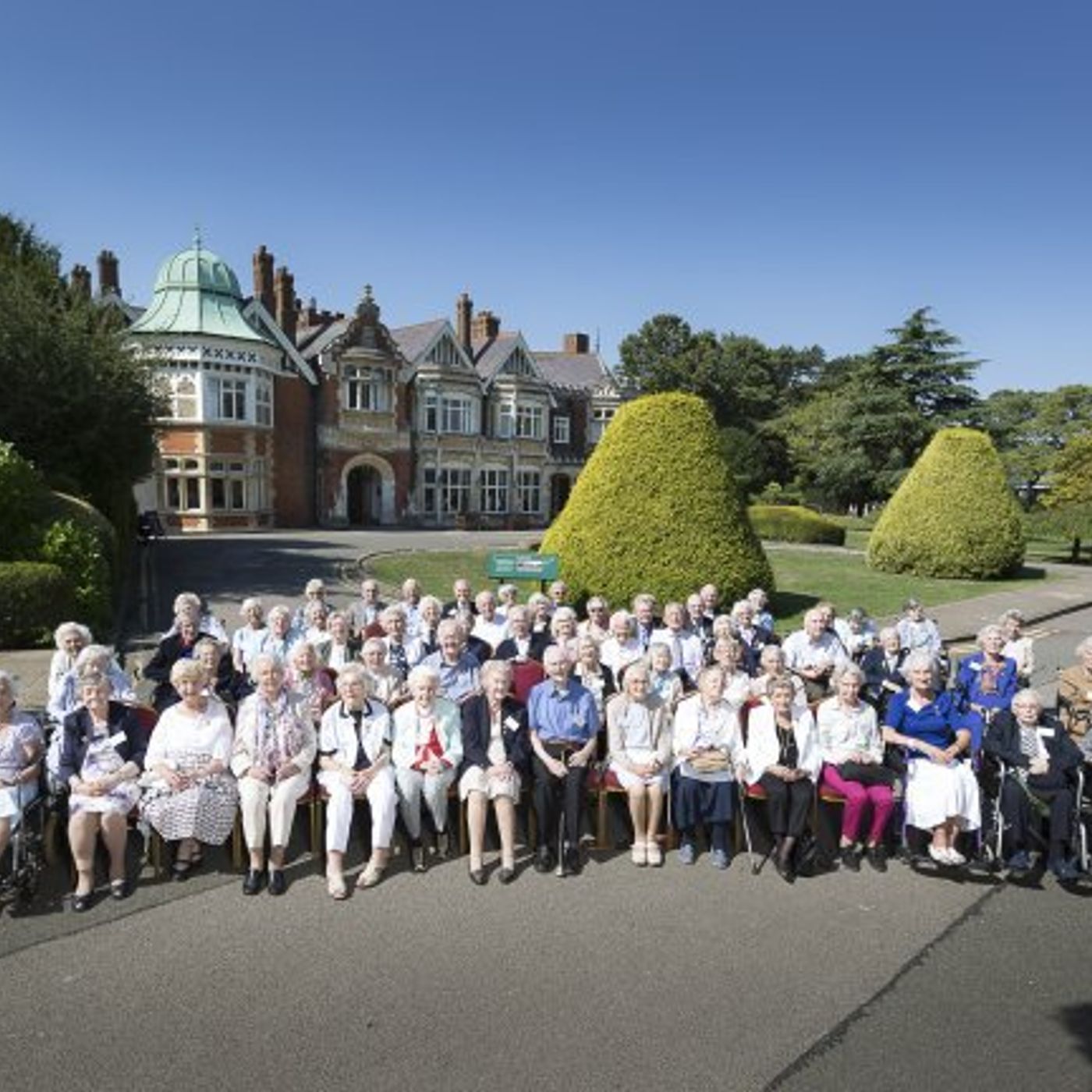
September 2018 Every year, close to the anniversary of GC&CS staff first arriving at Bletchley Park in 1939 we invite our Veterans and their families back to celebrate their vital war work. It’s our favourite day of the year at the Museum and it allows us to share their amazing stories with our listeners. This year also coincides with the 80th anniversary of the formation of the Auxiliary Territorial Service or ATS, the woman’s branch of the British Army during World War 2. To celebrate, our Veterans were given a sneak peek at our new ATS pop-up exhibition. In this, the first of two episodes this month, we will take you to this year’s reunion and listen in as Betty Webb and Mary Watkins reminisce about their time in the ATS, the gas masks, the knickers and how it changed both their lives. Also we hear from Doris Moss, who arrived at Bletchley in 1942 after escaping the German advance in Belgium two years earlier and went on to break both Italian & Japanese codes. Finally actress and drama teacher Elizabeth Davies tells us how she was plucked from Balliol College Oxford to help crack Japanese Naval Codes. Image: © Will Amlot for the Bletchley Park Trust #BPark, #Bletchleypark, #WW2, #Veteran, #OralHistory

E76 - Captain Ridley’s Shooting Party
August 2018This is the second of two episodes this month.In this It Happened Here episode we’ll be taking you further back than our normal 75 years, this time to September 1938.Twenty years after The Great War, the clouds of conflict were once again looming across Europe. Hitler threatened Czechoslovakia and British Prime Minister Neville Chamberlain flew to Germany to try to avert war.At the same time in Buckinghamshire, at an unassuming, recently purchased country house, activity was stepping up. On the 18th of September, a group known today as Captain Ridley’s Shooting Party arrived at Bletchley Park. The cover story concealed their true purpose - a dress rehearsal for war. The 150-strong shooting party were staff from the Government Code and Cypher School and the Secret Intelligence Service, testing out a move to their War Station.Our Research Historian Dr David Kenyon delves into this part of our story to reveal recently discovered facts about the origins of codebreaking at Bletchley Park.Image: ©Bletchley Park Trust 2018#BPark, #Bletchleypark, #WW2
E75 - Countdown to D-Day
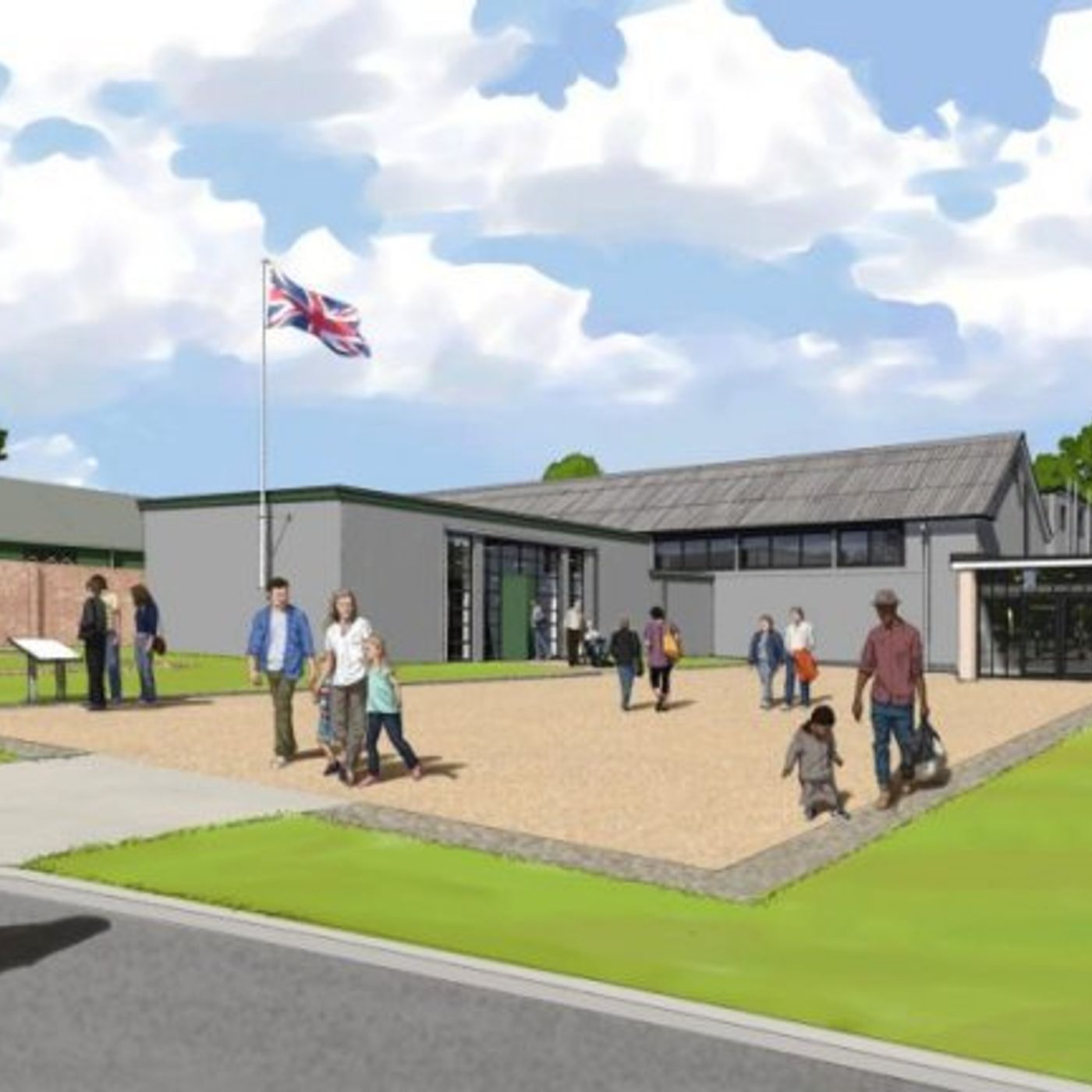
August 2018 This is the first of two episodes this month. In August 1943 at the Quebec Conference the Allies began the initial discussions for what would ultimate become Operation Overlord, the invasion of France in 1944. So it seems fitting that 75 years later Bletchley Park have released the plans for what will be an exciting new exhibition opening in spring 2019. D-DAY: Interception, Intelligence, Invasion will tell the story of the vital role that GC&CS played in informing the D-Day invasion, it will introduce the people involved and show how different kinds of intelligence were used by the Allies to enable the invasion of Normandy on 6 June 1944 with precise detail. In this episode we will take you behind the hoardings of The Teleprinter Building. Our Research Historian Dr David Kenyon tells us how the restoration has revealed a wealth of new insights into the buildings and Exhibitions Manager Erica Munro explains why this story is so important. Image: ©Bletchley Park Trust 2018 #BPark, #Bletchleypark, #WW2, #D-Day75

E74 - Sound and Vision
July 2018 This month we swing a shoe, meet the artist exploring the layers and fragmentation of the Bletchley Park story and hear from a Foreign Office clerk who thought she was going to be a spy. Hear what happened when Bletchley Park played host to a Guinness World Record attempt at the largest swing dance lesson. The swing dance club, JiveSwing, led the couples, many of whom who’d turned out in their best vintage gear, in a half hour lesson followed by a three minute dance, to take a crack at the record. Mary Kenyon had visions of being a sultry secret agent when she was called up to a mysterious sounding job at the Foreign Office in 1943. But she was sent to Bletchley Park where she collected and collated messages, working alongside the luminary codebreaker Asa Briggs. Mary recalled her vital war work in Hut 6 when she told her story to Bletchley Park’s Oral History Project in 2014. Also in this episode, we meet Sally Annett, an artist whose vision is brought to life in a new exhibition in Block B. She explores the themes of fragmentation and layers - as they apply to the way the Government Code and Cipher School was organised, and makes a nod to the people whose contribution is not recorded in the Roll of Honour, because neither they nor their families have put their names forward. Listen and swing along to all the above, in this month’s episode. In memoriam, Mary Kenyon (1922-2017) Image: ©Bletchley Park Trust 2018 #BPark, #Bletchleypark, #Veteran, #WW2, #SwingDance

E73 - Bond at Bletchley Park
June 2018 This month it’s all about 007. Bletchley Park has opened a new exhibition in historic Hut 12, featuring memos, letters and personal photographs of Ian Fleming, a fantastic collection of Bond novels through the decades and original, specially commissioned works by talented and innovative artists, inspired by scenes, themes and characters from Bond novels. The Bond creator and author, Ian Fleming, worked in Naval Intelligence during World War Two, and had close links with Bletchley Park. He was the right hand man of the head of Naval Intelligence, so he had the highest level of security clearance. Not only was he allowed to know about the existence of messages intercepted and deciphered by the government’s top secret code and cipher school, he was on the even shorter list of people who were allowed to actually read the messages as well. Fleming’s war work undoubtedly inspired his creation of Bond the character, and the dramatic scrapes he got himself into - and out of. We explore that connection in this episode with insight from the hugely successful author Anthony Horowitz whose second Bond novel, Forever and A Day is out now and he came along to help launch the exhibition. We also look into how Fleming was connected to Bletchley Park in more detail with our research historian, Dr David Kenyon and meet some of the artists who’ve helped immortalise moments from the stories. So pour yourself a martini and immerse yourself in the story of the world’s most infamous spy ... Many thanks to Penguin Random House UK for the use of extracts from the audiobook of Forever and A Day. Image: Goldfinger by Magnus Gjoen #BPark, #Bletchleypark, #JamesBond, #WW2, #ForeverAndADay
E72 - Fishing Season
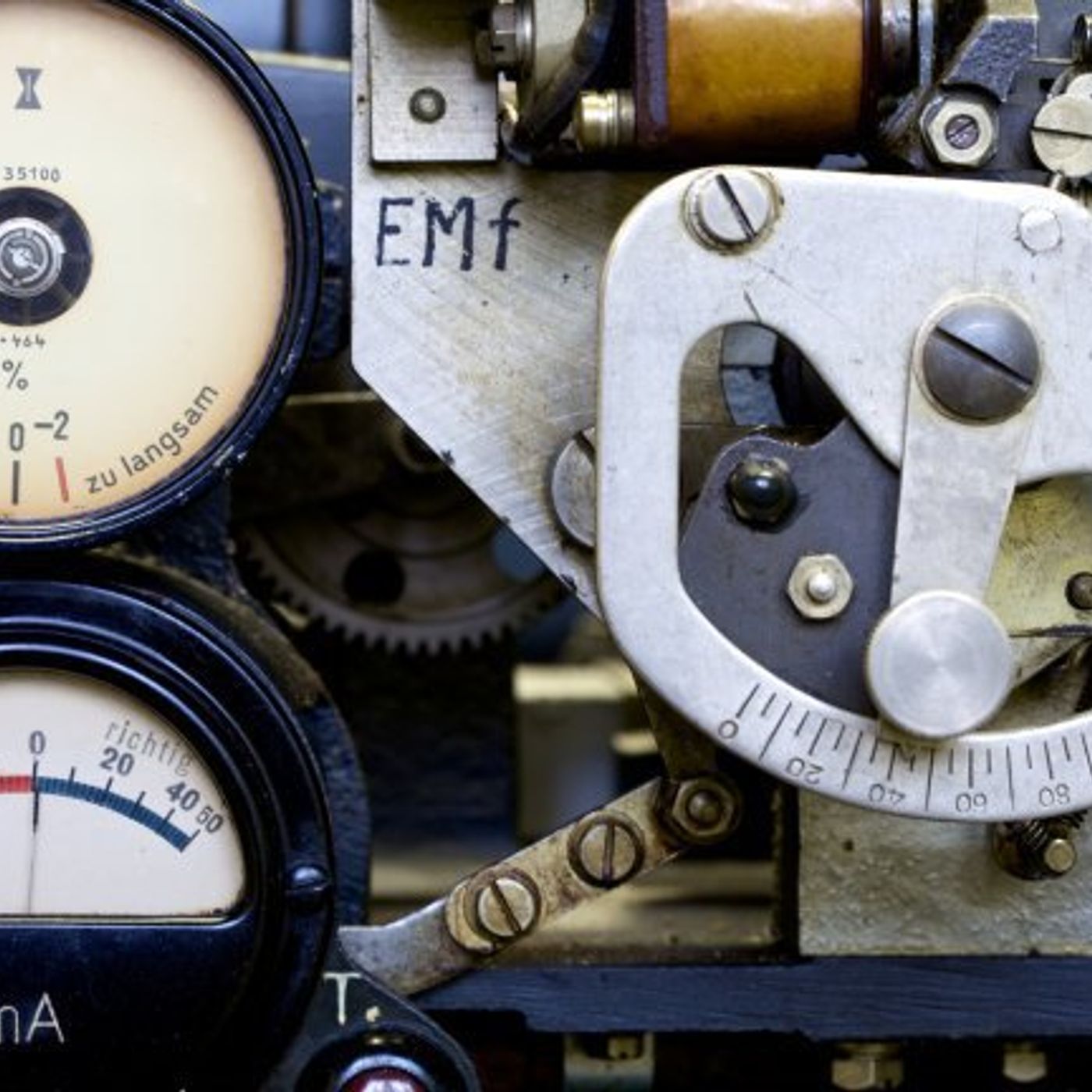
May 2018 The Bletchley Park story is about more than Enigma. A different kind of traffic was also coming over the airwaves, being intercepted and mined for crucial intelligence. But it was generated by an even more fiendishly complex system than Enigma, which was itself believed to be unbreakable. Lorenz was the machine being used by Hitler and his high command to send top level, strategic messages. It was less portable and more secure than Enigma, but that didn’t defeat the boffins at Bletchley Park. They cracked this code too, code naming it Fish, and assigning individual fish names to links between different command posts and cities. The decision to establish a special section to mechanise the laborious process of cracking the machine’s ever-changing settings proved to be crucial in giving Allied commanders a glimpse into the highest-level decision making. It wasn’t just a breath-taking achievement to break into this system and read the top secret messages; this newly gleaned information had a huge impact in the field of battle. The battle of Kursk in 1943 was a triumph of advance knowledge, courtesy of intercepted and successfully decrypted Lorenz messages. Germany planned to cut the Russians’ ability to advance, by weakening its forces significantly. But the Russians were warned, thanks to Ultra intelligence. The Battle of Kursk became Germany’s last great offensive on the Russian front. We explore how Bletchley Park became able to share Ultra intelligence directly with US commanders in the field on the same basis as the British. American General George Patton was the first to benefit from this, receiving intelligence directly during the invasion of Sicily in July 1943. We tell this story with help from Bletchley Park’s Research Historian, Dr David Kenyon. Image: ©shaunarmstrong/mubsta.com #BPark, #Bletchleypark, #Enigma, #WW2, #Lorenz

E71 - The Bombe Breakthrough
April 2018A brand new exhibition telling the story of the Bombe machines has opened in Hut 11a, where they were housed during World War Two.Hundreds of Bombe machines were made and operated at both Bletchley Park and its outstations. This exhibition tells the story of how this incredible technological breakthrough came to be, and the stories of the people whose ingenuity and hard work made them both a reality and a success.This episode takes you to the official opening of the exhibition, by Bletchley Park’s Royal Patron, HRH The Duke of Kent KG. We met the Veteran Bombe operators Brenda Abrahams and Jean Marshall, Reg Young who built the machines and Margaret Bullen who worked in the Newmanry.We also hear from the Polish Ambassador to the UK, Arkady Rzegocki, who was an honoured guest at the launch, along with the Polish Deputy Foreign Minister, Bartosz Cichocki and Olga Topol from the Jozef Piłsudski Institute in London. They were there to celebrate the story of the Polish mathematicians whose breathtaking pre-war achievements in breaking Enigma gave the Government Code and Cypher School a huge head start, once war broke out.Also in this episode, we hear how important this new exhibition is in the ongoing restoration of Bletchley Park, from the staff who created the new exhibition, Chief Executive Iain Standen and Trustee, Sir John Dermot Turing, whose uncle, Alan Turing, along with Gordon Welchman, invented the Bombe.Image: ©Andy Stagg#BPark, #Bletchleypark, #Enigma, #WW2, #Poland

E70 - Secrets Revealed
March 2018 From the attempt to assassinate Hitler in July 1944, to orders to shoot dead any German soldier seen fleeing Riga as a cowardly traitor, the Hut 3 Headlines tell a story of World War Two in tiny snippet form. They were succinct summaries of Enigma messages sent by the German army and air force, intercepted and deciphered by Bletchley Park. These messages were then boiled down to the barest essentials to be sent to the Prime Minister, Winston Churchill. He’s reputed to have wanted to know everything that was happening, and it’s well established that he was a firm proponent of the power and importance of signals intelligence. But no one man could have waded through the mass of information flowing through the Government Code and Cypher School, let alone a prime minister in the middle of an all-out war. So the Hut 3 Headlines became regular, and sometimes frequent, digests of what he needed to know. Bletchley Park has been digitising these precious documents and now, for the first time, has published a batch of ten, online. In this It Happened Here episode, we get the stories behind the headlines, with help from Bletchley Park’s Research Historian, Dr David Kenyon. We also meet Denis Falvey, one of the dedicated team of volunteers diligently digitising this precious archive and Florence Morgan-Richards, Bletchley Park’s Digitisation and Archive Assistant, who runs that project. We also take you inside the Archive to meet Senior Archivist Guy Revell, who explains why it’s important they’re not kept hidden away. Special thanks go to Mr Ben Thomson for playing the part of our Hut 3 Intelligence Officer in this episode. Image: ©Bletchley Park Trust 2018 #BPark, #Bletchleypark, #Enigma, #WW2

E69 - From Cooks to Codebreakers
February 2018 Is Bletchley Park about codes, machines or people? Of those, the most fascinating stories come from the people who did this incredible job, and then kept it absolutely secret, for at least another 30 years. Their memories are precious and it’s crucial that we capture as many as we can, so that future generations can read and listen to their first-hand accounts of not only their amazing achievements, but what life was like during those defining years. A new exhibition in the glorious Garden Room in the Victorian mansion, Veterans’ Stories, celebrates the Oral History Project by showcasing extracts. In this episode, we meet Pat Field, who broke Japanese codes and translated messages, right at the end of the war. We also hear from Joan Ireland, a civilian who was set to work on Type X machines, the British answer to Enigma but had to dodge pigs, horses and Italian Tenors just to get home. Image: ©Pat Field - Performing in The Importance of Being Earnest at Bletchley Park during WW2. #BPark, #Bletchleypark, #Enigma, #WW2

E68 - Turning Points
January 2018January is a good time to take stock and look at the year ahead. 75 years ago, it was January 1943 and, after a dark and difficult year, things were starting to look up.By this time, Hut 8 had broken back into the naval Enigma codenamed Shark, after a devastating ten-month blackout. The daring raid on a sinking submarine which cost the lives of two brave sailors became a huge turning point in the Battle of the Atlantic.Elsewhere, five gruelling months drew to a close with the German army’s surrender at Stalingrad, against Hitler’s wishes, and not before 2 million people had been killed, injured or captured.Intelligence played its part in both of these turning points, and more, in 1943. Bletchley Park itself was beginning to look quite different. No more were wooden huts hastily thrown together. Now, solid brick blocks were taking shape, showing a serious commitment to code breaking. In this episode we examine these - and more - turning points in 1943 with Bletchley Park’s Research Historian, Dr David Kenyon, and a rich archive of audio from the time.Image: ©Crown. Reproduced by kind permission, Director, GCHQ#BPark, #Bletchleypark, #Enigma, #WW2

E67 - In Their Words Part 2
December 2017Bletchley Park’s Oral History project has been running for six years, interviewing more than 400 veterans so far. These personal testimonies capture the unique and precious memories of people who worked at Bletchley Park and its outstations.Not only are these interviews a great source of historical facts, adding to what we know about the work carried out by the Government Code and Cypher School during World War Two, they’re also a treasure trove of lesser-known details about the processes and what life was like during that time. Adding reminiscences about food, fun and uniform to the official records of how the codebreaking was done make this truly a people’s history of Bletchley Park.In this second part of our December episode we bring you yet more of these amazing stories. We hear from Brenda Done, a Bombe Operator stationed at Stanmore, how she was told what their work was achieving. Enid Wenban of the ATS paints a picture of the long gone outstation at Beaumanor and David Bentliff tells us what it was like for a seventeen year old to break Japanese codes.Image: ©mcfontaine#BPark, #Bletchleypark, #Enigma, #WW2

E66 - In Their Words Part 1
December 2017Bletchley Park’s Oral History project has been running for six years, interviewing more than 400 veterans so far. These personal testimonies capture the unique and precious memories of people who worked at Bletchley Park and its outstations.Not only are these interviews a great source of historical facts, adding to what we know about the work carried out by the Government Code and Cypher School during World War Two, they’re also a treasure trove of lesser-known details about the processes and what life was like during that time. Adding reminiscences about food, fun and uniform to the official records of how the codebreaking was done make this truly a people’s history of Bletchley Park.In this episode we hear from Phyllis Keates, who operated Britain’s answer to Enigma; a Typex machine. We learn more about the stringent security in the recruitment process from Kenneth Nicolson, who served in the Royal Signals and we listen in on Morse slip reader Daphne Canning’s account of a V1 attack on her accommodation. Image: ©Bletchley Park Trust 2017#BPark, #Bletchleypark, #Enigma, #WW2

E65 - Women at War
November 2017This month, it’s all about women. A century ago, the Women’s Royal Naval Service - aka Wrens - were founded. They went on to play a crucial part in the codebreaking effort during World War Two.By November 1917, Britain was three years into a bloody, devastating war. In this episode, we explore what kind of work women did during both wars and what they - and the men - thought of it. A new pop up exhibition is now open in the Visitor Centre at Bletchley Park, celebrating the contribution of Wrens to the codebreaking effort during WW2. We delve into a few of the many the stories behind it, with Exhibitions Manager, Erica Munro.Award winning author Clare Mulley tells us about The Women Who Flew for Hitler, among others who did incredibly daring and dangerous war work - on both sides.We also find out what Hush WAACs were. They were stationed in France, and their work was top secret. Some kept journals but - unsurprisingly - they don’t divulge much about what they were doing. Dr Jim Beach from the University of Northampton talks to podcast producer, Mark Cotton.Also in this episode, Bletchley Park has been urging people to knit one, post one. People have been creating authentic wartime knitwear, for display in the dressed rooms. We discover some of the treasures that have been sent in, with Exhibitions Assistant, Emma Treleaven.Image: ©GCHQ#BPark, #Bletchleypark, #Enigma, #WW1, #WW2

E64 - The End of the Beginning
October 2017 75 years ago, one of the most decisive battles of World War Two marked the end of the beginning. El Alamein was of huge strategic importance to both the Allied and Axis forces in North Africa. Rommel and Montgomery’s forces clashed twice. The second battle would become famous, making a household name of this obscure outpost. The intelligence was a crucial weapon. Rommel’s attack plan was confirmed by intercepts which were deciphered and translated by the top secret Government Code and Cipher School at Bletchley Park, giving the Allies an unseen advantage. In this episode, we bring you a personal perspective on this slice of history, with Bletchley Park’s good friend, the historian Dan Snow. He made an unforgettable trip to the desert with his father, Peter, where they traced the soldiers’ footsteps through the sand for a memorable TV documentary. He looks back on that experience, with Bletchley Park’s Research Historian, Dr David Kenyon. Image: ©Bletchley Park Trust 2017 #BPark, #Bletchleypark, #Enigma, #WW2, #HistoryHit

E63 - Veterans' Reunion 2017 Part 2
September 2017There were so many memories shared at this year’s Veterans’ Reunion, that we’ve split this month’s episode into two parts. This time, we’ll hear some of the longer conversations, as people who spent part of their youth carrying out vital war work, tucked away in the Buckinghamshire countryside or at one of Bletchley Park’s equally secretive outstations. They went on to keep their lips sealed about what they’d done for at least another 30 years. Now, when the memories begin to flow, the best thing to do is sit back, listen and feel inspired by their incredible achievements.Image: © Will Amlot for the Bletchley Park Trust#BPark, #Bletchleypark, #Enigma, #WW2, #History

E62 - Veterans' Reunion 2017 Part 1
September 2017More than 110 Veterans returned to Bletchley Park for this year’s reunion - the highest number in recent years. They came back to the headquarters of the Government Code and Cipher School, where they, among thousands of men and women, carried out vital war work which made a huge difference, not only to the outcome of World War Two, but to the digital age in which we live today.Once in the tranquil grounds of the Victorian mansion, they met up with friends old and new, and took the opportunity to celebrate that this special place is not only still standing - which is, in itself, quite an achievement for wooden huts that were thrown up in haste some 80 years ago - but is also thriving, welcoming more than a quarter of a million visitors every year, to absorb the fascinating story of what happened here.The regular Bletchley Park Podcast team, Producer Mark Cotton and host Katherine White, were joined by special guest roving reporters Niki Arthur and Myra Brooks. Meet them and the fascinating Veterans they met on a glorious September afternoon in Buckinghamshire.We captured so many fascinating conversations that we’re bringing you two special episodes this month. This is part one of two.Image: © Will Amlot for the Bletchley Park Trust#BPark, #Bletchleypark, #Enigma, #WW2, #History
E61 - Our 5th Anniversary
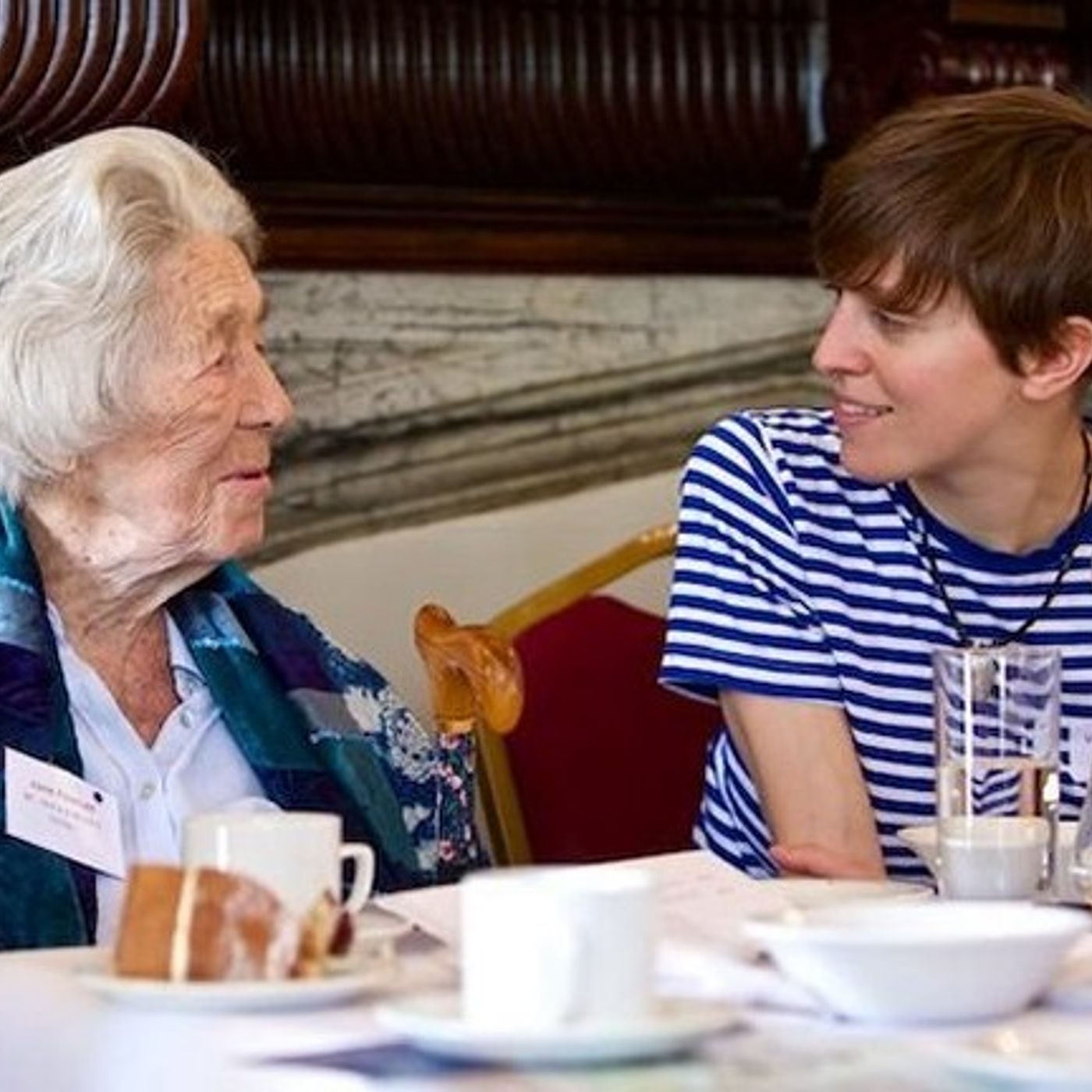
August 2017 Hear some of the best bits from five packed years of this podcast, primarily from the Veterans themselves, but also a smattering of prestigious visitors down the years, from movie stars to heads of foreign security agencies. The highlight of the calendar at Bletchley Park is without doubt the annual Veterans’ Reunion, when people who worked at the Government Code and Cypher School and its outstations during World War Two return to revive and share their memories, helping to keep the story alive for future generations. The Bletchley Park Podcast has been capturing the Veterans’ trips down memory lane for five years now, not least on this wonderful day each year. To celebrate this podcast’s 5th anniversary, hear the best of the reunions so far with snippets of conversation, interviews and emotional reminiscences from the stars of this story, the Veterans themselves. Each year, they meet new friends among the thousands of people who were part of the Bletchley Park operation as, even if they worked in the same section, it was often at a different time or on an opposing shift pattern. Veterans’ families who attend either with, or to represent, their relative, also shine with pride when they learn more about their incredible achievements. Image: ©shaunarmstrong/mubsta.com #BPark, #Bletchleypark, #Enigma, #WW2, #History

E60 - PQ17 Disaster in the Arctic
July 2017What happened when the Admiralty didn’t believe the intelligence coming from Bletchley Park? The answer; huge losses at sea. But this is not to suggest blame - hindsight can be cruel. The Tirpitz was a much-feared German battleship - it was the biggest they had built. Bletchley Park provided intelligence under the banner of Ultra - the highest level of secrecy - that it had not yet set sail. But this reassuring news was not taken on board by the naval powers that be. Convoy PQ17 was scattered, in the mistaken belief that the Tirpitz was on the move, and resulting in huge losses. We look back at this moment in World War Two, when intelligence was not enough, with help from Bletchley Park’s research historian, Dr David Kenyon.Image: ©Bletchley Park Trust 2017#BPark, #Bletchleypark, #Enigma, #WW2, #PQ17, #History

E59 - Bill Tutte
June 2017 Bill Tutte played a crucial role in deciphering messages between Hitler and his high command. Yet he remains one of Bletchley Park’s unsung heroes. This little-known genius went straight from studying mathematics at Cambridge to the Government Code and Cypher School, where he used his analytical brilliance to help break what was believed to be an unbreakable code. His work also paved the way for the creation of the world’s first semi-programmable computer, Colossus. His breath-taking achievements are now celebrated in a new exhibition at Bletchley Park and, on the day of his centenary, it was launched with a symposium of talks about his life and work. We hear from the day’s speakers, who included the GCHQ Departmental Historian, Tony Comer, tireless Bill Tutte Memorial Fund campaigner, Claire Butterfield, David Bedford from Keele University and the BBC security correspondent, Gordon Corera. We also speak exclusively to Bill Tutte’s family, who were there to soak up the celebration, about what it’s like to learn that a kindly uncle was an unsung war hero. Image: ©Bletchley Park Trust 2017 #BPark, #Bletchleypark, #Enigma, #WW2, #Veteran, #History